EP4132106A1 - Procédé de commande de charge pour tranche de réseau et produit associé - Google Patents
Procédé de commande de charge pour tranche de réseau et produit associé Download PDFInfo
- Publication number
- EP4132106A1 EP4132106A1 EP20933385.5A EP20933385A EP4132106A1 EP 4132106 A1 EP4132106 A1 EP 4132106A1 EP 20933385 A EP20933385 A EP 20933385A EP 4132106 A1 EP4132106 A1 EP 4132106A1
- Authority
- EP
- European Patent Office
- Prior art keywords
- network slice
- network
- radio access
- terminal device
- cell
- Prior art date
- Legal status (The legal status is an assumption and is not a legal conclusion. Google has not performed a legal analysis and makes no representation as to the accuracy of the status listed.)
- Pending
Links
- 238000000034 method Methods 0.000 title claims abstract description 136
- 238000004891 communication Methods 0.000 claims description 78
- 238000012545 processing Methods 0.000 claims description 49
- 238000005259 measurement Methods 0.000 description 75
- 230000006870 function Effects 0.000 description 23
- 230000015654 memory Effects 0.000 description 19
- 238000010586 diagram Methods 0.000 description 18
- 230000004048 modification Effects 0.000 description 15
- 238000012986 modification Methods 0.000 description 15
- 238000004590 computer program Methods 0.000 description 11
- 230000003993 interaction Effects 0.000 description 10
- 238000007726 management method Methods 0.000 description 9
- 101100240462 Homo sapiens RASAL2 gene Proteins 0.000 description 7
- 102100035410 Ras GTPase-activating protein nGAP Human genes 0.000 description 7
- 230000008569 process Effects 0.000 description 7
- 238000010295 mobile communication Methods 0.000 description 6
- 230000004044 response Effects 0.000 description 6
- 230000011664 signaling Effects 0.000 description 6
- 239000000047 product Substances 0.000 description 5
- 235000019580 granularity Nutrition 0.000 description 4
- 230000000977 initiatory effect Effects 0.000 description 4
- 230000007774 longterm Effects 0.000 description 4
- 101150039363 SIB2 gene Proteins 0.000 description 3
- 230000008878 coupling Effects 0.000 description 3
- 238000010168 coupling process Methods 0.000 description 3
- 238000005859 coupling reaction Methods 0.000 description 3
- 230000000737 periodic effect Effects 0.000 description 3
- 239000000969 carrier Substances 0.000 description 2
- 230000007423 decrease Effects 0.000 description 2
- 238000013461 design Methods 0.000 description 2
- 230000006872 improvement Effects 0.000 description 2
- 238000013507 mapping Methods 0.000 description 2
- 230000003287 optical effect Effects 0.000 description 2
- UDHXJZHVNHGCEC-UHFFFAOYSA-N Chlorophacinone Chemical compound C1=CC(Cl)=CC=C1C(C=1C=CC=CC=1)C(=O)C1C(=O)C2=CC=CC=C2C1=O UDHXJZHVNHGCEC-UHFFFAOYSA-N 0.000 description 1
- 230000006399 behavior Effects 0.000 description 1
- 230000001413 cellular effect Effects 0.000 description 1
- 239000003795 chemical substances by application Substances 0.000 description 1
- 230000000295 complement effect Effects 0.000 description 1
- 238000013500 data storage Methods 0.000 description 1
- 230000003111 delayed effect Effects 0.000 description 1
- 238000011161 development Methods 0.000 description 1
- 230000009977 dual effect Effects 0.000 description 1
- 238000005516 engineering process Methods 0.000 description 1
- 230000006855 networking Effects 0.000 description 1
- 239000013307 optical fiber Substances 0.000 description 1
- 239000004065 semiconductor Substances 0.000 description 1
- 239000013589 supplement Substances 0.000 description 1
Images






Classifications
-
- H—ELECTRICITY
- H04—ELECTRIC COMMUNICATION TECHNIQUE
- H04W—WIRELESS COMMUNICATION NETWORKS
- H04W72/00—Local resource management
- H04W72/20—Control channels or signalling for resource management
-
- H—ELECTRICITY
- H04—ELECTRIC COMMUNICATION TECHNIQUE
- H04W—WIRELESS COMMUNICATION NETWORKS
- H04W36/00—Hand-off or reselection arrangements
-
- H—ELECTRICITY
- H04—ELECTRIC COMMUNICATION TECHNIQUE
- H04W—WIRELESS COMMUNICATION NETWORKS
- H04W36/00—Hand-off or reselection arrangements
- H04W36/0005—Control or signalling for completing the hand-off
- H04W36/0055—Transmission or use of information for re-establishing the radio link
-
- H—ELECTRICITY
- H04—ELECTRIC COMMUNICATION TECHNIQUE
- H04W—WIRELESS COMMUNICATION NETWORKS
- H04W36/00—Hand-off or reselection arrangements
- H04W36/14—Reselecting a network or an air interface
-
- H—ELECTRICITY
- H04—ELECTRIC COMMUNICATION TECHNIQUE
- H04W—WIRELESS COMMUNICATION NETWORKS
- H04W36/00—Hand-off or reselection arrangements
- H04W36/16—Performing reselection for specific purposes
- H04W36/22—Performing reselection for specific purposes for handling the traffic
-
- H—ELECTRICITY
- H04—ELECTRIC COMMUNICATION TECHNIQUE
- H04W—WIRELESS COMMUNICATION NETWORKS
- H04W36/00—Hand-off or reselection arrangements
- H04W36/24—Reselection being triggered by specific parameters
- H04W36/30—Reselection being triggered by specific parameters by measured or perceived connection quality data
- H04W36/304—Reselection being triggered by specific parameters by measured or perceived connection quality data due to measured or perceived resources with higher communication quality
-
- H—ELECTRICITY
- H04—ELECTRIC COMMUNICATION TECHNIQUE
- H04W—WIRELESS COMMUNICATION NETWORKS
- H04W36/00—Hand-off or reselection arrangements
- H04W36/34—Reselection control
Definitions
- the present invention relates to the communications field, and in particular, to a network slice load control method and a related product.
- 5th generation 5th generation, 5G
- end-to-end network slicing network slicing
- Network slicing is an on-demand networking manner. A plurality of virtual isolated logical subnets are separated on a unified infrastructure, and each network slice is logically isolated from a radio access network to a core network, to provide a targeted service for a user.
- the 5G system supports overload control of an access and mobility management function (access and mobility management function, AMF), congestion control of a non-access stratum (non-access stratum, NAS), and the like, to resolve a problem of core network resource overload of a network slice.
- AMF access and mobility management function
- NAS non-access stratum
- the overload control of the AMF and the congestion control of the NAS are implemented by delaying or rejecting a service request initiated by the UE or releasing a current service connection of the UE.
- the service request of the UE cannot be responded in time, and a service of the UE is interrupted.
- Embodiments of this application provide a network slice load control method and a related product, so that when a core network resource of a first network slice is overloaded, a service request of a terminal device can be responded in time by using a second network slice. Therefore, service continuity of the terminal device is ensured and load control on the first network slice is implemented.
- an embodiment of this application provides a network slice load control method.
- the method includes: A radio access network device receives first remapping information from a core network device, where the first remapping information includes an identifier of a first network slice and an identifier of at least one second network slice, and the first remapping information indicates that PDU sessions, in the first network slice, of a plurality of terminal devices are to be remapped to one of the at least one second network slice; and the radio access network device sends first indication information to the core network device, where the first indication information includes the identifier of the first network slice and the identifier of the second network slice, and the first indication information indicates that the PDU sessions, in the first network slice, of the plurality of terminal devices connected to the radio access network device are to be remapped to one of the at least one second network slice.
- the radio access network device sends the first indication information to the core network device, so that the core network device remaps the PDU sessions of the plurality of terminal devices connected to the radio access network device from the first network slice to the second network slice, where the plurality of terminal devices are all or a part of terminal devices connected to the radio access network device.
- a core network resource of the first network slice is overloaded, a service request of the terminal device is responded in time by using the second network slice, so that quality of service of the terminal device is ensured.
- the method further includes: The radio access network device sends second remapping information to one terminal device connected to the radio access network device, where the second remapping information includes the identifier of the first network slice and an identifier of at least one third network slice, and the at least one third network slice is a part or all of the at least one second network slice.
- the radio access network device uses, as the third network slice, the part or all of the at least one second network slice indicated by the first remapping information, and sends, by using the second remapping information, the identifier of the at least one third network slice to the terminal device connected to the radio access network device, so that the terminal device determines whether to access the third network slice and determines a to-be-accessed third network slice.
- the second remapping information when the second remapping information includes only an identifier of one third network slice, the second remapping information indicates the terminal device to access the third network slice; and that the radio access network device sends first indication information to the core network device includes: The radio access network device receives second indication information from the terminal device, and sends the first indication information to the core network device, where the second indication information indicates that the terminal device is to access the third network slice, the identifier that is of the second network slice and that is included in the first indication information is an identifier of the third network slice, and the first indication information further includes an identifier of the terminal device.
- the radio access network device indicates, by using the second remapping information, the terminal device connected to the radio access network device to access the third network slice, so that the third network slice replaces the first network slice to implement a service of the terminal device.
- the terminal device sends the second indication information to the radio access network device, so that the radio access network device sends the first indication information to the core network device, and the core network device may remap a PDU session of the terminal device from the first network slice to the second network slice.
- the second remapping information when the second remapping information includes identifiers of at least two third network slices, the second remapping information indicates the terminal device to select one network slice from the at least two third network slices for accessing. That the radio access network device sends first indication information to the core network device includes: The radio access network device receives second indication information from the terminal device, where the second indication information indicates that the terminal device is to access the network slice, the first indication information further includes an identifier of the terminal device, and the identifier that is of the second network slice and that is included in the first indication information is an identifier of the network slice.
- the radio access network device indicates, by using the second remapping information, the terminal device to access one of the at least two third network slices, so that the network slice replaces the first network slice to implement a service of the terminal device. Further, the terminal device may select, based on the identifiers of the third network slices and the current service, one network slice from the at least two network slices for accessing, so that performance experience of the terminal device is further improved.
- the first indication information is at a granularity of a terminal device, and may indicate the core network device to remap a session of one terminal device from the first network slice to the second network slice.
- the method before that the radio access network device sends first indication information to the core network device, the method further includes: The radio access network device determines that the PDU sessions of the plurality of terminal devices connected to the radio access network device are to be remapped from the first network slice to the second network slice.
- the radio access network device selects one network slice from the at least one second network slice as the second network slice indicated by the first indication information, so that the core network device remaps the sessions, in the first network slice, of the terminal devices connected to the radio access network device to the second network slice selected by the radio access network device, implements load of the first network slice through decision of the radio access network device, and ensures service continuity of the terminal devices connected to the radio access network device.
- the method further includes: The radio access network device receives an RRC resume request from a terminal device, where the RRC resume request requests to resume a PDU session, in the first network slice, of the terminal device.
- the radio access network device after receiving the RRC resume request of the terminal device, remaps, to the second network slice based on the RRC resume request, the PDU session that is in the first network slice and that the terminal device requests to resume, to remap the PDU session that is of the terminal device in an inactive state and that is in the first network slice to the second network slice, so that load of the first network slice is reduced.
- the method further includes: The radio access network device sends an RRC resume message to the terminal device, where the RRC resume message indicates the terminal device to access the second network slice.
- the radio access network device when the terminal device requests to resume the PDU session in the first network slice, the radio access network device indicates, by using the RRC resume message, the terminal device to resume a connection and access the second network slice. Load control on the first network slice is implemented, and the RRC resume message indicates the terminal device to connect to the second network slice, so that RRC connection reconfiguration does not need to be initiated for the terminal device. Therefore, signaling overheads are reduced.
- the method further includes: The radio access network device determines that the session, in the first network slice, of the terminal device is to be remapped to the second network slice.
- the method further includes: The radio access network device broadcasts the first remapping information, where the first remapping information indicates a terminal device that receives the first remapping information to update, when a to-be-requested network slice is the first network slice, the to-be-requested network slice to one of the at least one second network slice.
- the radio access network device indicates, by broadcasting the first remapping information, the terminal device to select, when preparing to access the first network slice, one network slice from the at least one second network slice to access, to perform load control on the first network slice when the first network slice is overloaded, and implement, by using the second network slice, a service to be performed by the terminal device.
- the method further includes: The radio access network device broadcasts information about a network slice supported by the radio access network device and remapping information of each network slice.
- Remapping information of one network slice includes an identifier of at least one to-be-remapped network slice of the network slice.
- Remapping information of one network slice indicates the terminal device to select, when a to-be-requested network slice is the network slice, one network slice from the network slice and a to-be-remapped network slice of the network slice as an updated to-be-requested network slice.
- a PDU session of the terminal device in a network slice may be remapped to a to-be-remapped network slice of the network slice, and a service of the terminal device in the network slice may be implemented by using a network resource of the to-be-remapped network slice of the network slice.
- the to-be-requested network slice is a network slice to which the terminal device is to initiate an access request.
- the radio access network device broadcasts the information about the network slice supported by the radio access network device, so that the terminal device learns of the network slice supported by the radio access network device.
- the radio access network device further broadcasts remapping information of each network slice, so that when preparing to initiate an access request to one network slice, the terminal device selects one network slice from the network slice and a to-be-remapped network slice of the network slice to initiate the access request. Therefore, a plurality of terminal devices are prevented from accessing one network slice together, and load balancing of the network slice is implemented.
- the method further includes: When the radio access network device does not support the second network slice, the radio access network device receives cell information from the core network device, where the cell information includes information about at least one first cell, the first cell supports the second network slice, and the cell information indicates the radio access network device to control the terminal devices connected to the radio access network device to access the first cell, so that the terminal device connected to the radio access network device accesses the second network slice through the first cell.
- the radio access network device when the radio access network device does not support the second network slice, the radio access network device receives the information about the first cell that supports the network slice, so that the radio access network device indicates the terminal device to access the first cell and access the second network slice through the first cell. Therefore, flexibility of accessing the second network slice by the terminal device is improved.
- the information about the first cell includes at least one of the following identifiers: a physical cell identifier PCI, a cell global identifier CGI, an identifier of the radio access network device, a radio access node area code RAN AC, a closed access group identifier CAG ID, a radio access network slice area identifier RSA ID, and a carrier identifier.
- a physical cell identifier PCI a cell global identifier CGI
- an identifier of the radio access network device includes at least one of the following identifiers: a physical cell identifier PCI, a cell global identifier CGI, an identifier of the radio access network device, a radio access node area code RAN AC, a closed access group identifier CAG ID, a radio access network slice area identifier RSA ID, and a carrier identifier.
- the radio access network device when the radio access network device does not support the second network slice, the radio access network device receives the information about the first cell that supports the network slice.
- the information about the first cell may be at a plurality of granularities, for example, may be information about a carrier, a cell, or the radio access network device, so that flexibility of accessing the second network slice by the terminal device is further improved.
- the radio access network device selects a target cell from the at least one first cell, and sends a handover request to a target radio access network device to which the target cell belongs, so that the terminal device hands over a serving cell to the target cell, and accesses the second network slice through the target cell.
- the radio access network device selects a target cell from the at least one first cell, and sends a dual-connectivity request to a target radio access network device to which the target cell belongs, so that the terminal device uses the target cell as a secondary cell, and accesses the second network slice through the target cell.
- an embodiment of this application provides a network slice load control method.
- the method includes: A core network device sends first remapping information to a radio access network device, where the first remapping information includes an identifier of a first network slice and an identifier of at least one second network slice, and the first remapping information indicates to that PDU sessions, in the first network slice, of a plurality of terminal devices connected to the radio access network device are to be remapped to one of the at least one second network slice; and the core network device receives first indication information sent by the radio access network device, where the first indication information includes the identifier of the first network slice and the identifier of the second network slice, and the first indication information indicates the core network device to remap the PDU sessions, in the first network slice, of the plurality of terminal devices connected to the radio access network device to the second network slice.
- the core network device sends the first remapping information, and remaps the PDU sessions of the terminal devices from the first network slice to the second network slice when receiving the first indication information, so that when a core network resource of the first network slice is overloaded, a service request of the terminal device is responded in time by using the second network slice. Therefore, quality of service of the terminal device is ensured.
- the first indication information further includes an identifier of a terminal device
- the second network slice is a network slice that the terminal device determines to access.
- the first indication information is at a granularity of a terminal device, and indicates that a PDU session of one terminal device is to be remapped from the first network slice to the second network slice. A session of a single terminal device is remapped from the first network slice to the second network slice.
- the core network device when the radio access network device does not support the second network slice, the core network device sends cell information to the radio access network device, where the cell information includes information about at least one first cell, the first cell supports the second network slice, and the cell information indicates the radio access network device to control the terminal devices connected to the radio access network device to access the first cell, so that the terminal device connected to the radio access network device accesses the second network slice through the first cell.
- the core network device when the radio access network device does not support the second network slice, sends, to the radio access network device, the information about the first cell that supports the network slice, so that the radio access network device controls the terminal device to access the first cell and access the second network slice through the first cell, so that flexibility of accessing the second network slice by the terminal device is improved.
- the information about the first cell includes at least one of the following identification information: a physical cell identifier PCI, a cell global identifier CGI, an identifier of the radio access network device, a radio access node area code RAN AC, a closed access group identifier CAG ID, a radio access network slice area identifier RSA ID, and identification information of a carrier.
- identification information a physical cell identifier PCI, a cell global identifier CGI, an identifier of the radio access network device, a radio access node area code RAN AC, a closed access group identifier CAG ID, a radio access network slice area identifier RSA ID, and identification information of a carrier.
- the core network device provides the radio access network device with the information about the first cell that supports the network slice.
- the information about the first cell may be at a plurality of granularities, for example, may be information about a carrier, a cell, or the radio access network device, so that flexibility of accessing the second network slice by the terminal device is improved.
- an embodiment of this application provides a network slice load control method.
- the method includes: When accessing a first network slice, a terminal device receives second remapping information sent by a radio access network device, where the second remapping information includes an identifier of the first network slice and an identifier of at least one third network slice, and the second remapping information indicates the terminal device to access one of the at least one third network slice, so that a PDU session, in the first network slice, of the terminal device is remapped to the third network slice of the at least one third network slice; and the terminal device sends second indication information to the radio access network device, where the second indication information indicates that the terminal device is to access the third network slice of the at least one third network slice.
- the method further includes: The terminal device in an idle state or an inactive state receives first remapping information broadcast by the radio access network device, where the first remapping information includes the identifier of the first network slice and an identifier of at least one second network slice, and the first remapping information indicates the terminal device to update, when a to-be-requested network slice is the first network slice, the to-be-requested network slice to one of the at least one second network slice.
- the terminal device in the idle state or the inactive state initiates an access request to the second network slice based on the first remapping information, to reduce load of the first network slice and implement load balancing of the network slice.
- an embodiment of this application provides a network slice load control method.
- the method includes: A core network device sends first remapping information to a terminal device, where the first remapping information includes an identifier of a first network slice and an identifier of at least one second network slice, and the first remapping information indicates the terminal device to select a network slice to be accessed from the at least one second network slice, so that a PDU session, in the first network slice, of the terminal device is remapped to the second network slice; and the core network device receives third indication information of the terminal device, where the third indication information includes the identifier of the first network slice and the identifier of the second network slice, and the third indication information indicates that the terminal device determines to access the second network slice.
- an embodiment of this application provides a network slice load control method.
- the method includes: A terminal device receives first remapping information sent by a core network device, where the first remapping information includes an identifier of a first network slice and an identifier of at least one second network slice, and the first remapping information indicates the terminal device to select a network slice to be accessed from the at least one second network slice, so that a PDU session, in the first network slice, of the terminal device is remapped to the second network slice; and the terminal device sends third indication information to the core network device, where the third indication information includes the identifier of the first network slice and the identifier of the second network slice, and the third indication information indicates that the terminal device determines to access the second network slice.
- an embodiment of this application provides a network slice load control method.
- the method includes: A radio access network device sends a cell selection parameter of at least one network slice, where the cell selection parameter of the network slice indicates a terminal device to determine, when performing cell selection and a to-be-requested network slice of the terminal device is the network slice, whether to select a second cell of the radio access network device for camping on; and the second cell supports a part or all of the at least one network slice.
- the radio access network device sends the cell selection parameter of the network slice, to indicate the terminal device to perform cell selection based on the cell selection parameter of the network slice, and further control the terminal device to access the second cell that supports the network slice, to implement load balancing of the network slice.
- the method further includes: The radio access network device sends a cell reselection measurement startup parameter of at least one network slice, where the cell reselection measurement startup parameter of the network slice indicates the terminal device to determine, when a to-be-requested network slice is the network slice, whether to start measurement on a third cell of the radio access network device, and the third cell supports a part or all of the at least one network slice.
- the method further includes: The radio access network device sends a cell reselection parameter of at least one network slice, where the cell reselection parameter of the network slice indicates the terminal device to determine, when a to-be-requested network slice is the network slice, whether to reselect a fourth cell of the radio access network device for camping on, and the fourth cell supports a part or all of the at least one network slice.
- an embodiment of this application provides a cell reselection method.
- the method includes: A terminal device obtains information about a network slice supported by a neighboring cell; the terminal device measures the neighboring cell to obtain signal quality of the neighboring cell; and when a fifth cell in the neighboring cell supports a first network slice, and signal quality of the fifth cell satisfies a cell reselection condition, the terminal device reselects the fifth cell for camping on.
- the terminal device can preferentially camp on the fifth cell that supports the first network slice, so that when the terminal device requires a service of the first network slice, the terminal device implements the service in the first network slice by using the first network slice. Therefore, performance experience of the terminal device is improved.
- the terminal device when signal quality of a serving cell is less than a ninth threshold or the serving cell supports a second network slice but does not support the first network slice, the terminal device obtains the information about the network slice supported by the neighboring cell.
- the terminal device may reselect, based on the information about the network slice supported by the neighboring cell, a cell that satisfies at least one of the following conditions for camping on: the first network slice is supported and signal quality is good, so as to ensure that the terminal device obtains a service in the first network slice and communication quality of the terminal device.
- the method further includes: When the neighboring cell includes a sixth cell, the sixth cell supports the second network slice, and signal quality of the sixth cell satisfies the cell reselection condition, the terminal device reselects the sixth cell for camping on.
- the terminal device when the neighboring cell does not support the first network slice or the signal quality of the fifth cell is poor, the terminal device reselects the sixth cell having good signal quality for camping on, and implements the service, in the first network slice, of the terminal device by using the second network slice, so that flexibility of obtaining the service by the terminal device is improved.
- an embodiment of this application provides a communication apparatus.
- the apparatus has a function of implementing the method according to any one of the first aspect to the seventh aspect.
- the function may be implemented by hardware, or may be implemented by executing corresponding software by hardware.
- the hardware or the software includes one or more units corresponding to the foregoing function.
- the communication apparatus includes a processing unit and a transceiver unit.
- the transceiver unit is configured to receive information.
- the processing unit is configured to perform the method according to any one of the first aspect to the seventh aspect.
- the communication apparatus includes a processor, a transceiver, and a memory.
- the transceiver is configured to send and receive information
- the memory stores computer-executable instructions
- the processor is connected to the memory and the transceiver through a bus, and the processor executes the computer-executable instructions stored in the memory, so that the communication apparatus implements the method according to any one of the first aspect to the seventh aspect.
- an embodiment of this application provides a communication apparatus.
- the communication apparatus includes a processor and an interface circuit.
- the interface circuit is configured to receive code instructions and transmit the code instructions to the processor, and the processor runs the code instructions to perform the method according to any one of the first aspect to the fourth aspect.
- an embodiment of this application provides a communication system.
- the communication system includes a radio access network device, a core network device, and a terminal device.
- the radio access network device is configured to perform the method according to any implementation of the first aspect
- the core network device may be configured to perform the method according to any implementation of the second aspect
- the terminal device may be configured to perform the method according to any implementation of the third aspect.
- an embodiment of this application provides another communication system.
- the communication system includes a core network device and a terminal device.
- the terminal device may be configured to perform the method according to any implementation of the fifth aspect, and the core network device is configured to perform the method according to any implementation of the fourth aspect.
- an embodiment of this application provides a readable storage medium.
- the readable storage medium is configured to store instructions. When the instructions are executed, the method according to any one of the first aspect to the seventh aspect is implemented.
- an embodiment of this application provides a computer program product including instructions. When the instructions are executed, the method according to any one of the first aspect to the seventh aspect is implemented.
- a chip includes a processor and a memory.
- the memory is configured to store a computer program
- the processor is configured to invoke the computer program from the memory and run the computer program
- the computer program is configured to implement the method according to any one of the first aspect to the seventh aspect and the optional implementations of the first aspect to the seventh aspect.
- a global system for mobile communications global system for mobile communications
- code division multiple access code division multiple access
- CDMA code division multiple access
- WCDMA wideband code division multiple access
- general packet radio service general packet radio service, GPRS
- LTE long term evolution
- LTE frequency division duplex frequency division duplex
- TDD time division duplex
- UMTS universal mobile telecommunications system
- WiMAX worldwide interoperability for microwave access
- WiMAX future 5th generation
- 5G future 5th generation
- 5G future 5th generation
- new radio new radio
- a terminal device in embodiments of this application may be user equipment, an access terminal, a subscriber unit, a subscriber station, a mobile station, a remote station, a remote terminal, a mobile device, a user terminal, a terminal, a wireless communication device, a user agent, or a user apparatus.
- the terminal device may alternatively be a cellular phone, a cordless phone, a session initiation protocol (session initiation protocol, SIP) phone, a wireless local loop (wireless local loop, WLL) station, a personal digital assistant (personal digital assistant, PDA), a handheld device having a wireless communication function, a computing device, another processing device connected to a wireless modem, a vehicle-mounted device, a wearable device, a terminal device in a 5G network, a terminal device in a future evolved public land mobile network (public land mobile network, PLMN), or the like. This is not limited in embodiments of this application.
- a radio access network device described in embodiments of the present invention may be a base transceiver station (base transceiver station, BTS) in a 2G system (such as a global system for mobile communications (global system for mobile communications, GSM) or a code division multiple access (code division multiple access, CDMA)) system, or may be a NodeB (NodeB, NB) in a 3G system (such as a universal mobile telecommunications system (universal mobile telecommunications system, UMTS), a wideband code division multiple access (wideband code division multiple access, WCDMA) system, or a time division-synchronous code division multiple access (time division-synchronous code division multiple access, TD-SCDMA)) system, or may be a evolved NodeB (evolved NodeB, eNB) in a long term evolution (long term evolution, LTE) system, or may be a radio access network device, for example, a gNB, in a 5G network.
- BTS base transceiver
- a core network (core network, CN) device in embodiments of this application may be a control plane anchor of a terminal device, and provides functions such as registration area (registration area) update for the terminal device.
- the core network device may include an access and mobility management function (access and mobility management function, AMF).
- the core network device may be a network device configured to provide functions such as core access (core access) and mobility management for the terminal device.
- a specific function of the core network device may be similar to a function of a mobility management entity (mobility management entity, MME) in an LTE system.
- MME mobility management entity
- Network slices are logical networks that are customized based on different service requirements or tenants and that have different network capabilities and network features on a physical or virtual network infrastructure.
- a network slice may be a complete end-to-end network including a terminal device, an access network, a transport network, a core network, and an application server, can provide a telecommunications service, and has a specific network capability.
- the network slice may be any combination of the terminal device, the access network, the transport network, the core network, and the application server.
- the network slice includes only the access network and the core network.
- a terminal device establishes an association with a network slice by using a protocol data unit (protocol data unit, PDU) session (session), and traffic (traffic) of different network slices is managed by using different PDU sessions.
- PDU protocol data unit
- traffic traffic
- a network there may be a plurality of PDU sessions in a single network slice, and PDU sessions in different slices are isolated from each other.
- One terminal device may have a plurality of PDUs sessions, and each PDU session can correspond to only one network slice. Because one PDU session corresponds to only one network slice, establishment of each PDU session is associated with an identifier of one network slice.
- the identifier of the network slice may include but is not limited to at least one of the following: network slice type information, service type information, tenant (tenant) information, user group information, slice group information, network slice instance information, a dedicated core network (dedicated core network, DCN) identifier, a single network slice selection assistance information (single network slice selection assistance information, S-NSSAI), S-NSSAI group information, a temporary identifier (temporary ID), and an R-NSSAI (RAN-NSSAI).
- Network slice type information may indicate a network slice type such as an enhanced mobile broadband (enhanced mobile broadband, eMBB) service, ultra-reliable low-latency communication (ultra-reliable low-latency communication, URLLC), or massive machine-type communications (massive machine-type communications, mMTC).
- the network slice type information may alternatively indicate an end-to-end network slice type, including a RAN-to-CN network slice type; or may indicate a RAN-side network slice type or a CN-side network slice type.
- Service type information Identification information related to a specific service.
- the service type information may indicate a service feature or specific service information of a service such as a video service, a vehicle-to-everything service, or a voice service.
- the tenant information indicates information about a customer that creates or rents a network slice, for example, Tencent or the State Grid Corporation of China.
- the user group information indicates grouping information for grouping users based on a specific feature, for example, grouping information for grouping users based on a user level.
- the slice group information indicates grouping information for grouping network slices based on a specific feature. For example, all network slices that can be accessed by a terminal device may be classified as one slice group, or network slices may be grouped according to another standard.
- the network slice instance information indicates an identifier and feature information of an instance created for the network slice. For example, an identifier may be allocated to a network slice instance, to indicate the network slice instance. Alternatively, a new identifier may be remapped based on the identifier of the network slice instance, the new identifier is associated with the network slice instance, and a receiver may identify, based on the identifier, the specific network slice instance indicated by the identifier.
- Dedicated core network identifier uniquely indicates a dedicated core network in an LTE system, an eLTE system, or a 5G system, for example, a dedicated core network in an internet of things.
- remapping may be performed between the dedicated core network identifier and a network slice identifier, the network slice identifier may be obtained by mapping the dedicated core network identifier, and the dedicated core network identifier may also be obtained by mapping the network slice identifier.
- the S-NSSAI may include at least slice/service type (slice/service type, SST) information, and optionally, may further include slice differentiator (slice differentiator, SD) information.
- SST information indicates a behavior of a network slice, such as a feature and a service type of the network slice.
- the SD information is complementary information of the SST information. If the SST information is for a plurality of network slices, the SD information may correspond to a unique network slice instance.
- S-NSSAI types include:
- the S-NSSAI group information is identification information indicating grouping S-NSSAIs based on a specific feature. For example, all network slices of a common core network device that can be accessed by the terminal device may be used as an S-NSSAI group.
- Temporary identifier is allocated by a core network device to a terminal device that is already registered on a CN side, and the temporary identifier may uniquely indicate a specific core network device.
- R-NSSAI (RAN-NSSAI): The R-NSSAI indicates a group of specific S-NSSAIs, namely, an identifier of a set of the group of specific S-NSSAIs.
- the application environment includes a radio access network device 101, a radio access network device 102, a core network device 103, a terminal device 104, and a terminal device 105.
- a radio access network device may be connected to at least one terminal device.
- the radio access network device 101 is connected to the terminal device 104
- the radio access network device 102 is connected to the terminal device 105.
- the radio access network device may be connected to at least one core network device.
- the radio access network device 101 and the radio access network device 102 are separately connected to the core network device 103.
- an interface for example, an NG interface, between the core network device and the radio access network device. Through the interface, the core network device and the radio access network device may communicate with each other. There may be no communication interface between radio access network devices. If there is a communication interface, for example, an Xn interface, between the radio access network device 101 and the radio access network device 102, the radio access network device 101 and the radio access network device 102 may communicate with each other. If there is no communication interface between the radio access network device 101 and the radio access network device 102, the radio access network device 101 and the radio access network device 102 cannot communicate with each other.
- an NG interface for example, an NG interface
- the radio access network device 101 and the radio access network device 102 can transmit, only when there is a communication interface, information about network slices separately supported by the radio access network device 101 and the radio access network device 102.
- the radio access network device 101 and the radio access network device 102 cannot communicate with each other, and cannot send the information about the network slices separately supported by the radio access network device 101 and the radio access network device 102.
- the radio access network device 101 and the radio access network device 102 may interact with each other through the core network device.
- a terminal device There may be a plurality of types of services in a terminal device, for example, an enhanced mobile broadband (enhanced mobile broadband, eMBB) service, an ultra-reliable low-latency communication (ultra-reliable low-latency communication, URLLC) service, and a massive machine-type communications (massive machine-type communications, mMTC) service.
- eMBB enhanced mobile broadband
- URLLC ultra-reliable low-latency communication
- mMTC massive machine-type communications
- Network slices corresponding to different types of service PDU sessions may be different.
- the terminal device 104 is used as an example.
- PDU sessions currently established by the radio access network device 101 for the terminal device 104 are a PDU session 1, a PDU session 2, and a PDU session 3, where the PDU session 1 corresponds to a network slice 1, the PDU session 2 corresponds to a network slice 2, and the PDU session 3 corresponds to a network slice 3.
- the PDU session 1 corresponds to the network slice 1
- the PDU session 2 corresponds to the network slice 2
- services supported by the network slice 1 and the network slice 2 are the same.
- one PDU session of the terminal device corresponds to only one network slice.
- the PDU session is a connection established between the terminal device and a data network
- a type of the connection between the terminal device and the data network may be an internet protocol (internet protocol, IP)-based connection, an ethernet-based connection, or another type of connection.
- IP internet protocol
- a cell 1 supports network slices (network slices, NSs) 1, 3, and 4
- a cell 2 supports network slices 1, 2, and 3
- a cell 3 supports network slices 2, 3, and 4.
- some cells or base stations do not support a network slice.
- the cells or base stations are similar to conventional LTE base stations or 3G base stations, and do not support a feature of the network slice; or even if the cells or base stations have a capability of supporting the network slice, the cells or base stations do not support the network slice due to operator deployment or an operator policy.
- a core network device starts an overload control procedure for the overloaded network slice, to limit an access request for the overloaded network slice.
- a radio access network device starts congestion control, and configures, for example, back-off duration, for a terminal device.
- the terminal device cannot initiate a service request for the network slice within the back-off duration.
- a service request of the terminal device for a network slice requests a network to provide a service of the network slice.
- the service request is an access request for the network slice, a session management (session management, SM) request, or a request for obtaining a service data packet from the network slice.
- SM session management
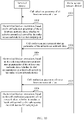
- FIG. 3 is a schematic diagram of a network slice load control method according to an embodiment of this application.
- the method in FIG. 3 may be applied to the network architecture in FIG. 1 .
- a radio access network device may be the radio access network device 101 or the radio access network device 102.
- This embodiment of this application may be applied to the following scenario:
- a first network slice is a network slice that has been accessed by a terminal device connected to the radio access network device, the radio access network device supports at least one second network slice, and a PDU session in the first network slice may be remapped to the second network slice.
- the terminal device is in a connected state.
- the network slice load control method provided in this embodiment of the present invention includes the following steps.
- a core network device sends first remapping information to the radio access network device.
- the first remapping information includes an identifier of the first network slice and an identifier of the at least one second network slice.
- the terminal device obtains, by using the PDU session in the first network slice, a service supported by the first network slice.
- the service supported by the first network slice may be implemented by using a network resource of the second network slice.
- the terminal device may obtain, from the second network slice by using the PDU session, the service supported by the first network slice. For example, if the first network slice supports an ultra-low delay communication service, the ultra-low delay communication service may be implemented by using the network resource of the second network slice.
- the first remapping information indicates that PDU sessions, in the first network slice, of a plurality of terminal devices connected to the radio access network device are to be remapped to one of the at least one second network slice, so that the radio access network device determines whether to remap the sessions of the plurality of terminal devices connected to the radio access network device from the first network slice to the second network slice.
- the plurality of terminal devices may be all or some of the terminal devices connected to the radio access network device. It should be noted that when the first remapping information includes only an identifier of one second network slice, the first remapping information indicates that the PDU sessions, in the first network slice, of the plurality of terminal devices connected to the radio access network device are to be remapped to the second network slice.
- the first remapping information indicates the radio access network device to remap the PDU sessions, in the first network slice, of the plurality of terminal devices connected to the radio access network device to one of the at least two second network slices. It may be understood that the core network device may send the first remapping information to one or more radio access network devices, so that PDU sessions of terminal devices connected to the one or more radio access network devices are remapped from the first network slice to the second network slice.
- the core network device establishes one PDU session for the terminal device, and associates the PDU session with the first network slice, so that the PDU session becomes a link that provides PDU exchange between the terminal device and a data network (data network, DN) of the first network slice, and the terminal device further obtains the service of the first network slice by using the PDU session.
- the access request for the first network slice may be carried in a PDU session establishment request (PDU session establishment request) message of the terminal device.
- the PDU session establishment request message of the terminal device includes the identifier of the first network slice
- the PDU session establishment request message indicates the terminal device to initiate the access request for the first network slice.
- An access request for one network slice is used by the terminal device to request to access the network slice.
- the core network device may remap the PDU session from the first network slice to the second network slice, so that the core network device implements the service, in the first network slice, of the terminal device by using the network resource of the second network slice.
- Remapping the PDU session from the first network slice to the second network slice may be replacing the network resource that is in the first network slice and that carries the PDU session with the network resource in the second network slice.
- a network resource includes a network resource on a core network side and a network resource on an access network side.
- the core network device remaps the PDU session from the first network slice to the second network slice, so that a network resource that is on the core network side and that carries the PDU session is replaced with a network resource of the second network slice.
- the radio access network device reconfigures a radio bearer configuration corresponding to the PDU session from the first network slice to the second network slice, so that a network resource that is on the access network side and that carries the PDU session is replaced with a network resource of the second network slice.
- the core network device may send the first remapping information to the radio access network device when a network status of the first network slice satisfies a first preset condition.
- the first preset condition is that a remaining network resource value of the first network slice is less than or equal to a first threshold, or a load value of the first network slice is greater than or equal to a second threshold.
- the first threshold is 15%
- the second threshold is 90%.
- the core network device sends the first remapping information to the radio access network device.
- the preset condition is that information about the network status of the first network slice indicates that the network resource of the first network slice is insufficient or load of the first network slice is excessively heavy.
- a data structure of the first remapping information is shown in the following Table 1.
- Table 1 First remapping information >Identifier of the first network slice >Identifier list of the second network slice Including the identifier of the at least one second network slice
- the first remapping information may be transmitted by using an overload start (overload start) message of the NG interface application protocol (NG application protocol, NGAP).
- the overload start message indicates that the first network slice is overloaded and indicates the radio access network device to remap the PDU session in the first network slice to the second network slice.
- the first remapping information may be transmitted by using another NGAP message, for example, PDU session modification request information.
- the radio access network device determines that the session, in the first network slice, of the terminal device is to be remapped to the second network slice.
- the radio access network device After receiving the first remapping information, the radio access network device determines that the PDU sessions of the plurality of terminal devices connected to the radio access network device are to be remapped from the first network slice to the second network slice.
- the radio access network device determines that the PDU sessions, in the first network slice, of the plurality of terminal devices are to be remapped to the second network slice.
- the radio access network device determines that the PDU sessions, in the first network slice, of the plurality of terminal devices are to be remapped to one of the at least two second network slices.
- the radio access network device may select one network slice from the at least two second network slices depending on whether the radio access network device supports the second network slice.
- the selected network slice is used to carry the PDU session in the first network slice. For example, when the at least two second network slices include a network slice A and a network slice C, and the radio access network device supports the network slice Abut does not support the network slice C, the radio access network device determines that the PDU session of the terminal device is to be remapped to the network slice A.
- the radio access network device may alternatively select one network slice from the at least two second network slices based on a remaining radio resource value of the second network slice in the radio access network device.
- a first subset is a subset of the at least two second network slices.
- the radio access network device determines that the PDU session of the terminal device is to be remapped from the first network slice to one network slice in the first subset.
- the remaining radio resource value is a ratio of a currently available radio resource of the network slice to total available radio resources of the network slice.
- the radio resource may be a resource block (resource block, RB), a time domain resource, a frequency domain resource, or another radio resource.
- the third threshold is 50%.
- the radio access network device determines that the PDU session of the terminal device is to be remapped from the first network slice to one network slice in the first subset.
- the radio access network device may alternatively select one network slice from the at least two second network slices based on a quality of service (quality of service, QoS) parameter of the second network slice.
- the QoS parameter includes but is not limited to one of the following parameters: a delay, a bandwidth, and a packet loss rate.
- the radio access network device determines that the PDU session, in the first network slice, of the terminal device is to be remapped to the second network slice.
- the second preset condition is that at least one QoS parameter of the second network slice falls within a parameter range.
- the radio access network device determines that the PDU session, in the first network slice, of the terminal device is to be remapped to the second network slice.
- the radio access network device determines that the PDU session, in the first network slice, of the terminal device is to be remapped to the second network slice.
- the radio access network device determines that the PDU session, in the first network slice, of the terminal device is to be remapped to the second network slice.
- the radio access network device may alternatively select one network slice from the at least two second network slices with reference to at least two performance indicators of the second network slice. For example, the radio access network device selects one network slice from the at least two second network slices with reference to load statuses and QoS parameters of the second network slices. The radio access network device may alternatively select one network slice from the at least two second network slices based on other indicators of the second network slices, for example, network resources that are of the second network slices and that are on the access network side.
- the indicator of the second network slice is not limited herein, and may be adjusted based on an actual situation.
- the radio access network device sends first indication information to the core network device.
- the radio access network device When determining that the PDU session, in the first network slice, of the connected terminal device is to be remapped to the second network slice, the radio access network device sends the first indication information to the core network device.
- the first indication information includes the identifier of the first network slice and an identifier of one second network slice.
- the first indication information indicates the core network device to remap the PDU sessions, in the first network slice, of all the terminal devices connected to the radio access network device to the second network slice.
- the first indication information further includes an identifier of a terminal device, indicating to remap the session, in the first network slice, of the terminal device to the second network slice.
- the radio access network device adds an identifier of at least one terminal device to the first indication information, so that sessions, in the first network slice, of some terminal devices connected to the radio access network device can be remapped to the second network slice.
- the radio access network device may separately remap PDU sessions, in the first network slice, of different terminal devices to different second network slices based on a policy of the radio access network device and a context of the connected terminal devices.
- the radio access network device may add the identifier of the at least one terminal device to the first indication information, to remap sessions, in the first network slice, of some terminal devices connected to the radio access network device to the second network slice.
- the radio access network device may further send fourth indication information to the core network device, where the fourth indication information indicates that the PDU sessions, in the first network slice, of the plurality of terminal devices connected to the radio access network device are to be remapped to different second network slices, so that the sessions, in the first network slice, of all the terminal devices connected to the radio access network device are remapped to the second network slices.
- the fourth indication information may include identifiers of the plurality of terminal devices and an identifier of a second network slice corresponding to the identifier of each terminal device. In this embodiment, the fourth indication information indicates that the PDU sessions of the different terminal devices connected to the radio access network device are to be remapped to the corresponding second network slices.
- the first indication information may be carried in a PDU session modify indication (PDU session resource modify indication) message, or may be carried in another existing NGAP interface message or a newly defined NGAP interface message.
- PDU session modify indication PDU session resource modify indication
- the core network device remaps the PDU session, in the first network slice, of the terminal device to the second network slice.
- the core network device After receiving the first indication information of the radio access network device, the core network device remaps the PDU sessions, in the first network slice, of the plurality of terminal devices connected to the radio access network device to the second network slice. In some embodiments, when the first indication information does not include an identifier of a terminal device, the core network device remaps the PDU sessions, in the first network slice, of all the terminal devices connected to the radio access network device from the first network slice to the second network slice. In some other embodiments, when the first indication information includes an identifier of a terminal device, the core network device remaps, to the second network slice, a session, in the first network slice, of the terminal device indicated by the identifier of the terminal device. After the core network device remaps the PDU session, in the first network slice, of the terminal device to the second network slice, the core network device provides, for the terminal device by using the second network slice, the service originally belonging to the first network slice.
- the core network device sends PDU session modification complete indication information to the radio access network device.
- the PDU session modification complete indication information indicates that the PDU session, in the first network slice, of the terminal device has been migrated to the second network slice.
- the PDU session modification complete indication message may be a PDU session resource modify confirm (PDU session resource modify confirm) message in the NGAP message, or may be another existing NGAP interface message or a newly defined NGAP message. It should be understood that the core network device sends the PDU session modification complete indication information to each terminal that is connected to the radio access network device and whose PDU session is remapped.
- the radio access network device sends a first reconfiguration message to the terminal device.
- the radio access network device After receiving the PDU session modification complete indication information, the radio access network device sends the first reconfiguration message to the terminal device.
- the first reconfiguration message is a radio resource control (radio resource control, RRC) reconfiguration message (RRC reconfiguration message).
- RRC radio resource control
- the first reconfiguration message includes configuration information of a second radio bearer.
- the second radio bearer is used by the terminal device to access the second network slice.
- the terminal device originally accesses the first network slice by using a first radio bearer.
- the radio access network device uses configuration information of the first radio bearer as the configuration information of the second radio bearer.
- the first reconfiguration message indicates the terminal device to access the second network slice based on the configuration information of the second radio bearer, so that after the terminal device accesses the second network slice, quality of service at an access stratum is similar to or the same as quality of service provided by the first network slice.
- the configuration information includes an access stratum QoS parameter of the network slice.
- the access stratum QoS parameter includes at least one of a quality of service class identifier (QoS class identifier, QCI) and a guaranteed bit rate (guaranteed bit rate, GBR).
- QCI quality of service class identifier
- GBR guaranteed bit rate
- the terminal device replies to the radio access network device with a first reconfiguration complete message.
- the terminal device accesses the second network slice based on the first reconfiguration message sent by the radio access network device, and sends the first reconfiguration complete message to the radio access network device.
- the first reconfiguration complete message indicates that the terminal device successfully accesses the second network slice.
- Step 301 to step 304 are a process in which the core network device and the radio access network device determine to remap the sessions, in the first network slice, of the plurality of terminal devices connected to the radio access network device to the second network slice.
- Steps 305 to 307 are a process in which the terminal device accesses the second network slice. All the terminal devices connected to the radio access network device need to perform step 305 to step 307 to access the second network slice.
- the core network device remaps the PDU session in the first network slice to the second network slice, to perform load control on the first network slice when a core network resource of the first network slice is overloaded.
- service continuity of the terminal device is ensured, and performance experience of the terminal device is improved.
- the radio access network device after the radio access network device receives the first remapping information, the radio access network device broadcasts the first remapping information, so that the terminal device that receives the first remapping information updates, when a to-be-requested network slice is the first network slice, the to-be-requested network slice to the second network slice.
- the to-be-requested network slice is a network slice to which the terminal device prepares to initiate an access request.
- the radio access network device broadcasts the first remapping information, so that a terminal device in an idle state or an inactive state accesses the second network slice when preparing to access the first network slice, and implements the service of the first network slice by using the second network slice. In this way, when the network resource of the first network slice is overloaded, the service that is of the terminal device and that originally belongs to the first network slice can be implemented by accessing the second network slice. Therefore, a quality of service requirement of the terminal device is ensured.
- the radio access network device broadcasts information about all network slices supported by the radio access network device and remapping information of each network slice. For example, if the radio access network device supports a network slice A and a network slice B, the radio access network device broadcasts information indicating that the radio access network device supports the network slice A and the network slice B, remapping information of the network slice A, and remapping information of the network slice B.
- Remapping information of one network slice includes an identifier of at least one to-be-remapped network slice of the network slice.
- a to-be-remapped network slice of one network slice supports a session in the network slice and a service of the network slice.
- a service, in the network slice, of the terminal device may be implemented by using a network resource of the to-be-remapped network slice of the network slice.
- remapping information of one network slice indicates the terminal device to select, when a to-be-requested network slice is the network slice, one network slice from at least one to-be-remapped network slice of the network slice as an updated to-be-requested network slice.
- a terminal device in the idle state or the inactive state selects one network slice from the to-be-remapped network slice of the network slice to initiate the access request, to implement load control on the network slice.
- remapping information of one network slice indicates a terminal device to select, when a to-be-requested network slice is the network slice, one network slice from the network slice and a to-be-remapped network slice of the network slice as an updated to-be-requested network slice.
- a terminal device in the idle state or the inactive state selects the network slice from the network slice or the to-be-remapped network slice of the network slice to initiate the access request, to prevent the network slice from being overloaded because terminal devices access the network slice together.
- the core network device may remap a session in one network slice to a to-be-remapped network slice of the network slice.
- remapping information of one network slice alternatively indicates a terminal device to select, when a to-be-requested network slice is a to-be-remapped network slice of the network slice, one network slice from the network slice and all to-be-remapped network slices of the network slice to initiate an access request, to prevent the to-be-remapped network slice from being overloaded because terminal devices access the to-be-remapped network slice of the network slice together.
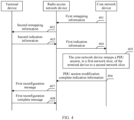
- FIG. 4 is a schematic diagram of a network slice load control method according to an embodiment of this application.
- the method in FIG. 4 may be applied to the network architecture in FIG. 1 .
- This embodiment may be applied to the following scenario: A terminal device is in a connected state, a first network slice is a network slice that has been accessed by the terminal device connected to a radio access network device, and the radio access network device supports at least one second network slice.
- the second network slice may be used to carry a PDU session in the first network slice.
- the method includes the following steps.
- a core network device sends first remapping information to the radio access network device.
- Step 401 is similar to step 301 in the foregoing embodiment. Details are not described herein again.
- the radio access network device sends second remapping information to the terminal device.
- the radio access network device After receiving the first remapping information from the core network device, the radio access network device sends the second remapping information to at least one terminal device connected to the radio access network device.
- the second remapping information includes an identifier of the first network slice and an identifier of at least one third network slice.
- the at least one third network slice is a part or all of the at least one second network slice.
- the second remapping information indicates the terminal device to stop initiating a service request to the first network slice and access the third network slice to implement, by using the third network slice, a service originally belonging to the first network slice.
- the radio access network device uses the part or all of the at least one second network slice indicated by the first remapping information as the third network slice, and sends the identifier of the at least one third network slice to the terminal device by using the second remapping information, so that the terminal device chooses whether to access the third network slice.
- the at least one third network slice is all of the at least one second network slice. After obtaining an identifier of the at least one second network slice from the first remapping information, the radio access network device forwards the identifier of the at least one second network slice to the terminal device by using the second remapping information. In some other embodiments, the at least one third network slice is a part or all of the at least one second network slice. The radio access network device selects the part or all of the at least one second network slice as the third network slice, and sends the identifier of the at least one third network slice to the terminal device by using the second remapping information.
- the radio access network device may select the third network slice from the at least one second network slice based on at least one of a support status for the second network slice, a QoS parameter, or a remaining radio resource value of the second network slice in the radio access network device.
- a specific implementation is similar to step 302 in which the radio access network device selects one network slice from the at least one second network slice. Details are not described herein again.
- the radio access network device includes the second remapping information in an RRC message, so that the terminal device connected to the radio access network device receives the second remapping information.
- the RRC message may be an existing RRC message or a newly defined RRC message.
- a data structure of the second remapping information may be shown in the following Table 2.
- Table 2 Second remapping information >Identifier of the first network slice >Identifier list of the third network slice Including the identifier of the at least one third network slice
- the terminal device sends second indication information to the radio access network device.
- the second indication information indicates that the terminal device determines to access the third network slice.
- the terminal device sends the second indication information to the radio access network device.
- the second indication information is sent, by using an RRC message, to the radio access network device connected to the terminal device.
- the second remapping information includes an identifier of one third network slice
- the second indication information indicates the terminal device to access the third network slice.
- the second remapping information includes identifiers of at least two third network slices
- the second indication information indicates that the terminal device determines to access one of the at least two third network slices.
- the second indication information when the second remapping information includes identifiers of at least two third network slices, the second indication information further includes an identifier of one target third network slice, and the second indication information indicates that the terminal device determines to access the target third network slice.
- the target third network slice is a network slice selected by the terminal device from the at least two third network slices.
- the terminal device may select the target third network slice from the at least two network slices based on a type of a current service. For example, if the current service of the terminal device is a vehicle-to-everything service, the terminal device selects, from the at least two network slices, one network slice supporting the vehicle-to-everything service as the target third network slice. In some embodiments, the terminal device may alternatively select, from the at least two third network slices based on a currently started application, a network slice supporting the application as the target third network slice. For example, if the terminal device currently starts an application of a tenant A, and the at least two third network slices include a network slice A leased by the tenant A, the terminal device uses the network slice A as the target third network slice.
- the terminal device may alternatively select one network slice from the at least two third network slices as the target third network slice based on a QoS requirement of a current service and a QoS parameter of the third network slice.
- the QoS requirement includes but is not limited to at least one of the following: a delay requirement, a bandwidth requirement, and a packet loss rate requirement.
- Table 3 Second indication information >Identifier of the first network slice Indicating the first network slice originally accessed by the terminal device >Identifier of the third network slice Indicating the third network slice that the terminal device determines to access
- the terminal device when determining not to access a to-be-remapped network slice of the first network slice, determines not to send the second indication information to the radio access network device or determines to send fifth indication information to the radio access network device.
- the fifth indication information indicates that the terminal device rejects access to the third network slice.
- the terminal device after sending the second indication information to the radio access network device, the terminal device stops initiating a service request to the first network slice.
- the radio access network device sends first indication information to the core network device.
- the radio access network device sends the first indication information to the core network device based on the second indication information of the terminal device.
- the first indication information includes an identifier of the terminal device, the identifier of the first network slice, and an identifier of a second network slice, where the identifier of the second network slice is the identifier that is of the third network slice and that is included in the second indication information, and the first indication information indicates the core network device to remap a PDU session, in the first network slice, of the terminal device to the second network slice.
- the radio access network device sends the second remapping information to a plurality of terminal devices connected to the radio access network device
- the first indication information includes an identifier of at least one terminal device, the identifier of the first network slice, and the identifier of the third network slice
- the first indication information indicates the core network device to remap a PDU session, in the first network slice, of the at least one terminal device to the third network slice.
- the first indication information includes the identifier of the first network slice and an identifier of the third network slice.
- the first indication information indicates the core network device to remap PDU sessions, in the first network slice, of all the terminal devices connected to the radio access network device to the third network slice.
- the first indication information includes an identifier of at least one terminal device, the identifier of the first network slice, and the identifier of the third network slice, and the first indication information indicates the core network device to remap a session, in the first network slice, of the at least one terminal device connected to the radio access network device to the third network slice.
- the first indication information includes the identifier of the first network slice, an identifier of at least one terminal device, and an identifier of a third network slice corresponding to an identifier of each terminal device.
- the first indication information indicates the core network device to remap a session, in the first network slice, of the terminal device to the corresponding third network slice.
- the core network device remaps the PDU session, in the first network slice, of the terminal device to the second network slice.
- the core network device remaps, based on the identifier that is of the third network slice and that is included in the first indication information, the PDU session, in the first network slice, of the terminal device to the second network slice indicated by the identifier of the third network slice.
- the second network slice is the third network slice that the terminal device determines to access.
- the core network device sends PDU session modification complete indication information to the radio access network device.
- the radio access network device sends a first reconfiguration message to the terminal device.
- the terminal device replies to the radio access network device with a first reconfiguration complete message.
- steps 404 to 408 are similar to those of steps 302 to 306 in the foregoing embodiment. Details are not described herein again.
- the session of the at least one terminal device connected to the radio access network device is remapped to the second network slice, to reduce load of the first network slice.
- Steps 406 to 408 are a process in which one terminal device accesses the second network slice.
- the terminal device after determining to access one second network slice, the terminal device sends the second indication information to the radio access network device, so that the radio access network device sends the first indication information to the core network device, to indicate the core network device to remap the PDU session, in the first network slice, of the terminal device to the second network slice that the terminal device determines to access.
- Load control on the first network slice is implemented, quality of service of the service of the terminal device is ensured, and performance experience of the terminal device is further improved.
- FIG. 5 is a schematic diagram of a network slice load control method according to an embodiment of this application.
- the method in FIG. 5 may be applied to the network architecture in FIG. 1 .
- This embodiment of this application may be applied to the following scenario: A terminal device connected to a radio access network device is in a connected state, and a first network slice is a network slice that has been accessed by the terminal device.
- the radio access network device supports at least one second network slice.
- the second network slice may be used to carry a PDU session in the first network slice.
- the method may include the following steps.
- a core network device sends first remapping information to the terminal device.
- the core network device When the terminal device is in the connected state, the core network device sends the first remapping information to the terminal device by using a NAS message.
- the first remapping information includes an identifier of the first network slice and an identifier of the at least one second network slice.
- the first remapping information indicates the terminal device to select, from the at least one second network slice, one network slice that the terminal device determines to access, so that a PDU session, in the first network slice, of the terminal device is remapped to the second network slice.
- the terminal device sends third indication information to the core network device.
- the terminal device After determining to access the second network slice indicated by the first remapping information, the terminal device sends the third indication information to the core network device by using a NAS message.
- the third indication information includes the identifier of the first network slice and an identifier of the second network slice.
- the third indication information indicates that the terminal device determines to access the second network slice, and indicate the core network device to remap the PDU session, in the first network slice, of the terminal device to the second network slice.
- the terminal device may select one network slice from the second network slices indicated by the first remapping information, and use an identifier of the selected network slice as the identifier, of the second network slice, included in the third indication information.
- An implementation principle of selecting the network slice from the at least two second network slices by the terminal device is similar to the implementation principle of selecting the target third network slice by the terminal device in step 403 in the foregoing embodiment. Details are not described herein again.
- the core network device remaps the PDU session, in the first network slice, of the terminal device to the second network slice.
- the core network device sends a context modification request of the terminal device to the radio access network device connected to the terminal device.
- the context modification request indicates the radio access network device to modify an identifier of a network slice corresponding to the PDU session of the terminal device.
- the radio access network device changes the identifier of the network slice corresponding to the PDU session originally remapped to the first network slice by the terminal device from the identifier of the first network slice to the identifier of the second network slice.
- the context modification request is a UE context modification request (UE context modification request).
- a context is a context that is of the terminal device and that is stored in the radio access network device.
- the context may be a context of the PDU session, or may be a context of a radio bearer.
- the radio access network device sends a first reconfiguration message to the terminal device.
- the terminal device replies to the radio access network device with a first reconfiguration complete message.
- the core network device sends the first remapping information to the single terminal device by using the NAS message, so that the terminal device determines whether to access the second network slice, and may select an appropriate network slice from the at least one second network slice to implement a current service.
- This ensures continuity and quality of service of a service of the terminal device, and implements load control on the first network slice.
- it can be determined, through NAS signaling interaction between the core network device and the terminal device, that the session of the terminal device is to be remapped to the second network slice. Therefore, signaling interaction between the core network device and the radio access network device is reduced.
- FIG. 6 is a schematic diagram of a network slice load control method according to an embodiment of this application.
- the method in FIG. 6 may be applied to the network architecture in FIG. 1 .
- This embodiment is applied to the following scenario: When a terminal device is in an inactive state, a radio access network device to which the terminal device belongs supports at least one second network slice.
- the method may include the following steps.
- a core network device sends first remapping information to the radio access network device.
- Step 601 is similar to step 301 in the foregoing embodiment. Details are not described herein again.
- the terminal device sends an RRC connection resume request to the radio access network device.
- the terminal device in the inactive state After determining that a PDU session in a first network slice needs to be resumed, the terminal device in the inactive state sends, to the radio access network device, the RRC connection resume request used to apply for resuming the PDU session in the first network slice.
- the RRC connection resume request is an RRC resume request (RRC resume request) message or an RRC connection resume request (RRC connection resume request) message.
- the radio access network device determines that the session, in the first network slice, of the terminal device is to be remapped to the second network slice.
- the radio access network device uses a selected network slice as the second network slice that the radio access network device indicates the terminal device to access, and uses an identifier of the selected network slice as an identifier, of the second network slice, included in the first indication information.
- the radio access network device replies to the terminal device with an RRC resume message.
- the radio access network device replies to the terminal device with the RRC resume message, where the RRC resume message further includes the identifier of the second network slice.
- the RRC resume message indicates the terminal device to resume to a connection state and access the second network slice.
- the RRC resume message is an RRC resume (RRC resume) message or an RRC connection resume (RRC connection resume) message.
- the terminal device sends an RRC resume complete message to the radio access network device.
- the terminal device After resuming to the connected state and accessing the second network slice, the terminal device enters the connected state and sends the RRC resume complete message to the radio access network device.
- the terminal device in the connected state is a terminal device connected to the radio access network device.
- the RRC resume complete message indicates that the terminal device successfully accesses the second network slice.
- the RRC resume complete message is an RRC resume complete (RRC resume complete) message or an RRC connection resume complete (RRC connection resume complete) message.
- the radio access network device sends the first indication information to the core network device.
- the core network device remaps the PDU session, in the first network slice, of the terminal device connected to the radio access network device to the second network slice.
- the core network device sends PDU session modification complete indication information to the radio access network device.
- Steps 606 to 608 are similar to steps 303 to 305 in the foregoing embodiment. Details are not described herein again.
- the radio access network device when the terminal device requests to resume the PDU session in the first network slice, the radio access network device indicates, by using the RRC resume message, the terminal device to resume the connection and access the second network slice, and indicates the core network device to remap the PDU session, in the first network slice, of the terminal device to the second network slice.
- Load control on the first network slice is implemented, and the RRC resume message indicates the terminal device to connect to the second network slice, so that continuity and quality of service of a service of the terminal device are ensured, and there is no need to initiate RRC connection reconfiguration for the terminal device. Therefore, signaling overheads are reduced.
- FIG. 7 is a schematic diagram of a network slice load control method according to an embodiment of this application.
- the method in FIG. 7 may be applied to the network architecture in FIG. 1 .
- This embodiment is applied to the following scenario: A terminal device has accessed a first network slice, and a radio access network device to which the terminal device belongs does not support a second network slice.
- the method may include the following steps.
- a core network device sends first remapping information and cell information to the radio access network device.
- the core network device When the radio access network device does not support the second network slice, in addition to the first remapping information, the core network device further sends the cell information to the radio access network device.
- the cell information includes information about at least one first cell. Each first cell supports at least one second network slice. In some embodiments, all first cells indicated by the cell information support all second network slices.
- the first remapping information includes identifiers of two second network slices: an identifier of a network slice A and an identifier of a network slice B
- the cell information includes information about three first cells: information about a cell 1, information about a cell 2, and information about a cell 3.
- the cell 1, the cell 2, and the cell 3 all support the network slice A and the network slice B.
- a part of the at least one first cell supports only a part of the at least one second network slice.
- the cell information further indicates a second network slice supported by each first cell.
- the first remapping information includes identifiers of two second network slices: an identifier of a network slice A and an identifier of a network slice B, and a cell D in the at least one first cell supports only the network slice A.
- the cell information further indicates that the cell D supports the network slice A.
- the information about the first cell includes at least one of the following information: a physical cell identifier (physical cell identifier, PCI), a radio access network area code (radio access network area code, RANAC), a closed access group identifier (closed access group identifier, CAG ID), a radio access network slice area identifier (radio access network slice area identifier, RSA ID), an identifier of the radio access network device, or a carrier identifier.
- a physical cell identifier physical cell identifier
- RANAC radio access network area code
- CAG ID closed access group identifier
- CAG ID closed access group identifier
- RSA ID radio access network slice area identifier
- an identifier of the radio access network device or a carrier identifier.
- the cell information includes any one or more of the following information:
- Each type of information indicates one type of first cell, and the terminal device flexibly accesses the first cell and the second network slice by using different types of cell information.
- a part or all of the at least one first cell is a neighboring cell of a current serving cell of the terminal device.
- the radio access network device may indicate the terminal device to measure the part or all of the first cells, and indicate the terminal device to be handed over from the serving cell to the first cell.
- the core network device may send the first remapping information and the cell information to the radio access network device when a network status of the first network slice satisfies a first preset condition.
- a network status of the first network slice satisfies a first preset condition.
- the radio access network device selects a target cell from the at least one first cell.
- the radio access network device may select the target cell from the at least one first cell based on the first remapping information, the cell information, and a measurement report.
- the measurement report may be a measurement report fed back by the terminal device after the radio access network device sends a cell measurement request to the terminal device, or may be a measurement report reported by the terminal device through periodic measurement.
- the cell measurement request indicates the terminal device to measure the neighboring cell or the first cell.
- That the radio access network device selects the target cell from the at least one first cell based on the first remapping information, the cell information, and the measurement report may be that the radio access network device selects a target network slice from at least one second network slice indicated by the first remapping information, then the radio access network device determines, based on the cell information, a first cell supporting the target network slice, and finally, the radio access network device selects, based on signal quality of the first cell in the measurement report, the target cell from the first cell supporting the target network slice, where signal quality of the target cell satisfies a handover condition.
- that the radio access network device selects the target cell from the at least one first cell based on the first remapping information, the cell information, and the measurement report may alternatively be that the radio access network device sorts the at least one first cell based on signal quality, to obtain a candidate cell whose signal quality satisfies a slice condition, then determines a target network slice from a network slice supported by the candidate cell, and finally, the radio access network device selects the target cell from one or more candidate cells that supports the target network slice.
- the signal quality of the first cell may be reflected by using a reference signal received power (reference signal received power, RSRP) or reference signal received quality (reference signal received quality, RSRQ) of the first cell.
- the terminal device may alternatively reflect the signal quality of the first cell by measuring another attribute of the first cell. This is not limited in this embodiment of this application.
- the handover condition is that the signal quality of the first cell is greater than a seventh threshold.
- the handover condition is that a difference between the signal quality of the first cell and signal quality of the serving cell is greater than an eighth threshold.
- the foregoing two handover conditions are merely examples for description. Actually, the handover condition is not limited in this embodiment of this application. During specific implementation, the handover condition may be set based on a scenario.
- the radio access network device initiates a handover request to a target radio access network device to which the target cell belongs.
- the handover request includes a PDU session remapping request and a cell handover request.
- the PDU session remapping request requests to remap a PDU session, in the first network slice, of the terminal device to a second network slice supported by the target radio access network device.
- the PDU session remapping request includes an identifier of the first network slice, an identifier of the second network slice, and an identifier of the PDU session for which remapping is requested.
- the cell handover request requests to hand over the serving cell of the terminal device to the target cell.
- the handover request may be a handover request (handover request) message.
- the target radio access network device performs admission control.
- the target radio access network device performs admission control on the terminal device based on resource usage of the second network slice and a load status of the target cell.
- the resource usage of the second network slice is resource usage of the second network slice on a target radio access network device side, for example, a remaining load value of the second network slice in the target radio access network device.
- the target radio access network device sends a path switch request to the core network device.
- the target radio access network device When determining to allow the terminal device to access the target cell and the second network slice, the target radio access network device sends the path switch request to the core network device.
- the path switch request is a path switch request (Path switch request) message.
- the path switch request includes the identifier of the PDU session, in the first network slice, of the terminal device, the identifier of the first network slice, and the identifier of the second network slice.
- the path switch request requests the core network device to perform path switch processing on the PDU session, in the first network slice, of the terminal device, so that the core network device remaps the PDU session, in the first network slice, of the terminal device to the second network slice.
- the core network device sends a path switch request response message to the target radio access network device.
- the core network device sends the path switch request response message to the target radio access network device.
- the path switch request response message is a path switch request acknowledgment (path switch request acknowledgment) message or a path switch request response (path switch request response) message.
- the path switch request response message indicates that the PDU session, in the first network slice, of the terminal device is successfully remapped to the second network slice.
- the target radio access network device sends a handover request acknowledgment message to the radio access network device.
- the target radio access network device After receiving a path switch success message from the core network device, the target radio access network device sends the handover request acknowledgment message to the radio access network device.
- the handover request acknowledgment message may be a handover acknowledgment (handover acknowledgment) message or a handover request acknowledgment (handover request acknowledgment) message.
- the handover acknowledgment message includes a configuration parameter required by the terminal device to access the target cell and the identifier of the second network slice.
- the configuration parameter required by the terminal device to access the target cell includes a PCI and frequency information of the target cell.
- the radio access network device sends a handover command to the terminal device.
- the radio access network device After the radio access network device receives the handover request acknowledgment message sent by the target radio access network device, the radio access network device sends the handover command to the terminal device.
- the handover command includes the configuration parameter required by the terminal device to access the target cell and the identifier of the second network slice, and the handover command indicates the terminal device to access the target cell and the second network slice.
- the handover command may be an RRC connection reconfiguration (RRC connection reconfiguration) message, or may be a handover command (handover command) message.
- the terminal device sends a handover acknowledgment message to the target radio access network device.
- the handover acknowledgment message may be a handover complete (handover complete) message, or may be an RRC connection reconfiguration complete (RRC connection reconfiguration complete) message.
- the terminal device performs random access to the target radio access network device, to feed back the handover acknowledgment message to the target radio access network device, to indicate that the terminal device successfully accesses the target cell and the second network slice.
- the terminal device After accessing the target cell based on an RRC reconfiguration message, the terminal device sends an RRC reconfiguration complete message to the target radio access network device.
- the radio access network device after receiving the first remapping information and the cell information, the radio access network device sends the handover request to the target radio access network device.
- the target radio access network device After performing admission control, the target radio access network device sends the handover acknowledgment message to the radio access network device, so that the radio access network device indicates the terminal device to access the target cell and the second network slice that belong to the target radio access network device, and indicates, by using the path switch message, the core network device to remap the PDU session, in the first network slice, of the terminal device to the second network slice.
- the terminal device accesses the second network slice by using the target radio access network device. This ensures continuity and quality of service of a service of the terminal device, and implements load control on the first network slice.
- FIG. 8 is a schematic diagram of a network slice load control method according to an embodiment of this application.
- the method in FIG. 8 may be applied to the network architecture in FIG. 1 .
- This embodiment is applied to the following scenario: A terminal device has accessed a first network slice, and a radio access network device to which the terminal device belongs does not support a second network slice.
- the method may include the following steps.
- a core network device sends first remapping information and cell information to the radio access network device.
- the cell information includes information about at least one first cell.
- step 801 refer to the detailed descriptions corresponding to step 901 in the embodiment shown in FIG. 9 . Details are not described herein again.
- the radio access network device selects a target cell from the at least one first cell.
- step 802 refer to the detailed descriptions corresponding to step 902 in the embodiment shown in FIG. 9 . Details are not described herein again.
- the radio access network device sends a dual-connectivity request to a target radio access network device to which the target cell belongs.
- the dual-connectivity request is used by the radio access network device to request the target radio access network device to use the target cell as a secondary cell (secondary cell, Scell) of the terminal device.
- the dual-connectivity request is a secondary node addition request (secondary node addition request) message.
- the request message includes a PDU session remapping request.
- the PDU session remapping request includes an identifier of a PDU session for which remapping is requested, an identifier of the first network slice, and an identifier of a second network slice.
- the identifier of the PDU session for which remapping is requested includes an identifier of a PDU session, in the first network slice, of the terminal device.
- the PDU session remapping request requests to remap the PDU session, in the first network slice, of the terminal device to the second network slice supported by the target radio access network device.
- the target radio access network device sends a dual-connectivity acknowledgment message to the radio access network device.
- the dual-connectivity acknowledgment message indicates that the target radio access network device agrees to use the target cell as the secondary cell of the terminal device and agrees to remap the PDU session, in the first network slice, of the terminal device to the second network slice supported by the target cell.
- the dual-connectivity acknowledgment message is a secondary radio access network device addition request acknowledgment message (SN Addition Request Acknowledge).
- the radio access network device sends a second reconfiguration message to the terminal device.
- the second reconfiguration message includes a configuration parameter required by the terminal device to use the target cell as the secondary cell and the identifier of the second network slice.
- the second reconfiguration message indicates the terminal device to use the target cell as the secondary cell, and indicates the terminal device to access the second network slice through the target cell.
- the second reconfiguration message is an RRC connection reconfiguration (RRC connection reconfiguration) message.
- the configuration parameter required by the terminal device to use the target cell as the secondary cell includes an air interface resource of the target cell, for example, a frequency and a bandwidth of the target cell.
- the terminal device returns a second reconfiguration complete message to the radio access network device.
- the second reconfiguration complete message indicates that the terminal device has configured the target cell as the secondary cell, and has accessed the second network slice through the target cell.
- the second reconfiguration complete message is an RRC connection reconfiguration complete (RRC connection reconfiguration complete) message.
- the radio access network device sends a third reconfiguration complete message to the target radio access network device.
- the third reconfiguration complete message notifies the target radio access network device that the terminal device has configured the target cell as the secondary cell of the terminal device.
- the third reconfiguration complete message is a secondary radio access network device reconfiguration complete (SN reconfiguration complete) message.
- the radio access network device sends first indication information to the core network device.
- the core network device remaps the PDU session, in the first network slice, of the terminal device connected to the radio access network device to the second network slice.
- the core network device sends PDU session modification complete indication information to the radio access network device.
- Steps 808 to 810 are similar to steps 303 to 305 shown in FIG. 3 in the foregoing embodiment. Details are not described herein again.
- the radio access network device if the radio access network device does not support the second network slice, the radio access network device sends the dual-connectivity request to the target radio access network device to which the target cell belongs, so that the terminal device uses the target cell as the secondary cell and accesses the second network slice through the target cell.
- load control on the first network slice is implemented, continuity and quality of service of a service of the terminal device are ensured, a delay in handing over the terminal device to the target cell is reduced by using dual connectivity, and performance experience of the terminal device is improved.
- FIG. 9 is a schematic diagram of a network slice load control method according to an embodiment of this application.
- a radio access network device may send a cell selection parameter of a network slice, to control a quantity of terminal devices that access the network slice.
- the method may include the following steps.
- the radio access network device sends a cell selection parameter of at least one network slice.
- the radio access network device broadcasts, in a second cell, a cell selection parameter of a network slice supported by the second cell.
- the radio access network device sends, to the terminal device by using an RRC message, the cell selection parameter of the network slice supported by the second cell.
- the RRC message is an RRC release (RRC release) message.
- the second cell is a cell served by the radio access network device, and supports a part or all of the at least one network slice.
- the cell selection parameter of the network slice indicates the terminal device to determine, based on the cell selection parameter of the network slice when the terminal device performs cell selection and a to-be-requested network slice of the terminal device is the network slice, whether to select the second cell that supports the network slice for camping on.
- cells served by the radio access network device include a cell 1, a cell 2, and a cell 3.
- the radio access network device sends cell selection parameters of three network slices.
- the three network slices are a network slice A, a network slice B, and a network slice C.
- the cell 1 supports the network slice A and the network slice C.
- the cell 2 does not support the network slice A, the network slice B, and the network slice C.
- the cell 3 supports the network slice A, the network slice B, and the network slice C.
- the cell 1 and the cell 3 are third cells
- the radio access network device broadcasts the cell selection parameter of the network slice A and the cell selection parameter of the network slice C in the cell 1
- the radio access network device does not broadcast the cell selection parameter of the network slice in the cell 2
- the radio access network device broadcasts the cell selection parameter of the network slice A, the cell selection parameter of the network slice B, and the cell selection parameter of the network slice C in the cell 3.
- the cell selection parameter of the network slice includes at least one of a minimum cell received power level (Q rxlevmin, S-NSSAI ) of the network slice and a minimum cell quality level (Q qualmin, S-NSSAI ) of the network slice.
- the cell selection parameter of the network slice is applied to an S criterion for cell selection, to obtain an S criterion of the network slice.
- the S criterion to which the cell selection parameter of the network slice is applied satisfies the formula 1 or the formula 2.
- the terminal device when the terminal device performs cell selection, if the terminal device needs to access a network slice supported by the radio access network device, and the terminal device receives a cell selection parameter of the network slice, the terminal device needs to determine whether the second cell served by the radio access network device satisfies an S criterion of the network slice.
- the cell selection parameter of the network slice indicates the terminal device to select, when the second cell satisfies the S criterion of the network slice, the second cell for camping on, and access the network slice through the second cell.
- Table 4 Srxlev S-NSSAI Cell selection received power value (RX level value) of a network slice S-NSSAI defined in this embodiment Squal S-NSSAI Cell selection quality value of the network slice S-NSSAI defined in this embodiment Q rxlevmin , S-NSSAI Minimum cell received power level of the network slice S-NSSAI defined in this embodiment Q qualmin, S-NSSAI Minimum cell quality level of the network slice S-NSSAI defined in this embodiment Qoffset temp Offset that is temporarily applied to a cell and that is specified in an existing communication protocol Q rxlevmeas Reference signal received power (reference signal received power, RSRP) of a cell measured by the terminal device Q qualmeas Reference signal received quality (reference signal received quality, RSRQ) of the cell measured by the terminal device Q rxlevminoffset It is specified in an existing communication protocol that Q rxlevminoffset is an offset of a minimum received
- the parameter q-RxLevMinOffset is carried in a system information block 1 (system information block 1, SIB 1) broadcast in the cell.
- SIB 1 system information block 1
- Q qualminoffset It is specified in an existing communication protocol that Q qualminoffset is an offset of a minimum quality value.
- P compensation It is specified in an existing communication protocol that P compensation is a compensation value of the minimum received power value.
- the at least one network slice is a subset of all network slices supported by the radio access network device.
- the radio access network device supports a network slice A, a network slice B, and a network slice C.
- the radio access network device may send only a cell selection parameter of one of the network slice A, the network slice B, or the network slice C.
- the radio access network device sends only the cell selection parameter of the network slice A.
- the radio access network device may alternatively send cell selection parameters of any two of the network slice A, the network slice B, or the network slice C.
- the radio access network device sends the cell selection parameter of the network slice A and the cell selection parameter of the network slice C.
- the radio access network device may alternatively send the cell selection parameter of the network slice A, the cell selection parameter of the network slice B, and the cell selection parameter of the network slice C.
- the radio access network device before the radio access network device sends the cell selection parameter of the network slice, the radio access network device adjusts the cell selection parameter of the network slice, to control a quantity of terminal devices that are in the second cell and that access the network slice. In some embodiments, when the radio access network device sends the cell selection parameter of the network slice, the radio access network device increases a minimum received power level of the network slice or a minimum quality level of the second cell of the network slice, to increase difficulty of selecting, by the terminal device, the second cell corresponding to the network slice for camping on, and restrict the terminal device from accessing the network slice.
- the radio access network device decreases the minimum received power level of the network slice or the minimum quality level of the second cell of the network slice, to reduce difficulty of selecting, by the terminal device, the second cell corresponding to the network slice for camping on.
- the radio access network device when the radio access network device sends a cell selection parameter of the first network slice and a cell selection parameter of the second network slice, the radio access network device adjusts at least one of the cell selection parameter of the first network slice or the cell selection parameter of the second network slice, to control a quantity of terminal devices that access the first network slice and the second network slice.
- the radio access network device increases a minimum received power level of the first network slice or a minimum quality level of the second cell of the first network slice, so that it is more difficult for the terminal device to access the network slice and easier for the terminal device to access the second network slice. Therefore, a quantity of terminal devices that access the first network slice is limited.
- the radio access network device increases a minimum received power level of the second network slice or a minimum cell quality level of the second network slice, so that it is easier for the terminal device to access the first network slice and it is more difficult for the terminal device to access the second network slice. Therefore, a quantity of terminal devices that access the second network slice is limited.
- the radio access network device may alternatively increase a minimum received power level of the first network slice or a minimum cell quality level of the network slice, and decrease a minimum received power level of the second network slice or a minimum cell quality level of the second network slice, so that it is easier for the terminal device to access the second network slice. Therefore, a quantity of terminal devices that access the first network slice is limited.
- the radio access network device may adjust the cell selection parameter of the network slice based on a load value or a remaining network resource value of the network slice. For example, when the load value of the network slice exceeds a second threshold, or the remaining network resource value of the network slice is less than a first threshold, the radio access network device increases the minimum received power level of the network slice or the minimum quality level of the second cell of the network slice.
- the radio access network device may alternatively adjust the cell selection parameter of the network slice based on indication information sent by the core network device. For example, after the radio access network device receives the indication information that is sent by the core network device and that indicates that the network slice is overloaded, the radio access network device increases the minimum received power level of the network slice or the minimum quality level of the second cell of the network slice.
- the terminal device determines, based on the cell selection parameter of the at least one network slice, whether to select the second cell served by the radio access network device for camping on.
- the terminal device determines, based on the cell selection parameter of the at least one network slice, whether to select the second cell served by the radio access network device for camping on.
- the terminal device determines, when performing cell selection, whether the second cell served by the radio access network device satisfies an S criterion of the network slice.
- the terminal device may select the second cell for camping on, and initiate, to the radio access network device, a request for accessing the network slice.
- the terminal device selects, based on priorities of network slices, a fourth network slice having a highest priority, and selects a cell that supports the fourth network slice for camping on, so that when the terminal device needs to access the fourth network slice, the terminal device can initiate, to the cell that is camped on, a request for accessing the fourth network slice, to quickly obtain a service of the fourth network slice.
- the terminal device determines, based on the cell selection parameter of the fourth network slice, whether to select the second cell served by the radio access network device for camping on.
- the priority of the network slice may be a priority provided by the core network device.
- the core network device provides, in an allowed NSSAI (allowed NSSAI) of a registration accept message, a priority corresponding to each network slice.
- the priority of the network slice is included in subscription information of the terminal device, and the subscription information of the terminal device is stored in the core network device.
- the priority of the network slice may be a priority that is of the network slice and that is determined by the terminal device based on historical usage of an application (application, APP).
- the terminal device associates an S-NSSAI identifier of the network slice with an identifier of the APP according to a user equipment routing selection policy (user equipment routing selection policy, URSP) and a network slicing selection policy (network slicing selection policy, NSSP), to obtain a historical access status of the network slice based on the historical usage of the APP.
- the terminal device sorts the priorities of the network slices based on historical access statuses of the network slices, and uses a network slice with a largest quantity of historical access times as a network slice having a highest priority.
- the terminal device is restricted, by using the cell selection parameter of the network slice, from selecting a cell that supports the network slice for camping on, so as to implement load control on the network slice on an access network side.
- FIG. 10 is a schematic diagram of a network slice load control method according to an embodiment of this application. The method is a further supplement to and improvement of the method shown in FIG. 9 .
- a radio access network device may send a cell selection parameter, a cell reselection measurement startup parameter, and a cell reselection parameter of a network slice, to control a quantity of terminal devices that access the network slice.
- the method may include the following steps.
- the radio access network device sends a cell selection parameter of at least one network slice.
- a terminal device determines, based on the cell selection parameter of the at least one network slice, whether to select a second cell served by the radio access network device for camping on.
- Steps 1001 and 1002 are similar to steps 901 and 902 in the foregoing embodiment. Details are not described herein again.
- the radio access network device sends a cell reselection measurement startup parameter of the at least one network slice.
- the radio access network device broadcasts, in a third cell, a cell reselection measurement startup parameter of a network slice supported by the third cell.
- the radio access network device sends, to the terminal device by using an RRC message, the cell reselection measurement startup parameter of the network slice supported by the third cell.
- the third cell is a cell served by the radio access network device, and supports a part or all of the at least one network slice.
- the cell reselection measurement startup parameter of the network slice indicates the terminal device to determine, when a to-be-requested network slice is the network slice, whether to start measurement on the third cell served by the radio access network device.
- the radio access network device broadcasts, in a third cell, a cell reselection measurement startup parameter of a network slice supported by the third cell is specifically as follows:
- the third cell served by the radio access network device includes a cell 1 and a cell 2, the cell 1 supports a network slice A, and the cell 2 supports a network slice B.
- the radio access network device broadcasts a cell reselection measurement startup parameter of the network slice A in the cell 1, and broadcasts a cell reselection measurement startup parameter of the network slice B in the cell 2.
- the cell reselection measurement startup parameter of the network slice includes an intra-frequency measurement startup threshold of the network slice and an inter-frequency/inter-RAT measurement startup threshold of the network slice.
- the intra-frequency measurement startup threshold of the network slice includes at least one of a first power measurement startup threshold or a first quality measurement startup threshold.
- the inter-frequency/inter-RAT measurement startup threshold of the network slice includes at least one of a second power measurement startup threshold or a second quality measurement startup threshold.
- the cell reselection measurement startup parameter of the network slice indicates the terminal device to start measurement on the third cell when signal quality of a serving cell satisfies the cell reselection measurement startup parameter of the network slice.
- the signal quality of the serving cell includes a cell selection received power value of the serving cell and a cell selection quality value of the serving cell.
- the terminal device currently camps on the serving cell, and the third cell is a same-priority cell or a low-priority cell of the serving cell. If the third cell is an intra-frequency cell of the serving cell, the cell reselection measurement startup parameter of the network slice indicates the terminal device to start measurement on the third cell when the cell selection received power value of the serving cell is not greater than a first power measurement startup threshold or the cell selection quality value of the serving cell is not greater than a first quality threshold.
- the third cell is an intra-frequency cell of the serving cell
- the serving cell supports a network slice S-NSSAI
- a first power measurement startup threshold of the network slice S-NSSAI is SintraSearchP S-NSSA
- a first quality measurement startup threshold of the network slice S-NSSAI is SintraSearchQ S-NSSAI
- a cell selection received power value of the serving cell is Srxlev service
- a cell selection quality value of the serving cell is Squal service .
- the cell reselection measurement startup parameter of the network slice S-NSSAI indicates the terminal device to start measurement on the third cell when Srxlev service ⁇ SintraSearchP S-NSSAI or Squal service ⁇ SintraSearchQ S-NSAAI .
- the third cell is an inter-frequency cell or an inter-RAT cell of the serving cell
- the cell reselection measurement startup parameter of the network slice indicates the terminal device to start measurement on the third cell when cell selection received quality of the serving cell is not greater than a second power measurement startup threshold or a cell selection power value of the serving cell is not greater than a second quality measurement startup threshold.
- a second power measurement startup threshold of the network slice S-NSSAI is SnonintrasearchP S-NSSAI
- a second quality measurement startup threshold of the network slice S-NSSAI is SnonintrasearchQ S-NSSAI .
- the cell reselection measurement startup parameter of the network slice indicates the terminal device to start measurement on the third cell when Srxlev service ⁇ SnonintrasearchP S-NSSAI or Srxlev service ⁇ SnonintrasearchQ S-NSSAI .
- Qrxlevmeas is a cell received power value obtained by the terminal device through measurement
- Qrxlevmin is a minimum received power value specified for the cell
- Qrxlevminoffset is an offset of a minimum power value
- Pcompensation is a compensation value of the minimum received power value
- Qoffsettemp is an offset that is temporarily applied to the cell and that is specified in a protocol.
- Qqualmeas is a cell quality value obtained by the terminal device through measurement
- Qqualmin is a minimum quality value specified for the cell
- Qqualminoffset is an offset of the minimum quality value
- Qoffsettemp is an offset that is temporarily applied to the cell and that is specified in a protocol.
- the terminal device determines, based on the cell reselection measurement startup parameter of the at least one network slice, whether to start measurement on the third cell served by the radio access network device.
- the terminal device determines, based on the cell reselection measurement startup parameter of the at least one network slice, whether to start measurement on the third cell served by the radio access network device. It may be understood that the cell reselection measurement startup parameter of the network slice further indicates at least one third cell that is served by the radio access network device and that supports the network slice.
- the high-priority cell may be an inter-frequency cell or an inter-RAT cell of a cell on which the terminal device currently camps.
- the same-priority cell may be an intra-frequency cell or an inter-frequency cell of the cell on which the terminal device currently camps.
- the low-priority cell may be an inter-frequency cell or an inter-RAT cell of the cell on which the terminal device currently camps.
- the terminal device starts measurement on the high-priority third cell. If the third cell detected by the terminal device is a same-priority intra-frequency cell, the terminal device starts measurement on the third cell when the signal quality of the serving cell is less than an intra-frequency measurement startup threshold of the network slice. If the third cell detected by the terminal device is a same-priority inter-frequency cell, the terminal device starts measurement on the third cell when the signal quality of the serving cell is less than an inter-frequency/inter-RAT measurement startup threshold of the network slice. If the third cell detected by the terminal device is a low-priority third cell, the terminal device starts measurement on the third cell when the signal quality of the serving cell does not satisfy an inter-frequency/inter-RAT measurement startup threshold of the network slice.
- the radio access network device sends the cell reselection parameter of the at least one network slice.
- the radio access network device broadcasts, in a fourth cell, a cell reselection parameter of a network slice supported by the fourth cell. For example, if the fourth cell supports a network slice A and a network slice B, the radio access network device broadcasts, in the fourth cell, a cell reselection parameter of the network slice A and a cell reselection parameter of the network slice B.
- the radio access network device sends the cell reselection parameter of the network slice supported by the fourth cell to the terminal device by using an RRC message.
- the fourth cell is a cell served by the radio access network device, and supports a part or all of the at least one network slice.
- the cell reselection parameter of the network slice indicates the terminal device to determine, when the to-be-requested network slice is the network slice, whether to reselect the fourth cell served by the radio access network device for camping on.
- the first reselection parameter includes a first power reselection threshold (Thresh X,HighP,S-NSSAI ) and a first quality reselection threshold (Thresh X,HighQ,S-NSSAI ).
- X in the first power reselection threshold and the first quality reselection threshold represents a frequency, and neighboring cells with different frequencies correspond to different first reselection parameters.
- HighP represents a power reselection threshold of a high-priority cell.
- HighQ indicates a quality reselection threshold of the high-priority cell.
- S-NSSAI indicates that the reselection threshold is a reselection threshold dedicated to the network slice.
- the first power reselection threshold indicates the terminal device to determine, based on a cell selection received power value of the high-priority fourth cell, whether to reselect the fourth cell for camping on and access the network slice through the fourth cell.
- the first quality reselection threshold indicates the terminal device to determine, based on a cell selection quality value of the high-priority fourth cell, whether to reselect the high-priority fourth cell for camping on and access the network slice through the fourth cell.
- a second reselection parameter includes a reselection hysteresis value (Qhyst S-NSSAI ) of the network slice and a reselection offset value (Qoffset S-NSSAI ) of the network slice.
- the reselection hysteresis value of the network slice and the reselection offset value of the network slice are applied to an R criterion for same-priority cell reselection, to obtain an R criterion of the network slice.
- a ranking value (Rn S-NSSAI ) of the serving cell on which the terminal device currently camps satisfies the following formula:
- Rn S-NSSAI Qmeas,n - Qoffset S-NSSAI - Qoffsettemp, where Qmeas,n is a received power value of the serving cell, Qoffset S-NSSAI is the reselection hysteresis value of the network slice, and Qoffsettemp is an offset that is temporarily applied to the fourth cell and that is specified in an existing communication protocol.
- a ranking value (RN S-NSSAI ) that is of the fourth cell and that is measured by the terminal device satisfies the following formula:
- Rn S-NSSAI Qmeas, n - Qoffset S-NSSAI - Qoffsettemp, where Qmeas,n is a received power value of the fourth cell, Qoffset S-NSSAI is the reselection offset value of the network slice, and Qoffsettemp is an offset that is temporarily applied to the fourth cell and that is specified in an existing communication protocol.
- the R criterion of the network slice is as follows: If an R value of the same-priority fourth cell is greater than an R value of the serving cell within a cell reselection time interval (TreselectionRAT), and camping duration of the terminal device in the serving cell exceeds first duration, the terminal device may reselect the same-priority fourth cell for camping on.
- Specific duration of the cell reselection time interval and the first duration may be adjusted based on an actual situation, for example, 1 second, 3 seconds, or 0.5 second. This is not limited herein.
- a third reselection parameter includes a second power reselection threshold (Thresh Serving,LowP,S-NSSAI ), a third power reselection threshold (Thresh X,LowP,S-NSSAI ), a second quality reselection threshold (Thresh Serving,LowQ,S-NSSAI ), and a third quality reselection threshold (Thresh Serving,LowQ,S-NSSAI ).
- the third reselection parameter indicates the terminal device to reselect, when the cell selection received power value of the serving cell on which the terminal device currently camps is less than the second power reselection threshold, and a cell selection received power value of the low-priority fourth cell is not less than the third power reselection threshold, the low-priority fourth cell for camping on.
- the third reselection parameter of the network slice further indicates the terminal device to reselect, when the cell selection quality value of the serving cell is less than the second quality reselection threshold, and a cell selection quality value of the low-priority fourth cell is not less than the third quality reselection threshold, the low-priority fourth cell for camping on.
- the radio access network device further sends reselection indication information to the terminal device, where the reselection indication information indicates the terminal device to perform cell reselection based on a cell selection quality value of a cell.
- the reselection indication information is a quality threshold indication parameter threshServingLowQ included by the radio access network device in a system information block 2 (system information block 2, SIB2).
- the terminal device determines, based on the cell reselection parameter of the network slice, whether to reselect the fourth cell served by the radio access network device for camping on.
- the terminal device determines, based on the cell reselection parameter of the at least one network slice, whether to start measurement on the fourth cell served by the radio access network device. It may be understood that the cell reselection measurement startup parameter of the network slice further indicates at least one fourth cell that is served by the radio access network device and that supports the network slice.
- the terminal device determines, based on the first reselection parameter of the network slice supported by the fourth cell, whether to reselect the fourth cell for camping on. Specifically, when the cell selection received power value of the fourth cell is greater than the first power reselection threshold, or the cell selection quality value of the fourth cell is greater than the first quality reselection threshold, the terminal device determines to reselect the fourth cell for camping on.
- the terminal device reselects the fourth cell for camping on.
- the terminal device receives the reselection indication information from the radio access network device, where the reselection indication information indicates the terminal device to perform cell reselection based on a cell selection quality value of a cell.
- the reselection indication information is the quality threshold indication parameter threshServingLowQ included by the radio access network device in the system information block 2 (system information block 2, SIB2).
- the terminal device After the terminal device receives the reselection indication information, if the cell selection quality value of the fourth cell is greater than the first quality reselection threshold, the terminal device determines to reselect the fourth cell for camping on.
- the terminal device determines, based on the second reselection parameter of the network slice supported by the fourth cell, whether to reselect the fourth cell for camping on.
- the terminal device determines to reselect the fourth cell for camping on.
- the terminal device determines to reselect the fourth cell for camping on.
- the terminal device reselects a fourth cell whose value is the largest for camping on.
- the terminal device determines, based on the third reselection parameter of the network slice supported by the fourth cell, whether to reselect the fourth cell for camping on. Specifically, in some embodiments, when the cell selection received power value of the serving cell is less than the second power reselection threshold, and the cell reselection quality value of the low-priority fourth cell is greater than the third power reselection threshold, the terminal device determines to reselect the low-priority fourth cell for camping on.
- the serving cell is a cell on which the terminal device currently camps.
- the terminal device determines to reselect the low-priority fourth cell for camping on.
- the terminal device receives the reselection indication information from the radio access network device, where the reselection indication information indicates the terminal device to perform cell reselection based on a cell selection quality value of a cell.
- the reselection indication information is the quality threshold indication parameter threshServingLowQ included by the radio access network device in the system information block 2 (system information block 2, SIB2).
- the terminal device determines, based on the cell selection quality value of the serving cell and the cell selection quality value of the fourth cell, whether to reselect the fourth cell for camping on.
- the terminal device determines to reselect the low-priority fourth cell for camping on.
- an execution sequence of step 1001, step 1003, and step 1005 is not limited in this embodiment, and the radio access network device may alternatively simultaneously perform step 1001, step 1003, and step 1005.
- the second cell may be the third cell or the fourth cell, and the third cell may also be the fourth cell.
- the radio access network device may broadcast at least one of a cell selection parameter, a cell reselection measurement startup parameter, or a cell reselection parameter of a network slice, to control the terminal device to access the network slice.
- the cell reselection measurement startup parameter of the network slice and the cell reselection parameter of the network slice are used to further control the terminal device to access the cell that supports the network slice, to implement load control on the network slice on an access network side.
- FIG. 11 is a schematic diagram of a cell reselection method according to an embodiment of this application.
- the method is applicable to the following scenario: A network resource of a first network slice is not overloaded, and a service currently performed by a terminal device belongs to the first network slice. A serving cell on which the terminal device camps does not support the first network slice, but the serving cell supports a second network slice. A network resource of the second network slice can implement a service of the first network slice. The terminal device implements the service of the first network slice by using the second network slice.
- the method may include the following steps.
- the terminal device obtains information about a network slice supported by a neighboring cell.
- the information about the network slice supported by the neighboring cell includes an identifier of the network slice supported by the neighboring cell, and the information about the network slice supported by the neighboring cell indicates the network slice supported by the neighboring cell. For example, information about a network slice supported by a neighboring cell 1 indicates that the neighboring cell supports a network slice A, a network slice B, and a network slice C.
- the terminal device may obtain, by using a broadcast message of the serving cell, the information about the network slice supported by the neighboring cell; or may obtain, by using a broadcast message of the neighboring cell, the information about the network slice supported by the neighboring cell.
- the terminal device may obtain, in another manner, for example, by using an RRC message of the serving cell, the information about the network slice supported by the neighboring cell. This is not limited in this embodiment of this application.
- the terminal device when the serving cell does not support the first network slice, the terminal device obtains the information about the network slice supported by the neighboring cell.
- the serving cell is a cell on which the terminal device currently camps.
- the terminal device when signal quality of the serving cell is not greater than a ninth threshold, the terminal device obtains the information about the network slice supported by the neighboring cell.
- the terminal device may reselect, based on the information about the network slice supported by the neighboring cell, a cell that satisfies at least one of the following conditions for camping on: the first network slice is supported and signal quality is good, so as to ensure that the terminal device obtains a service in the first network slice and communication quality of the terminal device.
- signal quality of a cell may be reflected by using an RSRP or RSRQ of the cell.
- the terminal device may alternatively reflect the signal quality of the serving cell by using another attribute of the cell, for example, a cell selection quality value of the cell. This is not limited in this embodiment of this application.
- the terminal device measures the neighboring cell, to obtain signal quality of the neighboring cell.
- the neighboring cell measured by the terminal device includes at least one of a fifth cell, a sixth cell, or a seventh cell.
- the fifth cell is a cell that supports the first network slice.
- the sixth cell is a cell that supports the second network slice.
- the seventh cell is a cell that supports neither the first network slice nor the second network slice.
- the terminal device when determining, based on the information about the network slice supported by the neighboring cell, that the neighboring cell includes the fifth cell, the terminal device starts measurement on the neighboring cell.
- the terminal device when the neighboring cell includes the fifth cell, the terminal device starts measurement on a second cell in the neighboring cell.
- the terminal device when performing periodic measurement in the serving cell, measures the neighboring cell.
- the terminal device measures the neighboring cell when the signal quality of the serving cell is less than the ninth threshold.
- the signal quality may be reflected by a reference signal received power or reference signal received quality, or may be reflected by other signal quality, for example, a received signal strength indicator (received signal strength indicator, RSSI).
- RSSI received signal strength indicator
- the terminal device When signal quality of the fifth cell included in the neighboring cell satisfies a cell reselection condition, the terminal device reselects the fifth cell for camping on.
- the terminal device When the neighboring cell includes the fifth cell supporting the first network slice, and the signal quality of the fifth cell satisfies the cell reselection condition, the terminal device reselects the fifth cell for camping on, and accesses the first network slice through the fifth cell. After accessing the first network slice, the terminal device implements the service of the first network slice by using the first network slice, so that performance experience of the terminal device is improved.
- the terminal device reselects the fifth cell for camping on, to ensure communication quality when the terminal device camps on the fifth cell.
- the cell reselection condition may be a cell reselection condition in an existing communication protocol.
- the cell reselection condition is that the signal quality of the neighboring cell is greater than a quality threshold within a cell reselection time interval.
- the cell reselection condition may alternatively be that the signal quality of the neighboring cell satisfies the cell reselection parameter of the network slice in the foregoing embodiment.
- the terminal device when the signal quality of the fifth cell satisfies a cell reselection parameter of the first network slice, the terminal device reselects the fifth cell for camping on, to ensure that the first network slice is not overloaded and a slice request of the terminal device can be responded in time.
- the terminal device when the neighboring cell does not include the fifth cell, or the signal quality of the fifth cell in the neighboring cell does not satisfy the cell reselection condition, if the neighboring cell includes the sixth cell, and signal quality of the sixth cell satisfies the cell reselection condition, the terminal device reselects the sixth cell for camping on.
- the terminal device when the serving cell does not support the first network slice, the terminal device reselects the fifth cell that supports the first network slice for camping on, so that the terminal device implements the service of the first network slice by using the first network slice, so that the performance experience of the terminal device is improved.
- FIG. 12 is a schematic diagram of another cell reselection method according to an embodiment of this application.
- the method is applicable to the following scenario: A network resource of a first network slice is not overloaded, and a service currently performed by a terminal device belongs to the first network slice. A serving cell on which the terminal device camps does not support the first network slice, but the serving cell supports a second network slice. A network resource of the second network slice can implement a service of the first network slice. The terminal device implements the service of the first network slice by using the second network slice.
- the method is a further improvement and refinement of the method shown in FIG. 11 .
- the method may include the following steps.
- the terminal device obtains information about a network slice supported by a neighboring cell.
- Step 1201 is similar to step 1301 in the foregoing embodiment. Details are not described herein again.
- the terminal device determines whether the neighboring cell includes a fifth cell.
- the terminal device measures the fifth cell.
- the terminal device measures only the fifth cell, to reduce power consumption of the terminal device for measuring the neighboring cell.
- the terminal device determines whether signal quality of the fifth cell satisfies a cell reselection condition.
- the terminal device reselects the fifth cell for camping on.
- the terminal device determines whether the neighboring cell includes a sixth cell.
- the terminal device measures the sixth cell.
- the terminal device measures the sixth cell, to obtain signal quality of the sixth cell.
- the terminal device selectively measures the neighboring cell, to reduce a power used by the terminal device to measure the neighboring cell.
- a trigger condition for measuring the neighboring cell or the sixth cell by the terminal device includes:
- the serving cell indicates the terminal device to perform periodic measurement, or signal quality of the serving cell is less than a ninth threshold. For example, when the signal quality is a reference signal received power, and the ninth threshold corresponding to the reference signal received power is -95 dBm, the terminal device starts measurement on the sixth cell when the reference signal received power of the serving cell is less than -95 dBm.
- the terminal device determines whether the signal quality of the sixth cell satisfies the cell reselection condition.
- the cell reselection condition is the same as the descriptions about the cell reselection condition in the embodiment shown in FIG. 13 . Details are not described herein again.
- the terminal device reselects the sixth cell for camping on.
- the terminal device performs a cell reselection procedure when the neighboring cell does not include the sixth cell or the signal quality of the sixth cell does not satisfy the cell reselection condition.
- the terminal device when the neighboring cell does not include the fifth cell or the signal quality of the fifth cell does not satisfy the cell reselection condition, the terminal device performs the cell reselection procedure if the neighboring cell does not include the sixth cell or the signal quality of the sixth cell in the neighboring cell does not satisfy the cell reselection condition.
- the cell reselection procedure is a cell reselection procedure in an existing communication protocol.
- the terminal device performs the cell reselection procedure, so that when the signal quality of the serving cell is poor, the terminal device can reselect a seventh cell having good signal quality for camping on.
- the seventh cell supports neither the first network slice nor the second network slice, but communication quality of the terminal device can be ensured.
- the terminal device when the service currently performed by the terminal device belongs to the first network slice, the terminal device can preferentially camp on the fifth cell that supports the first network slice or the sixth cell that supports the second network slice, so that the service, in the first network slice, of the terminal device is ensured, and it is ensured that the terminal device reselects a cell having good signal quality for camping on, to ensure the communication quality of the terminal device.
- FIG. 13 is a schematic diagram of a logical structure of a communication apparatus according to an embodiment of this application.
- the communication apparatus 130 may include a transceiver unit 1301 and a processing unit 1302.
- the communication apparatus 130 may be the radio access network device in the foregoing embodiment, or may be the terminal device in the foregoing embodiment, or may be the core network device in the foregoing embodiment.
- the transceiver unit 1301 is configured to send and receive information
- the processing unit 1302 is configured to perform, by using the transceiver unit 1301, step 301, step 303, step 305, step 306, and step 307 in the embodiment shown in FIG. 3 , and is configured to perform step 302 in the embodiment shown in FIG. 3 .
- the processing unit 1302 is further configured to perform, by using the transceiver unit 1301, step 401, step 402, step 403, step 404, step 406, step 407, and step 408 in the embodiment shown in FIG. 4 .
- the processing unit 1302 is further configured to perform, by using the transceiver unit 1301, step 504, step 505, and step 506 in the embodiment shown in FIG. 5 .
- the processing unit 1302 is further configured to perform, by using the transceiver unit 1301, step 601, step 602, step 604, step 605, step 606, and step 608 in the embodiment shown in FIG. 6 , and is configured to perform step 603 in the embodiment shown in FIG. 6 .
- the processing unit 1302 is further configured to perform, by using the transceiver unit 1301, step 701, step 703, step 707, and step 708 in the embodiment shown in FIG. 7 , and is configured to perform step 702 in the embodiment shown in FIG. 7 .
- the processing unit 1302 is further configured to perform, by using the transceiver unit 1301, step 801, step 803, step 804, step 805, step 806, step 807, step 808, and step 810 in the embodiment shown in FIG. 8 , and is configured to perform step 802 in the embodiment shown in FIG. 8 .
- the processing unit 1302 is further configured to perform, by using the transceiver unit 1301, step 901 in the embodiment shown in FIG. 9 .
- the processing unit 1302 is further configured to perform, by using the transceiver unit 1301, step 1001, step 1003, and step 1005 in the embodiment shown in FIG. 10 .
- the transceiver unit 1301 is configured to send and receive information
- the processing unit 1302 is configured to perform step 304 in the embodiment shown in FIG. 3 , and is configured to perform, by using the transceiver unit 1301, step 301, step 303, and step 305 in the embodiment shown in FIG. 3
- the processing unit 1302 is further configured to perform, by using the transceiver unit 1301, step 401, step 403, and step 405 in the embodiment shown in FIG. 4 , and is configured to perform step 404 in the embodiment shown in FIG. 4 .
- the processing unit 1302 is further configured to perform, by using the transceiver unit 1301, step 501, step 502, and step 504 in the embodiment shown in FIG. 5 , and is configured to perform step 503 in the embodiment shown in FIG. 5 .
- the processing unit 1302 is further configured to perform, by using the transceiver unit 1301, step 601, step 606, and step 608 in the embodiment shown in FIG. 6 , and is configured to perform step 607 in the embodiment shown in FIG. 6 .
- the processing unit 1302 is further configured to perform, by using the transceiver unit 1301, step 701, step 705, and step 707 in the embodiment shown in FIG. 7 .
- the processing unit 1302 is further configured to perform, by using the transceiver unit 1301, step 801, step 808, and step 810 in the embodiment shown in FIG. 8 , and is configured to perform step 809 in the embodiment shown in FIG. 8 .
- the transceiver unit 1301 is configured to send and receive information
- the processing unit 1302 is configured to perform, by using the transceiver unit 1301, step 306 and step 307 in the embodiment shown in FIG. 3 .
- the processing unit 1302 is further configured to perform, by using the transceiver unit 1301, step 402, step 403, step 407, and step 408 in the embodiment shown in FIG. 4 .
- the processing unit 1302 is further configured to perform, by using the transceiver unit 1301, step 501, step 502, step 505, and step 506 in the embodiment shown in FIG. 5 .
- the processing unit 1302 is further configured to perform, by using the transceiver unit 1301, step 602, step 604, and step 605 in the embodiment shown in FIG. 6 .
- the processing unit 1302 is further configured to perform, by using the transceiver unit 1301, step 708 and step 709 in the embodiment shown in FIG. 7 .
- the processing unit 1302 is further configured to perform, by using the transceiver unit 1301, step 805 and step 806 in the embodiment shown in FIG. 8 .
- the processing unit 1302 is further configured to perform, by using the transceiver unit 1301, step 901 in the embodiment shown in FIG. 9 , and is configured to perform step 909 in the embodiment shown in FIG. 9 .
- the processing unit 1302 is further configured to perform, by using the transceiver unit 1301, step 1001, step 1003, and step 1005 in the embodiment shown in FIG. 10 , and is configured to perform step 1002, step 1004, and step 1006 in the embodiment shown in FIG. 10 .
- the processing unit 1302 is further configured to perform, by using the transceiver unit 1301, step 1101 in the embodiment shown in FIG. 11 , and is configured to perform step 1102 and step 1103 in the embodiment shown in FIG. 11 .
- the processing unit 1302 is further configured to perform, by using the transceiver unit 1301, step 1201 in the embodiment shown in FIG. 12 , and is configured to perform steps 1202 to 1210 in the embodiment shown in FIG. 12 .
- FIG. 14 is a simplified schematic diagram of an entity structure of a communication apparatus according to an embodiment of this application.
- the communication apparatus 140 includes a transceiver 1401, a processor 1402, and a memory 1403.
- the transceiver 1401, the processor 1402, and the memory 1403 may be connected to each other by using a bus 1404, or may be connected to each other in another manner.
- the communication apparatus 140 may be a radio access network device, a terminal device, or a core network device.
- a related function implemented by the transceiver unit 1301 shown in FIG. 13 may be implemented by using the transceiver 1401.
- a related function implemented by the processing unit 1302 shown in FIG. 13 may be implemented by using the processor 1402.
- the memory 1403 includes but is not limited to a random access memory (random access memory, RAM), a read-only memory (read-only memory, ROM), an erasable programmable read-only memory (erasable programmable read-only memory, EPROM), or a compact disc read-only memory (compact disc read-only memory, CD-ROM).
- RAM random access memory
- ROM read-only memory
- EPROM erasable programmable read-only memory
- CD-ROM compact disc read-only memory
- the transceiver 1401 is configured to: send data or signaling, and receive data or signaling.
- the processor 1402 may include one or more processors, for example, may include one or more central processing units (central processing units, CPUs).
- CPUs central processing units
- the processor 1402 is one CPU, the CPU may be a single-core CPU or a multi-core CPU.
- the processor 1402 is configured to perform, by using the transceiver 1401, step 301, step 303, step 305, step 306, and step 307 in the embodiment shown in FIG. 3 , and is configured to perform step 302 in the embodiment shown in FIG. 3 .
- the processor 1402 is further configured to perform, by using the transceiver 1401, step 401, step 402, step 403, step 404, step 406, step 407, and step 408 in the embodiment shown in FIG. 4 .
- the processor 1402 is further configured to perform, by using the transceiver 1401, step 504, step 505, and step 506 in the embodiment shown in FIG. 5 .
- the processor 1402 is further configured to perform, by using the transceiver 1401, step 601, step 602, step 604, step 605, step 606, and step 608 in the embodiment shown in FIG. 6 , and is configured to perform step 603 in the embodiment shown in FIG. 6 .
- the processor 1402 is further configured to perform, by using the transceiver 1401, step 701, step 703, step 707, and step 708 in the embodiment shown in FIG. 7 , and is configured to perform step 702 in the embodiment shown in FIG. 7 .
- the processor 1402 is further configured to perform, by using the transceiver 1401, step 801, step 803, step 804, step 805, step 806, step 807, step 808, and step 810 in the embodiment shown in FIG.
- the processor 1402 is further configured to perform, by using the transceiver 1401, step 901 in the embodiment shown in FIG. 9 .
- the processor 1402 is further configured to perform, by using the transceiver 1401, step 1001, step 1003, and step 1005 in the embodiment shown in FIG. 10 .
- the processor 1402 is configured to perform step 304 in the embodiment shown in FIG. 3 , and is configured to perform, by using the transceiver 1401, step 301, step 303, and step 305 in the embodiment shown in FIG. 3 .
- the processor 1402 is further configured to perform, by using the transceiver 1401, step 401, step 403, and step 405 in the embodiment shown in FIG. 4 , and is configured to perform step 404 in the embodiment shown in FIG. 4 .
- the processor 1402 is further configured to perform, by using the transceiver 1401, step 501, step 502, and step 504 in the embodiment shown in FIG. 5 , and is configured to perform step 503 in the embodiment shown in FIG. 5 .
- the processor 1402 is further configured to perform, by using the transceiver 1401, step 601, step 606, and step 608 in the embodiment shown in FIG. 6 , and is configured to perform step 607 in the embodiment shown in FIG. 6 .
- the processor 1402 is further configured to perform, by using the transceiver 1401, step 701, step 705, and step 707 in the embodiment shown in FIG. 7 .
- the processor 1402 is further configured to perform, by using the transceiver 1401, step 801, step 808, and step 810 in the embodiment shown in FIG. 8 , and is configured to perform step 809 in the embodiment shown in FIG. 8 .
- the processor 1402 is configured to perform, by using the transceiver 1401, step 306 and step 307 in the embodiment shown in FIG. 3 .
- the processor 1402 is further configured to perform, by using the transceiver 1401, step 402, step 403, step 407, and step 408 in the embodiment shown in FIG. 4 .
- the processor 1402 is further configured to perform, by using the transceiver 1401, step 501, step 502, step 505, and step 506 in the embodiment shown in FIG. 5 .
- the processor 1402 is further configured to perform, by using the transceiver 1401, step 602, step 604, and step 605 in the embodiment shown in FIG. 6 .
- the processor 1402 is further configured to perform, by using the transceiver 1401, step 708 and step 709 in the embodiment shown in FIG. 7 .
- the processor 1402 is further configured to perform, by using the transceiver 1401, step 805 and step 806 in the embodiment shown in FIG. 8 .
- the processor 1402 is further configured to perform, by using the transceiver 1401, step 901 in the embodiment shown in FIG. 9 , and is configured to perform step 909 in the embodiment shown in FIG. 9 .
- the processor 1402 is further configured to perform, by using the transceiver 1401, step 1001, step 1003, and step 1005 in the embodiment shown in FIG. 10 , and is configured to perform step 1002, step 1004, and step 1006 in the embodiment shown in FIG. 10 .
- the processor 1402 is further configured to perform, by using the transceiver 1401, step 1101 in the embodiment shown in FIG. 11 , and is configured to perform step 1102 and step 1103 in the embodiment shown in FIG. 11 .
- the processor 1402 is further configured to perform, by using the transceiver 1401, step 1201 in the embodiment shown in FIG. 12 , and is configured to perform steps 1202 to 1210 in the embodiment shown in FIG. 12 .
- the memory 1403 is configured to store program code and data of the communication apparatus 140.
- FIG. 14 shows only a simplified design of a first communication apparatus.
- the first communication apparatus may further include other necessary components, including but not limited to any quantity of transceivers, processors, controllers, memories, or communication units. All apparatuses that can implement this application fall within the protection scope of this application.
- the program may be stored in a computer-readable storage medium.
- the foregoing storage medium includes any medium that can store program code, such as a ROM, a random access memory RAM, a magnetic disk, or an optical disc. Therefore, another embodiment of this application provides a computer-readable storage medium.
- the computer-readable storage medium stores instructions. When the instructions are run on a computer, the computer is enabled to perform the methods in the foregoing aspects.
- Another embodiment of this application further provides a computer program product including instructions.
- the computer program product is run on a computer, the computer is enabled to perform the methods in the foregoing aspects.
- the disclosed system, apparatus, and method may be implemented in other manners.
- the described apparatus embodiments are merely examples.
- the unit division is merely logical function division and may be other division in actual implementations.
- a plurality of units or components may be combined or integrated into another system, or some features may be ignored or not performed.
- the displayed or discussed mutual couplings or direct couplings or communication connections may be implemented through some interfaces.
- the indirect couplings or communication connections between the apparatuses or units may be implemented in electrical, mechanical, or other forms.
- the units described as separate parts may or may not be physically separate, and parts displayed as units may or may not be physical units, in other words, may be located in one place, or may be distributed on a plurality of network units. Some or all of the units may be selected based on actual requirements to achieve the objectives of the solutions of embodiments.
- function units in embodiments of this application may be integrated into one processing module, or each of the units may exist alone physically, or two or more units are integrated into one unit.
- All or some of the foregoing embodiments may be implemented by using software, hardware, firmware, or any combination thereof.
- software is used to implement the embodiments, all or a part of the embodiments may be implemented in a form of a computer program product.
- the computer program product includes one or more computer instructions.
- the computer may be a general-purpose computer, a dedicated computer, a computer network, or other programmable apparatuses.
- the computer instructions may be stored in a computer-readable storage medium, or may be transmitted through the computer-readable storage medium.
- the computer instruction may be transmitted from one website, computer, server, or data center to another website, computer, server, or data center in a wired (for example, a coaxial cable, an optical fiber, or a digital subscriber line (digital subscriber line, DSL)) or wireless (for example, infrared, radio, or microwave) manner.
- the computer-readable storage medium may be any usable medium accessible by a computer, or a data storage device, such as a server or a data center, integrating one or more usable media.
- the usable medium may be a magnetic medium (for example, a floppy disk, a hard disk, or a magnetic tape), an optical medium (for example, a DVD), a semiconductor medium (for example, a solid-state drive (solid-state drive, SSD)), or the like.
- a magnetic medium for example, a floppy disk, a hard disk, or a magnetic tape
- an optical medium for example, a DVD
- a semiconductor medium for example, a solid-state drive (solid-state drive, SSD)
Landscapes
- Engineering & Computer Science (AREA)
- Computer Networks & Wireless Communication (AREA)
- Signal Processing (AREA)
- Mobile Radio Communication Systems (AREA)
Applications Claiming Priority (1)
| Application Number | Priority Date | Filing Date | Title |
|---|---|---|---|
| PCT/CN2020/088528 WO2021217672A1 (fr) | 2020-04-30 | 2020-04-30 | Procédé de commande de charge pour tranche de réseau et produit associé |
Publications (2)
| Publication Number | Publication Date |
|---|---|
| EP4132106A1 true EP4132106A1 (fr) | 2023-02-08 |
| EP4132106A4 EP4132106A4 (fr) | 2023-06-07 |
Family
ID=78373153
Family Applications (1)
| Application Number | Title | Priority Date | Filing Date |
|---|---|---|---|
| EP20933385.5A Pending EP4132106A4 (fr) | 2020-04-30 | 2020-04-30 | Procédé de commande de charge pour tranche de réseau et produit associé |
Country Status (4)
| Country | Link |
|---|---|
| US (1) | US20230062362A1 (fr) |
| EP (1) | EP4132106A4 (fr) |
| CN (2) | CN115299110B (fr) |
| WO (1) | WO2021217672A1 (fr) |
Cited By (1)
| Publication number | Priority date | Publication date | Assignee | Title |
|---|---|---|---|---|
| US20240349165A1 (en) * | 2022-01-24 | 2024-10-17 | Zte Corporation | Method for slice resource release |
Families Citing this family (16)
| Publication number | Priority date | Publication date | Assignee | Title |
|---|---|---|---|---|
| CN113162855B (zh) * | 2020-01-22 | 2022-12-27 | 华为技术有限公司 | 组播报文检测方法、网络设备和系统 |
| CN113691996B (zh) * | 2020-05-18 | 2024-04-19 | 维沃移动通信有限公司 | 驻留方法、装置和终端 |
| CN116349308A (zh) * | 2020-08-06 | 2023-06-27 | 诺基亚技术有限公司 | 与无线网络的网络切片或封闭接入组相关联的小区重选相关信息 |
| WO2022052110A1 (fr) * | 2020-09-14 | 2022-03-17 | Telefonaktiebolaget Lm Ericsson (Publ) | Procédé et appareil de détermination d'une zone de qualité de réseau médiocre |
| EP4316007A4 (fr) * | 2021-04-09 | 2024-11-06 | Samsung Electronics Co., Ltd. | Procédés et systèmes de gestion de contrôle d'admission de tranche de réseau pour un équipement d'utilisateur |
| JP7723514B2 (ja) * | 2021-07-14 | 2025-08-14 | キヤノン株式会社 | 通信装置、通信方法、及びプログラム |
| US11805463B2 (en) * | 2021-07-23 | 2023-10-31 | T-Mobile Innovations Llc | User equipment (UE) handover in wireless communication networks |
| US12101625B2 (en) * | 2021-10-08 | 2024-09-24 | Dish Wireless L.L.C. | Selective handover of cellular device based on network slicing |
| US20240334320A1 (en) * | 2021-12-03 | 2024-10-03 | Qualcomm Incorporated | Techniques for switching between network slices |
| US20250301373A1 (en) * | 2021-12-28 | 2025-09-25 | Industry-Academic Cooperation Foundation, Dankook University | Method and apparatus for performing conditional handover |
| CN116762389B (zh) * | 2022-01-14 | 2025-03-18 | 北京小米移动软件有限公司 | 信息传输方法、装置、通信设备和存储介质 |
| CN114390722B (zh) * | 2022-02-17 | 2024-11-19 | Oppo广东移动通信有限公司 | 一种连接方法、终端设备、amf网元及计算机存储介质 |
| US12490178B2 (en) * | 2022-08-04 | 2025-12-02 | At&T Intellectual Property I, L.P. | Facilitating radio access network on-demand dynamic bandwidth allocation in advanced networks |
| US12615559B2 (en) * | 2022-10-12 | 2026-04-28 | At&T Intellectual Property I, L.P. | Facilitating network slicing information preservation in advanced networks |
| JP7554890B1 (ja) | 2023-08-21 | 2024-09-20 | 京セラ株式会社 | 通信制御方法及びノード |
| CN119276336B (zh) * | 2024-09-27 | 2025-12-12 | 中国电信股份有限公司卫星通信分公司 | 分配星地融合网络资源的方法、核心网设备 |
Family Cites Families (19)
| Publication number | Priority date | Publication date | Assignee | Title |
|---|---|---|---|---|
| JP6925411B2 (ja) * | 2016-08-16 | 2021-08-25 | アイディーエーシー ホールディングス インコーポレイテッド | ネットワークスライス再選択 |
| CN107820291B (zh) * | 2016-09-12 | 2021-04-20 | 华为技术有限公司 | 网络切片控制方法及相关设备 |
| KR102650322B1 (ko) * | 2016-11-11 | 2024-03-25 | 광동 오포 모바일 텔레커뮤니케이션즈 코포레이션 리미티드 | 무선 통신 방법, 단말 기기 및 네트워크 기기 |
| WO2018135992A1 (fr) * | 2017-01-18 | 2018-07-26 | Telefonaktiebolaget Lm Ericsson (Publ) | Systèmes et procédés de mise en correspondance d'une tranche de réseau |
| CN114845346B (zh) * | 2017-03-16 | 2024-04-02 | 三星电子株式会社 | 接入和移动性管理功能实体、终端及其方法 |
| US11240720B2 (en) * | 2017-06-02 | 2022-02-01 | FG Innovation Company Limited | Methods, devices, and systems for service-driven mobility management |
| US11083035B2 (en) * | 2017-06-16 | 2021-08-03 | Telefonaktiebolaget Lm Ericsson (Publ) | Methods, wireless device and network node for resuming a communication session |
| CN111491345B (zh) * | 2017-08-11 | 2021-04-20 | 华为技术有限公司 | 通信方法、接入网设备及计算机可读存储介质 |
| CN111373792A (zh) * | 2017-11-19 | 2020-07-03 | Lg电子株式会社 | 无线通信系统中的切换方法及其设备 |
| EP3562194B1 (fr) * | 2018-04-23 | 2021-07-28 | Siemens Aktiengesellschaft | Procédé d'identification d'au moins une configuration de tranche de réseau d'un réseau mobile, système de communication et système d'automatisation |
| CN110838927B (zh) * | 2018-08-15 | 2023-01-03 | 中国移动通信有限公司研究院 | 切片映射重映射方法及接入网网元 |
| US12052657B2 (en) * | 2019-02-12 | 2024-07-30 | Sago Strategic Solutions Llc | AMF node, NSSF node, target SMF node and methods performed in a communications network |
| CN115299108B (zh) * | 2020-03-19 | 2025-08-22 | 诺基亚技术有限公司 | 改进的服务连续性 |
| US12538200B2 (en) * | 2020-04-06 | 2026-01-27 | Nokia Technologies Oy | Communication system with virtual network mapping |
| US11246088B2 (en) * | 2020-04-10 | 2022-02-08 | Cisco Technology, Inc. | Failover and management of multi-vendor network slices |
| EP4136889A1 (fr) * | 2020-04-16 | 2023-02-22 | Lenovo (Singapore) Pte. Ltd. | Informations de tranche de réseau cible pour des tranches de réseau cibles |
| CN115516913A (zh) * | 2020-04-20 | 2022-12-23 | 中兴通讯股份有限公司 | 确保无线通信中的服务连续性 |
| CN116896771A (zh) * | 2020-04-24 | 2023-10-17 | 北京小米移动软件有限公司 | 切片业务处理方法、切片业务处理装置及存储介质 |
| US11611918B2 (en) * | 2021-04-23 | 2023-03-21 | Nokia Technologies Oy | Conditional handover (CHO) execution with network slice service continuity prioritization |
-
2020
- 2020-04-30 CN CN202080098645.7A patent/CN115299110B/zh active Active
- 2020-04-30 WO PCT/CN2020/088528 patent/WO2021217672A1/fr not_active Ceased
- 2020-04-30 EP EP20933385.5A patent/EP4132106A4/fr active Pending
- 2020-04-30 CN CN202411480178.0A patent/CN119485549A/zh active Pending
-
2022
- 2022-10-28 US US17/975,854 patent/US20230062362A1/en active Pending
Cited By (2)
| Publication number | Priority date | Publication date | Assignee | Title |
|---|---|---|---|---|
| US20240349165A1 (en) * | 2022-01-24 | 2024-10-17 | Zte Corporation | Method for slice resource release |
| EP4406292A4 (fr) * | 2022-01-24 | 2025-02-19 | ZTE Corporation | Procédé de libération de ressource de tranche |
Also Published As
| Publication number | Publication date |
|---|---|
| EP4132106A4 (fr) | 2023-06-07 |
| CN119485549A (zh) | 2025-02-18 |
| CN115299110B (zh) | 2024-11-15 |
| US20230062362A1 (en) | 2023-03-02 |
| CN115299110A (zh) | 2022-11-04 |
| WO2021217672A1 (fr) | 2021-11-04 |
Similar Documents
| Publication | Publication Date | Title |
|---|---|---|
| US20230062362A1 (en) | Network slice load control method and related product | |
| US11877197B2 (en) | Communication method and system by RRC carrying NSSAI, and corresponding core network device | |
| US11463947B2 (en) | Communication method, access network device, and terminal device to facilitate communication in a network slice architecture | |
| CN105981432B (zh) | 用于在无线通信系统中导向业务的方法和使用该方法的装置 | |
| RU2651575C2 (ru) | Управление выбором подсистемы мобильности и/или доступа между сотами | |
| JP6039680B2 (ja) | 無線通信システムにおける最高優先順位を適用するセル再選択方法及びこれをサポートする装置 | |
| KR101525750B1 (ko) | 무선 통신 시스템에서 단말의 이동성 지원 방법 및 이를 지원하는 장치 | |
| US10034207B2 (en) | Method for re-selecting cell by user equipment and user equipment using same | |
| KR20140071477A (ko) | 무선 통신 시스템에서 있어서 회선 교환 서비스를 위한 통신 방법 및 이를 지원하는 장치 | |
| KR20150029622A (ko) | 무선 통신 시스템에서 이동성 정보 보고 방법 및 이를 지원하는 장치 | |
| US10404412B2 (en) | Method for interworking performed by base station and base station using same | |
| US9894550B2 (en) | Method for operating terminal for supporting interworking in wireless communication system and terminal using same | |
| WO2015072752A1 (fr) | Procédé de guidage de trafic dans un système de communication sans fil et dispositif le prenant en charge | |
| KR102367974B1 (ko) | 무선 통신 시스템에서 단말의 인터워킹 수행 방법 및 이를 이용하는 단말 | |
| WO2015119473A1 (fr) | Procédé de fonctionnement d'un terminal dans un système de communication sans fil et terminal l'utilisant | |
| US10499441B2 (en) | Method for operating terminal in wireless communication system and terminal using same | |
| WO2022054267A1 (fr) | Terminal, station de base, procédé de communication, et programme | |
| WO2013162342A1 (fr) | Procédé de fonctionnement permettant de rechercher une cellule dans un système de communication sans fil, et dispositif prenant en charge ce procédé | |
| WO2008134966A1 (fr) | Procédé, terminal utilisateur, dispositif côté réseau et système de communication sans fil pour contrôle de la mesure |
Legal Events
| Date | Code | Title | Description |
|---|---|---|---|
| STAA | Information on the status of an ep patent application or granted ep patent |
Free format text: STATUS: THE INTERNATIONAL PUBLICATION HAS BEEN MADE |
|
| PUAI | Public reference made under article 153(3) epc to a published international application that has entered the european phase |
Free format text: ORIGINAL CODE: 0009012 |
|
| STAA | Information on the status of an ep patent application or granted ep patent |
Free format text: STATUS: REQUEST FOR EXAMINATION WAS MADE |
|
| 17P | Request for examination filed |
Effective date: 20221104 |
|
| AK | Designated contracting states |
Kind code of ref document: A1 Designated state(s): AL AT BE BG CH CY CZ DE DK EE ES FI FR GB GR HR HU IE IS IT LI LT LU LV MC MK MT NL NO PL PT RO RS SE SI SK SM TR |
|
| REG | Reference to a national code |
Ref country code: DE Ref legal event code: R079 Free format text: PREVIOUS MAIN CLASS: H04W0036140000 Ipc: H04W0036000000 |
|
| A4 | Supplementary search report drawn up and despatched |
Effective date: 20230508 |
|
| RIC1 | Information provided on ipc code assigned before grant |
Ipc: H04W 36/14 20090101ALI20230501BHEP Ipc: H04W 36/00 20090101AFI20230501BHEP |
|
| DAV | Request for validation of the european patent (deleted) | ||
| DAX | Request for extension of the european patent (deleted) | ||
| STAA | Information on the status of an ep patent application or granted ep patent |
Free format text: STATUS: EXAMINATION IS IN PROGRESS |
|
| 17Q | First examination report despatched |
Effective date: 20231106 |