EP4133696B1 - Gestion de la mobilité sur la base d'une couche basse - Google Patents
Gestion de la mobilité sur la base d'une couche basse Download PDFInfo
- Publication number
- EP4133696B1 EP4133696B1 EP20935492.7A EP20935492A EP4133696B1 EP 4133696 B1 EP4133696 B1 EP 4133696B1 EP 20935492 A EP20935492 A EP 20935492A EP 4133696 B1 EP4133696 B1 EP 4133696B1
- Authority
- EP
- European Patent Office
- Prior art keywords
- gnb
- handover
- procedure
- perform
- signaling
- Prior art date
- Legal status (The legal status is an assumption and is not a legal conclusion. Google has not performed a legal analysis and makes no representation as to the accuracy of the status listed.)
- Active
Links
Images


Classifications
-
- H—ELECTRICITY
- H04—ELECTRIC COMMUNICATION TECHNIQUE
- H04W—WIRELESS COMMUNICATION NETWORKS
- H04W36/00—Hand-off or reselection arrangements
- H04W36/0005—Control or signalling for completing the hand-off
- H04W36/0055—Transmission or use of information for re-establishing the radio link
- H04W36/0061—Transmission or use of information for re-establishing the radio link of neighbour cell information
-
- H—ELECTRICITY
- H04—ELECTRIC COMMUNICATION TECHNIQUE
- H04W—WIRELESS COMMUNICATION NETWORKS
- H04W36/00—Hand-off or reselection arrangements
- H04W36/0005—Control or signalling for completing the hand-off
- H04W36/0055—Transmission or use of information for re-establishing the radio link
- H04W36/0072—Transmission or use of information for re-establishing the radio link of resource information of target access point
- H04W36/00725—Random access channel [RACH]-less handover
-
- H—ELECTRICITY
- H04—ELECTRIC COMMUNICATION TECHNIQUE
- H04W—WIRELESS COMMUNICATION NETWORKS
- H04W72/00—Local resource management
- H04W72/20—Control channels or signalling for resource management
- H04W72/23—Control channels or signalling for resource management in the downlink direction of a wireless link, i.e. towards a terminal
- H04W72/231—Control channels or signalling for resource management in the downlink direction of a wireless link, i.e. towards a terminal the control data signalling from the layers above the physical layer, e.g. RRC or MAC-CE signalling
-
- H—ELECTRICITY
- H04—ELECTRIC COMMUNICATION TECHNIQUE
- H04W—WIRELESS COMMUNICATION NETWORKS
- H04W72/00—Local resource management
- H04W72/20—Control channels or signalling for resource management
- H04W72/23—Control channels or signalling for resource management in the downlink direction of a wireless link, i.e. towards a terminal
- H04W72/232—Control channels or signalling for resource management in the downlink direction of a wireless link, i.e. towards a terminal the control data signalling from the physical layer, e.g. DCI signalling
-
- H—ELECTRICITY
- H04—ELECTRIC COMMUNICATION TECHNIQUE
- H04W—WIRELESS COMMUNICATION NETWORKS
- H04W74/00—Wireless channel access
- H04W74/02—Hybrid access
-
- H—ELECTRICITY
- H04—ELECTRIC COMMUNICATION TECHNIQUE
- H04W—WIRELESS COMMUNICATION NETWORKS
- H04W74/00—Wireless channel access
- H04W74/08—Non-scheduled access, e.g. ALOHA
- H04W74/0833—Random access procedures, e.g. with 4-step access
- H04W74/0841—Random access procedures, e.g. with 4-step access with collision treatment
-
- H—ELECTRICITY
- H04—ELECTRIC COMMUNICATION TECHNIQUE
- H04W—WIRELESS COMMUNICATION NETWORKS
- H04W36/00—Hand-off or reselection arrangements
- H04W36/0005—Control or signalling for completing the hand-off
- H04W36/0055—Transmission or use of information for re-establishing the radio link
- H04W36/0077—Transmission or use of information for re-establishing the radio link of access information of target access point
-
- H—ELECTRICITY
- H04—ELECTRIC COMMUNICATION TECHNIQUE
- H04W—WIRELESS COMMUNICATION NETWORKS
- H04W36/00—Hand-off or reselection arrangements
- H04W36/08—Reselecting an access point
Definitions
- the invention relates to low-layer based mobility management.
- a user equipment may establish a connection to at least one of multiple different networks or types of networks.
- the UE may establish this connection by connecting to a base station (e.g., large cell, small cell, access point, etc.) of a network.
- a base station e.g., large cell, small cell, access point, etc.
- the UE may have to switch from a first base station to a second base station to maintain the connection to the network.
- This switching from a first base station to a second base station is referred to as a handover, e.g., the first base station is handing the UE over to the second base station.
- Radio Resource Control (RRC) signaling between the base stations and the UE.
- RRC Radio Resource Control
- IP Internet Protocol
- Layer 3 Layer 3
- the exemplary embodiments may be further understood with reference to the following description and the related appended drawings, wherein like elements are provided with the same reference numerals.
- the exemplary embodiments relate to a handover for a UE from a first base station to a second base station using lower layer (e.g., layer 1 and/or 2) signaling.
- lower layer e.g., layer 1 and/or 2
- the exemplary embodiments are described with regard to a UE. However, reference to a UE is merely provided for illustrative purposes.
- the exemplary embodiments may be utilized with any electronic component that may establish a connection to a network and is configured with the hardware, software, and/or firmware to exchange information and data with the network. Therefore, the UE as described herein is used to represent any electronic component.
- 5G new radio (NR) radio access technology RAT
- 5G NR new radio
- RAT radio access technology
- the exemplary embodiments relate to using lower layer (e.g., layer 1 and/or 2 "L1/L2") signaling for the handover procedure.
- Using the lower layers for handover may reduce the latency and signaling overhead associated with the handover procedure.
- the exemplary embodiments start the handover procedure using L1/L2 signaling from a base station.
- the UE receives the corresponding signaling and then synchronizes to the target cell.
- the exemplary embodiments address the issues of the signaling details for the L1/L2 signaling and the UE behavior to synchronize to the target cell.
- the exemplary embodiments will be described in detail below.
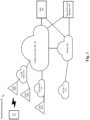
- Fig. 1 shows an exemplary network arrangement 100 according to various exemplary embodiments.
- the exemplary network arrangement 100 includes a UE 110.
- the UE 110 may be any type of electronic component that is configured to communicate via a network, e.g., mobile phones, tablet computers, desktop computers, smartphones, phablets, embedded devices, wearables, Internet of Things (IoT) devices, etc.
- IoT Internet of Things
- an actual network arrangement may include any number of UEs being used by any number of users.
- the example of a single UE 110 is merely provided for illustrative purposes.
- the UE 110 may be configured to communicate with one or more networks.
- the networks with which the UE 110 may wirelessly communicate are a 5G New Radio (NR) radio access network (5G NR-RAN) 120, an LTE radio access network (LTE-RAN) 122 and a wireless local access network (WLAN) 124.
- NR 5G New Radio
- LTE-RAN LTE radio access network
- WLAN wireless local access network
- the UE 110 may also communicate with other types of networks and the UE 110 may also communicate with networks over a wired connection. Therefore, the UE 110 may include a 5G NR chipset to communicate with the 5G NR-RAN 120, an LTE chipset to communicate with the LTE-RAN 122 and an ISM chipset to communicate with the WLAN 124.
- the 5G NR-RAN 120 and the LTE-RAN 122 may be portions of cellular networks that may be deployed by cellular providers (e.g., Verizon, AT&T, Sprint, T-Mobile, etc.). These networks 120, 122 may include, for example, cells or base stations (Node Bs, eNodeBs, HeNBs, eNBS, gNBs, gNodeBs, macrocells, microcells, small cells, femtocells, etc.) that are configured to send and receive traffic from UEs that are equipped with the appropriate cellular chip set.
- the WLAN 124 may include any type of wireless local area network (WiFi, Hot Spot, IEEE 802.11x networks, etc.).
- the UE 110 may connect to the 5G NR-RAN 120 via the gNB 120A or the gNB 120B.
- the gNBs 120A and 120B may be configured with the necessary hardware, software and/or firmware to perform massive multiple in multiple out (MIMO) functionality.
- Massive MIMO may refer to a base station that is configured to generate a plurality of beams for a plurality of UEs.
- the exemplary embodiments will provide manners of handing over the UE 110 from the gNB 120A to the gNB 120B, or vice versa.
- Reference to two gNBs 120A, 120B is merely for illustrative purposes. The exemplary embodiments may apply to any appropriate number of gNBs.
- the UE 110 may communicate with the eNB 122A of the LTE-RAN 122 or an access point of the WLAN 124.
- any association procedure may be performed for the UE 110 to connect to the 5G NR-RAN 120.
- the 5G NR-RAN 120 may be associated with a particular cellular provider where the UE 110 and/or the user thereof has a contract and credential information (e.g., stored on a SIM card).
- the UE 110 may transmit the corresponding credential information to associate with the 5G NR-RAN 120.
- the UE 110 may associate with a specific base station (e.g., the gNB 120A of the 5G NR-RAN 120).
- the network arrangement 100 also includes a cellular core network 130, the Internet 140, an IP Multimedia Subsystem (IMS) 150, and a network services backbone 160.
- the cellular core network 130 may be considered to be the interconnected set of components that manages the operation and traffic of the cellular network.
- the cellular core network 130 also manages the traffic that flows between the cellular network and the Internet 140.
- the IMS 150 may be generally described as an architecture for delivering multimedia services to the UE 110 using the IP protocol.
- the IMS 150 may communicate with the cellular core network 130 and the Internet 140 to provide the multimedia services to the UE 110.
- the network services backbone 160 is in communication either directly or indirectly with the Internet 140 and the cellular core network 130.
- the network services backbone 160 may be generally described as a set of components (e.g., servers, network storage arrangements, etc.) that implement a suite of services that may be used to extend the functionalities of the UE 110 in communication with the various networks.
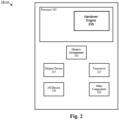
- Fig. 2 shows an exemplary UE 110 according to various exemplary embodiments.
- the UE 110 will be described with regard to the network arrangement 100 of Fig. 1 .
- the UE 110 may represent any electronic device and may include a processor 205, a memory arrangement 210, a display device 215, an input/output (I/O) device 220, a transceiver 225 and other components 230.
- the other components 230 may include, for example, an audio input device, an audio output device, a battery that provides a limited power supply, a data acquisition device, ports to electrically connect the UE 110 to other electronic devices, one or more antenna panels, etc.
- the processor 205 may be configured to execute a plurality of engines of the UE 110.
- the engines may include a handover engine 235.
- the handover engine 235 may be configured to manage the operation of the UE 110 during a handover procedure from the gNB 120A to the gNB 120B. The specific operations will be described in greater detail below.
- the above referenced engine being an application (e.g., a program) executed by the processor 205 is only exemplary.
- the functionality associated with the engines may also be represented as a separate incorporated component of the UE 110 or may be a modular component coupled to the UE 110, e.g., an integrated circuit with or without firmware.
- the integrated circuit may include input circuitry to receive signals and processing circuitry to process the signals and other information.
- the engines may also be embodied as one application or separate applications.
- the functionality described for the processor 205 is split among two or more processors such as a baseband processor and an applications processor.
- the exemplary embodiments may be implemented in any of these or other configurations of a UE.
- the memory arrangement 210 may be a hardware component configured to store data related to operations performed by the UE 110.
- the display device 215 may be a hardware component configured to show data to a user while the I/O device 220 may be a hardware component that enables the user to enter inputs.
- the display device 215 and the I/O device 220 may be separate components or integrated together such as a touchscreen.
- the transceiver 225 may be a hardware component configured to establish a connection with the 5G NR-RAN 120, the LTE-RAN 122, the WLAN 124, etc. Accordingly, the transceiver 225 may operate on a variety of different frequencies or channels (e.g., set of consecutive frequencies).
- Figs. 3 and 4 will describe signaling associated with two examples of a lower layer based handover command and synchronization procedure.
- the UE 110 is currently connected to the gNB 120A and the handover procedure is being performed to handover the UE to the gNB 120B.
- the gNB 120A will be considered the "source gNB”
- the gNB 120B will be considered the "target gNB.” It should be understood that this is only for illustrative purposes and any gNB may be a source gNB or a target gNB and perform the operations described herein for each of these components.
- Fig. 3 shows a first exemplary signaling diagram 300 for a lower layer based handover command and synchronization procedure according to various exemplary embodiments.
- the signaling diagram 300 may be considered a Random Access Channel (RACH) procedure based handover.
- RACH Random Access Channel
- the source gNB 120A sends a L1/L2 based handover command to the UE 110.
- the L1/L2 based handover command will be described in greater detail below.
- the UE 110 sends an ACK for the L1/L2 handover command to the source gNB 120A. While not shown in the signaling diagram 300, the UE 110 may also send the ACK for the L1/L2 handover command to the target gNB 120B.
- the UE 110 and the target gNB 120B perform the RACH procedure to complete the handover from the source gNB 120A to the target gNB 120B. The details of the L1/L2 based handover command and the RACH procedure will be described in greater detail below.
- Fig. 4 shows a second exemplary signaling diagram 400 for a lower layer based handover command and synchronization procedure according to various exemplary embodiments.
- the signaling diagram 400 may be considered a RACH-less based handover.
- the source gNB 120A sends a L1/L2 based handover command to the UE 110.
- the UE 110 sends an ACK for the L1/L2 handover command to the source gNB 120A.
- the UE 110 and the target gNB 120B exchange handover messages on a configured Physical Uplink Shared Channel (PUSCH) to complete the handover from the source gNB 120A to the target gNB 120B.
- PUSCH Physical Uplink Shared Channel
- Fig. 5 shows a diagram of the UE 110 being handed over from a source gNB 120A to a target gNB 120B according to the claimed embodiment.
- the source gNB 120A will send a L1/L2 based handover command to the UE 110 to initiate the handover procedure.
- the following describes an exemplary L1/L2 based handover command that will be described with reference to Fig. 5 .
- the gNB to which the UE is currently connected may provide a downlink beam indication based on a Transmission and Configuration Indication (TCI).
- TCI may be used to indicate the quasi-co-location (QCL) source reference signal for a downlink channel (PDSCH, PDCCH).
- PDSCH downlink channel
- PDCCH downlink channel
- Two antenna ports are considered to be quasi-co-located if properties of the channel over which a symbol on one antenna port is conveyed can be inferred from the channel over which a symbol on the other antenna port is conveyed.
- the UE 110 may be configured with a number (S) of TCI state sets. Within each TCI state set, a number (N) of TCI states may be configured. Each TCI state set may correspond to a serving cell.
- TCI state x corresponds to a TCI state set for the source gNB 120A and TCI state y corresponds to a TCI state set for the target gNB 120B.
- This correspondence may be based on a physical cell ID (PCI) that is configured for each of the TCI state sets or each TCI state.
- PCI physical cell ID
- This correspondence allows for implicit association, e.g. gNB can configure different PCIs in different TCI states, and the TCI states that share the same PCI may be considered to belong to the same set.
- the L1/L2 based handover command may be based on a TCI update command that is sent from the source gNB 120A to the UE 110.
- the source gNB 120A is associated with the TCI state x and the target gNB 120B is associated with the TCI state y.
- the source gNB 120A may send a TCI update command that indicates the TCI state y. Since the UE 110 is configured with information indicating that the TCI state y is associated with the target gNB 120B, the UE 110 will understand that the source gNB 120A is signaling that a handover operation should be performed to the handover to the target gNB 120B.
- the L1/L2 based handover command e.g., the TCI update command including the TCI state indication may be included in a Medium Access Control (MAC) Control Element (CE), e.g., a layer 2 message, or in a Downlink Control Information (DCI) message, e.g., a layer 1 message.
- MAC Medium Access Control
- DCI Downlink Control Information
- the UE 110 stores various RRC parameters sets associated with different TCI state sets that are used for handover. Examples of this stored information will be provided below.
- the exemplary L1/L2 based handover command may be used in operation 310 or 410 for either the RACH based handover or the RACH-less based handover.
- the source gNB 120A may also provide Physical RACH (PRACH) resources to UE 110 to reduce additional latency for beam measurement.
- PRACH Physical RACH
- a PRACH resource may indicate the preamble index and a time/frequency resource for a PRACH transmission.
- the UE 110 may derive the pathloss for PRACH power control based on the synchronization signal blocks (SSB)/ Channel State Indication - Reference Signal (CSI-RS) configured in the TCI state.
- SSB synchronization signal blocks
- CSI-RS Channel State Indication - Reference Signal
- the source gNB 120A may configure a PRACH resource from the target cell 120B by RRC signaling.
- the RRC signaling described in this example is RRC signaling that occurs prior to the start of the handover procedure, e.g., during the normal course of RRC signaling that occurs while the UE 110 is connected to the gNB 120A.
- the UE 110 may store various RRC parameters sets associated with different TCI state sets.
- the source GNB 120A may include an indication of a PRACH resource for a TCI state.
- the UE 110 receives the L1/L2 based handover command that includes a TCI state, the UE 110 can retrieve the information associated with the TCI state that includes the PRACH resource.
- the UE 110 may then start the RACH procedure (e.g., operation 330 of Fig. 3 ) based on the configured PRACH resource.
- the initial attempt at the RACH procedure 330 may be a contention-free based RACH procedure.
- the UE 110 may monitor for a response after transmitting the PRACH, and, if after a given time window, the UE 110 does not receive any response, the UE may then fallback to use a contention-based RACH procedure. Completion of the RACH procedure 330 will complete the handover from the source gNB 120A to the target gNB 120B.
- Fig. 6 shows a block diagram 600 of a relationship between a TCI state 610, a SSBs 620, 625 and PRACH resources 630 for a RACH based handover according to various exemplary embodiments.
- the source gNB 120A may configure a SSB or CSI-RS that is QCLed with a SSB.
- the TCI state 1 610 is associated with the target gNB 120B.
- the SSB 620 is associated with the TCI 1 state 610 and the PRACH resources 631-634.
- the association between the PRACH resources 631-634 and the SSB 620 from the target cell 120B may again be configured by RRC signaling in a similar manner as was described above with reference to the TCI state information.
- the UE 110 may randomly select one of associated PRACH resources (e.g., PRACH resource 632) based on the SSB 620 associated with the TCI 1 state 610 of the target gNB 120B and perform a contention-based RACH procedure in 330.
- the radio network temporary ID (RNTI) of the UE 110 in the target cell may be configured for each TCI state.
- the UE 110 may transmit a Msg3 to the target gNB 120B that includes the RNTI.
- the target gNB 120B may not provide the UE 110 with the new RNTI. In this case, the UE 110 may transmit a Msg3 with the initial UE-ID for collision handling.
- Fig. 7 shows a scheduling diagram 700 for a RACH-less handover according to various exemplary embodiments.
- the operations described with reference to scheduling diagram 700 are related to the PUSCH signaling 430 described above with reference to Fig. 4 .
- the UE 110 sends a PUSCH message to the target gNB 120B.
- the PUSCH resource that is used by the UE 110 to communicate with the target gNB 120B may be configured in various manners.
- a PUSCH resource can be configured for each TCI state. Again, this information may be stored by the UE 110 based on RRC signaling from the source gNB 120A.
- the PUSCH configuration may include, a Modulation and Coding Scheme (MCS), an allocated bandwidth, time resources, DMRS port index, power control parameters, etc.
- MCS Modulation and Coding Scheme
- the UE 110 may use the same beam to transmit the PUSCH as that to receive the SSB/CSI-RS configured in the TCI state.
- the UE 110 may derive the pathloss for PUSCH power control based on the SSB/CSI-RS configured in the TCI state.
- the PUSCH resource may be triggered by a PDCCH or MAC CE from the source gNB 120A.
- an indicator in the DCI may indicate whether the PDCCH is to trigger a PUSCH to the source gNB 120A or the target gNB 120B.
- the PUSCH resource may be indicated by the L1/L2 handover command from the source gNB 120A.
- the initial scrambler of the PUSCH at 710 may be determined based on any of the configured RNTI from the source gNB 120A, an index of random access preambles or a virtual cell ID for the target gNB 120B.
- the UE 110 may also derive a timing advance (TA) for the PUSCH transmission 710.
- TA timing advance
- the TA may be assumed to be 0.
- the TA may be configured by the source gNB 120A.
- the TA may be configured per TCI state set or per TCI state.
- the TA may be based on measurements of a CSI-RS configured in the TCI state.
- the CSI-RS may be configured based on one or more of the following rules.
- the CSI-RS may be 1-port.
- the target gNB 120B responds to the PUSCH message from the UE 110.
- the target gNB 120B response may be based on a PDCCH.
- the target gNB 120B may schedule an uplink (UL) transmission with a scheduling offset K.
- the scheduling offset K may be determined as K2+delta, where K2 is the minimal scheduling offset and delta is the additional scheduling offset, which is predefined based on the subcarrier spacing of the PUSCH.
- the UE 110 may then perform the UL transmission to the target gNB 120B. Once this is completed, the handover procedure is complete and the UE 110 is connected to the target gNB 120B.
- An exemplary hardware platform for implementing the exemplary embodiments may include, for example, an Intel x86 based platform with compatible operating system, a Windows OS, a Mac platform and MAC OS, a mobile device having an operating system such as iOS, Android, etc.
- the exemplary embodiments of the above described method may be embodied as a program containing lines of code stored on a non-transitory computer readable storage medium that, when compiled, may be executed on a processor or microprocessor.
- personally identifiable information should follow privacy policies and practices that are generally recognized as meeting or exceeding industry or governmental requirements for maintaining the privacy of users.
- personally identifiable information data should be managed and handled so as to minimize risks of unintentional or unauthorized access or use, and the nature of authorized use should be clearly indicated to users.
Landscapes
- Engineering & Computer Science (AREA)
- Computer Networks & Wireless Communication (AREA)
- Signal Processing (AREA)
- Mobile Radio Communication Systems (AREA)
Claims (15)
- Un équipement utilisateur, UE (110), comprenant :un émetteur-récepteur (225) configuré pour se connecter à un premier NodeB de prochaine génération, gNB, d'un réseau 5G nouvelle radio, NR ;un processeur de bande de base configuré pour :recevoir une commande de handover à partir du premier gNB (120A) via une parmi une signalisation de couche 1 ou une signalisation de couche 2 qui donne instruction à l'UE (110) de réaliser une procédure de handover pour un handover vers un deuxième gNB (120B), dans lequel la commande de handover comprend une identification d'un état d'indication de configuration et de transmission, TCI, qui est associé au deuxième gNB (120B) ; etdans lequel l'UE est configuré pour stocker une relation entre le deuxième gNB (120B) et l'état de TCI identifié et stocker en outre des relations entre l'état de TCI identifié et des paramètres pour réaliser la procédure de handover ; etconduire la procédure de handover avec le deuxième gNB (120B)pour que l'UE (110) se connecte au deuxième gNB (120B)en utilisant lesdits paramètres.
- L'UE (110) selon la revendication 1, dans lequel la signalisation de couche 1 ou la signalisation de couche 2 comprend un parmi un élément de contrôle, CE, de contrôle d'accès au support, MAC, ou un message d'information de contrôle de liaison descendante, DCI.
- L'UE (110) selon l'une des revendications précédentes, dans lequel la procédure de handover comprend la réalisation d'une procédure de canal d'accès aléatoire, RACH, entre l'UE (110) et le deuxième gNB (120B).
- L'UE (110) selon la revendication 3, dans lequel l'UE (110) est informé, par le premier gNB (120A), d'une ressource RACH physique, PRACH, sur laquelle réaliser la procédure RACH avant la réception de la commande de handover.
- L'UE (110) selon la revendication 4, dans lequel l'UE (110) tente une procédure RACH sans contention sur la ressource PRACH identifiée.
- L'UE (110) selon l'une des revendications 3 à 5, dans lequel l'UE (110) comporte un bloc de signal de synchronisation, SSB, et des ressources PRACH correspondant à l'état de TCI identifié, dans lequel le processeur de bande de base réalise une procédure RACH basée sur la contention sur une des ressources PRACH correspondant à l'état de TCI identifié.
- L'UE (110) selon l'une des revendications précédentes, dans lequel la procédure de handover comporte la réalisation d'une messagerie de canal physique partagé de liaison montante, PUSCH, entre l'UE (110) et le deuxième gNB (120B).
- L'UE (110) selon la revendication 7, dans lequel une ressource PUSCH pour réaliser la messagerie PUSCH est une parmi (i) liée à un état d'indication de configuration et de transmission, TCI, indiqué dans la commande de handover, ou (ii) signalé à l'UE (110) à partir du premier gNB (120A).
- L'UE (110) selon la revendication 7 ou 8, dans lequel le processeur de bande de base est configuré pour déterminer une avance de séquencement, TA, pour une ressource PUSCH.
- L'UE (110) selon la revendication 9, dans lequel la TA est déterminée sur la base d'au moins une parmi (i) une valeur prédéterminée, (ii) une information reçue à partir du premier gNB (120A), ou (iii) des mesures d'un signal de référence d'indication d'état de canal, CSI-RS.
- L'UE (110) selon l'une des revendications précédentes, comprenant en outre :
une mémoire configurée pour stocker la relation entre le deuxième gNB (120B) et l'état de TCI identifié et stocker en outre les relations entre l'état de TCI identifié et des paramètres pour réaliser la procédure de handover. - Un support de stockage lisible par ordinateur comprenant un ensemble d'instructions qui, quand elles sont exécutées par un processeur d'un équipement utilisateur, UE, amènent le processeur à réaliser des opérations comprenant :la réception d'une commande de handover à partir d'un premier NodeB de prochaine génération, gNB, d'un réseau 5G nouvelle radio, NR, via une parmi une signalisation de couche 1 ou une signalisation de couche 2, le handover donnant instruction à l'équipement utilisateur, UE (110), de réaliser une procédure de handover pour un handover vers un deuxième gNB (120B), dans lequel la commande de handover comprend une identification d'un état d'indication de configuration et de transmission, TCI, qui est associé au deuxième gNB (120B) ;le stockage d'une relation entre le deuxième gNB (120B) et l'état de TCI identifié ;le stockage de relations entre l'état de TCI identifié et des paramètres pour réaliser la procédure de handover ; et la conduite de la procédure de handover avec le deuxième gNB (120B) en utilisant lesdits paramètres.
- Le support de stockage lisible par ordinateur selon la revendication 12, dans lequel la procédure de handover comporte la réalisation d'une procédure de canal d'accès aléatoire, RACH, entre l'UE (110) et le deuxième gNB (120B).
- Le support de stockage lisible par ordinateur selon la revendication 13, dans lequel les opérations comprennent en outre :la réception, à partir du premier gNB (120A) et avant la réception de la commande de handover, d'une indication d'une ressource RACH physique, PRACH, sur laquelle réaliser la procédure RACH ; etla tentative d'une procédure RACH sans contention avec le deuxième gNB (120B) sur la ressource PRACH identifiée.
- Un procédé réalisé par un équipement utilisateur, UE, le procédé comprenant :
au niveau d'un processeur de bande de base de l'UE :la réception d'une commande de handover à partir d'un premier NodeB de prochaine génération, gNB, d'un réseau 5G nouvelle radio, NR, via une parmi une signalisation de couche 1 ou une signalisation de couche 2, le handover donnant instruction à l'équipement utilisateur, UE (110), de réaliser une procédure de handover pour un handover vers un deuxième gNB (120B), dans lequel la commande de handover comprend une identification d'un état d'indication de configuration et de transmission, TCI, qui est associé au deuxième gNB (120B) ;le stockage d'une relation entre le deuxième gNB (120B) et l'état de TCI identifié ;le stockage de relations entre l'état de TCI identifié et des paramètres pour réaliser la procédure de handover ; etla conduite de la procédure de handover avec le deuxième gNB (120B) en utilisant lesdits paramètres.
Priority Applications (1)
| Application Number | Priority Date | Filing Date | Title |
|---|---|---|---|
| EP24199472.2A EP4456605A3 (fr) | 2020-05-14 | 2020-05-14 | Synchronisation pour gestion de mobilité basée sur une couche inférieure |
Applications Claiming Priority (1)
| Application Number | Priority Date | Filing Date | Title |
|---|---|---|---|
| PCT/CN2020/090264 WO2021226934A1 (fr) | 2020-05-14 | 2020-05-14 | Synchronisation pour gestion de la mobilité sur la base d'une couche basse |
Related Child Applications (2)
| Application Number | Title | Priority Date | Filing Date |
|---|---|---|---|
| EP24199472.2A Division EP4456605A3 (fr) | 2020-05-14 | 2020-05-14 | Synchronisation pour gestion de mobilité basée sur une couche inférieure |
| EP24199472.2A Division-Into EP4456605A3 (fr) | 2020-05-14 | 2020-05-14 | Synchronisation pour gestion de mobilité basée sur une couche inférieure |
Publications (3)
| Publication Number | Publication Date |
|---|---|
| EP4133696A1 EP4133696A1 (fr) | 2023-02-15 |
| EP4133696A4 EP4133696A4 (fr) | 2023-06-07 |
| EP4133696B1 true EP4133696B1 (fr) | 2024-12-18 |
Family
ID=78526176
Family Applications (2)
| Application Number | Title | Priority Date | Filing Date |
|---|---|---|---|
| EP20935492.7A Active EP4133696B1 (fr) | 2020-05-14 | 2020-05-14 | Gestion de la mobilité sur la base d'une couche basse |
| EP24199472.2A Pending EP4456605A3 (fr) | 2020-05-14 | 2020-05-14 | Synchronisation pour gestion de mobilité basée sur une couche inférieure |
Family Applications After (1)
| Application Number | Title | Priority Date | Filing Date |
|---|---|---|---|
| EP24199472.2A Pending EP4456605A3 (fr) | 2020-05-14 | 2020-05-14 | Synchronisation pour gestion de mobilité basée sur une couche inférieure |
Country Status (5)
| Country | Link |
|---|---|
| US (1) | US12641498B2 (fr) |
| EP (2) | EP4133696B1 (fr) |
| KR (1) | KR102966283B1 (fr) |
| CN (2) | CN115552849B (fr) |
| WO (1) | WO2021226934A1 (fr) |
Families Citing this family (12)
| Publication number | Priority date | Publication date | Assignee | Title |
|---|---|---|---|---|
| US12052625B2 (en) * | 2020-05-15 | 2024-07-30 | Apple Inc. | Generating filtered results in user equipment-triggered lower layer-based handover |
| JP7858697B2 (ja) * | 2022-02-08 | 2026-05-14 | 京セラ株式会社 | 通信方法、ユーザ装置、プロセッサ、プログラム及びシステム |
| EP4500952A4 (fr) | 2022-03-24 | 2025-04-30 | NEC Corporation | Procédé, dispositif et support de stockage informatique de communication |
| CN119364453A (zh) * | 2022-04-22 | 2025-01-24 | 中兴通讯股份有限公司 | 用于基于低层信令执行快速移动性的方法和系统 |
| WO2024013665A2 (fr) * | 2022-07-12 | 2024-01-18 | Guangdong Oppo Mobile Telecommunications Corp., Ltd. | Procédés et appareil d'application d'état tci pendant une mobilité inter-cellules basée sur l1/l2 |
| KR20240063643A (ko) * | 2022-11-03 | 2024-05-10 | 삼성전자주식회사 | 무선 통신 시스템에서 셀 전환을 위한 tci 상태를 설정하는 방법 및 장치 |
| GB2624041A (en) * | 2022-11-07 | 2024-05-08 | Nokia Technologies Oy | Mobility in wireless communication systems |
| CN120677758A (zh) * | 2023-02-14 | 2025-09-19 | 苹果公司 | 用于小区切换命令构造和使用的系统和方法 |
| KR102876768B1 (ko) | 2023-03-14 | 2025-10-28 | 주식회사 블랙핀 | 무선 이동 통신 시스템에서 제1 pdcch 오더와 제2 pdcch 오더에 기반해서 프리앰블을 전송하는 방법 장치 |
| US12506666B2 (en) | 2023-03-31 | 2025-12-23 | Lockheed Martin Corporation | Method and system for creating data flow architecture of access networks |
| GB2628818A (en) * | 2023-04-05 | 2024-10-09 | Nec Corp | Communication system |
| KR20240164219A (ko) * | 2023-05-12 | 2024-11-19 | 삼성전자주식회사 | 위성 통신 시스템에서 핸드오버를 수행하는 방법 및 장치 |
Family Cites Families (20)
| Publication number | Priority date | Publication date | Assignee | Title |
|---|---|---|---|---|
| US10568004B2 (en) * | 2017-03-23 | 2020-02-18 | Futurewei Technologies, Inc. | Layer 2 (L2) mobility for new radio (NR) networks |
| US10749920B2 (en) | 2017-06-09 | 2020-08-18 | FG Innovation Company Limited | Monitoring system and wireless communication system equipped therewith |
| CN109691212B (zh) * | 2017-06-27 | 2021-02-05 | 华为技术有限公司 | 非授权上行传输的小区切换方法和设备 |
| CN110167091B (zh) | 2018-02-11 | 2021-03-16 | 维沃移动通信有限公司 | 下行信道的接收方法、发送方法、终端和基站 |
| US10972952B2 (en) * | 2018-03-22 | 2021-04-06 | Asustek Computer Inc. | Method and apparatus for PDCCH monitoring in a wireless communication system |
| WO2019245329A1 (fr) | 2018-06-21 | 2019-12-26 | Lg Electronics Inc. | Appareil et procédé de réalisation d'un changement de cellule conditionnel dans un système de communication sans fil |
| WO2020102975A1 (fr) * | 2018-11-20 | 2020-05-28 | Qualcomm Incorporated | Procédure sans canal d'accès aléatoire (rach) |
| US12047893B2 (en) * | 2019-02-12 | 2024-07-23 | Sony Group Corporation | Timing advance validation |
| EP3881633B1 (fr) * | 2019-02-13 | 2023-12-06 | Samsung Electronics Co., Ltd. | Procédé et appareil de gestion de retransmissions de messages durant des procédures d'accès aléatoire en 2 étapes dans un système de communication sans fil |
| CN111565099B (zh) * | 2019-02-14 | 2021-10-15 | 华为技术有限公司 | 一种状态配置方法和设备 |
| CN113785502B (zh) * | 2019-02-14 | 2024-03-12 | 株式会社Ntt都科摩 | 用户终端以及无线通信方法 |
| EP3700257A1 (fr) * | 2019-02-22 | 2020-08-26 | Panasonic Intellectual Property Corporation of America | Équipement utilisateur impliqué dans le rapport de mesure et des handovers |
| US11729800B2 (en) * | 2019-03-28 | 2023-08-15 | Ofinno, Llc | Control channel with multiple transmission reception points |
| US11159956B2 (en) * | 2019-03-28 | 2021-10-26 | Ofinno, Llc | Uplink beam management in wireless communication system |
| US11452011B2 (en) * | 2019-03-29 | 2022-09-20 | Huawei Technologies Co., Ltd. | User equipment-centric inter-cell mobility |
| US11570706B2 (en) * | 2019-12-23 | 2023-01-31 | Qualcomm Incorporated | Operation modes for L1/L2-centric inter-cell mobility |
| EP4059287B1 (fr) | 2020-02-12 | 2026-01-07 | Apple Inc. | Procédé de gestion de mobilité intercellulaire à couche basse |
| EP3866349A1 (fr) * | 2020-02-13 | 2021-08-18 | Nokia Technologies Oy | Station de base et équipement utilisateur |
| CN119729668A (zh) * | 2020-02-14 | 2025-03-28 | 中兴通讯股份有限公司 | 一种信令接收、发送方法、装置及设备 |
| CN113382449A (zh) * | 2020-02-25 | 2021-09-10 | 索尼公司 | 用于无线通信的电子设备和方法、计算机可读存储介质 |
-
2020
- 2020-05-14 KR KR1020227039578A patent/KR102966283B1/ko active Active
- 2020-05-14 WO PCT/CN2020/090264 patent/WO2021226934A1/fr not_active Ceased
- 2020-05-14 EP EP20935492.7A patent/EP4133696B1/fr active Active
- 2020-05-14 EP EP24199472.2A patent/EP4456605A3/fr active Pending
- 2020-05-14 CN CN202080100801.9A patent/CN115552849B/zh active Active
- 2020-05-14 CN CN202510152275.5A patent/CN119997123A/zh active Pending
- 2020-05-14 US US17/593,495 patent/US12641498B2/en active Active
Also Published As
| Publication number | Publication date |
|---|---|
| US12641498B2 (en) | 2026-05-26 |
| CN115552849B (zh) | 2025-02-21 |
| KR20230007376A (ko) | 2023-01-12 |
| EP4456605A3 (fr) | 2025-01-22 |
| EP4133696A4 (fr) | 2023-06-07 |
| CN119997123A (zh) | 2025-05-13 |
| US20220312286A1 (en) | 2022-09-29 |
| EP4456605A2 (fr) | 2024-10-30 |
| EP4133696A1 (fr) | 2023-02-15 |
| KR102966283B1 (ko) | 2026-05-19 |
| CN115552849A (zh) | 2022-12-30 |
| WO2021226934A1 (fr) | 2021-11-18 |
Similar Documents
| Publication | Publication Date | Title |
|---|---|---|
| WO2021226934A1 (fr) | Synchronisation pour gestion de la mobilité sur la base d'une couche basse | |
| US12082287B2 (en) | TCI change enhancement | |
| CN116420390B (zh) | 5g新空口(nr)的服务接入限制增强 | |
| WO2023092406A1 (fr) | Schémas de transfert intercellulaire nr 5g | |
| US12200553B2 (en) | Target cell ID for conditional handover and conditional PSCell addition or change | |
| US10582389B2 (en) | Secured paging | |
| WO2024167671A1 (fr) | Prise en charge de multiples avances temporelles pour de multiples points de transmission et de réception | |
| WO2024207190A1 (fr) | Gestion d'avance temporelle dans des communications sans fil | |
| US12538217B2 (en) | Communication method, communications apparatus, and communications system | |
| EP4140173B1 (fr) | Commutation de partie de bande passante dans une connectivité double de nouvelle radio 5g | |
| WO2025025140A1 (fr) | Activation de cellule candidate pour mobilité déclenchée par couche 1/couche 2 | |
| EP4132176B1 (fr) | Programmation de signalisation de commande sur une cellule primaire par une cellule secondaire | |
| EP4151017B1 (fr) | Programmation de signalisation de commande sur une cellule primaire par une cellule secondaire | |
| US12317283B2 (en) | Scheduling of control signaling on a primary cell by a secondary cell | |
| WO2023216075A1 (fr) | Protection d'identité temporaire de réseau radio de dispositif cellulaire | |
| WO2026065065A1 (fr) | Attribution de ressources de module de recherche | |
| WO2025231606A1 (fr) | Amélioration de rrm pour activation de scell basée sur un rapport de couche 3 | |
| EP4156803A1 (fr) | Transmission prach efficace dans une procédure rach de secours |
Legal Events
| Date | Code | Title | Description |
|---|---|---|---|
| STAA | Information on the status of an ep patent application or granted ep patent |
Free format text: STATUS: THE INTERNATIONAL PUBLICATION HAS BEEN MADE |
|
| PUAI | Public reference made under article 153(3) epc to a published international application that has entered the european phase |
Free format text: ORIGINAL CODE: 0009012 |
|
| STAA | Information on the status of an ep patent application or granted ep patent |
Free format text: STATUS: REQUEST FOR EXAMINATION WAS MADE |
|
| 17P | Request for examination filed |
Effective date: 20221109 |
|
| AK | Designated contracting states |
Kind code of ref document: A1 Designated state(s): AL AT BE BG CH CY CZ DE DK EE ES FI FR GB GR HR HU IE IS IT LI LT LU LV MC MK MT NL NO PL PT RO RS SE SI SK SM TR |
|
| REG | Reference to a national code |
Ref country code: DE Ref legal event code: R079 Free format text: PREVIOUS MAIN CLASS: H04L0012460000 Ipc: H04W0036000000 Ref country code: DE Ref legal event code: R079 Ref document number: 602020043543 Country of ref document: DE Free format text: PREVIOUS MAIN CLASS: H04L0012460000 Ipc: H04W0036000000 |
|
| A4 | Supplementary search report drawn up and despatched |
Effective date: 20230509 |
|
| RIC1 | Information provided on ipc code assigned before grant |
Ipc: H04W 36/00 20090101AFI20230502BHEP |
|
| DAV | Request for validation of the european patent (deleted) | ||
| DAX | Request for extension of the european patent (deleted) | ||
| RIC1 | Information provided on ipc code assigned before grant |
Ipc: H04W 36/08 20090101ALN20240522BHEP Ipc: H04W 36/00 20090101AFI20240522BHEP |
|
| GRAP | Despatch of communication of intention to grant a patent |
Free format text: ORIGINAL CODE: EPIDOSNIGR1 |
|
| STAA | Information on the status of an ep patent application or granted ep patent |
Free format text: STATUS: GRANT OF PATENT IS INTENDED |
|
| RIC1 | Information provided on ipc code assigned before grant |
Ipc: H04W 36/08 20090101ALN20240617BHEP Ipc: H04W 36/00 20090101AFI20240617BHEP |
|
| INTG | Intention to grant announced |
Effective date: 20240712 |
|
| GRAS | Grant fee paid |
Free format text: ORIGINAL CODE: EPIDOSNIGR3 |
|
| GRAA | (expected) grant |
Free format text: ORIGINAL CODE: 0009210 |
|
| STAA | Information on the status of an ep patent application or granted ep patent |
Free format text: STATUS: THE PATENT HAS BEEN GRANTED |
|
| AK | Designated contracting states |
Kind code of ref document: B1 Designated state(s): AL AT BE BG CH CY CZ DE DK EE ES FI FR GB GR HR HU IE IS IT LI LT LU LV MC MK MT NL NO PL PT RO RS SE SI SK SM TR |
|
| REG | Reference to a national code |
Ref country code: CH Ref legal event code: EP |
|
| REG | Reference to a national code |
Ref country code: DE Ref legal event code: R096 Ref document number: 602020043543 Country of ref document: DE |
|
| REG | Reference to a national code |
Ref country code: IE Ref legal event code: FG4D |
|
| REG | Reference to a national code |
Ref country code: LT Ref legal event code: MG9D |
|
| PG25 | Lapsed in a contracting state [announced via postgrant information from national office to epo] |
Ref country code: HR Free format text: LAPSE BECAUSE OF FAILURE TO SUBMIT A TRANSLATION OF THE DESCRIPTION OR TO PAY THE FEE WITHIN THE PRESCRIBED TIME-LIMIT Effective date: 20241218 |
|
| PG25 | Lapsed in a contracting state [announced via postgrant information from national office to epo] |
Ref country code: FI Free format text: LAPSE BECAUSE OF FAILURE TO SUBMIT A TRANSLATION OF THE DESCRIPTION OR TO PAY THE FEE WITHIN THE PRESCRIBED TIME-LIMIT Effective date: 20241218 |
|
| PG25 | Lapsed in a contracting state [announced via postgrant information from national office to epo] |
Ref country code: BG Free format text: LAPSE BECAUSE OF FAILURE TO SUBMIT A TRANSLATION OF THE DESCRIPTION OR TO PAY THE FEE WITHIN THE PRESCRIBED TIME-LIMIT Effective date: 20241218 |
|
| PG25 | Lapsed in a contracting state [announced via postgrant information from national office to epo] |
Ref country code: NO Free format text: LAPSE BECAUSE OF FAILURE TO SUBMIT A TRANSLATION OF THE DESCRIPTION OR TO PAY THE FEE WITHIN THE PRESCRIBED TIME-LIMIT Effective date: 20250318 |
|
| REG | Reference to a national code |
Ref country code: NL Ref legal event code: MP Effective date: 20241218 |
|
| PG25 | Lapsed in a contracting state [announced via postgrant information from national office to epo] |
Ref country code: GR Free format text: LAPSE BECAUSE OF FAILURE TO SUBMIT A TRANSLATION OF THE DESCRIPTION OR TO PAY THE FEE WITHIN THE PRESCRIBED TIME-LIMIT Effective date: 20250319 Ref country code: LV Free format text: LAPSE BECAUSE OF FAILURE TO SUBMIT A TRANSLATION OF THE DESCRIPTION OR TO PAY THE FEE WITHIN THE PRESCRIBED TIME-LIMIT Effective date: 20241218 |
|
| PG25 | Lapsed in a contracting state [announced via postgrant information from national office to epo] |
Ref country code: RS Free format text: LAPSE BECAUSE OF FAILURE TO SUBMIT A TRANSLATION OF THE DESCRIPTION OR TO PAY THE FEE WITHIN THE PRESCRIBED TIME-LIMIT Effective date: 20250318 |
|
| PG25 | Lapsed in a contracting state [announced via postgrant information from national office to epo] |
Ref country code: NL Free format text: LAPSE BECAUSE OF FAILURE TO SUBMIT A TRANSLATION OF THE DESCRIPTION OR TO PAY THE FEE WITHIN THE PRESCRIBED TIME-LIMIT Effective date: 20241218 |
|
| REG | Reference to a national code |
Ref country code: AT Ref legal event code: MK05 Ref document number: 1753265 Country of ref document: AT Kind code of ref document: T Effective date: 20241218 |
|
| PG25 | Lapsed in a contracting state [announced via postgrant information from national office to epo] |
Ref country code: SM Free format text: LAPSE BECAUSE OF FAILURE TO SUBMIT A TRANSLATION OF THE DESCRIPTION OR TO PAY THE FEE WITHIN THE PRESCRIBED TIME-LIMIT Effective date: 20241218 |
|
| PG25 | Lapsed in a contracting state [announced via postgrant information from national office to epo] |
Ref country code: PL Free format text: LAPSE BECAUSE OF FAILURE TO SUBMIT A TRANSLATION OF THE DESCRIPTION OR TO PAY THE FEE WITHIN THE PRESCRIBED TIME-LIMIT Effective date: 20241218 |
|
| PG25 | Lapsed in a contracting state [announced via postgrant information from national office to epo] |
Ref country code: ES Free format text: LAPSE BECAUSE OF FAILURE TO SUBMIT A TRANSLATION OF THE DESCRIPTION OR TO PAY THE FEE WITHIN THE PRESCRIBED TIME-LIMIT Effective date: 20241218 |
|
| PG25 | Lapsed in a contracting state [announced via postgrant information from national office to epo] |
Ref country code: IS Free format text: LAPSE BECAUSE OF FAILURE TO SUBMIT A TRANSLATION OF THE DESCRIPTION OR TO PAY THE FEE WITHIN THE PRESCRIBED TIME-LIMIT Effective date: 20250418 |
|
| PG25 | Lapsed in a contracting state [announced via postgrant information from national office to epo] |
Ref country code: PT Free format text: LAPSE BECAUSE OF FAILURE TO SUBMIT A TRANSLATION OF THE DESCRIPTION OR TO PAY THE FEE WITHIN THE PRESCRIBED TIME-LIMIT Effective date: 20250421 |
|
| PG25 | Lapsed in a contracting state [announced via postgrant information from national office to epo] |
Ref country code: EE Free format text: LAPSE BECAUSE OF FAILURE TO SUBMIT A TRANSLATION OF THE DESCRIPTION OR TO PAY THE FEE WITHIN THE PRESCRIBED TIME-LIMIT Effective date: 20241218 |
|
| PG25 | Lapsed in a contracting state [announced via postgrant information from national office to epo] |
Ref country code: RO Free format text: LAPSE BECAUSE OF FAILURE TO SUBMIT A TRANSLATION OF THE DESCRIPTION OR TO PAY THE FEE WITHIN THE PRESCRIBED TIME-LIMIT Effective date: 20241218 Ref country code: AT Free format text: LAPSE BECAUSE OF FAILURE TO SUBMIT A TRANSLATION OF THE DESCRIPTION OR TO PAY THE FEE WITHIN THE PRESCRIBED TIME-LIMIT Effective date: 20241218 |
|
| PG25 | Lapsed in a contracting state [announced via postgrant information from national office to epo] |
Ref country code: SK Free format text: LAPSE BECAUSE OF FAILURE TO SUBMIT A TRANSLATION OF THE DESCRIPTION OR TO PAY THE FEE WITHIN THE PRESCRIBED TIME-LIMIT Effective date: 20241218 |
|
| PG25 | Lapsed in a contracting state [announced via postgrant information from national office to epo] |
Ref country code: CZ Free format text: LAPSE BECAUSE OF FAILURE TO SUBMIT A TRANSLATION OF THE DESCRIPTION OR TO PAY THE FEE WITHIN THE PRESCRIBED TIME-LIMIT Effective date: 20241218 |
|
| PG25 | Lapsed in a contracting state [announced via postgrant information from national office to epo] |
Ref country code: IT Free format text: LAPSE BECAUSE OF FAILURE TO SUBMIT A TRANSLATION OF THE DESCRIPTION OR TO PAY THE FEE WITHIN THE PRESCRIBED TIME-LIMIT Effective date: 20241218 |
|
| PG25 | Lapsed in a contracting state [announced via postgrant information from national office to epo] |
Ref country code: SE Free format text: LAPSE BECAUSE OF FAILURE TO SUBMIT A TRANSLATION OF THE DESCRIPTION OR TO PAY THE FEE WITHIN THE PRESCRIBED TIME-LIMIT Effective date: 20241218 |
|
| REG | Reference to a national code |
Ref country code: DE Ref legal event code: R097 Ref document number: 602020043543 Country of ref document: DE |
|
| PG25 | Lapsed in a contracting state [announced via postgrant information from national office to epo] |
Ref country code: DK Free format text: LAPSE BECAUSE OF FAILURE TO SUBMIT A TRANSLATION OF THE DESCRIPTION OR TO PAY THE FEE WITHIN THE PRESCRIBED TIME-LIMIT Effective date: 20241218 |
|
| PLBE | No opposition filed within time limit |
Free format text: ORIGINAL CODE: 0009261 |
|
| STAA | Information on the status of an ep patent application or granted ep patent |
Free format text: STATUS: NO OPPOSITION FILED WITHIN TIME LIMIT |
|
| REG | Reference to a national code |
Ref country code: CH Ref legal event code: L10 Free format text: ST27 STATUS EVENT CODE: U-0-0-L10-L00 (AS PROVIDED BY THE NATIONAL OFFICE) Effective date: 20251029 |
|
| 26N | No opposition filed |
Effective date: 20250919 |
|
| REG | Reference to a national code |
Ref country code: CH Ref legal event code: H13 Free format text: ST27 STATUS EVENT CODE: U-0-0-H10-H13 (AS PROVIDED BY THE NATIONAL OFFICE) Effective date: 20251223 |
|
| PG25 | Lapsed in a contracting state [announced via postgrant information from national office to epo] |
Ref country code: LU Free format text: LAPSE BECAUSE OF NON-PAYMENT OF DUE FEES Effective date: 20250514 |
|
| PG25 | Lapsed in a contracting state [announced via postgrant information from national office to epo] |
Ref country code: CH Free format text: LAPSE BECAUSE OF NON-PAYMENT OF DUE FEES Effective date: 20250531 |
|
| REG | Reference to a national code |
Ref country code: BE Ref legal event code: MM Effective date: 20250531 |
|
| PG25 | Lapsed in a contracting state [announced via postgrant information from national office to epo] |
Ref country code: MC Free format text: LAPSE BECAUSE OF FAILURE TO SUBMIT A TRANSLATION OF THE DESCRIPTION OR TO PAY THE FEE WITHIN THE PRESCRIBED TIME-LIMIT Effective date: 20241218 |
|
| PGFP | Annual fee paid to national office [announced via postgrant information from national office to epo] |
Ref country code: GB Payment date: 20260313 Year of fee payment: 7 |
|
| PG25 | Lapsed in a contracting state [announced via postgrant information from national office to epo] |
Ref country code: IE Free format text: LAPSE BECAUSE OF NON-PAYMENT OF DUE FEES Effective date: 20250514 |
|
| PG25 | Lapsed in a contracting state [announced via postgrant information from national office to epo] |
Ref country code: BE Free format text: LAPSE BECAUSE OF NON-PAYMENT OF DUE FEES Effective date: 20250531 |
|
| PG25 | Lapsed in a contracting state [announced via postgrant information from national office to epo] |
Ref country code: FR Free format text: LAPSE BECAUSE OF NON-PAYMENT OF DUE FEES Effective date: 20250531 |
|
| PG25 | Lapsed in a contracting state [announced via postgrant information from national office to epo] |
Ref country code: LT Free format text: LAPSE BECAUSE OF FAILURE TO SUBMIT A TRANSLATION OF THE DESCRIPTION OR TO PAY THE FEE WITHIN THE PRESCRIBED TIME-LIMIT Effective date: 20241218 |
|
| PGFP | Annual fee paid to national office [announced via postgrant information from national office to epo] |
Ref country code: DE Payment date: 20260317 Year of fee payment: 7 |
|
| PG25 | Lapsed in a contracting state [announced via postgrant information from national office to epo] |
Ref country code: CY Free format text: LAPSE BECAUSE OF FAILURE TO SUBMIT A TRANSLATION OF THE DESCRIPTION OR TO PAY THE FEE WITHIN THE PRESCRIBED TIME-LIMIT Effective date: 20241218 |