EP4133881B1 - Adaptation de transmission sur canal rach sur une porteuse sans licence - Google Patents
Adaptation de transmission sur canal rach sur une porteuse sans licence Download PDFInfo
- Publication number
- EP4133881B1 EP4133881B1 EP21720025.2A EP21720025A EP4133881B1 EP 4133881 B1 EP4133881 B1 EP 4133881B1 EP 21720025 A EP21720025 A EP 21720025A EP 4133881 B1 EP4133881 B1 EP 4133881B1
- Authority
- EP
- European Patent Office
- Prior art keywords
- wireless device
- cca
- random access
- time gap
- network node
- Prior art date
- Legal status (The legal status is an assumption and is not a legal conclusion. Google has not performed a legal analysis and makes no representation as to the accuracy of the status listed.)
- Active
Links
Images




Classifications
-
- H—ELECTRICITY
- H04—ELECTRIC COMMUNICATION TECHNIQUE
- H04W—WIRELESS COMMUNICATION NETWORKS
- H04W74/00—Wireless channel access
- H04W74/08—Non-scheduled access, e.g. ALOHA
- H04W74/0808—Non-scheduled access, e.g. ALOHA using carrier sensing, e.g. carrier sense multiple access [CSMA]
- H04W74/0816—Non-scheduled access, e.g. ALOHA using carrier sensing, e.g. carrier sense multiple access [CSMA] with collision avoidance
-
- H—ELECTRICITY
- H04—ELECTRIC COMMUNICATION TECHNIQUE
- H04W—WIRELESS COMMUNICATION NETWORKS
- H04W74/00—Wireless channel access
- H04W74/002—Transmission of channel access control information
-
- H—ELECTRICITY
- H04—ELECTRIC COMMUNICATION TECHNIQUE
- H04W—WIRELESS COMMUNICATION NETWORKS
- H04W74/00—Wireless channel access
- H04W74/08—Non-scheduled access, e.g. ALOHA
- H04W74/0833—Random access procedures, e.g. with 4-step access
-
- H—ELECTRICITY
- H04—ELECTRIC COMMUNICATION TECHNIQUE
- H04W—WIRELESS COMMUNICATION NETWORKS
- H04W72/00—Local resource management
- H04W72/02—Selection of wireless resources by user or terminal
-
- H—ELECTRICITY
- H04—ELECTRIC COMMUNICATION TECHNIQUE
- H04W—WIRELESS COMMUNICATION NETWORKS
- H04W74/00—Wireless channel access
- H04W74/08—Non-scheduled access, e.g. ALOHA
- H04W74/0833—Random access procedures, e.g. with 4-step access
- H04W74/0836—Random access procedures, e.g. with 4-step access with 2-step access
Definitions
- the present disclosure relates to wireless communications, and in particular, to adapting a timing gap for a random access procedure and/or selecting a random access procedure type to implement.
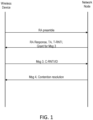
- the legacy/known 4-step RA has been used in the 3 rd Generation Partnership Project's (3GPP) Long Term Evolution (LTE, also referred to as 4G) standards, and is also the baseline for 3GPP New Radio (NR) (NR is also referred to as 5G).
- 3GPP 3rd Generation Partnership Project's
- NR 3GPP New Radio
- RACH radio access channel
- Step 1 Preamble transmission:
- the wireless device randomly selects a RA preamble (PREAMBLE_INDEX) corresponding to a selected synchronization signal (SS)/physical broadcast channel (PBCH) block, transmits the preamble on the physical random access channel (PRACH) occasion mapped by the selected SS/PBCH block.
- PREAMBLE_INDEX RA preamble
- PRACH physical random access channel
- the network node estimates the Timing alignment (TA) the wireless device should use in order to obtain uplink (UL) synchronization at the network node.
- the network node sends a RA response (RAR) including the TA, the temporary cell (TC)-radio network temporary identifier (RNTI) (temporary identifier) to be used by the wireless device, a Random Access Preamble identifier that matches the transmitted PREAMBLE_INDEX and a grant for message 3 (Msg3, which is part of step 3).
- RAR RA response
- the wireless device expects the RAR and thus monitors the physical downlink control channel (PDCCH) addressed to RA-RNTI to receive the RAR message from the network node until the configured RAR window (ra-ResponseWindow) has expired or until the RAR has been successfully received.
- PDCCH physical downlink control channel
- the medium access control (MAC) entity may stop ra-ResponseWindow and hence monitoring for Random Access Response(s)) after successful reception of a Random Access Response containing Random Access Preamble identifiers that matches the transmitted PREAMBLE_INDEX.
- 3GPP Third Generation Partnership Project
- TS 38.321 the medium access control (MAC) entity may stop ra-ResponseWindow and hence monitoring for Random Access Response(s)) after successful reception of a Random Access Response containing Random Access Preamble identifiers that matches the transmitted PREAMBLE_INDEX.
- Step 3 "Msg3" (UE ID or UE-specific C-RNTI)
- the wireless device i.e., user equipment (UE) transmits its identifier (UE ID) for initial access to the network node, or if the wireless device is already in RRC_CONNECTED or RRC_INACTIVE mode and needs to, e.g., resync, the wireless device transmits its UE-specific RNTI.
- UE ID identifier
- the network node may send downlink control information (DCI) addressed to TC-RNTI for retransmission of Msg3.
- DCI downlink control information
- HARQ Hybrid automatic repeat request
- the network node responds by acknowledging the UE ID or C-RNTI.
- the Msg4 gives contention resolution, i.e., only one UE ID or C-RNTI may be sent even if several wireless devices have used the same preamble (and the same grant for Msg3 transmission) simultaneously.
- the wireless device monitors TC-RNTI (if the wireless device transmitted its UE ID in Msg3) or C-RNTI (if the wireless device transmitted its C-RNTI in Msg3).
- the 4-step RA may not be completed in less than a 14 ms/transmission time interval (TTI)/subframe (SF).
- the 2-step RA procedure is illustrated in FIG. 2 .
- the 2-step RA provides shorter latency than the ordinary 4-step RA described above.
- the preamble and a message corresponding to Msg3 (msgA physical uplink shared channel (PUSCH)) in the 4-step RA can, depending on configuration, be transmitted in two subsequent slots.
- the msgA PUSCH is sent on a resource dedicated to the specific preamble. This means that both the preamble and the Msg3 face contention but contention resolution, in this case, means that either the preamble and Msg 3 are sent without collision or both collide.
- the gNB Upon successful reception msgA, the gNB will respond with a msgB.
- the msgB may be either a "successRAR", “fallbackRAR or “Back off”.
- the content of msgB has been agreed as seen below. It is noted in particular that fallbackRAR provides a grant for a Msg3 PUSCH that identifies resources in which the UE should transmit the PUSCH, as well as other information.
- fallbackRAR provides a grant for a Msg3 PUSCH that identifies resources in which the UE should transmit the PUSCH, as well as other information.
- the notations "msgA" and “MsgA” are used interchangeably herein to denote message A.
- the notations “msgB” and “MsgB” are used interchangeably herein to denote message B
- both the 4-step and 2-step RA are configured in a cell on shared PRACH resources (and for the wireless device)
- the wireless device may choose its preamble from one specific set if the wireless device wants to perform a 4-step RA, and from another set if the wireless device wants to perform a 2-step RA.
- a preamble partition is performed to distinguish between 4-step and 2-step RA when shared PRACH resources are used.
- the PRACH configurations are different for the 2-step and 4-step RA procedure, in which case, it can be deduced from where the preamble transmission is performed if the wireless device is performing a 2-step or 4-step procedure.
- wireless devices are informed of the potential time-frequency resources where the wireless devices may transmit MsgA PRACH and MsgA PUSCH via higher layer signaling.
- PRACH is transmitted in periodically recurring RACH occasions ('ROs')
- PUSCH physical uplink shared channel
- PUSCH occasions are described in MsgA PUSCH configurations provided by higher layer signaling.
- Each MsgA PUSCH configuration defines a starting time of the PUSCH occasions which is measured from the start of a corresponding RACH occasion.
- Multiple PUSCH occasions may be multiplexed in time and frequency in a MsgA PUSCH configuration, where POs in an orthogonal frequency-division multiplexing (OFDM) symbol occupy a given number of physical resource blocks (PRBs) and are adjacent in frequency, and where POs occupy 'L' contiguous OFDM symbols.
- POs multiplexed in time in a MsgA PUSCH configuration may be separated by a configured gap 'G' symbols long.
- the start of the first occupied OFDM symbol in a PUSCH slot is indicated via a start and length indicator value ('SLIV').
- the MsgA PUSCH configuration may include multiple contiguous PUSCH slots, each slot containing the same number of POs.
- the start of the first PRB relative to the first PRB in a bandwidth part (BWP) is also given by the MsgA PUSCH configuration.
- Each PRACH preamble maps to a PUSCH occasion and a demodulation reference signal (DMRS) port and/or a DMRS port-scrambling sequence combination according to a procedure described in one or more wireless communication standards such as in 3GPP TS 38.213.
- DMRS demodulation reference signal
- This mapping allows a network node to uniquely determine the location of the associated PUSCH in time and frequency as well as the DMRS port and/or scrambling from the preamble selected by the wireless device.
- the PRACH preambles also map to associated SSBs.
- the SSB to preamble association combined with the preamble to PUSCH association allow a PO to be associated with a RACH preamble.
- This indirect preamble to PUSCH mapping may be used to allow a network node using analog beamforming to receive a MsgA PUSCH with the same beam that the network node uses to receive the MsgA RACH preamble.
- FIG. 3 is a diagram illustrating PRACH and PUSCH slots.
- Next generation wireless communication cellular systems are expected to support a wide range of use cases with varying requirements ranging from fully mobile devices to stationary internet of things (IoT) or fixed wireless broadband devices.
- the traffic pattern associated with some of these use cases is expected to consist of short or long bursts of data traffic with varying length of waiting period in between (here called an inactive state).
- both license assisted access and standalone operation in unlicensed spectrum (NR-U) (where unlicensed spectrum is also referred to as shared spectrum in this context) are to be supported in future releases of 3GPP wireless communication standard.
- NR-U unlicensed spectrum
- SR scheduling request
- Network operation in an unlicensed spectrum may have to abide by one or more restrictions.
- a device e.g., a radio network node or a mobile terminal/wireless device
- LBT Listen-Before-Talk
- CCA Clear Channel Assessment
- NR-U and the channel access procedure for an unlicensed channel based on LBT are described.
- NR is considered for both licensed and unlicensed spectrum.
- the standardization work for licensed spectrum in, for example, 3GPP Rel-15 was finalized, and the study item on NR-based Access to Unlicensed Spectrum was then later finalized.
- the corresponding work item was approved at the 3GPP radio access network (RAN) Plenary meeting 82, and compared to LTE license assisted access (LAA), NR-U may also need to support dual connectivity (DC) and standalone scenarios, where the MAC procedures including RACH and scheduling procedure on unlicensed spectrum may be subject to LBT and thus subject to potential LBT failures.
- DC dual connectivity
- LTE LAA there are no such issues since the RACH and scheduling related signaling can be transmitted on the primary cell (PCell) in licensed spectrum instead of unlicensed spectrum.
- DRS discovery reference signal
- PSS primary synchronization signal
- SSS secondary synchronization signal
- PBCH channel state information reference signal
- CSI-RS channel state information reference signal
- control channel transmission such as PUCCH/PDCCH
- physical data channel such as PUSCH/PDSCH
- uplink sounding reference signal (SRS) such as SRS transmission
- SRS uplink sounding reference signal
- the radio resource management (RRM) procedures in NR-U may be generally similar to those procedures in LTE LAA, since NR-U is aiming to reuse LAA/eLAA/feLAA technologies as much as possible to handle the coexistence between NR-U and other legacy radio access technologies (RATs). RRM measurements and report including special configuration procedure with respect the channel sensing and channel availability.
- RATs legacy radio access technologies
- the wireless device measures Reference Signal Received Power (RSRP) and Reference Signal Received Quality (RSRQ) of the downlink radio channel and provides the measurement reports to its serving network node (e.g., eNB/gNB).
- RSRP Reference Signal Received Power
- RSRQ Reference Signal Received Quality
- Another metric Received Signal Strength Indicator (RSSI) can serve such a purpose.
- RSSI Received Signal Strength Indicator
- the network node e.g., eNB/gNB
- DRS reference signal transmission
- the measurements in terms of RSSI may be useful.
- the RSSI measurements together with the time information concerning when and a time period that wireless devices have made the measurements can assist the network node (e.g., gNB/eNB) to detect a hidden node.
- the network node e.g., gNB/eNB
- the network node can measure the load situation of the carrier which is useful for the network node to prioritize some channels for load balance and channel access failure avoidance purposes.
- LTE LAA may support measurements of averaged RSSI and channel occupancy for measurement reports.
- the channel occupancy is defined as a percentage of time that RSSI was measured above a configured threshold.
- an RSSI measurement timing configuration includes a measurement duration (e.g., 1-5 ms) and a period between measurements (e.g., ⁇ 40, 80, 160, 320, 640 ⁇ ms).
- channel access/selection for LAA was one of the aspects for co-existence with other RATs such as Wi-Fi.
- LAA has aimed to use carriers that are not congested with Wi-Fi.
- Listen-before-talk is designed for unlicensed spectrum co-existence with other RATs.
- a radio device applies a clear channel assessment (CCA) check (i.e., channel sensing) before any transmission.
- CCA clear channel assessment
- the LBT procedure may use energy detection (ED) over a time period (a 'sensing slot') compared to a certain energy detection threshold (ED threshold) in order to determine if a channel is idle.
- the transmitter e.g., wireless device, network node
- the transmitter may defer a period after each busy CCA slot prior to resuming back-off. As soon as the transmitter (e.g., wireless device, network node) has grasped access to a channel, the transmitter (e.g., wireless device, network node) may only be allowed to perform transmission up to a maximum time duration (namely, the maximum channel occupancy time (MCOT)).
- a maximum time duration namely, the maximum channel occupancy time (MCOT)
- QoS quality of service
- a channel access priority based on the service type has been defined. For example, four LBT priority classes are defined for differentiation of channel access priorities between services using different contention window sizes (CWS) and MCOT durations.
- LBT Listen-Before-Talk
- a radio device such as a wireless device applies a Clear Channel Assessment (CCA) check before any transmission.
- the transmitter e.g., wireless device, network node
- ED energy detection
- Another CCA mechanism is to detect a known preamble.
- the transmitter e.g., wireless device, network node
- the transmitter performs a random back-off within a contention window before next CCA attempt.
- the transmitter may defer a period after each busy CCA slot prior to resuming back-off. As soon as the transmitter (e.g., wireless device, network node) has grasped the channel, the transmitter (e.g., wireless device, network node) may only be allowed to perform transmission up to a maximum time duration called the Maximum Channel Occupancy time (MCOT).
- MCOT is configured per channel access priority class (p). For example, in wireless communication standards such as 3GPP TS 37.213 specifies the MCOT ( T ulm,cot,p ) for UL transmission is specified as follows.
- T ulm cot,p 6 ms it may be increased to 8 ms by inserting one
- a channel access priority scheme based on the service type has been defined.
- four CCA/LBT Channel Access Priority Classes (CAPCs) are defined for differentiation of contention window sizes (CWS) and MCOT between services.
- CAPCs Channel Access Priority Class
- the following mapping between CAPC and QCIs is defined in, for example, 3GPP TS 36.300: Channel Access Priority Class ( p ) QCI 1 1, 3, 5, 65, 66, 69,70 2 2, 7 3 4,6,8,9 4 -
- the network node may consider the QCI of the traffic to be transmitted.
- the CAPC that the wireless devices needs to use for a given UL transmission is either signaled in the UL grant on the PDCCH for dynamic scheduling or indicated as part of a logical channel configuration for autonomous LTE-LAA UL transmissions.
- the wireless device may apply the CAPC indicated in the logical channel configuration when autonomously transmitting data from that logical channel.
- the wireless device may apply the QCI associated with the lowest CAPC of all the logical channels included in the MAC PDU.
- the channel access schemes for NR-based access for unlicensed spectrum can be classified into the following categories, for example:
- the wireless device may need to perform UL LBT two times for 2-step RACH MsgA transmission: once before PRACH transmission and the other time before PUSCH if the time gap between resources for PRACH and PUSCH is large. More UL LBT attempts may decrease the probability to be successful in MsgA transmission in 2-step RACH.
- the existing solution for 2-step RACH may lead to higher probability of failure of MsgA transmission and therefore decreases the likelihood of using 2-step RACH on a carrier of shared spectrum, e.g., which is subject to LBT for transmission such as a carrier of unlicensed spectrum.
- the network node configures both 2-step RACH and 4-step RACH for a wireless device, it is not defined which procedure, i.e., 2-step or 4-step RACH, the wireless device should use.
- Prior art examples are: WO 2019/245779 A1 ; US 2019/132882 A1 ; and 3GPP TSG-RAN WG2 #109-e document R2-2001209, ERICSSON: "Gapless msgA transmissions in NR-U ".
- the present invention is directed to a wireless device (claim 1), a method performed by said wireless device (independent claim 10) and a corresponding network node (independent claim 13) for adapting a timing gap for a random access procedure and/or selecting a random access procedure type to implement.
- the network node adapts the time gap (Tg) between resources used for PRACH and PUSCH transmissions in MsgA on a carrier for 2-step RACH based at least on whether the carrier is subject to LBT.
- Tg time gap
- the adaptation of the time gap on a carrier subject to LBT depends on one or more parameters related to LBT operation, e.g., channel occupancy time (COT), LBT failure statistics, etc. For example:
- the wireless device is configured by the network node with a rule indicating what gap to use for the transmission of PRACH and PUSCH in MsgA.
- the rule specifies the value of Tg, which depends on COT, UL LBT failures, as mentioned above.
- the wireless device autonomously determines Tg value from a set of possible values based on COT, UL LBT failures and performs the random access accordingly.
- the wireless device can also be pre-defined by the network node to use a certain Tg based on the criteria.
- the wireless device may select the RA type depending on or at least based on 1) the configured time gap (tg) between PRACH and PUSCH transmissions in 2-step RACH MsgA, and/or 2) a relation between the number of UL LBT failures for random access procedures and a threshold.
- the wireless device may use the selected type of the RA for performing random access in a cell operating on a carrier subject to LBT.
- NR-U wireless device implementations may require a delay between PRACH and PUSCH. This delay increases the amount of time needed to transmit the PRACH and PUSCH, and so a larger COT may be needed for such wireless devices. Therefore, in another embodiment, a wireless device adapts a random access procedure according to a channel occupancy time. The wireless device may determine a channel occupancy time for a transmission by the wireless device using shared channel access.
- the wireless device may transmit the PRACH and a PUSCH in the PO such that the random access preamble is followed by the PUSCH at a delay not less than the minimum delay, wherein the combined duration comprises the time from the start of the preamble to the end of the PO.
- the wireless device may transmit the random access preamble in the RO.
- the minimum preamble-RO delay is a wireless device capability. In these embodiments, the wireless device may be identified as supporting transmission of the random access preamble followed by a PUSCH at a delay not less than the minimum delay.
- one or more embodiments of the disclosure advantageously provides for one or more of:
- a wireless device includes processing circuitry configured to select one of a plurality of random access procedure types based on at least one of a quantity of clear channel assessment, CCA, failures associated with random access attempts and a time gap between a physical random access channel, PRACH, resources and physical uplink shared channel, PUSCH, resources.
- the processing circuitry is further configured to perform a random access procedure one of based on and using the selected one of the plurality of random access procedure types.
- the quantity of CCA failures associated with random access attempts is a property associated with message A of a two step random access procedure type. According to one or more embodiments of this aspect, the quantity of CCA failures associated with random access attempts is a property associated with message 1 of a four step random access procedure type. According to one or more embodiments of this aspect, the processing circuitry is further configured to detect a CCA failure and increment the quantity of CCA failures associated with the random access attempts by a predefined amount.
- the processing circuitry is further configured to receive an indication of a predefined quantity threshold, and trigger the selection of one of the plurality of random access procedure types based at least on the quantity of CCA failures exceeding the predefined quantity threshold.
- each of the CCA failures corresponds to a listen before talk, LBT, failure.
- the processing circuitry is further configured to receive an indication of a predefined time gap threshold, and trigger the selection of one of the plurality of random access procedure types based at least on the time gap between the PRACH resources and PUSCH resources exceeding the predefined time gap threshold.
- the time gap is configured based at least on a channel occupancy time.
- the processing circuitry is configured to receive an indication of a plurality of time gaps between PRACH resources and PUSCH resources, and select one of the plurality of time gaps to implement based at least on the quantity of CCA failures.
- the plurality of random access procedure types includes a two step random access procedure type and a four step random access procedure type.
- a network node configured to communicate with a wireless device is provided.
- the network node includes processing circuitry configured to configure the wireless device with at least one of a predefined quantity threshold for comparison with a quantity of clear channel assessment, CCA, failures, and a predefined time gap threshold for comparison with a time gap between physical random access channel, PRACH, resources and physical uplink shared channel, PUSCH, resources.
- the processing circuitry is further configured to receive random access procedure signaling of one of a plurality of random access procedures types based on at least one of the predefined quantity threshold and predefined time gap threshold being exceeded.
- the quantity of CCA failures associated with random access attempts is a property associated with message A of a two step random access procedure type. According to one or more embodiments of this aspect, the quantity of CCA failures associated with random access attempts is a property associated with message 1 of a four step random access procedure type. According to one or more embodiments of this aspect, each of the CCA failures corresponds to a listen before talk, LBT, failure.
- the time gap is configured based at least on a channel occupancy time.
- the processing circuitry is configured to transmit an indication of a plurality of time gaps between PRACH resources and PUSCH resources for selection by the wireless device based at least on the quantity of CCA failures.
- the plurality of random access procedure types includes a two step random access procedure type and a four step random access procedure type.
- a method implemented by a wireless device is provided.
- One of a plurality of random access procedure types is selected based on at least one of a quantity of clear channel assessment, CCA, failures associated with random access attempts, and a time gap between a physical random access channel, PRACH, resources and physical uplink shared channel, PUSCH, resources.
- a random access procedure is performed one of based on and using the selected one of the plurality of random access procedure types is implemented.
- the quantity of CCA failures associated with random access attempts is a property associated with message A of a two step random access procedure type. According to one or more embodiments of this aspect, the quantity of CCA failures associated with random access attempts is a property associated with message 1 of a four step random access procedure type. According to one or more embodiments of this aspect, a CCA failure is detected and the quantity of CCA failures associated with the random access attempts is incremented by a predefined amount.
- an indication of a predefined quantity threshold is received.
- the selection of one of the plurality of random access procedure types is triggered based at least on the quantity of CCA failures exceeding the predefined quantity threshold.
- each of the CCA failures corresponds to a listen before talk, LBT, failure.
- an indication of a predefined time gap threshold is received.
- the selection of one of the plurality of random access procedure types is triggered based at least on the time gap between the PRACH resources and PUSCH resources exceeding the predefined time gap threshold.
- the time gap is configured based at least on a channel occupancy time.
- an indication of a plurality of time gaps between PRACH resources and PUSCH resources is received.
- One of the plurality of time gaps to implement is selected based at least on the quantity of CCA failures.
- the plurality of random access procedure types includes a two step random access procedure type and a four step random access procedure type.
- a method implemented by a network node that is configured to communicate with a wireless device is provided.
- the wireless device is configured with at least one of a predefined quantity threshold for comparison with a quantity of clear channel assessment, CCA, failures, and a predefined time gap threshold for comparison with a time gap between physical random access channel, PRACH, resources and physical uplink shared channel, PUSCH, resources.
- Random access procedure signaling of one of a plurality of random access procedures types is received based on at least one of the predefined quantity threshold and predefined time gap threshold being exceeded.
- the quantity of CCA failures associated with random access attempts is a property associated with message A of a two step random access procedure type. According to one or more embodiments of this aspect, the quantity of CCA failures associated with random access attempts is a property associated with message 1 of a four step random access procedure type. According to one or more embodiments of this aspect, each of the CCA failures corresponds to a listen before talk, LBT, failure.
- the time gap is configured based at least on a channel occupancy time.
- an indication is transmitted of a plurality of time gaps between PRACH resources and PUSCH resources for selection by the wireless device based at least on the quantity of CCA failures.
- the plurality of random access procedure types includes a two step random access procedure type and a four step random access procedure type.
- relational terms such as “first” and “second,” “top” and “bottom,” and the like, may be used solely to distinguish one entity or element from another entity or element without necessarily requiring or implying any physical or logical relationship or order between such entities or elements.
- the terminology used herein is for the purpose of describing particular embodiments only and is not intended to be limiting of the concepts described herein.
- the singular forms “a”, “an” and “the” are intended to include the plural forms as well, unless the context clearly indicates otherwise.
- the joining term, "in communication with” and the like may be used to indicate electrical or data communication, which may be accomplished by physical contact, induction, electromagnetic radiation, radio signaling, infrared signaling or optical signaling, for example.
- electrical or data communication may be accomplished by physical contact, induction, electromagnetic radiation, radio signaling, infrared signaling or optical signaling, for example.
- Coupled may be used herein to indicate a connection, although not necessarily directly, and may include wired and/or wireless connections.
- network node can be any kind of network node comprised in a radio network which may further comprise any of base station (BS), radio base station, base transceiver station (BTS), base station controller (BSC), radio network controller (RNC), g Node B (gNB), evolved Node B (eNB or eNodeB), Node B, multi-standard radio (MSR) radio node such as MSR BS, multi-cell/multicast coordination entity (MCE), network controller, central unit (e.g.
- a core network node e.g., mobile management entity (e.g., MME, MSC, etc.), self-organizing network (SON) node, a coordinating node, positioning node, MDT node, etc.
- an external node e.g., 3rd party node, a node external to the current network
- nodes in distributed antenna system (DAS) DAS
- SAS spectrum access system
- EMS element management system
- O&M O&M
- OSS SON
- positioning node e.g., E-SMLC
- the network node may also comprise test equipment.
- radio node used herein may be used to also denote
- wireless device or a user equipment (UE) are used interchangeably.
- the WD herein can be another type of node and/or any type of wireless device capable of communicating with a network node or another WD over radio signals, such as wireless device (WD).
- the WD may also be a radio communication device, target device, device to device (D2D) WD, machine type WD or WD capable of machine to machine communication (M2M), low-cost and/or low-complexity WD, a sensor equipped with WD, Tablet, mobile terminals, smart phone, laptop embedded equipped (LEE), laptop mounted equipment (LME), USB dongles, Customer Premises Equipment (CPE), an Internet of Things (IoT) device, or a Narrowband IoT (NB-IOT) device, etc.
- D2D device to device
- M2M machine to machine communication
- M2M machine to machine communication
- Tablet mobile terminals
- smart phone laptop embedded equipped (LEE), laptop mounted equipment (LME), USB dongles
- CPE Customer Premises Equipment
- IoT Internet of Things
- NB-IOT Narrowband IoT
- radio network node can be any kind of a radio network node which may comprise any of base station, radio base station, base transceiver station, base station controller, network controller, RNC, evolved Node B (eNB), Node B, gNB, Multi-cell/multicast Coordination Entity (MCE), IAB node, relay node, access point, radio access point, Remote Radio Unit (RRU) Remote Radio Head (RRH).
- RNC evolved Node B
- MCE Multi-cell/multicast Coordination Entity
- IAB node IAB node
- relay node relay node
- access point radio access point
- RRU Remote Radio Unit
- RRH Remote Radio Head
- radio access technology may refer to any RAT, e.g., UTRA, E-UTRA, narrow band internet of things (NB-IoT), WiFi, Bluetooth, next generation RAT, New Radio (NR), 4G, 5G, etc.
- RAT may refer to any RAT, e.g., UTRA, E-UTRA, narrow band internet of things (NB-IoT), WiFi, Bluetooth, next generation RAT, New Radio (NR), 4G, 5G, etc.
- NR New Radio
- Any of the equipment denoted by the terms node, wireless device, network node or radio network node may be capable of supporting a single or multiple RATs.
- signal used herein can be any physical signal or physical channel.
- Examples of physical signals are reference signal such as PSS, SSS, CSI-RS, DMRS, signals in SSB, CRS, PRS, SRS, etc.
- the term physical channel used herein is also called as 'channel', which contains higher layer information. Examples of physical channels are MIB, PBCH, NPBCH, PDCCH, PDSCH, sPUCCH, sPDSCH, sPUSCH, MPDCCH, NPDCCH, NPDSCH, E-PDCCH, PUSCH, PUCCH, NPUSCH, etc.
- time resource used herein may correspond to any type of physical resource or radio resource expressed in terms of length of time. Examples of time resources are: symbol, time slot, subframe, radio frame, TTI, interleaving time, etc.
- TTI used herein may correspond to any time period (T0) over which a physical channel can be encoded and optionally interleaved for transmission. The physical channel is decoded by the receiver over the same time period (T0) over which it was encoded.
- the TTI may also interchangeably called as short TTI (sTTI), transmission time, slot, sub-slot, mini-slot, mini-subframe, etc.
- time-frequency resource used herein for any radio resource is defined in any time-frequency resource grid in a cell.
- Examples of time-frequency resource are resource block, subcarrier, resource block (RB) etc.
- the RB may also be interchangeably called as physical RB (PRB), virtual RB (VRB), etc.
- Quantity may be used interchangeably with “number” in one or more embodiments.
- a quantity of CCA failures may correspond to a number of CCA failures.
- LBT listen-before-talk
- LBT is also interchangeably and more generally called as clear channel assessment (CCA), carrier sense multiple access (CSMA) procedure, channel assessment scheme, shared spectrum channel access etc.
- CCA clear channel assessment
- CSMA carrier sense multiple access
- the CCA based operation is more generally called contention-based operation.
- the transmission of signals on a carrier subjected to CCA is also called contention-based transmission.
- the contention-based operation is typically used for transmission on carriers of unlicensed frequency band. But this mechanism may also be applied for operating on carriers belonging to licensed band for example to reduce interference.
- the transmission of signals on a carrier which is not subjected to CCA is also called contention free transmission.
- a CCA failure may correspond to sensing a channel is not clear during the CCA or detecting energy above a threshold during the CCA.
- a random access attempt may correspond to initiating a random access procedure and performing CCA before determining whether to transmit random access signaling associated with the random access procedure. The random access attempt may fail if CCA fails.
- Implicit indication may for example be based on position and/or resource used for transmission.
- Explicit indication may for example be based on a parametrization with one or more parameters, and/or one or more index or indices, and/or one or more bit patterns representing the information.
- a cell may be generally a communication cell, e.g., of a cellular or mobile communication network, provided by a node.
- a serving cell may be a cell on or via which a network node (the node providing or associated to the cell, e.g., base station, gNB or eNodeB) transmits and/or may transmit data (which may be data other than broadcast data) to a user equipment, in particular control and/or user or payload data, and/or via or on which a user equipment transmits and/or may transmit data to the node;
- a serving cell may be a cell for or on which the user equipment is configured and/or to which it is synchronized and/or has performed an access procedure, e.g., a random access procedure, and/or in relation to which it is in a RRC_connected or RRC_idle state, e.g., in case the node and/or user equipment and/or network follow the LTE-standard.
- One or more carriers e.
- Transmitting in downlink may pertain to transmission from the network or network node to the wireless device.
- Transmitting in uplink may pertain to transmission from the wireless device to the network or network node.
- Transmitting in sidelink may pertain to (direct) transmission from one wireless device to another.
- Uplink, downlink and sidelink (e.g., sidelink transmission and reception) may be considered communication directions.
- uplink and downlink may also be used to described wireless communication between network nodes, e.g. for wireless backhaul and/or relay communication and/or (wireless) network communication for example between base stations or similar network nodes, in particular communication terminating at such. It may be considered that backhaul and/or relay communication and/or network communication is implemented as a form of sidelink or uplink communication or similar thereto.
- Configuring a terminal or wireless device or node may involve instructing and/or causing the wireless device or node to change its configuration, e.g., at least one setting and/or register entry and/or random access procedure configurations.
- a terminal or wireless device or node may be adapted to configure itself, e.g., according to information or data in a memory of the terminal or wireless device.
- Configuring a node or terminal or wireless device by another device or node or a network may refer to and/or comprise transmitting information and/or data and/or instructions to the wireless device or node by the other device or node or the network, e.g., allocation data (which may also be and/or comprise configuration data) and/or scheduling data and/or scheduling grants.
- Configuring a terminal may include sending allocation/configuration data to the terminal indicating which modulation and/or encoding to use.
- a terminal may be configured with and/or for scheduling data and/or to use, e.g., for transmission, scheduled and/or allocated uplink resources, and/or, e.g., for reception, scheduled and/or allocated downlink resources.
- Uplink resources and/or downlink resources may be scheduled and/or provided with allocation or configuration data.
- a licensed band or spectrum may be a part of the frequency spectrum that is and/or has to be licensed for use, e.g. by a telecommunications operator.
- An unlicensed band or spectrum may be a part of the frequency spectrum that is available without such license.
- WLAN/WiFi usually uses such unlicensed bands.
- the requirements for using licensed bands are usually quite different from unlicensed bands, e.g. due to licensed bands being controlled by one operator, whereas unlicensed bands usually are not subject to a centralized operator.
- LBT procedures are usually required for unlicensed bands, which may be adapted to facilitate fair distribution of access to the unlicensed spectrum.
- WCDMA Wide Band Code Division Multiple Access
- WiMax Worldwide Interoperability for Microwave Access
- UMB Ultra Mobile Broadband
- GSM Global System for Mobile Communications
- functions described herein as being performed by a wireless device or a network node may be distributed over a plurality of wireless devices and/or network nodes.
- the functions of the network node and wireless device described herein are not limited to performance by a single physical device and, in fact, can be distributed among several physical devices.
- Embodiments may provide for adapting a timing gap for a random access procedure and/or selecting a random access procedure type to implement.
- a communication system 10 such as a 3GPP-type cellular network that may support standards such as LTE and/or NR (5G), which comprises an access network 12, such as a radio access network, and a core network 14.
- LTE Long Term Evolution
- NR NR
- the access network 12 comprises a plurality of network nodes 16a, 16b, 16c (referred to collectively as network nodes 16), such as NBs, eNBs, gNBs or other types of wireless access points, each defining a corresponding coverage area 18a, 18b, 18c (referred to collectively as coverage areas 18).
- Each network node 16a, 16b, 16c is connectable to the core network 14 over a wired or wireless connection 20.
- a first wireless device (WD) 22a located in coverage area 18a is configured to wirelessly connect to, or be paged by, the corresponding network node 16a.
- a second WD 22b in coverage area 18b is wirelessly connectable to the corresponding network node 16b.
- wireless devices 22 While a plurality of WDs 22a, 22b (collectively referred to as wireless devices 22) are illustrated in this example, the disclosed embodiments are equally applicable to a situation where a sole WD is in the coverage area or where a sole WD is connecting to the corresponding network node 16. Note that although only two WDs 22 and three network nodes 16 are shown for convenience, the communication system may include many more WDs 22 and network nodes 16.
- a WD 22 can be in simultaneous communication and/or configured to separately communicate with more than one network node 16 and more than one type of network node 16.
- a WD 22 can have dual connectivity with a network node 16 that supports LTE and the same or a different network node 16 that supports NR.
- WD 22 can be in communication with an eNB for LTE/E-UTRAN and a gNB for NR/NG-RAN.
- the intermediate network 28 may be one of, or a combination of more than one of, a public, private or hosted network.
- the intermediate network 28, if any, may be a backbone network or the Internet.
- the intermediate network 28 may comprise two or more sub-networks (not shown) and may communicate with access network 12 via communication link 26.
- a network node 16 is configured to include a random access channel (RACH) unit 29 which is configured to perform one or more network node 16 functions as described herein such as with respect to adapting a timing gap for a random access procedure and/or selecting a random access procedure type to implement.
- RACH random access channel
- a wireless device 22 is configured to include a random access (RA) unit 30 which is configured to perform one or more wireless device 22 function as described herein such as with respect to adapting a timing gap for a random access procedure and/or selecting a random access procedure type to implement.
- RA random access
- Example implementations, in accordance with an embodiment, of the WD 22 and network node 16 discussed in the preceding paragraphs will now be described with reference to FIG. 5 .
- the communication system 10 includes a network node 16 provided in a communication system 10 and including hardware 32 enabling it to communicate with other network nodes 16 and with the WD 22.
- the hardware 32 may include a communication interface 34 for setting up and maintaining a wired or wireless connection with an interface of a different communication device of the communication system 10, as well as a radio interface 36 for setting up and maintaining at least a wireless connection 37 with a WD 22 located in a coverage area 18 served by the network node 16.
- the radio interface 36 may be formed as or may include, for example, one or more RF transmitters, one or more RF receivers, and/or one or more RF transceivers.
- the communication interface 34 may be configured to facilitate a connection 66 to other network nodes 16, for example.
- the hardware 32 of the network node 16 further includes processing circuitry 38.
- the processing circuitry 38 may include a processor 40 and a memory 42.
- the processing circuitry 38 may comprise integrated circuitry for processing and/or control, e.g., one or more processors and/or processor cores and/or FPGAs (Field Programmable Gate Array) and/or ASICs (Application Specific Integrated Circuitry) adapted to execute instructions.
- the processor 40 may be configured to access (e.g., write to and/or read from) the memory 42, which may comprise any kind of volatile and/or nonvolatile memory, e.g., cache and/or buffer memory and/or RAM (Random Access Memory) and/or ROM (Read-Only Memory) and/or optical memory and/or EPROM (Erasable Programmable Read-Only Memory).
- the memory 42 may comprise any kind of volatile and/or nonvolatile memory, e.g., cache and/or buffer memory and/or RAM (Random Access Memory) and/or ROM (Read-Only Memory) and/or optical memory and/or EPROM (Erasable Programmable Read-Only Memory).
- the network node 16 further has software 44 stored internally in, for example, memory 42, or stored in external memory (e.g., database, storage array, network storage device, etc.) accessible by the network node 16 via an external connection.
- the software 44 may be executable by the processing circuitry 38.
- the processing circuitry 38 may be configured to control any of the methods and/or processes described herein and/or to cause such methods, and/or processes to be performed, e.g., by network node 16.
- Processor 40 corresponds to one or more processors 40 for performing network node 16 functions described herein.
- the memory 42 is configured to store data, programmatic software code and/or other information described herein.
- the software 44 may include instructions that, when executed by the processor 40 and/or processing circuitry 38, causes the processor 40 and/or processing circuitry 38 to perform the processes described herein with respect to network node 16.
- processing circuitry 38 of the network node 16 may include RACH unit 29 that is configured to perform one or more network node 16 function as described herein such as with respect to adapting a timing gap for a random access procedure and/or selecting/configurating a random access procedure type to implement.
- the hardware 46 of the WD 22 further includes processing circuitry 50.
- the processing circuitry 50 may include a processor 52 and memory 54.
- the processing circuitry 50 may comprise integrated circuitry for processing and/or control, e.g., one or more processors and/or processor cores and/or FPGAs (Field Programmable Gate Array) and/or ASICs (Application Specific Integrated Circuitry) adapted to execute instructions.
- the processor 52 may be configured to access (e.g., write to and/or read from) memory 88, which may comprise any kind of volatile and/or nonvolatile memory, e.g., cache and/or buffer memory and/or RAM (Random Access Memory) and/or ROM (Read-Only Memory) and/or optical memory and/or EPROM (Erasable Programmable Read-Only Memory).
- memory 88 may comprise any kind of volatile and/or nonvolatile memory, e.g., cache and/or buffer memory and/or RAM (Random Access Memory) and/or ROM (Read-Only Memory) and/or optical memory and/or EPROM (Erasable Programmable Read-Only Memory).
- the processing circuitry 50 may be configured to control any of the methods and/or processes described herein and/or to cause such methods, and/or processes to be performed, e.g., by WD 22.
- the processor 52 corresponds to one or more processors 52 for performing WD 22 functions described herein.
- the WD 22 includes memory 54 that is configured to store data, programmatic software code and/or other information described herein.
- the software 56 and/or the client application 58 may include instructions that, when executed by the processor 52 and/or processing circuitry 50, causes the processor 52 and/or processing circuitry 50 to perform the processes described herein with respect to WD 22.
- the processing circuitry 50 of the wireless device 22 may include a RA unit 30 configured to perform one or more wireless device 22 functions described herein such as with respect to adapting a timing gap for a random access procedure and/or selecting a random access procedure type to implement.
- the inner workings of the network node 16 and WD 22 may be as shown in FIG. 5 and independently, the surrounding network topology may be that of FIG. 4 .
- the wireless connection 37 between the WD 22 and the network node 16 is in accordance with the teachings of the embodiments described throughout this disclosure.
- FIGS. 4 and 5 show various "units" such as RACH unit 29 and RA unit 30 as being within a respective processor, it is contemplated that these units may be implemented such that a portion of the unit is stored in a corresponding memory within the processing circuitry. In other words, the units may be implemented in hardware or in a combination of hardware and software within the processing circuitry.
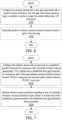
- FIG. 6 is a flowchart of an exemplary process in a network node 16 according to some embodiments of the present disclosure.
- One or more Blocks and/or functions performed by network node 16 may be performed by one or more elements of network node 16 such as by RACH unit 29 in processing circuitry 38, processor 40, radio interface 36, etc.
- network node 16 such as via one or more of processing circuitry 38, processor 40, RACH unit 29, communication interface 34 and radio interface 36 is configured to configure (Block S100) the wireless device with a time gap associated with a random access procedure where the time gap value is based at least on whether a carrier is subject to a listen-before-talk, LBT, procedure, as described herein.
- network node 16 such as via one or more of processing circuitry 38, processor 40, RACH unit 29, communication interface 34 and radio interface 36 is configured to optionally perform (Block S102) a random access procedure based at least in part on the time gap, as described herein.
- the time gap is between resources used for PRACH and PUSCH transmissions in 2-step RACH. According to one or more embodiments, the time gap is further based on at least one parameter of the LBT procedure. According to one or more embodiments, the at least one parameter is based at least on one of a channel occupancy time, COT, LBT failure statistics and whether the COT is configured for an unlicensed carrier.
- the processing circuitry 38 is configured to configure the wireless device 22 with 4-step RACH and the 2-step RACH. According to one or more embodiments, the processing circuitry 38 is further configured to configure with wireless device 22 with additional time gaps between resources used for PRACH and PUSCH transmissions in 2-step RACH for selection by the wireless device 22.
- FIG. 7 is a flowchart of an exemplary process in a network node 16 according to some embodiments of the present disclosure.
- One or more Blocks and/or functions performed by network node 16 may be performed by one or more elements of network node 16 such as by RACH unit 29 in processing circuitry 38, processor 40, radio interface 36, etc.
- network node 16 is configured to configure (Block S104) the wireless device 22 with at least one of: a predefined quantity threshold for comparison with a quantity of clear channel assessment, CCA, failures, and a predefined time gap threshold for comparison with a time gap between physical random access channel, PRACH, resources and physical uplink shared channel, PUSCH, resources, as described herein.
- the network node 16 is configured to receive (Block S106) random access procedure signaling of one of a plurality of random access procedures types based on at least one of the predefined quantity threshold and predefined time gap threshold being exceeded, as described herein.
- the time gap is configured based at least on a channel occupancy time, as described herein.
- the processing circuitry 38 is configured to transmit an indication of a plurality of time gaps between PRACH resources and PUSCH resources for selection by the wireless device 22 based at least on the quantity of CCA failures.
- the plurality of random access procedure types includes a two step random access procedure type and a four step random access procedure type.
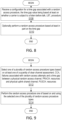
- FIG. 8 is a flowchart of an exemplary process in a wireless device 22 according to some embodiments of the present disclosure.
- One or more Blocks and/or functions performed by wireless device 22 may be performed by one or more elements of wireless device 22 such as by RA unit 30 in processing circuitry 50, processor 52, radio interface 48, etc.
- wireless device such as via one or more of processing circuitry 50, processor 52, RA unit 30 and radio interface 48 is configured to receive (Block S108) a configuration for a time gap associated with a random access procedure where the time gap value is based at least on whether a carrier is subject to a listen-before-talk, LBT, procedure, as described herein.
- wireless device 22 such as via one or more of processing circuitry 50, processor 52, RA unit 30 and radio interface 48 is configured to optionally perform (Block S110) a random access procedure based at least in part on the time gap, as described herein.
- the time gap is between resources used for PRACH and PUSCH transmissions in 2-step RACH.
- the time gap is further based on at least one parameter of the LBT procedure.
- the at least one parameter is based at least on one of a channel occupancy time, COT, LBT failure statistics and whether the COT is configured for an unlicensed carrier.
- the processing circuitry 50 is further configured to receive a configuration for 4-step RACH and the 2-step RACH, and one of select and switch between the 4-step RACH and the 2-step RACH based at least in part on the at least one parameter.
- the processing circuitry 50 is further configured to receive configurations for additional time gaps between resources used for PRACH and PUSCH transmissions in 2-step RACH, and select among the time gaps for implementation for the random access procedure.
- FIG. 9 is a flowchart of another example process in a wireless device 22 according to some embodiments of the present disclosure.
- One or more Blocks and/or functions performed by wireless device 22 may be performed by one or more elements of wireless device 22 such as by RA unit 30 in processing circuitry 50, processor 52, radio interface 48, etc.
- wireless device 22 is configured to select (Block S112) one of a plurality of random access procedure types based on at least one of: a quantity of clear channel assessment, CCA, failures associated with random access attempts, and a time gap between a physical random access channel, PRACH, resources and physical uplink shared channel, PUSCH, resources, as described herein.
- the wireless device 22 is further configured to perform (Block S114) a random access procedure one of based on and using the selected one of the plurality of random access procedure types.
- the quantity of CCA failures associated with random access attempts is a property associated with message A of a two step random access procedure type, as described herein. According to one or more embodiments, the quantity of CCA failures associated with random access attempts is a property associated with message 1 of a four step random access procedure type, as described herein. According to one or more embodiments, the processing circuitry 50 is further configured to detect a CCA failure and increment the quantity of CCA failures associated with the random access attempts by a predefined amount, as described herein.
- the processing circuitry 50 is further configured to: receive an indication of a predefined quantity threshold, and trigger the selection of one of the plurality of random access procedure types based at least on the quantity of CCA failures exceeding the predefined quantity threshold, as described herein.
- each of the CCA failures corresponds to a listen before talk, LBT, failure.
- the processing circuitry 50 is further configured to: receive an indication of a predefined time gap threshold, and trigger the selection of one of the plurality of random access procedure types based at least on the time gap between the PRACH resources and PUSCH resources exceeding the predefined time gap threshold, as described herein.
- the time gap is configured based at least on a channel occupancy time.
- the processing circuitry 50 is configured to: receive an indication of a plurality of time gaps between PRACH resources and PUSCH resources, and select one of the plurality of time gaps to implement based at least on the quantity of CCA failures.
- the plurality of random access procedure types includes a two step random access procedure type and a four step random access procedure type.
- Embodiments provide adapting a timing gap for a random access procedure and/or selecting a random access procedure type to implement.
- One or more network node 16 functions described below may be performed by one or more of processing circuitry 38, processor 40, radio interface 36, RACH unit 29, etc.
- One or more wireless device 22 functions described below may be performed by one or more of processing circuitry 50, processor 52, radio interface 48, RA unit 30, etc.
- the scenario comprises a wireless device 22 intending to transmit random access to a first cell (cell1), which in turn is managed or served or operated by a first network node 16 (NN1).
- the wireless device 22 may or may not be served by cell1.
- cell1 is a target cell of the wireless device 22, e.g., for performing RA at cell change procedure, at cell selection, etc. Examples of cell change procedures are cell re-selection, RRC re-establishment, handover, random access, etc.
- cell1 is also a serving cell of the wireless device 22, e.g., for performing RA for beam recovery, etc.
- cell1 is the serving cell of the wireless device 22, e.g., when performing random access as part of the RRC re-establishment upon radio link failure (RLF) declaration and expiry of T310 timer where a T310 is a predefined timer known in the art.
- Cell1 is being operated on a carrier belonging to a spectrum whose access may require the radio node (e.g., wireless device 22, network node 16) to apply a CCA operation, e.g., LBT.
- the spectrum is a shared spectrum.
- An example of the shared spectrum is a carrier of an unlicensed band or spectrum.
- the wireless device 22 may be required to perform UL LBT before the channel access and the first network node 16 (NN1) may be required to perform DL LBT before the channel access on unlicensed band.
- the wireless device 22 is configured to use 2-step RACH (i.e., 2-step RA type or Type-2 random access procedure) and 4-step RACH (i.e., 4-step RA type or Type-1 random access procedure) for the random access procedure.
- 2-step RACH i.e., 2-step RA type or Type-2 random access procedure
- 4-step RACH i.e., 4-step RA type or Type-1 random access procedure
- the network node 16 configures the maximum channel occupancy time (COT or MCOT) for shared channel access operation.
- COT and MCOT are interchangeably used herein.
- the value of COT may depend on local regulation in a region, e.g., is based at least on the deployed country or region.
- the wireless device 22 obtains information about the COT/MCOT based on, e.g., channel access schemes type, LBT type.
- the random access procedure may be required, for example, when the wireless device 22 accesses the cell for performing one or more procedures related to cell change. Examples of such procedures are cell selection, cell reselection, handover, RRC re-establishment, or RRC connection release with redirection, configuration or change of special cell (SpCell) in multi-connectivity (e.g., addition of PSCell, PSCell change etc.).
- the random access may be required to indicate a beam recovery procedure, scheduling request (SR).
- the random access may be required to assist the NN1 (e.g., serving network node 16) to estimate the propagation delay between the wireless device 22 and the NN1. This in turn is used for adapting the timing advance command for the wireless device 22.
- the network node 16 adapts a time gap (Tg) between time resources for PRACH and PUSCH transmission in MsgA for 2-step RACH based on whether the carrier is subject to LBT or not, based on LBT type.
- Tg time gap
- the network node 16 configures Tg depending on the COT configured for operated unlicensed carrier. For example, the network node 16 selects Tg so that the total transmission time of MsgA does not exceed COT.
- Tg For example, the network node 16 selects Tg so that the total transmission time of MsgA does not exceed COT.
- FIG. 10 illustrates this configuration as an example.
- the relation between Tg and COT can be determined by a rule.
- the rule can be pre-defined or the wireless device 22 can be configured by the network node 16, e.g., by sending a message to the wireless device 22.
- the wireless device 22 upon determining the COT may also determine Tg.
- the network node 16 may still be able to adapt the value of Tg, e.g., to a value smaller than the pre-defined Tg.
- the network node 16 may adapt the time gap (Tg) based on information related to CCA operational result or the outcome of the CCA operations performed in a network node 16, e.g., in the serving base station of the wireless device, prior to an attempt to transmit a DL signal or message.
- Tg time gap
- the CCA operations are performed by the network node 16 prior to transmitting signals in the downlink.
- the CCA operational results may include results of CCA failure or CCA success.
- the CCA operational results can be obtained by the network node 16 over a certain time period (T0). In this case, the wireless device 22 adapts the Tg based on CCA operational results.
- Tg is set to a larger value compared to the case when CCA operational results indicate low failure rate.
- the probability of LBT success increases, meaning that the wireless device 22 is more likely to succeed with the transmissions contained in MsgA.
- the network node 16 may select a smaller gap, preferably within the COT. This may reduce the number of CCA evaluations in the wireless device 22 as the transmission may take place within the COT or close to each other. Another advantage is that MsgA is transmitted faster.
- the wireless device 22 may select a gap based on the received CCA operational results, which can be, e.g., broadcast in system information.
- the selection of Tg is be based on CCA operational results sent out in information element (IE) "AvailableRB-SetPerCell" or the like which indicates the availability of RBs of a serving cell operating in a carrier subject to CCA.
- IE information element
- CCA operational results include or correspond to CCA failures that may correspond to LBT failures.
- the network node 16 configures the wireless device 22 with one or more values for one or more time gaps, and the wireless device 22 selects the time gap based on one or more of the UL LBT status, CCA operational results (as described above) received from other nodes such as other network nodes 16.
- the wireless device 22 may receive information about the CCA operational results that may include results of CCA failure or CCA success from the serving network node 16 and this information can be used for selecting one of multiple time gaps.
- the network node 16 configures M MsgA configurations and each configuration has different time gap length, e.g., (Tg1, Tg2, ..., TgM), where Tg1 ⁇ Tg2 ⁇ ... ⁇ TgM. Moreover, the network node 16 configures thresholds (H1, H2, ..., HM-1), where H1 ⁇ H2 ⁇ ... ⁇ HM-1, to enable the wireless device 22 to choose a particular value of Tg. N indicates the number or rate of LBT failures where one or more configured thresholds may be compared to N as shown in the example of Table 1. The network node 16 can store such a set of MsgA configurations in a form of table as shown in Table 1, below, for example.
- the network node 16 can signal such a table to the wireless device 22, e.g., via RRC signaling.
- this configuration set can be pre-defined or updated adaptively during the operation.
- selection of time gap is conditioned on the H value as shown in Table 1.
- Table 1 MsgA configuration Tg (time gap between PRACH and PUSCH in MsgA) Condition Config 1 Tg1 N ⁇ H1 Config 2 Tg2 H1 ⁇ N ⁇ H2 ... ... ... ... Config M-1 Tg M-1 H M-2 ⁇ N ⁇ H M-1 Config M Tg M N ⁇ H M-1
- Each value of Tg is further associated with a set of PRACH and PUSCH transmission resources in MsgA, e.g., time slots and PRBs within the slot.
- the network node 16 also configures a set of PRACH and PUSCH transmission resources in MsgA (e.g., time-frequency resources such as slots and PRBs for PRACH and PUSCH transmissions) for each configuration used by the network node 16.
- N indicates the number (i.e., quantity) of UL LBT failures
- the quantity of CCA failures is a property associated with message A of a 2-step RACH (i.e., random access procedure type).
- H1 one threshold
- the network node 16 configuring the wireless device 22 with information may be the same as the first network node 16 (NN1) or it may be another network node 16 (e.g., NN2) different than the first network node 16.
- the wireless device 22 adapts type of RA depending on the time gap between PRACH and PUSCH time resources and/or number of UL LBT failures experienced by the wireless device 22.
- the adaptation of the RA type is based on information received from the network and/or network node 16 which is in turn based on the CCA operational results (e.g., CA failures) experienced by the network node 16.
- the network node 16 configures the wireless device 22 with information (e.g., resources) related to both 4-step RACH and 2-step RACH in cell1 (where cell1 may be provided by network node 16). This allows the wireless device 22 to send RA in cell1.
- the network node 16 configures the time gap between PRACH and PUSCH for 2-step RACH MsgA to Tg.
- the wireless device 22 selects between 2-step RACH and 4-step RACH depending on or based at least on the configured time gap Tg and/or the number of UL LBT failures N used for random access attempts.
- a CCA failure corresponds to or includes a LBT failure.
- the steps performed by the wireless device 22 to select between 2-step RACH and 4-step RACH in cell1 are described below:
- the values of parameters Hn and Htg can be pre-defined or the wireless device 22 can be configured with one or more values of one or more parameters by the network node 16 which may be the same as the first network node 16 (NN1) or a different network node 16 (e.g., NN2).
- the wireless device 22 may further be configured to determine whether the wireless device 22 can switch between 2-step and 4-step RACH based on one or both parameters, i.e., based on N or Tg or both N and Tg.
- the network node 16 is configuring the wireless device 22 with any of the information that may be the same as the first network node 16 (NN1) or it may be a different network node 16, e.g., NN2.
- the processes and/or methods described herein advantageously provides some control to the network node 16 to steer the wireless device 22 to one or more specific procedures/processes when the wireless device 22 fails to transmit PRACH or PUSCH due to LBT failure.
- the number (i.e., quantity) of CCA evaluation/LBT attempts (e.g., CCA failures) that the wireless device 22 may perform can be same or similar between 2-step RA and 4-step RA when Tg is quite large (i.e., Tg > COT).
- Tg is quite large
- starting with the 4-step RA gives more control to the network node 16 as the network node 16 can, e.g., postpone/delay the MSG3 transmission when the channel is busy in part because the network node 16 can perform CCA evaluation and prepare the wireless device 22 for MSG3 transmission.
- the quantity of CCA failures is a property associated with message 1 of a 4-step RA (e.g., random access procedure type) as the process starts with 4-step RA.
- the wireless device 22 can already, at the beginning or toward the beginning of the process, select a more suitable RA type based on the parameters described above (e.g., Tg). By selecting the proper one, in the beginning, the wireless device 22 avoids the risk of attempting RA using a less suitable RA type (e.g., 2-step RA) and thereafter falling back to more suitable RA type (e.g., 4-step RA), which may lead to more total delay for the procedure.
- a less suitable RA type e.g., 2-step RA
- more suitable RA type e.g., 4-step RA
- Some NR-U wireless device 22 implementations may require a delay between PRACH and PUSCH. This delay increases the amount of time needed to transmit the PRACH and PUSCH, and so a larger COT may be needed for such wireless devices 22.
- Two-step random access allows low latency random access procedures, and so in scenarios where low latency is desirable, a network node 16 may choose to configure its random access resources primarily for two step operation. In these scenarios, there may be little or no 4-step RACH resource available, and when the total time needed to transmit PRACH and PUSCH exceeds the COT needed for 2-step operation, the wireless device 22 may also not be able to use 4-step RACH procedures.
- One solution to this problem is to allow the wireless device 22 to transmit a RACH preamble associated with 2-step operation without transmitting a msgA PUSCH. Since the network node 16 may not generally know the delay capability of wireless devices 22 prior to initial access, the network node 16 may not be able to infer if the configuration it provides to the wireless device 22 meets the wireless device 22's delay requirements, and so the network node 16 may not generally know if the wireless device 22 actually transmits a msgA PUSCH.
- the network node 16 may allow and/or configure the wireless device 22 to repeatedly transmit in the two step RACH procedure, and continue to attempt to decode msgA PUSCHs that are not actually transmitted; however, this may waste resources and delay the wireless device 22's access to the cell.
- the network node 16 may thus, as one alternative, indicate fallback to 4-step RA operation by transmitting a fallbackRAR to the wireless device 22 when it receives a 2-step RA preamble without receiving an associated MsgA PUSCH transmission.
- the network node 16 may attempt to perform energy detection on the msgA PUSCH DMRS and/or the msgA PUSCH resource elements that carry UL-SCH in order to estimate if the msgA PUSCH was actually transmitted by the wireless device 22. If the network node 16 determines that a preamble is transmitted without a PUSCH, then the network node 16 can choose/select to indicate, to the wireless device 22, a fallback to 4-step operation such as by, for example, transmitting a fallbackRAR to the wireless device 22).
- those wireless devices 22 that do not transmit a PUSCH because the PO is too close to the RO can be directed to 4-step operation, while wireless devices 22 that transmitted a PUSCH that was not received by the network node 16 can still continue to use 2-step operation.
- a wireless device 22 adapts a random access procedure according to a channel occupancy time (COT).
- COT channel occupancy time
- the wireless device 22 determines a channel occupancy time for a transmission by the wireless device 22 using shared channel access. It also receives a first and a second configuration identifying a random access preamble occasion ('RO') and a PUSCH transmission occasion ('PO'), respectively.
- the wireless device 22 selects a random access preamble and an RO containing the preamble and identifies a PO corresponding to the RO.
- the wireless device 22 transmits the PRACH and a PUSCH in the PO such that the random access preamble is followed by the PUSCH at a delay not less than the minimum delay, where the combined duration comprises the time from the start of the preamble to the end of the PO.
- the wireless device 22 transmits the random access preamble in the RO.
- the minimum preamble-RO delay is a wireless device 22 capability.
- the wireless device 22 may be identified as supporting transmission of the random access preamble followed by a PUSCH at a delay not less than the minimum delay.
- Example 1 wireless devices 22 that require a delay between PRACH and PUSCH for NR-U. If the PO is greater than a COT, fall back by transmitting only the PRACH)
- a method of adapting a random access procedure according to a channel occupancy time comprising:
- Example 2 (The minimum preamble-RO delay is a wireless device capability) The method of Example 1, wherein the wireless device 22 is identified as supporting transmission of the random access preamble followed by a PUSCH at a delay not less than the minimum delay.
- Example A1 A network node 16 configured to communicate with a wireless device 22 (WD 22), the network node 16 configured to, and/or comprising a radio interface 36 and/or comprising processing circuitry 38 configured to:
- Example A2 The network node 16 of Example A1, wherein the time gap is between resources used for PRACH and PUSCH transmissions in 2-step RACH.
- Example A3 The network node 16 of any one of Examples A1-A2, wherein the time gap is further based on at least one parameter of the LBT procedure.
- Example A4 The network node 16 of any one of Examples A3, wherein the at least one parameter is based at least on one of a channel occupancy time, COT, LBT failure statistics and whether the COT is configured for an unlicensed carrier.
- Example A5 The network node 16 of any one of Examples A1-A4, wherein the processing circuitry 38 is configured to configure the wireless device with 4-step RACH and the 2-step RACH.
- Example A6 The network node 16 of any one of Examples A1-A4, wherein the processing circuitry 38 is further configured to configure with wireless device 22 with additional time gaps between resources used for PRACH and PUSCH transmissions in 2-step RACH for selection by the wireless device 22.
- Example B1 A method implemented in a network node 16, the method comprising:
- Example B2 The method of Example B1, wherein the time gap is between resources used for PRACH and PUSCH transmissions in 2-step RACH
- Example B3 The method of Example B1, wherein the adapting of the time gap is further based on at least one parameter of the LBT procedure.
- Example B4 The method of any one of Examples B3, wherein the at least one parameter is based at least on one of a channel occupancy time, COT, LBT failure statistics and whether the COT is configured for an unlicensed carrier.
- Example B5 The method of any one of Examples B1-B4, wherein the processing circuitry 38 is configured to configure the wireless device 22 with 4-step RACH and the 2-step RACH.
- Example B6 The method of any one of Examples B1-B4, further comprising configuring with wireless device 22 with additional time gaps between resources used for PRACH and PUSCH transmissions in 2-step RACH for selection by the wireless device 22.
- Example C1 A wireless device 22 (WD 22) configured to communicate with a network node 16, the WD 22 configured to, and/or comprising a radio interface 36 and/or processing circuitry 38 configured to:
- Example C2 The wireless device 22 of Example C1, wherein the time gap is between resources used for PRACH and PUSCH transmissions in 2-step RACH.
- Example C3 The wireless device 22 of any one of Examples C1-C2, wherein the time gap is further based on at least one parameter of the LBT procedure.
- Example C4 The wireless device 22 of any one of Examples C3, wherein the at least one parameter is based at least on one of a channel occupancy time, COT, LBT failure statistics and whether the COT is configured for an unlicensed carrier.
- Example C5. The wireless device 22 of any one of Examples C3-C4, wherein the processing circuitry 50 is further configured to:
- Example C6 The wireless device 22 of any one of Examples C1-C4, wherein the processing circuitry 50 is further configured to:
- Example D1 A method implemented in a wireless device 22 (WD 22), the method comprising:
- Example D2 The method of Example D1, wherein the time gap is between resources used for PRACH and PUSCH transmissions in 2-step RACH.
- Example D3 The method of Example D1, wherein the time gap is further based on at least one parameter of the LBT procedure.
- Example D4 The method of any one of Examples D3, wherein the at least one parameter is based at least on one of a channel occupancy time, COT, LBT failure statistics and whether the COT is configured for an unlicensed carrier.
- Example D5 The method of any one of Examples D3-D4, further comprising:
- Example D6 The method of any one of Examples D1-D4, further comprising:
- the concepts described herein may be embodied as a method, data processing system, computer program product and/or computer storage media storing an executable computer program. Accordingly, the concepts described herein may take the form of an entirely hardware embodiment, an entirely software embodiment or an embodiment combining software and hardware aspects all generally referred to herein as a "circuit" or “module.” Any process, step, action and/or functionality described herein may be performed by, and/or associated to, a corresponding module, which may be implemented in software and/or firmware and/or hardware. Furthermore, the disclosure may take the form of a computer program product on a tangible computer usable storage medium having computer program code embodied in the medium that can be executed by a computer. Any suitable tangible computer readable medium may be utilized including hard disks, CD-ROMs, electronic storage devices, optical storage devices, or magnetic storage devices.
- These computer program instructions may also be stored in a computer readable memory or storage medium that can direct a computer or other programmable data processing apparatus to function in a particular manner, such that the instructions stored in the computer readable memory produce an article of manufacture including instruction means which implement the function/act specified in the flowchart and/or block diagram block or blocks.
- the computer program instructions may also be loaded onto a computer or other programmable data processing apparatus to cause a series of operational steps to be performed on the computer or other programmable apparatus to produce a computer implemented process such that the instructions which execute on the computer or other programmable apparatus provide steps for implementing the functions/acts specified in the flowchart and/or block diagram block or blocks.
- Computer program code for carrying out operations of the concepts described herein may be written in an object oriented programming language such as Java ® or C++.
- the computer program code for carrying out operations of the disclosure may also be written in conventional procedural programming languages, such as the "C" programming language.
- the program code may execute entirely on the user's computer, partly on the user's computer, as a stand-alone software package, partly on the user's computer and partly on a remote computer or entirely on the remote computer.
- the remote computer may be connected to the user's computer through a local area network (LAN) or a wide area network (WAN), or the connection may be made to an external computer (for example, through the Internet using an Internet Service Provider).
- LAN local area network
- WAN wide area network
- Internet Service Provider for example, AT&T, MCI, Sprint, EarthLink, MSN, GTE, etc.
- Abbreviations that may be used in the preceding description include: Abbreviation Explanation ACK Acknowledgement BWP Bandwidth part CAPC Channel access priority class CCA Clear channel assessment COT Channel occupancy time CSI-RS Channel state information reference signal CWS Contention window size DC Dual connectivity DL Downlink DMRS Demodulation reference signal DRS Discovery reference signal ED Energy detection LBT Listen before talk LAA Licensed assisted access LTE Long term evolution MAC Media access control MCOT Maximum channel occupancy time NR New radio access system NR-U NR unlicensed OFDM Orthogonal frequency division multiplexing PDCCH Physical downlink control channel PDSCH Physical downlink shared channel PO PUCCH occasion PBCH Physical broadcast channel PRACH Physical random acces channel PCell Primary cell PDU Packet data unit PSCell Primary SCG cell PSS Primary synchrinization channel PUCCH Physical uplink control channel PUSCH Physical uplink shared channel QCI Qos class indicator QoS Quality of service RA Random access RACH Random access channel RAN Random access network RAR Random access response RO RACH
Landscapes
- Engineering & Computer Science (AREA)
- Computer Networks & Wireless Communication (AREA)
- Signal Processing (AREA)
- Mobile Radio Communication Systems (AREA)
Claims (15)
- Dispositif sans fil (22), comprenant :
une circuiterie de traitement (50) configurée pour :recevoir, depuis un nœud de réseau (16), un ensemble de configurations sur une transmission MsgA d'une procédure d'accès aléatoire, RA, à deux étapes, dans lequel chaque configuration indique un laps de temps entre des ressources de canal d'accès aléatoire physique, PRACH, et des ressources de canal partagé de liaison montante physique, PUSCH, pour la transmission MsgA ;déterminer une longueur de laps de temps parmi les laps de temps indiqués sur la base au moins des configurations et de résultats opérationnels d'évaluation de canal libre, CCA, incluant des résultats d'échec de CCA ou de réussite de CCA obtenus par le nœud de réseau (16) et reçus par le dispositif sans fil (22) depuis le nœud de réseau (16) ; ettransmettre un MsgA dans une procédure RA à deux étapes sur la base de la longueur de laps de temps déterminée. - Dispositif sans fil (22) selon la revendication 1, dans lequel la circuiterie de traitement (50) est en outre configurée pour :recevoir les résultats opérationnels de CCA via des informations système diffusées, ouobtenir les résultats opérationnels de CCA par des tentatives d'écoute avant de parler, LBT.
- Dispositif sans fil (22) selon la revendication 1 ou 2, dans lequel les résultats opérationnels de CCA comprennent :
une quantité d'échecs de CCA associés à des tentatives d'accès aléatoire. - Dispositif sans fil (22) selon la revendication 1 ou 3, dans lequel la circuiterie de traitement (50) est configurée pour déterminer une longueur de laps de temps en outre sur la base d'un statut de LBT de liaison montante, UL.
- Dispositif sans fil (22) selon la revendication 3, dans lequel chacune de l'au moins une configuration comprend une longueur de laps de temps différente associée à un seuil de quantité d'échecs de CCA ;
la circuiterie de traitement (50) est configurée pour déterminer une longueur de laps de temps associée au seuil dans lequel la quantité d'échecs de CCA est conforme à la condition et au seuil associé. - Dispositif sans fil (22) selon la revendication 3, dans lequel chacune de l'au moins une configuration comprend une longueur de laps de temps différente ;dans lequel la circuiterie de traitement (50) est en outre configurée pour recevoir une configuration sur un seuil de quantité d'échecs de CCA ;la circuiterie de traitement (50) est configurée pour déterminer la longueur de laps de temps en sélectionnant une longueur de laps de temps correspondante sur la base d'une comparaison entre la quantité d'échecs de CCA et le seuil configuré.
- Dispositif sans fil (22) selon l'une quelconque des revendications 1 à 6, dans lequel la circuiterie de traitement (50) est en outre configurée pour :recevoir une indication d'un seuil de laps de temps prédéfini ; etdéclencher un passage à un autre type de procédure d'accès aléatoire sur la base au moins du fait que la longueur de laps de temps déterminée dépasse le seuil de laps de temps prédéfini.
- Dispositif sans fil (22) selon la revendication 7, dans lequel le laps de temps indiqué dans les une ou plusieurs configurations sur une transmission MsgA est basé au moins sur un temps d'occupation de canal, COT, configuré pour une porteuse sans licence utilisée.
- Dispositif sans fil (22) selon la revendication 7, dans lequel un autre type de procédure d'accès aléatoire est un type de procédure d'accès aléatoire à quatre étapes.
- Procédé réalisé par un dispositif sans fil (22), le procédé comprenant :la réception, depuis un nœud de réseau (16), d'un ensemble de configurations sur une transmission MsgA d'une procédure d'accès aléatoire, RA, à deux étapes, dans lequel chaque configuration indique un laps de temps entre des ressources de canal d'accès aléatoire physique, PRACH, et des ressources de canal partagé de liaison montante physique, PUSCH, pour la transmission MsgA ;la détermination d'une longueur de laps de temps parmi les laps de temps indiqués sur la base au moins des configurations et de résultats opérationnels d'évaluation de canal libre, CCA, incluant des résultats d'échec de CCA ou de réussite de CCA obtenus par le nœud de réseau (16) et reçus par le dispositif sans fil (22) depuis le nœud de réseau (16) ; etla transmission d'un MsgA dans une procédure RA à deux étapes sur la base de la longueur de laps de temps déterminée.
- Procédé selon la revendication 10, dans lequel chacune de l'au moins une configuration comprend une longueur de laps de temps différente associée à un seuil de quantité d'échecs de CCA, la longueur de laps de temps déterminée étant associée au seuil dans lequel la quantité d'échecs de CCA est conforme à la condition et au seuil associé ; ou
dans lequel chacune de l'au moins une configuration comprend une longueur de laps de temps différente, le procédé comprenant en outre : la réception d'une configuration sur un seuil de quantité d'échecs de CCA ; la détermination du laps de temps comprend la sélection d'une longueur de laps de temps correspondante sur la base d'une comparaison entre la quantité d'échecs de CCA et le seuil configuré. - Procédé dans un dispositif sans fil selon la revendication 10, comprenant en outre :la réception d'une indication d'un seuil de laps de temps prédéfini ; etle déclenchement d'un passage à un autre type de procédure d'accès aléatoire sur la base au moins du fait que la longueur de laps de temps déterminée dépasse le seuil de laps de temps prédéfini.
- Nœud de réseau (16) configuré pour communiquer avec un dispositif sans fil (22), le nœud de réseau (16) comprenant :
une circuiterie de traitement (38) configurée pour :
configurer le dispositif sans fil (22) avec :un ensemble de configurations sur une transmission MsgA d'une procédure d'accès aléatoire, RA, à deux étapes, dans lequel chaque configuration indique un laps de temps entre des ressources de canal d'accès aléatoire physique, PRACH, et des ressources de canal partagé de liaison montante physique, PUSCH, pour la transmission MsgA ; etrecevoir un MsgA dans une procédure RA à deux étapes dans laquelle une longueur de laps de temps parmi les laps de temps indiqués est déterminée sur la base au moins des configurations et de résultats opérationnels d'évaluation de canal libre, CCA, incluant des résultats d'échec de CCA ou de réussite de CCA obtenus par le nœud de réseau (16) et transmis au dispositif sans fil (22). - Nœud de réseau (16) selon la revendication 13, dans lequel chacune de l'au moins une configuration sur une transmission MsgA comprend une longueur de laps de temps différente ; la circuiterie de traitement (38) est en outre configurée pour configurer le dispositif sans fil (22) avec un seuil de quantité d'échecs de CCA, pour permettre au dispositif sans fil de déterminer la longueur de laps de temps sur la base d'une comparaison du seuil de quantité d'échecs de CCA et de résultats opérationnels de CCA.
- Nœud de réseau (16) selon la revendication 13 ou 14, dans lequel le laps de temps indiqué dans les une ou plusieurs configurations sur une transmission MsgA est configuré sur la base au moins d'un temps d'occupation de canal, COT, configuré pour une porteuse sans licence utilisée.
Applications Claiming Priority (2)
| Application Number | Priority Date | Filing Date | Title |
|---|---|---|---|
| US202063007551P | 2020-04-09 | 2020-04-09 | |
| PCT/SE2021/050323 WO2021206620A1 (fr) | 2020-04-09 | 2021-04-09 | Adaptation de transmission sur canal rach sur une porteuse sans licence |
Publications (2)
| Publication Number | Publication Date |
|---|---|
| EP4133881A1 EP4133881A1 (fr) | 2023-02-15 |
| EP4133881B1 true EP4133881B1 (fr) | 2025-06-11 |
Family
ID=75581586
Family Applications (1)
| Application Number | Title | Priority Date | Filing Date |
|---|---|---|---|
| EP21720025.2A Active EP4133881B1 (fr) | 2020-04-09 | 2021-04-09 | Adaptation de transmission sur canal rach sur une porteuse sans licence |
Country Status (3)
| Country | Link |
|---|---|
| US (1) | US20230164828A1 (fr) |
| EP (1) | EP4133881B1 (fr) |
| WO (1) | WO2021206620A1 (fr) |
Families Citing this family (5)
| Publication number | Priority date | Publication date | Assignee | Title |
|---|---|---|---|---|
| EP4140241B1 (fr) * | 2020-04-21 | 2025-10-29 | Lenovo (Singapore) Pte. Ltd. | Incrémentation d'un compteur de transmission en réponse à une défaillance de lbt |
| KR102639499B1 (ko) * | 2020-07-24 | 2024-02-22 | 아서스테크 컴퓨터 인코포레이션 | 무선 통신 시스템에서 이동성 절차를 위한 방법 및 장치 |
| EP4374626A1 (fr) * | 2021-07-19 | 2024-05-29 | Lenovo (Singapore) Pte. Ltd. | Appareils, procédés et noeuds de réseau permettant des améliorations de rapport de localisation sur des bandes sans licence |
| US12075490B2 (en) * | 2021-08-05 | 2024-08-27 | Ofinno, Llc | Switching between two-step and four-step random access procedures in non-terrestrial networks |
| CN116095832A (zh) * | 2021-11-01 | 2023-05-09 | 维沃移动通信有限公司 | 传输处理方法、装置、终端及可读存储介质 |
Family Cites Families (3)
| Publication number | Priority date | Publication date | Assignee | Title |
|---|---|---|---|---|
| US10893543B2 (en) * | 2017-10-30 | 2021-01-12 | Samsung Electronics Co., Ltd. | Method and apparatus for random access design of NR unlicensed |
| EP3811716B1 (fr) * | 2018-06-19 | 2025-07-30 | InterDigital Patent Holdings, Inc. | Procédés, appareil et systèmes d'accès au système dans un spectre sans licence |
| WO2021060915A1 (fr) * | 2019-09-25 | 2021-04-01 | 엘지전자 주식회사 | Procédé de réception d'un signal de liaison descendante sur la base d'une procédure de canal d'accès aléatoire dans une bande sans licence, et dispositif associé |
-
2021
- 2021-04-09 EP EP21720025.2A patent/EP4133881B1/fr active Active
- 2021-04-09 WO PCT/SE2021/050323 patent/WO2021206620A1/fr not_active Ceased
- 2021-04-09 US US17/917,737 patent/US20230164828A1/en not_active Abandoned
Also Published As
| Publication number | Publication date |
|---|---|
| WO2021206620A1 (fr) | 2021-10-14 |
| EP4133881A1 (fr) | 2023-02-15 |
| US20230164828A1 (en) | 2023-05-25 |
Similar Documents
| Publication | Publication Date | Title |
|---|---|---|
| US12349203B2 (en) | Access procedures in wireless communications | |
| US12336013B2 (en) | Four-step to two-step random access procedure | |
| US11838942B2 (en) | Random access response reception | |
| EP3868169B1 (fr) | Procédure d'accès aléatoire en deux étapes dans des bandes sans licence | |
| EP4117352B1 (fr) | Contrôle d'alimentation pour retransmissions | |
| KR102145743B1 (ko) | 시스템 정보 신호 수신 방법 및 사용자기기와, 시스템 정보 신호 전송 방법 및 기지국 | |
| EP3297386B1 (fr) | Procédé et dispositif d'exécution d'un processus d'accès aléatoire dans une bande sans licence | |
| EP4133881B1 (fr) | Adaptation de transmission sur canal rach sur une porteuse sans licence | |
| CN106576261B (zh) | 在未授权带上发送数据的方法及其基站 | |
| EP3738388B1 (fr) | Gestion de communication d'un équipement utilisateur dans un réseau de communication sans fil | |
| US20160270121A1 (en) | Handling Physical Random Access Channel Transmissions in Multi-Carrier Scenarios | |
| WO2016079677A1 (fr) | Accès à un canal dans des systèmes de type "écouter avant de parler" | |
| US20200305098A1 (en) | Method for transmitting synchronization signal and base station, and method for receiving synchronization signal and user equipment | |
| EP4055976B1 (fr) | Transmissions rach à deux étapes utilisant une bande de garde dans un spectre sans licence | |
| US20210045154A1 (en) | Method and device for mitigating interference in unlicensed band | |
| WO2021215984A1 (fr) | Gestion de désactivation de scell pour fonctionnement sans licence | |
| US20210400724A1 (en) | Technique for random access on an unlicensed channel | |
| EP3847838A1 (fr) | Exploitation de porteuse maîtresse pour des technologies sans licence à porteuses multiples | |
| US20220338273A1 (en) | Methods, ue and network node for handling prach configurations |
Legal Events
| Date | Code | Title | Description |
|---|---|---|---|
| STAA | Information on the status of an ep patent application or granted ep patent |
Free format text: STATUS: UNKNOWN |
|
| STAA | Information on the status of an ep patent application or granted ep patent |
Free format text: STATUS: THE INTERNATIONAL PUBLICATION HAS BEEN MADE |
|
| PUAI | Public reference made under article 153(3) epc to a published international application that has entered the european phase |
Free format text: ORIGINAL CODE: 0009012 |
|
| STAA | Information on the status of an ep patent application or granted ep patent |
Free format text: STATUS: REQUEST FOR EXAMINATION WAS MADE |
|
| 17P | Request for examination filed |
Effective date: 20220817 |
|
| AK | Designated contracting states |
Kind code of ref document: A1 Designated state(s): AL AT BE BG CH CY CZ DE DK EE ES FI FR GB GR HR HU IE IS IT LI LT LU LV MC MK MT NL NO PL PT RO RS SE SI SK SM TR |
|
| DAV | Request for validation of the european patent (deleted) | ||
| DAX | Request for extension of the european patent (deleted) | ||
| REG | Reference to a national code |
Ref country code: DE Ref legal event code: R079 Free format text: PREVIOUS MAIN CLASS: H04W0074080000 Ipc: H04W0074081600 Ref country code: DE Ref legal event code: R079 Ref document number: 602021032115 Country of ref document: DE Free format text: PREVIOUS MAIN CLASS: H04W0074080000 Ipc: H04W0074081600 |
|
| GRAP | Despatch of communication of intention to grant a patent |
Free format text: ORIGINAL CODE: EPIDOSNIGR1 |
|
| RIC1 | Information provided on ipc code assigned before grant |
Ipc: H04W 72/02 20090101ALN20241130BHEP Ipc: H04W 74/0833 20240101ALI20241130BHEP Ipc: H04W 74/0816 20240101AFI20241130BHEP |
|
| STAA | Information on the status of an ep patent application or granted ep patent |
Free format text: STATUS: GRANT OF PATENT IS INTENDED |
|
| RIC1 | Information provided on ipc code assigned before grant |
Ipc: H04W 72/02 20090101ALN20241215BHEP Ipc: H04W 74/0833 20240101ALI20241215BHEP Ipc: H04W 74/0816 20240101AFI20241215BHEP |
|
| INTG | Intention to grant announced |
Effective date: 20250109 |
|
| RIN1 | Information on inventor provided before grant (corrected) |
Inventor name: HARRISON, ROBERT MARK Inventor name: THANGARASA, SANTHAN Inventor name: KAZMI, MUHAMMAD ALI Inventor name: UESAKA, KAZUYOSHI |
|
| GRAS | Grant fee paid |
Free format text: ORIGINAL CODE: EPIDOSNIGR3 |
|
| GRAA | (expected) grant |
Free format text: ORIGINAL CODE: 0009210 |
|
| STAA | Information on the status of an ep patent application or granted ep patent |
Free format text: STATUS: THE PATENT HAS BEEN GRANTED |
|
| AK | Designated contracting states |
Kind code of ref document: B1 Designated state(s): AL AT BE BG CH CY CZ DE DK EE ES FI FR GB GR HR HU IE IS IT LI LT LU LV MC MK MT NL NO PL PT RO RS SE SI SK SM TR |
|
| REG | Reference to a national code |
Ref country code: GB Ref legal event code: FG4D |
|
| REG | Reference to a national code |
Ref country code: CH Ref legal event code: EP |
|
| REG | Reference to a national code |
Ref country code: DE Ref legal event code: R096 Ref document number: 602021032115 Country of ref document: DE |
|
| REG | Reference to a national code |
Ref country code: IE Ref legal event code: FG4D |
|
| PG25 | Lapsed in a contracting state [announced via postgrant information from national office to epo] |
Ref country code: ES Free format text: LAPSE BECAUSE OF FAILURE TO SUBMIT A TRANSLATION OF THE DESCRIPTION OR TO PAY THE FEE WITHIN THE PRESCRIBED TIME-LIMIT Effective date: 20250611 Ref country code: FI Free format text: LAPSE BECAUSE OF FAILURE TO SUBMIT A TRANSLATION OF THE DESCRIPTION OR TO PAY THE FEE WITHIN THE PRESCRIBED TIME-LIMIT Effective date: 20250611 |
|
| REG | Reference to a national code |
Ref country code: LT Ref legal event code: MG9D |
|
| PG25 | Lapsed in a contracting state [announced via postgrant information from national office to epo] |
Ref country code: NO Free format text: LAPSE BECAUSE OF FAILURE TO SUBMIT A TRANSLATION OF THE DESCRIPTION OR TO PAY THE FEE WITHIN THE PRESCRIBED TIME-LIMIT Effective date: 20250911 Ref country code: GR Free format text: LAPSE BECAUSE OF FAILURE TO SUBMIT A TRANSLATION OF THE DESCRIPTION OR TO PAY THE FEE WITHIN THE PRESCRIBED TIME-LIMIT Effective date: 20250912 |
|
| REG | Reference to a national code |
Ref country code: NL Ref legal event code: MP Effective date: 20250611 |
|
| PG25 | Lapsed in a contracting state [announced via postgrant information from national office to epo] |
Ref country code: BG Free format text: LAPSE BECAUSE OF FAILURE TO SUBMIT A TRANSLATION OF THE DESCRIPTION OR TO PAY THE FEE WITHIN THE PRESCRIBED TIME-LIMIT Effective date: 20250611 |
|
| PG25 | Lapsed in a contracting state [announced via postgrant information from national office to epo] |
Ref country code: HR Free format text: LAPSE BECAUSE OF FAILURE TO SUBMIT A TRANSLATION OF THE DESCRIPTION OR TO PAY THE FEE WITHIN THE PRESCRIBED TIME-LIMIT Effective date: 20250611 |
|
| PG25 | Lapsed in a contracting state [announced via postgrant information from national office to epo] |
Ref country code: RS Free format text: LAPSE BECAUSE OF FAILURE TO SUBMIT A TRANSLATION OF THE DESCRIPTION OR TO PAY THE FEE WITHIN THE PRESCRIBED TIME-LIMIT Effective date: 20250911 |
|
| PG25 | Lapsed in a contracting state [announced via postgrant information from national office to epo] |
Ref country code: LV Free format text: LAPSE BECAUSE OF FAILURE TO SUBMIT A TRANSLATION OF THE DESCRIPTION OR TO PAY THE FEE WITHIN THE PRESCRIBED TIME-LIMIT Effective date: 20250611 |
|
| PG25 | Lapsed in a contracting state [announced via postgrant information from national office to epo] |
Ref country code: NL Free format text: LAPSE BECAUSE OF FAILURE TO SUBMIT A TRANSLATION OF THE DESCRIPTION OR TO PAY THE FEE WITHIN THE PRESCRIBED TIME-LIMIT Effective date: 20250611 |
|
| PG25 | Lapsed in a contracting state [announced via postgrant information from national office to epo] |
Ref country code: PT Free format text: LAPSE BECAUSE OF FAILURE TO SUBMIT A TRANSLATION OF THE DESCRIPTION OR TO PAY THE FEE WITHIN THE PRESCRIBED TIME-LIMIT Effective date: 20251013 |
|
| REG | Reference to a national code |
Ref country code: AT Ref legal event code: MK05 Ref document number: 1803263 Country of ref document: AT Kind code of ref document: T Effective date: 20250611 |
|
| PG25 | Lapsed in a contracting state [announced via postgrant information from national office to epo] |
Ref country code: IS Free format text: LAPSE BECAUSE OF FAILURE TO SUBMIT A TRANSLATION OF THE DESCRIPTION OR TO PAY THE FEE WITHIN THE PRESCRIBED TIME-LIMIT Effective date: 20251011 |
|
| PG25 | Lapsed in a contracting state [announced via postgrant information from national office to epo] |
Ref country code: AT Free format text: LAPSE BECAUSE OF FAILURE TO SUBMIT A TRANSLATION OF THE DESCRIPTION OR TO PAY THE FEE WITHIN THE PRESCRIBED TIME-LIMIT Effective date: 20250611 Ref country code: SM Free format text: LAPSE BECAUSE OF FAILURE TO SUBMIT A TRANSLATION OF THE DESCRIPTION OR TO PAY THE FEE WITHIN THE PRESCRIBED TIME-LIMIT Effective date: 20250611 |
|
| PG25 | Lapsed in a contracting state [announced via postgrant information from national office to epo] |
Ref country code: CZ Free format text: LAPSE BECAUSE OF FAILURE TO SUBMIT A TRANSLATION OF THE DESCRIPTION OR TO PAY THE FEE WITHIN THE PRESCRIBED TIME-LIMIT Effective date: 20250611 |
|
| PG25 | Lapsed in a contracting state [announced via postgrant information from national office to epo] |
Ref country code: PL Free format text: LAPSE BECAUSE OF FAILURE TO SUBMIT A TRANSLATION OF THE DESCRIPTION OR TO PAY THE FEE WITHIN THE PRESCRIBED TIME-LIMIT Effective date: 20250611 |
|
| PG25 | Lapsed in a contracting state [announced via postgrant information from national office to epo] |
Ref country code: EE Free format text: LAPSE BECAUSE OF FAILURE TO SUBMIT A TRANSLATION OF THE DESCRIPTION OR TO PAY THE FEE WITHIN THE PRESCRIBED TIME-LIMIT Effective date: 20250611 |
|
| PG25 | Lapsed in a contracting state [announced via postgrant information from national office to epo] |
Ref country code: SK Free format text: LAPSE BECAUSE OF FAILURE TO SUBMIT A TRANSLATION OF THE DESCRIPTION OR TO PAY THE FEE WITHIN THE PRESCRIBED TIME-LIMIT Effective date: 20250611 |
|
| REG | Reference to a national code |
Ref country code: DE Ref legal event code: R097 Ref document number: 602021032115 Country of ref document: DE |
|
| PG25 | Lapsed in a contracting state [announced via postgrant information from national office to epo] |
Ref country code: DK Free format text: LAPSE BECAUSE OF FAILURE TO SUBMIT A TRANSLATION OF THE DESCRIPTION OR TO PAY THE FEE WITHIN THE PRESCRIBED TIME-LIMIT Effective date: 20250611 |
|
| PG25 | Lapsed in a contracting state [announced via postgrant information from national office to epo] |
Ref country code: IT Free format text: LAPSE BECAUSE OF FAILURE TO SUBMIT A TRANSLATION OF THE DESCRIPTION OR TO PAY THE FEE WITHIN THE PRESCRIBED TIME-LIMIT Effective date: 20250611 |
|
| PLBE | No opposition filed within time limit |
Free format text: ORIGINAL CODE: 0009261 |
|
| STAA | Information on the status of an ep patent application or granted ep patent |
Free format text: STATUS: NO OPPOSITION FILED WITHIN TIME LIMIT |
|
| REG | Reference to a national code |
Ref country code: CH Ref legal event code: L10 Free format text: ST27 STATUS EVENT CODE: U-0-0-L10-L00 (AS PROVIDED BY THE NATIONAL OFFICE) Effective date: 20260423 |