EP4134080B1 - Inhibiteurs de ccr2 pour le traitement des maladies rénales - Google Patents
Inhibiteurs de ccr2 pour le traitement des maladies rénales Download PDFInfo
- Publication number
- EP4134080B1 EP4134080B1 EP22177635.4A EP22177635A EP4134080B1 EP 4134080 B1 EP4134080 B1 EP 4134080B1 EP 22177635 A EP22177635 A EP 22177635A EP 4134080 B1 EP4134080 B1 EP 4134080B1
- Authority
- EP
- European Patent Office
- Prior art keywords
- compound
- inhibitor
- pharmaceutically acceptable
- halogen
- alkyl
- Prior art date
- Legal status (The legal status is an assumption and is not a legal conclusion. Google has not performed a legal analysis and makes no representation as to the accuracy of the status listed.)
- Active
Links
Images




Classifications
-
- A—HUMAN NECESSITIES
- A61—MEDICAL OR VETERINARY SCIENCE; HYGIENE
- A61K—PREPARATIONS FOR MEDICAL, DENTAL OR TOILETRY PURPOSES
- A61K31/00—Medicinal preparations containing organic active ingredients
- A61K31/33—Heterocyclic compounds
- A61K31/395—Heterocyclic compounds having nitrogen as a ring hetero atom, e.g. guanethidine or rifamycins
- A61K31/435—Heterocyclic compounds having nitrogen as a ring hetero atom, e.g. guanethidine or rifamycins having six-membered rings with one nitrogen as the only ring hetero atom
- A61K31/44—Non condensed pyridines; Hydrogenated derivatives thereof
- A61K31/4427—Non condensed pyridines; Hydrogenated derivatives thereof containing further heterocyclic ring systems
- A61K31/444—Non condensed pyridines; Hydrogenated derivatives thereof containing further heterocyclic ring systems containing a six-membered ring with nitrogen as a ring heteroatom, e.g. amrinone
-
- A—HUMAN NECESSITIES
- A61—MEDICAL OR VETERINARY SCIENCE; HYGIENE
- A61K—PREPARATIONS FOR MEDICAL, DENTAL OR TOILETRY PURPOSES
- A61K31/00—Medicinal preparations containing organic active ingredients
- A61K31/13—Amines
- A61K31/135—Amines having aromatic rings, e.g. ketamine, nortriptyline
- A61K31/137—Arylalkylamines, e.g. amphetamine, epinephrine, salbutamol, ephedrine or methadone
-
- A—HUMAN NECESSITIES
- A61—MEDICAL OR VETERINARY SCIENCE; HYGIENE
- A61K—PREPARATIONS FOR MEDICAL, DENTAL OR TOILETRY PURPOSES
- A61K31/00—Medicinal preparations containing organic active ingredients
- A61K31/16—Amides, e.g. hydroxamic acids
- A61K31/18—Sulfonamides
-
- A—HUMAN NECESSITIES
- A61—MEDICAL OR VETERINARY SCIENCE; HYGIENE
- A61K—PREPARATIONS FOR MEDICAL, DENTAL OR TOILETRY PURPOSES
- A61K31/00—Medicinal preparations containing organic active ingredients
- A61K31/28—Compounds containing heavy metals
-
- A—HUMAN NECESSITIES
- A61—MEDICAL OR VETERINARY SCIENCE; HYGIENE
- A61K—PREPARATIONS FOR MEDICAL, DENTAL OR TOILETRY PURPOSES
- A61K31/00—Medicinal preparations containing organic active ingredients
- A61K31/33—Heterocyclic compounds
- A61K31/395—Heterocyclic compounds having nitrogen as a ring hetero atom, e.g. guanethidine or rifamycins
- A61K31/40—Heterocyclic compounds having nitrogen as a ring hetero atom, e.g. guanethidine or rifamycins having five-membered rings with one nitrogen as the only ring hetero atom, e.g. sulpiride, succinimide, tolmetin, buflomedil
- A61K31/403—Heterocyclic compounds having nitrogen as a ring hetero atom, e.g. guanethidine or rifamycins having five-membered rings with one nitrogen as the only ring hetero atom, e.g. sulpiride, succinimide, tolmetin, buflomedil condensed with carbocyclic rings, e.g. carbazole
-
- A—HUMAN NECESSITIES
- A61—MEDICAL OR VETERINARY SCIENCE; HYGIENE
- A61K—PREPARATIONS FOR MEDICAL, DENTAL OR TOILETRY PURPOSES
- A61K31/00—Medicinal preparations containing organic active ingredients
- A61K31/33—Heterocyclic compounds
- A61K31/395—Heterocyclic compounds having nitrogen as a ring hetero atom, e.g. guanethidine or rifamycins
- A61K31/41—Heterocyclic compounds having nitrogen as a ring hetero atom, e.g. guanethidine or rifamycins having five-membered rings with two or more ring hetero atoms, at least one of which being nitrogen, e.g. tetrazole
- A61K31/4164—1,3-Diazoles
- A61K31/4178—1,3-Diazoles not condensed 1,3-diazoles and containing further heterocyclic rings, e.g. pilocarpine, nitrofurantoin
-
- A—HUMAN NECESSITIES
- A61—MEDICAL OR VETERINARY SCIENCE; HYGIENE
- A61K—PREPARATIONS FOR MEDICAL, DENTAL OR TOILETRY PURPOSES
- A61K31/00—Medicinal preparations containing organic active ingredients
- A61K31/33—Heterocyclic compounds
- A61K31/395—Heterocyclic compounds having nitrogen as a ring hetero atom, e.g. guanethidine or rifamycins
- A61K31/41—Heterocyclic compounds having nitrogen as a ring hetero atom, e.g. guanethidine or rifamycins having five-membered rings with two or more ring hetero atoms, at least one of which being nitrogen, e.g. tetrazole
- A61K31/4164—1,3-Diazoles
- A61K31/4184—1,3-Diazoles condensed with carbocyclic rings, e.g. benzimidazoles
-
- A—HUMAN NECESSITIES
- A61—MEDICAL OR VETERINARY SCIENCE; HYGIENE
- A61K—PREPARATIONS FOR MEDICAL, DENTAL OR TOILETRY PURPOSES
- A61K31/00—Medicinal preparations containing organic active ingredients
- A61K31/33—Heterocyclic compounds
- A61K31/395—Heterocyclic compounds having nitrogen as a ring hetero atom, e.g. guanethidine or rifamycins
- A61K31/41—Heterocyclic compounds having nitrogen as a ring hetero atom, e.g. guanethidine or rifamycins having five-membered rings with two or more ring hetero atoms, at least one of which being nitrogen, e.g. tetrazole
- A61K31/425—Thiazoles
- A61K31/426—1,3-Thiazoles
-
- A—HUMAN NECESSITIES
- A61—MEDICAL OR VETERINARY SCIENCE; HYGIENE
- A61K—PREPARATIONS FOR MEDICAL, DENTAL OR TOILETRY PURPOSES
- A61K31/00—Medicinal preparations containing organic active ingredients
- A61K31/33—Heterocyclic compounds
- A61K31/395—Heterocyclic compounds having nitrogen as a ring hetero atom, e.g. guanethidine or rifamycins
- A61K31/435—Heterocyclic compounds having nitrogen as a ring hetero atom, e.g. guanethidine or rifamycins having six-membered rings with one nitrogen as the only ring hetero atom
- A61K31/4353—Heterocyclic compounds having nitrogen as a ring hetero atom, e.g. guanethidine or rifamycins having six-membered rings with one nitrogen as the only ring hetero atom ortho- or peri-condensed with heterocyclic ring systems
- A61K31/437—Heterocyclic compounds having nitrogen as a ring hetero atom, e.g. guanethidine or rifamycins having six-membered rings with one nitrogen as the only ring hetero atom ortho- or peri-condensed with heterocyclic ring systems the heterocyclic ring system containing a five-membered ring having nitrogen as a ring hetero atom, e.g. indolizine, beta-carboline
-
- A—HUMAN NECESSITIES
- A61—MEDICAL OR VETERINARY SCIENCE; HYGIENE
- A61K—PREPARATIONS FOR MEDICAL, DENTAL OR TOILETRY PURPOSES
- A61K31/00—Medicinal preparations containing organic active ingredients
- A61K31/33—Heterocyclic compounds
- A61K31/395—Heterocyclic compounds having nitrogen as a ring hetero atom, e.g. guanethidine or rifamycins
- A61K31/435—Heterocyclic compounds having nitrogen as a ring hetero atom, e.g. guanethidine or rifamycins having six-membered rings with one nitrogen as the only ring hetero atom
- A61K31/44—Non condensed pyridines; Hydrogenated derivatives thereof
-
- A—HUMAN NECESSITIES
- A61—MEDICAL OR VETERINARY SCIENCE; HYGIENE
- A61K—PREPARATIONS FOR MEDICAL, DENTAL OR TOILETRY PURPOSES
- A61K31/00—Medicinal preparations containing organic active ingredients
- A61K31/33—Heterocyclic compounds
- A61K31/395—Heterocyclic compounds having nitrogen as a ring hetero atom, e.g. guanethidine or rifamycins
- A61K31/435—Heterocyclic compounds having nitrogen as a ring hetero atom, e.g. guanethidine or rifamycins having six-membered rings with one nitrogen as the only ring hetero atom
- A61K31/44—Non condensed pyridines; Hydrogenated derivatives thereof
- A61K31/4418—Non condensed pyridines; Hydrogenated derivatives thereof having a carbocyclic group directly attached to the heterocyclic ring, e.g. cyproheptadine
-
- A—HUMAN NECESSITIES
- A61—MEDICAL OR VETERINARY SCIENCE; HYGIENE
- A61K—PREPARATIONS FOR MEDICAL, DENTAL OR TOILETRY PURPOSES
- A61K31/00—Medicinal preparations containing organic active ingredients
- A61K31/33—Heterocyclic compounds
- A61K31/395—Heterocyclic compounds having nitrogen as a ring hetero atom, e.g. guanethidine or rifamycins
- A61K31/435—Heterocyclic compounds having nitrogen as a ring hetero atom, e.g. guanethidine or rifamycins having six-membered rings with one nitrogen as the only ring hetero atom
- A61K31/44—Non condensed pyridines; Hydrogenated derivatives thereof
- A61K31/4422—1,4-Dihydropyridines, e.g. nifedipine, nicardipine
-
- A—HUMAN NECESSITIES
- A61—MEDICAL OR VETERINARY SCIENCE; HYGIENE
- A61K—PREPARATIONS FOR MEDICAL, DENTAL OR TOILETRY PURPOSES
- A61K31/00—Medicinal preparations containing organic active ingredients
- A61K31/33—Heterocyclic compounds
- A61K31/395—Heterocyclic compounds having nitrogen as a ring hetero atom, e.g. guanethidine or rifamycins
- A61K31/495—Heterocyclic compounds having nitrogen as a ring hetero atom, e.g. guanethidine or rifamycins having six-membered rings with two or more nitrogen atoms as the only ring heteroatoms, e.g. piperazine or tetrazines
- A61K31/505—Pyrimidines; Hydrogenated pyrimidines, e.g. trimethoprim
- A61K31/519—Pyrimidines; Hydrogenated pyrimidines, e.g. trimethoprim ortho- or peri-condensed with heterocyclic rings
-
- A—HUMAN NECESSITIES
- A61—MEDICAL OR VETERINARY SCIENCE; HYGIENE
- A61K—PREPARATIONS FOR MEDICAL, DENTAL OR TOILETRY PURPOSES
- A61K31/00—Medicinal preparations containing organic active ingredients
- A61K31/70—Carbohydrates; Sugars; Derivatives thereof
- A61K31/7028—Compounds having saccharide radicals attached to non-saccharide compounds by glycosidic linkages
- A61K31/7034—Compounds having saccharide radicals attached to non-saccharide compounds by glycosidic linkages attached to a carbocyclic compound, e.g. phloridzin
-
- A—HUMAN NECESSITIES
- A61—MEDICAL OR VETERINARY SCIENCE; HYGIENE
- A61K—PREPARATIONS FOR MEDICAL, DENTAL OR TOILETRY PURPOSES
- A61K35/00—Medicinal preparations containing materials or reaction products thereof with undetermined constitution
- A61K35/12—Materials from mammals; Compositions comprising non-specified tissues or cells; Compositions comprising non-embryonic stem cells; Genetically modified cells
- A61K35/48—Reproductive organs
- A61K35/54—Ovaries; Ova; Ovules; Embryos; Foetal cells; Germ cells
- A61K35/545—Embryonic stem cells; Pluripotent stem cells; Induced pluripotent stem cells; Uncharacterised stem cells
-
- A—HUMAN NECESSITIES
- A61—MEDICAL OR VETERINARY SCIENCE; HYGIENE
- A61K—PREPARATIONS FOR MEDICAL, DENTAL OR TOILETRY PURPOSES
- A61K39/00—Medicinal preparations containing antigens or antibodies
- A61K39/395—Antibodies; Immunoglobulins; Immune serum, e.g. antilymphocytic serum
- A61K39/39533—Antibodies; Immunoglobulins; Immune serum, e.g. antilymphocytic serum against materials from animals
- A61K39/3955—Antibodies; Immunoglobulins; Immune serum, e.g. antilymphocytic serum against materials from animals against proteinaceous materials, e.g. enzymes, hormones, lymphokines
-
- A—HUMAN NECESSITIES
- A61—MEDICAL OR VETERINARY SCIENCE; HYGIENE
- A61K—PREPARATIONS FOR MEDICAL, DENTAL OR TOILETRY PURPOSES
- A61K45/00—Medicinal preparations containing active ingredients not provided for in groups A61K31/00 - A61K41/00
- A61K45/06—Mixtures of active ingredients without chemical characterisation, e.g. antiphlogistics and cardiaca
-
- A—HUMAN NECESSITIES
- A61—MEDICAL OR VETERINARY SCIENCE; HYGIENE
- A61P—SPECIFIC THERAPEUTIC ACTIVITY OF CHEMICAL COMPOUNDS OR MEDICINAL PREPARATIONS
- A61P13/00—Drugs for disorders of the urinary system
- A61P13/12—Drugs for disorders of the urinary system of the kidneys
-
- C—CHEMISTRY; METALLURGY
- C07—ORGANIC CHEMISTRY
- C07D—HETEROCYCLIC COMPOUNDS
- C07D213/00—Heterocyclic compounds containing six-membered rings, not condensed with other rings, with one nitrogen atom as the only ring hetero atom and three or more double bonds between ring members or between ring members and non-ring members
- C07D213/02—Heterocyclic compounds containing six-membered rings, not condensed with other rings, with one nitrogen atom as the only ring hetero atom and three or more double bonds between ring members or between ring members and non-ring members having three double bonds between ring members or between ring members and non-ring members
- C07D213/04—Heterocyclic compounds containing six-membered rings, not condensed with other rings, with one nitrogen atom as the only ring hetero atom and three or more double bonds between ring members or between ring members and non-ring members having three double bonds between ring members or between ring members and non-ring members having no bond between the ring nitrogen atom and a non-ring member or having only hydrogen or carbon atoms directly attached to the ring nitrogen atom
- C07D213/24—Heterocyclic compounds containing six-membered rings, not condensed with other rings, with one nitrogen atom as the only ring hetero atom and three or more double bonds between ring members or between ring members and non-ring members having three double bonds between ring members or between ring members and non-ring members having no bond between the ring nitrogen atom and a non-ring member or having only hydrogen or carbon atoms directly attached to the ring nitrogen atom with substituted hydrocarbon radicals attached to ring carbon atoms
-
- C—CHEMISTRY; METALLURGY
- C07—ORGANIC CHEMISTRY
- C07D—HETEROCYCLIC COMPOUNDS
- C07D213/00—Heterocyclic compounds containing six-membered rings, not condensed with other rings, with one nitrogen atom as the only ring hetero atom and three or more double bonds between ring members or between ring members and non-ring members
- C07D213/02—Heterocyclic compounds containing six-membered rings, not condensed with other rings, with one nitrogen atom as the only ring hetero atom and three or more double bonds between ring members or between ring members and non-ring members having three double bonds between ring members or between ring members and non-ring members
- C07D213/04—Heterocyclic compounds containing six-membered rings, not condensed with other rings, with one nitrogen atom as the only ring hetero atom and three or more double bonds between ring members or between ring members and non-ring members having three double bonds between ring members or between ring members and non-ring members having no bond between the ring nitrogen atom and a non-ring member or having only hydrogen or carbon atoms directly attached to the ring nitrogen atom
- C07D213/24—Heterocyclic compounds containing six-membered rings, not condensed with other rings, with one nitrogen atom as the only ring hetero atom and three or more double bonds between ring members or between ring members and non-ring members having three double bonds between ring members or between ring members and non-ring members having no bond between the ring nitrogen atom and a non-ring member or having only hydrogen or carbon atoms directly attached to the ring nitrogen atom with substituted hydrocarbon radicals attached to ring carbon atoms
- C07D213/28—Radicals substituted by singly-bound oxygen or sulphur atoms
- C07D213/30—Oxygen atoms
-
- C—CHEMISTRY; METALLURGY
- C07—ORGANIC CHEMISTRY
- C07D—HETEROCYCLIC COMPOUNDS
- C07D213/00—Heterocyclic compounds containing six-membered rings, not condensed with other rings, with one nitrogen atom as the only ring hetero atom and three or more double bonds between ring members or between ring members and non-ring members
- C07D213/02—Heterocyclic compounds containing six-membered rings, not condensed with other rings, with one nitrogen atom as the only ring hetero atom and three or more double bonds between ring members or between ring members and non-ring members having three double bonds between ring members or between ring members and non-ring members
- C07D213/04—Heterocyclic compounds containing six-membered rings, not condensed with other rings, with one nitrogen atom as the only ring hetero atom and three or more double bonds between ring members or between ring members and non-ring members having three double bonds between ring members or between ring members and non-ring members having no bond between the ring nitrogen atom and a non-ring member or having only hydrogen or carbon atoms directly attached to the ring nitrogen atom
- C07D213/24—Heterocyclic compounds containing six-membered rings, not condensed with other rings, with one nitrogen atom as the only ring hetero atom and three or more double bonds between ring members or between ring members and non-ring members having three double bonds between ring members or between ring members and non-ring members having no bond between the ring nitrogen atom and a non-ring member or having only hydrogen or carbon atoms directly attached to the ring nitrogen atom with substituted hydrocarbon radicals attached to ring carbon atoms
- C07D213/44—Radicals substituted by doubly-bound oxygen, sulfur, or nitrogen atoms, or by two such atoms singly-bound to the same carbon atom
-
- A—HUMAN NECESSITIES
- A61—MEDICAL OR VETERINARY SCIENCE; HYGIENE
- A61K—PREPARATIONS FOR MEDICAL, DENTAL OR TOILETRY PURPOSES
- A61K2300/00—Mixtures or combinations of active ingredients, wherein at least one active ingredient is fully defined in groups A61K31/00 - A61K41/00
Definitions
- the present invention pertains to a compound for use in treating diabetic nephropathy or nephritis, the compound being a compound of Formula I.
- FSGS is used to describe both a disease characterized by primary podocyte injury, and a lesion that occurs secondarily in any type of chronic kidney disease (CKD). It is defined by the presence of sclerosis in parts (segmental) or some glomeruli (focal) by light microscopy. FSGS can be found without an identifiable cause ("primary” or “idiopathic” FSGS represents 80% of cases) or in response to previous glomeruli injury, such as hypertension or obesity (“secondary" FSGS represents 20% of cases).
- primary or idiopathic FSGS represents 80% of cases
- secondary glomeruli injury
- FSGS comprises a group of disorders characterized renal lesions that appear on light microscopy to involve only some (focal) glomeruli and only part (segmental) of involved glomeruli.
- FSGS may occur in the context of genetic risk factors (genetic FSGS), heterozygosity or homozygosity for risk variants of apoL1 (apoL1 FSGS), exposure to viruses (viral FSGS), increased filtration demand on nephrons (adaptive FSGS, as may occur in the setting of nephron loss, hypertension, obesity, other conditions), exposure to toxins or medications (toxic FSGS), in the context of other renal or systemic diseases (secondary FSGS, as may occur in the setting of diabetes, lupus nephritis, and other diseases), in the context of recognized or unrecognized circulation factors or may be idiopathic (primary FSGS).
- FSGS may be primary (no known cause) or secondary.
- the secondary FSGS may be associated with infections or viruses such as HIV, diseases such as sickle cell disease or lupus, toxins or drugs such as anabolic steroids, heroin or pamidronate, nephron loss and hyperfiltration, such as with chronic pyelonephritis and reflux, morbid obesity, or diabetes mellitus.
- FSGS proteinuria ranging from subnephrotic to nephrotic levels (heavy proteinuria, hypoalbuminemia and hyperlipidemia). Heavy proteinuria leads to progressive loss of kidney function (glomerulosclerosis) and kidney failure. It accounts for ⁇ 15 % of end-stage renal disease (ESRD). Massive proteinuria (>10-15 g/day) leads to rapid deterioration of renal function and progression to ESRD within 2-3 years. The survival rate of FSGS patients with massive proteinuria is only 45%.
- Focal segmental glomerulosclerosis is listed as a "rare disease” by the Office of Rare Diseases (ORD) of the National Institutes of Health (NIH) and there is no current approved drug for FSGS. About 5400 patients are diagnosed with FSGS every year in the United States, but the number of cases is rising more than any other cause of Nephrotic Syndrome. Approximately 1,000 FSGS patients receive kidney transplants every year. Within hours to weeks after a kidney transplant, however, FSGS returns in approximately 30-40% of patients.
- the current standard of care includes the use of steroids, calcineurin inhibitors, ACE inhibitors or ARBs, immunosuppressive drugs, diuretics, plasmapheresis, diet change and statins.
- WO 2012/041817 A1 and WO 2009/009740 A1 describe CCR2 antagonists.
- the present invention is directed to a compound for use in treating diabetic nephropathy or nephritis which is a compound of Formula I: or a pharmaceutically acceptable salt thereof, wherein
- Alkyl by itself or as part of another substituent refers to a hydrocarbon group which may be linear, cyclic, or branched or a combination thereof having the number of carbon atoms designated (i.e., C 1-8 means one to eight carbon atoms).
- alkyl groups include methyl, ethyl, n-propyl, isopropyl, n-butyl, t-butyl, isobutyl, sec -butyl, cyclohexyl, cyclopentyl, (cyclohexyl)methyl, cyclopropylmethyl, bicyclo[2.2.1]heptane, bicyclo[2.2.2]octane.
- Alkyl groups are unsubstituted, unless otherwise indicated. Examples of substituted alkyl include haloalkyl, thioalkyl, aminoalkyl.
- Alkoxy refers to -O-alkyl. Examples of an alkoxy group include methoxy, ethoxy, n-propoxy.
- Halo or "halogen”, by itself or as part of a substituent refers to a chlorine, bromine, iodine, or fluorine atom.
- Haloalkyl as a substituted alkyl group, refers to a monohaloalkyl or polyhaloalkyl group, most typically substituted with from 1-3 halogen atoms. Examples include 1-chloroethyl, 3-bromopropyl, trifluoromethyl.
- Heteroatom is meant to include oxygen (O), nitrogen (N), sulfur (S) and silicon (Si).
- “Pharmaceutically acceptable” carrier, diluent, or excipient is a carrier, diluent, or excipient compatible with the other ingredients of the formulation and not deleterious to the recipient thereof.
- “Pharmaceutically acceptable salt” refers to a salt which is acceptable for administration to a patient, such as a mammal (e.g., salts having acceptable mammalian safety for a given dosage regime). Such salts can be derived from pharmaceutically acceptable inorganic or organic bases and from pharmaceutically acceptable inorganic or organic acids, depending on the particular substituents found on the compounds described herein. When compounds of the present disclosure contain relatively acidic functionalities, base addition salts can be obtained by contacting the neutral form of such compounds with a sufficient amount of the desired base, either neat or in a suitable inert solvent.
- Salts derived from pharmaceutically acceptable inorganic bases include aluminum, ammonium, calcium, copper, ferric, ferrous, lithium, magnesium, manganic, manganous, potassium, sodium, zinc.
- Salts derived from pharmaceutically acceptable organic bases include salts of primary, secondary, tertiary and quaternary amines, including substituted amines, cyclic amines, naturally-occurring amines, such as arginine, betaine, caffeine, choline, N,N'-dibenzylethylenediamine, diethylamine, 2-diethylaminoethanol, 2-dimethylaminoethanol, ethanolamine, ethylenediamine, N-ethylmorpholine, N-ethylpiperidine, glucamine, glucosamine, histidine, hydrabamine, isopropylamine, lysine, methylglucamine, morpholine, piperazine, piperidine, polyamine resins, procaine, purines, theobro
- acid addition salts can be obtained by contacting the neutral form of such compounds with a sufficient amount of the desired acid, either neat or in a suitable inert solvent.
- Salts derived from pharmaceutically acceptable acids include acetic, ascorbic, benzenesulfonic, benzoic, camphosulfonic, citric, ethanesulfonic, fumaric, gluconic, glucuronic, glutamic, hippuric, hydrobromic, hydrochloric, isethionic, lactic, lactobionic, maleic, malic, mandelic, methanesulfonic, mucic, naphthalenesulfonic, nicotinic, nitric, pamoic, pantothenic, phosphoric, succinic, sulfuric, tartaric, p-toluenesulfonic.
- salts of amino acids such as arginate
- salts of organic acids like glucuronic or galactunoric acids
- Certain specific compounds of the present disclosure contain both basic and acidic functionalities that allow the compounds to be converted into either base or acid addition salts.
- the neutral forms of the compounds may be regenerated by contacting the salt with a base or acid and isolating the parent compound in the conventional manner.
- the parent form of the compound differs from the various salt forms in certain physical properties, such as solubility in polar solvents, but otherwise the salts are equivalent to the parent form of the compound for the purposes of the present disclosure.
- “Therapeutically effective amount” refers to an amount sufficient to effect treatment when administered to a patient in need of treatment.
- Treating” or “treatment” refers to the treating or treatment of a disease or medical condition in a patient, such as a mammal (particularly a human or a companion animal) which includes ameliorating the disease or medical condition, i.e., eliminating or causing regression of the disease or medical condition in a patient; suppressing the disease or medical condition, for example slowing or arresting the development of the disease or medical condition in a patient; or alleviating the symptoms of the disease or medical condition in a patient; or preventing the disease to develop.
- UCR Urine Albumine to Creatinine Ratio.
- UER refers to Urinary Albumin Excretion Rate.
- the compounds may be prepared such that any number of hydrogen atoms are replaced with a deuterium ( 2 H) isotope.
- the compounds of the present invention may also contain unnatural proportions of atomic isotopes at one or more of the atoms that constitute such compounds. Unnatural proportions of an isotope may be defined as ranging from the amount found in nature to an amount consisting of 100% of the atom in question.
- the compounds may incorporate radioactive isotopes, such as for example tritium ( 3 H), iodine-125 ( 125 I) or carbon-14 ( 14 C), or non-radioactive isotopes, such as deuterium ( 2 H) or carbon-13 ( 13 C).
- radioactive isotopes such as for example tritium ( 3 H), iodine-125 ( 125 I) or carbon-14 ( 14 C), or non-radioactive isotopes, such as deuterium ( 2 H) or carbon-13 ( 13 C).
- isotopic variants of the compounds of the present invention are intended to be encompassed within the scope of the present disclosure.
- isotopic variants of the compounds of the invention may find additional utility, including as diagnostic and/or imaging reagents, or as cytotoxic/radiotoxic therapeutic agents.
- isotopic variants of the compounds of the invention can have altered pharmacokinetic and pharmacodynamic characteristics which can contribute to enhanced safety, tolerability or efficacy during treatment.
- the present invention provides a compound for use in treating diabetic nephropathy or nephritis in a patient in need thereof comprising administering to the patient an effective amount, wherein the compound is a compound of Formula I: or a pharmaceutically acceptable salt thereof, wherein
- the compound is: or a pharmaceutically acceptable salt thereof.
- the compound is or a pharmaceutically acceptable salt thereof.
- the compound is or a pharmaceutically acceptable salt thereof.
- the compound or a pharmaceutically acceptable salt thereof is administered orally.
- the compound or a pharmaceutically acceptable salt thereof is administered twice per day.
- the compound or a pharmaceutically acceptable salt thereof is administered once per day.
- the compound or a pharmaceutically acceptable salt thereof is not administered with any other therapeutic compound. In some embodiments, the compound or a pharmaceutically acceptable salt thereof is not administered with any other therapeutic compound, concurrently or sequentially. In some embodiments, the compound or a pharmaceutically acceptable salt thereof is administered alone. In some embodiments, the compound or a pharmaceutically acceptable salt thereof is not administered with an angiotensin receptor II blocker (ARB). In some embodiments, the compound or a pharmaceutically acceptable salt thereof is not administered with an angiotensin receptor II blocker (ARB), concurrently or sequentially.
- ARB angiotensin receptor II blocker
- the treating further comprises administering to the patient one or more additional therapeutic compound.
- the one or more additional therapeutic compound is selected from one or more of an antihypertensive, a statin, a vasodilator, a steroid, a cytotoxic drug, a diuretic, a non-steroidal anti-inflammatory drug (NSAID), a cholesterol or triglycerides reducing agent, and an immunosuppressive drug.
- the one or more additional therapeutic compound is selected from the group consisting of an angiotensin converting enzyme (ACE) inhibitor and an angiotensin receptor II blocker (ARB).
- the one or more additional therapeutic compound is selected from the group consisting of ramipril, perindopril, lisinopril, perindopril arginine, captopril, spirapril, quinapril, enalapril, imidapril, fosinopril, zofenopril, benazepril, trandolapril, verapamil, benazepril, amlodipine, trandolapril, P-003, cilazapril, delapril, moexipril, quinapril, fosinopril, temocapril, losartan, candesartan, irbesartan, telmisartan, olmes
- the compound or a pharmaceutically acceptable salt thereof is administered with an angiotensin converting enzyme (ACE) inhibitor, concurrently or sequentially.
- ACE angiotensin converting enzyme
- the compound or a pharmaceutically acceptable salt thereof is administered with an angiotensin receptor II blocker (ARB), concurrently or sequentially.
- ARB angiotensin receptor II blocker
- the one or more additional therapeutic compound is selected from the group consisting of an Endothelin ET-A antagonist, a B-lymphocyte antigen CD20 inhibitor, a sodium glucose transporter-2 inhibitor, a T cell surface glycoprotein CD28 inhibitor; a cytotoxic T-lymphocyte protein-4 stimulator, a 38 MAP kinase inhibitor, a N acetylmannosamine kinase stimulator, an adrenocorticotrophic hormone ligand, an integrin alpha-V/beta-3 antagonist; a connective tissue growth factor ligand inhibitor, and a TGF beta antagonist.
- an Endothelin ET-A antagonist a B-lymphocyte antigen CD20 inhibitor, a sodium glucose transporter-2 inhibitor, a T cell surface glycoprotein CD28 inhibitor
- a cytotoxic T-lymphocyte protein-4 stimulator a 38 MAP kinase inhibitor, a N acetylmannosamine kinase stimulator, an adrenocor
- the one or more additional therapeutic compound is selected from the group consisting of rituximab, dapagliflozin, sparsentan, abatacept, DMX-200, propagermanium, irbesartan, losmapimod, X-M74, Acthar Gel, VAR-200, cilengitide, pamrevlumab, DEX-M74, fresolimumab, and SHP-627.
- the one or more additional therapeutic compound is selected from the group consisting of a farnesoid X receptor agonist, a G-protein coupled bile acid receptor 1 agonist, an Endothelin ET-A antagonist, an Endothelin ET-1 antagonist, an Endothelin ET-2 antagonist, an Endothelin ET-3 antagonist, an Endothelin ET-B1 antagonist, an Endothelin ET-B2 antagonist, an Endothelin ET-C antagonist, a B-lymphocyte stimulator ligand inhibitor, a parathyroid hormone ligand inhibitor, a DNA polymerase inhibitor, a B-lymphocyte antigen CD20 inhibitor, a cytotoxic T-lymphocyte protein-4 stimulator, a T cell surface glycoprotein CD28 inhibitor, a MEKK-5 protein kinase inhibitor, a connective tissue growth factor ligand inhibitor, a mannan-binding lectin serine protease-2 inhibitor, a Syk tyrosine kinase
- the one or more additional therapeutic compound is selected from the group consisting of an Endothelin ET-A antagonist, an Endothelin ET-1 antagonist, an Endothelin ET-2 antagonist, an Endothelin ET-3 antagonist, an Endothelin ET-B1 antagonist, an Endothelin ET-B2 antagonist, an Endothelin ET-C antagonist, a B-lymphocyte stimulator ligand inhibitor, a B-lymphocyte antigen CD20 inhibitor, a cytotoxic T-lymphocyte protein-4 stimulator, a T cell surface glycoprotein CD28 inhibitor, a MEKK-5 protein kinase inhibitor, a connective tissue growth factor ligand inhibitor, a mannan-binding lectin serine protease-2 inhibitor, a Syk tyrosine kinase inhibitor, a sodium glucose transporter-2 inhibitor, an erythropoietin receptor agonist, an inosine monophosphate dehydrogenase inhibitor; a C5 gene inhibitor
- the one or more additional therapeutic compound is selected from the group consisting of INT-767, belimumab, cinacalcet, rituximab, losartan, abatacept, candesartan, selonsertib, myo-inositol hexaphosphate, PBI-4050, OMS-721, fostamatinib, irbesartan, canagliflozin, methoxy polyethylene glycol-epoetin beta, mycophenolate mofetil, ALN-CC5, obinutuzumab, renamezin, palbociclib, bosentan, DM-199, budesonide, amifampridine, amifampridine phosphate, dabrafenib, dapagliflozin, dapagliflozin propanediol, corticotropin, TNT-009, defibrotide, finerenone, baricitinib, ticagrelor, ambrisentan
- the patient is also subjected to extracorporeal blood purification, allogenic transplantation, and/or stem cell therapy.
- the one or more additional therapeutic compound is administered concurrently or sequentially.
- the one or more additional therapeutic compound is administered as a single pharmaceutical composition together with the compound of formula I, compound 1, compound 2 or compound 3 or as a separate pharmaceutical composition.
- Chemokine receptors are integral membrane proteins which interact with an extracellular ligand, such as a chemokine, and mediate a cellular response to the ligand, e.g., chemotaxis, increased intracellular calcium ion concentration. Therefore, modulation of a chemokine receptor function, e.g., interference with a chemokine receptor ligand interaction, will modulate a chemokine receptor mediated response, and treat or prevent a chemokine receptor mediated condition or disease. Modulation of a chemokine receptor function includes both inducement and inhibition of the function. The type of modulation accomplished will depend on the characteristics of the compound, i.e., antagonist or full, partial or inverse agonist.
- the compounds provided herein interfere with the interaction between a chemokine receptor and one or more cognate ligands.
- the compounds interfere with the interaction between CCR2 and a CCR2 ligand, such as MCP-1.
- the compounds of the invention are thought to interfere with inappropriate T-cell trafficking by specifically modulating or inhibiting a chemokine receptor function.
- the compounds of the invention are selective inhibitors of CCR2.
- compositions comprising a compound of Formula I, compound 1, compound 2 or compound 3 for use in diabetic nephropathy or nephritis in a patient in need thereof.
- the pharmaceutically acceptable compositions may comprise one or more additional therapeutic compound.
- the one or more additional therapeutic compound may be selected from compounds having efficacy in treating FSGS or renal diseases.
- compositions can be administered to humans and other animals orally, rectally, parenterally, intracisternally, intravaginally, intraperitoneally, topically (as by powders, ointments, or drops), bucally, as an oral or nasal spray.
- Liquid dosage forms for oral administration include pharmaceutically acceptable emulsions, microemulsions, solutions, suspensions, syrups and elixirs.
- a liquid dosage form may contain inert diluents commonly used in the art such as, for example, water or other solvents, solubilizing agents and emulsifiers such as ethyl alcohol, isopropyl alcohol, ethyl carbonate, ethyl acetate, benzyl alcohol, benzyl benzoate, propylene glycol, 1,3-butylene glycol, dimethylformamide, oils (in particular, cottonseed, groundnut, corn, germ, olive, castor, and sesame oils), glycerol, tetrahydrofurfuryl alcohol, polyethylene glycols and fatty acid esters of sorbitan, and mixtures thereof.
- the oral compositions can also include adjuvants such as wetting agents
- sterile injectable preparations for example, sterile injectable aqueous or oleaginous suspensions may be formulated according to the known art using suitable dispersing or wetting agents and suspending agents.
- the sterile injectable preparation may also be a sterile injectable solution, suspension or emulsion in a nontoxic parenterally acceptable diluent or solvent, for example, as a solution in 1,3-butanediol.
- acceptable vehicles and solvents that may be employed are water, Ringer's solution, U.S.P. and isotonic sodium chloride solution.
- sterile, fixed oils are conventionally employed as a solvent or suspending medium.
- any bland fixed oil can be employed including synthetic mono- or diglycerides.
- fatty acids such as oleic acid may be incorporated in an injectable product.
- the injectable formulations can be sterilized, for example, by filtration through a bacterial-retaining filter, or by incorporating sterilizing agents in the form of sterile solid compositions which can be dissolved or dispersed in sterile water or other sterile injectable medium prior to use.
- the rate of compound release can be controlled.
- biodegradable polymers include poly(orthoesters) and poly(anhydrides).
- Depot injectable formulations are also prepared by entrapping the compound in liposomes or microemulsions that are compatible with body tissues.
- compositions for rectal or vaginal administration are preferably suppositories which can be prepared by mixing the compounds for use of this invention with suitable non-irritating excipients or carriers such as cocoa butter, polyethylene glycol or a suppository wax which are solid at ambient temperature but liquid at body temperature and therefore melt in the rectum or vaginal cavity and release the active compound.
- suitable non-irritating excipients or carriers such as cocoa butter, polyethylene glycol or a suppository wax which are solid at ambient temperature but liquid at body temperature and therefore melt in the rectum or vaginal cavity and release the active compound.
- Solid dosage forms for oral administration include capsules, tablets, pills, powders, and granules.
- the active compound is mixed with at least one inert, pharmaceutically acceptable excipient or carrier such as sodium citrate or dicalcium phosphate and/or (a) fillers or extenders such as starches, lactose, sucrose, glucose, mannitol, and silicic acid, (b) binders such as, for example, carboxymethylcellulose, alginates, gelatin, polyvinylpyrrolidone, sucrose, and acacia, (c) humectants such as glycerol, (d) disintegrating agents such as agar--agar, calcium carbonate, potato or tapioca starch, alginic acid, certain silicates, and sodium carbonate, (e) solution retarding agents such as paraffin, (f) absorption accelerators such as quaternary ammonium compounds, (g) wetting agents such as, for example, cetyl alcohol and g
- Solid compositions of a similar type may also be employed as fillers in soft and hard-filled gelatin capsules using such excipients as lactose or milk sugar as well as high molecular weight polyethylene glycols.
- the solid dosage forms of tablets, dragees, capsules, pills, and granules can be prepared with coatings and shells such as enteric coatings and other coatings well known in the pharmaceutical formulating art. They may optionally contain opacifying agents and can also be of a composition that they release the active ingredient(s) only, or preferentially, in a certain part of the intestinal tract, optionally, in a delayed manner. Examples of embedding compositions that can be used include polymeric substances and waxes. Solid compositions of a similar type may also be employed as fillers in soft and hard-filled gelatin capsules using such excipients as lactose or milk sugar as well as high molecular weight polyethylene glycols.
- Nanoparticles are attractive for medical purposes based on their unique features, such as their surface to mass ratio being larger than that of other particles, their quantum properties, and their ability to adsorb and carry other compounds. Nanoparticles may have dimensions below 0.1 ⁇ m or 100 nm.
- a pharmaceutical composition may comprise relatively large (size >100 nm) nanoparticles, as needed for loading a sufficient amount of drug onto the particles.
- engineered particles may be used as carrier, but also the drug itself may be formulated at a nanoscale, and then function as its own carrier.
- the composition of the engineered nanoparticles may vary.
- Source materials may be of biological origin like phospholipids, lipids, lactic acid, dextran, chitosan, or have more chemical characteristics like various polymers, carbon, silica, and metals. Especially in the area of engineered nanoparticles of polymer origin there is a vast area of possibilities for the chemical composition. See, for example, Martins et al., Nanoparticle Drug Delivery Systems: Recent Patents and Applications in Nanomedicine, Recent Patents on Nanomedicine, 2013, 3(2), pp. 1-14 .
- the compounds for use of the present invention or a pharmaceutically acceptable salt thereof may also be in microencapsulated form with one or more excipients as noted above.
- the solid dosage forms of tablets, dragees, capsules, pills, and granules can be prepared with coatings and shells such as enteric coatings, release controlling coatings and other coatings well known in the pharmaceutical formulating art.
- the active compound may be admixed with at least one inert diluent such as sucrose, lactose or starch.
- Such dosage forms may also comprise, as is normal practice, additional substances other than inert diluents, for example tableting lubricants and other tableting aids such a magnesium stearate and microcrystalline cellulose.
- the dosage forms may also comprise buffering agents. They may optionally contain opacifying agents and can also be of a composition that they release the active ingredient(s) only, or preferentially, in a certain part of the intestinal tract, optionally, in a delayed manner.
- buffering agents include polymeric substances and waxes.
- Dosage forms for topical or transdermal administration of a compound for use of this invention include ointments, pastes, creams, lotions, gels, powders, solutions, sprays, inhalants or patches.
- the active component is admixed under sterile conditions with a pharmaceutically acceptable carrier and any needed preservatives or buffers as may be required.
- Ophthalmic formulation, eardrops, and eye drops are also contemplated.
- the disclosure contemplates the use of transdermal patches, which have the added advantage of providing controlled delivery of a compound to the body.
- Such dosage forms are prepared by dissolving or dispensing the compound in the proper medium.
- Absorption enhancers can also be used to increase the flux of the compound across the skin. The rate can be controlled by either providing a rate controlling membrane or by dispersing the compound in a polymer matrix or gel.
- the compounds for use of the present invention and compositions containing them may be administered by oral, parenteral (e.g., intramuscular, intraperitoneal, intravenous, ICV, intracisternal injection or infusion, subcutaneous injection, or implant), inhalation, nasal, vaginal, rectal, sublingual, or topical routes of administration and may be formulated, alone or together, in suitable dosage unit formulations containing conventional nontoxic pharmaceutically acceptable carriers, adjuvants and vehicles appropriate for each rouse of administration.
- the present disclosure also contemplates administration of the compounds for use of the present invention in a depot formulation.
- An appropriate dosage level of the compound of Formula (I), compound 1, 2, or 3 or a pharmaceutically acceptable salt thereof will generally be about 0.001 to 100 mg per kg patient body weight per day which can be administered in single or multiple doses.
- the dosage level will be about 0.01 to about 25 mg/kg per day; more preferably about 0.05 to about 10 mg/kg per day.
- a suitable dosage level may be about 0.01 to 25 mg/kg per day, about 0.05 to 10 mg/kg per day, or about 0.1 to 5 mg/kg per day. Within this range the dosage may be 0.005 to 0.05, 0.05 to 0.5, 0.5 to 5.0, or 5.0 to 50 mg/kg per day.
- the compositions are preferably provided in the form of tablets containing 1.0 to 1000 milligrams of the active ingredient, particularly 1.0, 5.0, 10.0, 15.0, 20.0, 25.0, 50.0, 75.0, 80.0, 90.0, 100.0, 110.0, 120.0, 130.0, 140.0, 150.0, 160.0, 170.0, 180.0, 190.0, 200.0, 250.0, 300.0, 400.0, 500.0, 600.0, 750.0, 800.0, 900.0, and 1000.0 milligrams of the active ingredient for the symptomatic adjustment of the dosage to the patient to be treated.
- the compositions are provided in the form of tablets containing 150 mg of the active ingredient.
- the compositions are provided in the form of tablets containing 10 mg of the active ingredient.
- the compositions are provided in the form of tablets containing 5 mg of the active ingredient.
- the compounds may be administered on a regimen of 1 to 4 times per day, preferably once or twice per day.
- the specific dose level and frequency of dosage for any particular patient may be varied and will depend upon a variety of factors including the activity of the specific compound employed, the metabolic stability and length of action of that compound, the age, body weight, hereditary characteristics, general health, sex, diet, mode and time of administration, rate of excretion, drug combination, the severity of the particular condition, and the host undergoing therapy.
- compositions containing them can be combined with other compounds and compositions having related utilities to prevent and treat FSGS.
- Selection of the appropriate agents for use in combination therapies can be made one of ordinary skill in the art.
- the combination of therapeutic agents may act synergistically to effect the treatment or prevention of the various disorders. Using this approach, one may be able to achieve therapeutic efficacy with lower dosages of each agent, thus reducing the potential for adverse side effects.
- the weight ratio of the compound for use of the present invention to another active ingredient may be varied and will depend upon the effective dose of each ingredient. Generally, an effective dose of each will be used. Thus, for example, when a compound for use of the present invention is combined with a second therapeutic compound the weight ratio of the compound for use of the present invention to the second therapeutic compound will generally range from about 1000:1 to about 1:1000, preferably about 200:1 to about 1:200.
- Compounds for use in the present methods are those compounds according to Formula (I), compound 1, 2 or 3 or a pharmaceutically acceptable salt thereof, those provided as embodiments, and those provided with specific structures herein.
- the compounds can be useful to treat a subject in need of treatment.
- the "subject” is defined herein to include animals such as mammals, including primates (e.g., humans), cows, sheep, goats, horses, dogs, cats, rabbits, rats, mice. In preferred embodiments, the subject is a human.
- the phrase "therapeutically effective amount” means the amount of the subject compound that will elicit the biological or medical response of a cell, tissue, system, or animal, such as a human, that is being sought by the researcher, veterinarian, medical doctor or other treatment provider.
- the administering may be oral, parenteral, rectal, transdermal, sublingual, nasal or topical.
- the specific pharmacological responses observed may vary according to and depending on the particular active compound selected or whether there are present pharmaceutical carriers, as well as the type of formulation and mode of administration employed.
- the compounds of the invention can be supplied alone or in conjunction with one or more drugs for treating FSGS.
- therapeutic agents that may be combined with a compound for use of the present invention, either administered separately or in the same pharmaceutical composition, include: modulators of CCR1, CCR2, CCR3, CCR4, CCR5, CCR6, CCR7, CCR8, CCR9, CCR10, CCR11, CXCR1, CXCR2, CXCR3, CXCR4, CXCR5, CXCR6, CXCR7, CX3CR1, ChemR23, C5aR, C5a, and C5, or any combination thereof.
- the modulator is an antagonist.
- therapeutic agents that may be combined with a compound for use of the present invention, either administered separately or in the same pharmaceutical composition, include: CCX354, CCX9588, CCX140, CCX872, CCX598, CCX6239, CCX9664, CCX2553, CCX 2991, CCX282, CCX025, CCX507, CCX430, CCX765, CCX224, CCX662, CCX650, CCX832, CCX168, and CCX168-M1 or any combination thereof.
- Examples of other therapeutic agents that may be combined with a compound for use of the present invention, either administered separately or in the same pharmaceutical compositions, include: a therapeutic antibody, a bispecific antibody and "antibody-like" therapeutic protein (such as DARTs ® , Duobodies ® , Bites ® , XmAbs ® , TandAbs ® , Fab derivatives), an antibody-drug conjugate (ADC), a virus, an oncolytic virus, gene modifiers or editors such as CRISPR (including CRISPR Cas9), zinc finger nucleases or synthetic nucleases (TALENs), a CAR (chimeric antigen receptor) T-cell immunotherapeutic agent, cytokines, vaccines and vaccine adjuvants.
- a therapeutic antibody such as DARTs ® , Duobodies ® , Bites ® , XmAbs ® , TandAbs ® , Fab derivatives
- ADC antibody-drug conjugate
- virus an onco
- kit and “pharmaceutical kit” refer to a commercial kit or package comprising, in one or more suitable containers, one or more pharmaceutical compositions and instructions for their use.
- Kits comprising a compound of Formula (I), or compound 1, 2 or 3, or a pharmaceutically acceptable salt thereof, and instructions for its administration are provided.
- Kits comprising a compound of Formula (I), or compound 1, 2 or 3, or a pharmaceutically acceptable salt thereof, in combination with one or more (e.g., one, two, three, one or two, or one to three) additional therapeutic agents and instructions for their administration are provided.
- the compounds for use of this invention may be formulated into administration units which are packaged in a single packaging.
- the single packaging encompasses a bottle, a child-resistant bottle, an ampoule, and a tube.
- the compounds for use of this invention and additional therapeutic agents may be formulated into administration units and every single administration unit is individually packaged in a single packaging.
- Such individually packaged units may contain the pharmaceutical composition in any form including liquid form, solid form, powder form, granulate form, an effervescent powder or tablet, hard or soft capsules, emulsions, suspensions, syrup, suppositories, tablet, troches, lozenges, solution, buccal patch, thin film, oral gel, chewable tablet, chewing gum, and single-use syringes.
- Such individually packaged units may be combined in a package made of one or more of paper, cardboard, paperboard, metal foil and plastic foil, for example a blister pack.
- One or more administration units may be administered once or several times a day.
- One or more administration units may be administered three times a day.
- One or more administration units may be administered twice a day.
- One or more administration units may be administered on a first day and one or more administration units may be administered on the following days.
- the remnant kidney and the adryamicin drug-induced models are commonly used rodent models for FSGS ( de Mik SM. et al. Pathophysiology and treatment of focal segmental glomerulosclerosis: the role of animal models. BMC Nephrol. 2013 Apr 1; 14:74 ).
- the 5/6 remnant kidney model is representative of secondary FSGS whereas the Adriamycin nephropathy model is representative of primary FSGS.
- mice The 5/6 remnant kidney 129X1/SvJ mice was obtained from Jackson Laboratories. The mice were kept on standard chow and had free access to water. The mice surgery was performed in two stages. Under isoflurane anesthesia, two-thirds of the left kidney mass was dissected. After 7 to 10 days, a right unilateral nephrectomy was performed. Six weeks after the 5/6 nephrectomy, the mice were randomized for the study. Compound 3 and its vehicle were dosed subcutaneously once daily at 100 mg/kg formulated in 1% HPMC. 6 animals were used for each group.
- Urine samples were collected at weeks one and two by individually housing the mice in metabolic cages for 18 hours.
- Urinary albumin was measured by ELISA (Bethyl Labs, Montgomery, TX), and the urinary albumin excretion rate (UAER) was calculated as micrograms per 24 hours.
- Urinary creatinine was measured by mass spectrometry.
- the albumin to creatinine ratio (ACR) was calculated as micrograms of albumin per milligram of creatinine.
- the kidneys were collected, fixed in formalin, embedded in paraffin, and cut into 3- ⁇ m-thick sections. Sections were stained for podocytes by immunohistochemistry with Wilms tumor protein 1 antibody (Abcam, Cambridge, MA).
- Glomerular cross-sectional area and podocyte number were determined in 20-30 glomeruli per mouse. Glomerulus volume and podocyte density were calculated from the immunohistochemistry data using the Weibel method. Mesangial expansion was measured by silver methenamine stain on 2- ⁇ m-thick paraffin sections by conventional methods.
- Figure 1 shows that compound 3 reduces the profound proteinuria in 5/6 Remnant Kidney Model at week 1 and 2.
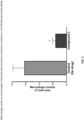
- Figure 2 shows that compound 3 reduces the number of renal interstitial macrophages in the 5/6 Remnant Kidney Model.
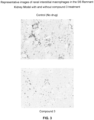
- Figure 3 shows some representative images of renal interstitial macrophages in the 5/6 Remnant Kidney Model with and without compound 3 treatment.
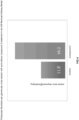
- Figure 4 shows that compound 3 increased podocytes numbers in the 5/6 Remnant Kidney Model.
- Figure 5 shows representative images of podocytes in the 5/6 Remnant Kidney Model with and without compound 3 treatment.
- Figure 6 shows that compound 3 has a beneficial effect on the percentage of glomeruli with mesangiolysis in 5/6 Remnant Kidney Model.
- Figure 7 shows a representative image of glomeruli with mesangiolysis.
- Urine samples were collect at week one and two by individually housing mice in metabolic cages for 18 h.
- Urinary albumin was measured by ELISA (Bethyl Labs, Montgomery, TX), and the urinary albumin excretion rate (UAER) was calculated as micrograms per 24 hours.
- Urinary creatinine was measured by mass spectrometry.
- the albumin to creatinine ratio (ACR) was calculated as micrograms of albumin per milligram of creatinine.
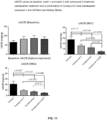
- Figure 8 shows that compound 1 as single agent and in combination with candesartan (CST) leads to reduction in UACR levels.
- Figure 9 shows that compound 1 in combination with candesartan (CST) leads to reduction in UAER levels.
- Urine samples were collected at week one, two and three by individually housing the mice in metabolic cages for 18 hours.
- Urinary albumin was measured by ELISA (Bethyl Labs, Montgomery, TX), and the urinary albumin excretion rate (UAER) was calculated as micrograms per 24 hours.
- Urinary creatinine was measured by mass spectrometry.
- the albumin to creatinine ratio (ACR) was calculated as micrograms of albumin per milligram of creatinine.
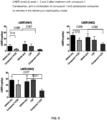
- Figure 10 shows a reduction in UAER values at weeks 1, 2 and 3 with treatment with compound 3 alone, with treatment with candesartan alone, as well as with treatment with a combination of compound 3 and candesartan in the 5/6 Remnant Kidney Model.
- Figure 11 shows a reduction in UACR values at week 1 and week 2 with treatment with compound 3 alone, with treatment with candesartan alone as well as with treatment with a combination of compound 3 and candesartan in the 5/6 Remnant Kidney Model.
- Compound 1 is:
- Compound 2 is:
- the specific pharmacological responses observed may vary according to and depending on the particular active compound selected or whether there are present pharmaceutical carriers, as well as the type of formulation and mode of administration employed.
Landscapes
- Health & Medical Sciences (AREA)
- Chemical & Material Sciences (AREA)
- Life Sciences & Earth Sciences (AREA)
- Medicinal Chemistry (AREA)
- Veterinary Medicine (AREA)
- Pharmacology & Pharmacy (AREA)
- Public Health (AREA)
- General Health & Medical Sciences (AREA)
- Animal Behavior & Ethology (AREA)
- Epidemiology (AREA)
- Organic Chemistry (AREA)
- Engineering & Computer Science (AREA)
- Cell Biology (AREA)
- Developmental Biology & Embryology (AREA)
- Bioinformatics & Cheminformatics (AREA)
- Reproductive Health (AREA)
- Immunology (AREA)
- Chemical Kinetics & Catalysis (AREA)
- Nuclear Medicine, Radiotherapy & Molecular Imaging (AREA)
- Urology & Nephrology (AREA)
- General Chemical & Material Sciences (AREA)
- Molecular Biology (AREA)
- Zoology (AREA)
- Virology (AREA)
- Biotechnology (AREA)
- Gynecology & Obstetrics (AREA)
- Emergency Medicine (AREA)
- Biomedical Technology (AREA)
- Endocrinology (AREA)
- Microbiology (AREA)
- Mycology (AREA)
- Pharmaceuticals Containing Other Organic And Inorganic Compounds (AREA)
- Nitrogen Condensed Heterocyclic Rings (AREA)
- Steroid Compounds (AREA)
- Medicines That Contain Protein Lipid Enzymes And Other Medicines (AREA)
- Processing And Handling Of Plastics And Other Materials For Molding In General (AREA)
- Medicines Containing Antibodies Or Antigens For Use As Internal Diagnostic Agents (AREA)
- Hydrogenated Pyridines (AREA)
Claims (11)
- Composé de Formule I :

dans lequelR1 est un halogène ou un alkyle en C1 à C6,R2 est l'hydrogène, un halogène, un alkyle en C1 à C6, un alcoxy en C1 à C6, un haloalkyle en C1 à C6, un haloalcoxy en C1 à C6 ou -CN,R3 est l'hydrogène, un halogène ou un alkyle en C1 à C6,R4 est l'hydrogène, un halogène ou un alkyle en C1 à C6,chaque R5 est indépendamment un alkyle en C1 à C6, -OH ou -NH2,n vaut 0, 1, 2 ou 3, etchaque élément parmi A1, A2 et A3 est -CH- ou -N-, où au moins un élément parmi A1, A2 ou A3 est -N-,pour une utilisation dans le traitement d'une néphropathie diabétique ou d'une néphrite. - Composé pour une utilisation selon la revendication 1, dans lequelR1 est un halogène ou un méthyle,R2 est un halogène ou un haloalkyle en C1 à C3,R3 est un halogène ou un alkyle en C1 à C3,R4 est l'hydrogène,n vaut 0,A2 est -CH-, etA3 est -N-.
- Composé pour une utilisation selon la revendication 1, dans lequel le composé est :

- Composé pour une utilisation selon la revendication 1, dans lequel le composé est :

- Composé pour une utilisation selon l'une quelconque des revendications 1 à 4, qui est destiné à être utilisé dans le traitement d'une néphrite.
- Composé pour une utilisation selon la revendication 5, dans lequel la néphrite est une néphrite lupique, une néphropathie IgA ou une néphrite interstitielle liée à une thérapie à point de contrôle immunitaire.
- Composé pour une utilisation selon l'une quelconque des revendications 1 à 4, qui est destiné à être utilisé dans le traitement d'une néphropathie diabétique.
- Composé pour une utilisation selon l'une quelconque des revendications 1 à 7, dans lequel le composé ou un sel de celui-ci acceptable du point de vue pharmaceutique est administré par voie orale.
- Composé pour une utilisation selon l'une quelconque des revendications 1 à 8, dans lequel le composé ou un sel de celui-ci acceptable du point de vue pharmaceutique est administré deux fois par jour ou une fois par jour.
- Composé pour une utilisation selon l'une quelconque des revendications précédentes, dans lequel le traitement comporte en outre d'administrer au patient un ou plusieurs composés thérapeutiques supplémentaires choisis parmi le groupe constitué d'un inhibiteur de l'enzyme de conversion de l'angiotensine (ACE) et un bloqueur du récepteur II de l'angiotensine (ARB).
- Composé pour une utilisation selon la revendication 10, dans lequel le ou les composés thérapeutiques supplémentaires sont choisis parmi le groupe constitué de ramipril, périndopril, lisinopril, arginine de périndopril, captopril, spirapril, quinapril, énalapril, imidapril, fosinopril, zofénopril, bénazépril, trandolapril, vérapamil, bénazépril, amlodipine, trandolapril, P-003, cilazapril, délapril, moexipril, quinapril, fosinopril, témocapril, losartan, candésartan, irbésartan, telmisartan, olmésartan, valsartan, azilsartan, telmisartan, fimasartan, EMA-401, azilsartan médoxomil potassique, sparsentan, candésartan cilexétil, olmésartan médoxomil, TRV-027, losartan potassique, YH-22189, azilsartan triméthyléthanolamine, allisartan isoproxil et éprosartan.
Applications Claiming Priority (3)
| Application Number | Priority Date | Filing Date | Title |
|---|---|---|---|
| US201662425832P | 2016-11-23 | 2016-11-23 | |
| PCT/US2017/063120 WO2018098353A1 (fr) | 2016-11-23 | 2017-11-22 | Méthode de traitement de la glomérulonéphrite segmentaire et focale |
| EP17874234.2A EP3544602A4 (fr) | 2016-11-23 | 2017-11-22 | Méthode de traitement de la glomérulonéphrite segmentaire et focale |
Related Parent Applications (1)
| Application Number | Title | Priority Date | Filing Date |
|---|---|---|---|
| EP17874234.2A Division EP3544602A4 (fr) | 2016-11-23 | 2017-11-22 | Méthode de traitement de la glomérulonéphrite segmentaire et focale |
Publications (2)
| Publication Number | Publication Date |
|---|---|
| EP4134080A1 EP4134080A1 (fr) | 2023-02-15 |
| EP4134080B1 true EP4134080B1 (fr) | 2024-11-13 |
Family
ID=62144131
Family Applications (2)
| Application Number | Title | Priority Date | Filing Date |
|---|---|---|---|
| EP22177635.4A Active EP4134080B1 (fr) | 2016-11-23 | 2017-11-22 | Inhibiteurs de ccr2 pour le traitement des maladies rénales |
| EP17874234.2A Withdrawn EP3544602A4 (fr) | 2016-11-23 | 2017-11-22 | Méthode de traitement de la glomérulonéphrite segmentaire et focale |
Family Applications After (1)
| Application Number | Title | Priority Date | Filing Date |
|---|---|---|---|
| EP17874234.2A Withdrawn EP3544602A4 (fr) | 2016-11-23 | 2017-11-22 | Méthode de traitement de la glomérulonéphrite segmentaire et focale |
Country Status (14)
| Country | Link |
|---|---|
| US (3) | US10973809B2 (fr) |
| EP (2) | EP4134080B1 (fr) |
| JP (3) | JP7013464B2 (fr) |
| KR (2) | KR102754341B1 (fr) |
| CN (1) | CN110177549A (fr) |
| AU (1) | AU2017363299B2 (fr) |
| CA (2) | CA3242005A1 (fr) |
| CL (1) | CL2019001381A1 (fr) |
| ES (1) | ES3015086T3 (fr) |
| IL (2) | IL294410B2 (fr) |
| MX (2) | MX2021014356A (fr) |
| NZ (1) | NZ753802A (fr) |
| RU (2) | RU2765737C2 (fr) |
| WO (1) | WO2018098353A1 (fr) |
Families Citing this family (12)
| Publication number | Priority date | Publication date | Assignee | Title |
|---|---|---|---|---|
| RU2765737C2 (ru) * | 2016-11-23 | 2022-02-02 | Хемоцентрикс, Инк. | Способ лечения фокально-сегментарного гломерулосклероза |
| RU2020113612A (ru) | 2017-10-11 | 2021-11-12 | Хемоцентрикс, Инк. | Лечение фокально-сегментарного гломерулосклероза антагонистами ccr2 |
| CN112441916A (zh) * | 2019-08-29 | 2021-03-05 | 广东药科大学 | 新型苯乙酸衍生物、其制备方法及其作为药物的用途 |
| CN118767143A (zh) | 2019-12-12 | 2024-10-15 | 听治疗有限责任公司 | 用于预防和治疗听力损失的组合物和方法 |
| CA3161516A1 (fr) | 2019-12-17 | 2021-06-24 | Philip Thomas FROHLICH | Methodes de traitement de la maladie de berger avec de l'atrasentan |
| IL297208A (en) * | 2020-04-10 | 2022-12-01 | Chinook Therapeutics Inc | Treatment methods for diabetic kidney disease |
| JP2023524563A (ja) * | 2020-05-07 | 2023-06-12 | ラムバム メド-テック リミテッド | Apol1-関連疾患の治療に使用するための組成物 |
| EP4197543A4 (fr) * | 2020-08-17 | 2024-05-15 | Beijing Creatron Institute of Pharmaceutical Research Co., Ltd. | Composition et utilisation d'un inhibiteur de sglt-2 et de bloqueurs des récepteurs de l'angiotensine |
| TWI907583B (zh) * | 2020-12-11 | 2025-12-11 | 大陸商江蘇恒瑞醫藥股份有限公司 | Jak抑制劑在腎臟疾病中的應用 |
| WO2022140258A1 (fr) * | 2020-12-21 | 2022-06-30 | Chemocentryx, Inc. | Traitement de la glomérulopathie à c3 à l'aide d'un inhibiteur de c5a |
| CN119325377A (zh) * | 2022-05-19 | 2025-01-17 | 奇努克治疗公司 | 用阿曲生坦治疗局灶节段性肾小球硬化的方法 |
| JP2025183466A (ja) * | 2022-11-11 | 2025-12-17 | 株式会社アークメディスン | 化合物、エンドセリンa受容体拮抗剤、アンジオテンシンiiタイプ1受容体拮抗剤及び医薬組成物 |
Family Cites Families (94)
| Publication number | Priority date | Publication date | Assignee | Title |
|---|---|---|---|---|
| NL154598B (nl) | 1970-11-10 | 1977-09-15 | Organon Nv | Werkwijze voor het aantonen en bepalen van laagmoleculire verbindingen en van eiwitten die deze verbindingen specifiek kunnen binden, alsmede testverpakking. |
| US3817837A (en) | 1971-05-14 | 1974-06-18 | Syva Corp | Enzyme amplification assay |
| US3939350A (en) | 1974-04-29 | 1976-02-17 | Board Of Trustees Of The Leland Stanford Junior University | Fluorescent immunoassay employing total reflection for activation |
| US3901855A (en) | 1974-08-07 | 1975-08-26 | Us Air Force | Preparation of polybenzimidazoles |
| US3996345A (en) | 1974-08-12 | 1976-12-07 | Syva Company | Fluorescence quenching with immunological pairs in immunoassays |
| US4166452A (en) | 1976-05-03 | 1979-09-04 | Generales Constantine D J Jr | Apparatus for testing human responses to stimuli |
| US4256108A (en) | 1977-04-07 | 1981-03-17 | Alza Corporation | Microporous-semipermeable laminated osmotic system |
| US4227437A (en) | 1977-10-11 | 1980-10-14 | Inloes Thomas L | Frequency detecting apparatus |
| US4275149A (en) | 1978-11-24 | 1981-06-23 | Syva Company | Macromolecular environment control in specific receptor assays |
| US4277437A (en) | 1978-04-05 | 1981-07-07 | Syva Company | Kit for carrying out chemically induced fluorescence immunoassay |
| US4265874A (en) | 1980-04-25 | 1981-05-05 | Alza Corporation | Method of delivering drug with aid of effervescent activity generated in environment of use |
| US4403607A (en) | 1980-05-09 | 1983-09-13 | The Regents Of The University Of California | Compatible internal bone fixation plate |
| US4366241A (en) | 1980-08-07 | 1982-12-28 | Syva Company | Concentrating zone method in heterogeneous immunoassays |
| JPS6135934A (ja) | 1984-07-30 | 1986-02-20 | Tokyo Gas Co Ltd | 管路の内張り方法 |
| JPS6145145A (ja) | 1984-08-07 | 1986-03-05 | Aisin Warner Ltd | 自動変速機 |
| JPS61113060A (ja) | 1984-11-08 | 1986-05-30 | Fuji Photo Film Co Ltd | ハロゲン化銀カラ−写真感光材料 |
| US5120643A (en) | 1987-07-13 | 1992-06-09 | Abbott Laboratories | Process for immunochromatography with colloidal particles |
| DE3825041A1 (de) | 1988-07-20 | 1990-02-15 | Schering Ag | Pyrido(3,2-e)(1,2,4)triazolo(1,5-a)pyrimidin- 2-sulfonsaeureamide, verfahren zu ihrer herstellung und ihre verwendung als mittel mit herbizider, pflanzenwachstumsregulierender und fungizider wirkung |
| DE3924424A1 (de) | 1989-07-24 | 1991-01-31 | Boehringer Mannheim Gmbh | Nucleosid-derivate, verfahren zu deren herstellung, deren verwendung als arzneimittel sowie deren verwendung bei der nucleinsaeure-sequenzierung |
| JPH04364168A (ja) | 1990-08-08 | 1992-12-16 | Taisho Pharmaceut Co Ltd | スルホンアミドピリジン化合物 |
| DE69129611T2 (de) | 1990-08-20 | 1998-12-17 | Eisai Co., Ltd., Tokio/Tokyo | Sulfonamid-Derivate |
| US6159686A (en) | 1992-09-14 | 2000-12-12 | Sri International | Up-converting reporters for biological and other assays |
| US5514555A (en) | 1993-03-12 | 1996-05-07 | Center For Blood Research, Inc. | Assays and therapeutic methods based on lymphocyte chemoattractants |
| US5571775A (en) | 1994-07-11 | 1996-11-05 | Dowelanco | N-aryl[1,2,4]triazolo[1,5-a]pyridine-2-sulfonamide herbicides |
| PT896533E (pt) | 1996-02-22 | 2004-02-27 | Tularik Inc | Pentafluorobenzenosulfonamidas e analogos |
| US5780488A (en) | 1996-04-03 | 1998-07-14 | Merck & Co., Inc. | Inhibitors of farnesyl-protein transferase |
| AU734090B2 (en) | 1996-09-10 | 2001-06-07 | Millennium Pharmaceuticals, Inc. | CXCR3 chemokine receptor, antibodies, nucleic acids, and methods of use |
| AR015104A1 (es) | 1996-11-13 | 2001-04-18 | Dowelanco | Compuestos de n-arilsulfilimina sustituidos, utiles como catalizadores en la preparacion de compuestos de n-arilarilsulfonamida; proceso para preparar dichos compuestos y su uso para catalizar dicha preparacion. |
| US6322901B1 (en) | 1997-11-13 | 2001-11-27 | Massachusetts Institute Of Technology | Highly luminescent color-selective nano-crystalline materials |
| US6207392B1 (en) | 1997-11-25 | 2001-03-27 | The Regents Of The University Of California | Semiconductor nanocrystal probes for biological applications and process for making and using such probes |
| US5990479A (en) | 1997-11-25 | 1999-11-23 | Regents Of The University Of California | Organo Luminescent semiconductor nanocrystal probes for biological applications and process for making and using such probes |
| GB9803228D0 (en) | 1998-02-17 | 1998-04-08 | Zeneca Ltd | Chemical compounds |
| EP0937711A1 (fr) | 1998-02-18 | 1999-08-25 | Roche Diagnostics GmbH | Thiobenzamides, procédé pour leur préparation et médicaments les contenant |
| JP4327915B2 (ja) | 1998-03-30 | 2009-09-09 | 株式会社デ・ウエスタン・セラピテクス研究所 | スルフォンアミド誘導体 |
| US6326144B1 (en) | 1998-09-18 | 2001-12-04 | Massachusetts Institute Of Technology | Biological applications of quantum dots |
| US6251303B1 (en) | 1998-09-18 | 2001-06-26 | Massachusetts Institute Of Technology | Water-soluble fluorescent nanocrystals |
| US6306610B1 (en) | 1998-09-18 | 2001-10-23 | Massachusetts Institute Of Technology | Biological applications of quantum dots |
| US6380206B1 (en) | 1998-11-23 | 2002-04-30 | Cell Pathways, Inc. | Method of inhibiting neoplastic cells with 4,5-diaminopyrimidine derivatives |
| JP2000159665A (ja) | 1998-11-27 | 2000-06-13 | Nippon Kayaku Co Ltd | リウマチの予防または治療剤 |
| AUPP796798A0 (en) | 1998-12-30 | 1999-01-28 | Fujisawa Pharmaceutical Co., Ltd. | New compound |
| US6294192B1 (en) | 1999-02-26 | 2001-09-25 | Lipocine, Inc. | Triglyceride-free compositions and methods for improved delivery of hydrophobic therapeutic agents |
| SI1196408T1 (en) | 1999-06-28 | 2005-02-28 | Janssen Pharmaceutica N.V. | Respiratory syncytial virus replication inhibitors |
| PE20010306A1 (es) | 1999-07-02 | 2001-03-29 | Agouron Pharma | Compuestos de indazol y composiciones farmaceuticas que los contienen utiles para la inhibicion de proteina kinasa |
| JP2001089412A (ja) | 1999-09-22 | 2001-04-03 | Otsuka Pharmaceut Co Ltd | ベンゼン誘導体またはその医薬的に許容される塩 |
| AU2001243158A1 (en) | 2000-02-18 | 2001-08-27 | Merck And Co., Inc. | Inhibitors of prenyl-protein transferase |
| JP2001335714A (ja) | 2000-03-22 | 2001-12-04 | Fuji Photo Film Co Ltd | アゾ色素、その製造方法、インクジェット用インク、インクジェット記録方法 |
| US6525051B2 (en) | 2000-03-27 | 2003-02-25 | Schering Aktiengesellschaft | N-heterocyclic derivatives as NOS inhibitors |
| WO2002000647A1 (fr) | 2000-06-23 | 2002-01-03 | Bristol-Myers Squibb Pharma Company | Inhibiteurs du facteur xa a substitution heteroaryl-phenyle |
| JP3699910B2 (ja) | 2000-10-31 | 2005-09-28 | 株式会社東芝 | データ伝送装置、データ伝送方法及びプログラム |
| US7468253B2 (en) | 2001-06-07 | 2008-12-23 | Chemocentryx, Inc. | Method for multiple chemokine receptor screening for antagonists using RAM assay |
| CA2449628C (fr) | 2001-06-07 | 2008-05-06 | Zheng Wei | Technique de migration cellulaire |
| JP2003040726A (ja) | 2001-07-26 | 2003-02-13 | Daito Kasei Kogyo Kk | 化粧料 |
| WO2003032994A2 (fr) | 2001-10-17 | 2003-04-24 | Boehringer Ingelheim Pharma Gmbh & Co. Kg | Nouvelles pyrimidines substituees, procede permettant de les produire et leur utilisation comme medicament |
| AU2002358390A1 (en) | 2001-12-18 | 2003-06-30 | Astrazeneca Ab | Novel compounds |
| US7119112B2 (en) | 2002-02-28 | 2006-10-10 | Icagen, Inc. | Sulfonamides as potassium channel blockers |
| US7101883B2 (en) | 2002-03-18 | 2006-09-05 | Bristol-Myers Squibb Company | Uracil derivatives as inhibitors of TNF-α converting enzyme (TACE) and matrix metalloproteinases |
| NZ566263A (en) | 2002-05-24 | 2009-09-25 | Millennium Pharm Inc | CCR9 inhibitors and methods of use thereof |
| US7227035B2 (en) | 2002-11-18 | 2007-06-05 | Chemocentryx | Bis-aryl sulfonamides |
| US20060111351A1 (en) | 2002-11-18 | 2006-05-25 | Solomon Ungashe | Aryl sulfonamides |
| US7420055B2 (en) * | 2002-11-18 | 2008-09-02 | Chemocentryx, Inc. | Aryl sulfonamides |
| US20070021466A1 (en) | 2002-11-18 | 2007-01-25 | Solomon Ungashe | CCR2 inhibitors and methods of use thereof |
| KR100874292B1 (ko) | 2002-11-18 | 2008-12-18 | 케모센트릭스 | 아릴 술폰아마이드 |
| WO2004056774A2 (fr) | 2002-12-19 | 2004-07-08 | Neurogen Corporation | Analogues d'arylamide d'acide biphenyl-4-carboxylique substitues |
| PL377314A1 (pl) | 2002-12-20 | 2006-01-23 | Amgen Inc. | Modulatory astmy i zapaleń na tle alergicznym |
| AU2003290346A1 (en) | 2002-12-24 | 2004-07-22 | Biofocus Plc | Compound libraries of 2,3-substituted pyrazine derivatives capable of binding to g-protein coupled receptors |
| WO2004099127A1 (fr) | 2003-05-07 | 2004-11-18 | Novo Nordisk A/S | Composes utilises comme inhibiteurs de kinase |
| CA2526385C (fr) | 2003-05-29 | 2008-07-22 | Abbott Laboratories | Schema posologique d'administration en continu |
| WO2005004810A2 (fr) | 2003-07-02 | 2005-01-20 | Merck & Co., Inc. | Derives arylsulfonamide |
| GB0322016D0 (en) | 2003-09-19 | 2003-10-22 | Merck Sharp & Dohme | New compounds |
| EP1802331A2 (fr) | 2004-09-08 | 2007-07-04 | Boys Town National Research Hospital | Traitement d'une maladie de la membrane basale glomerulaire dans laquelle intervient la metalloprotease matricielle 12 |
| DK1838674T3 (da) | 2005-01-14 | 2011-06-14 | Chemocentryx Inc | Heteroarylsulfonamider og CCR2 |
| US7622583B2 (en) | 2005-01-14 | 2009-11-24 | Chemocentryx, Inc. | Heteroaryl sulfonamides and CCR2 |
| UA95244C2 (ru) | 2005-06-22 | 2011-07-25 | Плексикон, Инк. | Соединения и способ модулирования активности киназ, и показания для их применения |
| JP4364168B2 (ja) | 2005-07-11 | 2009-11-11 | アルゼ株式会社 | 遊技機 |
| WO2007014054A2 (fr) | 2005-07-22 | 2007-02-01 | Glaxo Group Limted | Inhibiteur benzenesulfonamide de recepteur de chimiokine ccr2 |
| WO2007014008A2 (fr) | 2005-07-22 | 2007-02-01 | Glaxo Group Limted | Inhibiteur benzenesulfonamide de recepteur de chimiokine ccr2 |
| US8067457B2 (en) | 2005-11-01 | 2011-11-29 | Millennium Pharmaceuticals, Inc. | Compounds useful as antagonists of CCR2 |
| WO2007106797A2 (fr) | 2006-03-14 | 2007-09-20 | Janssen Pharmaceutica, Nv | Procédés d'utilisation d'antagonistes du ccr2 à base de composés de dipipéridine substituée |
| WO2008008394A1 (fr) | 2006-07-12 | 2008-01-17 | Transform Pharmaceuticals, Inc. | Formes de sel de succinate de tizanidine et leurs procédés de fabrication et d'utilisation |
| US8519135B2 (en) | 2006-07-14 | 2013-08-27 | Chemocentryx, Inc. | Heteroaryl sulfonamides and CCR2/CCR9 |
| US20100234364A1 (en) | 2006-07-14 | 2010-09-16 | Arindrajit Basak | Ccr2 inhibitors and methods of use thereof |
| JP5306344B2 (ja) | 2007-07-12 | 2013-10-02 | ケモセントリックス, インコーポレイテッド | 炎症の治療のためのccr2モジュレーターとしての縮合ヘテロアリールピリジルおよびフェニルベンゼンスルホンアミド |
| RU2547595C2 (ru) | 2008-08-18 | 2015-04-10 | Пфайзер Инк | Антитела против ccr2 |
| TW201041888A (en) | 2009-05-06 | 2010-12-01 | Plexxikon Inc | Compounds and methods for kinase modulation, and indications therefor |
| ES2674275T3 (es) | 2009-12-17 | 2018-06-28 | Centrexion Therapeutics Corporation | Antagonistas del receptor CCR2 y usos de los mismos |
| EP2368876A1 (fr) * | 2010-03-01 | 2011-09-28 | Sanofi | Dérivés d'aminoindanes, leur préparation et leur application en thérapeutique |
| US20130252951A1 (en) * | 2010-09-27 | 2013-09-26 | Proximagen Limited | 7-hydroxy-pyrazolo[1,5-a] pyrimidine compounds and their use as ccr2 receptor antagonists |
| CN107899012A (zh) * | 2011-01-11 | 2018-04-13 | 戴麦里克斯生物科学有限公司 | 联合疗法 |
| EP3065744B1 (fr) * | 2013-11-04 | 2021-04-21 | Noxxon Pharma AG | Un antagoniste de ccl2 pour le traitement de la protéinurie |
| JP6135934B2 (ja) | 2014-01-22 | 2017-05-31 | 株式会社オートネットワーク技術研究所 | スイッチング装置 |
| JP6145145B2 (ja) | 2014-09-30 | 2017-06-07 | 三ツ星ベルト株式会社 | ベルト取付治具 |
| US10195188B2 (en) | 2016-06-13 | 2019-02-05 | Chemocentryx, Inc. | Method of treating pancreatic cancer |
| RU2765737C2 (ru) * | 2016-11-23 | 2022-02-02 | Хемоцентрикс, Инк. | Способ лечения фокально-сегментарного гломерулосклероза |
| RU2020113612A (ru) * | 2017-10-11 | 2021-11-12 | Хемоцентрикс, Инк. | Лечение фокально-сегментарного гломерулосклероза антагонистами ccr2 |
-
2017
- 2017-11-22 RU RU2019119129A patent/RU2765737C2/ru active
- 2017-11-22 EP EP22177635.4A patent/EP4134080B1/fr active Active
- 2017-11-22 RU RU2022102328A patent/RU2022102328A/ru unknown
- 2017-11-22 US US15/821,490 patent/US10973809B2/en active Active
- 2017-11-22 CA CA3242005A patent/CA3242005A1/fr active Pending
- 2017-11-22 JP JP2019527910A patent/JP7013464B2/ja active Active
- 2017-11-22 WO PCT/US2017/063120 patent/WO2018098353A1/fr not_active Ceased
- 2017-11-22 CN CN201780084350.2A patent/CN110177549A/zh active Pending
- 2017-11-22 IL IL294410A patent/IL294410B2/en unknown
- 2017-11-22 KR KR1020247028053A patent/KR102754341B1/ko active Active
- 2017-11-22 NZ NZ753802A patent/NZ753802A/en unknown
- 2017-11-22 MX MX2021014356A patent/MX2021014356A/es unknown
- 2017-11-22 EP EP17874234.2A patent/EP3544602A4/fr not_active Withdrawn
- 2017-11-22 IL IL266751A patent/IL266751B/en unknown
- 2017-11-22 ES ES22177635T patent/ES3015086T3/es active Active
- 2017-11-22 CA CA3044621A patent/CA3044621A1/fr active Pending
- 2017-11-22 KR KR1020197018241A patent/KR20190088513A/ko not_active Ceased
- 2017-11-22 MX MX2019005810A patent/MX388165B/es unknown
- 2017-11-22 AU AU2017363299A patent/AU2017363299B2/en active Active
-
2019
- 2019-05-22 CL CL2019001381A patent/CL2019001381A1/es unknown
-
2020
- 2020-06-19 US US16/946,402 patent/US11324736B2/en active Active
-
2022
- 2022-01-18 JP JP2022005829A patent/JP7518107B2/ja active Active
- 2022-04-08 US US17/658,494 patent/US12194032B2/en active Active
-
2024
- 2024-02-27 JP JP2024027323A patent/JP2024059849A/ja not_active Withdrawn
Non-Patent Citations (1)
| Title |
|---|
| ANONYMOUS: "CCX-140", PUBCHEM, 27 July 2021 (2021-07-27), pages 1 - 2, XP093118020, Retrieved from the Internet <URL:https://pubchem.ncbi.nlm.nih.gov/substance/163321464> [retrieved on 20240110] * |
Also Published As
Similar Documents
| Publication | Publication Date | Title |
|---|---|---|
| EP4134080B1 (fr) | Inhibiteurs de ccr2 pour le traitement des maladies rénales | |
| EP3463350B1 (fr) | Pyrrolo-pyridines and pyrrolo-pyrimidines pour leur utilisation dans le traitement de la fibrose hépatique | |
| TWI791423B (zh) | C3腎絲球病變之治療方法 | |
| US20220296601A1 (en) | Treatment of focal segmental glomerulosclerosis with ccr2 antagonists | |
| Ramaswamy et al. | Current and upcoming treatment modalities in myasthenia gravis | |
| NZ794676A (en) | Method of treating focal segmental glomerulosclerosis | |
| BR112019010375B1 (pt) | Usos de um composto no tratamento de glomeruloesclerose segmental focal primária |
Legal Events
| Date | Code | Title | Description |
|---|---|---|---|
| PUAI | Public reference made under article 153(3) epc to a published international application that has entered the european phase |
Free format text: ORIGINAL CODE: 0009012 |
|
| STAA | Information on the status of an ep patent application or granted ep patent |
Free format text: STATUS: THE APPLICATION HAS BEEN PUBLISHED |
|
| AC | Divisional application: reference to earlier application |
Ref document number: 3544602 Country of ref document: EP Kind code of ref document: P |
|
| AK | Designated contracting states |
Kind code of ref document: A1 Designated state(s): AL AT BE BG CH CY CZ DE DK EE ES FI FR GB GR HR HU IE IS IT LI LT LU LV MC MK MT NL NO PL PT RO RS SE SI SK SM TR |
|
| STAA | Information on the status of an ep patent application or granted ep patent |
Free format text: STATUS: REQUEST FOR EXAMINATION WAS MADE |
|
| 17P | Request for examination filed |
Effective date: 20230718 |
|
| RBV | Designated contracting states (corrected) |
Designated state(s): AL AT BE BG CH CY CZ DE DK EE ES FI FR GB GR HR HU IE IS IT LI LT LU LV MC MK MT NL NO PL PT RO RS SE SI SK SM TR |
|
| RAP3 | Party data changed (applicant data changed or rights of an application transferred) |
Owner name: CHEMOCENTRYX, INC. |
|
| STAA | Information on the status of an ep patent application or granted ep patent |
Free format text: STATUS: EXAMINATION IS IN PROGRESS |
|
| 17Q | First examination report despatched |
Effective date: 20240118 |
|
| GRAP | Despatch of communication of intention to grant a patent |
Free format text: ORIGINAL CODE: EPIDOSNIGR1 |
|
| STAA | Information on the status of an ep patent application or granted ep patent |
Free format text: STATUS: GRANT OF PATENT IS INTENDED |
|
| RIC1 | Information provided on ipc code assigned before grant |
Ipc: A61K 45/06 20060101ALI20240711BHEP Ipc: A61K 31/437 20060101ALI20240711BHEP Ipc: A61K 31/18 20060101ALI20240711BHEP Ipc: A61K 31/44 20060101ALI20240711BHEP Ipc: A61P 13/12 20060101ALI20240711BHEP Ipc: A61K 31/4184 20060101ALI20240711BHEP Ipc: A61K 31/519 20060101ALI20240711BHEP Ipc: A61K 31/444 20060101AFI20240711BHEP |
|
| INTG | Intention to grant announced |
Effective date: 20240724 |
|
| GRAS | Grant fee paid |
Free format text: ORIGINAL CODE: EPIDOSNIGR3 |
|
| GRAA | (expected) grant |
Free format text: ORIGINAL CODE: 0009210 |
|
| STAA | Information on the status of an ep patent application or granted ep patent |
Free format text: STATUS: THE PATENT HAS BEEN GRANTED |
|
| AC | Divisional application: reference to earlier application |
Ref document number: 3544602 Country of ref document: EP Kind code of ref document: P |
|
| AK | Designated contracting states |
Kind code of ref document: B1 Designated state(s): AL AT BE BG CH CY CZ DE DK EE ES FI FR GB GR HR HU IE IS IT LI LT LU LV MC MK MT NL NO PL PT RO RS SE SI SK SM TR |
|
| REG | Reference to a national code |
Ref country code: GB Ref legal event code: FG4D |
|
| REG | Reference to a national code |
Ref country code: CH Ref legal event code: EP |
|
| REG | Reference to a national code |
Ref country code: IE Ref legal event code: FG4D |
|
| REG | Reference to a national code |
Ref country code: DE Ref legal event code: R096 Ref document number: 602017086190 Country of ref document: DE |
|
| REG | Reference to a national code |
Ref country code: LT Ref legal event code: MG9D |
|
| REG | Reference to a national code |
Ref country code: NL Ref legal event code: MP Effective date: 20241113 |
|
| PG25 | Lapsed in a contracting state [announced via postgrant information from national office to epo] |
Ref country code: HR Free format text: LAPSE BECAUSE OF FAILURE TO SUBMIT A TRANSLATION OF THE DESCRIPTION OR TO PAY THE FEE WITHIN THE PRESCRIBED TIME-LIMIT Effective date: 20241113 Ref country code: PT Free format text: LAPSE BECAUSE OF FAILURE TO SUBMIT A TRANSLATION OF THE DESCRIPTION OR TO PAY THE FEE WITHIN THE PRESCRIBED TIME-LIMIT Effective date: 20250313 Ref country code: IS Free format text: LAPSE BECAUSE OF FAILURE TO SUBMIT A TRANSLATION OF THE DESCRIPTION OR TO PAY THE FEE WITHIN THE PRESCRIBED TIME-LIMIT Effective date: 20250313 |
|
| PG25 | Lapsed in a contracting state [announced via postgrant information from national office to epo] |
Ref country code: FI Free format text: LAPSE BECAUSE OF FAILURE TO SUBMIT A TRANSLATION OF THE DESCRIPTION OR TO PAY THE FEE WITHIN THE PRESCRIBED TIME-LIMIT Effective date: 20241113 Ref country code: NL Free format text: LAPSE BECAUSE OF FAILURE TO SUBMIT A TRANSLATION OF THE DESCRIPTION OR TO PAY THE FEE WITHIN THE PRESCRIBED TIME-LIMIT Effective date: 20241113 |
|
| REG | Reference to a national code |
Ref country code: AT Ref legal event code: MK05 Ref document number: 1741130 Country of ref document: AT Kind code of ref document: T Effective date: 20241113 |
|
| PG25 | Lapsed in a contracting state [announced via postgrant information from national office to epo] |
Ref country code: BG Free format text: LAPSE BECAUSE OF FAILURE TO SUBMIT A TRANSLATION OF THE DESCRIPTION OR TO PAY THE FEE WITHIN THE PRESCRIBED TIME-LIMIT Effective date: 20241113 |
|
| PG25 | Lapsed in a contracting state [announced via postgrant information from national office to epo] |
Ref country code: NO Free format text: LAPSE BECAUSE OF FAILURE TO SUBMIT A TRANSLATION OF THE DESCRIPTION OR TO PAY THE FEE WITHIN THE PRESCRIBED TIME-LIMIT Effective date: 20250213 |
|
| PG25 | Lapsed in a contracting state [announced via postgrant information from national office to epo] |
Ref country code: LV Free format text: LAPSE BECAUSE OF FAILURE TO SUBMIT A TRANSLATION OF THE DESCRIPTION OR TO PAY THE FEE WITHIN THE PRESCRIBED TIME-LIMIT Effective date: 20241113 Ref country code: GR Free format text: LAPSE BECAUSE OF FAILURE TO SUBMIT A TRANSLATION OF THE DESCRIPTION OR TO PAY THE FEE WITHIN THE PRESCRIBED TIME-LIMIT Effective date: 20250214 Ref country code: AT Free format text: LAPSE BECAUSE OF FAILURE TO SUBMIT A TRANSLATION OF THE DESCRIPTION OR TO PAY THE FEE WITHIN THE PRESCRIBED TIME-LIMIT Effective date: 20241113 |
|
| PG25 | Lapsed in a contracting state [announced via postgrant information from national office to epo] |
Ref country code: PL Free format text: LAPSE BECAUSE OF FAILURE TO SUBMIT A TRANSLATION OF THE DESCRIPTION OR TO PAY THE FEE WITHIN THE PRESCRIBED TIME-LIMIT Effective date: 20241113 |
|
| PG25 | Lapsed in a contracting state [announced via postgrant information from national office to epo] |
Ref country code: RS Free format text: LAPSE BECAUSE OF FAILURE TO SUBMIT A TRANSLATION OF THE DESCRIPTION OR TO PAY THE FEE WITHIN THE PRESCRIBED TIME-LIMIT Effective date: 20250213 |
|
| REG | Reference to a national code |
Ref country code: ES Ref legal event code: FG2A Ref document number: 3015086 Country of ref document: ES Kind code of ref document: T3 Effective date: 20250429 |
|
| PG25 | Lapsed in a contracting state [announced via postgrant information from national office to epo] |
Ref country code: SM Free format text: LAPSE BECAUSE OF FAILURE TO SUBMIT A TRANSLATION OF THE DESCRIPTION OR TO PAY THE FEE WITHIN THE PRESCRIBED TIME-LIMIT Effective date: 20241113 |
|
| PG25 | Lapsed in a contracting state [announced via postgrant information from national office to epo] |
Ref country code: DK Free format text: LAPSE BECAUSE OF FAILURE TO SUBMIT A TRANSLATION OF THE DESCRIPTION OR TO PAY THE FEE WITHIN THE PRESCRIBED TIME-LIMIT Effective date: 20241113 |
|
| PG25 | Lapsed in a contracting state [announced via postgrant information from national office to epo] |
Ref country code: LU Free format text: LAPSE BECAUSE OF NON-PAYMENT OF DUE FEES Effective date: 20241122 |
|
| PG25 | Lapsed in a contracting state [announced via postgrant information from national office to epo] |
Ref country code: EE Free format text: LAPSE BECAUSE OF FAILURE TO SUBMIT A TRANSLATION OF THE DESCRIPTION OR TO PAY THE FEE WITHIN THE PRESCRIBED TIME-LIMIT Effective date: 20241113 |
|
| PG25 | Lapsed in a contracting state [announced via postgrant information from national office to epo] |
Ref country code: RO Free format text: LAPSE BECAUSE OF FAILURE TO SUBMIT A TRANSLATION OF THE DESCRIPTION OR TO PAY THE FEE WITHIN THE PRESCRIBED TIME-LIMIT Effective date: 20241113 |
|
| PG25 | Lapsed in a contracting state [announced via postgrant information from national office to epo] |
Ref country code: SK Free format text: LAPSE BECAUSE OF FAILURE TO SUBMIT A TRANSLATION OF THE DESCRIPTION OR TO PAY THE FEE WITHIN THE PRESCRIBED TIME-LIMIT Effective date: 20241113 |
|
| PG25 | Lapsed in a contracting state [announced via postgrant information from national office to epo] |
Ref country code: CZ Free format text: LAPSE BECAUSE OF FAILURE TO SUBMIT A TRANSLATION OF THE DESCRIPTION OR TO PAY THE FEE WITHIN THE PRESCRIBED TIME-LIMIT Effective date: 20241113 |
|
| REG | Reference to a national code |
Ref country code: DE Ref legal event code: R097 Ref document number: 602017086190 Country of ref document: DE |
|
| REG | Reference to a national code |
Ref country code: BE Ref legal event code: MM Effective date: 20241130 |
|
| PG25 | Lapsed in a contracting state [announced via postgrant information from national office to epo] |
Ref country code: SE Free format text: LAPSE BECAUSE OF FAILURE TO SUBMIT A TRANSLATION OF THE DESCRIPTION OR TO PAY THE FEE WITHIN THE PRESCRIBED TIME-LIMIT Effective date: 20241113 |
|
| PG25 | Lapsed in a contracting state [announced via postgrant information from national office to epo] |
Ref country code: MC Free format text: LAPSE BECAUSE OF FAILURE TO SUBMIT A TRANSLATION OF THE DESCRIPTION OR TO PAY THE FEE WITHIN THE PRESCRIBED TIME-LIMIT Effective date: 20241113 |
|
| PLBE | No opposition filed within time limit |
Free format text: ORIGINAL CODE: 0009261 |
|
| STAA | Information on the status of an ep patent application or granted ep patent |
Free format text: STATUS: NO OPPOSITION FILED WITHIN TIME LIMIT |
|
| PG25 | Lapsed in a contracting state [announced via postgrant information from national office to epo] |
Ref country code: BE Free format text: LAPSE BECAUSE OF NON-PAYMENT OF DUE FEES Effective date: 20241130 |
|
| 26N | No opposition filed |
Effective date: 20250814 |
|
| PG25 | Lapsed in a contracting state [announced via postgrant information from national office to epo] |
Ref country code: IE Free format text: LAPSE BECAUSE OF NON-PAYMENT OF DUE FEES Effective date: 20241122 |
|
| REG | Reference to a national code |
Ref country code: CH Ref legal event code: U11 Free format text: ST27 STATUS EVENT CODE: U-0-0-U10-U11 (AS PROVIDED BY THE NATIONAL OFFICE) Effective date: 20251201 |
|
| PGFP | Annual fee paid to national office [announced via postgrant information from national office to epo] |
Ref country code: DE Payment date: 20251022 Year of fee payment: 9 |
|
| PGFP | Annual fee paid to national office [announced via postgrant information from national office to epo] |
Ref country code: GB Payment date: 20251023 Year of fee payment: 9 |
|
| PGFP | Annual fee paid to national office [announced via postgrant information from national office to epo] |
Ref country code: IT Payment date: 20251022 Year of fee payment: 9 |
|
| PGFP | Annual fee paid to national office [announced via postgrant information from national office to epo] |
Ref country code: FR Payment date: 20251022 Year of fee payment: 9 |
|
| PGFP | Annual fee paid to national office [announced via postgrant information from national office to epo] |
Ref country code: CH Payment date: 20251201 Year of fee payment: 9 |
|
| PGFP | Annual fee paid to national office [announced via postgrant information from national office to epo] |
Ref country code: ES Payment date: 20251201 Year of fee payment: 9 |
|
| PG25 | Lapsed in a contracting state [announced via postgrant information from national office to epo] |
Ref country code: HU Free format text: LAPSE BECAUSE OF FAILURE TO SUBMIT A TRANSLATION OF THE DESCRIPTION OR TO PAY THE FEE WITHIN THE PRESCRIBED TIME-LIMIT; INVALID AB INITIO Effective date: 20171122 |
|
| PG25 | Lapsed in a contracting state [announced via postgrant information from national office to epo] |
Ref country code: CY Free format text: LAPSE BECAUSE OF FAILURE TO SUBMIT A TRANSLATION OF THE DESCRIPTION OR TO PAY THE FEE WITHIN THE PRESCRIBED TIME-LIMIT; INVALID AB INITIO Effective date: 20171122 |