EP4134151A1 - Liquides poreux - Google Patents
Liquides poreux Download PDFInfo
- Publication number
- EP4134151A1 EP4134151A1 EP22199794.3A EP22199794A EP4134151A1 EP 4134151 A1 EP4134151 A1 EP 4134151A1 EP 22199794 A EP22199794 A EP 22199794A EP 4134151 A1 EP4134151 A1 EP 4134151A1
- Authority
- EP
- European Patent Office
- Prior art keywords
- oil
- dispersion
- zif
- zeolite
- silicone oil
- Prior art date
- Legal status (The legal status is an assumption and is not a legal conclusion. Google has not performed a legal analysis and makes no representation as to the accuracy of the status listed.)
- Pending
Links
Images





Classifications
-
- B—PERFORMING OPERATIONS; TRANSPORTING
- B01—PHYSICAL OR CHEMICAL PROCESSES OR APPARATUS IN GENERAL
- B01D—SEPARATION
- B01D53/00—Separation of gases or vapours; Recovering vapours of volatile solvents from gases; Chemical or biological purification of waste gases, e.g. engine exhaust gases, smoke, fumes, flue gases, aerosols
- B01D53/02—Separation of gases or vapours; Recovering vapours of volatile solvents from gases; Chemical or biological purification of waste gases, e.g. engine exhaust gases, smoke, fumes, flue gases, aerosols by adsorption, e.g. preparative gas chromatography
- B01D53/06—Separation of gases or vapours; Recovering vapours of volatile solvents from gases; Chemical or biological purification of waste gases, e.g. engine exhaust gases, smoke, fumes, flue gases, aerosols by adsorption, e.g. preparative gas chromatography with moving adsorbents, e.g. rotating beds
- B01D53/10—Separation of gases or vapours; Recovering vapours of volatile solvents from gases; Chemical or biological purification of waste gases, e.g. engine exhaust gases, smoke, fumes, flue gases, aerosols by adsorption, e.g. preparative gas chromatography with moving adsorbents, e.g. rotating beds with dispersed adsorbents
-
- B—PERFORMING OPERATIONS; TRANSPORTING
- B01—PHYSICAL OR CHEMICAL PROCESSES OR APPARATUS IN GENERAL
- B01D—SEPARATION
- B01D53/00—Separation of gases or vapours; Recovering vapours of volatile solvents from gases; Chemical or biological purification of waste gases, e.g. engine exhaust gases, smoke, fumes, flue gases, aerosols
- B01D53/14—Separation of gases or vapours; Recovering vapours of volatile solvents from gases; Chemical or biological purification of waste gases, e.g. engine exhaust gases, smoke, fumes, flue gases, aerosols by absorption
- B01D53/1493—Selection of liquid materials for use as absorbents
-
- B—PERFORMING OPERATIONS; TRANSPORTING
- B01—PHYSICAL OR CHEMICAL PROCESSES OR APPARATUS IN GENERAL
- B01D—SEPARATION
- B01D15/00—Separating processes involving the treatment of liquids with solid sorbents; Apparatus therefor
- B01D15/02—Separating processes involving the treatment of liquids with solid sorbents; Apparatus therefor with moving adsorbents
-
- B—PERFORMING OPERATIONS; TRANSPORTING
- B01—PHYSICAL OR CHEMICAL PROCESSES OR APPARATUS IN GENERAL
- B01D—SEPARATION
- B01D53/00—Separation of gases or vapours; Recovering vapours of volatile solvents from gases; Chemical or biological purification of waste gases, e.g. engine exhaust gases, smoke, fumes, flue gases, aerosols
- B01D53/02—Separation of gases or vapours; Recovering vapours of volatile solvents from gases; Chemical or biological purification of waste gases, e.g. engine exhaust gases, smoke, fumes, flue gases, aerosols by adsorption, e.g. preparative gas chromatography
-
- B—PERFORMING OPERATIONS; TRANSPORTING
- B01—PHYSICAL OR CHEMICAL PROCESSES OR APPARATUS IN GENERAL
- B01D—SEPARATION
- B01D53/00—Separation of gases or vapours; Recovering vapours of volatile solvents from gases; Chemical or biological purification of waste gases, e.g. engine exhaust gases, smoke, fumes, flue gases, aerosols
- B01D53/02—Separation of gases or vapours; Recovering vapours of volatile solvents from gases; Chemical or biological purification of waste gases, e.g. engine exhaust gases, smoke, fumes, flue gases, aerosols by adsorption, e.g. preparative gas chromatography
- B01D53/025—Separation of gases or vapours; Recovering vapours of volatile solvents from gases; Chemical or biological purification of waste gases, e.g. engine exhaust gases, smoke, fumes, flue gases, aerosols by adsorption, e.g. preparative gas chromatography with wetted adsorbents; Chromatography
-
- B—PERFORMING OPERATIONS; TRANSPORTING
- B01—PHYSICAL OR CHEMICAL PROCESSES OR APPARATUS IN GENERAL
- B01D—SEPARATION
- B01D53/00—Separation of gases or vapours; Recovering vapours of volatile solvents from gases; Chemical or biological purification of waste gases, e.g. engine exhaust gases, smoke, fumes, flue gases, aerosols
- B01D53/14—Separation of gases or vapours; Recovering vapours of volatile solvents from gases; Chemical or biological purification of waste gases, e.g. engine exhaust gases, smoke, fumes, flue gases, aerosols by absorption
- B01D53/1456—Removing acid components
- B01D53/1475—Removing carbon dioxide
-
- B—PERFORMING OPERATIONS; TRANSPORTING
- B01—PHYSICAL OR CHEMICAL PROCESSES OR APPARATUS IN GENERAL
- B01J—CHEMICAL OR PHYSICAL PROCESSES, e.g. CATALYSIS OR COLLOID CHEMISTRY; THEIR RELEVANT APPARATUS
- B01J20/00—Solid sorbent compositions or filter aid compositions; Sorbents for chromatography; Processes for preparing, regenerating or reactivating thereof
- B01J20/02—Solid sorbent compositions or filter aid compositions; Sorbents for chromatography; Processes for preparing, regenerating or reactivating thereof comprising inorganic material
- B01J20/10—Solid sorbent compositions or filter aid compositions; Sorbents for chromatography; Processes for preparing, regenerating or reactivating thereof comprising inorganic material comprising silica or silicate
- B01J20/16—Alumino-silicates
- B01J20/18—Synthetic zeolitic molecular sieves
-
- B—PERFORMING OPERATIONS; TRANSPORTING
- B01—PHYSICAL OR CHEMICAL PROCESSES OR APPARATUS IN GENERAL
- B01J—CHEMICAL OR PHYSICAL PROCESSES, e.g. CATALYSIS OR COLLOID CHEMISTRY; THEIR RELEVANT APPARATUS
- B01J20/00—Solid sorbent compositions or filter aid compositions; Sorbents for chromatography; Processes for preparing, regenerating or reactivating thereof
- B01J20/02—Solid sorbent compositions or filter aid compositions; Sorbents for chromatography; Processes for preparing, regenerating or reactivating thereof comprising inorganic material
- B01J20/20—Solid sorbent compositions or filter aid compositions; Sorbents for chromatography; Processes for preparing, regenerating or reactivating thereof comprising inorganic material comprising free carbon; comprising carbon obtained by carbonising processes
- B01J20/205—Carbon nanostructures, e.g. nanotubes, nanohorns, nanocones, nanoballs
-
- B—PERFORMING OPERATIONS; TRANSPORTING
- B01—PHYSICAL OR CHEMICAL PROCESSES OR APPARATUS IN GENERAL
- B01J—CHEMICAL OR PHYSICAL PROCESSES, e.g. CATALYSIS OR COLLOID CHEMISTRY; THEIR RELEVANT APPARATUS
- B01J20/00—Solid sorbent compositions or filter aid compositions; Sorbents for chromatography; Processes for preparing, regenerating or reactivating thereof
- B01J20/22—Solid sorbent compositions or filter aid compositions; Sorbents for chromatography; Processes for preparing, regenerating or reactivating thereof comprising organic material
-
- B—PERFORMING OPERATIONS; TRANSPORTING
- B01—PHYSICAL OR CHEMICAL PROCESSES OR APPARATUS IN GENERAL
- B01J—CHEMICAL OR PHYSICAL PROCESSES, e.g. CATALYSIS OR COLLOID CHEMISTRY; THEIR RELEVANT APPARATUS
- B01J20/00—Solid sorbent compositions or filter aid compositions; Sorbents for chromatography; Processes for preparing, regenerating or reactivating thereof
- B01J20/22—Solid sorbent compositions or filter aid compositions; Sorbents for chromatography; Processes for preparing, regenerating or reactivating thereof comprising organic material
- B01J20/223—Solid sorbent compositions or filter aid compositions; Sorbents for chromatography; Processes for preparing, regenerating or reactivating thereof comprising organic material containing metals, e.g. organo-metallic compounds, coordination complexes
- B01J20/226—Coordination polymers, e.g. metal-organic frameworks [MOF], zeolitic imidazolate frameworks [ZIF]
-
- B—PERFORMING OPERATIONS; TRANSPORTING
- B01—PHYSICAL OR CHEMICAL PROCESSES OR APPARATUS IN GENERAL
- B01D—SEPARATION
- B01D2252/00—Absorbents, i.e. solvents and liquid materials for gas absorption
- B01D2252/20—Organic absorbents
- B01D2252/202—Alcohols or their derivatives
- B01D2252/2023—Glycols, diols or their derivatives
-
- B—PERFORMING OPERATIONS; TRANSPORTING
- B01—PHYSICAL OR CHEMICAL PROCESSES OR APPARATUS IN GENERAL
- B01D—SEPARATION
- B01D2252/00—Absorbents, i.e. solvents and liquid materials for gas absorption
- B01D2252/20—Organic absorbents
- B01D2252/202—Alcohols or their derivatives
- B01D2252/2023—Glycols, diols or their derivatives
- B01D2252/2026—Polyethylene glycol, ethers or esters thereof, e.g. Selexol
-
- B—PERFORMING OPERATIONS; TRANSPORTING
- B01—PHYSICAL OR CHEMICAL PROCESSES OR APPARATUS IN GENERAL
- B01D—SEPARATION
- B01D2252/00—Absorbents, i.e. solvents and liquid materials for gas absorption
- B01D2252/20—Organic absorbents
- B01D2252/202—Alcohols or their derivatives
- B01D2252/2023—Glycols, diols or their derivatives
- B01D2252/2028—Polypropylene glycol, ethers or esters thereof
-
- B—PERFORMING OPERATIONS; TRANSPORTING
- B01—PHYSICAL OR CHEMICAL PROCESSES OR APPARATUS IN GENERAL
- B01D—SEPARATION
- B01D2252/00—Absorbents, i.e. solvents and liquid materials for gas absorption
- B01D2252/20—Organic absorbents
- B01D2252/205—Other organic compounds not covered by B01D2252/00 - B01D2252/20494
-
- B—PERFORMING OPERATIONS; TRANSPORTING
- B01—PHYSICAL OR CHEMICAL PROCESSES OR APPARATUS IN GENERAL
- B01D—SEPARATION
- B01D2253/00—Adsorbents used in seperation treatment of gases and vapours
- B01D2253/10—Inorganic adsorbents
- B01D2253/102—Carbon
-
- B—PERFORMING OPERATIONS; TRANSPORTING
- B01—PHYSICAL OR CHEMICAL PROCESSES OR APPARATUS IN GENERAL
- B01D—SEPARATION
- B01D2253/00—Adsorbents used in seperation treatment of gases and vapours
- B01D2253/10—Inorganic adsorbents
- B01D2253/106—Silica or silicates
- B01D2253/108—Zeolites
-
- B—PERFORMING OPERATIONS; TRANSPORTING
- B01—PHYSICAL OR CHEMICAL PROCESSES OR APPARATUS IN GENERAL
- B01D—SEPARATION
- B01D2253/00—Adsorbents used in seperation treatment of gases and vapours
- B01D2253/20—Organic adsorbents
- B01D2253/202—Polymeric adsorbents
-
- B—PERFORMING OPERATIONS; TRANSPORTING
- B01—PHYSICAL OR CHEMICAL PROCESSES OR APPARATUS IN GENERAL
- B01D—SEPARATION
- B01D2253/00—Adsorbents used in seperation treatment of gases and vapours
- B01D2253/20—Organic adsorbents
- B01D2253/204—Metal organic frameworks (MOF's)
-
- B—PERFORMING OPERATIONS; TRANSPORTING
- B01—PHYSICAL OR CHEMICAL PROCESSES OR APPARATUS IN GENERAL
- B01D—SEPARATION
- B01D2256/00—Main component in the product gas stream after treatment
- B01D2256/24—Hydrocarbons
- B01D2256/245—Methane
-
- B—PERFORMING OPERATIONS; TRANSPORTING
- B01—PHYSICAL OR CHEMICAL PROCESSES OR APPARATUS IN GENERAL
- B01D—SEPARATION
- B01D2257/00—Components to be removed
- B01D2257/10—Single element gases other than halogens
- B01D2257/102—Nitrogen
-
- B—PERFORMING OPERATIONS; TRANSPORTING
- B01—PHYSICAL OR CHEMICAL PROCESSES OR APPARATUS IN GENERAL
- B01D—SEPARATION
- B01D2257/00—Components to be removed
- B01D2257/50—Carbon oxides
- B01D2257/504—Carbon dioxide
-
- B—PERFORMING OPERATIONS; TRANSPORTING
- B01—PHYSICAL OR CHEMICAL PROCESSES OR APPARATUS IN GENERAL
- B01D—SEPARATION
- B01D2257/00—Components to be removed
- B01D2257/70—Organic compounds not provided for in groups B01D2257/00 - B01D2257/602
- B01D2257/702—Hydrocarbons
- B01D2257/7022—Aliphatic hydrocarbons
- B01D2257/7025—Methane
-
- Y—GENERAL TAGGING OF NEW TECHNOLOGICAL DEVELOPMENTS; GENERAL TAGGING OF CROSS-SECTIONAL TECHNOLOGIES SPANNING OVER SEVERAL SECTIONS OF THE IPC; TECHNICAL SUBJECTS COVERED BY FORMER USPC CROSS-REFERENCE ART COLLECTIONS [XRACs] AND DIGESTS
- Y02—TECHNOLOGIES OR APPLICATIONS FOR MITIGATION OR ADAPTATION AGAINST CLIMATE CHANGE
- Y02C—CAPTURE, STORAGE, SEQUESTRATION OR DISPOSAL OF GREENHOUSE GASES [GHG]
- Y02C20/00—Capture or disposal of greenhouse gases
- Y02C20/20—Capture or disposal of greenhouse gases of methane
-
- Y—GENERAL TAGGING OF NEW TECHNOLOGICAL DEVELOPMENTS; GENERAL TAGGING OF CROSS-SECTIONAL TECHNOLOGIES SPANNING OVER SEVERAL SECTIONS OF THE IPC; TECHNICAL SUBJECTS COVERED BY FORMER USPC CROSS-REFERENCE ART COLLECTIONS [XRACs] AND DIGESTS
- Y02—TECHNOLOGIES OR APPLICATIONS FOR MITIGATION OR ADAPTATION AGAINST CLIMATE CHANGE
- Y02C—CAPTURE, STORAGE, SEQUESTRATION OR DISPOSAL OF GREENHOUSE GASES [GHG]
- Y02C20/00—Capture or disposal of greenhouse gases
- Y02C20/40—Capture or disposal of greenhouse gases of CO2
Definitions
- the present invention relates to dispersions of porous solids in liquids selected from deep eutectic solvents, liquid oligomers, bulky liquids, liquid polymers, silicone oils, halogenated oils, paraffin oils or triglyceride oils, as well as to their methods of preparation.
- the porous solids are metal organic framework materials (MOFs).
- MOFs metal organic framework materials
- the invention also relates to the use of porous materials to form dispersions, and to assemblages of such dispersions with a gas or gases.
- the dispersions can exhibit high gas capacities and selectivities.
- Porous solids such as zeolites, activated carbon and metal-organic frameworks (MOFs) are useful in molecular separation due to their permanent porosity. Porous solid adsorbents have significant advantages, for instance in terms of lower energy penalties in adsorption-desorption cycles when compared with their liquid counterparts, but they are difficult to incorporate into conventional flow processes.
- MOFs metal-organic frameworks
- Liquid phases for the dissolution of gases are known. Solutions of various amines in water, or other solvents, are known to dissolve CO 2 and are applied industrially in natural gas "sweetening". However, these methodologies comprise the use of toxic materials; are corrosive towards steel, which limits their uses industrially; and require large amounts of energy to regenerate. They are also non-specific and therefore cannot be used for specific or targeted gas separation.
- Porous liquids based on crown-ether cage molecules dissolved in organic solvents are known ( Nature, 2015, 527, 216 ). However, their preparation involves several steps and highly specialised expertise, making them lack viability for commercial use. The use of volatile organic solvents in these porous liquids also limits their application in continuous/reversible gas dissolution methodologies, since the solvents evaporate under the reduced pressure conditions typically used to remove dissolved gases.
- materials that could combine the fluid properties of liquids and the permanent porosity of solids would offer significant advantages when compared with existing technologies in the fields of molecular storage and separation. Materials that could be used in continuous/reversible gas dissolution would also be advantageous, particularly where the materials do not require significant amounts of energy to regenerate. Other potential advantages may include a reduction in complexity, ease of preparation, ready availability and lack of toxicity of starting materials.
- a dispersion comprising a porous solid in a liquid selected from a deep eutectic solvent, a liquid oligomer, a bulky liquid, a liquid polymer, a silicone oil, a halogenated oil, a paraffin oil, a triglyceride oil or a combination thereof.
- the dispersion may comprise 0.1-50 wt% of the porous solid, more particularly 0.5-30 wt%. In particular embodiments, the dispersion may comprise 1-15 wt% of the porous solid. More particularly, the dispersion may comprise 2-14 wt% of the porous solid. In some embodiments, for example when the porous solid is a MOF, zeolite or activated carbon, the dispersion may comprise 11-14 wt% of the porous solid, more particularly 12-13 wt% of the porous solid.
- the porous solid is a MOF.
- a dispersion is a system in which particles are dispersed in a continuous phase of a different composition.
- the term "dispersion" is used herein to relate to a system in which particles of a porous solid are dispersed in a liquid phase or medium.
- the liquid phase or medium is selected from the group consisting of silicone oils, halogenated oils, paraffin oils and triglyceride oils.
- the dispersion may optionally comprise additives, such as surfactants, in order to increase the stability of the dispersion. Such additives are known to those skilled in the art.
- dispersions are time dependent before the start of separation of the solid particles in the liquid phase or medium, possibly based on requiring some form of agitation to continue as a dispersion.
- the present invention is not limited to the stability or transience of the dispersion.
- a dispersion according to the invention has a greater capacity for a gas or gases, than the liquid per se.
- the inventors have demonstrated that the measured uptake for various gases in the dispersions of the present invention correlate with the gas uptake for the porous solid and the liquid. This confirms that the liquid of the dispersion does not enter the pores of the porous material, leaving the pores available for adsorption of gases.
- the present invention can therefore provide a material in a liquid phase or liquid form having a "permanent porosity", a characteristic previously attributed only to solid materials. Such materials have use in the fields of, among others, gas separation and storage.
- the measured uptake for various gases in a dispersion of the present invention has been found to correlate with theoretical gas uptake, the dispersion can be tailored to meet the application of interest.
- the porous solid is selected from a MOF, a zeolite, a covalent organic framework (COF), a porous inorganic material, a Mobil Composition of Matter (MCM) or a porous carbon.
- Porous solids can be microporous, in which a major part of the porosity results from pores with widths of less than 2 nm, or mesoporous, in which a major part of the porosity results from pores with widths between ⁇ 2 nm and 50 nm.
- Zeolites and porous carbon are rigid, chemically stable, physically stable and low cost porous materials, which are widely used for purification and catalysis. They can therefore be used in the present invention to create dispersions with a wide range of applications.
- the zeolite may be zeolite 3A, zeolite 5A, zeolite 13X, zeolite Rho, zeolite AgX or zeolite AgA. More particularly, for CO 2 uptake the zeolite may be zeolite 3A or zeolite Rho. For C 2 H 4 uptake, the zeolite may be zeolite AgA. For C 2 H 6 uptake, the zeolite may be zeolite 13X.
- the liquid may be a silicone oil or a triglyceride oil.
- the porous carbon may be activated carbon or graphite. More particularly, for a dispersion comprising an activated carbon the liquid may be polyethylene glycol.
- the porous inorganic solid can be silica.
- a covalent organic framework also sometimes referred to as a Porous Organic Polymer (POP)
- POP Porous Organic Polymer
- COFs are generally porous and crystalline. They are normally made from light elements. In particular, they may be made entirely from (ie they consist of) H, B, C, N and O. More particularly, the COF may be a porous aromatic framework, for example PAF-1.
- PAF-1 is a tetraphenylmethane polymer (see, for example, Mater. Horiz., 2015, 2, 11-21 ).
- the starting material for its preparation is tetrakis(4-bromophenyl)methane.
- MCM Mobil Composition of Matter
- the MCM may be a silicate. More particularly, the MCM may be MCM-41 or MCM-48. Structurally, these MCMs comprise an amorphous silica wall with a long range ordered framework and substantially uniform mesopores.
- MOF metal-organic framework
- a metal-organic framework is a Co-ordination Polymer or Co-ordination Network with an open framework containing potential voids.
- MOFs are crystalline or non-crystalline, and are characterised by having particular pores or pore distributions and large specific surface areas.
- Current applications for MOFs include catalysis, separation and storage of a variety of chemical compounds and gases.
- MOFs can be modified in terms of porosity, functionality and selectivity, allowing them to be 'fine-tuned' to specific applications.
- Dispersions according to the present invention in which the porous solid is a MOF can therefore be tailored to the application of interest, providing designable dispersions or designable porous liquids.
- MOFs comprise metal ions co-ordinated to organic linkers or inorganic anions. Suitable components for MOFs are listed in Table 1 below. Table 1: Components of MOFs Organic Linkers Carboxylates Imidazoles Heterocycles containing elements such as N, O, S, B, P Sulfonates Phosphonates peptides Carboranes polyoxometalates i) including mixtures of above mentioned linkers ii) including derivatives of the above linkers with functional groups such as halogens, amines, alkyl groups, esters, ethers, silyl groups, acetylenes, hydroxyls, carboxyls, thio groups, azide groups, amides, aryl groups, alkenyl groups, alkynyl groups etc .) Metal ions Alkaline Transition metals Lanthanide Actinide Post-transition metals i) including mixtures of the above mentioned metal ions ii) including the corresponding metal clusters Linkers which are
- the MOF is selected from HKUST-1, ZIF-8, AI(fumarate)(OH), SIFSIX-3-Zn, SIFSIX-3-Cu, UiO-66-NH 2 , UiO-66, Zr(fumarate), ZIF-67, MOF-5, IRMOF-3, UiO-67, CAU-10, SIFSIX-3-Ni, MIL-53, MIL-53(AI), MIL-101, NOTT-100, PCN-14, SIFSIX-3-Co, ZIF-90, ZIF-7, BIT-101, MOF-74, MOF-177, CuBTTri, IRMOF-3, MOF-5CH 3 , PCN-222, and UiO-66-CH 3 .
- the MOF is selected from HKUST-1, ZIF-7, ZIF-8, AI(fumarate)(OH), SIFSIX-3-Zn, SIFSIX-3-Cu, UiO-66-NH 2 , UiO-66, Zr(fumarate), ZIF-90 and ZIF-67.
- the MOFs can be synthesized using methodologies known to the person skilled in the art, and are not further described herein. More particularly, for CO 2 uptake the MOF may be HKUST-1, AI(fumarate)(OH) and/or SIFSIX-3-Zn. For C 2 H 6 uptake, the MOF may be MIL-142A and/or PCN-250.
- the dispersions of the invention comprise porous solid particles dispersed in a liquid selected from a deep eutectic solvent, a liquid oligomer, a bulky liquid, a liquid polymer, a silicone oil, a halogenated oil, a paraffin oil or a triglyceride oil. More particularly, the dispersions of the invention comprise porous solid particles dispersed in a liquid selected from a silicone oil, a halogenated oil, a paraffin oil or a triglyceride oil.
- a deep eutectic solvent is a type of ionic solvent. They are generally formed from a eutectic mixture of Lewis or Br ⁇ nsted acids and bases which can contain a variety of anionic and/or cationic species. More particularly, the deep eutectic solvent may be a mixture of choline chloride and urea.
- the liquid oligomer may be derived from an alkene monomer or mixture of alkene monomers, more particularly a conjugated diene, even more particularly butadiene.
- a bulky liquid may be defined in the context of the invention as a solvent having a molecular size which is too large to enter the pores of the porous solid. More particularly, the bulky liquid may be bis(2-ethylhexyl) adipate, tributyl phosphate, dioctyl terephthalate, dioctyl phthalate, tributyl phosphate or 15-crown-5 ether.
- the liquid polymer may be a polyether, more particularly polyethylene glycol or dimethyl-polyethylene glycol.
- oils utilised as the liquid component of the invention are widely available and typically low-cost, making them ideal components for industrial or large-scale applications.
- the liquid phase is a silicone oil.
- Suitable silicone oils include, for example, pure silicone oil (eg silicone oil 20 cst, silicone oil 50 cst, silicone oil 350 cst or silicone oil 1000 cst), silicone oil AP 100 and silicone oil AR 20. Silicone oils are cheap, readily available and biocompatible making them advantageous for use in the dispersions of the present invention. In addition, silicone oil has high thermal stability which facilitates material regeneration.
- the liquid is a triglyceride oil.
- Suitable triglyceride oils include, for example olive oil, castor oil, sesame oil, sunflower oil, safflower oil, rapeseed oil, walnut oil, peanut oil, almond oil, clove oil, soybean oil, corn oil, cottonseed oil, anise oil and linseed oil.
- the liquid can be a halogenated oil, which may be a chlorinated, brominated or fluorinated oil.
- Suitable halogenated oils include, for example a perfluoropolyether oil such as Fomblin Y oil, a fluorinated silicone such as Fluorosil J15, a fluorinated polydimethylsiloxane such as Fluorosil D2, a fluorinated alkyl polydimethylsiloxane copolymer such as Fluorosil H418, a fluorocarbon ether such as Krytox oil, chlorinated silicone oil and halocarbon oil 27.
- a perfluoropolyether oil such as Fomblin Y oil
- a fluorinated silicone such as Fluorosil J15
- a fluorinated polydimethylsiloxane such as Fluorosil D2
- Fluorosil H4108 a fluorinated alkyl polydimethylsiloxane copoly
- the liquid phase is paraffin oil.
- the dispersion comprises a zeolite dispersed in a silicone oil.
- the zeolite may be zeolite 3A, zeolite 5A, zeolite 13X, zeolite Rho, zeolite AgX or zeolite AgA.
- the pores of the porous solid are accessible to a gas.
- the gas is CO 2 , CH 4 , N 2 , C 2 H 4 or C 2 H 6 .
- a method for preparing a dispersion comprising at least the step of: mixing a porous solid, in particularly a MOF, and a liquid selected from the group consisting of a deep eutectic solvent, a liquid oligomer, a bulky liquid, a liquid polymer, silicone oils, halogenated oils, paraffin oils and triglyceride oils and combinations thereof.
- a porous solid in particularly a MOF
- the porous solid may be as defined above.
- the mixing includes agitating, stirring, sonication or grinding or a combination thereof.
- the method comprises stirring the mixture.
- the mixture is stirred at between 100 to 2,000 rpm.
- the duration or intensity of the stirring will depend on the nature of the porous solid and the liquid phase and is not particularly limited once a dispersion is formed.
- the mixture may be stirred for between 10 minutes to 3 hours, or between 30 minutes to 2 hours.
- the method comprises mixing up to 50 wt% of the porous solid, for example the MOF, with the liquid component of the dispersion. In other embodiments, the method comprises mixing from approximately 5 to approximately 30 wt%, or from approximately 10 to approximately 15 wt % of the porous solid, for example the MOF, with the liquid component of the dispersion.
- MOFs can be activated using conventional methods in an oven and/or under vacuum.
- a MOF is provided as a powder, and the powder is activated prior to being mixed with the liquid component of the dispersion.
- a MOF is activated after the dispersion has been formed, i.e. the MOF, in powder form, is mixed with the liquid component of the dispersion and stirred or ground to prepare a dispersion, before the dispersion is activated.
- the dispersion can be activated in an oven and/or under vacuum.
- the present invention also relates to a method of adsorbing a gas into a liquid, comprising at least the step of bringing the gas into contact with a dispersion comprising a porous material dispersed in a liquid phase, wherein the porous material is selected from a zeolite, a covalent organic framework (COF), a porous inorganic material, a Mobil Composition of Matter (MCM), a porous carbon and a MOF, and the liquid phase is selected from the group consisting of a deep eutectic solvent, a liquid oligomer, a bulky liquid, a liquid polymer, silicone oils, halogenated oils, paraffin oils, triglyceride oils and combinations thereof. More particular, the porous material and the liquid phase may be as defined above.
- the dispersion comprises a MOF in a liquid phase selected from silicone oils, halogenated oils, paraffin oils, triglyceride oils and combinations thereof as described above.
- the gas is in a gas mixture and the gas is selectively adsorbed by the dispersion.
- the gas is CO 2 , CH 4 , N 2 , C 2 H 4 or C 2 H 6 .
- the gas may be CO 2 .
- the present invention also relates to the use of a porous solid as defined above, such as a MOF, to form a dispersion in a liquid phase or medium selected from deep eutectic solvents, liquid oligomers, bulky liquids, liquid polymers, silicone oils, halogenated oils, paraffin oils and triglyceride oils or a combination thereof.
- a porous solid as defined above, such as a MOF
- the present invention also relates to a system comprising a porous solid as defined above, such as a MOF, and a liquid phase or medium capable of forming a dispersion, wherein the liquid medium is selected from deep eutectic solvents, liquid oligomers, bulky liquids, liquid polymers, silicone oils, halogenated oils, paraffin oils and triglyceride oils, or a combination thereof.
- the liquid medium (or liquid phase) may be as defined above.
- the present invention also relates to a porous solid as defined above, such as a MOF, capable of forming a dispersion in a liquid phase, wherein the liquid phase is selected from the group consisting of deep eutectic solvents, liquid oligomers, bulky liquids, liquid polymers, silicone oils, halogenated oils, paraffin oils, triglyceride oils and combinations thereof.
- the liquid medium (or liquid phase) may be as defined above.
- the present invention also relates to an assemblage of a porous solid dispersed in a liquid phase, and a gas contained within the pores of the porous material, wherein the liquid phase is selected from the group consisting of deep eutectic solvents, liquid oligomers, bulky liquids, liquid polymers, silicone oils, halogenated oils, paraffin oils, triglyceride oils and combinations thereof.
- the porous material may be selected from the group consisting of a zeolite, a covalent organic framework (COF), a porous inorganic material, a Mobil Composition of Matter (MCM), a porous carbon and a MOF.
- the porous material and liquid phase may be as defined above.
- the porous material is a MOF.
- the assemblage further comprises at least one of:
- FIGURES are a diagrammatic representation of FIGURES.
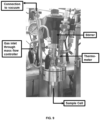
- Figure 1 is a schematic diagram showing apparatus for gas uptake measurements performed by a pressure drop method.
- the apparatus is held within a temperature controlled oven and the whole system is attached to a vacuum line.
- the liquid sample was held in the sample cell with a stirring bar and the gas reservoir was filled with a known amount of CO 2 and remains closed before measurement.
- the system was then isolated from vacuum and the CO 2 was released from the gas reservoir.
- the pressure in the system was monitored by a manometer attached to a PC.
- Table 3 Physical characteristics of synthesized MOFs Morphology Average particle Size Density Aperture Colour HKUST-1 Irregular 500 nm 0.88 g/cm 3 6.9 ⁇ , 4.1 ⁇ Light blue ZIF-8 Hexagonal 400 nm 0.95 g/cm 3 3.4 ⁇ Off white AI(fumarate)(OH) Flake N/A N/A N/A Off white SIFSIX-3-Zn Rectangular 20um 1.4 g/cm 3 3.8 ⁇ Pale yellow
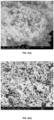
- MOFs were also imaged using Scanning Electron Microscopy (SEM) and SEM images of the MOFs of Examples 1 to 4 are shown in Figure 2 .
- SEM Scanning Electron Microscopy
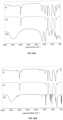
- Example 5 ZIF-8 in Silicone oil (50 cst): ZIF-8 MOF was prepared as described in Example 1, and activated by heating at 200°C for 2 hours. 200 mg of the activated ZIF-8 powder was added to 1.3 mL silicone oil (density: 0.98 gmL -1 ) with stirring at 600 rpm with a magnetic stirrer in a 10mL glass vial. The dispersion was characterized by powder X-Ray Diffraction (PXRD) and Infrared Spectroscopy (IR) and the data are shown in Figures 3(a) and 4(a) .
- PXRD powder X-Ray Diffraction
- IR Infrared Spectroscopy
- Example 6 HKUST-1 in Silicone oil (50cst): HKUST-1 MOF was prepared as described in Example 2, and activated by heating at 200°C for 3 hours. 180 mg of the activated HKUST-1 powder was added to 1.3 mL silicone oil (density: 0.98 gmL -1 ) under stirring at 600 rpm with a magnetic stirrer in a 10mL glass vial. The dispersion was characterized by powder X-Ray Diffraction (PXRD) and Infrared Spectroscopy (IR) and the data are shown in Figures 3(b) and 4(b) .
- PXRD powder X-Ray Diffraction
- IR Infrared Spectroscopy
- Example 7 Al(fumarate)(OH) in Silicone oil (50cst): AI(fumarate)(OH) MOF was prepared as described in Example 3 and activated by heating at 200°C for 2 hours. 180 mg of the activated AI(fumarate)(OH) powder was added to 1.3 mL silicone oil (density: 0.98 gmL -1 ) under stirring at 600 rpm with a magnetic stirrer in a 10mL glass vial. The dispersion was characterized by powder X-Ray Diffraction (PXRD) and Infrared Spectroscopy (IR) and the spectra are shown in Figures 3(c) and 4(c) .
- PXRD powder X-Ray Diffraction
- IR Infrared Spectroscopy
- Example 8 SIFSIX-3-Zn in Silicone oil (50cst): SIFSIX-3-Zn MOF was prepared as described in Example 4 and activated by vacuum at 55°C for 3 hours. 180 mg of the activated SIFSIX-3-Zn powder was added to 1.3 mL silicone oil (density: 0.98 gmL -1 ) under stirring at 600 rpm with a magnetic stirrer in a 10mL glass vial. The dispersion was characterized by powder X-Ray Diffraction (PXRD) and Infrared Spectroscopy (IR) and the data are shown in Figures 3(d) and 4(d) .
- PXRD powder X-Ray Diffraction
- IR Infrared Spectroscopy
- Example 9 ZIF-8 in Silicone oil (350cst): ZIF-8 MOF was prepared as described in Example 1, and activated by heating at 200°C for 2 hours. 200 mg of the activated ZIF-8 powder was added to 1.3 mL silicone oil (density: 0.98 gmL -1 ) under stirring at 600 rpm with a magnetic stirrer in a 10mL glass vial.
- Example 10 HKUST-1 in Silicone oil (350cst): HKUST-1 MOF was prepared as described in Example 2, and activated by heating at 200°C for 3 hours. 180 mg of the activated HKUST-1 powder was added to 1.3 mL silicone oil (density: 0.98 gmL -1 ) under stirring at 600 rpm with a magnetic stirrer in a 10mL glass vial.
- Example 11 AI(fumarate)(OH) in Silicone oil (350cst): AI(fumarate)(OH) MOF was prepared as described in Example 3 and activated by heating at 200°C for 2 hours. 180 mg of the activated AI(fumarate)(OH) powder was added to 1.3 mL silicone oil (density: 0.98 gmL -1 ) under stirring at 600 rpm with a magnetic stirrer in a 10mL glass vial.
- Example 12 SIFSIX-3-Zn in Silicone oil (350cst): SIFSIX-3-Zn MOF was prepared as described in Example 4 and activated by vacuum at 55°C for 3 hours. 180 mg of the activated SIFSIX-3-Zn powder was added to 1.3 mL silicone oil (density: 0.98 gmL -1 ) under stirring at 600 rpm with a magnetic stirrer in a 10mL glass vial.
- Example 13 ZIF-8 in Silicone oil (1000cst): ZIF-8 MOF was prepared as described in Example 1, and activated by heating at 200°C for 2 hours. 200 mg of the activated ZIF-8 powder was added to 1.3 mL silicone oil (density: 0.98 gmL -1 ) under stirring at 600 rpm with a magnetic stirrer in a 10mL glass vial.
- Example 14 HKUST-1 in Silicone oil (1000cst): HKUST-1 MOF was prepared as described in Example 2, and activated by heating at 200°C for 3 hours. 180 mg of the activated HKUST-1 powder was added to 1.3 mL silicone oil (density: 0.98 gmL -1 ) under stirring at 600 rpm with a magnetic stirrer in a 10mL glass vial.
- Example 15 AI(fumarate)(OH) in Silicone oil (1000cst): AI(fumarate)(OH) MOF was prepared as described in Example 3 and activated by heating at 200°C for 2 hours. 180 mg of the activated AI(fumarate)(OH) powder was added to 1.3 mL silicone oil (density: 0.98 gmL -1 ) under stirring at 600 rpm with a magnetic stirrer in a 10mL glass vial.
- Example 16 SIFSIX-3-Zn in Silicone oil (1000cst): SIFSIX-3-Zn MOF was prepared as described in Example 4 and activated by vacuum at 55°C for 3 hours. 180 mg of the activated SIFSIX-3-Zn powder was added to 1.3 mL silicone oil (density: 0.98 gmL -1 ) under stirring at 600 rpm with a magnetic stirrer in a 10mL glass vial.
- Example 17 ZIF-8 in Fomblin Y oil (60cst): ZIF-8 MOF was prepared as described in Example 1, and activated by heating at 200°C for 2 hours. 200 mg of the activated ZIF-8 powder was added to 1.3 mL Fomblin Y oil (density: 1.88 gmL -1 ) under stirring at 600 rpm with a magnetic stirrer in a 10mL glass vial.
- Example 18 HKUST-1 in Fomblin Y oil (60cst): HKUST-1 MOF was prepared as described in Example 2, and activated by heating at 200°C for 3 hours. 180 mg of the activated HKUST-1 powder was added to 1.3 mL Fomblin Y oil (density: 1.88 gmL -1 ) under stirring at 600 rpm with a magnetic stirrer in a 10mL glass vial.
- Example 19 AI(fumarate)(OH) in Fomblin Y oil (60cst): AI(fumarate)(OH) MOF was prepared as described in Example 3 and activated by heating at 200°C for 2 hours. 180 mg of the activated AI(fumarate)(OH) powder was added to 1.3 mL Fomblin Y oil (density: 1.88 gmL -1 ) under stirring at 600 rpm with a magnetic stirrer in a 10mL glass vial.
- Example 20 SIFSIX-3-Zn in Fomblin Y oil (60cst): SIFSIX-3-Zn MOF was prepared as described in Example 4 and activated by vacuum at 55°C for 3 hours. 180 mg of the activated SIFSIX-3-Zn powder was added to 1.3 mL Fomblin Y oil (density: 1.88 gmL -1 ) under stirring at 600 rpm with a magnetic stirrer in a 10mL glass vial.
- Example 21 ZIF-8 in Olive oil (84 cst): ZIF-8 MOF was prepared as described in Example 1, and activated by heating at 200°C for 2 hours. 200 mg of the activated ZIF-8 powder was added to 1.3 mL olive oil (density: 0.91 gmL -1 ) under stirring at 600 rpm with a magnetic stirrer in a 10mL glass vial.
- Example 22 HKUST-1 in Olive oil (84 cst): HKUST-1 MOF was prepared as described in Example 2, and activated by heating at 200°C for 3 hours. 180 mg of the activated HKUST-1 powder was added to 1.3 mL olive oil (density: 0.91 gmL -1 ) under stirring at 600 rpm with a magnetic stirrer in a 10mL glass vial.
- Example 23 Al(fumarate)(OH) in Olive oil (84 cst): AI(fumarate)(OH) MOF was prepared as described in Example 3 and activated by heating at 200°C for 2 hours. 180 mg of the activated AI(fumarate)(OH) powder was added to 1.3 mL olive oil (density: 0.91 gmL -1 ) under stirring at 600 rpm with a magnetic stirrer in a 10mL glass vial.
- Example 24 SIFSIX-3-Zn in Olive oil (84 cst): SIFSIX-3-Zn MOF was prepared as described in Example 4 and activated by vacuum at 55°C for 3 hours. 180 mg of the activated SIFSIX-3-Zn powder was added to 1.3 mL olive oil (density: 0.91 gmL -1 ) under stirring at 600 rpm with a magnetic stirrer in a 10mL glass vial.
- Example 25 ZIF-8 in Sesame oil (65 cst): ZIF-8 MOF was prepared as described in Example 1, and activated by heating at 200°C for 2 hours. 200 mg of the activated ZIF-8 powder was added to 1.3 mL sesame oil (density: 0.92 gmL -1 ) under stirring at 600 rpm with a magnetic stirrer in a 10mL glass vial.
- Example 26 HKUST-1 in Sesame oil (65 cst): HKUST-1 MOF was prepared as described in Example 2, and activated by heating at 200°C for 3 hours. 180 mg of the activated HKUST-1 powder was added to 1.3 mL sesame oil (density: 0.92 gmL -1 ) under stirring at 600 rpm with a magnetic stirrer in a 10mL glass vial.
- Example 27 Al(fumarate)(OH) in Sesame oil (65 cst): AI(fumarate)(OH) MOF was prepared as described in Example 3 and activated by heating at 200°C for 2 hours. 180 mg of the activated AI(fumarate)(OH) powder was added to 1.3 mL sesame oil (density: 0.92 gmL -1 ) under stirring at 600 rpm with a magnetic stirrer in a 10mL glass vial.
- Example 28 SIFSIX-3-Zn in Sesame oil (65 cst): SIFSIX-3-Zn MOF was prepared as described in Example 4 and activated by vacuum at 55°C for 3 hours. 180 mg of the activated SIFSIX-3-Zn powder was added to 1.3 mL sesame oil (density: 0.92 gmL -1 ) under stirring at 600 rpm with a magnetic stirrer in a 10mL glass vial.
- Example 29 ZIF-8 in Paraffin oil (110-230 cst): ZIF-8 MOF was prepared as described in Example 1, and activated by heating at 200°C for 2 hours. 200 mg of the activated ZIF-8 powder was added to 1.3 mL paraffin oil (density: 0.827-0.890 gmL -1 ) under stirring at 600 rpm with a magnetic stirrer in a 10mL glass vial.
- Example 30 HKUST-1 in Paraffin oil (110-230 cst) : HKUST-1 MOF was prepared as described in Example 2, and activated by heating at 200°C for 3 hours. 180 mg of the activated HKUST-1 powder was added to 1.3 mL paraffin oil (density: 0.827-0.890gmL -1 ) under stirring at 600 rpm with a magnetic stirrer in a 10mL glass vial.
- Example 31 Al(fumarate)(OH) in Paraffin oil (110-230 cst) : AI(fumarate)(OH) MOF was prepared as described in Example 3 and activated by heating at 200°C for 2 hours. 180 mg of the activated AI(fumarate)(OH) powder was added to 1.3 mL paraffin oil (density: 0.827-0.890 gmL -1 ) under stirring at 600 rpm with a magnetic stirrer in a 10mL glass vial.
- Example 32 SIFSIX-3-Zn in Paraffin oil (110-230 cst) : SIFSIX-3-Zn MOF was prepared as described in Example 4 and activated by vacuum at 55°C for 3 hours. 180 mg of the activated SIFSIX-3-Zn powder was added to 1.3 mL paraffin oil (density: 0.827-0.890 gmL -1 ) under stirring at 600 rpm with a magnetic stirrer in a 10mL glass vial.
- Example 33 ZIF-8 in Castor oil (964 cst): ZIF-8 MOF was prepared as described in Example 1, and activated by heating at 200°C for 2 hours. 200 mg of the activated ZIF-8 powder was added to 1.3 mL castor oil (density: 0.92 gmL -1 ) under stirring at 600 rpm with a magnetic stirrer in a 10mL glass vial.
- Example 34 HKUST-1 in Castor oil (964 cst) : HKUST-1 MOF was prepared as described in Example 2, and activated by heating at 200°C for 3 hours. 180 mg of the activated HKUST-1 powder was added to 1.3 mL castor oil (density: 0.92 gmL -1 ) under stirring at 600 rpm with a magnetic stirrer in a 10mL glass vial.
- Example 35 Al(fumarate)(OH) in Castor oil (964 cst): AI(fumarate)(OH) MOF was prepared as described in Example 3 and activated by heating at 200°C for 2 hours. 180 mg of the activated AI(fumarate)(OH) powder was added to 1.3 mL castor oil (density: 0.92 gmL -1 ) under stirring at 600 rpm with a magnetic stirrer in a 10mL glass vial.
- Example 36 SIFSIX-3-Zn in Castor oil (964 cst) : SIFSIX-3-Zn MOF was prepared as described in Example 4 and activated by vacuum at 55°C for 3 hours. 180 mg of the activated SIFSIX-3-Zn powder was added to 1.3 mL castor oil (density: 0.92 gmL -1 ) under stirring at 600 rpm with a magnetic stirrer in a 10mL glass vial.
- Example 37 Porous SiO 2 in paraffin oil : 180 mg of the porous SiO 2 was added to 1.3 mL paraffin oil (density: 0.827-0.890 gmL -1 ) under stirring at 600 rpm with a magnetic stirrer in a 10mL glass vial.
- Example 38 PAF-1 in Silicone oil (50 cst) : 62 mg of PAF-1 was added to 2.2 mL silicone oil (density: 0.98 gmL -1 ) under stirring at 600 rpm with a magnetic stirrer in a 10mL glass vial.
- Example 38 PAF-1 in Paraffin oil : 62 mg of PAF-1 was added to 2.2 mL paraffin oil (density: 0.827-0.890 gmL -1 ) under stirring at 600 rpm with a magnetic stirrer in a 10mL glass vial.
- Example 38 PAF-1 in Polyethylene glycol (Genosorb) : 180 mg of PAF-1 was added to 1.3 mL polyethylene glycol (density: 0.93 gmL -1 ) under stirring at 600 rpm with a magnetic stirrer in a 10mL glass vial.
- the stability of the dispersions of the invention is important for their industrial applicability.
- the stability of the dispersions can be optimised by, for instance, reducing the size of the porous particles, increasing the viscosity of the liquid component, matching the densities of the porous solid particles and the liquid component, as well as by enhancing interaction between the solid particles and the liquid medium.
- the stability of MOFs in various liquid phases was determined and the results are shown in Tables 4a and 4b.
- Table 4a Summary of dispersion stability Liquid medium MOF HKUST-1 ZIF-8 AI(fum)(OH) SIFSIX-3-Zn SIFSIX-3-Cu Silicone oil (20cst) X ⁇ ⁇ X X Silicone oil (50cst) X ⁇ ⁇ X X Silicone oil (350cst) ⁇ ⁇ ⁇ ⁇ ⁇ Silicone oil (1000cst) ⁇ ⁇ ⁇ ⁇ ⁇ Silicone based oil AR 20 ⁇ ⁇ ⁇ X ⁇ Fomblin Y oil 60 cst X X X ⁇ X Krytox Y oil 60 cst ⁇ ⁇ ⁇ ⁇ Paraffin oil ⁇ ⁇ ⁇ X ⁇ Olive Oil ⁇ ⁇ ⁇ ⁇ Castor Oil ⁇ ⁇ ⁇ ⁇ Sesame Oil ⁇ ⁇ ⁇ ⁇ ⁇ Corn oil ⁇ ⁇ ⁇ ⁇ Soy bean oil ⁇ ⁇ ⁇
- porous liquid mixtures can form stable dispersion for at least 1 day, but few of them require stirring in order to maintain the homogeneous dispersion.
- Table 5b CO 2 uptake of selected compositions of porous liquids (mg/g (mmol/g)) Silicone oil (50 cst) 5.04 (0.12) Silicone oil (350 cst) 3.87 (0.09) Silicone oil (1000 cst) 3.27 (0.07) Fluorinated oil (60 cst)** 3.16 (0.07) Exp. Cal. Exp. Cal. Exp. Cal. Exp. Cal. Exp. Cal.
- Equation 1 q i and q j represent the adsorption capacity of pure gas component; while p i and p j represent the partial pressure of the pure gas component.
- the separation of ethylene (C 2 H 4 ) and ethane (C 2 H 6 ) is an important industrial process.
- the porous liquids of the invention also have selectivity on ethylene over ethane.
- Table 12 Selectivity of porous liquids by ratio: (C 2 H 4 /C 2 H 6 ). Paraffin oil 0.43 Silicone oil 0.50 Sesame oil 0.50 Exp. Theo. Exp. Theo. Exp. Theo. Exp. Theo. Exp. Theo. Exp. Theo. Exp. Theo. Exp. Theo. Exp. Theo. Exp. Theo. Exp. Theo. Exp. Theo. Exp. Theo.
- Table 13 High Pressure gas uptake measurement (1-5 bar; 298, 323, 348K) Silicone oil (50cst) AI(fum)(OH) literature value 298K 323K 348K 298K 323K 348K 1 bar 4.58 3.74 3.28 92.42 66.02 41.81 2 bar 8.90 7.27 6.32 136.43 96.82 66.02 3 bar 13.59 11.03 9.93 158.44 118.83 88.02 4 bar 18.50 15.05 13.62 176.04 140.83 107.83 5 bar 24.03 19.33 17.75 184.84 154.04 121.03 12.5wt% AI(fum)(OH) in SC50 298K 323K 348K Exp. Cal. Exp.
- Material regeneration is a highly desirable characteristic of materials for use in industrial processes such as separation.
- the dispersions of Examples 6 and 7 were regenerated by applying vacuum (8.5 ⁇ 10 -2 bar) for 30 minutes, and their uptake of CO 2 measured after the first and second cycles. The results of these studies are shown in Figure 5 . From these, it can be seen that the dispersions of Examples 6 and 7 showed at least 75% CO 2 uptake capacity after two cycles of regeneration. However, the same studies on a conventional amine-based solution (12.5 wt.% MEA in H 2 O) showed almost no regeneration.
Landscapes
- Chemical & Material Sciences (AREA)
- Analytical Chemistry (AREA)
- Chemical Kinetics & Catalysis (AREA)
- Engineering & Computer Science (AREA)
- General Chemical & Material Sciences (AREA)
- Oil, Petroleum & Natural Gas (AREA)
- Organic Chemistry (AREA)
- Inorganic Chemistry (AREA)
- Dispersion Chemistry (AREA)
- Crystallography & Structural Chemistry (AREA)
- Materials Engineering (AREA)
- Nanotechnology (AREA)
- Solid-Sorbent Or Filter-Aiding Compositions (AREA)
- Organic Low-Molecular-Weight Compounds And Preparation Thereof (AREA)
Applications Claiming Priority (3)
| Application Number | Priority Date | Filing Date | Title |
|---|---|---|---|
| GB1707674.6A GB2562309A (en) | 2017-05-12 | 2017-05-12 | Porous liquids |
| EP18725616.9A EP3621721A1 (fr) | 2017-05-12 | 2018-05-11 | Liquides poreux |
| PCT/GB2018/051279 WO2018206977A1 (fr) | 2017-05-12 | 2018-05-11 | Liquides poreux |
Related Parent Applications (1)
| Application Number | Title | Priority Date | Filing Date |
|---|---|---|---|
| EP18725616.9A Division EP3621721A1 (fr) | 2017-05-12 | 2018-05-11 | Liquides poreux |
Publications (1)
| Publication Number | Publication Date |
|---|---|
| EP4134151A1 true EP4134151A1 (fr) | 2023-02-15 |
Family
ID=59201521
Family Applications (3)
| Application Number | Title | Priority Date | Filing Date |
|---|---|---|---|
| EP18725616.9A Withdrawn EP3621721A1 (fr) | 2017-05-12 | 2018-05-11 | Liquides poreux |
| EP22199794.3A Pending EP4134151A1 (fr) | 2017-05-12 | 2018-05-11 | Liquides poreux |
| EP18796093.5A Active EP3790646B1 (fr) | 2017-05-12 | 2018-11-01 | Procédé d'adsorption d'un gaz dans un liquide |
Family Applications Before (1)
| Application Number | Title | Priority Date | Filing Date |
|---|---|---|---|
| EP18725616.9A Withdrawn EP3621721A1 (fr) | 2017-05-12 | 2018-05-11 | Liquides poreux |
Family Applications After (1)
| Application Number | Title | Priority Date | Filing Date |
|---|---|---|---|
| EP18796093.5A Active EP3790646B1 (fr) | 2017-05-12 | 2018-11-01 | Procédé d'adsorption d'un gaz dans un liquide |
Country Status (5)
| Country | Link |
|---|---|
| US (2) | US11565212B2 (fr) |
| EP (3) | EP3621721A1 (fr) |
| ES (1) | ES3004882T3 (fr) |
| GB (1) | GB2562309A (fr) |
| WO (2) | WO2018206977A1 (fr) |
Families Citing this family (27)
| Publication number | Priority date | Publication date | Assignee | Title |
|---|---|---|---|---|
| CN109200760B (zh) * | 2018-11-20 | 2021-06-04 | 安徽工业大学 | 一种稳定低能耗再生的脱除二氧化碳的低共熔溶剂 |
| CN109529932B (zh) * | 2018-12-04 | 2021-09-21 | 三峡大学 | 花瓣状金属有机框架材料的制备方法及其应用 |
| WO2020113267A1 (fr) * | 2018-12-05 | 2020-06-11 | Commonwealth Scientific And Industrial Research Organisation | Oligomères liquides poreux |
| CN109589934A (zh) * | 2018-12-13 | 2019-04-09 | 常州大学 | 基于苯甲酸调节和氯仿活化制备UiO-66的方法及吸附应用 |
| CN109651055B (zh) * | 2019-01-29 | 2020-06-05 | 浙江大学 | 一种乙烯乙烷的分离方法 |
| CN109745952B (zh) * | 2019-03-18 | 2022-02-11 | 上海科技大学 | 一种多孔液体及其制备方法和用途 |
| CN110624366A (zh) * | 2019-10-10 | 2019-12-31 | 义乌韦陀环保科技有限公司 | 用于voc废气处理的棉籽油吸收液、吸收方法及分离回收方法 |
| CN110624365A (zh) * | 2019-10-10 | 2019-12-31 | 义乌韦陀环保科技有限公司 | 用于voc废气处理的大豆油吸收液、吸收方法及分离回收方法 |
| CN111151098A (zh) * | 2019-10-10 | 2020-05-15 | 义乌韦陀环保科技有限公司 | 用于voc废气处理的废弃餐厨油脂吸收液、吸收方法及分离回收方法 |
| CN111044590A (zh) * | 2019-11-26 | 2020-04-21 | 云南大学 | 一种CuNi-MOF纳米材料修饰电极及其应用 |
| CN110935196B (zh) * | 2019-12-17 | 2021-11-16 | 湖北大学 | 一种基于Zn5金属簇的共聚整体柱及其制备方法与应用 |
| SA121430112B1 (ar) * | 2020-09-07 | 2024-04-15 | انديان اويل كوربوريشن ليمتد | تركيبة مذيب لالتقاط ثاني أكسيد الكربون |
| US20230381739A1 (en) * | 2020-10-08 | 2023-11-30 | President And Fellows Of Harvard College | Polar liquids with high porosity and uses thereof |
| CN112675695A (zh) * | 2020-12-01 | 2021-04-20 | 深圳市尤佳环境科技有限公司 | 一种用于废气和臭气净化的喷淋液及其制备方法 |
| CN112934196A (zh) * | 2021-01-27 | 2021-06-11 | 西北工业大学 | 室温下具有流动行为的中空碳球hcs多孔液体及制备方法 |
| CN113117455B (zh) * | 2021-04-12 | 2022-11-22 | 江西师范大学 | 氯化胆碱-甘油低共熔溶剂在吸收HCl气体中的应用 |
| CN113350970A (zh) * | 2021-05-31 | 2021-09-07 | 北京工业大学 | 一种多孔有机小分子液体吸收剂、制备方法及用途 |
| CN113332832A (zh) * | 2021-05-31 | 2021-09-03 | 北京工业大学 | 一种使用多孔有机小分子液体材料脱除氯苯类化合物的方法 |
| CN113289457A (zh) * | 2021-05-31 | 2021-08-24 | 北京工业大学 | 一种使用多孔有机小分子液体材料脱除氯烷烃化合物的方法 |
| CN113913020A (zh) * | 2021-09-26 | 2022-01-11 | 西北工业大学 | 一种低黏度ⅰ型多孔液体及制备方法以及使用方法 |
| CN114289065B (zh) * | 2021-12-23 | 2023-09-22 | 淮阴工学院 | 金属离子掺杂型x-MOF-74光催化剂的制备方法及其应用 |
| CN115386057A (zh) * | 2022-08-15 | 2022-11-25 | 西南医科大学 | 高结晶度共价有机骨架材料及其制备方法和应用 |
| US20240066461A1 (en) | 2022-08-29 | 2024-02-29 | Welltec Manufacturing Center Completions ApS | Carbon capture device |
| CN116237013B (zh) * | 2023-01-16 | 2024-11-22 | 廊坊师范学院 | 一种基于生物质和低共熔溶剂的碳材料及废水吸附处理方法 |
| CN115920668B (zh) * | 2023-01-30 | 2025-09-12 | 中南大学 | 基于DES-H2O界面聚合法的自支撑COFs膜、制备方法和应用 |
| CN116651511B (zh) * | 2023-06-01 | 2024-08-20 | 齐鲁工业大学(山东省科学院) | 一种用于脱除硫化氢的复合材料、制备方法与应用 |
| US12128356B1 (en) * | 2024-07-02 | 2024-10-29 | King Fahd University Of Petroleum And Minerals | Process for removing hydrogen sulfide from sour gases with ZIF-67 supported on mixed metal oxides |
Citations (6)
| Publication number | Priority date | Publication date | Assignee | Title |
|---|---|---|---|---|
| US4312647A (en) * | 1978-08-14 | 1982-01-26 | Hitachi, Ltd. | Iodine adsorbent |
| EP0350167A1 (fr) * | 1988-06-13 | 1990-01-10 | Castrol Limited | Fluides fonctionnels |
| JPH0226640A (ja) * | 1988-07-15 | 1990-01-29 | Asahi Glass Co Ltd | 吸収剤及び希薄ガスの濃縮方法 |
| EP0372366A1 (fr) * | 1988-12-01 | 1990-06-13 | Bridgestone Corporation | Fluide électrovisqueux |
| US20110290109A1 (en) * | 2010-06-01 | 2011-12-01 | Xebec Adsorption Inc. | Low energy, high recovery, rapid cycle kinetic psa for biogas |
| US20140099245A1 (en) * | 2012-10-05 | 2014-04-10 | Saudi Arabian Oil Company | Process and system employing phase-changing absorbents and magnetically responsive sorbent particles for on-board recovery of carbon dioxide from mobile sources |
Family Cites Families (13)
| Publication number | Priority date | Publication date | Assignee | Title |
|---|---|---|---|---|
| JPH02164438A (ja) * | 1988-12-17 | 1990-06-25 | Bridgestone Corp | 電気粘性液体 |
| EP0425149A3 (en) | 1989-10-23 | 1992-03-25 | Imperial Chemical Industries Plc | Detergent compositions and processes of making them |
| US5552076A (en) * | 1994-06-08 | 1996-09-03 | The Regents Of The University Of Michigan | Anhydrous amorphous ceramics as the particulate phase in electrorheological fluids |
| DE19581481D2 (de) * | 1995-01-14 | 1997-10-16 | Heinrich Bauer | Wärmeträgerkonzentrat, Verfahren zu dessen Herstellung sowie dessen Verwendung und Latentwärmespeicher |
| US6107433A (en) * | 1998-11-06 | 2000-08-22 | Pittsburg State University | Process for the preparation of vegetable oil-based polyols and electroninsulating casting compounds created from vegetable oil-based polyols |
| US6540936B1 (en) | 2000-06-19 | 2003-04-01 | Toagosei Co., Ltd. | Aldehyde gas absorbent and process for absorbing aldehyde gas |
| GB0111863D0 (en) * | 2001-05-15 | 2001-07-04 | Unilever Plc | Granular composition |
| DE102005023857A1 (de) | 2005-05-24 | 2006-11-30 | Basf Ag | Suspension zur Verminderung von Geruch |
| JP2012520756A (ja) * | 2009-03-20 | 2012-09-10 | ビーエーエスエフ ソシエタス・ヨーロピア | アミンを含浸した有機金属骨格材料を用いた酸性ガスの分離方法 |
| CN103338858B (zh) * | 2010-08-25 | 2016-02-10 | 康奈尔大学 | 金属有机骨架改性材料、及其制备和使用方法 |
| SE1100140A1 (sv) * | 2011-03-01 | 2012-09-02 | Joachim Karthaeuser | Metoder för att producera metalliserade kolnanopartiklar |
| KR102033207B1 (ko) * | 2012-12-06 | 2019-10-16 | 엑손모빌 리서치 앤드 엔지니어링 컴퍼니 | 안정된 흡착 활성을 갖는 디디알 유형의 제올라이트를 사용하는 가스 분리 방법 |
| CN105013292A (zh) | 2014-04-28 | 2015-11-04 | 中国石油大学(北京) | 一种捕集混合气中co2的复合方法 |
-
2017
- 2017-05-12 GB GB1707674.6A patent/GB2562309A/en not_active Withdrawn
-
2018
- 2018-05-11 WO PCT/GB2018/051279 patent/WO2018206977A1/fr not_active Ceased
- 2018-05-11 EP EP18725616.9A patent/EP3621721A1/fr not_active Withdrawn
- 2018-05-11 US US16/611,774 patent/US11565212B2/en active Active
- 2018-05-11 EP EP22199794.3A patent/EP4134151A1/fr active Pending
- 2018-11-01 WO PCT/GB2018/053168 patent/WO2019215419A1/fr not_active Ceased
- 2018-11-01 EP EP18796093.5A patent/EP3790646B1/fr active Active
- 2018-11-01 US US17/052,747 patent/US11571656B2/en active Active
- 2018-11-01 ES ES18796093T patent/ES3004882T3/es active Active
Patent Citations (6)
| Publication number | Priority date | Publication date | Assignee | Title |
|---|---|---|---|---|
| US4312647A (en) * | 1978-08-14 | 1982-01-26 | Hitachi, Ltd. | Iodine adsorbent |
| EP0350167A1 (fr) * | 1988-06-13 | 1990-01-10 | Castrol Limited | Fluides fonctionnels |
| JPH0226640A (ja) * | 1988-07-15 | 1990-01-29 | Asahi Glass Co Ltd | 吸収剤及び希薄ガスの濃縮方法 |
| EP0372366A1 (fr) * | 1988-12-01 | 1990-06-13 | Bridgestone Corporation | Fluide électrovisqueux |
| US20110290109A1 (en) * | 2010-06-01 | 2011-12-01 | Xebec Adsorption Inc. | Low energy, high recovery, rapid cycle kinetic psa for biogas |
| US20140099245A1 (en) * | 2012-10-05 | 2014-04-10 | Saudi Arabian Oil Company | Process and system employing phase-changing absorbents and magnetically responsive sorbent particles for on-board recovery of carbon dioxide from mobile sources |
Non-Patent Citations (2)
| Title |
|---|
| MATER. HORIZ., vol. 2, 2015, pages 11 - 21 |
| NATURE, vol. 527, 2015, pages 216 |
Also Published As
| Publication number | Publication date |
|---|---|
| US20200330919A1 (en) | 2020-10-22 |
| GB2562309A (en) | 2018-11-14 |
| US20210229068A1 (en) | 2021-07-29 |
| EP3790646A1 (fr) | 2021-03-17 |
| WO2018206977A1 (fr) | 2018-11-15 |
| ES3004882T3 (en) | 2025-03-13 |
| EP3790646C0 (fr) | 2025-01-08 |
| GB201707674D0 (en) | 2017-06-28 |
| US11565212B2 (en) | 2023-01-31 |
| US11571656B2 (en) | 2023-02-07 |
| EP3790646B1 (fr) | 2025-01-08 |
| EP3621721A1 (fr) | 2020-03-18 |
| WO2019215419A1 (fr) | 2019-11-14 |
Similar Documents
| Publication | Publication Date | Title |
|---|---|---|
| EP4134151A1 (fr) | Liquides poreux | |
| Liang et al. | Exceptionally high perfluorooctanoic acid uptake in water by a zirconium-based metal–organic framework through synergistic chemical and physical adsorption | |
| Afshariazar et al. | The unique opportunities of mechanosynthesis in green and scalable fabrication of metal–organic frameworks | |
| Pobłocki et al. | Latest trends in the large-scale production of MOFs in accordance with the principles of green chemistry | |
| Butova et al. | Metal-organic frameworks: structure, properties, methods of synthesis and characterization | |
| Kang et al. | Synthesis of ZIF-7/chitosan mixed-matrix membranes with improved separation performance of water/ethanol mixtures | |
| Pal et al. | A partially fluorinated, water-stable Cu (II)–MOF derived via transmetalation: significant gas adsorption with high CO2 selectivity and catalysis of Biginelli reactions | |
| Liu et al. | Controlled Synthesis of Porous Coordination‐Polymer Microcrystals with Definite Morphologies and Sizes under Mild Conditions | |
| Naik et al. | PDMS membranes containing ZIF-coated mesoporous silica spheres for efficient ethanol recovery via pervaporation | |
| Hauptvogel et al. | Flexible and hydrophobic Zn-based metal–organic framework | |
| US11230562B2 (en) | Synthesis of zinc MOF materials | |
| Cattaneo et al. | Water based scale-up of CPO-27 synthesis for nitric oxide delivery | |
| JP2016185969A (ja) | Emm−19*:新規ゼオライトイミダゾレート骨格の物質、それを製造する方法、およびその用途 | |
| JP6089618B2 (ja) | 硫黄化合物吸着・除去フィルタ | |
| Zhu et al. | Preparation of raspberry-like ZIF-8/PS composite spheres via dispersion polymerization | |
| CN105154063B (zh) | 一种铟基金属有机骨架包裹功能性阳离子 Ru(bpy)32+荧光材料及其制备方法 | |
| Avila et al. | Porous ionic liquids: beyond the bounds of free volume in a fluid phase | |
| WO2022099173A1 (fr) | Procédés à base d'ions pour stabiliser et améliorer des matériaux à réseau de coordination organométallique (mof) poreux pour la collecte d'eau à partir de l'air et applications associées | |
| CN106345458A (zh) | 介孔碳‑二氧化硅复合体负载纳米钯催化剂及其合成方法 | |
| Monteagudo‐Olivan et al. | Solvent‐Free Encapsulation at High Pressure with Carboxylate‐Based MOFs | |
| Hackl et al. | Sugar-alcohol@ ZIF nanocomposites display suppressed phase-change temperatures | |
| WO2023153070A1 (fr) | Agent de désulfuration | |
| EP2347821B1 (fr) | Matériau adsorbeur de gaz, précurseur du matériau adsorbeur de gaz et procédé destiné à produire un matériau adsorbeur de gaz | |
| WO2021043491A1 (fr) | Matériau de stockage de gaz et système de stockage de gaz | |
| KR20170053510A (ko) | 기체 분리막 및 이의 제조방법 |
Legal Events
| Date | Code | Title | Description |
|---|---|---|---|
| PUAI | Public reference made under article 153(3) epc to a published international application that has entered the european phase |
Free format text: ORIGINAL CODE: 0009012 |
|
| STAA | Information on the status of an ep patent application or granted ep patent |
Free format text: STATUS: THE APPLICATION HAS BEEN PUBLISHED |
|
| AC | Divisional application: reference to earlier application |
Ref document number: 3621721 Country of ref document: EP Kind code of ref document: P |
|
| AK | Designated contracting states |
Kind code of ref document: A1 Designated state(s): AL AT BE BG CH CY CZ DE DK EE ES FI FR GB GR HR HU IE IS IT LI LT LU LV MC MK MT NL NO PL PT RO RS SE SI SK SM TR |
|
| STAA | Information on the status of an ep patent application or granted ep patent |
Free format text: STATUS: REQUEST FOR EXAMINATION WAS MADE |
|
| 17P | Request for examination filed |
Effective date: 20230726 |
|
| RBV | Designated contracting states (corrected) |
Designated state(s): AL AT BE BG CH CY CZ DE DK EE ES FI FR GB GR HR HU IE IS IT LI LT LU LV MC MK MT NL NO PL PT RO RS SE SI SK SM TR |
|
| STAA | Information on the status of an ep patent application or granted ep patent |
Free format text: STATUS: EXAMINATION IS IN PROGRESS |
|
| 17Q | First examination report despatched |
Effective date: 20250411 |