EP4134432A1 - Procédé amélioré pour la purification de petit arn - Google Patents
Procédé amélioré pour la purification de petit arn Download PDFInfo
- Publication number
- EP4134432A1 EP4134432A1 EP21190822.3A EP21190822A EP4134432A1 EP 4134432 A1 EP4134432 A1 EP 4134432A1 EP 21190822 A EP21190822 A EP 21190822A EP 4134432 A1 EP4134432 A1 EP 4134432A1
- Authority
- EP
- European Patent Office
- Prior art keywords
- small rna
- rna molecules
- plant
- sample
- liquid phase
- Prior art date
- Legal status (The legal status is an assumption and is not a legal conclusion. Google has not performed a legal analysis and makes no representation as to the accuracy of the status listed.)
- Withdrawn
Links
- 108091032955 Bacterial small RNA Proteins 0.000 title claims abstract description 262
- 238000000034 method Methods 0.000 title claims abstract description 241
- 238000000746 purification Methods 0.000 title description 4
- 239000007791 liquid phase Substances 0.000 claims abstract description 79
- BVKZGUZCCUSVTD-UHFFFAOYSA-M Bicarbonate Chemical compound OC([O-])=O BVKZGUZCCUSVTD-UHFFFAOYSA-M 0.000 claims abstract description 72
- 108020004566 Transfer RNA Proteins 0.000 claims abstract description 68
- 239000000284 extract Substances 0.000 claims abstract description 60
- 241000233866 Fungi Species 0.000 claims abstract description 51
- 239000002773 nucleotide Substances 0.000 claims abstract description 21
- 125000003729 nucleotide group Chemical group 0.000 claims abstract description 21
- 230000008569 process Effects 0.000 claims abstract description 14
- LFQSCWFLJHTTHZ-UHFFFAOYSA-N Ethanol Chemical compound CCO LFQSCWFLJHTTHZ-UHFFFAOYSA-N 0.000 claims description 93
- 239000007787 solid Substances 0.000 claims description 55
- FAPWRFPIFSIZLT-UHFFFAOYSA-M Sodium chloride Chemical compound [Na+].[Cl-] FAPWRFPIFSIZLT-UHFFFAOYSA-M 0.000 claims description 28
- KFZMGEQAYNKOFK-UHFFFAOYSA-N Isopropanol Chemical compound CC(C)O KFZMGEQAYNKOFK-UHFFFAOYSA-N 0.000 claims description 22
- 239000000203 mixture Substances 0.000 claims description 22
- 230000027455 binding Effects 0.000 claims description 20
- 238000001556 precipitation Methods 0.000 claims description 17
- 238000001914 filtration Methods 0.000 claims description 16
- 239000011780 sodium chloride Substances 0.000 claims description 14
- 150000003839 salts Chemical class 0.000 claims description 9
- 239000007788 liquid Substances 0.000 claims description 7
- 239000011736 potassium bicarbonate Substances 0.000 claims description 6
- 229910000028 potassium bicarbonate Inorganic materials 0.000 claims description 6
- TYJJADVDDVDEDZ-UHFFFAOYSA-M potassium hydrogencarbonate Chemical compound [K+].OC([O-])=O TYJJADVDDVDEDZ-UHFFFAOYSA-M 0.000 claims description 6
- 239000011148 porous material Substances 0.000 claims description 3
- 235000015497 potassium bicarbonate Nutrition 0.000 claims description 3
- UIIMBOGNXHQVGW-DEQYMQKBSA-M Sodium bicarbonate-14C Chemical compound [Na+].O[14C]([O-])=O UIIMBOGNXHQVGW-DEQYMQKBSA-M 0.000 claims description 2
- 239000000243 solution Substances 0.000 description 108
- 241000196324 Embryophyta Species 0.000 description 95
- 230000002538 fungal effect Effects 0.000 description 63
- 239000000047 product Substances 0.000 description 62
- 108091032973 (ribonucleotides)n+m Proteins 0.000 description 60
- 102000040650 (ribonucleotides)n+m Human genes 0.000 description 60
- VYPSYNLAJGMNEJ-UHFFFAOYSA-N Silicium dioxide Chemical compound O=[Si]=O VYPSYNLAJGMNEJ-UHFFFAOYSA-N 0.000 description 38
- 210000001519 tissue Anatomy 0.000 description 37
- 108020004459 Small interfering RNA Proteins 0.000 description 26
- -1 alkali metal bicarbonate Chemical class 0.000 description 26
- 239000002502 liposome Substances 0.000 description 22
- 102000039446 nucleic acids Human genes 0.000 description 22
- 108020004707 nucleic acids Proteins 0.000 description 22
- 150000007523 nucleic acids Chemical class 0.000 description 22
- 238000005406 washing Methods 0.000 description 22
- 235000014113 dietary fatty acids Nutrition 0.000 description 21
- 239000000194 fatty acid Substances 0.000 description 21
- 229930195729 fatty acid Natural products 0.000 description 21
- 150000002632 lipids Chemical class 0.000 description 19
- 239000002417 nutraceutical Substances 0.000 description 19
- 235000021436 nutraceutical agent Nutrition 0.000 description 19
- UIIMBOGNXHQVGW-UHFFFAOYSA-M Sodium bicarbonate Chemical compound [Na+].OC([O-])=O UIIMBOGNXHQVGW-UHFFFAOYSA-M 0.000 description 18
- 238000005119 centrifugation Methods 0.000 description 18
- 235000013305 food Nutrition 0.000 description 18
- 239000000377 silicon dioxide Substances 0.000 description 16
- 125000002091 cationic group Chemical group 0.000 description 15
- 239000002245 particle Substances 0.000 description 15
- 239000011324 bead Substances 0.000 description 14
- 210000004027 cell Anatomy 0.000 description 13
- 150000004665 fatty acids Chemical class 0.000 description 13
- 239000008188 pellet Substances 0.000 description 13
- PEDCQBHIVMGVHV-UHFFFAOYSA-N Glycerine Chemical compound OCC(O)CO PEDCQBHIVMGVHV-UHFFFAOYSA-N 0.000 description 12
- 238000000605 extraction Methods 0.000 description 11
- 239000000463 material Substances 0.000 description 11
- 238000002360 preparation method Methods 0.000 description 11
- 239000002202 Polyethylene glycol Substances 0.000 description 10
- 235000015872 dietary supplement Nutrition 0.000 description 10
- 239000002105 nanoparticle Substances 0.000 description 10
- 229920001223 polyethylene glycol Polymers 0.000 description 10
- 239000000843 powder Substances 0.000 description 10
- XLYOFNOQVPJJNP-UHFFFAOYSA-N water Substances O XLYOFNOQVPJJNP-UHFFFAOYSA-N 0.000 description 10
- KSXTUUUQYQYKCR-LQDDAWAPSA-M 2,3-bis[[(z)-octadec-9-enoyl]oxy]propyl-trimethylazanium;chloride Chemical compound [Cl-].CCCCCCCC\C=C/CCCCCCCC(=O)OCC(C[N+](C)(C)C)OC(=O)CCCCCCC\C=C/CCCCCCCC KSXTUUUQYQYKCR-LQDDAWAPSA-M 0.000 description 9
- 108020004414 DNA Proteins 0.000 description 9
- 239000012634 fragment Substances 0.000 description 9
- 239000002679 microRNA Substances 0.000 description 9
- 239000008194 pharmaceutical composition Substances 0.000 description 9
- 229910000030 sodium bicarbonate Inorganic materials 0.000 description 9
- 239000007864 aqueous solution Substances 0.000 description 8
- 239000003795 chemical substances by application Substances 0.000 description 8
- HVYWMOMLDIMFJA-DPAQBDIFSA-N cholesterol Chemical compound C1C=C2C[C@@H](O)CC[C@]2(C)[C@@H]2[C@@H]1[C@@H]1CC[C@H]([C@H](C)CCCC(C)C)[C@@]1(C)CC2 HVYWMOMLDIMFJA-DPAQBDIFSA-N 0.000 description 8
- 125000000956 methoxy group Chemical group [H]C([H])([H])O* 0.000 description 8
- 108091070501 miRNA Proteins 0.000 description 8
- 229920000642 polymer Polymers 0.000 description 8
- 239000000725 suspension Substances 0.000 description 8
- 235000001674 Agaricus brunnescens Nutrition 0.000 description 7
- 239000003153 chemical reaction reagent Substances 0.000 description 7
- 238000005516 engineering process Methods 0.000 description 7
- 210000001808 exosome Anatomy 0.000 description 7
- DTQVDTLACAAQTR-UHFFFAOYSA-N Trifluoroacetic acid Chemical compound OC(=O)C(F)(F)F DTQVDTLACAAQTR-UHFFFAOYSA-N 0.000 description 6
- 239000002253 acid Substances 0.000 description 6
- 150000001875 compounds Chemical class 0.000 description 6
- 235000013373 food additive Nutrition 0.000 description 6
- 239000002778 food additive Substances 0.000 description 6
- 238000009472 formulation Methods 0.000 description 6
- 229910052500 inorganic mineral Inorganic materials 0.000 description 6
- 235000010755 mineral Nutrition 0.000 description 6
- 239000011707 mineral Substances 0.000 description 6
- VLTRZXGMWDSKGL-UHFFFAOYSA-N perchloric acid Chemical compound OCl(=O)(=O)=O VLTRZXGMWDSKGL-UHFFFAOYSA-N 0.000 description 6
- WTJKGGKOPKCXLL-RRHRGVEJSA-N phosphatidylcholine Chemical compound CCCCCCCCCCCCCCCC(=O)OC[C@H](COP([O-])(=O)OCC[N+](C)(C)C)OC(=O)CCCCCCCC=CCCCCCCCC WTJKGGKOPKCXLL-RRHRGVEJSA-N 0.000 description 6
- 150000008104 phosphatidylethanolamines Chemical class 0.000 description 6
- 239000001294 propane Substances 0.000 description 6
- 239000002904 solvent Substances 0.000 description 6
- 239000003826 tablet Substances 0.000 description 6
- 231100000331 toxic Toxicity 0.000 description 6
- 230000002588 toxic effect Effects 0.000 description 6
- PORPENFLTBBHSG-MGBGTMOVSA-N 1,2-dihexadecanoyl-sn-glycerol-3-phosphate Chemical compound CCCCCCCCCCCCCCCC(=O)OC[C@H](COP(O)(O)=O)OC(=O)CCCCCCCCCCCCCCC PORPENFLTBBHSG-MGBGTMOVSA-N 0.000 description 5
- LDGWQMRUWMSZIU-LQDDAWAPSA-M 2,3-bis[(z)-octadec-9-enoxy]propyl-trimethylazanium;chloride Chemical compound [Cl-].CCCCCCCC\C=C/CCCCCCCCOCC(C[N+](C)(C)C)OCCCCCCCC\C=C/CCCCCCCC LDGWQMRUWMSZIU-LQDDAWAPSA-M 0.000 description 5
- 229930182558 Sterol Chemical class 0.000 description 5
- 239000002775 capsule Substances 0.000 description 5
- 230000015556 catabolic process Effects 0.000 description 5
- 238000010668 complexation reaction Methods 0.000 description 5
- 239000002537 cosmetic Substances 0.000 description 5
- 238000006731 degradation reaction Methods 0.000 description 5
- 238000002955 isolation Methods 0.000 description 5
- 239000000546 pharmaceutical excipient Substances 0.000 description 5
- 235000012239 silicon dioxide Nutrition 0.000 description 5
- 150000003432 sterols Chemical class 0.000 description 5
- 235000003702 sterols Nutrition 0.000 description 5
- 239000000126 substance Substances 0.000 description 5
- 239000003981 vehicle Substances 0.000 description 5
- TZCPCKNHXULUIY-RGULYWFUSA-N 1,2-distearoyl-sn-glycero-3-phosphoserine Chemical compound CCCCCCCCCCCCCCCCCC(=O)OC[C@H](COP(O)(=O)OC[C@H](N)C(O)=O)OC(=O)CCCCCCCCCCCCCCCCC TZCPCKNHXULUIY-RGULYWFUSA-N 0.000 description 4
- 125000004080 3-carboxypropanoyl group Chemical group O=C([*])C([H])([H])C([H])([H])C(O[H])=O 0.000 description 4
- LZZYPRNAOMGNLH-UHFFFAOYSA-M Cetrimonium bromide Chemical compound [Br-].CCCCCCCCCCCCCCCC[N+](C)(C)C LZZYPRNAOMGNLH-UHFFFAOYSA-M 0.000 description 4
- 229920001661 Chitosan Polymers 0.000 description 4
- HEDRZPFGACZZDS-UHFFFAOYSA-N Chloroform Chemical compound ClC(Cl)Cl HEDRZPFGACZZDS-UHFFFAOYSA-N 0.000 description 4
- JZNWSCPGTDBMEW-UHFFFAOYSA-N Glycerophosphorylethanolamin Natural products NCCOP(O)(=O)OCC(O)CO JZNWSCPGTDBMEW-UHFFFAOYSA-N 0.000 description 4
- ZWZWYGMENQVNFU-UHFFFAOYSA-N Glycerophosphorylserin Natural products OC(=O)C(N)COP(O)(=O)OCC(O)CO ZWZWYGMENQVNFU-UHFFFAOYSA-N 0.000 description 4
- REYJJPSVUYRZGE-UHFFFAOYSA-N Octadecylamine Chemical compound CCCCCCCCCCCCCCCCCCN REYJJPSVUYRZGE-UHFFFAOYSA-N 0.000 description 4
- ISWSIDIOOBJBQZ-UHFFFAOYSA-N Phenol Chemical compound OC1=CC=CC=C1 ISWSIDIOOBJBQZ-UHFFFAOYSA-N 0.000 description 4
- 229920003171 Poly (ethylene oxide) Polymers 0.000 description 4
- 102000006382 Ribonucleases Human genes 0.000 description 4
- 108010083644 Ribonucleases Proteins 0.000 description 4
- ATBOMIWRCZXYSZ-XZBBILGWSA-N [1-[2,3-dihydroxypropoxy(hydroxy)phosphoryl]oxy-3-hexadecanoyloxypropan-2-yl] (9e,12e)-octadeca-9,12-dienoate Chemical compound CCCCCCCCCCCCCCCC(=O)OCC(COP(O)(=O)OCC(O)CO)OC(=O)CCCCCCC\C=C\C\C=C\CCCCC ATBOMIWRCZXYSZ-XZBBILGWSA-N 0.000 description 4
- NYDLOCKCVISJKK-WRBBJXAJSA-N [3-(dimethylamino)-2-[(z)-octadec-9-enoyl]oxypropyl] (z)-octadec-9-enoate Chemical compound CCCCCCCC\C=C/CCCCCCCC(=O)OCC(CN(C)C)OC(=O)CCCCCCC\C=C/CCCCCCCC NYDLOCKCVISJKK-WRBBJXAJSA-N 0.000 description 4
- AWUCVROLDVIAJX-UHFFFAOYSA-N alpha-glycerophosphate Natural products OCC(O)COP(O)(O)=O AWUCVROLDVIAJX-UHFFFAOYSA-N 0.000 description 4
- 235000013361 beverage Nutrition 0.000 description 4
- 239000000872 buffer Substances 0.000 description 4
- 235000012000 cholesterol Nutrition 0.000 description 4
- 235000005911 diet Nutrition 0.000 description 4
- PSLWZOIUBRXAQW-UHFFFAOYSA-M dimethyl(dioctadecyl)azanium;bromide Chemical compound [Br-].CCCCCCCCCCCCCCCCCC[N+](C)(C)CCCCCCCCCCCCCCCCCC PSLWZOIUBRXAQW-UHFFFAOYSA-M 0.000 description 4
- 230000000694 effects Effects 0.000 description 4
- 238000002347 injection Methods 0.000 description 4
- 239000007924 injection Substances 0.000 description 4
- 229940067605 phosphatidylethanolamines Drugs 0.000 description 4
- 150000003905 phosphatidylinositols Chemical class 0.000 description 4
- 108010001062 polysaccharide-K Proteins 0.000 description 4
- 230000000717 retained effect Effects 0.000 description 4
- 239000004055 small Interfering RNA Substances 0.000 description 4
- 241000235349 Ascomycota Species 0.000 description 3
- XULFJDKZVHTRLG-JDVCJPALSA-N DOSPA trifluoroacetate Chemical compound [O-]C(=O)C(F)(F)F.CCCCCCCC\C=C/CCCCCCCCOCC(C[N+](C)(C)CCNC(=O)C(CCCNCCCN)NCCCN)OCCCCCCCC\C=C/CCCCCCCC XULFJDKZVHTRLG-JDVCJPALSA-N 0.000 description 3
- KCXVZYZYPLLWCC-UHFFFAOYSA-N EDTA Chemical compound OC(=O)CN(CC(O)=O)CCN(CC(O)=O)CC(O)=O KCXVZYZYPLLWCC-UHFFFAOYSA-N 0.000 description 3
- 108010010803 Gelatin Proteins 0.000 description 3
- OKKJLVBELUTLKV-UHFFFAOYSA-N Methanol Chemical compound OC OKKJLVBELUTLKV-UHFFFAOYSA-N 0.000 description 3
- 108700011259 MicroRNAs Proteins 0.000 description 3
- 240000004808 Saccharomyces cerevisiae Species 0.000 description 3
- 235000014680 Saccharomyces cerevisiae Nutrition 0.000 description 3
- 108020004688 Small Nuclear RNA Proteins 0.000 description 3
- 102000039471 Small Nuclear RNA Human genes 0.000 description 3
- 108020003224 Small Nucleolar RNA Proteins 0.000 description 3
- 102000042773 Small Nucleolar RNA Human genes 0.000 description 3
- DBMJMQXJHONAFJ-UHFFFAOYSA-M Sodium laurylsulphate Chemical compound [Na+].CCCCCCCCCCCCOS([O-])(=O)=O DBMJMQXJHONAFJ-UHFFFAOYSA-M 0.000 description 3
- 229920002472 Starch Polymers 0.000 description 3
- 229910052783 alkali metal Inorganic materials 0.000 description 3
- 230000003110 anti-inflammatory effect Effects 0.000 description 3
- 230000003196 chaotropic effect Effects 0.000 description 3
- 235000009508 confectionery Nutrition 0.000 description 3
- 239000012153 distilled water Substances 0.000 description 3
- 239000008298 dragée Substances 0.000 description 3
- 239000000499 gel Substances 0.000 description 3
- 229920000159 gelatin Polymers 0.000 description 3
- 239000008273 gelatin Substances 0.000 description 3
- 235000019322 gelatine Nutrition 0.000 description 3
- 235000011852 gelatine desserts Nutrition 0.000 description 3
- 239000011159 matrix material Substances 0.000 description 3
- 108020004999 messenger RNA Proteins 0.000 description 3
- 239000011859 microparticle Substances 0.000 description 3
- 235000013855 polyvinylpyrrolidone Nutrition 0.000 description 3
- 239000001267 polyvinylpyrrolidone Substances 0.000 description 3
- 229920000036 polyvinylpyrrolidone Polymers 0.000 description 3
- 239000007790 solid phase Substances 0.000 description 3
- 238000001228 spectrum Methods 0.000 description 3
- 239000006228 supernatant Substances 0.000 description 3
- 230000001225 therapeutic effect Effects 0.000 description 3
- BQPPJGMMIYJVBR-UHFFFAOYSA-N (10S)-3c-Acetoxy-4.4.10r.13c.14t-pentamethyl-17c-((R)-1.5-dimethyl-hexen-(4)-yl)-(5tH)-Delta8-tetradecahydro-1H-cyclopenta[a]phenanthren Natural products CC12CCC(OC(C)=O)C(C)(C)C1CCC1=C2CCC2(C)C(C(CCC=C(C)C)C)CCC21C BQPPJGMMIYJVBR-UHFFFAOYSA-N 0.000 description 2
- OILXMJHPFNGGTO-UHFFFAOYSA-N (22E)-(24xi)-24-methylcholesta-5,22-dien-3beta-ol Natural products C1C=C2CC(O)CCC2(C)C2C1C1CCC(C(C)C=CC(C)C(C)C)C1(C)CC2 OILXMJHPFNGGTO-UHFFFAOYSA-N 0.000 description 2
- RQOCXCFLRBRBCS-UHFFFAOYSA-N (22E)-cholesta-5,7,22-trien-3beta-ol Natural products C1C(O)CCC2(C)C(CCC3(C(C(C)C=CCC(C)C)CCC33)C)C3=CC=C21 RQOCXCFLRBRBCS-UHFFFAOYSA-N 0.000 description 2
- CHGIKSSZNBCNDW-UHFFFAOYSA-N (3beta,5alpha)-4,4-Dimethylcholesta-8,24-dien-3-ol Natural products CC12CCC(O)C(C)(C)C1CCC1=C2CCC2(C)C(C(CCC=C(C)C)C)CCC21 CHGIKSSZNBCNDW-UHFFFAOYSA-N 0.000 description 2
- UNJJBGNPUUVVFQ-NXEZZACHSA-N 1,2-Distearoyl phosphatidyl serine Chemical compound CCCC(=O)O[C@H](COC(=O)CC)COP(O)(=O)OC[C@@H](N)C(O)=O UNJJBGNPUUVVFQ-NXEZZACHSA-N 0.000 description 2
- CITHEXJVPOWHKC-UUWRZZSWSA-N 1,2-di-O-myristoyl-sn-glycero-3-phosphocholine Chemical compound CCCCCCCCCCCCCC(=O)OC[C@H](COP([O-])(=O)OCC[N+](C)(C)C)OC(=O)CCCCCCCCCCCCC CITHEXJVPOWHKC-UUWRZZSWSA-N 0.000 description 2
- KILNVBDSWZSGLL-KXQOOQHDSA-N 1,2-dihexadecanoyl-sn-glycero-3-phosphocholine Chemical compound CCCCCCCCCCCCCCCC(=O)OC[C@H](COP([O-])(=O)OCC[N+](C)(C)C)OC(=O)CCCCCCCCCCCCCCC KILNVBDSWZSGLL-KXQOOQHDSA-N 0.000 description 2
- SLKDGVPOSSLUAI-PGUFJCEWSA-N 1,2-dihexadecanoyl-sn-glycero-3-phosphoethanolamine zwitterion Chemical compound CCCCCCCCCCCCCCCC(=O)OC[C@H](COP(O)(=O)OCCN)OC(=O)CCCCCCCCCCCCCCC SLKDGVPOSSLUAI-PGUFJCEWSA-N 0.000 description 2
- KLFKZIQAIPDJCW-GPOMZPHUSA-N 1,2-dihexadecanoyl-sn-glycero-3-phosphoserine Chemical compound CCCCCCCCCCCCCCCC(=O)OC[C@H](COP(O)(=O)OC[C@H](N)C(O)=O)OC(=O)CCCCCCCCCCCCCCC KLFKZIQAIPDJCW-GPOMZPHUSA-N 0.000 description 2
- WTBFLCSPLLEDEM-JIDRGYQWSA-N 1,2-dioleoyl-sn-glycero-3-phospho-L-serine Chemical compound CCCCCCCC\C=C/CCCCCCCC(=O)OC[C@H](COP(O)(=O)OC[C@H](N)C(O)=O)OC(=O)CCCCCCC\C=C/CCCCCCCC WTBFLCSPLLEDEM-JIDRGYQWSA-N 0.000 description 2
- MWRBNPKJOOWZPW-NYVOMTAGSA-N 1,2-dioleoyl-sn-glycero-3-phosphoethanolamine zwitterion Chemical compound CCCCCCCC\C=C/CCCCCCCC(=O)OC[C@H](COP(O)(=O)OCCN)OC(=O)CCCCCCC\C=C/CCCCCCCC MWRBNPKJOOWZPW-NYVOMTAGSA-N 0.000 description 2
- LVNGJLRDBYCPGB-UHFFFAOYSA-N 1,2-distearoylphosphatidylethanolamine Chemical compound CCCCCCCCCCCCCCCCCC(=O)OCC(COP([O-])(=O)OCC[NH3+])OC(=O)CCCCCCCCCCCCCCCCC LVNGJLRDBYCPGB-UHFFFAOYSA-N 0.000 description 2
- BIABMEZBCHDPBV-MPQUPPDSSA-N 1,2-palmitoyl-sn-glycero-3-phospho-(1'-sn-glycerol) Chemical compound CCCCCCCCCCCCCCCC(=O)OC[C@H](COP(O)(=O)OC[C@@H](O)CO)OC(=O)CCCCCCCCCCCCCCC BIABMEZBCHDPBV-MPQUPPDSSA-N 0.000 description 2
- ILJAXXNZNFOOQA-DAQGAKHBSA-N 1-oleoyl-2-palmitoyl-sn-glycero-3-phospho-L-serine Chemical compound CCCCCCCCCCCCCCCC(=O)O[C@@H](COP(O)(=O)OC[C@H](N)C(O)=O)COC(=O)CCCCCCC\C=C/CCCCCCCC ILJAXXNZNFOOQA-DAQGAKHBSA-N 0.000 description 2
- FHQVHHIBKUMWTI-ZCXUNETKSA-N 1-palmitoyl-2-oleoyl phosphatidylethanolamine Chemical compound CCCCCCCCCCCCCCCC(=O)OCC(COP(O)(=O)OCCN)OC(=O)CCCCCCC\C=C/CCCCCCCC FHQVHHIBKUMWTI-ZCXUNETKSA-N 0.000 description 2
- PAZGBAOHGQRCBP-DDDNOICHSA-N 1-palmitoyl-2-oleoyl-sn-glycero-3-phosphoglycerol Chemical compound CCCCCCCCCCCCCCCC(=O)OC[C@H](COP(O)(=O)OCC(O)CO)OC(=O)CCCCCCC\C=C/CCCCCCCC PAZGBAOHGQRCBP-DDDNOICHSA-N 0.000 description 2
- AJFWREUFUPEYII-PAHWMLEVSA-N 1-stearoyl-2-oleoyl-sn-glycero-3-phosphoserine Chemical compound CCCCCCCCCCCCCCCCCC(=O)OC[C@H](COP(O)(=O)OC[C@H](N)C(O)=O)OC(=O)CCCCCCC\C=C/CCCCCCCC AJFWREUFUPEYII-PAHWMLEVSA-N 0.000 description 2
- XYTLYKGXLMKYMV-UHFFFAOYSA-N 14alpha-methylzymosterol Natural products CC12CCC(O)CC1CCC1=C2CCC2(C)C(C(CCC=C(C)C)C)CCC21C XYTLYKGXLMKYMV-UHFFFAOYSA-N 0.000 description 2
- NRJAVPSFFCBXDT-UHFFFAOYSA-N 2,3-di(octadecanoyloxy)propyl 2-(trimethylazaniumyl)ethyl phosphate Chemical compound CCCCCCCCCCCCCCCCCC(=O)OCC(COP([O-])(=O)OCC[N+](C)(C)C)OC(=O)CCCCCCCCCCCCCCCCC NRJAVPSFFCBXDT-UHFFFAOYSA-N 0.000 description 2
- WALUVDCNGPQPOD-UHFFFAOYSA-M 2,3-di(tetradecoxy)propyl-(2-hydroxyethyl)-dimethylazanium;bromide Chemical compound [Br-].CCCCCCCCCCCCCCOCC(C[N+](C)(C)CCO)OCCCCCCCCCCCCCC WALUVDCNGPQPOD-UHFFFAOYSA-M 0.000 description 2
- NEZDNQCXEZDCBI-UHFFFAOYSA-N 2-azaniumylethyl 2,3-di(tetradecanoyloxy)propyl phosphate Chemical compound CCCCCCCCCCCCCC(=O)OCC(COP(O)(=O)OCCN)OC(=O)CCCCCCCCCCCCC NEZDNQCXEZDCBI-UHFFFAOYSA-N 0.000 description 2
- JQKOHRZNEOQNJE-ZZEZOPTASA-N 2-azaniumylethyl [3-octadecanoyloxy-2-[(z)-octadec-9-enoyl]oxypropyl] phosphate Chemical compound CCCCCCCCCCCCCCCCCC(=O)OCC(COP([O-])(=O)OCC[NH3+])OC(=O)CCCCCCC\C=C/CCCCCCCC JQKOHRZNEOQNJE-ZZEZOPTASA-N 0.000 description 2
- FPTJELQXIUUCEY-UHFFFAOYSA-N 3beta-Hydroxy-lanostan Natural products C1CC2C(C)(C)C(O)CCC2(C)C2C1C1(C)CCC(C(C)CCCC(C)C)C1(C)CC2 FPTJELQXIUUCEY-UHFFFAOYSA-N 0.000 description 2
- OQMZNAMGEHIHNN-UHFFFAOYSA-N 7-Dehydrostigmasterol Natural products C1C(O)CCC2(C)C(CCC3(C(C(C)C=CC(CC)C(C)C)CCC33)C)C3=CC=C21 OQMZNAMGEHIHNN-UHFFFAOYSA-N 0.000 description 2
- FBPFZTCFMRRESA-FSIIMWSLSA-N D-Glucitol Natural products OC[C@H](O)[C@H](O)[C@@H](O)[C@H](O)CO FBPFZTCFMRRESA-FSIIMWSLSA-N 0.000 description 2
- FBPFZTCFMRRESA-JGWLITMVSA-N D-glucitol Chemical compound OC[C@H](O)[C@@H](O)[C@H](O)[C@H](O)CO FBPFZTCFMRRESA-JGWLITMVSA-N 0.000 description 2
- IAZDPXIOMUYVGZ-UHFFFAOYSA-N Dimethylsulphoxide Chemical compound CS(C)=O IAZDPXIOMUYVGZ-UHFFFAOYSA-N 0.000 description 2
- DNVPQKQSNYMLRS-NXVQYWJNSA-N Ergosterol Natural products CC(C)[C@@H](C)C=C[C@H](C)[C@H]1CC[C@H]2C3=CC=C4C[C@@H](O)CC[C@]4(C)[C@@H]3CC[C@]12C DNVPQKQSNYMLRS-NXVQYWJNSA-N 0.000 description 2
- BKLIAINBCQPSOV-UHFFFAOYSA-N Gluanol Natural products CC(C)CC=CC(C)C1CCC2(C)C3=C(CCC12C)C4(C)CCC(O)C(C)(C)C4CC3 BKLIAINBCQPSOV-UHFFFAOYSA-N 0.000 description 2
- DHMQDGOQFOQNFH-UHFFFAOYSA-N Glycine Chemical compound NCC(O)=O DHMQDGOQFOQNFH-UHFFFAOYSA-N 0.000 description 2
- 235000010469 Glycine max Nutrition 0.000 description 2
- 244000068988 Glycine max Species 0.000 description 2
- LOPKHWOTGJIQLC-UHFFFAOYSA-N Lanosterol Natural products CC(CCC=C(C)C)C1CCC2(C)C3=C(CCC12C)C4(C)CCC(C)(O)C(C)(C)C4CC3 LOPKHWOTGJIQLC-UHFFFAOYSA-N 0.000 description 2
- 229920001732 Lignosulfonate Polymers 0.000 description 2
- LRHPLDYGYMQRHN-UHFFFAOYSA-N N-Butanol Chemical compound CCCCO LRHPLDYGYMQRHN-UHFFFAOYSA-N 0.000 description 2
- CAHGCLMLTWQZNJ-UHFFFAOYSA-N Nerifoliol Natural products CC12CCC(O)C(C)(C)C1CCC1=C2CCC2(C)C(C(CCC=C(C)C)C)CCC21C CAHGCLMLTWQZNJ-UHFFFAOYSA-N 0.000 description 2
- 241000235070 Saccharomyces Species 0.000 description 2
- 235000021307 Triticum Nutrition 0.000 description 2
- 244000098338 Triticum aestivum Species 0.000 description 2
- ISXSJGHXHUZXNF-LXZPIJOJSA-N [(3s,8s,9s,10r,13r,14s,17r)-10,13-dimethyl-17-[(2r)-6-methylheptan-2-yl]-2,3,4,7,8,9,11,12,14,15,16,17-dodecahydro-1h-cyclopenta[a]phenanthren-3-yl] n-[2-(dimethylamino)ethyl]carbamate;hydrochloride Chemical compound Cl.C1C=C2C[C@@H](OC(=O)NCCN(C)C)CC[C@]2(C)[C@@H]2[C@@H]1[C@@H]1CC[C@H]([C@H](C)CCCC(C)C)[C@@]1(C)CC2 ISXSJGHXHUZXNF-LXZPIJOJSA-N 0.000 description 2
- RRVPPYNAZJRZFR-MRCUWXFGSA-N [2-hexadecanoyloxy-3-[(z)-octadec-9-enoyl]oxypropyl] 2-(trimethylazaniumyl)ethyl phosphate Chemical compound CCCCCCCCCCCCCCCC(=O)OC(COP([O-])(=O)OCC[N+](C)(C)C)COC(=O)CCCCCCC\C=C/CCCCCCCC RRVPPYNAZJRZFR-MRCUWXFGSA-N 0.000 description 2
- NMJCSTNQFYPVOR-XDOYNYLZSA-N [2-octadecanoyloxy-3-[(z)-octadec-9-enoyl]oxypropyl] 2-(trimethylazaniumyl)ethyl phosphate Chemical compound CCCCCCCCCCCCCCCCCC(=O)OC(COP([O-])(=O)OCC[N+](C)(C)C)COC(=O)CCCCCCC\C=C/CCCCCCCC NMJCSTNQFYPVOR-XDOYNYLZSA-N 0.000 description 2
- DSNRWDQKZIEDDB-UHFFFAOYSA-N [3-[2,3-dihydroxypropoxy(hydroxy)phosphoryl]oxy-2-octadec-9-enoyloxypropyl] octadec-9-enoate Chemical compound CCCCCCCCC=CCCCCCCCC(=O)OCC(COP(O)(=O)OCC(O)CO)OC(=O)CCCCCCCC=CCCCCCCCC DSNRWDQKZIEDDB-UHFFFAOYSA-N 0.000 description 2
- ATHVAWFAEPLPPQ-LNVKXUELSA-N [3-octadecanoyloxy-2-[(z)-octadec-9-enoyl]oxypropyl] 2-(trimethylazaniumyl)ethyl phosphate Chemical compound CCCCCCCCCCCCCCCCCC(=O)OCC(COP([O-])(=O)OCC[N+](C)(C)C)OC(=O)CCCCCCC\C=C/CCCCCCCC ATHVAWFAEPLPPQ-LNVKXUELSA-N 0.000 description 2
- DPXJVFZANSGRMM-UHFFFAOYSA-N acetic acid;2,3,4,5,6-pentahydroxyhexanal;sodium Chemical compound [Na].CC(O)=O.OCC(O)C(O)C(O)C(O)C=O DPXJVFZANSGRMM-UHFFFAOYSA-N 0.000 description 2
- 238000013019 agitation Methods 0.000 description 2
- 239000002585 base Substances 0.000 description 2
- 239000008280 blood Substances 0.000 description 2
- 210000004369 blood Anatomy 0.000 description 2
- 239000000969 carrier Substances 0.000 description 2
- 230000004700 cellular uptake Effects 0.000 description 2
- 229940106189 ceramide Drugs 0.000 description 2
- 150000001783 ceramides Chemical class 0.000 description 2
- 229910052681 coesite Inorganic materials 0.000 description 2
- 230000000052 comparative effect Effects 0.000 description 2
- 238000012733 comparative method Methods 0.000 description 2
- 239000000470 constituent Substances 0.000 description 2
- 229910052906 cristobalite Inorganic materials 0.000 description 2
- 230000037213 diet Effects 0.000 description 2
- 230000000378 dietary effect Effects 0.000 description 2
- QBSJHOGDIUQWTH-UHFFFAOYSA-N dihydrolanosterol Natural products CC(C)CCCC(C)C1CCC2(C)C3=C(CCC12C)C4(C)CCC(C)(O)C(C)(C)C4CC3 QBSJHOGDIUQWTH-UHFFFAOYSA-N 0.000 description 2
- 239000003085 diluting agent Substances 0.000 description 2
- 229960005160 dimyristoylphosphatidylglycerol Drugs 0.000 description 2
- 239000003651 drinking water Substances 0.000 description 2
- 235000020188 drinking water Nutrition 0.000 description 2
- 239000003937 drug carrier Substances 0.000 description 2
- 239000000839 emulsion Substances 0.000 description 2
- DNVPQKQSNYMLRS-SOWFXMKYSA-N ergosterol Chemical compound C1[C@@H](O)CC[C@]2(C)[C@H](CC[C@]3([C@H]([C@H](C)/C=C/[C@@H](C)C(C)C)CC[C@H]33)C)C3=CC=C21 DNVPQKQSNYMLRS-SOWFXMKYSA-N 0.000 description 2
- 239000000945 filler Substances 0.000 description 2
- 210000001035 gastrointestinal tract Anatomy 0.000 description 2
- 239000008187 granular material Substances 0.000 description 2
- PJJJBBJSCAKJQF-UHFFFAOYSA-N guanidinium chloride Chemical compound [Cl-].NC(N)=[NH2+] PJJJBBJSCAKJQF-UHFFFAOYSA-N 0.000 description 2
- 230000010189 intracellular transport Effects 0.000 description 2
- 238000010255 intramuscular injection Methods 0.000 description 2
- 239000007927 intramuscular injection Substances 0.000 description 2
- 238000001990 intravenous administration Methods 0.000 description 2
- CAHGCLMLTWQZNJ-RGEKOYMOSA-N lanosterol Chemical compound C([C@]12C)C[C@@H](O)C(C)(C)[C@H]1CCC1=C2CC[C@]2(C)[C@H]([C@H](CCC=C(C)C)C)CC[C@@]21C CAHGCLMLTWQZNJ-RGEKOYMOSA-N 0.000 description 2
- 229940058690 lanosterol Drugs 0.000 description 2
- 235000021056 liquid food Nutrition 0.000 description 2
- 239000006193 liquid solution Substances 0.000 description 2
- 229920002521 macromolecule Polymers 0.000 description 2
- 125000002496 methyl group Chemical group [H]C([H])([H])* 0.000 description 2
- 239000003921 oil Substances 0.000 description 2
- 235000019198 oils Nutrition 0.000 description 2
- 210000000056 organ Anatomy 0.000 description 2
- 238000007911 parenteral administration Methods 0.000 description 2
- 125000002467 phosphate group Chemical group [H]OP(=O)(O[H])O[*] 0.000 description 2
- 150000008105 phosphatidylcholines Chemical class 0.000 description 2
- 150000008106 phosphatidylserines Chemical class 0.000 description 2
- 239000006187 pill Substances 0.000 description 2
- 230000001737 promoting effect Effects 0.000 description 2
- 125000001436 propyl group Chemical group [H]C([*])([H])C([H])([H])C([H])([H])[H] 0.000 description 2
- WGYKZJWCGVVSQN-UHFFFAOYSA-N propylamine Chemical compound CCCN WGYKZJWCGVVSQN-UHFFFAOYSA-N 0.000 description 2
- 239000000741 silica gel Substances 0.000 description 2
- 229910002027 silica gel Inorganic materials 0.000 description 2
- 235000011888 snacks Nutrition 0.000 description 2
- 235000019812 sodium carboxymethyl cellulose Nutrition 0.000 description 2
- 229920001027 sodium carboxymethylcellulose Polymers 0.000 description 2
- 239000000600 sorbitol Substances 0.000 description 2
- 241000894007 species Species 0.000 description 2
- 239000003381 stabilizer Substances 0.000 description 2
- 239000008107 starch Substances 0.000 description 2
- 235000019698 starch Nutrition 0.000 description 2
- 229910052682 stishovite Inorganic materials 0.000 description 2
- 235000000346 sugar Nutrition 0.000 description 2
- 150000008163 sugars Chemical class 0.000 description 2
- 238000012360 testing method Methods 0.000 description 2
- 238000012546 transfer Methods 0.000 description 2
- 229910052905 tridymite Inorganic materials 0.000 description 2
- OIWCYIUQAVBPGV-DAQGAKHBSA-N {1-O-hexadecanoyl-2-O-[(Z)-octadec-9-enoyl]-sn-glycero-3-phospho}serine Chemical compound CCCCCCCCCCCCCCCC(=O)OC[C@H](COP(O)(=O)OC[C@H](N)C(O)=O)OC(=O)CCCCCCC\C=C/CCCCCCCC OIWCYIUQAVBPGV-DAQGAKHBSA-N 0.000 description 2
- LIEMBEWXEZJEEZ-INEUFUBQSA-N (2r,3r)-4-(6-aminopurin-9-yl)-2,3-dihydroxybutanoic acid Chemical compound NC1=NC=NC2=C1N=CN2C[C@@H](O)[C@@H](O)C(O)=O LIEMBEWXEZJEEZ-INEUFUBQSA-N 0.000 description 1
- JNYAEWCLZODPBN-JGWLITMVSA-N (2r,3r,4s)-2-[(1r)-1,2-dihydroxyethyl]oxolane-3,4-diol Polymers OC[C@@H](O)[C@H]1OC[C@H](O)[C@H]1O JNYAEWCLZODPBN-JGWLITMVSA-N 0.000 description 1
- LNAZSHAWQACDHT-XIYTZBAFSA-N (2r,3r,4s,5r,6s)-4,5-dimethoxy-2-(methoxymethyl)-3-[(2s,3r,4s,5r,6r)-3,4,5-trimethoxy-6-(methoxymethyl)oxan-2-yl]oxy-6-[(2r,3r,4s,5r,6r)-4,5,6-trimethoxy-2-(methoxymethyl)oxan-3-yl]oxyoxane Chemical compound CO[C@@H]1[C@@H](OC)[C@H](OC)[C@@H](COC)O[C@H]1O[C@H]1[C@H](OC)[C@@H](OC)[C@H](O[C@H]2[C@@H]([C@@H](OC)[C@H](OC)O[C@@H]2COC)OC)O[C@@H]1COC LNAZSHAWQACDHT-XIYTZBAFSA-N 0.000 description 1
- WPWJFABXGZAMQI-SFHVURJKSA-N (2s)-2-(hexadecanoylamino)-4-sulfanylbutanoic acid Chemical compound CCCCCCCCCCCCCCCC(=O)N[C@H](C(O)=O)CCS WPWJFABXGZAMQI-SFHVURJKSA-N 0.000 description 1
- VDYVTMXBGOIUMS-KWXKLSQISA-N (6z,9z,29z,32z)-19-[(dimethylamino)methyl]octatriaconta-6,9,29,32-tetraene-18,21-dione Chemical compound CCCCC\C=C/C\C=C/CCCCCCCC(=O)CC(CN(C)C)C(=O)CCCCCCC\C=C/C\C=C/CCCCC VDYVTMXBGOIUMS-KWXKLSQISA-N 0.000 description 1
- RUAUPNFNQOGIFF-UHFFFAOYSA-N 1-(4-tert-butyl-2,5-dimethoxyphenyl)propan-2-amine Chemical compound COC1=CC(C(C)(C)C)=C(OC)C=C1CC(C)N RUAUPNFNQOGIFF-UHFFFAOYSA-N 0.000 description 1
- RYCNUMLMNKHWPZ-SNVBAGLBSA-N 1-acetyl-sn-glycero-3-phosphocholine Chemical class CC(=O)OC[C@@H](O)COP([O-])(=O)OCC[N+](C)(C)C RYCNUMLMNKHWPZ-SNVBAGLBSA-N 0.000 description 1
- IXPNQXFRVYWDDI-UHFFFAOYSA-N 1-methyl-2,4-dioxo-1,3-diazinane-5-carboximidamide Chemical compound CN1CC(C(N)=N)C(=O)NC1=O IXPNQXFRVYWDDI-UHFFFAOYSA-N 0.000 description 1
- JNYAEWCLZODPBN-UHFFFAOYSA-N 2-(1,2-dihydroxyethyl)oxolane-3,4-diol Polymers OCC(O)C1OCC(O)C1O JNYAEWCLZODPBN-UHFFFAOYSA-N 0.000 description 1
- BVVPXQPZVXOEKA-UHFFFAOYSA-N 2-amino-N-[3-[4-(3-aminopropylamino)butylamino]propyl]acetamide N-octadecyloctadecan-1-amine Chemical compound NCCCNCCCCNCCCNC(=O)CN.CCCCCCCCCCCCCCCCCCNCCCCCCCCCCCCCCCCCC BVVPXQPZVXOEKA-UHFFFAOYSA-N 0.000 description 1
- XLMXUUQMSMKFMH-UZRURVBFSA-N 2-hydroxyethyl (z,12r)-12-hydroxyoctadec-9-enoate Chemical compound CCCCCC[C@@H](O)C\C=C/CCCCCCCC(=O)OCCO XLMXUUQMSMKFMH-UZRURVBFSA-N 0.000 description 1
- HZLCGUXUOFWCCN-UHFFFAOYSA-N 2-hydroxynonadecane-1,2,3-tricarboxylic acid Chemical compound CCCCCCCCCCCCCCCCC(C(O)=O)C(O)(C(O)=O)CC(O)=O HZLCGUXUOFWCCN-UHFFFAOYSA-N 0.000 description 1
- ILBCSMHIEBDGJY-UHFFFAOYSA-N 3-[4-(3-aminopropylamino)butylamino]propylcarbamic acid Chemical compound NCCCNCCCCNCCCNC(O)=O ILBCSMHIEBDGJY-UHFFFAOYSA-N 0.000 description 1
- XIIQDZOQBSLDBF-UHFFFAOYSA-N 4-[1,3-di(hexadecanoyloxy)propan-2-yloxy]-4-oxobutanoic acid Chemical compound CCCCCCCCCCCCCCCC(=O)OCC(OC(=O)CCC(O)=O)COC(=O)CCCCCCCCCCCCCCC XIIQDZOQBSLDBF-UHFFFAOYSA-N 0.000 description 1
- 229960000549 4-dimethylaminophenol Drugs 0.000 description 1
- VHYFNPMBLIVWCW-UHFFFAOYSA-N 4-dimethylaminopyridine Substances CN(C)C1=CC=NC=C1 VHYFNPMBLIVWCW-UHFFFAOYSA-N 0.000 description 1
- 244000215068 Acacia senegal Species 0.000 description 1
- 241000251468 Actinopterygii Species 0.000 description 1
- 229920001817 Agar Polymers 0.000 description 1
- 244000251953 Agaricus brunnescens Species 0.000 description 1
- 241000222532 Agrocybe Species 0.000 description 1
- 241000234282 Allium Species 0.000 description 1
- GUBGYTABKSRVRQ-XLOQQCSPSA-N Alpha-Lactose Chemical compound O[C@@H]1[C@@H](O)[C@@H](O)[C@@H](CO)O[C@H]1O[C@@H]1[C@@H](CO)O[C@H](O)[C@H](O)[C@H]1O GUBGYTABKSRVRQ-XLOQQCSPSA-N 0.000 description 1
- 241000134916 Amanita Species 0.000 description 1
- 241000219194 Arabidopsis Species 0.000 description 1
- 241000219195 Arabidopsis thaliana Species 0.000 description 1
- 241000216654 Armillaria Species 0.000 description 1
- 241001062587 Artomyces Species 0.000 description 1
- 241000228212 Aspergillus Species 0.000 description 1
- 241001628519 Astraeus <earthstar fungus> Species 0.000 description 1
- 241000416162 Astragalus gummifer Species 0.000 description 1
- 241000814723 Aureoboletus Species 0.000 description 1
- 241000221377 Auricularia Species 0.000 description 1
- 241000206761 Bacillariophyta Species 0.000 description 1
- 241000221198 Basidiomycota Species 0.000 description 1
- 235000021533 Beta vulgaris Nutrition 0.000 description 1
- 241000335053 Beta vulgaris Species 0.000 description 1
- 241000222455 Boletus Species 0.000 description 1
- 241000283690 Bos taurus Species 0.000 description 1
- 241000294133 Bovista Species 0.000 description 1
- 235000011331 Brassica Nutrition 0.000 description 1
- 241000219198 Brassica Species 0.000 description 1
- 240000002791 Brassica napus Species 0.000 description 1
- 235000011293 Brassica napus Nutrition 0.000 description 1
- 241000816461 Butyriboletus Species 0.000 description 1
- KHNMOLRVXBLCGC-UHFFFAOYSA-N C(CCCCCCCC=C/CCCCCCCC)(=O)C(C(C(O)C(CCCCCCCC=C/CCCCCCCC)=O)O)O Chemical compound C(CCCCCCCC=C/CCCCCCCC)(=O)C(C(C(O)C(CCCCCCCC=C/CCCCCCCC)=O)O)O KHNMOLRVXBLCGC-UHFFFAOYSA-N 0.000 description 1
- 241000567028 Calocybe Species 0.000 description 1
- 241000959626 Calvatia Species 0.000 description 1
- 241000282472 Canis lupus familiaris Species 0.000 description 1
- 241001059808 Cantharellula Species 0.000 description 1
- 241001489099 Cantharellus Species 0.000 description 1
- 244000191482 Cantharellus cibarius Species 0.000 description 1
- 235000015722 Cantharellus cibarius Nutrition 0.000 description 1
- BVKZGUZCCUSVTD-UHFFFAOYSA-L Carbonate Chemical compound [O-]C([O-])=O BVKZGUZCCUSVTD-UHFFFAOYSA-L 0.000 description 1
- CXRFDZFCGOPDTD-UHFFFAOYSA-M Cetrimide Chemical compound [Br-].CCCCCCCCCCCCCC[N+](C)(C)C CXRFDZFCGOPDTD-UHFFFAOYSA-M 0.000 description 1
- 241001599016 Chalciporus Species 0.000 description 1
- 241000222538 Chroogomphus Species 0.000 description 1
- 241000233652 Chytridiomycota Species 0.000 description 1
- 241001496872 Clavaria Species 0.000 description 1
- 241000516640 Clavariadelphus Species 0.000 description 1
- 241000959670 Clavulina Species 0.000 description 1
- 241000502280 Clitocybe Species 0.000 description 1
- 241001237959 Clitopilus Species 0.000 description 1
- 241001085788 Coprinellus Species 0.000 description 1
- 241001085790 Coprinopsis Species 0.000 description 1
- 241000222511 Coprinus Species 0.000 description 1
- 229920002261 Corn starch Polymers 0.000 description 1
- 241001480631 Cortinarius Species 0.000 description 1
- 241000577793 Craterellus Species 0.000 description 1
- 241000195493 Cryptophyta Species 0.000 description 1
- 241000510672 Cuminum Species 0.000 description 1
- 235000007129 Cuminum cyminum Nutrition 0.000 description 1
- 244000304337 Cuminum cyminum Species 0.000 description 1
- 241001196190 Cyanoboletus Species 0.000 description 1
- 241000565646 Cystoderma Species 0.000 description 1
- 241000660183 Cystodermella Species 0.000 description 1
- FBPFZTCFMRRESA-KVTDHHQDSA-N D-Mannitol Chemical compound OC[C@@H](O)[C@@H](O)[C@H](O)[C@H](O)CO FBPFZTCFMRRESA-KVTDHHQDSA-N 0.000 description 1
- LIEMBEWXEZJEEZ-UHFFFAOYSA-N D-threo-Leutysin Natural products NC1=NC=NC2=C1N=CN2CC(O)C(O)C(O)=O LIEMBEWXEZJEEZ-UHFFFAOYSA-N 0.000 description 1
- 241000992302 Dacryopinax Species 0.000 description 1
- 229920002307 Dextran Polymers 0.000 description 1
- 241000180407 Disciotis Species 0.000 description 1
- LVGKNOAMLMIIKO-UHFFFAOYSA-N Elaidinsaeure-aethylester Natural products CCCCCCCCC=CCCCCCCCC(=O)OCC LVGKNOAMLMIIKO-UHFFFAOYSA-N 0.000 description 1
- 241000792859 Enema Species 0.000 description 1
- 241001237957 Entoloma Species 0.000 description 1
- 241000206602 Eukaryota Species 0.000 description 1
- 241000151404 Exsudoporus Species 0.000 description 1
- 241000123205 Fistulina Species 0.000 description 1
- 241001295728 Floccularia Species 0.000 description 1
- 241000220223 Fragaria Species 0.000 description 1
- 244000112502 Fragaria collina Species 0.000 description 1
- 235000016967 Fragaria collina Nutrition 0.000 description 1
- 235000016970 Fragaria moschata Nutrition 0.000 description 1
- 240000003362 Fragaria moschata Species 0.000 description 1
- 235000016623 Fragaria vesca Nutrition 0.000 description 1
- 244000307700 Fragaria vesca Species 0.000 description 1
- 241000976804 Geopora Species 0.000 description 1
- 241001059865 Gliophorus Species 0.000 description 1
- 229920001503 Glucan Polymers 0.000 description 1
- 239000004471 Glycine Substances 0.000 description 1
- 229930186217 Glycolipid Natural products 0.000 description 1
- 241000222540 Gomphidius Species 0.000 description 1
- 241000864400 Gomphus <basidiomycota> Species 0.000 description 1
- 235000009438 Gossypium Nutrition 0.000 description 1
- 241000219146 Gossypium Species 0.000 description 1
- 235000014751 Gossypium arboreum Nutrition 0.000 description 1
- 240000001814 Gossypium arboreum Species 0.000 description 1
- 241000222684 Grifola Species 0.000 description 1
- 241000991817 Guepinia Species 0.000 description 1
- 229920000084 Gum arabic Polymers 0.000 description 1
- 241000333570 Gymnopus Species 0.000 description 1
- 241001465236 Gyromitra Species 0.000 description 1
- 241001600053 Gyroporus Species 0.000 description 1
- 241001407212 Handkea Species 0.000 description 1
- 241001424477 Harrya Species 0.000 description 1
- 241000180347 Helvella Species 0.000 description 1
- 241001421473 Hemileccinum Species 0.000 description 1
- 241000123222 Hericium Species 0.000 description 1
- 241000209219 Hordeum Species 0.000 description 1
- 235000007340 Hordeum vulgare Nutrition 0.000 description 1
- 240000005979 Hordeum vulgare Species 0.000 description 1
- 241000577951 Hydnum Species 0.000 description 1
- 241000498300 Hygrocybe Species 0.000 description 1
- 241001237944 Hygrophorus Species 0.000 description 1
- 241000221929 Hypomyces Species 0.000 description 1
- 241001534813 Hypsizygus Species 0.000 description 1
- 241001188555 Imleria Species 0.000 description 1
- 241000198599 Infundibulicybe Species 0.000 description 1
- 241001149568 Laccaria Species 0.000 description 1
- 241001317279 Laccocephalum Species 0.000 description 1
- 241001534110 Lactarius <percoid fish> Species 0.000 description 1
- 241000336122 Lactifluus Species 0.000 description 1
- GUBGYTABKSRVRQ-QKKXKWKRSA-N Lactose Natural products OC[C@H]1O[C@@H](O[C@H]2[C@H](O)[C@@H](O)C(O)O[C@@H]2CO)[C@H](O)[C@@H](O)[C@H]1O GUBGYTABKSRVRQ-QKKXKWKRSA-N 0.000 description 1
- 241000222689 Laetiporus Species 0.000 description 1
- 241000587347 Lanmaoa Species 0.000 description 1
- 241001111892 Leccinellum Species 0.000 description 1
- 241001600027 Leccinum Species 0.000 description 1
- 241000222435 Lentinula Species 0.000 description 1
- 241000908176 Lepista Species 0.000 description 1
- 241000254981 Leucopholiota Species 0.000 description 1
- 108010028921 Lipopeptides Proteins 0.000 description 1
- 241000894731 Lobaria Species 0.000 description 1
- 241000222065 Lycoperdon Species 0.000 description 1
- 241000207632 Mackintoshia Species 0.000 description 1
- 235000019759 Maize starch Nutrition 0.000 description 1
- 241000220225 Malus Species 0.000 description 1
- 244000081841 Malus domestica Species 0.000 description 1
- 235000011430 Malus pumila Nutrition 0.000 description 1
- 229930195725 Mannitol Natural products 0.000 description 1
- 241001480581 Marasmius Species 0.000 description 1
- 241001492274 Melanoleuca Species 0.000 description 1
- 235000014435 Mentha Nutrition 0.000 description 1
- 241001072983 Mentha Species 0.000 description 1
- 241000123315 Meripilus Species 0.000 description 1
- 241001465754 Metazoa Species 0.000 description 1
- 241000221638 Morchella Species 0.000 description 1
- 241000234295 Musa Species 0.000 description 1
- 244000291473 Musa acuminata Species 0.000 description 1
- 240000005561 Musa balbisiana Species 0.000 description 1
- 241000295564 Mycenastrum Species 0.000 description 1
- CHIRQOOEIYACIM-ZPPAUJSGSA-N N,N,4-trimethyl-2,2-bis[(9Z,12Z)-octadeca-9,12-dienyl]-1,3-dioxolan-4-amine Chemical compound CCCCC\C=C/C\C=C/CCCCCCCCC1(CCCCCCCC\C=C/C\C=C/CCCCC)OCC(C)(N(C)C)O1 CHIRQOOEIYACIM-ZPPAUJSGSA-N 0.000 description 1
- 241000221960 Neurospora Species 0.000 description 1
- 241000208125 Nicotiana Species 0.000 description 1
- 235000002637 Nicotiana tabacum Nutrition 0.000 description 1
- 244000061176 Nicotiana tabacum Species 0.000 description 1
- 241000795633 Olea <sea slug> Species 0.000 description 1
- 235000002725 Olea europaea Nutrition 0.000 description 1
- 240000007817 Olea europaea Species 0.000 description 1
- 241000233654 Oomycetes Species 0.000 description 1
- 241000209094 Oryza Species 0.000 description 1
- 235000007164 Oryza sativa Nutrition 0.000 description 1
- 240000007594 Oryza sativa Species 0.000 description 1
- 241000228143 Penicillium Species 0.000 description 1
- 229920005439 Perspex® Polymers 0.000 description 1
- 241000219833 Phaseolus Species 0.000 description 1
- 235000010627 Phaseolus vulgaris Nutrition 0.000 description 1
- 244000046052 Phaseolus vulgaris Species 0.000 description 1
- 241000425347 Phyla <beetle> Species 0.000 description 1
- 241000222580 Phylloporus Species 0.000 description 1
- 241000235648 Pichia Species 0.000 description 1
- 241000219843 Pisum Species 0.000 description 1
- 235000010582 Pisum sativum Nutrition 0.000 description 1
- 240000004713 Pisum sativum Species 0.000 description 1
- 108010064851 Plant Proteins Proteins 0.000 description 1
- 241001236904 Pleurocybella Species 0.000 description 1
- 241000222350 Pleurotus Species 0.000 description 1
- 241000958500 Pluteus Species 0.000 description 1
- 108010039918 Polylysine Proteins 0.000 description 1
- 241000769184 Polyozellus Species 0.000 description 1
- 241001236760 Psathyrella Species 0.000 description 1
- 241001149411 Pseudohydnum Species 0.000 description 1
- 230000004570 RNA-binding Effects 0.000 description 1
- 108091030071 RNAI Proteins 0.000 description 1
- 241000959624 Ramaria Species 0.000 description 1
- 241001133152 Ramariopsis Species 0.000 description 1
- 241000222557 Rhizopogon Species 0.000 description 1
- 241000235527 Rhizopus Species 0.000 description 1
- 241000234524 Rhodocybe Species 0.000 description 1
- 241000221987 Russula Species 0.000 description 1
- 241000577946 Sarcodon Species 0.000 description 1
- 241000246420 Sarcosphaera Species 0.000 description 1
- 235000002634 Solanum Nutrition 0.000 description 1
- 241000207763 Solanum Species 0.000 description 1
- 235000002560 Solanum lycopersicum Nutrition 0.000 description 1
- 240000003768 Solanum lycopersicum Species 0.000 description 1
- 235000002597 Solanum melongena Nutrition 0.000 description 1
- 244000061458 Solanum melongena Species 0.000 description 1
- 235000002595 Solanum tuberosum Nutrition 0.000 description 1
- 244000061456 Solanum tuberosum Species 0.000 description 1
- 241000123241 Sparassis Species 0.000 description 1
- 241000791416 Strobilurus <Squamata> Species 0.000 description 1
- 241000958507 Stropharia Species 0.000 description 1
- CZMRCDWAGMRECN-UGDNZRGBSA-N Sucrose Chemical compound O[C@H]1[C@H](O)[C@@H](CO)O[C@@]1(CO)O[C@@H]1[C@H](O)[C@@H](O)[C@H](O)[C@@H](CO)O1 CZMRCDWAGMRECN-UGDNZRGBSA-N 0.000 description 1
- 229930006000 Sucrose Natural products 0.000 description 1
- 241000316013 Suillellus Species 0.000 description 1
- 241000222562 Suillus Species 0.000 description 1
- 241000282898 Sus scrofa Species 0.000 description 1
- 241001237975 Termitomyces Species 0.000 description 1
- 244000269722 Thea sinensis Species 0.000 description 1
- 229920001615 Tragacanth Polymers 0.000 description 1
- 241001506047 Tremella Species 0.000 description 1
- 241000121219 Tricholoma Species 0.000 description 1
- DTQVDTLACAAQTR-UHFFFAOYSA-M Trifluoroacetate Chemical compound [O-]C(=O)C(F)(F)F DTQVDTLACAAQTR-UHFFFAOYSA-M 0.000 description 1
- 241000209140 Triticum Species 0.000 description 1
- 241001599975 Tylopilus Species 0.000 description 1
- 235000015919 Ustilago maydis Nutrition 0.000 description 1
- 244000301083 Ustilago maydis Species 0.000 description 1
- 229920001938 Vegetable gum Polymers 0.000 description 1
- 241000180425 Verpa Species 0.000 description 1
- 241000219095 Vitis Species 0.000 description 1
- 235000009392 Vitis Nutrition 0.000 description 1
- 235000014787 Vitis vinifera Nutrition 0.000 description 1
- 240000006365 Vitis vinifera Species 0.000 description 1
- 241001507667 Volvariella Species 0.000 description 1
- 241000649450 Volvopluteus Species 0.000 description 1
- 241000504971 Xerocomellus Species 0.000 description 1
- 241000222621 Xerocomus Species 0.000 description 1
- 241001237978 Xeromphalina Species 0.000 description 1
- 229910021536 Zeolite Inorganic materials 0.000 description 1
- 241000758405 Zoopagomycotina Species 0.000 description 1
- HIHOWBSBBDRPDW-PTHRTHQKSA-N [(3s,8s,9s,10r,13r,14s,17r)-10,13-dimethyl-17-[(2r)-6-methylheptan-2-yl]-2,3,4,7,8,9,11,12,14,15,16,17-dodecahydro-1h-cyclopenta[a]phenanthren-3-yl] n-[2-(dimethylamino)ethyl]carbamate Chemical compound C1C=C2C[C@@H](OC(=O)NCCN(C)C)CC[C@]2(C)[C@@H]2[C@@H]1[C@@H]1CC[C@H]([C@H](C)CCCC(C)C)[C@@]1(C)CC2 HIHOWBSBBDRPDW-PTHRTHQKSA-N 0.000 description 1
- TTWXVHUYMARJHI-KWXKLSQISA-N [(6Z,9Z,29Z,32Z)-20-[(dimethylamino)methyl]octatriaconta-6,9,29,32-tetraen-19-yl] carbamate Chemical compound CCCCC\C=C/C\C=C/CCCCCCCCC(CN(C)C)C(OC(N)=O)CCCCCCCC\C=C/C\C=C/CCCCC TTWXVHUYMARJHI-KWXKLSQISA-N 0.000 description 1
- HCAJCMUKLZSPFT-KWXKLSQISA-N [3-(dimethylamino)-2-[(9z,12z)-octadeca-9,12-dienoyl]oxypropyl] (9z,12z)-octadeca-9,12-dienoate Chemical compound CCCCC\C=C/C\C=C/CCCCCCCC(=O)OCC(CN(C)C)OC(=O)CCCCCCC\C=C/C\C=C/CCCCC HCAJCMUKLZSPFT-KWXKLSQISA-N 0.000 description 1
- HMNZFMSWFCAGGW-XPWSMXQVSA-N [3-[hydroxy(2-hydroxyethoxy)phosphoryl]oxy-2-[(e)-octadec-9-enoyl]oxypropyl] (e)-octadec-9-enoate Chemical compound CCCCCCCC\C=C\CCCCCCCC(=O)OCC(COP(O)(=O)OCCO)OC(=O)CCCCCCC\C=C\CCCCCCCC HMNZFMSWFCAGGW-XPWSMXQVSA-N 0.000 description 1
- YKTSYUJCYHOUJP-UHFFFAOYSA-N [O--].[Al+3].[Al+3].[O-][Si]([O-])([O-])[O-] Chemical compound [O--].[Al+3].[Al+3].[O-][Si]([O-])([O-])[O-] YKTSYUJCYHOUJP-UHFFFAOYSA-N 0.000 description 1
- 235000010489 acacia gum Nutrition 0.000 description 1
- 239000000205 acacia gum Substances 0.000 description 1
- 239000004480 active ingredient Substances 0.000 description 1
- 239000000443 aerosol Substances 0.000 description 1
- 239000008272 agar Substances 0.000 description 1
- 235000010419 agar Nutrition 0.000 description 1
- 229940040563 agaric acid Drugs 0.000 description 1
- 235000013334 alcoholic beverage Nutrition 0.000 description 1
- 235000010443 alginic acid Nutrition 0.000 description 1
- 239000000783 alginic acid Substances 0.000 description 1
- 229920000615 alginic acid Polymers 0.000 description 1
- 229960001126 alginic acid Drugs 0.000 description 1
- 150000004781 alginic acids Chemical class 0.000 description 1
- 229910021417 amorphous silicon Inorganic materials 0.000 description 1
- 239000012736 aqueous medium Substances 0.000 description 1
- 235000015173 baked goods and baking mixes Nutrition 0.000 description 1
- 230000000975 bioactive effect Effects 0.000 description 1
- 239000001768 carboxy methyl cellulose Substances 0.000 description 1
- 239000004359 castor oil Substances 0.000 description 1
- 235000019438 castor oil Nutrition 0.000 description 1
- 229920002678 cellulose Polymers 0.000 description 1
- 239000001913 cellulose Substances 0.000 description 1
- 235000013351 cheese Nutrition 0.000 description 1
- 150000003841 chloride salts Chemical class 0.000 description 1
- BHYOQNUELFTYRT-DPAQBDIFSA-N cholesterol sulfate Chemical compound C1C=C2C[C@@H](OS(O)(=O)=O)CC[C@]2(C)[C@@H]2[C@@H]1[C@@H]1CC[C@H]([C@H](C)CCCC(C)C)[C@@]1(C)CC2 BHYOQNUELFTYRT-DPAQBDIFSA-N 0.000 description 1
- WLNARFZDISHUGS-MIXBDBMTSA-N cholesteryl hemisuccinate Chemical compound C1C=C2C[C@@H](OC(=O)CCC(O)=O)CC[C@]2(C)[C@@H]2[C@@H]1[C@@H]1CC[C@H]([C@H](C)CCCC(C)C)[C@@]1(C)CC2 WLNARFZDISHUGS-MIXBDBMTSA-N 0.000 description 1
- 229940110456 cocoa butter Drugs 0.000 description 1
- 235000019868 cocoa butter Nutrition 0.000 description 1
- 239000003086 colorant Substances 0.000 description 1
- 230000000536 complexating effect Effects 0.000 description 1
- 239000008139 complexing agent Substances 0.000 description 1
- 239000012141 concentrate Substances 0.000 description 1
- 239000006071 cream Substances 0.000 description 1
- 239000013078 crystal Substances 0.000 description 1
- 235000013365 dairy product Nutrition 0.000 description 1
- 239000003405 delayed action preparation Substances 0.000 description 1
- 230000003111 delayed effect Effects 0.000 description 1
- 210000004443 dendritic cell Anatomy 0.000 description 1
- 210000004207 dermis Anatomy 0.000 description 1
- 238000011161 development Methods 0.000 description 1
- 238000007865 diluting Methods 0.000 description 1
- 238000010790 dilution Methods 0.000 description 1
- 239000012895 dilution Substances 0.000 description 1
- UAKOZKUVZRMOFN-JDVCJPALSA-M dimethyl-bis[(z)-octadec-9-enyl]azanium;chloride Chemical compound [Cl-].CCCCCCCC\C=C/CCCCCCCC[N+](C)(C)CCCCCCCC\C=C/CCCCCCCC UAKOZKUVZRMOFN-JDVCJPALSA-M 0.000 description 1
- HNPSIPDUKPIQMN-UHFFFAOYSA-N dioxosilane;oxo(oxoalumanyloxy)alumane Chemical compound O=[Si]=O.O=[Al]O[Al]=O HNPSIPDUKPIQMN-UHFFFAOYSA-N 0.000 description 1
- XJWSAJYUBXQQDR-UHFFFAOYSA-M dodecyltrimethylammonium bromide Chemical compound [Br-].CCCCCCCCCCCC[N+](C)(C)C XJWSAJYUBXQQDR-UHFFFAOYSA-M 0.000 description 1
- 239000002552 dosage form Substances 0.000 description 1
- 235000013399 edible fruits Nutrition 0.000 description 1
- 239000003995 emulsifying agent Substances 0.000 description 1
- 238000005538 encapsulation Methods 0.000 description 1
- 239000002158 endotoxin Substances 0.000 description 1
- 239000007920 enema Substances 0.000 description 1
- 229940079360 enema for constipation Drugs 0.000 description 1
- 125000001495 ethyl group Chemical group [H]C([H])([H])C([H])([H])* 0.000 description 1
- LVGKNOAMLMIIKO-QXMHVHEDSA-N ethyl oleate Chemical compound CCCCCCCC\C=C/CCCCCCCC(=O)OCC LVGKNOAMLMIIKO-QXMHVHEDSA-N 0.000 description 1
- 229940093471 ethyl oleate Drugs 0.000 description 1
- 238000002474 experimental method Methods 0.000 description 1
- 235000019197 fats Nutrition 0.000 description 1
- 239000010685 fatty oil Substances 0.000 description 1
- 239000000796 flavoring agent Substances 0.000 description 1
- 235000013312 flour Nutrition 0.000 description 1
- 235000012041 food component Nutrition 0.000 description 1
- 235000013355 food flavoring agent Nutrition 0.000 description 1
- 239000005417 food ingredient Substances 0.000 description 1
- 230000037406 food intake Effects 0.000 description 1
- 238000013467 fragmentation Methods 0.000 description 1
- 238000006062 fragmentation reaction Methods 0.000 description 1
- 235000011389 fruit/vegetable juice Nutrition 0.000 description 1
- 235000013376 functional food Nutrition 0.000 description 1
- 150000002270 gangliosides Chemical class 0.000 description 1
- 239000007897 gelcap Substances 0.000 description 1
- 230000009368 gene silencing by RNA Effects 0.000 description 1
- 239000011521 glass Substances 0.000 description 1
- 125000005456 glyceride group Chemical group 0.000 description 1
- ZEMPKEQAKRGZGQ-XOQCFJPHSA-N glycerol triricinoleate Natural products CCCCCC[C@@H](O)CC=CCCCCCCCC(=O)OC[C@@H](COC(=O)CCCCCCCC=CC[C@@H](O)CCCCCC)OC(=O)CCCCCCCC=CC[C@H](O)CCCCCC ZEMPKEQAKRGZGQ-XOQCFJPHSA-N 0.000 description 1
- 235000002532 grape seed extract Nutrition 0.000 description 1
- 238000000227 grinding Methods 0.000 description 1
- 229960004198 guanidine Drugs 0.000 description 1
- 229960000789 guanidine hydrochloride Drugs 0.000 description 1
- ZJYYHGLJYGJLLN-UHFFFAOYSA-N guanidinium thiocyanate Chemical compound SC#N.NC(N)=N ZJYYHGLJYGJLLN-UHFFFAOYSA-N 0.000 description 1
- 239000007887 hard shell capsule Substances 0.000 description 1
- 230000036541 health Effects 0.000 description 1
- 210000005260 human cell Anatomy 0.000 description 1
- 230000002209 hydrophobic effect Effects 0.000 description 1
- 239000001866 hydroxypropyl methyl cellulose Substances 0.000 description 1
- 235000010979 hydroxypropyl methyl cellulose Nutrition 0.000 description 1
- 229920003088 hydroxypropyl methyl cellulose Polymers 0.000 description 1
- UFVKGYZPFZQRLF-UHFFFAOYSA-N hydroxypropyl methyl cellulose Chemical compound OC1C(O)C(OC)OC(CO)C1OC1C(O)C(O)C(OC2C(C(O)C(OC3C(C(O)C(O)C(CO)O3)O)C(CO)O2)O)C(CO)O1 UFVKGYZPFZQRLF-UHFFFAOYSA-N 0.000 description 1
- 235000015243 ice cream Nutrition 0.000 description 1
- 230000002519 immonomodulatory effect Effects 0.000 description 1
- 210000000987 immune system Anatomy 0.000 description 1
- 238000002513 implantation Methods 0.000 description 1
- 238000011534 incubation Methods 0.000 description 1
- 239000004615 ingredient Substances 0.000 description 1
- 230000003993 interaction Effects 0.000 description 1
- 238000010253 intravenous injection Methods 0.000 description 1
- 239000003456 ion exchange resin Substances 0.000 description 1
- 229920003303 ion-exchange polymer Polymers 0.000 description 1
- FZWBNHMXJMCXLU-BLAUPYHCSA-N isomaltotriose Chemical compound O[C@@H]1[C@@H](O)[C@H](O)[C@@H](CO)O[C@@H]1OC[C@@H]1[C@@H](O)[C@H](O)[C@@H](O)[C@@H](OC[C@@H](O)[C@@H](O)[C@H](O)[C@@H](O)C=O)O1 FZWBNHMXJMCXLU-BLAUPYHCSA-N 0.000 description 1
- 239000008101 lactose Substances 0.000 description 1
- 239000004816 latex Substances 0.000 description 1
- 229920000126 latex Polymers 0.000 description 1
- 229920006008 lipopolysaccharide Polymers 0.000 description 1
- 238000011068 loading method Methods 0.000 description 1
- 239000006210 lotion Substances 0.000 description 1
- 239000007937 lozenge Substances 0.000 description 1
- 239000000314 lubricant Substances 0.000 description 1
- 230000014759 maintenance of location Effects 0.000 description 1
- 239000000594 mannitol Substances 0.000 description 1
- 235000010355 mannitol Nutrition 0.000 description 1
- 230000018984 mastication Effects 0.000 description 1
- 238000010077 mastication Methods 0.000 description 1
- 235000012054 meals Nutrition 0.000 description 1
- 235000013622 meat product Nutrition 0.000 description 1
- 230000001404 mediated effect Effects 0.000 description 1
- 229920000609 methyl cellulose Polymers 0.000 description 1
- 239000001923 methylcellulose Substances 0.000 description 1
- 235000010981 methylcellulose Nutrition 0.000 description 1
- 239000004005 microsphere Substances 0.000 description 1
- 235000020166 milkshake Nutrition 0.000 description 1
- 238000012986 modification Methods 0.000 description 1
- 230000004048 modification Effects 0.000 description 1
- 239000002991 molded plastic Substances 0.000 description 1
- NFQBIAXADRDUGK-KWXKLSQISA-N n,n-dimethyl-2,3-bis[(9z,12z)-octadeca-9,12-dienoxy]propan-1-amine Chemical compound CCCCC\C=C/C\C=C/CCCCCCCCOCC(CN(C)C)OCCCCCCCC\C=C/C\C=C/CCCCC NFQBIAXADRDUGK-KWXKLSQISA-N 0.000 description 1
- GLGLUQVVDHRLQK-WRBBJXAJSA-N n,n-dimethyl-2,3-bis[(z)-octadec-9-enoxy]propan-1-amine Chemical compound CCCCCCCC\C=C/CCCCCCCCOCC(CN(C)C)OCCCCCCCC\C=C/CCCCCCCC GLGLUQVVDHRLQK-WRBBJXAJSA-N 0.000 description 1
- UKXOXMLXFQEEQJ-KWXKLSQISA-N n,n-dimethyl-2,3-bis[[(9z,12z)-octadeca-9,12-dienyl]sulfanyl]propan-1-amine Chemical compound CCCCC\C=C/C\C=C/CCCCCCCCSCC(CN(C)C)SCCCCCCCC\C=C/C\C=C/CCCCC UKXOXMLXFQEEQJ-KWXKLSQISA-N 0.000 description 1
- 239000002086 nanomaterial Substances 0.000 description 1
- 239000006199 nebulizer Substances 0.000 description 1
- 239000002674 ointment Substances 0.000 description 1
- 235000021485 packed food Nutrition 0.000 description 1
- 239000006072 paste Substances 0.000 description 1
- 230000035515 penetration Effects 0.000 description 1
- 239000000825 pharmaceutical preparation Substances 0.000 description 1
- 238000005191 phase separation Methods 0.000 description 1
- 150000008103 phosphatidic acids Chemical class 0.000 description 1
- 150000003904 phospholipids Chemical class 0.000 description 1
- 239000002504 physiological saline solution Substances 0.000 description 1
- 235000021118 plant-derived protein Nutrition 0.000 description 1
- 239000002798 polar solvent Substances 0.000 description 1
- 229920000724 poly(L-arginine) polymer Polymers 0.000 description 1
- 229920001515 polyalkylene glycol Polymers 0.000 description 1
- 108010011110 polyarginine Proteins 0.000 description 1
- 229920002851 polycationic polymer Polymers 0.000 description 1
- 229920000656 polylysine Polymers 0.000 description 1
- 239000004926 polymethyl methacrylate Substances 0.000 description 1
- 229920002503 polyoxyethylene-polyoxypropylene Polymers 0.000 description 1
- 229920001592 potato starch Polymers 0.000 description 1
- 244000144977 poultry Species 0.000 description 1
- 239000002244 precipitate Substances 0.000 description 1
- 230000001376 precipitating effect Effects 0.000 description 1
- 239000003755 preservative agent Substances 0.000 description 1
- 238000012545 processing Methods 0.000 description 1
- BDERNNFJNOPAEC-UHFFFAOYSA-N propan-1-ol Chemical compound CCCO BDERNNFJNOPAEC-UHFFFAOYSA-N 0.000 description 1
- 239000003380 propellant Substances 0.000 description 1
- 235000018102 proteins Nutrition 0.000 description 1
- 108090000623 proteins and genes Proteins 0.000 description 1
- 102000004169 proteins and genes Human genes 0.000 description 1
- 235000011962 puddings Nutrition 0.000 description 1
- HNJBEVLQSNELDL-UHFFFAOYSA-N pyrrolidin-2-one Chemical compound O=C1CCCN1 HNJBEVLQSNELDL-UHFFFAOYSA-N 0.000 description 1
- 210000005132 reproductive cell Anatomy 0.000 description 1
- 239000003161 ribonuclease inhibitor Substances 0.000 description 1
- 229940100486 rice starch Drugs 0.000 description 1
- 235000014438 salad dressings Nutrition 0.000 description 1
- 235000015067 sauces Nutrition 0.000 description 1
- 238000013341 scale-up Methods 0.000 description 1
- 238000001338 self-assembly Methods 0.000 description 1
- 239000008159 sesame oil Substances 0.000 description 1
- 235000011803 sesame oil Nutrition 0.000 description 1
- 230000001568 sexual effect Effects 0.000 description 1
- 229910052814 silicon oxide Inorganic materials 0.000 description 1
- 210000003491 skin Anatomy 0.000 description 1
- 239000002002 slurry Substances 0.000 description 1
- 235000010413 sodium alginate Nutrition 0.000 description 1
- 239000000661 sodium alginate Substances 0.000 description 1
- 229940005550 sodium alginate Drugs 0.000 description 1
- 235000017557 sodium bicarbonate Nutrition 0.000 description 1
- 239000007886 soft shell capsule Substances 0.000 description 1
- 239000012439 solid excipient Substances 0.000 description 1
- JNYAEWCLZODPBN-CTQIIAAMSA-N sorbitan Polymers OCC(O)C1OCC(O)[C@@H]1O JNYAEWCLZODPBN-CTQIIAAMSA-N 0.000 description 1
- 235000014347 soups Nutrition 0.000 description 1
- 150000003408 sphingolipids Chemical class 0.000 description 1
- 239000007921 spray Substances 0.000 description 1
- 238000010254 subcutaneous injection Methods 0.000 description 1
- 239000007929 subcutaneous injection Substances 0.000 description 1
- 239000005720 sucrose Substances 0.000 description 1
- 239000000829 suppository Substances 0.000 description 1
- 239000002511 suppository base Substances 0.000 description 1
- 239000004094 surface-active agent Substances 0.000 description 1
- 208000024891 symptom Diseases 0.000 description 1
- 238000001308 synthesis method Methods 0.000 description 1
- 239000006188 syrup Substances 0.000 description 1
- 235000020357 syrup Nutrition 0.000 description 1
- 230000009885 systemic effect Effects 0.000 description 1
- 239000000454 talc Substances 0.000 description 1
- 229910052623 talc Inorganic materials 0.000 description 1
- 235000012222 talc Nutrition 0.000 description 1
- 238000011200 topical administration Methods 0.000 description 1
- 230000000699 topical effect Effects 0.000 description 1
- 239000012049 topical pharmaceutical composition Substances 0.000 description 1
- 150000003626 triacylglycerols Chemical class 0.000 description 1
- 238000000108 ultra-filtration Methods 0.000 description 1
- 235000015112 vegetable and seed oil Nutrition 0.000 description 1
- 239000008158 vegetable oil Substances 0.000 description 1
- 235000013311 vegetables Nutrition 0.000 description 1
- 239000000080 wetting agent Substances 0.000 description 1
- 229940100445 wheat starch Drugs 0.000 description 1
- 235000013618 yogurt Nutrition 0.000 description 1
- 239000010457 zeolite Substances 0.000 description 1
Images



Classifications
-
- C—CHEMISTRY; METALLURGY
- C12—BIOCHEMISTRY; BEER; SPIRITS; WINE; VINEGAR; MICROBIOLOGY; ENZYMOLOGY; MUTATION OR GENETIC ENGINEERING
- C12N—MICROORGANISMS OR ENZYMES; COMPOSITIONS THEREOF; PROPAGATING, PRESERVING, OR MAINTAINING MICROORGANISMS; MUTATION OR GENETIC ENGINEERING; CULTURE MEDIA
- C12N15/00—Mutation or genetic engineering; DNA or RNA concerning genetic engineering, vectors, e.g. plasmids, or their isolation, preparation or purification; Use of hosts therefor
- C12N15/09—Recombinant DNA-technology
- C12N15/10—Processes for the isolation, preparation or purification of DNA or RNA
- C12N15/1003—Extracting or separating nucleic acids from biological samples, e.g. pure separation or isolation methods; Conditions, buffers or apparatuses therefor
-
- C—CHEMISTRY; METALLURGY
- C12—BIOCHEMISTRY; BEER; SPIRITS; WINE; VINEGAR; MICROBIOLOGY; ENZYMOLOGY; MUTATION OR GENETIC ENGINEERING
- C12N—MICROORGANISMS OR ENZYMES; COMPOSITIONS THEREOF; PROPAGATING, PRESERVING, OR MAINTAINING MICROORGANISMS; MUTATION OR GENETIC ENGINEERING; CULTURE MEDIA
- C12N15/00—Mutation or genetic engineering; DNA or RNA concerning genetic engineering, vectors, e.g. plasmids, or their isolation, preparation or purification; Use of hosts therefor
- C12N15/09—Recombinant DNA-technology
- C12N15/10—Processes for the isolation, preparation or purification of DNA or RNA
- C12N15/1003—Extracting or separating nucleic acids from biological samples, e.g. pure separation or isolation methods; Conditions, buffers or apparatuses therefor
- C12N15/1017—Extracting or separating nucleic acids from biological samples, e.g. pure separation or isolation methods; Conditions, buffers or apparatuses therefor by filtration, e.g. using filters, frits, membranes
Definitions
- the present invention relates to a process for obtaining a small RNAs (sRNAs) containing extract from fungi and/or plant or part thereof.
- Said sRNAs may comprise single stranded RNAs (ssRNAs) and/or single stranded RNAs with partial alignment and/or particularly also double stranded RNA (dsRNAs) with or without (entire) sequence complementarity.
- the obtained sRNA may be used to prepare or modify various products, such as to prepare second products from first products, e.g. in the nutraceutical, cosmeceutical or pharmaceutical fields.
- the prior art contains various examples of methods for the isolation of small RNAs from (biological) samples, such as fungal or plant samples, and various kits for the isolation of small RNA molecules from (biological) samples, such as fungal or plant samples, are available.
- RNA isolation methods Most of the known methods for isolation of small RNAs from plants or fungi have been developed for analytical scopes and are generally not suitable for efficient isolation of safe small RNA molecules from fungi and/or plants which may be used in food industry. Thus, they are usually employed with small amounts (mg or grams) of tissue and often aim at providing the full spectrum of RNA species present in the tissue. This usually involves the use of chemicals and physical strategies to prevent RNase-mediated degradation of some types or RNAs most significantly mRNAs and other ssRNAs.
- the strategies used to prevent RNase activity in the sample include the use of toxic solvents agents (i.e. phenol), solvents (chloroform) or chaotropic agents (TFA, PCA and guanidine HCL). All these methods are cumbersome and not amenable for scale-up or industrialization through the need for phase separation, centrifugation and/or the use (and disposal) of expensive or toxic solvents or reagents.
- Convenient prior art methods generally comprise the use of a solid support to bind RNA.
- Applicant discloses extraction methods for small RNA molecules from fungi and/or plant sample requesting a step of loading the obtained solution to a solid support able to selectively bind small RNAs.
- solid support such as silica beads
- This process was considered innovative for its small RNAs extraction capability over the known methods also because it does not involve the use of toxic or costly solvents.
- the present invention refers to a method for obtaining a small RNAs (sRNAs) containing extract from fungi and/or plant or part thereof, said extract being characterized by a fraction enriched of sRNA molecules said sRNA molecules having less than 200 nucleotides or base pairs (bp), wherein said process comprises: a) at least one step of treating said fungi or plant or part thereof with a bicarbonate solution, to obtain a liquid phase comprising or consisting of a small RNA containing extract, providing that said process does not employ a solid support for binding small RNA molecules.
- sRNAs small RNAs
- the method further comprises: b') at least one step of collecting the liquid phase of step a) and concentrating it to obtain a concentrated small RNAs containing extract; and/or b) at least one step of collecting the liquid phase of step a) or the concentrated small RNAs containing extract of step b') and adding an alcohol solution to said liquid phase of step a) or to said concentrated small RNAs containing extract of step b') to allow precipitation of the small RNAs containing extract; and optionally the following step: c) collecting the concentrated small RNAs containing extract of step b') or the precipitated sRNAs containing extract of step b).
- the sRNA molecules are characterized by less than 100 nucleotides, more preferably less than 30 nucleotides or bp; still more preferably said sRNAs having 19-24 nucleotides or bp, still more preferably 21-24 nucleotides or bp.
- the sRNA molecules represent up to 300 mg/Kg of plant or fungi processed, preferably up to 250 mg/Kg of plant or fungi processed, more preferably up to 200 mg/Kg of plant or fungi processed, still more preferably up to 100 mg/Kg of plant or fungi processed.
- the bicarbonate solution is selected from the group consisting of sodium bicarbonate, potassium bicarbonate, and mixtures thereof.
- said bicarbonate solution is used at a concentration ranging between 5 and 100 mM, preferably between 5 and 50 mM, more preferably between 5 and 30 mM, still more preferably between 5 and 10 mM or between 10 and 30 mM.
- said bicarbonate solution further comprises a salt, preferably NaCl, wherein said salt, preferably NaCl, is present in a concentration preferably ranging between 100 and 500 mM.
- said bicarbonate solution shows a pH which ranges between 7 and 9.5.
- the ratio between said fungi/plant and the bicarbonate solution ranges between 1:1 and 1:4.
- said step a) is performed at a temperature ranging between 50 to 100°C, preferably from 50 to 80°C, more preferably from 50 to 70°C, even more preferably from 60 to 70°C. More preferably step a) is performed for up to 20 hours, preferably up to 16 hours, more preferably up to 10 hours, still more preferably up to 6 or less.
- the liquid phase is collected by using any mean known in the art for this purpose, preferably by filtration, preferably with filters having pores with size of 10-50 ⁇ m.
- said alcohol is selected from isopropanol and/or ethanol and it is preferably used at a final concentration selected from: 98%, 97%, 96%, 95%, 90%, 85%, 80%, 75%, 70%, 65%, 60%, 55%, 50% v/v.
- the ratio liquid part: alcohol is selected from: 0.5:1, 1:1, 1,5:1, 2:1, 2,5:1, 3:1, 3,5:1, 4:1, 4,5:1.
- a further aspect of the present invention refers to a product obtainable by any of the processes or methods herein disclosed.
- a first aspect of the present invention refers to a method for purifying small RNA molecules from a fungal and/or plant sample or part thereof, the method comprising at least one step of: a) incubating said sample with a bicarbonate solution to obtain a liquid phase containing small RNA molecules, preferably purified small RNA molecules.
- Said method allows purifying small RNA molecules from samples without using any solid support for binding small RNA molecules.
- the present method does not comprise the use of a solid support for binding RNA molecules after a step that comprises the addition of an alcohol solution to a liquid phase to precipitate RNA.
- method also means process or procedure or protocol.
- purifying also means obtaining, concentrating, isolating, or extracting.
- small RNAs (sRNAs) containing extract means a composition comprising small RNAs deriving from a given plant or fungus or composition comprising plant or fungus material of a given plant or fungus variety wherein the amount of sRNAs of said plant variety in comparison to other RNAs of the same plant variety in said composition is higher than in naturally occurring plant material of said plant variety.
- small RNAs containing extract includes the term small RNA molecules.
- step a) said fungi/plants and/or part thereof are treated with a bicarbonate solution; in other words, said fungi/plants and/or part thereof are placed in contact or incubated with a bicarbonate solution.
- said bicarbonate solution is used at a concentration ranging between 5 and 100 mM, preferably between 5 and 50 mM, more preferably between 5 and 30 mM or between 30mM and 100mM.
- said bicarbonate solution may also include a salt, preferably NaCl wherein said salt, preferably NaCl, is present in a concentration preferably ranging from 100 to 500 mM, more preferably from 100 to 300 mM, still more preferably from 150 to 250 mM.
- a salt preferably NaCl wherein said salt, preferably NaCl, is present in a concentration preferably ranging from 100 to 500 mM, more preferably from 100 to 300 mM, still more preferably from 150 to 250 mM.
- the method of the invention consists of at least one step a), wherein step a) is optionally further defined as described elsewhere herein.
- the method further comprises at least one step b) of collecting the liquid phase of step a) and adding an alcohol solution to said liquid phase to precipitate the small RNA molecules and/or an extract comprising the small RNA molecules.
- the small RNA molecules and/or the extract comprising the small RNA molecules may then be collected by any means know to the skilled in the art for the purpose.
- the collection of the small RNA molecules and/or the extract comprising the small RNA molecules can be done by centrifuging the liquid phase after the addition of alcohol; therefore, in this case the method of the invention further comprises a centrifuging step aimed at collecting the small RNA molecules and/or the extract comprising the small RNA molecules precipitated after the step of adding alcohol.
- the collection may be done by filtration, or any means known for this purpose.
- the filtration does not use any small RNA-binding filter.
- the method of the invention does not comprise a further step of precipitating small RNA molecules by using alcohol. Likewise, in some embodiments herein, the method of the invention does not comprise a further step of adding an alcohol solution to the liquid phase obtained in step a).
- the method further comprises the steps of: b) adding an alcohol solution to the liquid phase obtained in step a) to precipitate small RNA molecules; and c) centrifuging the precipitated small RNA molecules to obtain the small RNA molecules.
- the small RNA molecules and/or the extract comprising the small RNA molecules are contained in the pellet meaning that the precipitated small RNA forms a sedimented portion that accumulates during centrifugation.
- the resulting supernatant may then be removed.
- the pellet containing the small RNA molecules may then optionally be resuspended.
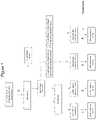
- the method of the invention comprises the steps of: a) incubating a fungal and/or plant sample with a bicarbonate solution obtaining the liquid phase of step a); b) adding an alcohol solution to the liquid phase obtained in step a) to precipitate small RNA molecules and/or the extract comprising the small RNA molecules; and i) centrifuging the precipitated small RNA molecules and/or the extract comprising the small RNA molecules to obtain a sample/extract containing purified small RNA molecules, providing that the method does not employ a solid support for binding small RNA molecules.
- the method of the invention comprises:
- the method of the invention comprises:
- the method of the invention comprises:
- the method of the invention comprises:
- said step b) is optionally preceded by a step b0) comprising ultrafiltrating the liquid phase obtained in step a), to obtain a sample having an increased concentration of small RNA molecules.
- said filtration step the precipitated small RNA molecules will be retained (i.e. not pass through the filter).
- said step is advantageous e.g. if it is desired to use less alcohol for the precipitation step, as it will reduce the sample volume and hence the volume of alcohol required.
- the said filtration may e.g. also be employed in other cases where it is desirable to reduce the volume of the sample and/or increase the concentration of sRNA molecules in the sample. Accordingly, a particular order of steps of a method of the invention includes steps a), b0), b) and c) or i).
- the pore sizes for the filtration ranges from 0.1 kDa to 10 kDa, preferably from 0.1 or to 5kDa, more preferably the for size is selected from: 0.1, 0.2, 0.3, 0.4, 0.5, 0.6, 0.7, 0.8, 0.9, 1.0, 1.1, 1.2, 1.3, 1.4,1.5, 1.6, 1.7, 1.8, 1.9, 2.0, 2.1, 2.2, 2.3, 2.4, 2.5, 2.6, 2.7, 2.8, 2.9, 3.0, 3.1, 3.2, 3.3, 3.4, 3.5, 3.6, 3.7, 3.8, 3.9, 4.0, 4.1, 4.2, 4.3, 4.4, 4.5, 4.6, 4.7, 4.8, 4.9, 5.0.
- said step i) is optionally replaced by or combined with a step c') of (ultra)filtrating the precipitated small RNA molecules to obtain a sample having an increased concentration of small RNA molecules.
- the precipitated small RNA molecules will be retained (i.e. not pass through the filter).
- the said filtration may e.g. be employed where it is desirable to reduce the volume of the sample and/or increase the concentration of sRNA molecules in the sample. Accordingly, a particular order of steps of a method of the invention includes steps a), b), c'), and i).
- the sample or the part of the fungus or plant is a fungal or plant sample, respectively.
- fungal or plant samples may be defined as samples comprising cells, preferably tissue, of at least one fungus or at least one plant.
- fungi or “fungal” means “fungi” or “fungal samples” well known to the person skilled in the art, preferably selected from the phyla Ascomycota, Basidiomycota, Chytridiomycota, and Zygomycota as well as the Oomycota and all mitosporic fungi (as defined by Hawksworth et al. In, Ainsworth and Bisby's Dictionary of The Fungi, 8th edition, 1995, CAB International, University Press, Cambridge, UK ).
- the fungal cell(s) can be any fungal cell, meaning any cell present within or derived from an organism belonging to the Kingdom Fungi.
- the methods of the invention are applicable to all fungi and fungal samples.
- the fungus may be a mould, or more particularly a filamentous fungus.
- the fungus may be a yeast (e.g. Saccharomyces or Pichia), or Aspergillus, Rhizopus, Neurospora.
- the fungus may be an ascomycetes fungus, i.e. a fungus belonging to the Phylum Ascomycota.
- said fungus is selected from: Agaricus bisporus, and fungi of the genuses Agrocybe, Amanita, Armillaria, Artomyces, Astraeus, Aureoboletus, Auricularia, Boletus, Bovista, Butyriboletus, Calbovista, Calocybe, Calvatia, Candy Cap, Cantharellula, Cantharellus, Chalciporus, Chanterelle, Chroogomphus, Clavaria, Clavariadelphus, Clavulina, Clitocybe, Clitopilus, Coprinellus, Coprinopsis, Coprinus, Corn smut, Cortinarius, Craterellus, Cyanoboletus, Cystoderma, Cystodermella, Dacryopinax, Disciotis, Entoloma, Eritadenine, Exsudoporus, Fistulina, Floccularia, Geop
- fungal / fungi may relate to fungi / fungal cells of all types and at all stages of development, including specialized reproductive cells such as sexual and asexual spores.
- fungal / fungi may relate to the fungus as such and also other life forms of the fungus, such as haustoria, conidia, mycelium, penetration peg, spore, zoospores etc.
- fungi or “fungal”, respectively, may be replaced by the term “mushrooms” or “mushroom”, respectively - and vice versa.
- plants and “plant samples” mean such plants or sample thereof generally well known to the person skilled in the art and are not particularly limited and preferably encompasses any member of the plant-kingdom according to the Linnaeus definition.
- the plants are selected from the genera Arabidopsis, preferably Arabidopsis thaliana, or Phaseolus, preferably Phaseolus vulgaris, or Nicotiana, preferably Nicotiana tabacum, or Glycine, preferably Glycine max, or Gossypium, preferably Gossypium arboreum, or Brassica, preferably Brassica napus, or Vitis, preferably Vitis vinifera, or Beta, preferably Beta vulgaris, or Triticum, preferably Triticum aestivum, or Solanum, preferably Solanum lycopersicum, Solanum tuberosum and Solanum melongena L., or Musa, preferably Musa acuminata and Musa balbisiana, or Fragaria, preferably Fragaria, preferably Fragaria,
- Olea europaea or Malus, preferably Malus domestica, or Allium, preferably Alluim cepa, or Pisum, preferably Pisum sativum, or Mentha, or Cuminum, preferably Cuminum cyminum.
- the term plant also comprises lychens and algae and fruitings and any part of the plant.
- any part of the plant can be used for the purpose of the invention, preferably said part is selected from: cotyledons, leaves (fresh or dry), sprouts, root, flowers, bulb, seed and/or fruits.
- the bicarbonate solution preferably comprises an alkali metal bicarbonate.
- the term "bicarbonate solution” may herein be replaced by "alkali metal bicarbonate solution”.
- Said alkali metal bicarbonate herein is preferably selected from the group consisting of sodium bicarbonate (NaHCO 3 ), potassium bicarbonate (KHCO 3 ), and mixtures thereof.
- the bicarbonate solution comprises NaHCO 3 . Accordingly, the term “bicarbonate solution” may herein be replaced by "NaHCO 3 solution”. In other embodiments herein, the bicarbonate solution comprises KHCO 3 . Accordingly, the term “bicarbonate solution”, may herein be replaced by "KHCO 3 solution”.
- the bicarbonate solution i) comprises from 5 to 100 mM NaHCO 3 , particularly from 10 to 50 mM NaHCO 3 , especially from 20 to 40 mM NaHCO 3 , and/or ii) comprises from 100 to 500 mM NaCl, particularly from 100 to 300 mM NaCl, especially from 150 to 250 mM NaCl; especially wherein the bicarbonate solution comprises from 20 to 40 mM NaHCO 3 and from 150 to 250 mM NaCl.
- the bicarbonate solution preferably comprises from 5 to 100 mM bicarbonate, particularly from 10 to 50 mM bicarbonate, especially from 20 to 40 mM bicarbonate.
- the term "about” in connection with values preferably means, that a given amount is in a range around the indicated amount, which reaches from minus 10%, preferably from minus 5% of the indicated amount to plus 10%, preferably plus 5% of the indicated amount. Accordingly, in preferred embodiments herein, a term “about x” may be replaced by "x ⁇ 10%", more preferably by "x ⁇ 5%”.
- the bicarbonate solution additionally comprises from 100 to 500 mM NaCl, particularly from 100 to 300 mM NaCl, especially from 150 to 250 mM NaCl.
- the bicarbonate solution comprises from 20 to 40 mM bicarbonate and from 150 to 250 mM NaCl.
- a bicarbonate solution in an amount of from about 1:1 to about 1:25 (w/v) depending on the kind of tissue, e.g. if fresh, or dried, or lyophilized.
- the ratio bicarbonate solution sample is 1:10 or 1:3(w/v).
- an alcohol solution comprises at least one alcohol, preferably at least one alcohol capable of promoting the precipitation or insolubilization of small RNA molecules, and more preferably at least one alcohol selected from: isopropanol, ethanol, propanol, methanol, butanol and/or any other alcohol capable of promoting the precipitation or insolubilization of small RNA molecules, preferably the alcohol is isopropanol and/or ethanol.
- the amount of the alcohol generally depends on the alcohol used, but are readily known or can readily be determined by a person skilled in the art.
- the alcohol is added to the liquid phase in a ratio preferably selected from: 0.5:1, 1:1, 1,5:1, 2:1, 2,5:1, 3:1, 3,5:1, 4:1, 4,5:1 (v/v).
- a given alcohol solution comprises isopropanol, especially from 90% to 100% isopropanol, preferably from 95% to 100% isopropanol.
- a given alcohol solution "added in a washing step" comprises isopropanol, especially from 90% to 100% isopropanol, in particular from 95% to 100% isopropanol.
- a given alcohol solution comprises ethanol, especially from 70% to 100% ethanol, preferably 70% to 80% ethanol.
- a given alcohol solution "added in a washing step" comprises ethanol, especially from 70% to 100% ethanol, in particular from 70% to 80% ethanol.
- the alcohol solution can be about, be at least about, or be at most about 5, 10, 15, 20, 25, 30, 35, 40, 45, 50, 55, 60, 65, 70, 75, 80, 85, 90, 95, or 100% alcohol, or any range therein.
- an alcohol solution is added to a sample to make the final solution have a concentration of alcohol of about, about at least, or about at most 5, 6, 7, 8, 9, 10, 11, 12, 13, 14, 15, 16, 17, 18, 19, 20, 21, 22, 23, 24, 25, 26, 27, 28, 29, 30, 31, 32, 33, 34, 35, 36, 37, 38, 39, 40, 41, 42, 43, 44, 45, 46, 47, 48, 49, 50, 51, 52, 53, 54, 55, 56, 57, 58, 59, 60, 61, 62, 63, 64, 65, 66, 67, 68, 69, 70, 71, 72, 73, 74, 75, 76, 77, 78, 79, 80, 81, 82, 83, 84, 85,
- a given alcohol solution is added to yield a final concentration (v/v) of about 40% to about 80% alcohol, preferably of about 50% to about 70% alcohol.
- a washing step of the precipitate is performed.
- a given alcohol solution is added to yield a final concentration (v/v) preferably of about 70% to about 80% alcohol.
- small RNA molecules includes any miRNA molecule, siRNA molecule, preferably selected from: heterochromatic siRNA, secondary siRNA, phased siRNA, transacting siRNA, cis-NAT-siRNA, and trans-NAT-siRNA, snRNA molecules, snoRNA molecules, tRNA molecules, siRNA fragments, tRNA fragments, mRNA fragments, rRNA fragments.
- said small RNA molecules are characterized by less than 200 nucleotides or base pairs (bp), preferably less than 100 nucleotides, more preferably less than 30 nucleotides or bp; still more preferably said sRNAs having 19-24 nucleotides or bp, still more preferably 21- 24 nucleotides or bp.
- sRNAs are single and/or double stranded wherein the double stranded sRNAs may be fully or partially aligned or having mismatch or having 3' overhangs.
- the small RNA molecules include miRNA molecules, siRNA molecules (particularly selected from the group consisting of heterochromatic siRNA, secondary siRNA, phased siRNA, trans-acting siRNA, cis-NAT-siRNA, and trans-NAT-siRNA), snRNA molecules, snoRNA molecules, tRNA molecules, siRNA fragments, tRNA fragments, mRNA fragments, rRNA fragments, and/or IncRNA fragments.
- the small RNA molecules include miRNA, siRNA (particularly selected from the group consisting of heterochromatic siRNA, secondary siRNA, phased siRNA, trans-acting siRNA, cis-NAT-siRNA, and trans-NAT-siRNA), snRNA, snoRNA, and/or tRNA molecules.
- the small RNA molecules include miRNA and/or siRNA (particularly selected from the group consisting of heterochromatic siRNA, secondary siRNA, phased siRNA, trans-acting siRNA, cis-NAT-siRNA, and trans-NAT-siRNA) molecules.
- the methods of the invention particularly also aim at the selective enrichment in the extracts of small RNA molecules, preferably microRNA and siRNA of length between 19 and 24 nt or bp.
- small RNA molecules may be single or double stranded molecules (ssRNAs and dsRNAs) and preferably are characterized by the presence of a phosphate group at the 5' ends and/or a methyl group at the 3' ends. These properties make these molecules much more resistant than other sRNAs to degradation during extraction.
- sRNAs disclosed in the publication " Plant microRNAs as novel immunomodulatory reagents", Scientific Reports 2016 Cavalieri et al (incorporated herein by reference in its entirety), which sRNAs were shown to display anti-inflammatory properties.
- the incubation step is performed at a temperature preferably ranging from 50 to 100°C, preferably from 50 to 80°C, more preferably from 50 to 70°C, even more preferably from 60 to 70°C.
- the treating step may last for up to 20 hours, preferably up to 16 hours, more preferably up to 10 hours, still more preferably up to 6 or less, e.g for 2, 3, 4, 5 or 6 hours.
- step a) comprises one or more steps of collecting the liquid phase by one or more means selected from the group consisting of filtration and centrifugation.
- step a) preferably comprises separating the liquid phase from the solid phase by filtration and/or centrifugation, preferably by filtration or centrifugation.
- step a) preferably comprises collecting the liquid phase by filtration, particularly where the liquid phase is not retained by the filter. Accordingly, step a) preferably comprises collecting the liquid phase by centrifugation, particularly where the liquid phase is in the supernatant.
- step a) further comprises the steps of filtrating the liquid phase, centrifuging the resulting liquid phase, and discarding the resulting pellet.
- step a) preferably comprises a step of removing the solid phase, preferably by any of the means described herein.
- step a) of a method of the invention is characterized in that is preceded by a further step of incubating the sample in a bicarbonate solution or water, such as at room temperature or lower temperature, particularly wherein the final concentration (v/w) thereof is half the final concentration (v/w) of the bicarbonate solution used in step a).
- the extract is preferably lyophilized or dried with any method known to the skilled person.
- the said fungal and/or plant sample for use in the invention is not particularly limited.
- said sample comprises intact fungal and/or plant material, such as intact fungal and/or plant tissue.
- said sample comprises chopped, preferably coarsely chopped, fungal and/or plant material, such as chopped, preferably coarsely chopped, fungal and/or plant tissue.
- said sample comprises ground fungal and/or plant material, such as ground fungal and/or plant tissue. Accordingly, the sample used in the methods of the invention preferably comprises, especially consists of, intact tissue, chopped tissue or ground tissue.
- step a) of a method of the invention is characterized in that the said fungal and/or plant sample is selected from the group consisting of fungal tissue, fungal cells, plant tissue, and plant cells, particularly wherein said tissue is intact, chopped or ground, especially wherein said tissue is intact or chopped, such as coarsely chopped, in particular wherein the sample consists of intact or chopped, such as coarsely chopped, plant and/or fungal tissue.
- said tissue is preferably intact or coarsely chopped.
- said tissue is preferably chopped, preferably coarsely chopped.
- Chopped and preferably coarsely chopped plant and/or fungal samples, tissue or the like are well-known to the skilled person.
- a coarsely chopped sample, tissue or the like may be a sample, tissue or the like that has been chopped by hand or by technical means resulting in a respective fragmentation.
- the fungal or plant sample, tissue or the like has been ground, preferably has been ground into a fine powder, as readily appreciated by the person skilled in the art.
- the sample comprises, preferably consists of intact plant tissue.
- the sample comprises, preferably consists of intact mushroom tissue.
- the sample comprises, preferably consists of chopped plant tissue.
- the sample comprises, preferably consists of chopped mushroom tissue.
- the sample comprises, preferably consists of ground plant tissue.
- the sample comprises, preferably consists of ground mushroom tissue.
- the sample comprises, preferably consists of intact plant cells.
- the sample comprises, preferably consists of intact mushroom cells.
- a sample initially employed in a method of the invention may be referred to as "starting sample”.
- the starting sample of a method of the invention preferably consists of plant or fungal tissue, preferably intact tissue or chopped tissue.
- the starting sample of a method of the invention preferably consists of plant or fungal cells.
- a method of the invention additionally comprises i) selectively removing ssRNAs with RNase treatment from the small RNA molecules, and/or ii) treating the small RNA molecules with an agent which binds with high affinity to siRNA duplexes of selectively 21-25 nucleotides (nt), to enrich 21-24 bp dsRNA; and/or iii) taking up small RNA molecules in a solution, preferably in an RNase-free aqueous solution, preferably in RNase-free water.
- a method of the invention additionally comprises selectively removing ssRNAs with RNase treatment from the small RNA molecules.
- a method of the invention additionally comprises treating the small RNA molecules with an agent which binds with high affinity to siRNA duplexes of selectively 21-25 nt, to enrich 21-24 bp dsRNA. Accordingly, in certain embodiments herein, a method of the invention additionally comprises taking up small RNA molecules in a solution, preferably in an RNase-free aqueous solution, preferably in RNase-free water.
- a method of the invention further comprises one or more washing steps, said washing steps optionally including centrifugation, particularly wherein the one or more washing steps include i) one or more washing steps involving washing of a pellet containing small RNA molecules with an alcohol solution, and/or ii) one or more washing steps involving taking up a pellet containing small RNA molecules in solution and removing insoluble sample constituents, preferably by centrifugation; especially wherein the method further comprises an additional precipitation step of adding an alcohol solution to a liquid phase containing small RNA molecules to precipitate small RNA molecules, optionally followed by centrifugation of the precipitated small RNA molecules, in particular wherein said additional precipitation step is preceded and/or followed by a washing step according to i) above and a washing step according to ii) above.
- the one or more washing steps include i) one or more washing steps involving washing of a pellet containing small RNA molecules with an alcohol solution.
- the one or more washing steps include ii) one or more washing steps involving taking up a pellet containing small RNA molecules in solution and removing insoluble sample constituents, preferably by centrifugation.
- a method of the invention further includes an additional precipitation step of adding an alcohol solution to a liquid phase containing small RNA molecules to precipitate small RNA molecules, optionally followed by centrifugation of the precipitated small RNA molecules.
- Said additional precipitation step may be preceded and/or followed by a washing step according to i) above and a washing step according to ii) above.
- methods of the invention are characterized by the proviso that the method does not employ a solid support for binding small RNA molecules.
- said solid support for binding small RNA molecules can selectively bind small RNA molecules.
- said solid support is a column.
- the said solid support is one or more beads or comprises silica, such as silica filter.
- the said solid support is a mineral or polymer support, particularly wherein i) the mineral support or polymer support is a column, especially a column comprising silica or silica gel or silicon dioxide particles, and/or ii) the mineral or polymer support is a set of beads, especially of beads made of an absorptive polymer, preferably wherein the set of beads is collectable by centrifugation, filtration, or magnetic capture.
- silica as used herein are preferably meant SiO 2 crystals and other forms of silicon oxide, such skeletons of diatoms built up from SiO 2 , amorphous silicon oxide and glass powder.
- alkyl silica, aluminum silicate (zeolite), activated silica with -NH 2 , latex particles are examples for a solid support in context with the invention.
- nucleic acid (NA) binding solid support such as silica particles capable of binding the nucleic acid in the presence of a chaotropic substance.
- a "solid support” may refer to a physical structure containing a material which contacts the solution and reversibly binds to macromolecules in the solution, particularly to RNA molecules, more particularly to small RNA molecules.
- the material in the solid support may include a mineral or polymer, in which case the support may be referred to as a "mineral or polymer support.”
- Said support is preferably elected from: mineral or polymer support, magnetic silica beads, Perspex column comprising silica gel, silicon dioxide beads, and combinations thereof.
- the solid support (“for binding small RNA molecules") described in context with the invention is not a filter used in any filtration step described herein, particularly not a filter employed in context with method step a) of the invention. Accordingly, e.g. a filter employed herein to obtain a liquid phase containing small RNA molecules (i.e. allowing the liquid phase containing small RNA molecules to flow through) does not qualify as a solid support as described in context with the invention, particularly since same is not used for binding sRNA molecules. Similarly, a filter used for ultrafiltration herein does not qualify as a solid support as described in context with the invention, particularly since same is not used for binding sRNA molecules, but e.g. to concentrate a solution comprising sRNA molecules.
- the methods of the present invention are distinguished from prior art methods which do employ a solid support for binding small RNA molecules.
- said prior art methods involve one or more of the following features.
- the methods of the invention are characterized in that one or more of said particular features are not part of the methods of the present invention.
- a method of the invention is further characterized in that it does not involve the use of one or more agents selected from the group consisting of surfactants, particularly SDS (sodium dodecyl sulfate) and/or CTAB (cetyltrimethylammonium bromide); complexing agents, particularly EDTA (ethylenediamine tetraacetic acid); chaotropic agents, particularly selected from guanidine hydrochloride, guanidinium thiocyanate, TFA (trifluoroacetic acid), PCA (perchloric acid), and phenol; chloroform and LiCI, particularly wherein the method does not involve the use of any of SDS and EDTA, especially wherein the method does not involve the use of any of TRIzol ® , CTAB and LiCI.
- surfactants particularly SDS (sodium dodecyl sulfate) and/or CTAB (cetyltrimethylammonium bromide
- complexing agents particularly EDTA (ethylenediamine te
- a method of the invention is i) a method for purifying small RNA molecules from a sample, and/or ii) a method for isolating, preferably for selectively isolating, small RNA molecules from a sample. Accordingly, the method of the invention may be a method for purifying small RNA molecules from a sample. Accordingly, the method of the invention may be a method for isolating, preferably selectively isolating, small RNA molecules from a sample.
- a method of the invention is i) a method for increasing the ratio of small RNA molecules to total RNA, and/or ii) a method for increasing the ratio of small RNA molecules to total nucleic acids, and/or iii) a method for isolating small RNA molecules from a sample; particularly wherein the said ratio indicates a weight ratio.
- the method of the invention is a method for improving the yield of obtained small RNA molecules. In certain embodiments, the method of the invention is a method for purifying the small RNA molecules. In certain embodiments, the method of the invention is a method for obtaining, preferably selectively obtaining, the small RNA molecules. In certain embodiments, the method of the invention is a method for increasing the percentage of small RNA molecules contained in the sample. In certain embodiments, the method of the invention is a method for improving the purity of obtained small RNA molecules. In certain embodiments, the method of the invention is a method for separating the small RNA molecules from other RNA molecules in the sample. In certain embodiments, the method of the invention is a method for separating the small RNA molecules from DNA molecules in the sample.
- the method of the invention is a method for avoiding the use of toxic reagents. In certain embodiments, the method of the invention is a method for achieving, especially for improving, the release, particularly the selective release, of small RNA molecules from the sample.
- the endogenous nucleic acids found in plant or fungal cells consist of DNA and RNA.
- the DNA/RNA ratio varies between species and tissues but generally can be considered a ratio 1:1 as in all eukaryotes.
- Small RNA molecules represent less than 10% of total RNA and thus less than 5% of total nucleic acids.
- small RNA molecules represent less than 10% of the total RNA. It was found that the method of the invention results in samples wherein small RNA molecules represent much more than 50%, such as even more than 90% of total nucleic acids. Further, it was found that the method of the invention results in samples wherein almost no RNA molecules having a length of more than 200 nucleotides are detectable.
- the purity of the small RNA molecules resulting from the complete method is increased by a factor of at least 10, particularly at least 100, especially at least 500, in particular at least 1000, such as at least 1000, at least 3000, at least 5000 as compared to the purity of the small RNA molecules in the starting sample, particularly if measured in weight percent (w/w).
- the methods of the invention achieve particular levels of purification and the like, which are exemplarily defined by reference to certain alternative criteria, each of which is particularly preferred.
- said levels may e.g. already be achieved by method step a).
- respective levels resulting from the complete method particularly since same may correspond to the former ones depending on the number of steps in the sample.
- any selections and combinations of said criteria in particular because none of those criteria are considered mutually exclusive.
- the small RNA molecules contained in the liquid phase obtained in step a) represent at least about 0.2%, 0,5%, 1%, 5%, 10%, preferably at least about 20%, preferably at least about 30%, more preferably at least about 40%, more preferably at least about 50%, more preferably at least about 60%, even more preferably at least about 70%, even more preferably at least about 80%, most preferably at least about 90% of the remaining solids of the said fungal and/or plant sample contained in the liquid phase; and/or i-2) the small RNA molecules contained in the sample resulting from the method represent at least about 0.2%, 0,5%, 1%, 5%, 10%, preferably at least about 20%, preferably at least about 30%, more preferably at least about 40%, more preferably at least about 50%, more preferably at least about 60%, even more preferably at least about 70%, even more preferably at least about 80%, even more preferably at least about 90%, most preferably at least about 95% of the remaining solids of the said fungal
- the DNA molecules contained in the sample resulting from the method represent at most 10%, more preferably at most 5%, even more preferably at most 2%, most preferably at most 1% of total nucleic acids contained in the sample resulting from the method.
- the RNA molecules consisting of 200 or more nucleotides contained in the sample resulting from the method represent at most 20%, preferably at most 10%, more preferably at most 5%, even more preferably at most 2%, most preferably at most 1% of total RNA contained in the sample resulting from the method.
- the term “of total nucleic acids” is replaced by the term “of the total nucleic acid content”.
- the term “of total nucleic acids” is replaced by the term “of the total content of DNA and RNA”.
- the term “of total RNA” is replaced by the term "of the total RNA content”.
- any of the said contents refers to the content by weight. In certain alternative embodiments, any of the said contents refers the number of molecules.
- any of the methods of the invention may also be referred to herein as “new MRG extraction method(s)” or “new MRG methods” - as opposed to the related "previous MRG extraction method(s)” for isolating a fraction enriched of small RNA molecules involving the use of a solid support as e.g. disclosed in Applicant's previous application WO 2017/072285 (which is incorporated herein by reference in its entirety).
- the term(s) "method for purifying small RNA molecules from a sample” or "method for obtaining small RNA molecules from a sample” or “process for obtaining method small RNAs (sRNAs) containing extract” may be replaced by "method for enriching small RNA molecules in a sample”.
- Exemplary embodiments of the latter include a method for enriching small RNA molecules in a sample, the method comprising the steps of: a) incubating a fungal and/or plant sample with a bicarbonate solution, to obtain a liquid phase containing small RNA molecules; b) adding an alcohol solution to the liquid phase obtained in step a) to precipitate small RNA molecules; and c) collecting, preferably by centrifuging, the precipitated small RNA molecules to obtain a sample enriched in small RNA molecules, with the proviso that the method does not employ a solid support for binding small RNA molecules.
- a further step of adding an alcohol solution may be present in the method of in the invention, e.g. to the liquid phase obtained by a centrifugation carried out after step b).
- the method results in an enrichment of the small RNA molecules by a factor of at least 5, particularly at least 10, particularly at least 20, particularly at least 30, particularly at least 40, particularly at least 50, particularly at least 75, particularly at least 100, especially at least 500, in particular at least 1000, such as at least 5000, as compared to the starting sample, particularly if measured in weight percent (w/w); and/or ii) the percentage of small RNA molecules contained in the sample resulting from the method is increased by a factor of at least 5, particularly at least 10, particularly at least 20, particularly at least 30, particularly at least 40, particularly at least 50, particularly at least 75, particularly at least 100, especially at least 500, in particular at least 1000, such as at least 5000, as compared to the percentage in the starting sample, particularly if measured in weight percent (w/w); and/or iii) the small RNA molecules contained in the sample resulting from the method represent at least about 10%, preferably at least about 20%, preferably at least about 30%, more preferably
- a method of the invention results in an enrichment of the small RNA molecules by a factor of at least 5, particularly of at least 10, particularly at least 20, particularly at least 30, particularly at least 40, particularly at least 50, particularly at least 75, particularly at least 100, especially at least 500, in particular at least 1000, such as at least 5000, as compared to the starting sample, particularly if measured in weight percent (w/w).
- the percentage of small RNA molecules contained in the sample resulting from the method is increased by a factor of at least 5, particularly of at least 10, particularly at least 20, particularly at least 30, particularly at least 40, particularly at least 50, particularly at least 75, particularly at least 100, especially at least 500, in particular at least 1000, 2000, 3000, such as at least 5000, as compared to the percentage in the starting sample, particularly if measured in weight percent (w/w).
- the present invention relates to methods of preparing a second product from a first product, wherein the product is preferably selected from the group consisting of a food, a food additive, a dietary supplement, a nutraceutical product, a particle, a microparticle, a nanoparticle, a pharmaceutical composition and a cosmetic composition, wherein the method comprises a method of the first or second aspect, and wherein the method further comprises adding small RNA molecules obtained by said method of any of the first and second aspect to said first product to obtain said second product, particularly wherein said second product additionally comprises a) lipids, more preferably at least one liposome, b) an exosome, c) a polymeric nanoparticle, more preferably a chitosan-based particle, and/or d) a ⁇ 1,3-D-glucan particle.
- the product is preferably selected from the group consisting of a food, a food additive, a dietary supplement, a nutraceutical product, a particle, a microp
- the present invention basically relates to methods of preparing a second product from a first product, wherein the method comprises a method of the invention, and wherein the method further comprises adding small RNA molecules obtained by said method of the invention to said first product to obtain said second product.
- the present invention e.g. relates to methods of preparing a second product from a first product, wherein the method comprises a method of the first or second aspect, and wherein the method further comprises adding small RNA molecules obtained by said method of the first or second aspect to said first product to obtain said second product
- the product is a food. In certain embodiments of this aspect, the product is a food additive. In certain embodiments of this aspect, the product is a dietary supplement. In certain embodiments of this aspect, the product is a nutraceutical product. In certain embodiments of this aspect the product is a dietary supplement.
- the product is a nutraceutical product.
- nutraceutical product Generally herein, further embodiments herein correspond to those involving a nutraceutical product, wherein the term "nutraceutical product” is replaced by the term "foodstuff”.
- the product is a particle. In certain embodiments of the third aspect, the product is a microparticle. In certain embodiments of the third aspect, the product is a nanoparticle. In certain embodiments of the third aspect, the product is a pharmaceutical composition. In certain embodiments of the third aspect, the product is a cosmetic composition.
- said second product additionally comprises a) lipids, more preferably at least one liposome, b) an exosome, c) a polymeric nanoparticle, more preferably a chitosan-based particle, and/or d) a ⁇ 1,3-D-glucan particle.
- the product obtainable by the process according to the present invention may be comprised in any of the above disclosed product, preferably in a nutraceutical product, cosmetic product or pharmaceutical composition.
- the sRNA molecules obtained by the present method may be used in the food or nutraceutical field.
- the sRNA molecules obtained by the present method may be used in the pharmaceutical field.
- the sRNA molecules obtained by the present method may be used in the field of cosmetics.
- the sRNA molecules obtained by the present method may be used in the field of particles.
- the sRNA molecules obtained by the present method may be used in the field of microparticles.
- the sRNA molecules obtained by the present method may be used in the field of nanoparticles
- the resulting second products herein such as foods, nutraceutical products or foodstuffs, preferably contain an enlarged amount and/or concentration of plant or fungal sRNA molecules compared to the first product, such as foods nutraceutical products or foodstuffs, without addition of such food additive.
- a second product such as a nutraceutical product or foodstuff
- nutraceutical products or foodstuffs that include sRNA molecules in context with the invention for example comprise beverages, for instance sport drinks, fruiting juices, and alcoholic drinks as well as liquid preparation to be added to drinking water and liquid food.
- nutraceutical products or foodstuffs comprise solid or semi-solid foods, e.g. baked goods, puddings, dairy products, confections, snack foods, or frozen confections or novelties (e.g., ice cream, milk shakes), prepared frozen meals, candy, snack products (e.g., chips), liquid food such as soups, spreads, sauces, salad dressings, prepared meat products, cheese, yogurt and any other fat or oil containing foods, and food ingredients (e.g., wheat flour).
- nutraceutical products or foodstuffs also includes functional foods and prepared nutraceutical products, the latter referring to any pre-packaged food approved for human consumption.
- Foods, food additives, nutraceutical products and dietary supplements in context of the invention are preferably administered orally.
- Food additives, nutraceutical products and dietary supplements may be administered as single dose or multiple doses.
- Food additives, nutraceutical products and dietary supplements may be delivered in any suitable format, preferably for oral delivery.
- the ingredients of the dietary supplement of this invention are acceptable excipients and/or carriers for oral consumption.
- the carrier may be a liquid, gel, gelcap, capsule, powder, solid tablet (coated or non-coated), tea, or the like.
- a product such as a dietary supplement is prepared as a powder or liquid suitable for adding by the consumer to a food or beverage.
- the product such as the dietary supplement can be for administration to an individual in the form of a powder.
- sRNAs in context of the invention can be mixed into a beverage, or stirred into a semi-solid food, or otherwise be added to a product, such as a food.
- sRNAs in context of the invention can be enclosed in caps of food or beverage containers for release immediately before consumption.
- sRNA molecules of the invention vary depending upon known factors, such as its mode and route of administration; the age, health and weight of the recipient; the nature and extent of the symptoms; the kind of concurrent treatment; the frequency of treatment; and the effect desired which can be determined by the expert in the field with normal trials.
- dosage amounts of the plant or fungal sRNA molecules may e.g. vary from 10-20 mg sRNA molecules per application to 1-2 mg sRNA molecules for daily use/application.
- the pharmaceutical composition in context with the present invention can be administered in the form of a dosage unit, for example tablets or capsules, or a solution.
- the pharmaceutical compositions may be administered as single dose or multiple doses.
- Suitable routes of administration of the pharmaceutical composition in context with the invention include, for example, oral, intranasal and parenteral administration.
- Suitable pharmaceutical carriers are e.g. described in Remington's Pharmaceutical Sciences, a standard reference text in this field.
- the pharmaceutical composition may further comprise conventional pharmaceutical additives and adjuvants, excipients or diluents, including, but not limited to, water, gelatin of any origin, vegetable gums, ligninsulfonate, talc, sugars, starch, gum arabic, vegetable oils, polyalkylene glycols, flavoring agents, preservatives, stabilizers, emulsifying agents, buffers, lubricants, colorants, wetting agents, fillers, and the like.
- compositions in context with the present invention may be in any galenic form that is suitable for administering to the animal body including the human body, more in particular in any form that is conventional for oral administration, e.g. in solid form, for example tablets, pills, granules, dragees, capsules, and effervescent formulations such as powders and tablets, or in liquid form, for instance in the form of solutions, emulsions or suspensions, for example as pastes and oily suspensions.
- the pastes may be filled into hard- or soft-shell capsules, whereby the capsules feature e.g. a matrix of (fish, swine, poultry, cow) gelatin, plant proteins or lignin sulfonate.
- compositions may be in the form of controlled (delayed) release formulations.
- Topical formulation may contain e.g. ointments, creams, gels, lotions, solutions.
- effective amount shall mean an amount which achieves a desired effect or therapeutic effect as such effect is understood by those of ordinary skill in the art.
- the sRNA molecules in context with the invention may be formulated in aqueous solutions, preferably in physiologically compatible buffers such as physiological saline buffer or polar solvents including, without limitation, a pyrrolidone or dimethylsulfoxide.
- physiologically compatible buffers such as physiological saline buffer or polar solvents including, without limitation, a pyrrolidone or dimethylsulfoxide.
- Formulations for injection may be presented in unit dosage form, e.g. in ampoules or in multi-dose containers.
- Pharmaceutical compositions for parenteral administration include aqueous solutions of a water-soluble form, such as, without limitation, a salt of the active compound.
- suspensions of the active compounds may be prepared in a lipophilic vehicle. Suitable lipophilic vehicles include fatty oils such as sesame oil, synthetic fatty acid esters such as ethyl oleate and triglycerides, or materials such as liposomes.
- Aqueous injection suspensions may contain substances that increase the viscosity of the suspension, such as sodium carboxym ethyl cellulose, sorbitol, or dextran.
- the suspension may also contain suitable stabilizers and/or agents that increase the solubility of the compounds to allow for the preparation of highly concentrated solutions.
- the active ingredient may be in powder form for constitution with a suitable vehicle, e.g., sterile, pyrogen- free water, before use.
- the compounds can be formulated by combining the active compounds with pharmaceutically acceptable carriers well-known in the art.
- Such carriers enable the sRNA molecules of the invention and products in context with the invention, respectively, to be formulated as tablets, pills, lozenges, dragees, capsules, liquids, gels, syrups, pastes, slurries, solutions, suspensions, concentrated solutions, and suspensions for diluting in the drinking water of a patient, premixes for dilution in the feed of a patient, and the like, for oral ingestion by a patient.
- compositions for oral use can be made using a solid excipient, optionally grinding the resulting mixture, and processing the mixture of granules, after adding other suitable auxiliaries if desired, to obtain tablets or dragee cores.
- Useful excipients are, in particular, fillers such as sugars, including lactose, sucrose, mannitol, or sorbitol, cellulose preparations such as, for example, maize starch, wheat starch, rice starch and potato starch and other materials such as gelatin, gum tragacanth, methyl cellulose, hydroxypropyl-methylcellulose, sodium carboxymethylcellulose, and/or polyvinylpyrrolidone (PVP).
- disintegrating agents may be added, such as cross-linked polyvinyl pyrrolidone, agar, or alginic acid. A salt such as sodium alginate may also be used.
- the sRNA molecules of the present invention can conveniently be delivered in the form of an aerosol spray using a pressurized pack or a nebulizer and a suitable propellant.
- the sRNA molecules may also be formulated in rectal compositions such as suppositories or retention enemas, using, e.g., conventional suppository bases such as cocoa butter or other glycerides.
- the sRNA molecules may also be formulated as depot preparations. Such long-acting formulations may be administered by implantation (for example, subcutaneously or intramuscularly) or by intramuscular injection.
- the sRNA molecules of the invention and products in context with the invention, respectively, may be formulated for this route of administration with suitable polymeric or hydrophobic materials (for instance, in an emulsion with a pharmacologically acceptable oil), with ion exchange resins, or as a sparingly soluble derivative such as, without limitation, a sparingly soluble salt.
- the administration of such sRNA molecules may occur through complexing of the sequence with a suitable delivery system such as complexation with cationic liposomes or inclusion in nanovesicles.
- the delivery system can then be formulated for oral (including sub-lingual) administration as dietary supplement or directly integrated in food matrix or drinks for regular use.
- the daily doses may be in the range of 1-5 mg of active principle.
- the delivery system may be formulated for topical administration.
- the daily doses may be in the range of 1-5 mg of active principle.
- the delivery system may be formulated for intravenous administration with dosage over 10 mg of active principle.
- sRNAs of 10 to 120 nucleotides such as 15-60 bp of length extracted from plants or fungi may be functionalized to enhance their bioavailability and anti-inflammatory efficacy.
- sRNAs of 10 to 120 nucleotides such as 15-60 bp sRNAs, extracted from plants or fungi with liposomes, exosomes or nanoparticles enables their effective uptake by dendritic cells of the human immune system.
- complexation of such bioactive compounds will preserve integrity and reduce degradation in case of oral consumption during the mastication and passage through the GI tract, topic application during application on skin surface and permeation in the dermis, and intravenous application for movement within the bloodstream and transfer to recipient cells and organs. In case of oral consumption or topic application, complexation will also facilitate their transfer into the bloodstream.
- Complexation with cationic liposomes occurs naturally by physico-chemical interaction sRNAs are negatively charged in solution.
- the sRNAs as described above are provided within a delivery vehicle, optionally wherein the delivery vehicle is selected from liposomes, particularly cationic liposomes, liposome comprising lipids, or nanovesicles.
- the delivery vehicle is selected from liposomes, particularly cationic liposomes, liposome comprising lipids, or nanovesicles.
- liposomes particularly cationic liposomes, liposome comprising lipids, or nanovesicles.
- Many methods are available for preparing liposomes, as described in, for example, Szoka et al, Ann. Rev. Biophys. Bioeng., 9:467 (1980 ) and U.S. Patents 4,235,871 , 4,501,728 , 4,837,028 , and 5,019,369 .
- at least part of the lipids of the liposomes are selected from the group consisting of phospholipids, sterols, and sterol derivatives.
- the lipid of the liposomes comprises or constitutes a member selected from the group consisting of phosphatidylcholine (PC), phosphatidylethanolamine (PE), phosphatidylserine (PS), phosphatidylglycerol (PG), phosphatidylinositol (PI), phosphatidic acid (PA), DPG (bisphosphatidyl glycerol), PEOH (phosphatidyl alcohol), cholesterol, ergosterol and lanosterol.
- PC phosphatidylcholine
- PE phosphatidylethanolamine
- PS phosphatidylserine
- PG phosphatidylglycerol
- PI phosphatidylinositol
- PA phosphatidic acid
- DPG bisphosphatidyl glycerol
- PEOH phosphatidyl alcohol
- cholesterol ergosterol and lanosterol.
- the liposome comprises phosphatidylcholines selected from the group consisting of 1,2-dioleoyl-phosphatidylcholine, 1,2-dipalmitoyl-phosphatidylcholine, 1,2-dimyristoyl-phosphatidylcholine, 1,2-distearoyl-phosphatidylcholine, 1-oleoyl-2-palmitoyl-phosphatidylcholine, 1-oleoyl-2-stearoyl-phosphatidylcholine, 1-palmitoyl-2-oleoyl-phosphatidylcholine, and 1-stearoyl-2-oleoyl-phosphatidylcholine.
- phosphatidylcholines selected from the group consisting of 1,2-dioleoyl-phosphatidylcholine, 1,2-dipalmitoyl-phosphatidylcholine, 1,2-dimyristoyl-phosphatidylcholine, 1,2-distearoyl-
- the liposome comprises phosphatidylethanolamines selected from the group consisting of 1,2-dioleoyl-phosphatidylethanolamine, 1,2-dipalmitoyl-phosphatidylethanolamine, 1,2-dimyristoyl-phosphatidylethanolamine, 1,2-distearoyl-phosphatidylethanolamine, 1-oleoyl-2-palmitoyl-phosphatidylethanolamine, 1-oleoyl-2-stearoyl-phosphatidylethanolamine, 1-palmitoyl-2-oleoyl-phosphatidylethanolamine, 1-stearoyl-2-oleoyl-phosphatidylethanolamine and N-succinyl-dioleoyl-phosphatidylethanolamine;
- the phosphatidylserines are selected from the group consisting 1,2-dioleoyl-phosphatidylserine, 1,2-dipalmitoyl-phosphatidylser
- the lipid comprises or constitutes phosphatidylglycerol (PG), phosphatidylethanolamine (PE), phosphatidylserine (PS), phosphatidylcholine (PC), phosphatidylinositol (PI), phosphatidic acid (PA), DPG (bisphosphatidyl glycerol), PEOH (phosphatidyl alcohol),cholesterol, phosphatidylcholines such as 1,2-dioleoyl-phosphatidylcho line, 1,2-dipalmitoyl-phosphatidylcho line, 1,2-dimyristoyl-phosphatidylcho line, 1,2-distearoyl-phosphatidylcholine, 1-oleoyl-2-palmitoyl-phosphatidylcholine, 1-oleoyl-2-stearoyl-phosphatidylcholine, 1-palmitoyl-2-oleoyl-phosphati
- An embodiment relates to a liposome, wherein at least part of the lipids is a cationic lipid.
- An embodiment relates to a liposome, wherein the cationic lipids are selected from the group consisting of stearylamine (SA), lauryltrimethylammonium bromide; cetyltrimethylammonium bromide, myristyl trimethylammonium bromide, dimethyldioctadecylammonium bromide (DDAB), 3 ⁇ -[N—(N',N'-dimethylaminoethane)-carbamoyl]cholesterol (DC-Cholesterol), 1,2-ditetradecanoyl-3-trimethylammonium-propane (DMTAP), 1,2-dioctadecanoyl-3-trimethylammonium-propane (DOTAP) and DOTAP derivatives such as 1,2-di-(9Z-octadecenoyl)-3-trimethyl
- the cationic lipids are selected from the group consisting of stearylamine (SA), 1,2-dioctadecanoyl-3-trimethylammonium-propane (DOTAP) and 1,2-di-(9Z-octadecenoyl)-3-dimethylammonium-propane (DODAP), preferably 1,2-dioctadecanoyl-3-trimethylammonium-propane (DOTAP).
- SA stearylamine
- DOTAP 1,2-dioctadecanoyl-3-trimethylammonium-propane
- DODAP 1,2-di-(9Z-octadecenoyl)-3-dimethylammonium-propane
- DOTAP 1,2-dioctadecanoyl-3-trimethylammonium-propane
- Preferred cationic lipids are DOTAP and DOTAP derivatives. Additional examples of cationic lipids and
- the lipids is a cationic lipopeptide selected from the group consisting of a lipid polyarginine conjugate, a lipid TAT conjugate, a lipid polylysine conjugate, or a cationic liposaccharide or lipopolysaccharide such as a lipid chitosan conjugate.
- the lipids are capable of forming a liposome.
- cationic lipids are suitable for this purpose.
- Cationic lipids preferably include DOTAP, DOPE, DC-Chol/DOPE, DOTMA, and DOTMA/DOPE.
- Cationic Lipids are well known to the person skilled in the art. Cationic lipids carry a net positive charge at about physiological pH. Suitable cationic lipids include, but are not limited to, N,N-dioleyl-N,N-dimethylammonium chloride (“DODAC”); N-(2,3-dioleyloxyl)propyl-N,N-N-triethylammonium chloride (“DOTMA”); N,N-distearyl-N,N-dimethylammonium bromide (“DDAB”); N-(2,3-dioleoyloxy)propyl)-N,N,N-trimethylammonium chloride (“DOTAP”) ; 1,2-Dioleyloxy-3-trimethylaminopropane chloride salt (“DOTAP.C1"); 3P-(N-(N',N'-dimethylaminoethane)-carbamoyl)cholesterol (“DC-Choi”),
- cationic lipids can be used, such as, e.g., LIPOFECTIN (including DOTMA and DOPE, available from GIBCO/BRL), and LIPOFECTAMINE (comprising DOSPA and DOPE, available from GIBCO/BRL).
- LIPOFECTIN including DOTMA and DOPE, available from GIBCO/BRL
- LIPOFECTAMINE comprising DOSPA and DOPE, available from GIBCO/BRL
- a cationic lipid is an amino lipid.
- Additional cationic lipids include l,2-dilinoleyloxy-3-dimethylaminopropane (DLinDMA) 1,2-Dilinoleoyl-3-dimethylaminopropane (DLinDAP), 1-Linoleoyl-2-linoeyloxy-3-dimethylaminopropane (DLin-2-DMAP), 1,2-Dilinoleylcarbamoyloxy-3-dimethylaminopropane (DLin-C-DAP), 1,2-Dilinoleylthio-3-dimethylaminopropane (DLin-S-DMA), 2,2-Dilinoleyl-4-dimethylamino methyl-[1 ,3]-dioxolane (DLin-K-DMA).
- DLinDMA 1,2-Dilinoleyloxy-3-dimethylaminopropane
- DLinDAP 1,2-Dilinoleoyl-3-dimethyl
- An embodiment of the invention involves a liposome or a vesicle, with a particle size of between 0.1 and 100 ⁇ m.
- the liposome of vesicle may comprise the small RNA molecules obtained by a method of the invention.
- the ratio of total lipid to sRNA is from 5 to 35 (i.e. from 5 to 1 to 35 to 1, lipid weight to sRNA weight). In certain embodiments, the ratio of total lipid to sRNA is from 5 to 15 (i.e. from 5 to 1 to 15 to 1, lipid weight to sRNA weight).
- exosomes may be used. Such exosomes and their preparation are described e.g. in Montecalvo et al. (2012, Blood, 119: 756-766 , and Stoorvogel, 2012, Blood, 119: 646-648 ).
- exosomes loaded with plant or fungal sRNA or sRNA extract(s) or compositions comprising 2 or more plant or fungal sRNA, or sRNA extract(s) may be used.
- exosomes loaded with plant miRNA may be used.
- Polymeric nanoparticles formed by self-assembly of polycations with siRNA can be used for extracellular delivery, cellular uptake, and intracellular trafficking as a strategy to improve the therapeutic potential of siRNA.
- Polycationic polymer-based nanoparticle (or polyplex) systems used for site-specific delivery, cellular uptake, and intracellular trafficking of siRNA.
- Such nanoparticles and in particular chitosan-based particles and their preparations are described e.g. in Ostergaard et al., Therapeutic Applications of RNAi: Methods and Protocols, Humana Press 2009 .
- nanoparticles loaded with plant or fungal sRNA or sRNA extract(s) or compositions comprising 2 or more plant or fungal sRNA or sRNA extract(s) may be used.
- ⁇ 1,3-D-glucan particles GP
- Saccharomyces cerevisiae Baker's yeast
- macrophage-targeted delivery of macromolecules such as DNA, siRNA and proteins using either a polyplex or layer-by- layer (LbL) synthesis methods.
- LbL layer-by- layer
- plant or fungal sRNA is encapsulated in 2-4 ⁇ m hollow ⁇ 1,3-D-glucan particles.
- glucan particles loaded with plant or fungal sRNA molecules of the invention may be used.
- the present invention relates to the use of bicarbonate solution in a method of the invention, i.e. in particular to the use of bicarbonate solution in a method of the first or second aspect as defined herein above.
- said fourth aspect relates to the use of a bicarbonate solution in a method I) for purifying small RNA molecules from a fungal and/or plant sample comprising the step of: a) incubating said sample with said bicarbonate solution to obtain a liquid phase containing purified small RNA molecules; and/or II) for obtaining small RNA molecules from a fungal and/or plant sample comprising the step of: a) incubating said sample with said bicarbonate solution to obtain a liquid phase containing small RNA molecules thus obtaining said small RNA molecules; and/or III) for increasing the ratio of small RNA molecules to total RNA in a fungal and/or plant sample comprising the step of: a) incubating said sample with said bicarbonate solution to obtain a liquid phase having an increased ratio of small RNA molecules to total RNA; and/or IV) for increasing the ratio of small RNA molecules to total nucleic acids in a fungal and/or plant sample comprising the step of: a) incubating said sample with said bicarbon
- said fourth aspect relates to the use of a bicarbonate solution in a method for purifying small RNA molecules from a fungal and/or plant sample comprising the step of: a) incubating said sample with said bicarbonate solution to obtain a liquid phase containing purified small RNA molecules, particularly wherein said method is further defined in accordance with any other aspect herein, especially in accordance with the first and/or second aspect.
- said fourth aspect relates to the use of a bicarbonate solution in a method for obtaining small RNA molecules from a fungal and/or plant sample comprising the step of: a) incubating said sample with said bicarbonate solution to obtain a liquid phase containing small RNA molecules thus obtaining said small RNA molecules, particularly wherein said method is further defined in accordance with any other aspect herein.
- said fourth aspect relates to the use of a bicarbonate solution in a method for increasing the ratio of small RNA molecules to total RNA in a fungal and/or plant sample comprising the step of: a) incubating said sample with said bicarbonate solution to obtain a liquid phase having an increased ratio of small RNA molecules to total RNA, particularly wherein said method is further defined in accordance with any other aspect herein.
- said fourth aspect relates to the use of a bicarbonate solution in a method for increasing the ratio of small RNA molecules to total nucleic acids in a fungal and/or plant sample comprising the step of: a) incubating said sample with said bicarbonate solution to obtain a liquid phase having an increased ratio of small RNA molecules to total nucleic acids; particularly with the proviso that the said method(s) does/do not employ a solid support for binding small RNA molecules, particularly wherein said method is further defined in accordance with any other aspect herein.
- a bicarbonate solution in a method for purifying small RNA molecules from a sample comprising the steps of: a) incubating a fungal and/or plant sample with said bicarbonate solution to obtain a liquid phase containing small RNA molecules; b) adding an alcohol solution to the liquid phase obtained in step a) to precipitate small RNA molecules; and c) centrifuging the precipitated small RNA molecules to obtain a sample containing purified small RNA molecules, with the proviso that the said method does not employ a solid support for binding small RNA molecules, particularly wherein said method is further defined as described hereinabove.
- a bicarbonate solution in a method for obtaining, preferably for selectively obtaining, small RNA molecules from a fungal and/or plant sample comprising the steps of: a) incubating said sample with said bicarbonate solution to obtain a liquid phase containing small RNA molecules; b) adding an alcohol solution to the liquid phase obtained in step a) to precipitate small RNA molecules; and c) centrifuging the precipitated small RNA molecules to obtain the small RNA molecules; with the proviso that the said method does not employ a solid support for binding small RNA molecules, particularly wherein said method is further defined as described hereinabove.
- the use of the fourth aspect is i) for increasing the ratio of small RNA molecules to total RNA, and/or ii) for increasing the ratio of small RNA molecules to total nucleic acids, and/or iii) for isolating small RNA molecules from a sample; particularly wherein the said ratio indicates a weight ratio.
- the use of the fourth aspect is for improving the yield of obtained small RNA molecules.
- said use is for purifying the small RNA molecules.
- said use is for obtaining, preferably selectively obtaining, the small RNA molecules.
- said use is for increasing the percentage of small RNA molecules contained in the sample.
- said use is for improving the purity of obtained small RNA molecules.
- said use is for separating the small RNA molecules from other RNA molecules in the sample.
- said use is for separating the small RNA molecules from DNA molecules in the sample.
- said use is for avoiding the use of toxic reagents.
- said use is for achieving, especially for improving, the release, particularly the selective release, of small RNA molecules from the sample.
- kits for isolating small RNA molecules preferably small RNA molecules as defined above, such as miRNA and/or siRNA from a fungal or plant sample, particularly a cell or tissue sample.
- the kit comprises: i) a bicarbonate solution (preferably as defined above), ii) an alcohol solution (preferably as defined above), and optionally iii) one or more wash solution(s), and optionally iv) an aqueous solution, preferably an RNase-free aqueous solution, and optionally v) one or more RNase inhibitors (preferably as defined above).
- a bicarbonate solution preferably as defined above
- an alcohol solution preferably as defined above
- wash solution(s) optionally iv) an aqueous solution, preferably an RNase-free aqueous solution, and optionally v) one or more RNase inhibitors (preferably as defined above).
- the kit in accordance with the invention is characterized in that it does not contain a solid support (preferably as defined above).
- kits may be packaged either in aqueous media or in lyophilized form.
- the container means of the kits will generally include at least one vial, test tube, flask, bottle, syringe, or other container means, into which a component may be placed, and preferably, suitably aliquoted. Where there is more than one component in the kit (they may be packaged together), the kit will generally also contain a second, third or other additional container into which the additional components may be separately placed. However, various combinations of components may be comprised in a vial.
- the kits of the present invention also will typically include a means for containing the RNA, and any other reagent containers in close confinement for commercial sale. Such containers may include injection or blow-molded plastic containers into which the desired vials are retained.
- the liquid solution is an aqueous solution, with a sterile aqueous solution being particularly preferred.
- kits may be provided as dried powder (s).
- the powder can be reconstituted by the addition of a suitable solvent.
- the solvent may also be provided in another container means.
- the container means will generally include at least one vial, test tube, flask, bottle, syringe and/or other container means, into which the nucleic acid formulations are placed, preferably, suitably allocated.
- the kits may also comprise a second container means for containing a sterile, pharmaceutically acceptable buffer and/or other diluent.
- Such kits may also include components that preserve or maintain the RNA or that protect against its degradation. Such components may be RNase-free or protect against RNases.
- Such kits generally will comprise, in suitable means, distinct containers for each individual reagent or solution.
- centrifugation is carried out at least at 2.500g, and preferably at 2.500g-10.000g.
- This example provides data for certain methods of the present invention, which may also be-called "new MRG extraction method(s)", which e.g. show that the successful and advantageous isolation / purification of small RNAs from plant and/or fungal samples is possible without the use of a solid support for binding sRNA molecules.
- new MRG extraction method(s) which e.g. show that the successful and advantageous isolation / purification of small RNAs from plant and/or fungal samples is possible without the use of a solid support for binding sRNA molecules.
- Such an exemplary method is described in the following in direct comparison with various related methods that do use a solid support for binding sRNA molecules.
- FIG. 1 A summary scheme including method 1 and comparative methods 2 to 4 is shown in Figure 1 .
- the sRNA content of the final extract was determined using the Agilent RNA 6000 Nano Kit (through the Bioanalyzer instrument /Agilent Technologies) and data are expressed as mg sRNA obtained from 1 kg of tissue.
- results demonstrate that the methods of the invention may advantageously be used for large scale preparation of small RNAs, such as from 1 kg of plant tissue.
- results show that the yields of small RNAs obtained with Method 1 are (unexpectedly) higher with respect to the ones obtained with the other extraction methods (using a solid support - Methods 2-4) for all the vegetal materials tested.
- FIG. 5 consists of two parts and provides comparative data with respect to a non-limiting exemplary method of the present invention only including bicarbonate extraction (cf. Figure 5a and 5c ) and a non-limiting exemplary method that additionally includes further steps such as alcohol precipitation (cf. Figure 5b ).
- RNA profiles were obtained through a Bioanalyzer instrument (Agilent Technologies) using the RNA 6000 Nano Kit ( figure 5a ) or the small RNA Kit ( figure 5c ) are shown.
- the small RNA fraction (20-200nt) represents 98% of the total RNA content in the extract.
- the total RNA profile ( Fig. 5a ) the small RNA component represents the 98% (compared to the 10% of starting tissue (see Fig. 4 )).
- the distribution of the length classes of sRNAs shows 92% of form ranging from 10 and 40 nt.
- Figure 4 shows the profiles of total RNA isolated by using Spectrum TM Plant Total RNA (Sigma-Aldrich) according to manufacturer's instructions. Profiles obtained through a Bioanalyzer instrument (Agilent Technologies) using the RNA 6000 Nano Kit ( Fig4a ) or the small RNA Kit ( Fig.4b ) are shown, along with the percentages of RNA fractions of different length (20-200nt; >200nt). Small RNA represents about the 10% of the total ( Fig. 4a ). The distribution of the length classes of sRNAs ( Fig. 4b ) shows the almost total absence of RNA forms below 40nt (1% of the total).
- results above show that it is unexpectedly possible to purify (or obtain, respectively) small RNA molecules using methods of the invention just using a step of incubating a sample with a bicarbonate solution to obtain a liquid phase containing (purified) small RNA molecules.
- step 0 depicted in Figure 1 may be employed in the present methods for purifying / obtaining sRNA molecules of the present invention also in the absence of downstream method steps, such as in the absence of alcohol precipitation steps.
Landscapes
- Chemical & Material Sciences (AREA)
- Engineering & Computer Science (AREA)
- Health & Medical Sciences (AREA)
- Biomedical Technology (AREA)
- Life Sciences & Earth Sciences (AREA)
- Genetics & Genomics (AREA)
- Bioinformatics & Cheminformatics (AREA)
- Organic Chemistry (AREA)
- Zoology (AREA)
- Wood Science & Technology (AREA)
- Biotechnology (AREA)
- General Engineering & Computer Science (AREA)
- Crystallography & Structural Chemistry (AREA)
- Plant Pathology (AREA)
- Molecular Biology (AREA)
- Microbiology (AREA)
- Biophysics (AREA)
- Physics & Mathematics (AREA)
- Biochemistry (AREA)
- General Health & Medical Sciences (AREA)
- Analytical Chemistry (AREA)
- Preparation Of Compounds By Using Micro-Organisms (AREA)
- Measuring Or Testing Involving Enzymes Or Micro-Organisms (AREA)
Priority Applications (6)
| Application Number | Priority Date | Filing Date | Title |
|---|---|---|---|
| EP21190822.3A EP4134432A1 (fr) | 2021-08-11 | 2021-08-11 | Procédé amélioré pour la purification de petit arn |
| US18/683,090 US20240344054A1 (en) | 2021-08-11 | 2022-08-11 | Improved method for small rna purification |
| EP22764724.5A EP4384612A1 (fr) | 2021-08-11 | 2022-08-11 | Procédé amélioré de purification de petits arn |
| PCT/EP2022/072534 WO2023017116A1 (fr) | 2021-08-11 | 2022-08-11 | Procédé amélioré de purification de petits arn |
| CN202280056204.XA CN117940563A (zh) | 2021-08-11 | 2022-08-11 | 改进的小rna纯化方法 |
| AU2022325483A AU2022325483A1 (en) | 2021-08-11 | 2022-08-11 | Improved method for small rna purification |
Applications Claiming Priority (1)
| Application Number | Priority Date | Filing Date | Title |
|---|---|---|---|
| EP21190822.3A EP4134432A1 (fr) | 2021-08-11 | 2021-08-11 | Procédé amélioré pour la purification de petit arn |
Publications (1)
| Publication Number | Publication Date |
|---|---|
| EP4134432A1 true EP4134432A1 (fr) | 2023-02-15 |
Family
ID=77595277
Family Applications (2)
| Application Number | Title | Priority Date | Filing Date |
|---|---|---|---|
| EP21190822.3A Withdrawn EP4134432A1 (fr) | 2021-08-11 | 2021-08-11 | Procédé amélioré pour la purification de petit arn |
| EP22764724.5A Pending EP4384612A1 (fr) | 2021-08-11 | 2022-08-11 | Procédé amélioré de purification de petits arn |
Family Applications After (1)
| Application Number | Title | Priority Date | Filing Date |
|---|---|---|---|
| EP22764724.5A Pending EP4384612A1 (fr) | 2021-08-11 | 2022-08-11 | Procédé amélioré de purification de petits arn |
Country Status (5)
| Country | Link |
|---|---|
| US (1) | US20240344054A1 (fr) |
| EP (2) | EP4134432A1 (fr) |
| CN (1) | CN117940563A (fr) |
| AU (1) | AU2022325483A1 (fr) |
| WO (1) | WO2023017116A1 (fr) |
Citations (8)
| Publication number | Priority date | Publication date | Assignee | Title |
|---|---|---|---|---|
| US4235871A (en) | 1978-02-24 | 1980-11-25 | Papahadjopoulos Demetrios P | Method of encapsulating biologically active materials in lipid vesicles |
| US4501728A (en) | 1983-01-06 | 1985-02-26 | Technology Unlimited, Inc. | Masking of liposomes from RES recognition |
| US4804539A (en) | 1986-07-28 | 1989-02-14 | Liposome Technology, Inc. | Ophthalmic liposomes |
| US4837028A (en) | 1986-12-24 | 1989-06-06 | Liposome Technology, Inc. | Liposomes with enhanced circulation time |
| US5019369A (en) | 1984-10-22 | 1991-05-28 | Vestar, Inc. | Method of targeting tumors in humans |
| WO2005012523A1 (fr) * | 2003-07-25 | 2005-02-10 | Ambion, Inc. | Techniques et compositions permettant d'isoler de petites molecules d'arn |
| WO2007100934A2 (fr) * | 2006-02-28 | 2007-09-07 | Sigma-Aldrich Co. | Procédés et compositions permettant d'isoler rapidement de petites molécules d'arn |
| WO2017072285A1 (fr) | 2015-10-28 | 2017-05-04 | Mirnagreen S.R.L. | Procédés d'extraction de petits arn bioactifs de végétaux et de champignons |
-
2021
- 2021-08-11 EP EP21190822.3A patent/EP4134432A1/fr not_active Withdrawn
-
2022
- 2022-08-11 WO PCT/EP2022/072534 patent/WO2023017116A1/fr not_active Ceased
- 2022-08-11 CN CN202280056204.XA patent/CN117940563A/zh active Pending
- 2022-08-11 AU AU2022325483A patent/AU2022325483A1/en active Pending
- 2022-08-11 EP EP22764724.5A patent/EP4384612A1/fr active Pending
- 2022-08-11 US US18/683,090 patent/US20240344054A1/en active Pending
Patent Citations (8)
| Publication number | Priority date | Publication date | Assignee | Title |
|---|---|---|---|---|
| US4235871A (en) | 1978-02-24 | 1980-11-25 | Papahadjopoulos Demetrios P | Method of encapsulating biologically active materials in lipid vesicles |
| US4501728A (en) | 1983-01-06 | 1985-02-26 | Technology Unlimited, Inc. | Masking of liposomes from RES recognition |
| US5019369A (en) | 1984-10-22 | 1991-05-28 | Vestar, Inc. | Method of targeting tumors in humans |
| US4804539A (en) | 1986-07-28 | 1989-02-14 | Liposome Technology, Inc. | Ophthalmic liposomes |
| US4837028A (en) | 1986-12-24 | 1989-06-06 | Liposome Technology, Inc. | Liposomes with enhanced circulation time |
| WO2005012523A1 (fr) * | 2003-07-25 | 2005-02-10 | Ambion, Inc. | Techniques et compositions permettant d'isoler de petites molecules d'arn |
| WO2007100934A2 (fr) * | 2006-02-28 | 2007-09-07 | Sigma-Aldrich Co. | Procédés et compositions permettant d'isoler rapidement de petites molécules d'arn |
| WO2017072285A1 (fr) | 2015-10-28 | 2017-05-04 | Mirnagreen S.R.L. | Procédés d'extraction de petits arn bioactifs de végétaux et de champignons |
Non-Patent Citations (6)
| Title |
|---|
| FLOR DE FÃ TIMA ROSAS-CÃ RDENAS ET AL: "A simple and efficient method for isolating small RNAs from different plant species", PLANT METHODS, BIOMED CENTRAL, LONDON, GB, vol. 7, no. 1, 24 February 2011 (2011-02-24), pages 4, XP021098773, ISSN: 1746-4811, DOI: 10.1186/1746-4811-7-4 * |
| HAWKSWORTH ET AL.: "Ainsworth and Bisby's Dictionary of The Fungi", 1995, UNIVERSITY PRESS |
| JUN PENG ET AL: "Rapid and Efficient Isolation of High-Quality Small RNAs from Recalcitrant Plant Species Rich in Polyphenols and Polysaccharides", PLOS ONE, vol. 9, no. 5, 1 May 2014 (2014-05-01), pages e95687, XP055324316, DOI: 10.1371/journal.pone.0095687 * |
| MONTECALVO ET AL., BLOOD, vol. 119, 2012, pages 646 - 648 |
| OSTERGAARD ET AL.: "Therapeutic Applications of RNAi: Methods and Protocols", 2009, HUMANA PRESS |
| SZOKA ET AL., ANN. REV. BIOPHYS. BIOENG., vol. 9, 1980, pages 467 |
Also Published As
| Publication number | Publication date |
|---|---|
| AU2022325483A1 (en) | 2024-03-14 |
| WO2023017116A1 (fr) | 2023-02-16 |
| EP4384612A1 (fr) | 2024-06-19 |
| US20240344054A1 (en) | 2024-10-17 |
| CN117940563A (zh) | 2024-04-26 |
Similar Documents
| Publication | Publication Date | Title |
|---|---|---|
| US12428634B2 (en) | Methods for extracting bioactive small RNAS from plants and mushrooms | |
| DK2387410T3 (en) | Gærsammensætninger admixed with the clay, and methods of using same | |
| US7214377B2 (en) | Method to prepare compositions comprising yeast treated with electromagnetic energy | |
| Huang et al. | Exosome isolation based on polyethylene glycol (PEG): a review | |
| Tembo et al. | Exploring the bioactivity of MicroRNAs Originated from Plant-derived Exosome-like Nanoparticles (PELNs): current perspectives | |
| KR101480055B1 (ko) | 음이온성 약물 전달체의 제조 방법 | |
| KR102780682B1 (ko) | 술폴로부스(Sulfolobus) 세포 배양물에서 고세균 지질을 포함하는 조성물 생산 방법 | |
| US20240344054A1 (en) | Improved method for small rna purification | |
| WO1998020884A1 (fr) | Inducteurs d'apoptose | |
| AU2015254599C1 (en) | Plant sRNA extract for use as an immunosuppressive agent | |
| WO2025167728A1 (fr) | Vecteur ciblé, médicament ciblé, procédé de préparation associé et utilisation associée | |
| KR101449763B1 (ko) | 파세러스 불가리스 추출물, 그 용도 및 이를 함유하는배합물 | |
| BR112018008777B1 (pt) | Método para isolar uma fração enriquecida de molécula de rna pequena a partir de uma amostra de fungos e/ou plantas e composição farmacêutica ou cosmética | |
| RU2216595C1 (ru) | Способ получения бета-глюканов клеточной стенки дрожжей | |
| EP4611547A1 (fr) | Vésicules extracellulaires biocompatibles obtenues à partir de sous-produits de l'industrie alimentaire fermentés, compositions et applications de celles-ci | |
| WO2025019495A2 (fr) | Exosomes dérivés de produits laitiers fermentés | |
| JP2026042740A (ja) | 細胞外小胞又は細胞外小胞含有物 | |
| US7109173B1 (en) | Transport of nucleotides, oligonucleotides and polynucleotides into the cytoplasm and nucleus of cells by peptides | |
| JP2026042741A (ja) | 細胞外小胞又は細胞外小胞含有物 | |
| CN113995845A (zh) | 一种伊维菌素制剂及其制备方法和应用 | |
| JP2004231565A (ja) | 癌細胞増殖抑制物質及びこれを含む健康食品 | |
| KR20080005710A (ko) | 은행 외과피를 이용한 은행 발효주의 제조방법 및 그로부터제조된 은행 발효주 | |
| Pérez-Bermúdez et al. | ÔØ Å ÒÙ× Ö ÔØ | |
| HK1209157A1 (en) | Extraction, preparation, and application of plant micro-ribonucleic acid |
Legal Events
| Date | Code | Title | Description |
|---|---|---|---|
| PUAI | Public reference made under article 153(3) epc to a published international application that has entered the european phase |
Free format text: ORIGINAL CODE: 0009012 |
|
| STAA | Information on the status of an ep patent application or granted ep patent |
Free format text: STATUS: THE APPLICATION HAS BEEN PUBLISHED |
|
| AK | Designated contracting states |
Kind code of ref document: A1 Designated state(s): AL AT BE BG CH CY CZ DE DK EE ES FI FR GB GR HR HU IE IS IT LI LT LU LV MC MK MT NL NO PL PT RO RS SE SI SK SM TR |
|
| STAA | Information on the status of an ep patent application or granted ep patent |
Free format text: STATUS: THE APPLICATION IS DEEMED TO BE WITHDRAWN |
|
| 18D | Application deemed to be withdrawn |
Effective date: 20230817 |