EP4134596A1 - Système de climatisation - Google Patents
Système de climatisation Download PDFInfo
- Publication number
- EP4134596A1 EP4134596A1 EP20930112.6A EP20930112A EP4134596A1 EP 4134596 A1 EP4134596 A1 EP 4134596A1 EP 20930112 A EP20930112 A EP 20930112A EP 4134596 A1 EP4134596 A1 EP 4134596A1
- Authority
- EP
- European Patent Office
- Prior art keywords
- air
- heat
- utilization
- temperature
- fan
- Prior art date
- Legal status (The legal status is an assumption and is not a legal conclusion. Google has not performed a legal analysis and makes no representation as to the accuracy of the status listed.)
- Withdrawn
Links
Images




Classifications
-
- F—MECHANICAL ENGINEERING; LIGHTING; HEATING; WEAPONS; BLASTING
- F24—HEATING; RANGES; VENTILATING
- F24F—AIR-CONDITIONING; AIR-HUMIDIFICATION; VENTILATION; USE OF AIR CURRENTS FOR SCREENING
- F24F11/00—Control or safety arrangements
- F24F11/30—Control or safety arrangements for purposes related to the operation of the system, e.g. for safety or monitoring
- F24F11/46—Improving electric energy efficiency or saving
-
- F—MECHANICAL ENGINEERING; LIGHTING; HEATING; WEAPONS; BLASTING
- F24—HEATING; RANGES; VENTILATING
- F24F—AIR-CONDITIONING; AIR-HUMIDIFICATION; VENTILATION; USE OF AIR CURRENTS FOR SCREENING
- F24F11/00—Control or safety arrangements
- F24F11/62—Control or safety arrangements characterised by the type of control or by internal processing, e.g. using fuzzy logic, adaptive control or estimation of values
- F24F11/63—Electronic processing
-
- F—MECHANICAL ENGINEERING; LIGHTING; HEATING; WEAPONS; BLASTING
- F24—HEATING; RANGES; VENTILATING
- F24F—AIR-CONDITIONING; AIR-HUMIDIFICATION; VENTILATION; USE OF AIR CURRENTS FOR SCREENING
- F24F11/00—Control or safety arrangements
- F24F11/70—Control systems characterised by their outputs; Constructional details thereof
- F24F11/72—Control systems characterised by their outputs; Constructional details thereof for controlling the supply of treated air, e.g. its pressure
- F24F11/74—Control systems characterised by their outputs; Constructional details thereof for controlling the supply of treated air, e.g. its pressure for controlling air flow rate or air velocity
-
- F—MECHANICAL ENGINEERING; LIGHTING; HEATING; WEAPONS; BLASTING
- F24—HEATING; RANGES; VENTILATING
- F24F—AIR-CONDITIONING; AIR-HUMIDIFICATION; VENTILATION; USE OF AIR CURRENTS FOR SCREENING
- F24F11/00—Control or safety arrangements
- F24F11/70—Control systems characterised by their outputs; Constructional details thereof
- F24F11/72—Control systems characterised by their outputs; Constructional details thereof for controlling the supply of treated air, e.g. its pressure
- F24F11/74—Control systems characterised by their outputs; Constructional details thereof for controlling the supply of treated air, e.g. its pressure for controlling air flow rate or air velocity
- F24F11/77—Control systems characterised by their outputs; Constructional details thereof for controlling the supply of treated air, e.g. its pressure for controlling air flow rate or air velocity by controlling the speed of ventilators
-
- F—MECHANICAL ENGINEERING; LIGHTING; HEATING; WEAPONS; BLASTING
- F24—HEATING; RANGES; VENTILATING
- F24F—AIR-CONDITIONING; AIR-HUMIDIFICATION; VENTILATION; USE OF AIR CURRENTS FOR SCREENING
- F24F5/00—Air-conditioning systems or apparatus not covered by F24F1/00 or F24F3/00, e.g. using solar heat or combined with household units such as an oven or water heater
- F24F5/0003—Exclusively-fluid systems
-
- F—MECHANICAL ENGINEERING; LIGHTING; HEATING; WEAPONS; BLASTING
- F24—HEATING; RANGES; VENTILATING
- F24F—AIR-CONDITIONING; AIR-HUMIDIFICATION; VENTILATION; USE OF AIR CURRENTS FOR SCREENING
- F24F5/00—Air-conditioning systems or apparatus not covered by F24F1/00 or F24F3/00, e.g. using solar heat or combined with household units such as an oven or water heater
- F24F5/0007—Air-conditioning systems or apparatus not covered by F24F1/00 or F24F3/00, e.g. using solar heat or combined with household units such as an oven or water heater cooling apparatus specially adapted for use in air-conditioning
- F24F5/001—Compression cycle type
-
- F—MECHANICAL ENGINEERING; LIGHTING; HEATING; WEAPONS; BLASTING
- F24—HEATING; RANGES; VENTILATING
- F24F—AIR-CONDITIONING; AIR-HUMIDIFICATION; VENTILATION; USE OF AIR CURRENTS FOR SCREENING
- F24F2110/00—Control inputs relating to air properties
- F24F2110/10—Temperature
-
- F—MECHANICAL ENGINEERING; LIGHTING; HEATING; WEAPONS; BLASTING
- F24—HEATING; RANGES; VENTILATING
- F24F—AIR-CONDITIONING; AIR-HUMIDIFICATION; VENTILATION; USE OF AIR CURRENTS FOR SCREENING
- F24F2110/00—Control inputs relating to air properties
- F24F2110/30—Velocity
-
- F—MECHANICAL ENGINEERING; LIGHTING; HEATING; WEAPONS; BLASTING
- F24—HEATING; RANGES; VENTILATING
- F24F—AIR-CONDITIONING; AIR-HUMIDIFICATION; VENTILATION; USE OF AIR CURRENTS FOR SCREENING
- F24F2110/00—Control inputs relating to air properties
- F24F2110/50—Air quality properties
- F24F2110/65—Concentration of specific substances or contaminants
- F24F2110/70—Carbon dioxide
-
- F—MECHANICAL ENGINEERING; LIGHTING; HEATING; WEAPONS; BLASTING
- F24—HEATING; RANGES; VENTILATING
- F24F—AIR-CONDITIONING; AIR-HUMIDIFICATION; VENTILATION; USE OF AIR CURRENTS FOR SCREENING
- F24F2140/00—Control inputs relating to system states
- F24F2140/20—Heat-exchange fluid temperature
-
- F—MECHANICAL ENGINEERING; LIGHTING; HEATING; WEAPONS; BLASTING
- F24—HEATING; RANGES; VENTILATING
- F24F—AIR-CONDITIONING; AIR-HUMIDIFICATION; VENTILATION; USE OF AIR CURRENTS FOR SCREENING
- F24F2140/00—Control inputs relating to system states
- F24F2140/50—Load
-
- F—MECHANICAL ENGINEERING; LIGHTING; HEATING; WEAPONS; BLASTING
- F24—HEATING; RANGES; VENTILATING
- F24F—AIR-CONDITIONING; AIR-HUMIDIFICATION; VENTILATION; USE OF AIR CURRENTS FOR SCREENING
- F24F2203/00—Devices or apparatus used for air treatment
- F24F2203/02—System or Device comprising a heat pump as a subsystem, e.g. combined with humidification/dehumidification, heating, natural energy or with hybrid system
-
- Y—GENERAL TAGGING OF NEW TECHNOLOGICAL DEVELOPMENTS; GENERAL TAGGING OF CROSS-SECTIONAL TECHNOLOGIES SPANNING OVER SEVERAL SECTIONS OF THE IPC; TECHNICAL SUBJECTS COVERED BY FORMER USPC CROSS-REFERENCE ART COLLECTIONS [XRACs] AND DIGESTS
- Y02—TECHNOLOGIES OR APPLICATIONS FOR MITIGATION OR ADAPTATION AGAINST CLIMATE CHANGE
- Y02B—CLIMATE CHANGE MITIGATION TECHNOLOGIES RELATED TO BUILDINGS, e.g. HOUSING, HOUSE APPLIANCES OR RELATED END-USER APPLICATIONS
- Y02B30/00—Energy efficient heating, ventilation or air conditioning [HVAC]
- Y02B30/70—Efficient control or regulation technologies, e.g. for control of refrigerant flow, motor or heating
Definitions
- a utilization unit used for an air conditioning system a utilization unit that adjusts a fan rotation speed and a damper opening degree of a VAV unit to control a temperature inside a room such that an air supply amount becomes equal to a required air volume for the entire room is known (for example, see PTL 1).
- An object of the present disclosure is to provide an air conditioning system that can reduce a power consumption while maintaining constant temperature controlling capability.
- An air conditioning system includes: a heat source machine to cool heat medium; a heat exchanger to exchange heat between air and the heat medium cooled by the heat source machine; a pump to cause the heat medium flowing in the heat exchanger; a temperature sensor to detect a temperature of the heat medium cooled by the heat source machine, and airflow volume changing means to increase an airflow volume of the air passing through the heat exchanger when the temperature of the heat medium cooled by the heat source machine becomes higher.
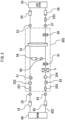
- Fig. 1 is a diagram illustrating a configuration of a heat medium circuit of an air conditioning system.
- Fig. 2 is a diagram illustrating a configuration of an air circuit of the air conditioning system.
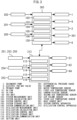
- Fig. 3 is a block diagram illustrating a configuration of a control system of the air conditioning system.
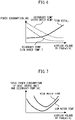
- Fig. 4 is a diagram illustrating relationship of a set outlet water temperature of a heat source unit with power consumptions of the heat source unit and a secondary pump, in the air conditioning system.
- Fig. 5 is a diagram illustrating relationship of the set outlet water temperature of the heat source unit with a total power consumption of the heat source unit and the secondary pump, in the air conditioning system.
- Fig. 1 is a diagram illustrating a configuration of a heat medium circuit of an air conditioning system.
- Fig. 2 is a diagram illustrating a configuration of an air circuit of the air conditioning system.
- Fig. 3 is a block diagram illustrating a configuration of a control system of the air conditioning system.
- FIG. 6 is a diagram illustrating relationship of an airflow volume by a fan with power consumptions of the fan and the secondary pump, in the air conditioning system.
- Fig. 7 is a diagram illustrating relationship of the airflow volume by the fan with a total power consumption of the fan and the secondary pump, in the air conditioning system.
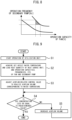
- Fig. 8 is a diagram illustrating relationship of an operation capacity of the fan with an operation frequency of the secondary pump, in the air conditioning system.
- Fig. 9 is a flowchart illustrating an example of operation by the air conditioning system.
- Fig. 10 is a flowchart illustrating an example of operation to set a rotation speed of the fan by the air conditioning system.
- Fig. 11 is a diagram illustrating another example of the heat medium circuit of the air conditioning system.
- An air conditioning system is a water air conditioning system 100 using water as heat medium.
- the heat medium used by the air conditioning system is not limited to the water. Brine may be used as the heat medium.
- the water air conditioning system 100 according to the present embodiment includes a water circuit that is a heat medium circuit through which the water as the heat medium circulates, and an air circuit through which air to be air-conditioned circulates.
- Fig. 1 illustrates a configuration on the water circuit side of the water air conditioning system 100 according to the present embodiment.
- the water air conditioning system 100 includes a heat source unit 301 and a utilization unit 302.
- the heat source unit 301 is installed in, for example, a rooftop of a building in which the water air conditioning system 100 is installed.
- the utilization unit 302 is installed in, for example, a machine room of the building in which the water air conditioning system 100 is installed.
- the number of utilization units 302 included in the water air conditioning system 100 is one or more.
- the water air conditioning system 100 includes two utilization units including a first utilization unit 302A and a second utilization unit 302B.
- the first utilization unit 302A and the second utilization unit 302B are collectively referred to as "utilization unit 302".
- the water air conditioning system 100 further includes a primary pump 9, a secondary pump 1, a bypass valve 2, and an electric two-way valve 6.
- the heat source unit 301, the two utilization units 302, the primary pump 9, the secondary pump 1, the bypass valve 2, and the electric two-way valve 6 are cyclically connected by a water pipe 8 to constitute a water circuit 401.
- the water pipe 8 is a heat medium pipe through which the water as the heat medium flows.
- the airflow volume of the air passing through the utilization heat exchanger 5 of the air circuit 402 is changed.
- the return air damper 20, the discharge air damper 53, the outside air damper 57, the bypass damper 60, the damper of the VAV unit 64, the RA fan 51, and the SA fan 63 constitute airflow volume changing means to change the airflow volume of the air passing through the utilization heat exchanger 5.
- the airflow volume changing means includes both of the fan and the damper
- the airflow volume changing means it is sufficient for the airflow volume changing means to include at least one of the fan and the damper.
- all of the opening degrees of the return air damper 20, the discharge air damper 53, the outside air damper 57, the bypass damper 60, and the damper of the VAV unit 64 are not necessarily variable, and some of them may be fixed to respective preset opening degrees.
- the outside air is introduced from the outside 55 into the utilization unit 302 through the third duct 56 and the outside air damper 57.
- the third duct 56 and the outside air damper 57 constitute outside air introduction means to introduce the outside air into the air passing through the utilization heat exchanger 5.
- the water air conditioning system 100 includes a system control apparatus 303.
- the system control apparatus 303 controls the entire operation of the water air conditioning system 100.
- the system control apparatus 303 includes, for example, a microcomputer.
- the system control apparatus 303 may be mounted on, for example, a part of a central monitoring system that displays an operation state of a device installed in the building and checks presence/absence of abnormality.
- a building manager can monitor the operation state of the water air conditioning system 100 through the system control apparatus 303.
- the system control apparatus 303 may be mounted on a desktop PC placed in a staff room.
- the system control apparatus 303 may be mounted on a laptop PC or a tablet PC.
- the water air conditioning system 100 further includes a first utilization control apparatus 313A and a second utilization control apparatus 313B.
- the first utilization control apparatus 313A controls operation of the first utilization unit 302A.
- the second utilization control apparatus 313B controls operation of the second utilization unit 302B.
- the first utilization control apparatus 313A and the second utilization control apparatus 313B are collectively referred to as "utilization control apparatus 313".
- the utilization control apparatus 313 controls operation of the utilization unit 302.
- the system control apparatus 303 includes a system measurement unit 102, a system calculation unit 103, a system control unit 104, a system storage unit 105, and a system communication unit 106.
- the system control apparatus 303 receives detection signals output from the differential pressure gauge 201, the flowmeter 202, and the water temperature sensor 205.
- the system measurement unit 102 acquires measurement values of the water supply differential pressure, the load flow rate, and the temperature of the water heated or cooled by the heat source unit 301, based on the detection signals input from the gauge, the meter, and the sensor.
- the system storage unit 105 includes, for example, a semiconductor memory.
- the system storage unit 105 stores various kinds of data, for example, set values necessary for control of the water air conditioning system 100, and device control target values.
- the system calculation unit 103 calculates various control parameters including airflow-related control values based on the measurement values acquired by the system measurement unit 102 and the various kinds of data stored in the system storage unit 105.
- the system control unit 104 controls operation of the devices such as the secondary pump 1, the bypass valve 2, the electric two-way valve 6, the primary pump 9, and the heat source unit 301, based on the control parameters calculated by the system calculation unit 103.
- the utilization control apparatus 313 includes a utilization measurement unit 112, a utilization calculation unit 113, a utilization control unit 114, a utilization storage unit 115, and a utilization communication unit 116.
- the utilization control apparatus 313 receives detection signals output from the first air temperature sensor 251, the second air temperature sensor 253, the third air temperature sensor 255, the carbon dioxide sensor 252, and the air volume sensor 254.
- the utilization measurement unit 112 acquires measurement values of the temperature of the return air, the temperature of the outside air, the temperature of the supply air, the carbon dioxide concentration of the return air, and the air volume of the supply air, based on the detection signals input from these sensors.
- the utilization storage unit 115 includes, for example, a semiconductor memory.
- the utilization storage unit 115 stores various kinds of data such as set values necessary for control of the utilization unit 302, and apparatus control target values.
- the utilization calculation unit 113 calculates various control parameters including airflow-related control values, based on the measurement values acquired by the utilization measurement unit 112 and the various kinds of data stored in the utilization storage unit 115.
- the utilization control unit 114 controls operation of the devices such as the RA fan 51, the SA fan 63, and the VAV unit 64 based on the control parameters calculated by the utilization calculation unit 113.
- the system control apparatus 303 and the utilization control apparatus 313 can bidirectionally transmit/receive various kinds of information through the system communication unit 106 and the utilization communication unit 116.
- a communication method at this time may be a wired method or a wireless method.
- the system control apparatus 303 can transmit the measurement values of the water supply differential pressure, the load flow rate, and the temperature of the water heated or cooled by the heat source unit 301, acquired by the system measurement unit 102, to the utilization control apparatuses 313.
- the utilization control apparatus 313 can control operation of the devices such as the RA fan 51, the SA fan 63, and the VAV unit 64 based on these measurement values.
- the utilization control apparatus 313 can transmit the measurement values of the temperature of the return air, the temperature of the outside air, the temperature of the supply air, the carbon dioxide concentration of the return air, and the air volume of the supply air acquired by the utilization measurement unit 112, to the system control apparatus 303.
- the system control apparatus 303 can control operation of the devices such as the secondary pump 1, the bypass valve 2, the electric two-way valve 6, the primary pump 9, and the heat source unit 301, based on these measurement values.
- the system control apparatus 303 may calculate the control parameters for the devices to be controlled by the utilization control apparatus 313, and transmit the calculated control parameters to the utilization control apparatus 313.
- the utilization control apparatus 313 may calculate the control parameters for the devices to be controlled by the system control apparatus 303, and transmit the calculated control parameters to the system control apparatus 303.
- the cold water operation is started in a case where one or more utilization units 302 perform cooling operation.
- the operation state in a case where the first utilization unit 302A performs the cold water operation and the second utilization unit 302B is stopped is described.
- the water (heat medium) sent by the primary pump 9 is cooled by the heat source unit 301.
- the cooled water flows to the first outgoing header 14, and is divided into the water flowing toward the bypass pipe 10 and the water flowing toward the secondary pump 1.
- the water flowing through the secondary pump 1 is sent from the secondary pump 1, and is then divided by the second outgoing header 15 into the water flowing toward the bypass valve 2 and the water flowing toward the first utilization pipe 4A and the second utilization pipe 4B.
- the water flowing toward the bypass valve 2 passes through the bypass valve 2, and then merges with the water flowing through the first outgoing header 14.
- the water flowing through the first utilization pipe 4A and the second utilization pipe 4B cools the air of the air circuit 402 in the respective utilization heat exchangers 5.
- the water passing through the utilization heat exchanger 5 passes through the electric two-way valve 6, and then passes through the third utilization pipe 7A or the fourth utilization pipe 7B. Thereafter, the water merges with the water flowing through the bypass pipe 10 in the returning header 16. The water then flows to the primary pump 9. As a result, the water circulates through the water circuit 401.
- the air from the room 66 supplied by the RA fan 51 is divided into the air flowing toward the total heat exchanger 52 and the air flowing toward the bypass duct 59.
- the return air flowing through the bypass duct 59 passes through the bypass damper 60, and then merges with the outside air passing through the total heat exchanger 52.
- the indoor air flowing toward the total heat exchanger 52 exchanges heat with the outside air in the total heat exchanger 52, and then flows out from the utilization unit 302.
- the indoor air flowing out from the utilization unit 302 passes through the discharge air damper 53 and the second duct 54, and is then discharged to the outside 55.
- the air of the outside 55 flows into the utilization unit 302 through the third duct 56 and the outside air damper 57.
- the outside air flowing into the utilization unit 302 passes through the first filter 58, and exchanges heat with the indoor air passing through the RA fan 51, in the total heat exchanger 52. Thereafter, the outside air merges with the return air passing through the bypass damper 60. Thereafter, the air passes through the second filter 61, and is cooled by the water of the water circuit 401 in the utilization heat exchanger 5, thereby becoming cold air.
- the cold air then flows out from the utilization unit 302 through the SA fan 63, and is supplied as the cold air into the room 66 through the VAV unit 64 and the fourth duct 65.
- the air circulating in the room 66 flows into the RA fan 51 again through the first duct 19 and the return air damper 20.
- the system control apparatus 303 controls the operation of the heat source unit 301 such that the water temperature detected by the water temperature sensor 205 is equal to a set water temperature (for example, 7°C) . Further, the system control apparatus 303 controls the rotation speed of the secondary pump 1 and the opening degree of the bypass valve 2 such that the water supply differential pressure between the second outgoing header 15 and the first outgoing header 14, detected by the differential pressure gauge 201, is equal to a target water supply differential pressure value (for example, 200 kPa). Furthermore, the system control apparatus 303 controls the opening degree of the first electric two-way valve 6A such that the temperature of the return air detected by the first air temperature sensor 251 is equal to a set indoor temperature.
- a set water temperature for example, 7°C
- the system control apparatus 303 controls the rotation speed of the secondary pump 1 and the opening degree of the bypass valve 2 such that the water supply differential pressure between the second outgoing header 15 and the first outgoing header 14, detected by the differential pressure gauge 201, is equal to a target water supply differential pressure value (for
- the system control apparatus 303 controls the opening degree of the second electric two-way valve 6B to a fully-closed opening degree (for example, opening degree of 0%). Further, the rotation speed of the primary pump 9 may be constant (fixed) irrespective of the operation state.
- the system control apparatus 303 and the utilization control apparatus 313 control the rotation speeds of the RA fan 51 and the SA fan 63 based on a set outlet water temperature of the heat source unit 301.
- the set outlet water temperature of the heat source unit 301 is a set value of the temperature of the water (heat medium) cooled by the heat source unit 301.
- the rotation speed of the RA fan 51 and the rotation speed of the SA fan 63 are, for example, equal to each other.
- the system control apparatus 303 and the utilization control apparatus 313 increase the rotation speeds of the RA fan 51 and the SA fan 63 as the set outlet water temperature of the heat source unit 301 is higher.
- the above-described airflow volume changing means increases the airflow volume of the air passing through the utilization heat exchanger 5 as the temperature of the heat medium (water) cooled by the heat source unit 301 is higher.
- Fig. 4 illustrates relationship of the set outlet water temperature of the heat source unit 301 with power consumptions of the heat source unit 301 and the secondary pump 1.
- the electric two-way valve 6 is adjusted such that the temperature of the return air from the room 66 is equal to the set temperature. In other words, the cooling capacity is controlled to be constant. Therefore, when the set outlet water temperature is increased, the electric two-way valve 6 is opened so as to increase the flow rate of the water passing through the utilization heat exchanger 5 of the utilization unit 302.
- Fig. 6 illustrates relationship of the flow volumes of the RA fan 51 and the SA fan 63 with the total power consumption of the RA fan 51 and the SA fan 63, and the power consumption of the secondary pump 1.
- the total power consumption of the RA fan 51 and the SA fan 63 is increased as the flow volumes of the RA fan 51 and the SA fan 63 are increased.
- the electric two-way valve 6 is adjusted such that the temperature of the return air from the room 66 is equal to the set temperature. In other words, the cooling capacity is controlled to be constant.
- the local minimum value of the total of the power consumptions of the RA fan 51 and the SA fan 63 and the power consumption of the secondary pump 1 moves to the high air volume side (right side in graph) when the set outlet water temperature of the heat source unit 301 is increased.
- the local minimum value in the total of the power consumptions of the RA fan 51 and the SA fan 63 and the power consumption of the secondary pump 1 moves to the high air volume side when the set outlet water temperature of the heat source unit 301 is decreased. Therefore, during the hot water operation, it is possible to realize the local minimum value in the total power consumption of the heat source unit 301, the RA fan 51, the SA fan 63, and the secondary pump 1 by increasing the air volumes (rotation speeds) of the RA fan 51 and the SA fan 63 as the set outlet water temperature of the heat source unit 301, namely, the temperature of the water heated by the heat source unit 301 is lower.
- the total power-consumption reduction effect is high in the case where the power of the secondary pump 1 and the power of the RA fan 51 and the SA fan 63 are both averagely reduced, as compared with the case where one of the power of the secondary pump 1 and the power of the RA fan 51 and the SA fan 63 is extremely reduced.
- the fan operation capacity/the pump operation capacity are 79%/79% of the maximum capacity
- the fan power/the pump power are 49%/49% at minimum.
- the fan operation capacity/the pump operation capacity are 58% (reduced capacity 21% ⁇ 2)/100% of the maximum capacity
- the fan power/the pump power are 19%/100%. Accordingly, when the rated power consumption of the fans and the rated power consumption of the pump are equivalent to each other, the power reduction amount can be increased by averagely reducing the operation capacities of the fans and the pump in some cases.
- the above-described airflow volume changing means preferably changes the airflow volume of the air passing through the utilization heat exchanger 5 while preventing reduction of the outside air introduction amount by the above-described outside air introduction means. This makes it possible to reduce the total power consumption of the RA fan 51, the SA fan 63, and the secondary pump 1, namely, the power consumption of the water air conditioning system 100 while securing the ventilation amount of the room 66 and suppressing increase in the carbon dioxide concentration in the room 66.
- the airflow volume changing means preferably changes the airflow volume of the air passing through each of the plurality of utilization heat exchangers 5 based on the temperature of the heat medium (water) cooled by the heat source unit 301.
- the water air conditioning system 100 includes the plurality of utilization heat exchangers 5, namely, the plurality of utilization units 302, it is considered that the utilization units 302 have different specifications (air sending performance, characteristics, and the like).
- the airflow volume of the air at which the high power-consumption reduction effect is obtainable may be different among the utilization units 302.
- the airflow volume of the air passing through each of the plurality of utilization heat exchangers 5 is made variable, which makes it possible to realize the airflow volume of the air at which the high power-consumption reduction effect is obtainable in each of the utilization units 302, and to further reduce the power consumption of the water air conditioning system 100.
- step S1 the utilization control apparatus 313 starts operation of the utilization unit 302, and the cold water operation of the water air conditioning system 100 is started.
- step S2 the system calculation unit 103 acquires the set outlet water temperature and a load heat quantity of the heat source unit 301, and the current operation state (operation capacities, frequencies, etc. of RA fan 51, SA fan 63, and secondary pump 1), from the system storage unit 105.
- the system calculation unit 103 calculates the airflow-related control values so as to realize the airflow volume corresponding to the set outlet water temperature and the load heat quantity acquired in step S2.
- the airflow-related control values are the rotation speeds of the RA fan 51 and the SA fan 63, the opening degree of the VAV unit 64, or the like.
- the utilization control apparatus 313 causes the above-described airflow volume changing means to change the airflow volume of the air passing through the utilization heat exchanger 5 based on the calculated airflow-related control values.
- step S4 the utilization control apparatus 313 determines whether the carbon dioxide concentration of the return air from the room 66, detected by the carbon dioxide sensor 252 is less than or equal to the preset reference value (for example, 900 ppm) . In a case where the carbon dioxide concentration is less than or equal to the reference value, the series of operation ends. In contrast, in a case where the carbon dioxide concentration is not less than or equal to the reference value, the processing proceeds to step S5, and the utilization control apparatus 313 controls the above-described airflow volume changing means to increase the outside air amount and the discharge air amount of the air circuit 402. After step S5, the processing returns to step S4.
- the preset reference value for example, 900 ppm
- the water air conditioning system 100 includes a setting unit 120 as illustrated in Fig. 3 .
- the setting unit 120 is provided in the system control apparatus 303.
- the configuration is not limited to the example, and the setting unit 120 may be provided in, for example, the utilization control apparatus 313.
- the setting unit 120 is setting means to set the rotation speeds of the RA fan 51 and the SA fan 63 corresponding to the temperature of the heat medium (water) cooled by the heat source unit 301 in a state where the heat medium (water) flows through the utilization heat exchanger 5.
- the setting unit 120 operates the RA fan 51 and the SA fan 63 in a state where the utilization unit 302 operates, namely, in the state where the water flows through the utilization heat exchanger 5, and determines whether the total operation capacity of the RA fan 51, the SA fan 63, and the secondary pump 1 at this time is the minimum value.
- the rotation speeds of the RA fan 51, the SA fan 63, and the secondary pump 1 at that time are stored as the set values corresponding to the outlet water temperature and the load heat quantity of the heat source unit 301 at that time, in the system storage unit 105.
- step S21 the utilization control apparatus 313 starts the operation of the utilization unit 302, and the cold water operation of the water air conditioning system 100 is started.
- the water air conditioning system 100 includes the plurality of utilization units 302, operation of all of the plurality of utilization units 302 is started. In other words, the heat medium (water) is caused to flow through all of the plurality of utilization heat exchangers 5.
- the system calculation unit 103 acquires, from the system storage unit 105, the set outlet water temperature and the load heat quantity of the heat source unit 301, and the current operation state (operation capacities, frequencies, etc. of RA fan 51, SA fan 63, and secondary pump 1).
- the system calculation unit 103 calculates the control parameters such that the detected value of the water temperature sensor becomes the acquired set outlet water temperature.
- the system control unit 104 controls the heat source unit 301 based on the control parameters calculated by the system calculation unit 103.
- step S23 the utilization control apparatus 313 changes the rotation speeds of the RA fan 51 and the SA fan 63.
- step S24 It can be determined whether the operation state of the water air conditioning system 100 has been stabilized, for example, based on whether the detected value of the flowmeter 202 becomes constant and the detected value of the first air temperature sensor 251 or the third air temperature sensor 255 becomes constant.
- step S24 the setting unit 120 determines whether the total operation capacity of the RA fan 51, the SA fan 63, and the secondary pump 1 is the above-described minimum value. In a case where the total operation capacity of the RA fan 51, the SA fan 63, and the secondary pump 1 is not the minimum value, the processing returns to step S23, and the setting unit 120 further changes the rotation speeds of the RA fan 51 and the SA fan 63.
- step S23 and step S24 are individually performed on all of the utilization units 302. This is because the rotation speeds of the fans settable in each of the utilization units 302 are different depending on the specification of each of the utilization units 302. This makes it possible to realize the air flow volume of the air at which the high power-consumption reduction effect is obtainable in each of the utilization units 302.
- the airflow volume of the second utilization unit 302B is constantly set to a value lower by 5% than the airflow volume of the first utilization unit 302A. This is applicable to a case where the first utilization unit 302A is installed in a large meeting room with high air conditioning load and the second utilization unit 302B is installed in a small meeting room with a low air conditioning load.
- the airflow volume of the corresponding air circuit 402 is made lower than the airflow volume of the air circuit 402 corresponding to the utilization unit 302 with the maximum load, based on air conditioning load design.
- Switching of such operation modes is advantageous in realization of both of comfort felt by a person and energy saving.
- a cooling load for example, when outside air temperature is high, to cause a person entering the room 66 from the outside 55 to feel cold air
- the operation mode is switched to the normal operation mode to cause the person to strongly feel the cold air, which makes it possible to maintain comfort.
- Fig. 11 illustrates another example of the water air conditioning system 100 according to the present disclosure.
- the configuration illustrated in Fig. 1 is a so-called duplex pump system in which two pumps of the secondary pump 1 and the primary pump 9 are provided for one heat source unit 301.
- a configuration illustrated in Fig. 11 is a so-called single pump system in which one pump of a primary pump 9 is provided for one heat source unit 301.
- the primary pump 9 is controlled in a manner similar to the secondary pump 1 in the configuration illustrated in Fig. 1 , which makes it possible to achieve similar effects.
Landscapes
- Engineering & Computer Science (AREA)
- General Engineering & Computer Science (AREA)
- Chemical & Material Sciences (AREA)
- Combustion & Propulsion (AREA)
- Mechanical Engineering (AREA)
- Sustainable Development (AREA)
- Life Sciences & Earth Sciences (AREA)
- Physics & Mathematics (AREA)
- Fluid Mechanics (AREA)
- Signal Processing (AREA)
- Fuzzy Systems (AREA)
- Mathematical Physics (AREA)
- Air Conditioning Control Device (AREA)
Applications Claiming Priority (2)
| Application Number | Priority Date | Filing Date | Title |
|---|---|---|---|
| JP2020070447A JP7439629B2 (ja) | 2020-04-09 | 2020-04-09 | 空調システム |
| PCT/JP2020/042074 WO2021205684A1 (fr) | 2020-04-09 | 2020-11-11 | Système de climatisation |
Publications (2)
| Publication Number | Publication Date |
|---|---|
| EP4134596A1 true EP4134596A1 (fr) | 2023-02-15 |
| EP4134596A4 EP4134596A4 (fr) | 2023-09-20 |
Family
ID=78023089
Family Applications (1)
| Application Number | Title | Priority Date | Filing Date |
|---|---|---|---|
| EP20930112.6A Withdrawn EP4134596A4 (fr) | 2020-04-09 | 2020-11-11 | Système de climatisation |
Country Status (5)
| Country | Link |
|---|---|
| US (1) | US20230069910A1 (fr) |
| EP (1) | EP4134596A4 (fr) |
| JP (1) | JP7439629B2 (fr) |
| CN (1) | CN115335645A (fr) |
| WO (1) | WO2021205684A1 (fr) |
Families Citing this family (1)
| Publication number | Priority date | Publication date | Assignee | Title |
|---|---|---|---|---|
| WO2023084698A1 (fr) * | 2021-11-11 | 2023-05-19 | 三菱電機株式会社 | Système de climatisation |
Family Cites Families (15)
| Publication number | Priority date | Publication date | Assignee | Title |
|---|---|---|---|---|
| JP3885300B2 (ja) * | 1996-10-28 | 2007-02-21 | ダイキン工業株式会社 | 空気調和装置 |
| JPH10141740A (ja) * | 1996-11-06 | 1998-05-29 | Daikin Ind Ltd | 空気調和装置 |
| JP2003294327A (ja) * | 2002-03-29 | 2003-10-15 | Matsushita Electric Ind Co Ltd | 冷却装置 |
| JP4166051B2 (ja) * | 2002-08-05 | 2008-10-15 | 株式会社東芝 | 空調システム |
| JP4459727B2 (ja) * | 2004-06-14 | 2010-04-28 | パナソニックエコシステムズ株式会社 | ビルディング用空調制御システム |
| JP2005134110A (ja) * | 2005-02-15 | 2005-05-26 | Hitachi Plant Eng & Constr Co Ltd | 空調設備 |
| JP2009014300A (ja) * | 2007-07-06 | 2009-01-22 | Mitsubishi Electric Corp | 空調熱源最適制御装置 |
| WO2010120519A2 (fr) * | 2009-03-31 | 2010-10-21 | Johnson Controls Technology Company | Système de commande du fonctionnement de ventilateurs de condenseur |
| KR101633793B1 (ko) * | 2009-05-01 | 2016-06-27 | 엘지전자 주식회사 | 공기조화기의 제어방법 |
| JP5581886B2 (ja) * | 2010-08-11 | 2014-09-03 | 株式会社日立製作所 | 車両用空調システム |
| JP5085716B2 (ja) * | 2010-11-02 | 2012-11-28 | 株式会社東芝 | サーバ室管理用の空調システム、およびこれを利用したサーバ管理用システム、空調制御方法 |
| JP6091387B2 (ja) * | 2013-09-13 | 2017-03-08 | 富士通株式会社 | 空調装置 |
| CN105371420A (zh) * | 2014-09-01 | 2016-03-02 | 阿里巴巴集团控股有限公司 | 一种制冷控制方法、装置及系统 |
| WO2018105734A1 (fr) * | 2016-12-08 | 2018-06-14 | 株式会社Nttファシリティーズ | Système de circulation de milieu caloporteur et système de circulation de liquide de refroidissement |
| JP7100423B2 (ja) * | 2016-12-08 | 2022-07-13 | 株式会社Nttファシリティーズ | 冷水循環システム |
-
2020
- 2020-04-09 JP JP2020070447A patent/JP7439629B2/ja active Active
- 2020-11-11 US US17/796,002 patent/US20230069910A1/en not_active Abandoned
- 2020-11-11 EP EP20930112.6A patent/EP4134596A4/fr not_active Withdrawn
- 2020-11-11 CN CN202080099141.7A patent/CN115335645A/zh active Pending
- 2020-11-11 WO PCT/JP2020/042074 patent/WO2021205684A1/fr not_active Ceased
Also Published As
| Publication number | Publication date |
|---|---|
| WO2021205684A1 (fr) | 2021-10-14 |
| JP2021167683A (ja) | 2021-10-21 |
| EP4134596A4 (fr) | 2023-09-20 |
| US20230069910A1 (en) | 2023-03-09 |
| CN115335645A (zh) | 2022-11-11 |
| JP7439629B2 (ja) | 2024-02-28 |
Similar Documents
| Publication | Publication Date | Title |
|---|---|---|
| US11959652B2 (en) | Machine learning apparatus, air conditioning system, and machine learning method | |
| JP4422572B2 (ja) | 冷温熱源機の冷温水制御方法 | |
| EP2806228B1 (fr) | Climatiseur | |
| US12140328B2 (en) | Zone monitoring systems and methods for a zoning system | |
| JP4832960B2 (ja) | 水熱源ヒートポンプユニットシステムの制御方法 | |
| EP3957923A1 (fr) | Système de climatisation | |
| JP6681896B2 (ja) | 冷凍システム | |
| CN114026368B (zh) | 外部空气处理装置和空调系统 | |
| CN113692515A (zh) | 空调系统 | |
| EP4134596A1 (fr) | Système de climatisation | |
| JP2012013280A (ja) | 水熱源ヒートポンプユニット配管システム | |
| WO2020035942A1 (fr) | Système de refroidissement naturel | |
| CN113950599A (zh) | 设备管理装置、热源系统、管理装置和设备管理系统 | |
| JP2011149615A (ja) | 空気調和システム | |
| CN111380169B (zh) | Hvacr系统中可变流动流体回路的流体控制 | |
| WO2023177961A1 (fr) | Atténuation de fuite de fluide frigorigène pour systèmes de fluide frigorigène à circuits multiples | |
| JP3534048B2 (ja) | 空調システム | |
| GB2578533A (en) | Refrigeration cycle device | |
| JP3159739B2 (ja) | 吸収式空調システム | |
| CN222597883U (zh) | 室内机及多联机空调系统 | |
| US11619409B2 (en) | Control system for a heating, ventilation, and air-conditioning system | |
| CN218672358U (zh) | 多联机空调及其空调系统 | |
| JP2020079689A (ja) | 空調システム | |
| KR20080070307A (ko) | 공기조화 시스템 | |
| KR20250146884A (ko) | 멀티 공기 조화기의 고장 진단 시스템 및 고장 진단 방법 |
Legal Events
| Date | Code | Title | Description |
|---|---|---|---|
| STAA | Information on the status of an ep patent application or granted ep patent |
Free format text: STATUS: THE INTERNATIONAL PUBLICATION HAS BEEN MADE |
|
| PUAI | Public reference made under article 153(3) epc to a published international application that has entered the european phase |
Free format text: ORIGINAL CODE: 0009012 |
|
| STAA | Information on the status of an ep patent application or granted ep patent |
Free format text: STATUS: REQUEST FOR EXAMINATION WAS MADE |
|
| 17P | Request for examination filed |
Effective date: 20221003 |
|
| AK | Designated contracting states |
Kind code of ref document: A1 Designated state(s): AL AT BE BG CH CY CZ DE DK EE ES FI FR GB GR HR HU IE IS IT LI LT LU LV MC MK MT NL NO PL PT RO RS SE SI SK SM TR |
|
| DAV | Request for validation of the european patent (deleted) | ||
| DAX | Request for extension of the european patent (deleted) | ||
| A4 | Supplementary search report drawn up and despatched |
Effective date: 20230821 |
|
| RIC1 | Information provided on ipc code assigned before grant |
Ipc: F24F 140/50 20180101ALI20230814BHEP Ipc: F24F 140/20 20180101ALI20230814BHEP Ipc: F24F 110/70 20180101ALI20230814BHEP Ipc: F24F 110/30 20180101ALI20230814BHEP Ipc: F24F 110/10 20180101ALI20230814BHEP Ipc: F24F 11/63 20180101ALI20230814BHEP Ipc: F24F 11/74 20180101ALI20230814BHEP Ipc: F24F 11/46 20180101ALI20230814BHEP Ipc: F24F 5/00 20060101AFI20230814BHEP |
|
| STAA | Information on the status of an ep patent application or granted ep patent |
Free format text: STATUS: THE APPLICATION HAS BEEN WITHDRAWN |
|
| 18W | Application withdrawn |
Effective date: 20240823 |