EP4134735A1 - Actionneur de caméra et module de caméra le comprenant - Google Patents
Actionneur de caméra et module de caméra le comprenant Download PDFInfo
- Publication number
- EP4134735A1 EP4134735A1 EP21785123.7A EP21785123A EP4134735A1 EP 4134735 A1 EP4134735 A1 EP 4134735A1 EP 21785123 A EP21785123 A EP 21785123A EP 4134735 A1 EP4134735 A1 EP 4134735A1
- Authority
- EP
- European Patent Office
- Prior art keywords
- disposed
- lens barrel
- housing
- lens
- axis direction
- Prior art date
- Legal status (The legal status is an assumption and is not a legal conclusion. Google has not performed a legal analysis and makes no representation as to the accuracy of the status listed.)
- Pending
Links
Images





Classifications
-
- H—ELECTRICITY
- H04—ELECTRIC COMMUNICATION TECHNIQUE
- H04N—PICTORIAL COMMUNICATION, e.g. TELEVISION
- H04N23/00—Cameras or camera modules comprising electronic image sensors; Control thereof
- H04N23/50—Constructional details
- H04N23/55—Optical parts specially adapted for electronic image sensors; Mounting thereof
-
- G—PHYSICS
- G03—PHOTOGRAPHY; CINEMATOGRAPHY; ANALOGOUS TECHNIQUES USING WAVES OTHER THAN OPTICAL WAVES; ELECTROGRAPHY; HOLOGRAPHY
- G03B—APPARATUS OR ARRANGEMENTS FOR TAKING PHOTOGRAPHS OR FOR PROJECTING OR VIEWING THEM; APPARATUS OR ARRANGEMENTS EMPLOYING ANALOGOUS TECHNIQUES USING WAVES OTHER THAN OPTICAL WAVES; ACCESSORIES THEREFOR
- G03B13/00—Viewfinders; Focusing aids for cameras; Means for focusing for cameras; Autofocus systems for cameras
- G03B13/32—Means for focusing
- G03B13/34—Power focusing
- G03B13/36—Autofocus systems
-
- G—PHYSICS
- G03—PHOTOGRAPHY; CINEMATOGRAPHY; ANALOGOUS TECHNIQUES USING WAVES OTHER THAN OPTICAL WAVES; ELECTROGRAPHY; HOLOGRAPHY
- G03B—APPARATUS OR ARRANGEMENTS FOR TAKING PHOTOGRAPHS OR FOR PROJECTING OR VIEWING THEM; APPARATUS OR ARRANGEMENTS EMPLOYING ANALOGOUS TECHNIQUES USING WAVES OTHER THAN OPTICAL WAVES; ACCESSORIES THEREFOR
- G03B17/00—Details of cameras or camera bodies; Accessories therefor
- G03B17/02—Bodies
- G03B17/12—Bodies with means for supporting objectives, supplementary lenses, filters, masks, or turrets
-
- G—PHYSICS
- G03—PHOTOGRAPHY; CINEMATOGRAPHY; ANALOGOUS TECHNIQUES USING WAVES OTHER THAN OPTICAL WAVES; ELECTROGRAPHY; HOLOGRAPHY
- G03B—APPARATUS OR ARRANGEMENTS FOR TAKING PHOTOGRAPHS OR FOR PROJECTING OR VIEWING THEM; APPARATUS OR ARRANGEMENTS EMPLOYING ANALOGOUS TECHNIQUES USING WAVES OTHER THAN OPTICAL WAVES; ACCESSORIES THEREFOR
- G03B17/00—Details of cameras or camera bodies; Accessories therefor
- G03B17/02—Bodies
- G03B17/17—Bodies with reflectors arranged in beam forming the photographic image, e.g. for reducing dimensions of camera
-
- G—PHYSICS
- G03—PHOTOGRAPHY; CINEMATOGRAPHY; ANALOGOUS TECHNIQUES USING WAVES OTHER THAN OPTICAL WAVES; ELECTROGRAPHY; HOLOGRAPHY
- G03B—APPARATUS OR ARRANGEMENTS FOR TAKING PHOTOGRAPHS OR FOR PROJECTING OR VIEWING THEM; APPARATUS OR ARRANGEMENTS EMPLOYING ANALOGOUS TECHNIQUES USING WAVES OTHER THAN OPTICAL WAVES; ACCESSORIES THEREFOR
- G03B3/00—Focusing arrangements of general interest for cameras, projectors or printers
- G03B3/10—Power-operated focusing
-
- G—PHYSICS
- G03—PHOTOGRAPHY; CINEMATOGRAPHY; ANALOGOUS TECHNIQUES USING WAVES OTHER THAN OPTICAL WAVES; ELECTROGRAPHY; HOLOGRAPHY
- G03B—APPARATUS OR ARRANGEMENTS FOR TAKING PHOTOGRAPHS OR FOR PROJECTING OR VIEWING THEM; APPARATUS OR ARRANGEMENTS EMPLOYING ANALOGOUS TECHNIQUES USING WAVES OTHER THAN OPTICAL WAVES; ACCESSORIES THEREFOR
- G03B30/00—Camera modules comprising integrated lens units and imaging units, specially adapted for being embedded in other devices, e.g. mobile phones or vehicles
-
- G—PHYSICS
- G03—PHOTOGRAPHY; CINEMATOGRAPHY; ANALOGOUS TECHNIQUES USING WAVES OTHER THAN OPTICAL WAVES; ELECTROGRAPHY; HOLOGRAPHY
- G03B—APPARATUS OR ARRANGEMENTS FOR TAKING PHOTOGRAPHS OR FOR PROJECTING OR VIEWING THEM; APPARATUS OR ARRANGEMENTS EMPLOYING ANALOGOUS TECHNIQUES USING WAVES OTHER THAN OPTICAL WAVES; ACCESSORIES THEREFOR
- G03B5/00—Adjustment of optical system relative to image or object surface other than for focusing
-
- G—PHYSICS
- G03—PHOTOGRAPHY; CINEMATOGRAPHY; ANALOGOUS TECHNIQUES USING WAVES OTHER THAN OPTICAL WAVES; ELECTROGRAPHY; HOLOGRAPHY
- G03B—APPARATUS OR ARRANGEMENTS FOR TAKING PHOTOGRAPHS OR FOR PROJECTING OR VIEWING THEM; APPARATUS OR ARRANGEMENTS EMPLOYING ANALOGOUS TECHNIQUES USING WAVES OTHER THAN OPTICAL WAVES; ACCESSORIES THEREFOR
- G03B2205/00—Adjustment of optical system relative to image or object surface other than for focusing
- G03B2205/0007—Movement of one or more optical elements for control of motion blur
-
- G—PHYSICS
- G03—PHOTOGRAPHY; CINEMATOGRAPHY; ANALOGOUS TECHNIQUES USING WAVES OTHER THAN OPTICAL WAVES; ELECTROGRAPHY; HOLOGRAPHY
- G03B—APPARATUS OR ARRANGEMENTS FOR TAKING PHOTOGRAPHS OR FOR PROJECTING OR VIEWING THEM; APPARATUS OR ARRANGEMENTS EMPLOYING ANALOGOUS TECHNIQUES USING WAVES OTHER THAN OPTICAL WAVES; ACCESSORIES THEREFOR
- G03B2205/00—Adjustment of optical system relative to image or object surface other than for focusing
- G03B2205/0007—Movement of one or more optical elements for control of motion blur
- G03B2205/0023—Movement of one or more optical elements for control of motion blur by tilting or inclining one or more optical elements with respect to the optical axis
-
- G—PHYSICS
- G03—PHOTOGRAPHY; CINEMATOGRAPHY; ANALOGOUS TECHNIQUES USING WAVES OTHER THAN OPTICAL WAVES; ELECTROGRAPHY; HOLOGRAPHY
- G03B—APPARATUS OR ARRANGEMENTS FOR TAKING PHOTOGRAPHS OR FOR PROJECTING OR VIEWING THEM; APPARATUS OR ARRANGEMENTS EMPLOYING ANALOGOUS TECHNIQUES USING WAVES OTHER THAN OPTICAL WAVES; ACCESSORIES THEREFOR
- G03B2205/00—Adjustment of optical system relative to image or object surface other than for focusing
- G03B2205/0046—Movement of one or more optical elements for zooming
-
- G—PHYSICS
- G03—PHOTOGRAPHY; CINEMATOGRAPHY; ANALOGOUS TECHNIQUES USING WAVES OTHER THAN OPTICAL WAVES; ELECTROGRAPHY; HOLOGRAPHY
- G03B—APPARATUS OR ARRANGEMENTS FOR TAKING PHOTOGRAPHS OR FOR PROJECTING OR VIEWING THEM; APPARATUS OR ARRANGEMENTS EMPLOYING ANALOGOUS TECHNIQUES USING WAVES OTHER THAN OPTICAL WAVES; ACCESSORIES THEREFOR
- G03B2205/00—Adjustment of optical system relative to image or object surface other than for focusing
- G03B2205/0053—Driving means for the movement of one or more optical element
- G03B2205/0069—Driving means for the movement of one or more optical element using electromagnetic actuators, e.g. voice coils
Definitions
- An embodiment relates to a camera actuator and a camera module.
- a camera module captures a subject and stores it as an image or video, and is installed in various devices such as mobile terminals such as cell phones, laptops, drones, and vehicles.
- the device described above is equipped with a miniature camera module, and the camera module can perform an autofocus (AF) function of automatically adjusting the distance between the image sensor and the lens to align the focal lengths of the lenses.
- the camera module may perform a zooming function of zooming up or zooming out by increasing or decreasing the magnification of a distant subject through a zoom lens.
- recent camera modules employ image stabilization (IS) technology to correct or prevent image stabilization due to camera movement caused by an unstable fixing device or a user's movement.
- IS image stabilization
- Such image stabilization (IS) technology includes an optical image stabilizer (OIS) technology and an image stabilization prevention technology using an image sensor.
- OIS technology is a technology that corrects motion by changing the path of light
- the image stabilization prevention technology using the image sensor is a technology that compensates for motion in both mechanical and electronic ways, and recently, OIS technology is being adopted more and more.
- a zoom actuator is used for a zooming function in the camera module.
- friction torque is generated when the lens is moved due to the mechanical movement of the actuator, and problems such as a decrease in driving force, an increase in power consumption, and a decrease in control characteristics occur due to the friction torque.
- the plurality of zoom lens groups may have a shape similar to or symmetrical to each other. For this reason, when assembling the plurality of zoom lenses, there is a problem in that a set zoom lens group is not assembled first, but another zoom lens group having a similar or symmetrical shape is assembled first. In this case, since the plurality of zoom lens groups are arranged differently from the set positions, there is a problem in that the overall optical characteristics are deteriorated or the driving is not performed.
- An embodiment provides a camera actuator and a camera module having improved optical properties.
- the embodiment provides a camera actuator and a camera module capable of autofocus and high magnification zoom.
- the embodiment provides a camera actuator and a camera module capable of preventing problems such as de-centering, tilting, and friction occurring when a lens group is moved.
- the embodiment provides a camera actuator and a camera module that can have improved process efficiency.
- a camera actuator a first lens unit disposed in a housing; a first lens barrel disposed in the housing and disposed under the first lens unit; a second lens barrel disposed in the housing and disposed under the first lens barrel; a first driving unit coupled to the first lens barrel in the housing and moving the first lens barrel in an optical axis direction; and a second driving unit coupled to the second lens barrel in the housing and moving the second lens barrel in the optical axis direction, wherein each of the first and second lens barrels includes an upper surface, a lower surface, and side surfaces facing an inner upper surface, an inner lower surface, and an inner side surfaces of the housing, wherein the upper surface of the first lens barrel includes a first stepped portion, wherein the lower surface of the second lens barrel includes a second stepped portion, and wherein a first distance from one side surface of the second lens barrel to the second stepped portion is different from a second distance from one side surface of the first lens barrel to the first stepped portion.
- the first distance is greater than the second distance.
- the housing includes a guide jaw disposed on the inner lower surface of the housing, and wherein the guide jaw extends in the optical axis direction and is disposed in a region corresponding to the second stepped portion.
- the housing includes a first housing in which the first lens unit is disposed; and a second housing under the first housing and in which the first lens barrel and the second lens barrel are disposed.
- a length of the guide jaw relative to the optical axis direction is less than or equal to a length of an inner lower surface of the second housing.
- the first lens barrel includes: a first barrel portion including a second lens unit; a first guide portion extending outwardly from the first barrel portion; and a first elastic portion connected to the first driving unit
- the second lens barrel includes: a second barrel portion including a third lens unit; a second guide portion extending outwardly from the second barrel portion; and a second elastic portion connected to the second driving unit.
- the first driving unit includes: a first piezoelectric device disposed in the housing; and a first extension bar extending from the first piezoelectric device in the optical axis direction
- the second driving unit includes: a second piezoelectric device disposed in the housing; and a second extension bar extending from the second piezoelectric device in the optical axis direction, wherein one region of the first extension bar is connected to the first elastic portion, and wherein one region of the second extension bar is connected to the second elastic portion.
- the camera actuator further includes first and second pins extending in the optical axis direction within the housing and spaced apart from each other, wherein the first pin is disposed to be inserted into a first insertion hole of the first lens barrel, wherein the second pin is disposed to be inserted into a second insertion hole of the second lens barrel, wherein the first lens barrel moves along the first pin, and wherein the second lens barrel moves along the second pin.
- first lens barrel further includes a first guide groove in which the second pin is disposed
- second lens barrel further includes a second guide groove in which the first pin is disposed, wherein each of the first and second guide grooves has an open shape at one side.
- the camera actuator further comprises a first magnetic scaler disposed on the lower surface of the first lens barrel; a first sensing unit disposed adjacent to the first magnetic scaler; a second magnetic scaler disposed on the upper surface of the second lens barrel; and a second sensing unit disposed adjacent to the second magnetic scaler.
- the camera actuator a housing, a first lens unit disposed in the housing; a first lens barrel disposed in the housing and disposed under the first lens unit; a second lens barrel disposed in the housing and disposed under the first lens barrel; a first driving unit coupled to the first lens barrel in the housing and moving the first lens barrel in an optical axis direction; and a second driving unit coupled to the second lens barrel in the housing and moving the second lens barrel in the optical axis direction, wherein the housing includes an inner lower surface facing a lower surface of each of the first and second lens barrels, wherein a guide jaw is disposed on the inner lower surface of the housing and protrudes in an inner upper surface direction, and wherein the guide jaw is disposed in a region overlapping the second lens barrel without overlapping the first lens barrel.
- the lower surface of the second lens barrel includes a first sub lower surface, a second sub lower surface disposed above the first sub lower surface, and a second stepped portion connecting between the first and second sub lower surfaces, and wherein the guide jaw is disposed in a region corresponding to the second sub lower surface.
- an upper surface of the guide jaw is disposed above the first sub lower surface.
- the upper surface of the first lens barrel includes a first sub upper surface, a second sub upper surface disposed below the first sub upper surface, and a first stepped portion connecting between the first and second sub upper surfaces.
- a first distance from one side of the second lens barrel to the second stepped portion is different from a second distance from one side of the first lens barrel to the first stepped portion.
- the first distance may be longer than the second distance.
- the camera module includes a first camera actuator and a second camera actuator, wherein the first camera actuator performs an auto focusing or zoom function, and the second camera actuator performs an OIS (Optical Image Stabilizer) function.
- OIS Optical Image Stabilizer
- the camera actuator and the camera module according to the embodiment may have improved optical properties.
- the camera actuator and camera module according to the embodiment includes a driving unit for moving the lens group including a piezoelectric device, the lens group can be more precisely controlled by the driving unit, and friction generated when the lens group is moved can be minimized. Accordingly, the embodiment may provide more improved autofocus and zoom functions.
- the camera actuator and the camera module according to the embodiment may have improved process efficiency.
- the camera actuator and the camera module according to the embodiment include a housing accommodating a plurality of lens groups, for example, a plurality of lens barrels, and a guide jaw may be disposed on an inner lower surface of the housing facing the lens barrels.
- the guide jaw may have a position corresponding to a set lens barrel among the plurality of lens barrels and a corresponding distance, thereby preventing an unset lens barrel from being disposed. Accordingly, it is possible to effectively arrange the set lens barrel at the set position, and it is possible to prevent other lens barrels from being misplaced. Accordingly, the embodiment may reduce defects caused by misplacement of the plurality of lens barrels, and may have improved process efficiency.
- the terms used in the embodiments of the present invention are for describing the embodiments and are not intended to limit the present invention.
- the singular forms may also include the plural forms unless specifically stated in the phrase, and may include at least one of all combinations that may be combined in A, B, and C when described in "at least one (or more) of A (and), B, and C".
- first, second, A, B, (a), and (b) may be used. These terms are only used to distinguish the elements from other elements, and the terms are not limited to the essence, order, or order of the elements.
- an element when an element is described as being “connected”, “coupled”, or “connected” to another element, it may include not only when the element is directly “connected” to, “coupled” to, or “connected” to other elements, but also when the element is “connected”, “coupled”, or “connected” by another element between the element and other elements.
- the "on (over)” or “under (below)” may include not only when two elements are directly connected to each other, but also when one or more other elements are formed or disposed between two elements. Further, when expressed as “on (over)” or “under (below)", it may include not only the upper direction but also the lower direction based on one element.
- An optical axis direction used below may be defined as an optical axis direction of a lens coupled to a camera actuator and a camera module, and a vertical direction may be defined as a direction perpendicular to the optical axis.
- a autofocus function used below may be defined a function to automatically focus on the subject by adjusting the distance from the image sensor by moving the lens in the optical axis direction according to the distance of the subject so that a clear image of the subject can be obtained by the image sensor.
- the auto focus may correspond to auto focus (AF).
- closed-loop auto focus (CLAF) control may be defined as real-time feedback control of the lens position by sensing the distance between the image sensor and the lens to improve focus adjustment accuracy.
- a first direction may mean a x-axis direction shown in the drawings
- a second direction may be a different direction from the first direction.
- the second direction may mean a y-axis direction shown in the drawing in a direction perpendicular to the first direction.
- a third direction may be different from the first and second directions.
- the third direction may mean a z-axis direction shown in the drawing in a direction perpendicular to the first and second directions.
- the third direction may mean an optical axis direction.
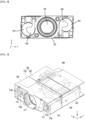
- FIG. 1 is a perspective view of a camera actuator according to an embodiment
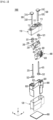
- FIG. 2 is an exploded perspective view of a camera actuator according to an embodiment
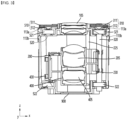
- FIG. 3 is a cross-sectional view of a camera actuator according to an embodiment
- FIG. 4 is a front view of a camera actuator according to an embodiment
- FIG. 5 is a perspective view showing first and second driving units disposed in a housing in a camera actuator according to an embodiment
- FIG. 6 is an exploded perspective view of a first driving unit according to an embodiment
- FIG. 7 is an exploded perspective view of a second driving unit according to an embodiment
- FIG. 8 is a perspective view of a part of the camera actuator according to the embodiment.
- the camera actuator 1000 may include a housing 100, a first lens unit 105, a first lens barrel 200, a first driving unit 300, a second lens barrel 400 and a second driving unit 500.
- the housing 100 may form the exterior of the camera actuator 1000.
- the housing 100 may have upper and lower partial regions open and may have a hexahedral shape.
- the housing 100 may include an accommodating space therein.
- the first lens barrel 200, the first driving unit 300, the second lens barrel 400, and the second driving unit 500 may be accommodated in the accommodating space of the housing 100.
- the housing 100 may include a first housing 110 and a second housing 120.
- the first housing 110 may include a first hole 111.
- the first hole 111 may be formed on one side of the first housing 110.
- the first hole 111 may be a hollow hole passing through an outside and an inside of the first housing 110.
- the first housing 110 may further include a second hole 112 and a third hole 113.
- the second hole 112 and the third hole 113 may be disposed on one side of the first housing 110.
- the second hole 112 and the third hole 113 may be hollow holes passing through the outside and the inside of the first housing 110.
- the second hole 112 and the third hole 113 may be spaced apart from the first hole 111.
- the first hole 111 may be disposed between the second hole 112 and the third hole 113.
- the first hole 111 may be disposed at equal intervals to the second hole 112 and the third hole 113.
- the second hole 112 may include a plurality of protrusions protruding from an inner circumferential surface of the second hole 112 toward a center of the second hole 112.
- the plurality of protrusions may include a first protrusion 112a disposed at an upper end of the second hole 112 and a second protrusion 112b disposed at a lower end of the second hole 112 in the optical axis direction.
- the first protrusion 112a may include a plurality of first sub-protrusions (not shown) spaced apart from each other.
- the plurality of first sub-protrusions may be arranged at equal intervals from the center of the second hole 112 along a circumference of a concentric circle shape.
- the second protrusion 112b may be spaced apart from the first protrusion 112a in the optical axis direction.
- the second protrusion 112b may be disposed below the first protrusion 112a.
- the second protrusion 112b may include a plurality of second sub-protrusions (not shown) spaced apart from each other.
- the plurality of second sub-protrusions may be arranged at equal intervals from the center of the second hole 112 along a circumference of a concentric circle shape.
- the first protrusion 112a and the second protrusion 112b may provide a space in which a portion of the first driving unit 300 to be described later, for example, a first buffer member 321 is disposed.
- the third hole 113 may include a plurality of protrusions protruding from the inner circumferential surface of the third hole 113 toward the center of the third hole 113.
- the plurality of protrusions may include a third protrusion 113a disposed at an upper end of the third hole 113 and a fourth protrusion 113b disposed at a lower end of the second hole 112 with respect to the optical axis direction.
- the third protrusion 113a may include a plurality of third sub-protrusions (not shown) spaced apart from each other.
- the plurality of third sub-protrusions may be arranged at equal intervals from the center of the third hole 113 along the circumference of a concentric circle.
- the fourth protrusion 113b may be spaced apart from the third protrusion 113a in the optical axis direction.
- the fourth protrusion 113b may include a plurality of fourth sub-protrusions (not shown) spaced apart from each other.
- the plurality of fourth sub-protrusions may be arranged at equal intervals from the center of the third hole 113 along the circumference of a concentric circle.
- the third protrusion 113a and the fourth protrusion 113b may provide a space in which a portion of the second driving unit 500 to be described later, for example, a third buffer member 521 is disposed.
- the second housing 120 may be disposed under the first housing 110.
- the second housing 120 may be disposed under the first housing 110 in a third direction (z-axis, optical-axis direction).
- the second housing 120 may be disposed closer to the image sensor 900 to be described later than the first housing 110.
- the first lens barrel 200, the first driving unit 300, the second lens barrel 400, and the second driving unit 500 may be disposed in the second housing 120.
- the second housing 120 may be coupled to the first housing 110.
- the first housing 110 and the second housing 120 may be coupled by a separate fastening member (not shown) such as a screw.
- the first housing 110 and the second housing 120 may be coupled to each other by physical coupling of coupling jaws and coupling grooves respectively formed therein.
- the first lens unit 105 is disposed in the housing 100 and may include at least one lens.
- the first lens unit 105 may be disposed in the first housing 110.
- the first lens unit 105 may be disposed in the first hole 111 of the first housing 110.
- the first lens unit 105 may be coupled to the first housing 110 by a thread formed on an inner circumferential surface of the first hole 111.
- the first lens barrel 200 may be disposed in the housing 100.
- the first lens barrel 200 may be disposed in the second housing 120.
- the first lens barrel 200 may be disposed under the first lens unit 105.
- the first lens barrel 200 may be disposed below the first lens unit 105 in the optical axis direction, and may be closer to the image sensor 900 than the first lens unit 105.
- the first lens barrel 200 may be coupled to the first driving unit 300.
- the first lens barrel 200 may be moved in the housing 100 by the first driving unit 300.
- the first lens barrel 200 may be moved in the optical axis direction by the first driving unit 300.
- the first lens barrel 200 may include a first barrel portion 210, a second lens unit 205, a first guide portion 220, and a first elastic portion 230.
- the first barrel portion 210 may be disposed in a region overlapping the optical axis and may have an open shape on one surface and the other surface.
- the first barrel portion 210 may have a cylindrical shape in which one surface and the other surface are open.
- the first barrel portion 210 may include the first through hole 211.
- the first through hole 211 may be a through hole penetrating through one surface and the other surface of the first barrel portion 210.
- one surface of the first barrel portion 210 may be a surface facing the first lens unit 105, and the other surface may be a surface opposite to the one surface and facing the image sensor 900.
- the second lens unit 205 may be disposed on the first barrel portion 210.
- the second lens unit 205 may be disposed in the first through hole 211.
- a screw line may be formed on an inner circumferential surface of the first through hole 211, and the second lens unit 205 may be coupled to the first barrel portion 210 by the screw line.
- the second lens unit 205 may include at least one lens.
- the second lens unit 205 may perform a zoom function.
- the second lens unit 205 may move in the optical axis direction.
- the second lens unit 205 may move in the optical axis direction with respect to the first lens unit 105.
- the first guide portion 220 may extend outwardly from the first barrel portion 210.
- the first guide portion 220 may extend from the first barrel portion 210 in a direction perpendicular to the optical axis, for example, in a first direction (x-axis direction).
- the first guide portion 220 may include a first upper surface 221, a first side surface 222, and a first lower surface 223.
- the first upper surface 221 may face an inner upper surface 122 of the housing 100 to be described later.
- the first upper surface 221 may face the inner upper surface 122 of the housing 100 in the second direction (y-axis direction).
- the first upper surface 221 may include a plurality of sub upper surfaces.
- the first upper surface 221 may include a first sub upper surface 221a and a second sub upper surface 221b disposed lower in the second direction (y-axis direction) than the first sub upper surface 221a. That is, the second sub upper surface 221b may be disposed adjacent to the first lower surface 223 than the first sub upper surface 221a.
- At least one first fastening protrusion (not shown) may be disposed on the second sub upper surface 221b.
- the first fastening protrusion may have a shape protruding upward on the second sub upper surface 221b.
- the first fastening protrusion may be inserted into a first fixing groove (not shown) formed in a first elastic portion 230 to be described later.
- the first upper surface 221 may include a first stepped surface 225 disposed between the first sub upper surface 221a and the second sub upper surface 221b.
- the first stepped surface 225 may be connected to ends of the first sub upper surface 221a and the second sub upper surface 221b.
- the first stepped surface 225 may be defined as the first stepped portion 225. That is, the first upper surface 221 may include the first sub upper surface 221a, the second sub upper surface 221b, and the first stepped portion 225 and may have a stepped structure.
- the first lower surface 223 may face the inner lower surface 121 of the housing 100 to be described later.
- a first groove 2231 may be disposed on the first lower surface 223.
- the first groove 2231 may have a concave shape in a direction from the first lower surface 223 to the first upper surface 221.
- a first magnetic scaler 610 to be described later may be disposed in the first groove 2231.
- a second groove 2232 may be disposed on the first lower surface 223.
- the second groove 2232 may be spaced apart from the first groove 2231.
- the second groove 2232 may be disposed in an edge region of the first lower surface 223.
- the second groove 2232 may provide a region in which a portion of the first elastic portion 230, which will be described later, is disposed.
- the second groove 2232 may provide a region in which the first elastic portion 230 is mounted and fixed.
- the first side surface 222 may be disposed between the first upper surface 221 and the first lower surface 223.
- the first side surface 222 may be a surface connecting the first upper surface 221 and the first lower surface 223.
- the first side surface 222 may be a surface connecting the second sub upper surface 221b and the first lower surface 223.
- the first side surface 222 may face a second inner surface 124 of the second housing 120 to be described later.
- a first recess 2221 may be disposed on the first side surface 222.
- the first recess 2221 may have a concave shape in a direction from the first side surface 222 to the first barrel portion 210.
- the first recess 2221 may have a groove shape extending in the optical axis direction (z-axis direction).
- the first recess 2221 may have a V-shape when viewed from the front.
- the first guide portion 220 may include a first insertion hole 220h1.
- the first insertion hole 220h1 may be a hole passing through one surface and the other surface of the first guide portion 220.
- one surface of the first guide portion 220 may be a surface facing the first lens unit 105, and the other surface may be a surface opposite to the one surface and facing the image sensor 900.
- a first pin 250 may be disposed in the first insertion hole 220h1.
- the first pin 250 may be disposed to pass through the first insertion hole 220h1.
- the first pin 250 has a shape extending in the optical axis direction (z-axis direction), and may have a longer optical axis direction length than the first lens barrel 200.
- the first pin 250 may be coupled to at least one of the first housing 110 and the second housing 120.
- the first lens barrel 200 may move the first pin 250 as a movement axis in the optical axis direction.
- the second lens unit 205 disposed in the first lens barrel 200 may perform a zoom function and/or an autofocus function.
- the first elastic portion 230 may be disposed on the first guide portion 220.
- the first elastic portion 230 may be disposed on the first upper surface 221, the first lower surface 223, and the first side surface 222 of the first guide portion 220.
- the first elastic portion 230 may be coupled to the first guide portion 220.
- the first elastic portion 230 may include a first elastic member 231 and a second elastic member 232.
- the first elastic member 231 may be coupled to the first guide portion 220.
- the first elastic member 231 may be disposed at a set position on the first side surface 222.
- the first elastic member 231 may have a shape corresponding to the first side surface 222.
- the first elastic member 231 may include a first region 231a, a second region 231b, and a third region 231c.
- the first region 231a and the second region 231b may be disposed on the first side surface 222 of the first guide portion 220 and may be spaced apart from each other.
- the first region 231a and the second region 231b may be disposed on a region of the first side surface 222 in which the first recess 2221 is not disposed.
- the third region 231c may be disposed between the first region 231a and the second region 231b to connect the two regions 231a and 231b.
- the third region 231c may be disposed in a region corresponding to the first recess 2221.
- the third region 231c may have a V-shape corresponding to the first recess 2221.
- the second elastic member 232 may be disposed on the first guide portion 220.
- the second elastic member 232 may be coupled to the first guide portion 220.
- the second elastic member 232 may include a fourth region 232a, a fifth region 232b, and a sixth region 232c.
- the fourth region 232a may be disposed on the first upper surface 221 of the first guide portion 220.
- the fourth region 232a may be disposed on the second sub upper surface 221b of the first guide portion 220.
- the fourth region may include a first fixing groove (not shown).
- the first fixing groove may be disposed in a region corresponding to the first fastening protrusion, and may have a shape corresponding to the first fastening protrusion.
- the fifth region 232b may be connected to the fourth region 232a.
- the fifth region 232b may be bent at one end of the fourth region 232a and disposed on the first side surface 222 of the first guide portion 220.
- the fifth region 232b may be disposed on the first elastic member 231.
- the fifth region 232b may be parallel to the first region 231a and the second region 231b.
- the fifth region 232b may be disposed to cover the first elastic member 231.
- the sixth region 232c may be connected to the fifth region 232b.
- the sixth region 232c may be bent at one end of the fifth region and disposed on the first lower surface 223 of the first guide portion 220. A portion of the sixth region 232c may be inserted into the second groove 2232 disposed on the first lower surface 223.
- the second elastic member 232 may be physically coupled to the first guide part 220 as the first fixing groove formed in the fourth region 232a engages with the first fastening protrusion, the sixth region 232c is inserted into the second groove 2232. Accordingly, the first elastic portion 230 may maintain a state firmly coupled to the first guide portion 220.
- the first lens barrel 200 may further include a first guide groove (210h1).
- the first guide groove 210h1 may be disposed in a region extending outwardly from the first barrel portion 210.
- the first guide groove 210h1 may be disposed in a region corresponding to a second pin 450 to be described later.
- the first guide groove 210h1 may provide a space into which the second pin 450 is inserted.
- the first lens barrel 200 may move in the optical axis direction by the first pin 250 and the second pin 450.
- the first guide groove 210h1 may have an open shape at one side.
- the first guide groove 210h1 may have an open shape at one side facing the first inner surface of the housing 100. Accordingly, friction and vibration generated when the first lens barrel 200 is moved by the first driving unit 300 can be minimized.
- the camera actuator 1000 may include a first driving unit 300.
- the first driving unit 300 may be disposed in the housing 100.
- the first driving unit 300 may be coupled to the first lens barrel 200.
- the first driving unit 300 may move the first lens barrel 200 in the optical axis direction (z-axis direction).
- the first driving unit 300 may include a first piezoelectric device 310, a first extension bar 320, a first buffer member 321, and a second buffer member 322.
- the first piezoelectric device 310 may include a piezo-electric device.
- the first piezoelectric device 310 may include a material that causes mechanical deformation by an applied voltage.
- the first piezoelectric device 310 may contract or expand by an applied voltage and may cause mechanical deformation in a set direction.
- the first piezoelectric device 310 may generate a vibration while causing mechanical deformation in the optical axis direction (z-axis direction) by an applied voltage.
- the first piezoelectric device 310 may include a first disk portion 311 and a first protrusion 512.
- the first disk portion 311 may have a plate shape and may be disposed on the second hole 112.
- the first disk portion 311 may be disposed on the first protrusion 112a of the second hole 112.
- the first disk portion 311 may be disposed on the plurality of first sub-protrusions.
- the first protrusion 112a may support the first disk portion 311.
- the first protrusion 512 may be disposed under the first disk portion 311.
- the first protrusion 512 may be disposed under the first disk portion 311 in the third direction (z-axis direction) and may be connected to the first disk portion 311.
- a portion of the first protrusion 512 may be disposed in the second hole 112.
- the first protrusion 512 may have a shape protruding toward the image sensor 900.
- a width (x-axis, y-axis direction) of the first protrusion 512 may change toward the optical axis direction. For example, the width of the first protrusion 512 may decrease as it approaches the image sensor 900.
- the first extension bar 320 may extend in the optical axis direction.
- the first extension bar 320 may be disposed parallel to the optical axis and may be connected to the first piezoelectric device 310.
- an upper end of the first extension bar 320 may be connected to the first protrusion 512.
- the lower end of the first extension bar 320 may be inserted into the lower end of the housing 100, for example, a fourth hole (not shown) formed at the lower end of the second housing 120.
- first extension bar 320 may be connected to the first lens barrel 200.
- first extension bar 320 may be connected to the first lens barrel 200 by the first elastic portion 230.
- first extension bar 320 may be disposed between the first elastic member 231 and the second elastic member 232.
- first extension bar 320 may be disposed between the third region 231c of the first elastic member 231 and the fifth region 232b of the second elastic member 232.
- the first extension bar 320 may be fixed by the elastic force of the first elastic member 231 and the second elastic member 232.
- the first extension bar 320 may transmit the vibration generated by the first piezoelectric device 310 to the first lens barrel 200.
- the first lens barrel 200 may move upward or downward (z-axis direction, optical-axis direction) according to the vibration direction of the first extension bar 320.
- the second lens unit 205 in the first lens barrel 200 may move to perform a zooming function of zooming up or zooming out.
- the first buffer member 321 may be disposed on the first extension bar 320.
- the first buffer member 321 may be disposed on an upper region of the first extension bar 320.
- the first buffer member 321 may be disposed in the second hole 112 of the housing 100.
- the first buffer member 321 may be disposed between the first protrusion 112a and the second protrusion 112b of the second hole 112.
- the first buffer member 321 may be fixed to a position set by the first protrusion 112a and the second protrusion 112b.
- the first buffer member 321 may include a through hole into which the first extension bar 320 is inserted.
- the second buffer member 322 may be disposed on the first extension bar 320.
- the second buffer member 322 may be disposed on a lower region of the first extension bar 320.
- the second buffer member 322 may be spaced apart from the first buffer member 321 in the optical axis direction.
- the second buffer member 322 may be disposed in a fourth hole (not shown) of the housing 100.
- the second buffer member 322 may be disposed to be inserted into the fourth hole.
- the second buffer member 322 may include a through hole into which the first extension bar 320 is inserted.
- the first buffer member 321 and the second buffer member 322 may prevent noise caused by the vibration of the first extension bar 320.
- the first buffer member 321 and the second buffer member 322 may prevent the first extension bar 320 from being deformed or damaged by an external impact.
- the second lens barrel 400 may be disposed in the housing 100.
- the second lens barrel 400 may be disposed in the second housing 120.
- the second lens barrel 400 may be disposed under the first lens barrel 200.
- the second lens barrel 400 may be disposed below the first lens barrel 200 in the optical axis direction, and may be closer to the image sensor 900 than the first lens barrel 200.
- the second lens barrel 400 may be coupled to the second driving unit 500.
- the second lens barrel 400 may be moved in the housing 100 by the second driving unit 500.
- the second lens barrel 400 may be moved in the optical axis direction by the second driving unit 500.
- the second lens barrel 400 may include a second barrel portion 410, a third lens unit 405, a second guide portion 420, and a second elastic portion 430.
- the second barrel portion 410 is disposed in a region overlapping the optical axis and may have an open shape on one side and the other side.
- the second barrel portion 410 may have a cylindrical shape in which one surface and the other surface are open.
- the second barrel portion 410 may include the second through hole 411.
- the second through hole 411 may be a through hole passing through one surface and the other surface of the second barrel portion 410.
- one surface of the second barrel portion 410 may be a surface facing the first lens barrel 200, and the other surface may be a surface opposite to the one surface and facing the image sensor 900.
- the third lens unit 405 may be disposed on the second barrel portion 410.
- the third lens unit 405 may be disposed in the second through hole 411.
- a screw line may be formed on an inner circumferential surface of the second through hole 411, and the third lens unit 405 may be coupled to the second barrel portion 410 by the screw line.
- the third lens unit 405 may include at least one lens.
- the third lens unit 405 may perform an auto focus function.
- the third lens unit 405 may move in the optical axis direction.
- the third lens unit 405 may move in the optical axis direction with respect to the first lens unit 105.
- the third lens unit 405 may move separately from the second lens unit 205.
- the distance at which the third lens unit 405 can move in the optical axis direction may be the same as or different from that of the second lens unit 205.
- the second guide portion 420 may extend outwardly from the second barrel portion 410.
- the second guide portion 420 may extend from the second barrel portion 410 in a direction perpendicular to the optical axis, for example, in a first direction (x-axis direction).
- the second guide portion 420 may extend in a direction opposite to the first guide portion 220.
- the first guide portion 220 may extend in the +x-axis direction from the first barrel portion 210
- the second guide portion 420 may extend in the -x-axis direction from the second barrel portion 410.
- the second guide portion 420 may include a second lower surface 421, a second side surface 422, and a second upper surface 423.
- the second upper surface 423 may face the inner upper surface 122 of the housing 100.
- the second upper surface 423 may face the inner upper surface 122 of the housing 100 in the second direction (y-axis direction).
- a third groove 4231 may be disposed on the second upper surface 423.
- the third groove 4231 may have a concave shape in a direction from the second upper surface 423 to the second lower surface 421.
- a second magnetic scaler 620 to be described later may be disposed in the third groove 4231.
- a fourth groove 4232 may be disposed on the second upper surface 423.
- the fourth groove 4232 may be spaced apart from the third groove 4231.
- the fourth groove 4232 may be disposed in an edge region of the second upper surface 423.
- the fourth groove 4232 may provide a region in which a portion of the second elastic portion 430, which will be described later, is disposed.
- the fourth groove 4232 may provide a region in which the second elastic portion 430 is mounted and fixed.
- the second lower surface 421 may face the inner lower surface 121 of the housing 100.
- the second lower surface 421 may face the inner lower surface 121 of the housing 100 in the second direction (y-axis direction).
- the second lower surface 421 may include a plurality of sub lower surfaces.
- the second lower surface 421 may include a first sub-lower surface 421a and a second sub-lower surface 421b disposed above the first sub-lower surface 421a in the second direction (y-axis direction). That is, the second sub lower surface 421b may be disposed adjacent to the second upper surface 423 than the first sub lower surface 421a.
- At least one second fastening protrusion (not shown) may be disposed on the second sub lower surface 421b.
- the second fastening protrusion may have a shape protruding downward from the second sub-lower surface 421b.
- the second fastening protrusion may be inserted into a second fixing groove (not shown) formed in a second elastic portion 430 to be described later.
- the second lower surface 421 may include a second stepped surface 425 disposed between the first sub lower surface 421a and the second sub lower surface 421b.
- the second stepped surface 425 may be connected to ends of the first sub-lower surface 421a and the second sub-lower surface 421b.
- the second stepped surface 425 may be defined as the second stepped portion 425. That is, the second lower surface 421 may include the first sub lower surface 421a, the second sub lower surface 421b, and the second stepped portion 425 and may have a stepped structure.
- the second side surface 422 may be disposed between the second upper surface 423 and the second lower surface 421.
- the second side surface 422 may be a surface connecting the second upper surface 423 and the second lower surface 421.
- the second side surface 422 may be a surface connecting the second sub lower surface 421b and the second upper surface 423.
- the second side surface 422 may face the first inner surface 123 of the second housing 120 to be described later.
- a second recess 4221 may be disposed on the second side surface 422.
- the second recess 4221 may have a concave shape from the second side surface 422 toward the second barrel portion 410.
- the second recess 4221 may have a groove shape extending in the optical axis direction (z-axis direction).
- the second recess 4221 may have a V-shape when viewed from the front.
- the second guide portion 420 may include a second insertion hole 420h1.
- the second insertion hole 420h1 may be a hole passing through one surface and the other surface of the second guide portion 420.
- one surface of the second guide portion 420 may be a surface facing the first lens barrel 200, and the other surface may be a surface opposite to the one surface and facing the image sensor 900.
- a second pin 450 may be disposed in the second insertion hole 420h1.
- the second pin 450 may be disposed to pass through the second insertion hole 420h1.
- the second pin 450 may have a shape extending in the optical axis direction (z-axis direction).
- the second pin 450 may be spaced apart from the first pin 250 and may be parallel to the first pin 250.
- the second pin 450 may have a length in the optical axis direction longer than that of the second lens barrel 400.
- the second pin 450 may be coupled to at least one of the first housing 110 and the second housing 120.
- the second lens barrel 400 may move the second pin 450 as a movement axis in the optical axis direction. Through this, the third lens unit 405 disposed in the second lens barrel 400 may perform a zoom function and/or an autofocus function.
- the second elastic portion 430 may be disposed on the second guide portion 420.
- the second elastic portion 430 may be disposed on the second upper surface 423, the second lower surface 421, and the second side surface 422 of the second guide portion 420.
- the second elastic portion 430 may be coupled to the second guide portion 420.
- the second elastic portion 430 may include a third elastic member 431 and a fourth elastic member 432.
- the third elastic member 431 may be coupled to the second guide portion 420.
- the third elastic member 431 may be disposed at a set position on the second side surface 422.
- the third elastic member 431 may have a shape corresponding to the second side surface 422.
- the third elastic member 431 may include a seventh region 431a, an eighth region 431b, and a ninth region 431c.
- the seventh region 431a and the eighth region 431b may be disposed on the second side surface 422 of the second guide portion 420 and may be spaced apart from each other.
- the seventh region 431a and the eighth region 431b may be disposed on a region of the second side surface 422 in which the second recess 4221 is not disposed.
- the ninth region 431c may be disposed between the seventh region 431a and the eighth region 432b to connect the two regions 431a and 431b.
- the ninth region 431c may be disposed in a region corresponding to the second recess 4221.
- the ninth region 431c may have a V-shape corresponding to the second recess 4221.
- the fourth elastic member 432 may be disposed on the second guide portion 420.
- the fourth elastic member 432 may be coupled to the second guide portion 420.
- the fourth elastic member 432 may include a tenth region 432a, an eleventh region 432b, and a twelfth region 432c.
- the tenth region 432a may be disposed on the second lower surface 421 of the second guide portion 420.
- the tenth region 432a may be disposed on the second sub lower surface 421b of the second guide portion 420.
- the tenth region 432a may include a second fixing groove (not shown).
- the second fixing groove may be disposed in a region corresponding to the second fastening protrusion, and may have a shape corresponding to the second fastening protrusion.
- the eleventh region 432b may be connected to the tenth region 432a.
- the eleventh region 432b may be bent at one end of the tenth region 432a and disposed on the second side surface 422 of the second guide portion 420.
- the eleventh region 432b may be disposed on the third elastic member 431.
- the eleventh region 432b may be parallel to the seventh region 431a and the eighth region 431b.
- the eleventh region 432b may be disposed to cover the third elastic member 431.
- the twelfth region 432c may be connected to the eleventh region 432b.
- the twelfth region 432c may be bent at one end of the eleventh region and disposed on the second upper surface 423 of the second guide portion 420.
- a portion of the twelfth region 432c may be inserted into the second groove 2232 disposed on the second upper surface 423.
- the fourth elastic member 432 may be physically coupled to the second guide part 420 as the twelfth region 432c is inserted into the fourth groove 4232 while the second fixing groove formed in the seventh region 431a is coupled to the second fastening protrusion.
- the second lens barrel 400 may further include a second guide groove 410h1.
- the second guide groove 410h1 may be disposed in a region extending outwardly from the second barrel portion 410.
- the second guide groove 410h1 may be disposed in a region corresponding to the first pin 250.
- the second guide groove 410h1 may provide a space into which the first pin 250 is inserted.
- the second lens barrel 400 may move in the optical axis direction by the first pin 250 and the second pin 450.
- the second guide groove 410h1 may have an open shape at one side.
- the second guide groove 410h1 may have an open side facing the second inner surface of the housing 100. Accordingly, friction and vibration generated when the second lens barrel 400 is moved by the second driving unit 500 can be minimized.
- the camera actuator 1000 may include a second driving unit 500.
- the second driving unit 500 may be disposed in the housing 100.
- the second driving unit 500 may be coupled to the second lens barrel 400.
- the second driving unit 500 may move the second lens barrel 400 in the optical axis direction (z-axis direction).
- the second driving unit 500 may include a second piezoelectric device 510, a second extension bar 520, a third buffer member 521, and a fourth buffer member 522.
- the second piezoelectric device 510 may include a piezo-electric device.
- the second piezoelectric device 510 may include a material that causes mechanical deformation by an applied voltage.
- the second piezoelectric device 510 may contract or expand by an applied voltage and may cause mechanical deformation in a set direction.
- the second piezoelectric device 510 may generate vibration while causing mechanical deformation in the optical axis direction (z-axis direction) by an applied voltage.
- the second piezoelectric device 510 may include a second disk portion 511 and a second protrusion portion 512.
- the second disk portion 511 has a plate shape and may be disposed on the third hole 113.
- the second disk portion 511 may be disposed on the third protrusion 113a of the third hole 113.
- the second disk portion 511 may be disposed on the plurality of third sub-protrusions.
- the third protrusion 113a may support the second disc portion 511.
- the second protrusion 512 may be disposed under the second disk portion 511.
- the second protrusion 512 may be disposed under the second disk portion 511 in the third direction (z-axis direction) and may be connected to the second disk portion 511.
- a portion of the first protrusion 512 may be disposed in the third hole 113.
- the second protrusion 512 may have a shape protruding toward the image sensor 900.
- the width (x-axis, y-axis direction) of the second protrusion 512 may change toward the optical axis direction. For example, the width of the second protrusion 512 may decrease as it approaches the image sensor 900.
- the second extension bar 520 may extend in the optical axis direction.
- the second extension bar 520 may be disposed parallel to the optical axis and may be connected to the second piezoelectric device 510.
- an upper end of the second extension bar 520 may be connected to the second protrusion 512.
- the lower end of the second extension bar 520 may be inserted into the lower end of the housing 100, for example, a fifth hole (not shown) formed at the lower end of the second housing 120.
- one region of the second extension bar 520 may be connected to the second lens barrel 400.
- the second extension bar 520 may be connected to the second lens barrel 400 by the second elastic portion 430.
- the second extension bar 520 may be disposed between the third elastic member 431 and the fourth elastic member 432.
- the second extension bar 520 may be disposed between the ninth region 431c of the third elastic member 431 and the eleventh region 432b of the fourth elastic member 432.
- the second extension bar 520 may be fixed by the elastic force of the third elastic member 431 and the fourth elastic member 432.
- the second extension bar 520 may transmit the vibration generated by the second piezoelectric device 510 to the second lens barrel 400.
- the second lens barrel 400 may move upward or downward (z-axis direction, optical-axis direction) according to the vibration direction of the second extension bar 520.
- the third lens unit 405 in the second lens barrel 400 may move to perform a zooming function of zooming up or out.
- the third buffer member 521 may be disposed on the second extension bar 520.
- the third buffer member 521 may be disposed on an upper region of the second extension bar 520.
- the third buffer member 521 may be disposed in the third hole 113 of the housing 100.
- the third buffer member 521 may be disposed between the third protrusion 113a and the fourth protrusion 113b of the third hole 113.
- the third buffer member 521 may be fixed to a position set by the third protrusion 113a and the fourth protrusion 113b.
- the third buffer member 521 may include a through hole into which the second extension bar 520 is inserted.
- the fourth buffer member 522 may be disposed on the second extension bar 520.
- the fourth buffer member 522 may be disposed on a lower region of the second extension bar 520.
- the fourth buffer member 522 may be spaced apart from the third buffer member 521 in the optical axis direction.
- the fourth buffer member 522 may be disposed in a fifth hole (not shown) of the housing 100.
- the fourth buffer member 522 may be disposed to be inserted into the fifth hole.
- the second buffer member 322 may include a through hole into which the second extension bar 520 is inserted.
- the third buffer member 521 and the fourth buffer member 522 may prevent noise caused by the vibration of the second extension bar 520.
- the third buffer member 521 and the fourth buffer member 522 may prevent the second extension bar 520 from being deformed or damaged by an external impact.
- the camera actuator 1000 may include a first magnetic scaler 610, a first sensing unit (not shown), a second magnetic scaler 620, and a second sensing unit (not shown).
- the first magnetic scaler 610 may be disposed on the first lens barrel 200.
- the first magnetic scaler 610 may be disposed on the first lower surface 223.
- the first magnetic scaler 610 may be disposed in the first groove 2231 of the first lens barrel 200.
- the first magnetic scaler 610 may move along the optical axis direction together with the first lens barrel 200.
- the first magnetic scaler 610 may include a plurality of magnets.
- the first magnetic scaler 610 may have an N pole and an S pole alternately disposed in the optical axis direction.
- the first sensing unit may be disposed adjacent to the first magnetic scaler 610.
- the first sensing unit may be disposed to face the first magnetic scaler 610 in a first direction (x-axis direction) or a second direction (y-axis direction).
- the first sensing unit may detect a position of the first magnetic scaler 610. Through this, the first sensing unit may detect the position and movement of the first lens barrel 200 moving together with the first magnetic scaler 610.
- the second magnetic scaler 620 may be disposed on the second lens barrel 400.
- the second magnetic scaler 620 may be disposed on the second upper surface 423.
- the second magnetic scaler 620 may be disposed in the third groove 4231 of the second lens barrel 400.
- the second magnetic scaler 620 may move along the optical axis direction together with the second lens barrel 400.
- the second magnetic scaler 620 may include a plurality of magnets.
- the second magnetic scaler 620 may have an N pole and an S pole alternately disposed in the optical axis direction.
- the second sensing unit may be disposed adjacent to the second magnetic scaler 620.
- the second sensing unit may be disposed to face the second magnetic scaler 620 in a first direction (x-axis direction) or a second direction (y-axis direction).
- the second sensing unit may detect a position of the second magnetic scaler 620. Through this, the second sensing unit may detect the position and movement of the second lens barrel 400 moving together with the second magnetic scaler 620.
- the camera actuator 1000 may further include a gyro sensor (not shown).
- the gyro sensor may be disposed in the housing 100.
- the gyro sensor may detect a movement of a user using the camera actuator.
- the camera actuator 1000 may include a substrate 800.
- the substrate 800 may be disposed on the housing 100.
- the substrate 800 may be disposed to surround a partial region of the housing 100.
- the substrate 800 may be disposed to surround a portion of the outer side of the second housing 120.
- the substrate 800 may provide power or current to components disposed in the housing 100. That is, the substrate 800 may be a circuit board, and may include a circuit board having a wiring pattern that can be electrically connected, such as a rigid printed circuit board (Rigid PCB), a flexible printed circuit board (Flexible PCB), and a rigid flexible printed circuit board (Rigid Flexible PCB).
- the substrate 800 may include a first end 810.
- the first end 810 may be disposed on the first piezoelectric device 310 of the first driving unit 300.
- the first end 810 may be disposed on the first disk portion 311 of the first piezoelectric device 310.
- the first end 810 may be disposed on one surface of the first disk portion 311.
- the first end 810 may be disposed on the second piezoelectric device 510 of the second driving unit 500.
- the second end 820 may be disposed on the second disk portion 511 of the second piezoelectric device 510.
- the first end 810 may be disposed on one surface of the second disc portion 511.
- the substrate 800 may include a second end 820.
- the first end 810 may be spaced apart from the first end 810.
- the second end 820 may be disposed in a region that does not overlap the first end 810 in the optical axis direction.
- the second end 820 may be disposed on the first piezoelectric device 310 of the first driving unit 300.
- the second end 820 may be disposed on the first disk portion 311 of the first piezoelectric device 310.
- the first end 810 may be disposed on the other surface opposite to one surface of the first disk portion 311.
- the second end 820 may be disposed on the second piezoelectric device 510 of the second driving unit 500.
- the second end 820 may be disposed on the second disk portion 511 of the second piezoelectric device 510.
- the second end 820 may be disposed on the other surface opposite to one surface of the second disk portion 511.
- the substrate 800 may supply power to the first piezoelectric device 310 and the second piezoelectric device 510. Accordingly, the first driving unit 300 and the second driving unit 500 may drive the first lens barrel 200 and the second lens barrel 400 by the applied power, respectively.
- the camera actuator 1000 may include an image sensor 900.
- the image sensor 900 may collect light passing in the order of the first lens unit 105, the second lens unit 205, and the third lens unit 405 and convert it into an image.
- the image sensor 900 may be disposed to coincide with the optical axis of the lenses of the lens units 105, 205, and 405.
- the optical axis of the image sensor 900 and the optical axis of the lens may be aligned.
- FIG. 9 is an exploded perspective view of the housing according to the embodiment
- FIG. 10 is a front view of the second housing according to the embodiment.
- the housing 100 according to the embodiment will be described in more detail with reference to FIGS. 9 and 10 .
- the housing 100 may have upper and lower partial regions open, and may include an accommodating space therein.
- the housing 100 may include a first housing 110 and a second housing 120.
- the first housing 110 and the second housing 120 may be coupled to each other to form an accommodating space therein, and may be provided in a separable structure.
- the first housing 110 may accommodate the first lens unit 105.
- the first lens unit 105 may be disposed in the first hole 111 of the first housing 110.
- the first lens barrel 200 and the second lens barrel 400 may be disposed inside the second housing 120.
- the second housing 120 may include an inner lower surface 121, an inner upper surface 122, a first inner surface 123, and a second inner surface 124.
- the inner lower surface 121 of the second housing 120 may be a surface facing the first lower surface 223 of the first lens barrel 200 and the second lower surface 421 of the second lens barrel 400.
- the inner lower surface 121 may be a surface facing the second stepped portion 425.
- the inner upper surface 122 may face the inner lower surface 121 in the second direction (y-axis direction).
- the inner upper surface 122 of the second housing 120 may be a surface facing the first upper surface 221 of the first lens barrel 200 and the second upper surface 423 of the second lens barrel 400.
- the inner upper surface 122 may be a surface facing the first stepped portion 225.
- the first inner surface 123 of the second housing 120 may be disposed between the inner lower surface 121 and the inner upper surface 122.
- the first inner surface 123 may connect one end of the inner lower surface 121 and one end of the inner upper surface 122.
- the first inner surface 123 of the second housing 120 may face a side portion of the second lens barrel 400.
- the first inner surface 123 may be a surface facing the second side surface 422 of the second lens barrel 400.
- the first inner surface 123 may face the eleventh region 432b of the fourth elastic member 432.
- the second inner surface 124 of the second housing 120 may be disposed between the inner lower surface 121 and the inner upper surface 122.
- the second inner surface 124 may connect the other end of the inner lower surface 121 and the other end of the inner upper surface 122.
- the second inner surface 124 may face the first inner surface 123 in a first direction (x-axis direction).
- the second inner surface 124 of the second housing 120 may face a side portion of the first lens barrel 200.
- the second inner surface 124 may be a surface facing the first side surface 222 of the first lens barrel 200.
- the second inner surface 124 may face the fifth region 232b of the second elastic member 232.
- the second housing 120 may include a guide jaw 125.
- the guide jaw 125 may be disposed on the inner lower surface 121.
- the guide jaw 125 has a shape that protrudes from the inner lower surface 121 toward the inner upper surface 122 and may extend in the optical axis direction.
- An optical axis direction length of the guide jaw 125 may be the same as an optical axis direction length of the inner lower surface 121.
- the guide jaw 125 may extend in the optical axis direction from the boundary of the inner lower surface 121 connected to the first housing 110 to the end of the inner lower surface 121.
- the optical axis direction length of the guide jaw 125 may be shorter than the optical axis direction length of the inner lower surface 121.
- the guide jaw 125 may extend from the boundary of the inner lower surface 121 in the optical axis direction, and may be spaced apart from the end of the inner lower surface 121.
- the guide jaw 125 may be disposed adjacent to the second driving unit 500 than the first driving unit 300. In addition, the guide jaw 125 may be disposed closer to the second pin 450 than the first pin 250.
- FIG. 11 is a front view of a second driving unit disposed in a second housing according to an exemplary embodiment
- FIG. 12 is a front view in which first and second driving units are disposed in a second housing according to an embodiment
- FIG. 13 is a view showing first and second driving units according to an embodiment.
- the first lens barrel 200 and the second lens barrel 400 may be disposed in the housing 100.
- the second lens barrel 400 may be inserted into the second housing 120 before the first lens barrel 200 as shown in FIG. 11 .
- the second lens barrel 400 may be disposed at a position set by the first pin 250 and the second pin 450.
- the second lens barrel 400 may be disposed so that the second lower surface 421 faces the inner lower surface 121, and the second upper surface 423 may be disposed to face the inner upper surface 122.
- the second lens barrel 400 may be disposed so that the second side surface 422 faces the first inner surface 123, and the second guide groove 410h1 may be disposed to face the second inner surface 124. That is, the second stepped portion 425 of the second lens barrel 400 may face the inner lower surface 121.
- the guide jaw 125 may guide the second lens barrel 400. To this end, the guide jaw 125 may be positioned in a region corresponding to the second lens barrel 400. For example, the guide jaw 125 may be disposed in a region corresponding to the second lower surface 421 and the second stepped portion 425 of the second lens barrel 400. In detail, the guide jaw 125 may be disposed in a region overlapping the second sub lower surface 421b of the second lens barrel 400 in the second direction (y-axis direction), and may be disposed in a region that does not overlap the first sub lower surface 421a.
- the upper surface of the guide jaw 125 may be positioned above the first sub lower surface 421a in the second direction (y-axis direction). Also, the upper surface of the guide jaw 125 may be disposed to face the second sub lower surface 421b. In this case, the upper surface of the guide jaw 125 may be disposed in contact with the second sub lower surface 421b, or may be spaced apart from each other by a predetermined interval.
- one side of the guide jaw 125 may be disposed to face the second stepped portion 425 in the first direction (x-axis direction). At this time, one side of the guide jaw 125 may be disposed in contact with the second stepped portion 425 or may be spaced apart from each other by a predetermined interval.
- the second lens barrel 400 may include a first distance d1.
- the first distance d1 may be defined as a distance from one side of the second lens barrel 400 to the second stepped portion 425.
- the first distance d1 may be defined as a distance in the first direction (x-axis direction) from the second side surface 422 to the second stepped portion 425.
- the first distance d1 may be greater than or equal to a distance in the first direction from the second side surface 422 to the guide jaw 125.
- the guide jaw 125 may come into contact with the first stepped portion 225.
- the guide jaw 125 may be spaced apart from the first stepped portion 225 by a predetermined distance. In this case, the driving friction of the second lens barrel 400 may be reduced.
- the second lens barrel 400 may not be inserted into the second housing 120.
- the guide jaw 125 may be positioned in a region corresponding to the first sub lower surface 421a. Accordingly, the second lens barrel 400 may not be inserted into the second housing 120 by the guide jaw 125.
- the second lens barrel 400 preferably satisfies the first distance d1 in the above-described range. Accordingly, the second lens barrel 400 can be effectively inserted in the manufacturing process, and the driving friction between the guide jaw 125 and the second lens barrel 400 may be minimized when the second lens barrel 400 is driven.
- the first lens barrel 200 may be inserted and disposed after the second lens barrel 400 is first disposed in the housing 100 as shown in FIG. 12 .
- the first lens barrel 200 may be disposed at a position set by the first pin 250 and the second pin 450.
- the first lens barrel 200 may be disposed so that the first lower surface 223 faces the inner lower surface 121, and the first upper surface 221 may be disposed to face the inner upper surface 122.
- the first side surface 222 may be disposed to face the second inner surface 124, and the first guide groove 210h1 may be disposed to face the first inner surface 123. That is, the first stepped portion 225 may face the inner upper surface 122.
- the guide jaw 125 may be spaced apart from the first lens barrel 200.
- the first lens barrel 200 may be disposed in a region that does not correspond to the guide jaw 125.
- the first lens barrel 200 may not overlap the guide jaw 125 in the second direction (y-axis direction). Accordingly, the first lens barrel 200 may be inserted without being caught in the guide jaw 125 during the process of disposing it in the housing 100.
- the first lens barrel 200 may include a second distance d2.
- the second distance d2 may be defined as a distance from one side of the first lens barrel 200 to the first stepped portion 225.
- the first distance d1 may be defined as a distance in the first direction (x-axis direction) from the first side surface 222 to the first stepped portion 225.
- the first distance d1 and the second distance d2 may be different from each other.
- the first distance d1 may be longer than the second distance d2.
- the second distance d2 may be shorter than a distance in the first direction from the second side surface 422 to the guide jaw 125. Accordingly, it is possible to prevent the first lens barrel 200 from being first inserted and disposed at the position of the second lens barrel 400.
- the first lens barrel 200 and the second lens barrel 400 may have the same or similar appearance to each other. For this reason, in the process of manufacturing the camera actuator, the first lens barrel 200 is mistaken for the second lens barrel 400, and is first inserted into the second lens barrel 400 position and assembled. Accordingly, there is a problem in that an optical characteristic of the camera actuator 1000 is changed and a defect occurs.
- first lens barrel 200 and the second lens barrel 400 may include a first stepped portion 225 and a second stepped portion 425.
- first lens barrel 200 and the second lens barrel 400 may be included a first distance d1 and a second distance d2 different from each other by the first stepped portion 225 and the second stepped portion 425. The distance d2.
- the housing 100 may include a guide jaw 125 disposed on the inner lower surface 121.
- the guide jaw 125 may be disposed at a position corresponding to the second stepped portion 425.
- the guide jaw 125 may have a distance characteristic corresponding to the first distance d1.
- the second lens barrel 400 can be effectively inserted into the housing 100 in the process of assembling the first lens barrel 200 and the second lens barrel 400.
- the second distance d2 may be shorter than the first distance d1. Accordingly, when the first lens barrel 200 is first inserted into the position of the second lens barrel 400, the first sub upper surface 221a of the first lens barrel 200 may be in contact with the guide jaw 125. That is, the first lens barrel 200 may be caught on the guide jaw 125 so that insertion into the second housing 120 may not be possible.
- the second lens barrel 400 can be easily disposed in the process of manufacturing the camera actuator 1000, and it is possible to prevent the first lens barrel 200 from being inserted in reverse and misplaced. Accordingly, the embodiment may reduce defects due to misplacement and may have improved process efficiency.
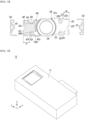
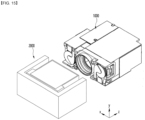
- FIG. 14 is a perspective view of a camera module according to an embodiment
- FIG. 15 is a perspective view in which some components are omitted from the camera module according to the embodiment.
- the camera module 10 may include one or a plurality of camera actuators.
- the camera module 10 may include a first camera actuator 1000 and a second camera actuator 2000, and a cover case 15 for protecting the first camera actuator 1000 and the second camera actuator 2000 may be included.
- the first camera actuator 1000 may support a plurality of lenses and may perform a zoom function or an autofocus function by moving the lenses in the optical axis direction in response to a control signal from the controller. That is, the first camera actuator 1000 may be the camera actuator of FIGS. 1 to 14 described above.
- the second camera actuator 2000 may be an optical image stabilizer (OIS) actuator.
- OIS optical image stabilizer
- the light incident on the camera module 10 from the outside may be preferentially incident on the second camera actuator 2000.
- the light incident on the second camera actuator 2000 may be incident on the first camera actuator 1000 by changing the path of the light, and the light passing through the first camera actuator 1000 may be incident on the image sensor 900.
- FIG. 16 is an exploded perspective view of a second camera actuator according to an embodiment. Also, FIG. 17 is a view of a third driving unit of the second camera actuator according to the embodiment, and FIG. 18 is a view of a third housing of the second camera actuator according to the embodiment. FIGS. 19 and 20 are views of the prism unit of the second camera actuator according to the embodiment.
- the second camera actuator according to the embodiment will be described in more detail with reference to FIGS. 16 to 20 .
- the second camera actuator 2000 may include a cover member 2100, a third housing 2200, a third driving unit 2300, and a prism unit 2400.
- the cover member 2100 may include an accommodating space therein, and at least one side surface may be open.
- the cover member 2100 may have a structure in which a plurality of side surfaces connected to each other are opened.
- the cover member 2100 may have a structure in which a front surface through which light is incident from the outside, a lower surface corresponding to the first camera actuator 1000, and a rear surface opposite the front surface, and a light movement path of the prism unit 2400, which will be described later, may be provided.
- the cover member 2100 may include a rigid material.
- the cover member 2100 may include a material such as resin, metal, or ceramic, and may support the third housing 2200 disposed in the accommodation space.
- the cover member 2100 is disposed to surround the third housing 2200, the third driving unit 2300, the prism unit 2400, and the like, and may support the components.
- the third driving unit 2300 may include a driving unit circuit board 2310, a coil unit 2330, and a magnet 2350.
- the driving unit circuit board 2310 may be connected to a power source (not shown) to apply power to the coil unit 2330.
- the driving unit circuit board 2310 may include a circuit board having a wiring pattern that can be electrically connected, such as a rigid printed circuit board (Rigid PCB), a flexible printed circuit board (Flexible PCB), and a rigid flexible printed circuit board (Rigid Flexible PCB).
- the coil unit 2330 may be electrically connected to the driving unit circuit board 2310.
- the coil unit 2330 may include one or a plurality of coil units.
- the coil unit 2330 may include a first coil unit 2331, a second coil unit 2332, and a third coil unit 2333.
- the first to third coil units 2331, 2332, and 2333 may be spaced apart from each other.
- the driving unit circuit board 2310 may have a 'C' shape, and the first coil unit 2331 and the second coil unit 2332 may be respectively disposed on first and second surfaces of the driving unit circuit board 2310 facing each other.
- the third coil unit 2333 may be disposed on a third surface connecting the first and second surfaces of the driving unit circuit board 2310.
- the magnet 2350 may include one or a plurality of magnets.
- the magnet 2350 may include a first magnet 2351, a second magnet 2352, and a third magnet 2353 disposed in a region corresponding to the coil unit 2330.
- the first magnet 2351 may be disposed on a region corresponding to the first coil unit 2331 on the first surface of the driving unit circuit board 2310.
- the second magnet 2352 may be disposed on a region corresponding to the second coil unit 2332 on the second surface of the driving unit circuit board 2310.
- the third magnet 2353 may be disposed on a region corresponding to the third coil unit 2333 on the third surface of the driving unit circuit board 2310.
- the third driving unit 2300 may further include a Hall sensor.
- the Hall sensor includes a first Hall sensor (not shown) disposed adjacent to one coil unit selected from among the first coil unit 2331 and the second coil unit 2332, and a second Hall sensor (not shown) disposed adjacent to the third coil unit 2333.
- the third driving unit 2300 may tilt the prism unit 2400.
- the third driving unit 2300 may control the tilting of the prism unit 2400 along a first axis or a second axis.
- the third housing 2200 may include an accommodation space for accommodating the prism unit 2400.
- the third housing 2200 may include a plurality of inner surfaces.
- the third housing 2200 may be included a first surface 2200S1 corresponding to a first region of the driving unit circuit board 2310 and a second surface 2200S2 corresponding to a second region of the driving unit circuit board 2310, and a third surface 2200S3 corresponding to the third region of the driving unit circuit board 2310.
- the third housing 2200 includes a first surface 2200S1 corresponding to the first coil unit 2331, a second surface 2200S2 corresponding to the second coil unit 2332, and the third surface 2200S3 corresponding to the third coil unit 2333.
- the third housing 2200 may include a fourth surface 2200S4 connected to the first surface 2200S1 and the second surface 2200S2 and connected to the third surface 2200S3.
- the third housing 2200 may include a plurality of housing holes 2210.
- the housing hole 2210 may be a through hole penetrating the outer and inner surfaces of the third housing 2200.
- the plurality of housing holes 2210 may include first to third housing holes 2211, 2212, and 2213.
- the first housing hole 2211 may be a through hole passing through the first surface 2200S1 and an outer surface corresponding to the first surface 2200S1.
- the second housing hole 2212 may be a through hole passing through the second surface 2200S2 and an outer surface corresponding to the second surface 2200S2.
- the third housing hole 2213 may be a through hole passing through the third surface 2200S3 and an outer surface corresponding to the third surface 2200S3.
- the first housing hole 2211 may be disposed in a region corresponding to the first coil unit 2331. Also, the first housing hole 2211 may have a size and shape corresponding to that of the first coil unit 2331. Accordingly, the first coil unit 2331 may be partially or entirely inserted into the first housing hole 2211.
- the second housing hole 2212 may be disposed in a region corresponding to the second coil unit 2332. Also, the second housing hole 2212 may have a size and shape corresponding to that of the second coil unit 2332. Accordingly, the second coil unit 2332 may be partially or entirely inserted into the second housing hole 2212.
- the third housing hole 2213 may be disposed in a region corresponding to the third coil unit 2333. Also, the third housing hole 2213 may have a size and shape corresponding to that of the third coil unit 2333. Accordingly, the third coil unit 2333 may be partially or entirely inserted into the third housing hole 2213.
- the prism unit 2400 may be disposed in the third housing 2200.
- the prism unit 2400 may be disposed in the accommodation space of the third housing 2200.
- the prism unit 2400 may include a prism 2410 and a prism mover 2430 disposed on the prism 2410.
- the prism 2410 may be a right-angle prism.
- the prism 2410 may reflect the direction of light incident from the outside. That is, the prism 2410 may change the path of the light incident to the second camera actuator 2000 from the outside toward the first camera actuator 1000.
- the prism mover 2430 may be disposed on the prism 2410.
- the prism mover 2430 may be disposed to surround the prism 2410. At least one side of the prism mover 2430 may be open and may include an accommodating space therein.
- the prism mover 2430 may have a structure in which a plurality of outer surfaces connected to each other are opened.
- the prism mover 2430 may have a structure in which an outer surface corresponding to the prism 2410 is open, and may include an accommodation space defined as a first space 2435 therein.
- the prism mover 2430 may include an inner surface 2435S.
- the inner surface 2435S may be an inner surface constituting the first space 2435.
- the first space 2435 may have a shape corresponding to the prism 2410.
- the inner surface 2435S of the first space 2435 may directly contact the prism 2410.
- the prism mover 2430 may include a step 2436.
- the step 2436 may be disposed in the first space 2435.
- the step 2436 may serve as a guide and/or a seating part for the prism 2410.
- a protrusion corresponding to the step 2436 may be formed on the outside of the prism 2410.
- the prism 2410 may be disposed in the first space 2435 such that the protrusion is guided by the step 2436 of the prism mover 2430. Accordingly, the prism mover 2430 may effectively support the prism 2410.
- the prism 2410 may be seated at a set position, and may have improved alignment characteristics within the prism mover 2430.
- the prism unit 2400 may include a plurality of outer surfaces.
- the prism mover 2430 may include a plurality of outer surfaces.
- the prism mover 2430 may include a first outer surface 2430S1 corresponding to the first surface 2200S1 of the third housing 2200, a second outer surface 2430S2 corresponding to the second surface 2200S2, a third outer surface 2430S3 corresponding to the third surface 2200S3 and a fourth outer surface 2430S4 corresponding to the fourth surface 2200S4.
- the prism mover 2430 may include a plurality of recesses.
- the recess may be a groove having a concave shape on the outer surface of the prism mover 2430 in the direction of the first space 2435.
- the plurality of recesses may include a third recess 2433R1, a fourth recess 2433R2, and a fifth recess 2433R3.
- the third recess 2433R1 may be disposed on the first outer surface 2430S1.
- the third recess 2433R1 may be disposed in a region corresponding to the first housing hole 2211.
- the fourth recess 2433R2 may be disposed on the second outer surface 2430S2.
- the fourth recess 2433R2 may be disposed in a region corresponding to the second housing hole 2212.
- the fifth recess 2433R3 may be disposed on the third outer surface 2430S3.
- the fifth recess 2433R3 may be disposed in a region corresponding to the third housing hole 2213. That is, the first housing hole 2211 may correspond to the first coil unit 2331, and the second housing hole 2212 may correspond to the second coil unit 2332. Also, the third housing hole 2213 may correspond to the third coil unit 2333.
- the magnet 2350 may be disposed in the recess.
- the first magnet 2351 is in the third recess 2433R1
- the second magnet 2352 is in the fourth recess 2433R2
- the third magnet 2353 is in the third recess 2433R1 so that they can be spaced apart from each other.
- the prism unit 2400 may control tilting in a first axis (x-axis) or a second axis (y-axis) by a driving unit of the third driving unit 2300.
- the first axis tilting may mean tilting in the vertical direction (y-axis direction; second direction) with the x-axis direction shown in the drawing as the rotation axis
- the second axis tilting may mean tilting in the left and right direction (x-axis direction; first direction) with the y-axis direction shown in the drawing as the rotation axis.
- the prism unit 2400 may be tilt-controlled based on attractive and repulsive forces generated from the third coil unit 2333 and the third magnet 2353 when power is applied.
- the third driving unit 2300 includes a virtual first formed by the first coil unit 2331, the second coil unit 2332, the first magnet 2351, and the second magnet 2352.
- the prism unit 2400 may be provided rotatably about a line (not shown) as an axis.
- the first line may be a line extending in the first direction (x-axis direction).
- the third coil unit 2333 and the third magnet 2353 may rotate the prism unit 2400 in an up-down direction (y-axis direction) with the first line as a rotation axis.
- a repulsive force is generated between the third coil unit 2333 and the third-first magnet of the third magnet 2353, and an attractive force may be generated between the third coil unit 2333 and the third magnet third-second of the third magnet 2353.
- the third-first magnet and the third-second magnet may face each other in a third direction (z-axis direction).
- the prism unit 2400 may be tilted in the upper direction (based on the y-axis direction) by the generated electromagnetic force.
- an attractive force is generated between the third coil unit 2333 and the third-first magnet of the third magnet 2353, and a repulsive force may be generated between the third coil unit 2333 and the third-second magnet of the third magnet 2353.
- the prism unit 2400 may be tilted in the lower direction (based on the y-axis direction) by the generated electromagnetic force.
- the prism unit 2400 may be tilt-controlled based on attractive and repulsive forces generated from the first coil unit 2331, the second coil unit 2332, the first magnet 2351, and the second magnet 2352 when power is applied.
- the third driving unit 2300 may be provided such that the prism unit 2400 can be rotated about a second virtual line (not shown) formed by the third magnet 2353 and the third coil unit 2333 as an axis.
- the second line may be a line extending in the second direction (y-axis direction).
- the first coil unit 2331, the second coil unit 2332, the first magnet 2351 and the second magnet 2352 may rotate and move the prism unit 2400 in a left-right direction (x-axis direction) with the second line as a rotation axis.
- a repulsive force is generated between the first coil unit 2331 and the first-first magnet of the first magnet 351, and an attractive force may be generated between the first coil unit 2331 and the first-second magnet of the first magnet 2351.
- an attractive force is generated between the second coil unit 2332 and the second-first magnet of the second magnet 2352, and a repulsive force may be generated between the second coil unit 2332 and the second-second magnet of the second magnet 2352.
- the first-first magnet and the second-first magnet may face each other in a first direction
- the first-second magnet and the second-second magnet may face each other in a first direction.
- the prism unit 2400 may be tilted in the left direction (based on the x-axis direction) by the generated electromagnetic force.
- an attractive force is generated between the first coil unit 2331 and the first-first magnet of the first magnet 2351, and a repulsive force may be generated between the first coil unit 2331 and the first-second magnet of the first magnet 2351.
- a repulsive force is generated between the second coil unit 2332 and the second-first magnet of the second magnet 2352, and an attractive force may be generated between the second coil unit 2332 and the second-second magnet of the second magnet 2352.
- the prism unit 2400 may be tilted in the right direction (based on the x-axis direction) by the generated electromagnetic force.
- the second camera actuator 2000 may control the movement path of the light incident by the third driving unit 2300 including the VCM (Voice Coil Motor) method.
- the third driving unit 2300 may include a piezoelectric device, for example, a piezo-electric device or a shape memory alloy, and the movement path of the incident light may be controlled by using the piezo element and/or the shape memory alloy.
- FIG. 21 is a perspective view of a mobile terminal to which a camera module according to an embodiment is applied.
- the mobile terminal 3 may include a camera module 10, an autofocus device 31, and a flash module 33 provided on the rear side.
- the camera module 10 may include an image capturing function and an auto focus function.
- the camera module 10 may include an autofocus function using an image.
- the camera module 10 processes an image frame of a still image or a moving image obtained by an image sensor in a shooting mode or a video call mode.
- the processed image frame may be displayed on a predetermined display unit and stored in a memory.
- a camera (not shown) may also be disposed on the front of the mobile terminal body.
- the camera module 10 may include a first camera module 10A and a second camera module 10B.
- the first camera module 10A and the second camera module 10B may include the aforementioned camera module, for example, the camera module 10 according to FIGS. 1 to 20 .
- the camera module 10 may implement an OIS function together with a zoom function and an autofocus function.
- the auto focus device 31 may include an auto focus function using a laser.
- the auto focus device 31 may be mainly used in a condition in which the auto focus function using the image of the camera module 10 is deteriorated, for example, in proximity of 10 m or less or in a dark environment.
- the autofocus device 31 may include a light emitting unit including a vertical cavity surface emitting laser (VCSEL) semiconductor device and a light receiving unit that converts light energy such as a photodiode into electrical energy.
- VCSEL vertical cavity surface emitting laser
- the flash module 33 may include a light emitting device emitting light therein.
- the flash module 33 may be operated by a camera operation of a mobile terminal or by a user's control.
- FIG. 22 is a perspective view of the vehicle 5 to which the camera module according to the embodiment is applied.
- FIG. 22 is an external view of a vehicle including a vehicle driving assistance device to which the camera module 10 according to the embodiment is applied.
- the vehicle 5 may include wheels 53FL and 53RL that rotate by a power source and a predetermined sensor.
- the sensor may be the camera sensor 51, but is not limited thereto.
- the camera 51 may be a camera sensor to which the camera module 10 according to the embodiment is applied.
- the vehicle 5 of the embodiment may acquire image information through a camera sensor 51 that captures a front image or a surrounding image, and it is possible to determine a lane non-identification situation using the image information, and generate a virtual lane when the lane is not identified.
- the camera sensor 51 may acquire a front image by photographing the front of the vehicle 5, and a processor (not shown) may obtain image information by analyzing an object included in the front image.
- the processor may detect such an object and include it in the image information.
- the processor may further supplement the image information by acquiring distance information from the object detected through the camera sensor 51.
- the image information may be information about an object photographed in an image.
- the camera sensor 51 may include an image sensor and an image processing module.
- the camera sensor 51 may process a still image or a moving image obtained by an image sensor (eg, CMOS or CCD).
- the image processing module may process a still image or a moving image obtained through the image sensor, extract necessary information, and transmit the extracted information to the processor.
- the camera sensor 51 may include a stereo camera to improve the measurement accuracy of the object and further secure information such as the distance between the vehicle 5 and the object, but is not limited thereto.
Landscapes
- Physics & Mathematics (AREA)
- General Physics & Mathematics (AREA)
- Engineering & Computer Science (AREA)
- Multimedia (AREA)
- Signal Processing (AREA)
- Lens Barrels (AREA)
Applications Claiming Priority (2)
| Application Number | Priority Date | Filing Date | Title |
|---|---|---|---|
| KR1020200043389A KR102941677B1 (ko) | 2020-04-09 | 카메라 액추에이터 및 이를 포함하는 카메라 모듈 | |
| PCT/KR2021/004447 WO2021206484A1 (fr) | 2020-04-09 | 2021-04-08 | Actionneur de caméra et module de caméra le comprenant |
Publications (2)
| Publication Number | Publication Date |
|---|---|
| EP4134735A1 true EP4134735A1 (fr) | 2023-02-15 |
| EP4134735A4 EP4134735A4 (fr) | 2024-04-10 |
Family
ID=78023472
Family Applications (1)
| Application Number | Title | Priority Date | Filing Date |
|---|---|---|---|
| EP21785123.7A Pending EP4134735A4 (fr) | 2020-04-09 | 2021-04-08 | Actionneur de caméra et module de caméra le comprenant |
Country Status (4)
| Country | Link |
|---|---|
| US (1) | US20240388783A1 (fr) |
| EP (1) | EP4134735A4 (fr) |
| CN (1) | CN115702382A (fr) |
| WO (1) | WO2021206484A1 (fr) |
Cited By (1)
| Publication number | Priority date | Publication date | Assignee | Title |
|---|---|---|---|---|
| US12554181B2 (en) | 2023-03-22 | 2026-02-17 | Samsung Electro-Mechanics Co., Ltd. | Lens driving apparatus and camera module including the same |
Families Citing this family (5)
| Publication number | Priority date | Publication date | Assignee | Title |
|---|---|---|---|---|
| CN114827393B (zh) * | 2021-01-29 | 2023-07-14 | 北京小米移动软件有限公司 | 一种图像采集模组和终端 |
| KR102889890B1 (ko) * | 2021-08-25 | 2025-11-24 | 자화전자(주) | 카메라용 액추에이터 |
| KR102609145B1 (ko) * | 2021-09-07 | 2023-12-05 | 삼성전기주식회사 | 렌즈모듈 및 이를 포함하는 카메라 모듈 |
| JP7662139B2 (ja) * | 2021-09-24 | 2025-04-15 | アルプスアルパイン株式会社 | レンズホルダ駆動装置 |
| US12287565B2 (en) * | 2022-01-21 | 2025-04-29 | Tdk Taiwan Corp. | Driving mechanism |
Family Cites Families (15)
| Publication number | Priority date | Publication date | Assignee | Title |
|---|---|---|---|---|
| JP3925704B2 (ja) * | 2002-04-24 | 2007-06-06 | フジノン株式会社 | レンズ鏡胴 |
| KR20040104230A (ko) * | 2003-06-03 | 2004-12-10 | 삼성전자주식회사 | 카메라의 렌즈 구동장치 |
| US7777969B2 (en) * | 2004-09-29 | 2010-08-17 | Kyocera Corporation | Camera module and portable terminal employing the same |
| US20080211955A1 (en) * | 2004-09-29 | 2008-09-04 | Alon Avital | Camera Modules With Lens Drive Device |
| KR101044219B1 (ko) * | 2009-10-19 | 2011-06-29 | 삼성전기주식회사 | 렌즈 구동 모듈 |
| KR20120041032A (ko) * | 2010-10-20 | 2012-04-30 | 삼성전기주식회사 | 렌즈배럴 및 카메라모듈 |
| US9338357B2 (en) * | 2014-01-30 | 2016-05-10 | Hoya Corporation | Imaging apparatus |
| KR102052760B1 (ko) * | 2014-07-17 | 2019-12-09 | 삼성전기주식회사 | 렌즈 모듈 및 이를 포함하는 카메라 모듈 |
| JP7005295B2 (ja) * | 2017-11-08 | 2022-01-21 | キヤノン株式会社 | 撮像ユニット及び撮像装置 |
| KR102527790B1 (ko) * | 2018-01-30 | 2023-04-28 | 엘지이노텍 주식회사 | 카메라 모듈 |
| KR102497828B1 (ko) * | 2018-02-23 | 2023-02-08 | 엘지이노텍 주식회사 | 카메라 모듈 |
| KR102500987B1 (ko) * | 2018-02-28 | 2023-02-17 | 엘지이노텍 주식회사 | 렌즈 구동장치 |
| KR102631591B1 (ko) * | 2018-04-12 | 2024-02-01 | 엘지이노텍 주식회사 | 렌즈 어셈블리 |
| US11573391B2 (en) * | 2019-04-30 | 2023-02-07 | Samsung Electro-Mechanics Co., Ltd. | Camera module |
| KR102609145B1 (ko) * | 2021-09-07 | 2023-12-05 | 삼성전기주식회사 | 렌즈모듈 및 이를 포함하는 카메라 모듈 |
-
2021
- 2021-04-08 CN CN202180041557.8A patent/CN115702382A/zh active Pending
- 2021-04-08 EP EP21785123.7A patent/EP4134735A4/fr active Pending
- 2021-04-08 US US17/917,838 patent/US20240388783A1/en active Pending
- 2021-04-08 WO PCT/KR2021/004447 patent/WO2021206484A1/fr not_active Ceased
Cited By (1)
| Publication number | Priority date | Publication date | Assignee | Title |
|---|---|---|---|---|
| US12554181B2 (en) | 2023-03-22 | 2026-02-17 | Samsung Electro-Mechanics Co., Ltd. | Lens driving apparatus and camera module including the same |
Also Published As
| Publication number | Publication date |
|---|---|
| EP4134735A4 (fr) | 2024-04-10 |
| US20240388783A1 (en) | 2024-11-21 |
| KR20210125767A (ko) | 2021-10-19 |
| WO2021206484A1 (fr) | 2021-10-14 |
| CN115702382A (zh) | 2023-02-14 |
Similar Documents
| Publication | Publication Date | Title |
|---|---|---|
| EP4134735A1 (fr) | Actionneur de caméra et module de caméra le comprenant | |
| US12007681B2 (en) | Camera actuator and camera module including same | |
| CN114747201A (zh) | 相机致动器及包括其的相机模组 | |
| EP4141537A1 (fr) | Actionneur de caméra et module de caméra l'incluant | |
| US20260029611A1 (en) | Camera actuator and camera device including same | |
| KR20260017462A (ko) | 카메라 액추에이터 및 이를 포함하는 카메라 모듈 | |
| KR20220162547A (ko) | 렌즈 배럴 및 이를 포함하는 카메라 모듈 | |
| KR102896666B1 (ko) | 카메라 액추에이터 및 이를 포함하는 카메라 모듈 | |
| CN115699787B (zh) | 相机致动器和包括该相机致动器的相机设备 | |
| CN115552880B (zh) | 相机致动器和包括该相机致动器的相机模块 | |
| US12523917B2 (en) | Camera actuator | |
| KR102941677B1 (ko) | 카메라 액추에이터 및 이를 포함하는 카메라 모듈 | |
| KR20220105827A (ko) | 카메라 액추에이터 및 이를 포함하는 카메라 모듈 | |
| CN115699790B (zh) | 照相机致动器和包括该照相机致动器的照相机模块 | |
| KR20220162534A (ko) | 렌즈 배럴 및 이를 포함하는 카메라 모듈 | |
| US20250330691A1 (en) | Camera actuator and camera module including same | |
| US20250004243A1 (en) | Lens driving device and camera device comprising same | |
| KR20250138949A (ko) | 카메라 엑추에이터 및 이를 포함하는 카메라 모듈 | |
| CN117837155A (zh) | 透镜驱动装置和包括该透镜驱动装置的相机模块 | |
| KR20220107482A (ko) | 카메라 액추에이터 및 이를 포함하는 카메라 모듈 | |
| KR20220153955A (ko) | 카메라 액추에이터 및 이를 포함하는 카메라 모듈 | |
| KR20220039992A (ko) | 카메라 액추에이터 및 이를 포함하는 카메라 모듈 | |
| KR20230049342A (ko) | 카메라 엑추에이터 및 이를 포함하는 카메라 장치 | |
| KR20210132948A (ko) | 렌즈 이동 장치 및 이를 포함하는 카메라 장치 |
Legal Events
| Date | Code | Title | Description |
|---|---|---|---|
| STAA | Information on the status of an ep patent application or granted ep patent |
Free format text: STATUS: THE INTERNATIONAL PUBLICATION HAS BEEN MADE |
|
| PUAI | Public reference made under article 153(3) epc to a published international application that has entered the european phase |
Free format text: ORIGINAL CODE: 0009012 |
|
| STAA | Information on the status of an ep patent application or granted ep patent |
Free format text: STATUS: REQUEST FOR EXAMINATION WAS MADE |
|
| 17P | Request for examination filed |
Effective date: 20221021 |
|
| AK | Designated contracting states |
Kind code of ref document: A1 Designated state(s): AL AT BE BG CH CY CZ DE DK EE ES FI FR GB GR HR HU IE IS IT LI LT LU LV MC MK MT NL NO PL PT RO RS SE SI SK SM TR |
|
| DAV | Request for validation of the european patent (deleted) | ||
| DAX | Request for extension of the european patent (deleted) | ||
| A4 | Supplementary search report drawn up and despatched |
Effective date: 20240311 |
|
| RIC1 | Information provided on ipc code assigned before grant |
Ipc: G03B 30/00 20210101ALI20240304BHEP Ipc: G03B 17/17 20210101ALI20240304BHEP Ipc: G03B 3/10 20210101ALI20240304BHEP Ipc: H04N 23/55 20230101ALI20240304BHEP Ipc: G03B 5/00 20210101AFI20240304BHEP |
|
| STAA | Information on the status of an ep patent application or granted ep patent |
Free format text: STATUS: EXAMINATION IS IN PROGRESS |
|
| 17Q | First examination report despatched |
Effective date: 20250924 |