EP4135218A1 - Procédé, appareil, dispositif et système de mesure de fibre optique à longue distance, et support de stockage - Google Patents
Procédé, appareil, dispositif et système de mesure de fibre optique à longue distance, et support de stockage Download PDFInfo
- Publication number
- EP4135218A1 EP4135218A1 EP20929996.5A EP20929996A EP4135218A1 EP 4135218 A1 EP4135218 A1 EP 4135218A1 EP 20929996 A EP20929996 A EP 20929996A EP 4135218 A1 EP4135218 A1 EP 4135218A1
- Authority
- EP
- European Patent Office
- Prior art keywords
- optical fiber
- sampling
- optical signal
- sampling sequence
- node
- Prior art date
- Legal status (The legal status is an assumption and is not a legal conclusion. Google has not performed a legal analysis and makes no representation as to the accuracy of the status listed.)
- Pending
Links
- 239000013307 optical fiber Substances 0.000 title claims abstract description 350
- 238000000691 measurement method Methods 0.000 title 1
- 230000003287 optical effect Effects 0.000 claims abstract description 398
- 238000005070 sampling Methods 0.000 claims abstract description 374
- 238000001514 detection method Methods 0.000 claims abstract description 219
- 238000000034 method Methods 0.000 claims abstract description 79
- 230000004044 response Effects 0.000 claims abstract description 47
- 230000001902 propagating effect Effects 0.000 claims abstract description 41
- 238000000253 optical time-domain reflectometry Methods 0.000 claims abstract description 21
- 238000004590 computer program Methods 0.000 claims description 16
- 238000004458 analytical method Methods 0.000 claims description 4
- 230000001172 regenerating effect Effects 0.000 claims description 4
- 238000005259 measurement Methods 0.000 description 19
- 230000010365 information processing Effects 0.000 description 18
- 238000012360 testing method Methods 0.000 description 12
- 238000010586 diagram Methods 0.000 description 9
- 238000004891 communication Methods 0.000 description 8
- 230000008569 process Effects 0.000 description 8
- 238000005516 engineering process Methods 0.000 description 5
- 230000006870 function Effects 0.000 description 5
- 238000004364 calculation method Methods 0.000 description 4
- 230000008878 coupling Effects 0.000 description 4
- 238000010168 coupling process Methods 0.000 description 4
- 238000005859 coupling reaction Methods 0.000 description 4
- 230000009286 beneficial effect Effects 0.000 description 3
- 230000005540 biological transmission Effects 0.000 description 3
- 238000010276 construction Methods 0.000 description 2
- 239000000835 fiber Substances 0.000 description 2
- 238000012423 maintenance Methods 0.000 description 2
- 238000012544 monitoring process Methods 0.000 description 2
- 230000007547 defect Effects 0.000 description 1
- 238000013461 design Methods 0.000 description 1
- 230000000694 effects Effects 0.000 description 1
- 238000013100 final test Methods 0.000 description 1
- 230000006872 improvement Effects 0.000 description 1
- 230000010354 integration Effects 0.000 description 1
- 238000012986 modification Methods 0.000 description 1
- 230000004048 modification Effects 0.000 description 1
- 238000012545 processing Methods 0.000 description 1
- 238000006467 substitution reaction Methods 0.000 description 1
Images


Classifications
-
- H—ELECTRICITY
- H04—ELECTRIC COMMUNICATION TECHNIQUE
- H04B—TRANSMISSION
- H04B10/00—Transmission systems employing electromagnetic waves other than radio-waves, e.g. infrared, visible or ultraviolet light, or employing corpuscular radiation, e.g. quantum communication
- H04B10/07—Arrangements for monitoring or testing transmission systems; Arrangements for fault measurement of transmission systems
- H04B10/071—Arrangements for monitoring or testing transmission systems; Arrangements for fault measurement of transmission systems using a reflected signal, e.g. using optical time domain reflectometers [OTDR]
-
- G—PHYSICS
- G01—MEASURING; TESTING
- G01B—MEASURING LENGTH, THICKNESS OR SIMILAR LINEAR DIMENSIONS; MEASURING ANGLES; MEASURING AREAS; MEASURING IRREGULARITIES OF SURFACES OR CONTOURS
- G01B11/00—Measuring arrangements characterised by the use of optical techniques
- G01B11/02—Measuring arrangements characterised by the use of optical techniques for measuring length, width or thickness
-
- G—PHYSICS
- G01—MEASURING; TESTING
- G01M—TESTING STATIC OR DYNAMIC BALANCE OF MACHINES OR STRUCTURES; TESTING OF STRUCTURES OR APPARATUS, NOT OTHERWISE PROVIDED FOR
- G01M11/00—Testing of optical apparatus; Testing structures by optical methods not otherwise provided for
- G01M11/30—Testing of optical devices, constituted by fibre optics or optical waveguides
- G01M11/31—Testing of optical devices, constituted by fibre optics or optical waveguides with a light emitter and a light receiver being disposed at the same side of a fibre or waveguide end-face, e.g. reflectometers
- G01M11/3109—Reflectometers detecting the back-scattered light in the time-domain, e.g. OTDR
- G01M11/3118—Reflectometers detecting the back-scattered light in the time-domain, e.g. OTDR using coded light-pulse sequences
-
- G—PHYSICS
- G01—MEASURING; TESTING
- G01M—TESTING STATIC OR DYNAMIC BALANCE OF MACHINES OR STRUCTURES; TESTING OF STRUCTURES OR APPARATUS, NOT OTHERWISE PROVIDED FOR
- G01M11/00—Testing of optical apparatus; Testing structures by optical methods not otherwise provided for
- G01M11/30—Testing of optical devices, constituted by fibre optics or optical waveguides
- G01M11/31—Testing of optical devices, constituted by fibre optics or optical waveguides with a light emitter and a light receiver being disposed at the same side of a fibre or waveguide end-face, e.g. reflectometers
- G01M11/3109—Reflectometers detecting the back-scattered light in the time-domain, e.g. OTDR
- G01M11/3145—Details of the optoelectronics or data analysis
-
- G—PHYSICS
- G01—MEASURING; TESTING
- G01M—TESTING STATIC OR DYNAMIC BALANCE OF MACHINES OR STRUCTURES; TESTING OF STRUCTURES OR APPARATUS, NOT OTHERWISE PROVIDED FOR
- G01M11/00—Testing of optical apparatus; Testing structures by optical methods not otherwise provided for
- G01M11/30—Testing of optical devices, constituted by fibre optics or optical waveguides
- G01M11/39—Testing of optical devices, constituted by fibre optics or optical waveguides in which light is projected from both sides of the fiber or waveguide end-face
-
- G—PHYSICS
- G01—MEASURING; TESTING
- G01B—MEASURING LENGTH, THICKNESS OR SIMILAR LINEAR DIMENSIONS; MEASURING ANGLES; MEASURING AREAS; MEASURING IRREGULARITIES OF SURFACES OR CONTOURS
- G01B11/00—Measuring arrangements characterised by the use of optical techniques
- G01B11/02—Measuring arrangements characterised by the use of optical techniques for measuring length, width or thickness
- G01B11/026—Measuring arrangements characterised by the use of optical techniques for measuring length, width or thickness by measuring distance between sensor and object
Definitions
- Embodiments of the present disclosure relate to computer technology, and in particular, to a long-distance optical fiber detecting method, apparatus, device and system, and a storage medium.
- an optical time-domain reflectometer In a case of construction and maintenance of optical cable lines, an optical time-domain reflectometer (OTDR) is usually used to test characteristics of optical fibers in an optical cable.
- the OTDR is also an important apparatus of an on-line monitoring system in an optical communication network, and a dynamic range is one of the important technical indexes of the OTDR.
- the larger the dynamic range of the OTDR the longer the distance of the optical communication line that can be monitored.
- the dynamic range of the OTDR may not be able to meet the detection requirements of long-distance optical fiber lines, and for lines exceeding a certain length, the OTDR will not be able to detect the information about distal optical fibers.
- the embodiments of the present disclosure provide a long-distance optical fiber detecting method, apparatus, device and system, and a storage medium.
- An embodiment of the present disclosure provide a long-distance optical fiber detecting method.
- the method comprises: in response to a detection request of a target node on a to-be-detected optical fiber, determining a first sampling sequence and a second sampling sequence that are formed by respectively propagating, on the to-be-detected optical fiber, a first optical signal and a second optical signal respectively sent from each end of the to-be-detected optical fiber through an OTDR; determining a total length of the to-be-detected optical fiber; and generating a detection result according to the first sampling sequence, the second sampling sequence and the total length.
- the detection result of the to-be-detected optical fiber is generated. Therefore, in a case where the optical fiber is long, full coverage detection of the entire to-be-detected optical fiber can be realized, thereby improving the reliability of optical fiber detection.
- the determining a total length of the to-be-detected optical fiber comprises: determining a sending time of a third optical signal recorded by a sending node, the third optical signal being used for measuring the to-be-detected optical; determining a receiving time of the third optical signal recorded by a receiving node; determining a propagation duration of the third optical signal on the to-be-detected optical fiber according to the sending time and the receiving time; and determining the total length of the to-be-detected optical fiber according to the propagation duration.
- the propagation duration of the third optical signal is determined, and the total length of the optical fiber to be detected is determined according to the propagation duration, so that the total length of the optical fiber to be detected can be determined more conveniently and accurately.
- the determining a sending time of a third optical signal recorded by a sending node comprises: sending, by a local end node used as the sending node, the third optical signal to an opposite end node as the receiving node, and recording a time stamp of sending the third optical signal as the sending time; correspondingly, the determining a receiving time of the third optical signal recorded by a receiving node comprises: receiving, by the local end node, the receiving time sent by the opposite end node used as the receiving node.
- the sending node of the third optical signal records the sending time, and receives the receiving time sent by the receiving node, so that the sending time and the receiving time of the third optical signal can be recorded more accurately.
- the determining a sending time of a third optical signal recorded by a sending node comprises: receiving, by a local end node, the sending time sent by an opposite end node; correspondingly, the determining a receiving time of the third optical signal recorded by a receiving node comprises: receiving, by the local end node used as the receiving node, the third optical signal, and recording a time stamp of receiving the third optical signal as the receiving time.
- the receiving node of the third optical signal records the receiving time, and receives the sending time sent by the sending node. Therefore, not only the sending time and the receiving time of the third optical signal can be recorded through the sending node, but also the receiving time and the sending time of the third optical signal can be recorded by the receiving node, thereby improving the diversity of the determination of the sending time and the receiving time of the third optical signal.
- the first sampling sequence is a sequence composed of corresponding optical power relative values of the first optical signal recorded at each sampling point of the to-be-detected optical fiber; and the second sampling sequence is a sequence composed of corresponding optical power relative values of the second optical signal recorded at each sampling point of the to-be-detected optical fiber.
- the first sampling sequence is obtained by sampling a first optical signal sent from the sending node
- the second sampling sequence is obtained by sampling a second optical signal sent from the receiving node
- sampling points in the first sampling sequence and the second sampling sequence are numbered from the sending node to the receiving node in an increasing sequence, respectively
- the generating a detection result according to the first sampling sequence, the second sampling sequence and the total length comprises: determining a ratio between 1/2 of the total length and a distance between two adjacent sampling points; in a case where a serial number of a sampling point in the first sampling sequence is less than the ratio, adding the sampling point to a first sampling subsequence of the first sampling sequence; analyzing the first sampling subsequence, so as to obtain a first detection sub-result; in a case where a serial number of a sampling point in the second sampling sequence is larger than or equal to the ratio, adding the sampling point to a second sampling subsequence of the second sampling sequence; analyzing the second sampling subse
- the detection sub-results are obtained by respectively intercepting the effective subsequences of the first sampling subsequence and the second sampling subsequence and respectively analyzing the intercepted effective subsequences of the first and second sampling subsequence, and the detection result is generated according to the two detection sub-results. Therefore, the generated detection result can be made more accurate.
- the generating a detection result according to the first detection sub-result and the second detection sub-result comprises: determining an adjacent optical power attenuation value of the first optical signal or the second optical signal between the adjacent sampling points; determining a third detection sub-result according to the second detection sub-result and the adjacent optical power attenuation value; and generating the detection result according to the first detection sub-result and the third detection sub-result.
- the third detection sub-result is determined through the adjacent optical power attenuation value and the second detection sub-result, and the detection result is generated according to the third detection sub-result and the first detection sub-result, so that the detection result can be reflected more intuitively.
- the method further comprises: in a case where the detection result does not meet a preset condition, determining a third sampling sequence and a fourth sampling sequence that are formed by respectively propagating, on the to-be-detected optical fiber, a fourth optical signal and a fifth optical signal sent from each end of the to-be-detected optical fiber through the OTDR; regenerating an update detection result according to the third sampling sequence, the fourth sampling sequence and the total length; and sending the update detection result to the target node.
- a third optical time-domain reflectometer and a fourth optical time-domain reflectometer with larger dynamic ranges are used instead; therefore, in a case where the optical fiber is long, the coverage of the detection of the entire to-be-detected optical fiber can be improved, thereby improving the reliability of the optical fiber detection.
- An embodiment of the present disclosure provides a long-distance optical fiber detecting apparatus, comprising: a response module which is configured to, in response to a detection request of a target node on a to-be-detected optical fiber, determine a first sampling sequence and a second sampling sequence formed by respectively propagating, on the to-be-detected optical fiber, a first optical signal and a second optical signal respectively sent from each end of the to-be-detected optical fiber through an OTDR; a determining module which is configured to determine a total length of the to-be-detected optical fiber; a generating module which is configured to generate a detection result according to the first sampling sequence, the second sampling sequence and the total length; and a sending module which is configured to send the detection result to the target node.
- An embodiment of the present disclosure provides a long-distance optical fiber detecting device, comprising: an optical time-domain reflectometer OTDR module and a long-distance optical fiber detecting apparatus, wherein the OTDR module is configured to, in response to a detection request of a target node on a to-be-detected optical fiber, send a first optical signal and obtain a first sampling sequence formed by propagating the first optical signal on the to-be-detected optical fiber, or, send a second optical signal and obtain a second sampling sequence formed by propagating the second optical signal on the to-be-detected optical fiber; and wherein the long-distance optical fiber detecting apparatus is configured to, in response to the detection request of the target node on the to-be-detected optical fiber, trigger the OTDR module to send the first optical signal or the second optical signal, and respectively obtain the first sampling sequence and the second sampling sequence respectively formed by respectively propagating the first and second optical signals on the to-be-detected optical fiber; determine a total length of
- An embodiment of the present disclosure provides a long-distance optical fiber detecting system, comprising: a first OTDR module, a second OTDR module, and a long-distance optical fiber detecting apparatus, wherein the first OTDR module is configured to, in response to a detection request of a target node on a to-be-detected optical fiber, send a first optical signal and obtain a first sampling sequence formed by propagating the first optical signal on the to-be-detected optical fiber; wherein the second OTDR module is configured to, in response to the detection request of the target node on the to-be-detected optical fiber, send a second optical signal and obtain a second sampling sequence formed by propagating the second optical signal on the to-be-detected optical fiber; and wherein the long-distance optical fiber detecting apparatus is configured to, in response to the detection request of the target node on the to-be-detected optical fiber, respectively trigger the first OTDR module to send the first optical signal and the second OTDR module
- An embodiment of the present disclosure provides a computer readable storage medium having a computer program stored thereon, and the computer program, when executed by a processor, implements steps of the long-distance optical fiber detecting method according to any one of the embodiments of the present disclosure.
- An embodiment of the present disclosure provides a computer program product, wherein the above-mentioned computer program product comprises a non-transitory computer readable storage medium storing a computer program, and the above-mentioned computer program is operable to make a computer to execute part or all of the steps as described in the long-distance optical fiber detecting methods according to the embodiments of the present disclosure.
- the computer program product may be a software installation package.
- the words “in case of”, “if” as used herein may be interpreted as “at” or “when” or “in response to determination” or “in response to detection”.
- the phrases “if it is determined” or “if it is detected (stated condition or event)” may be interpreted as “when determining” or “in response to determination” or “when detecting (stated condition or event)” or “in response to detection (stated condition or event)”.
- FIG 1 is a schematic diagram of an application scene of detecting a long-distance optical fiber according to an embodiment of the present disclosure.
- a target node on a to-be-detected optical fiber 101 may send a detection request to a computer device, and in response to the detection request, the computer device respectively sends a first optical signal 102 and a second optical signal 103 from each end of the to-be-detected optical fiber 101, then the first optical signal 102 propagates on the to-be-detected optical fiber 101 to form a first sampling sequence ⁇ (36dB, 1), ..., (31dB, 25), ..., (26dB, 50), ..., (21dB, 75), ..., (16dB, 100), ..., (11dB, 125), ..., (6dB, 150), ... ⁇ ; and the second optical signal 103 propagates on the to-be-det
- a detection result can be generated which can reflect the situation on a whole to-be-detected optical fiber 101, and the detection result can be sent to the target node.
- the present embodiment proposes a long-distance optical fiber detecting method.
- the method is applied to a long-distance optical fiber detecting device, and the function realized by the method can be realized by calling program codes via a processor in the device.
- the program codes may be stored in a computer storage medium, thus it can be seen that the device includes at least a processor and a storage medium.
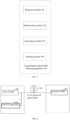
- FIG 2 is a schematic flowchart of a long-distance optical fiber detecting method according to an embodiment of the present disclosure. As shown in FIG 2 , the method comprises following steps.
- a first sampling sequence and a second sampling sequence that are formed by respectively propagating, on the to-be-detected optical fiber, a first optical signal and a second optical signal respectively sent from each end of the to-be-detected optical fiber through an OTDR are determined.
- the device includes a long-distance optical fiber detecting apparatus and an OTDR module, and the method provided by the embodiment of the present disclosure is executed by the long-distance optical fiber detecting apparatus.
- the OTDR module is configured to, in response to a detection request of a target node on a to-be-detected optical fiber, send a first optical signal and obtain a first sampling sequence formed by propagating the first optical signal on the to-be-detected optical fiber, or, send a second optical signal and obtain a second sampling sequence formed by propagating the second optical signal on the to-be-detected optical fiber.
- the long-distance optical fiber detecting apparatus in response to the detection request of the target node on the to-be-detected optical fiber, triggers the OTDR module to send the first optical signal or the second optical signal, and respectively obtains the first sampling sequence and the second sampling sequence formed by respectively propagating the first optical signal or the second optical signal on the to-be-detected optical fiber; wherein the long-distance optical fiber detecting apparatus obtains the first sampling sequence or the second sampling sequence from an OTDR module on a local end node, and receives the second sampling sequence or the first sampling sequence obtained by an OTDR module on an opposite end node. In this way, the local end node can obtain the first sampling sequence and the second sampling sequence at the same time.
- the local end node and the opposite end node both are provided with a communication module, and the communication module comprises an information sending module and an information receiving module.
- the local end node sends information such as a sampling sequence (a first sampling sequence or a second sampling sequence) of the local end node (a time stamp for sending an optical signal is also comprised in the following embodiments) to the opposite end node through the information sending module, and the local end node can also receive information such as a sampling sequence obtained by the opposite end node through the information receiving module.
- the target node herein comprises, but is not limited to, a node on the to-be-detected optical fiber, and the target node may be any node of the to-be-detected optical fiber that has a detection requirement.
- the first optical signal may be an optical signal sent by a laser of a first optical time-domain reflectometer installed at one end of the to-be-detected optical fiber
- the second optical signal may be an optical signal sent by a laser of a second optical time-domain reflectometer installed at the other end of the to-be-detected optical fiber.
- the total length of the to-be-detected optical fiber is determined.
- the OTDR in a case where the line length of the long-distance optical fiber line exceeds a dynamic range of the OTDR, the OTDR will not be able to detect the information about the distal optical fiber.
- a first sampling sequence formed by propagating the first optical signal on the to-be-detected optical fiber and a second sampling sequence formed by propagating the second optical signal on the to-be-detected optical fiber are obtained.
- the total length of the to-be-detected optical fiber in the embodiment of the present disclosure is also limited to the dynamic range of the optical time-domain reflectometer, however, in a case of where the total length of the to-be-detected optical fiber is larger than or equal to the measurement range of the optical time-domain reflectometer but less than or equal to twice the measurement range of the optical time-domain reflectometer, an accurate detection result can still be provided.
- the total length of the to-be-measured line may generally be less than or equal to twice the dynamic range of the optical time-domain reflectometer, and in a case where the dynamic range of the optical time-domain reflectometer is several kilometers (km), the total length of the to-be-measured line is about ten to twenty kilometers. At present, the dynamic range of the optical time-domain reflectometer is about 150 kilometers. Therefore, in order to improve the measurement effect, the total length of the to-be-measured line is generally at a distance of the magnitude of hundreds of kilometers, such as 250 km, 300 km and the like.
- step 204 may be realized in various ways.
- the user may set the total length of the to-be-detected optical fiber by means of the user interface, so that realizing the total length of the to-be-detected optical fiber is determined by the device.
- the target node having the detection requirement may carry the total length of the to-be-tested optical fiber in the sent detection request, and the local end node obtains the total length of the to-be-detected optical fiber by means of analyzing the detection request, so as to realize determining the total length of the to-be-detected optical fiber.
- the local end node sends an optical signal to the opposite end node, and the total length of to-be-detected optical fiber is calculated by a speed of light and a propagation duration, so as to realize determining the total length of the to-be-detected optical fiber.
- the local end node may also receive the total length of the to-be-detected optical fiber determined by the opposite end node, so as to obtain the total length of the to-be-detected optical fiber.
- a detection result is generated according to the first sampling sequence, the second sampling sequence and the total length.
- the detection result is sent to the target node.
- a detection result of the to-be-detected optical fiber is generated, so that when the optical fiber is long, full coverage detection of the entire to-be-detected optical fiber can be realized, thereby improving the reliability of optical fiber detection.
- An embodiment of the present disclosure further provides a long-distance optical fiber detecting method.
- the first sampling sequence is obtained by sampling the first optical signal sent by the sending node
- the second sampling sequence is obtained by sampling the second optical signal sent by the receiving node
- sampling points in the first and second sampling sequence are numbered from the sending node to the receiving node in an increasing sequence, respectively.
- the method provided in the embodiment of the present disclosure may include step 302 to step 330.
- a first sampling sequence and a second sampling sequence that are formed by respectively propagating, on the to-be-detected optical fiber, a first optical signal and a second optical signal respectively sent from each end of the to-be-detected optical fiber through an OTDR.
- the device includes a long-distance optical fiber detecting apparatus and an OTDR module, and the method provided by the embodiment of the present disclosure is executed by the long-distance optical fiber detecting apparatus.
- the OTDR module is configured to, in response to a detection request of a target node on a to-be-detected optical fiber, send a first optical signal and obtain a first sampling sequence formed by propagating the first optical signal on the to-be-detected optical fiber, or, send a second optical signal and obtain a second sampling sequence formed by propagating the second optical signal on the to-be-detected optical fiber.
- the long-distance optical fiber detecting apparatus in response to the detection request of the target node on the to-be-detected optical fiber, triggers the OTDR module to send the first optical signal or the second optical signal, and respectively obtains the first sampling sequence and the second sampling sequence formed by respectively propagating the first and second optical signal on the to-be-detected optical fiber.
- the first sampling sequence formed by the propagation of the first optical signal 102 on the to-be-detected optical fiber is ⁇ (36dB, 1), ..., (31dB, 25), ..., (26dB, 50), ..., (21dB, 75), ..., (16dB, 100), ..., (11.2dB, 124), (11dB, 125), ..., (6dB, 150), ... ⁇ ; and the second sampling sequence formed by the propagation of the second optical signal 103 on the to-be-detected optical fiber is ⁇ ..., [6dB, 100], ..., [11dB, 125], ..., [16dB, 150], ..., [21dB, 175], ..., [26dB, 200], ..., [31dB, 225], ..., [36dB, 250] ⁇ .
- a sending time of a third optical signal recorded by a sending node is determined, the third optical signal being used for measuring the to-be-detected optical.
- the third optical signal may be an optical signal sent by a laser of a first optical time-domain reflectometer, or may be an optical signal sent by a laser of a second optical time-domain reflectometer, or may also be an optical signal sent by any laser installed at an end of the to-be-detected optical fiber.
- the local end node in a case where the local end node is used as the sending node of the third optical signal, the local end node will record the time stamp of sending the third optical signal as the sending time of the third optical signal; meanwhile, the local end node will also receive the receiving time of the third optical signal sent by the receiving node of the third optical signal. In some other embodiments, in a case where the local end node is used as the receiving node of the third optical signal, the local end node will record the time stamp of receiving the third optical signal as the receiving time of the third optical signal; meanwhile, the local end node will also receive the sending time of the third optical signal sent by the sending node of the third optical signal.
- a receiving time of the third optical signal recorded by a receiving node is determined.
- the sending node and the receiving node are nodes respectively located at each end of the to-be-detected optical fiber.
- a propagation duration of the third optical signal on the to-be-detected optical fiber is determined according to the sending time and the receiving time.
- the difference between the receiving time and the sending time may be determined as the propagation duration of the third optical signal on the to-be-detected optical fiber.
- a total length of the to-be-detected optical fiber is determined according to the propagation duration.
- step 304 to step 310 provide an implementation to realize step 204, "determining the total length of the to-be-detected optical fiber", wherein by recording the sending time and the receiving time of the third optical signal, the propagation duration of the third optical signal is determined, and according to the propagation duration, the total length of the to-be-detected optical fiber is determined.
- the total length of the to-be-detected optical fiber can be determined more conveniently and accurately.
- a ratio between 1/2 of the total length and a distance between two adjacent sampling points is determined.
- the sampling point is added to a first sampling subsequence of the first sampling sequence.
- the first sampling sequence is obtained by sampling the first optical signal sent by the sending node
- the second sampling sequence is obtained by sampling the second optical signal sent by the receiving node, and then sampling points in the first and second sampling sequence are numbered from the sending node to the receiving node in an increasing sequence, respectively; as the serial numbers of the sampling points in the first sampling sequence increase progressively, the optical power relative values of the first optical signal sampled at the sampling points gradually decrease, and in a case where the optical power relative value of the first optical signal is less than or equal to a certain value, part or all of the properties of the first optical signal cannot be accurately analyzed, and therefore, a first sampling subsequence of sampling points with smaller serial numbers capable of effectively analyzing the properties of the first optical signal needs to be intercepted from the first sampling sequence.
- the certain value is 11 dB
- the optical power relative value of the first optical signal is 11 dB
- the optical power relative value of the first optical signal is 6dB
- the first sampling subsequence is ⁇ (36dB, 1), ..., (31dB, 25), ..., (26dB, 50), ..., (21dB, 75), ..., (16dB, 100), ..., (11.2dB, 124) ⁇ .
- the first sampling subsequence is analyzed, so as to obtain a first detection sub-result.
- the first detection sub-result may be a first optical power relative value curve indicating the changes of the optical power relative values of sampling points in the first sampling subsequence, and whether a protrusion appears on the first optical power relative value curve can indicate whether an event occurs in an area of the to-be-detected optical fiber corresponding to the first sampling subsequence; the event may be that the connector on the to-be-detected optical fiber is not properly connected, the to-be-detected optical fiber is slightly bent, and the like.
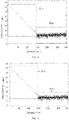
- a first sampling subsequence of sampling points with serial numbers less than 125 may be analyzed, so as to obtain a first optical power relative value curve 301a, where the distance on the horizontal coordinate in FIG 3a represents a distance from the sending node; it is taken as an example for explanation that the total length of the to-be-detected optical fiber is 250 kilometers (km) and the distance of a certain sampling point is 100 kilometers, the distance between the sampling point and the sending node is 100 kilometers, i.e. the serial number corresponding to the sampling point is 100, and the optical power relative value of the first optical signal at the sampling point is 16 dB.
- the sampling point is added to the second sampling subsequence of the second sampling sequence.
- the optical power relative values of the second optical signal sampled by the sampling points gradually increase.
- an optical power relative value of the second optical signal is larger than a certain value, the properties of the second optical signal can be accurately analyzed. Therefore, a second sampling subsequence of sampling points having larger serial numbers which is capable of effectively analyzing the properties of the second optical signal needs to be intercepted from the second sampling sequence.
- the second sampling subsequence of sampling points having serial numbers larger or equal to the ratio 125 which can effectively analyze the properties of the second signal needs to be intercepted from the first sampling sequence, i.e.
- the second sampling subsequence is ⁇ [11dB, 125], ..., [16dB, 150], ..., [21dB, 175], ..., [26dB, 200], ..., [31dB, 225 ], ..., [36dB, 250] ⁇ .
- the second sampling subsequence is analyzed, so as to obtain a second detection sub-result.
- the second detection sub-result may be a second optical power relative value curve indicating the changes of the optical power relative values of sampling points in the second sampling subsequence, and similar to the first optical power relative value curve, whether a protrusion appears on the second optical power relative value curve can indicate whether an event occurs in an area of the to-be-detected optical fiber corresponding to the first sampling subsequence.
- a second sampling subsequence of sampling points whose serial number are larger than or equal to 125 may be analyzed, so as to obtain a second optical power relative value curve 301b, where a distance in FIG 3b represents a distance from a receiving node.
- a distance in FIG 3b represents a distance from a receiving node.
- the total length of the to-be-detected optical fiber is 250 kilometers and the distance of a certain sampling point is 100 kilometers (km)
- the optical power relative value of the second optical signal at the sampling point is 16 dB.
- a detection result is generated according to the first detection sub-result and the second detection sub-result.
- the first optical power relative value curve and the second optical power relative value curve can respectively indicate whether an event occurs in an area of the to-be-detected optical fiber corresponding to the first sampling subsequence and the second sampling subsequence, and the first sampling subsequence and the second sampling subsequence can cover the entire to-be-detected optical fiber
- the first optical power relative value curve and the second optical power relative value curve can be integrated, so as to obtain the detection result curve corresponding to the detection results that can indicate whether an event occurs on the entire to-be-detected optical fiber.
- the first optical power relative value curve 301a and the second optical power relative value curve 301b can be integrated, so as to obtain the detection result curve.
- the detection sub-results are obtained by respectively intercepting the effective subsequences of the first sampling subsequence and the second sampling subsequence and by respectively analyzing the intercepted effective subsequences, and the detection result is generated according to the two detection sub-results. Therefore, the generated detection result can be made more accurately.
- the detection result is sent to the target node.
- a third sampling sequence and a fourth sampling sequence that are formed by respectively propagating, on the to-be-detected optical fiber, a fourth optical signal and a fifth optical signal sent from the each end of the to-be-detected optical fiber through the OTDR.
- the preset condition may be that a fluctuation curve (the fluctuation curve 302a as shown in FIG 3a or the fluctuation curve 302b as shown in FIG 3b ) does not exist in the detection result curve; a fluctuation curve existing in a detection result curve means that the dynamic ranges of the first optical time-domain reflectometer and the second optical time-domain reflectometer are insufficient; the dynamic range of an optical time-domain reflectometer is a dB difference between an initial backscatter level and a noise level, and the dynamic range of an optical time-domain reflectometer determines a maximum measurable length of the optical time-domain reflectometer for the to-be-detected optical fiber.
- the fourth optical signal may be an optical signal sent by a laser of the third optical time-domain reflectometer
- the fifth optical signal may be an optical signal sent by a laser of the fourth optical time-domain reflectometer.
- the third sampling sequence is a sequence composed of corresponding optical power relative values of the fourth optical signal recorded at each sampling point of the to-be-detected optical fiber
- the fourth sampling sequence is a sequence composed of corresponding optical power relative values of the fifth optical signal recorded at each sampling point of the to-be-detected optical fiber
- the sum of the dynamic ranges of the third optical time-domain reflectometer and the fourth optical time-domain reflectometer is larger than the sum of the dynamic ranges of the first optical time-domain reflectometer and the second optical time-domain reflectometer.
- an update detection result is regenerated according to the third sampling sequence, the fourth sampling sequence and the total length.
- the update detection result is sent to the target node.
- the third optical time-domain reflectometer and the fourth optical time-domain reflectometer having larger dynamic ranges are used instead. Therefore, in a case where the optical fiber is long, the coverage of the detection of the entire to-be-detected optical fiber can be improved, thereby improving the reliability of the optical fiber detection.
- the embodiments of the present disclosure further provide a long-distance optical fiber detecting method.
- a local end node is used as a sending node and an opposite end node is used as a receiving node.
- the method may include step 402 to step 414.
- a local end node determines a first sampling sequence and a second sampling sequence respectively formed by propagation, on the to-be-detected optical fiber, of a first optical signal and a second optical signal respectively sent from each end of the to-be-detected optical fiber through an OTDR.
- the device includes a long-distance optical fiber detecting apparatus and an OTDR module, and the method provided by the embodiments of the present disclosure is executed by the long-distance optical fiber detecting apparatus.
- the OTDR module is configured to, in response to a detection request of a target node on a to-be-detected optical fiber, send a first optical signal and obtain a first sampling sequence formed by propagation of the first optical signal on the to-be-detected optical fiber, or, send a second optical signal and obtain a second sampling sequence formed by propagation of the second optical signal on the to-be-detected optical fiber.
- the long-distance optical fiber detecting apparatus in response to a detection request of a target node on a to-be-detected optical fiber, triggers the OTDR module to send a first optical signal or a second optical signal, and respectively obtains a first sampling sequence and a second sampling sequence respectively formed by propagation of the first and second optical signals on the to-be-detected optical fiber.
- the local end node sends a third optical signal to an opposite end node, and records a time stamp of sending the third optical signal as a sending time.
- the local end node receives a receiving time sent by the opposite end node.
- the local end node determines a propagation duration of the third optical signal on the to-be-detected optical fiber according to the sending time and the receiving time.
- the local end node determines a total length of the to-be-detected optical fiber according to the propagation duration.
- the local end node generates a detection result according to the first sampling sequence, the second sampling sequence and the total length.
- the local end node sends the detection result to the target node.
- the sending node of the third optical signal records the sending time, and receives the receiving time sent by the receiving node, so that the sending time and the receiving time of the third optical signal can be recorded more accurately.
- a long-distance optical fiber detecting method is further provided by an embodiment of the present disclosure.
- a local end node is used as a receiving node and an opposite end node is used as a sending node.
- the method may include step 502 to step 514.
- a local end node determines a first sampling sequence and a second sampling sequence respectively formed by propagation, on the to-be-detected optical fiber, of a first optical signal and a second optical signal respectively sent from each end of the to-be-detected optical fiber through an OTDR.
- the device includes a long-distance optical fiber detecting apparatus and an OTDR module, and the method provided by the embodiment of the present disclosure is executed by the long-distance optical fiber detecting apparatus.
- the OTDR module is configured to, in response to a detection request of a target node on a to-be-detected optical fiber, send a first optical signal and obtain a first sampling sequence formed by propagation of the first optical signal on the to-be-detected optical fiber, or, send a second optical signal and obtain a second sampling sequence formed by propagation of the second optical signal on the to-be-detected optical fiber.
- the long-distance optical fiber detecting apparatus in response to the detection request of the target node on the to-be-detected optical fiber, triggers the OTDR module to send the first optical signal or the second optical signal, and respectively obtains the first sampling sequence and the second sampling sequence respectively formed by propagating the first and second optical signal on the to-be-detected optical fiber.
- the local end node receives a sending time sent by an opposite end node.
- the local end node receives a third optical signal, and records a time stamp of receiving the third optical signal as a receiving time.
- the local end node determines a propagation duration of the third optical signal on the to-be-detected optical fiber according to the sending time and the receiving time.
- the local end node determines a total length of the to-be-detected optical fiber according to the propagation duration.
- the local end node generates a detection result according to the first sampling sequence, the second sampling sequence and the total length.
- the local end node sends the detection result to the target node.
- the receiving node of the third optical signal records the receiving time, and receives the sending time sent by the send node. Therefore, not only the sending time and the receiving time of the third optical signal can be recorded through the sending node, but also the receiving time and the sending time of the third optical signal can be recorded by the receiving node, thereby improving the diversity of determining the sending time and the receiving time of the third optical signal.
- An embodiment of the present disclosure provides a long-distance optical fiber detecting method which is applied to any end node of the to-be-detected optical fiber.
- the method may include following step 602 to step 622.
- a first sampling sequence and a second sampling sequence that are formed by respectively propagating, on the to-be-detected optical fiber, a first optical signal and a second optical signal respectively sent from each end of the to-be-detected optical fiber through an OTDR.
- the device includes a long-distance optical fiber detecting apparatus and an OTDR module, and the method provided by the embodiment of the present disclosure is executed by the long-distance optical fiber detecting apparatus.
- the OTDR module is configured to, in response to a detection request of a target node on a to-be-detected optical fiber, send a first optical signal, and obtain a first sampling sequence formed by propagation of the first optical signal on the to-be-detected optical fiber, or, send a second optical signal, and obtain a second sampling sequence formed by propagation of the second optical signal on the to-be-detected optical fiber.
- the long-distance optical fiber detecting apparatus in response to the detection request of the target node on the to-be-detected optical fiber, triggers the OTDR module to send the first optical signal or the second optical signal, and respectively obtains the first sampling sequence and the second sampling sequence that are formed by respectively propagating the first and second optical signals on the to-be-detected optical fiber.
- a total length of the to-be-detected optical fiber is determined.
- a ratio between 1/2 of the total length and the distance between two adjacent sampling points is determined.
- the sampling point is added to a first sampling subsequence of the first sampling sequence.
- the first sampling subsequence is analyzed, so as to obtain a first detection sub-result.
- the sampling point is added to a second sampling subsequence of the second sampling sequence.
- the second sampling subsequence is analyzed, so as to obtain a second detection sub-result.
- an adjacent optical power attenuation value of the first optical signal or the second optical signal between the adjacent sampling points is determined.
- the adjacent optical power attenuation value may be a difference between the optical power relative values corresponding to adjacent sampling points.
- a third detection sub-result is determined according to the second detection sub-result and the adjacent optical power attenuation value.
- a second relative optical power curve corresponding to the second detection sub-results in the detection result curve in FIG 4a may be transformed, so as to obtain a third optical power relative value curve corresponding to the third detection sub-result.
- a detection result is generated according to the first detection sub-result and the third detection sub-result.
- the first optical power relative value curve corresponding to the first detection sub-result and the third optical power relative value curve corresponding to the third detection sub-result can be integrated, so as to obtain a more intuitive detection result curve as shown in FIG 4b .
- the detection result sends to the target node.
- the third detection sub-result is determined through the adjacent optical power attenuation value and the second detection sub-result, and the detection result is generated according to the third detection sub-result and the first detection sub-result, so that the detection result can be indicated more intuitively.
- an optical time-domain reflectometer In a case of construction and maintenance of optical cable lines, an optical time-domain reflectometer (OTDR) is usually used to test characteristics of optical fibers in optical cables.
- the optical fiber detection may improve the quality of the system connection, and reduce fault factors and find a fault point of the optical fiber under a condition of fault.
- the optical fiber detection generally includes the test of the attenuation of optical power.
- the OTDR is also an important apparatus of the online monitoring system in the optical communication network, and the OTDR can know the uniformity, defect, fracture, joint coupling and other properties of the optical fiber through analyzing a measure curve.
- the dynamic range is one of the important technical indexes of the OTDR, and the dynamic range of the OTDR is a dB difference between an initial backscattering level and a noise level.
- the dynamic range of the OTDR the better the curve line type, and the longer the distance of the optical communication line that can be monitored.
- the dynamic range of a single OTDR may not be able to meet the detection requirements of long-distance fiber optic lines. For lines exceeding a certain length, the OTDR will not be able to detect the information about the distal optical fiber.
- a method of using one OTDR at each end to perform detection may be used; that is, measurement is performed at the other end of the fiber with another OTDR, thereby obtaining information about an optical fiber near the other end.
- the embodiments of the present disclosure relate to the technical field of optical time-domain reflectometers, and provide a method and an apparatus for detecting a long-distance optical fiber by using an optical time-domain reflectometer (OTDR).
- OTDR optical time-domain reflectometer
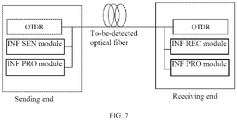
- the apparatus includes two parts, see FIG 7 , which are respectively a sending end and a receiving end, respectively connected to both ends of a to-be-detected optical fiber.
- the sending end at least needs to comprise one OTDR module and one information sending module
- the receiving end at least needs to comprise at least one OTDR module and one information receiving module.
- Another one or more information processing modules may exist at both the sending end and the receiving end, or may exist at only one of the two ends. Alternatively, they exist independently in other positions that can communicate with the sending end and the receiving end, and the OTDR modules at the both ends of the optical fiber respectively transmit the result to the information processing module after completing the test.
- the total length of the line is calculated via recording the transmission time of one signal from the sending end to the receiving end by the information sending module and the information receiving module.
- the information processing module calculates and generates a final test result through the test results of the OTDRs at the both ends and the total length of the line.
- the OTDR modules at the sending end and the receiving end respectively detect the optical fiber line from two directions, and send the detection results to the information processing module.
- the information receiving module receives the signal sent by the information sending module, records the time t required by the signal from the sending end to the receiving end, and transmits the time t to the information processing module.
- the sent signal may be an optical signal generated by using a laser in the OTDR module, or may be a signal generated in other ways and existing in any form.
- a single measurement result can be obtained by means of the integration according to the total length of the line and the test results of the OTDR modules at the both ends, and all the conditions of the whole line can be accurately indicated.
- An embodiment of the present disclosure provides a OTDR-based long-distance optical fiber detecting apparatus, including two parts, i.e. a receiving end and a sending end, wherein the sending end at least needs to comprise one OTDR module and one information sending module, and the receiving end at least needs to comprise one OTDR module and one information receiving module.
- Another one or more information processing modules may exist at both the sending end and the receiving end, or may exist at only one of the two ends.
- the OTDR modules are connected to the both ends of the to-be-detected optical fiber under the working condition, and are configured to respectively measure the optical fiber from two directions, so that the measurement result of the OTDR at one end can cover optical fibers outside the measurement range of the OTDR module at the other end. After the measurement is finished, the test result is transmitted to all the information processing modules.
- the information sending module and the information receiving module are configured to calculate the total length of the to-be-detected optical fiber through the propagation speed and the propagation time of the information in the medium.
- the information processing module is configured to analyze and process the measurement results of the OTDRs at both ends, and obtain the final measurement result in combination with the measured total length of the optical fiber.
- the sum of the measurable distances of the OTDRs at both ends should be larger than or equal to the total length of the optical fiber.
- the information sending module can use various methods to generate a signal for testing the length of the optical fiber, including but not limited to borrowing the laser in the OTDR module to send an optical signal as the signal for testing the length of the optical fiber.
- the information processing module may be respectively provided at multiple places, and may also be provided at only one place, and then send the result to various places with detection requirements.
- An embodiment of the present disclosure provides a long-distance optical fiber detecting method which obtains a final result containing the information about the full-segment optical fiber through the measurement results of the OTDRs at both ends, and the detection method comprises: performing an OTDR test from both ends of an optical fiber to obtain a test result, and transmitting the test result to the information processing module.
- the information processing module obtains a final measurement result through the measurement results of the OTDRs and the total length of the optical fiber, and transmits the final measurement result to various places having detection requirements.
- the embodiments of the present disclosure achieve the beneficial effect that they design an apparatus composed of a sending end and a receiving end, and a method, and perform the optical fiber detection from both ends of the optical fiber by using the OTDRs, so that the timeliness of learning the event information about the distal optical fiber can be improved.
- An embodiment of the present disclosure provides a long-distance optical fiber detecting apparatus and method, and the detecting apparatus comprises two parts: a sending end device and a receiving end device.
- the sending end comprises one OTDR module, one information sending module, and one information processing module.
- the receiving end comprises one OTDR module and one information receiving module.
- the OTDR of the receiving end and the OTDR of the sending end have the same dynamic range and the same working mode, and their maximum measurement ranges are larger than half of the total line length.
- the information sending module and the information receiving module are started to send an optical signal with sufficient power to a to-be-detected optical fiber by using a laser in the OTDR module, to ensure that it can be detected by the information receiving module at the receiving end.
- a time T of the information transmitting in the optical fiber is measured and recorded.
- an optical fiber distance represented by two adjacent sampling points of the OTDR module is recorded as m, and the information processing module is used to calculate the spliced measurement result R3(i) that can indicate the entire line, see the formula (1).
- R 3 i ⁇ R 1 i i ⁇ s 2 m R 2 ⁇ s ⁇ im m ⁇ i ⁇ s 2 m where ⁇ ⁇ represents upward rounding.
- An embodiment of the present disclosure provides a long-distance optical fiber detecting method, and the method may include step 702 to step 718:
- FIG 5 is a schematic diagram of the structural composition of a long-distance optical fiber detecting apparatus according to an embodiment of the present disclosure.
- the apparatus 500 comprises a response module 501, a determining module 502, a generating module 503, and a sending module 504.
- the response module 501 is configured to, in response to a detection request of a target node on a to-be-detected optical fiber, determine a first sampling sequence and a second sampling sequence respectively formed by propagation, on the to-be-detected optical fiber, of a first optical signal and a second optical signal respectively sent from each end of the to-be-detected optical fiber through an OTDR;
- the determining module 502 is configured to determine a total length of the to-be-detected optical fiber
- the generating module 503 is configured to generate a detection result according to the first sampling sequence, the second sampling sequence and the total length;
- the sending module 504 is configured to send the detection result to the target node.
- the determining module 501 comprises: a first determining unit which is configured to determine a sending time of a third optical signal recorded by a sending node, the third optical signal being used for measuring the to-be-detected optical; a second determining unit which is configured to determine a receiving time of the third optical signal recorded by a receiving node; a third determining unit which is configured to determine a propagation duration of the third optical signal on the to-be-detected optical fiber according to the sending time and the receiving time; and a fourth determining unit which is configured to determine a total length of the to-be-detected optical fiber according to the propagation duration.
- the first determining unit is configured to send, by a local end node used as the sending node, the third optical signal to an opposite end node used as the receiving node, and record a time stamp of sending the third optical signal as the sending time; correspondingly, the second determining unit is configured to receive, by the local end node, the receiving time sent by the opposite end node used as the receiving node.
- the first determining unit is configured to receive, by a local end node, the sending time sent by an opposite end node; correspondingly, the second determining unit is configured to receive, by the local end node used as the receiving node, the third optical signal, and record a time stamp of receiving the third optical signal as the receiving time.
- the first sampling sequence is a sequence composed of corresponding optical power attenuation values of the first optical signal recorded at each sampling point of the to-be-detected optical fiber; and the second sampling sequence is a sequence composed of corresponding optical power attenuation values of the second optical signal recorded at each sampling point of the to-be-detected optical fiber.
- the first sampling sequence is obtained by sampling the first optical signal sent by the sending node
- the second sampling sequence is obtained by sampling the second optical signal sent by the receiving node, wherein the first and second sampling sequences are numbered from the sending node to the receiving node in an increasing sequence
- the generating module 503 comprises: a fifth determining unit which is configured to determine a ratio between 1/2 of the total length and the distance between two adjacent sampling points; a first comparison unit, which is configured to add a sampling point in the first sampling sequence to a first sampling subsequence of the first sampling sequence in a case where the serial number of the sampling point in the first sampling sequence is less than the ratio; a first analysis unit, which is configured to analyze the first sampling subsequence, so as to obtain a first detection sub-result; a second comparison unit, which is configured to add a sampling point in the second sampling sequence to a second sampling subsequence of the second sampling sequence in a case where the serial number of the sampling point in the second sampling sequence is larger than or equal to the ratio; a second analysis unit, which is configured to analyze the second sampling subsequence, so as to obtain a second detection sub-result; and a generating unit, which is configured to generate a detection result according to the first detection sub-res
- the generating unit comprises: a first determining subunit, which is configured to determine an adjacent optical power attenuation value of the first optical signal or the second optical signal between the adjacent sampling points; a second determining subunit, which is configured to determine a third detection sub-result according to the second detection sub-result and the adjacent optical power attenuation value; and a generating subunit, which is configured to generate a detection result according to the first detection sub-result and the third detection sub-result.
- the apparatus 500 further comprises: a regenerating module, which is configured to determine a third sampling sequence and a fourth sampling sequence respectively formed by propagation, on the to-be-detected optical fiber, a fourth optical signal and a fifth optical signal sent from each end of the to-be-detected optical fiber through an OTDR in a case where the detection result does not meet a preset condition; regenerate an update detection result according to the third sampling sequence, the fourth sampling sequence and the total length; and send the update detection result to the target node.
- a regenerating module which is configured to determine a third sampling sequence and a fourth sampling sequence respectively formed by propagation, on the to-be-detected optical fiber, a fourth optical signal and a fifth optical signal sent from each end of the to-be-detected optical fiber through an OTDR in a case where the detection result does not meet a preset condition; regenerate an update detection result according to the third sampling sequence, the fourth sampling sequence and the total length; and send the update detection result to the target node.
- An embodiment of the present disclosure further provides a computer program product.
- the computer program product comprises a non-transitory computer readable storage medium storing a computer program, and the computer program causes a computer to execute a part or all of the steps of any of the long-distance optical fiber detecting methods described in the above-mentioned method embodiments.
- optical fiber detecting methods in a case where the afore-mentioned long-distance optical fiber detecting methods are implemented in the form of a software function module, and sold or used as an independent product, it may also be stored in a computer-readable storage medium.
- the technical solution of the embodiments of the present disclosure substantially, or the portion that has contributed to the related technologies may be embodied in the form of software products, and the computer software product is stored in a storage medium, including several instructions to enable a computer device (which may be a mobile phone, a tablet, a desktop, a personal digital assistant, a navigator, a digital phone, a video phone, a television, a sensing device, etc.) to execute all or a portion of the methods described in various embodiments of the present disclosure.
- the afore-mentioned storage medium includes various media that can store program codes, such as a USB flash disk, a mobile hard disk, a read-only memory (ROM), a magnetic disk, or an optical disk, and the like.
- An embodiment of the present disclosure provides a long-distance optical fiber detecting device, including: an optical time-domain reflectometer OTDR module and a long-distance optical fiber detecting apparatus, wherein:
- the long-distance optical fiber detecting system comprises: a first OTDR module 601, a second OTDR module 602, and a long-distance optical fiber detecting apparatus 603, wherein:
- an embodiment of the present disclosure provides a computer readable storage medium having a computer program stored thereon, and the computer program, when executed by a processor, implements the steps of the long-distance optical fiber detecting methods provided in the above-mentioned embodiments.
- the terms “comprise”, “include”, “concern” or any other variation thereof are intended to encompass a non-exclusive inclusion, such that a process, a method, an article, or a device comprising a series of elements not only includes those elements, but also includes other elements not expressly listed, or further includes an element inherent to such a process, method, article, or apparatus.
- an element defined by a sentence “including one", “comprising one", “including a” or “comprising a” does not exclude the existence of other identical elements in a process, a method, an article or a device that includes the element.
- the disclosed methods and devices may be realized in other ways.
- the device embodiments described above are merely schematic, for example, the division of the units is merely a logical function division, and there may be another division way in actual realization, e.g. multiple units or components may be combined, or may be integrated into another system, or some features may be ignored or not executed.
- the coupling, or direct coupling, or communication connection between the various components shown or discussed may be through some interfaces, and the indirect coupling or communication connection of devices or units may be electrical, mechanical or other forms.
- each functional unit in each embodiment of the present disclosure may be integrated into one processing module, or each unit may be separately used as a unit, or two or more units may be integrated into one unit; the above-mentioned integrated unit may be realized in a form of hardware, or may be realized in a form of hardware plus software functional units.
- the steps for implementing the above-mentioned method embodiments may be completed by means of hardware related to program instructions, and the afore-mentioned program may be stored in a computer-readable storage medium, and when the program is executed, the steps of the above-mentioned method embodiments are executed; and the afore-mentioned storage medium includes various media that may store program codes, such as a removable storage device, a read-only memory (ROM), a magnetic disk, or an optical disk, and the like.
- ROM read-only memory
- magnetic disk or an optical disk, and the like.
- the above-mentioned integrated units are realized in the form of software function modules and are sold or used as independent products, they may be stored in a computer-readable storage medium.
- the technical solution of the embodiments of the present disclosure may essentially be embodied in the form of software products, and the computer software product is stored in a storage medium, including several instructions to enable a computer device (which may be a mobile phone, a tablet computer, a desktop computer, a personal digital assistant, a navigator, a digital phone, a video phone, a television, a sensor device, etc.) to execute all or a portion of the method described in the various embodiments of the present disclosure.
- the afore-mentioned storage medium includes various media that can store program codes, such as a removable storage device, a ROM, a magnetic disk, or an optical disk, and the like.
- the methods disclosed in the several method embodiments provided by the present disclosure can be arbitrarily combined without conflict to obtain new method embodiments.
- the features disclosed in the several product embodiments provided by the present disclosure may be arbitrarily combined without conflict to obtain a new product embodiment.
- the features disclosed in several method embodiments or device embodiments provided by the present disclosure may be combined arbitrarily without conflict to obtain a new method embodiment or device embodiment.
- a detection result of the to-be-detected optical fiber is generated.
Landscapes
- Physics & Mathematics (AREA)
- General Physics & Mathematics (AREA)
- Engineering & Computer Science (AREA)
- Optics & Photonics (AREA)
- Chemical & Material Sciences (AREA)
- Analytical Chemistry (AREA)
- Electromagnetism (AREA)
- Computer Networks & Wireless Communication (AREA)
- Signal Processing (AREA)
- Microelectronics & Electronic Packaging (AREA)
- Testing Of Optical Devices Or Fibers (AREA)
- Optical Communication System (AREA)
Applications Claiming Priority (2)
| Application Number | Priority Date | Filing Date | Title |
|---|---|---|---|
| CN202010277902.5A CN111490818B (zh) | 2020-04-10 | 2020-04-10 | 一种长距离光纤检测方法及装置、设备、系统、存储介质 |
| PCT/CN2020/140401 WO2021203751A1 (fr) | 2020-04-10 | 2020-12-28 | Procédé, appareil, dispositif et système de mesure de fibre optique à longue distance, et support de stockage |
Publications (2)
| Publication Number | Publication Date |
|---|---|
| EP4135218A1 true EP4135218A1 (fr) | 2023-02-15 |
| EP4135218A4 EP4135218A4 (fr) | 2024-03-20 |
Family
ID=71794829
Family Applications (1)
| Application Number | Title | Priority Date | Filing Date |
|---|---|---|---|
| EP20929996.5A Pending EP4135218A4 (fr) | 2020-04-10 | 2020-12-28 | Procédé, appareil, dispositif et système de mesure de fibre optique à longue distance, et support de stockage |
Country Status (4)
| Country | Link |
|---|---|
| US (1) | US11901937B2 (fr) |
| EP (1) | EP4135218A4 (fr) |
| CN (1) | CN111490818B (fr) |
| WO (1) | WO2021203751A1 (fr) |
Families Citing this family (5)
| Publication number | Priority date | Publication date | Assignee | Title |
|---|---|---|---|---|
| CN111490818B (zh) | 2020-04-10 | 2022-03-11 | 武汉光迅科技股份有限公司 | 一种长距离光纤检测方法及装置、设备、系统、存储介质 |
| US11885707B2 (en) | 2021-11-17 | 2024-01-30 | Ii-Vi Delaware, Inc. | Fiber span characterization utilizing paired optical time domain reflectometers |
| CN114674532B (zh) * | 2022-02-27 | 2025-01-07 | 江苏欧软信息科技有限公司 | 一种基于工业互联网平台的光纤测试数据采集方法和系统 |
| CN116054933B (zh) * | 2022-11-28 | 2026-02-24 | 阿里巴巴(中国)有限公司 | 光纤双端检测方法、电子设备及计算机存储介质 |
| CN116545529B (zh) * | 2023-07-06 | 2023-09-12 | 国网浙江省电力有限公司湖州供电公司 | 基于光缆运维路径的故障数据处理方法 |
Family Cites Families (19)
| Publication number | Priority date | Publication date | Assignee | Title |
|---|---|---|---|---|
| JP3411436B2 (ja) * | 1996-01-12 | 2003-06-03 | Kddi株式会社 | 光通信線路の監視方法 |
| KR20030097258A (ko) * | 2002-06-20 | 2003-12-31 | 주식회사 케이티 | 장거리 광선로 감시 시스템 |
| CN101447832B (zh) * | 2008-12-17 | 2012-05-23 | 安徽电力通信有限责任公司 | 一种测量超长距离光缆线路性能参数的方法 |
| US8345229B2 (en) * | 2009-09-28 | 2013-01-01 | At&T Intellectual Property I, L.P. | Long distance optical fiber sensing system and method |
| CN102142891B (zh) * | 2010-06-24 | 2015-01-21 | 华为技术有限公司 | 光纤长度测量的方法、时间同步的方法、相应装置及系统 |
| US9900086B2 (en) * | 2014-01-31 | 2018-02-20 | Afl Telecommunications Llc | Shooting long fiber spans with high loss fiber |
| CN105490734B (zh) * | 2014-09-25 | 2019-09-03 | 华为技术有限公司 | 一种光纤长度测量方法及装置 |
| CN104866708B (zh) * | 2015-04-16 | 2017-08-29 | 中国电子科技集团公司第四十一研究所 | 一种botdr光纤应变分布曲线拼接方法 |
| US9847831B2 (en) * | 2016-04-08 | 2017-12-19 | Ciena Corporation | Dual wavelenth optical time domain reflectometer systems and methods embedded in a WDM system |
| WO2017177412A1 (fr) * | 2016-04-14 | 2017-10-19 | 华为技术有限公司 | Procédé de détection d'état de fibre optique, unité de supervision optique et site |
| US20180266808A1 (en) * | 2017-03-20 | 2018-09-20 | Photon Kinetics, Inc. | Systems and methods for testing optical fiber |
| CN108306674A (zh) * | 2018-01-12 | 2018-07-20 | 北京天元创新科技有限公司 | 一种光缆故障点的定位方法及定位装置 |
| US10411796B1 (en) * | 2018-05-22 | 2019-09-10 | Ciena Corporation | Optical fiber characterization measurement systems and methods |
| US10914655B2 (en) * | 2018-08-28 | 2021-02-09 | Viavi Solutions Inc. | Optical time-domain reflectometer device including multiple and bi-directional optical testing for fiber analysis |
| CN110635840B (zh) * | 2018-12-19 | 2022-09-27 | 国网湖北省电力有限公司超高压公司 | 一种双向otdr测试曲线的拼接方法 |
| CN111595241B (zh) * | 2019-02-21 | 2021-05-25 | 中兴通讯股份有限公司 | 一种光纤监测方法和设备 |
| CN110474676A (zh) * | 2019-08-08 | 2019-11-19 | 国网新疆电力有限公司信息通信公司 | 一种适用于长距离光缆在线监测系统及监测方法 |
| CN111490818B (zh) * | 2020-04-10 | 2022-03-11 | 武汉光迅科技股份有限公司 | 一种长距离光纤检测方法及装置、设备、系统、存储介质 |
| US11885707B2 (en) * | 2021-11-17 | 2024-01-30 | Ii-Vi Delaware, Inc. | Fiber span characterization utilizing paired optical time domain reflectometers |
-
2020
- 2020-04-10 CN CN202010277902.5A patent/CN111490818B/zh active Active
- 2020-12-28 US US17/907,248 patent/US11901937B2/en active Active
- 2020-12-28 EP EP20929996.5A patent/EP4135218A4/fr active Pending
- 2020-12-28 WO PCT/CN2020/140401 patent/WO2021203751A1/fr not_active Ceased
Also Published As
| Publication number | Publication date |
|---|---|
| WO2021203751A1 (fr) | 2021-10-14 |
| CN111490818B (zh) | 2022-03-11 |
| US11901937B2 (en) | 2024-02-13 |
| CN111490818A (zh) | 2020-08-04 |
| EP4135218A4 (fr) | 2024-03-20 |
| US20230106273A1 (en) | 2023-04-06 |
Similar Documents
| Publication | Publication Date | Title |
|---|---|---|
| US11901937B2 (en) | Long-distance optical fiber detecting method, apparatus, device and system, and storage medium | |
| US7738787B2 (en) | Optical transmission line monitoring device, optical transmission line monitoring method, and computer program | |
| US9709460B2 (en) | Method and system for measuring an optical loss value of an optical fiber link | |
| JP3527844B2 (ja) | 多分岐光線路試験方法および装置 | |
| US9310274B2 (en) | System and method for measuring fiber temperature using OTDR measurements | |
| US8570501B2 (en) | Fiber identification using mode field diameter profile | |
| US8576387B2 (en) | Fiber identification using optical frequency-domain reflectometer | |
| CN113438018A (zh) | 光缆故障检测方法及装置 | |
| KR20140051495A (ko) | 광링크 장애 감시 장치의 성능 향상방법 | |
| CN108627317A (zh) | 光纤测试方法、设备及系统 | |
| CN111127793A (zh) | 电缆防盗监测方法和系统、计算机可读存储介质 | |
| US9097615B2 (en) | Fiber signal loss event identification | |
| CN115021804B (zh) | 一种长距离通信光缆故障定位方法及相关装置 | |
| CN217469960U (zh) | 一种光时域反射仪和分布式光纤传感器获取光缆故障装置 | |
| CN113834631A (zh) | 一种光纤测量方法、系统及装置 | |
| CN119727896B (zh) | 基于多频率探测脉冲的远距离光缆路由采集方法及系统 | |
| US20230221153A1 (en) | Device, method and program for detecting microbend | |
| US7317518B2 (en) | Determination of an optical property of a DUT by OTDR measurement | |
| CN210183335U (zh) | 一种单轴光纤干涉仪及消除光纤振动盲区的定位装置 | |
| CN114826390A (zh) | 一种基于光时域反射仪查找光缆故障点的方法及装置 | |
| WO2026045684A1 (fr) | Procédé et appareil de mesure de forme de fibre | |
| US20230152152A1 (en) | Automatic fiber end point detection using coherent optical time domain reflectometry | |
| JP4728991B2 (ja) | 光線路監視方法、光線路監視システム、および光線路監視装置とそのプログラム | |
| CN119727891A (zh) | 通信光缆的寻缆方法、电子设备及计算机可读存储介质 | |
| GB2626744A (en) | Method and system for testing a fibre optic network |
Legal Events
| Date | Code | Title | Description |
|---|---|---|---|
| STAA | Information on the status of an ep patent application or granted ep patent |
Free format text: STATUS: THE INTERNATIONAL PUBLICATION HAS BEEN MADE |
|
| PUAI | Public reference made under article 153(3) epc to a published international application that has entered the european phase |
Free format text: ORIGINAL CODE: 0009012 |
|
| STAA | Information on the status of an ep patent application or granted ep patent |
Free format text: STATUS: REQUEST FOR EXAMINATION WAS MADE |
|
| 17P | Request for examination filed |
Effective date: 20220923 |
|
| AK | Designated contracting states |
Kind code of ref document: A1 Designated state(s): AL AT BE BG CH CY CZ DE DK EE ES FI FR GB GR HR HU IE IS IT LI LT LU LV MC MK MT NL NO PL PT RO RS SE SI SK SM TR |
|
| DAV | Request for validation of the european patent (deleted) | ||
| DAX | Request for extension of the european patent (deleted) | ||
| A4 | Supplementary search report drawn up and despatched |
Effective date: 20240214 |
|
| RIC1 | Information provided on ipc code assigned before grant |
Ipc: G01M 11/00 20060101ALI20240209BHEP Ipc: G01B 11/02 20060101ALI20240209BHEP Ipc: H04B 10/071 20130101AFI20240209BHEP |