EP4135268B1 - Procédés, systèmes et dispositifs permettant de coordonner une pluralité de n uds dans un réseau ethernet 10base-t1s - Google Patents
Procédés, systèmes et dispositifs permettant de coordonner une pluralité de n uds dans un réseau ethernet 10base-t1s Download PDFInfo
- Publication number
- EP4135268B1 EP4135268B1 EP21306106.2A EP21306106A EP4135268B1 EP 4135268 B1 EP4135268 B1 EP 4135268B1 EP 21306106 A EP21306106 A EP 21306106A EP 4135268 B1 EP4135268 B1 EP 4135268B1
- Authority
- EP
- European Patent Office
- Prior art keywords
- node
- plca
- coordinator
- identifier
- network
- Prior art date
- Legal status (The legal status is an assumption and is not a legal conclusion. Google has not performed a legal analysis and makes no representation as to the accuracy of the status listed.)
- Active
Links
Images




Classifications
-
- H—ELECTRICITY
- H04—ELECTRIC COMMUNICATION TECHNIQUE
- H04L—TRANSMISSION OF DIGITAL INFORMATION, e.g. TELEGRAPHIC COMMUNICATION
- H04L12/00—Data switching networks
- H04L12/28—Data switching networks characterised by path configuration, e.g. LAN [Local Area Networks] or WAN [Wide Area Networks]
- H04L12/40—Bus networks
- H04L12/40143—Bus networks involving priority mechanisms
- H04L12/40156—Bus networks involving priority mechanisms by using dedicated slots associated with a priority level
-
- H—ELECTRICITY
- H04—ELECTRIC COMMUNICATION TECHNIQUE
- H04L—TRANSMISSION OF DIGITAL INFORMATION, e.g. TELEGRAPHIC COMMUNICATION
- H04L12/00—Data switching networks
- H04L12/28—Data switching networks characterised by path configuration, e.g. LAN [Local Area Networks] or WAN [Wide Area Networks]
- H04L12/40—Bus networks
- H04L12/407—Bus networks with decentralised control
- H04L12/413—Bus networks with decentralised control with random access, e.g. carrier-sense multiple-access with collision detection [CSMA-CD]
-
- H—ELECTRICITY
- H04—ELECTRIC COMMUNICATION TECHNIQUE
- H04L—TRANSMISSION OF DIGITAL INFORMATION, e.g. TELEGRAPHIC COMMUNICATION
- H04L12/00—Data switching networks
- H04L12/28—Data switching networks characterised by path configuration, e.g. LAN [Local Area Networks] or WAN [Wide Area Networks]
- H04L12/40—Bus networks
- H04L12/40143—Bus networks involving priority mechanisms
- H04L12/4015—Bus networks involving priority mechanisms by scheduling the transmission of messages at the communication node
-
- H—ELECTRICITY
- H04—ELECTRIC COMMUNICATION TECHNIQUE
- H04L—TRANSMISSION OF DIGITAL INFORMATION, e.g. TELEGRAPHIC COMMUNICATION
- H04L12/00—Data switching networks
- H04L12/28—Data switching networks characterised by path configuration, e.g. LAN [Local Area Networks] or WAN [Wide Area Networks]
- H04L12/40—Bus networks
- H04L12/403—Bus networks with centralised control, e.g. polling
- H04L12/4035—Bus networks with centralised control, e.g. polling in which slots of a TDMA packet structure are assigned based on a contention resolution carried out at a master unit
Definitions
- the present disclosure relates to Ethernet communications and relates more particularly to improvements of physical layer collision avoidance methods for Ethernet networks, such as single twisted pair Ethernet networks (10BASE-T1S).
- Electrical systems such as electrical panels usually comprise many electrical devices, such as so-called “smart” switchgear devices, measurement devices, and so on, having communication capabilities for operation as a node on a wired communications network.
- the nodes are often connected to the network in a bus-like arrangement, e.g. with a multidrop network topology, in which a data carrier is shared by multiple nodes.
- some networks such as 10BASE-T1S Ethernet networks, implement a physical layer collision avoidance (PLCA) method, as described in the IEEE 802.3cg-2019 standard. This method relies in part on the assumption that each node has been assigned a unique node identifier or PLCA identifier.
- PLCA physical layer collision avoidance
- a drawback of this method is that there is no standard method to automatically assign a PLCA identifier to a node. Thus, users must manually allocate a unique identifier to each node connected to the network. This may be impractical in many applications, in which nodes are often added to the network or removed from the network during operation. This is for example the case in electrical distribution systems and especially electrical panels, in which electrical devices may have to be replaced during installation, or repairs, or routine maintenance operations.
- An aspect of the invention relates to a method for configuring a plurality of nodes in a 10BASE-T1S Ethernet network as defined by claim 1
- the first and/or second coordinator nodes is/are automatically selected prior to automatic allocation of the transmit opportunity slots to the other device nodes.
- Unique PLCA identifiers can then be allocated dynamically and in a decentralized fashion to the nodes of the network.
- the system can update itself to allow for fewer or for more nodes.
- a continual looped cycle on the part of the ordinary device nodes allows for an automatic re-selection of a different first and/or second coordinator node after network start-up in case one or the other coordinator nodes disappear.
- a new coordinator node will be elected to replace the missing coordinator node, in order to allow the PLCA system to continue to operate.
- the invention may advantageously comprise one or more of the technical features, as defined in any one of claims 2 to 14 .
- Figure 1 illustrates an exemplary network according to embodiments of the invention.
- a system 2 comprises a plurality of nodes 4 connected to a wired communications network 6, preferably a multidrop network.
- the Ethernet network is a single twisted pair Ethernet network, also known as a 10BASE-T1S network, as described in the IEEE 802.3cg-2019 standard.
- the nodes 4 are connected to a network media such as a single Ethernet cable 6, preferably with a multidrop topology.
- a network media such as a single Ethernet cable 6, preferably with a multidrop topology.
- Other embodiments are possible, such as a daisy chain topology (using only one network interface per node) or a point-to-point topology.
- the system 2 comprises n+1 nodes, where "n" is a nonzero integer.
- the second coordinator node is configured to, for example during each transmission cycle, open a plurality of separate transmission opportunities (TO), each transmission opportunity allowing only one of said nodes 4 to send data to the network 6.
- TO transmission opportunities
- the method for coordinating nodes comprises steps consisting of:
- the second coordinator node is arranged to assign a free PLCA identifier to a new node connected or available to the network and update the pool of PLCA identifiers accordingly.
- the second coordinator node periodically broadcasts to the network the pool (the list) of PLCA identifiers updated with any changes detected by the second coordinator node.
- the node with the PLCA identifier "0" is the first to receive a transmit opportunity
- the node with the PLCA identifier "1” is the second to receive a transmit opportunity
- the node with the PLCA identifier "n” is the last to receive a transmit opportunity.
- the list (or pool) of PLCA identifiers is stored in memory of the second coordinator node.
- the list may associate, to each allocated PLCA identifier, a unique physical identifier (UID) identifying the corresponding node of the network (such as a hardware identifier of that node, e.g. a MAC address of that node).
- a unique physical identifier identifying the corresponding node of the network (such as a hardware identifier of that node, e.g. a MAC address of that node).
- each node comprises a memory for storing a unique PLCA identifier (PLCA ID) assigned to said node.
- PLCA ID unique PLCA identifier assigned to said node.
- Each node stores its unique physical identifier (UID) in its memory.
- the unique physical identifier (UID) of each node is programmable.
- FIG. 4 An embodiment 40 of the method for designating the first coordinator node is illustrated at Figure 4 .
- This method 4 is described in reference to a single node 4, but in practice an instance of this method is executed concurrently by several nodes, or even by every node 4 of the network.
- the node 4 checks whether the first coordinator node has been identified on the network 6 during the duration of the first listening cycle, for example by checking whether a PLCA beacon 32 has been received during the first listening cycle.
- the node 4 designates itself as the new first coordinator node, for example by setting its PLCA identifier (PLCA ID) to 0 (to become the first node to receive a transmit opportunity).
- PLCA ID PLCA identifier
- the role identifier 22 of the node 4 may be updated in consequence.
- the node 4 designates as the second coordinator node.
- the newly designated second coordinator node determines whether it already has the role of first coordinator node.
- the method stops successfully.
- the newly designated second coordinator node sets its PLCA identifier of the (PLCA ID) to a different value than the PLCA identifier of the first coordinator node (e.g., a value different from 0).
- the newly designated second coordinator node is the "Node 1" identified on Figures 1 and 3 .
- FIG. 6 An embodiment 60 of the method for managing PLCA identifiers by the second coordinator node is illustrated by Figure 6 .
- the second coordinator node After having been assigned the role of second coordinator node, the second coordinator node sends a list of PLCA identifiers (PLCA ID) to the remaining nodes 4, for example by broadcasting the list to all nodes 4 of the network.
- PLCA ID PLCA identifiers
- the second coordinator node may broadcast a list of the allocated PLCA identifiers, each node being then arranged to automatically determine, by comparing the list of already allocated PLCA identifiers with the list of all possible PLCA identifiers, whether their requested identifier has already been allocated.
- the second coordinator node may broadcast a list of free (i.e. unallocated) PLCA identifiers and send to each requester node independently a confirmation that their requested id has been successfully allocate.
- the nodes are able to know which PLCA identifiers are free and whether or not the requested PLCA identifier has been successfully allocated.
- the second coordinator node checks whether any PCLA identifier allocation request has been received from any node 4 (or device) during a certain time limit, for example during the transmission cycle.
- the second coordinator node allocates the requested PLCA identifier to the requester node 4, provided that the requested PLCA identifier is available, i.e. has not been allocated to another node 4.
- the requested PLCA identifier is not allocated if it is found to be unavailable by the second coordinator node. The method then jumps to step 126.
- the second coordinator node checks whether any node 4 with an allocated PLCA identifier has disappeared during a certain time limit, for example during the transmission cycle.
- step 126 If, during step 126, one or more nodes 4 with an allocated PLCA identifier are found to have disappeared, then, during a step 128, the corresponding PLCA identifier(s) are freed and the list is updated accordingly.
- the reference such as the UID mentioned above, e.g. the network address or the MAC Address
- the corresponding node of the network is removed from the list of PLCA identifiers stored in memory of the second coordinator node.
- the updated list is then sent to the nodes 4. For example, steps 120 through 128 may be repeated, preferably periodically, during operation of the system 2. In some cases, instead of receiving a full list of all PLCA identifiers, the nodes 4 may only receive an information on whether or not their request for a PLCA identifier has been satisfied.
- the step 122 may consist of detecting the appearance of this new unallocated device on the network by any means (e.g. the node may signal its presence to the second coordinator by an appropriate signal, such as heartbeat message or the like).
- the step 126 then consists in allocating a free, unallocated PLCA identifier to this new device (provided that there is still unallocated PLCA identifiers ready to be assigned to this new device) and informing said node of its new PLCA identifier, by any means possible.
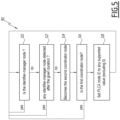
- FIG. 7 An embodiment 70 of the method for requesting a PLCA identifier by a node 4 is illustrated by Figure 7 .
- two different sub-functions are combined: one function related to requesting a PLCA identifier by a node, and one function dedicated to signaling the node's presence to the second coordinator node, although other embodiments are possible.
- This method is described in reference to a single node 4, but in practice an instance of this method is executed concurrently by every node 4 of the network.
- the node 4 verifies whether the list of PLCA identifiers (the pool of identifiers) has been received from the second coordinator node.
- step 130 is executed after the node 4 has executed the methods for self-allocating the role of first coordinator node and second coordinator node (e.g., steps 100-104 and 110-118).
- the node 4 verifies if a PLCA identifier has been allocated to said node 4, e.g. by reading the contents of the received list of PLCA identifiers.
- the node 4 continues to listen for the list.
- a PLCA identifier is found to have been allocated to said node 4
- the node 4 sets its PLCA identifier 24 to the allocated PLCA identifier (e.g. by updating its PLCA identifier 24 with the value of the allocated PLCA identifier read from the received list of PLCA identifiers).
- the node 4 notifies its presence to the second coordinator node, e.g. by broadcasting a heartbeat to the network, or by sending one or more packets of data during the time window corresponding to its own transmit opportunity.
- the node 4 If after the step 132 the node 4 identifies that it has not been allocated any PLCA identifier, then during a step 138, the node 4 sends a request to the second coordinator node for requesting a PLCA identifier.
Landscapes
- Engineering & Computer Science (AREA)
- Computer Networks & Wireless Communication (AREA)
- Signal Processing (AREA)
- Small-Scale Networks (AREA)
Claims (15)
- Procédé de configuration d'une pluralité de nœuds (4) dans un réseau Ethernet 10BASE-T1S (6), lesdits nœuds étant configurés pour mettre en œuvre un processus d'évitement de collision de la couche physique, ci-après dénommé « PLCA », dans lequel le réseau comprend :un premier nœud de coordinateur étant configuré pour envoyer périodiquement une balise PLCA au réseau afin de démarrer chaque cycle de transmission respectif d'un processus PLCA ; etun second nœud de coordinateur étant configuré pour ouvrir une pluralité de possibilités de transmission séparées, chacune avec un identifiant PLCA unique (PLCA ID) à partir d'un groupe d'identifiants PLCA fourni par le second coordinateur, chaque identifiant PLCA pouvant être attribué par le second coordinateur à un identifiant physique unique fourni chacun par un nœud respectif, chaque possibilité de transmission permettant à un seul desdits nœuds d'envoyer des données au réseau à un moment donné quelconque,dans lequel le procédé comprend la sélection automatique d'un nœud de coordinateur sélectionné étant le premier ou le second nœud de coordinateur, dans lequel la sélection automatique d'un nœud de coordinateur sélectionné comprend, par chaque nœud du réseau :l'écoute répétée d'une diffusion de coordinateur sélectionné vers le réseau pendant un ou plusieurs cycles d'écoute, chaque cycle d'écoute étant au moins aussi long qu'un cycle de transmission,la sélection d'un nœud en tant que nœud de coordinateur sélectionné s'il peut être ainsi sélectionné et si ledit nœud n'a pas détecté ladite diffusion de coordinateur sélectionné au cours d'un cycle d'écoute,la non-sélection d'un nœud en tant que nœud de coordinateur sélectionné si ledit nœud a reçu ladite diffusion de coordinateur sélectionné au cours d'au moins un cycle d'écoute.
- Procédé selon la revendication 1, dans lequel la sélection automatique du premier nœud de coordinateur en tant que le nœud de coordinateur sélectionné comprend, par chaque nœud du réseau :l'écoute répétée d'une diffusion de coordinateur sélectionné comprenant une balise PLCA pendant un ou plusieurs premiers cycles d'écoute, chaque premier cycle d'écoute étant au moins aussi long qu'un cycle de transmission,la sélection d'un nœud en tant que le premier nœud de coordinateur s'il peut être le premier nœud de coordinateur et si ledit nœud n'a pas détecté ladite balise PLCA au cours d'un premier cycle d'écoute,la non sélection d'un nœud en tant que le premier nœud de coordinateur si ledit nœud a reçu ladite balise PLCA au cours d'au moins un premier cycle d'écoute, etlors de la sélection du premier nœud de coordinateur, l'attribution d'une possibilité de transmission initiale au premier nœud de coordinateur nouvellement sélectionné.
- Procédé selon l'une quelconque des revendications précédentes, dans lequel la sélection automatique du second nœud de coordinateur en tant que le nœud de coordinateur sélectionné comprend, par chaque nœud du réseau,l'écoute répétée d'une diffusion de coordinateur sélectionné comprenant un signal de présence du second nœud de coordinateur pendant un ou plusieurs seconds cycles d'écoute, chaque second cycle d'écoute étant au moins aussi long qu'un cycle de transmission,la sélection d'un nœud en tant que le second nœud de coordinateur s'il peut être le second nœud de coordinateur et si ledit nœud n'a pas détecté le signal de présence du second nœud de coordinateur au cours d'un second cycle d'écoute,la non-sélection d'un nœud en tant que le second nœud de coordinateur si ledit nœud a reçu le signal de présence du second nœud de coordinateur au cours d'au moins un second cycle d'écoute.
- Procédé selon l'une quelconque des revendications précédentes, dans lequel le second nœud de coordinateur est le même nœud que le premier nœud de coordinateur et se voit attribué l'identifiant PLCA d'une possibilité de transmission initiale.
- Procédé selon l'une quelconque des revendications 1 à 3, dans lequel le second nœud de coordinateur est différent du premier nœud de coordinateur et se voit attribué un identifiant PLCA différent de l'identifiant PLCA d'une opportunité de transmission initiale.
- Procédé selon l'une quelconque des revendications précédentes, dans lequel le procédé comprend l'attribution automatique d'un identifiant PLCA unique à chaque nœud par les moyens suivants :a) chaque nœud diffuse sa présence, diffusant facultativement sa présence de manière périodique, dans le réseau de sorte que le second nœud de coordinateur puisse attribuer de quelconques identifiants PLCA non attribués à de quelconques nœuds non attribués ; et/oub) chaque nœud non attribué déduit son identifiant PLCA d'un message d'identifiant PLCA diffusé, facultativement diffusé périodiquement, par le second nœud de coordinateur.
- Procédé selon la revendication 6, dans lequel le second nœud de coordinateur met périodiquement à jour un quelconque message d'identifiant PLCA en fonction de quelconques modifications apportées au groupe d'identifiants PLCA.
- Procédé selon l'une quelconque des revendications 6 ou 7, dans lequel chaque nœud attribué signale sa présence et/ou transmet des données pendant sa possibilité de transmission, jusqu'à ce que ledit nœud soit déconnecté du réseau ou indisponible pour celui-ci.
- Procédé selon l'une quelconque des revendications 6 à 8, dans lequel le second nœud de coordinateur est agencé pour libérer un identifiant PLCA d'un nœud déconnecté du réseau ou indisponible pour celui-ci et mettre à jour le groupe d'identifiants PLCA en conséquence.
- Procédé selon l'une quelconque des revendications 6 à 9, dans lequel le second nœud de coordinateur est agencé pour attribuer un identifiant PLCA libre à un nouveau nœud connecté au réseau ou disponible pour celui-ci, et mettre à jour le groupe d'identifiants PLCA en conséquence.
- Procédé selon l'une quelconque des revendications 6 à 10, dans lequel le second nœud de coordinateur comprend une mémoire pour stocker le groupe d'identifiants PLCA.
- Procédé selon l'une quelconque des revendications 6 à 11, dans lequel chaque nœud comprend une mémoire pour stocker un identifiant PLCA unique (PLCA ID) attribué audit nœud.
- Procédé selon la revendication 12, dans lequel chaque nœud stocke son identifiant physique unique dans sa mémoire.
- Procédé selon l'une quelconque des revendications précédentes, dans lequel l'identifiant physique unique de chaque nœud est programmable.
- Système (2) comprenant une pluralité de nœuds (4) connectés à un réseau Ethernet 10BASE-T1S, lesdits nœuds étant configurés pour mettre en œuvre un processus d'évitement de collision de couche physique, ci-après dénommé « PLCA », chaque nœud comprenant un processeur (12), une mémoire (14) et une interface réseau (16) configurée pour mettre en œuvre une pile réseau,dans lequel la mémoire stocke des instructions configurées pour amener le processeur à mettre en œuvre un procédé de configuration d'une pluralité de nœuds,caractérisé en ce que le système comprend :un premier nœud de coordinateur étant configuré pour envoyer périodiquement une balise PLCA au réseau afin de démarrer chaque cycle de transmission respectif d'un processus PLCA ; etun second nœud de coordinateur étant configuré pour ouvrir une pluralité de possibilités de transmission séparées, chacune avec un identifiant PLCA unique (PLCA ID) à partir d'un groupe d'identifiants PLCA fourni par le second coordinateur, chaque identifiant PLCA pouvant être attribué par le second coordinateur à un identifiant physique unique fourni chacun par un nœud respectif, chaque possibilité de transmission permettant à un seul desdits nœuds d'envoyer des données au réseau à un moment donné quelconque,et en ce que le procédé comprend la sélection automatique d'un nœud de coordinateur sélectionné étant au moins l'un du premier nœud de coordinateur et du second nœud de coordinateur, dans lequel la sélection automatique d'un nœud de coordinateur sélectionné comprend, par chaque nœud du réseau :l'écoute répétée d'une diffusion de coordinateur sélectionné vers le réseau pendant un ou plusieurs cycles d'écoute, chaque cycle d'écoute étant au moins aussi long qu'un cycle de transmission,la sélection d'un nœud en tant que nœud de coordinateur sélectionné s'il peut être ainsi sélectionné et si ledit nœud n'a pas détecté ladite diffusion de coordinateur sélectionné au cours d'un cycle d'écoute,la non-sélection d'un nœud en tant que nœud de coordinateur sélectionné si ledit nœud a reçu ladite diffusion de coordinateur sélectionné au cours d'au moins un cycle d'écoute.
Priority Applications (4)
| Application Number | Priority Date | Filing Date | Title |
|---|---|---|---|
| EP21306106.2A EP4135268B1 (fr) | 2021-08-09 | 2021-08-09 | Procédés, systèmes et dispositifs permettant de coordonner une pluralité de n uds dans un réseau ethernet 10base-t1s |
| PCT/EP2022/072183 WO2023016959A1 (fr) | 2021-08-09 | 2022-08-08 | Procédés, systèmes et dispositifs pour coordonner une pluralité de nœuds dans un réseau ethernet 10base-t1s |
| US18/682,172 US20250132951A1 (en) | 2021-08-09 | 2022-08-08 | Methods, systems and devices for coordinating a plurality of nodes in a 10base-t1s ethernet network |
| CN202280051224.8A CN117678202A (zh) | 2021-08-09 | 2022-08-08 | 用于协调10base-t1s以太网网络中的多个节点的方法、系统和设备 |
Applications Claiming Priority (1)
| Application Number | Priority Date | Filing Date | Title |
|---|---|---|---|
| EP21306106.2A EP4135268B1 (fr) | 2021-08-09 | 2021-08-09 | Procédés, systèmes et dispositifs permettant de coordonner une pluralité de n uds dans un réseau ethernet 10base-t1s |
Publications (3)
| Publication Number | Publication Date |
|---|---|
| EP4135268A1 EP4135268A1 (fr) | 2023-02-15 |
| EP4135268B1 true EP4135268B1 (fr) | 2025-07-02 |
| EP4135268C0 EP4135268C0 (fr) | 2025-07-02 |
Family
ID=77520661
Family Applications (1)
| Application Number | Title | Priority Date | Filing Date |
|---|---|---|---|
| EP21306106.2A Active EP4135268B1 (fr) | 2021-08-09 | 2021-08-09 | Procédés, systèmes et dispositifs permettant de coordonner une pluralité de n uds dans un réseau ethernet 10base-t1s |
Country Status (4)
| Country | Link |
|---|---|
| US (1) | US20250132951A1 (fr) |
| EP (1) | EP4135268B1 (fr) |
| CN (1) | CN117678202A (fr) |
| WO (1) | WO2023016959A1 (fr) |
Families Citing this family (3)
| Publication number | Priority date | Publication date | Assignee | Title |
|---|---|---|---|---|
| CN121153230A (zh) * | 2023-05-16 | 2025-12-16 | 亚德诺半导体国际无限责任公司 | 分组网络中的介质访问控制 |
| EP4535731A1 (fr) * | 2023-10-05 | 2025-04-09 | Nxp B.V. | Procédé d'exploitation d'une pluralité de n uds de communication dans un réseau ethernet 10base-t1s |
| FR3168098A1 (fr) | 2024-10-31 | 2026-05-01 | Schneider Electric Industries Sas | Procédé et système de détermination automatique de la topologie d’un réseau de communication de type Ethernet 10BASE-T1S |
Family Cites Families (3)
| Publication number | Priority date | Publication date | Assignee | Title |
|---|---|---|---|---|
| US8571003B2 (en) * | 2008-02-21 | 2013-10-29 | Mitsubishi Electric Research Laboratories, Inc. | Timeslot sharing protocol for wireless communication networks |
| US10952243B2 (en) * | 2018-04-10 | 2021-03-16 | Nio Usa, Inc. | Method, system and device for network communications within a vehicle |
| US11233750B2 (en) * | 2018-10-29 | 2022-01-25 | Hyundai Motor Company | Method and apparatus for allocating transmission opportunities in vehicle network |
-
2021
- 2021-08-09 EP EP21306106.2A patent/EP4135268B1/fr active Active
-
2022
- 2022-08-08 WO PCT/EP2022/072183 patent/WO2023016959A1/fr not_active Ceased
- 2022-08-08 US US18/682,172 patent/US20250132951A1/en active Pending
- 2022-08-08 CN CN202280051224.8A patent/CN117678202A/zh active Pending
Also Published As
| Publication number | Publication date |
|---|---|
| WO2023016959A1 (fr) | 2023-02-16 |
| EP4135268A1 (fr) | 2023-02-15 |
| US20250132951A1 (en) | 2025-04-24 |
| CN117678202A (zh) | 2024-03-08 |
| EP4135268C0 (fr) | 2025-07-02 |
Similar Documents
| Publication | Publication Date | Title |
|---|---|---|
| US20250132951A1 (en) | Methods, systems and devices for coordinating a plurality of nodes in a 10base-t1s ethernet network | |
| EP3300339B1 (fr) | Adressage (ip) de protocole internet basé sur la topologie | |
| US6216172B1 (en) | Automatic can address allocation method | |
| CN103119916B (zh) | 向同类总线用户自动分发地址的方法 | |
| US20030074450A1 (en) | Home network system and method of allocating node identification | |
| US20030101282A1 (en) | Method and apparatus for assigning a network node address | |
| US9100397B2 (en) | BACnet MS/TP automatic MAC addressing | |
| CN101631147A (zh) | 一种分配串行总线从节点地址的方法、电子装置和系统 | |
| EP0527118A2 (fr) | Représentation de l'intégrité dans un réseau de communication | |
| JP2001512944A (ja) | 自動的アドレス指定のための方法、自動的アドレス指定のためのバスシステムおよび本バスシステムおよび方法に使用可能な通信加入機器 | |
| CN117544596B (zh) | 遥测系统的地址自动分配方法及遥测系统、存储介质 | |
| CN117319185A (zh) | 一种基于can通信的多设备主从通信系统及编址、监测方法 | |
| CN112511662B (zh) | 系统通讯地址生成、分配方法和装置以及空调系统 | |
| KR20140059149A (ko) | 통신 시스템 | |
| CN110995889A (zh) | 地址分配系统和方法 | |
| CN114500472B (zh) | 一种rs485通信地址自动分配的方法 | |
| CN111182086A (zh) | 基于一主多从式模块的can总线地址分配方法及装置 | |
| US10735478B2 (en) | Controller and method for setting up communication links to redundantly operated controllers in an industrial automation system | |
| CN120111030A (zh) | 自动编址方法、系统及计算机可读介质 | |
| CN120186135A (zh) | 一种冲突地址的处理方法及相关装置 | |
| US7583690B2 (en) | Allocation of station addresses to communication users in a bus system | |
| CN117081220B (zh) | 一种储能系统管理方法和储能系统 | |
| JPH06269068A (ja) | 遠隔監視制御システム | |
| US20030142630A1 (en) | Tdma communication system | |
| CN111698342A (zh) | 温控器通信地址分配方法及系统 |
Legal Events
| Date | Code | Title | Description |
|---|---|---|---|
| PUAI | Public reference made under article 153(3) epc to a published international application that has entered the european phase |
Free format text: ORIGINAL CODE: 0009012 |
|
| STAA | Information on the status of an ep patent application or granted ep patent |
Free format text: STATUS: THE APPLICATION HAS BEEN PUBLISHED |
|
| AK | Designated contracting states |
Kind code of ref document: A1 Designated state(s): AL AT BE BG CH CY CZ DE DK EE ES FI FR GB GR HR HU IE IS IT LI LT LU LV MC MK MT NL NO PL PT RO RS SE SI SK SM TR |
|
| STAA | Information on the status of an ep patent application or granted ep patent |
Free format text: STATUS: REQUEST FOR EXAMINATION WAS MADE |
|
| 17P | Request for examination filed |
Effective date: 20230727 |
|
| RBV | Designated contracting states (corrected) |
Designated state(s): AL AT BE BG CH CY CZ DE DK EE ES FI FR GB GR HR HU IE IS IT LI LT LU LV MC MK MT NL NO PL PT RO RS SE SI SK SM TR |
|
| GRAP | Despatch of communication of intention to grant a patent |
Free format text: ORIGINAL CODE: EPIDOSNIGR1 |
|
| STAA | Information on the status of an ep patent application or granted ep patent |
Free format text: STATUS: GRANT OF PATENT IS INTENDED |
|
| RIC1 | Information provided on ipc code assigned before grant |
Ipc: H04L 12/403 20060101ALI20250326BHEP Ipc: H04L 12/40 20060101AFI20250326BHEP |
|
| INTG | Intention to grant announced |
Effective date: 20250402 |
|
| GRAS | Grant fee paid |
Free format text: ORIGINAL CODE: EPIDOSNIGR3 |
|
| GRAA | (expected) grant |
Free format text: ORIGINAL CODE: 0009210 |
|
| STAA | Information on the status of an ep patent application or granted ep patent |
Free format text: STATUS: THE PATENT HAS BEEN GRANTED |
|
| AK | Designated contracting states |
Kind code of ref document: B1 Designated state(s): AL AT BE BG CH CY CZ DE DK EE ES FI FR GB GR HR HU IE IS IT LI LT LU LV MC MK MT NL NO PL PT RO RS SE SI SK SM TR |
|
| REG | Reference to a national code |
Ref country code: GB Ref legal event code: FG4D |
|
| REG | Reference to a national code |
Ref country code: CH Ref legal event code: EP |
|
| REG | Reference to a national code |
Ref country code: DE Ref legal event code: R096 Ref document number: 602021033268 Country of ref document: DE |
|
| REG | Reference to a national code |
Ref country code: IE Ref legal event code: FG4D |
|
| U01 | Request for unitary effect filed |
Effective date: 20250729 |
|
| U07 | Unitary effect registered |
Designated state(s): AT BE BG DE DK EE FI FR IT LT LU LV MT NL PT RO SE SI Effective date: 20250807 |
|
| U20 | Renewal fee for the european patent with unitary effect paid |
Year of fee payment: 5 Effective date: 20250825 |
|
| PGFP | Annual fee paid to national office [announced via postgrant information from national office to epo] |
Ref country code: GB Payment date: 20250826 Year of fee payment: 5 |
|
| PG25 | Lapsed in a contracting state [announced via postgrant information from national office to epo] |
Ref country code: IS Free format text: LAPSE BECAUSE OF FAILURE TO SUBMIT A TRANSLATION OF THE DESCRIPTION OR TO PAY THE FEE WITHIN THE PRESCRIBED TIME-LIMIT Effective date: 20251102 |
|
| PG25 | Lapsed in a contracting state [announced via postgrant information from national office to epo] |
Ref country code: NO Free format text: LAPSE BECAUSE OF FAILURE TO SUBMIT A TRANSLATION OF THE DESCRIPTION OR TO PAY THE FEE WITHIN THE PRESCRIBED TIME-LIMIT Effective date: 20251002 |
|
| PG25 | Lapsed in a contracting state [announced via postgrant information from national office to epo] |
Ref country code: HR Free format text: LAPSE BECAUSE OF FAILURE TO SUBMIT A TRANSLATION OF THE DESCRIPTION OR TO PAY THE FEE WITHIN THE PRESCRIBED TIME-LIMIT Effective date: 20250702 |
|
| PG25 | Lapsed in a contracting state [announced via postgrant information from national office to epo] |
Ref country code: GR Free format text: LAPSE BECAUSE OF FAILURE TO SUBMIT A TRANSLATION OF THE DESCRIPTION OR TO PAY THE FEE WITHIN THE PRESCRIBED TIME-LIMIT Effective date: 20251003 |
|
| PG25 | Lapsed in a contracting state [announced via postgrant information from national office to epo] |
Ref country code: CZ Free format text: LAPSE BECAUSE OF FAILURE TO SUBMIT A TRANSLATION OF THE DESCRIPTION OR TO PAY THE FEE WITHIN THE PRESCRIBED TIME-LIMIT Effective date: 20250702 |
|
| PG25 | Lapsed in a contracting state [announced via postgrant information from national office to epo] |
Ref country code: PL Free format text: LAPSE BECAUSE OF FAILURE TO SUBMIT A TRANSLATION OF THE DESCRIPTION OR TO PAY THE FEE WITHIN THE PRESCRIBED TIME-LIMIT Effective date: 20250702 |
|
| PG25 | Lapsed in a contracting state [announced via postgrant information from national office to epo] |
Ref country code: RS Free format text: LAPSE BECAUSE OF FAILURE TO SUBMIT A TRANSLATION OF THE DESCRIPTION OR TO PAY THE FEE WITHIN THE PRESCRIBED TIME-LIMIT Effective date: 20251002 |
|
| PG25 | Lapsed in a contracting state [announced via postgrant information from national office to epo] |
Ref country code: ES Free format text: LAPSE BECAUSE OF FAILURE TO SUBMIT A TRANSLATION OF THE DESCRIPTION OR TO PAY THE FEE WITHIN THE PRESCRIBED TIME-LIMIT Effective date: 20250702 |
|
| REG | Reference to a national code |
Ref country code: CH Ref legal event code: H13 Free format text: ST27 STATUS EVENT CODE: U-0-0-H10-H13 (AS PROVIDED BY THE NATIONAL OFFICE) Effective date: 20260324 |
|
| PG25 | Lapsed in a contracting state [announced via postgrant information from national office to epo] |
Ref country code: SM Free format text: LAPSE BECAUSE OF FAILURE TO SUBMIT A TRANSLATION OF THE DESCRIPTION OR TO PAY THE FEE WITHIN THE PRESCRIBED TIME-LIMIT Effective date: 20250702 |
|
| PG25 | Lapsed in a contracting state [announced via postgrant information from national office to epo] |
Ref country code: CH Free format text: LAPSE BECAUSE OF NON-PAYMENT OF DUE FEES Effective date: 20250831 |
|
| PG25 | Lapsed in a contracting state [announced via postgrant information from national office to epo] |
Ref country code: SK Free format text: LAPSE BECAUSE OF FAILURE TO SUBMIT A TRANSLATION OF THE DESCRIPTION OR TO PAY THE FEE WITHIN THE PRESCRIBED TIME-LIMIT Effective date: 20250702 |
|
| PLBE | No opposition filed within time limit |
Free format text: ORIGINAL CODE: 0009261 |
|
| STAA | Information on the status of an ep patent application or granted ep patent |
Free format text: STATUS: NO OPPOSITION FILED WITHIN TIME LIMIT |