EP4135406A1 - Procédé et appareil de sélection de trajet pour liaison directe, support d'enregistrement, ue et relais - Google Patents
Procédé et appareil de sélection de trajet pour liaison directe, support d'enregistrement, ue et relais Download PDFInfo
- Publication number
- EP4135406A1 EP4135406A1 EP21783739.2A EP21783739A EP4135406A1 EP 4135406 A1 EP4135406 A1 EP 4135406A1 EP 21783739 A EP21783739 A EP 21783739A EP 4135406 A1 EP4135406 A1 EP 4135406A1
- Authority
- EP
- European Patent Office
- Prior art keywords
- target
- path request
- signaling
- relay
- request signaling
- Prior art date
- Legal status (The legal status is an assumption and is not a legal conclusion. Google has not performed a legal analysis and makes no representation as to the accuracy of the status listed.)
- Withdrawn
Links
Images



Classifications
-
- H—ELECTRICITY
- H04—ELECTRIC COMMUNICATION TECHNIQUE
- H04W—WIRELESS COMMUNICATION NETWORKS
- H04W40/00—Communication routing or communication path finding
- H04W40/02—Communication route or path selection, e.g. power-based or shortest path routing
- H04W40/20—Communication route or path selection, e.g. power-based or shortest path routing based on geographic position or location
-
- H—ELECTRICITY
- H04—ELECTRIC COMMUNICATION TECHNIQUE
- H04W—WIRELESS COMMUNICATION NETWORKS
- H04W40/00—Communication routing or communication path finding
- H04W40/02—Communication route or path selection, e.g. power-based or shortest path routing
- H04W40/12—Communication route or path selection, e.g. power-based or shortest path routing based on transmission quality or channel quality
-
- H—ELECTRICITY
- H04—ELECTRIC COMMUNICATION TECHNIQUE
- H04W—WIRELESS COMMUNICATION NETWORKS
- H04W40/00—Communication routing or communication path finding
- H04W40/02—Communication route or path selection, e.g. power-based or shortest path routing
- H04W40/22—Communication route or path selection, e.g. power-based or shortest path routing using selective relaying for reaching a BTS [Base Transceiver Station] or an access point
-
- H—ELECTRICITY
- H04—ELECTRIC COMMUNICATION TECHNIQUE
- H04W—WIRELESS COMMUNICATION NETWORKS
- H04W64/00—Locating users or terminals or network equipment for network management purposes, e.g. mobility management
-
- H—ELECTRICITY
- H04—ELECTRIC COMMUNICATION TECHNIQUE
- H04W—WIRELESS COMMUNICATION NETWORKS
- H04W76/00—Connection management
- H04W76/10—Connection setup
- H04W76/11—Allocation or use of connection identifiers
-
- H—ELECTRICITY
- H04—ELECTRIC COMMUNICATION TECHNIQUE
- H04W—WIRELESS COMMUNICATION NETWORKS
- H04W76/00—Connection management
- H04W76/10—Connection setup
- H04W76/14—Direct-mode setup
Definitions
- the present disclosure generally relates to communication field, and more particularly, to a method and apparatus for selecting a path of a sidelink, a storage medium, a User Equipment (UE), and a relay.
- UE User Equipment
- FIG 1 is a schematic diagram of communication of a cellular network and thing-to-thing direct communication in existing techniques.
- a UE also referred to as a terminal equipment
- a link therebetween is called uplink (UL) or downlink (DL), and an interface therebetween is called a Uu interface.
- Thing-to-thing direct communication technology or sidelink (SL) communication technology is different from ordinary wireless cellular network communication.
- SL communication technology the UE 101 directly communicates with the UE 102, a link therebetween is called an SL, and an interface therebetween is called a PC5 interface.
- FIG 2 is a communication diagram of SL in the existing techniques.
- a UE 201 and a UE 202 communicate via a relay 203 which forwards received data sent by a sender to a receiver, thereby expanding a transmission range of the sender.
- a sender sends path request signaling which reaches a receiver through one or more relays.
- the inventor found through research that when each relay forwards the path request signaling to the receiver, it is always determined whether to forward based on link situation between the relay and the sender, which may cause some relays not suitable for participating in path selection to also forward the signaling, resulting in a waste of resources and interference to other UEs.
- Embodiments of the present disclosure may prevent relays not suitable for participating in path selection from forwarding signaling, so as to save resources and reduce communication interference.
- a method for selecting a path of a sidelink including: generating path request signaling, wherein the path request signaling includes position information of a target UE; sending the path request signaling to one or more surrounding relays, so that at least one relay that receives the path request signaling determines whether to forward the path request signaling at least based on the position information of the target UE; and receiving reply signaling from the target UE, wherein the reply signaling is generated by the target UE in response to the path request signaling forwarded by each of the at least one relay, and indicates a target relay used for message forwarding in communication with a requesting UE.
- the position information of the target UE includes latitude and longitude information of the target UE, and/or a zone ID of the target UE in the sidelink.
- the at least one relay that receives the path request signaling determines whether to forward the path request signaling further based on one or more of following conditions: requirements on quality of service in the path request signaling, a load situation of the relay, and quality of a link between the requesting UE and the relay.
- the target UE determines one or more relays from the plurality of relays as the target relay.
- the target UE selects the target relay at least based on quality of a link with each of the plurality of relays.
- the path request signaling is generated based on signal strength with the target UE being lower than a signal threshold.
- one or more target relays are selected from the plurality of target relays, so as to communicate with the target UE via the selected one or more target relays.
- a method for selecting a path of a sidelink including: receiving path request signaling sent by a requesting UE, wherein the path request signaling is generated by the requesting UE and sent to one or more relays surrounding the requesting UE, and includes position information of a target UE; determining whether to forward the path request signaling at least based on the position information of the target UE; forwarding the path request signaling to the target UE based on determining to forward the path request signaling, so that the target UE generates and sends reply signaling in response to the path request signaling, wherein the reply signaling indicates a target relay used for message forwarding in communication between the requesting UE and the target UE.
- the position information of the target UE includes latitude and longitude information of the target UE and/or a zone ID of the target UE in the sidelink.
- the method further includes: determining whether to forward the path request signaling based on one or more of following conditions: requirements on quality of service in the path request signaling, a load situation of a current relay, and quality of a link between the requesting UE and the current relay.
- the method further includes: receiving reply signaling from the target UE in response to being selected as the target relay by the target UE; and forwarding the reply signaling to the requesting UE.
- a method for selecting a path of a sidelink including: receiving path request signaling forwarded by one or more relays, wherein the path request signaling is generated by a requesting UE, sent to one or more relays surrounding the requesting UE and forwarded by the one or more relays, and includes position information of a target UE; generating reply signaling in response to the path request signaling forwarded by the one or more relays, wherein the reply signaling indicates a target relay used for message forwarding in communication between the requesting UE and the target UE; and sending the reply signaling to the requesting UE, wherein the relay receiving the path request signaling determines whether to forward the path request signaling at least based on the position information of the target UE.
- the position information of the target UE includes longitude and latitude information of the target UE and/or a zone ID of the target UE in the sidelink.
- the method further includes: selecting at least one relay from the one or more relays as the target relay.
- the at least one relay is selected from the one or more relays as the target relay based on quality of a link with each of the one or more relays.
- an apparatus for selecting a path of a sidelink including: a path request triggering circuitry configured to generate path request signaling, wherein the path request signaling includes position information of a target UE; a path requesting circuitry configured to send the path request signaling to one or more surrounding relays, so that at least one relay that receives the path request signaling determines whether to forward the path request signaling at least based on the position information of the target UE; and a request completing circuitry configured to receive reply signaling from the target UE, wherein the reply signaling is generated by the target UE in response to the path request signaling forwarded by each of the at least one relay, and indicates a target relay used for message forwarding in communication with a requesting UE.
- an apparatus for selecting a path of a sidelink including: a path request signaling receiving circuitry configured to receive path request signaling sent by a requesting UE, wherein the path request signaling is generated by the requesting UE and sent to one or more relays surrounding the requesting UE, and includes position information of a target UE; a forward selecting circuitry configured to determine whether to forward the path request signaling at least based on the position information of the target UE; a path request signaling forwarding circuitry configured to forward the path request signaling to the target UE based on determining to forward the path request signaling, so that the target UE generates and sends reply signaling in response to the path request signaling, wherein the reply signaling indicates a target relay used for message forwarding in communication between the requesting UE and the target UE.
- an apparatus for selecting a path of a sidelink including: a path request signaling receiving circuitry configured to receive path request signaling forwarded by one or more relays, wherein the path request signaling is generated by a requesting UE, sent to one or more relays surrounding the requesting UE and forwarded by the one or more relays, and includes position information of a target UE; a reply signaling generating circuitry configured to generate reply signaling in response to the path request signaling forwarded by the one or more relays, wherein the reply signaling indicates a target relay used for message forwarding in communication between the requesting UE and the target UE; and a reply signaling sending circuitry configured to send the reply signaling to the requesting UE, wherein the relay receiving the path request signaling determines whether to forward the path request signaling at least based on the position information of the target UE.
- a storage medium having computer instructions stored therein wherein when the computer instructions are executed by a processor, any one of the above methods is performed.
- a UE including the apparatus, or including a memory and a processor is provided, wherein the memory has computer instructions stored therein, and when the processor executes the computer instructions, any one of the above methods is performed.
- a relay including the apparatus, or including a memory and a processor is provided, wherein the memory has computer instructions stored therein, and when the processor executes the computer instructions, any one of the above methods is performed.
- Embodiments of the present disclosure may provide following advantages.
- Embodiments of the present disclosure provide a method for selecting a path of a sidelink, including: generating path request signaling, wherein the path request signaling includes position information of a target UE; sending the path request signaling to one or more surrounding relays, so that at least one relay that receives the path request signaling determines whether to forward the path request signaling at least based on the position information of the target UE; and receiving reply signaling from the target UE, wherein the reply signaling is generated by the target UE in response to the path request signaling forwarded by each of the at least one relay, and indicates a target relay used for message forwarding in communication with a requesting UE.
- the path request signaling sent by the requesting UE includes the position information of the target UE, so that the relay receiving the path request signaling can determine whether to forward the path request signaling based on the position information of the target UE.
- the relay does not forward the signaling based on not suitable for participating in path selection, thereby avoiding a resource waste and interference to other UEs.
- UE1 needs to further select the relay used during communication.
- UE1 may select a relay for communication based on quality of the links with the plurality of target relays or the load condition of the plurality of target relays when the UE1 is in communication.
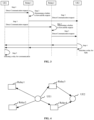
- FIG 3 is a diagram of path reselection in the existing techniques. Communication between UE1 and UE2 is realized via a relay, and UE1 is surrounded by relay 1 (indicated by Relay1 in FIG 3 ) and relay 2 (indicated by Relay2 in FIG 3 ). Path reselection between UE1 and UE2 includes following steps.
- UE1 sends a direct communication request to Relay1 and Relay2 respectively.
- UE1 may be pre-configured with some trigger path selection conditions, for example, signal strength between UE1 and UE2 being lower than a threshold, UE1 triggering the path selection, or broadcasting a signal for finding UE2 to surrounding Relay 1 and Relay2, such as a direct communication request in FIG 3 .
- step 2 Relay1 and Relay2 determine whether to forward the request.
- step 3 the UE1 selects a relay that forwards the signaling to start request forwarding. At this time, both Relay1 and Relay2 forward.
- UE2 that receives the forwarded signaling selects the replying Relay (replying to both Relay1 and Relay2 in FIG 3 ).
- UE2 selects one or more from the received signaling to reply, for example, the Relay with best link quality between UE2 and the relay may be selected to reply, and the Relay forwards the reply to UE1 after receiving the reply.
- step 5 when UE2 feeds back multiple suitable relays, UE1 needs to further select a suitable relay for communication, which step is selected to be performed or not performed according to needs.
- UE1 and UE2 After completing the path reselection based on the above steps 1 to 5, UE1 and UE2 perform normal unicast communication. Data of UE1 is all sent to the selected relay which then forwards the data to UE2, or the data of UE2 is all sent to the selected Relay which then forwards the date to UE1.
- step 2 the relay determines whether to forward the signaling only based on the link situation between UE1 and the Relay, which may cause some Relays not suitable for participating in the selection to also forward the signaling, resulting in a waste of resources and interference to other UEs.
- FIG 4 is a diagram of relay selection in the existing techniques. Relay 1, Relay2, Relay3 and Relay4 all participate in the selection and forward the signaling, however, it can be seen that Relay 1 and Relay2 do not need to forward the signaling in step 2 as they are both very far from UE2.
- embodiments of the present disclosure provide a method for selecting a path of a sidelink.
- the method includes: generating path request signaling, wherein the path request signaling includes position information of a target UE; sending the path request signaling to one or more surrounding relays, so that at least one relay that receives the path request signaling determines whether to forward the path request signaling at least based on the position information of the target UE; and receiving reply signaling from the target UE, wherein the reply signaling is generated by the target UE in response to the path request signaling forwarded by each of the at least one relay, and indicates a target relay used for message forwarding in communication with a requesting UE.
- the method may prevent relays not suitable for participating in path selection from forwarding signaling, so as to save resources and reduce communication interference.
- FIG 5 is a flow chart of a method for selecting a path of a sidelink according to an embodiment.
- the method includes S501, S502 and S503.
- a requesting UE generates path request signaling, wherein the path request signaling includes position information of a target UE.
- UE1 and UE2 have set up a connection therebetween, they can acquire position information of each other.
- UE1 finds that quality of a link communicating with UE2 is relatively low, UE1 needs to find a new relay to assist in communication.
- UE1 as the requesting UE triggers path selection, and generates path request signaling.
- the requesting UE may inform the relay of the position information of UE2 (i.e., the target UE), so that the Relay can more accurately determine whether to forward the path request signaling according to the position information of the target UE.
- the path request signaling at least includes the position information of the target UE which is used for identifying a position of the target UE, where the position information may be any form of position information in any position coordinate system.
- the path request signaling may be a direct communication request in FIG 3 .
- the position information of the target UE includes longitude and latitude information of the target UE and/or a zone ID of the target UE in the sidelink.
- it may be the latitude and longitude received through GPS, or the zone ID introduced in the sidelink communication.
- the path request signaling may further carry position information of the requesting UE.
- the requesting UE sends the path request signaling to one or more surrounding relays, so that at least one relay that receives the path request signaling determines whether to forward the path request signaling at least based on the position information of the target UE.
- the requesting UE sends the path request signaling to one or more surrounding relays, so that at least one relay that receives the path request signaling determines whether to forward the path request signaling to the target UE based on the position information of the target UE.
- the requesting UE may send the path request signaling to all surrounding relays by broadcasting.
- each relay that receives the path request signaling can obtain position of UE2 according to the position information of the target UE, and forwards it merely when a distance between the target UE and the relay is shorter than a threshold.
- the threshold here is predefined, configured or dynamically changed, for example, the threshold may be equal to a distance between the requesting UE and the target UE.
- the requesting UE receives reply signaling from the target UE, wherein the reply signaling is generated by the target UE in response to the path request signaling forwarded by each of the at least one relay, and indicates a target relay used for message forwarding in communication with the requesting UE.
- the target UE When receiving the path request signaling forwarded by one or more relays, the target UE selects the path request signaling of one or more relays to reply, and a reply message is called reply signaling which is used to indicate a relay (i.e., the target relay) that forwards messages I communication between the requesting UE and the target UE.
- the requesting UE may communicate with the target UE according to the target relay indicated in the reply signaling.
- the reply signaling may be directly sent by the target UE to the requesting UE, or may be forwarded to the requesting UE by the target relay.
- the target UE may send the reply signaling to the target relay, and after receiving the reply signaling from the target UE, the target relay forwards it to the requesting UE.
- the signaling before forwarding (such as path request signaling or reply signaling) by the relay and the signaling after forwarding (such as path request signaling or reply signaling) by the relay may be the same or different, and may contain the same information or different information.
- the path request signaling sent by the requesting UE includes the position information of the target UE, so that the relay receiving the path request signaling can determine whether to forward the path request signaling according to the position information of the target UE. If the relay is not suitable for participating in path selection, the relay does not forward the signaling, thereby avoiding a resource waste and interference to other UEs.
- the at least one relay that receives the path request signaling determines whether to forward the path request signaling further based on one or more of following conditions: requirements on quality of service in the path request signaling, a load situation of the relay, and quality of a link between the requesting UE and the relay.
- the relay After receiving the path request signaling from the requesting UE, in addition to determining whether to forward the path request signaling based on the position information of the target UE, the relay determines whether to forward the path request signaling further based on the requirements on quality of service in the path request signaling, the load situation of the relay, and the quality of the link between the requesting UE and the relay.
- the target UE determines one or more relays from the plurality of relays as the target relay.
- the target UE selects the target relay at least based on quality of a link with each of the plurality of relays.
- the target UE selects, based on quality of the link with each of the plurality of relays, a relay with the highest quality of the link as the target relay.
- the target relay may include one or more relays.
- the path request signaling is generated based on signal strength with the target UE being lower than a signal threshold.
- the UE may be preconfigured with some conditions for triggering path selection, for example, when the signal strength between UE1 and UE2 is lower than a certain threshold, UE1 triggers path selection and generates the path request signaling, where the threshold is set according to actual needs.
- one or more target relays are selected from the plurality of target relays, so as to communicate with the target UE via the selected one or more target relays.
- UE1 When the target UE feeds back a plurality of suitable relays for communication between UE1 and UE2, UE1 needs to further select the relay used in the communication.
- UE1 may select a relay for communication based on quality of a link between UE1 and each relay or a load situation of the relay in communication.
- the method as shown in FIG 5 is performed by UE1 (i.e., the requesting UE) when sidelink communication is performed between UE1 and UE2 through a relay.
- UE1 i.e., the requesting UE
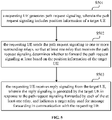
- FIG 6 is a flow chart of a method for selecting a path of a sidelink according to an embodiment.
- the method includes S601, S602 and S603.
- a relay receives path request signaling sent by a requesting UE, wherein the path request signaling is generated by the requesting UE and sent to one or more relays surrounding the requesting UE, and includes position information of a target UE.
- the relay determines whether to forward the path request signaling at least based on the position information of the target UE.
- the relay forwards the path request signaling to the target UE based on determining to forward the path request signaling, so that the target UE generates and sends reply signaling in response to the path request signaling, wherein the reply signaling indicates a target relay used for message forwarding in communication between the requesting UE and the target UE.
- the position information of the target UE includes latitude and longitude information of the target UE and/or a zone ID of the target UE in the sidelink.
- the method further includes: determining whether to forward the path request signaling based on one or more of following conditions: requirements on quality of service in the path request signaling, a load situation of a current relay, and quality of a link between the requesting UE and the current relay.
- the method further includes: receiving reply signaling from the target UE in response to being selected as the target relay by the target UE; and forwarding the reply signaling to the requesting UE.
- the reply signaling may be directly sent by the target UE to the requesting UE, or forwarded by the target relay.
- the selected relay may forward the reply signaling sent by the target UE to the requesting UE.
- the method as shown in FIG 6 is performed by the relay when sidelink communication is performed between UE1 and UE2 through a relay. Details of working principles and working modes may be referred to relevant description of the relay in FIG 5 , and are not repeated here.
- FIG 7 is a flow chart of a method for selecting a path of a sidelink according to an embodiment.
- the method includes S701, S702 and S703.
- a target UE receives path request signaling forwarded by one or more relays, wherein the path request signaling is generated by a requesting UE, sent to one or more relays surrounding the requesting UE and forwarded by the one or more relays, and includes position information of a target UE.
- the target UE In S702, the target UE generates reply signaling in response to the path request signaling forwarded by the one or more relays, wherein the reply signaling indicates a target relay used for message forwarding in communication between the requesting UE and the target UE.
- the target UE sends the reply signaling to the requesting UE.
- the relay receiving the path request signaling determines whether to forward the path request signaling at least based on the position information of the target UE.
- the position information of the target UE includes longitude and latitude information of the target UE and/or a zone ID of the target UE in the sidelink.
- the method further includes: selecting at least one relay from the one or more relays as the target relay.
- the at least one relay is selected from the one or more relays as the target relay based on quality of a link with each of the one or more relays.
- the method as shown in FIG 7 is performed by the target UE (i.e., UE2) when sidelink communication is performed between UE1 and UE2 through a relay. Details of working principles and working modes may be referred to relevant description of the target UE in FIG 5 , and are not repeated here.
- FIG 8 is a structural diagram of an apparatus for selecting a path of a sidelink according to an embodiment.
- the apparatus includes: a path request triggering circuitry 801 configured to generate path request signaling, wherein the path request signaling includes position information of a target UE; a path requesting circuitry 802 configured to send the path request signaling to one or more surrounding relays, so that at least one relay that receives the path request signaling determines whether to forward the path request signaling at least based on the position information of the target UE; and a request completing circuitry 803 configured to receive reply signaling from the target UE, wherein the reply signaling is generated by the target UE in response to the path request signaling forwarded by each of the at least one relay, and indicates a target relay used for message forwarding in communication with a requesting UE.
- a path request triggering circuitry 801 configured to generate path request signaling, wherein the path request signaling includes position information of a target UE
- a path requesting circuitry 802 configured to send the path request signaling to one or more surrounding relays, so that at least one relay that receives the path request signaling
- the above-mentioned apparatus may correspond to a chip with a sidelink path selection function in the UE, or to a chip with a data processing function, such as a System-On-Chip (SOC) or a baseband chip, or to a chip module including a chip with a sidelink path selection function in the UE, or to a chip module including a chip with a data processing function, or to the UE.
- a data processing function such as a System-On-Chip (SOC) or a baseband chip
- SOC System-On-Chip
- a baseband chip or to a chip module including a chip with a sidelink path selection function in the UE, or to a chip module including a chip with a data processing function, or to the UE.
- FIG 9 is a structural diagram of an apparatus for selecting a path of a sidelink according to an embodiment.
- the apparatus includes: a path request signaling receiving circuitry 901 configured to receive path request signaling sent by a requesting UE, wherein the path request signaling is generated by the requesting UE and sent to one or more relays surrounding the requesting UE, and includes position information of a target UE; a forward selecting circuitry 902 configured to determine whether to forward the path request signaling at least based on the position information of the target UE; a path request signaling forwarding circuitry 903 configured to forward the path request signaling to the target UE based on determining to forward the path request signaling, so that the target UE generates and sends reply signaling in response to the path request signaling, wherein the reply signaling indicates a target relay used for message forwarding in communication between the requesting UE and the target UE.
- a path request signaling receiving circuitry 901 configured to receive path request signaling sent by a requesting UE, wherein the path request signaling is generated by the requesting UE and sent to one or more relays surrounding the requesting UE
- the above-mentioned apparatus may correspond to a chip with a sidelink path selection function in the relay, or to a chip with a data processing function, such as an SOC or a baseband chip, or to a chip module including a chip with a sidelink path selection function in the relay, or to a chip module including a chip with a data processing function, or to the relay.
- a data processing function such as an SOC or a baseband chip
- a chip module including a chip with a sidelink path selection function in the relay or to a chip module including a chip with a data processing function, or to the relay.
- FIG 10 is a structural diagram of an apparatus for selecting a path of a sidelink according to an embodiment.
- the apparatus includes: a path request signaling receiving circuitry 1001 configured to receive path request signaling forwarded by one or more relays, wherein the path request signaling is generated by a requesting UE, sent to one or more relays surrounding the requesting UE and forwarded by the one or more relays, and includes position information of a target UE; a reply signaling generating circuitry 1002 configured to generate reply signaling in response to the path request signaling forwarded by the one or more relays, wherein the reply signaling indicates a target relay used for message forwarding in communication between the requesting UE and the target UE; and a reply signaling sending circuitry 1003 configured to send the reply signaling to the requesting UE, wherein the relay receiving the path request signaling determines whether to forward the path request signaling at least based on the position information of the target UE.
- a path request signaling receiving circuitry 1001 configured to receive path request signaling forwarded by one or more relays, wherein the path request signaling is generated by a requesting UE, sent
- the above-mentioned apparatus may correspond to a chip with a sidelink path selection function in the UE, or to a chip with a data processing function, such as an SOC or a baseband chip, or to a chip module including a chip with a sidelink path selection function in the UE, or to a chip module including a chip with a data processing function, or to the UE.
- a data processing function such as an SOC or a baseband chip
- a chip module including a chip with a sidelink path selection function in the UE or to a chip module including a chip with a data processing function, or to the UE.
- Modules/units included in each apparatus and product described in the above embodiments may be software modules/units, hardware modules/units, or a combination of software modules/units and hardware modules/units.
- each module/unit included therein may be implemented by hardware such as circuits; or, at least some modules/units may be implemented by a software program running on a processor integrated inside the chip, and the remaining (if any) part of the modules/units may be implemented by hardware such as circuits.
- each module/unit included therein may be implemented by hardware such as circuits. Different modules/units may be disposed in a same component (such as a chip or a circuit module) or in different components of the chip module.
- modules/units may be implemented by a software program running on a processor integrated inside the chip module, and the remaining (if any) part of the modules/units may be implemented by hardware such as circuits.
- each module/unit included therein may be implemented by hardware such as circuits.
- Different modules/units may be disposed in a same component (such as a chip or a circuit module) or in different components of the terminal.
- at least some modules/units may be implemented by a software program running on a processor integrated inside the terminal, and the remaining (if any) part of the modules/units may be implemented by hardware such as circuits.
- a storage medium having computer instructions stored therein is provided, wherein when the computer instructions are executed, the above method as shown in FIG 5 , 6 or 7 is performed.
- the storage medium may be a computer-readable storage medium, for example, may include a non-volatile memory, a non-transitory memory, an optical disk, a mechanical hard disk, a solid-state disk, and the like.
- the processor may be a Central Processing Unit (CPU), or other general processors, Digital Signal Processors (DSPs), Application Specific Integrated Circuits (ASICs), Field Programmable Gate Arrays (FPGAs) or other Programmable logic devices, discrete gates or transistor logic devices, discrete hardware components, and the like.
- a general processor may be a microprocessor or the processor may be any conventional processor or the like.
- the memory in the embodiments of the present disclosure may be either volatile memory or nonvolatile memory, or may include both volatile and nonvolatile memories.
- the non-volatile memory may be a Read-Only Memory (ROM), a Programmable ROM (PROM), an Erasable PROM (EPROM), an electrically Erasable EPROM (EEPROM), or a flash memory.
- the volatile memory may be a Random Access Memory (RAM) which functions as an external cache.
- RAM Static Random Access Memory
- DRAM Dynamic Random Access Memory
- SDRAM Synchronous Dynamic Random Access Memory
- DDR SDRAM Double Data Rate Synchronous Dynamic Random Access Memory
- ESDRAM Enhanced SDRAM
- SLDRAM Synchronous connection to DRAM
- DR-RAM Direct Rambus RAM
- a UE including the apparatus as shown in FIG 8 or 10 or including a memory and a processor is provided, wherein the memory has computer instructions stored therein, and when the processor executes the computer instructions, the above method as shown in FIG 5 or FIG 7 is performed.
- the terminal may include but not limited to a mobile phone, a computer or a tablet computer.
- a terminal in the embodiments of the present disclosure may refer to various forms of UE, access terminal, user unit, user station, Mobile Station (MS), remote station, remote terminal, mobile equipment, user terminal, terminal equipment, wireless communication equipment, user agent or user device.
- the terminal equipment may further be a cellular phone, a cordless phone, a Session Initiation Protocol (SIP) phone, a Wireless Local Loop (WLL) station, a Personal Digital Assistant (PDA), a handheld device with a wireless communication function, a computing device or other processing devices connected to a wireless modems, an in-vehicle device, a wearable device, a terminal equipment in the future 5G network, or a terminal equipment in a future evolved Public Land Mobile Network (PLMN), which is not limited in the embodiments of the present disclosure.
- PLMN Public Land Mobile Network
- a delay including the apparatus as shown in FIG 9 or including a memory and a processor is provided, wherein the memory has computer instructions stored therein, and when the processor executes the computer instructions, the above method as shown in FIG 6 is performed.
- the Base Station (BS) in the embodiments of the present disclosure may also be referred to as a base station equipment, and is an apparatus deployed in a wireless access network to provide wireless communication functions.
- a base station equipment for example, an equipment that provides a base station function in a 2G network includes a Base Transceiver Station (BTS).
- An equipment that provides the base station function in a 3G network includes a Node B.
- An equipment that provides the base station function in a 4G network includes an evolved Node B (eNB).
- eNB evolved Node B
- an equipment that provides the base station function is an Access Point (AP).
- WLAN Wireless Local Area Network
- AP Access Point
- An equipment that provides the base station function in 5G New Radio (NR) includes a gNB and an ng-eNB, where the gNB and the terminal use NR technology to communicate, and the ng-eNB and the terminal use Evolved Universal Terrestrial Radio Access (E-UTRA) technology to communicate. Both the gNB and the ng-eNB can be connected to a 5G core network.
- the base station also refers to an equipment that provides the base station function in a new communication system in the future.
- the base station controller in the embodiments of the present disclosure is a device for managing base stations, such as a Base Station Controller (BSC) in a 2G network, a Radio Network Controller (RNC) in a 3G network, or a device that controls and manages a base station in a new communication system in the future.
- BSC Base Station Controller
- RNC Radio Network Controller
- the network in the embodiments of the present disclosure refers to a communication network that provides communication services for terminals, including a base station of a radio access network, a BSC of a radio access network, and a device on the core network.
Landscapes
- Engineering & Computer Science (AREA)
- Computer Networks & Wireless Communication (AREA)
- Signal Processing (AREA)
- Mobile Radio Communication Systems (AREA)
Applications Claiming Priority (2)
| Application Number | Priority Date | Filing Date | Title |
|---|---|---|---|
| CN202010275489.9A CN113518406A (zh) | 2020-04-09 | 2020-04-09 | 直连链路的路径选择方法及装置、存储介质、ue、中继 |
| PCT/CN2021/085159 WO2021204066A1 (fr) | 2020-04-09 | 2021-04-02 | Procédé et appareil de sélection de trajet pour liaison directe, support d'enregistrement, ue et relais |
Publications (2)
| Publication Number | Publication Date |
|---|---|
| EP4135406A1 true EP4135406A1 (fr) | 2023-02-15 |
| EP4135406A4 EP4135406A4 (fr) | 2023-09-06 |
Family
ID=78023142
Family Applications (1)
| Application Number | Title | Priority Date | Filing Date |
|---|---|---|---|
| EP21783739.2A Withdrawn EP4135406A4 (fr) | 2020-04-09 | 2021-04-02 | Procédé et appareil de sélection de trajet pour liaison directe, support d'enregistrement, ue et relais |
Country Status (4)
| Country | Link |
|---|---|
| US (1) | US20230164664A1 (fr) |
| EP (1) | EP4135406A4 (fr) |
| CN (1) | CN113518406A (fr) |
| WO (1) | WO2021204066A1 (fr) |
Cited By (1)
| Publication number | Priority date | Publication date | Assignee | Title |
|---|---|---|---|---|
| EP4149201A4 (fr) * | 2020-05-27 | 2023-11-22 | Huawei Technologies Co., Ltd. | Procédé et appareil de communication d'unidiffusion |
Families Citing this family (1)
| Publication number | Priority date | Publication date | Assignee | Title |
|---|---|---|---|---|
| CN115514800B (zh) * | 2022-08-31 | 2025-04-18 | 深圳市绿联科技股份有限公司 | 一种设备网络连接方法、装置、电子设备、服务器及系统 |
Family Cites Families (17)
| Publication number | Priority date | Publication date | Assignee | Title |
|---|---|---|---|---|
| AU774602B2 (en) * | 1998-12-23 | 2004-07-01 | Nokia Inc. | A unified routing scheme for ad-hoc internetworking |
| FI20040149A0 (fi) * | 2004-01-30 | 2004-01-30 | Nokia Corp | Reijitystiedon hankkiminen |
| WO2010094235A1 (fr) * | 2009-02-17 | 2010-08-26 | 大唐移动通信设备有限公司 | Procédé et système pour prendre en charge une agrégation de porteuses pendant une procédure de transfert intercellulaire |
| CN103023729A (zh) * | 2011-09-22 | 2013-04-03 | 中兴通讯股份有限公司 | 中继节点选择方法及装置 |
| CN104244294B (zh) * | 2013-06-07 | 2018-03-16 | 电信科学技术研究院 | 一种直接通信路径倒换方法和设备 |
| US9936530B2 (en) * | 2015-03-10 | 2018-04-03 | Intel IP Corporation | Systems, methods, and devices for device-to-device relay communication |
| CN104993857B (zh) * | 2015-05-14 | 2018-12-18 | 大唐移动通信设备有限公司 | 一种协作波束赋形的方法及装置 |
| CN105657783A (zh) * | 2015-05-29 | 2016-06-08 | 宇龙计算机通信科技(深圳)有限公司 | 一种终端直连通信方法及装置 |
| US10194369B2 (en) * | 2016-07-16 | 2019-01-29 | Sony Corporation | Routing data packets in wireless networks with directional transmissions |
| US10505836B2 (en) * | 2017-04-21 | 2019-12-10 | Mediatek Inc. | Symmetric route establishment with bidirectional links for wireless mesh networks |
| CN109245845B (zh) * | 2017-05-05 | 2022-05-13 | 中兴通讯股份有限公司 | 一种信令传输方法及设备 |
| IL255043B (en) * | 2017-10-16 | 2019-05-30 | Oscar Glottmann | Ad hoc network routing |
| WO2019136606A1 (fr) * | 2018-01-09 | 2019-07-18 | Oppo广东移动通信有限公司 | Procédé de transmission relais, et nœud relais |
| CN109314931B (zh) * | 2018-08-10 | 2021-09-03 | 北京小米移动软件有限公司 | 调整终端上行发射功率的方法、装置及存储介质 |
| WO2020035159A1 (fr) * | 2018-08-17 | 2020-02-20 | Telefonaktiebolaget Lm Ericsson (Publ) | Découverte indépendante de chemins redondants pour réseau maillé bluetooth |
| EP3854039B1 (fr) * | 2018-09-21 | 2026-05-06 | Telefonaktiebolaget LM Ericsson (publ) | Procédé d'ajout de noeuds relais redondants pendant une procédure de découverte de chemin d'un réseau maillé |
| WO2020119922A1 (fr) * | 2018-12-14 | 2020-06-18 | Telefonaktiebolaget Lm Ericsson (Publ) | Procédé et dispositif de nœud pour prendre en charge l'établissement d'un trajet depuis un nœud source à un nœud de destination dans un réseau maillé sans fil |
-
2020
- 2020-04-09 CN CN202010275489.9A patent/CN113518406A/zh active Pending
-
2021
- 2021-04-02 US US17/915,695 patent/US20230164664A1/en not_active Abandoned
- 2021-04-02 WO PCT/CN2021/085159 patent/WO2021204066A1/fr not_active Ceased
- 2021-04-02 EP EP21783739.2A patent/EP4135406A4/fr not_active Withdrawn
Cited By (2)
| Publication number | Priority date | Publication date | Assignee | Title |
|---|---|---|---|---|
| EP4149201A4 (fr) * | 2020-05-27 | 2023-11-22 | Huawei Technologies Co., Ltd. | Procédé et appareil de communication d'unidiffusion |
| US12431958B2 (en) | 2020-05-27 | 2025-09-30 | Huawei Technologies Co., Ltd. | Unicast communication method and apparatus |
Also Published As
| Publication number | Publication date |
|---|---|
| US20230164664A1 (en) | 2023-05-25 |
| CN113518406A (zh) | 2021-10-19 |
| EP4135406A4 (fr) | 2023-09-06 |
| WO2021204066A1 (fr) | 2021-10-14 |
Similar Documents
| Publication | Publication Date | Title |
|---|---|---|
| US20220248298A1 (en) | Wireless communication method and terminal device | |
| CN115669070B (zh) | 基于条件的辅节点或主辅小区变更方法及设备 | |
| EP3494726B1 (fr) | Procédé d'indication d'informations et dispositif terminal | |
| US20220272787A1 (en) | Wireless communication method, terminal device, and network device | |
| US11653407B2 (en) | Information transmission method and apparatus, and terminal and network device | |
| US10869289B2 (en) | Method for device to device communication, and terminal device | |
| US20240349238A1 (en) | Communication processing method and apparatus, terminal device and access network device | |
| US11723078B2 (en) | Signal transmission method, terminal device and network device | |
| WO2020155725A1 (fr) | Procédé et appareil de configuration de paramètres, et dispositif de réseau | |
| WO2021000320A1 (fr) | Procédé et appareil de transmission de données, dispositif réseau et terminal | |
| WO2020258192A1 (fr) | Procédé et appareil de transmission de données, ainsi que terminal | |
| TW202025815A (zh) | 無線通訊方法和基站 | |
| US20230164664A1 (en) | Method and apparatus for selecting path of sidelink, storage medium, ue, and relay | |
| JP2022502979A (ja) | パラメータ設定方法、端末装置及び記憶媒体 | |
| EP3606181B1 (fr) | Procédé permettant à un dispositif terminal d'accéder à un réseau et dispositif terminal | |
| US11540252B2 (en) | Data transmission method, network device | |
| EP4307739B1 (fr) | Procédé d'émission, dispositif terminal, dispositif de réseau et système de communication | |
| WO2020177135A1 (fr) | Procédé de commande de puissance, procédé d'accès aléatoire, appareils, et terminal | |
| WO2019028918A1 (fr) | Procédé de recherche de dispositif et dispositif associé | |
| WO2021196084A1 (fr) | Procédé et appareil de transmission de signal, et dispositif terminal | |
| WO2021208095A1 (fr) | Procédé et appareil de négociation d'informations de configuration, et équipement terminal | |
| CN117459197A (zh) | 定位参考信号的发送、接收方法及装置、终端 | |
| CN119895778A (zh) | 通信方法和设备 | |
| WO2018170902A1 (fr) | Procédé et dispositif de radiomessagerie |
Legal Events
| Date | Code | Title | Description |
|---|---|---|---|
| STAA | Information on the status of an ep patent application or granted ep patent |
Free format text: STATUS: THE INTERNATIONAL PUBLICATION HAS BEEN MADE |
|
| PUAI | Public reference made under article 153(3) epc to a published international application that has entered the european phase |
Free format text: ORIGINAL CODE: 0009012 |
|
| STAA | Information on the status of an ep patent application or granted ep patent |
Free format text: STATUS: REQUEST FOR EXAMINATION WAS MADE |
|
| 17P | Request for examination filed |
Effective date: 20221107 |
|
| AK | Designated contracting states |
Kind code of ref document: A1 Designated state(s): AL AT BE BG CH CY CZ DE DK EE ES FI FR GB GR HR HU IE IS IT LI LT LU LV MC MK MT NL NO PL PT RO RS SE SI SK SM TR |
|
| DAV | Request for validation of the european patent (deleted) | ||
| DAX | Request for extension of the european patent (deleted) | ||
| A4 | Supplementary search report drawn up and despatched |
Effective date: 20230803 |
|
| RIC1 | Information provided on ipc code assigned before grant |
Ipc: H04W 64/00 20090101ALI20230728BHEP Ipc: H04W 76/14 20180101ALI20230728BHEP Ipc: H04W 40/22 20090101ALI20230728BHEP Ipc: H04W 40/20 20090101ALI20230728BHEP Ipc: H04W 40/12 20090101AFI20230728BHEP |
|
| STAA | Information on the status of an ep patent application or granted ep patent |
Free format text: STATUS: THE APPLICATION IS DEEMED TO BE WITHDRAWN |
|
| 18D | Application deemed to be withdrawn |
Effective date: 20240302 |