EP4135412B1 - Procédé d'envoi d'informations, procédé de réception d'informations, terminal et dispositif de réseau - Google Patents
Procédé d'envoi d'informations, procédé de réception d'informations, terminal et dispositif de réseau Download PDFInfo
- Publication number
- EP4135412B1 EP4135412B1 EP20934788.9A EP20934788A EP4135412B1 EP 4135412 B1 EP4135412 B1 EP 4135412B1 EP 20934788 A EP20934788 A EP 20934788A EP 4135412 B1 EP4135412 B1 EP 4135412B1
- Authority
- EP
- European Patent Office
- Prior art keywords
- terminal
- slicing
- slice
- network device
- information
- Prior art date
- Legal status (The legal status is an assumption and is not a legal conclusion. Google has not performed a legal analysis and makes no representation as to the accuracy of the status listed.)
- Active
Links
Images


Classifications
-
- H—ELECTRICITY
- H04—ELECTRIC COMMUNICATION TECHNIQUE
- H04W—WIRELESS COMMUNICATION NETWORKS
- H04W48/00—Access restriction; Network selection; Access point selection
- H04W48/18—Selecting a network or a communication service
-
- H—ELECTRICITY
- H04—ELECTRIC COMMUNICATION TECHNIQUE
- H04W—WIRELESS COMMUNICATION NETWORKS
- H04W74/00—Wireless channel access
- H04W74/08—Non-scheduled access, e.g. ALOHA
- H04W74/0833—Random access procedures, e.g. with 4-step access
-
- H—ELECTRICITY
- H04—ELECTRIC COMMUNICATION TECHNIQUE
- H04W—WIRELESS COMMUNICATION NETWORKS
- H04W8/00—Network data management
- H04W8/22—Processing or transfer of terminal data, e.g. status or physical capabilities
- H04W8/24—Transfer of terminal data
-
- H—ELECTRICITY
- H04—ELECTRIC COMMUNICATION TECHNIQUE
- H04W—WIRELESS COMMUNICATION NETWORKS
- H04W48/00—Access restriction; Network selection; Access point selection
- H04W48/16—Discovering, processing access restriction or access information
-
- H—ELECTRICITY
- H04—ELECTRIC COMMUNICATION TECHNIQUE
- H04W—WIRELESS COMMUNICATION NETWORKS
- H04W74/00—Wireless channel access
- H04W74/08—Non-scheduled access, e.g. ALOHA
- H04W74/0833—Random access procedures, e.g. with 4-step access
- H04W74/0836—Random access procedures, e.g. with 4-step access with 2-step access
Definitions
- the application relates to the communication field, in particular to an information sending and receiving method, a terminal and a network device.
- Radio Access Network needs to be enhanced on how to support vertical industries services in an access network. Based on network slicing, services with lower latency, more targeting, greater flexibility and higher scalability for multiple services with different requirements are provided. However, in related technologies, the behaviors related to network slicing supported by RAN are not involved.
- the embodiment of the application provides a method for sending and receiving information, a terminal and a network device as defined in the attached independent claims which solves the technical problem of lack of a standard for supporting network slicing in a RAN in the related technology, thereby achieving the effect of providing a standard for supporting network slicing in a RAN. Further improvements and embodiments are provided in the dependent claims.
- the terminal sends the slicing information of the terminal to the network device.
- the slicing information of the terminal is the slicing information of the slice required by the terminal. Therefore, the requirement of the terminal needing a network slicing is considered in the RAN, and the standard for supporting network slicing by the RAN is provided, which solves the technical problem of lack of the standard for supporting network slicing by the RAN in the related technology, and further can achieve the effect of adapting to the development of technical standards.
- GSM Global System of Mobile communication
- CDMA Code Division Multiple Access
- WCDMA Wideband Code Division Multiple Access
- GPRS General Packet Radio Service
- LTE Long Term Evolution
- FDD Frequency Division Duplex
- TDD Time Division Duplex
- UMTS Universal Mobile Telecommunications System
- WiMAX Worldwide Interoperability for Microwave Access
- the communication system 100 may include a network device 110.
- the network device 110 may be a device that communicates with terminal devices 120 (or referred to as communication terminals, or terminals).
- the network device 110 may provide communication coverage for a specific geographical area, and may communicate with terminal devices located within the coverage area.
- the network device 110 may be a Base Transceiver Station (BTS) in a GSM system or CDMA system, or a NodeB (NB) in a WCDMA system, or an Evolutional Node B (eNB or eNodeB) in an LTE system, or a radio controller in a Cloud Radio Access Network (CRAN); or the network device may be a mobile switching center, a relay station, an access point, a vehicle-mounted device, a wearable device, a hub, a switch, a bridge, a router, a network side device in a 5G network, or a network device in a future evolved Public Land Mobile Network (PLMN), etc.
- BTS Base Transceiver Station
- NB NodeB
- eNB or eNodeB Evolutional Node B
- CRAN Cloud Radio Access Network
- the network device may be a mobile switching center, a relay station, an access point, a vehicle-mounted device, a wearable device, a hub, a switch, a
- the communication system 100 further includes at least one terminal device 120 located within the coverage range of the network device 110.
- the "terminal device” as used herein includes, but is not limited to, an apparatus configured to receive/send communication signals via a wired circuit, for example, via a Public Switched Telephone Network (PSTN), a Digital Subscriber Line (DSL), a digital cable, a direct cable; and/or another data connection/network; and/or via a wireless interface, for instance, for a cellular network, a Wireless Local Area Network (WLAN), a digital television network such as a Digital Video Broadcasting Handheld (DVB-H) network, a satellite network, and an Amplitude Modulation-Frequency Modulation (AM-FM) broadcast transmitter; and/or another terminal device; and/or an Internet of Things (IoT) device.
- PSTN Public Switched Telephone Network
- DSL Digital Subscriber Line
- WLAN Wireless Local Area Network
- AM-FM Amplitude Modulation-Frequency Modulation
- IoT
- a terminal device configured to communicate via a wireless interface may be referred to as a "wireless communication terminal", a “wireless terminal” or a “mobile terminal”.
- the mobile terminal include, but are not limited to, a satellite or cellular phone; a Personal Communications System (PCS) terminal capable of combining a cellular radio phone with data processing, facsimile, and data communication capabilities; a Personal Digital Assistant (PDA) that may include a radio phone, a pager, internet/intranet access, a Web browser, a memo pad, a calendar, a Global Positioning System (GPS) receiver; and a conventional laptop and/or palmtop receiver or another electronic apparatus including a radio phone transceiver.
- PCS Personal Communications System
- GPS Global Positioning System
- the terminal device may refer to an access terminal, User Equipment (UE), a subscriber unit, a subscriber station, a mobile station, a rover station, a remote station, a remote terminal, a mobile device, a user terminal, a terminal, a wireless communication device, a user agent, or a user device.
- UE User Equipment
- the access terminal may be a cellular phone, a cordless phone, a Session Initiation Protocol (SIP) phone, a Wireless Local Loop (WLL) station, a Personal Digital Assistant (PDA), a handheld device with a wireless communication function, a computing device, or another processing device connected to a wireless modem, a vehicle-mounted device, a wearable device, a terminal device in a 5G network, or a terminal device in a future evolved PLMN, or the like.
- SIP Session Initiation Protocol
- WLL Wireless Local Loop
- PDA Personal Digital Assistant
- D2D communication may be performed between the terminal devices 120.
- the 5G system or 5G network may also be referred to as a New Radio (NR) system or an NR network.
- NR New Radio
- FIG. 1 illustrates one network device and two terminal devices.
- the communication system 100 may include multiple network devices, and other quantity of terminal devices may be included within the coverage area of each network device, which is not limited in the implementations of the present application.
- the communication system 100 may also include another network entity, such as a network controller, a mobile management entity, etc., which is not limited in the implementations of the present application.
- another network entity such as a network controller, a mobile management entity, etc., which is not limited in the implementations of the present application.
- a device with a communication function in a network/system in the implementations of the present application may also be referred to as a communication device.
- communication devices may include a network device 110 and terminal devices 120 which have communication functions, and the network device 110 and the terminal devices 120 may be the specific devices described above, and will not be described repeatedly herein.
- the communication devices may also include other devices in the communication system 100, for example other network entities, such as network controllers and mobile management entities, which is not limited in the implementations of the present application.
- system and “network” are often used interchangeably herein.
- the term “and/or” herein refers to an association relationship describing associated objects only, which indicates that three kinds of relationships may exist, for example, A and/or B may indicate three cases: A alone, both A and B at the same time, and B alone.
- the symbol “/” herein generally indicates that objects before and after the symbol “/” have an "or” relationship.
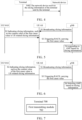
- FIG. 2 is a schematic flow chart of a information transmission method according to an implementation of the present application. As shown in FIG. 2 , the method includes the following acts.
- the terminal sends the slicing information of the terminal to the network device, and the slicing information of the terminal is the slicing information required by the terminal.
- the standard for supporting network slicing by the RAN is provided, which solves the technical problem of lack of the standard for supporting network slicing by the RAN in the related technology, and further can achieve the effect of adapting to the development of technical standards.
- the terminals in the method may be intelligent terminals, for example, some intelligent terminals such as smart phones, smart cars, unmanned aerial vehicles, robots, etc. It may also be some wearable devices, such as smart watches, smart bracelets, smart glasses, etc.
- the terminal when the terminal sends the slicing information of the terminal to the network device, the terminal can send the slicing information of the terminal to the network device in a variety of ways, the terminal carries the slicing information to the network device through a Radio Resource Control (RRC) message or an uplink message in a random access RACH process.
- RRC Radio Resource Control
- the RRC message may be an uplink dedicated RRC message (UL dedicated RRC message).
- the slicing information of the terminal is sent by the terminal to the network device, the uplink message in the random access RACH process is used.
- the random access RACH process is explained first.
- Step1 The terminal selects preamble and Physical Random Access Channel (PRACH) resources (time-frequency resources and code domain resources).
- PRACH Physical Random Access Channel
- the terminal sends the selected preamble on the selected PRACH time-frequency resource. Based on the preamble, the base station can estimate the uplink timing and the size of the grant resource required by the terminal to send the message 3 (probably known, but not accurately known).
- a RAR window is turned on and the Physical Downlink Control Channel (PDCCH) in the window is monitored.
- the PDCCH is scrambled by using a Random Access Radio Network Temporary Identifier (RA-RNTI for short).
- RA-RNTI Random Access Radio Network Temporary Identifier
- the terminal After successfully monitoring the PDCCH scrambled by RA-RNTI, the terminal can obtain the Physical Downlink Shared Channel (PDSCH for short) scheduled by the PDCCH, which includes Random Access Response (RAR).
- PDSCH Physical Downlink Shared Channel
- RAR Random Access Response
- Step3 terminal sends RRC messages on scheduled resources
- the message Msg3 is mainly used to inform the network what event triggers the RACH process. For example, if it is an initial access random process, Msg3 will carry the terminal identifier and establishment cause; if it is RRC reestablishment, it will carry the connected state terminal identifier and the re-establishment cause (re-establishment cause);
- FIG. 3 is a schematic diagram of a two-step random access procedure according to an implementation of the present application. As shown in FIG. 3 , the basic mode is that Msg A sends Msg1+Msg3 of the four-step RACH, and Msg B sends Msg2+Msg4 of the four-step RACH.
- the trigger/build cause value is carried in Msg A.
- the uplink message includes message 1 in the four-step RACH process. That is, the uplink message carries the slicing information of the terminal and sends the slicing information of the terminal to the network device.
- the uplink message may further include at least one of: message 3 in the four-step RACH process, and message A in the two-step RACH process, which is not part of the claimed invention.
- the slicing information is carried by a cause value in the RRC message or in the uplink message, wherein the cause value in the RRC message is used to represent a cause for triggering the RRC message by a standard, and the cause value in the uplink message is used to represent a cause for triggering the RACH process.
- the content of the cause value in the RRC message includes the slicing information, or the content of the cause value in the uplink message includes the slicing information.
- the slicing information of the terminal includes: a slicing identity of the terminal, a type to which a slice of the terminal belongs, a priority of the slice of the terminal, a priority of the type to which a slice of the terminal belongs, location information of the terminal, and a preferred Public Land Mobile Network (PLMN) identifier.
- PLMN Public Land Mobile Network
- the slicing identity of the terminal is used for identifying the slice of the terminal, that is, used for identifying the slice required by the terminal.
- the slicing identity may be in many forms, for example, simple digital identifier, letter identifier, text identifier, etc., and some complex characters can also be used.
- the type to which the slice of the terminals belong may be based on different applications, or may be based on different specific networks, etc.
- the priority of the slice of the terminal may be the level of the slice that is used preferentially, for example, the higher the level is, the more preferable the slice may be used.
- the priority of the type to which the slice of the terminal belongs may be the level of the slicing type that is used preferentially, for example, the higher the level is, the more preferable the slice may be used.
- the terminal before the terminal sends the slicing information of the terminal to the network device, the terminal receives the indication information sent by the network device, the indication information is used to indicate whether the terminal is allowed to execute different operations based on the slicing information or whether the terminal is allowed to report the slicing information.
- the terminal before the terminal sends the slicing information of the terminal to the network device, it further includes: the terminal receives the slicing indication information sent by the network device; the terminal determines slicing information according to the slicing indication information.
- the slicing indication information may be related information for the network device to indicate, to the terminal, a slice that the network device can be supported.
- the slicing indication information may include a variety of, for example, it may include at least one of following: a slicing identity supported by network device, a slicing type supported by network device, a mapping relationship between the slicing identity and slicing type supported by network device, a priority of slicing identity supported by network device, a priority of the slicing type supported by network device, an indication that the network device allows the slicing information to be reported, a Public Land Mobile Network (PLMN) identifier supported by network device, a mapping relationship between the slicing identity and PLMN identifier supported by network device, a mapping relationship between the slicing type and PLMN identifier supported by network device, a threshold for the quantity of terminals defined by a slice supported by a network device, a threshold for the quantity of terminals defined by the slice supported by a PLMN, a threshold for the quantity of terminals defined by the slice supported by a session, a threshold for the quantity of
- the contents of the slicing instruction information corresponding to the slicing information of the terminal may have the same meaning as the slicing information of the terminal.
- the slicing identity supported by the network device, the slicing type supported by the network device, the priority of the slicing identity supported by the network device, the priority of the slicing type supported by the network device, and the Public Land Mobile Network (PLMN) identifier supported by the network device may be one or plural, for example, may be a list including multiple.
- the terminal when the terminal receives the slicing indication information sent by the network device, it can adopt multiple ways, for example, the terminal receives the slicing indication information sent by the network device through at least one of the following ways: the terminal receives the slicing indication information through the way of receiving the broadcast of the network device; the terminal receives the slicing indication information by receiving a predetermined signaling sent by the network device.
- the broadcast range of the network device can cover the terminal by setting the broadcast range in the broadcast mode.
- the predetermined signaling may be various, for example, it may be dedicated RRC signaling, for example, RRCrelease signaling.
- the slicing information when the terminal determines the slicing information based on the slicing indication information, the slicing information is determined to be different depending on the different contents of the slicing information, for example, the slicing information may include at least one of the following: the terminal determines the type to which the slice of the terminal belongs according to the mapping relationship between the slicing identity supported by the network device and the slicing type in the slicing indication information; that is, if the slice of the terminal belongs to the slicing type indicated in the slicing indication information, the type to which the slice of the terminal belongs may be determined according to the mapping relationship between the slicing identity and the slicing type.
- the terminal determines that the slice of the terminal does not belong to the slicing type indicated in the slicing indication information, the terminal assigns the slice of the terminal to a default type or a predetermined type; wherein the default type and the predetermined type may be set in advance.
- the terminal assigns the slice of the terminal to a default type or a predetermined type; that is, the slice of the terminal may be categorized into one type regardless of whether the slice of the terminal do not belong to the slicing type indicated in the slicing instruction information or the slice of the terminal do not belong to the slice indicated in the slicing instruction information.
- the terminal determines that the slice of the terminal does not belong to the slicing indicated in the slicing indication information, the terminal assigns the slice of the terminal to a default slice or a non-slice. That is, even if the slice of the terminal does not belong to the slicing indicated in the slicing indication information, the slice of the terminal may be attributed to one slicing or a non-slice.
- the terminal determines the type to which the slice of the terminal belongs according to the mapping relationship between all slicing identities of the network device and the slicing type in the slicing indication information. That is, the network device sends the relevant information of all the slices of the network device to the terminal, and the terminal determines the type of the slice of the terminal according to the mapping relationship between all the slicing identities and the slicing types.
- the network device provided herein sending all the slicing-related information also belongs to a mode, as opposed to the above-mentioned network device sending only the supported slicing-related information.
- the slicing identity of the terminal or the slicing identity supported by the network device may include a plurality, for example, each may include at least one of the following: network slicing selection assistance information, single network slicing selection assistance information, and network slicing identity.
- a slice of a terminal may include at least one of the following: a requested slice, an allowed slice, a configured slice, a default slice, and a contracted slice.
- the terminal after the terminal sends the slicing information of the terminal to the network device, it may also include at least one of the following.
- the terminal receives the control result sent by the network device, wherein the control result includes: the result of the RACH process determined according to the slicing information, or the response to the RACH process triggered by the terminal;
- the terminal receives the selection result sent by the network device, wherein the selection result includes at least one of the following: an access and mobility management function AMF for serving the terminal selected according to the slice information, a session management function SMF for serving the terminal selected according to the slicing information, a user plane function UPF for serving the terminal selected according to the slicing information, and an indication of whether a required core network entity is selected.
- the results of RACH process can include: RACH process success and RACH process failure.
- the response to the terminal-triggered RACH process may include at least one of: the network device responds to the UE (causing the UE RACH to succeed), the network device sends a RACH response message for the UE (causing the UE RACH to succeed), the network device sends a short RACH backoff (causing the RACH to succeed as soon as possible), the network device does not respond to the UE, the network device does not send Msg 4 or Msg B for the UE, and the network device sends a long RACH backoff.
- FIG. 4 is a schematic flow chart of a information receiving method according to an implementation of the present application. As shown in FIG. 4 , the method includes the following acts.
- the network device receives the slicing information of the terminal sent by the terminal.
- the network device receives the slicing information of the terminal sent by the terminal.
- the slicing information of the terminal is the slicing information of the slice required by the terminal. Therefore, the requirement of the terminal needing a network slicing is considered in the RAN, and the standard for supporting network slicing by the RAN is provided, which solves the technical problem of lack of the standard for supporting network slicing by the RAN in the related technology, and further can achieve the effect of adapting to the development of technical standards.
- the network device in the method may be a device in an access network, for example, various types of base stations.
- the access network may be a Radio Access Network (RAN) or the like.
- RAN Radio Access Network
- the network device can carry the slicing information and receive the slicing information sent by the terminal through a Radio Resource Control (RRC) message or an uplink message in a random access RACH process.
- RRC Radio Resource Control
- the RRC message may be an uplink dedicated RRC message (UL dedicated RRC message).
- the slicing information of the terminal is sent by the terminal to the network device, and any uplink message sent by the terminal to the network device may be used to carry the slicing information of the terminal, for example, the uplink message in the random access RACH process may be used.
- the uplink message in the RACH process includes: message 1 in the four-step RACH process. Therefore, the network device can receive the slicing information of the terminal through the above message.
- the uplink message in the RACH process may further include at least one of the following: message 3 in the four-step RACH process, and message A in the two-step RACH process, which is not part of the claimed invention.
- the slicing information is carried by a cause value in the RRC message or in the uplink message, wherein the cause value in the RRC message is used to represent a cause for triggering the RRC message by a standard, and the cause value in the uplink message is used to represent a cause for triggering the RACH process.
- the content of the cause value in the RRC message includes the slicing information, or the content of the cause value in the uplink message includes the slicing information.
- the slicing information of the terminal includes: a slicing identity of the terminal, a type to which the slice of the terminal belongs, a priority of the slice of the terminal, a priority of the type to which the slice of the terminal belongs, location information of the terminal, and a preferred Public Land Mobile Network (PLMN) identifier.
- PLMN Public Land Mobile Network
- the slicing identity of the terminal is used for identifying the slice of the terminal, that is, used for identifying the slice required by the terminal.
- the slicing identity may be in many forms, for example, simple digital identifier, letter identifier, text identifier, etc., and some complex characters can also be used.
- the type to which the slice of the terminals belong may be based on different applications, or may be based on different specific networks, etc.
- the priority of the slice of the terminal may be the level of the slice that is used preferentially, for example, the higher the level is, the more preferable the slice may be used.
- the priority level of the type to which the slice of the terminal belongs may be the level of the slicing type that is used preferentially, for example, the higher the level is, the more preferable the slice may be used.
- the network device before the network device receives the slicing information of the terminal sent by the terminal, it further includes the following acts: the network device sends the slicing indication information to the terminal.
- the slicing indication information may be related information for the network device to indicate, to the terminal, a slice that the network device can support.
- the method before the network device receives the slicing information of the terminal sent by the terminal, the method further includes: sending the known slicing information to the terminal.
- the slicing information may be related information for the network device to indicate to the terminal slices known to the network device, such as priority, and the relationship between slices and types, etc.
- the slicing indication information may also include a variety of, content of the cause value in the RRC message includes the slicing information, or the content of the cause value in the uplink message includes the slicing information.
- the slicing information of the terminal may include a variety of network slicing that may be used by the network device to determine the requirements of the terminal. For example, it may include at least one of: a slicing identity of the terminal, a type to which the slice of the terminal belongs, a priority of the slice of the terminal, a priority of the type to which the slice of the terminal belongs, location information of the terminal, and a preferred Public Land Mobile Network (PLMN) identifier.
- PLMN Public Land Mobile Network
- the slicing identity of the terminal is used for identifying the slice of the terminal, that is, used for identifying the slice required by the terminal.
- the slicing identity may be in many forms, for example, simple digital identifier, letter identifier, text identifier, etc., and some complex characters can also be used.
- the type to which the slice of the terminals belong may be based on different applications, or may be based on different specific networks, etc.
- the priority of the slice of the terminal may be the level of the slice that is used preferentially, for example, the higher the level is, the more preferable the slice may be used.
- the priority level of the type to which the slice of the terminal belongs may be the level of the slicing type that is used preferentially, for example, the higher the level is, the more preferable the slice may be used.
- the network device before the network device receives the slicing information of the terminal sent by the terminal, it further includes the following acts: the network device sends the slicing indication information to the terminal.
- the slicing indication information may be related information for the network device to indicate, to the terminal, a slice that the network device can support.
- the method before the network device receives the slicing information of the terminal sent by the terminal, the method further includes: sending the known slicing information to the terminal.
- the slicing information may be related information for the network device to indicate to the terminal slices known to the network device, such as priority, and the relationship between slices and types, etc.
- the slicing indication information may also include a variety of, for example, it may include at least one of the following: a slicing identity supported by network device, a slicing type supported by network device, a mapping relationship between the slicing identity and slicing type supported by network device, a priority of slicing identity supported by network device, priority of slicing type supported by network device, an indication that the network device allows the slicing information to be reported, Public Land Mobile Network (PLMN) identifier supported by network device, a mapping relationship between the slicing identity and PLMN identifier supported by network device, a mapping relationship between slicing type and PLMN identifier supported by network devices, a threshold for the quantity of terminals defined by a slice supported by a network device, a threshold for the quantity of terminals defined by the slice supported by a PLMN, a threshold for the quantity of terminals defined by the slice supported by a session, a threshold for the quantity of sessions defined by the PLMN
- the contents of the slicing instruction information corresponding to the slicing information of the terminal may have the same meaning as the slicing information of the terminal.
- the slicing identity supported by the network device, the slicing type supported by the network device, the priority of the slicing identity supported by the network device, the priority of the slicing type supported by the network device, and the Public Land Mobile Network (PLMN) identifier supported by the network device may be one or plural, for example, may be a list including multiple objects.
- the network device when it sends the slicing indication information to the terminal, it can also adopt multiple modes, for example, the network device sends the slicing indication information to the terminal through at least one of the following modes: the network device sends the slicing indication information to the terminal through a broadcast mode; the network device sends slicing indication information to the terminal by sending predetermined signaling to the terminal.
- the broadcast range of the network device can cover the terminal by setting the broadcast range in the broadcast mode.
- the predetermined signaling may be various, for example, it may be dedicated RRC signaling, for example, RRCrelease signaling.
- the slicing identity of the terminal or the slicing identity supported by the network device may include a plurality, for example, each may include at least one of the following: network slicing selection assistance information, single network slicing selection assistance information, and network slicing identity.
- the network device can also determine whether the slice required by the terminal can be provided for the terminal according to the slicing information, and obtain a judgment result. That is, the network device determines whether a slice required by the terminal can be provided for the terminal, or whether a slice of the terminal can be provided for the terminal so as to subsequently provide services to the terminal.
- the judgment result of whether the slice required by the terminal can be provided for the terminal can also be sent to the terminal, that is, the network device sends the judgment result to the terminal.
- the terminal is made aware of whether the network device can provide the terminal with a slice required by the terminal, so that the terminal correspondingly executes the behavior adapted to the network device.
- a network device when a network device sends a judgment result to a terminal, different processing may be performed according to different judgment results. For example, when the judgment result is that a slice of the terminal can be provided to the terminal, the network device sends to the terminal a response message including a slice of the terminal that can be provided to the terminal. That is, when the network device determines that the slicing information of the terminal can be provided to the terminal, the slicing information of the terminal is sent to the terminal device. Otherwise, the slicing information of the terminal is not sent.
- the network device determines whether the slice required by the terminal can be provided for the terminal according to the slicing information in the following manner: when the network device determines that the terminal meets the slicing condition according to the slicing information, the network device determines that the slice required by the terminal can be provided for the terminal.
- slicing conditions are different according to different slicing information, for example, it may include at least one of the following: the slice supported by the network device matches the slice required by the terminal, the slicing type supported by the network device matches the type to which the slice required by the terminal belongs, the location of the terminal is within the range of the slicing service provided by the network device, the priority of the slice supported by the network device meets the priority of the slice required by the terminal, the slice with a predetermined priority supported by the network device matches the slice required by the terminal, the slice supported by the network device matches the slice with a predetermined priority required by the terminal, a slice with predetermined priority supported by the network device matches a slice with predetermined priority required by the terminal, a type to which a slice with a predetermined priority supported by the network device belongs matches a type to which a slice required by the terminal belongs, the type to which the slice supported by the network device belong matches the type to which the slice with the predetermined priority required by the terminal belong, the type to which the slice with predetermined priority required
- lower than the threshold of the quantity of terminals defined by the slices supported by the network device lower than the threshold for the quantity of terminals defined by the slice supported by a PLMN, lower than the threshold for the quantity of terminals defined by the slice supported by a session, lower than the threshold for the quantity of sessions defined by the slice supported by a network device, and lower than the threshold for the quantity of sessions defined by the slice supported by a PLMN.
- Lower than the threshold of the quantity of terminals defined by the slices supported by the network device may be that the maximum quantity of terminals or PDU (Protocol Data Unit) sessions or DRB (Data Radio Bearer) that may be served by slices supported by network device.
- PDU Protocol Data Unit
- DRB Data Radio Bearer
- the threshold of the quantity of terminals for slices supported by network device, it can provide services for at most 3 terminals, where 3 is the threshold of the quantity of terminals. It should be noted that 3 is merely an example and may be another number depending on the specific case of the slicing.
- the network device selects a slice required by the terminal that is more compatible with the slice supported by the network device. For example, the network device indicates that the slicing identified as 1-5 is supported, the slicing identified as 1-3 is required by the terminal 1, the slicing identified as 1-4 is required by the terminal 2, and the network device selects the terminal 2. For another example, the network device indicates that slices with slicing identities 1-5 are supported, the priority of slicing identities 1 to 5 is getting lower and lower. Terminal 1 requires slicing identities 1-3, terminal 2 requires slicing identities 2-5, and the network device selects terminal 1.
- the network device determines whether the required slicing can be provided to the terminal in a case that is less than a threshold of the quantity of terminals defined by the slice supported by the network device and greater than another threshold of the quantity of terminals defined by the slice supported by the network device.
- the slice required by the terminal matches the predetermined slice supported by the network device
- the slices required by the terminal may be plural.
- the identities of the slices required by the terminal are 1, 3, 5, and the identities of the predetermined slice supported by the network device are 1, 3, 5, 8, the slice required by the terminal may be considered to match the predetermined slice supported by the network device.
- the identifiers of the predetermined slices supported by the network device are 1, 3, 7, 9, the slices required by the terminal may be considered to be mismatched with the predetermined slices supported by the network device.
- the slice required by the terminal need to be able to provide services for a predetermined quantity of terminals.
- the predetermined slice supported by the network device can further provide services for a predetermined number of terminals, the slice required by the terminal is considered to match the predetermined slice supported by the network device, otherwise the slice required by the terminal is considered to mismatch the predetermined slice supported by the network device.
- the slice required by the terminal needs to be able to provide services for more than three terminals. If the predetermined slice supported by the network device can further provide services for more than three terminals, the slice required by the terminal is considered to match the predetermined slice supported by the network device, but if the predetermined slice supported by the network device cannot serve more than three terminals, the slice required by the terminal is considered to mismatch the predetermined slice supported by the network device.
- the network device determines whether the slice required by the terminal can be provided for the terminal according to the slicing information, and obtains a judgment result, including at least one of the following:
- the network device selects at least one of the following to provide services for the terminal according to whether it can provide the terminal with the slice required by the terminal: an access and mobility management function AMF, a session management function SMF, and a user plane function UPF.
- AMF access and mobility management function
- SMF session management function
- UPF user plane function
- the results of RACH process may include: RACH process execution success and RACH process execution failure.
- the response to the terminal-triggered RACH process may include at least one of: the network device responds to the UE (causing the UE RACH to succeed), the network device sends a RACH response message for the UE (causing the UE RACH to succeed), the network device sends a short RACH backoff (causing the RACH to succeed as soon as possible), the network device does not respond to the UE, the network device does not send Msg 4 or Msg B for the UE, and the network device sends a long RACH backoff.
- a slice of a terminal may include at least one of the following: a requested slice, an allowed slice, a configured slice, a default slice, and a contracted slice.
- a random access method based on slicing is provided.
- the UE (described by taking the UE as an example below) carries slicing information in the RACH process, so that the UE can quickly access and avoid the delay of UE access and business service.
- the slicing-based random access method may include: The UE carries slicing information in the RACH process.
- the slicing information is used for the network device to perform access control (e.g. to determine the result of performing the RACH process) and/or to select an appropriate network functional entity, e.g. the appropriate network functional entity includes at least one of the following: an Access and Mobility Management Entity (AMF), a Session Management Entity (SMF), a User Plane Function (UPF), and the like.
- AMF Access and Mobility Management Entity
- SMF Session Management Entity
- UPF User Plane Function
- the slicing information of the UE includes at least one of the following: a slicing identity of the UE, a type to which the slice of the UE belongs, a priority of the slice of the UE, a priority of the type to which the slice of the UE belongs, location information of the UE, and a preferred Public Land Mobile Network (PLMN) identifier.
- PLMN Public Land Mobile Network
- the network device sends the slicing indication information to the UE through broadcasting or through the dedicated Radio Resource Control (RRC) message, and the slicing indication information includes at least one of the following: slicing type supported by network devices, a slicing identity supported by network devices, mapping relationship between the slicing identity and slicing type supported by network devices, priority of slicing type supported by network devices, priority of slicing identity supported by network devices, an indication that the network device allows the slicing information to be reported, Public Land Mobile Network (PLMN) identifier supported by network device, a mapping relationship between the slicing identity and PLMN identifier supported by network device, mapping relationship between slicing type and PLMN identifiers supported by network devices, a threshold for the quantity of terminals defined by a slice supported by a network device, a threshold for the quantity of terminals defined by the slice supported by a PLMN,
- PLMN Public Land Mobile Network
- the UE may determine the slicing information based on the slice required by the UE and the slicing indication information sent by the network device.
- both the slicing identity in the slicing information and the slicing identity in the slicing indication information may include at least one of the following: Network Slice Selection Assistance Information (NSSAI), Network Slice Selection Assistance Information (SNSSAI), Single Network Slice Selection Assistance Information (NSID).
- NSSAI Network Slice Selection Assistance Information
- SNSSAI Network Slice Selection Assistance Information
- NSID Single Network Slice Selection Assistance Information
- the UE carries the slicing information through the RACH process.
- Msg 3 or Msg A message in the RACH process may be used for carrying.
- slicing information may be indicated using a first cause value carried in the RACH process.
- the slicing information is used by the network device to perform access control (e.g. to determine the RACH response mode or result).
- the slicing information may include at least one of the following: a slicing identity of the UE, a type to which the slice of the UE belongs, a priority of the slice of the UE, a priority of the type to which the slice of the UE belongs, and location information of the UE.
- FIG. 5 is a schematic diagram of Implementation 1 according to an implementation of the present application. As shown in FIG. 5 , the implementation includes: S1, the network device broadcasts the slicing related information through the serving cell.
- the broadcast slicing-related information may include at least one of the following: slicing identity (specifically, the slicing identity may include: NSSAI, S-NSSAI, NSID); slice type (including type identifier); mapping relationship between slicing identity and slicing type; priority of slicing type; priority of slicing identity.
- slicing identity specifically, the slicing identity may include: NSSAI, S-NSSAI, NSID
- slice type including type identifier
- the slicing-related information may include slices supported by the serving cell or slices not supported by the serving cell.
- the slice supported by the serving cell is the slice supported by the network, that is, the slice supported by the network device included in the network.
- Slicing-related information can also be indicated by dedicated RRC signaling, such as RRCrelease.
- the Non-Access Stratum (NAS) of the UE sends indication information to the Access Stratum (AS) of the UE, and the indication information is the slicing information related to the UE.
- AS Access Stratum
- the indication information is embodied as the first cause value.
- the content of the cause value is slicing information.
- the slicing information may include at least one of the following: a slicing identity of the UE, a type to which the slice of the UE belongs, a priority of the slice of the UE, a priority of the type to which the slice of the UE belongs, and a location information of the UE.
- the UE AS triggers the RACH process and carries the slicing information related to the UE in the RACH process.
- the RACH process is 2-step RACH, 4-step RACH.
- the slicing information is carried in Msg 3 or Msg A.
- the slicing information is carried using the first cause value in the RACH.
- the slicing information for example, the cause value, is carried in the establishment request message, or the reestablishment request message, or the resume request message.
- the cause value is the new cause value introduced in the establishmentCause, reestablishmentCause, or ResumeCause, and is used to reflect the slicing information.
- the content of cause value is the slicing information.
- the slicing information may include at least one of the following: a slicing identity of the UE, a type to which the slice of the UE belongs, a priority of the slice of the UE, a priority of the type to which the slice of the UE belongs, a location information of the UE, and a slicing request indication.
- Slicing information which may be one or more, for example, a list.
- the slice of the UE in the slicing information may include one of the following: a requested slice, an allowed slice, a configured slice, and a contracted slice, i.e. the slicing information may be embodied as a slicing identity.
- the UE determines the slicing type to which the slice of the UE belongs, it may be determined according to the relationship between the slicing and the type indicated by the cell. If the slice of the UE does not belong to the slicing in the type indicated by the cell, the UE can assign the slicing to the default type or a predetermined type.
- the UE can assign the slicing to the default type or a predetermined type, and can also directly report the slicing identity.
- the UE may assign the slicing to the default slice or a non-slice.
- the network may also give all slicing information and/or relationships between all slicing information and types, and the slicing is not necessarily the slice supported by the current network.
- the network device receives the first cause value carried in the RACH, determines the slicing information, and further executes the access control (such as whether to respond to the RACH process of the UE, whether to send Msg 4 or Msg B for the UE, whether to send long/short RACH backoff value, etc.).
- the access control such as whether to respond to the RACH process of the UE, whether to send Msg 4 or Msg B for the UE, whether to send long/short RACH backoff value, etc.
- the network device determines a slice that can be provided according to the UE location. That is, according to the location of the UE, the network device determines the slice of the location and determines whether the slicing service can be provided for the UE. Alternatively, the network device determines the slice of the location according to the location of the UE and the slicing priority, or the location of the UE and the slicing requirement, and determines whether the preferable slicing service can be provided for the UE. If the location has a corresponding slicing service, the network device responds to the UE, or sends a RACH response message for the UE, or sends a short RACH backoff. Otherwise, the network device does not respond to the UE, or does not send Msg 4 or Msg B for the UE, or sends a long RACH backoff.
- the network device determines that the corresponding slice required by the UE can be provided for the UE according to the information, and the network device responds to the UE (making the UE RACH successful), or sends a RACH response message for the UE (making the UE RACH successful), or sends a short RACH backoff (making the RACH successful as soon as possible). Otherwise, the network does not respond to the UE, or does not send Msg 4 or Msg B for the UE, or sends a long RACH backoff.
- the network device determines that the service corresponding to the slicing can be provided for the UE according to the information, and the network device responds to the UE (making the UE RACH successful), or sends a RACH response message for the UE (making the UE RACH successful), or sends a short RACH backoff (making the RACH successful as soon as possible). Otherwise, the network device does not respond to the UE, or does not send Msg4 or Msg B for the UE, or sends a long RACH backoff.
- the network device determines whether the service can be provided based on the preferred slicing according to the information. For example, whether the network device can support the slices corresponding to the priority, and if the slices corresponding to the priority can be supported, whether the network device can still provide these slicing services for the UE according to other factors (the maximum number of UEs supported under the slicing, etc.).
- the network device responds to the UE (causing the UE RACH to succeed), or sends a RACH response message for the UE (causing the UE RACH to succeed), or sends a short RACH backoff (causing the RACH to succeed as soon as possible). Otherwise, the network device does not respond to the UE, or does not send Msg 4 or Msg B for the UE, or sends a long RACH backoff.
- the network device may not respond to the UE according to the location of the UE and the type of the UE (e.g. whether the UE is a slicing-capable UE), if the UE is not a slicing-capable UE and the network to which the network device belongs is a slicing-provided network.
- the type of the UE e.g. whether the UE is a slicing-capable UE
- the network to which the network device belongs is a slicing-provided network.
- the UE determines the RACH result according to the message sent by the network device, and executes the subsequent operation.
- the network device executes access control (such as whether to respond to the RACH process of the UE, whether to send Msg 4 or MsgB for the UE, whether to send long/short RACH backoff value, etc.), differentiates the UE (whether to support, priority, etc.), and ensures the priority access of the required UE.
- access control such as whether to respond to the RACH process of the UE, whether to send Msg 4 or MsgB for the UE, whether to send long/short RACH backoff value, etc.
- the UE carries the slicing information through the RACH process.
- Msg 3 or Msg A message in the RACH process may be used for carrying.
- slicing information may be indicated using a first cause value carried in the RACH process.
- the slicing information is used by the network device to select an appropriate network function entity, for example, an AMF, an SMF UPF, to provide a service for the UE.
- an AMF an SMF UPF
- SMF and UPF network functional entities
- the slicing information may include at least one of the following: a slicing identity of the UE, a type to which the slice of the UE belongs, a priority of the slice of the UE, a priority of the type to which the slice of the UE belongs, a location information of the UE etc..
- FIG. 6 is a schematic diagram of Implementation 2 according to an implementation of the present application. As shown in FIG. 6 , the implementation includes: S1, the network device broadcasts the slicing related information through the serving cell.
- the slicing-related information may include at least one of the following: slicing identity (specifically, the slicing identity may include: NSSAI, S-NSSAI, NSID); slice type (including type identifier); mapping relationship between slicing identity and slicing type; priority of slicing type; priority of slicing identity.
- slicing identity specifically, the slicing identity may include: NSSAI, S-NSSAI, NSID
- slice type including type identifier
- the slicing-related information may include slices supported by the serving cell or slices not supported by the serving cell.
- the slice supported by the serving cell is the slice supported by the network, that is, the slice supported by the network device included in the network.
- Slicing-related information can also be indicated by dedicated RRC signaling, such as RRCrelease.
- the UE NAS sends the indication information to the UE AS, and the indication information is the slicing information related to the UE.
- the indication information is embodied as the first cause value.
- the content of the cause value is slicing information.
- the slicing information may include at least one of the following: a slicing identity of the UE, a type to which the slice of the UE belongs, a priority of the slice of the UE, a priority of the type to which the slice of the UE belongs, and a location information of the UE.
- the UE AS triggers the RACH process and carries the slicing information related to the UE in the RACH process.
- the RACH process is 2-step RACH, 4-step RACH.
- the slicing information is carried in Msg 3 or Msg A.
- the slicing information is carried using the first cause value in the RACH.
- the slicing information for example, the cause value, is carried in the establishment request message, or the reestablishment request message, or the resume request message.
- the cause value is the new cause value introduced in the establishmentCause, reestablishmentCause, or ResumeCause, and is used to reflect the slicing information.
- the cause value content is the slicing information.
- the slicing information may include at least one of the following: a slicing identity of the UE, a type to which the slice of the UE belongs, a priority of the slice of the UE, a priority of the type to which the slice of the UE belongs, a location information of the UE, and a slicing request indication.
- Slicing information which may be one or more, for example, a list.
- the slice of the UE in the UE slicing information may include one of the following: a requested slice, an allowed slice, and a configured slice. That is, slicing information may be embodied as slicing identity.
- the UE determines the slicing type to which the slice of the UE belongs, it may be determined according to the relationship between the slicing and the type indicated by the cell. If the slice of the UE does not belong to the slicing in the type indicated by the cell, the UE can assign the slicing to the default type or a predetermined type.
- the UE can assign the slicing to the default type or a predetermined type, and can also directly report the slicing identity.
- the network device receives the first cause value carried in the RACH, determines the slicing information, and then selects the appropriate AMF for the UE to provide services for the UE.
- the network device receives the first cause value carried in the RACH, determines the slicing information, and then selects the appropriate AMF for the UE to provide services for the UE.
- the network device receives the first cause value carried in the RACH, determines the slicing information, and then selects the appropriate AMF for the UE to provide services for the UE.
- the network device receives the first cause value carried in the RACH, determines the slicing information, and then selects the appropriate AMF for the UE to provide services for the UE.
- the network device determines a slice that can be provided according to the UE location. If the location has a corresponding slicing service, the AMF corresponding to the slicing is selected to provide service for the UE. Otherwise, the network chooses default or predetermined AMF.
- the network device preferentially selects the network function entity that does not provide slicing (such as default or predetermined AMF) according to the UE location and the UE type (such as whether the UE is a UE with slicing capability or not), if the UE is a UE without slicing capability. Otherwise, the AMF that provides slicing is selected.
- the network function entity such as default or predetermined AMF
- the network device determines a slicing that can be provided according to the UE location, slicing (or type), and slicing (or type) priority, and selects an appropriate AMF to preferentially select the service of the slice with high priority for the UE. Otherwise, the network device selects the default or predetermined AMF
- the network device determines the AMF that can provide the slicing for the UE according to the information. Otherwise, the network device selects the default or predetermined AMF.
- the network device determines the AMF corresponding to the slicing service can be provided for the UE according to the information. Otherwise, the network device selects the default or specific AMF.
- the network device determines whether the service can be provided based on the slicing corresponding to the priority according to the information. For example, whether the network device can support the slices corresponding to the priority, and if the slices corresponding to the priority can be supported, whether the network device can still provide these slicing services for the UE according to other factors (the maximum number of UEs supported under the slicing, etc.). If yes, the network device selects an AMF that can provide priority slicing service for the UE. Otherwise, the network device selects a default or specific AMF.
- Implementation 2 compared with Implementation 1, another network behavior is given, that is, based on the slicing information in the RACH process, the network device selects the appropriate AMF by distinguishing the UE (whether it is supported or not, priority, etc.), so as to ensure the service of the UE with different requirements.
- sequence numbers of the various processes do not imply an order of execution of the various processes, which should be determined by their functions and internal logics, but should not constitute any limitation on implementation processes of the implementations of the present application.
- FIG. 7 is a schematic block diagram of a terminal according to an implementation of the present application. As shown in FIG. 7 , the terminal 700 includes a first sending module 702 which is described below.
- the first sending module 702 is used for sending the slicing information of the terminal to the network device.
- the first sending module is used for carrying the slicing information through the Radio Resource Control (RRC) message or the uplink message in the random access RACH process, and sending the slicing information to the network device.
- RRC Radio Resource Control
- the uplink message includes at least one of the following: message 1 in the four-step RACH process, message 3 in the four-step RACH process, and message A in the two-step RACH process.
- the slicing information is carried by a cause value in the RRC message or in the uplink message, wherein the cause value in the RRC message is used to represent a cause for triggering the RRC message by a standard, and the cause value in the uplink message is used to represent a cause for triggering the RACH process.
- the content of the cause value in the RRC message includes the slicing information, or the content of the cause value in the uplink message includes the slicing information.
- the slicing information of the terminal includes at least one of: a slicing identity of the terminal, a type to which the slice of the terminal belongs, a priority of the slice of the terminal, a priority of the type to which the slice of the terminal belongs, location information of the terminal, and a preferred Public Land Mobile Network (PLMN) identifier.
- PLMN Public Land Mobile Network
- the terminal further includes: a first receiving module, which is used for receiving the slicing indication information sent by the network device before sending the slicing information of the slice required by the terminal to the network device; and a first determining module, which is used for determining the slicing information according to the slicing indication information.
- the slicing indication information includes at least one of the following: a slicing identity supported by network device, a slicing type supported by network device, a mapping relationship between the slicing identity and slicing type supported by network device, a priority of slicing identity supported by network device, a priority of slicing type supported by network device, an indication that the network device allows the slicing information to be reported, Public Land Mobile Network (PLMN) identifier supported by network device, mapping relationship between the slicing identity and PLMN identifier supported by network devices, a mapping relationship between slicing type and PLMN identifier supported by network devices, a threshold for the quantity of terminals defined by a slice supported by a network device, a threshold for the quantity of terminals defined by the slice supported by a PLMN, a threshold for the quantity of terminals defined by the slice supported by a session, a threshold for the quantity of sessions defined by the slice supported by a network device, and a threshold for PLMN
- the first receiving module is configured to receive the slicing indication information sent by the network device in at least one of the following ways: receiving the slicing indication information by receiving the broadcast of the network device; and the terminal receives the slicing indication information by receiving the predetermined signaling sent by the network device.
- the first determining module being used for determining the slicing information according to the slicing indication information includes at least one of the following: the type to which the slice of the terminal belongs is determined according to the mapping relationship between the slicing identity supported by the network device and the slicing type in the slicing indication information. If it is determined that the slice of the terminal does not belong to the slicing type indicated in the slicing indication information, the slice of the terminal is assigned to a default type or a predetermined type.
- the slice of the terminal is assigned to a default type or a predetermined type; If it is determined that the slice of the terminal does not belong to the slice indicated in the slicing indication information, the slice of the terminal is assigned to a default slice or a non-slice.
- the terminal determines the type to which the slice of the terminal belongs according to the mapping relationship between all slicing identities of the network device and the slicing types in the slicing indication information.
- the slicing identity of the terminal or the slicing identity supported by the network device includes at least one of: network slice selection assistance information, single network slice selection assistance information, and network slicing identity.
- the slice of the terminal includes at least one of a requested slice, an allowed slice, a configured slice and a default slice.
- the terminal further includes at least one of the following: a second receiving module, which is used for receiving the control result sent by the network device, wherein the control result includes: the result of the RACH process determined according to the slicing information, or the response to the RACH process triggered by the terminal; a third receiving module, which is used for receiving the selection result sent by the network device, wherein the selection result includes at least one of the following: an access and mobility management function AMF for serving the terminal selected according to the slice information, a session management function SMF for serving the terminal selected according to the slicing information, a user plane function UPF for serving the terminal selected according to the slicing information, and an indication whether a required core network entity is selected.
- a second receiving module which is used for receiving the control result sent by the network device, wherein the control result includes: the result of the RACH process determined according to the slicing information, or the response to the RACH process triggered by the terminal
- a third receiving module which is used for receiving the selection result sent by the network device
- the result of the RACH process includes a successful execution of the RACH process and a failure to execute the RACH process.
- FIG. 8 is a schematic block diagram of a network device according to an implementation of the present application. As shown in FIG. 8 , the network device 800 includes a fourth receiving module 802, which is described below.
- the fourth receiving module is used for carrying the slicing information through a Radio Resource Control (RRC) message or an uplink message in a random access RACH process, and receiving the slicing information sent by the terminal.
- RRC Radio Resource Control
- the slicing information is carried by a cause value in the RRC message or in the uplink message, wherein the cause value in the RRC message is used to represent a cause for triggering the RRC message by a standard, and the cause value in the uplink message is used to represent a cause for triggering the RACH process.
- the content of the cause value in the RRC message includes the slicing information, or the content of the cause value in the uplink message includes the slicing information.
- the slicing information of the terminal includes at least one of: a slicing identity of the terminal, a type to which the slice of the terminal belongs, a priority of the slice of the terminal, a priority of the type to which the slice of the terminal belongs, location information of the terminal, and a preferred Public Land Mobile Network (PLMN) identifier.
- PLMN Public Land Mobile Network
- the network device further includes a second sending module, which is used for sending the slicing indication information to the terminal before receiving the slicing information of the terminal sent by the terminal.
- the slicing indication information includes at least one of the following: a slicing identity supported by network device, slicing type supported by network devices, a mapping relationship between the slicing identity and slicing type supported by network devices, priority of slicing identity supported by network device, priority of slicing type supported by network device, an indication that the network device allows the slicing information to be reported, Public Land Mobile Network (PLMN) identifier supported by network device, mapping relationship between the slicing identity and PLMN identifier supported by network device, a mapping relationship between slicing type and PLMN identifiers supported by network device, a threshold for the quantity of terminals defined by a slice supported by a network device, a threshold for the quantity of terminals defined by the slice supported by a PLMN, a threshold for the quantity of terminals defined by the slice supported by a session, a threshold for the quantity of sessions defined by the slice supported by a network device, and a threshold for the quantity of sessions defined by the slice
- the second sending module is configured to send the slicing indication information to the terminal in at least one of the following ways: sending the slicing indication information to the terminal through a broadcast mode; and sending slicing indication information to the terminal by sending predetermined signaling to the terminal.
- a slicing identity of a terminal or a slicing identity supported by a network device includes at least one of: network slicing selection assistance information, single network slicing selection assistance information, and network slicing identity.
- the network device further includes a judging module, which is used for determining whether the slice required by the terminal can be provided for the terminal according to the slicing information and obtaining a judgment result.
- the network device further includes a third sending module for sending the judgment result to the terminal.
- the third sending module is used for sending a response message including the slice of the terminal that can be provided to the terminal when the judgment result of the judging module is that the slice of the terminal can be provided to the terminal.
- the judging module is further used for, when the it is determined that the terminal meets the slicing condition according to the slicing information, the network device determines that the slice required by the terminal can be provided for the terminal.
- the slicing conditions include at least one of the following: the slice supported by the network device matches the slice required by the terminal, the slicing type supported by the network device matches the type to which the slice required by the terminal belongs, the location of the terminal is within the range of the slicing service provided by the network device, the priority of the slices supported by the network device meets the priority of the slices required by the terminal, the slice with a predetermined priority supported by the network device matches the slice required by the terminal, the slice supported by the network device matches the slice with a predetermined priority required by the terminal, a slice with predetermined priority supported by the network device matches a slice with predetermined priority required by the terminal, a type to which a slice with a predetermined priority supported by the network device belongs matches a type to which a slice required by the terminal belongs, the type to which the slices supported by the network device belong matches the type to which the slices of the predetermined priority required by the terminal belong, the type to which the slice with predetermined priority supported by the network device belongs matches the type to which the slice to which the
- the judging module is further used for determining whether the slice required by the terminal can be provided for the terminal according to the slicing information and obtaining a judgment result, which further includes at least one of the following: executing RACH process control on the terminal according to whether the slice required by the terminal can be provided for the terminal or not, and obtaining a control result, wherein, the control result includes: a result of the RACH process determined according to the slicing information, or a response to the RACH process triggered by the terminal; responding to the RRC request message triggered by the terminal according to whether the slice required by the terminal can be provided for the terminal; selecting at least one of the following to provide services for the terminal according to whether it can provide the terminal with the slice required by the terminal: an access and mobility management function AMF, a session management function SMF, and a user plane function UPF.
- AMF access and mobility management function
- SMF session management function
- UPF user plane function
- the result of the RACH process includes a successful execution of the RACH process and a failure to execute the RACH process.
- the slice of the terminal includes at least one of a requested slice, an allowed slice, a configured slice and a default slice.
- FIG. 9 is a schematic diagram of structure of a communication device according to an implementation of the present application.
- the communication device 900 shown in FIG. 9 includes a processor 910, wherein the processor 910 may call and run a computer program from a memory to implement the method in the implementation of the present application.
- the communication device 900 may further include a memory 920.
- the processor 910 may invoke and run a computer program from the memory 920 to implement any of the methods in the implementations of the present application.
- the memory 920 may be a separate device independent of the processor 910, or may be integrated in the processor 910.
- the communication device 900 may further include a transceiver 930, and the processor 910 may control the transceiver 930 to communicate with another device.
- the transceiver 630 may send information or data to another device or receive information or data sent by another device.
- the transceiver 930 may include a transmitter and a receiver.
- the transceiver 930 may further include antennas, a quantity of which may be one or more.
- the communication device 900 may be specifically a terminal of the implementation of the present application, and the communication device 900 may implement the corresponding processes implemented by the terminal in the various methods of the implementation of the present application, which will not be repeated here again for brevity.
- the communication device 900 may specifically be the network device according to the implementations of the present application, and the communication device 900 may implement corresponding processes implemented by the network device in various methods in the implementations of the present application, which will not be repeated here for brevity.
- FIG. 10 is a schematic diagram of a structure of a chip according to an implementation of the present application.
- the chip 1000 shown in FIG. 10 includes a processor 1010, wherein the processor 1010 may call and run a computer program from a memory to implement a method in an implementation of the present application.
- the chip 1000 may further include a memory 1020.
- the processor 1010 may invoke and run a computer program from the memory 1020 to implement any of the methods in the implementations of the present application.
- the memory 1020 may be a separate device independent of the processor 1010, or may be integrated in the processor 1010.
- the chip 1000 may further include an input interface 1030.
- the processor 1010 may control the input interface 1030 to communicate with another device or chip.
- the processor 710 may acquire information or data sent by another device or chip.
- the chip 1000 may further include an output interface 1040.
- the processor 1010 may control the output interface 1040 to communicate with another device or chip.
- the processor 710 may output information or data to another device or chip.
- the chip may be applied in a terminal of the implementation of the present application, and the chip may implement the corresponding processes implemented by the terminal in the various methods of the implementation of the present application, which will not be repeated here again for brevity.
- the chip may be applied to the network device in the implementations of the present application, and the chip may implement the corresponding processes implemented by the network device in the various methods of the implementations of the present application, which will not be repeated here for brevity.
- chip mentioned in the implementations of the present application may also be referred to as a system-level chip, a system chip, a chip system, or a system on chip, etc.
- the processor in the implementations of the present application may be an integrated circuit chip with a capability for processing signals.
- various acts of the method implementations described above may be completed through an integrated logic circuit of hardware in a processor or instructions in a form of software.
- the above processor may be a general purpose processor, a Digital Signal Processor (DSP), an Application Specific Integrated Circuit (ASIC), a Field Programmable Gate Array (FPGA), or another programmable logic device, a discrete gate or transistor logic device, or a discrete hardware component.
- DSP Digital Signal Processor
- ASIC Application Specific Integrated Circuit
- FPGA Field Programmable Gate Array
- the processor may implement various methods, acts, and logic block diagrams disclosed in the implementations of the present application.
- the general purpose processor may be a microprocessor or the processor may be any conventional processor.
- the acts of the methods disclosed in connection with the implementations of the present application may be directly embodied by execution of a hardware decoding processor, or by execution of a combination of hardware and software modules in a decoding processor.
- the software modules may be located in a storage medium commonly used in the art, such as a random access memory, a flash memory, a read-only memory, a programmable read-only memory or an electrically erasable programmable memory, or a register.
- the storage medium is located in a memory, and a processor reads information in the memory and completes the acts of the above methods in combination with its hardware.
- the memory in the implementations of the present application may be a transitory memory or a non-transitory memory, or may include both transitory and non-transitory memory.
- the non-transitory memory may be a Read-Only Memory (ROM), a Programmable ROM (PROM), an Erasable PROM (EPROM), an Electrically EPROM (EEPROM), or a flash memory.
- the transitory memory may be a Random Access Memory (RAM) which serves as an external cache.
- RAMs such as a Static RAM (SRAM), a Dynamic RAM (DRAM), a Synchronous DRAM (SDRAM), a Double Data Rate SDRAM (DDR SDRAM), an Enhanced SDRAM (ESDRAM), a Synchlink DRAM (SLDRAM), and a Direct Rambus RAM (DR RAM).
- SRAM Static RAM
- DRAM Dynamic RAM
- SDRAM Synchronous DRAM
- DDR SDRAM Double Data Rate SDRAM
- ESDRAM Enhanced SDRAM
- SLDRAM Synchlink DRAM
- DR RAM Direct Rambus RAM
- the foregoing memories are examples for illustration but should not be construed as limitations.
- the memory in the implementations of the present application may be a Static RAM (SRAM), a Dynamic RAM (DRAM), a Synchronous DRAM (SDRAM), a Double Data Rate SDRAM (DDR SDRAM), an Enhanced SDRAM (ESDRAM), a Synch Link DRAM (SLDRAM), a Direct Rambus RAM (DR RAM), etc. That is to say, the memories in the implementations of the present application are intended to include, but are not limited to, these and any other suitable types of memories.
- An implementation of the present application further provides a computer readable storage medium, configured to store a computer program.
- the computer readable storage medium may be applied to the terminal in the implementations of the present application, and the computer program causes a computer to perform the corresponding processes implemented by the terminal in various methods according to the implementations of the present application, which will not be repeated here again for brevity.
- the computer readable storage medium may be applied to the network device in the implementations of the present application, and the computer program causes the computer to perform the corresponding processes implemented by the network device in various methods according to the implementations of the present application, which will not be repeated here again for brevity.
- An implementation of the present application further provides a computer program product, including computer program instructions.
- the computer program product may be applied to the terminal in the implementations of the present application, and the computer program instructions cause the computer to perform the corresponding processes implemented by the terminal in various methods according to the implementations of the present application, which will not be repeated here again for brevity.
- the computer program product may be applied to the network device in the implementations of the present application, and the computer program instructions cause the computer to perform the corresponding processes implemented by the network device in various methods according to the implementations of the present application, which will not be repeated here again for brevity.
- An implementation of the present application further provides a computer program.
- the computer program may be applied to the terminal in the implementations of the present application, and when the computer program is run on a computer, the computer is caused to perform the corresponding processes implemented by the terminal in various methods according to the implementations of the present application, which will not be repeated here again for brevity.
- the computer program may be applied to the network device in the implementations of the present application.
- the computer program When the computer program is run on a computer, the computer is enabled to perform corresponding processes implemented by the network device in various methods according to the implementations of the present application, which will not be repeated here for brevity.
- the unit described as a separate component may or may not be physically separated, and the component shown as a unit may or may not be a physical unit, i.e., it may be located in one place, or may be distributed across multiple network units. Some or all of the units may be selected according to practical needs to achieve purposes of solutions of the implementations.
- various functional units in various implementations of the present application may be integrated in one processing unit, or various units may be physically present separately, or two or more units may be integrated in one unit.
- the functions may be stored in a computer readable storage medium if implemented in a form of a software functional unit and sold or used as a separate product. Based on such understanding, a technical solution of the present application, in essence, or a part contributing to the prior art, or a part of the technical solution, may be embodied in a form of a software product.
- the computer software product is stored in a storage medium, and includes several instructions for enabling a computer device (which may be a personal computer, a server, or a network device, or the like) to perform all or part of the acts of the methods described in various implementations of the present application.
- the aforementioned storage medium includes various media, such as a U disk, a mobile hard disk, a Read-Only Memory (ROM), a Random Access Memory (RAM), a magnetic disk, or an optical disk, etc., which may store program codes.
Landscapes
- Engineering & Computer Science (AREA)
- Computer Networks & Wireless Communication (AREA)
- Signal Processing (AREA)
- Computer Security & Cryptography (AREA)
- Databases & Information Systems (AREA)
- Mobile Radio Communication Systems (AREA)
Claims (10)
- Procédé de transmission d'informations, caractérisé en ce qu'il comprend :l'envoi, par un terminal, d'informations de découpage d'une tranche demandée par le terminal à un dispositif de réseau par l'intermédiaire d'un message de contrôle de ressource radio, RRC, ou d'un message de liaison montante dans un processus d'accès aléatoire ; dans lequel le message de liaison montante comprend un message 1 dans un processus d'accès aléatoire en quatre étapes ;la réception, par le terminal, d'un résultat de commande envoyé par le dispositif de réseau en fonction de si le dispositif de réseau peut fournir au terminal la tranche demandée par le terminal, dans lequel le résultat de commande comprend : un résultat d'un processus d'accès aléatoire déterminé en fonction des informations de découpage ;dans lequel les informations de découpage de la tranche demandée par le terminal comprennent :
une identité de découpage du terminal, un type auquel appartient une tranche du terminal, une priorité d'une tranche du terminal, une priorité d'un type auquel appartient une tranche du terminal, des informations de localisation du terminal, et un identifiant de réseau mobile terrestre public, PLMN, préféré. - Procédé selon la revendication 1, avant l'envoi, par le terminal, des informations de découpage de la tranche demandée par le terminal au dispositif de réseau, le procédé comprenant en outre :la réception, par le terminal, d'informations d'indication de découpage envoyées par le dispositif de réseau ;la détermination, par le terminal, des informations de découpage en fonction des informations d'indication de découpage ;dans lequel les informations d'indication de découpage comprennent :une identité de découpage prise en charge par le dispositif de réseau, un type de découpage pris en charge par le dispositif de réseau, une relation de correspondance entre l'identité de découpage et le type de découpage pris en charge par le dispositif de réseau,une priorité de l'identité de découpage prise en charge par le dispositif de réseau, une priorité du type de découpage pris en charge par le dispositif de réseau, une indication que le dispositif de réseau permet de signaler les informations de découpage, un identifiant de PLMN pris en charge par le dispositif de réseau, une relation de correspondance entre l'identité de découpage etl'identifiant de PLMN pris en charge par le dispositif de réseau, une relation de correspondance entre le type de découpage et l'identifiant de PLMN pris en charge par le dispositif de réseau, un seuil de quantité de terminaux définie par une tranche pris en charge par le dispositif de réseau, un seuil de quantité de terminaux définie par une tranche pris en charge par un PLMN, un seuil de quantité de terminaux définie par une tranche pris en charge par une session, un seuil de quantité de sessions définie par une tranche pris en charge par le dispositif de réseau, et un seuil de quantité de sessions définie par une tranche pris en charge par un PLMN.
- Procédé selon la revendication 2, dans lequel l'identité de découpage du terminal ou l'identité de découpage prise en charge par le dispositif de réseau comprend une identité de découpage de réseau.
- Procédé selon la revendication 1 ou 2, dans lequel une tranche du terminal comprend au moins l'une d'une tranche demandée, d'une tranche autorisée, d'une tranche configurée et d'une tranche par défaut.
- Procédé selon la revendication 1, dans lequel le résultat du processus d'accès aléatoire comprend une réussite de l'exécution du processus d'accès aléatoire et un échec de l'exécution du processus d'accès aléatoire.
- Procédé de réception d'informations, caractérisé en ce qu'il comprend :la réception, par un dispositif de réseau, d'informations de découpage d'une tranche demandée par un terminal envoyées par le terminal par l'intermédiaire d'un message de contrôle de ressource radio, RRC, ou d'un message de liaison montante dans un processus d'accès aléatoire ;dans lequel le message de liaison montante comprend un message 1 dans un processus d'accès aléatoire en quatre étapes ;l'envoi, par le dispositif de réseau, d'un résultat de commande au dispositif terminal en fonction de si le dispositif de réseau peut fournir au terminal la tranche demandée par le terminal, dans lequel le résultat de commande comprend : un résultat d'un processus d'accès aléatoire déterminé en fonction des informations de découpage ;dans lequel les informations de découpage de la tranche demandée par le terminal comprennent :
une identité de découpage du terminal, un type auquel appartient une tranche du terminal, une priorité d'une tranche du terminal, une priorité d'un type auquel appartient une tranche du terminal, des informations de localisation du terminal, et un identifiant de réseau mobile terrestre public, PLMN, préféré. - Procédé selon la revendication 6, avant l'envoi, par le dispositif de réseau, du résultat de commande au dispositif terminal, le procédé comprenant en outre :
la détermination, par le dispositif de réseau, si une tranche demandée par le terminal peut être fournie au terminal en fonction des informations de découpage, et l'obtention d'un résultat de jugement. - Procédé selon la revendication 7, après l'obtention du résultat de jugement, le procédé comprenant en outre :
l'exécution, par le dispositif de réseau, d'une commande de processus d'accès aléatoire sur le terminal en fonction de si la tranche demandée par le terminal peut être fournie au terminal ou non, et l'obtention du résultat de commande. - Terminal, comprenant un processeur et une mémoire, dans lequel la mémoire est configurée pour stocker un programme d'ordinateur, et le processeur est configuré pour appeler et exécuter le programme d'ordinateur stocké dans la mémoire pour exécuter le procédé de transmission d'informations selon l'une quelconque des revendications 1 à 5.
- Dispositif de réseau, dans lequel la mémoire est configurée pour stocker un programme d'ordinateur, et le processeur est configuré pour appeler et exécuter le programme d'ordinateur stocké dans la mémoire pour exécuter le procédé de réception d'informations selon l'une quelconque des revendications 6 à 8.
Applications Claiming Priority (1)
| Application Number | Priority Date | Filing Date | Title |
|---|---|---|---|
| PCT/CN2020/089070 WO2021223191A1 (fr) | 2020-05-07 | 2020-05-07 | Procédé d'envoi d'informations, procédé de réception d'informations, terminal et dispositif de réseau |
Publications (3)
| Publication Number | Publication Date |
|---|---|
| EP4135412A1 EP4135412A1 (fr) | 2023-02-15 |
| EP4135412A4 EP4135412A4 (fr) | 2023-05-10 |
| EP4135412B1 true EP4135412B1 (fr) | 2025-04-30 |
Family
ID=78467782
Family Applications (1)
| Application Number | Title | Priority Date | Filing Date |
|---|---|---|---|
| EP20934788.9A Active EP4135412B1 (fr) | 2020-05-07 | 2020-05-07 | Procédé d'envoi d'informations, procédé de réception d'informations, terminal et dispositif de réseau |
Country Status (4)
| Country | Link |
|---|---|
| US (1) | US20230058891A1 (fr) |
| EP (1) | EP4135412B1 (fr) |
| CN (2) | CN115776699A (fr) |
| WO (1) | WO2021223191A1 (fr) |
Families Citing this family (2)
| Publication number | Priority date | Publication date | Assignee | Title |
|---|---|---|---|---|
| US11805463B2 (en) * | 2021-07-23 | 2023-10-31 | T-Mobile Innovations Llc | User equipment (UE) handover in wireless communication networks |
| WO2025065369A1 (fr) * | 2023-09-27 | 2025-04-03 | 北京小米移动软件有限公司 | Procédé et appareil de communication, et support de stockage |
Family Cites Families (10)
| Publication number | Priority date | Publication date | Assignee | Title |
|---|---|---|---|---|
| CN106572517B (zh) * | 2015-10-09 | 2018-12-18 | 中国移动通信集团公司 | 网络切片的处理方法、接入网络的选择方法及装置 |
| CN108811168B (zh) * | 2016-08-12 | 2020-01-17 | 华为技术有限公司 | 无线网络的接入控制方法及装置 |
| CN106572516B (zh) * | 2016-09-28 | 2021-02-12 | 华为技术有限公司 | 一种网络切片选择方法、终端设备及网络设备 |
| KR102108871B1 (ko) * | 2016-11-03 | 2020-05-12 | 주식회사 케이티 | 네트워크 슬라이스 기반 데이터 처리 방법 및 그 장치 |
| BR112019016017A2 (pt) * | 2017-02-03 | 2020-03-31 | Telefonaktiebolaget Lm Ericsson (Publ) | Acesso a um sistema de comunicação que emprega fatiamento de rede com base em categoria de acesso pré-configurada |
| CN109151906B (zh) * | 2017-06-16 | 2021-02-12 | 华为技术有限公司 | 通信方法、网络设备、终端设备和系统 |
| WO2019080070A1 (fr) * | 2017-10-26 | 2019-05-02 | Oppo广东移动通信有限公司 | Procédé et dispositif de communication sans fil |
| CN112020121B (zh) * | 2018-01-19 | 2023-05-30 | Oppo广东移动通信有限公司 | 一种接入控制的方法、设备及计算机存储介质 |
| WO2021042336A1 (fr) * | 2019-09-05 | 2021-03-11 | 北京小米移动软件有限公司 | Procédé et appareil d'envoi d'informations, procédé et appareil de sélection de réseau et station de base |
| CN115428483B (zh) * | 2020-04-14 | 2024-07-30 | 华为技术有限公司 | 一种随机接入方法及终端设备 |
-
2020
- 2020-05-07 EP EP20934788.9A patent/EP4135412B1/fr active Active
- 2020-05-07 CN CN202211560108.7A patent/CN115776699A/zh active Pending
- 2020-05-07 WO PCT/CN2020/089070 patent/WO2021223191A1/fr not_active Ceased
- 2020-05-07 CN CN202080094827.7A patent/CN115004788A/zh active Pending
-
2022
- 2022-11-03 US US17/980,127 patent/US20230058891A1/en active Pending
Also Published As
| Publication number | Publication date |
|---|---|
| EP4135412A4 (fr) | 2023-05-10 |
| EP4135412A1 (fr) | 2023-02-15 |
| US20230058891A1 (en) | 2023-02-23 |
| CN115776699A (zh) | 2023-03-10 |
| WO2021223191A1 (fr) | 2021-11-11 |
| CN115004788A (zh) | 2022-09-02 |
Similar Documents
| Publication | Publication Date | Title |
|---|---|---|
| US12048021B2 (en) | Random access method and device | |
| US20240032113A1 (en) | Random Access Method, Terminal Device, Network Device, and Storage Medium | |
| CN112470509A (zh) | 一种随机接入方法及装置、网络设备、终端 | |
| US20240080699A1 (en) | Sdt failure reporting method, terminal device, and network device | |
| EP3592085B1 (fr) | Procédé et appareil pour l'obtention d'informations système | |
| US12568524B2 (en) | Random access method, and electronic device and storage medium | |
| CN112205061A (zh) | 一种资源关联方法及装置、终端、网络设备 | |
| US12245297B2 (en) | Control method for slice network, terminal, and network device | |
| CN112806086A (zh) | 一种随机接入方法、设备及存储介质 | |
| US20210153247A1 (en) | Random access method and terminal device | |
| US20230058891A1 (en) | Information sending method, information receiving method, terminal and network device | |
| JP7496834B2 (ja) | 2ステップのランダムアクセスのための方法、端末デバイス及びネットワークデバイス | |
| EP3972374B1 (fr) | Procédé et dispositif d'accès aléatoire | |
| KR20210040111A (ko) | 정보 전송 방법, 기기 및 컴퓨터 저장 매체 | |
| US11576202B2 (en) | Random access method and apparatus | |
| CN112335319A (zh) | 一种负荷控制方法及装置、网络设备、终端 | |
| EP4576727A2 (fr) | Procédé et dispositif d'accès aléatoire, terminal et support de stockage | |
| CN115299165A (zh) | 一种数据传输方法、终端设备、网络设备 | |
| JP2023506685A (ja) | ランダムアクセス問題の報告方法、端末デバイス及び記憶媒体 | |
| EP4266749B1 (fr) | Procédé et appareil de communication |
Legal Events
| Date | Code | Title | Description |
|---|---|---|---|
| STAA | Information on the status of an ep patent application or granted ep patent |
Free format text: STATUS: THE INTERNATIONAL PUBLICATION HAS BEEN MADE |
|
| PUAI | Public reference made under article 153(3) epc to a published international application that has entered the european phase |
Free format text: ORIGINAL CODE: 0009012 |
|
| STAA | Information on the status of an ep patent application or granted ep patent |
Free format text: STATUS: REQUEST FOR EXAMINATION WAS MADE |
|
| 17P | Request for examination filed |
Effective date: 20221111 |
|
| AK | Designated contracting states |
Kind code of ref document: A1 Designated state(s): AL AT BE BG CH CY CZ DE DK EE ES FI FR GB GR HR HU IE IS IT LI LT LU LV MC MK MT NL NO PL PT RO RS SE SI SK SM TR |
|
| A4 | Supplementary search report drawn up and despatched |
Effective date: 20230411 |
|
| RIC1 | Information provided on ipc code assigned before grant |
Ipc: H04W 48/16 20090101ALN20230403BHEP Ipc: H04W 74/08 20090101ALN20230403BHEP Ipc: H04W 76/10 20180101ALI20230403BHEP Ipc: H04W 48/18 20090101AFI20230403BHEP |
|
| DAV | Request for validation of the european patent (deleted) | ||
| DAX | Request for extension of the european patent (deleted) | ||
| STAA | Information on the status of an ep patent application or granted ep patent |
Free format text: STATUS: EXAMINATION IS IN PROGRESS |
|
| 17Q | First examination report despatched |
Effective date: 20231214 |
|
| GRAP | Despatch of communication of intention to grant a patent |
Free format text: ORIGINAL CODE: EPIDOSNIGR1 |
|
| STAA | Information on the status of an ep patent application or granted ep patent |
Free format text: STATUS: GRANT OF PATENT IS INTENDED |
|
| RIC1 | Information provided on ipc code assigned before grant |
Ipc: H04W 74/08 20090101ALN20241216BHEP Ipc: H04W 48/16 20090101ALN20241216BHEP Ipc: H04W 74/0833 20240101ALI20241216BHEP Ipc: H04W 48/18 20090101AFI20241216BHEP |
|
| INTG | Intention to grant announced |
Effective date: 20250109 |
|
| GRAS | Grant fee paid |
Free format text: ORIGINAL CODE: EPIDOSNIGR3 |
|
| GRAA | (expected) grant |
Free format text: ORIGINAL CODE: 0009210 |
|
| STAA | Information on the status of an ep patent application or granted ep patent |
Free format text: STATUS: THE PATENT HAS BEEN GRANTED |
|
| AK | Designated contracting states |
Kind code of ref document: B1 Designated state(s): AL AT BE BG CH CY CZ DE DK EE ES FI FR GB GR HR HU IE IS IT LI LT LU LV MC MK MT NL NO PL PT RO RS SE SI SK SM TR |
|
| REG | Reference to a national code |
Ref country code: CH Ref legal event code: EP Ref country code: GB Ref legal event code: FG4D |
|
| REG | Reference to a national code |
Ref country code: DE Ref legal event code: R096 Ref document number: 602020050658 Country of ref document: DE |
|
| REG | Reference to a national code |
Ref country code: IE Ref legal event code: FG4D |
|
| REG | Reference to a national code |
Ref country code: NL Ref legal event code: MP Effective date: 20250430 |
|
| REG | Reference to a national code |
Ref country code: AT Ref legal event code: MK05 Ref document number: 1791266 Country of ref document: AT Kind code of ref document: T Effective date: 20250430 |
|
| P01 | Opt-out of the competence of the unified patent court (upc) registered |
Free format text: CASE NUMBER: UPC_APP_5328_4135412/2025 Effective date: 20250829 |
|
| PG25 | Lapsed in a contracting state [announced via postgrant information from national office to epo] |
Ref country code: FI Free format text: LAPSE BECAUSE OF FAILURE TO SUBMIT A TRANSLATION OF THE DESCRIPTION OR TO PAY THE FEE WITHIN THE PRESCRIBED TIME-LIMIT Effective date: 20250430 Ref country code: ES Free format text: LAPSE BECAUSE OF FAILURE TO SUBMIT A TRANSLATION OF THE DESCRIPTION OR TO PAY THE FEE WITHIN THE PRESCRIBED TIME-LIMIT Effective date: 20250430 Ref country code: PT Free format text: LAPSE BECAUSE OF FAILURE TO SUBMIT A TRANSLATION OF THE DESCRIPTION OR TO PAY THE FEE WITHIN THE PRESCRIBED TIME-LIMIT Effective date: 20250901 |
|
| REG | Reference to a national code |
Ref country code: LT Ref legal event code: MG9D |
|
| PG25 | Lapsed in a contracting state [announced via postgrant information from national office to epo] |
Ref country code: NO Free format text: LAPSE BECAUSE OF FAILURE TO SUBMIT A TRANSLATION OF THE DESCRIPTION OR TO PAY THE FEE WITHIN THE PRESCRIBED TIME-LIMIT Effective date: 20250730 Ref country code: GR Free format text: LAPSE BECAUSE OF FAILURE TO SUBMIT A TRANSLATION OF THE DESCRIPTION OR TO PAY THE FEE WITHIN THE PRESCRIBED TIME-LIMIT Effective date: 20250731 |
|
| PG25 | Lapsed in a contracting state [announced via postgrant information from national office to epo] |
Ref country code: NL Free format text: LAPSE BECAUSE OF FAILURE TO SUBMIT A TRANSLATION OF THE DESCRIPTION OR TO PAY THE FEE WITHIN THE PRESCRIBED TIME-LIMIT Effective date: 20250430 Ref country code: PL Free format text: LAPSE BECAUSE OF FAILURE TO SUBMIT A TRANSLATION OF THE DESCRIPTION OR TO PAY THE FEE WITHIN THE PRESCRIBED TIME-LIMIT Effective date: 20250430 |
|
| PG25 | Lapsed in a contracting state [announced via postgrant information from national office to epo] |
Ref country code: BG Free format text: LAPSE BECAUSE OF FAILURE TO SUBMIT A TRANSLATION OF THE DESCRIPTION OR TO PAY THE FEE WITHIN THE PRESCRIBED TIME-LIMIT Effective date: 20250430 |
|
| PG25 | Lapsed in a contracting state [announced via postgrant information from national office to epo] |
Ref country code: HR Free format text: LAPSE BECAUSE OF FAILURE TO SUBMIT A TRANSLATION OF THE DESCRIPTION OR TO PAY THE FEE WITHIN THE PRESCRIBED TIME-LIMIT Effective date: 20250430 |
|
| PG25 | Lapsed in a contracting state [announced via postgrant information from national office to epo] |
Ref country code: AT Free format text: LAPSE BECAUSE OF FAILURE TO SUBMIT A TRANSLATION OF THE DESCRIPTION OR TO PAY THE FEE WITHIN THE PRESCRIBED TIME-LIMIT Effective date: 20250430 |
|
| PG25 | Lapsed in a contracting state [announced via postgrant information from national office to epo] |
Ref country code: RS Free format text: LAPSE BECAUSE OF FAILURE TO SUBMIT A TRANSLATION OF THE DESCRIPTION OR TO PAY THE FEE WITHIN THE PRESCRIBED TIME-LIMIT Effective date: 20250731 |
|
| PG25 | Lapsed in a contracting state [announced via postgrant information from national office to epo] |
Ref country code: IS Free format text: LAPSE BECAUSE OF FAILURE TO SUBMIT A TRANSLATION OF THE DESCRIPTION OR TO PAY THE FEE WITHIN THE PRESCRIBED TIME-LIMIT Effective date: 20250830 |
|
| PG25 | Lapsed in a contracting state [announced via postgrant information from national office to epo] |
Ref country code: LV Free format text: LAPSE BECAUSE OF FAILURE TO SUBMIT A TRANSLATION OF THE DESCRIPTION OR TO PAY THE FEE WITHIN THE PRESCRIBED TIME-LIMIT Effective date: 20250430 |
|
| REG | Reference to a national code |
Ref country code: DE Ref legal event code: R119 Ref document number: 602020050658 Country of ref document: DE |
|
| REG | Reference to a national code |
Ref country code: CH Ref legal event code: H13 Free format text: ST27 STATUS EVENT CODE: U-0-0-H10-H13 (AS PROVIDED BY THE NATIONAL OFFICE) Effective date: 20251223 |
|
| PG25 | Lapsed in a contracting state [announced via postgrant information from national office to epo] |
Ref country code: SM Free format text: LAPSE BECAUSE OF FAILURE TO SUBMIT A TRANSLATION OF THE DESCRIPTION OR TO PAY THE FEE WITHIN THE PRESCRIBED TIME-LIMIT Effective date: 20250430 Ref country code: DK Free format text: LAPSE BECAUSE OF FAILURE TO SUBMIT A TRANSLATION OF THE DESCRIPTION OR TO PAY THE FEE WITHIN THE PRESCRIBED TIME-LIMIT Effective date: 20250430 |
|
| PG25 | Lapsed in a contracting state [announced via postgrant information from national office to epo] |
Ref country code: LU Free format text: LAPSE BECAUSE OF NON-PAYMENT OF DUE FEES Effective date: 20250507 |
|
| PG25 | Lapsed in a contracting state [announced via postgrant information from national office to epo] |
Ref country code: CH Free format text: LAPSE BECAUSE OF NON-PAYMENT OF DUE FEES Effective date: 20250531 |
|
| PG25 | Lapsed in a contracting state [announced via postgrant information from national office to epo] |
Ref country code: CZ Free format text: LAPSE BECAUSE OF FAILURE TO SUBMIT A TRANSLATION OF THE DESCRIPTION OR TO PAY THE FEE WITHIN THE PRESCRIBED TIME-LIMIT Effective date: 20250430 |
|
| PG25 | Lapsed in a contracting state [announced via postgrant information from national office to epo] |
Ref country code: EE Free format text: LAPSE BECAUSE OF FAILURE TO SUBMIT A TRANSLATION OF THE DESCRIPTION OR TO PAY THE FEE WITHIN THE PRESCRIBED TIME-LIMIT Effective date: 20250430 |
|
| PG25 | Lapsed in a contracting state [announced via postgrant information from national office to epo] |
Ref country code: SK Free format text: LAPSE BECAUSE OF FAILURE TO SUBMIT A TRANSLATION OF THE DESCRIPTION OR TO PAY THE FEE WITHIN THE PRESCRIBED TIME-LIMIT Effective date: 20250430 |
|
| PG25 | Lapsed in a contracting state [announced via postgrant information from national office to epo] |
Ref country code: IT Free format text: LAPSE BECAUSE OF FAILURE TO SUBMIT A TRANSLATION OF THE DESCRIPTION OR TO PAY THE FEE WITHIN THE PRESCRIBED TIME-LIMIT Effective date: 20250430 |
|
| REG | Reference to a national code |
Ref country code: BE Ref legal event code: MM Effective date: 20250531 |
|
| PG25 | Lapsed in a contracting state [announced via postgrant information from national office to epo] |
Ref country code: MC Free format text: LAPSE BECAUSE OF FAILURE TO SUBMIT A TRANSLATION OF THE DESCRIPTION OR TO PAY THE FEE WITHIN THE PRESCRIBED TIME-LIMIT Effective date: 20250430 |
|
| PG25 | Lapsed in a contracting state [announced via postgrant information from national office to epo] |
Ref country code: RO Free format text: LAPSE BECAUSE OF FAILURE TO SUBMIT A TRANSLATION OF THE DESCRIPTION OR TO PAY THE FEE WITHIN THE PRESCRIBED TIME-LIMIT Effective date: 20250430 |
|
| PLBE | No opposition filed within time limit |
Free format text: ORIGINAL CODE: 0009261 |
|
| STAA | Information on the status of an ep patent application or granted ep patent |
Free format text: STATUS: NO OPPOSITION FILED WITHIN TIME LIMIT |
|
| REG | Reference to a national code |
Ref country code: CH Ref legal event code: L10 Free format text: ST27 STATUS EVENT CODE: U-0-0-L10-L00 (AS PROVIDED BY THE NATIONAL OFFICE) Effective date: 20260311 |
|
| 26N | No opposition filed |
Effective date: 20260202 |
|
| PGFP | Annual fee paid to national office [announced via postgrant information from national office to epo] |
Ref country code: GB Payment date: 20260331 Year of fee payment: 7 |
|
| PG25 | Lapsed in a contracting state [announced via postgrant information from national office to epo] |
Ref country code: IE Free format text: LAPSE BECAUSE OF NON-PAYMENT OF DUE FEES Effective date: 20250507 Ref country code: DE Free format text: LAPSE BECAUSE OF NON-PAYMENT OF DUE FEES Effective date: 20251202 |
|
| PG25 | Lapsed in a contracting state [announced via postgrant information from national office to epo] |
Ref country code: BE Free format text: LAPSE BECAUSE OF NON-PAYMENT OF DUE FEES Effective date: 20250531 |
|
| PG25 | Lapsed in a contracting state [announced via postgrant information from national office to epo] |
Ref country code: FR Free format text: LAPSE BECAUSE OF NON-PAYMENT OF DUE FEES Effective date: 20250630 |