EP4135465A1 - Procédé de configuration de ressources d'accès aléatoire, dispositif électronique et support de stockage - Google Patents
Procédé de configuration de ressources d'accès aléatoire, dispositif électronique et support de stockage Download PDFInfo
- Publication number
- EP4135465A1 EP4135465A1 EP20942572.7A EP20942572A EP4135465A1 EP 4135465 A1 EP4135465 A1 EP 4135465A1 EP 20942572 A EP20942572 A EP 20942572A EP 4135465 A1 EP4135465 A1 EP 4135465A1
- Authority
- EP
- European Patent Office
- Prior art keywords
- random access
- network slice
- terminal device
- access resource
- different
- Prior art date
- Legal status (The legal status is an assumption and is not a legal conclusion. Google has not performed a legal analysis and makes no representation as to the accuracy of the status listed.)
- Pending
Links
Images


Classifications
-
- H—ELECTRICITY
- H04—ELECTRIC COMMUNICATION TECHNIQUE
- H04W—WIRELESS COMMUNICATION NETWORKS
- H04W74/00—Wireless channel access
- H04W74/002—Transmission of channel access control information
- H04W74/006—Transmission of channel access control information in the downlink, i.e. towards the terminal
-
- H—ELECTRICITY
- H04—ELECTRIC COMMUNICATION TECHNIQUE
- H04W—WIRELESS COMMUNICATION NETWORKS
- H04W74/00—Wireless channel access
- H04W74/08—Non-scheduled access, e.g. ALOHA
- H04W74/0833—Random access procedures, e.g. with 4-step access
-
- H—ELECTRICITY
- H04—ELECTRIC COMMUNICATION TECHNIQUE
- H04W—WIRELESS COMMUNICATION NETWORKS
- H04W48/00—Access restriction; Network selection; Access point selection
- H04W48/18—Selecting a network or a communication service
-
- H—ELECTRICITY
- H04—ELECTRIC COMMUNICATION TECHNIQUE
- H04W—WIRELESS COMMUNICATION NETWORKS
- H04W74/00—Wireless channel access
- H04W74/08—Non-scheduled access, e.g. ALOHA
- H04W74/0833—Random access procedures, e.g. with 4-step access
- H04W74/0836—Random access procedures, e.g. with 4-step access with 2-step access
Definitions
- the disclosure relates to the field of wireless communication technology, and in particular, to a method for random access resource configuration, an electronic device, and a storage medium.
- RACH network slice-based random access channel
- Implementations of the disclosure provide a method for random access resource configuration, an electronic device, and a storage medium, with which a network slice-based RACH procedure is determined.
- implementations of the disclosure provide a method for random access resource configuration.
- the method includes the following.
- a terminal device receives first configuration information, where the first configuration information includes at least two random access resources associated with or corresponding to a network slice.
- implementations of the disclosure provide a method for random access resource configuration.
- the method includes the following.
- a network device transmits first configuration information to a terminal device, where the first configuration information includes at least two random access resources associated with or corresponding to a network slice.
- implementations of the disclosure provide a terminal device.
- the terminal device includes a receiving unit configured to: receive first configuration information, where the first configuration information includes at least two random access resources associated with or corresponding to a network slice.
- implementations of the disclosure provide a network device.
- the network device includes a transmitting unit configured to: transmit first configuration information to a terminal device, where the first configuration information includes at least two random access resources associated with or corresponding to a network slice.
- implementations of the disclosure provide a terminal device.
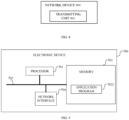
- the terminal device includes a processor and a memory configured to store computer programs executable by the processor, and the processor is configured to execute the computer programs to perform the method for random access resource configuration performed by the terminal device.
- implementations of the disclosure provide a network device.
- the network device includes a processor and a memory configured to store computer programs executable by the processor, and the processor is configured to execute the computer programs to perform the method for random access resource configuration performed by the network device.
- implementations of the disclosure provide a chip.
- the chip includes a processor configured to invoke and execute a computer program stored in a memory, to cause a device equipped with the chip to perform the method for random access resource configuration performed by the terminal device.
- implementations of the disclosure provide a chip.
- the chip includes a processor configured to invoke and execute a computer program stored in a memory, to cause a device equipped with the chip to perform the method for random access resource configuration performed by the network device.
- implementations of the disclosure provide a storage medium.
- the storage medium stores executable programs, which when executed by a processor, are configured to perform the method for random access resource configuration performed by the terminal device.
- implementations of the disclosure provide a storage medium.
- the storage medium stores executable programs, which when executed by a processor, are configured to perform the method for random access resource configuration performed by the network device.
- implementations of the disclosure provide a computer program product.
- the computer program product includes computer program instructions operable with a computer to perform the method for random access resource configuration performed by the terminal device.
- implementations of the disclosure provide a computer program product.
- the computer program product includes computer program instructions operable with a computer to perform the method for random access resource configuration performed by the network device.
- implementations of the disclosure provide a computer program operable with a computer to perform the method for random access resource configuration performed by the terminal device.
- implementations of the disclosure provide a computer program operable with a computer to perform the method for random access resource configuration performed by the network device.
- Implementations of the disclosure provide the method for random access resource configuration, the electronic device, and the storage medium.
- the method includes the following.
- the terminal device receives the first configuration information, where the first configuration information includes at least two random access resources associated with or corresponding to the network slice. In this way, a network slice-based RACH procedure is determined.
- RAN radio access network
- One way to enhance the support of the vertical services by the access network is to provide lower latency, more targeted, more flexible, and more scalable services for various services with different requirements based on network slicing.
- RAN slicing allows application (APP) providers to participate in the design, deployment, and operation of a customized RAN, to better support the services of the application providers. Therefore, release 17 (Rel-17) introduces the enhancement of slicing in the access network, which specifically involves the following aspects.
- the study item aims to investigate enhancement on RAN support of network slicing.
- Detailed objectives of the study item are:
- the network slicing in release 15 only involves the core network side. Specifically, a terminal device reports its own network slice requirement to a network device, and the network device selects an appropriate access and mobility management function (AMF) entity according to the network slice requirement reported by the terminal device, to establish a business session between the terminal device and the network device.
- AMF access and mobility management function
- the related behavior of a network slice supported by the access network side is not involved.
- a cause value for trigger/establishment is carried in message 3 (Msg3).
- the random access procedure can be triggered by the following events: initial access from RRC_IDLE, radio resource control (RRC) connection re-establishment procedure, handover, downlink (DL) or uplink (UL) data arrival during RRC_CONNECTED when UL synchronization status is "non-synchronized", UL data arrival during RRC_CONNECTED when there are no physical uplink control channel (PUCCH) resources for schedule request (SR) available, SR failure, request by RRC upon synchronous reconfiguration, transition from RRC_INACTIVE, to establish time alignment at secondary cell (SCell) addition, request for other system information (SI) (see subclause 7.3), and beam failure recovery.
- RRC radio resource control
- the RACH procedure includes a first type of random access and a second type of random access.
- the first type of random access two information interactions need to be performed between the terminal device and the network device. Therefore, the first type of random access is also referred to as 2-step RACH.
- the second type of random access four information interactions need to be performed between the terminal device and the network device. Therefore, the second type of random access is also referred to as 4-step RACH.
- the random access includes contention based random access and non-contention based random access.
- the random access includes the first type of random access and the second type of random access. The first type of random access and the second type of random access are briefly described below respectively.
- a procedure of the second type of random access includes the following four steps.
- a terminal device transmits a random access preamble to a network device via message 1 (Msg1).
- the terminal device transmits a selected preamble on a selected physical random access channel (PRACH) time-domain resource, and according to the preamble, the network device is able to estimate a UL timing and the size of a UL grant required for the terminal device to transmit message 3 (Msg3).
- PRACH physical random access channel
- the network device transmits a random access response (RAR) message to the terminal device via message 2 (Msg2), to inform the terminal device of information of a UL resource that can be used by the terminal device when transmitting Msg3, allocate a temporary radio network temporary identity (RNTI) for the terminal device, provide a time advance command for the terminal device, etc.
- RAR random access response
- Msg2 message 2
- RNTI temporary radio network temporary identity
- the terminal device after receiving the RAR message, transmits Msg3 on the UL resource specified by the RAR message.
- Msg3 is mainly used to notify the network device what event triggers the RACH procedure. For example, if the RACH procedure is triggered by an initial random access event, a terminal device identity (ID) and an establishment cause will be carried in Msg3. If the RACH procedure is triggered by an RRC reestablishment event, a connected-state terminal device ID and an establishment cause will be carried in Msg3.
- the ID carried in Msg3 enables the contention conflict to be resolved at S 104.
- the network device transmits message 4 (Msg4) to the terminal device and allocates a UL transmission resource to the terminal device, where Msg4 contains a contention resolution message.
- Msg4 contains a contention resolution message.
- the terminal device may check whether the UE-specific temporary ID transmitted by the terminal device in Msg3 is contained in the contention resolution message transmitted by the base station. If the temporary ID is contained in the contention resolution message, it means that the random access procedure of the terminal device succeeds, otherwise, it means that the random access procedure fails and the terminal device needs to re-initiate the random access procedure from the first step.
- Msg4 is further used to transmit a radio resource control (RRC) configuration message to the terminal device.
- RRC radio resource control
- the second type of RACH is completed through four information interactions between the network device and the terminal device, which results in a long delay of the RACH procedure.
- the first type of random access is proposed. As illustrated in FIG. 2 , a procedure of the first type of random access includes the following.
- a terminal device transmits message A (MsgA) to a network device.
- MsgA message A
- MsgA consists of a preamble and a payload.
- the preamble is the same as the preamble in the second type of random access and is transmitted on a PRACH resource.
- Information carried in the payload is the same as the information in Msg3 in the second type of random access and may be, for example, RRC signaling in RRC_IDLE, and a C-RNTI in RRC_CONNECTED.
- the payload can be transmitted on a physical uplink shared channel (PUSCH).
- PUSCH physical uplink shared channel
- MsgA MsgA
- the network device successfully decodes one or more preambles.
- the other result is that the network device successfully decodes one or more preambles and one or more payloads.
- the terminal device receives message B (MsgB) transmitted by the network device.
- MsgB message B
- MsgB contains contents of Msg2 and Msg4 in the second type of random access.
- the network device supports two configurations of random access occasion (RO) and preamble.
- RO random access occasion
- One way is, a same or shared RO is configured for the 2-step RACH and the 4-step RACH, but different or separate preambles are configured for the 2-step RACH and the 4-step RACH.
- the network device can distinguish the type of random access selected by the terminal device according to the range of the index of the received preamble.
- the other way is, separate ROs are configured for the 2-step RACH and the 4-step RACH, but a shared preamble is configured for the 2-step RACH and the 4-step RACH.
- the network device can distinguish the type of random access selected by the terminal device according to the time-frequency location of the received preamble.
- the terminal device For the 4-step RACH, after transmitting the preamble, the terminal device needs to monitor an RAR scheduled by a physical downlink control channel (PDCCH) scrambled with a random access RNTI (RA-RNTI).
- RA-RNTI random access RNTI
- the terminal device After transmitting the preamble and the payload, the terminal device needs to monitor MsgB scheduled by a PDCCH scrambled with a MsgB-RNTI.
- the RAR and MsgB have different media access control (MAC) protocol data unit (PDU) formats, and a R15 terminal device is not required to support interpretation of MsgB.
- MAC media access control
- PDU protocol data unit
- the MsgB-RNTI has an offset with respect to the RA-RNTI to distinguish from the RA-RNTI.
- the related art does not disclose how an air interface supports network slicing, but R-17 introduces network slice-based random access. Therefore, it is necessary to determine the procedure of network slice-based random access.
- the method for random access resource configuration in implementations of the disclosure are applicable to various communication systems, for example, a global system of mobile communication (GSM), a code division multiple access (CDMA) system, a wideband code division multiple access (WCDMA) system, a general packet radio service (GPRS) system, a long term evolution (LTE) system, an LTE frequency division duplex (FDD) system, an LTE time division duplex (TDD) system, an advanced LTE (LTE-A) system, a new radio (NR) system, an evolved system of the NR system, an LTE-based access to unlicensed spectrum (LTE-U) system, an NR-based access to unlicensed spectrum (NR-U) system, a universal mobile telecommunication system (UMTS), a worldwide interoperability for microwave access (WiMAX) communication system, a wireless local area networks (WLAN), a wireless fidelity (WiFi), a next-generation communication system, or other communication systems.
- GSM global system of mobile communication
- CDMA
- a conventional communication system generally supports a limited number of connections and therefore is easy to implement.
- a mobile communication system will not only support conventional communication but also support, for example, device to device (D2D) communication, machine to machine (M2M) communication, machine type communication (MTC), and vehicle to vehicle (V2V) communication. Implementations of the disclosure are also applicable to these communication systems.
- D2D device to device
- M2M machine to machine
- MTC machine type communication
- V2V vehicle to vehicle
- the network device in implementations of the disclosure may be a common base station (such as NodeB, eNB, or gNB), an NR controller, a centralized unit, an NR base station, a remote radio module, a micro base station, a relay, a distributed unit, a transmission reception point (TRP), a transmission point (TP), or any other device.
- the technology and form adopted by the network device are not limited in implementations of the disclosure.
- the above devices that can provide wireless communication functions for a terminal device are collectively referred to as "network device".
- the terminal device may be any terminal, for example, the terminal device may be a UE for MTC.
- the terminal device may also be referred to as UE, mobile station (MS), mobile terminal, terminal, etc.
- the terminal device can communicate with one or more CNs via a RAN.
- the terminal device can be a mobile phone (or referred to as "cellular" phone), a computer with mobile terminal, etc.
- the terminal device can also be a portable, pocket-sized, handheld, computer built-in, or in-vehicle mobile device that exchanges language and/or data with the RAN. Implementations of the disclosure are not limited in this regard.
- the network device and the terminal device can be deployed on land, which includes indoor or outdoor, handheld, or in-vehicle.
- the network device and the terminal device can also be deployed on water.
- the network device and the terminal device can also be deployed in airplanes, balloons, and satellites in the air. There is no limitation on the application scenario of the network device and the terminal device in implementations of the disclosure.
- communication between the network device and the terminal device and communication between terminal devices may be implemented in a licensed spectrum, in an unlicensed spectrum, or in both the licensed spectrum and the unlicensed spectrum.
- the communication between the network device and the terminal device and the communication between the terminal devices may be implemented in a spectrum below 7 gigahertz (GHz), in a spectrum above 7GHz, or in both the spectrum below 7GHz and the spectrum above 7GHz.
- GHz gigahertz
- a conventional communication system generally supports a limited number of connections and therefore is easy to implement.
- a mobile communication system will not only support conventional communication but also support, for example, D2D communication, M2M communication, MTC, and V2V communication. Implementations of the disclosure are also applicable to these communication systems.
- a communication system 100 may include a network device 110.
- the network device 110 may be a device that can communicate with a terminal device 120 (or referred to as a communication terminal or a terminal).
- the network device 110 can provide a communication coverage for a specific geographical area and communicate with terminal devices in the coverage area.
- the network device 110 may be a base transceiver station (BTS) in the GSM or in the CDMA system, or may be a NodeB (NB) in the WCDMA system, or may be an evolutional Node B (eNB or eNodeB) in the LTE system, or may be a radio controller in a cloud radio access network (CRAN).
- BTS base transceiver station
- NB NodeB
- eNB or eNodeB evolutional Node B
- CRAN cloud radio access network
- the network device may be a mobile switching center, a relay station, an access point, an in-vehicle device, a wearable device, a hub, a switch, a bridge, a router, a network-side device in a 5th generation (5G) network, or a network device in a future evolved public land mobile network (PLMN).
- 5G 5th generation
- PLMN public land mobile network
- the communication system 100 further includes at least one terminal device 120 in a coverage area of the network device 110.
- the "terminal device” referred to herein can include but is not limited to a device configured to communicate via a wired line, another data connection/network, a wireless interface, a device which is part of another terminal device and configured to receive/transmit communication signals, and/or an Internet of things (IoT) device.
- Examples of the wired line may include, but are not limited to, a public switched telephone network (PSTN), a digital subscriber line (DSL), a digital cable, and a direct connection cable.
- wireless interface may include, but are not limited to, a wireless interface for a cellular network, a wireless local area network (WLAN), a digital television network (such as a digital video broadcasting-handheld (DVB-H) network), a satellite network, and an amplitude modulation-frequency modulation (AM-FM) broadcast transmitter.
- a terminal device configured to communicate via a wireless interface may be called a "wireless communication terminal", a “wireless terminal”, or a "mobile terminal”.
- Examples of the mobile terminal may include, but are not limited to, a satellite or cellular telephone, a personal communication system (PCS) terminal that can combine a cellular radio telephone with data processing, fax, and data communication capabilities, a personal digital assistant (PDA) that can be a radio telephone, a pager, internet/intranet access, a web browser, a memo pad, a calendar, and/or a global positioning system (GPS) receiver, a conventional laptop and/or a palmtop receiver, or other electronic devices including a radiotelephone transceiver.
- PCS personal communication system
- PDA personal digital assistant
- GPS global positioning system
- the terminal device may refer to an access terminal, a user equipment (UE), a subscriber unit, a subscriber station, a mobile station, a remote station, a remote terminal, a mobile device, a user terminal, a terminal, a wireless communication device, a user agent, or a user device.
- the access terminal may be a cellular radio telephone, a cordless telephone, a session initiation protocol (SIP) telephone, a wireless local loop (WLL) station, a PDA, a handheld device with wireless communication functions, a computing device, other processing devices coupled with a wireless modem, an in-vehicle device, a wearable device, a terminal device in the 5G network, a terminal device in the future evolved PLMN, etc.
- the terminal devices 120 may communicate with each other through device to device (D2D) communication.
- D2D device to device
- a 5G system or 5G network may also be referred to as a NR system or NR network.
- FIG. 3 exemplarily illustrates one network device and two terminal devices.
- the communication system 100 may include multiple network devices, and there may be other numbers of terminal devices in a coverage area of each of the network devices, which is not limited herein.
- the communication system 100 may further include other network entities such as a network controller, a mobility management entity, or the like, which is not limited herein.
- network entities such as a network controller, a mobility management entity, or the like, which is not limited herein.
- a device having a communication function in a network/system may be referred to as a communication device.
- the communication device may include the network device 110 and the terminal device 120 having a communication function, and the network device 110 and the terminal device 120 may be the specific devices described above, which will not be repeated herein.
- the communication device may also include other devices in the communication system 100, such as a network controller, a mobility management entity, and other network entities, which is not limited herein.
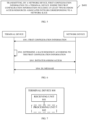
- a possible procedure of a method for random access resource configuration may include the following.
- a terminal device receives first configuration information, where the first configuration information includes at least two random access resources associated with or corresponding to a network slice.
- the terminal device receives the first configuration information transmitted by a network device.
- the at least two random access resources associated with or corresponding to the network slice include a first random access resource and/or a second random access resource.
- the first random access resource corresponds to a terminal device supporting a network slice, a network slice group, or a network slice type.
- the second random access resource corresponds to a terminal device not supporting a network slice, a network slice group, or a network slice type.
- the first random access resource corresponds to a terminal device supporting a network slice, a network slice group, or a network slice type as follows.
- the terminal device supporting a network slice, a network slice group, or a network slice type performs a random access procedure with the first random access resource.
- the second random access resource corresponds to a terminal device not supporting a network slice, a network slice group, or a network slice type as follows.
- the terminal device not supporting a network slice, a network slice group, or a network slice type performs a random access procedure with the second random access resource.
- the first random access resource corresponds to a terminal device supporting a network slice, a network slice group, or a network slice type, which can also be understood as the first random access resource corresponds to or matches supporting a network slice, a network slice group, or a network slice type.
- the second random access resource corresponds to a terminal device not supporting a network slice, a network slice group, or a network slice type, which can be understood as the second random access resource corresponds to or matches not supporting a network slice, a network slice group, or a network slice type.
- the at least two random access resources associated with or corresponding to the network slice include a first random access resource and a third random access resource.
- the at least two random access resources associated with or corresponding to the network slice include a second random access resource and a third random access resource.
- the at least two random access resources associated with or corresponding to the network slice include a first random access resource, a second random access resource, and a third random access resource.
- the at least two random access resources associated with or corresponding to the network slice include a third random access resource.
- the third random access resource corresponds to a terminal device supporting a first network slice, a first network slice group, or a first network slice type. That is, the third random access resource corresponds to a terminal device supporting a specific network slice, a specific network slice group, or a specific type of network slice. Optionally, the third random access resource corresponds to a terminal device supporting a first network slice, a first network slice group, or a first network slice type as follow. The terminal device supporting a first network slice, a first network slice group, or a first network slice type performs a random access procedure with the third random access resource.
- the third random access resource corresponds to a terminal device supporting a first network slice, a first network slice group, or a first network slice type, which can also be understood as the third random access resource corresponds to or matches supporting a first network slice, a first network slice group, or a first network slice type.
- the at least two random access resources associated with or corresponding to the network slice include a first random access resource, a second random access resource, and a third random access resource.
- configurations of the first random access resource and the second random access resource may be any of the following.
- the terminal device supports different network slices, that is, the terminal device supports more than two network slices, different network slices supported by the terminal device correspond to different preambles in the first random access resource, and/or different network slice groups supported by the terminal device correspond to different preambles in the first random access resource, and/or different network slice types supported by the terminal device correspond to different preambles in the first random access resource.
- different network slices supported by the terminal device correspond to a same RO or different ROs in the first random access resource
- different network slice groups supported by the terminal device correspond to a same RO or different ROs in the first random access resource
- different network slice types supported by the terminal device correspond to a same RO or different ROs in the first random access resource
- the terminal device supports different network slices, that is, the terminal device supports more than two network slices, different network slices supported by the terminal device correspond to different ROs in the first random access resource, and/or different network slice groups supported by the terminal device correspond to different ROs in the first random access resource, and/or different network slice types supported by the terminal device correspond to different ROs in the first random access resource.
- different network slices supported by the terminal device correspond to a same preamble or different preambles in the first random access resource
- different network slice groups supported by the terminal device correspond to a same preamble or different preambles in the first random access resource
- different network slice types supported by the terminal device correspond to a same preamble or different preambles in the first random access resource
- configurations of the second random access resource and the third random access resource may be any of the following.
- An RO in the third random access resource is the same as an RO in the second random access resource, and/or a preamble in the third random access resource is different from a preamble in the second random access resource. That is, the network device configures a shared RO and/or separate preambles for the third random access resource and the second random access resource.
- the RO in the third random access resource is different from the RO in the second random access resource, and/or the preamble in the third random access resource is different from the preamble in the second random access resource. That is, the network device configures separate preambles and/or separate ROs for the third random access resource and the second random access resource.
- the RO in the third random access resource is different from the RO in the second random access resource, and/or the preamble in the third random access resource is the same as the preamble in the second random access resource. That is, the network device configures separate ROs and a shared preamble for the third random access resource and the second random access resource.
- the terminal device supports different first network slices, that is, the terminal device supports more than two specific network slices, different network slices supported by the terminal device correspond to different preambles in the third random access resource, and/or different network slice groups supported by the terminal device correspond to different preambles in the third random access resource, and/or different network slice types supported by the terminal device correspond to different preambles in the third random access resource.
- the terminal device supports more than two specific network slices
- different network slices supported by the terminal device correspond to a same RO or different ROs in the third random access resource
- different network slice groups supported by the terminal device correspond to a same RO or different ROs in the third random access resource
- different network slice types supported by the terminal device correspond to a same RO or different ROs in the third random access resource.
- the terminal device supports different first network slices, that is, the terminal device supports more than two specific network slices, different network slices supported by the terminal device correspond to different ROs in the third random access resource, and/or different network slice groups supported by the terminal device correspond to different ROs in the third random access resource, and/or different network slice types supported by the terminal device correspond to different ROs in the third random access resource.
- different network slices supported by the terminal device correspond to a same preamble or different preambles in the third random access resource
- different network slice groups supported by the terminal device correspond to a same preamble or different preambles in the third random access resource
- different network slice types supported by the terminal device correspond to a same preamble or different preambles in the third random access resource
- configurations of the second random access resource, the first random access resource, and the third random access resource may be any of the following.
- An RO in the third random access resource, an RO in the first random access resource, and an RO in the second random access resource are the same, and/or a preamble in the third random access resource, a preamble in the first random access resource, and a preamble in the second random access resource are different. That is, the network device configures a shared RO and/or separate preambles for the third random access resource and the second random access resource.
- the RO in the third random access resource, the RO in the first random access resource, and the RO in the second random access resource are different, and/or the preamble in the third random access resource, the preamble in the first random access resource, and the preamble in the second random access resource are different. That is, the network device configures separate preambles and/or separate ROs for the third random access resource and the second random access resource.
- the RO in the third random access resource, the RO in the first random access resource, and the RO in the second random access resource are different, and/or the preamble in the third random access resource, the preamble in the first random access resource, and the preamble in the second random access resource are the same. That is, the network device configures separate ROs and a shared preamble for the third random access resource and the second random access resource.
- the terminal device supports different first network slices, that is, the terminal device supports more than two specific network slices, different network slices supported by the terminal device correspond to different preambles in the third random access resource, and/or different network slice groups supported by the terminal device correspond to different preambles in the third random access resource, and/or different network slice types supported by the terminal device correspond to different preambles in the third random access resource.
- the terminal device supports more than two specific network slices
- different network slices supported by the terminal device correspond to a same RO or different ROs in the third random access resource
- different network slice groups supported by the terminal device correspond to a same RO or different ROs in the third random access resource
- different network slice types supported by the terminal device correspond to a same RO or different ROs in the third random access resource.
- the terminal device supports different first network slices, that is, the terminal device supports more than two specific network slices, different network slices supported by the terminal device correspond to different ROs in the third random access resource, and/or different network slice groups supported by the terminal device correspond to different ROs in the third random access resource, and/or different network slice types supported by the terminal device correspond to different ROs in the third random access resource.
- different network slices supported by the terminal device correspond to a same preamble or different preambles in the third random access resource
- different network slice groups supported by the terminal device correspond to a same preamble or different preambles in the third random access resource
- different network slice types supported by the terminal device correspond to a same preamble or different preambles in the third random access resource
- the first configuration information includes a network slice/network slice group/network slice type and at least two random access resources associated with or corresponding to a network slice.
- the first configuration information may further include at least one of: a network slice identifier, a network slice group identifier, a network slice type identifier, a mapping between network slice identifiers and network slice groups, a mapping between network slice identifiers and network slice types, and whether a network device supports a network slice.
- the network slice identifier may be at least one of: single network slice selection assistance information (S-NSSAI), network slice selection assistance information (NSSAI), a network slice identifier, and a network slice identifier (NSID).
- the first configuration information may further include at least one of: a random access priority parameter corresponding to the network slice and random access priority parameters corresponding to the random access resources. That is, different network slices or network slice groups correspond to different random access (RA) priority parameters (ra-Prioritization), or different types of RACH resources correspond to different RA priority parameters, where the RA priority parameter may include backoff and/or power ramping. Therefore, if the terminal device supports different network slices or network slice groups, the terminal device performs random access with different RA priority parameters, and when selecting different types of RACH resources to perform random access, the terminal device performs the random access with different RA priority parameters.
- RA random access
- the first configuration information may further include at least one of: random access common configuration information (RACH-ConfigCommon), 2-step random access common configuration information (RACH-ConfigCommonTwoStepRA), and random access dedicated configuration information (RACH-ConfigDedicated). That is, the first configuration information is configured via at least one of: RACH-ConfigCommon, RACH-ConfigCommonTwoStepRA, and RACH-ConfigDedicated.
- the first configuration information may be determined according to at least one of: prach-ConfigurationIndex, msg1-FDM, msg1-FrequencyStart, and totalNumberOfRA-Preambles.
- the first configuration information may be determined according to at least one of: prach-ConfigurationIndex, msg1-FDM, msg1-FrequencyStart, and totalNumberOfRA-Preambles.
- prach-ConfigurationIndex For example, for 2-step RACH, the first configuration information may be determined according to at least one of: 2step prach-ConfigurationIndex, 2step msg1-FDM, 2step msg1-FrequencyStart, and 2step totalNumberOfRA-Preambles.
- CFRA contention free random access
- the method for random access resource configuration provided in implementations of the disclosure may further include the following.
- the terminal device determines a random access resource for random access based on information of the network slice.
- the information of the network slice includes at least one or more of the following: whether the terminal device supports a network slice, a network slice supported by the terminal device, a network slice group supported by the terminal device, a network slice type supported by the terminal device, a network slice selected by the terminal device, a network slice group selected by the device, a network slice type selected by the terminal device, a network slice required by the terminal device, a network slice group required by the terminal device, a network slice type required by the terminal device, a network slice expected by the terminal device, a network slice group expected by the terminal device, a network slice type of the terminal device, a network slice configured for the terminal device, a network slice group configured for the terminal device, a network slice type configured for the terminal device, a network slice allowed for the terminal device, a network slice group allowed for the terminal device, a network slice type allowed for the terminal device, and a network slice priority.
- a specific procedure for the terminal device to determine the random access resource for random access based on the information of the network slice may include the following scenarios.
- the network device supports network slice 1, network slice 2, and network slice 3, where network slice 1, network slice 2, and network slice 3 each correspond to a third random access resource. Specifically, each network slice has a corresponding third random access resource.
- Terminal device 1 supports network slice 4
- terminal device 2 supports network slice 5
- terminal device 3 does not support a network slice
- terminal device 4 does not support network slice 1.
- Network slice 4 and network slice 5 correspond to a first random access resource
- terminal device 3 performs random access with a second random access resource
- terminal device 4 performs random access with a third random access resource, for example, based on a third random access resource corresponding to network slice 1 in a third random access resource set.
- Terminal device 1 and terminal device 2 may perform random access with a second random access resource or a first random access resource.
- the method for random access resource configuration provided in implementations of the disclosure may further include the following.
- the terminal device performs random access based on the random access resource determined.
- the terminal device receives a DL message by adopting at least one of: different RNTI formats, different search spaces, indication information carried in an RAR, and a Msg4, when the random access resource is configured with different ROs, or the random access resource is configured with different ROs and a same preamble.
- the terminal device may determine an RO location corresponding to the RAR message, indicate an RO location corresponding to the DL message received, or determine an RO location for receiving the DL message, according to the RNTI formats, the search spaces, the indication information carried in the RAR, or the Msg4.
- the terminal device may determine an RO location corresponding to the RAR message, indicate an RO location corresponding to the DL message received, or determine an RO location for receiving the DL message, according to different RNTI formats, different search spaces, or different indication information carried in the RAR, where the terminal device supports different network slices.
- the terminal device supporting a network slice may be the terminal device supporting different network slices or different network slice group.
- the terminal device supporting a network slice may be UE 1 supporting network slice 1 and UE 2 supporting network slice 2.
- the terminal device may determine an RO location corresponding to the RAR message, indicate an RO location corresponding to the DL message received, or determine an RO location for receiving the DL message, according to different RNTI formats, different search spaces, or different indication information carried in the RAR, where the terminal device matches different network slices.
- the terminal device matching a network slice may be the terminal device matching different network slices or different network slice groups.
- the terminal device matching a network slice may be UE 1 whose selected network slice matches a network slice supported by the network (network slice 1) and UE 2 whose selected network slice matches a network slice supported by the network (network slice 2).
- the terminal device when the terminal device receives the DL message by adopting different RNTI formats, the terminal device receives the DL message based on a first RNTI format, where the terminal device supports a network slice, and/or the terminal device receives the DL message based on a second RNTI format, where the terminal device does not support a network slice, where the first RNTI format is different from the second RNTI format, and an RO corresponding to the first RNTI format is different from an RO corresponding to the second RNTI format.
- the terminal device when the terminal device receives the DL message by adopting different RNTI formats, the terminal device whose selected network slice matches a network slice supported by the network device receives the DL message based on a first RNTI format, and/or the terminal device whose selected network slice fails to match the network slice supported by the network device receives the DL message based on a second RNTI format, where the first RNTI format is different from the second RNTI format, and an RO corresponding to the first RNTI format is different from an RO corresponding to the second RNTI format.
- an RA-RNTI format different from the related art can be used.
- an offset may be added to an existing RNTI calculation formula, an RA-RNTI format with an offset is the first RNTI format, and an RA-RNTI format without an offset is the second RNTI format.
- a terminal device not supporting a network slice adopts the second RNTI format, and a terminal device supporting a slice adopts the first RNTI format added with an offset.
- a terminal device not supporting a network slice adopts the first RNTI format, and a terminal device supporting a slice adopts the second RNTI format added with an offset.
- the terminal device distinguishes different RO locations according to different RNTI formats, to receive and detect an RAR.
- the offset value is 14 ⁇ 80 ⁇ 8 ⁇ 2.
- RNTI 1 + s_id + 14 ⁇ t_id + 14 ⁇ 80 ⁇ f_id + 14 ⁇ 80 ⁇ 8 ⁇ ul_carrier_id + 14 ⁇ 80 ⁇ 8 ⁇ 2.
- a terminal device supporting a network slice includes a terminal device supporting different network slices, a terminal device supporting different network slice groups, a terminal device matching different network slices, or a terminal device matching different network slice groups.
- An RNTI format is obtained by adding an offset to the existing RNTI calculation formula.
- the value range of f_id in the RNTI calculation formula can be extended, and different value ranges represent different RO locations.
- the 4-step RACH is described above as an example, where the terminal device receives the DL message by adopting different RNTI formats.
- a processing procedure where the terminal device receives the DL message by adopting different RNTI formats in the 2-step RACH is the same as the 4-step RACH, which will not be repeated herein.
- the terminal device when the terminal device receives the DL message by adopting different search spaces, the terminal device receives the DL message in a first search space, where the terminal device supports a network slice, and/or the terminal device receives the DL message in a second search space, where the terminal device does not support a network slice, where the first search space is different from the second search space.
- the DL message may be received based on different search spaces.
- different search space IDs configured in PDCCH-Configcommon, or configured in RACH-ConfigCommon or RACH-ConfigDedicated configured in a RACH configuration correspond to different search spaces.
- Different search space IDs are used to distinguish different RO locations. For example, a terminal device supporting a network slice receives a PDCCH in a search space corresponding to search space ID x, and a terminal device not supporting a network slice receives a PDCCH in a search space corresponding to search space ID y.
- a terminal device supporting a network slice receives a PDCCH in the search space corresponding to search space ID y, and a terminal device not support a network slice receives a PDCCH in the search space corresponding to search space ID x.
- the terminal device supporting a network slice includes a terminal device supporting different network slices, a terminal device supporting different network slice groups, a terminal device matching different network slices, or a terminal device matching different network slice groups.
- the 4-step RACH is described above as an example, where the terminal device receives the DL message by adopting different search spaces.
- a processing procedure where the terminal device receives the DL message by adopting different search spaces in the 2-step RACH is the same as the 4-step RACH, which will not be repeated herein.
- the indication information when the terminal device determines an RO or receives the DL message by adopting the indication information carried in the RAR, when first bit information in the indication information has a first value, the indication information indicates a first RO group and/or when the first bit information in the indication information has a second value, the indication information indicates a second RO group, or when the first bit information in the indication information has the second value, the indication information indicates the first RO group and/or when the first bit information in the indication information has the first value, the indication information indicates the second RO group.
- the first value is different from the second value.
- the first RO group is also different from the second RO group.
- the first RO group is different from the second RO group in that ROs in the first RO group are not exactly the same as ROs in the second RO group.
- indication information may be carried in the RAR to indicate RO group information.
- the RO group information can be indicated in a reserved bit or by reusing other information bits. For example, when the reserved bit has a first value (e.g., the first value is 0), it represents an RO with a smaller RO frequency start location index, and when the reserved bit has a second value (e.g., the second value is 1), it represents an RO with a larger RO frequency start location index.
- the reserved bit when the reserved bit has the first value (e.g., the first value is 0), it represents an RO location not supporting a network slice, and when the reserved bit has the second value (e.g., the second value is 1), it represents an RO location not supporting a network slice.
- the reserved bit when the reserved bit is 0, it means that other information bits are not reused, and original new information bits are used for interpretation, and when the reserved bit is 1, it means that other information bits are reused, and new information bits are used for interpretation.
- the last bit of a UL-grant when the last bit of a UL-grant is 0, it represents an RO with a smaller RO frequency start location index, and when the last bit of the UL-grant is 1, it represents an RO with a larger RO frequency start location index.
- the last bit of the UL-grant when the last bit of the UL-grant is 0, it represents an RO location not supporting a network slice, and when the last bit of the UL-grant is 1, it represents an RO location supporting a network slice. If the last two bits in the UL-grant represent the RO group information, when the last two bits are 00, it represents an RO with the smallest RO frequency start location index, when the last two bits are 01, it represents an RO with the second smallest RO frequency start location index, and when the last two bits are 11, it represents an RO with the largest RO frequency start location index.
- indication information may be carried in the RAR to indicate the RO group information.
- different RAR subheaders are used to indicate different RO groups.
- an existing RAR subheader indicates an RO location not supporting a slice
- a new RAR subheader indicates an RO location supporting a slice.
- an RO may be indicated in the same or similar manner as 4-step RACH.
- the terminal device determines an RO/UE for contention resolution according to Msg4 received.
- the RO/LTE can be finally determined through the reception of Msg4. That is, if ROs selected by UE 1 and UE 2 in different RO groups correspond to a same RNTI, after receiving Msg2, UE 1 and UE 2 each transmit Msg3, and finally determine the UE/RO for contention resolution according to Msg4 received.
- another possible procedure of a method for random access resource configuration may include the following.
- a network device transmits first configuration information to a terminal device, where the first configuration information includes at least two random access resources associated with or corresponding to a network slice.
- a method for random access resource configuration provided in implementations of the disclosure will be described in detail below by taking an example that the network device configures a first random access resource and a second random access resource for the terminal device. As illustrated in FIG. 6 , a detailed possible procedure of a method for random access resource configuration provided in implementations of the disclosure may include the following.
- a network device configures first configuration information for a terminal device.
- the first configuration information includes at least two random access resources associated with or corresponding to a network slice.
- the at least two random access resources associated with or corresponding to the network slice include a first random access resource and/or a second random access resource.
- the first random access resource corresponds to a terminal device supporting a network slice, a network slice group, or a network slice type.
- the second random access resource corresponds to a terminal device not supporting a network slice, a network slice group, or a network slice type.
- the first random access resource corresponds to a terminal device supporting a network slice, a network slice group, or a network slice type as follows.
- the terminal device supporting a network slice, a network slice group, or a network slice type performs a random access procedure with the first random access resource.
- the second random access resource corresponds to a terminal device not supporting a network slice, a network slice group, or a network slice type as follows.
- the terminal device not supporting a network slice, a network slice group, or a network slice type performs a random access procedure with the second random access resource.
- the first random access resource corresponds to a terminal device supporting a network slice, a network slice group, or a network slice type, which can also be understood as the first random access resource corresponds to or matches supporting a network slice, a network slice group, or a network slice type.
- the second random access resource corresponds to a terminal device not supporting a network slice, a network slice group, or a network slice type, which can be understood as the second random access resource corresponds to or matches not supporting a network slice, a network slice group, or a network slice type.
- the random access resource configured by the network device for the terminal device include two types, one is the first random access resource corresponding to a terminal device supporting a network slice, and the other is the second random access resource corresponding to a terminal device not supporting a network slice. It should be noted that as long as the terminal device supports a network slice, the terminal device can perform a random access procedure with the first random access resource regardless of which kind or type of network slice the terminal device supports.
- the network device configures RACH resource a, and RACH resource a corresponds to a scenario where a network slice (or a network slice group/network slice type) is supported.
- a terminal device supporting a network slice selects a RACH resource in or corresponding to RACH resource a.
- the network device configures RACH resource b, and RACH resource b corresponds to a scenario where a slice (or a slice group/slice type) is not supported.
- a terminal device not supporting a network slice (or a network slice group/network slice type) selects a RACH resource in or corresponding to RACH resource b.
- an RO in the first random access resource may be the same as an RO in the second random access resource, and/or a preamble in the first random access resource may be different from a preamble in the second random access resource.
- the RO in the first random access resource may be different from the RO in the second random access resource, and/or the preamble in the first random access resource may be different from the preamble in the second random access resource.
- the RO in the first random access resource may be different from the RO in the second random access resource; and/or the preamble in the first random access resource may be the same as the preamble in the second random access resource.
- the terminal device supports different network slices, that is, the terminal device supports more than two network slices, different network slices supported by the terminal device correspond to different preambles in the first random access resource, and/or different network slice groups supported by the terminal device correspond to different preambles in the first random access resource, and/or different network slice types supported by the terminal device correspond to different preambles in the first random access resource.
- the terminal device supports network slice 1 and network slice 2, and a preamble in the first random access resource corresponding to network slice 1 is different from a preamble in the third random access resource corresponding to network slice 2.
- different network slices supported by the terminal device correspond to a same RO or different ROs in the first random access resource
- different network slice groups supported by the terminal device correspond to a same RO or different ROs in the first random access resource
- different network slice types supported by the terminal device correspond to a same RO or different ROs in the first random access resource.
- the terminal device supports network slice 1 and network slice 2, and an RO in the first random access resource corresponding to network slice 1 is the same as or different from an RO in the first random access resource corresponding to network slice 2.
- the terminal device supports different network slices, that is, the terminal device supports more than two network slices, different network slices supported by the terminal device correspond to different ROs in the first random access resource, and/or different network slice groups supported by the terminal device correspond to different ROs in the first random access resource, and/or different network slice types supported by the terminal device correspond to different ROs in the first random access resource.
- the terminal device supports network slice 1 and network slice 2, and the RO in the first random access resource corresponding to network slice 1 is different from the RO in the first random access resource corresponding to network slice 2.
- different network slices supported by the terminal device correspond to a same preamble or different preambles in the first random access resource
- different network slice groups supported by the terminal device correspond to a same preamble or different preambles in the first random access resource
- different network slice types supported by the terminal device correspond to a same preamble or different preambles in the first random access resource.
- the terminal device supports network slice 1 and network slice 2, and the preamble in the first random access resource corresponding to network slice 1 is the same as or different from the preamble in the first random access resource corresponding to network slice 2.
- the first configuration information may further include: a network slice identifier, a network slice group identifier, a network slice type identifier, a mapping between network slice identifiers and network slice groups, a mapping between network slice identifiers and network slice types, and whether a network device supports a network slice.
- the network slice identifier may be at least one of: S-NSSAI, NSSAI, a network slice identifier, and an NSID.
- the first configuration information may further include: a random access priority parameter corresponding to the network slice and random access priority parameters corresponding to the random access resources. That is, different network slices or network slice groups correspond to different RA priority parameters, or different types of RACH resources correspond to different RA priority parameters, where the RA priority parameter may include backoff and/or power ramping. Therefore, if the terminal device supports different network slices or network slice groups, the terminal device performs random access with different RA priority parameters, and when selecting different types of RACH resources to perform random access, the terminal device performs the random access with different RA priority parameters.
- the first configuration information may further include at least one of: RACH-ConfigCommon, RACH-ConfigCommonTwoStepRA, and RACH-ConfigDedicated. That is, the first configuration information is configured via at least one of: RACH-ConfigCommon, RACH-ConfigCommonTwoStepRA, and RACH-ConfigDedicated.
- the first configuration information may be determined according to at least one of: prach-ConfigurationIndex, msg1-FDM, msg1-FrequencyStart, and totalNumberOfRA-Preambles.
- the first configuration information may be determined according to at least one of: prach-ConfigurationIndex, msg1-FDM, msg1-FrequencyStart, and totalNumberOfRA-Preambles.
- prach-ConfigurationIndex msg1-FDM
- msg1-FrequencyStart msg1-FrequencyStart
- totalNumberOfRA-Preambles e.g., 2step prach-ConfigurationIndex, 2step msg1-FDM, 2step msg1-FrequencyStart, and 2step totalNumberOfRA-Preambles.
- the parameters for CFRA are similar, which are not listed herein.
- the random access resource may include an RO and/or a preamble.
- an RO in the first random access resource is the same as an RO in the second random access resource, and/or a preamble in the first random access resource is different from a preamble in the second random access resource. That is, the network device configures a shared RO and/or separate preambles for the first random access resource and the second random access resource.
- the RO in the first random access resource is different from the RO in the second random access resource, and/or the preamble in the first random access resource is different from the preamble in the second random access resource. That is, the network device configures separate preambles and/or separate ROs for the first random access resource and the second random access resource.
- the RO in the first random access resource is different from the RO in the second random access resource, and/or the preamble in the first random access resource is the same as the preamble in the second random access resource. That is, the network device configures separate ROs and a shared preamble for the first random access resource and the second random access resource.
- the terminal device determines a RACH resource according to the first configuration information.
- the information of the network slice includes at least one or more of the following: whether the terminal device supports a network slice, a network slice supported by the terminal device, a network slice group supported by the terminal device, a network slice type supported by the terminal device, a network slice selected by the terminal device, a network slice group selected by the device, a network slice type selected by the terminal device, a network slice required by the terminal device, a network slice group required by the terminal device, a network slice type required by the terminal device, a network slice expected by the terminal device, a network slice group expected by the terminal device, a network slice type of the terminal device, a network slice configured for the terminal device, a network slice group configured for the terminal device, a network slice type configured for the terminal device, a network slice allowed for the terminal device, a network slice group allowed for the terminal device, a network slice type allowed for the terminal device, and a network slice priority.
- the terminal device determines a second random access resource as the random access resource for random access, if the terminal device does not support a network slice or a network slice of the terminal device fails to match a network slice supported by the network device. That is, if the network device does not support a network slice or the network slice of the terminal device fails to match the network slice supported by the network device, the terminal device performs random access with the second random access resource corresponding to not supporting or not matching a network slice.
- the terminal device determines a first random access resource as the random access resource for random access, if the terminal device supports a network slice or the network slice of the terminal device matches the network slice supported by the network device. That is, if the network device supports a network slice or the network slice of the terminal device matches the network slice supported by the network device, the terminal device performs random access with the first random access resource corresponding to supporting or matching a network slice.
- the terminal device initiates random access.
- the network device when the network device configures the random access resource for the terminal device, the network device configures a shared RO and different preambles (or separate preambles) for a scenario where a network slice is supported and a scenario where a network slice is not supported. Then, a UE supporting a network slice and a UE not supporting a network slice can select PRACH resources in the shared RO, but need to select preamble resources in their respective preamble groups.
- the network device when the network device configures the random access resource for the terminal device, the network device configures separate ROs and different preambles (or separate preambles) for a scenario where a network slice is supported and a scenario where a slice is not supported.
- a UE supporting a network slice and a UE not supporting a network slice select PRACH resources in different RO groups and preamble resources in different preamble groups.
- the network device when the network device configures the random access resource for the terminal device, the network device configures separate ROs and a shared preamble for a scenario where a network slice is supported and a scenario where a network slice is not supported.
- a UE supporting a network slice and a UE not supporting a network slice select PRACH resources in different RO groups and preamble resources in the same preamble group.
- the network device transmits a DL message to the terminal device.
- the network device receives an UL message transmitted by the terminal device, and feeds back for the UL message, that is, transmits a DL message corresponding to the UL message to the terminal device.
- the UL message may be message 1 (Msg1) or MsgA.
- the DL message may be Msg2 or MsgB. If the UL message is Msg1, the terminal device detects Msg2 in an RAR window by using an RA-RNTI. If the UL message is MsgA, the terminal device detects MsgB in the RAR window by using MsgB-RNTI.
- the terminal device can receive the DL message in any of the following manners, so that the terminal device can distinguish which RO the DL message is fed back for.
- Different RNTI formats can be used, for example, an RAR can be received and detected by using an existing RNTI calculation formula added with an offset, or the value range of f_id in the RNTI calculation formula can also be extended, and different value ranges represent different RO locations.
- Different search spaces can be used, for example, the RAR can be received and detected by using search spaces corresponding to different search space IDs, where the search space IDs can be configured in an RACH configuration such as RACH-ConfigCommon or RACH-ConfigDedicated, or can be configured in PDCCH-ConfigCommon.
- Indication information may further be added to the RAR, for example, by using a reserved bit in the RAR, or reusing other information bits (such as several bits in information bits of a UL-grant) to indicate the RO.
- Which RO and/or terminal device the RAR is targeted for can be finally determined by the reception of Msg4.
- the following takes the shared preamble as an example for illustration.
- the network device can determine network slice information or network slice requirement of the terminal device as soon as possible to assist the network device in access control, thereby ensuring that a terminal device with random access requirement has a priority of access.
- a method for random access resource configuration provided in implementations of the disclosure will be described in detail below by taking an example that the network device configures a third random access resource and a second random access resource for the terminal device.
- Another detailed possible procedure of a method for random access resource configuration provided in implementations of the disclosure may include the following.
- a network device configures first configuration information for a terminal device.
- the first configuration information includes at least two random access resources associated with or corresponding to a network slice.
- the at least two random access resources associated with or corresponding to the network slice include a third random access resource and/or a second random access resource.
- the third random access resource corresponds to a terminal device supporting a first network slice, a first network slice group, or a first network slice type. That is, the third random access resource corresponds to a terminal device supporting a specific network slice, a specific network slice group, or a specific type of network slice.
- the third random access resource corresponds to a terminal device supporting a first network slice, a first network slice group, or a first network slice type as follow.
- the terminal device supporting a first network slice, a first network slice group, or a first network slice type performs a random access procedure with the third random access resource.
- the third random access resource is at least one random access resource, and the at least one random access resource corresponds to at least one network slice/network slice group/network slice type.
- the third random access resource corresponds to at least a network slice or a network slice group selected, required, or supported by the terminal device.
- the third random access resource corresponds to a terminal device supporting a first network slice, a first network slice group, or a first network slice type, which can also be understood as the third random access resource corresponds to or matches supporting a first network slice, a first network slice group, or a first network slice type.
- the second random access resource corresponds to a terminal device not supporting a network slice, a network slice group, or a network slice type as follows.
- the terminal device not supporting a network slice, a network slice group, or a network slice type performs a random access procedure with the second random access resource, which can also be understood as the second random access resource corresponds to a terminal device not supporting a network slice, a network slice group, or a network slice type, or understood as the second random access resource corresponds to or matches not supporting a network slice, a network slice group, or a network slice type.
- the random access resources configured by the network device for the terminal device include two types, one is the third random access resource corresponding to a terminal device supporting multiple specific network slices (e.g., supporting specific network slice 1 and/or specific network slice 2), and the other is the second random access resource corresponding to a terminal device not supporting a network slice. It should be noted that, in implementations of the disclosure, only when the terminal device supports a specific kind or type of network slice, the terminal device can perform a random access procedure with the third random access resource.
- the network device configures RACH resource c, and RACH resource c corresponds to a scenario where specific network slice 1 (or specific network slice group 1/network slice type 1) is supported.
- a terminal device supporting specific network slice 1 selects a RACH resource in or corresponding to RACH resource c.
- the network device configures RACH resource e, and RACH resource e corresponds to a scenario where a specific network slice (or a specific network slice group/network slice type) is supported.
- a terminal device supporting specific network slice 2 (or specific network slice group 2/specific network slice type 2) selects a RACH resource in or corresponding to RACH resource e.
- the network device configures RACH resource f, and RACH resource f corresponds to a scenario where specific network slice 3 (or specific network slice group 3/network slice type 3) is supported.
- a terminal device supporting specific network slice 3 or specific network slice group 3/specific network slice type 3) selects a RACH resource in or corresponding to RACH resource f.
- the network device configures RACH resource d, and RACH resource d corresponds to a scenario where a slice (or a network slice group/network slice type) is not supported.
- a terminal device not supporting a network slice selects a RACH resource in or corresponding to RACH resource d.
- an RO in the third random access resource may be the same as an RO in the second random access resource, and/or a preamble in the third random access resource may be different from a preamble in the second random access resource.
- the RO in the third random access resource may be different from the RO in the second random access resource, and/or the preamble in the third random access resource may be different from the preamble in the second random access resource.
- the RO in the third random access resource may be different from the RO in the second random access resource, and/or the preamble in the third random access resource may be the same as the preamble in the second random access resource.
- different network slices supported by the terminal device correspond to different preambles in the third random access resource
- different network slice groups supported by the terminal device correspond to different preambles in the third random access resource
- different network slice types supported by the terminal device correspond to different preambles in the third random access resource.
- the terminal device supports network slice 1 and network slice 2, and a preamble in the third random access resource corresponding to network slice 1 is different from a preamble in the third random access resource corresponding to network slice 2.
- different network slices supported by the terminal device correspond to a same RO or different ROs in the third random access resource
- different network slice groups supported by the terminal device correspond to a same RO or different ROs in the third random access resource
- different network slice types supported by the terminal device correspond to a same RO or different ROs in the third random access resource.
- the terminal device supports network slice 1 and network slice 2, and an RO in the third random access resource corresponding to network slice 1 is the same as or different from an RO in the third random access resource corresponding to network slice 2.
- different network slices supported by the terminal device correspond to different ROs in the third random access resource
- different network slice groups supported by the terminal device correspond to different ROs in the third random access resource
- different network slice types supported by the terminal device correspond to different ROs in the third random access resource.
- the terminal device supports network slice 1 and network slice 2, and the RO in the third random access resource corresponding to network slice 1 is different from the RO in the third random access resource corresponding to network slice 2.
- different network slices supported by the terminal device correspond to a same preamble or different preambles in the third random access resource
- different network slice groups supported by the terminal device correspond to a same preamble or different preambles in the third random access resource
- different network slice types supported by the terminal device correspond to a same preamble or different preambles in the third random access resource.
- the terminal device supports network slice 1 and network slice 2, and the preamble in the third random access resource corresponding to network slice 1 is the same as or different from the preamble in the third random access resource corresponding to network slice 2.
- the first configuration information may also include: a network slice identifier, a network slice group identifier, a network slice type identifier, a mapping between network slice identifiers and network slice groups, a mapping between network slice identifiers and network slice types, and whether a network device supports a network slice.
- the network slice identifier may be at least one of: S-NSSAI, NSSAI, a network slice identifier, and an NSID.
- the first configuration information may further include: a random access priority parameter corresponding to the network slice and random access priority parameters corresponding to the random access resources. That is, different network slices or network slice groups correspond to different RA priority parameters, or different types of RACH resources correspond to different RA priority parameters, where the RA priority parameter may include backoff and/or power ramping. Therefore, if the terminal device supports different network slices or network slice groups, the terminal device performs random access with different RA priority parameters, and when selecting different types of RACH resources to perform random access, the terminal device performs the random access with different RA priority parameters.
- the first configuration information may further include at least one of: RACH-ConfigCommon, RACH-ConfigCommonTwoStepRA, and RACH-ConfigDedicated. That is, the first configuration information is configured via at least one of: RACH-ConfigCommon, RACH-ConfigCommonTwoStepRA, and RACH-ConfigDedicated.
- the first configuration information may be determined according to at least one of: prach-ConfigurationIndex, msg1-FDM, msg1-FrequencyStart, and totalNumberOfRA-Preambles.
- the first configuration information may be determined according to at least one of: prach-ConfigurationIndex, msg1-FDM, msg1-FrequencyStart, and totalNumberOfRA-Preambles.
- prach-ConfigurationIndex msg1-FDM
- msg1-FrequencyStart msg1-FrequencyStart
- totalNumberOfRA-Preambles e.g., 2step prach-ConfigurationIndex, 2step msg1-FDM, 2step msg1-FrequencyStart, and 2step totalNumberOfRA-Preambles.
- the parameters for CFRA are similar, which are not listed herein.
- the random access resource may include an RO and/or a preamble.
- an RO in the third random access resource is the same as an RO in the second random access resource, and/or a preamble in the third random access resource is different from a preamble in the second random access resource. That is, the network device configures a shared RO and/or separate preambles for the third random access resource and the second random access resource.
- the RO in the third random access resource is different from the RO in the second random access resource, and/or the preamble in the third random access resource is different from the preamble in the second random access resource. That is, the network device configures separate preambles and/or separate ROs for the third random access resource and the second random access resource.
- the RO in the third random access resource is different from the RO in the second random access resource, and/or the preamble in the third random access resource is the same as the preamble in the second random access resource. That is, the network device configures separate ROs and a shared preamble for the third random access resource and the second random access resource.
- the terminal device determines a RACH resource according to the first configuration information.
- the information of the network slice includes at least one or more of the following: whether the terminal device supports a network slice, a network slice supported by the terminal device, a network slice group supported by the terminal device, a network slice type supported by the terminal device, a network slice selected by the terminal device, a network slice group selected by the device, a network slice type selected by the terminal device, a network slice required by the terminal device, a network slice group required by the terminal device, a network slice type required by the terminal device, a network slice expected by the terminal device, a network slice group expected by the terminal device, a network slice type of the terminal device, a network slice configured for the terminal device, a network slice group configured for the terminal device, a network slice type configured for the terminal device, a network slice allowed for the terminal device, a network slice group allowed for the terminal device, a network slice type allowed for the terminal device, and a network slice priority.
- the terminal device determines a second random access resource as the random access resource for random access, if the terminal device does not support a network slice or a network slice of the terminal device fails to match a network slice supported by the network device. That is, if the network device does not support a network slice or the network slice of the terminal device fails to match the network slice supported by the network device, the terminal device performs random access with the second random access resource corresponding to not supporting or not matching a network slice.
- the terminal device determines a third random access resource corresponding to a specific network slice (e.g., network slice b) as the random access resource for random access, when the terminal device supports the specific network slice (e.g., network slice b) or the specific network slice (e.g., network slice b) of the terminal device matches the network slice supported by the network device. That is, if the network device supports network slice b or network slice b of the terminal device matches the network slice supported by the network device, the terminal device performs random access with the third random access resource corresponding to supporting or matching network slice b.
- a specific network slice e.g., network slice b
- the following is an example for selection of a random access resource.
- the terminal device determines according to its own capability that it does not support a network slice, the terminal device selects a RACH resource or a RACH resource set corresponding to a type of not supporting a network slice. If the terminal device determines according to its own capability that it supports a network slice, the terminal device selects a RACH resource or a RACH resource set corresponding to a type of supporting a network slice. If the terminal device determines according to its own capability that it supports a network slice, but a network slice selected/required/supported by the terminal device is configured with no corresponding RACH resource, the terminal device selects a RACH resource or a RACH resource set corresponding to the type of supporting a network slice.
- the terminal device determines according to its own capability that it supports a network slice, but a network slice selected/required/supported by the terminal device is configured with no corresponding RACH resource, the terminal device selects a RACH resource or a RACH resource set corresponding to the type of not supporting a network slice. If the terminal device determines according to its own capability that it supports a network slice, and the slice selected/required/supported by the terminal device is network slice 1, the terminal device selects a RACH resource or a RACH resource set corresponding to network slice 1.
- the terminal device determines according to its own capability that it supports a network slice, and the network slice selected/required/supported by the terminal device is network slice 1 and network slice 2, the terminal device randomly selects a network slice, such as a RACH resource or a RACH resource set corresponding to network slice 1. If the terminal device determines according to its own capability that it supports a network slice, the network slice selected/required/supported by the terminal device is network slice 1 and network slice 2, and network slice 1 has a higher priority, the terminal device selects a RACH resource or a RACH resource set corresponding to network slice 1.
- the terminal device initiates random access.
- the network device configures a shared RO and separate preambles for at least one of: a terminal device not supporting a network slice and a terminal device supporting a network slice/network slice group.
- a terminal device not supporting a network slice, a terminal device supporting network slice 1, and a terminal device supporting network slice 2 can select PRACH resources in the shared RO, but need to select preamble resources in their respective preamble groups.
- the network device configures separate ROs and separate preambles for at least one of: a terminal device not supporting a network slice and a terminal device supporting a network slice/network slice group.
- a terminal device not supporting a network slice, a terminal device supporting network slice 1, and a terminal device supporting network slice 2 can select PRACH resources in different RO groups and preamble resources in different preamble groups.
- the network device configures separate ROs and a shared preamble for at least one of: a terminal device not supporting a network slice and a terminal device supporting a network slice/network slice group.
- a terminal device not supporting a network slice, a terminal device supporting network slice 1, and a terminal device supporting network slice 2 can select PRACH resources in different RO groups and preamble resources in the same preamble group.
- the network device configures separate ROs and a shared preamble for at least one of: a terminal device not supporting a network slice and a terminal device supporting a network slice/network slice group. Further, in a terminal device supporting a network slice/network slice group, separate preambles are configured for different network slices/network slice groups. For example, for UE 1 not supporting a network slice, UE 2 supporting network slice 1, and UE 3 supporting network slice 2, UE 2 and UE 3 select PRACH resources in the same RO group, and UE 1 and UE 2/UE 3 select PRACH resources in different RO groups, but UE 2 and UE 3 need to select preambles in different preamble groups. The network device distinguishes UE 1 and UE 2/UE 3 according to RO groups, and distinguishes UE 2 and UE 3 according to different preamble groups.
- the network device transmits a DL message to the terminal device.
- the network device receives an UL message transmitted by the terminal device, and feeds back for the UL message, that is, transmits a DL message corresponding to the UL message to the terminal device.
- the UL message may be Msg1 or MsgA.
- the DL message may be Msg2 or MsgB. If the UL message is Msg1, the terminal device detects Msg2 in an RAR window by using an RA-RNTI. If the UL message is MsgA, the terminal device detects MsgB in the RAR window by using a MsgB-RNTI.
- the terminal device can receive the DL message in any of the following manners, so that the terminal device can distinguish which RO the DL message is fed back for.
- Different RNTI formats can be used, for example, an RAR can be received and detected by using an existing RNTI calculation formula added with an offset, or the value range of f_id in the RNTI calculation formula can also be extended, and different value ranges represent different RO locations.
- Different search spaces can be used, for example, the RAR can be received and detected by using search spaces corresponding to different search space IDs, where the search space IDs can be configured in an RACH configuration such as RACH-ConfigCommon or RACH-ConfigDedicated, or can be configured in PDCCH-ConfigCommon.
- Indication information may further be added to the RAR, for example, by using a reserved bit in the RAR, or reusing other information bits (such as several bits in information bits of a UL-grant) to indicate the RO.
- Which RO and/or terminal device the RAR is targeted for can be finally determined by the reception of Msg4.
- the following takes the shared preamble as an example for illustration.
- the network device by configuring the third random access resource corresponding to a specific network slice for the terminal device, subdivision of different network slices and subdivision of random access resources corresponding to different network slices are realized, so that the network device can further determine network slice information or network slice requirement of the terminal device to assist the network device in access control, thereby ensuring the access of a terminal device supporting a specific network slice.
- the "support” involved in implementations of the disclosure can be replaced with “match”, “select”, “expect”, “preconfigure”, or “allow”, where "match” may include network device “match” and/or terminals device “match”.
- “a network slice supported by the terminal device” can be replaced with “a network slice matched by the terminal device”, “a network slice selected by the terminal device”, “a network slice expected by the terminal device”, or “a network slice preconfigured by the terminal device”.
- magnitudes of sequence numbers of the operations are not intended to indicate an execution sequence and the execution sequence of the operations should be determined by their functions and internal logic and shall not form any limit to an implementation process of implementations of the disclosure.
- FIG. 7 illustrates a schematic diagram of a possible structure of a terminal device 800.
- the terminal device includes a receiving unit 801.
- the receiving unit 801 is configured to receive first configuration information, where the first configuration information includes at least two random access resources associated with or corresponding to the network slice.
- the at least two random access resources associated with or corresponding to the network slice include: a first random access resource and/or a second random access resource, where the first random access resource corresponds to a terminal device supporting a network slice, a network slice group, or a network slice type, and the second random access resource corresponds to a terminal device not supporting a network slice, a network slice group, or a network slice type.
- the at least two random access resources associated with or corresponding to the network slice include: a third random access resource, where the third random access resource corresponds to a terminal device supporting a first network slice, a first network slice group, or a first network slice type, and the third random access resource includes a resource set for different network slices or network slice groups, or a resource set for one network slice or network slice group.
- an RO in the first random access resource is the same as an RO in the second random access resource, and/or a preamble in the first random access resource is different from a preamble in the second random access resource.
- an RO in the first random access resource is different from an RO in the second random access resource, and/or a preamble in the first random access resource is different from a preamble in the second random access resource.
- an RO in the first random access resource is different from an RO in the second random access resource, and/or a preamble in the first random access resource is the same as a preamble in the second random access resource.
- different network slices supported by the terminal device correspond to different preambles in the first random access resource
- different network slice groups supported by the terminal device correspond to different preambles in the first random access resource
- different network slice types supported by the terminal device correspond to different preambles in the first random access resource
- different network slices supported by the terminal device correspond to a same RO or different ROs in the first random access resource
- different network slice groups supported by the terminal device correspond to a same RO or different ROs in the first random access resource
- different network slice types supported by the terminal device correspond to a same RO or different ROs in the first random access resource
- different network slices supported by the terminal device correspond to different ROs in the first random access resource
- different network slice groups supported by the terminal device correspond to different ROs in the first random access resource
- different network slice types supported by the terminal device correspond to different ROs in the first random access resource
- different network slices supported by the terminal device correspond to a same preamble or different preambles in the first random access resource
- different network slice groups supported by the terminal device correspond to a same preamble or different preambles in the first random access resource
- different network slice types supported by the terminal device correspond to a same preamble or different preambles in the first random access resource
- an RO in the third random access resource is the same as an RO in a second random access resource, and/or a preamble in the third random access resource is different from a preamble in the second random access resource, where the second random access resource corresponds to a terminal device not supporting a network slice, a network slice group, or a network slice type.
- an RO in the third random access resource is different from an RO in a second random access resource, and/or a preamble in the third random access resource is different from a preamble in the second random access resource, where the second random access resource corresponds to a terminal device not supporting a network slice, a network slice group, or a network slice type.
- an RO in the third random access resource is different from an RO in a second random access resource, and/or a preamble in the third random access resource is the same as a preamble in the second random access resource, where the second random access resource corresponds to a terminal device not supporting a network slice, a network slice group, or a network slice type.
- different network slices supported by the terminal device correspond to different preambles in the third random access resource
- different network slice groups supported by the terminal device correspond to different preambles in the third random access resource
- different network slice types supported by the terminal device correspond to different preambles in the third random access resource
- different network slices supported by the terminal device correspond to a same RO or different ROs in the third random access resource
- different network slice groups supported by the terminal device correspond to a same RO or different ROs in the third random access resource
- different network slice types supported by the terminal device correspond to a same RO or different ROs in the third random access resource
- different network slices supported by the terminal device correspond to different ROs in the third random access resource
- different network slice groups supported by the terminal device correspond to different ROs in the third random access resource
- different network slice types supported by the terminal device correspond to different ROs in the third random access resource
- different network slices supported by the terminal device correspond to a same preamble or different preambles in the third random access resource
- different network slice groups supported by the terminal device correspond to a same preamble or different preambles in the third random access resource
- different network slice types supported by the terminal device correspond to a same preamble or different preambles in the third random access resource
- the first configuration information further includes at least one of: a network slice identifier, a network slice group identifier, a network slice type identifier, a mapping between network slice identifiers and network slice groups, a mapping between network slice identifiers and network slice types, and whether a network device supports a network slice.
- the first configuration information further includes at least one of: a random access priority parameter corresponding to the network slice and random access priority parameters corresponding to the random access resources.
- the first configuration information includes at least one of: random access common configuration information, 2-step random access common configuration information, and random access dedicated configuration information.
- the terminal device 800 further includes a processing unit 802.
- the processing unit 802 is configured to determine random access resource for random access based on information of the network slice.
- the information of the network slice includes at least one or more of: whether the terminal device supports a network slice, a network slice supported by the terminal device, a network slice group supported by the terminal device, a network slice type supported by the terminal device, a network slice selected by the terminal device, a network slice group selected by the device, a network slice type selected by the terminal device, a network slice required by the terminal device, a network slice group required by the terminal device, a network slice type required by the terminal device, a network slice expected by the terminal device, a network slice group expected by the terminal device, a network slice type of the terminal device, a network slice configured for the terminal device, a network slice group configured for the terminal device, a network slice type configured for the terminal device, a network slice allowed for the terminal device, a network slice group allowed for the terminal device, a network slice type allowed for the terminal device, and a network slice priority.
- the processing unit 802 is configured to: determine a second random access resource as the random access resource for random access when the terminal device does not support a network slice, where the second random access resource corresponds to at least one of: not supporting a network slice, not supporting a network slice group, and not supporting a network slice type.
- the processing unit 802 is configured to: determine a first random access resource as the random access resource for random access when the terminal device supports a network slice, where the first random access resource corresponds to at least one of: supporting a network slice, supporting a network slice group, and supporting a network slice type.
- the processing unit 802 is configured to: determine a first random access resource as the random access resource for random access, when the terminal device supports a network slice and a network slice selected, required, or supported by the terminal device is configured with no corresponding first random access resource or fails to match a slice supported by a network device, where the first random access resource corresponds to at least one of: supporting a network slice, supporting a network slice group, and supporting a network slice type.
- the processing unit 802 is configured to: determine a second random access resource as the random access resource for random access, when the terminal device supports a network slice and a network slice selected, required, or supported by the terminal device is configured with no corresponding first random access resource or fails to match a slice supported by a network device, where the second random access resource corresponds to at least one of: not supporting a network slice, not supporting a network slice group, and not supporting a network slice type.
- the processing unit 802 is configured to: determine a first random access resource as the random access resource for random access, when a network slice selected, required, or supported by the terminal device is configured with the corresponding first random access resource or matches a slice supported by a network device.
- the processing unit 802 is configured to: determine a first random access resource among at least one first random access resource as the random access resource for random access randomly, when a network slice selected, required, or supported by the terminal device is configured with the corresponding at least one first random access resource or matches a slice supported by a network device.
- the processing unit 802 is configured to: determine a first random access resource with a highest priority among at least one first random access resource as the random access resource for random access, when a network slice selected, required, or supported by the terminal device is configured with the corresponding at least one first random access resource or matches a slice supported by a network device, or a network slice with a highest priority selected, required, or supported by the terminal device matches the slice supported by the network device.
- the processing unit 802 is configured to: select a third random access resource, when a network slice selected, required, or supported by the terminal device is configured with corresponding at least one third random access resource or matches a slice supported by a network device.
- the processing unit 802 is configured to: select a third random access resource, when a network slice with a highest priority selected, required, or supported by the terminal device is configured with corresponding at least one third random access resource or matches a slice supported by a network device.
- the processing unit 802 is further configured to: perform random access based on the random access resource determined.
- the processing unit 802 is configured to: receive a DL message by adopting at least one of: different RNTI formats, different search spaces, indication information carried in an RAR, and a Msg4, when the random access resource is configured with different ROs and a same preamble.
- the processing unit 802 is configured to: determine an RO location corresponding to the RAR message, indicate an RO location corresponding to the DL message received, or determine an RO location for receiving the DL message, according to the RNTI formats, the search spaces, the indication information carried in the RAR, or the Msg4.
- the terminal device supports different network slices and determines an RO location corresponding to the RAR message, indicates an RO location corresponding to the DL message received, or determines an RO location for receiving the DL message, according to different RNTI formats, different search spaces, or different indication information carried in the RAR.
- the terminal device when the terminal device receives the DL message by adopting different RNTI formats, the terminal device receives the DL message based on a first RNTI format, where the terminal device supports a network slice, and/or the terminal device receives the DL message based on a second RNTI format, where the terminal device does not support a network slice, where the first RNTI format is different from the second RNTI format.
- the terminal device when the terminal device receives the DL message by adopting different search spaces, the terminal device receives the DL message in a first search space, where the terminal device supports a network slice, and/or the terminal device receives the DL message in a second search space, where the terminal device does not support a network slice, where the first search space is different from the second search space.
- the terminal device when the terminal device receives the DL message by adopting the indication information carried in the RAR, when first bit information in the indication information has a first value, the indication information indicates a first RO group, and/or when the first bit information in the indication information has a second value, the indication information indicates a second RO group, where the first value is different from the second value.
- the terminal device supporting a network slice includes the terminal device supporting different network slices or different network slice group.
- FIG. 8 illustrates a schematic diagram of a possible structure of a network device 900.
- the network device 900 includes a transmitting unit 901.
- the transmitting unit 901 is configured to: transmit first configuration information to a terminal device, where the first configuration information includes at least two random access resources associated with or corresponding to a network slice.
- the at least two random access resources associated with or corresponding to the network slice include: a first random access resource and/or a second random access resource, where the first random access resource corresponds to a terminal device supporting a network slice, a network slice group, or a network slice type, and the second random access resource corresponds to a terminal device not supporting a network slice, a network slice group, or a network slice type.
- the at least two random access resources associated with or corresponding to the network slice include: a third random access resource, where the third random access resource corresponds to a terminal device supporting a first network slice, a first network slice group, or a first network slice type, and the third random access resource includes a resource set for different network slices or network slice groups, or a resource set for one network slice or network slice group.
- an RO in the first random access resource is the same as an RO in the second random access resource, and/or a preamble in the first random access resource is different from a preamble in the second random access resource.
- an RO in the first random access resource is different from an RO in the second random access resource, and/or a preamble in the first random access resource is different from a preamble in the second random access resource.
- an RO in the first random access resource is different from an RO in the second random access resource, and/or a preamble in the first random access resource is the same as a preamble in the second random access resource.
- different network slices supported by the terminal device correspond to different preambles in the first random access resource
- different network slice groups supported by the terminal device correspond to different preambles in the first random access resource
- different network slice types supported by the terminal device correspond to different preambles in the first random access resource
- different network slices supported by the terminal device correspond to a same RO or different ROs in the first random access resource
- different network slice groups supported by the terminal device correspond to a same RO or different ROs in the first random access resource
- different network slice types supported by the terminal device correspond to a same RO or different ROs in the first random access resource
- different network slices supported by the terminal device correspond to different ROs in the first random access resource
- different network slice groups supported by the terminal device correspond to different ROs in the first random access resource
- different network slice types supported by the terminal device correspond to different ROs in the first random access resource
- different network slices supported by the terminal device correspond to a same preamble or different preambles in the first random access resource
- different network slice groups supported by the terminal device correspond to a same preamble or different preambles in the first random access resource
- different network slice types supported by the terminal device correspond to a same preamble or different preambles in the first random access resource
- an RO in the third random access resource is the same as an RO in a second random access resource, and/or a preamble in the third random access resource is different from a preamble in the second random access resource, where the second random access resource corresponds to a terminal device not supporting a network slice, a network slice group, or a network slice type.
- an RO in the third random access resource is different from an RO in a second random access resource, and/or a preamble in the third random access resource is different from a preamble in the second random access resource, where the second random access resource corresponds to a terminal device not supporting a network slice, a network slice group, or a network slice type.
- an RO in the third random access resource is different from an RO in a second random access resource, and/or a preamble in the third random access resource is the same as a preamble in the second random access resource, where the second random access resource corresponds to a terminal device not supporting a network slice, a network slice group, or a network slice type.
- different network slices supported by the terminal device correspond to different preambles in the third random access resource
- different network slice groups supported by the terminal device correspond to different preambles in the third random access resource
- different network slice types supported by the terminal device correspond to different preambles in the third random access resource
- different network slices supported by the terminal device correspond to a same RO or different ROs in the third random access resource
- different network slice groups supported by the terminal device correspond to a same RO or different ROs in the third random access resource
- different network slice types supported by the terminal device correspond to a same RO or different ROs in the third random access resource
- different network slices supported by the terminal device correspond to different ROs in the third random access resource
- different network slice groups supported by the terminal device correspond to different ROs in the third random access resource
- different network slice types supported by the terminal device correspond to different ROs in the third random access resource
- different network slices supported by the terminal device correspond to a same preamble or different preambles in the third random access resource
- different network slice groups supported by the terminal device correspond to a same preamble or different preambles in the third random access resource
- different network slice types supported by the terminal device correspond to a same preamble or different preambles in the third random access resource
- the first configuration information further includes at least one of: a network slice identifier, a network slice group identifier, a network slice type identifier, a mapping between network slice identifiers and network slice groups, a mapping between network slice identifiers and network slice types, and whether the network device supports a network slice.
- the first configuration information further includes at least one of: a random access priority parameter corresponding to the network slice and random access priority parameters corresponding to the random access resources.
- the first configuration information includes at least one of: random access common configuration information, 2-step random access common configuration information, and random access dedicated configuration information.
- Implementations of the disclosure further provide a terminal device.
- the terminal device includes a processor and a memory configured to store computer programs executable by the processor, and the processor is configured to execute the computer programs to perform the method for random access resource configuration performed by the terminal device.
- Implementations of the disclosure further provide a network device.
- the network device includes a processor and a memory configured to store computer programs executable by the processor, and the processor is configured to execute the computer programs to perform the method for random access resource configuration performed by the network device.
- Implementations of the disclosure further provide a chip.
- the chip includes a processor configured to invoke and execute computer programs stored in a memory, to cause a device equipped with the chip to perform the method for random access resource configuration performed by the terminal device.
- Implementations of the disclosure further provide a chip.
- the chip includes a processor configured to invoke and execute computer programs stored in a memory, to cause a device equipped with the chip to perform the method for random access resource configuration performed by the network device.
- Implementations of the disclosure further provide a storage medium storing executable programs, which when executed by a processor, are configured to perform the method for random access resource configuration performed by the terminal device.
- Implementations of the disclosure further provide a storage medium storing executable programs, which when executed by a processor, are configured to perform the method for random access resource configuration performed by the network device.
- Implementations of the disclosure further provide a computer program product.
- the computer program product includes computer program instructions operable with a computer to perform the method for random access resource configuration performed by the terminal device.
- Implementations of the disclosure further provide a computer program product.
- the computer program product includes computer program instructions operable with a computer to perform the method for random access resource configuration performed by the network device.
- Implementations of the disclosure further provide a computer program.
- the computer program is operable with a computer to perform the method for random access resource configuration performed by the terminal device.
- Implementations of the disclosure further provide a computer program.
- the computer program is operable with a computer to perform the method for random access resource configuration performed by the network device.
- FIG. 9 is a schematic diagram of a hardware structure of an electronic device (terminal device or network device) according to implementations of the disclosure.
- the electronic device 700 includes at least one processor 701, a memory 702, and at least one network interface 704.
- Various components in the electronic device 700 are coupled together via a bus system 705.
- the bus system 705 is configured for connection and communication between these components.
- the bus system 705 further includes a power bus, a control bus, and a status signal bus.
- various buses are marked as the bus system 705 in FIG. 9 .
- the memory 702 may be a volatile memory or a non-volatile memory, or may include both the volatile memory and the non-volatile memory.
- the non-volatile memory may be a read-only memory (ROM), a programmable ROM (PROM), an erasable PROM (EPROM), an electrically EPROM (EEPROM), a ferromagnetic random access memory (FRAM), a flash memory, a magnetic surface memory, an optical disc, or a compact disc ROM (CD-ROM).
- the magnetic surface memory may be a magnetic disc memory or a magnetic tape memory.
- the volatile memory can be a RAM that acts as an external cache.
- RAM random access memory
- SRAM static RAM
- DRAM dynamic RAM
- DDR SDRAM double data rate SDRAM
- ESDRAM enhanced SDRAM
- SLDRAM synchronous link DRAM
- DRRAM direct rambus RAM
- the memory 702 described in implementations of the disclosure is intended to include, but is not limited to, these and any other suitable types of memory.
- the memory 702 in implementations of the disclosure is configured to store various types of data to support operations of the electronic device 700.
- Examples of the data includes any computer program operable with the electronic device 700, such as an application program 7022.
- Programs for implementing the method of implementations of the disclosure may be contained in the application program 7022.
- the foregoing method disclosed in implementations of the disclosure can be applied to the processor 701, or can be implemented by the processor 701.
- the processor 701 may be an integrated circuit chip with signal processing capabilities. During implementation, each step of the foregoing method may be completed by an integrated logic circuit in the form of hardware or an instruction in the form of software in the processor 701.
- the processor 701 may be a general-purpose processor, a digital signal processor (DSP), or other programmable logic devices, discrete gates or transistor logic devices, discrete hardware components, etc.
- DSP digital signal processor
- the processor 701 can implement or execute the methods, steps, and logic blocks disclosed in implementations of the disclosure.
- the general purpose processor may be a microprocessor, or may be any conventional processor or the like.
- the steps of the method disclosed in implementations of the disclosure may be implemented through a hardware decoding processor, or may be performed by hardware and software modules in the decoding processor.
- the software module can be located in a storage medium.
- the storage medium is located in the memory 702.
- the processor 701 reads the information in the memory 702, and completes the steps of the method described above with the hardware of the processor 701.
- the electronic device 700 may be implemented by one or more application specific integrated circuits (ASIC), DSPs, programmable logic devices (PLD), complex programmable logic devices (CPLD), field programmable gate arrays (FPGA), general-purpose processors, controllers, microcontroller units (MCU), microprocessor units (MPU), or other electronic components, to implement the foregoing method.
- ASIC application specific integrated circuits
- DSPs digital signal processors
- PLD programmable logic devices
- CPLD complex programmable logic devices
- FPGA field programmable gate arrays
- general-purpose processors controllers
- MCU microcontroller units
- MPU microprocessor units
- each flow and/or block in the flowchart and/or block diagram, and a combination of flow and/or block in the flowchart and/or block diagram can be implemented by computer program instructions.
- These computer program instructions may be provided to a general purpose computer, a special purpose computer, an embedded processor, or a processor of other programmable data processing apparatuses to form a machine, such that devices for implementing functions specified by one or more flows in the flowchart and/or one or more blocks in the block diagram may be generated by executing the instructions with the computer or the processor of other programmable data processing apparatuses.
- the computer program instructions may also be stored in a computer-readable memory that can direct the computer or other programmable data processing apparatuses to operate in a given manner, so that the instructions stored in the computer-readable memory produce a manufactured article including an instruction device, and the instruction device implements the functions specified by one or more flows in the flowchart and/or one or more blocks in the block diagram.
- the computer program instructions may also be loaded onto the computer or other programmable data processing apparatuses, such that a series of process steps may be executed on the computer or other programmable apparatuses to produce processing implemented by the computer, so that the instructions executed on the computer or other programmable apparatuses provide steps for implementing the functions specified by one or more flows in the flowchart and/or one or more blocks in the block diagram.
- system and “network” in the disclosure are usually used interchangeably throughout this disclosure.
- the term “and/or” in the disclosure only describes an association relationship between associated objects, which means that there can be three relationships. For example, A and/or B can mean A alone, both A and B exist, and B alone.
- the character “/” in the disclosure generally indicates that the associated objects are in an "or” relationship.
Landscapes
- Engineering & Computer Science (AREA)
- Computer Networks & Wireless Communication (AREA)
- Signal Processing (AREA)
- Computer Security & Cryptography (AREA)
- Mobile Radio Communication Systems (AREA)
- Storage Device Security (AREA)
Applications Claiming Priority (1)
| Application Number | Priority Date | Filing Date | Title |
|---|---|---|---|
| PCT/CN2020/100264 WO2022000506A1 (fr) | 2020-07-03 | 2020-07-03 | Procédé de configuration de ressources d'accès aléatoire, dispositif électronique et support de stockage |
Publications (2)
| Publication Number | Publication Date |
|---|---|
| EP4135465A1 true EP4135465A1 (fr) | 2023-02-15 |
| EP4135465A4 EP4135465A4 (fr) | 2023-05-31 |
Family
ID=79315040
Family Applications (1)
| Application Number | Title | Priority Date | Filing Date |
|---|---|---|---|
| EP20942572.7A Pending EP4135465A4 (fr) | 2020-07-03 | 2020-07-03 | Procédé de configuration de ressources d'accès aléatoire, dispositif électronique et support de stockage |
Country Status (4)
| Country | Link |
|---|---|
| US (1) | US12402173B2 (fr) |
| EP (1) | EP4135465A4 (fr) |
| CN (2) | CN115316034A (fr) |
| WO (1) | WO2022000506A1 (fr) |
Cited By (3)
| Publication number | Priority date | Publication date | Assignee | Title |
|---|---|---|---|---|
| US20230292368A1 (en) * | 2020-07-31 | 2023-09-14 | Industry-Academic Cooperation Foundation, Dankook University | Apparatus and method for transmitting radio access network slicing-related information |
| EP4178269A4 (fr) * | 2020-08-05 | 2024-04-24 | Samsung Electronics Co., Ltd. | Dispositif et procédé de traitement d'informations de configuration d'accès de système à base de tranches dans un système de communication sans fil |
| US12634992B2 (en) | 2020-08-05 | 2026-05-19 | Samsung Electronics Co., Ltd. | Device and method for processing slice-based system access configuration information in wireless communication system |
Families Citing this family (9)
| Publication number | Priority date | Publication date | Assignee | Title |
|---|---|---|---|---|
| CN120935857A (zh) * | 2020-09-29 | 2025-11-11 | 维沃移动通信有限公司 | 随机接入方法、装置、终端及可读存储介质 |
| EP4252480A4 (fr) * | 2020-11-24 | 2024-08-21 | Lenovo (Beijing) Limited | Procédé et appareil pour réaliser un accès aléatoire |
| KR20230131466A (ko) * | 2021-01-14 | 2023-09-13 | 퀄컴 인코포레이티드 | 네트워크 슬라이스 차별화 및 액세스 아이덴티티 차별화에의한 랜덤 액세스 채널 파라미터 우선순위화 |
| WO2022185280A1 (fr) * | 2021-03-05 | 2022-09-09 | Telefonaktiebolaget Lm Ericsson (Publ) | Appareils et procédés pour rapporter des informations de tranche de réseau |
| US11943812B2 (en) * | 2021-03-31 | 2024-03-26 | Nokia Technologies Oy | Determining random access channel (RACH) resources or parameters based on network slice-based resource allocation classes (RACs) |
| CN116076111B (zh) * | 2021-04-09 | 2025-10-17 | 北京小米移动软件有限公司 | 信息发送方法、信息发送装置 |
| US12245286B2 (en) * | 2021-05-10 | 2025-03-04 | Apple Inc. | Slice based random access channel configurations |
| EP4557869A4 (fr) * | 2022-07-14 | 2025-07-23 | Beijing Xiaomi Mobile Software Co Ltd | Procédé et appareil pour de multiples transmissions de canal d'accès aléatoire physique (prach) |
| EP4651613A4 (fr) * | 2023-01-10 | 2026-05-20 | Beijing Xiaomi Mobile Software Co Ltd | Procédé et appareil de détermination de ressource d'accès aléatoire, et support d'enregistrement |
Family Cites Families (7)
| Publication number | Priority date | Publication date | Assignee | Title |
|---|---|---|---|---|
| US10084579B2 (en) * | 2014-11-17 | 2018-09-25 | Samsung Electronics Co., Ltd. | CSI feedback for MIMO wireless communication systems with polarized active antenna array |
| KR102397351B1 (ko) * | 2016-06-15 | 2022-05-13 | 콘비다 와이어리스, 엘엘씨 | 차세대 네트워크들에서의 랜덤 액세스 절차들 |
| CN107872884A (zh) * | 2016-09-26 | 2018-04-03 | 电信科学技术研究院 | 一种随机接入资源分配和随机接入方法、设备 |
| KR20190115465A (ko) * | 2017-02-10 | 2019-10-11 | 텔레호낙티에볼라게트 엘엠 에릭슨(피유비엘) | 다수의 타입들의 프리앰블 그룹들로부터의 랜덤 액세스 프리앰블 선택 |
| CN108633050B (zh) * | 2017-03-24 | 2020-02-07 | 电信科学技术研究院 | 一种随机接入方法、终端及基站 |
| US10383046B2 (en) * | 2017-10-20 | 2019-08-13 | Verizon Patent And Licensing Inc. | RAN-core pairing service |
| US12167472B2 (en) * | 2023-05-08 | 2024-12-10 | Blackpin Inc. | Method and apparatus for random access resource selection in mobile wireless communication system |
-
2020
- 2020-07-03 WO PCT/CN2020/100264 patent/WO2022000506A1/fr not_active Ceased
- 2020-07-03 CN CN202080098788.8A patent/CN115316034A/zh active Pending
- 2020-07-03 CN CN202310198676.5A patent/CN116234050A/zh active Pending
- 2020-07-03 EP EP20942572.7A patent/EP4135465A4/fr active Pending
-
2022
- 2022-11-21 US US18/057,706 patent/US12402173B2/en active Active
Cited By (4)
| Publication number | Priority date | Publication date | Assignee | Title |
|---|---|---|---|---|
| US20230292368A1 (en) * | 2020-07-31 | 2023-09-14 | Industry-Academic Cooperation Foundation, Dankook University | Apparatus and method for transmitting radio access network slicing-related information |
| US12089263B2 (en) * | 2020-07-31 | 2024-09-10 | Uucom Co., Ltd. | Apparatus and method for transmitting radio access network slicing-related information |
| EP4178269A4 (fr) * | 2020-08-05 | 2024-04-24 | Samsung Electronics Co., Ltd. | Dispositif et procédé de traitement d'informations de configuration d'accès de système à base de tranches dans un système de communication sans fil |
| US12634992B2 (en) | 2020-08-05 | 2026-05-19 | Samsung Electronics Co., Ltd. | Device and method for processing slice-based system access configuration information in wireless communication system |
Also Published As
| Publication number | Publication date |
|---|---|
| US20230092926A1 (en) | 2023-03-23 |
| EP4135465A4 (fr) | 2023-05-31 |
| US12402173B2 (en) | 2025-08-26 |
| CN116234050A (zh) | 2023-06-06 |
| WO2022000506A1 (fr) | 2022-01-06 |
| CN115316034A (zh) | 2022-11-08 |
Similar Documents
| Publication | Publication Date | Title |
|---|---|---|
| US12402173B2 (en) | Method for random access resource configuration, terminal device, and network device | |
| EP3820234B1 (fr) | Procédé d'accès aléatoire, dispositif terminal, dispositif de réseau et support d'informations | |
| CN113068271A (zh) | 一种随机接入方法及装置、网络设备、终端 | |
| CN113170308A (zh) | 一种资源配置方法、设备及存储介质 | |
| US20230371062A1 (en) | Random access resource determining method, electronic device and storage medium | |
| AU2019291439A1 (en) | Channel access method and apparatus for physical random access channel transmission, and program | |
| CN114503486B (zh) | 一种测量方法、电子设备及存储介质 | |
| CN112205061A (zh) | 一种资源关联方法及装置、终端、网络设备 | |
| CN113678562B (zh) | 通信方法、终端设备和网络设备 | |
| EP3780870A1 (fr) | Transmission de messages de contrôle de ressources radio en liaison descendante dans un accès aléatoire en deux étapes | |
| EP4090053A1 (fr) | Procédés d'accès à une cellule, dispositif électronique et support d'enregistrement | |
| EP3944712A1 (fr) | Procédé d'accès aléatoire, dispositif, et support d'enregistrement | |
| US20210153247A1 (en) | Random access method and terminal device | |
| JP7496834B2 (ja) | 2ステップのランダムアクセスのための方法、端末デバイス及びネットワークデバイス | |
| CN114982336B (zh) | 一种数据传输方法、电子设备及存储介质 | |
| US12507285B2 (en) | Wireless communication method and terminal device | |
| CN114449571A (zh) | 强干扰条件下配置小区接入资源的方法及装置 | |
| CN112335319A (zh) | 一种负荷控制方法及装置、网络设备、终端 | |
| EP4576727A2 (fr) | Procédé et dispositif d'accès aléatoire, terminal et support de stockage | |
| US12526756B2 (en) | Cell switching method, terminal device, and storage medium | |
| EP3869900A1 (fr) | Procédé d'accès aléatoire, dispositif terminal et dispositif de réseau | |
| CN112970318B (zh) | 一种随机接入方法、设备及存储介质 | |
| EP4262246B1 (fr) | Procédé de détermination de mode de répéteur, dispositif électronique et support de stockage | |
| EP4271109B1 (fr) | Procédé de transmission de canal, dispositif électronique et support de stockage |
Legal Events
| Date | Code | Title | Description |
|---|---|---|---|
| STAA | Information on the status of an ep patent application or granted ep patent |
Free format text: STATUS: THE INTERNATIONAL PUBLICATION HAS BEEN MADE |
|
| PUAI | Public reference made under article 153(3) epc to a published international application that has entered the european phase |
Free format text: ORIGINAL CODE: 0009012 |
|
| STAA | Information on the status of an ep patent application or granted ep patent |
Free format text: STATUS: REQUEST FOR EXAMINATION WAS MADE |
|
| 17P | Request for examination filed |
Effective date: 20221109 |
|
| AK | Designated contracting states |
Kind code of ref document: A1 Designated state(s): AL AT BE BG CH CY CZ DE DK EE ES FI FR GB GR HR HU IE IS IT LI LT LU LV MC MK MT NL NO PL PT RO RS SE SI SK SM TR |
|
| A4 | Supplementary search report drawn up and despatched |
Effective date: 20230502 |
|
| RIC1 | Information provided on ipc code assigned before grant |
Ipc: H04W 72/04 20230101ALI20230424BHEP Ipc: H04W 74/08 20090101AFI20230424BHEP |
|
| DAV | Request for validation of the european patent (deleted) | ||
| DAX | Request for extension of the european patent (deleted) | ||
| STAA | Information on the status of an ep patent application or granted ep patent |
Free format text: STATUS: EXAMINATION IS IN PROGRESS |
|
| 17Q | First examination report despatched |
Effective date: 20231114 |