EP4135834B1 - Algorithme d'optimisation spécifique à un patient - Google Patents
Algorithme d'optimisation spécifique à un patient Download PDFInfo
- Publication number
- EP4135834B1 EP4135834B1 EP21722686.9A EP21722686A EP4135834B1 EP 4135834 B1 EP4135834 B1 EP 4135834B1 EP 21722686 A EP21722686 A EP 21722686A EP 4135834 B1 EP4135834 B1 EP 4135834B1
- Authority
- EP
- European Patent Office
- Prior art keywords
- patient
- information
- stimulation
- imd
- data
- Prior art date
- Legal status (The legal status is an assumption and is not a legal conclusion. Google has not performed a legal analysis and makes no representation as to the accuracy of the status listed.)
- Active
Links
Images



Classifications
-
- A—HUMAN NECESSITIES
- A61—MEDICAL OR VETERINARY SCIENCE; HYGIENE
- A61N—ELECTROTHERAPY; MAGNETOTHERAPY; RADIATION THERAPY; ULTRASOUND THERAPY
- A61N1/00—Electrotherapy; Circuits therefor
- A61N1/18—Applying electric currents by contact electrodes
- A61N1/32—Applying electric currents by contact electrodes alternating or intermittent currents
- A61N1/36—Applying electric currents by contact electrodes alternating or intermittent currents for stimulation
- A61N1/3605—Implantable neurostimulators for stimulating central or peripheral nerve system
- A61N1/36128—Control systems
- A61N1/36135—Control systems using physiological parameters
-
- A—HUMAN NECESSITIES
- A61—MEDICAL OR VETERINARY SCIENCE; HYGIENE
- A61N—ELECTROTHERAPY; MAGNETOTHERAPY; RADIATION THERAPY; ULTRASOUND THERAPY
- A61N1/00—Electrotherapy; Circuits therefor
- A61N1/18—Applying electric currents by contact electrodes
- A61N1/32—Applying electric currents by contact electrodes alternating or intermittent currents
- A61N1/36—Applying electric currents by contact electrodes alternating or intermittent currents for stimulation
- A61N1/3605—Implantable neurostimulators for stimulating central or peripheral nerve system
- A61N1/36128—Control systems
- A61N1/36135—Control systems using physiological parameters
- A61N1/36139—Control systems using physiological parameters with automatic adjustment
-
- A—HUMAN NECESSITIES
- A61—MEDICAL OR VETERINARY SCIENCE; HYGIENE
- A61B—DIAGNOSIS; SURGERY; IDENTIFICATION
- A61B5/00—Measuring for diagnostic purposes; Identification of persons
- A61B5/20—Measuring for diagnostic purposes; Identification of persons for measuring urological functions restricted to the evaluation of the urinary system
- A61B5/202—Assessing bladder functions, e.g. incontinence assessment
-
- A—HUMAN NECESSITIES
- A61—MEDICAL OR VETERINARY SCIENCE; HYGIENE
- A61B—DIAGNOSIS; SURGERY; IDENTIFICATION
- A61B5/00—Measuring for diagnostic purposes; Identification of persons
- A61B5/48—Other medical applications
- A61B5/4836—Diagnosis combined with treatment in closed-loop systems or methods
-
- A—HUMAN NECESSITIES
- A61—MEDICAL OR VETERINARY SCIENCE; HYGIENE
- A61N—ELECTROTHERAPY; MAGNETOTHERAPY; RADIATION THERAPY; ULTRASOUND THERAPY
- A61N1/00—Electrotherapy; Circuits therefor
- A61N1/18—Applying electric currents by contact electrodes
- A61N1/32—Applying electric currents by contact electrodes alternating or intermittent currents
- A61N1/36—Applying electric currents by contact electrodes alternating or intermittent currents for stimulation
- A61N1/3605—Implantable neurostimulators for stimulating central or peripheral nerve system
- A61N1/36128—Control systems
- A61N1/36189—Control systems using modulation techniques
-
- A—HUMAN NECESSITIES
- A61—MEDICAL OR VETERINARY SCIENCE; HYGIENE
- A61N—ELECTROTHERAPY; MAGNETOTHERAPY; RADIATION THERAPY; ULTRASOUND THERAPY
- A61N1/00—Electrotherapy; Circuits therefor
- A61N1/18—Applying electric currents by contact electrodes
- A61N1/32—Applying electric currents by contact electrodes alternating or intermittent currents
- A61N1/36—Applying electric currents by contact electrodes alternating or intermittent currents for stimulation
- A61N1/372—Arrangements in connection with the implantation of stimulators
- A61N1/37211—Means for communicating with stimulators
- A61N1/37235—Aspects of the external programmer
-
- G—PHYSICS
- G16—INFORMATION AND COMMUNICATION TECHNOLOGY [ICT] SPECIALLY ADAPTED FOR SPECIFIC APPLICATION FIELDS
- G16H—HEALTHCARE INFORMATICS, i.e. INFORMATION AND COMMUNICATION TECHNOLOGY [ICT] SPECIALLY ADAPTED FOR THE HANDLING OR PROCESSING OF MEDICAL OR HEALTHCARE DATA
- G16H20/00—ICT specially adapted for therapies or health-improving plans, e.g. for handling prescriptions, for steering therapy or for monitoring patient compliance
- G16H20/30—ICT specially adapted for therapies or health-improving plans, e.g. for handling prescriptions, for steering therapy or for monitoring patient compliance relating to physical therapies or activities, e.g. physiotherapy, acupressure or exercising
-
- G—PHYSICS
- G16—INFORMATION AND COMMUNICATION TECHNOLOGY [ICT] SPECIALLY ADAPTED FOR SPECIFIC APPLICATION FIELDS
- G16H—HEALTHCARE INFORMATICS, i.e. INFORMATION AND COMMUNICATION TECHNOLOGY [ICT] SPECIALLY ADAPTED FOR THE HANDLING OR PROCESSING OF MEDICAL OR HEALTHCARE DATA
- G16H40/00—ICT specially adapted for the management or administration of healthcare resources or facilities; ICT specially adapted for the management or operation of medical equipment or devices
- G16H40/40—ICT specially adapted for the management or administration of healthcare resources or facilities; ICT specially adapted for the management or operation of medical equipment or devices for the management of medical equipment or devices, e.g. scheduling maintenance or upgrades
-
- G—PHYSICS
- G16—INFORMATION AND COMMUNICATION TECHNOLOGY [ICT] SPECIALLY ADAPTED FOR SPECIFIC APPLICATION FIELDS
- G16H—HEALTHCARE INFORMATICS, i.e. INFORMATION AND COMMUNICATION TECHNOLOGY [ICT] SPECIALLY ADAPTED FOR THE HANDLING OR PROCESSING OF MEDICAL OR HEALTHCARE DATA
- G16H40/00—ICT specially adapted for the management or administration of healthcare resources or facilities; ICT specially adapted for the management or operation of medical equipment or devices
- G16H40/60—ICT specially adapted for the management or administration of healthcare resources or facilities; ICT specially adapted for the management or operation of medical equipment or devices for the operation of medical equipment or devices
- G16H40/63—ICT specially adapted for the management or administration of healthcare resources or facilities; ICT specially adapted for the management or operation of medical equipment or devices for the operation of medical equipment or devices for local operation
-
- A—HUMAN NECESSITIES
- A61—MEDICAL OR VETERINARY SCIENCE; HYGIENE
- A61N—ELECTROTHERAPY; MAGNETOTHERAPY; RADIATION THERAPY; ULTRASOUND THERAPY
- A61N1/00—Electrotherapy; Circuits therefor
- A61N1/18—Applying electric currents by contact electrodes
- A61N1/32—Applying electric currents by contact electrodes alternating or intermittent currents
- A61N1/36—Applying electric currents by contact electrodes alternating or intermittent currents for stimulation
- A61N1/36007—Applying electric currents by contact electrodes alternating or intermittent currents for stimulation of urogenital or gastrointestinal organs, e.g. for incontinence control
-
- A—HUMAN NECESSITIES
- A61—MEDICAL OR VETERINARY SCIENCE; HYGIENE
- A61N—ELECTROTHERAPY; MAGNETOTHERAPY; RADIATION THERAPY; ULTRASOUND THERAPY
- A61N1/00—Electrotherapy; Circuits therefor
- A61N1/18—Applying electric currents by contact electrodes
- A61N1/32—Applying electric currents by contact electrodes alternating or intermittent currents
- A61N1/36—Applying electric currents by contact electrodes alternating or intermittent currents for stimulation
- A61N1/3605—Implantable neurostimulators for stimulating central or peripheral nerve system
- A61N1/3606—Implantable neurostimulators for stimulating central or peripheral nerve system adapted for a particular treatment
- A61N1/36107—Sexual dysfunction
-
- A—HUMAN NECESSITIES
- A61—MEDICAL OR VETERINARY SCIENCE; HYGIENE
- A61N—ELECTROTHERAPY; MAGNETOTHERAPY; RADIATION THERAPY; ULTRASOUND THERAPY
- A61N1/00—Electrotherapy; Circuits therefor
- A61N1/18—Applying electric currents by contact electrodes
- A61N1/32—Applying electric currents by contact electrodes alternating or intermittent currents
- A61N1/36—Applying electric currents by contact electrodes alternating or intermittent currents for stimulation
- A61N1/3605—Implantable neurostimulators for stimulating central or peripheral nerve system
- A61N1/36128—Control systems
- A61N1/36132—Control systems using patient feedback
-
- A—HUMAN NECESSITIES
- A61—MEDICAL OR VETERINARY SCIENCE; HYGIENE
- A61N—ELECTROTHERAPY; MAGNETOTHERAPY; RADIATION THERAPY; ULTRASOUND THERAPY
- A61N1/00—Electrotherapy; Circuits therefor
- A61N1/18—Applying electric currents by contact electrodes
- A61N1/32—Applying electric currents by contact electrodes alternating or intermittent currents
- A61N1/36—Applying electric currents by contact electrodes alternating or intermittent currents for stimulation
- A61N1/3605—Implantable neurostimulators for stimulating central or peripheral nerve system
- A61N1/36128—Control systems
- A61N1/36146—Control systems specified by the stimulation parameters
-
- A—HUMAN NECESSITIES
- A61—MEDICAL OR VETERINARY SCIENCE; HYGIENE
- A61N—ELECTROTHERAPY; MAGNETOTHERAPY; RADIATION THERAPY; ULTRASOUND THERAPY
- A61N1/00—Electrotherapy; Circuits therefor
- A61N1/18—Applying electric currents by contact electrodes
- A61N1/32—Applying electric currents by contact electrodes alternating or intermittent currents
- A61N1/36—Applying electric currents by contact electrodes alternating or intermittent currents for stimulation
- A61N1/372—Arrangements in connection with the implantation of stimulators
- A61N1/37211—Means for communicating with stimulators
- A61N1/37235—Aspects of the external programmer
- A61N1/37241—Aspects of the external programmer providing test stimulations
-
- A—HUMAN NECESSITIES
- A61—MEDICAL OR VETERINARY SCIENCE; HYGIENE
- A61N—ELECTROTHERAPY; MAGNETOTHERAPY; RADIATION THERAPY; ULTRASOUND THERAPY
- A61N1/00—Electrotherapy; Circuits therefor
- A61N1/18—Applying electric currents by contact electrodes
- A61N1/32—Applying electric currents by contact electrodes alternating or intermittent currents
- A61N1/36—Applying electric currents by contact electrodes alternating or intermittent currents for stimulation
- A61N1/372—Arrangements in connection with the implantation of stimulators
- A61N1/37211—Means for communicating with stimulators
- A61N1/37235—Aspects of the external programmer
- A61N1/37247—User interfaces, e.g. input or presentation means
-
- A—HUMAN NECESSITIES
- A61—MEDICAL OR VETERINARY SCIENCE; HYGIENE
- A61N—ELECTROTHERAPY; MAGNETOTHERAPY; RADIATION THERAPY; ULTRASOUND THERAPY
- A61N1/00—Electrotherapy; Circuits therefor
- A61N1/18—Applying electric currents by contact electrodes
- A61N1/32—Applying electric currents by contact electrodes alternating or intermittent currents
- A61N1/36—Applying electric currents by contact electrodes alternating or intermittent currents for stimulation
- A61N1/372—Arrangements in connection with the implantation of stimulators
- A61N1/37211—Means for communicating with stimulators
- A61N1/37252—Details of algorithms or data aspects of communication system, e.g. handshaking, transmitting specific data or segmenting data
- A61N1/37264—Changing the program; Upgrading firmware
-
- G—PHYSICS
- G16—INFORMATION AND COMMUNICATION TECHNOLOGY [ICT] SPECIALLY ADAPTED FOR SPECIFIC APPLICATION FIELDS
- G16H—HEALTHCARE INFORMATICS, i.e. INFORMATION AND COMMUNICATION TECHNOLOGY [ICT] SPECIALLY ADAPTED FOR THE HANDLING OR PROCESSING OF MEDICAL OR HEALTHCARE DATA
- G16H10/00—ICT specially adapted for the handling or processing of patient-related medical or healthcare data
- G16H10/20—ICT specially adapted for the handling or processing of patient-related medical or healthcare data for electronic clinical trials or questionnaires
-
- G—PHYSICS
- G16—INFORMATION AND COMMUNICATION TECHNOLOGY [ICT] SPECIALLY ADAPTED FOR SPECIFIC APPLICATION FIELDS
- G16H—HEALTHCARE INFORMATICS, i.e. INFORMATION AND COMMUNICATION TECHNOLOGY [ICT] SPECIALLY ADAPTED FOR THE HANDLING OR PROCESSING OF MEDICAL OR HEALTHCARE DATA
- G16H50/00—ICT specially adapted for medical diagnosis, medical simulation or medical data mining; ICT specially adapted for detecting, monitoring or modelling epidemics or pandemics
- G16H50/20—ICT specially adapted for medical diagnosis, medical simulation or medical data mining; ICT specially adapted for detecting, monitoring or modelling epidemics or pandemics for computer-aided diagnosis, e.g. based on medical expert systems
Definitions
- the disclosure relates to determining medical device settings and, more particularly, determining settings for medical devices that deliver therapy to a patient.
- physiological functions are completely impaired.
- the physiological function may operate sufficiently at some times or under some conditions and operate inadequately at other times or under other conditions.
- impaired physiological functions include overactive bladder, non-obstructive urinary retention, fecal incontinence, constipation, pelvic pain, and sexual dysfunction.
- bladder dysfunction such as overactive bladder, urgency, or urinary incontinence, is a problem that may afflict people of all ages, genders, and races.
- Various muscles, nerves, organs and conduits within the pelvic floor cooperate to collect, store and release urine.
- a variety of disorders may compromise urinary tract performance, and contribute to an overactive bladder, urgency, or urinary incontinence that interferes with normal physiological function. Many of the disorders may be associated with aging, injury or illness.
- Urinary incontinence may include urge incontinence and stress incontinence.
- urge incontinence may be caused by disorders of peripheral or central nervous systems that control bladder micturition reflexes. Some patients may also suffer from nerve disorders that prevent proper triggering and operation of the bladder, sphincter muscles or nerve disorders that lead to overactive bladder activities or urge incontinence.
- urinary incontinence may be attributed to improper sphincter function, either in the internal urinary sphincter or external urinary sphincter.
- Electrical nerve stimulation may be used for several therapeutic and diagnostic purposes, including the treatment of urinary incontinence. Electrical nerve stimulation may be delivered by devices with a limited power source (e.g., implantable devices that use a battery). Power consumption may be a limiting factor in the effectiveness and viability of such devices. Additionally, a body may adapt to continuous stimulation. Documents US 2019/001135 A1 , US 2013/079841 A1 and US 2019/262609 A1 relate to stimulation devices.
- the disclosure is directed to devices, systems, and techniques for determining, maintaining, and re-gaining effective stimulation therapy settings for a patient.
- the example techniques are described with respect to neurostimulation but may be extended to other types of stimulation as well.
- a patient may interface with a trial system under the supervision of a medical healthcare worker and the medical healthcare worker may test various stimulation program settings on the patient.
- the medical healthcare worker may test different stimulation program settings, such as neurostimulation programs, neurostimulation parameters (e.g., at least one of a current or voltage amplitude of the stimulation signal, a frequency or pulse rate of the stimulation signal, the shape of the stimulation signal waveform, a duty cycle of the stimulation signal, a pulse width of the stimulation signal, duty cycling of the stimulation ON/OFF periods, etc.) and/or the combination of electrodes and respective polarities of the electrodes used to deliver the stimulation.
- neurostimulation parameters e.g., at least one of a current or voltage amplitude of the stimulation signal, a frequency or pulse rate of the stimulation signal, the shape of the stimulation signal waveform, a duty cycle of the stimulation signal, a pulse width of the stimulation signal, duty cycling of the stimulation ON/OFF periods, etc.
- the combination of electrodes and respective polarities of the electrodes used to deliver the stimulation e.g., at least one of a current or voltage amplitude of the stimulation signal, a frequency or pulse rate of the stimulation
- the testing of stimulation program settings may occur over several office visits during which the medical healthcare worker attempts to find stimulation program settings that are therapeutic to the patient. Arriving at therapeutic stimulation program settings is generally attained through a trial and error process for a particular patient. While one patient may find particular stimulation program settings to provide symptom relief, another patient may not. In some instances, stimulation program settings that may provide symptom relief to one patient may even be uncomfortable to another patient.
- Patients may suffer from different diseases, different states of disease progression, and have different medical histories. Patients may be on different medications and have different lifestyles. The differences between patients may lead to a need to customize stimulation therapy to a given patient by determining stimulation program settings, such as neurostimulation programs, neurostimulation parameters and/or combination of active electrodes, that may be therapeutic for that particular patient.
- stimulation program settings such as neurostimulation programs, neurostimulation parameters and/or combination of active electrodes, that may be therapeutic for that particular patient.
- This disclosure provides techniques for initially and longitudinally (e.g., over time) customizing the timing and parameters of neurostimulation therapy delivery throughout the therapy and patient management lifecycle at a level of a specific patient population cohort (e.g., diagnosis) and/or an individual patient (personalized medicine). These techniques may reduce management burdens for patients and physicians.
- the techniques of this disclosure may decrease the time it takes to find a therapeutic neurostimulation treatment for a patient thereby reducing the duration or frequency of unpleasant symptoms or decrease the number of office visits required to find a therapeutic neurostimulation treatment for the patient.
- these techniques may enable more efficient use of an implanted medical device (IMD).
- IMD implanted medical device
- the stimulation program settings of the IMD may be more quickly optimized than the stimulation program settings otherwise would be, which may result in more efficient power usage or a reduction in communications needed with the IMD.
- some patients may lose efficacy as they habituate to therapy or due to other environmental factors, such as aging or new medications. The techniques described herein may assist such patients.
- a system may collect information relating to a patient and population-informed information and determine stimulation program settings based on the information relating to the patient and the population-informed information.
- the system may take the patient through a plurality of periods during which different stimulation program settings, such as neurostimulation programs, neurostimulation parameters and/or electrode combinations, are utilized.
- the system may receive information relating to the efficacy of the stimulation program settings.
- the system may determine initial stimulation program settings and maintenance stimulation program settings based on the information captured and the population-informed information.
- the disclosure is directed to a system for determining neurostimulation therapy, the system comprising memory population-informed configured to store first information relating to a patient, wherein the first information is captured during a baseline period that is prior to the patient receiving stimulation, and processor circuitry coupled to the memory, the processor circuitry being configured to receive the first information relating to the patient, receive second information relating to the patient, wherein the second information is captured during an initial therapy assignment and the second information comprises testing data generated by delivering stimulation during an implant procedure, determine initial stimulation program settings based on the first information, the second information and population-informed information, the population-informed information being related to other patients, and cause, during a training period, delivery of therapy based on the initial stimulation program settings.
- the disclosure is directed to a an exemplary method comprising receiving first information relating to a patient, wherein the first information is captured during a baseline period that is prior to the patient receiving stimulation, receiving second information relating to the patient, wherein the second information is captured during an initial therapy assignment and the second information comprises testing data generated by delivering stimulation during an implant procedure, determining initial stimulation program settings based on the first information, the second information and population-informed information, the population-informed information being related to other patients, and causing, during a training period, delivery of therapy based on the initial stimulation program settings.
- the disclosure is directed to a non-transitory storage medium containing instructions which when executed by one or more processors, cause the one or more processors to receive first information relating to a patient, wherein the first information is captured during a baseline period that is prior to the patient receiving stimulation, receive second information relating to the patient, wherein the second information is captured during an initial therapy assignment and the second information comprises testing data generated by delivering stimulation during an implant procedure, determine initial stimulation program settings based on the first information, the second information and population-informed information, the population-informed information being related to other patients, and cause, during a training period, delivery of therapy based on the initial stimulation program settings.
- this disclosure is directed to an implantable medical device comprising memory configured to store initial stimulation program settings, wherein the initial stimulation program setting are determined based on first information relating to a patient captured during a baseline period that is prior to the patient receiving stimulation, second information captured during an initial therapy assignment including testing data generated by delivering stimulation during an implant procedure of the IMD, and population-informed information related to other patients, and processor circuitry configured to cause a stimulation generator to deliver therapy based on the initial stimulation program setting during a training period.
- the present disclosure is directed to devices, systems, and techniques for determining stimulation program settings for neurostimulation therapy for a patient.
- This disclosure covers techniques to integrate patient data to create and maintain customized, distributed and closed-loop algorithms for determining stimulation program settings for therapy delivery for neuromodulation, such as sacral neuromodulation.
- the patient data may include individual and population data.
- the patient data may be self-reported and/or automatically measured/recorded, for example, by sensors which may be external to the patient or internal to the patent (e.g., attached to an implantable medical device (IMD), such as a neurostimulation device).
- IMD implantable medical device
- the self-reported patient data may include demographic information and the patient's medical history.
- Example nerves that may be targeted for therapy include sacral nerves, pudendal nerves, a dorsal nerve of the penis or clitoris, tibial nerves, saphenous nerves, sural nerves, sciatic nerves, the inferior rectal nerve, and peroneal or perineal nerves.
- Example organ systems that may be treated for dysfunction may include the large and small bowel, stomach and/or intestines, liver, and spleen, which may be modulated by delivering neurostimulation directly to the organs, to one or nerves innervating the organ, and/or blood supplies reaching the organs.
- the techniques described in this disclosure may be utilized for spinal cord stimulation (e.g., for pain therapy) or for deep brain stimulation (DBS) (e.g., for neurological disorders like Parkinson's disease).
- spinal cord stimulation e.g., for pain therapy
- DBS deep brain stimulation
- the stimulation devices may include features and functionality in addition to electrical stimulation. Many of these additional features are expressly discussed herein. A few example features include, but are not limited to, different types of sensing capabilities and different types of wireless communication capabilities. For ease of discussion, the present disclosure does not expressly recite every conceivable combination of the additional features, such as by repeating every feature each time different examples and uses of the stimulation devices are discussed.
- FIG. 1 is a conceptual diagram illustrating an example system 10 that determines stimulation setting(s) and manages delivery of neurostimulation to patient 14 to manage bladder dysfunction, such as overactive bladder, urgency, or urinary incontinence.
- therapy system 10 includes an implantable medical device (IMD) 16 (e.g., an example medical device), which is coupled to leads 18, 20, and 28 and sensor 22.
- IMD implantable medical device
- System 10 also includes an external device 24, which is configured to communicate with IMD 16 via wireless communication.
- System 10 also includes server 26 which may be one or more servers in a cloud computing environment. Server 26 may be configured to communicate with external device 24 and/or IMD 16 via wireless communication through a network access point (not shown in FIG.
- Electrodes disposed within the lead bodies of leads 18, 20, and 28 electrically connect sense electrodes (e.g., electrodes 19A, 19B, 21A, 21B, 29A, 29B, 29C, and 29D) and stimulation electrodes, such as electrodes 29, to sensing circuitry and a stimulation delivery circuitry (e.g., a stimulation generator) within IMD 16.
- sense electrodes e.g., electrodes 19A, 19B, 21A, 21B, 29A, 29B, 29C, and 29D
- stimulation electrodes such as electrodes 29, to sensing circuitry and a stimulation delivery circuitry (e.g., a stimulation generator) within IMD 16.
- leads 18 and 20 carry electrodes 19A, 19B (collective referred to as “electrodes 19") and electrodes 21A, 21B (collectively referred to as “electrodes 21”), respectively.
- one or more of electrodes 19, 20, 29 may be cuff electrodes that are configured to extend at least partially around a nerve (e.g., extend axially around an outer surface of a nerve). Delivering electrical stimulation via one or more cuff electrodes and/or segmented electrodes may help achieve a more uniform electrical field or activation field distribution relative to the nerve, which may help minimize discomfort to patient 14 that results from the delivery of electrical stimulation.
- An electrical field may define the volume of tissue that is affected when the electrodes 19, 20, 29 are activated.
- An activation field represents the neurons that will be activated by the electrical field in the neural tissue proximate to the activated electrodes.
- Baseline symptom data may also include volume of a urinary event or other measures indicative of the symptoms the patient may be experiencing, for example, information relating to bowel movements, pain, etc.
- the patient may be prompted by external device 24 to answer questions related to their medications, lifestyle and quality of life. These questions may include questions relating to length and quality of sleep, fluid intake, food intake, food choices, activities of daily life, level of activities (e.g., step counts), exercise, pain, discomfort, etc. In some examples, these questions may be asked periodically over a period of days, such as three to four days.
- the user may provide the first information relating to a patient prior to beginning treatment, during a baseline period.
- a healthcare provider may utilize sensors, such as wearable sensor 15 or existing implanted sensors, to collect more objective patient data related to sleep, activity or disease symptoms.
- wearable sensor 15 may be a heartrate sensor, an accelerometer and/or other sensor to collect patient data, for example, on disease symptoms or lifestyle.
- the patient data captured by the sensors, such as wearable sensor 15, may be provided to server 26.
- the sensors, such as wearable sensor 15, may be configured to communicate with an external device, such as external device 24, via a wireless link.
- external device 24 may collect the patient data generated by the sensors and send the patient data to server 26.
- another device may collect the patient data generated by the sensors and send the patient data to server 26.
- the user of external device 24 may also communicate with server 26.
- the user of external device 24 may provide information relating to the patient to server 26, such as demographic information, medical history, lifestyle information, bladder events, level satisfaction with therapy or sensor data.
- external device 24 may wait for input from patient 14 prior to terminating the electrical stimulation that reduces bladder contraction or otherwise promotes urine retention.
- Patient 14 may enter input that either confirms termination of the electrical stimulation so that the therapy stops for voiding purposes, confirms that the system should maintain therapy delivery until patient 14 may void, and/or confirms that patient 14 is ready for another different stimulation therapy that promotes voiding during the voiding event.
- electrodes 19 and 21 may be used to detect an electromyogram (EMG) of the detrusor muscle.
- EMG electromyogram
- This EMG may be used to determine the frequency of bladder contractions and the physiological marker of patient 14.
- the EMG may also be used to detect the strength of the bladder contractions in some examples.
- a strain gauge or other device may be used to detect the status of bladder 12, e.g., by sensing forces indicative of bladder contractions.
- IMD 16 also may include a sensor 22 for detecting changes in the contraction of bladder 12.
- Sensor 22 may include, for example, a pressure sensor for detecting changes in bladder pressure, electrodes for sensing pudendal or sacral afferent nerve signals, electrodes for sensing urinary sphincter EMG signals (or anal sphincter EMG signals in examples in which system 10 provides therapy to manage fecal urgency or fecal incontinence), or any combination thereof.
- the pressure sensor may be a remote sensor that wirelessly transmits signals to IMD 16 or may be carried on one of leads 18, 20, or 28 or an additional lead coupled to IMD 16.
- IMD 16 may determine whether a contraction frequency of bladder 12 has occurred based on a pressure signal generated by sensor 22.
- the sense electrodes may be carried on one of leads 18, 20, or 28 or an additional lead coupled to IMD 16.
- the sense electrodes may be carried on one of leads 18, 20, or 28 or additional leads coupled to IMD 16.
- IMD 16 may control the timing of the delivery of the electrical stimulation based on input received from sensor 22.
- Sensor 22 may comprise a patient motion sensor that generates a signal indicative of patient activity level or posture state.
- IMD 16 may terminate the delivery of the electrical stimulation to patient 14 upon detecting a patient activity level exceeding a particular threshold based on the signal from the motion sensor.
- IMD 16 may use sensor 22 to identify posture states known to require the desired therapeutic effect. For example, patient 14 may be more prone to an involuntary voiding event when patient 14 is in an upright posture state compared to a lying down posture state.
- electrodes 19 and 21 and sensor 22 may be configured to detect voiding events and/or the magnitude of a fill level of bladder 12 during the fill cycle.
- system 10 may monitor the fill cycle of bladder 12 by detecting subsequent voiding events over time.
- system 10 may detect voiding events by receiving an indication of a user input (e.g., via external device 24) representative of an occurrence of a voiding event.
- external device 24 may receive input from the user identifying that a voiding event occurred, the beginning of a voiding event, and/or the end of the voiding event.
- system 10 may automatically detect voiding events without receiving user input via external device 24.
- System 10 may instead detect voiding events by detecting at least one of a pressure of the bladder, a flow of urine from the bladder, a wetness of an article external of the patient, a volume of the bladder, an EMG signal, a nerve recording, a posture change, a physical location of the patient within a structure such as a house or care facility, or a toilet use event.
- Some sensors external to patient 14 may communicate with external device 24 and/or IMD 16 to provide this information indicative of likely voiding events.
- wetness may be detected by a moisture sensor (e.g., electrical impedance or chemical sensor) embedded in an undergarment worn by the patient and transmitted to IMD 16 or external device 24.
- a toilet may include a presence sensor that detects when a patient is using the toilet (e.g., an infrared sensor, thermal sensor, or pressure senor) and transmits a signal indicating the presence of the patient to IMD 16 or external device 24.
- a presence sensor that detects when a patient is using the toilet (e.g., an infrared sensor, thermal sensor, or pressure senor) and transmits a signal indicating the presence of the patient to IMD 16 or external device 24.
- non-invasively obtained data may provide information indicative of voiding events without implanted sensors.
- the information indicative of voiding events may be provided to server 26 by external device 24 or IMD 16.
- System 10 of FIG. 1 may implement the techniques of this disclosure.
- system 10 may include memory configured to store first information relating to a patient, wherein the first information is captured during a baseline period that is prior to the patient receiving stimulation, and processor circuitry coupled to the memory, the processor circuitry being configured to receive the first information relating to the patient, receive second information relating to the patient, wherein the second information is captured during an initial therapy assignment and the second information comprises testing data generated by delivering stimulation during an implant procedure, determine initial stimulation program settings based on the first information, the second information and population-informed information, the population-informed information being related to other patients, and cause, during a training period, delivery of therapy based on the initial stimulation program settings.
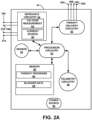
- FIG. 2A is a block diagram illustrating an example configuration of an IMD which may be utilized in the system of FIG. 1 .
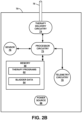
- IMD 16 includes sensor 22, processor circuitry 53, therapy delivery circuitry 52, impedance circuitry 54, memory 56, telemetry circuitry 58, and power source 60.
- IMD 16 may include a greater or fewer number of components.
- IMD 16 may not include sensor 22 (e.g., a pressure sensor or electrical signal sensors) and/or impedance circuitry 54.
- physiological markers may be provided via patient input on an external device if no sensors (e.g., sensor 22 and/or impedance circuitry 54) are included with IMD 16.
- processor circuitry 53 identifies changes to the patient's physiological state that are relevant to desired changes in neurostimulation. For example, voiding of the bladder may indicate that stimulation is not required for a certain time or until sensor input indicates otherwise.
- the system may include one or more sensors that sense biomarkers indicative of a change in the relevant physiological state(s), e.g., sensor 22 and/or sensors external to IMD 16.
- a pressure sensor may detect the amount of bladder pressure.
- processor circuitry 53 may be configured to classify certain changes in bladder pressure as corresponding to a void (e.g., when the sensed signals match one or more sets of parameters). Processor circuitry 53 may also classify the relative fullness of the bladder from subsequently detected pressure levels.
- Specified parameters of the bladder pressure signal may be used to inform processor circuitry 53 to identify when voiding events have occurred. For instance, and without limitation, processor circuitry 53 may monitor one or more of bladder pressure, the amount of change in bladder pressure, the duration of change in bladder pressure, and the rate of change in bladder pressure. This data may serve to identify a voiding event. It should be noted that other nerve targets may alter urinary function in a manner that is similar to sacral nerves, such as the tibial nerve, saphenous nerve, pudendal nerve, dorsal nerve of the penis, and the dorsal nerve of the clitoris.
- IMD 16 may comprise any suitable arrangement of hardware, alone or in combination with software and/or firmware, to perform the techniques attributed to IMD 16 and processor circuitry 53, therapy delivery circuitry 52, impedance circuitry 54, and telemetry circuitry 58 of IMD 16.
- IMD 16 may include one or more processors, such as one or more microprocessors, digital signal processors (DSPs), application specific integrated circuits (ASICs), field programmable gate arrays (FPGAs), or any other equivalent integrated or discrete logic circuitry, as well as any combinations of such components.
- DSPs digital signal processors
- ASICs application specific integrated circuits
- FPGAs field programmable gate arrays
- IMD 16 also, in various examples, may include a memory 56, such as random access memory (RAM), read only memory (ROM), programmable read only memory (PROM), erasable programmable read only memory (EPROM), electronically erasable programmable read only memory (EEPROM), flash memory, comprising executable instructions for causing the one or more processors to perform the actions attributed to them.
- processor circuitry 53, therapy delivery circuitry 52, impedance circuitry 54, and telemetry circuitry 58 are described as separate circuitry, in some examples, processor circuitry 53, therapy delivery circuitry 52, impedance circuitry 54, and telemetry circuitry 58 are functionally integrated.
- processor circuitry 53, therapy delivery circuitry 52, impedance circuitry 54, and telemetry circuitry 58 correspond to individual hardware units, such as microprocessors, ASICs, DSPs, FPGAs, or other hardware units.
- processor circuitry 53, therapy delivery circuitry 52, impedance circuitry 54, and telemetry circuitry 58 may correspond to multiple individual hardware units such as microprocessors, ASICs, DSPs, FPGAs, or other hardware units.
- Memory 56 stores therapy programs 66 that specify stimulation parameter values for the electrical stimulation provided by IMD 16.
- Therapy programs 66 may also store information relating to determining and using physiological markers, information relating to physiological cycles and/or dysfunctional states, or any other information.
- IMD 16 may deliver stimulation therapy based on one or more physiological markers.
- IMD 16 may deliver stimulation therapy that is not based on one or more physiological markers.
- memory 56 also stores bladder data 69, which processor circuitry 53 may use for controlling the timing of the delivery of the electrical stimulation (e.g., phases of physiological cycles that define when to deliver and withhold stimulation).
- bladder data 69 may include threshold values or baseline values for at least one of bladder impedance, bladder pressure, sacral or pudendal afferent nerve signals, bladder contraction frequency, or external urinary sphincter EMG templates for use as physiological markers for an associated physiological cycle.
- Bladder data 69 may also include timing information and physiological markers associated with physiological events, such as a voiding event. IMD 16 may provide some or all of bladder data 69 to external device 24 or server 26.
- Information related to sensed bladder contractions, bladder impedance and/or posture of patient 14 may be recorded for long-term storage and retrieval by a user, to be used by processor circuitry 53 for adjustment of stimulation parameters (e.g., amplitude, pulse width, pulse rate, duty cycle, etc.) or for use as a physiological marker, or to be sent to server 24.
- memory 56 includes separate memories for storing instructions, electrical signal information, stimulation programs 66 and bladder data 69.
- therapy delivery circuitry 52 generates and delivers electrical stimulation under the control of processor circuitry 53.
- processor circuitry 53 controls therapy delivery circuitry 52 by accessing memory 56 to selectively access and load at least one of stimulation programs 66 to therapy delivery circuitry 52.
- processor circuitry 53 may access memory 56 to load one of stimulation programs 66 to therapy delivery circuitry 52.
- therapy delivery circuitry 52 may access memory 56 and load one of the stimulation programs 66.
- processor circuitry 53 may access memory 56 to load one of stimulation programs 66 to therapy delivery circuitry 52 for delivering the electrical stimulation to patient 14.
- a clinician or patient 14 may select a particular one of stimulation programs 66 from a list using a programming device, such as external device 24 or a clinician programmer.
- Processor circuitry 53 may receive the selection via telemetry circuitry 58.
- Therapy delivery circuitry 52 delivers the electrical stimulation to patient 14 according to the selected program for an extended period of time, such as minutes, hours, days, weeks, or until patient 14 or a clinician manually stops or changes the program.
- Therapy delivery circuitry 52 delivers electrical stimulation according to stimulation parameters.
- therapy delivery circuitry 52 delivers electrical stimulation in the form of electrical pulses.
- relevant stimulation parameters may include a voltage amplitude, a current amplitude, a pulse rate, a pulse width, a duty cycle, a duty cycle of the stimulation ON/OFF periods, or the combination of electrodes 29 that therapy delivery circuitry 52 uses to deliver the stimulation signal.
- therapy delivery circuitry 52 delivers electrical stimulation in the form of continuous waveforms.
- relevant stimulation parameters may include a voltage or current amplitude, a frequency, a shape of the stimulation signal, a duty cycle of the stimulation signal, or the combination of electrodes 29 therapy delivery circuitry 52 uses to deliver the stimulation signal.
- the stimulation parameters for the stimulation programs 66 may be selected to relax bladder 12, e.g., to reduce a frequency of contractions of bladder 12, after termination of the electrical stimulation.
- An example range of stimulation parameters for the electrical stimulation that are likely to be effective in treating bladder dysfunction, e.g., upon application to the spinal, sacral, pudendal, tibial, saphenous, dorsal genital, inferior rectal, or perineal nerves, are as follows:
- processor circuitry 53 may monitor impedance of bladder 12 for a predetermined duration of time to detect contractions of bladder 12, and determine the baseline contraction frequency of bladder 12 by determining a number of contractions of bladder 12 in the predetermined duration of time.
- electrodes 19 or 21 may be used to detect an EMG of the detrusor muscle to identify bladder contraction frequencies.
- a strain gauge sensor signal output or other measure of bladder contraction change may be used to detect the physiological marker of bladder 12.
- impedance circuitry 54 includes voltage measurement circuitry 62 and current source 64, and may include an oscillator (not shown) or the like for producing an alternating signal. In some examples, as described above with respect to FIG. 1 , impedance circuitry 54 may use a four-wire, or Kelvin, arrangement. As an example, processor circuitry 53 may periodically control current source 64 to, for example, source an electrical current signal through electrode 19A and sink the electrical current signal through electrode 21A.
- current source 64 may deliver electrical current signals that do not deliver stimulation therapy to bladder 12, e.g., sub-threshold signals, due to, for example, the amplitudes or widths of such signals and/or the timing of delivery of such signals.
- Impedance circuitry 54 may also include a switching circuitry (not shown) for selectively coupling electrodes 19A, 19B, 21A, and 21B to current source 64 and voltage measurement circuitry 62.
- Voltage measurement circuitry 62 may measure the voltage between electrodes 19B and 21B.
- Voltage measurement circuitry 62 may include sample and hold circuitry or other suitable circuitry for measuring voltage amplitudes.
- Processor circuitry 53 determines an impedance value from the measure voltage values received from voltage measurement circuitry 52.
- processor circuitry 53 may monitor signals received from sensor 22 to detect contraction of bladder 12 and determine the baseline contraction frequency.
- sensor 22 may be a pressure sensor for detecting changes in pressure of bladder 12, which processor circuitry 53 may correlate to contractions of bladder 12.
- Processor circuitry 53 may determine a pressure value based on signals received from sensor 22 and compare the determined pressure value to a threshold value stored in bladder data 69 to determine whether the signal is indicative of a contraction of bladder 12.
- processor circuitry 53 monitors pressure of bladder 12 to detect contractions of bladder 12 for a predetermined duration of time and determines a contraction frequency of bladder 12 by calculating a number of contractions of bladder 12 in the predetermined time period.
- processor circuitry 53 may cause contraction frequency information to be stored as bladder data 69 in memory 56 and may utilize the changes to contraction frequency to track the fill level of the bladder fill cycle or otherwise track the phase of the fill cycle. In some implementations, processor circuitry 53 may, automatically or under control of a user, determine the contraction frequency over the fill cycle. Processor circuitry 53 may determine that an increase in contraction frequency indicates a later phase of the fill cycle. In some examples, processor circuitry 53 may track bladder contractions using EMG signals of patient 14. In some implementations, sensor 22 may include an EMG sensor, and processor circuitry 53 may generate an EMG from the received signals generated by sensor 22. Sensor 22 may be implanted proximate to a muscle which is active when bladder 12 is contracting, such as a detrusor muscle. Processor circuitry 53 may compare an EMG captured during the second time period to EMG templates stored as bladder data 69 (e.g., a short-term running average) to determine whether the contractions of bladder 12 are indicative of particular phases of the bladder fill cycle.
- EMG templates stored
- sensor 22 may be a pressure sensor and processor circuitry 53 may monitor signals received from sensor 22 during at least a portion of the second time period to detect contraction of bladder 12.
- processor circuitry 53 substantially continuously monitors pressure of bladder 12, at least during the second time periods, to detect contraction of bladder 12, and determines a contraction frequency of bladder 12 by determining a number of contractions of bladder 12 in a specified time period.
- Sensor 22 may also provide longer-term changes in pressure to track the bladder fill status (e.g., increased bladder volume may correspond to increased bladder pressure).
- therapy delivery circuitry 52 drives electrodes on a single lead 28. Specifically, therapy delivery circuitry 52 delivers electrical stimulation to tissue of patient 14 via selected electrodes 29A-29D carried by lead 28.
- a proximal end of lead 28 extends from the housing of IMD 16 and a distal end of lead 28 extends to a target therapy site, such as a spinal nerve (e.g., an S3 nerve), or a therapy site within the pelvic floor, such as tissue sites proximate a sacral nerve, a pudendal nerve, a tibial nerve, a saphenous nerve, a dorsal genital nerve, an inferior rectal nerve, a perineal nerve, a hypogastric nerve, a urinary sphincter, or any combination thereof.
- a spinal nerve e.g., an S3 nerve
- a therapy site within the pelvic floor such as tissue sites proximate a sacral nerve, a pudendal nerve, a tibial nerve, a sap
- therapy delivery circuitry 52 may deliver electrical stimulation with electrodes on more than one lead and each of the leads may carry one or more electrodes.
- the leads may be configured as an axial lead with ring electrodes or segmented electrodes and/or paddle leads with electrode pads arranged in a two-dimensional array.
- the electrodes may operate in a bipolar or multi-polar configuration with other electrodes, or may operate in a unipolar configuration referenced to an electrode carried by the device housing or "can" of IMD 16.
- sensor 22 may comprise a pressure sensor configured to detect changes in bladder pressure, electrodes for sensing pudendal or sacral afferent nerve signals, or electrodes for sensing external urinary sphincter EMG signals (or anal sphincter signals in examples in which IMD 16 provides fecal urgency or fecal incontinence therapy), or any combination thereof.
- sensor 22 may comprise a motion sensor, such as a two-axis accelerometer, three-axis accelerometer, one or more gyroscopes, pressure transducers, piezoelectric crystals, or other sensors that generate a signal that changes as patient activity level or posture state changes.
- Processor circuitry 53 may detect a physiological marker indicative of point during a bladder fill cycle.
- Sensor 22 may also be a motion sensor that is responsive to tapping (e.g., by patient 14) on skin superior to IMD 16.
- Processor circuitry 53 may be configured to log patient input using this tapping method (e.g., tapping may indicate that a voiding event is occurring).
- processor circuitry 53 may control therapy circuitry 52 to deliver or terminate electrical stimulation delivery in response to the tapping or certain pattern of tapping.
- processor circuitry 53 may determine a patient activity level or posture state based on a signal generated by sensor 22. This patient activity level may be, for example, sleeping, sitting, exercising, working, running, walking, or any other activity of patient 14. For example, processor circuitry 53 may determine a patient activity level by sampling the signal from sensor 22 and determining a number of activity counts during a sample period, where each activity level of a plurality of activity levels is associated with respective activity counts. In one example, processor circuitry 53 compares the signal generated by sensor 22 to one or more amplitude thresholds stored within memory 56, and identifies each threshold crossing as an activity count. The physical activity may be indicative of a fill level, a voiding event, or any other physiological marker related to the bladder fill cycle.
- processor circuitry 53 may control therapy delivery circuitry 52 to deliver or terminate the electrical stimulation based on patient input received via telemetry circuitry 58.
- Telemetry circuitry 58 includes any suitable hardware, firmware, software or any combination thereof for communicating with another device, such as external device 24 ( FIG. 1 ). Under the control of processor circuitry 53, telemetry circuitry 58 may receive downlink telemetry, e.g., patient input, from and send uplink telemetry, e.g., an alert, to external device 24 with the aid of an antenna, which may be internal and/or external. Processor circuitry 53 may provide the data to be uplinked to external device 24 and the control signals for the telemetry circuit within telemetry circuitry 58, and receive data from telemetry circuitry 58.
- processor circuitry 53 may control telemetry circuitry 58 to exchange information with external device 24 or another device external to IMD 16, such as server 26.
- Processor circuitry 53 may transmit operational information and bladder data 69 and receive stimulation programs or stimulation parameter adjustments via telemetry circuitry 58.
- IMD 16 may communicate with other implanted devices, such as stimulators, control devices, or sensors, via telemetry circuitry 58.
- Power source 60 delivers operating power to the components of IMD 16.
- Power source 60 may include a battery and a power generation circuit to produce the operating power.
- the battery may be rechargeable to allow extended operation. Recharging may be accomplished through proximal inductive interaction between an external charger and an inductive charging coil within IMD 16.
- an external inductive power supply may transcutaneously power IMD 16 whenever electrical stimulation is to occur. IMD 16 may be configured to implement the techniques of this disclosure.
- IMD 16 may include memory, e.g., memory 56, configured to store initial stimulation program settings, e.g., therapy programs 66, wherein the initial stimulation program setting are determined based on first information relating to a patient captured during a baseline period that is prior to the patient receiving stimulation, second information captured during an initial therapy assignment including testing data generated by delivering stimulation during an implant procedure of the IMD, and population-informed information related to other patients, and processor circuitry, e.g., processor circuitry 53, configured to cause a stimulation generator to deliver therapy based on the initial stimulation program setting during a training period.
- IMD 70 is similar to IMD 16 of FIG.
- FIG. 3 is a block diagram illustrating an example configuration of an external device 24. While external device 24 may generally be described as a hand-held computing device, external device 24 may be a notebook computer, a smart phone, a workstation, a key fob, or a wearable device, for example. As illustrated in FIG. 3 , external device 24 may include a processor circuitry 90, memory 92, user interface 94, telemetry circuitry 96, and power source 98. Memory 92 may store program instructions that, when executed by processor circuitry 90, cause processor circuitry 90 and external device 24 to provide the functionality ascribed to external device 24 throughout this disclosure.
- processor circuitry 53 of IMD 16 may determine the initial program settings and cause IMD 16 to deliver therapy based on the initial stimulation program settings.
- processor circuitry 228 of server 26 may determine the initial program settings and cause IMD 16 to deliver therapy based on the initial stimulation program settings.
- processor circuitry of a computing device such as external device 24 or any of computing devices 230A-230N, may determine the initial program settings and cause IMD 16 to deliver therapy based on the initial stimulation program settings.
- any combination of IMD 16, external device 24, server 26 or any of computing devices 230A-230N may determine the initial program settings and cause IMD 16 to deliver therapy based on the initial stimulation program settings.
- initial therapy assignment 202 data from three sources may be captured (by external device 24 or IMD 16, e.g.) and processed, e.g., by server 24, to determine initial stimulation program settings. These three sources may include, for example, the first information captured during the baseline period, second information including physiological data relating to motor and sensory testing which may be performed during the implant procedure, and population-informed data gathered from other patients with similar profiles to the patient. For example, during the implant or post implant in-clinic programming, a series of simple tests to determine motor and sensory thresholds may be collected.
- motor threshold information is collected during the implant procedure and sensory threshold information is collected post-op in-clinic as the patient can report when they feel stimulation.
- the second information may also include the location of the motor and sensory information (e.g., where on the patient's body the sensation was felt or visualized). Additionally, the second information may include electromyography (EMG) data, such as the amplitude, shape and location of an EMG signal collected during implantation.
- EMG electromyography
- induction period 204 After initial therapy assignment 202 is induction period 204.
- the initial stimulation program settings may be tested for a minimum number of days. In the case of a trial (pre-implant), this minimum number of days may be in the order of two to four days. In the case of post-implant, this minimum number may be in the order of two to four weeks or more.
- the number of days of induction period 204 may be defined based on symptom change or defined by a physician or healthcare provider, for example, when a check-in is desired. Induction period 204 may also be adjusted based on the population-informed information.
- processor circuitry 228 of server 26 may determine that another patient with the same or similar demographics, medical history, activity level, symptoms, disease, disease state or other characteristics had an induction period of a certain length and adjust the induction period length to be closer to or match the induction period length for patient 14 to the induction period length of the other patient.
- processor circuitry 228 of server 26 may continue to integrate data (e.g., from healthcare provider, patient input on external device 24, sensors, IMD 16).
- the data captured is similar to the first information captured during the baseline period.
- external device 24 may provide patient 14 or a healthcare provider with a set of questions to be answered to evaluate the performance of the therapy so far.
- Training period 206 may last between a few days (during trialing) to a few weeks or even a few months (post-implant), for example.
- processor circuitry 228 of server 26 attempts to determine the best therapy program or schedule of therapy programs (the maintenance stimulation program settings).
- Processor circuitry 228 may determine the maintenance stimulation program settings over a period of time. The length of time of the training period may be defined by a physician or healthcare provider.
- less data may be captured from the patient than during earlier periods.
- patient 14 may be able to continue to provide some data through external device 24 relating to patient 14's most bothersome symptoms, how they feel, etc.
- Processor circuitry 228 may determine, based on the initial stimulation program settings, some personalization and refining of the initial stimulation program settings.
- the length of training period 206 may be expanded or contracted based on the therapy efficacy and patient 14's satisfaction with the therapy.
- a self-reprogramming session may be triggered.
- the self-reprogramming session may include tests similar to what is typically performed during programming in a clinic with a clinician, where various configurations are programmed, and the stimulation increases until the patient feels a sensation and indicates that they feel a sensation, for example, by pushing a button on external device 24.
- server 26 may communicate to external device 24 that the self-reprogramming session should occur.
- Server 26, through external device 24, may guide patient 14 through a series of steps to perform the tests of the self-reprogramming session.
- External device 24 may communicate with IMD 16 to initiate the self-reprogramming session.
- IMD 16 may utilize different stimulation programs and electrode configurations over the course of time and external device 24 may capture self-reprogramming session information from patient 14, IMD 16 and/or sensors.
- Example tests may include providing stimulation with: 1) an electrode configuration at a higher amplitude than the initial stimulation program settings; 2) the same electrode configuration at a lower amplitude than the initial stimulation program settings; 3) the same electrode configuration at a higher frequency than the initial stimulation program settings; 4) the same electrode configuration with a different pulse width; 5) the same electrode configuration with different on/off periods than the initial stimulation program settings; and 6) any combination of electrode configurations.
- Server 26, through external device 24, may pose questions to patient 14 relating to patient 14's symptom relief or comfort during these tests and capture responses from patient 14.
- user interface 94 of external device 24 may provide simple "turn knobs" labeled as more intuitively as “intensity", “volume” or “amount” that patient 14 may adjust.
- patient 14 may use external device 24 to move back to training period 206, for example, if patient 14 feels that therapy efficacy or patient satisfaction are not acceptable.
- a physician or healthcare provider may also suggest moving back to training period 206 if therapy efficacy and patient satisfaction are not acceptable.
- FIG. 6 is a flow diagram illustrating example techniques according to the present disclosure.
- the techniques of FIG. 6 may be implemented on server 26, external device 24, IMD 16, computing devices 230A - 230N, or any combination thereof.
- server 26 may receive first information relating to patient 14 through telemetry circuitry 224 from, e.g., external device 24 through network 222 (300).
- the first information relating to patient 14 may be captured by, for example, external device 24 during a baseline period that is prior to patient 14 receiving stimulation.
- the first information relating to patient 14 may include, for example, basic demographic information, patient 14's medical history or basic symptom data.
- the first information includes at least one of symptom data captured over a predetermined time period, medical history data, demographic data, lifestyle data, quality of life data, or sensor data.
- Server 26 may store the first information relating to patient 14 in an electronic healthcare record 232 in memory 226.
- processor circuitry 228 of server 26 may determine whether patient 14 is a candidate for neurostimulation based on the first information (302). For example, processor circuitry 228 may compare the first information of the patient to first information of other patients in the population-informed information in the database 234 in memory 226 and determine whether other patients with similar first information were successfully treated as they moved along the care pathway from baseline to trial to implant. If other patients with similar first information to the patient have been successfully treated with neurostimulation, that may mean the patient may be a good candidate for neurostimulation.
- Server 26 may receive second information relating to patient 14 through telemetry circuitry 224 from, e.g., external device 24 through network 222 (304).
- the second information relating to patient 14 may be captured by, for example, external device 24 or IMD 16 during an initial therapy assignment or during clinician testing prior to the initial therapy assignment and may include testing data generated by delivering stimulation during an implant procedure.
- Server 26 may store the second information relating to patient 14 in the electronic healthcare record 232 in memory 226.
- Processor circuitry 228 of server 26 may determine initial stimulation program settings based on the first information relating to patient 14, the second information relating to patient 14 and population-informed information (306). For example, processor circuitry 228 may determine that patient 14's demographics, medical history, activity level, symptoms, disease and disease state most closely match another patient and set the initial stimulation program settings to be based on the current stimulation program settings of the closest matching other patient.
- the initial stimulation program settings may include stimulation program(s), stimulation parameters (such as a current or voltage amplitude of the stimulation signal, a frequency or pulse rate of the stimulation signal, the shape of the stimulation signal waveform, a duty cycle of the stimulation signal, a pulse width of the stimulation signal, a duty cycle of the stimulation ON/OFF periods, etc.) and/or the combination of electrodes and respective polarities of the electrodes used to deliver the stimulation.
- the population-informed information may include anonymized data relating to other patients.
- the population-informed information may be stored in a database 234 in memory 226, for example.
- Telemetry circuitry 224 of server 26 may provide the initial stimulation program settings to external device 24 or to IMD 16 through network 222, for example.
- telemetry circuitry 96 of external device 24 may provide the initial stimulation program settings to IMD 16.
- IMD may deliver therapy to patient 14 based on the initial stimulation program settings.
- server 26 may cause, during an induction period, delivery of therapy to patient 14 based on the initial stimulation program settings (308).
- server 26, during a training period may communicate with external device 24 to guide patient 14 through a test of at least one of a stimulation program, stimulation parameters or electrode configurations (310). For example, server 26 may cause external device 24 to initiate a self-reprogramming session (a series of tests discussed above) of IMD 16 and capture patient feedback on the self-reprogramming session.
- server 26 may communicate with external device 24 to guide patient 14 through a test of at least one of a stimulation program, stimulation parameters or electrode configurations (310).
- server 26 may cause external device 24 to initiate a self-reprogramming session (a series of tests discussed above) of IMD 16 and capture patient feedback on the self-reprogramming session.
- Server 26 may receive third information relating to patient 14 through telemetry circuitry 224 from, e.g., external device 24 through network 222 (312).
- the third information relating to patient 14 may be captured by, for example, external device 24 or IMD 16 during a training period and be indicative of efficacy of the initial stimulation program settings.
- patient 14 may input third information on external device 24 or sensor 22 of IMD 16 may sense third information.
- Server 26 may store the third information relating to patient 14 in the electronic healthcare record 232 in memory 226.
- Processor circuitry 228 of server 26 may determine maintenance stimulation program settings based on the third information relating to patient 14 (314).
- the maintenance stimulation program settings may include stimulation program(s), stimulation parameters (such as a current or voltage amplitude of the stimulation signal, a frequency or pulse rate of the stimulation signal, the shape of the stimulation signal waveform, a duty cycle of the stimulation signal, a pulse width of the stimulation signal, a duty cycle of the stimulation ON/OFF periods, etc.) and/or the combination of electrodes and respective polarities of the electrodes used to deliver the stimulation.
- the maintenance stimulation program settings may include ranges for each parameter. Sensor data or patient input may be used to ramp up and down the parameters within their ranges or on and off for periods of time.
- the maintenance stimulation program settings may include more than one therapy program.
- processor circuitry 228 may determine that the initial stimulation program settings were therapeutic and set the initial program settings as the maintenance stimulation program settings.
- processor circuitry 228 may determine that the initial stimulation program settings were not therapeutic or were uncomfortable to patient 14 and may determine the maintenance stimulation program settings as settings that, one or more of which, are different than the initial stimulation program settings.
- processor circuitry 228 may use population-informed data to determine the maintenance stimulation program settings. For example, if another patient had a similar initial stimulation program setting as patient 14 and experienced similar efficacy to patient 14 and are now in a maintenance period with the same disease as patient 14, processor 228 may base the maintenance stimulation program settings for patient 14 on the maintenance stimulation program settings for the other patient.
- Telemetry circuitry 224 of server 26 may provide the maintenance stimulation program settings to external device 24 or to IMD 16 through network 222, for example.
- telemetry circuitry 96 of external device 24 may provide the maintenance stimulation program settings to IMD 16.
- IMD may deliver therapy to patient 14 based on the maintenance stimulation program settings.
- server 26 may cause, during a maintenance period, delivery of therapy to patient 14 based on the maintenance stimulation program settings (316).
- FIG. 7 is a conceptual diagram illustrating a timeline with example techniques of the present disclosure.
- the techniques of FIG. 7 may be implemented on server 26, external device 24, IMD 16, computing devices 230A - 230N, or any combination thereof.
- server 26 For simplicity purposes, the discussion of the example of FIG. 7 focuses on server 26. While the periods (400, 406, 412, 420 and 426) shown in FIG. 7 are shown separated from each other by a period of time, the periods (400, 406, 412, 420 and 426) may, in some examples, be back-to-back such that no time exists between one period and the next. For example, training period 420 may transition to maintenance period 426 without time therebetween.
- server 26 may receive first information relating to the patient 402 as discussed with respect to FIG. 6 .
- First information relating to the patient 402 may include basic demographic information, indications, physiological parameters, symptoms, medical history, lifestyle data, quality of life data, and sensor data.
- Server 26 may store the first information relating to the patient 402, e.g., in an electronic healthcare record 232 in memory 226.
- physiological data 404 (which may be second information related to the patient), such as motor and sensory thresholds of the patient, the location of the motor and sensory information, and EMG signal data.
- a clinician may conduct testing of the patient to determine motor and sensory thresholds and provide physiological data 404 to server 26, through, e.g., external device 24 over network 222.
- Server 26 may store physiological data 404 in patient 10's electronic healthcare record 232 in memory 226.
- Server 26 may determine a number of initial stimulation program settings which may include fixed parameter sets 410 based on first information 402, physiological data 404 (which may be second information) and population-informed information and provide the fixed parameter sets 410 to IMD 16 or to external device 24 (which may provide the parameter sets to IMD 16), e.g., over network 222 as discussed with respect to FIG. 6 .
- initial therapy assignment 406 may begin when a trial period 408 begins.
- induction period 412 may overlap with trial period 408 and post-implant period 418.
- IMD 16 may provide therapy to patient 10 during induction period 412 based on the initial stimulation program settings.
- induction period 412 there may be minimal changes to the parameters.
- a clinician may determine physiological data 416 which may include motor and sensory thresholds, the location of the motor and sensory information, and EMG data.
- the clinician may provide physiological data 416 to server 26, through, e.g., external device 24 over network 222.
- Server 26 may store physiological data 416 in patient 10's electronic healthcare record 232 in memory 226.
- Induction period 412 may be followed by training period 420.
- third information 422 may be collected by IMD 16 or external device 24 which may include data related to the patient's symptoms when treated with neurostimulation of various parameters and sensor data.
- server 26 may communicate with external device 24 to guide patient 14 through a test of at least one of a stimulation program, stimulation parameters or electrode configurations as discussed above or to prompt patient 14 to answer questions regarding patient 14's symptoms or the efficacy of treatment.
- IMD 16 or external device 24 may collect third information 422.
- IMD 16 or external device 24 may transmit third information 422 to server 26, e.g., through network 222.
- Server 26 may store third information 422 in patient 10's electronic healthcare record 232 in memory 226.
- a clinician may perform testing on the patient to collect physiological data 424 (which may be second information) which may include motor and sensory thresholds, the location of the motor and sensory information, and EMG data.
- the clinician may collect physiological data 424 on external device 24 and external device 24 may provide physiological data 424 to server 26, e.g. through network 222.
- Server 26 may store physiological data 424 in patient 10's electronic healthcare record 232 in memory 228.
- Processor circuitry 228 of server 26 may determine a therapy plan 428 that may include maintenance stimulation program settings based on the third information relating to patient 14. Sever 26 may provide the maintenance stimulation program settings to IMD 16 or external device 24 (which may provide the maintenance stimulation program settings to IMD 16), e.g., through network 222. Training period 420 may be followed by maintenance period 426, during which IMD 16 utilizes relatively optimized neurostimulation parameters as compared with the initial stimulation program settings. During maintenance period 426, IMD 16 may automatically change a stimulation program or patient 10 may change the stimulation program, through, e.g., external device 24.
- a clinician may conduct testing of patient 10 to collect physiological data 430 (which may be second information) on, e.g., external device 24.
- External device 24 may provide physiological data 430 to server 26, e.g., through network 222 and server 26 may record physiological data 430 in patient 10's electronic healthcare record 232.
- server 26 may move patient 10 back into training period 420, by, e.g., initiating a self-reprogramming session, as discussed above.
- system 10 may not be limited to treatment or monitoring of a human patient.
- system 10 may be implemented in non-human patients, e.g., primates, canines, equines, pigs, and felines. These other animals may undergo clinical or research therapies that my benefit from the subject matter of this disclosure.
- circuitry or components may be implemented together or separately as discrete but interoperable logic devices. Depiction of different features as circuitry or units is intended to highlight different functional aspects and does not necessarily imply that such circuitry or units must be realized by separate hardware or software components. Rather, functionality associated with one or more circuitry or units may be performed by separate hardware or software components, or integrated within common or separate hardware or software components.
- the disclosure contemplates computer-readable storage media comprising instructions to cause a processor to perform any of the functions and techniques described herein.
- the computer-readable storage media may take the example form of any volatile, non-volatile, magnetic, optical, or electrical media, such as a RAM, ROM, NVRAM, EEPROM, or flash memory that is tangible.
- the computer-readable storage media may be referred to as non-transitory.
- a server, client computing device, or any other computing device may also contain a more portable removable memory type to enable easy data transfer or offline data analysis.
- processors including one or more microprocessors, DSPs, ASICs, FPGAs, or any other equivalent integrated, discrete logic circuitry, or other processor circuitry, as well as any combinations of such components, remote servers, remote client devices, or other devices.
- processor circuitry or “processor circuitry” may generally refer to any of the foregoing logic circuitry, alone or in combination with other logic circuitry, or any other equivalent circuitry.
- any of the described units, circuitry or components may be implemented together or separately as discrete but interoperable logic devices. Depiction of different features as circuitry or units is intended to highlight different functional aspects and does not necessarily imply that such circuitry or units must be realized by separate hardware or software components. Rather, functionality associated with one or more circuitry or units may be performed by separate hardware or software components, or integrated within common or separate hardware or software components.
- any circuitry described herein may include electrical circuitry configured to perform the features attributed to that particular circuitry, such as fixed function processor circuitry, programmable processor circuitry, or combinations thereof.
- the techniques described in this disclosure may also be embodied or encoded in an article of manufacture including a computer-readable storage medium encoded with instructions. Instructions embedded or encoded in an article of manufacture including a computer-readable storage medium encoded, may cause one or more programmable processors, or other processors, to implement one or more of the techniques described herein, such as when instructions included or encoded in the computer-readable storage medium are executed by the one or more processors.
- Example computer-readable storage media may include random access memory (RAM), read only memory (ROM), programmable read only memory (PROM), erasable programmable read only memory (EPROM), electronically erasable programmable read only memory (EEPROM), flash memory, a hard disk, a compact disc ROM (CD-ROM), a floppy disk, a cassette, magnetic media, optical media, or any other computer readable storage devices or tangible computer readable media.
- RAM random access memory
- ROM read only memory
- PROM programmable read only memory
- EPROM erasable programmable read only memory
- EEPROM electronically erasable programmable read only memory
- flash memory a hard disk, a compact disc ROM (CD-ROM), a floppy disk, a cassette, magnetic media, optical media, or any other computer readable storage devices or tangible computer readable media.
- the computer-readable storage medium may also be referred to as storage devices.
- a computer-readable storage medium comprises non-transitory medium.
- the term "non-transitory” may indicate that the storage medium is not embodied in a carrier wave or a propagated signal.
- a non-transitory storage medium may store data that may, over time, change (e.g., in RAM or cache).
Landscapes
- Health & Medical Sciences (AREA)
- Life Sciences & Earth Sciences (AREA)
- Engineering & Computer Science (AREA)
- Biomedical Technology (AREA)
- General Health & Medical Sciences (AREA)
- Public Health (AREA)
- Veterinary Medicine (AREA)
- Animal Behavior & Ethology (AREA)
- Biophysics (AREA)
- Medical Informatics (AREA)
- Radiology & Medical Imaging (AREA)
- Nuclear Medicine, Radiotherapy & Molecular Imaging (AREA)
- Neurology (AREA)
- Neurosurgery (AREA)
- Physiology (AREA)
- Business, Economics & Management (AREA)
- Epidemiology (AREA)
- General Business, Economics & Management (AREA)
- Primary Health Care (AREA)
- Surgery (AREA)
- Molecular Biology (AREA)
- Heart & Thoracic Surgery (AREA)
- Pathology (AREA)
- Physics & Mathematics (AREA)
- Urology & Nephrology (AREA)
- Physical Education & Sports Medicine (AREA)
- Electrotherapy Devices (AREA)
Claims (15)
- Système permettant de déterminer une thérapie de neurostimulation, le système comprenant :une mémoire configurée pour stocker des premières informations relatives à un patient, dans lequel les premières informations sont saisies au cours d'une période de référence précédant la réception de la stimulation par le patient ; etun circuit de processeur (90, 228) couplé à la mémoire, le circuit de processeur (90, 228) étant configuré pour :recevoir les premières informations relatives au patient ;recevoir des deuxièmes informations relatives au patient, dans lequel les deuxièmes informations sont saisies au cours d'une attribution initiale de la thérapie et les deuxièmes informations comprennent des données de test générées en administrant une stimulation au cours d'une procédure d'implantation ;déterminer des paramètres initiaux du programme de stimulation en fonction des premières informations, des deuxièmes informations et des informations fondées sur la population, les informations fondées sur la population étant liées à d'autres patients ; etprovoquer, au cours d'une période d'entraînement, l'administration d'une thérapie en fonction des paramètres initiaux du programme de stimulation.
- Système selon la revendication 1, dans lequel le circuit de processeur (90, 228) est en outre configuré pour :recevoir des troisièmes informations relatives au patient, dans lequel les troisièmes informations sont saisies au cours de la période d'entraînement, les troisièmes informations indiquant l'efficacité des paramètres initiaux du programme de stimulation ;déterminer, en fonction des troisièmes informations, des paramètres du programme de stimulation de l'entretien ; etprovoquer, au cours d'une période d'entretien, l'administration d'une thérapie en fonction des paramètres du programme de stimulation de l'entretien.
- Système selon l'une quelconque des revendications précédentes, dans lequel les premières informations comprennent au moins l'une parmi des données relatives aux symptômes saisies au cours d'un laps de temps prédéterminé, des données relatives aux antécédents médicaux, des données démographiques, des données relatives au mode de vie, des données relatives à la qualité de vie ou des données de capteurs.
- Système selon l'une quelconque des revendications précédentes, dans lequel le circuit de processeur (90, 228) est en outre configuré pour déterminer si le patient est un candidat à la neurostimulation en fonction des premières informations.
- Système selon l'une quelconque des revendications précédentes, dans lequel les informations fondées sur la population comprennent des données relatives au traitement d'autres patients atteints d'une maladie ou présentant des caractéristiques, au patient ayant une même maladie ou présentant les mêmes caractéristiques.
- Système selon l'une quelconque des revendications précédentes, dans lequel les deuxièmes informations comprennent des données physiologiques.
- Système selon l'une quelconque des revendications précédentes, dans lequel le circuit de processeur (90, 228) est en outre configuré pour guider le patient à travers un test d'au moins l'un parmi un programme de stimulation, des paramètres de stimulation ou des configurations d'électrodes au cours de la période d'entraînement.
- Système selon l'une quelconque des revendications précédentes, comprenant en outre un dispositif médical implantable (DMI) implanté dans le cadre de la procédure d'implantation, dans lequel, pour provoquer l'administration de la thérapie en fonction du paramètre initial du programme de stimulation, le circuit de processeur (90, 228) est configuré pour fournir le paramètre initial du programme de stimulation au DMI.
- Système selon l'une quelconque des revendications précédentes, comprenant en outre un DMI implanté dans le cadre de la procédure d'implantation, dans lequel le DMI comporte le circuit de processeur (90, 228) configuré pour déterminer les paramètres initiaux du programme de stimulation, et le circuit de processeur (90, 228) est en outre configuré pour amener le DMI à administrer la thérapie en fonction des paramètres initiaux du programme de stimulation.
- Système selon l'une quelconque des revendications précédentes, comprenant en outre un serveur, dans lequel le serveur comporte le circuit de processeur (90, 228) configuré pour déterminer les paramètres initiaux du programme de stimulation, et le serveur est en outre configuré pour fournir les paramètres initiaux du programme de stimulation à un DMI implanté dans le cadre de la procédure d'implantation.
- Système selon l'une quelconque des revendications précédentes, comprenant en outre un dispositif informatique, dans lequel le dispositif informatique comporte le circuit de processeur (90, 228) configuré pour déterminer les paramètres initiaux du programme de stimulation, et le dispositif informatique est en outre configuré pour fournir les paramètres initiaux du programme de stimulation à un DMI implanté dans le cadre de la procédure d'implantation.
- Support de stockage non transitoire lisible par ordinateur codé avec des instructions qui, lorsqu'elles sont exécutées, amènent le circuit de processeur d'un dispositif à :recevoir les premières informations relatives à un patient, dans lequel les premières informations sont saisies au cours d'une période de référence précédant la réception de la stimulation par le patient ;recevoir des deuxièmes informations relatives au patient, dans lequel les deuxièmes informations sont saisies au cours d'une attribution initiale de la thérapie et les deuxièmes informations comprennent des données de test générées en administrant une stimulation au cours d'une procédure d'implantation ;déterminer des paramètres initiaux du programme de stimulation en fonction des premières informations, des deuxièmes informations et des informations fondées sur la population, les informations fondées sur la population étant liées à d'autres patients ; etprovoquer, au cours d'une période d'entraînement, l'administration d'une thérapie en fonction des paramètres initiaux du programme de stimulation.
- Support de stockage non transitoire lisible par ordinateur selon la revendication 12, dans lequel les instructions amènent en outre le circuit de processeur à :recevoir des troisièmes informations relatives au patient, dans lequel les troisièmes informations sont saisies au cours de la période d'entraînement, les troisièmes informations indiquant l'efficacité des paramètres initiaux du programme de stimulation ;déterminer, en fonction des troisièmes informations, des paramètres du programme de stimulation de l'entretien ; etprovoquer, au cours d'une période d'entretien, l'administration d'une thérapie en fonction des paramètres du programme de stimulation de l'entretien.
- Support de stockage non transitoire lisible par ordinateur selon l'une quelconque des revendications 12 ou 13, dans lequel les premières informations comprennent au moins l'une parmi des données relatives aux symptômes saisies au cours d'un laps de temps prédéterminé, des données relatives aux antécédents médicaux, des données démographiques, des données relatives au mode de vie, des données relatives à la qualité de vie ou des données de capteurs.
- Support de stockage non transitoire lisible par ordinateur selon l'une quelconque des revendications 12 à 14, dans lequel les instructions amènent en outre le circuit de processeur à déterminer si le patient est un candidat à la neurostimulation en fonction des premières informations.
Applications Claiming Priority (3)
| Application Number | Priority Date | Filing Date | Title |
|---|---|---|---|
| US202063009710P | 2020-04-14 | 2020-04-14 | |
| US17/215,685 US12076564B2 (en) | 2020-04-14 | 2021-03-29 | Patient specific optimization algorithm |
| PCT/US2021/026415 WO2021211357A1 (fr) | 2020-04-14 | 2021-04-08 | Algorithme d'optimisation spécifique à un patient |
Publications (2)
| Publication Number | Publication Date |
|---|---|
| EP4135834A1 EP4135834A1 (fr) | 2023-02-22 |
| EP4135834B1 true EP4135834B1 (fr) | 2025-07-09 |
Family
ID=78005718
Family Applications (1)
| Application Number | Title | Priority Date | Filing Date |
|---|---|---|---|
| EP21722686.9A Active EP4135834B1 (fr) | 2020-04-14 | 2021-04-08 | Algorithme d'optimisation spécifique à un patient |
Country Status (4)
| Country | Link |
|---|---|
| US (1) | US12076564B2 (fr) |
| EP (1) | EP4135834B1 (fr) |
| CN (1) | CN115551587A (fr) |
| WO (1) | WO2021211357A1 (fr) |
Families Citing this family (7)
| Publication number | Priority date | Publication date | Assignee | Title |
|---|---|---|---|---|
| US11721436B2 (en) * | 2017-05-30 | 2023-08-08 | Kao Corporation | Care schedule proposal device |
| US12357823B2 (en) | 2019-05-24 | 2025-07-15 | Inspire Medical Systems, Inc. | Systems and methods for treating incontinence |
| US12537096B1 (en) * | 2019-10-21 | 2026-01-27 | Medtronic, Inc. | Data-driven descriptive and prescriptive analytics for medical devices |
| US12274878B2 (en) | 2020-11-06 | 2025-04-15 | Medtronic, Inc. | Low healthcare provider interaction and outcome based programming |
| US20230321449A1 (en) * | 2022-03-23 | 2023-10-12 | Medtronic, Inc. | Therapy upgrade system for implantable devices |
| CN118142080A (zh) * | 2024-04-08 | 2024-06-07 | 景昱医疗科技(苏州)股份有限公司 | 程控设备及医疗系统 |
| CN119113398A (zh) * | 2024-11-14 | 2024-12-13 | 杭州神络医疗科技有限公司 | 一种用于治疗膀胱过度活动症的胫神经刺激装置及系统 |
Family Cites Families (75)
| Publication number | Priority date | Publication date | Assignee | Title |
|---|---|---|---|---|
| US6463328B1 (en) | 1996-02-02 | 2002-10-08 | Michael Sasha John | Adaptive brain stimulation method and system |
| JP2002519138A (ja) | 1998-07-06 | 2002-07-02 | アドヴァンスド バイオニクス コーポレイション | 尿失禁治療処置のための移植可能な刺激器システムおよびその方法 |
| US6735474B1 (en) * | 1998-07-06 | 2004-05-11 | Advanced Bionics Corporation | Implantable stimulator system and method for treatment of incontinence and pain |
| US9113801B2 (en) | 1998-08-05 | 2015-08-25 | Cyberonics, Inc. | Methods and systems for continuous EEG monitoring |
| ATE328548T1 (de) | 1998-10-06 | 2006-06-15 | Bio Control Medical Ltd | Kontrolle von drängender inkontinenz |
| US7305268B2 (en) | 2000-07-13 | 2007-12-04 | Northstar Neurscience, Inc. | Systems and methods for automatically optimizing stimulus parameters and electrode configurations for neuro-stimulators |
| WO2003026738A1 (fr) | 2001-09-28 | 2003-04-03 | Northstar Neuroscience, Inc. | Procedes et appareil permettant de stimuler electriquement des cellules implantees dans le systeme nerveux |
| US6701185B2 (en) | 2002-02-19 | 2004-03-02 | Daniel Burnett | Method and apparatus for electromagnetic stimulation of nerve, muscle, and body tissues |
| US20040193228A1 (en) | 2003-03-31 | 2004-09-30 | Gerber Martin T. | Method, system and device for treating various disorders of the pelvic floor by electrical stimulation of the left and right pudendal nerves |
| US7369894B2 (en) | 2002-09-06 | 2008-05-06 | Medtronic, Inc. | Method, system and device for treating disorders of the pelvic floor by electrical stimulation of the sacral and/or pudendal nerves |
| US7236830B2 (en) | 2002-12-10 | 2007-06-26 | Northstar Neuroscience, Inc. | Systems and methods for enhancing or optimizing neural stimulation therapy for treating symptoms of Parkinson's disease and/or other movement disorders |
| US7252090B2 (en) | 2003-09-15 | 2007-08-07 | Medtronic, Inc. | Selection of neurostimulator parameter configurations using neural network |
| WO2006012423A1 (fr) | 2004-07-20 | 2006-02-02 | Medtronic, Inc. | Orientation de programmation therapeutique fondee sur l'historique de la programmation stockee |
| US8702629B2 (en) | 2005-03-17 | 2014-04-22 | Great Lakes Neuro Technologies Inc. | Movement disorder recovery system and method for continuous monitoring |
| US9089713B2 (en) | 2005-08-31 | 2015-07-28 | Michael Sasha John | Methods and systems for semi-automatic adjustment of medical monitoring and treatment |
| US20070100388A1 (en) | 2005-10-31 | 2007-05-03 | Medtronic, Inc. | Implantable medical device providing adaptive neurostimulation therapy for incontinence |
| US7957797B2 (en) | 2005-12-02 | 2011-06-07 | Medtronic, Inc. | Closed-loop therapy adjustment |
| US8725243B2 (en) | 2005-12-28 | 2014-05-13 | Cyberonics, Inc. | Methods and systems for recommending an appropriate pharmacological treatment to a patient for managing epilepsy and other neurological disorders |
| WO2007098200A2 (fr) | 2006-02-16 | 2007-08-30 | Imthera Medical, Inc. | Appareil, système et procédé rfid de traitement thérapeutique de l'apnée obstructive du sommeil |
| US8204597B2 (en) | 2007-05-30 | 2012-06-19 | Medtronic, Inc. | Evaluating patient incontinence |
| US8805508B2 (en) | 2007-05-30 | 2014-08-12 | Medtronic, Inc. | Collecting activity data for evaluation of patient incontinence |
| US7801618B2 (en) | 2007-06-22 | 2010-09-21 | Neuropace, Inc. | Auto adjusting system for brain tissue stimulator |
| EP2211988A1 (fr) | 2007-10-24 | 2010-08-04 | Medtronic, Inc. | Titrage à distance de thérapie administrée par un dispositif médical implantable |
| EP2288407A1 (fr) | 2008-04-29 | 2011-03-02 | Medtronic, Inc. | Modification de programme de thérapie |
| US8792991B2 (en) | 2008-04-29 | 2014-07-29 | Medtronic, Inc. | Therapy program modification based on therapy guidelines |
| EP3431137A1 (fr) | 2009-02-10 | 2019-01-23 | Nevro Corporation | Systèmes d'administration de thérapie neurale corrélée avec un état de patient |
| ES2624748T3 (es) | 2009-04-22 | 2017-07-17 | Nevro Corporation | Modulación de alta frecuencia selectiva de la médula espinal para la inhibición del dolor con efectos secundarios reducidos, y sistemas y métodos asociados |
| JP2013505080A (ja) | 2009-09-21 | 2013-02-14 | メドトロニック,インコーポレイテッド | 電気刺激治療のための波形 |
| US9724509B2 (en) | 2010-06-07 | 2017-08-08 | Medtronic, Inc. | Selective termination of stimulation to deliver post-stimulation therapeutic effect |
| US9089699B2 (en) | 2010-06-07 | 2015-07-28 | Medtronic, Inc. | Adaptive stimulation for treating urgency or incontinence |
| US10201702B2 (en) | 2010-11-30 | 2019-02-12 | Medtronic, Inc. | Pelvic floor muscle training |
| US8706233B2 (en) | 2011-01-28 | 2014-04-22 | Medtronic, Inc. | Stimulation therapy including substantially simultaneous bilateral stimulation |
| KR20140013043A (ko) * | 2011-03-24 | 2014-02-04 | 캘리포니아 인스티튜트 오브 테크놀로지 | 신경자극기 |
| JP5910297B2 (ja) | 2012-01-17 | 2016-04-27 | ソニー株式会社 | 情報処理装置、icチップ、情報処理方法、プログラム、及び情報処理システム |
| US9314399B2 (en) | 2012-03-06 | 2016-04-19 | Valencia Technologies Corporation | Implantable electroacupuncture system and method for treating dyslipidemia and obesity |
| US9089716B2 (en) | 2012-03-12 | 2015-07-28 | Valencia Technologies Corporation | Circuits and methods for using a high impedance, thin, coin-cell type battery in an implantable electroacupuncture device |
| US8918175B2 (en) * | 2012-04-23 | 2014-12-23 | Medtronic, Inc. | Electrical stimulation therapy for lower urinary tract dysfunction and sexual reflex dysfunction |
| US8886321B2 (en) | 2012-08-08 | 2014-11-11 | Boston Scientific Scimed, Inc. | Apparatus for treating pelvic floor disorders and related methods of use |
| JP6224106B2 (ja) | 2012-08-28 | 2017-11-01 | ボストン サイエンティフィック ニューロモデュレイション コーポレイション | リード及び/又は刺激中心に関する臨床効果データの取込み及び可視化 |
| EP2968921B1 (fr) | 2013-03-12 | 2019-01-16 | Valencia Technologies Corporation | Dispositif d'électroacupuncture implantable employant une pile bouton à haute impédance comme source d'alimentation primaire |
| US10029102B2 (en) | 2013-06-06 | 2018-07-24 | Boston Scientific Neuromodulation Corporation | System and method for delivering modulated sub-threshold therapy to a patient |
| JP6181307B2 (ja) | 2013-07-26 | 2017-08-16 | ボストン サイエンティフィック ニューロモデュレイション コーポレイション | 知覚なしに変調治療を与えるシステム |
| WO2015164477A1 (fr) * | 2014-04-25 | 2015-10-29 | The General Hospital Corporation | Système hybride pour traiter des troubles mentaux et émotionnels avec une stimulation du cerveau réactive |
| US9959388B2 (en) | 2014-07-24 | 2018-05-01 | Boston Scientific Neuromodulation Corporation | Systems, devices, and methods for providing electrical stimulation therapy feedback |
| US10272247B2 (en) | 2014-07-30 | 2019-04-30 | Boston Scientific Neuromodulation Corporation | Systems and methods for stimulation-related volume analysis, creation, and sharing with integrated surgical planning and stimulation programming |
| WO2016023126A1 (fr) | 2014-08-14 | 2016-02-18 | Functional Neuromodulation, Inc. | Système de stimulation du cerveau comprenant de multiples modes de stimulation |
| EP3180072B1 (fr) | 2014-08-15 | 2018-11-28 | Axonics Modulation Technologies Inc. | Positionnement d'une dérivation électromyographique et titrage de la stimulation dans un système de stimulation nerveuse pour le traitement de la vessie hyperactive |
| US9855423B2 (en) | 2014-08-15 | 2018-01-02 | Axonics Modulation Technologies, Inc. | Systems and methods for neurostimulation electrode configurations based on neural localization |
| CN106659882A (zh) | 2014-08-15 | 2017-05-10 | 艾克索尼克斯调制技术股份有限公司 | 用于进行神经刺激以减轻膀胱功能障碍和其他适应症的可植入引线附着结构 |
| WO2016028608A1 (fr) | 2014-08-17 | 2016-02-25 | Nine Continents Medical, Inc. | Système de neurostimulateur implantable miniature pour le nerf sciatique et ses ramifications |
| US9956404B2 (en) | 2014-11-19 | 2018-05-01 | Medtronic, Inc. | Electrical stimulation to inhibit bladder and/or bowel contraction |
| US10076667B2 (en) | 2015-06-09 | 2018-09-18 | Nuvectra Corporation | System and method of performing computer assisted stimulation programming (CASP) with a non-zero starting value customized to a patient |
| US10456580B2 (en) | 2015-09-04 | 2019-10-29 | Medtronic, Inc. | Managing therapy delivery based on physiological markers |
| US10561848B2 (en) | 2015-10-13 | 2020-02-18 | Regents Of The University Of Minnesota | Systems and methods for programming and operating deep brain stimulation arrays |
| CA3014317C (fr) | 2016-02-19 | 2024-07-02 | Nalu Medical, Inc. | Appareil presentant des formes d'onde de stimulation amelioree |
| US11045649B2 (en) | 2016-02-19 | 2021-06-29 | Medtronic, Inc. | Incontinence therapy |
| US10569088B2 (en) | 2016-09-16 | 2020-02-25 | Medtronic, Inc. | Dorsal spinal column characterization with evoked potentials |
| US10426949B2 (en) | 2016-10-26 | 2019-10-01 | Regents Of The University Of Minnesota | Systems and methods for optimizing programming and use of neuromodulation systems |
| EP3532154B1 (fr) | 2016-10-28 | 2023-08-23 | Medtronic, Inc. | Autotitrage d'une thérapie à l'aide de l'activité électrique détectée |
| US10639479B2 (en) | 2016-11-11 | 2020-05-05 | Medtronic, Inc. | Stimulation vector selection using pulse width data |
| US11045650B2 (en) | 2016-12-06 | 2021-06-29 | Medtronic, Inc. | High frequency neurostimulation for pelvic symptom control |
| US10625082B2 (en) | 2017-03-15 | 2020-04-21 | Boston Scientific Neuromodulation Corporation | Visualization of deep brain stimulation efficacy |
| US11116980B2 (en) | 2017-04-07 | 2021-09-14 | Medtronic, Inc. | Complex variation of electrical stimulation therapy parameters |
| US11040207B2 (en) * | 2017-06-16 | 2021-06-22 | Cardiac Pacemakers, Inc. | Systems and methods for dynamic control of heart failure therapy |
| US11135428B2 (en) | 2017-07-02 | 2021-10-05 | Ebt Medical, Inc. | Systems and methods for providing patient signaling and contingent stimulation |
| EP3651849B1 (fr) | 2017-07-14 | 2023-05-31 | Boston Scientific Neuromodulation Corporation | Estimation des effets cliniques d'une stimulation électrique |
| US11951314B2 (en) * | 2017-08-11 | 2024-04-09 | Boston Scientific Neuromodulation Corporation | Fitting algorithm to determine best stimulation parameter from a patient model in a spinal cord stimulation system |
| US20190060647A1 (en) | 2017-08-31 | 2019-02-28 | Medtronic, Inc. | Sacral nerve stimulation |
| US20190255331A1 (en) | 2018-02-17 | 2019-08-22 | Nevro Corp. | High frequency modulation of sacral nerves to address pelvic pain and gastrourogenital conditions, and associated systems and methods |
| US20190262609A1 (en) | 2018-02-28 | 2019-08-29 | Boston Scientific Neuromodulation Corporation | Spinal cord stimulation based on patient-specific modeling |
| US10765355B2 (en) | 2018-04-27 | 2020-09-08 | Medtronic, Inc. | Monitoring bladder dysfunction using a probability function |
| US20200230406A1 (en) | 2019-01-23 | 2020-07-23 | Medtronic, Inc. | Managing therapy delivery based on physiological markers |
| US20200282215A1 (en) | 2019-03-06 | 2020-09-10 | Medtronic Xomed, LLC | Evaluating stimulation eficacy for treating sleep apnea and lingual muscle tone sensing system for improved osa therapy |
| US11311729B2 (en) | 2019-07-30 | 2022-04-26 | Medtronic, Inc. | Titration for sub-threshold electrical stimulation therapy |
| US11638821B2 (en) | 2019-07-30 | 2023-05-02 | Medtronic, Inc. | Incontinence therapy |
-
2021
- 2021-03-29 US US17/215,685 patent/US12076564B2/en active Active
- 2021-04-08 CN CN202180035079.XA patent/CN115551587A/zh active Pending
- 2021-04-08 WO PCT/US2021/026415 patent/WO2021211357A1/fr not_active Ceased
- 2021-04-08 EP EP21722686.9A patent/EP4135834B1/fr active Active
Also Published As
| Publication number | Publication date |
|---|---|
| EP4135834A1 (fr) | 2023-02-22 |
| WO2021211357A1 (fr) | 2021-10-21 |
| US20210316145A1 (en) | 2021-10-14 |
| US12076564B2 (en) | 2024-09-03 |
| CN115551587A (zh) | 2022-12-30 |
Similar Documents
| Publication | Publication Date | Title |
|---|---|---|
| EP4135834B1 (fr) | Algorithme d'optimisation spécifique à un patient | |
| US12161871B2 (en) | Dorsal spinal column characterization with evoked potentials | |
| US12194301B2 (en) | Managing therapy delivery based on physiological markers | |
| US20200230406A1 (en) | Managing therapy delivery based on physiological markers | |
| US9707396B2 (en) | Cortical potential monitoring | |
| US11744499B2 (en) | Monitoring bladder dysfunction using a probability function | |
| US8521292B2 (en) | Incontinence therapy objectification | |
| US9168374B2 (en) | Intra-burst pulse variation for stimulation therapy | |
| US20220331586A1 (en) | Neurostimulation response and control | |
| US20220331589A1 (en) | Neurostimulation response and control | |
| EP4587110A1 (fr) | Stimulation nerveuse pour la maîtrise de la douleur | |
| US20220409907A1 (en) | Hibernation of electronics in an implantable stimulator | |
| CN117222448A (zh) | 神经刺激响应和控制 |
Legal Events
| Date | Code | Title | Description |
|---|---|---|---|
| STAA | Information on the status of an ep patent application or granted ep patent |
Free format text: STATUS: UNKNOWN |
|
| STAA | Information on the status of an ep patent application or granted ep patent |
Free format text: STATUS: THE INTERNATIONAL PUBLICATION HAS BEEN MADE |
|
| PUAI | Public reference made under article 153(3) epc to a published international application that has entered the european phase |
Free format text: ORIGINAL CODE: 0009012 |
|
| STAA | Information on the status of an ep patent application or granted ep patent |
Free format text: STATUS: REQUEST FOR EXAMINATION WAS MADE |
|
| 17P | Request for examination filed |
Effective date: 20221109 |
|
| AK | Designated contracting states |
Kind code of ref document: A1 Designated state(s): AL AT BE BG CH CY CZ DE DK EE ES FI FR GB GR HR HU IE IS IT LI LT LU LV MC MK MT NL NO PL PT RO RS SE SI SK SM TR |
|
| DAV | Request for validation of the european patent (deleted) | ||
| DAX | Request for extension of the european patent (deleted) | ||
| GRAP | Despatch of communication of intention to grant a patent |
Free format text: ORIGINAL CODE: EPIDOSNIGR1 |
|
| STAA | Information on the status of an ep patent application or granted ep patent |
Free format text: STATUS: GRANT OF PATENT IS INTENDED |
|
| RIC1 | Information provided on ipc code assigned before grant |
Ipc: A61B 5/00 20060101ALN20250127BHEP Ipc: G16H 20/30 20180101ALI20250127BHEP Ipc: G16H 40/40 20180101ALI20250127BHEP Ipc: A61B 5/20 20060101ALI20250127BHEP Ipc: G16H 40/63 20180101ALI20250127BHEP Ipc: A61N 1/372 20060101ALI20250127BHEP Ipc: A61N 1/36 20060101AFI20250127BHEP |
|
| INTG | Intention to grant announced |
Effective date: 20250206 |
|
| GRAS | Grant fee paid |
Free format text: ORIGINAL CODE: EPIDOSNIGR3 |
|
| GRAA | (expected) grant |
Free format text: ORIGINAL CODE: 0009210 |
|
| STAA | Information on the status of an ep patent application or granted ep patent |
Free format text: STATUS: THE PATENT HAS BEEN GRANTED |
|
| AK | Designated contracting states |
Kind code of ref document: B1 Designated state(s): AL AT BE BG CH CY CZ DE DK EE ES FI FR GB GR HR HU IE IS IT LI LT LU LV MC MK MT NL NO PL PT RO RS SE SI SK SM TR |
|
| REG | Reference to a national code |
Ref country code: GB Ref legal event code: FG4D |
|
| REG | Reference to a national code |
Ref country code: CH Ref legal event code: EP |
|
| REG | Reference to a national code |
Ref country code: IE Ref legal event code: FG4D |
|
| REG | Reference to a national code |
Ref country code: DE Ref legal event code: R096 Ref document number: 602021033766 Country of ref document: DE |
|
| REG | Reference to a national code |
Ref country code: NL Ref legal event code: MP Effective date: 20250709 |
|
| PG25 | Lapsed in a contracting state [announced via postgrant information from national office to epo] |
Ref country code: PT Free format text: LAPSE BECAUSE OF FAILURE TO SUBMIT A TRANSLATION OF THE DESCRIPTION OR TO PAY THE FEE WITHIN THE PRESCRIBED TIME-LIMIT Effective date: 20251110 |
|
| PG25 | Lapsed in a contracting state [announced via postgrant information from national office to epo] |
Ref country code: NL Free format text: LAPSE BECAUSE OF FAILURE TO SUBMIT A TRANSLATION OF THE DESCRIPTION OR TO PAY THE FEE WITHIN THE PRESCRIBED TIME-LIMIT Effective date: 20250709 |
|
| REG | Reference to a national code |
Ref country code: AT Ref legal event code: MK05 Ref document number: 1811308 Country of ref document: AT Kind code of ref document: T Effective date: 20250709 |
|
| PG25 | Lapsed in a contracting state [announced via postgrant information from national office to epo] |
Ref country code: IS Free format text: LAPSE BECAUSE OF FAILURE TO SUBMIT A TRANSLATION OF THE DESCRIPTION OR TO PAY THE FEE WITHIN THE PRESCRIBED TIME-LIMIT Effective date: 20251109 |
|
| PG25 | Lapsed in a contracting state [announced via postgrant information from national office to epo] |
Ref country code: NO Free format text: LAPSE BECAUSE OF FAILURE TO SUBMIT A TRANSLATION OF THE DESCRIPTION OR TO PAY THE FEE WITHIN THE PRESCRIBED TIME-LIMIT Effective date: 20251009 |
|
| REG | Reference to a national code |
Ref country code: LT Ref legal event code: MG9D |
|
| PG25 | Lapsed in a contracting state [announced via postgrant information from national office to epo] |
Ref country code: AT Free format text: LAPSE BECAUSE OF FAILURE TO SUBMIT A TRANSLATION OF THE DESCRIPTION OR TO PAY THE FEE WITHIN THE PRESCRIBED TIME-LIMIT Effective date: 20250709 |
|
| PG25 | Lapsed in a contracting state [announced via postgrant information from national office to epo] |
Ref country code: FI Free format text: LAPSE BECAUSE OF FAILURE TO SUBMIT A TRANSLATION OF THE DESCRIPTION OR TO PAY THE FEE WITHIN THE PRESCRIBED TIME-LIMIT Effective date: 20250709 |
|
| PG25 | Lapsed in a contracting state [announced via postgrant information from national office to epo] |
Ref country code: HR Free format text: LAPSE BECAUSE OF FAILURE TO SUBMIT A TRANSLATION OF THE DESCRIPTION OR TO PAY THE FEE WITHIN THE PRESCRIBED TIME-LIMIT Effective date: 20250709 |
|
| PG25 | Lapsed in a contracting state [announced via postgrant information from national office to epo] |
Ref country code: GR Free format text: LAPSE BECAUSE OF FAILURE TO SUBMIT A TRANSLATION OF THE DESCRIPTION OR TO PAY THE FEE WITHIN THE PRESCRIBED TIME-LIMIT Effective date: 20251010 |
|
| PG25 | Lapsed in a contracting state [announced via postgrant information from national office to epo] |
Ref country code: SE Free format text: LAPSE BECAUSE OF FAILURE TO SUBMIT A TRANSLATION OF THE DESCRIPTION OR TO PAY THE FEE WITHIN THE PRESCRIBED TIME-LIMIT Effective date: 20250709 |
|
| PG25 | Lapsed in a contracting state [announced via postgrant information from national office to epo] |
Ref country code: LV Free format text: LAPSE BECAUSE OF FAILURE TO SUBMIT A TRANSLATION OF THE DESCRIPTION OR TO PAY THE FEE WITHIN THE PRESCRIBED TIME-LIMIT Effective date: 20250709 |
|
| PG25 | Lapsed in a contracting state [announced via postgrant information from national office to epo] |
Ref country code: BG Free format text: LAPSE BECAUSE OF FAILURE TO SUBMIT A TRANSLATION OF THE DESCRIPTION OR TO PAY THE FEE WITHIN THE PRESCRIBED TIME-LIMIT Effective date: 20250709 Ref country code: PL Free format text: LAPSE BECAUSE OF FAILURE TO SUBMIT A TRANSLATION OF THE DESCRIPTION OR TO PAY THE FEE WITHIN THE PRESCRIBED TIME-LIMIT Effective date: 20250709 |
|
| PG25 | Lapsed in a contracting state [announced via postgrant information from national office to epo] |
Ref country code: RS Free format text: LAPSE BECAUSE OF FAILURE TO SUBMIT A TRANSLATION OF THE DESCRIPTION OR TO PAY THE FEE WITHIN THE PRESCRIBED TIME-LIMIT Effective date: 20251009 |
|
| PG25 | Lapsed in a contracting state [announced via postgrant information from national office to epo] |
Ref country code: ES Free format text: LAPSE BECAUSE OF FAILURE TO SUBMIT A TRANSLATION OF THE DESCRIPTION OR TO PAY THE FEE WITHIN THE PRESCRIBED TIME-LIMIT Effective date: 20250709 |
|
| PG25 | Lapsed in a contracting state [announced via postgrant information from national office to epo] |
Ref country code: SM Free format text: LAPSE BECAUSE OF FAILURE TO SUBMIT A TRANSLATION OF THE DESCRIPTION OR TO PAY THE FEE WITHIN THE PRESCRIBED TIME-LIMIT Effective date: 20250709 |
|
| PGFP | Annual fee paid to national office [announced via postgrant information from national office to epo] |
Ref country code: GB Payment date: 20260319 Year of fee payment: 6 |
|
| PG25 | Lapsed in a contracting state [announced via postgrant information from national office to epo] |
Ref country code: DK Free format text: LAPSE BECAUSE OF FAILURE TO SUBMIT A TRANSLATION OF THE DESCRIPTION OR TO PAY THE FEE WITHIN THE PRESCRIBED TIME-LIMIT Effective date: 20250709 |
|
| PG25 | Lapsed in a contracting state [announced via postgrant information from national office to epo] |
Ref country code: IT Free format text: LAPSE BECAUSE OF FAILURE TO SUBMIT A TRANSLATION OF THE DESCRIPTION OR TO PAY THE FEE WITHIN THE PRESCRIBED TIME-LIMIT Effective date: 20250709 |
|
| PG25 | Lapsed in a contracting state [announced via postgrant information from national office to epo] |
Ref country code: CZ Free format text: LAPSE BECAUSE OF FAILURE TO SUBMIT A TRANSLATION OF THE DESCRIPTION OR TO PAY THE FEE WITHIN THE PRESCRIBED TIME-LIMIT Effective date: 20250709 |
|
| PG25 | Lapsed in a contracting state [announced via postgrant information from national office to epo] |
Ref country code: EE Free format text: LAPSE BECAUSE OF FAILURE TO SUBMIT A TRANSLATION OF THE DESCRIPTION OR TO PAY THE FEE WITHIN THE PRESCRIBED TIME-LIMIT Effective date: 20250709 Ref country code: SK Free format text: LAPSE BECAUSE OF FAILURE TO SUBMIT A TRANSLATION OF THE DESCRIPTION OR TO PAY THE FEE WITHIN THE PRESCRIBED TIME-LIMIT Effective date: 20250709 |