EP4136979A1 - Lait fermenté, son procédé de fabrication et lait déphosphorylé - Google Patents
Lait fermenté, son procédé de fabrication et lait déphosphorylé Download PDFInfo
- Publication number
- EP4136979A1 EP4136979A1 EP21787957.6A EP21787957A EP4136979A1 EP 4136979 A1 EP4136979 A1 EP 4136979A1 EP 21787957 A EP21787957 A EP 21787957A EP 4136979 A1 EP4136979 A1 EP 4136979A1
- Authority
- EP
- European Patent Office
- Prior art keywords
- milk
- protein
- fermented milk
- casein
- protein phosphatase
- Prior art date
- Legal status (The legal status is an assumption and is not a legal conclusion. Google has not performed a legal analysis and makes no representation as to the accuracy of the status listed.)
- Pending
Links
Images






Classifications
-
- C—CHEMISTRY; METALLURGY
- C12—BIOCHEMISTRY; BEER; SPIRITS; WINE; VINEGAR; MICROBIOLOGY; ENZYMOLOGY; MUTATION OR GENETIC ENGINEERING
- C12N—MICROORGANISMS OR ENZYMES; COMPOSITIONS THEREOF; PROPAGATING, PRESERVING, OR MAINTAINING MICROORGANISMS; MUTATION OR GENETIC ENGINEERING; CULTURE MEDIA
- C12N9/00—Enzymes; Proenzymes; Compositions thereof; Processes for preparing, activating, inhibiting, separating or purifying enzymes
- C12N9/14—Hydrolases (3)
- C12N9/16—Hydrolases (3) acting on ester bonds (3.1)
-
- A—HUMAN NECESSITIES
- A23—FOODS OR FOODSTUFFS; TREATMENT THEREOF, NOT COVERED BY OTHER CLASSES
- A23C—DAIRY PRODUCTS, e.g. MILK, BUTTER OR CHEESE; MILK OR CHEESE SUBSTITUTES; PREPARATION THEREOF
- A23C9/00—Milk preparations; Milk powder or milk powder preparations
- A23C9/12—Fermented milk preparations; Treatment using microorganisms or enzymes
- A23C9/1203—Addition of, or treatment with, enzymes or microorganisms other than lactobacteriaceae
- A23C9/1216—Other enzymes
-
- A—HUMAN NECESSITIES
- A23—FOODS OR FOODSTUFFS; TREATMENT THEREOF, NOT COVERED BY OTHER CLASSES
- A23C—DAIRY PRODUCTS, e.g. MILK, BUTTER OR CHEESE; MILK OR CHEESE SUBSTITUTES; PREPARATION THEREOF
- A23C9/00—Milk preparations; Milk powder or milk powder preparations
- A23C9/12—Fermented milk preparations; Treatment using microorganisms or enzymes
- A23C9/127—Fermented milk preparations; Treatment using microorganisms or enzymes using microorganisms of the genus lactobacteriaceae and other microorganisms or enzymes, e.g. kefir, koumiss
-
- A—HUMAN NECESSITIES
- A23—FOODS OR FOODSTUFFS; TREATMENT THEREOF, NOT COVERED BY OTHER CLASSES
- A23C—DAIRY PRODUCTS, e.g. MILK, BUTTER OR CHEESE; MILK OR CHEESE SUBSTITUTES; PREPARATION THEREOF
- A23C9/00—Milk preparations; Milk powder or milk powder preparations
- A23C9/12—Fermented milk preparations; Treatment using microorganisms or enzymes
- A23C9/13—Fermented milk preparations; Treatment using microorganisms or enzymes using additives
- A23C9/1307—Milk products or derivatives; Fruit or vegetable juices; Sugars, sugar alcohols, sweeteners; Oligosaccharides; Organic acids or salts thereof or acidifying agents; Flavours, dyes or pigments; Inert or aerosol gases; Carbonation methods
-
- C—CHEMISTRY; METALLURGY
- C12—BIOCHEMISTRY; BEER; SPIRITS; WINE; VINEGAR; MICROBIOLOGY; ENZYMOLOGY; MUTATION OR GENETIC ENGINEERING
- C12N—MICROORGANISMS OR ENZYMES; COMPOSITIONS THEREOF; PROPAGATING, PRESERVING, OR MAINTAINING MICROORGANISMS; MUTATION OR GENETIC ENGINEERING; CULTURE MEDIA
- C12N9/00—Enzymes; Proenzymes; Compositions thereof; Processes for preparing, activating, inhibiting, separating or purifying enzymes
- C12N9/10—Transferases (2.)
- C12N9/12—Transferases (2.) transferring phosphorus containing groups, e.g. kinases (2.7)
- C12N9/1205—Phosphotransferases with an alcohol group as acceptor (2.7.1), e.g. protein kinases
-
- C—CHEMISTRY; METALLURGY
- C12—BIOCHEMISTRY; BEER; SPIRITS; WINE; VINEGAR; MICROBIOLOGY; ENZYMOLOGY; MUTATION OR GENETIC ENGINEERING
- C12Y—ENZYMES
- C12Y301/00—Hydrolases acting on ester bonds (3.1)
- C12Y301/03—Phosphoric monoester hydrolases (3.1.3)
-
- C—CHEMISTRY; METALLURGY
- C12—BIOCHEMISTRY; BEER; SPIRITS; WINE; VINEGAR; MICROBIOLOGY; ENZYMOLOGY; MUTATION OR GENETIC ENGINEERING
- C12Y—ENZYMES
- C12Y301/00—Hydrolases acting on ester bonds (3.1)
- C12Y301/03—Phosphoric monoester hydrolases (3.1.3)
- C12Y301/03002—Acid phosphatase (3.1.3.2)
-
- C—CHEMISTRY; METALLURGY
- C12—BIOCHEMISTRY; BEER; SPIRITS; WINE; VINEGAR; MICROBIOLOGY; ENZYMOLOGY; MUTATION OR GENETIC ENGINEERING
- C12Y—ENZYMES
- C12Y207/00—Transferases transferring phosphorus-containing groups (2.7)
- C12Y207/11—Protein-serine/threonine kinases (2.7.11)
- C12Y207/11001—Non-specific serine/threonine protein kinase (2.7.11.1), i.e. casein kinase or checkpoint kinase
Definitions
- the present invention relates to fermented milk, a method for manufacturing the fermented milk, and dephosphorylated milk.
- Fermented milk is manufactured by fermenting raw material milk with microorganisms such as lactic acid bacteria.
- microorganisms such as lactic acid bacteria.
- physiological functions of extracellular polysaccharides (EPS) extracellularly produced by lactic acid bacteria during fermentation have attracted attention.
- casein A main protein of milk is casein.
- casein micelles aggregate to one another to form a gel.
- Casein is mainly classified into four types, namely, ⁇ s1 , ⁇ s2 , ⁇ , and ⁇ , and these types contain phosphoric acids bound to 8 serine residues, 11 serine residues, 5 serine residues, and one serine residue, respectively. It is known that the phosphoric acid modification in casein affects the hydrophobic level of a casein micelle surface or a hydrophobic core.
- Patent Literature 1 WO 2015/041194
- An object of the present invention is to provide fermented milk having stable quality, a method for manufacturing the fermented milk, and dephosphorylated milk.
- the inventors focused on and earnestly studied about phospho-serine of casein, and found that dephosphorylated casein resulting from elimination of a phosphoric acid from a serine residue of casein affected physical properties of fermented milk; water weeping was substantially prevented in the fermented milk containing a predetermined amount of the dephosphorylated casein; viscosity and breaking stress increased; and the production amount of extracellular polysaccharides (EPS) increased.
- EPS extracellular polysaccharides
- the inventors found that, by fermenting raw material milk in the presence of protein phosphatase or fermenting raw material milk enzyme-treated with protein phosphatase, water weeping was substantially prevented in the fermented milk; viscosity and breaking stress increased; and the production of extracellular polysaccharides (EPS) was enhanced, and thus the inventors accomplished the present invention.
- EPS extracellular polysaccharides
- the present invention provides the following [1] to [6].
- the fermented milk according to the present invention exhibits less water weeping and has a highly-viscous and firm organization. Furthermore, the fermented milk contains many extracellular polysaccharides (EPS) and has an excellent physiology function.
- EPS extracellular polysaccharides
- the method for manufacturing fermented milk according to the present invention facilitates to provide fermented milk that exhibits less water weeping, has a highly-viscous and firm organization, and contains many extracellular polysaccharides (EPS).
- EPS extracellular polysaccharides
- Dephosphorylated milk of the present invention changes in mouthfeel owing to an increase in the hydrophobic level of a casein molecule.
- the above-mentioned effect can be achieved also in a dairy product using the dephosphorylated milk.
- fermented milk encompasses fermented milk and lactic acid bacteria beverages defined in the ministerial ordinance (" Ministerial Ordinance on Milk and Milk products Concerning Compositional Standards, etc.”, Ministry of Health and Welfare Ordinance No. 52, 1951 ).
- fermented milk is defined as "the products which are obtained by fermenting milk, or milk or the like containing an equal or greater amount of non-fat-milk solids with lactic acid bacteria or yeast and then forming a paste or liquid, or the frozen product”.
- Lactic acid bacteria beverages are defined as "the drinks which are obtained by fermenting milk or the like with lactic acid bacteria or yeast and then processing the resultant or using the resultant as a principal ingredient (excluding fermented milk) ".
- the fermented milk classified as the "paste product” examples include hard yogurt and soft yogurt.
- Examples of the fermented milk classified as the "liquid product” include drinkable yogurt.
- Examples of the fermented milk classified as the "frozen product” include frozen yogurt. From the viewpoint of ease of achieving the effect of the present invention, the fermented milk according to the present invention is preferably hard yogurt or soft yogurt.
- the fermented milk according to the present invention contains 0.8 g / 100 g or more of dephosphorylated casein.
- the dephosphorylated casein is produced by elimination of serine phosphate of casein in milk.
- the amount of the dephosphorylated casein contained in the fermented milk is preferably 0.9 g / 100 g or more and more preferably 1.0 g / 100 g or more, and preferably 1.5 g / 100 g or less, more preferably 1.4 g / 100 g or less, and still more preferably 1.3 g / 100 g or less.
- the ratio of the dephosphorylated casein in casein is preferably 25% to 45%, and more preferably 26% to 43%.
- an analysis of casein can be performed in such a manner that each type of casein ( ⁇ casein, ⁇ casein, and ⁇ casein) having a known concentration and a sample are subjected to polyacrylamide gel electrophoresis (SDS-PAGE) and Coomassie Brilliant Blue staining (CBB staining), and then the strength of a band is converted into numbers by using an image analysis software to produce a calibration curve, whereby the amount of the casein in the sample can be calculated.
- SDS-PAGE polyacrylamide gel electrophoresis
- CBB staining Coomassie Brilliant Blue staining
- the dephosphorylated casein can be quantified by an electrophoresis method. According to the electrophoresis method, the amount of phosphorylated casein and the amount of dephosphorylated casein are calculated from electrophoresis results. The method will be described using FIG. 1 . Note that the electrophoresis method is as described in Examples below.
- FIG. 1 schematically illustrates the electrophoresis of cow's milk.
- Phosphorylated casein includes three regions, namely, ⁇ casein 1, ⁇ casein 2, and ⁇ casein 3, and the amount of the phosphorylated casein can be calculated by integrating these three. Other types of phosphorylated casein are also present, but in small amounts, and therefore can be ignored. Note that the total of ⁇ s-1 casein, ⁇ s-2 casein, ⁇ casein, and ⁇ casein accounts for approximately 97% of all types of casein in the cow's milk.
- Dephosphorylated casein is adjacent to a band of each casein. Since there are various levels of dephosphorylation in the dephosphorylated casein, the dephosphorylated casein becomes smeared after electrophoresis. The band of the phosphorylated casein and the region of the dephosphorylated casein have different concentrations to each other, and therefore these can be visually identified. By integrating dephosphorylated casein regions 11, 21, and 31, the amount of the dephosphorylated casein can be calculated. An end of the dephosphorylated casein region 31 is set by visually identifying the boundary between a stained region and a non-stained region.
- the amount of phosphorylated casein is found to be smaller in the order of ⁇ casein, ⁇ casein, and ⁇ casein.
- the amount of dephosphorylated casein in milk having different origins can be also measured using the same method as the above-described method.
- At least one specific casein is beneficially selected and measured so that the specific casein accounts for not less than 90% of the amount of all types of casein.
- a band illustrated in Fig. 1 has a good shape, but, actually a band often has a distorted shape even under calibration of various conditions.
- a method for measuring the phosphorylated casein and the dephosphorylated casein in this case will be described using FIG. 2 .
- an integration start line A is set at a point where the area of the non-band region visually accounts for 50%, and the area of a band region extending from the integration start line A is calculated.
- a graphically expressed electrophoresis pattern may be referred.
- an integration end line B is set at a point where the area of the non-band region visually accounts for 50%, and the area of a band region extending to the integration end line B is calculated.
- a graphically expressed electrophoresis pattern may be referred to.
- the integration start line and the integration end line be set using the above-described method, and a concentration in the band region present between the lines is quantitatively determined.
- a concentration in a dephosphorylation region can be quantitatively determined in the same manner as the method described above.
- the fermented milk according to the present invention preferably further contains free phosphoric acid.
- the amount of free phosphoric acid contained in the fermented milk is preferably 15 mM or more, and more preferably in a range of 15 mM to 40 mM.
- raw material milk as a raw material of the fermented milk may be beneficially fermented in the presence of protein phosphatase.
- the raw material milk may be treated with protein phosphatase, and after the treatment, the resultant dephosphorylated milk may be beneficially fermented.
- the method for manufacturing the fermented milk according to the present invention includes any one of the steps of:
- the raw material milk beneficially contains casein, and a common milk-derived raw material may be used as the raw material milk.
- the raw material milk include raw milk, cow's milk, special milk, raw goat's milk, pasteurized goat's milk, raw sheep's milk, composition modified milk, low fat milk, skimmed milk, processed milk, cream, butter, butter oil, cheese, concentrated whey, ice creams, concentrated milk, concentrated skimmed milk, evaporated milk, evaporated skimmed milk, sweetened condensed milk, sweetened condensed skimmed milk, whole milk powder, skimmed milk powder, cream powder, whey powder, protein concentrated whey powder, and buttermilk powder.
- the amount of casein contained in the raw material milk is not particularly limited, but is preferably 0.01g to 10g/100g, more preferably 0.1 g to 8 g / 100 g, and still more preferably 1 g to 5 g / 100 g.
- the raw material milk has preferably a pH of 4.0 to 8.0, more preferably a pH of 4.7 to 7.5, and still more preferably a pH of 5.3 to 6.8. The same goes to the pH of raw material milk to which the following components other than the raw material milk are added.
- the raw material milk may contain other components that can be blended before or after fermentation, as needed, within a range of not impairing advantageous effects of the present invention.
- the other components include sweeteners (such as monosaccharide, oligosaccharide, sugar alcohols, and artificial sweeteners), stabilizers (such as gelatin, pectin, carrageenan, and xanthan gum), fruit juices, fruit fleshes, and flavors.
- Protein phosphatase is an enzyme capable of dephosphorylating phosphorylated proteins.
- protein phosphatase may beneficially be capable of eliminating serine phosphate of casein in raw material milk.
- the protein phosphatase preferably eliminates the serine phosphate of the casein in the raw material milk during fermentation.
- the best (optimum) pH of the protein phosphatase is preferably in a range of from 4.0 to 7.5, more preferably in a range of from 4.5 to 7.0, and still more preferably in a range of from 5.0 to 6.0.
- the protein phosphatase is preferably gradually deactivated during the manufacture of the fermented milk and is in a deactivated state in the fermented milk. Specifically, the protein phosphatase preferably acts even under the condition of the weak acidity of pH 5.0 to 6.0 and is deactivated under the condition of less than pH 4.5. During the fermentation of the raw material milk, the phosphoric acid is gradually eliminated from the casein. It can be considered that, through the process in which free phosphoric acid in milk increases in amounts and lactic acid bacteria metabolize the free phosphoric acid, EPS is more easily produced.
- the protein phosphatase is preferably deactivated after the completion of fermentation because the quality of the fermented milk is stably maintained.
- the optimum temperature of the protein phosphatase is preferably in a range of 1°C to 60°C, and more preferably in a range of 10°C to 55°C.
- the protein phosphatase used in the present invention preferably has the above-mentioned optimum pH and the above-mentioned optimum temperature.
- the type and the origin of the protein phosphatase are not particularly limited, but are preferably protein phosphatase derived from a microorganism belonging to the genus Trichoderma, Aspergillus, Sccharomyces, Bacillus, or Streptomyces, more preferably protein phosphatase derived from Trichoderma virens, and still more preferably a virtual protein derived from Trichoderma virens Gv29-8 (XP_013951069.1 hypothetical protein TRIVIDRAFT_87714).
- the virtual protein (XP_013951069.1 hypothetical protein TRIVIDRAFT_87714) has protein phosphatase activity having been made clear by the inventors, and has the following properties.
- the base sequence of DNA encoding protein phosphatase derived from Trichoderma virens Gv29-8 (XP_013951069.1 hypothetical protein TRIVIDRAFT_87714) is represented by SEQ ID NO: 1 in the sequence listing, meanwhile the amino acid sequence is represented by SEQ ID NO: 2 in the sequence listing.
- the protein phosphatase may be wild-type protein phosphatase or may be protein phosphatase in which a gene to encode the protein phosphatase is expressed in a host such as Escherichia coli or the above-mentioned gene is modified or expressed by various types of gene manipulation, the protein phosphatase having protein phosphatase activity.
- the protein phosphatase is preferably any one of the following proteins (i) to (iii):
- the number of amino acids deleted, substituted, or added in the amino acid sequence of SEQ ID NO: 2 in which one or several amino acids are deleted, substituted, or added is not limited as long as enzyme activity equivalent to that of the protein phosphatase comprising the amino acid sequence of SEQ ID NO: 2 is exhibited, but the number of amino acids deleted, substituted, or added is preferably 1 to 20, more preferably 1 to 10, and still more preferably 1 to 8.
- sequence identity with the amino acid sequence of SEQ ID NO: 2 is 80% or higher, preferably 85% or higher, more preferably 90% or higher, still more preferably 95% or higher, and still more preferably 99% or higher.
- the percentage of sequence identity can be calculated using open or commercially available software having an algorithm for making comparison using a standard sequence as a reference sequence. Examples of the software that can be used include BLAST, FASTA, and GENETYX (manufactured by GENETYX CORPORATION).
- the protein phosphatase used in the present invention is capable of stabilizing the quality of fermented milk and enhancing the physiology function of the fermented milk, and is therefore useful as an enzyme agent for fermented milk.
- the protein phosphatase is beneficially present during the fermentation of the raw material milk.
- the timing for adding the protein phosphatase is not particularly limited.
- the amount of the protein phosphatase used at the step (a) beneficially corresponds to a concentration that makes it possible to eliminate serine phosphate of casein in the raw material milk.
- the amount of the protein phosphatase used is preferably from 0.1 to 25 U, more preferably from 0.5 to 15 U, and still more preferably from 1 to 10 U with respect to 1 mL of the raw material milk.
- 1 U means the amount of an enzyme that liberates 1 ⁇ mol of phosphoric acid per 1 minute under the condition that, to a liquid substrate in which 20 mg of cow's milk casein is dissolved per 1 mL of a 20 mM MES-NaOH buffer solution having a pH of 6.0 and containing 10 mM Tris-HCl, an enzyme solution being 1/10 as much as the liquid substrate is added, and the resultant mixture is allowed to react at 37°C, and a reaction stop solution in an equivalent amount to the mixture is added thereto.
- a common method is applied. For example, a fermentation mixture prepared by mixing and dissolving the raw material milk and other raw materials is subjected to homogenization, heat sterilization, and cooling, and then, a microorganism (starter) and the protein phosphatase are added thereto, followed by fermentation. After the cooling, the resultant mixture may be crushed and homogenized as needed.
- the fermentation temperature is beneficially a temperature at which the microorganism (starter) grows and the enzyme is not deactivated.
- the fermentation temperature can be suitably set in accordance with the kinds thereof and is suitably in a range of from 20°C to 45°C, and more preferably from 30°C to 37°C.
- the fermentation time is, for example, from 1 to 48 hours, preferably from 2 to 24 hours, more preferably from 3 to 10 hours, still more preferably from 3 to 6 hours, and particularly preferably from 3 to 5 hours.
- the fermented milk preferably has a pH of from 4.0 to 5.0.
- the raw material milk (dephosphorylated milk) enzyme-treated with the protein phosphatase that is used for the fermentation at the step (b) is beneficially such that casein in the raw material milk is dephosphorylated by the protein phosphatase.
- casein in the raw material milk is dephosphorylated by the protein phosphatase.
- the amount of the protein phosphatase used at the step (b) beneficially corresponds to a concentration that makes it possible to eliminate serine phosphate of casein in the raw material milk.
- the amount of the protein phosphatase used is preferably from 0.1 to 25 U, more preferably from 0.5 to 15 U, and still more preferably from 1 to 10 U with respect to 1 mL of the raw material milk.
- the enzyme treatment of the raw material milk is preferably performed at a reaction temperature of 1°C to 60°C for a reaction time of from 0.1 to 24 hours.
- the reaction temperature is preferably from 10°C to 60°C, more preferably from 30°C to 55°C, and still more preferably from 40°C to 50°C.
- the reaction time is preferably from 0.3 to 12 hours, more preferably from 0.5 to 5 hours, and still more preferably from 1 to 4 hours.
- the pH of the raw material milk Prior to the enzyme treatment of the raw material milk with the protein phosphatase, the pH of the raw material milk may be adjusted.
- the raw material milk may be fermented without deactivating the enzyme, or the raw material milk may be fermented after treatment for deactivating the enzyme by heating or the like. It is preferable to ferment the raw material milk without deactivating the enzyme. Even during the fermentation, the dephosphorylation of casein gradually progresses.
- the heating in the treatment for deactivating the enzyme is preferably performed at a high temperature in a short time, for example, preferably at from 60°C to 100°C for from 1 minute to 30 minutes.
- the enzyme may be deactivated during the sterilization of the raw material milk.
- a common method is applied as with the step (a). For example, a fermentation mixture including the raw material milk enzyme-treated with the protein phosphatase and other raw materials is subjected to homogenization, heat sterilization, and cooling, and then, a microorganism (starter) is added thereto and the resultant mixture is fermented. After the cooling, the resultant mixture may be crushed and homogenized as needed.
- starter a microorganism
- the fermentation temperature may be suitably set in the same way as at the step (a), and is preferably from 20°C to 45°C, and more preferably from 30°C to 37°C.
- the fermentation time is, for example, from 1 to 48 hours, preferably from 2 to 24 hours, more preferably from 3 to 10 hours, still more preferably from 3 to 6 hours, and particularly preferably from 3 to 5 hours.
- the fermented milk preferably has a pH of from 4.0 to 5.0.
- the fermented milk is preferably manufactured by the step (a) from the viewpoints of easily forming a uniform curd and achieving excellence in handling properties and costs.
- casein in the raw material milk is dephosphorylated to obtain dephosphorylated milk containing dephosphorylated casein.
- the hydrophobic level of a casein molecule is increased by the dephosphorylation of the casein, the mouthfeel of the milk changes.
- the dephosphorylated milk of the present invention can be applied to various types of dairy products besides the fermented milk, as with the raw material milk.
- the amount of the dephosphorylated casein contained in the dephosphorylated milk of the present invention is preferably 0.8 g / 100 g or more, more preferably 0.9 g / 100 g or more, and still more preferably 1.0 g / 100 g or more, and preferably 1.5 g / 100 g or less, and more preferably 1.4 g / 100 g or less from the viewpoints of making mouthfeel better and achieving fermented milk with stable quality.
- the ratio of the dephosphorylated casein in the casein is preferably from 45 % to 65%, and more preferably from 48 % to 63%.
- the dephosphorylated milk preferably further contains free phosphoric acid, and the amount of the free phosphoric acid contained in the dephosphorylated milk is preferably in a range of from 1 mM to 100 mM, more preferably in a range of from 5 mM to 50 mM, still more preferably in a range of from 10 mM to 40 mM, and still more preferably in a range of from 12 mM to 30 mM from the viewpoints of making mouthfeel better and achieving fermented milk with stable quality.
- a starter such as common lactic acid bacteria or yeast, is used.
- lactic acid bacteria examples include Lactobacillus bacteria (such as Lactobacillus casei and Lactobacillus acidophilus), Lactococcus bacteria (such as Lactococcus lactis), Leuconostoc bacteria (such as Leuconostoc mesenteroides), Enterococcus bacteria (such as Enterococcus faecalis), and Bifidobacterium bacteria (such as Bifidobacterium bifidum and Bifidobacterium breve).
- Lactobacillus bacteria such as Lactobacillus casei and Lactobacillus acidophilus
- Lactococcus bacteria such as Lactococcus lactis
- Leuconostoc bacteria such as Leuconostoc mesenteroides
- Enterococcus bacteria such as Enterococcus faecalis
- Bifidobacterium bacteria such as Bifidobacterium bifidum and Bifidobacterium bre
- yeast examples include Saccharomyces yeasts (such as Saccharomyces cerevisiae).
- the number of the lactic acid bacteria or the yeast (the live bacteria) contained in the starter is, for example, from 10 5 to 10 13 cfu/mL, preferably from 10 6 to 10 12 cfu/mL, more preferably from 10 7 to 10 11 cfu/mL, and still more preferably from 10 8 to 10 10 cfu/mL.
- the amount of the starter used is not particularly limited, and can be suitably set in accordance with the type of the starter.
- the amount of the starter used is from 0.01% to 10 % by mass, preferably from 0.1% to 10 % by mass, and more preferably from 0.5 % to 10 % by mass with respect to the raw material milk and/or the dephosphorylated milk.
- the fermented milk of the present invention may contain other components that can be blended before or after fermentation, as needed, within a range of not impairing advantageous effects of the present invention.
- the other components include sweeteners (such as monosaccharide, oligosaccharide, sugar alcohols, and artificial sweeteners), stabilizers (such as gelatin, pectin, carrageenan, and xanthan gum), fruit juices, fruit fleshes, and flavors.
- the fermented milk of the present invention exhibits less water weeping, and is highly viscous and has sufficient solidity.
- the viscosity of the fermented milk is preferably such that, at a point in time when the fermented milk is treated for 30 seconds by a measurement method described later, the viscosity is preferably 3,000 Pa ⁇ s or higher.
- the upper limit of the viscosity is not particularly limited, but is 10000 Pa ⁇ s, for example.
- the solidity of the fermented milk is such that, as a value obtained by a breaking strength analysis described in Examples later, a breaking load is preferably 0.41 N or more, more preferably 0.45 N or more, and still more preferably 0.5 N or more.
- the upper limit of the breaking load is not particularly limited, but is 1.0 N, for example.
- the fermented milk of the present invention contains a large amount of extracellular polysaccharides (EPS).
- EPS extracellular polysaccharides
- the amount of EPS in the fermented milk may be 40 ⁇ g or more, 60 ⁇ g or more, 80 ⁇ g or more, 110 ⁇ g or more, and 180 ⁇ g or more per 1 g of the fermented milk.
- the upper limit of the amount of EPS is not particularly limited, but is 300 ⁇ g, for example.
- Trichoderma virens NBRC 6355 strain was inoculated into a potato dextrose agar medium (manufactured by EIKEN CHEMICAL CO., LTD.), and aerobically cultured at 25°C for 3 days.
- a colony of production bacteria grown on the potato dextrose agar medium was cut out together with the agar medium approximately 5 mm square, and inoculated into a production medium (pH 4.0) including 5.0 % sucrose, 2.0 % TUBERMINE FV (manufactured by Roquette Japan K.K.), 0.3% calcium chloride, 0.1% magnesium sulfate, and 0.001% dipotassium hydrogen phosphate, and cultured with rotation and shaking for 4 days on the condition of 27°C and 220 r/min.
- a production medium including 5.0 % sucrose, 2.0 % TUBERMINE FV (manufactured by Roquette Japan K.K.), 0.3% calcium chloride, 0.1% magnesium sulfate, and 0.001% dipotassium hydrogen phosphate
- centrifugation using HIMAC CENTRIFUGE CR20B2, manufactured by Hitachi, Ltd.
- the obtained precipitate was dissolved in approximately 10 mL of a 20 mM acetic acid-potassium acetate buffer solution (pH 4.8), and the resultant solution was kept warm at 50°C for 1 hour, and then centrifuged (using LEGEND MICRO 21R, manufactured by Thermo Fisher Scientific K.K.) for 10 minutes on the condition of 14800 r/min and 4°C.
- the supernatant was collected as a purified protein.
- the purified protein was identified as a virtual protein derived from Trichoderma virens Gv29-8 (XP_013951069.1 hypothetical protein TRIVIDRAFT_87714). This protein was functionally unknown.
- the purified protein had protein phosphatase (PPase) activity.
- cow's milk casein manufactured by CALBIOCHEM, Casein, Bovine Milk, Carbohydrate and Fatty Acid Free
- a 20-mL beaker 2.0 mL of a 0.1 M Tris-HCl buffer solution (pH 9.0) and a small amount of distilled water were added thereto, and dissolved using a magnetic stirrer.
- 2.0 mL of a 0.2 M MES-NaOH buffer solution (pH 6.0) and approximately 10 mL of distilled water were added, and, using 1.0 N hydrochloric acid, the resultant solution was adjusted to have a pH of 6.0, and then the volume was fixed at 20 mL.
- the resultant was regarded as a liquid substrate. 450 ⁇ L of the liquid substrate was dispensed into a 1.5-mL Eppendorf tube, and 50 ⁇ L of an enzyme sample was added thereto. The resultant mixture was allowed to react exactly for 20 minutes. After the reaction, 500 ⁇ L of a reaction stop solution including 18.0 g of trichloroacetic acid, 18.0 g of acetic anhydride sodium, and 19.8 g of acetic acid per 1 L of the solution was added, and stirred violently, and centrifuged for 5 minutes on the condition of 15000 r/min and 4°C.
- a reaction stop solution including 18.0 g of trichloroacetic acid, 18.0 g of acetic anhydride sodium, and 19.8 g of acetic acid per 1 L of the solution was added, and stirred violently, and centrifuged for 5 minutes on the condition of 15000 r/min and 4°C.
- FIG. 3a shows the temperature dependency of PPase
- FIG. 3b shows the temperature stability thereof
- FIG. 3c shows the pH dependency thereof
- FIG. 3d shows the pH stability thereof
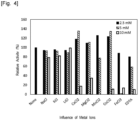
- FIG. 4 shows the metal ion requirement thereof. From FIGS. 3a to 3d , it was confirmed that, for the PPase, the optimum temperature was 50°C and the optimum pH was pH 5.42, and the PPase maintained 80% or higher of the remaining activity at 43°C for 2 hours, and at pH 4.7 to 6.8 for 6 hours.
- the PPase was activated with 2.5 to 5.0 mM bivalent metal cations, such as Ca 2+ , Mg 2+ , Mn 2+ , and Co 2+ .
- skim milk manufactured by MORINAGA MILK INDUSTRY CO., LTD.
- "Oishii Gyunyu” manufactured by Meiji Co., Ltd.
- the raw material milk after the sterilization was kept warm at 43°C for approximately 30 minutes, and subsequently, a starter L812 (manufactured by Chr.Hansen) and PPase or a 20 mM acetic acid-potassium acetate buffer solution (pH 5.2) illustrated in Table 1 were added thereto so as to achieve a final concentration of 0 to 10 U/mL-milk in enzyme activity, and the resultant mixture was fermented at 43°C for 4.5 hours, whereby fermented milk was obtained.
- a starter L812 manufactured by Chr.Hansen
- PPase to be used was suitably diluted with a 20 mM acetic acid-potassium acetate buffer solution (pH 5.2).
- the amount of casein in the fermented milk in Example 1 was 3.3g/100g.
- [Table 1] Experiment Raw material milk (mL) PPase (mL) Acetic acid buffer solution (mL) Starter (mL) PPase final concentration (U/ml-milk) 1 12 0 0.364 10 0 2 12 0.364 0 10 1 3 12 0.364 0 10 2 4 12 0.364 0 10 3 5 12 0.364 0 10 5 6 12 0.364 0 10 10
- the fermented milk was diluted by 50 times with distilled water and mixed with an equivalent amount of a ⁇ 2 sample buffer.
- the resultant mixture was heated for 5 minutes in boiling water to obtain a measurement sample.
- 10 ⁇ L of the measurement sample was applied to SuperSepTM Phos-tag (12.5%, manufactured by FUJIFILM Wako Pure Chemical Corporation) and subjected to electrophoresis at a constant current of 25 mM.
- a gel obtained after the electrophoresis was dyed and decolorized, and then an electrophoresis pattern was graphed using image-processing software (Image J).
- image J image-processing software
- the fermented milk prepared in the above-described (1) was shaken violently to make a curd uniform.
- 1 mL of the fermented milk in which the curd was uniform was dispensed into a 1.5-mL Eppendorf tube, and centrifuged for 10 minutes on the condition of 15000 r/min and 4°C.
- 200 ⁇ L of a suitably diluted solution of the resultant supernatant was added to 800 ⁇ L of distilled water, and subsequently 2M sulfuric acid and 30 ⁇ L of a 40 g/L ammonium molybdate solution were added, and stirred well.
- Table 2 shows the measurement results on the dephosphorylated casein.
- FIG. 5 shows the measurement results on the concentration of the free phosphoric acid.
- [Table 2] PPase final concentration (U/mL-milk) ⁇ ⁇ ⁇ All types of casein Ratio (%) Absolute amount (g/100g) Ratio (%) Absolute amount (g/100g) Ratio (%) Absolute amount (g/100g) Ratio (%) Absolute amount (g/100g) Fermented milk 0 25.1 0.4 13.6 0.1 25.8 0.1 21.5 0.7 1 28.8 0.5 24.8 0.3 18.2 0.1 26.3 0.9 2 28.6 0.5 27.6 0.3 21.7 0.1 27.5 0.9 3 35.8 0.6 46.0 0.5 32.0 0.1 39.8 1.3 5 38.9 0.7 46.2 0.5 26.0 0.1 40.2 1.3 10 40.3 0.7 45.1 0.5 29.6 0.1 40.9 1.3
- Dephosphorylated casein was measured using the same method as in Example 1, except that dephosphorylated milk on which PPase acted was used.
- the concentration of free phosphoric acid was measured using the same method as in Example 1, except that dephosphorylated milk on which PPase acted was used.
- Table 4 shows the measurement results on the dephosphorylated casein.
- FIG. 6 shows the measurement results on the concentration of the free phosphoric acid.
- [Table 4] PPase final concentration (U/mL-milk) ⁇ ⁇ K All types of casein Ratio (%) Absolute amount (g/100g) Ratio (%) Absolute amount (g/100g) Ratio (%) Absolute amount (g/100g) Ratio (%) Absolute amount (g/100g) Dephosphorylated milk 0 31.4 0.4 32.5 0.3 6.9 0.0 28.4 0.7 3 50.8 0.6 54.2 0.4 15.6 0.0 48.2 1.1 5 55.1 0.7 81.5 0.6 40.6 0.1 61.7 1.4
- FIG. 7 shows the results.
- FIG. 7 revealed that the fermented milk to which PPase was added exhibited lower water weeping percentage than in PPase-additive-free milk (Blank).
- the fermented milk containing phosphoric acid as a reaction product of PPase, but not containing dephosphorylated casein water weeping was not suppressed.
- FIG. 7 revealed that the addition of PPase during fermentation was more effective for suppressing water weeping than in PPase-additive-free milk (Blank). In contrast, even when phosphoric acid as a reaction product of PPase was added, water weeping was not suppressed.
- the concentration of free phosphoric acid was measured by the same method as in Example 3.
- 0.4 g of a fermented milk sample was weighed out, and 200 ⁇ L of a 100% (w/v) TCA solution was added thereto, and mixed by inverting.
- the resultant mixture was centrifuged for 10 minutes on the condition of 15000 r/min (MRX-150, high speed refrigerated centrifuge, manufactured by TOMY SEIKO CO., LTD., hereinafter the same) and 4°C.
- the whole amount of the resultant supernatant was collected into a new Eppendorf tube, and 500 ⁇ L of acetone was added thereto.
- the resultant mixture was left to stand at 4°C overnight.
- the resultant solution was centrifuged for 10 minutes on the condition of 15000 r/min and 4°C, whereby a supernatant was collected.
- the amount of monosaccharide and disaccharide was measured by HPLC (manufactured by Waters Corporation).
- the total amount of saccharides was measured by a phenol-sulfuric acid method.
- a fermented milk sample was violently shaken to be uniform, and 13.5 g of the sample was dispensed into a disposable sample chamber (made of aluminum) for a viscometer (DV-I Prime, BROOK FIERD). Using SC4-29 as a spindle, viscosity was measured at 10 r/min every 30 seconds and recorded. Note that all the operations were performed under an environment of 10°C.
- a device used for the analysis was a creep meter RE2-33005C (manufactured by YAMADEN co.,ltd.) and the plunger No.3 was used.
- Measurements were performed on the condition of a load cell of 0.01, an amplifier magnification of 0.1, a storage pitch of 0.07 sec, a measured strain rate of 60%, a measurement speed of 1 mm/sec, and automatic measurement applied for sample thickness.
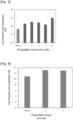
- FIG. 8 shows the measurement results on water weeping percentage, free phosphoric acid concentration, and post-fermentation pH.
- FIG. 9 shows EPS concentration.
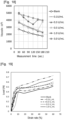
- FIG. 10 shows the measurement results on viscosity.
- FIG. 11 shows the analysis results on breaking strength.
- the fermented milk containing dephosphorylated casein exhibited lower water weeping percentage than PPase-additive-free (Blank) (see FIG. 8 ), and the fermented milk had a larger amount of extracellular polysaccharides (EPS) than the Blank (see FIG. 9 ).
- the viscosity of the fermented milk was higher by 1000 cP or more than that of the PPase-additive-free milk (see FIG. 10 ).
- FIG. 12 shows the measurement results on water weeping percentage, free phosphoric acid concentration, and post-fermentation pH.
- FIG. 13 shows the concentration of EPS.
- FIG. 14 shows the measurement results on viscosity.
- FIG. 15 shows the analysis results on breaking strength.
- the fermented milk containing dephosphorylated casein exhibited lower water weeping percentage than PPase-additive-free milk (Blank) (see FIG. 12 ), and the fermented milk had a larger amount of extracellular polysaccharides (EPS) than the PPase-additive-free milk (see FIG. 13 ).
- the viscosity of the fermented milk was higher by 1000 cP to 2000 cP than that of the PPase-additive-free milk (see FIG. 14 ).
- the breaking stress of the fermented milk was higher than that of the PPase-additive-free milk (see FIG. 15 ).
- a fermented milk sample was violently shaken to be uniform, and 13.5 g of the sample was dispensed into a disposable sample chamber (made of aluminum) for a viscometer (DV-I Prime, BROOK FIERD). Using SC4-29 as a spindle, viscosity was measured at 10 r/min every 30 seconds and recorded. Note that all the operations were performed under an environment of 10°C.
- a device used for the analysis was a creep meter RE2-33005C (manufactured by YAMADEN co.,ltd.) and the plunger No.3 was used. Measurements were performed on the condition of a load cell of 0.01, an amplifier magnification of 0.1, a storage pitch of 0.07 sec, a measurement strain rate of 60%, a measurement speed of 1 mm/sec, and automatic measurement applied for sample thickness.
- FIG. 16 shows the measurement results on water weeping percentage, free phosphoric acid concentration, and post-fermentation pH.
- FIG. 17 shows EPS concentration.
- FIG. 18 shows the measurement results on viscosity.
- FIG. 19 shows the analysis results on breaking strength.
- the fermented milk had a larger amount of extracellular polysaccharides (EPS) than the PPase-additive-free milk (see FIG. 17 ).
- EPS extracellular polysaccharides
- Measurement results on the viscosity of the fermented milk to which PPase was added revealed that, with the addition of 0.1 to 0.5 U/mL-milk PPase, the viscosity of the fermented milk was higher by approximately 1000 cP than the viscosity of the PPase-additive-free milk, meanwhile, with the addition of 1.0 and 3.0 U/mL-milk PPase, the viscosity of the fermented milk was still higher than the viscosity of the PPase-additive-free milk (see FIG.
- FIG. 20 shows the measurement results on water weeping percentage, free phosphoric acid concentration, and post-fermentation pH.
- the fermentation of the PPase-treated raw material milk caused the fermented milk to exhibit lower water weeping percentage, a larger amount of free phosphoric acid, and a lower pH than the PPase-additive-free milk (Blank) (see FIG. 20 ).
- the raw material milk after the sterilization was kept warm at 43°C for approximately 30 minutes, and subsequently 0.571 mL of purified PPase (350 U/mL, Final 1 U/mL-milk) or a 20 mM acetic acid-potassium acetate buffer solution (pH 4.5) and 20 mg of a starter L812 were added thereto, and mixed by gently inverting the bottle 10 times. 10 g of the resultant mixture was dispensed into each of eight 15-mL screw-cap tubes. With the tube covered with the cap, mixing was performed by gently inverting the tube 2 to 3 times, and subsequently the resultant mixture was fermented at 43°C for 5 hours.
- the pH of the fermented milk was measured before fermentation, and 2.5 hours, 3 hours, 3.5 hours, 4 hours, and 4.5 hours after the start of the fermentation by using a pH meter (ORION 3 STAR, manufactured by Thermo Fisher Scientific K.K).
- FIG. 21 shows the results. It was confirmed that, in the fermented milk to which PPase was added, the pH declined earlier than in the PPase-additive-free milk (Blank) to which the acetic acid-potassium acetate buffer solution was added. It was supposed that phosphoric acid increased due to the addition of PPase. It was also confirmed that the fermented milk to which PPase was added coagulated earlier.
- Example 9 Fermentation time was adjusted so as to achieve a pH of approximately 4.5 after fermentation
- Fermented milk was prepared in the same manner as in Example 8, except that 60 g of the mixture was dispensed to each of jam bottles in place of each of the 15-mL screw-cap tubes, and, in order to uniformize post-fermentation pHs, the fermentation time of a system to which the buffer solution was added was 4.75 hours, and the fermentation time of a system to which PPase was added was 3.5 hours.
- the pH of the fermented milk was measured using a pH meter (ORION 3 STAR, manufactured by Thermo Fisher Scientific K.K) .
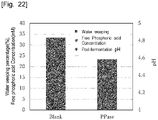
- FIG. 22 shows the results. Although the fermented milk and the PPase-additive-free milk (Blank) had the same pH approximately 4.5 after fermentation, the addition of PPase during fermentation caused the fermented milk to exhibit lower water weeping percentage and a larger amount of free phosphoric acid than the PPase-additive-free milk (Blank). This indicated that a decrease in water weeping percentage and an increase in the amount of free phosphoric acid was affected not by post-fermentation pH, but by the action of PPase.
- milk before and after the enzyme treatment was placed on a calcium ion sensor (LAQUA twin, manufactured by HORIBA, Ltd.) and measured.
- FIG. 23 shows the results.
- the milk having a pH adjusted to 5.48 exhibited higher PPase reactivity than the milk having a pH of 6.76.
- the concentration of free phosphoric acid increased temporarily, and then converged to a constant value.
- the concentration of free phosphoric acid increased over time, and then converged to a constant value.
- the concentration of free phosphoric acid converged to a constant value.
- the concentration of calcium ions changed with the enzyme reaction, which indicated that calcium phosphate was produced in the milk to be in an equilibrium state at a constant concentration.
Landscapes
- Life Sciences & Earth Sciences (AREA)
- Chemical & Material Sciences (AREA)
- Engineering & Computer Science (AREA)
- Health & Medical Sciences (AREA)
- Organic Chemistry (AREA)
- Microbiology (AREA)
- Zoology (AREA)
- Genetics & Genomics (AREA)
- Wood Science & Technology (AREA)
- Bioinformatics & Cheminformatics (AREA)
- Food Science & Technology (AREA)
- Polymers & Plastics (AREA)
- General Health & Medical Sciences (AREA)
- Biochemistry (AREA)
- General Engineering & Computer Science (AREA)
- Molecular Biology (AREA)
- Biomedical Technology (AREA)
- Medicinal Chemistry (AREA)
- Biotechnology (AREA)
- Dairy Products (AREA)
Applications Claiming Priority (3)
| Application Number | Priority Date | Filing Date | Title |
|---|---|---|---|
| JP2020071708 | 2020-04-13 | ||
| JP2020071709 | 2020-04-13 | ||
| PCT/JP2021/015188 WO2021210539A1 (fr) | 2020-04-13 | 2021-04-12 | Lait fermenté, son procédé de fabrication et lait déphosphorylé |
Publications (2)
| Publication Number | Publication Date |
|---|---|
| EP4136979A1 true EP4136979A1 (fr) | 2023-02-22 |
| EP4136979A4 EP4136979A4 (fr) | 2024-05-08 |
Family
ID=78084799
Family Applications (1)
| Application Number | Title | Priority Date | Filing Date |
|---|---|---|---|
| EP21787957.6A Pending EP4136979A4 (fr) | 2020-04-13 | 2021-04-12 | Lait fermenté, son procédé de fabrication et lait déphosphorylé |
Country Status (5)
| Country | Link |
|---|---|
| US (1) | US20230210122A1 (fr) |
| EP (1) | EP4136979A4 (fr) |
| JP (1) | JP7817153B2 (fr) |
| CN (1) | CN115397247B (fr) |
| WO (1) | WO2021210539A1 (fr) |
Family Cites Families (15)
| Publication number | Priority date | Publication date | Assignee | Title |
|---|---|---|---|---|
| JPS485913B1 (fr) * | 1964-09-13 | 1973-02-21 | ||
| US5068118A (en) * | 1990-07-25 | 1991-11-26 | Kraft General Foods, Inc. | Method of making simulated cheese containing casein materials |
| JP2002037796A (ja) * | 1994-08-11 | 2002-02-06 | Ezaki Glico Co Ltd | リン酸化糖とその製造方法 |
| KR0140248B1 (ko) * | 1995-03-23 | 1998-06-15 | 한상기 | 신규한 카제인 포스포펩티드, 그것을 포함하는 카제인 및 그 제조방법 |
| RU2092066C1 (ru) * | 1995-03-29 | 1997-10-10 | Всероссийский научно-исследовательский институт маслоделия и сыроделия | Способ получения препарата для ускорения созревания и улучшения качества мелких сычужных сыров |
| DE19836338A1 (de) * | 1998-08-11 | 2000-02-24 | Nutricia Nv | Proteinkomponente für diätetische Nahrungsmittel |
| GB0116509D0 (en) * | 2001-07-06 | 2001-08-29 | Hannah Res Inst The | Methods of extracting casein fractions from milk and caseinates and production of novel products |
| US9011948B2 (en) * | 2005-11-28 | 2015-04-21 | Dsm Ip Assets B.V. | Enzyme preparations yielding a clean taste |
| SG11201400553QA (en) * | 2011-09-15 | 2014-06-27 | Meiji Co Ltd | Low calorie yogurt and method for producing same |
| EP2822568B1 (fr) * | 2012-03-09 | 2020-06-17 | Fonterra Co-Operative Group Limited | Utilisations de compositions à base de caséine |
| CN105555143A (zh) | 2013-09-17 | 2016-05-04 | 株式会社明治 | 生产具有改善的物理性质的发酵乳的方法 |
| JP6785765B2 (ja) * | 2015-07-06 | 2020-11-18 | 合同酒精株式会社 | 乳製品 |
| CN105695542A (zh) * | 2016-03-11 | 2016-06-22 | 江南大学 | 一种制备部分脱磷酸化牛乳酪蛋白以模拟人乳酪蛋白磷酸化水平的方法 |
| JP2017184682A (ja) * | 2016-04-07 | 2017-10-12 | 森永乳業株式会社 | 発酵乳の製造方法 |
| JP7249737B2 (ja) * | 2018-03-30 | 2023-03-31 | 株式会社明治 | 発酵乳の製造方法 |
-
2021
- 2021-04-12 CN CN202180027811.9A patent/CN115397247B/zh active Active
- 2021-04-12 WO PCT/JP2021/015188 patent/WO2021210539A1/fr not_active Ceased
- 2021-04-12 EP EP21787957.6A patent/EP4136979A4/fr active Pending
- 2021-04-12 US US17/995,940 patent/US20230210122A1/en active Pending
- 2021-04-12 JP JP2022515374A patent/JP7817153B2/ja active Active
Also Published As
| Publication number | Publication date |
|---|---|
| WO2021210539A1 (fr) | 2021-10-21 |
| EP4136979A4 (fr) | 2024-05-08 |
| JPWO2021210539A1 (fr) | 2021-10-21 |
| JP7817153B2 (ja) | 2026-02-18 |
| CN115397247B (zh) | 2026-05-26 |
| US20230210122A1 (en) | 2023-07-06 |
| CN115397247A (zh) | 2022-11-25 |
Similar Documents
| Publication | Publication Date | Title |
|---|---|---|
| US11896024B2 (en) | Method of glycation of a polypeptide | |
| JP6757810B2 (ja) | 風味が改善された発酵乳およびその製造方法 | |
| CA1327720C (fr) | Methode de production de lait traite contenant du galactooligosaccharide | |
| EP3391750B1 (fr) | Procédé de fabrication d'un produit laitier fermenté | |
| EP4166000A1 (fr) | Procédé de production d'un produit de fermentation de lait végétal | |
| EP3208332B1 (fr) | Solution de lactase et lait l'utilisant | |
| EP3598901A1 (fr) | ?-galactosidase du l. bulgaricus destinée à la synthèse de galacto-oligosaccharides dans le lactosérum | |
| JPWO2013141139A1 (ja) | ピロリン酸鉄組成物 | |
| EP2531039B1 (fr) | Utilisation de la sialidase dans la téchnologie laitière | |
| EP3259995B1 (fr) | Procédé de production d'un aliment à base de lait fermenté | |
| HUT67176A (en) | Lactose-hydrolyzed milk with suppressed sweetness | |
| EP1925207B1 (fr) | Méthode d'amélioration de la texture du lait fermenté | |
| US20230210122A1 (en) | Fermented milk, manufacturing method therefor, and dephosphorylated milk | |
| JP6396948B2 (ja) | ストレプトコッカス・サーモフィルス発酵促進剤 | |
| CN101304663A (zh) | 酸性乳饮料及其制造方法 | |
| JPWO2017057319A1 (ja) | 乳酸菌スターターの調製方法及び発酵乳の製造方法 | |
| Saji et al. | β-Galactosidase: Application in dairy and food industry | |
| JP2020048510A (ja) | 発酵乳の製造方法、発酵乳の製造時間を短縮させる方法、発酵乳の酸度を高める方法 | |
| JP6777695B2 (ja) | ストレプトコッカス・サーモフィルス発酵促進剤 | |
| CN114568492A (zh) | 用于制造褐色乳饮料的组合物、褐色乳饮料及其制造方法 | |
| EP3320781B1 (fr) | Produit laitier | |
| EP4495233A1 (fr) | Solution contenant des enzymes et procédé de production de produits laitiers | |
| JP2025173173A (ja) | 発酵乳の製造方法 | |
| WO2024253180A1 (fr) | Procédé de production d'exopolysaccharide et son utilisation | |
| CN121003246A (zh) | 一种异型乳酸发酵制备的气泡乳酸菌产品和方法 |
Legal Events
| Date | Code | Title | Description |
|---|---|---|---|
| STAA | Information on the status of an ep patent application or granted ep patent |
Free format text: STATUS: THE INTERNATIONAL PUBLICATION HAS BEEN MADE |
|
| PUAI | Public reference made under article 153(3) epc to a published international application that has entered the european phase |
Free format text: ORIGINAL CODE: 0009012 |
|
| STAA | Information on the status of an ep patent application or granted ep patent |
Free format text: STATUS: REQUEST FOR EXAMINATION WAS MADE |
|
| 17P | Request for examination filed |
Effective date: 20221021 |
|
| AK | Designated contracting states |
Kind code of ref document: A1 Designated state(s): AL AT BE BG CH CY CZ DE DK EE ES FI FR GB GR HR HU IE IS IT LI LT LU LV MC MK MT NL NO PL PT RO RS SE SI SK SM TR |
|
| DAV | Request for validation of the european patent (deleted) | ||
| DAX | Request for extension of the european patent (deleted) | ||
| A4 | Supplementary search report drawn up and despatched |
Effective date: 20240410 |
|
| RIC1 | Information provided on ipc code assigned before grant |
Ipc: C12N 9/16 20060101ALI20240404BHEP Ipc: C12N 15/55 20060101ALI20240404BHEP Ipc: A23C 9/13 20060101ALI20240404BHEP Ipc: A23C 9/127 20060101AFI20240404BHEP |