EP4137464A1 - Système de traitement des eaux usées - Google Patents
Système de traitement des eaux usées Download PDFInfo
- Publication number
- EP4137464A1 EP4137464A1 EP22202324.4A EP22202324A EP4137464A1 EP 4137464 A1 EP4137464 A1 EP 4137464A1 EP 22202324 A EP22202324 A EP 22202324A EP 4137464 A1 EP4137464 A1 EP 4137464A1
- Authority
- EP
- European Patent Office
- Prior art keywords
- sewage
- sewage treatment
- water
- microbial material
- treatment system
- Prior art date
- Legal status (The legal status is an assumption and is not a legal conclusion. Google has not performed a legal analysis and makes no representation as to the accuracy of the status listed.)
- Pending
Links
Images

Classifications
-
- C—CHEMISTRY; METALLURGY
- C02—TREATMENT OF WATER, WASTE WATER, SEWAGE, OR SLUDGE
- C02F—TREATMENT OF WATER, WASTE WATER, SEWAGE, OR SLUDGE
- C02F9/00—Multistage treatment of water, waste water or sewage
-
- C—CHEMISTRY; METALLURGY
- C02—TREATMENT OF WATER, WASTE WATER, SEWAGE, OR SLUDGE
- C02F—TREATMENT OF WATER, WASTE WATER, SEWAGE, OR SLUDGE
- C02F11/00—Treatment of sludge; Devices therefor
- C02F11/02—Biological treatment
-
- C—CHEMISTRY; METALLURGY
- C02—TREATMENT OF WATER, WASTE WATER, SEWAGE, OR SLUDGE
- C02F—TREATMENT OF WATER, WASTE WATER, SEWAGE, OR SLUDGE
- C02F3/00—Biological treatment of water, waste water, or sewage
- C02F3/02—Aerobic processes
- C02F3/12—Activated sludge processes
- C02F3/1205—Particular type of activated sludge processes
- C02F3/1221—Particular type of activated sludge processes comprising treatment of the recirculated sludge
-
- C—CHEMISTRY; METALLURGY
- C02—TREATMENT OF WATER, WASTE WATER, SEWAGE, OR SLUDGE
- C02F—TREATMENT OF WATER, WASTE WATER, SEWAGE, OR SLUDGE
- C02F11/00—Treatment of sludge; Devices therefor
- C02F11/12—Treatment of sludge; Devices therefor by de-watering, drying or thickening
- C02F11/121—Treatment of sludge; Devices therefor by de-watering, drying or thickening by mechanical de-watering
- C02F11/122—Treatment of sludge; Devices therefor by de-watering, drying or thickening by mechanical de-watering using filter presses
-
- C—CHEMISTRY; METALLURGY
- C02—TREATMENT OF WATER, WASTE WATER, SEWAGE, OR SLUDGE
- C02F—TREATMENT OF WATER, WASTE WATER, SEWAGE, OR SLUDGE
- C02F11/00—Treatment of sludge; Devices therefor
- C02F11/12—Treatment of sludge; Devices therefor by de-watering, drying or thickening
- C02F11/121—Treatment of sludge; Devices therefor by de-watering, drying or thickening by mechanical de-watering
- C02F11/127—Treatment of sludge; Devices therefor by de-watering, drying or thickening by mechanical de-watering by centrifugation
-
- C—CHEMISTRY; METALLURGY
- C02—TREATMENT OF WATER, WASTE WATER, SEWAGE, OR SLUDGE
- C02F—TREATMENT OF WATER, WASTE WATER, SEWAGE, OR SLUDGE
- C02F3/00—Biological treatment of water, waste water, or sewage
- C02F3/02—Aerobic processes
- C02F3/12—Activated sludge processes
- C02F3/1205—Particular type of activated sludge processes
- C02F3/1215—Combinations of activated sludge treatment with precipitation, flocculation, coagulation and separation of phosphates
-
- C—CHEMISTRY; METALLURGY
- C02—TREATMENT OF WATER, WASTE WATER, SEWAGE, OR SLUDGE
- C02F—TREATMENT OF WATER, WASTE WATER, SEWAGE, OR SLUDGE
- C02F3/00—Biological treatment of water, waste water, or sewage
- C02F3/02—Aerobic processes
- C02F3/12—Activated sludge processes
- C02F3/20—Activated sludge processes using diffusers
-
- C—CHEMISTRY; METALLURGY
- C02—TREATMENT OF WATER, WASTE WATER, SEWAGE, OR SLUDGE
- C02F—TREATMENT OF WATER, WASTE WATER, SEWAGE, OR SLUDGE
- C02F3/00—Biological treatment of water, waste water, or sewage
- C02F3/34—Biological treatment of water, waste water, or sewage characterised by the microorganisms used
- C02F3/341—Consortia of bacteria
-
- C—CHEMISTRY; METALLURGY
- C02—TREATMENT OF WATER, WASTE WATER, SEWAGE, OR SLUDGE
- C02F—TREATMENT OF WATER, WASTE WATER, SEWAGE, OR SLUDGE
- C02F3/00—Biological treatment of water, waste water, or sewage
- C02F3/34—Biological treatment of water, waste water, or sewage characterised by the microorganisms used
- C02F3/348—Biological treatment of water, waste water, or sewage characterised by the microorganisms used characterised by the way or the form in which the microorganisms are added or dosed
-
- C—CHEMISTRY; METALLURGY
- C02—TREATMENT OF WATER, WASTE WATER, SEWAGE, OR SLUDGE
- C02F—TREATMENT OF WATER, WASTE WATER, SEWAGE, OR SLUDGE
- C02F11/00—Treatment of sludge; Devices therefor
- C02F11/12—Treatment of sludge; Devices therefor by de-watering, drying or thickening
- C02F11/121—Treatment of sludge; Devices therefor by de-watering, drying or thickening by mechanical de-watering
-
- C—CHEMISTRY; METALLURGY
- C02—TREATMENT OF WATER, WASTE WATER, SEWAGE, OR SLUDGE
- C02F—TREATMENT OF WATER, WASTE WATER, SEWAGE, OR SLUDGE
- C02F1/00—Treatment of water, waste water, or sewage
- C02F2001/007—Processes including a sedimentation step
-
- C—CHEMISTRY; METALLURGY
- C02—TREATMENT OF WATER, WASTE WATER, SEWAGE, OR SLUDGE
- C02F—TREATMENT OF WATER, WASTE WATER, SEWAGE, OR SLUDGE
- C02F2209/00—Controlling or monitoring parameters in water treatment
- C02F2209/02—Temperature
-
- C—CHEMISTRY; METALLURGY
- C02—TREATMENT OF WATER, WASTE WATER, SEWAGE, OR SLUDGE
- C02F—TREATMENT OF WATER, WASTE WATER, SEWAGE, OR SLUDGE
- C02F2209/00—Controlling or monitoring parameters in water treatment
- C02F2209/22—O2
-
- C—CHEMISTRY; METALLURGY
- C02—TREATMENT OF WATER, WASTE WATER, SEWAGE, OR SLUDGE
- C02F—TREATMENT OF WATER, WASTE WATER, SEWAGE, OR SLUDGE
- C02F2301/00—General aspects of water treatment
- C02F2301/08—Multistage treatments, e.g. repetition of the same process step under different conditions
-
- C—CHEMISTRY; METALLURGY
- C02—TREATMENT OF WATER, WASTE WATER, SEWAGE, OR SLUDGE
- C02F—TREATMENT OF WATER, WASTE WATER, SEWAGE, OR SLUDGE
- C02F2301/00—General aspects of water treatment
- C02F2301/10—Temperature conditions for biological treatment
- C02F2301/106—Thermophilic treatment
-
- C—CHEMISTRY; METALLURGY
- C02—TREATMENT OF WATER, WASTE WATER, SEWAGE, OR SLUDGE
- C02F—TREATMENT OF WATER, WASTE WATER, SEWAGE, OR SLUDGE
- C02F2303/00—Specific treatment goals
- C02F2303/04—Disinfection
-
- C—CHEMISTRY; METALLURGY
- C02—TREATMENT OF WATER, WASTE WATER, SEWAGE, OR SLUDGE
- C02F—TREATMENT OF WATER, WASTE WATER, SEWAGE, OR SLUDGE
- C02F2303/00—Specific treatment goals
- C02F2303/08—Corrosion inhibition
-
- C—CHEMISTRY; METALLURGY
- C02—TREATMENT OF WATER, WASTE WATER, SEWAGE, OR SLUDGE
- C02F—TREATMENT OF WATER, WASTE WATER, SEWAGE, OR SLUDGE
- C02F2305/00—Use of specific compounds during water treatment
- C02F2305/06—Nutrients for stimulating the growth of microorganisms
-
- C—CHEMISTRY; METALLURGY
- C02—TREATMENT OF WATER, WASTE WATER, SEWAGE, OR SLUDGE
- C02F—TREATMENT OF WATER, WASTE WATER, SEWAGE, OR SLUDGE
- C02F2307/00—Location of water treatment or water treatment device
- C02F2307/08—Treatment of wastewater in the sewer, e.g. to reduce grease, odour
-
- C—CHEMISTRY; METALLURGY
- C02—TREATMENT OF WATER, WASTE WATER, SEWAGE, OR SLUDGE
- C02F—TREATMENT OF WATER, WASTE WATER, SEWAGE, OR SLUDGE
- C02F3/00—Biological treatment of water, waste water, or sewage
- C02F3/02—Aerobic processes
- C02F3/12—Activated sludge processes
- C02F3/1236—Particular type of activated sludge installations
-
- C—CHEMISTRY; METALLURGY
- C02—TREATMENT OF WATER, WASTE WATER, SEWAGE, OR SLUDGE
- C02F—TREATMENT OF WATER, WASTE WATER, SEWAGE, OR SLUDGE
- C02F3/00—Biological treatment of water, waste water, or sewage
- C02F3/34—Biological treatment of water, waste water, or sewage characterised by the microorganisms used
-
- Y—GENERAL TAGGING OF NEW TECHNOLOGICAL DEVELOPMENTS; GENERAL TAGGING OF CROSS-SECTIONAL TECHNOLOGIES SPANNING OVER SEVERAL SECTIONS OF THE IPC; TECHNICAL SUBJECTS COVERED BY FORMER USPC CROSS-REFERENCE ART COLLECTIONS [XRACs] AND DIGESTS
- Y02—TECHNOLOGIES OR APPLICATIONS FOR MITIGATION OR ADAPTATION AGAINST CLIMATE CHANGE
- Y02W—CLIMATE CHANGE MITIGATION TECHNOLOGIES RELATED TO WASTEWATER TREATMENT OR WASTE MANAGEMENT
- Y02W10/00—Technologies for wastewater treatment
- Y02W10/10—Biological treatment of water, waste water, or sewage
-
- Y—GENERAL TAGGING OF NEW TECHNOLOGICAL DEVELOPMENTS; GENERAL TAGGING OF CROSS-SECTIONAL TECHNOLOGIES SPANNING OVER SEVERAL SECTIONS OF THE IPC; TECHNICAL SUBJECTS COVERED BY FORMER USPC CROSS-REFERENCE ART COLLECTIONS [XRACs] AND DIGESTS
- Y02—TECHNOLOGIES OR APPLICATIONS FOR MITIGATION OR ADAPTATION AGAINST CLIMATE CHANGE
- Y02W—CLIMATE CHANGE MITIGATION TECHNOLOGIES RELATED TO WASTEWATER TREATMENT OR WASTE MANAGEMENT
- Y02W10/00—Technologies for wastewater treatment
- Y02W10/20—Sludge processing
Definitions
- the present invention relates to a sewage treatment system, and more specifically to a sewage treatment system comprising: a relay pump station for sewage discharged from a sewage source including homes and/or industrial plants/companies; and a sewage treatment facility configured to receive the sewage from the relay pump station via a sewer conduit and treat the received sewage, wherein the sewage treatment facility comprises an initial sedimentation pond, a biological treatment vessel and a final sedimentation pond, which are arranged in this order along an upstream-to-downstream direction.
- the sewage treatment system of the present invention makes it possible to, e.g., prevent degradation of the sewer conduit downstream of the relay pump station.
- activated sludge treatment for treating the treatment target liquid by means of activated sludge has been widely conducted.
- a wastewater treatment system using an activated sludge method basically comprises an initial sedimentation pond (which can be omitted in a small-scale sewage treatment system), a reaction vessel, and a final sedimentation pond.
- the wastewater treatment system is operable, according to activated sludge method, to: in the initial sedimentation pond separate, separate crude sludge from wastewater supplied thereto; in the reaction vessel, dissolve oxygen in the resulting wastewater supplied thereto via a flow passage, by means of aeration, and simultaneously cause activated sludge mainly comprised of aerobic microbes (microorganisms) to be suspended in the wastewater with oxygen by means of stirring/mixing; then, in the final sedimentation pond, precipitate the activated sludge supplied thereto via a flow passage; and discharge supernatant water as final effluent from the final sedimentation pond.
- activated sludge method to: in the initial sedimentation pond separate, separate crude sludge from wastewater supplied thereto; in the reaction vessel, dissolve oxygen in the resulting wastewater supplied thereto via a flow passage, by means of aeration, and simultaneously cause activated sludge mainly comprised of aerobic microbes (microorganisms) to be suspended in the wastewater with oxygen
- reaction vessel is also sometimes referred to as "aeration vessel”, “reaction tank”, “aeration tank” or “biological treatment vessel”, and an aeration time period is in the range of 6 to 14 hours.
- a part of the activated sludge precipitated in the final sedimentation pond is returned as return sludge to the reaction vessel again, and the remaining activated sludge is condensed as surplus sludge in a mechanical condensing facility.
- sewage discharged from a sewage source including homes and/or industrial plants/companies flows into a sewer conduit from moment to moment.
- human intestinal bacteria and/or microbes mainly bacteria
- the sewage is likely to become an oxygen-free state, because, although the sewage takes in oxygen from the air, the microbes consume oxygen more than the taken-in oxygen.
- the activity of sulfate-reducing bacteria as anaerobic bacteria becomes active, so that the sulfate-reducing bacteria decompose organic substances using sulfate to generate hydrogen sulfide gas.
- the generated hydrogen sulfide gas is a cause of bad smell from sewage, and is toxic gas which is dangerous when a worker enters a sewer system through a manhole.
- the hydrogen sulfide gas is dissolved in a water film existing on an upper region of a wall defining an internal space of the sewer conduit, sulfuric acid-producing bacteria are proliferated, so that sulfuric acid is produced to corrode a cement wall of the sewer conduit, resulting in degradation/breakup of the concrete pipe (sewer conduit).
- An extension of usable life of the concrete pipe as the basis of a sewer system is a significantly important problem in terms of maintenance of urban infrastructures.
- JP H03-055199B proposes a system in which an oxygenation (oxygen-adding) device is provided at a midway position of a sewer conduit and configured to introduce therein sludge in sewage flowing down through the sewer conduit, and after adding oxygen into the sludge, return the resulting sludge to the sewage flowing down through the sewer conduit again, thereby maintaining a positive dissolved oxygen concentration of the sewage.
- an oxygenation (oxygen-adding) device is provided at a midway position of a sewer conduit and configured to introduce therein sludge in sewage flowing down through the sewer conduit, and after adding oxygen into the sludge, return the resulting sludge to the sewage flowing down through the sewer conduit again, thereby maintaining a positive dissolved oxygen concentration of the sewage.
- It is another object of the present invention to provide a sewage treatment system comprising a microbial material production device for treating activated sludge to produce a microbial material capable of further effectively acting in a biological treatment vessel.
- the microbial material production device is provided, wherein the dehydrated sludge including the surplus sludge from the initial sedimentation pond and/or the return sludge from the final sedimentation pond is treated by the microbial material production device, to produce the microbial material containing aerobic microbial spores, and the microbial material is supplied in its activated state to the sewage in the relay pump station.
- the microbial material production device is provided to enable microbes useful for sewage treatment to exist mainly in the form of spores, and the spores of the microbial material produced by the microbial material production are germinated by the microbe activation device, to establish a state in which Gram-positive bacteria belonging to the class Bacilli in the phylum Firmicutes and/or Gram-positive bacteria belonging to the class Actinobacteria in the phylum Actinobacteria and/or Gram-positive bacteria in the phylum Chloroflexi, which are microbes useful for decomposition of organic substances in the sewage, are richly contained in the sewage.
- treatment in the biological treatment vessel can be conducted by activated sludge and the microbes from the microbe activation device, so that it is possible to significantly efficiently decompose and treat organic substances in sewage sludge.
- a bacterial phase of the activated sludge most commonly consists of bacteria in the phylum Proteobacteria, the phylum Bacteroidetes or the like.
- Gram-positive bacteria belonging to the class Bacilli in the phylum Firmicutes Gram-positive bacteria belonging to the class Actinobacteria in the phylum Actinobacteria and Gram-positive bacteria in the phylum Chloroflexi exist richly in the microbial material (e.g., microbes in the microbial material comprise slightly more than 50% of bacteria in the class Actinobacteria, slightly more than 20% of bacteria in the phylum Firmicutes, and slightly more than 10% of bacteria in the phylum Chloroflexi).
- the activated sludge of the biological treatment vessel the number of the bacteria in the phylum Proteobacteria, the phylum Bacteroidetes or the like is reduced. Further, even if the biological treatment vessel is operated under the condition that the concentration of MLSS (mixed liquor suspended solid) rises to 2000 to 4000 g/L, the activated sludge exhibits a good sedimentation property, so that it is purified and treated under a stable reduction in BOD (biological oxygen demand).
- BOD biological oxygen demand
- a sewage treatment system 10 according to a first embodiment of the present invention will now be described.
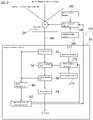
- the sewage treatment system 10 comprises a relay pump station 20 for sewage discharged from a sewage source including homes and/or industrial plants/companies, and a sewage treatment facility 50 configured to receive the sewage from the relay pump station 20 via a sewer conduit 100 and treat the received sewage.
- the sewage treatment facility 50 comprises an initial sedimentation pond 52, a biological treatment vessel (aeration vessel) 54, a final sedimentation pond 56 and a disinfection vessel 58, which are arranged in this order along an upstream-to-downstream direction.
- the sewage is purified and disinfected through the sewage treatment facility 50, and discharged via a sewer conduit.
- the relay pump station 20 is equipped with a pump P connected to a sewer conduit extending from the sewage source including homes and/or industrial plants/companies.
- the sewage treatment system 10 further comprises a dehydration device 60 connected to the initial sedimentation pond 52 and the final sedimentation pond 56 and configured to receive surplus sludge from the initial sedimentation pond and return sludge from the final sedimentation pond and dehydrate the received surplus sludge and the received return sludge.
- this dehydration device 60 may be configured to receive one of the surplus sludge and the return sludge and dehydrate the received surplus or return sludge.
- the dehydration device 60 may be configured to perform any type of dehydration method, such as a centrifugal separation type, a filter press type or a machine concentration type.
- the dehydration device 60 is operable to dehydrate the surplus sludge and/or the return sludge to form dehydrated sludge having a moisture content of 65 to 85%.
- the dehydration device 60 is connected to a microbial material production device 62.
- This microbial material production device 62 is configured to supply oxygen to the dehydrated sludge received from the dehydration device 60 while maintaining the temperature of the dehydrated sludge within the range of 60°C to 110°C, to subject the dehydrated sludge to aerobic fermentation using Gram-positive aerobic microbes in the dehydrated sludge.
- Gram-negative anaerobic and facultative anaerobic microbes in the dehydrated sludge are decomposed and extinguished, and the aerobic microbes become endospores or spores due to consumption/depletion of water and nutrients in the dehydrated sludge through the aerobic fermentation.
- a microbial material is produced which contains the harmful Gram-negative anaerobic and facultative anaerobic microbes as little as possible, and contains the useful aerobic microbial spores.
- the microbial material production device 62 is equipped with a heater for the aforementioned temperature control, and, if needed, an oxygen (air) supply unit.
- the sewage treatment system 10 further comprises a microbe activation device 70 provided in or connected to the relay pump station 20.
- This microbe activation device 70 is connected with water feeding means 72 configured to feed water from any part of the sewage treatment system to the microbe activation device 70, and oxygen supply means 74 configured to feed oxygen to the microbe activation device 70.
- water feeding means 72 it is preferable to use sewage before being subjected to the sewage treatment (e.g., sewage upstream of the pump P of the relay pump station 20), or water after flowing out of the final sedimentation pond 56 and before entering the disinfection vessel 58.
- Such water contains nutrients required for germination of the spores, so that it is possible to simultaneously provide water and nutrients required for germination of the spores.
- the oxygen to be supplied from the oxygen supply means 74 may be supplied in the form of air. In this case, it is not necessary to particularly provide an oxygen generator or an oxygen tank. Further, in a case where the oxygen concentration in sewage is considered to be sufficient for germination of the spores, air may be introduced into the sewage in the pump P or the sewage immediately after being discharged from the pump P.
- the microbe activation device 70 is configured to receive the microbial material from the microbial material production device 62, and supply the water from the water feeding means 72 to the received microbial material, while maintaining the temperature and the oxygen concentration of the water, respectively, within the range of 10°C to 40°C, and within the range of 1 to 10 mg/L, thereby germinating the spores of the microbial material to activate the microbial material.
- the microbe activation device 70 may be equipped with a cooling and heating unit for maintaining the water temperature within the above range. Further, in order to maintain the oxygen concentration within the above range, the microbe activation device 70 is configured to receive supply of oxygen (air) from the oxygen supply means 74.
- the oxygen (air) from the oxygen supply means 74 is also supplied to the sewage at any position of the relay pump station 20 to increase a dissolved oxygen amount in the sewage.
- the sewage flowing through the sewer conduit downstream of the relay pump station 20 is placed in a state in which sufficient oxygen is dissolved therein (the oxygen concentration thereof is increased), despite consumption of oxide by the germinated aerobic microbes and aerobic microbes originally existing in the sewage.
- sulfate-reducing bacteria as anaerobic bacteria are deactivated to suppress production of hydrogen sulfide, so that it is possible to prevent production of sulfuric acid by suppression of the sulfuric acid-producing bacteria, and improve bacterial conditions in a biofilm on a wall surface of the sewer conduit extending from a position immediately downstream of the relay pump station, to achieve a good state in which there is no sulfuric acid-producing bacteria.
- This makes it possible to prevent generation of sulfuric acid and thus prevent corrosion of the sewer conduit to extend the usable life of the sewer conduit, and to purify the sewage itself by activity of the aerobic microbes to reduce a burden on a subsequent facility.
- a sewage treatment system 110 according to a second embodiment of the present invention will be described. Description about the same element or component in the first embodiment described with reference to FIG. 12 will be omitted.
- the sewage treatment system 110 comprises a first microbe activation device 170 provided in or connected to the sewage treatment facility 50.
- This first microbe activation device 170 is connected with first water feeding means 172 configured to feed water from any part of the sewage treatment system to the first microbe activation device 170.
- the first microbe activation device 170 is connected with the first oxygen supply means 174 configured to feed oxygen to the first microbe activation device 170, when needed.
- the water to be supplied from the water feeding means 172 it is preferable to use sewage before being subjected to the sewage treatment (e.g., sewage upstream of the pump P of the relay pump station 20), or water after flowing out of the final sedimentation pond 56 and before entering the disinfection vessel 58.
- Such water contains nutrients required for germination of the spores, so that it is possible to simultaneously provide water and nutrients required for germination of the spores.
- oxygen is supplied from the first oxygen supply means 174.
- the oxygen to be supplied from the first oxygen supply means 174 may be supplied in the form of air. In this case, it is not necessary to particularly provide an oxygen generator or an oxygen tank.
- the first microbe activation device 170 is configured to receive the microbial material from the microbial material production device 62, and supply the water from the water feeding means 172 to the received microbial material, while maintaining the temperature and the oxygen concentration of the water, respectively, within the range of 15°C to 40°C, and within the range of 1 to 10 mg/L, thereby germinating the spores of the microbial material to activate the microbial material.
- the first microbe activation device 170 may be equipped with a cooling and heating unit for maintaining the water temperature within the above range. Further, in order to maintain the oxygen concentration within the above range, the first microbe activation device 170 is configured to receive supply of oxygen (air) from the first oxygen supply means 174.
- the microbial material into the biological treatment vessel 54 after retaining, for 5 minutes or more, the microbial material in the microbe activation device 70 which contains Gram-negative bacteria conflicting with the microbial material, as little as possible.
- the aerobic microbes may include Gram-positive bacteria belonging to the class Bacilli in the phylum Firmicutes, and/or Gram-positive bacteria belonging to the class Actinobacteria in the phylum Actinobacteria, and optionally further include yeasts.
- the anaerobic and facultative anaerobic microbes may include gut-dwelling Gram-negative sulfate-reducing bacteria in the phylum Proteobacteria, and/or Gram-negative bacteria in the phylum Bacteroidetes.
- the sewage treatment system 110 further comprises a second microbe activation device 180 provided in or connected to the relay pump station 20.
- This microbe activation device 180 is connected with second water feeding means 182 configured to feed water from any part of the sewage treatment system to the second microbe activation device 180, and second oxygen supply means 184 configured to feed oxygen to the second microbe activation device 180.
- second water feeding means 182 configured to feed water from any part of the sewage treatment system to the second microbe activation device 180
- second oxygen supply means 184 configured to feed oxygen to the second microbe activation device 180.
- Such water contains nutrients required for germination of the spores, so that it is possible to simultaneously provide water and nutrients required for germination
- the oxygen to be supplied from the second oxygen supply means 184 may be supplied in the form of air, as with the first oxygen supply means 174. In this case, it is not necessary to particularly provide an oxygen generator or an oxygen tank. Further, in a case where the oxygen concentration in sewage is considered to be sufficient for germination of the spores, air may be introduced into the sewage in the pump P or the sewage immediately after being discharged from the pump P.
- the second microbe activation device 180 is configured to receive the microbial material from the microbial material production device 62, and supply the water from the second water feeding means 182 to the received microbial material, while maintaining the temperature and the oxygen concentration of the water, respectively, within the range of 15°C to 40°C, and within the range of 1 to 10 mg/L, thereby germinating the spores of the microbial material to activate the microbial material.
- the microbe activation device 70 may be equipped with a cooling and heating unit for maintaining the water temperature within the above range.
- the second microbe activation device 180 is configured to receive supply of oxygen (air) from the second oxygen supply means 184.
- the oxygen (air) from the second oxygen supply means 184 is also supplied to the sewage at any position of the relay pump station 20 to increase a dissolved oxygen amount in the sewage.
- the sewage flowing through the sewer conduit downstream of the relay pump station 20 is placed in a state in which sufficient oxygen is dissolved therein (the oxygen concentration thereof is increased), despite consumption of oxide by the germinated aerobic microbes and aerobic microbes originally existing in the sewage.
- sulfate-reducing bacteria as anaerobic bacteria are deactivated to suppress production of hydrogen sulfide, so that it is possible to prevent production of sulfuric acid by suppression of the sulfuric acid-producing bacteria, and improve bacterial conditions in a biofilm on a wall surface of the sewer conduit extending from a position immediately downstream of the relay pump station, to achieve a good state.
- This makes it possible to prevent generation of sulfuric acid and thus prevent corrosion of the sewer conduit to extend the usable life of the sewer conduit, and to purify the sewage itself by activity of the aerobic microbes to reduce a burden on a subsequent facility.
- the aerobic microbes may include Gram-positive bacteria belonging to the class Bacilli in the phylum Firmicutes, and/or Gram-positive bacteria belonging to the class Actinobacteria in the phylum Actinobacteria, and Gram-positive bacteria in the phylum Chloroflexi, and optionally include yeasts.
- the anaerobic and facultative anaerobic microbes may include gut-dwelling Gram-negative sulfate-reducing bacteria in the phylum Proteobacteria, and/or Gram-negative bacteria in the phylum Bacteroidetes.
Landscapes
- Life Sciences & Earth Sciences (AREA)
- Engineering & Computer Science (AREA)
- Chemical & Material Sciences (AREA)
- Organic Chemistry (AREA)
- Water Supply & Treatment (AREA)
- Environmental & Geological Engineering (AREA)
- Hydrology & Water Resources (AREA)
- Microbiology (AREA)
- Mechanical Engineering (AREA)
- Biodiversity & Conservation Biology (AREA)
- Health & Medical Sciences (AREA)
- Molecular Biology (AREA)
- Analytical Chemistry (AREA)
- Purification Treatments By Anaerobic Or Anaerobic And Aerobic Bacteria Or Animals (AREA)
- Activated Sludge Processes (AREA)
Applications Claiming Priority (5)
| Application Number | Priority Date | Filing Date | Title |
|---|---|---|---|
| JP2018209391 | 2018-11-07 | ||
| JP2018235072 | 2018-12-17 | ||
| JP2019149266A JP6777336B2 (ja) | 2018-12-17 | 2019-08-16 | 下水処理システム |
| JP2019149267A JP6692974B1 (ja) | 2018-11-07 | 2019-08-16 | 下水処理システム |
| EP19206997.9A EP3653588B1 (fr) | 2018-11-07 | 2019-11-04 | Procédé de traitement des eaux usées |
Related Parent Applications (2)
| Application Number | Title | Priority Date | Filing Date |
|---|---|---|---|
| EP19206997.9A Division EP3653588B1 (fr) | 2018-11-07 | 2019-11-04 | Procédé de traitement des eaux usées |
| EP19206997.9A Division-Into EP3653588B1 (fr) | 2018-11-07 | 2019-11-04 | Procédé de traitement des eaux usées |
Publications (1)
| Publication Number | Publication Date |
|---|---|
| EP4137464A1 true EP4137464A1 (fr) | 2023-02-22 |
Family
ID=70555911
Family Applications (1)
| Application Number | Title | Priority Date | Filing Date |
|---|---|---|---|
| EP22202324.4A Pending EP4137464A1 (fr) | 2018-11-07 | 2019-11-04 | Système de traitement des eaux usées |
Country Status (4)
| Country | Link |
|---|---|
| US (1) | US11325853B2 (fr) |
| EP (1) | EP4137464A1 (fr) |
| KR (1) | KR20200052821A (fr) |
| CN (2) | CN117923720A (fr) |
Families Citing this family (5)
| Publication number | Priority date | Publication date | Assignee | Title |
|---|---|---|---|---|
| US12056845B2 (en) * | 2020-08-20 | 2024-08-06 | Blue River Technology Inc. | Plant identification using dynamic cropping |
| US11866357B1 (en) * | 2020-09-11 | 2024-01-09 | Paul Charles Wegner | Corrosion and bacteria control method |
| CN114105312A (zh) * | 2021-12-01 | 2022-03-01 | 山西伟爱量子生态科技有限公司 | 一种管道系统内废水的处理方法 |
| KR102919927B1 (ko) | 2022-11-16 | 2026-01-30 | 주식회사 에코시스텍 | 바이오가스 중 이산화탄소의 포집 및 활용 시스템을 가지는 하수처리장치 |
| CN116675331B (zh) * | 2023-05-26 | 2023-11-17 | 温州富邦环境工程有限公司 | 一种污水处理设备 |
Citations (7)
| Publication number | Priority date | Publication date | Assignee | Title |
|---|---|---|---|---|
| JPH0355199B2 (fr) | 1982-10-07 | 1991-08-22 | ||
| JPH09187779A (ja) * | 1995-12-30 | 1997-07-22 | Tsutomu Nishimura | 高胞子種汚泥の製造方法及び高胞子種汚泥を用いた排 水処理方法 |
| JP2001271510A (ja) | 2000-03-23 | 2001-10-05 | Building Research Inst Ministry Of Construction | 制振ユニット、住宅用制振装置及び戸建て鉄骨造住宅用ディバイス |
| JP2010082590A (ja) * | 2008-10-01 | 2010-04-15 | Sumiju Kankyo Engineering Kk | バチルス属細菌の簡易測定法 |
| US20120085703A1 (en) * | 2010-10-04 | 2012-04-12 | John Williams | Distributed facultative bacteria water treatment system with membrane biological reactor package plant augmentation |
| JP2013233482A (ja) | 2012-05-07 | 2013-11-21 | Makoto Kojima | 廃水処理システムとその処理方法 |
| US20150353394A1 (en) * | 2014-06-05 | 2015-12-10 | Nch Corporation | System and Method for Treating Wastewater |
Family Cites Families (24)
| Publication number | Priority date | Publication date | Assignee | Title |
|---|---|---|---|---|
| US4148726A (en) * | 1973-01-08 | 1979-04-10 | Smith Kenneth C | Process for treatment of sewage in a gravity sewer |
| US4159944A (en) * | 1978-02-13 | 1979-07-03 | Erickson Lennart G | Wastewater energy recycling method |
| JPH0515891A (ja) | 1991-07-09 | 1993-01-26 | Kubota Corp | 回分式汚水処理装置における汚水処理方法 |
| JPH06238295A (ja) | 1993-02-18 | 1994-08-30 | Hitachi Chem Co Ltd | 排水処理方法 |
| US5788841A (en) * | 1996-01-17 | 1998-08-04 | Dickerson; J. Rodney | Method for improving wastewater treatment |
| AUPP439398A0 (en) * | 1998-06-29 | 1998-07-23 | Bellamy, Kenneth M. | Method of treating waste water |
| JP2003053375A (ja) | 2001-08-22 | 2003-02-25 | Toshiba Corp | 水質制御装置 |
| JP4411850B2 (ja) | 2003-02-28 | 2010-02-10 | 栗田工業株式会社 | 生物脱リン方法及び装置 |
| JP3966417B2 (ja) * | 2004-07-14 | 2007-08-29 | コーア株式会社 | 高胞子種汚泥の製造方法及び高胞子種汚泥を用いた排水処理方法 |
| JP2006231211A (ja) | 2005-02-25 | 2006-09-07 | Maezawa Ind Inc | 排水処理装置 |
| JP2006247493A (ja) | 2005-03-09 | 2006-09-21 | Maezawa Ind Inc | 排水処理装置 |
| JP5571323B2 (ja) * | 2008-05-13 | 2014-08-13 | 日本車輌製造株式会社 | 燃料ガスの脱硫方法及び脱硫装置 |
| MY170712A (en) * | 2010-04-26 | 2019-08-27 | Ryozo Irie | Wastewater treatment method and system |
| BR112012027815A2 (pt) * | 2010-04-28 | 2015-09-08 | Univ Queensland | controle da atividade bacteriana, tal como em esgotos e sistemas de tratamento de águas residuais |
| CN202880997U (zh) * | 2012-07-06 | 2013-04-17 | 陈珍妮 | 一种地下生物伴侣的配套设备 |
| KR101310321B1 (ko) * | 2013-02-22 | 2013-09-23 | 주식회사 두산에코비즈넷 | 하수관거 악취제거시스템 |
| WO2015137300A1 (fr) * | 2014-03-14 | 2015-09-17 | 富士電機株式会社 | Procédé de traitement d'effluents |
| WO2016167037A1 (fr) * | 2015-04-13 | 2016-10-20 | 富士電機株式会社 | Procédé de traitement des eaux usées, activateur pour le traitement des eaux usées |
| CN105540866B (zh) * | 2015-12-10 | 2018-01-09 | 重庆山岱科技有限责任公司 | 房车下水道净化方法 |
| JP6894278B2 (ja) | 2016-04-19 | 2021-06-30 | 水ing株式会社 | 廃水処理方法 |
| CA2957375A1 (fr) * | 2017-02-08 | 2018-08-08 | Probiosphere Inc. | Additif destine au traitement des eaux usees |
| CN206570077U (zh) * | 2017-02-22 | 2017-10-20 | 刘丽娜 | 一种污水处理装置 |
| CN106986447B (zh) * | 2017-04-11 | 2019-11-26 | 清华大学 | 一种用于控制管道腐蚀恶臭的处理系统及处理方法 |
| CN109626526B (zh) * | 2018-12-25 | 2022-02-08 | 同济大学 | 一种控制管道腐蚀和嗅味的方法 |
-
2019
- 2019-10-16 KR KR1020190128385A patent/KR20200052821A/ko not_active Ceased
- 2019-10-25 US US16/663,473 patent/US11325853B2/en active Active
- 2019-11-04 EP EP22202324.4A patent/EP4137464A1/fr active Pending
- 2019-11-04 CN CN202410192495.6A patent/CN117923720A/zh not_active Withdrawn
- 2019-11-04 CN CN201911066262.7A patent/CN111153547A/zh active Pending
Patent Citations (7)
| Publication number | Priority date | Publication date | Assignee | Title |
|---|---|---|---|---|
| JPH0355199B2 (fr) | 1982-10-07 | 1991-08-22 | ||
| JPH09187779A (ja) * | 1995-12-30 | 1997-07-22 | Tsutomu Nishimura | 高胞子種汚泥の製造方法及び高胞子種汚泥を用いた排 水処理方法 |
| JP2001271510A (ja) | 2000-03-23 | 2001-10-05 | Building Research Inst Ministry Of Construction | 制振ユニット、住宅用制振装置及び戸建て鉄骨造住宅用ディバイス |
| JP2010082590A (ja) * | 2008-10-01 | 2010-04-15 | Sumiju Kankyo Engineering Kk | バチルス属細菌の簡易測定法 |
| US20120085703A1 (en) * | 2010-10-04 | 2012-04-12 | John Williams | Distributed facultative bacteria water treatment system with membrane biological reactor package plant augmentation |
| JP2013233482A (ja) | 2012-05-07 | 2013-11-21 | Makoto Kojima | 廃水処理システムとその処理方法 |
| US20150353394A1 (en) * | 2014-06-05 | 2015-12-10 | Nch Corporation | System and Method for Treating Wastewater |
Non-Patent Citations (2)
| Title |
|---|
| ANONYMOUS: "FREE-FLOW (TM) Biological Drain Maintenance Systems", 31 December 2012 (2012-12-31), XP055678931, Retrieved from the Internet <URL:https://www.chemaqua.com/Portals/CA/Linked_Documents/Brochures/Wastewater/Chem-Aqua_FREE_FLOW_Brochure.pdf> [retrieved on 20200323] * |
| EMMANUEL KAFUI ABU-DANSO: "BIOAUGMENTATION OF AN ACTIVATED SLUDGE PROCESS", 30 November 2015 (2015-11-30), XP055678937, Retrieved from the Internet <URL:https://epublications.uef.fi/pub/urn_nbn_fi_uef-20160002/urn_nbn_fi_uef-20160002.pdf> [retrieved on 20200323] * |
Also Published As
| Publication number | Publication date |
|---|---|
| CN117923720A (zh) | 2024-04-26 |
| US20200140308A1 (en) | 2020-05-07 |
| CN111153547A (zh) | 2020-05-15 |
| KR20200052821A (ko) | 2020-05-15 |
| US11325853B2 (en) | 2022-05-10 |
Similar Documents
| Publication | Publication Date | Title |
|---|---|---|
| US11325853B2 (en) | Sewage treatment system | |
| He et al. | Factors affecting simultaneous nitrification and de-nitrification (SND) and its kinetics model in membrane bioreactor | |
| Raghunath et al. | Impact of dairy effluent on environment—a review | |
| Tsang et al. | Optimization of biological treatment of paper mill effluent in a sequencing batch reactor | |
| US12037274B2 (en) | Systems and methods for treating wastewater and providing class A sludge | |
| EP2563727B1 (fr) | Appareil et méthode de traitement d'eaux usées afin d'obtenir des biosolides de classe b à l'aide du dioxyde de chlore | |
| JP5981096B2 (ja) | 汚水処理方法および装置 | |
| Prado et al. | Zero Nuisance Piggeries: Long-term performance of MBR (membrane bioreactor) for dilute swine wastewater treatment using submerged membrane bioreactor in semi-industrial scale | |
| JP6741908B2 (ja) | 下水処理システム | |
| EP3653588B1 (fr) | Procédé de traitement des eaux usées | |
| JP6792303B2 (ja) | 下水処理システム | |
| JPH10323685A (ja) | 生物防臭脱臭方法及び余剰汚泥消化減量方法 | |
| Barnard et al. | Fermentation of mixed liquor for phosphorus removal | |
| Baban | Biodegradability assessment and treatability of high strength complex industrial park wastewater | |
| KR100403864B1 (ko) | 유기물의 부식화에 의한 폐수의 처리방법 | |
| CN206298494U (zh) | 动物尸体无害化废水处理系统 | |
| TWI795608B (zh) | 汙水處理系統 | |
| KR100810960B1 (ko) | 표준활성슬러지시설을 이용한 경제적인 질소, 인 제거장치 | |
| JP4490659B2 (ja) | 下水処理システム | |
| US20250154038A1 (en) | Systems and methods for treating wastewater and providing class a sludge | |
| CN100999359B (zh) | 废水处理方法和废水处理装置 | |
| Brenner | Removal of nitrogen and phosphorus compounds in biological treatment of municipal wastewater in Israel | |
| HK40044144A (en) | Systems and methods for treating wastewater and providing class a sludge | |
| Wilderer | Technical University Hamburg-Harburg |
Legal Events
| Date | Code | Title | Description |
|---|---|---|---|
| PUAI | Public reference made under article 153(3) epc to a published international application that has entered the european phase |
Free format text: ORIGINAL CODE: 0009012 |
|
| STAA | Information on the status of an ep patent application or granted ep patent |
Free format text: STATUS: THE APPLICATION HAS BEEN PUBLISHED |
|
| AC | Divisional application: reference to earlier application |
Ref document number: 3653588 Country of ref document: EP Kind code of ref document: P |
|
| AK | Designated contracting states |
Kind code of ref document: A1 Designated state(s): AL AT BE BG CH CY CZ DE DK EE ES FI FR GB GR HR HU IE IS IT LI LT LU LV MC MK MT NL NO PL PT RO RS SE SI SK SM TR |
|
| STAA | Information on the status of an ep patent application or granted ep patent |
Free format text: STATUS: REQUEST FOR EXAMINATION WAS MADE |
|
| 17P | Request for examination filed |
Effective date: 20230814 |
|
| RBV | Designated contracting states (corrected) |
Designated state(s): AL AT BE BG CH CY CZ DE DK EE ES FI FR GB GR HR HU IE IS IT LI LT LU LV MC MK MT NL NO PL PT RO RS SE SI SK SM TR |
|
| RAP1 | Party data changed (applicant data changed or rights of an application transferred) |
Owner name: MORITOMIZU GIKEN CO., LTD. |
|
| STAA | Information on the status of an ep patent application or granted ep patent |
Free format text: STATUS: EXAMINATION IS IN PROGRESS |
|
| 17Q | First examination report despatched |
Effective date: 20240705 |