EP4137571B1 - Lastabhängige produktionsstämme - Google Patents
Lastabhängige produktionsstämme Download PDFInfo
- Publication number
- EP4137571B1 EP4137571B1 EP21191995.6A EP21191995A EP4137571B1 EP 4137571 B1 EP4137571 B1 EP 4137571B1 EP 21191995 A EP21191995 A EP 21191995A EP 4137571 B1 EP4137571 B1 EP 4137571B1
- Authority
- EP
- European Patent Office
- Prior art keywords
- burden
- cell
- promoter
- sensing
- production
- Prior art date
- Legal status (The legal status is an assumption and is not a legal conclusion. Google has not performed a legal analysis and makes no representation as to the accuracy of the status listed.)
- Active
Links
Images




Classifications
-
- C—CHEMISTRY; METALLURGY
- C12—BIOCHEMISTRY; BEER; SPIRITS; WINE; VINEGAR; MICROBIOLOGY; ENZYMOLOGY; MUTATION OR GENETIC ENGINEERING
- C12N—MICROORGANISMS OR ENZYMES; COMPOSITIONS THEREOF; PROPAGATING, PRESERVING, OR MAINTAINING MICROORGANISMS; MUTATION OR GENETIC ENGINEERING; CULTURE MEDIA
- C12N15/00—Mutation or genetic engineering; DNA or RNA concerning genetic engineering, vectors, e.g. plasmids, or their isolation, preparation or purification; Use of hosts therefor
- C12N15/09—Recombinant DNA-technology
-
- C—CHEMISTRY; METALLURGY
- C12—BIOCHEMISTRY; BEER; SPIRITS; WINE; VINEGAR; MICROBIOLOGY; ENZYMOLOGY; MUTATION OR GENETIC ENGINEERING
- C12N—MICROORGANISMS OR ENZYMES; COMPOSITIONS THEREOF; PROPAGATING, PRESERVING, OR MAINTAINING MICROORGANISMS; MUTATION OR GENETIC ENGINEERING; CULTURE MEDIA
- C12N1/00—Microorganisms; Compositions thereof; Processes of propagating, maintaining or preserving microorganisms or compositions thereof; Processes of preparing or isolating a composition containing a microorganism; Culture media therefor
- C12N1/20—Bacteria; Culture media therefor
- C12N1/205—Bacterial isolates
-
- C—CHEMISTRY; METALLURGY
- C12—BIOCHEMISTRY; BEER; SPIRITS; WINE; VINEGAR; MICROBIOLOGY; ENZYMOLOGY; MUTATION OR GENETIC ENGINEERING
- C12N—MICROORGANISMS OR ENZYMES; COMPOSITIONS THEREOF; PROPAGATING, PRESERVING, OR MAINTAINING MICROORGANISMS; MUTATION OR GENETIC ENGINEERING; CULTURE MEDIA
- C12N1/00—Microorganisms; Compositions thereof; Processes of propagating, maintaining or preserving microorganisms or compositions thereof; Processes of preparing or isolating a composition containing a microorganism; Culture media therefor
- C12N1/14—Fungi; Culture media therefor
- C12N1/16—Yeasts; Culture media therefor
- C12N1/165—Yeast isolates
-
- C—CHEMISTRY; METALLURGY
- C12—BIOCHEMISTRY; BEER; SPIRITS; WINE; VINEGAR; MICROBIOLOGY; ENZYMOLOGY; MUTATION OR GENETIC ENGINEERING
- C12N—MICROORGANISMS OR ENZYMES; COMPOSITIONS THEREOF; PROPAGATING, PRESERVING, OR MAINTAINING MICROORGANISMS; MUTATION OR GENETIC ENGINEERING; CULTURE MEDIA
- C12N15/00—Mutation or genetic engineering; DNA or RNA concerning genetic engineering, vectors, e.g. plasmids, or their isolation, preparation or purification; Use of hosts therefor
- C12N15/09—Recombinant DNA-technology
- C12N15/63—Introduction of foreign genetic material using vectors; Vectors; Use of hosts therefor; Regulation of expression
- C12N15/67—General methods for enhancing the expression
-
- C—CHEMISTRY; METALLURGY
- C12—BIOCHEMISTRY; BEER; SPIRITS; WINE; VINEGAR; MICROBIOLOGY; ENZYMOLOGY; MUTATION OR GENETIC ENGINEERING
- C12N—MICROORGANISMS OR ENZYMES; COMPOSITIONS THEREOF; PROPAGATING, PRESERVING, OR MAINTAINING MICROORGANISMS; MUTATION OR GENETIC ENGINEERING; CULTURE MEDIA
- C12N2510/00—Genetically modified cells
- C12N2510/02—Cells for production
-
- C—CHEMISTRY; METALLURGY
- C12—BIOCHEMISTRY; BEER; SPIRITS; WINE; VINEGAR; MICROBIOLOGY; ENZYMOLOGY; MUTATION OR GENETIC ENGINEERING
- C12N—MICROORGANISMS OR ENZYMES; COMPOSITIONS THEREOF; PROPAGATING, PRESERVING, OR MAINTAINING MICROORGANISMS; MUTATION OR GENETIC ENGINEERING; CULTURE MEDIA
- C12N2511/00—Cells for large scale production
-
- C—CHEMISTRY; METALLURGY
- C12—BIOCHEMISTRY; BEER; SPIRITS; WINE; VINEGAR; MICROBIOLOGY; ENZYMOLOGY; MUTATION OR GENETIC ENGINEERING
- C12N—MICROORGANISMS OR ENZYMES; COMPOSITIONS THEREOF; PROPAGATING, PRESERVING, OR MAINTAINING MICROORGANISMS; MUTATION OR GENETIC ENGINEERING; CULTURE MEDIA
- C12N2830/00—Vector systems having a special element relevant for transcription
Definitions
- the invention provides a microbial production cell for synthesis of a product, further comprising a burden-addiction genetic circuit whose expression confers a selective growth and/or survival advantage on those cells that synthesize the product; while limiting proliferation of non/low-productive escaper cells.
- a chemostat fermenter allows a production organism to be grown in a fermentation broth that is constantly diluted, thus tapping product and cells from the culture, while replenishing with fresh nutrient medium.
- microbial cells may be engineered to produce a non-native molecule that confers a commercial advantage in the environment in which the cell is cultured.
- the present invention addresses the problem of how to deprive non-producing members of a cell factory with a fitness advantage; such as to delay their proliferation amongst members of a productive cell factory over time, and thereby improve the productivity of the cell factory.
- a first aspect of the invention provides a microbial production cell genetically engineered to synthesize a product, wherein said cell further comprises:
- a second aspect of the invention provides a method of product biosynthesis comprising the steps of:
- a third aspect of the invention provides for a use of a first and a second essential gene operably linked to a first and a second burden-sensing promoter, respectively, to enhance product yield of a cultured population of microbial production cells arising from a single cell following at least 50 generations; wherein said first burden-sensing promoter is heterologous with respect to said first essential gene, and said second burden-sensing promoter is heterologous with respect to said second essential gene; wherein production of the product confers a burden on said cell; and wherein expression of said first essential gene is up-regulated when said first burden-sensing promoter is induced by said burden relative to a basal level expression of said first essential gene when said first burden-sensing promoter is not induced, and expression of said second essential gene is up-regulated when said second burden-sensing promoter is induced by said burden relative to a basal level expression of said second essential gene when said second burden-sensing promoter is not induced.
- a fourth aspect of the invention provides for a use of a microbial production cell of the invention for producing a biosynthetic product.
- a further aspect of the invention provides a microbial production cell genetically engineered to synthesize a product, wherein said cell further comprises:
- the first and second essential genes are different. In another embodiment, the first and second essential genes are identical. In a specific embodiment, the first and second essential genes are identical while the first and second burden-sensing promoters are different.
- first and second burden-sensing promoters are different. In another embodiment, the first and second burden-sensing promoters are identical. In a specific embodiment, the first and second burden-sensing promoters are identical while the first and second essential genes are different.
- a microbial production cell genetically engineered to synthesize a product is one that comprises one or more genes encoding the product or encoding a metabolic pathway for synthesis of the product, wherein optionally said one or more genes are operably linked to a constitutive or inducible promoter.
- the one or more genes encoding the product or encoding a metabolic pathway for synthesis of the product may be recombinant.
- said burden and/or fitness cost on said microbial production cell of the invention is quantified by comparing the maximum exponential growth rate of the microbial production cell comprising one or more genes encoding the product or encoding a metabolic pathway for synthesis of the product, (but lacking burden-sensing promoters operably linked to the at least one preferably two essential gene), relative to the maximum exponential growth rate of a parent microbial cell lacking or incapable of expressing one or more genes encoding the product or encoding a metabolic pathway for synthesis of the product, and from which said microbial production cell was derived, where the respective cells are cultured under essentially identical production conditions.
- the burden and/or fitness cost on said microbial production cell preferably corresponds to a percent reduction in the quantified maximum exponential growth rate selected from among ⁇ 5 %, ⁇ 10%, ⁇ 15%, ⁇ 20%, ⁇ 25%, ⁇ 35% and ⁇ 45 %.
- the burden-addicted microbial production cell according to the invention may be any prokaryotic or eukaryotic microorganism such as a bacterium, yeast, and filamentous fungus.
- the microbial production cell of the invention is a prokaryote.
- suitable bacteria is given as follows: a species belonging to the genus selected from among Escherichia, Lactobacillus, Lactococcus, Corynebacterium, Bacillus, Acetobacter, Acinetobacter, Pseudomonas; Proprionibacterium, Bacteroides and Bifidobacterium.
- the microbial production cell of the invention is a eukaryote, such as a yeast or fungus.
- the eukaryote can be a member of the genus Saccharomyces, Komagataella or Aspergillus.
- yeast belonging to the genus of Saccharomyces e.g. S . cerevisiae, S. kluyveri, S. bayanus, S. exiguus, S. sevazzi, S. uvarum
- yeast belonging to the genus Kluyveromyces e.g. K. lactis K. marxianus var. marxianus, K. thermotolerans
- yeast belonging to the genus Candida e.g. C . utilis C. tropicalis, C. albicans, C. lipolytica, C. versatilis
- yeast belonging to the genus Pichia e.g.
- P. stipidis P. pastoris, P. sorbitophila, or other yeast genera, e.g. Cryptococcus, Debaromyces, Hansenula, Yarrowia, Zygosaccharomyces or Schizosaccharomyces.
- filamentous fungi A non-exhaustive list of suitable filamentous fungi is given as follows: a filamentous fungus belonging to the genus of Penicillium, Rhizopus, Fusarium, Fusidium, Gibberella, Mucor, Mortierella, Trichoderma Thermomyces, Streptomyces and Aspergillus. More specifically, the filamentous fungus may be selected from Fusarium oxysporum, A. niger, A. awamori, A. oryzae, and A. nidulans.
- the product(s) synthesized by the microbial production cell of the invention is one that incurs a burden on the cell and fitness cost reflected in a reduction in growth rate, such product(s) including amino acids, organic acids, terpenoids, isoprenoids, polyketides, alcohols, sugars, vitamins, aldehydes, carboxylic acids, fatty acids, peptides, enzymes, therapeutic proteins and their precursors such as human growth hormone, insulin, glucagon-like peptide-1, monoclonal and polyclonal antibodies, single-fragment antibodies and nanobodies.
- product(s) including amino acids, organic acids, terpenoids, isoprenoids, polyketides, alcohols, sugars, vitamins, aldehydes, carboxylic acids, fatty acids, peptides, enzymes, therapeutic proteins and their precursors such as human growth hormone, insulin, glucagon-like peptide-1, monoclonal and polyclonal antibodies, single-fragment antibodies and nanobodies.
- Examples further include proteins naturally found in eggs such as ovalbumin, or milk such as caseins, lactadherins, alpha-lactalbumin, osteopontin, lactoferrin, secreted immunoglobulin A and G, secretory components.
- proteins naturally found in eggs such as ovalbumin, or milk
- milk such as caseins, lactadherins, alpha-lactalbumin, osteopontin, lactoferrin, secreted immunoglobulin A and G, secretory components.
- Further examples of enzymes are amylases, lipases, proteases, barnases, ⁇ -galactosidases, crystal proteins, cutinases, PETases, and laccases as well as carbohydrate-active enzymes such as xylanases, lichenases, cellulases, lytic polysaccharide monooxoygenases, and pectases.
- the product is not a native product of the microbial production cell of the invention, and thus not produced by a parent cell from which the microbial production cell was derived.
- the one or more genes encoding the product or encoding a metabolic pathway for synthesis of the product are heterologous with respect to the microbial production cell of the invention; where said one or more genes may be transgenes.
- Heterologous expression of a desired product or pathways leading to a desired product in a microbial cell imposes a burden on the cell. Burden can also result from overproduction of a native product, e.g. in cells of microbial strains selected following mutagenesis.
- the burden may be described as a fitness cost which results in slower growth of the cell (Example 1; figure 1 ). This may be due to general and/or product-specific metabolic toxicities, increased use and/or depletion of potentially finite cell resources and metabolites, which a microbial cell experiences during the biosynthesis of a product of the invention under production conditions.
- the presence and expression of one or more genes encoding a product or encoding a metabolic pathway for biosynthesis of a product in a microbial production cell confers a fitness cost (burden).
- the fitness cost of producing a product on a microbial production cell is quantified by comparing the growth rate of a non-burden addicted microbial production cell (i.e. lacking at least one, preferably two, burden-sensing promoters operably linked to the essential genes, but comprising and expressing one or more genes encoding the product or encoding a metabolic pathway for biosynthesis of the product) relative to the growth rate of (i) a parent microbial cell from which the non-burden addicted microbial production cell was derived, wherein said parent microbial cells is devoid of gene(s) encoding the product or metabolic pathway for biosynthesis of the product, or (ii) an escape cell derived from the non-burden addicted microbial production cell, wherein said escape cell produces less than 50% of the product compared to the non-burdened addicted microbial production cell.
- a non-burden addicted microbial production cell i.e. lacking at least one, preferably two, burden-sensing promoters operably linked
- the burden and/or fitness cost on said microbial production cell preferably corresponds to a percent reduction in the quantified growth rate selected from among ⁇ 5 %, ⁇ 10%, ⁇ 15%, ⁇ 20%, ⁇ 25%, ⁇ 35% and ⁇ 45%, more preferably at least 5%.
- Preferably quantification of the relative growth rates is performed on the respective microbial cells by measuring their maximum exponential growth rate when cultured under essentially identical conditions, these conditions being chosen to closely mimic those in which eventual large-scale fermentation is to take place. All uses of growth rate refers to the term specific growth rate.
- a microbial production cell of the invention comprises at least one preferably two essential gene(s) encoding at least one preferably two protein(s), respectively, whose expression is required for cell growth and/or survival.
- the microbial production cell comprises a first and a second essential gene encoding a first and a second protein (where the first and second protein may be the same or different), respectively, wherein the expression of both said first and said second protein is required for cell growth and/or survival.
- the at least one preferably two essential genes and their expression do not indirectly cause a fall in production of the desired product by the production cell.
- the essential gene(s) used in the context of this invention do not encode or lead to synthesis of a desired product or intermediate of a heterologous pathway to be expressed in the microbial production cell.
- the at least one preferably two essential gene(s) are preferably non-conditional essential gene(s), such that expression of the gene(s) is essential for cell growth and/or survival irrespective of the composition of the growth medium or conditions in which the cell is cultured.
- the at least one preferably two non-conditional essential gene(s) are selected from folP-glmM, glmM, murI, asd, thyA, usA, rpoD, nusG, rpsU, accD, degS, fldA, ftsN, hflB, IoIA, mraY, mreD, murA, murB, murF, nadD, rpIV and rpsG, and homologues thereof.
- the at least one preferably two non-conditional essential gene is selected from iscU operon, accC operon, glmM, ylaN, infa, and dapA, and homologues thereof.
- the at least one preferably two non-conditional essential gene is selected from alr, glmM, and homologues thereof
- the essential gene when non-conditional is selected from S. cerevisiae FOL1, MED7, RRP40, NOPS, PGI1, NEP1 and homologues thereof; and when conditional is selected from S . cerevisiae URA3, LEU2, TRP1, HIS3 and homologues thereof.
- the non-conditional essential gene is selected from ARG3, adeA, and homologues thereof.
- the at least one preferably two essential genes are conditionally essential genes leading to the synthesis of a product required for auxotrophic growth, or a protein product required for resistance to growth inhibitors such as an antibiotic, specific toxin, protoxin, or the like.
- the composition of the production cell's growth medium/growth conditions must be adjusted, such as using growth medium lacking specific nutrients or supplemented with growth inhibitors.
- the production cell may comprise a combination of a non-conditional and a conditional essential gene.
- Table 1 Non-exhaustive list of essential genes SEQ ID NO. Gene #1 Gene encoded product(s) E. coli Ecocyc/ Biocyc accession ID #2 1 folP-glmM Operon of genes encoding dihydropteroate synthase and phosphoglucosamine mutase EG50011 3 qlmM phosphoglucosamine mutase EG11553 5 murI glutamate racemase EG11204 7 asd aspartate-semialdehyde dehydrogenase EG10088 9 thyA thymidylate synthase EG11002 11 rpoD RNA polymerase, sigma70 EG10896 13 nusG transcription termination factor NusG EG10667 15 rpsU 30S ribosomal subunit protein S21 EG10920 17 accD acetyl-
- the essentiality of a gene can be determined by creating cells in which the respective gene is knocked-out, where a non-conditional gene knockout will result in a loss of cell viability, or failure to grow, irrespective of growth conditions; while a conditional gene knockout will result in a failure to grow or loss of cell viability depending on the composition medium/conditions of cultivation.
- a suitable essential gene can be identified by performing a test assay that swaps the native promoter of the assayed essential gene for an inducible promoter, such as the L-arabinose inducible p BAD (in E. coli ),), xylose-inducible p XYL (in Bacillus subtilis or Bacillus licheniformis ) or galactose inducible p GAL (in S . cerevisiae or Pichia Pastoris ), or plac (in E. coli or Lactobacillus).
- an integration DNA construct comprising the inducible promoter is chromosomally integrated into a host microbial cell using standard methods.
- the integration DNA preferably harbors an RBS catalog (e.g., Table 3) to direct translation of the essential gene at different rates to account for different baseline expression levels of different promoters and different baseline required expression levels required of essential genes to support growth at the corresponding wildtype specific growth rate.
- RBS catalog e.g., Table 3
- integrant cells are plated on plates supplemented with permissive conditions (temperature or concentration of inducers: >0.9 % L-arabinose, > 0.8% xylose, >1% IPTG, >2% galactose). Cells are subsequently tested for their synthetic addiction to the inducer condition in standard growth curve assays, and suitable essential genes can be identified as genes for which inducer-dependent growth rates can be identified.
- Inducer-dependent growth can be observed as a reduced growth rate of > 5 percent in absence of inducing conditions.
- Suitable essential genes are characterized by conferring less than ⁇ 5 % reduction in exponential-phase specific growth rate during optimal inducer conditions in production-relevant cultivation medium.
- the microbial production cell of the invention comprises at least one preferably two burden-sensing promoter(s) operably linked to the at least one preferably two essential gene(s) encoding at least one preferably two protein(s), respectively, required for cell growth and/or survival, as described above.
- a burden-sensing promoter is one that is induced in a microbial production cell that is subject to a burden and/or fitness cost due to its production or over-production of a product.
- burden-sensing promoter will occur when a microbial cell's production of a product results in a reduction in the cell's growth rate that, in turn, is attributable to the fitness cost of production.
- the at least one preferably two burden-sensing promoters are induced by the "burden status" in the production cell resulting from production of a product, and not by the product per se. Since the use of the at least one preferably two burden-sensing promoter and essential gene to enhance productivity of a microbial production cell is largely independent of the product it is engineered to make, the burden-addiction conferred by the invention supports a wide range of microbial production cell applications.
- the essential gene is operably linked to the burden-sensing promoter, its level of transcription and expression is only increased above a basal level when the burden-sensing promoter is induced.
- a suitable burden-sensing promoter is one that, when un-induced, permits a basal level of expression of the operably linked essential gene that is significantly limiting for, or prevents cell growth and/or survival.
- Basal level expression of essential gene is a level sufficient to support growth of a cell under production conditions (or during an exponential growth phase) at a level equal to or less than 10, 20, 50, 90 or 95% of the growth rate of a corresponding cell wherein said essential gene is operably linked to its native promoter.
- microbial production cells of the invention despite the inherent burden of producing a product, can surprisingly achieve an initial growth rate that is indistinguishable from the growth rate of parent microbial cells, devoid of gene(s) encoding the product or metabolic pathway for biosynthesis of the product, and from which the microbial production cell was derived (example 1, figure 4 ).
- a microbial production cell of the invention will have a selective advantage over an escape variant of the production cell that ceases to synthesize the product, and thereby depress the escape rate.
- more than one burden-sensing promoter may be suitable to use to promote growth of beneficial cell variants.
- the highly productive cell variant can more uniquely be differentiated from less productive (genetic/non-genetic) cell variants that over time may arise from the same ancestral starting cell.
- environmental factors e.g. resulting from outside stresses in a production culture may to some extent activate even less productive cells and thereby permit growth.
- the transcriptional space that directs the imposed addiction-based selection regime can be further controlled. This may be important to limit potential cellular escape modes in which the burden addiction response of a single burden biosensor may permit sufficient growth to allow production declines.
- Table 2 provides a non-exhaustive list of potential burden-sensing promoters.
- the burden-sensing promoter may be a native promoter, or a modified native promoter, with respect to the microbial production cell, while being heterologous with respect to the essential gene.
- the promoter contains native TF/sigma factor binding sites.
- Suitable burden-sensing promoters are those of the E. coli ⁇ 32 regulon since they are generally upregulated in response to over-expression of proteins and their intracellular aggregation.
- a non-exhaustive list of E. coli ⁇ 32 promoters is included herein in Table 2, while additional suitable promoters are identified by Nonaka et al, 2006.
- the burden-sensing promoter is a non-vegetative ⁇ factor regulated promoter.
- the burden-sensing promoter is activated via the ⁇ 32 regulon, and can be selected from among promoters of the E. coli genes htpG, ibpA, clpB, yccV, grpE, ycjX, IdhA, mutM, ybbN, prIC, groES, fxsA, and htpX.
- the burden-sensing promoter is the promoter of the mutM gene.
- mutM encodes a functionally conserved DNA-glycosylase responsible for initiating repair of one of the most common oxidative stress induced DNA damage, i.e. oxidation of guanine to 7,8-dihydro-8-oxoguanine (8-oxoG) (Jain et al, 2007).
- Suitable burden-sensing promoters may be selected from among promoters of the E. coli genes rrnB, rrnE, cspD, katE, xthA, uspE, gadB, ahpC, katG, grxA, oxyS, poxB, trxC.
- Burden-sensing promoters also include promoters related to a cell's carbon nutrient status and growth phase.
- the burden-sensing promoter is the promoter of the toxin gene, cspD, which is activated by reduced growth rates and carbon starvation (Uppal et al., 2014; Yamanaka and Inouye, 1997) and hence predicted to be differentially up-regulated in cells subject to burden or fitness cost due to production of metabolites.
- the burden-sensing promoter is a ribosomal RNA promoter, in particular a promoter of rrnB and rrnE genes, that respond to the nutritional supply, are induced by the Fis protein, and are inhibited by ppGpp alarmone.
- Rrn promoter activity is induced in cells with high protein production, as seen in their early exponential growth phase (Nonaka et al, 2006).
- the burden-sensing promoter is one responsive to oxidative stress associated with metabolic burden and microbial heterologous production (Dragosits & Mattanovich, 2013).
- Oxidative stress response promoters include those promoters regulated by E. coli OxyR or its homologs such as Bacillus PerR, which activates several genes associated with amelioration and protection of the cell in response to oxidative damage; and promoters of genes belonging to rpoS ( ⁇ s ) that are upregulated during overexpression of proteins primarily during stationary growth phase.
- suitable burden-sensing promoters may be selected e.g. among HrcA regulated promoters including the promoter of groES.
- Other suitable burden-sensing promoters may be selected from among promoters of the B. subtilis genes ctsR, dnaK, perR, hrc-4, spx, sigB, yfIT, mutM.
- Such suitable burden-sensing promoters may be selected from among katA, cpIX, mutM and groES.
- burden-sensing promoters may be selected from among bipA, PDI, clxA and the homologues of S. cerevisiae OGG1 , RAD51 and RAD54.
- Table 2 Non-exhaustive list of burden-sensing promoters No.* Promoter Encoded protein of gene regulated by the promoter Ecocyc/ Biocyc accession ID**/AspG D ID*** 2 p( htpG ) (SEQ ID NO.: 65)
- Heat shock protein G (HtpG) a member of the Hsp90 family, is a molecular chaperone that aids the refolding of protein aggregates in the cell.
- htpG transcription is activated via the ⁇ 32 regulon.
- EG10461-MONOMER 3 p( i ⁇ pA ) (SEQ ID NO.: 66)
- Small heat shock proteins LbpA and LbpB are chaperone proteins associated with heterologous protein expression and inclusion body formation that aids refolding of aggregated protein.
- ibpA transcription is activated via the ⁇ 32 requlon.
- ClpB is a caseinolytic protease catalyzing protein disaggregation.
- DNA-formamidopyrimidine glycosylase is a component of the base excision repair pathway repairing certain types of DNA lesions.
- mutM promoter is activated via the ⁇ 32 regulon, but is inhibited by DksA-ppGpp binding under amino acid starvation.
- EG10329 10 p( ybbN ) (SEQ ID NO.: 73) YbbN also known as CnoX is a chaperedoxin.
- the ybbN promoter is activated via the ⁇ 32 regulon.
- FxsA is a polytopic membrane protein belonging to the ⁇ 32 regulon.
- katE transcription is dependent on ⁇ s and activated by Fur-Fe 2+ and ppGpp.
- EG10509 22 p( xthA ) (SEQ ID NO.: 82) Multifunctional endonuclease, Exodeoxyribonuclease III, that e.g. removes DNA damaged due to hydrogen peroxide.
- xthA belongs to the ⁇ 32 regulon.
- EG11073 23 p( uspE ) (SEQ ID NO.: 83) Universal stress protein E; which is induced in stationary phase as a result of various stress conditions such as oxidative stress.
- uspE transcription is activated by GadX and ppGpp.
- EG11490 25 p( ahpC ) Alkyl hydroperoxide reductase C plays a role in protecting cells from oxidative stress by catalyzing the reduction of endogenously synthesizes hydroperoxide. ahpC is part of the ⁇ 70 and transcription is activated by OxyR.
- EG11384 26 p( katG ) SEQ ID NO.: 86) Bifunctional hydroperoxidase I (HPI) that acts both as a catalase and a peroxidase.
- EG10511 27 p(grxA) SEQ ID NO.: 87
- Glutaredoxin is mainly responsible for catalyzing the reduction of disulfides.
- oxyS is a small RNA gene activated by oxidative stress via OxyR. EG31116 29 p(poxB) (SEQ ID NO.: 89) Pyruvate oxidase that is upregulated by oxidative and osmotic stress via OxyR, but also by Cra, MarA, fnr, ppGpp and ⁇ s EG10754 30 p(trxC) (SEQ ID NO.: 90) Thioredoxin that is induces during oxidative stress via OxyR EG11887 Saccharomyces p(KAR2) (SEQ ID NO.: 91) HAC-upregulated promoter comprising an unfolded proteins response element, positively responding to high production p(PDI1) (SEQ ID NO.: 92) HAC-upregulated promoter comprising an unfolded proteins response element
- P(RAD51) (SEQ ID NO.: 99) DNA damage response, resulting from heterologous expression broadly induces transcription of the DNA repair system.
- P(RAD54) (SEQ ID NO.: 100) DNA damage response, resulting from heterologous expression broadly induces transcription of the DNA repair system.
- Bacillus P groES (SEQ ID NO.: 212) GroES is a chaperonin and is regulated by SigA and HrcA.
- P ctsR (SEQ ID NO.: 213) CtsR is a transcription repressor of class III heat shock genes and is regulated by SigM, SigA, SigB, SigF, Spx and is also autorequlated.
- BioCyc/EcoCyc Database Collection is a large online collection of Pathway/Genome Databases - accessed through https://biocyc.org/ *** For Aspergillus, Aspergillusgenome.org is a database (AspGD) featuring the genomes of relevant Aspergillus species.
- the basal expression level and specific response curve upon induction/activation of the different burden-sensing promoters vary, which can be exploited when selecting a burden-sensing promoter having the best match (in terms of strength) to a specific microbial production cell and its product.
- Suitable burden-sensing promoters that are induced by the burden and/or fitness cost in a microbial production cell during production can be selected from public databases known to the skilled person, for example https://ecocyc.org for E. coli promoters; https://bsubcyc.org for Bacillus promoters (which also works for Corynebacterium promoters), their respective prokaryotic homologues; https://yeastgenome.org for Saccharomyces cerevisiae promoters, and their fungal homologues; and https://aspergillusgenome.org is a database (AspGD) featuring the genomes of relevant Aspergillus species.
- Suitable burden-sensing promoters can also be validated in a test assay in which a candidate burden-sensing promoter is operably linked to a gene encoding a fluorescent protein (e.g. green fluorescent protein) and integrated into a microbial production cell genetically engineered to synthesize a product, and integrated into a corresponding non-producing cell (control), which was isolated following a serial dilution cultivation experiment in production medium for between 50-150 cell generations or from the end of a large scale fermentation culture.
- a fluorescent protein e.g. green fluorescent protein
- Microbial production cells in response to the burden or fitness cost of producing a product, exhibit a transcriptional state characterized by the expression of certain genes, whose expression is not induced in a corresponding non-productive parent cell or a non-productive escape cell derived from a microbial production cell during production fermentation.
- the physiological nature of the burden or fitness cost will depend on the product synthesized by a given microbial production cell, and will be reflected in the types of genes whose expression is induced.
- the identity of the gene promoters induced in a cell producing a given product can be determined by techniques well-known in the art (e.g. transcriptomics, see example 7).
- induced gene promoters Since many of the induced gene promoters will be related to, or correspond to those listed in Table 2, these provide a starting point for finding a matching burden-sensing promoter for a given microbial production cell.
- the choice of promoters can be extended by identifying 5 to 15 promoters of genes found to be specifically upregulated in the production strain of interest.
- the method used to match a burden-sensing promoter operably linked to an essential gene to a microbial production cell in a product-specific manner is experimentally fast and can be conducted in simple laboratory setups.
- Regulating the growth of a microbial production cell of the invention by means of essential gene expression requires that the response threshold and curve of the burden-sensing promoter and the expression level of the essential gene are balanced; such that basal level essential gene expression supports limited or no growth, while in highly productive cells the induced burden-sensing promoter drives sufficient essential gene expression to support a significantly increased growth rate, preferably a growth rate similar to that of productive cells lacking the burden-sensing promoter of the invention or ⁇ 5 % lower, when measured in the exponential growth phase.
- translational strength is defined by the Shine-Dalgarno/ribosome binding site (RBS) sequence directly upstream of the start codon, while in eukaryotic cells translation initiation regions/Kozak elements can be used to modify translational strength.
- RBSs in E. coli conferring a broad range of translational strengths are provided in Table 3.1, while further examples can be found in the literature (e.g. Bonde et al, 2016).
- a skilled person in the art can balance the translational strength of the regulated essential gene by constructing four variants of the ribosomal binding site for each burden-sensing promoter ( Rugbjerg et al, 2018, PNAS ), and testing which variant enables a selected essential gene to effectively regulate the growth rate of a cell.
- Exemplary RBSs for use in Bacillus licheniformis or Bacillus subtilis are provided in Table 3.2.
- Table 3.1 List of suitable RBSs in E. coli generally covering a broad expression range as defined in assay by expression of red fluorescent protein (Bonde et al, 2016).
- a surprising advantage of the microbial production cell of the invention in addition to having an increased initial growth rate as compared to non-productive cells, is that the cells retain significantly improved productivity during a large scale fermentation (simulated in example 2; figure 6 ), over many cell divisions, compared to microbial production cells lacking engineered burden-addiction.
- burden-addiction in a microbial production cell of the invention are obtained irrespective of the type of product synthesized - as illustrated by the range of products synthesizes by microbial production cells in examples 2-5.
- the microbial production cell of the invention is characterized by improved product yield following at least 20, 25, 30, 35, 40, 45, 50, 55, 60, 70, 100, 150, 250 or 400 generations of cell division from a single cell, compared to a non-burden-addicted production cell following the same generations of cell division.
- Product yield is measured as moles or grams of product produced per unit substrate.
- production levels are increased by at least 10, 25, 50, or 80% following at least 50 generations of cell division from single cell, compared to a reference non-burden-addicted production cell following the same generations of cell division.
- a burden-addicted microbial production strain is prepared and identified by the following steps. To obtain the best working relation between burden sensing promoter and essential gene, it may be relevant to prepare and test different candidate burden-sensing promoters with different RBSs for regulating a selected essential gene.
- Candidate burden-sensing promoters listed in Table 2 may be tested.
- unique, positively differentiating gene transcripts detected in a specific production strain of interest may be identified; whose respective promoters provide a source of candidate burden sensing promoters.
- such differentiating gene transcripts are identified by comparing the transcript profile of a microbial production strain (during production) with an isolated genetic or non-genetic escape mutant variant(s) derived from the corresponding production strain, where such escape mutant variant is characterized by at most a 50 % lower production rate.
- Positively differentiating gene transcripts can be identified by use of transcriptomics; for example by RNA sequencing of the transcribed RNA extracted from productive microbial production cell(s) compared to the non/low-producing escape mutant variant. Identified promoters can be tested in combination with a given essential gene in a microbial production cell.
- example 7 A method for identifying at least one preferably two burden-sensing promoters is illustrated in example 7; where after said promoter(s) is operably linked to an essential gene in a chosen microbial production cell for testing.
- the at least one preferably two promoter(s) selected from the list of general candidate burden-sensing promoters (Table 2) or from identified specific burden-sensing promoter(s) (see IIIi), are tested by operably linking it to an essential gene in the microbial production cell.
- Different translation strengths of the essential gene can be simultaneously tested by providing alternative RBS sequences for the cognate essential gene; as well as testing different essential genes (as describe in section Iiii).
- the essential gene may be native or heterologous with respect to the microbial production cell.
- the essential gene is a native gene
- its cognate native promoter may be disrupted (i.e. made non-functional) by e.g. mutation or deletion events, and the burden-sensing promoter (that is heterologous with respect to the essential gene) is then operably linked to the native essential gene by targeted introduction.
- the native essential gene promoter is replaced with the burden-sensing promoter by targeted introduction.
- Suitable methods for targeted introduction of a genetic sequence in microorganisms include recombineering in bacteria, e.g. Lambda Red recombineering in E. coli ; while homologous recombination can be used in yeasts and filamentous fungi. Both concepts can optionally be used in combination with CRISPR to increase gene replacement efficiency.
- Microbial production cell clones comprising an inserted burden-sensing promoter operatively linked to an essential gene are then screened to identify clones where the burden-sensing promoter regulates an essential gene in a growth-controlling manner. For example, the growth of a number of such clones (e.g. 8-96 clones) is compared with cells of a corresponding non-burden-addicted microbial production strain, under conditions were product production is controlled (e.g. using microbial production strains where the production gene is inducible).
- a suitable burden-addicted production clone is one that exhibits a significant, and preferably at least 5 %, lower growth rate than the non-burden-addicted production strain (Example 1, Figure 2 ). If instead production is high/present; the up-regulation of essential gene expression in a suitable burden-addicted production clone, means that the difference in growth rate is significantly reduced or eliminated when compared to the corresponding non-burden addicted production strain.
- Clones that fulfil the above criteria are tested for growth rate stability under production-mimicking conditions by cultivation for at least 20 generations of cell division, e.g. by serial passage and measurement of growth rates, or by taking samples from various steps in a scaled-up production process.
- Suitable burden-addicted microbial production cells maintain growth rates lower than the non-burden-addicted production strain over time (e.g. example 2, figure 7 ).
- a second aspect of the present invention concerns a method for producing a desired product comprising the steps of:
- the method for producing the desired product may comprise the step of providing a cell culture of said at least one microbial production cell genetically engineered to synthesize a product; and introducing the cell culture of the at least one genetically modified microbial cell into a cultivation medium comprising substrate for production of said product.
- a third aspect of the present invention concerns the use of a burden-addicted microbial production cell of the invention for producing a desired product, wherein a lack of product synthesis in said a burden-addicted production strain or progeny cell thereof reduces growth rate of said strain even if product is present in the intracellular or extracellular environment.
- Example 1 Engineering burden-addicted E. coli strains producing recombinant human growth hormone
- the growth rate of parent E. coli BL21(DE3) cells was compared with an engineered derivative transformed with the plasmid, pEG34, comprising a gene encoding recombinant human growth hormone (hGH) fused to Green Fluorescent Protein (GFP).
- hGH human growth hormone
- GFP Green Fluorescent Protein
- Pre-cultures of single colony transformants were cultured in 96-well microtiter plates on 200 ⁇ L 2xYT medium (16 g/L tryptone, 5 g/L NaCl, 10 g/L yeast extract) containing 500 ⁇ M IPTG and 30 mg/L chloramphenicol at 37 °C with fast horizontal shaking in an Elx808 plate reader (Biotek) with reads at OD630 every ten minutes. OD630 values were background-subtracted using the OD630 value of the first read.
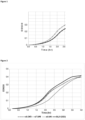
- E. coli cells comprising the hGH-GFP expression plasmid, pEG34, grow slower than cells of the parent E. coli host from which is was derived ( figure 1 ); illustrating the burden or load placed on cells as a result of allocating cellular resources to maintenance and expression of a synthetic construct.
- Burden-addiction strains of the parent E. coli host were genetically engineered to incorporate a genetic circuit designed to confer a selective fitness advantage on productive cells in a cell factory. Specifically, a burden-sensing promoter (p mutM , p yccV or p ycjX ), was substituted for the native promoter of the essential gene operon folP-glmM in the E. coli BL21(DE3) chromosome.
- the genetic circuit further included an RBS, between the promoter and essential gene, where four different RBSs (Table 3) were tested for modulating the expression level of the essential gene. The growth rate of strains comprising the genetic circuit was compared with the parent host strain E. coli BL21(DE3).
- Burden-sensing promoters The promoters, p mutM , p yccV or p ycjX , were generated by PCR amplifying a 0.3 kb region immediately upstream of the respective gene (see Table 3) using primers specified in Table 5 and genomic DNA derived from lysed E. coli BL21(DE3) cells as template.
- the PCR mix 10 ⁇ l MQ water, 2 ⁇ l forward primer (10 ⁇ M), 2 ⁇ l revers primer (10 ⁇ M), 1 ⁇ l DNA template, 15 ⁇ l Phusion U MasterMix (Thermo Scientific).
- the PCR reaction protocol 95°C for 180 sec (1x); 95 °C for 20 sec, 68-58°C (touchdown) for 30 sec, 72°C for 60 sec (35x); 72°C for 300 sec (1x); leave at 15°C.
- USER cloning was used to generate integration sequences comprising the amplified promoter region fused to a linear 1.5 kb DNA fragment containing a kanR gene for selection of correct recombineering products and a 221 bp targeting sequence identical to 221 bp directly upstream of the folP gene.
- the amplified promoter region and kanR-folP fragment were fused by mixing them in equimolar amounts and adding 1 ⁇ l 10x T4 ligation buffer (Thermo Scientific) and 0.75 ⁇ l USER enzyme (New England Biolabs), in a total 10 ⁇ l reaction volume. The USER reaction was placed at 37°C for 30 minutes.
- the ligated product was then amplified using primers'rev' (according to specific promoter in Table 5) and P493 (Table 5) to approximately 250 ng/ ⁇ l using the PCR reaction protocol: 98°C for 180 sec (1x); 85°C for 20 sec, 72-68°C (touchdown) for 30 sec, 72°C for 60 sec (35x); 72°C for 5 min (1x); leave at 15°C.
- Primer overhang provided 50 bp folP identical targeting sequence to direct recombineering to the folP locus.
- the culture was then transferred to 2x cold 50ml centrifuge tubes; centrifuged at 4000g for 10 min; the supernatant was discarded; and the remaining cell pellets were washed with 20 ml ice-cold 10% glycerol.
- the partially re-suspended cells were then centrifuged at 4000g for 6 min; the supernatant was discarded; and the cell pellets washed with 20 ml ice-cold 10% glycerol.
- the partially re-suspended cells were centrifuged at 4000g for 6 min; each cell pellet was carefully re-suspended in 495 ⁇ l ice-cold 10% glycerol and pooled.
- the electroporated cells were incubated at room temperature overnight to allow time for recombination; and subsequently plated on LB agar plates containing 50 mg/L kanamycin and cultured at 37°C overnight to ensure curing for pSIM5-tet. Correct targeting to the essential gene locus was validated using primers P525 and P526. Generally, single kan R colonies were picked having a size average or smaller than the population of colonies.
- Burden-addiction promoter integration in the genome of the kanR selected colonies was validated by colony PCR using Taq DNA polymerase and primers targeted to the folP promoter region. Additionally, the identity of the RBS in the selected colonies was determined by Sanger sequencing.
- strains comprising the genetic circuit was compared with the parent host strain E. coli BL21(DE3) by cultivation in 200 ⁇ l 2xYT supplemented with 500 ⁇ M IPTG at 37 °C with horizontal shaking.
- the growth rate of the selected burden-addicted E. coli strains were slower, to various degrees, compared to parent E. coli host from which they were derived ( figure 2 ; showing growth of burden-addicted strains s5.0#3, s7.0#8, and s9.0#8 wherein essential genes folP-glmM are controlled by burden-sensing promoters p ycc v, p ycj x, and p mutM , respectively).
- the observed reduction in growth rate in these burden-addicted strains provides a measure of the penalty that may be exerted on a non-producing cell that evolves spontaneously during cultivation of a cell factory population comprising the burden-addiction genetic circuit.
- the degree of penalty is determined by the choice of the burden-sensing promoter combined with the strength of the chosen RBS. The larger the penalty - the wider the window for "negative selection" of any low- or non-producing variants (e.g. resulting from mutation in production genes) spontaneously arising during cultivation.
- the burden-addicted E. coli strains which conferred a growth penalty for non-production ( figure 2 ), were used as host strains for demonstrating the selective fitness advantage for burden-addicted cells that are productive.
- the slowest-growing clones of the generated burden-addicted E. coli strains (s9.0#8; s5.0#3; and s7.0#8) were made electrocompetent and transformed by standard electroporation methods (1800 V, 25 ⁇ F, 200 Ohms, 1 mm cuvette width) with respectively pEG34 or pEG0 (Table 4), and plated on LB agar plates containing chloramphenicol and kanamycin.
- Single colony transformants were cultured over-night on 2xYT medium containing chloramphenicol, and then used to inoculate 96-well microtiter plates comprising 200 ⁇ L 2xYT medium (500 ⁇ M IPTG, chloramphenicol) and cultured at 37 °C with fast horizontal shaking in an Elx808 plate reader (Biotek) with reads at OD630 every ten minutes. OD630 values were background-subtracted using the OD630 value of the first read.
- E. coli strains were each transformed with the plasmid pEG34 or pEG0 (Table 4), and their growth rate properties were measured when the cells were induced to synthesize the recombinant protein, hGH fused to GFP.
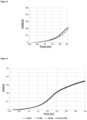
- This reduction of exponential growth rate is reversed in cells of the E . coli strain s9.0#8 transformed with the pEG34 plasmid and induced to express the recombinant protein, hGH-GFP, in contrast to cells of E . coli strain s9.0#8 transformed with the empty plasmid, BEG0 ( figure 3 ).
- coli strain s9.0#8 is induced by the burden or load on the cells brought about by synthesis of the recombinant protein hGH-GFP. This, in turn, leads to up-regulated expression of the folP-glmM genes and enhanced exponential growth.
- this example illustrates that the burden-addiction genetic circuit can be used to confer a selective fitness advantage on those cells of a cell factory whose synthesis of proteins or metabolites is sufficiently high to constitute a burden or load; and that this burden or load is detectable by a burden-sensing promoter operably linked to an essential gene in the cells.
- non-productive variant cells e.g. resulting from production gene mutations
- a reduced growth rate is, of itself, sufficient to slow the increase in frequency of such variant cells in the cell factory and thereby delay the decline in cell factory productivity over time.
- Example 2 Burden addicted E. coli strains producing human growth hormone show enhanced long-term production stability
- Burden-sensing promoters are shown to be promoters that can sense and be activated by a burden-induced state in a cell resulting from the cells synthesis of a recombinant protein, hGH-GFP. Once activated, burden-sensing promoters are shown to elevate expression of an essential gene, folP-glmM, to a level sufficient to confer a selective growth advantage on a cell when compared to a non-productive cell.
- the burden-sensing promoter is randomly combined with variant RBS coding sequences (Table 3) conferring different translational strengths.
- Promoters having burden-sensing properties suitable for use in a burden-addiction genetic circuit are shown to include heat-shock-, DNA damage-, oxidative stress response-promoters and rRNA promoters, as illustrated by the following engineered production strains cultured under simulated large-scale production conditions.
- Burden-sensing promoters The promoters, p yccV , p ycjX , P ibpA , p grpE , P ldhA and p ybbN , and their respective integration sequences were generated by PCR and USER cloning as described for Example 1.2.1, using the primers specified in Table 6; while the ligated products were amplified using primers'rev' (according to specific promoter in Table 6) and P493 (Table 5). Table 6 Primers Promoter of E.
- each of the promoters was integrated upstream of the folP gene in the genome of E. coli strain BEG34 (corresponding to E. coli BL21(DE3) harboring plasmid pEG34), as follows.
- Cells of the E. coli strain BEG34, pre-transformed with the recombineering plasmid pSIM5-tet, were prepared and transformed by electroporation with each of the promoter integration sequences, as described in example 1.2.1.
- Short term hGH-GFP production screening assay The frozen 96-well plate was thawed and a pin replicator used to transfer cells into a new 96-well plate containing 200 ⁇ L 2xYT supplemented with chloramphenicol. This plate was sealed with Breathe-Easy sealing membrane (Sigma-Aldrich) and placed in a SynergyH1 plate reader (Biotek) overnight at 37°C and 754 rpm linear shaking for 20 hours; and the OD (600nm) and GFP fluorescence (ex/em 485nm/528nm) of each well was measured every 10 minutes over a 20 hour period.
- Breathe-Easy sealing membrane Sigma-Aldrich
- SynergyH1 plate reader Biotek
- the plate was then placed in a regular tabletop plate shaker at room temperature for 4 hours followed by the transfer of 2 ⁇ L culture from each well to a new 96-well plate containing 200 ⁇ L 2xYT supplemented with chloramphenicol and 0.5mM IPTG.
- the new 96-well plate was likewise sealed with Breathe-Easy sealing membrane (Sigma-Aldrich) and placed in a SyngergyH1 plate reader overnight at 37°C and 754 rpm linear shaking for 20 hours; and the OD and GFP fluorescence of each well was measured at 600nm and ex/em 485nm/528nm every 10 minutes for 20 hours.
- the following day 2 ⁇ L culture was transferred to a new 96-well plate with 200 ⁇ l 2xYT supplemented with chloramphenicol and 0.5mM IPTG and the process was repeated every day for 6 days in total.
- hGH-GFP production assay ( figure 6 ): A single selected colony from each burden-addicted hGH-GFP producing strain was used to inoculate a 15 mL Greiner culture tube containing 4 mL 2xYT supplemented with chloramphenicol and 0.5mM IPTG. The cultures were grown for 23 hours at 37°C on a 250 rpm shaking table. 2 ⁇ L of each culture were then seeded in 2000x dilution (corresponding to approx. 11 generations of cell division) into a new Greiner culture tube under identical conditions, where these method steps were repeated for a total of 12 seeds.
- hGH-GFP production assay ( figure 8 ): A single selected colony from each burden-addicted hGH-GFP producing strain was used to inoculate a 24 deep-well plate carrying 1.8 mL 2xYT supplemented with chloramphenicol and 0.5mM IPTG. The cultures were grown for 23 hours at 30°C on a 200 rpm shaking table. 2 ⁇ L of each culture were then seeded in 1000x dilution (corresponding to approx. 10 generations of cell division) into a new deep well plate under identical conditions, where these method steps were repeated for a total of 9 seeds.
- the productivity of four hGH-GFP producing strains comprising burden-sensing promoters selected from a group of heat shock promoters (p ibpA , p grpE , p ycjX , and p ybbN ) and having one of four RBS coding sequence variants was tested under simulated large-scale production conditions, as follows.
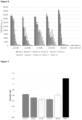
- the strains were serially passaged by 100x back-dilution every day for 6 consecutive days corresponding to ca. 6 generation per seed. By day 6 (seed 6), several strains showed an elevated hGH-GFP synthesis compared to the non-burden addicted production strain BEG34, both during seed 1 and seed 6.
- strains having high short term hGH-GFP productivity relative to strain BEG34 are s3.6#2 (p ibpA ), s6.6#6 (p grpE ), s7.6#8 (p ycjX ), and s10.6#7 (p ybbN ) - see figure 5 .
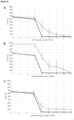
- hGH-GFP productivity of burden-addicted strains, s3.6#2, s6.6#6, s7.6#8, s10.6#7, and non-burden addicted strains BEG34 and non-producing strain BEG0 was monitored under simulated large-scale fermentation by serial transfer. Following seed 2, burden-addicted strains s3.6#2, s6.6#6, s7.6#8, s10.6#7 and the non-burden addicted control strain BEG34 performed equally well in terms of hGH-GFP synthesis ( figure 6 . However, after an additional ca. 20 generations (seed 4), hGH-GFP productivity by the control strain, BEG34, had declined considerably; and by seed 6, the strain essentially ceased production.
- burden-addicted strain s7.6#8 (with p ycj x controlling folP-glmM ) still retained a productivity of around 50 % of seed 2 level. Additionally, burden-addicted strains s3.6#2 (with p ibp A controlling folP-glmM ), s10.6#7 (with p ybbN controlling folP-glmM ), and s6.6#6 (with p grpE controlling folP-glmM ) also showed significantly better long-term productivity as compared to the non-burden addicted strain BEG34.
- hGH-GFP producing burden-addicted strains s3.6#2, s6.6#6, s7.6#8 and s10.6#7 is no higher than the non-burden addicted hGH-GFP production strain BEG34; and hence their improved hGH-GFP production levels over time does not to simply stem from a reduced in initial production level and thus inherently lower burden, ( figure 7 ).
- a hGH-GFP producing burden-addicted strain (s13.6#2 (fxsA)) comprising the heat shock promoter p fxsA controlling the essential gene folP-glmM was compared with a mutant derivative comprising a frame-shift folP abolishing folP expression, strain s13.6#2evo (fxsA), whose growth was solely dependent on glmM expression.
- ribosomal RNA promoters such as p rrnB and p rrnE are shown to be capable of sensing a burden-addicted state in a cell and, in response, to control essential gene expression such as to enhance long-term productivity in a hGH-GFP production strain.
- the long-term stability of hGH-GFP production in strains s15.6.7 (p rrnB ) and s16.6.6 (p rrnE ) was significantly improved when compared to a non-burden addicted hGH-GFP producing E. coli strain BEG34, under simulated large scale production corresponding to around 110 generations of cell division.
- Oxidative stress-sensing promoters such as p poxB are shown to be capable of sensing a burden-addicted state in a cell and, in response, to control essential gene expression such as to enhance long-term productivity in a hGH-GFP production strain.
- both production levels and long-term stability of hGH-GFP production in strain s29.6#3 (p poxB ) was significantly increased when compared to a non-burden addicted hGH-GFP producing E. coli strain BEG34, under simulated large scale production of seven serial passages corresponding to approximately 90 generations and time-extended cultivation for the final seed.
- production using the burden addiction genetic circuit based on p poxB surprisingly resulted in elevated production over time, indicative of the enrichment of non-genetically high performing variants in the population.
- this example illustrates that burden addiction enhances long-term stability and production in E. coli strains engineered to synthesize human growth hormone fused to GFP by coupling transcription of essential genes folP-glmM to any one of a E. coli heat shock, oxidative stress and DNA damage responsive promoter as well as an rRNA promoter.
- Example 3 Burden addicted E. coli strains producing lysostaphin show enhanced long-term production stability
- Lysostaphin is a 27 kDa endopeptidase that cleaves crosslinking pentaglycine bridges in the cell wall peptidoglycan of Staphylococcus aureus resulting in cell lysis.
- This antibacterial agent can be synthesized recombinantly in E. coli.
- the burden-addiction genetic circuit comprising a promoter having burden-sensing properties is shown to enhance the production stability of such E. coli strains engineered to synthesize lysostaphin, as illustrated by the following burden-addicted E. coli strains producing lysostaphin under simulated large-scale production conditions.
- burden-addiction production strains are further shown to be optimized by selecting a strain where the burden-sensing promoter is combined with an RBS sequence (Table 6) conferring an optimized translational strength of the cognate essential gene.
- Burden-sensing promoters A promoter integration sequence comprising the promoter p grpE was generated as described for example 1.2.1, by amplifying the p grpE promoter by PCR, using the p grpE -specific primers specified in Table 6.
- the grpE promoter was integrated upstream of the folP-glmM gene in the genome of E. coli strain BENDU5cam (corresponding to E. coli BL21(DE3) harboring a lysostaphin producing plasmid pENDU5cam), as follows.
- Cells of the E. coli strain BENDU5cam, pre-transformed with the recombineering plasmid pSIM5-tet was prepared and transformed by electroporation with the p grpE promoter integration sequence, as described in example 1.2.1.
- Lysostaphin production screening The E. coli strain s6.4#5(p grpE ) having the highest lysostaphin-productivity was identified using a screening assay in which the three other potential combinations of RBS and p grpE were cultured in 2xYT supplemented with chloramphenicol in 96-well format over six serial passages of 1000x dilution (corresponding to 60 generations) as compared to the non-burden addicted production strain BENDU5cam. The strains were grown in 3mL 2xYT media containing 30 mg/L chloramphenicol in 15 mL culture tubes at 37°C for 21 hours.
- 150 ⁇ L of the cultures were mixed with 50 ⁇ l 50% glycerol and stored in a 96-well plate at -80°C. Additionally, 30 ⁇ L of the cultures were transferred to 3 ml fresh 2xYT media supplemented with chloramphenicol and grown for another 21 hours at identical conditions; and repeated for a total of 5 transfers where freeze-stocks were made of the overnight cultures with each transfer.
- the specific lysostaphin synthesis rate was determined by normalizing the measured rate to the final OD630 measurement of the respective production E. coli culture.
- strains6.4#5 (p grpE ) maintained significantly higher levels of lysostaphin production as compared to the steep reduction in production seen in the non-burden addicted lysostaphin-production BENDU5cam strain.
- Burden-addiction was demonstrated to enhance long-term stability and production in E. coli engineered to synthesize secreted lysostaphin by coupling essential genes folP-glmM transcription to the E. coli heat shock promoter p grpE .
- Example 4 Burden addicted E. coli strains producing mevalonic acid show enhanced long-term production stability
- E. coli BL21(DE3) cells were engineered to synthesize mevalonic acid by introducing a plasmid pMevT expressing a heterologous three-step enzymatic pathway (Martin et al., 2003) that converts glucose to mevalonic acid via the acetyl-CoA pool.
- a burden-addiction genetic circuit comprising a promoter having burden-sensing properties and controlling transcription of an essential gene is shown to enhance the production stability of such mevalonic acid-producing E. coli strains under simulated large-scale production conditions.
- the productivity of the burden-addiction production strains is shown to be further optimized by selecting a strain where the burden-sensing promoter in combined with a RBS coding sequence (Table 5) conferring an optimized translational strength of the cognate essential gene.
- mevalonic acid-production strains comprising the burden-addiction promoter, p cspD (an oxidative stress and glucose starvation sensing promoter), or p mutM (heat shock/DNA damage-sensing promoter) controlling folP-glmM transcription, are both shown to be more resilient to loss of production than the non-burden addicted strain due to their addiction to transcriptional signals resulting from mevalonic acid production.
- Promoter integration sequences comprising the promoters p mutM and p cspD were generated as described for example 1.2.1, by amplifying the p mutM and p cspD promoters by PCR, using the p mutM - and p cspD -specific primers specified in Table 8.
- coli gene Primer name Primer sequence (5'-3')* SEQ ID No.: mutM mutM for ATTCATATGUGGCGAAAAGTACTAAGTACTTA 116 mutM rev 117 cspD cspD fwd ATTCATATGUCGGTTATCGGCAGAACGCCCTG 138 cspD rev 139 * RBS complementary coding sequences are in bold font; wherein N is either A, G, T or C. The RBS is encoded on the opposite strand of the oligo sequence shown.
- Mevalonic acid production screening The E. coli strains s19.1.1(p cspD ) and s9.1.4(p mutM ) having the highest mevalonic acid productivity were identified using a screening assay in which strains comprising the four other potential combinations of RBS and promoter were cultured in 96-well plates over six serial passages of 1000x dilution (corresponding to 60 generations) in parallel with the non-burden addicted production E. coli strain BL21(DE3)pMevT, as follows. The strains were grown in 200 ⁇ L 2xYT media containing 30 mg/L chloramphenicol and 0.5mM IPTG in microtiter plate sealed with breathe-easy seal at 37°C for 21 hours with horizontal shaking.
- 150 ⁇ L of the cultures were mixed with 50 ⁇ l 50% glycerol and stored in a 96-well plate at -80°C. Additionally, 2 ⁇ l of a 10-fold diluted culture was transferred to 200 ⁇ L fresh 2xYT media supplemented with chloramphenicol and 0.5mM IPTG and grown for another 21 hours under identical conditions. In total, 5 transfers identical to the one described above were made and freeze-stocks were made of the overnight cultures with each transfer.
- Mevalonic acid synthesis and detection assay The 96-well plate containing freeze-stocks from the second, fifth and sixth transfers were thawed on ice and used to inoculate 10 mL 2xYT with 0.5 mM IPTG and 30 mg/L chloramphenicol and cultivated at 37°C with horizontal shaking (250 rpm) for 54 hours. 300 ⁇ L aliquots from each culture were treated with 23 ⁇ L 20% sulfuric acid; vigorously shaken and then spun down at 13 000 ⁇ g for 2 min.
- Burden-addiction is demonstrated to enhance long-term stability and production in E. coli engineered to synthesize mevalonic acid by coupling essential genes folP-glmM transcription to the E. coli oxidative stress and glucose starvation sensing promoter p cspD , and the heat shock/DNA damage-sensing promoters p mutM .
- Example 5 Evaluation of promoters as burden sensors to render yeast cells addicted to the burden of engineered recombinant protein production
- Promoters capable of sensing the burden or load on a cell brought about by recombinant expression of a protein or a biosynthetic pathway, and that then induce the expression of an essential gene, can be used to create a burden addiction genetic circuit tailored for use in yeast.
- a method for evaluating candidate promoters is illustrated in yeast cells genetically engineered to synthesize recombinant human serum albumin (hSA) or insulin precursor (IP), optionally translationally fused to green fluorescent protein (GFP).
- hSA human serum albumin
- IP insulin precursor
- GFP green fluorescent protein
- candidate promoters may be selected from upregulated promoters of ribosomal RNA genes, such as those transcribed by RNA polymerase I (Laferté et al., 2006), DNA damage sensing promoters (e.g. pOGG1), and unfolded protein response (UPR) promoters upregulated by the HAC1 transcription factor (Kimata et al., 2006).
- upregulated promoters of ribosomal RNA genes such as those transcribed by RNA polymerase I (Laferté et al., 2006), DNA damage sensing promoters (e.g. pOGG1), and unfolded protein response (UPR) promoters upregulated by the HAC1 transcription factor (Kimata et al., 2006).
- a range of translational strengths can be engineered by varying the translation initiation region introduced with the burden-sensing promoter.
- Clones with potentially different combinations of candidate burden-sensing promoters are selected and evaluated for maintained protein production over 30-100 generations of cell division.
- YPD medium comprises 1% yeast extract, 2% peptone, 2% glucose.
- SC medium comprises 6.7 g/L yeast nitrogen base without amino acids and with ammonium sulfate, but lacks uracil.
- Chromosomal integration and validation of promoter constructs Constructs for chromosomal integration will contain 300-600 bp upstream of the natively regulated gene. Chromosomal integration of the promoter construct is performed by transformation and homologous recombination using standard electroporation procedures for S . cerevisiae. Correct chromosomal integration of the promoter was validated using colony PCR.
- Growth rate measurements of selected strains Growth rates of individual strains are compared to non-burden addicted production strains.
- the 96-well plate is sealed with breathe-easy film and growth is measured in a Synergy H1 plate reader for 20 hours at 37°C and 754 rpm linear shaking. OD600 is measured every 10 minutes.
- the HAC1-upregulated promoters comprising an unfolded protein response (UPR) element, e.g. KAR2 (SEQ ID NO.: 91), PDI1 (SEQ ID NO.: 92) , SSA1 (SEQ ID NO.: 93) or FPR2 (SEQ ID NO.: 94), are demonstrated to be useful in regulating growth when introduced in front of a native growth regulating gene (e.g. the conditionally essential gene URA3 encoding orotidine 5'-phosphate decarboxylase essential for pyrimidine biosynthesis) in a recombinant protein production Saccharomyces strain producing human insulin precursor or human serum albumin, optionally coupled to GFP.
- URR unfolded protein response
- Stability of production is followed under simulated long-term production via serial passages corresponding to 60-80 generations of cell division.
- Saccharomyces strains comprising the HAC1 -upregulated promoter controlling transcription of the growth-regulating gene (URA3), production is expected to be more stable than the corresponding parent recombinant protein production Saccharomyces strain.
- RNA polymerase I transcribe ribosomal RNA genes in yeast.
- RNA polymerase I upregulated promoters such as promoters of the genes: RPL3 (SEQ ID NO.: 95), RPL6A (SEQ ID NO.: 96) and RPL28 (SEQ ID NO.: 97) are useful in regulating growth of yeast essential genes.
- Such upregulated promoters are introduced in front of native growth regulating gene (e.g. the conditionally essential gene URA3) in a recombinant protein overproduction strain producing human insulin precursor or human serum albumin, potentially coupled to GFP. Stability of production is followed by experimentally simulated long-term production via serial passages corresponding to 60-80 generations of cell division.
- URA3 In Saccharomyces strains comprising an RNA polymerase I upregulated promoter controlling transcription of the conditionally essential gene, URA3, production will be more stable than the corresponding parent recombinant protein production Saccharomyces strain.
- DNA damage response in yeast resulting from heterologous expression broadly induces transcription of the DNA repair system, including OGG1 (SEQ ID NO.: 98), RAD51 (SEQ ID NO.: 99) and RAD54 (SEQ ID NO.: 100).
- Promoters of the genes encoding OGG1, RAD51 or RAD54 when operatively linked to an essential gene, are useful for regulating growth of a yeast production cell of the invention. Such promoters are introduced in front of native essential gene (e.g. the growth regulating gene encoding URA3) in cells of a yeast protein production strain producing human insulin precursor or human serum albumin, optionally fused to GFP.
- Stability of production is followed by under simulated long-term production via serial passages corresponding to 60-80 generations of cell division. In strains with a p RAD51 and/or p RAD54 -upregulated essential gene, production will be more stable.
- Burden addiction enhances long-term stability and production in cells of budding yeast engineered to synthesize human serum albumin production or insulin precursor by coupling essential gene transcription to the burden-sensing promoters selected from promoters activated during burden of recombinant protein production or associated with ribosomal RNA promoters (Table 2).
- Example 6 Examples of burden-addicted yeast strains producing human serum albumin showing enhanced long-term production stability
- Burden-addiction systems for use in yeast strains include promoters derived from genes encoding: 1) Protein isomerase PDI1 encoding a chaperone belonging to the unfolded protein response of yeasts such as S . cerevisiae and P. pastoris, and whose abundance is frequently upregulated in response to overexpression of a recombinant protein; 2) Ribosomal subunits encoded by the RPL6A and RPL3 genes and 3) FPR2 encoding a peptidyl-prolyl cis-trans isomerase which is known to be activated upon DNA replication stress. Burden-addiction systems based on these promoters were introduced into a strain of Pichia pastoris engineered to express and secrete human serum albumin in order to determine their effect on long term human serum albumin (hSA) production stability.
- hSA human serum albumin
- the Pichia pastoris ( Komagataella phaffii ) strain EGS31 is a derivative of the CBS7435 strain (NRRL-Y11430 or ATCC 76273), engineered to secrete hSA by a genomically integrated cDNA version of the hSA coding ALB1 gene under control of the AOX1 promoter.
- Burden-addicted versions of the EGS31 strain were generated by genetically integrating a construct comprising a kanMX conditionally selectable G418 resistance gene operably linked to one of the burden-responsive promoters: pPDI1, pFPR2, pRPL3 and pRPL6A.
- burden-addiction constructs were integrated into the KU70 genomic locus of the P. pastoris strain by transforming EGS31 cells with linear integration DNA (sequences N1-N3 respectively) flanked by >750 bp homology arms. Transformation was performed using a standard electroporation procedure on exponentially grown cells pretreated with lithium acetate and dithiothreitol (Wu & Letchworth, 2004).
- Table 9 Recombinant genes and burden-addiction constructs introduced into P. pastoris Gene/construct name Construct nucleotide SEQ ID NO: Encoded protein SEQ ID NO.: pAOX1-ALB construct SEQ ID NO: 155 hSA protein SEQ ID NO: 156 KU70(up)-pPDI1-kanMX-terminator-KU70(dw) SEQ ID NO: 157 kanMX protein SEQ ID NO: 158 KU70(up)-pFPR2-kanMX-terminator-KU70(dw) SEQ ID NO: 159 kanMX protein SEQ ID NO: 160 KU70(up)-pRPL3-kanMX-terminator-KU70(dw) SEQ ID NO: 161 kanMX protein SEQ ID NO: 162 KU70(up)-pRPL6A-kanMX-terminator-KU70(dw) SEQ ID NO: 163 kanMX protein SEQ ID NO: 164
- BMGY and BMMY liquid media (1L) was prepared as follows: 10 g yeast extract and 20 g peptone was added to 700mL H 2 O; mixed with a magnetic stirrer and then autoclaved. After cooling to room temperature; the following was added to the solution: 100ml 1M potassium phosphate buffer (pH 6.0); 100 ml 13.4% (w/v) Yeast Nitrogen Base with Ammonium Sulfate without amino acids; 2 ml 0.02% (w/v) biotin, and in the case of BMGY, 100 ml 10% (v/v) glycerol was added; and in the case of BMMY, 100mL 5% (v/v) methanol was added.
- EGS31 and burden-addicted EGS31 strains were streaked on YPD (1 % yeast extract, 2 % peptone, 2 % D-glucose) agar plates and incubated overnight at 30 deg. C. Single colonies were picked and pre-cultured in 2 mL BMGY where cultures of burden-addicted strains were supplemented 50 ug/mL G418 and cultured at 30 deg. C with 300 rpm horizontal shaking overnight.
- Expression cultures were seeded using 1 uL preculture into 500 ⁇ L BMMY medium containing different concentrations (0 ⁇ g/mL, 750 ⁇ g/mL) of G418 in a 96-well deep well plate with aerating lid to generate "seed 1".
- the cultures were incubated at 30 deg. C for 72 hours (300 rpm horizontal shaking).
- grown cultures were serially passaged (500x dilution) to new 500 ⁇ L BMMY medium containing different concentrations (0 ⁇ g/mL, 750 ⁇ g/mL) of G418 in a 96-well deep well plate with aerating lids.
- glycerol stocks (20 % glycerol) were stored at -80 deg. C from the grown cultures.
- quantification cultures were re-grown from glycerol stocks in 500 ⁇ L BMMY medium containing different concentrations (0 ⁇ g/mL and 750 ⁇ g/mL) of G418 in a 96-well deep well plate with aerating lid for 72 hours.
- Strains with a genomically integrated burden addiction promoter, PDI1, operably linked to the selectable kanMX gene displayed higher production of secreted hSA when strain's burden-addiction system was activated by addition of G418 ( figure 13 ). Further, improved hSA production was seen with higher selection (750 ⁇ g/mL G418), for each of the other tested burden-addiction promoters after approximately 30 cell divisions ( Figure 14A - Seed 1).
- the cultivation of yeast cells comprising the exemplified burden-addiction systems of the invention, under conditions that activate their respective burden-addiction system, is believed to enrich for high-producing yeast variants within the cultured population. While an increase in hSA production may be detectable after relatively short cultivation (30 cell divisions), enrichment for high-producing yeast variants is both maintained and further enhanced over longer cultivation periods when traditional cultures commonly exhibit a significant decline in productivity.
- Typical genetic escaper cells were isolated from long-term cultivation with the genetically engineered microbial production cells of interest in the intended fermentation medium. Suitable genetic escaper cells are characterized by having at least 5 % higher exponential-phase growth rate and at least 30 % lower production rate or product yield than the original genetically engineered production cell.
- RNA sequencing was performed using Purelink RNA Mini kit (Thermo Fischer) and prepared using TruSeq Stranded mRNA kit (Illumina) following the kit manufacturer's instructions. Reads were mapped and analyzed to the reference genome of the strain and next analyzed for differential expression between the production cells and corresponding escaper cells. Results : Candidate suitable promoters were identified as those driving expression of genes that showed a differential expression of >3 fold higher expression in the production organism relative to at least one isolated genetic escape strain.
- Example 8 Burden addicted Bacillus subtilis strains producing IgA fragment show enhanced long-term production stability
- Burden-sensing promoters are shown to be promoters that can sense and be activated by a burden-induced state in a cell resulting from the cell's synthesis of a recombinant protein, an IgA fragment C-terminally fused to GFP (IgA-GFP).
- burden-sensing promoters are shown to elevate expression of essential gene (operons), iscU or accC, to a level sufficient to confer a selective growth advantage on a cell when compared to a non-productive cell.
- the burden-sensing promoter is randomly combined with variant RBS coding sequences (Table 3.2) conferring different translational strengths.
- Promoters having burden-sensing properties suitable for use in a burden-addiction genetic circuit are shown to include heat-shock-, DNA damage-, and oxidative stress response-promoters, as illustrated by the following engineered production strains cultured under simulated large-scale production conditions.
- Burden-sensing promoters The promoters, P hrcA P perR and their respective integration sequences to target essential genes were generated by PCR and USER cloning resulting in integration vectors (Table 10).
- Table 10 Bacillus chromosomal integration constructs for inserting burden-sensing promoter to control essential genes. Plasmid Promoter-essential gene Resistance gene used to select for chromosomal integration pEG151 (SEQ ID NO. 195) P groES -iscU specR (SEQ ID No. 211) pEG152 (SEQ ID NO. 196) P ctsR -iscU specR (SEQ ID No. 211) pEG153 (SEQ ID NO.
- P dnaK -iscU specR (SEQ ID No. 211) pEG154 (SEQ ID NO. 198) P perR -iscU specR (SEQ ID No. 211) pEG155 (SEQ ID NO. 199) P hrcA -iscU specR (SEQ ID No. 211) pEG156 (SEQ ID NO. 200) P spx -iscU specR (SEQ ID No. 211) pEG157 (SEQ ID NO. 201) P sigB -iscU specR (SEQ ID No. 211) pEG158 (SEQ ID NO. 202) P yflT -iscU specR (SEQ ID No.
- Competent cells were prepared according to standard Bacillus transformation methods following a previously described protocol (dx.doi.org/10.17504/protocols.io.bdmti46n ) and transformed with pEG151 to pEG166.
- the transformants were selected on LB agar plates supplemented with spectinomycin (200 ⁇ g/mL) and confirmed by colony PCR using the primers E257/E258 ( iscU ) or E261/E262 ( accC ) .
- Table 12 Primers SEQ ID NO.
- Oligo ID Sequence 5'-) 223 E257 CTGAGTCAATTTCATCAAGG 224 E258 CAGAAGAAAACATTCTCGAAGC 225 E261 GAGGTCGCAACTGAAAAAGC 226 E262 ATGTTCAGTCTCCTTACTCC
- IgA-GFP production was quantified and shown to be improved in the burden addicted strains ( Figure 15 and 16 ).
- Similar burden-addicted strains can be constructed using other candidate burden sensors that may match the transcriptional burden response of other production strains. Their suitability can easily be assessed using the devised long-term production assays or for example in continuous small-scale (e.g. 400 mL) production cultures.
- Chromosomal integration of burden-addiction promoters The spectinomycin resistance marker was exchanged for a chloramphenicol resistance marker in pEG159-pEG166 using the primers E372/E373 (for the vector backbones) and E374/E375 (for the chloramphenicol resistance marker in pDG1662, (Guerout-Fleury et al 1996) to create pEG204 to pEG211 (Table 10).
- Each of the promoters were integrated upstream of the essential gene operons containing accC in the genome of the EGS340 strain (corresponding to EGS084 containing P perR regulating the iscU essential gene operon) as follows.
- IgA-GFP production assay A single selected colony from each burden-addicted IgA-GFP producing strain was used to inoculate a 96 deep-well plate containing 500 ⁇ L/well Cal18-2 media ( dx.doi.org/10.17504/protocols.io.bdmui46w ) supplemented with kanamycin (10 ⁇ g/mL). The cultures were grown for 24 hours at 30°C/250 RPM horizontally shaking incubator (Innova, 2-inch amplitude). 1 ⁇ L of each culture were then transferred (as serial passage) in 499 ⁇ L fresh Cal18-2 media (corresponding to approx. 10 generations per transfer) into a new deep well plate under identical cultivation conditions.
- Cell disruption and ELISA Following washing in PBS, the cultures were spun down at 2000g for 5 min. The pellets were resuspended in 1 volume of lysis buffer (10 mM Tris, pH 7.5, 150 mM NaCl, 500 ⁇ M EDTA), spun down again at 6000 g for 5 min, and resuspended in 1 volume of lysis buffer supplemented with lysozyme (10 mg/mL). The cells were disrupted by incubating the reactions for 30 min at 37 °C. Afterwards, the reactions were briefly vortexed and spun down at 12000 g for 30 min at 4 °C.
- lysis buffer 10 mM Tris, pH 7.5, 150 mM NaCl, 500 ⁇ M EDTA
- the single burden-sensor strain EGS340 carries only the p perR -based burden sensor controlling transcription of the iscU essential gene operon (EGS340).
- EGS340 is compared to derived strains in which transcription of the accC essential gene operon is also regulated by respectively a p ctsR -based burden sensor (EGS460), a p dnaK -based burden sensor (EGS462), and a p hrcA -based burden sensor (EGS466).
- IgA-GFP production was quantified and shown to be improved in the burden addicted strains ( Figure 17 and 18 ).
- Example 10 Additional method for identification of suitable burden-sensing promoters
- suitable candidate burden-sensing promoters are identified for use in burden addiction to sustain long-term heterologous production in particular production strains.
- the method is divided in an optional track 1 for de novo discovery (RNA-sequencing) and a track 2 for confirmation of putative burden-sensing promoters (q-PCR).
- RNA-sequencing de novo discovery
- q-PCR putative burden-sensing promoters
- RNA-sequencing the transcriptional activity of coding genes in the production organism during typical production conditions is compared to that of a an isolated non/low-producing organism during the same typical production conditions.
- the culture of the isolated non/low-producing organism may optionally be fed with product to the concentration approximately found in a corresponding culture of the production organism at a given time.
- the non/low-producing isolate can typically be isolated following culture for >50-100 divisions (preferred), but a suitable isolate strain can also be genetically engineered by genetically inactivating one or several key heterologous production genes.
- RNA-sequencing is carried out, preferably on at least three replicates, preferably using Illumina short-read sequencing according to standard methods known in the art.
- suitable candidate burden-sensing promoters are identified from genes up-regulated by at least 5-10 times in the high-producing culture compared to the non/low-producing culture under the same typical production conditions.
- promoters activated preferentially by the burden of product formation can be found.
- putative burden-sensing promoters are confirmed using q-PCR on samples, similarly comparing one non/low-producer isolates to high-producer isolates during the same typical production conditions (in terms of e.g. temperature, stirring, product/by-product/substrate concentration/growth phase).
- Suitable candidate burden-sensing promoters are identified from genes up-regulated by at least 5-10 times in the high-producing culture compared to the non/low-producing culture under the same typical production conditions.
- Example 11 Burden addiction controlling multiple essential genes improves production of recombinant human growth hormone in Escherichia coli
- the long-term production stability of the burden addicted E. coli strain s7.6#8 was improved by integration of one additional, different burden-sensing promoter controlling transcription of a second essential gene selected e.g. from the list and screened as suggested.
- s7.6#8 single colonies were transformed with a recombineering plasmid such as pKD46 using standard electroporation.
- a recombineering plasmid such as pKD46 using standard electroporation.
- candidate burden-sensing promoters (Table 2) fused to variable RBSs (Table 3.1) were chromosomally integrated directly upstream of the essential gene murI or a similar essential gene, and selected for using spectinomycin resistance gene present in the integration constructs.
- each clone was then transferred to a well of a 96-well plate containing 200 ⁇ l 2xYT supplemented with chloramphenicol for maintenance of the plasmid, pMevT, and cultured. 2 ⁇ l of each cultured clone was used to validate promotor integration as described in example 1.2.1; prior to freezing the 96-well plate.
- the different resulting clones were assessed for long-term production stability by serial passaging of 200x dilutions. Following long-term cultivation for approx. 75 cell generations, IgA-GFP production was quantified and shown to be improved in the new strains compared to the single burden addicted strains only featuring one burden-regulated essential gene.
Landscapes
- Life Sciences & Earth Sciences (AREA)
- Health & Medical Sciences (AREA)
- Engineering & Computer Science (AREA)
- Genetics & Genomics (AREA)
- Chemical & Material Sciences (AREA)
- Biotechnology (AREA)
- Wood Science & Technology (AREA)
- Organic Chemistry (AREA)
- Zoology (AREA)
- Bioinformatics & Cheminformatics (AREA)
- General Engineering & Computer Science (AREA)
- Biomedical Technology (AREA)
- Biochemistry (AREA)
- Microbiology (AREA)
- General Health & Medical Sciences (AREA)
- Medicinal Chemistry (AREA)
- Mycology (AREA)
- Virology (AREA)
- Tropical Medicine & Parasitology (AREA)
- Molecular Biology (AREA)
- Physics & Mathematics (AREA)
- Biophysics (AREA)
- Plant Pathology (AREA)
- Botany (AREA)
- Micro-Organisms Or Cultivation Processes Thereof (AREA)
- Peptides Or Proteins (AREA)
- Preparation Of Compounds By Using Micro-Organisms (AREA)
Claims (15)
- Mikrobielle Produktionszelle, welche gentechnisch verändert wurde, um ein Produkt zu synthetisieren, wobei die mikrobielle Zelle weiter umfasst:a) ein erstes essentielles Gen, welches mit einem ersten belastungsabhängigen Promotor operativ verknüpft ist, undb) ein zweites essentielles Gen, welches mit einem zweiten belastungsabhängigen Promotor operativ verknüpft ist,wobei der erste belastungsabhängige Promotor in Bezug auf das erste essentielle Gen heterolog ist und der zweite belastungsabhängige Promotor in Bezug auf das zweite essentielle Gen heterolog ist;wobei die Synthese des Produkts eine Belastung für die Zelle darstellt, undwobei Expression der ersten essentiellen Gene, wenn der erste belastungsabhängige Promotor durch die Belastung induziert wird, relativ zu einer Expression des ersten essentiellen Gens auf einem basalen Niveau hochreguliert wird, wenn der erste belastungsabhängige Promotor nicht induziert wird, und Expression des zweiten essentiellen Gens, wenn der zweite belastungsabhängige Promotor durch die Belastung induziert wird, relativ zu einer Expression des zweiten essentiellen Gens auf einem basalen Niveau hochreguliert wird, wenn der zweite belastungsabhängige Promotor nicht induziert wird.
- Mikrobielle Produktionszelle nach Anspruch 1, wobei die Belastung durch die Synthese des Produkts, wenn das erste und zweite essentielle Gen in der Zelle mit ihren nativen Promotoren operativ verknüpft sind, Fitnesskosten aufweist, welche als prozentuale Verringerung der maximalen exponentiellen Wachstumsrate der mikrobiellen Produktionszelle gemessen werden, welche ausgewählt sind aus ≥5 %, ≥10 %, ≥15 %, ≥20 %, ≥25 %, ≥35 %, und ≥45 %, gemessen relativ zu einer entsprechenden nichtproduzierenden mikrobiellen Zelle.
- Mikrobielle Produktionszelle nach einem der Ansprüche 1 oder 2, wobei die Zelle:i. ein Bakterium ist, welches zu einer Gattung gehört, welche ausgewählt ist aus Escherichia, Lactobacillus, Lactococcus, Corynebakterium, Bazillus, Acetobacter, Acinetobacter, Pseudomonas, Proprionibacterium, Bacteroides und Bifidobakterium; oderii. eine Hefe ist, welche zu einer Gattung gehört, welche ausgewählt ist aus Saccharomyces, Kluyveromyces, Candida, Pichia, Komagataella, Kryptokokken, Debaromyces, Hansenula, Yarrowia, Zygosaccharomyces und Schizosaccharomyces; oderiii. ein Fadenpilz ist, welcher ausgewählt ist aus Penicillium, Rhizopus, Fusarium, Fusidium, Gibberella, Mucor, Mortierella, Trichoderma Thermomyces, Streptomyceten und Aspergillus.
- Mikrobielle Produktionszelle nach einem der Ansprüche 1-3, wobei das erste und zweite essentielle Gen identisch sind.
- Mikrobielle Produktionszelle nach einem der Ansprüche 1-4, wobei der erste und zweite belastungsabhängige Promotor unterschiedlich sind.
- Mikrobielle Produktionszelle nach einem der Ansprüche 1-5, wobei das erste und/oder zweite essentielle Gen ein nicht bedingtes essentielles Gen ist.
- Mikrobielle Produktionszelle nach einem der Ansprüche 1-6, wobei das erste und/oder zweite essentielle Gen mit einem synthetischen RBS operativ verknüpft ist, dessen Sequenz so ausgewählt ist, dass sie die Translationsstärke des ersten und/oder zweiten essentiellen Gens unabhängig von der Induktion des ersten und/oder zweiten belastungsabhängigen Promotors jeweils verändert.
- Mikrobielle Produktionszelle nach einem der Ansprüche 1-7, wobei der erste und zweite belastungsabhängige Promotor ausgewählt sind aus:i. einem ribosomalen RNA-Promotor,ii. einem durch oxyR oder ein Homolog davon hochregulierten Promotor,iii. einem Promotor, welcher ein durch HAC1 oder ein Homolog davon hochreguliertes UPR-Element umfasst, undiv. einem DNA-schadenerkennenden Promotor.
- Mikrobielle Produktionszelle nach einem der Ansprüche 1-8, wobei die Zelle durch eine erhöhte Produktausbeute nach zumindest 25, 30, 35, 40, 45, 50, 60, 70, 80, 90 oder 100 Generationen von Zellteilung aus einer einzelnen Zelle im Vergleich zu einer mikrobiellen Mutterproduktionszelle gekennzeichnet ist, welcher das erste und zweite essentielle Gen fehlen, welche jeweils mit den ersten und zweiten belastungsabhängige Promotoren operativ verknüpft sind.
- Mikrobielle Produktionszelle nach einem der Ansprüche 1-9, wobei die Zelle durch eine erhöhte Produktausbeute von zumindest 10, 25, 50, oder 80 % nach zumindest 50 Generationen von Zellteilung aus einer einzelnen Zelle im Vergleich zu einer mikrobiellen Mutterproduktionszelle gekennzeichnet ist, welcher das erste und zweite essentielle Gen fehlen, welche jeweils mit den ersten und zweiten belastungsabhängige Promotoren operativ verknüpft sind.
- Verfahren zur Produktbiosynthese, umfassend die folgenden Schritte von:i. Bereitstellen zumindest einer mikrobiellen Produktionszelle nach einem der Ansprüche 1-10,ii. Einbringen der zumindest einen Zelle in ein Kultivierungsmedium, welches ein Substrat zur Herstellung des Produkts umfasst, undiii. Wiederherstellen des Produkts.
- Verfahren zur Produktbiosynthese nach Anspruch 11, wobei das Produkt ausgewählt ist aus: einer organischen Säure, einem Terpenoid, Isoprenoid, Polyketid, Alkohol, Zucker, Vitamin, Aldehyd, einer Carbonsäure, Fettsäure, Aminosäure, einem Peptid, Enzym (wie etwa einer Amylase, Lipase, Protease, Barnase, β-Galaktosidase, einem Kristallprotein, einer Kutinase, PETase, Laccase und einem kohlenhydrataktiven Enzym (wie etwa einer Xylanase, Lichenase, Zellulase, lytischen Polysaccharidmonooxoygenase und Pektase)), einem therapeutischen Protein und einem Vorläufer davon (wie etwa menschliches Wachstumshormon, Insulin, Glucagon-ähnliches Peptid-1, monoklonaler und polyklonaler Antikörper, Einzelfragment-Antikörper und Nanobody), einem natürlicherweise in Eiern vorkommenden Protein (wie etwa Ovalbumin), einem Milchprotein (wie etwa Casein, Lactadherin, Laktoferrin), sekretiertes Immunglobulin A und G, sekretorischen Komponenten und Nanobodys.
- Verwendung eines ersten und eines zweiten essentiellen Gens, welche mit einem ersten bzw. einem zweiten belastungsabhängigen Promotor operativ verknüpft sind, um die Produktausbeute einer kultivierten Population mikrobieller Produktionszellen, welche aus einer einzelnen Zelle nach zumindest 50 Generationen der Zellteilung aus der einzelnen Zelle entstehen, im Vergleich zu einer mikrobiellen Mutterproduktionszelle zu erhöhen, welcher das erste und zweite essentielle Gen fehlen, welche jeweils mit den ersten und zweiten belastungsabhängige Promotoren operativ verknüpft sind;wobei der erste belastungsabhängige Promotor in Bezug auf das erste essentielle Gen heterolog ist und der zweite belastungsabhängige Promotor in Bezug auf das zweite essentielle Gen heterolog ist;wobei die Synthese des Produkts eine Belastung für die Zelle darstellt; undwobei Expression des ersten essentiellen Gens, wenn der erste belastungsabhängige Promotor durch die Belastung induziert wird, relativ zu einer Expression des ersten essentiellen Gens auf einem basalen Niveau hochreguliert wird, wenn der erste belastungsabhängige Promotor nicht induziert wird, und Expression des zweiten essentiellen Gens, wenn der zweite belastungsabhängige Promotor durch die Belastung induziert wird, relativ zu einer Expression des zweiten essentiellen Gens auf einem basalen Niveau hochreguliert wird, wenn der zweite belastungsabhängige Promotor nicht induziert wird.
- Verwendung des ersten und zweiten essentiellen Gens, welche mit dem ersten bzw. zweiten belastungsabhängigen Promotor operativ verknüpft sind, nach Anspruch 13, wobei die Produktausbeute durch zumindest 10, 25, 50, oder 80 % nach zumindest 50 Generationen von Zellteilung aus der einzelnen Zelle im Vergleich zu der mikrobiellen Mutterproduktionszelle erhöht wird, welcher das erste und zweite essentielle Gen fehlen, welche jeweils mit den ersten und zweiten belastungsabhängige Promotoren operativ verknüpft sind.
- Verwendung einer mikrobiellen Produktionszelle nach einem der Ansprüche 1-10 zur Herstellung eines biosynthetischen Produkts, wie etwa organische Säuren, Terpenoide, Isoprenoide, Polyketide, Alkohole, Zucker, Vitamine, Aldehyde, Carbonsäuren, Fettsäuren, Aminosäuren, Peptide, Enzyme (wie etwa Amylasen, Lipasen, Proteasen, Barnasen, β-Galaktosidasen, Kristallproteine, Kutinasen, PETasen, Laccasen und kohlenhydrataktive Enzyme (wie etwa Xylanasen, Lichenasen, Zellulasen, lytische Polysaccharidmonooxoygenasen und Pektasen)), therapeutische Proteine und Vorläufer davon (wie etwa menschliches Wachstumshormon, Insulin, Glucagon-ähnliches Peptid-1, monoklonale und polyklonale Antikörper, Einzelfragment-Antikörper), Proteine, welche natürlicherweise in Eiern vorkommen (wie etwa Ovalbumin), Milchproteine (wie etwa Caseine, Lactadherine, Laktoferrin), sekretiertes Immunglobulin A und G, Sekretkomponenten und Nanobodys.
Priority Applications (8)
| Application Number | Priority Date | Filing Date | Title |
|---|---|---|---|
| EP21191995.6A EP4137571B1 (de) | 2021-08-18 | 2021-08-18 | Lastabhängige produktionsstämme |
| CA3226763A CA3226763A1 (en) | 2021-08-18 | 2022-08-18 | Burden-addicted production strains |
| AU2022331118A AU2022331118A1 (en) | 2021-08-18 | 2022-08-18 | Burden-addicted production strains |
| PCT/EP2022/073110 WO2023021151A1 (en) | 2021-08-18 | 2022-08-18 | Burden-addicted production strains |
| JP2024508706A JP2024531241A (ja) | 2021-08-18 | 2022-08-18 | 負荷依存性産生株 |
| CN202280056037.9A CN118043455A (zh) | 2021-08-18 | 2022-08-18 | 负荷成瘾生产菌株 |
| MX2024002063A MX2024002063A (es) | 2021-08-18 | 2022-08-18 | Cepas de produccion adictas a las cargas. |
| US18/683,429 US20240368535A1 (en) | 2021-08-18 | 2022-08-18 | Burden-addicted production strains |
Applications Claiming Priority (1)
| Application Number | Priority Date | Filing Date | Title |
|---|---|---|---|
| EP21191995.6A EP4137571B1 (de) | 2021-08-18 | 2021-08-18 | Lastabhängige produktionsstämme |
Publications (3)
| Publication Number | Publication Date |
|---|---|
| EP4137571A1 EP4137571A1 (de) | 2023-02-22 |
| EP4137571C0 EP4137571C0 (de) | 2024-10-16 |
| EP4137571B1 true EP4137571B1 (de) | 2024-10-16 |
Family
ID=77666121
Family Applications (1)
| Application Number | Title | Priority Date | Filing Date |
|---|---|---|---|
| EP21191995.6A Active EP4137571B1 (de) | 2021-08-18 | 2021-08-18 | Lastabhängige produktionsstämme |
Country Status (8)
| Country | Link |
|---|---|
| US (1) | US20240368535A1 (de) |
| EP (1) | EP4137571B1 (de) |
| JP (1) | JP2024531241A (de) |
| CN (1) | CN118043455A (de) |
| AU (1) | AU2022331118A1 (de) |
| CA (1) | CA3226763A1 (de) |
| MX (1) | MX2024002063A (de) |
| WO (1) | WO2023021151A1 (de) |
Families Citing this family (2)
| Publication number | Priority date | Publication date | Assignee | Title |
|---|---|---|---|---|
| CN119715469A (zh) * | 2024-12-23 | 2025-03-28 | 中国医学科学院医药生物技术研究所 | 一种抗菌药物的筛选靶点、应用及筛选方法 |
| CN120555275B (zh) * | 2025-05-29 | 2026-04-24 | 华中师范大学 | 一种通过RpoBC转录开关调控细菌生长速率和DNA损伤响应的方法及应用 |
-
2021
- 2021-08-18 EP EP21191995.6A patent/EP4137571B1/de active Active
-
2022
- 2022-08-18 WO PCT/EP2022/073110 patent/WO2023021151A1/en not_active Ceased
- 2022-08-18 MX MX2024002063A patent/MX2024002063A/es unknown
- 2022-08-18 CA CA3226763A patent/CA3226763A1/en active Pending
- 2022-08-18 US US18/683,429 patent/US20240368535A1/en active Pending
- 2022-08-18 AU AU2022331118A patent/AU2022331118A1/en active Pending
- 2022-08-18 JP JP2024508706A patent/JP2024531241A/ja active Pending
- 2022-08-18 CN CN202280056037.9A patent/CN118043455A/zh active Pending
Also Published As
| Publication number | Publication date |
|---|---|
| CA3226763A1 (en) | 2023-02-23 |
| WO2023021151A1 (en) | 2023-02-23 |
| JP2024531241A (ja) | 2024-08-29 |
| CN118043455A (zh) | 2024-05-14 |
| EP4137571A1 (de) | 2023-02-22 |
| EP4137571C0 (de) | 2024-10-16 |
| US20240368535A1 (en) | 2024-11-07 |
| MX2024002063A (es) | 2024-05-20 |
| AU2022331118A1 (en) | 2024-03-07 |
Similar Documents
| Publication | Publication Date | Title |
|---|---|---|
| Tu et al. | Improving the thermostability and catalytic efficiency of glucose oxidase from Aspergillus niger by molecular evolution | |
| Ansari et al. | Recombinant β-galactosidases–Past, present and future: A mini review | |
| EP4103719B1 (de) | Belastungsabhängige produktionsstämme | |
| Ribeiro et al. | Random and direct mutagenesis to enhance protein secretion in Ashbya gossypii | |
| Reid et al. | Identification and partial characterization of extracellular aspartic protease genes from Metschnikowia pulcherrima IWBT Y1123 and Candida apicola IWBT Y1384 | |
| US12031170B2 (en) | System for improved production titers in fermentations | |
| US20240368535A1 (en) | Burden-addicted production strains | |
| EP2132298A1 (de) | Rekombinanter mikroorganismus | |
| Swietalski et al. | Secretion of a low and high molecular weight β-glycosidase by Yarrowia lipolytica | |
| He et al. | Recent biotechnological advances and future prospective of Bacillus licheniformis as microbial cell factories | |
| de Fátima Alves et al. | Improving Saccharomyces cerevisiae acid and oxidative stress resistance using a prokaryotic gene identified by functional metagenomics | |
| Becerra et al. | Engineered autolytic yeast strains secreting Kluyveromyces lactis β-galactosidase for production of heterologous proteins in lactose media | |
| Welsch et al. | Stepwise optimization of a low-temperature Bacillus subtilis expression system for “difficult to express” proteins | |
| Darvishi et al. | In silico and in vivo analysis of signal peptides effect on recombinant glucose oxidase production in nonconventional yeast Yarrowia lipolytica | |
| EP2088192A1 (de) | Inhibitor eines lytischen enzyms, lyse-inhibitor, inhibitor des abbaus von poly-gamma-glutaminsäure und verfahren zur herstellung von poly-gamma-glutaminsäure | |
| Wanarska et al. | A new expression system based on psychrotolerant debaryomyces macquariensis yeast and its application to the production of cold-active β-d-galactosidase from paracoccus sp. 32d | |
| JP5695325B2 (ja) | 新規枯草菌変異株 | |
| D’Alessandro et al. | Effect of nutritional conditions on extracellular protease production by the haloalkaliphilic archaeon Natrialba magadii | |
| JP5841749B2 (ja) | 組換え微生物 | |
| Valešová et al. | Optimization of the host–plasmid interaction in the recombinant Escherichia coli strains overproducing penicillin G acylase | |
| Ozer Uyar et al. | Cloning and expression of trehalose‐6‐phosphate synthase 1 from Rhizopus oryzae | |
| Zhao et al. | Expression of pectate lyase A from Aspergillus nidulans in Bacillus subtilis | |
| Jansen et al. | Parallelized disruption of prokaryotic and eukaryotic cells via miniaturized and automated bead mill | |
| JP5829802B2 (ja) | 組換え枯草菌 | |
| JP5520498B2 (ja) | タンパク質又はポリペプチドの製造方法 |
Legal Events
| Date | Code | Title | Description |
|---|---|---|---|
| PUAI | Public reference made under article 153(3) epc to a published international application that has entered the european phase |
Free format text: ORIGINAL CODE: 0009012 |
|
| STAA | Information on the status of an ep patent application or granted ep patent |
Free format text: STATUS: THE APPLICATION HAS BEEN PUBLISHED |
|
| AK | Designated contracting states |
Kind code of ref document: A1 Designated state(s): AL AT BE BG CH CY CZ DE DK EE ES FI FR GB GR HR HU IE IS IT LI LT LU LV MC MK MT NL NO PL PT RO RS SE SI SK SM TR |
|
| STAA | Information on the status of an ep patent application or granted ep patent |
Free format text: STATUS: REQUEST FOR EXAMINATION WAS MADE |
|
| 17P | Request for examination filed |
Effective date: 20230822 |
|
| RBV | Designated contracting states (corrected) |
Designated state(s): AL AT BE BG CH CY CZ DE DK EE ES FI FR GB GR HR HU IE IS IT LI LT LU LV MC MK MT NL NO PL PT RO RS SE SI SK SM TR |
|
| GRAP | Despatch of communication of intention to grant a patent |
Free format text: ORIGINAL CODE: EPIDOSNIGR1 |
|
| STAA | Information on the status of an ep patent application or granted ep patent |
Free format text: STATUS: GRANT OF PATENT IS INTENDED |
|
| INTG | Intention to grant announced |
Effective date: 20231129 |
|
| GRAJ | Information related to disapproval of communication of intention to grant by the applicant or resumption of examination proceedings by the epo deleted |
Free format text: ORIGINAL CODE: EPIDOSDIGR1 |
|
| STAA | Information on the status of an ep patent application or granted ep patent |
Free format text: STATUS: REQUEST FOR EXAMINATION WAS MADE |
|
| INTC | Intention to grant announced (deleted) | ||
| GRAP | Despatch of communication of intention to grant a patent |
Free format text: ORIGINAL CODE: EPIDOSNIGR1 |
|
| STAA | Information on the status of an ep patent application or granted ep patent |
Free format text: STATUS: GRANT OF PATENT IS INTENDED |
|
| INTG | Intention to grant announced |
Effective date: 20240510 |
|
| GRAS | Grant fee paid |
Free format text: ORIGINAL CODE: EPIDOSNIGR3 |
|
| GRAA | (expected) grant |
Free format text: ORIGINAL CODE: 0009210 |
|
| STAA | Information on the status of an ep patent application or granted ep patent |
Free format text: STATUS: THE PATENT HAS BEEN GRANTED |
|
| AK | Designated contracting states |
Kind code of ref document: B1 Designated state(s): AL AT BE BG CH CY CZ DE DK EE ES FI FR GB GR HR HU IE IS IT LI LT LU LV MC MK MT NL NO PL PT RO RS SE SI SK SM TR |
|
| REG | Reference to a national code |
Ref country code: GB Ref legal event code: FG4D |
|
| RIN1 | Information on inventor provided before grant (corrected) |
Inventor name: TARP LOGIS, MARTIN Inventor name: RUGBJERG, PETER Inventor name: MUNCK, CHRISTIAN Inventor name: KUEHN, JOHANNES Inventor name: FALKENBERG, KRISTOFFER BACH |
|
| REG | Reference to a national code |
Ref country code: CH Ref legal event code: EP |
|
| REG | Reference to a national code |
Ref country code: IE Ref legal event code: FG4D |
|
| REG | Reference to a national code |
Ref country code: DE Ref legal event code: R096 Ref document number: 602021020264 Country of ref document: DE |
|
| U01 | Request for unitary effect filed |
Effective date: 20241118 |
|
| U07 | Unitary effect registered |
Designated state(s): AT BE BG DE DK EE FI FR IT LT LU LV MT NL PT RO SE SI Effective date: 20241122 |
|
| PG25 | Lapsed in a contracting state [announced via postgrant information from national office to epo] |
Ref country code: IS Free format text: LAPSE BECAUSE OF FAILURE TO SUBMIT A TRANSLATION OF THE DESCRIPTION OR TO PAY THE FEE WITHIN THE PRESCRIBED TIME-LIMIT Effective date: 20250216 Ref country code: HR Free format text: LAPSE BECAUSE OF FAILURE TO SUBMIT A TRANSLATION OF THE DESCRIPTION OR TO PAY THE FEE WITHIN THE PRESCRIBED TIME-LIMIT Effective date: 20241016 |
|
| PG25 | Lapsed in a contracting state [announced via postgrant information from national office to epo] |
Ref country code: ES Free format text: LAPSE BECAUSE OF FAILURE TO SUBMIT A TRANSLATION OF THE DESCRIPTION OR TO PAY THE FEE WITHIN THE PRESCRIBED TIME-LIMIT Effective date: 20241016 |
|
| PG25 | Lapsed in a contracting state [announced via postgrant information from national office to epo] |
Ref country code: NO Free format text: LAPSE BECAUSE OF FAILURE TO SUBMIT A TRANSLATION OF THE DESCRIPTION OR TO PAY THE FEE WITHIN THE PRESCRIBED TIME-LIMIT Effective date: 20250116 |
|
| PG25 | Lapsed in a contracting state [announced via postgrant information from national office to epo] |
Ref country code: GR Free format text: LAPSE BECAUSE OF FAILURE TO SUBMIT A TRANSLATION OF THE DESCRIPTION OR TO PAY THE FEE WITHIN THE PRESCRIBED TIME-LIMIT Effective date: 20250117 |
|
| PG25 | Lapsed in a contracting state [announced via postgrant information from national office to epo] |
Ref country code: PL Free format text: LAPSE BECAUSE OF FAILURE TO SUBMIT A TRANSLATION OF THE DESCRIPTION OR TO PAY THE FEE WITHIN THE PRESCRIBED TIME-LIMIT Effective date: 20241016 |
|
| PG25 | Lapsed in a contracting state [announced via postgrant information from national office to epo] |
Ref country code: RS Free format text: LAPSE BECAUSE OF FAILURE TO SUBMIT A TRANSLATION OF THE DESCRIPTION OR TO PAY THE FEE WITHIN THE PRESCRIBED TIME-LIMIT Effective date: 20250116 |
|
| PG25 | Lapsed in a contracting state [announced via postgrant information from national office to epo] |
Ref country code: SM Free format text: LAPSE BECAUSE OF FAILURE TO SUBMIT A TRANSLATION OF THE DESCRIPTION OR TO PAY THE FEE WITHIN THE PRESCRIBED TIME-LIMIT Effective date: 20241016 |
|
| PG25 | Lapsed in a contracting state [announced via postgrant information from national office to epo] |
Ref country code: SK Free format text: LAPSE BECAUSE OF FAILURE TO SUBMIT A TRANSLATION OF THE DESCRIPTION OR TO PAY THE FEE WITHIN THE PRESCRIBED TIME-LIMIT Effective date: 20241016 |
|
| PG25 | Lapsed in a contracting state [announced via postgrant information from national office to epo] |
Ref country code: CZ Free format text: LAPSE BECAUSE OF FAILURE TO SUBMIT A TRANSLATION OF THE DESCRIPTION OR TO PAY THE FEE WITHIN THE PRESCRIBED TIME-LIMIT Effective date: 20241016 |
|
| PLBE | No opposition filed within time limit |
Free format text: ORIGINAL CODE: 0009261 |
|
| STAA | Information on the status of an ep patent application or granted ep patent |
Free format text: STATUS: NO OPPOSITION FILED WITHIN TIME LIMIT |
|
| 26N | No opposition filed |
Effective date: 20250717 |
|
| U20 | Renewal fee for the european patent with unitary effect paid |
Year of fee payment: 5 Effective date: 20250827 |
|
| PGFP | Annual fee paid to national office [announced via postgrant information from national office to epo] |
Ref country code: GB Payment date: 20250820 Year of fee payment: 5 |
|
| PGFP | Annual fee paid to national office [announced via postgrant information from national office to epo] |
Ref country code: CH Payment date: 20250901 Year of fee payment: 5 |
|
| PGFP | Annual fee paid to national office [announced via postgrant information from national office to epo] |
Ref country code: IE Payment date: 20250820 Year of fee payment: 5 |
|
| PG25 | Lapsed in a contracting state [announced via postgrant information from national office to epo] |
Ref country code: MC Free format text: LAPSE BECAUSE OF FAILURE TO SUBMIT A TRANSLATION OF THE DESCRIPTION OR TO PAY THE FEE WITHIN THE PRESCRIBED TIME-LIMIT Effective date: 20241016 |