EP4137971A1 - Verteilte generische cache-speicherfähigkeitsanalyse - Google Patents
Verteilte generische cache-speicherfähigkeitsanalyse Download PDFInfo
- Publication number
- EP4137971A1 EP4137971A1 EP22156105.3A EP22156105A EP4137971A1 EP 4137971 A1 EP4137971 A1 EP 4137971A1 EP 22156105 A EP22156105 A EP 22156105A EP 4137971 A1 EP4137971 A1 EP 4137971A1
- Authority
- EP
- European Patent Office
- Prior art keywords
- fingerprint
- bloom filter
- storage
- request
- local
- Prior art date
- Legal status (The legal status is an assumption and is not a legal conclusion. Google has not performed a legal analysis and makes no representation as to the accuracy of the status listed.)
- Pending
Links
Images



Classifications
-
- G—PHYSICS
- G06—COMPUTING OR CALCULATING; COUNTING
- G06F—ELECTRIC DIGITAL DATA PROCESSING
- G06F16/00—Information retrieval; Database structures therefor; File system structures therefor
- G06F16/90—Details of database functions independent of the retrieved data types
- G06F16/903—Querying
- G06F16/90335—Query processing
-
- G—PHYSICS
- G06—COMPUTING OR CALCULATING; COUNTING
- G06F—ELECTRIC DIGITAL DATA PROCESSING
- G06F12/00—Accessing, addressing or allocating within memory systems or architectures
- G06F12/02—Addressing or allocation; Relocation
- G06F12/08—Addressing or allocation; Relocation in hierarchically structured memory systems, e.g. virtual memory systems
- G06F12/0802—Addressing of a memory level in which the access to the desired data or data block requires associative addressing means, e.g. caches
-
- G—PHYSICS
- G06—COMPUTING OR CALCULATING; COUNTING
- G06F—ELECTRIC DIGITAL DATA PROCESSING
- G06F11/00—Error detection; Error correction; Monitoring
- G06F11/30—Monitoring
- G06F11/3003—Monitoring arrangements specially adapted to the computing system or computing system component being monitored
- G06F11/3037—Monitoring arrangements specially adapted to the computing system or computing system component being monitored where the computing system component is a memory, e.g. virtual memory, cache
-
- G—PHYSICS
- G06—COMPUTING OR CALCULATING; COUNTING
- G06F—ELECTRIC DIGITAL DATA PROCESSING
- G06F11/00—Error detection; Error correction; Monitoring
- G06F11/30—Monitoring
- G06F11/34—Recording or statistical evaluation of computer activity, e.g. of down time, of input/output operation ; Recording or statistical evaluation of user activity, e.g. usability assessment
- G06F11/3409—Recording or statistical evaluation of computer activity, e.g. of down time, of input/output operation ; Recording or statistical evaluation of user activity, e.g. usability assessment for performance assessment
-
- G—PHYSICS
- G06—COMPUTING OR CALCULATING; COUNTING
- G06F—ELECTRIC DIGITAL DATA PROCESSING
- G06F12/00—Accessing, addressing or allocating within memory systems or architectures
- G06F12/02—Addressing or allocation; Relocation
- G06F12/08—Addressing or allocation; Relocation in hierarchically structured memory systems, e.g. virtual memory systems
- G06F12/0802—Addressing of a memory level in which the access to the desired data or data block requires associative addressing means, e.g. caches
- G06F12/0893—Caches characterised by their organisation or structure
- G06F12/0895—Caches characterised by their organisation or structure of parts of caches, e.g. directory or tag array
-
- G—PHYSICS
- G06—COMPUTING OR CALCULATING; COUNTING
- G06F—ELECTRIC DIGITAL DATA PROCESSING
- G06F11/00—Error detection; Error correction; Monitoring
- G06F11/30—Monitoring
- G06F11/34—Recording or statistical evaluation of computer activity, e.g. of down time, of input/output operation ; Recording or statistical evaluation of user activity, e.g. usability assessment
- G06F11/3447—Performance evaluation by modeling
-
- G—PHYSICS
- G06—COMPUTING OR CALCULATING; COUNTING
- G06F—ELECTRIC DIGITAL DATA PROCESSING
- G06F2201/00—Indexing scheme relating to error detection, to error correction, and to monitoring
- G06F2201/88—Monitoring involving counting
-
- G—PHYSICS
- G06—COMPUTING OR CALCULATING; COUNTING
- G06F—ELECTRIC DIGITAL DATA PROCESSING
- G06F2201/00—Indexing scheme relating to error detection, to error correction, and to monitoring
- G06F2201/885—Monitoring specific for caches
-
- G—PHYSICS
- G06—COMPUTING OR CALCULATING; COUNTING
- G06F—ELECTRIC DIGITAL DATA PROCESSING
- G06F2212/00—Indexing scheme relating to accessing, addressing or allocation within memory systems or architectures
- G06F2212/10—Providing a specific technical effect
- G06F2212/1016—Performance improvement
- G06F2212/1021—Hit rate improvement
Definitions
- aching refers to the storing data in a hardware or software component so that future requests for the data can be served faster.
- a “cache hit” occurs when requested data can be found in a cache.
- Caching comes with many advantages, including reduced backend load (as a capacity cache) and better user experience through reduced latency (as a latency cache).
- a big challenge in deploying a caching layer is to estimate beforehand how cacheable a request-response pair is, which then dictates the expected cache hit rate when the caching layer is in place. If wrong assumptions are made, the resulting caching layer might be ineffective, rendering the cache efforts and resources useless. Further, a bad caching layer estimate might cause a service provider to miss an opportunity to deploy a cache which would be very effective.
- the technology of the present disclosure allows for efficient and accurate estimation of the cacheability of a remote procedure call (RPC) endpoint, the cacheability of the RPC being defined by the number of identical request-response pairs served within a bounded time interval.
- RPC remote procedure call
- the technology provides a method for a method for estimating one or more cache hit rates, the method including receiving a request-response pair; incrementing a cached item count; calculating a fingerprint for the request-response pair; determining whether the fingerprint is a member of a bloom filter, and when the fingerprint is a member of the bloom filter incrementing a local hit count; repeating the steps of receiving, incrementing, calculating, and determining for a cacheability analysis period; and estimating a local cache hit rate based on the item count and the local hit count.
- the technology provides a method for estimating one or more cache hit rates, the method including receiving a request-response pair; incrementing an item count; calculating a fingerprint for the request-response pair and storing the fingerprint in a first storage; determining whether the fingerprint is a member of a current bloom filter, when the fingerprint is a member of the current bloom filter, incrementing a local hit count, and when the fingerprint is not a member of the current bloom filter, determining whether the fingerprint is a member of an other bloom filter, when the fingerprint is a member of the other bloom filter, adding the fingerprint to the current bloom filter, and adding the fingerprint to a second storage, and when the fingerprint is not a member of the other bloom filter determining whether the current bloom filter has space for the fingerprint, when the current bloom filter has space for the fingerprint adding the fingerprint into the current bloom filter, and when the current bloom filter does not have space for the fingerprint, clearing the other bloom filter and then moving the contents of the current bloom filter to the other bloom filter; repeating the steps of receiving, increment
- the technology provides a system for a system for providing an estimate of one or more cache hit rates, the system including a device for receiving metrics from i tasks, wherein i is an integer greater than or equal to one, and using the metrics to calculate an estimate of one or more cache hit rates.
- the presently disclosed technology provides a simple, lightweight, and maintenance-free local and distributed cacheability estimation.
- the technology is scalable and built on already existing data collection and processing infrastructures.
- the technology is (1) lightweight - the required memory/computational resources are minimal, (2) nonintrusive-the cacheability analysis does not impact the request/response behavior in any way, and there is no additional latency for serving and no impact in case of any types of failure due to the introduced mechanism, (3) generic - supports multiple/any RPC endpoints, and (4) multifaceted - applicable to both local (single task) scenarios and distributed (single task or multi-task) scenarios. Further the technology does not require real-time data and realizes simplicity and efficiency by estimating certain parameters rather than calculating such parameters.
- the cacheability analysis of the technology is said to be acceptable as long as the expected error associated with the analysis can be calculated and is within certain accuracy boundaries (e.g., x% cache hit/miss rate error is generally acceptable).
- the present technology employs two mathematical constructs to realize greater simplicity and efficiency, the bloom filter and the hyperloglog algorithm. Accordingly, before providing a detailed description of the technology, bloom filters and the hyperloglog algorithm will be discussed in general.
- Bloom filters are space-efficient probabilistic data structures that are used to test whether an element is a member of a set.
- a bloom filter consists of a bit array of m bits (initialized all to 0) and k different hash functions. When an element is added to the set, it is fed into each of the k hash functions to get k array positions. Subsequently, the bits at all these positions are set to 1. Similarly, in order to check if an element is a member of the bloom filter, it is sufficient to calculate the k bit locations for this new element and check if all of those bits are set to 1. If there is at least one unset bit, one can conclude that the element is not a member of the set.
- bloom filters are guaranteed to have no false negatives whereas false positives are possible.
- the probability of false positives can be calculated, and a target probability of false positives can be achieved through tuning the bloom filter size and the number of hash functions to be used.
- Advantageous properties of bloom filters include:
- HyperLogLog is a probabilistic algorithm which can be used to estimate the cardinality (i.e., the distinct element count) of a set within an error bound.
- the main logic behind HyperLogLog is that the cardinality of a multiset of uniformly distributed random numbers can be estimated by calculating the maximum number of leading zeros in the binary representation of each number in the set. HyperLogLog splits the original set into multiple subsets, calculating the maximum number of leading zeros in the numbers in each of these subsets and taking the average to reduce the variance of the results.
- the relative error for the cardinality estimation of the HyperLogLog algorithm is 1.04/ ⁇ m where m is the number of subsets (i.e., buckets).
- the cacheability analysis is performed for a bounded time.
- the analysis may model the performance of a task's local cache (e.g., a service's local cache or a server's local cache) using a bloom filter and model the performance of a distributed cache serving a plurality of tasks using a combination of the bloom filter and hyperloglog operations.
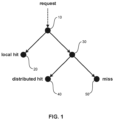
- the performance models may be used to provide an estimate of cache hit rates for requests flowing through a layered cache as described in Fig. 1 .
- Fig. 1 is an operational flow diagram showing how a data request may move through the caching layers provided for a task.
- a request may be received by a task (operation node 10) and may be served with a response present in a local cache for the task, in which case the request results in a local hit (operation node 20). If the request cannot be served from the local cache (operation node 30), it may be served with a response present in a distributed cache that is associated with the task, in which case it is a distributed hit (operation node 40). If the request cannot be served from the local cache or the distributed cache, it is a miss (operation node 50).
- the cacheability analysis of present disclosure examines request-response pairs. That is, the analysis involves observing request-response pairs and comparing request-response pairs to determine if a request-response pair repeats. Thus, if is assumed that all responses are cached for a bounded time then, for the bounded time, if a request-response pair is observed more than once each observance after the first observance is said to be a cache hit.
- a custommetadata can also be added to the fingerprint.
- the metadata can be a form of user credentials, or an arbitrary hash salt.
- injecting the fingerprint directly from the server code in order to support the use case of memcached. This is useful for service owners who are planning to deploy a cacheserver in order to serve partial responses and want to verify the performance of their planned cache.
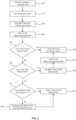
- Fig. 2 is a flow chart showing metric generating operations performed by a task as part of preforming a local cacheability analysis according to an embodiment.
- the local cacheability analysis requires storing fingerprints for all the requests the task has received.
- the fingerprint of the last serving can be compared with the fingerprints of the previously served responses and a hit reported if there was a previous occurrence.
- Bloom Filters are used to store this information.
- a two-filter approach is used. In this approach, there are two Bloom Filters representing a set (instead of one) and fingerprints are inserted into one filter at a time.
- the operations depicted in the figure are performed for a bounded time and may be performed by cacheability software associated with a task, such as an instance of cacheability software running on a server performing the task.
- cacheability software associated with a task
- the resulting request-response pair is sent to the cacheability software (step 100).
- the cacheabilty software assumes that the request-response pair corresponds to a cache entry and thus an item count is incremented (step 110).
- a fingerprint is calculated for the received request-response pair (step 120), and a determination is made as to whether the fingerprint is in a bloom filter (steps 130 and 140). More specifically, a determination is made as to whether the fingerprint is in a current bloom filter (step 130), and if the fingerprint is not in the current bloom filter a determination is made as to whether the fingerprint is in an other bloom filter (step 140). If the fingerprint is in the current bloom filter, a local hit count is incremented (step 150). If the fingerprint is in the other bloom filter, the fingerprint is added to the current bloom filter (step 160) and the local hit count is incremented (step 150).
- the operation of adding the fingerprint to the current bloom filter if it is in the other bloom filter acts to keep recent request-response fingerprints in the current bloom filter so that the current bloom filter and the other bloom filter simulate the least recently used (LRU) behavior of a cache.
- LRU least recently used
- a local cache hit rate can be estimated.
- the local cache hit rate may be estimated by dividing the local hit count by the item count, since the item count will equal the total number of requests for the bounded time.
- a limit can be placed on the amount of data that can be stored in the cache through a maximum cache size parameter and the total size of the items stored in the cache can be tracked. Since the cacheability analysis utilizes cache-size based eviction, the maximum number of items in the cache is closely related to the average response size for the target task. For instance, the cache size is 100MB and the average response size is 100kB, the expectation is to have ⁇ 1000 items in the cache, ⁇ 500 per filter.
- the bloom filter size and the number of hash functions are configurable parameters. A user can choose a configuration with the desired probability of false positive. Moreover, since the probability of false positive will be displayed on the resulting dashboards, the users can understand how dependable the results are and further tune their configurations. In one possible implementation, a default value of a 10kB filter with 5 hash functions is used, which provides a sub 5% error rate for up to 10k items per task in the cache.
- FIG. 3 the figure shows a flow chart depicting metric generating operations performed by a task as part of preforming a local cacheability or distributed cacheability analysis according to an embodiment.
- the operations of Fig. 3 are performed for a bounded time.
- the operations depicted in Fig. 3 include the operations of Fig. 2 (steps 100-190) and two additional operations (steps 200 and 210).
- step 200 the fingerprint calculated in step 120 is added to a storage of all fingerprints that have been calculated during the bounded time, the storage referred to as "HyperLogLog(Cache)."
- the HyperLogLog(Cache) storage includes all fingerprints that are calculated, and thus stores a set with the elements being the calculated fingerprints.
- any fingerprint that is added back into the current bloom filter in step 160 is added to a storage of all fingerprints that have been added back into the current bloom filter during the bounded time, the storage referred to as "HyperLogLog(Local-Hits)."
- the HyperLogLog(Local-Hits) storage stores a set with the elements being the fingerprints added back to the current bloom filter.
- a fingerprint is not added to HyperLogLog(Local-Hits) if it is determined to be in the current bloom filter in step 130, as such fingerprint may or may not correspond to a local hit.
- HyperLogLog(Local-Hits) approximates all local hit fingerprints.
- the HyperLogLog(Cache) and HyperLogLog(Local-Hits) are each generated for analysis by a hyperloglog algorithm.
- the hyperloglog algorithm estimates the cardinality of the fingerprints in the HyperLogLog(Cache), i.e., the number of distinct calculated fingerprints.
- the hyperloglog algorithm estimates the cardinality of the fingerprints in the HyperLogLog(Local-Hits), i.e., the number of distinct fingerprints corresponding to local hits.
- the cardinality of the calculated fingerprints and the cardinality of fingerprints corresponding to local hits may be used to calculate a number of distributed cache hits during the bounded time.
- each task also stores and relays the set of local hits. This way, one can find if a specific item is served from the local caches across all the tasks, in which case there would not be a need to account for additional hits. For instance, if it is assumed that task 1 and task 3 served item A (and all local occurrences of item A) from their local caches, then there is no need to consider element A in the analysis. If there is at least one A that is not served from local cache, the analysis still applies.
- LH_i is the set of all-local-hits for task i (i.e., these items were not even fetched once during this cycle).
- the above analysis assumes a way to represent sets, with support for cardinality and union operations.
- One way to handle such analysis is to require transfer of the cache and miss sets per task to a centralized location and execution of these operations through a pipeline.
- Such centralized calculations may be avoided, and the analysis can be performed on the basis of already available data collection and processing mechanisms.
- each task exposes two hyperloglog streams, one for the cache contents (i.e., C_i sets above) and one for all-local-hits (i.e., LH_i sets above). Then, the cardinality of each set is simply estimated by applying the hyperloglog cardinality estimation.
- the four terms of the formula for the bounded time may be estimated respectively by (i) adding together the number of elements in the HyperLogLog(Cache) storage (see step 200) for the tasks, (ii) applying hyperloglog to the aggregate of the HyperLogLog(Cache) data generated for the tasks , (iii) adding together the number of elements in the HyperLogLog(Local-Hits) storage (see step 210) for the tasks, , and (iv) applying hyperloglog to the aggregate of the HyperLogLog(Local-Hits) data generated for the tasks.
- the distributed hit rate is computed by dividing the estimated number of distributed hits (DS) by the sum of the item counts for the tasks.
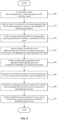
- Fig. 4 is a flow chart showing how metrics generated according to the Figs. 2 or 3 embodiments may be used to estimate a local cache hit rate.
- To estimate a local cache hit rate for a task i collect the local hit count for the task i during the bounded time (step 400) and collect the item count for the task i during the bounded time (step 410), and then divide the collected local hit count by the collected item count to arrive at an estimate of the local hit rate for task i during the bounded time (step 420).
- Fig. 5 is a flow chart showing how metrics generated according to the Fig. 3 embodiment may be used to estimate a distributed cache hit rate.
- To estimate a distributed cache hit rate for i tasks first collect for the i tasks the HyperLogLog(Cache)s, the HyperLogLog(Local-Hits)s, and the item counts (step 500). Then, add the number of elements in the HyperLogLog(Cache)s for the tasks to generate a first sum and aggregate the HyperLogLog(Cache)s (step 510), and perform a hyperloglog operation on the aggregate HyperLogLog(Cache) to estimate a cardinality of cached items (520).
- step 530 add the number of elements in the HyperLogLog(Local-Hits)s for the tasks to generate a second sum and aggregate the HyperLogLog(Local-Hits)s (step 530), and perform a hyperloglog operation on the aggregate HyperLogLog(Local-Hits) to estimate a cardinality of all locally cached items (step 540).
- step 550 subtracts the cardinality estimate of all locally cached items from the second sum to generate a local hits adjustment
- step 560 subtract the cardinality estimate of cached items and the local hits adjustment from the first sum to generate a distributed hits estimate (step 560), and divide the distributed hits estimate by the sum of the collected item counts to generate an estimated distributed cache hit rate (step 570).
- Fig. 6 is a block diagram of a system for implementing the embodiments of Figs. 2-5 .
- Depicted in Fig. 6 is a single task 600.
- the task 600 may be implemented, for example, by a single server computer, and therefore for purposes of concise explanation Fig. 6 will be described in the context of element 600 representing both a single server computer and a single task.
- the elements internal to task 600 are described as software elements, however it should be noted that such elements may alternatively be in the form or hardware, or in the form of a combination of hardware and software.
- the task 600 includes a stub 605 that serves as an interface or port.
- the stub may receive requests 610 from a network or another computing environment and may provide responses 615 to the network or other computing environment.
- the requests 610 received by the stub 605 are passed to a programming framework 620, and more specifically to a request handler 625 of the programming framework 620.
- the request handler 625 is operable to generate information used for responding to the requests 610 and may further interface with business logic 630 of the task 600 to generate information used for responding to the requests 610.
- the request handler 625 and/or business logic 630 may pass information used for responding to the requests 610 to a response hander 635 of the programming framework 620.
- the response handler 635 generates responses 615 to respective requests 610 and passes such responses to the stub 605.
- the response handler 635 passes each request-response pair 640, including request 640a and response 640b to an instance of cacheability software 645 that is associated with task 600 (e.g., running on server 600), the request 640a having been passed to the response handler 635 by the request handler 625.
- Receipt of the request-response pair 640 by the cacheability software 645 is reflected in Figs. 2 and/or 3 as step 100.
- the cacheability software 645 may execute the remaining steps of Figs. 2 or 3 .
- the cacheability software 645 may generate metrics as described in connection with Figs. 2 and 3 . For example, if the cacheability software 645 executes the operations of Fig. 3 , it may generate for task 600 for a bounded time the metrics: an item count, HyperLogLog(Cache), a local hit count, and HyperLogLog(Local-Hits). Further, the generated metrics may be passed to a metric collector 650 that is part of task 600, and the metric collector 650 may, in turn, pass the collected metrics to a metric aggregation and visualization element 655.
- element 655 may execute, by way of example, the operations depicted in either Fig. 4 or Fig. 5 .
- the element 655 does not need to perform aggregation as the element 655 will receive only local metrics, i.e., the local hit count for task 600 and the item count for task 600 and compute an estimate of the local hit rate for task 600 based on the received metrics.
- local metrics i.e., the local hit count for task 600 and the item count for task 600 and compute an estimate of the local hit rate for task 600 based on the received metrics.
- the element 655 needs to perform aggregation as the element 655 needs to (i) add together the item counts for all tasks under consideration, (ii) aggregate of the HyperLogLog(Cache) data for the tasks, (iii) add together the local hit counts for the tasks, and (iv) aggregate the HyperLogLog(Local-Hits) data for the tasks; and then compute an estimate of the distributed cache hit rate based on the aggregate data.
- the element 655 provides for visualization of cacheability data.
- data presented on a display of element 655 may include:
- the metric aggregation and visualization element 655 may take the form of a client computer including a display and coupled to a multiple of tasks, including task 600, via the Internet.
- Embodiments of the present technology include, but are not restricted to, the following.
- a further example relates to technology for estimating one or more cache hit rates.
- An implementation includes receiving a request-response pair, calculating a fingerprint for the request-response pair, storing the fingerprint, and determining whether the fingerprint is a member of a bloom filter.
Landscapes
- Engineering & Computer Science (AREA)
- Theoretical Computer Science (AREA)
- Physics & Mathematics (AREA)
- General Engineering & Computer Science (AREA)
- General Physics & Mathematics (AREA)
- Databases & Information Systems (AREA)
- Computing Systems (AREA)
- Quality & Reliability (AREA)
- Computational Linguistics (AREA)
- Data Mining & Analysis (AREA)
- Mathematical Physics (AREA)
- Computer Hardware Design (AREA)
- Memory System Of A Hierarchy Structure (AREA)
Applications Claiming Priority (1)
| Application Number | Priority Date | Filing Date | Title |
|---|---|---|---|
| US17/407,594 US11656986B2 (en) | 2021-08-20 | 2021-08-20 | Distributed generic cacheability analysis |
Publications (1)
| Publication Number | Publication Date |
|---|---|
| EP4137971A1 true EP4137971A1 (de) | 2023-02-22 |
Family
ID=80447172
Family Applications (1)
| Application Number | Title | Priority Date | Filing Date |
|---|---|---|---|
| EP22156105.3A Pending EP4137971A1 (de) | 2021-08-20 | 2022-02-10 | Verteilte generische cache-speicherfähigkeitsanalyse |
Country Status (2)
| Country | Link |
|---|---|
| US (1) | US11656986B2 (de) |
| EP (1) | EP4137971A1 (de) |
Families Citing this family (3)
| Publication number | Priority date | Publication date | Assignee | Title |
|---|---|---|---|---|
| US12174994B2 (en) * | 2022-03-09 | 2024-12-24 | AVAST Software s.r.o. | User data collection privacy using probabilistic data structures |
| CN120303681A (zh) * | 2022-12-19 | 2025-07-11 | 吉尼赛斯云服务有限公司 | 与使用客户旅程中的多维事件表示进行预测性分析相关的系统和方法 |
| CN116578590B (zh) * | 2023-03-29 | 2026-01-30 | 飞狐信息技术(天津)有限公司 | 一种热点数据缓存处理方法和装置 |
Citations (3)
| Publication number | Priority date | Publication date | Assignee | Title |
|---|---|---|---|---|
| WO1995002864A1 (en) * | 1993-07-16 | 1995-01-26 | Zitel Corporation | Method and structure for evaluating and enhancing the performance of cache memory systems |
| US20050268037A1 (en) * | 2004-05-27 | 2005-12-01 | International Business Machines Corporation | Cache hit ratio estimating apparatus, cache hit ratio estimating method, program, and recording medium |
| EP1835409A2 (de) * | 2006-03-15 | 2007-09-19 | Hitachi, Ltd. | Speichersystem und Verfahren zur Steuerung des Speichersystems |
Family Cites Families (3)
| Publication number | Priority date | Publication date | Assignee | Title |
|---|---|---|---|---|
| US20030208665A1 (en) | 2002-05-01 | 2003-11-06 | Jih-Kwon Peir | Reducing data speculation penalty with early cache hit/miss prediction |
| US10114751B1 (en) | 2015-06-05 | 2018-10-30 | Nutanix, Inc. | Method and system for implementing cache size estimations |
| US10095624B1 (en) * | 2017-04-28 | 2018-10-09 | EMC IP Holding Company LLC | Intelligent cache pre-fetch |
-
2021
- 2021-08-20 US US17/407,594 patent/US11656986B2/en active Active
-
2022
- 2022-02-10 EP EP22156105.3A patent/EP4137971A1/de active Pending
Patent Citations (3)
| Publication number | Priority date | Publication date | Assignee | Title |
|---|---|---|---|---|
| WO1995002864A1 (en) * | 1993-07-16 | 1995-01-26 | Zitel Corporation | Method and structure for evaluating and enhancing the performance of cache memory systems |
| US20050268037A1 (en) * | 2004-05-27 | 2005-12-01 | International Business Machines Corporation | Cache hit ratio estimating apparatus, cache hit ratio estimating method, program, and recording medium |
| EP1835409A2 (de) * | 2006-03-15 | 2007-09-19 | Hitachi, Ltd. | Speichersystem und Verfahren zur Steuerung des Speichersystems |
Also Published As
| Publication number | Publication date |
|---|---|
| US11656986B2 (en) | 2023-05-23 |
| US20230054017A1 (en) | 2023-02-23 |
Similar Documents
| Publication | Publication Date | Title |
|---|---|---|
| EP4137971A1 (de) | Verteilte generische cache-speicherfähigkeitsanalyse | |
| Venkataramani et al. | The potential costs and benefits of long-term prefetching for content distribution | |
| Che et al. | Hierarchical web caching systems: Modeling, design and experimental results | |
| US9229877B2 (en) | Method and apparatus for optimal cache sizing and configuration for large memory systems | |
| US20170060769A1 (en) | Systems, devices and methods for generating locality-indicative data representations of data streams, and compressions thereof | |
| Bailis et al. | Quantifying eventual consistency with PBS | |
| WO2022148306A1 (zh) | 一种淘汰数据的方法、装置、缓存节点以及缓存系统 | |
| US12393854B2 (en) | System and method for implementing an application prediction engine | |
| CN110287010A (zh) | 一种面向Spark时间窗口数据分析的缓存数据预取方法 | |
| Bsoul et al. | Enhanced fast spread replication strategy for data grid | |
| Cao et al. | Timon: A timestamped event database for efficient telemetry data processing and analytics | |
| CN114785858A (zh) | 应用于互感器在线监测系统的资源主动缓存方法及装置 | |
| US20220132183A1 (en) | Measuring and improving origin offload and resource utilization in caching systems | |
| Zulfa et al. | Performance comparison of cache replacement algorithms onvarious internet traffic | |
| Gessert et al. | The cache sketch: Revisiting expiration-based caching in the age of cloud data management | |
| Detti et al. | Modeling LRU cache with invalidation | |
| Cortes et al. | PACA: A cooperative file system cache for parallel machines | |
| CN120469646A (zh) | 数据存储的方法、装置、设备、存储介质及程序产品 | |
| CN120567927A (zh) | 基于lnmp分布式架构的网页请求快速响应方法和装置 | |
| Shivakumar et al. | A survey and analysis of techniques and tools for web performance optimization | |
| US9866647B2 (en) | Hierarchical cost based caching for online media | |
| Flores et al. | Caching the internet: A view from a global multi-tenant CDN | |
| Karlsson et al. | A unified framework for evaluating replica placement algorithms | |
| Tan et al. | Analyzing document-duplication effects on policies for browser and proxy caching | |
| Chaudhari et al. | Proxy side web Prefetching scheme for efficient bandwidth usage: data mining approach |
Legal Events
| Date | Code | Title | Description |
|---|---|---|---|
| PUAI | Public reference made under article 153(3) epc to a published international application that has entered the european phase |
Free format text: ORIGINAL CODE: 0009012 |
|
| STAA | Information on the status of an ep patent application or granted ep patent |
Free format text: STATUS: REQUEST FOR EXAMINATION WAS MADE |
|
| 17P | Request for examination filed |
Effective date: 20220210 |
|
| AK | Designated contracting states |
Kind code of ref document: A1 Designated state(s): AL AT BE BG CH CY CZ DE DK EE ES FI FR GB GR HR HU IE IS IT LI LT LU LV MC MK MT NL NO PL PT RO RS SE SI SK SM TR |
|
| STAA | Information on the status of an ep patent application or granted ep patent |
Free format text: STATUS: EXAMINATION IS IN PROGRESS |
|
| 17Q | First examination report despatched |
Effective date: 20241011 |