EP4138437A1 - Verfahren und vorrichtung zur kommunikation - Google Patents
Verfahren und vorrichtung zur kommunikation Download PDFInfo
- Publication number
- EP4138437A1 EP4138437A1 EP20931252.9A EP20931252A EP4138437A1 EP 4138437 A1 EP4138437 A1 EP 4138437A1 EP 20931252 A EP20931252 A EP 20931252A EP 4138437 A1 EP4138437 A1 EP 4138437A1
- Authority
- EP
- European Patent Office
- Prior art keywords
- measurement
- gap
- group
- inter
- proportion
- Prior art date
- Legal status (The legal status is an assumption and is not a legal conclusion. Google has not performed a legal analysis and makes no representation as to the accuracy of the status listed.)
- Withdrawn
Links
Images


Classifications
-
- H—ELECTRICITY
- H04—ELECTRIC COMMUNICATION TECHNIQUE
- H04W—WIRELESS COMMUNICATION NETWORKS
- H04W24/00—Supervisory, monitoring or testing arrangements
- H04W24/02—Arrangements for optimising operational condition
-
- H—ELECTRICITY
- H04—ELECTRIC COMMUNICATION TECHNIQUE
- H04W—WIRELESS COMMUNICATION NETWORKS
- H04W36/00—Hand-off or reselection arrangements
- H04W36/0005—Control or signalling for completing the hand-off
- H04W36/0083—Determination of parameters used for hand-off, e.g. generation or modification of neighbour cell lists
- H04W36/0085—Hand-off measurements
- H04W36/0088—Scheduling hand-off measurements
-
- H—ELECTRICITY
- H04—ELECTRIC COMMUNICATION TECHNIQUE
- H04L—TRANSMISSION OF DIGITAL INFORMATION, e.g. TELEGRAPHIC COMMUNICATION
- H04L5/00—Arrangements affording multiple use of the transmission path
- H04L5/0001—Arrangements for dividing the transmission path
- H04L5/0003—Two-dimensional division
- H04L5/0005—Time-frequency
- H04L5/0007—Time-frequency the frequencies being orthogonal, e.g. OFDM(A) or DMT
- H04L5/001—Time-frequency the frequencies being orthogonal, e.g. OFDM(A) or DMT the frequencies being arranged in component carriers
-
- H—ELECTRICITY
- H04—ELECTRIC COMMUNICATION TECHNIQUE
- H04L—TRANSMISSION OF DIGITAL INFORMATION, e.g. TELEGRAPHIC COMMUNICATION
- H04L5/00—Arrangements affording multiple use of the transmission path
- H04L5/003—Arrangements for allocating sub-channels of the transmission path
- H04L5/0048—Allocation of pilot signals, i.e. of signals known to the receiver
- H04L5/005—Allocation of pilot signals, i.e. of signals known to the receiver of common pilots, i.e. pilots destined for multiple users or terminals
-
- H—ELECTRICITY
- H04—ELECTRIC COMMUNICATION TECHNIQUE
- H04W—WIRELESS COMMUNICATION NETWORKS
- H04W36/00—Hand-off or reselection arrangements
- H04W36/0005—Control or signalling for completing the hand-off
- H04W36/0083—Determination of parameters used for hand-off, e.g. generation or modification of neighbour cell lists
- H04W36/0085—Hand-off measurements
- H04W36/0094—Definition of hand-off measurement parameters
-
- H—ELECTRICITY
- H04—ELECTRIC COMMUNICATION TECHNIQUE
- H04W—WIRELESS COMMUNICATION NETWORKS
- H04W8/00—Network data management
- H04W8/22—Processing or transfer of terminal data, e.g. status or physical capabilities
Definitions
- the present disclosure relates to communication technologies, and more particularly, to a communication method and a communication apparatus.
- Mobility measurement is an important part of a wireless communication network.
- a network device may indicate a measurement gap (MG) to a terminal device.
- MG measurement gap
- MG sharing In order to realize the sharing of MG resources between New Radio (NR) intra-frequency measurement and inter-frequency measurement, the implementation of MG sharing is introduced.
- certain indication information may be used to indicate sharing proportions for the intra-frequency measurement and the inter-frequency measurement, so as to share the MG resources for the intra-frequency measurement and the inter-frequency measurement, and a measurement priority can be indicated by indicating a corresponding sharing proportion.
- the indication information for indicating the sharing proportion has only 2 bits, so it is difficult to meet the diverse requirements of various networks or operators for measurement priorities.
- Embodiments of the present application provide a communication method and apparatus, to avoid the problem that it is difficult to meet the diverse requirements of various networks or operators for measurement priorities.
- an embodiment of the present disclosure provides a communication method, which is applied in a terminal device.
- the communication method includes: obtaining measurement configuration information transmitted by a network device, the measurement configuration information includes a measurement gap, gap sharing information, and at least one measurement object, and the gap sharing information indicates a proportion of measurement gap occupied by the at least one measurement object in relation to the measurement gap.
- the method further includes performing a mobility measurement on the at least one measurement object in the measurement gap based on the gap sharing information.
- an embodiment of the present disclosure provides a communication method, which is applied in a network device.
- the communication method includes: transmitting measurement configuration information to a terminal device.
- the measurement configuration information includes a measurement gap, gap sharing information and at least one measurement object, and the gap sharing information indicates a proportion of measurement gap occupied by the at least one measurement object in relation to the measurement gap.
- an embodiment of the present disclosure provides a communication apparatus, which is applied in a terminal device.
- the communication apparatus includes an obtaining module and a processing module.
- the obtaining module is configured to obtain measurement configuration information transmitted by a network device.
- the measurement configuration information includes a measurement gap, gap sharing information and at least one measurement object, and the gap sharing information indicates a proportion of measurement gap occupied by the at least one measurement object in relation to the measurement gap.
- the processing module is configured to perform mobility measurement on the at least one measurement object in the measurement gap based on the gap sharing information.
- an embodiment of the present disclosure provides a communication apparatus, which is applied in a network device.
- the communication apparatus includes: a transmitting module configured to transmit measurement configuration information to a terminal device.
- the measurement configuration information includes a measurement gap, gap sharing information, and at least one measurement object, and the gap sharing information indicates a proportion of measurement gap occupied by the at least one measurement object in relation to the measurement gap.
- an embodiment of the present disclosure provides a terminal device.
- the terminal device includes: a transceiver, a processor, and a memory.
- the memory has computer-executable instructions stored thereon.
- the processor when executing the computerimplemented instructions stored in the memory, causes the processor to perform the communication method as described in the first aspect above.
- an embodiment of the present disclosure provides a network device.
- the network device includes: a transceiver, a processor, and a memory.
- the memory has computer-executable instructions stored thereon.
- the processor when executing the computer-executable instructions stored in the memory, causes the processor to perform the communication method as described in the second aspect above.
- an embodiment of the present disclosure provides a computer-readable storage medium.
- Computer-executable instructions are stored in the computer-readable storage medium.
- the computer-executable instructions when executed by a processor, implement the communication method as described in the first aspect above.
- embodiments of the present disclosure provide a computer-readable storage medium.
- Computer-executable instructions are stored in the computer-readable storage medium.
- the computer-executable instructions when executed by a processor, implement the communication method as described in the second aspect above.
- Embodiments of the present disclosure provide a communication method and a communication apparatus.
- the method includes: obtaining measurement configuration information transmitted by a network device.
- the measurement configuration information includes a measurement gap, gap sharing information, and at least one measurement object, and the gap sharing information indicates a proportion of measurement gap occupied by the at least one measurement object in relation to the measurement gap.
- a mobility measurement is performed on the at least one measurement object in the measurement gap based on the gap sharing information.
- the gap sharing information indicating a variety of different sharing proportions for the measurement gap occupied by at least one measurement object, measurement priorities of various requirements can be configured according to the sharing proportions so that the mobility measurement can be performed on each measurement object, thereby effectively meeting diverse requirements of the network or operator for measurement priorities.
- 3GPP the 3rd generation partnership project.
- Terminal device It can be a device that includes wireless transceiving functions and can cooperate with a network device to provide a user with communication services.
- the terminal device can refer to user equipment (UE), access terminal, user unit, user station, mobile station, mobile device, remote station, remote terminal, mobile equipment, user terminal, terminal, wireless terminal equipment, user agent or user device.
- the terminal device may be a cellular phone, a cordless phone, a session initiation protocol (SIP) phone, a wireless local loop (WLL) station, a personal digital assistant (PDA), a handheld device with a wireless communication function, a computing device or other processing device connected to a wireless modem, an in-vehicle device, a wearable device, a terminal device in 5G or beyond networks.
- SIP session initiation protocol
- WLL wireless local loop
- PDA personal digital assistant
- the network device can be a device used to communicate with the terminal device.
- the network device can be a base transceiver station (BTS) in a global system for mobile communication (GSM) or a code division multiple access (CDMA) communication system, a NodeB (NB) in a wideband code division multiple access (WCDMA) system, or an evolutional node B (eNB or eNodeB) in the LTE system.
- BTS base transceiver station
- GSM global system for mobile communication
- CDMA code division multiple access
- NB NodeB
- WCDMA wideband code division multiple access
- eNB or eNodeB evolutional node B
- the network device may be a relay station, an access point, an in-vehicle device, a wearable device, a network side device in the future 5G or beyond networks, or a network device in the future evolved public land mobile network (PLMN), and so on.
- PLMN public land mobile network
- the network device involved in the embodiments of the present disclosure may also be referred to as a radio access network (RAN) device.
- the RAN device is connected to the terminal device, and is used for receiving data of the terminal device and transmitting it to the core network device.
- the RAN device corresponds to different devices in different communication systems.
- the RAN device corresponds to the base station and the base station controller; in the third generation mobile communication (3G for short) system, the RAN device corresponds to the base station and the radio network controller (RNC); in the fourth generation mobile communication (4G for short) system, the RAN device corresponds to the Evolutional Node B (eNB); and in the 5G system, the RAN device corresponds to the 5G system, such as the access network device in NR (e.g., gNB, centralized unit (CU), distributed unit (DU)).
- NR e.g., gNB, centralized unit (CU), distributed unit (DU)
- Mobility measurement is an important part of the wireless communication network.
- the terminal device can obtain the signal quality of its own cell and neighboring cells by performing the mobility measurement, and report the relevant measurement result to the network device.
- the network device can determine, based on the reported measurement result, whether the terminal device performs cell handover.
- the mobility measurement can better support the mobility of the terminal device, such as performing handover and cell reselection in a timely manner, which ensures the reliability and continuity of user services.
- Frequency point It refers to a specific absolute frequency value, which generally is a center frequency of a modulated signal.
- a frequency point is a number assigned to a fixed frequency.
- Intra-frequency measurement in this scenario, a frequency point of a target cell to be measured is the same as a frequency point of the current serving cell.
- Inter-frequency measurement in this scenario, the frequency point of the target cell to be measured is different from the frequency point of the current serving cell.
- Inter-RAT measurement in this scenario, a network standard of the target cell to be measured is different from a network standard of the current serving cell.
- FIG. 1 is a schematic diagram of a communication scenario according to an embodiment of the present disclosure.
- a network device 101 and a terminal device 102 are included, and wireless communication can be performed between the network device 101 and the terminal device 102.
- the terminal device 102 can communicate with at least one core network via a radio access network (RAN).
- RAN radio access network
- the communication system may be global system of mobile communication (GSM for short), code division multiple access (CDMA for short) system, wideband code division multiple access (WCDMA for short) system, long term evolution (LTE for short) system or fifth generation mobile communication (5G for short) system.
- GSM global system of mobile communication
- CDMA code division multiple access
- WCDMA wideband code division multiple access
- LTE long term evolution
- 5G fifth generation mobile communication
- the base station may be a base transceiver station (BTS for short) in a GSM system or a CDMA system, a NodeB (NB for short) in a WCDMA system, or an evolved NodeB (eNB for short) in an LTE system, an access point (AP) or a relay station, or a base station in a 5G system, etc., which is not limited here.
- BTS base transceiver station
- NB NodeB
- eNB evolved NodeB
- LTE long term evolution
- AP access point
- relay station or a base station in a 5G system, etc., which is not limited here.
- the 5G mobile communication system described in the present disclosure includes a non-standalone (NSA) 5G mobile communication system and/or a standalone (SA) 5G mobile communication system.
- the technical solutions according to the present disclosure can also be applied in the future communication systems, such as the sixth generation mobile communication system.
- the communication system may also be a PLMN network, a deviceto-device (D2D) network, a machine-to-machine (M2M) network, an IoT network, or other networks.
- the network architecture and service scenarios described in the embodiments of the present disclosure are for the purpose of illustrating the technical solutions of the embodiments of the present disclosure more clearly, and do not constitute a limitation on the technical solutions according to the embodiments of the present disclosure.
- the evolution of the network architecture and the emergence of new business scenarios those of ordinary skill in the art know that the technical solutions according to the embodiments of the present disclosure are also applicable to similar technical problems.
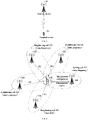
- FIG. 2 is a schematic diagram of a mobility measurement according to an embodiment of the present disclosure.
- the current system includes a terminal device 110 and a plurality of network devices 120 to 124. It is assumed that the terminal device is currently connected to the network device 120 (for example, in a radio resource control (RRC) connection mode), and operates in a serving cell 130 provided by the network device 120. Also, the terminal device 110 may be located within coverage areas of a group of neighboring cells 131 to 134 provided by the network devices 121 to 124, respectively.
- RRC radio resource control
- network devices 120 to 124 may implement the same or different radio access technologies, such as NR air interface, evolved universal terrestrial radio access (E-UTRA) air interface, universal terrestrial radio access network (UTRAN) air interface, global system for mobile communication (GSM) enhanced data rate for GSM evolution (EDGE) radio access network (GERAN) air interface and so on.
- E-UTRA evolved universal terrestrial radio access
- UTRAN universal terrestrial radio access network
- GSM global system for mobile communication
- EDGE enhanced data rate for GSM evolution
- GERAN radio access network
- Each of the network devices 120 to 124 can implement the functions of the next generation Node B (gNB), evolved Node B (eNodeB), Node B (NodeB), etc. specified by corresponding standards developed or maintained by the 3rd generation partnership project (3GPP).
- gNB next generation Node B
- eNodeB evolved Node B
- NodeB Node B
- 3GPP 3rd generation partnership project
- the terminal device 110 may be a device that communicates with the network devices 120 to 124 according to respective communication protocols corresponding to the wireless access technologies used by the respective network devices.
- the terminal device 110 may receive a set of measurement configurations from the serving cell 130, and the terminal device 110 performs the measurement procedure to measure the serving cell 130 and the neighboring cells 121 to 124, and transmits the measurement report to the network device 120.
- the network device 120 may transmit the measurement configuration to the terminal device 110 via RRC signaling.
- the measurement may be performed based on reference signals (RSs) transmitted by the network devices 121 to 124, or the measurement may also be performed based on the reference signal transmitted by the network device 120.
- RSs reference signals
- the reference signal may be a synchronization signal block (SSB), channel state information (CSI) reference signal, or the like.
- SSB synchronization signal block
- CSI channel state information
- the measurement configuration 141 may specify a group of measurement objects (MO).
- the measurement objects may be in units of frequency points, and each configured measurement object is an individual frequency point, and has an individual measurement object identification.
- the measurement object can be an individual E-UTRA carrier frequency.
- the measurement configuration 141 may also specify a set of measurement qualities to be measured corresponding to the MO.
- the measurement qualities include reference signal received power (RSRP), reference signal received quality (RSRQ), signal-to-noise and interference ratio (SINR), reference signal time difference (RSTD), etc.
- the intra-frequency measurement the inter-frequency measurement and inter-RAT measurement are described below in combination with FIG. 2 .
- the measurement can be defined as an SSB-based intra-frequency measurement.
- the measurement of the neighboring cell 131 can be determined as the intra-frequency measurement.
- the measurement can be defined as an SSB-based inter-frequency measurement.
- the measurement of the neighboring cell 133 can be determined as the inter-frequency measurement.
- the measurement performed on the neighboring cell 134 may be determined as an inter-RAT measurement.
- FIG. 3 is a first schematic diagram of a frequency point according to an embodiment of the present disclosure
- FIG. 4 is a second schematic diagram of a frequency point according to an embodiment of the present disclosure
- FIG. 5 is a schematic diagram of GAP configuration parameters according to an embodiment of the present disclosure.
- a terminal device has only one receiver, so it is only possible to receive signals on one frequency point at the same time.
- the terminal device can be configured with a measurement GAP.
- the measurement GAP is a time period during which the terminal device leaves the current frequency point to measure at another frequency point.
- the terminal device can tune its radio frequency (RF) circuit from the frequency point of the serving cell to the frequency of the target cell to perform cell search or measurement, and stop normal uplink and downlink data transmission on the serving cell in the corresponding frequency domain until the end of the measurement GAP.
- RF radio frequency
- the serving cell where the terminal device is currently located has the same carrier frequency point and bandwidth as the target cell.
- This scenario belongs to the intra-frequency measurement, and no measurement GAP needs to be configured in this case.
- the serving cell where the terminal device is currently located has the same carrier frequency point as the target cell, and the bandwidth of the target cell is smaller than the bandwidth of the current serving cell.
- This scenario also belongs to the intra-frequency measurement and no measurement GAP needs to be configured in this case.
- the serving cell where the terminal device is currently located has the same carrier frequency point as the target cell, and the bandwidth of the target cell is greater than the bandwidth of the current serving cell.
- This scenario also belongs to the intra-frequency measurement and no measurement GAP needs to be configured in this case.
- the serving cell where the terminal device is currently located has the same carrier frequency point as the target cell, but the terminal device is a narrowband device and cannot cover the bandwidth of the serving cell.
- the terminal device can operate on the bandwidth part (BWP) of the serving cell, and the BWP does not include the SSB indicated for measurement of the target cell.
- BWP bandwidth part
- This scenario also belongs to the intra-frequency measurement, but the measurement GAP needs to be configured.
- the carrier frequency point of the serving cell where the terminal device is currently located is different from the carrier frequency point of the target cell, the bandwidth of the target cell is smaller than the bandwidth of the current serving cell, and the bandwidth of the target cell is within the cell bandwidth of the current serving cell.
- This scenario belongs to the inter-frequency measurement, and the measurement GAP needs to be configured.
- the serving cell where the terminal device is currently located has a different carrier frequency point from that of the target cell, the bandwidth of the target cell is greater than the bandwidth of the current serving cell, and the bandwidth of the current serving cell is within the bandwidth of the target cell.
- This scenario belongs to the inter-frequency measurement and the measurement GAP needs to be configured.
- the serving cell where the terminal device is currently located and the target cell have different carrier frequency points, and the bandwidth of the target cell does not overlap with the bandwidth of the current serving cell.
- This scenario belongs to the inter-frequency measurement, and measurement GAP needs to be configured.
- the measurement GAP can be configured for the terminal device, that is, per-UE measurement gap; or, the measurement GAP can also be configured for the frequency range (FR), that is, per-FR measurement gap.
- the FR may include FR1 and FR2. The description of the configuration of per-UE/per-FR measurement GAP in the related protocol is attached below for reference.
- the parameters for the measurement GAP can include GAP pattern identification (GAP pattern id), measurement gap length (MGL), measurement gap repetition period (MGRP), and measurement gap offset (gap offset).
- GAP pattern id GAP pattern identification
- MNL measurement gap length
- MGRP measurement gap repetition period
- Gap offset measurement gap offset
- MGL is 6 ms.
- MGL represents the length of the measurement GAP, this means the terminal device needs to perform the intra-frequency measurement or the inter-frequency measurement within 6 ms, and data transmission cannot be performed on the current serving cell corresponding to the frequency point related to the measurement gap configuration.
- the measurement GAP whose gap mode identification is 1 has an MGRP with a value of 40 ms.
- MGRP represents the repetition period of the measurement gap, this means the measurement gap occurs every 40 ms.
- the gapOffset identifies an offset position of the repetition period of the measurement gap.
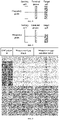
- FIG. 6 is a schematic diagram of a measurement GAP according to the embodiment of the present disclosure:
- the measurement gap shown in FIG. 6 can be obtained for example.
- the system frame number (SFN) is placed in the vertical axial direction, and the shaded part in FIG. 6 is where the measurement gap is located.
- FIG. 5 and FIG. 6 are for a single MG.
- the content provided in the present disclosure can also be applied to multiple MGs, whose implementation is similar to the implementation of the single MG.
- the measurement configuration may further include or indicate a set of synchronization signal block-based RRM measurement timing configurations (SMTC) for measurement.
- SMTC synchronization signal block-based RRM measurement timing configurations
- Each SMTC includes a set of parameters that define a series of measurement windows (referred to as SMTC occasions or SMTC window durations) for measuring the frequency point on which neighboring cell operates.
- the parameters of SMTC include the period of the measurement window sequence, the window duration and the offset.
- the terminal device can determine the timing of the measurement window sequence. By indicating SMTC, the measurement of the terminal device on each cell is restricted to a specific series of monitoring occasions.
- the window duration of the SMTC takes a value from ⁇ 5 ms, 10 ms, 20 ms, 40 ms, 80 ms, 160 ms ⁇ .
- FIG. 7 is a schematic diagram of an SMTC according to an embodiment of the present disclosure.
- FIG. 7 shows a schematic diagram of the configurations of an MG and two SMTCs of an MO.
- the network device configures two SMTCs for the same MO, which are SMTC1 and SMTC2 respectively, having the same SMTC offset and length (such as 5 ms). It is assumed that the period of SMTC 1 is 20 ms and the period of SMTC2 is 10 ms.
- the network device configures the MG with a period of 20 ms and with a length of 6 ms.
- the measurement gap can cover all SMTC windows of SMTC1 for the MO and some of SMTC windows of SMTC2 for the MO.
- the to-be-measured SSB of the target cell is within the frequency range of the BWP of the serving cell, so measurement can be performed for the neighboring cell without the measurement GAP.
- the measurement of the target cell is performed within the configured GAP and shares the configured GAP with the measurement of another target cell based on the same group of GAPs.
- MG sharing is introduced. Specifically, in Release 15/16, MG sharing is designed to coordinate MG resource allocation between NR intra-frequency MO and inter-frequency MO.
- the configured measurement GAP being per UE is taken as an example for description of gap sharing (measurement GAP sharing of per-FR1 or per FR2 is similar).
- the two parties sharing MG resources are as follows.
- the configured measurement GAP being per UE is taken as an example for description of the gap sharing (the measurement GAP sharing of per-FR1 or per FR2 is similar).
- the two parties sharing MG resources are as follows.
- the network device may configure 2-bit measurement gap sharing information (measGapSharingScheme) to indicate the respective sharing proportions for the sharing parties.
- 2-bit measurement gap sharing information measGapSharingScheme
- the configuration of measGapSharingScheme can include the following three types: gap Sharing FR1, gap Sharing FR2 and gap Sharing UE.
- measGapSharingScheme can be as shown in Table 1 below.
- Table 1 measGapSharingScheme Value of X (%) 00 Equally divided 01 25 10 50 11 75
- the 2-bit measGapSharingScheme can have 4 values. Each value corresponds to its own value of X.
- the value of X indicates the proportion of GAP resource occupied by the first party of the two parties sharing GAP resources.
- the two parties currently sharing GAP resources are the MO of the NR intra-frequency measurement and the MO of the NR inter-frequency measurement.
- the network configures the value of measGapSharingScheme as 01, it means that the MO of the NR intra-frequency measurement can occupy 25% of the GAP resources, and the NR inter-frequency measurement can occupy 75% of the GAP resources.
- the network configures the value of measGapSharingScheme as 00, it means that the Gap resources needs to be equally divided between individual MOs of the intra-frequency measurement, the inter-frequency measurement and the E-UTRA measurement.
- the measurement time length that needs to be scaled can be determined by X introduced above.
- the current value of measGapSharingScheme is 01, which means that the value of X is 25. That is to say, the intra-frequency measurement occupies 25% of GAP resources.
- Kintra is 4, which indicates that the measurement time length of the intra-frequency measurement is extended by 4 times.
- the value of X is 25, which indicates that the inter-frequency measurement occupies 75% of the GAP resources.
- Kinter is 4/3, which indicates that the measurement time length of the intra-frequency is extended by 4/3 times.
- the Gap sharing mechanism will have an impact on the measurement time.
- the intra-frequency measurement or the inter-frequency measurement it will be converted into Kinta and Kinter according to the sharing proportion, which is applied as the scaling of the intra-frequency measurement time or the inter-frequency measurement time.
- the MO statistics for SA and EN-DC will affect the measurement scaling (CSSF).
- the difference also lies in whether the MO statistics for non-intra-frequency measurement include for E-UTRA, UTRA, and GSM of inter-RAT.
- Gapsharing and M inter,ij in SA mode do not consider the inter-RAT measurement except E-UTRA.
- Their influence on the measurement scaling time is reflected as a carrier-level scaling factor, which is superimposed on the intra-frequency or inter-frequency measurement time.
- the MG sharing mechanism is designed to coordinate MG resource allocation between MO of the intra-frequency measurement and MO the inter-frequency measurement.
- the MG sharing mechanism is designed to coordinate MG resource allocation between MO of the intra-frequency measurement and MO the inter-frequency measurement.
- some operators proposed to further improve the existing MG sharing mechanism, to give priority to the measurement of certain standard networks, such as the measurement of the LTE network in EN-DC mode, or for Voice, such as the measurement of 2G network or 3G network in circuit switched fallback (CSFB) voice.
- CSFB circuit switched fallback
- the 2G/3G voice fallback service of some 4G LTE networks is still very important.
- the 2G/3G voice fallback service is crucial.
- bit length of the signaling indicating the sharing proportion is only 2 bits, it means that only 4 allocation proportions can be indicated, so it cannot meet the diverse needs of all networks or operators for measurement priorities.
- the present disclosure proposes the following technical concept: by enhancing the MG sharing mechanism and signaling, the network operator is provided with higher flexibility to give priority to the measurement of any desired RAT and to satisfy flexible mobile services need.
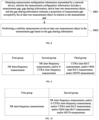
- FIG. 8 is a flowchart of a communication method according to an embodiment of the present disclosure.
- the method includes the following actions.
- measurement configuration information transmitted by a network device is obtained.
- the measurement configuration information includes a measurement gap, gap sharing information, and at least one measurement object.
- the gap sharing information indicates a proportion of measurement gap occupied by the at least one measurement object in relation to the measurement gap.
- the terminal device can obtain the measurement configuration information.
- the measurement configuration information transmitted by the network device in the current serving cell may be obtained, so as to perform the mobility measurement on each neighboring cell.
- the measurement configuration information may include the measurement gap.
- the measurement gap may include, for example, the MGL, MGRP, gap offset and other information introduced in the foregoing embodiment. Repetition will not be made here for the specific configuration method of the measurement gap.
- the measurement configuration information may further include at least one measurement object (MO).
- MO measurement object
- the configuration information in this embodiment may also include gap sharing information.
- the gap sharing information may be, for example, the measGapSharingScheme introduced in the foregoing embodiment.
- the gap sharing information may indicate the proportion of the measurement gap occupied by each measurement object.
- the gap sharing information indicates the proportion of measurement gap occupied by the at least one measurement object in relation to the measurement gap.
- the gap sharing information is at least two bits. In a possible implementation, when the gap sharing information is 2 bits, it can indicate 4 different proportions; when the gap sharing information is 3 bits, it can indicate 8 different proportions, and so on. Therefore, in this embodiment, by increasing the bits of the gap sharing information, it can effectively improve the configurability of the sharing proportion.
- a mobility measurement is performed on the at least one measurement object in the measurement gap based on the gap sharing information.
- each measurement object corresponds to its own type.
- there may be measurement objects of the inter-frequency and there may also be measurement objects of the intra-frequency.
- the type of the measurement object can be any of: the NR intra-frequency measurement, the NR inter-frequency measurement, the E-UTRA inter-frequency measurement, the UTRA inter-RAT measurement, the GSM inter-RAT measurement, or the reference signal time difference (RSTD) measurement.
- RSTD reference signal time difference
- the types of measurement objects mentioned above may be grouped, so as to determine that the measurement GAP resources are shared by the measurement objects corresponding to the types included in each group.
- a group corresponding to one of the at least one measurement object may be determined based on a measurement type to which the one of the at least one measurement object belongs.
- the gap sharing information indicates the proportion of the measurement gap occupied by measurements included in each group.
- the first group includes the NR intra-frequency measurement
- the second group includes the NR inter-frequency measurement, the E-UTRA inter-frequency measurement, the UTRA inter-RAT measurement, the GSM inter-RAT measurement, and the RSTD measurement.
- the measurement configuration information indicates three measurement objects, namely, measurement object X, measurement object Y, and measurement object Z. It is assumed that the type of measurement object X is the NR intra-frequency measurement, the type of measurement object Y is the NR inter-frequency measurement, and the type of measurement object Z is the GSM inter-RAT measurement.
- the proportions indicated by the current gap sharing information are that the first group occupies 25% and the second group occupies 75%.
- the mobility measurement can be performed on the measurement objects in the measurement GAP according to the proportion of the measurement GAP resource occupied by each measurement object respectively.
- the gap sharing information in this embodiment is at least two bits, so it can indicate a variety of different sharing proportions, so as to configure the measurement priorities of various requirements according to different sharing proportions, which effectively meets the diverse requirements of various networks or operators for measurement priorities.
- the communication method includes obtaining the measurement configuration information transmitted by the network device.
- the measurement configuration information includes the measurement gap, the gap sharing information, and the at least one measurement object, and the gap sharing information indicates the proportion of measurement gap occupied by the at least one measurement object in relation to the measurement gap.
- the mobility measurement is performed on the at least one measurement object in the measurement gap.
- the gap sharing information indicating a variety of different sharing proportions for the measurement gap occupied by at least one measurement object, the measurement priorities of various requirements can be configured according to the sharing proportions so that the mobility measurement can be performed on each measurement object, thereby effectively meeting diverse requirements of the network or operator for measurement priorities.
- the types of the measurement objects may be divided into M groups, where M is an integer greater than or equal to 2. That is to say, the types of the measurement objects are divided into at least 2 groups.
- the types of the measurement objects can be divided into 3 groups, namely, a first group, a second group and a third group.
- the types of the measurement objects included in each group may be as shown in FIG. 9 , which is a first schematic diagram of groups according to an embodiment of the present disclosure.
- the first group includes the NR intra-frequency measurement
- the second group at least includes one of: the NR inter-frequency measurement, or the E-UTRA inter-frequency measurement
- the third group at least includes one of: the UTRA inter-RAT measurement, the GSM inter-RAT measurement, or the RSTD measurement.
- the gap sharing information may indicate the sharing proportion corresponding to each group.
- the gap sharing information has N bits indicating a first proportion of the measurement GAP resource occupied by the at least one measurement object, and the first proportion has 2 N options.
- N 2, which means that the gap sharing information has 2 bits, and there are 4 ways to implement the first proportion, as shown for example in the following table 2.
- Table 2 Gap sharing information Value of X (%) Value of Y (%) Value of Z (%) 00 Equally divided 01 25 50 25 10 50 25 25 11 75 25 0
- X represents the sharing proportion of the first group
- Y represents the sharing proportion of the second group
- Z represents the sharing proportion of the third group.
- the measurement objects of the first group, the second group and the third group equally divide the measurement GAP resources; when the gap sharing information is 01, the measurement objects of the first group occupy 25% of the measurement GAP resources, the measurement objects of the second group occupy 50% of the measurement GAP resources, and the measurement objects of the third group occupy 25% of the measurement GAP resources; etc.
- the current gap sharing information has 2 bits, and then the first proportion has 4 options, namely "equally divided”, “25%, 50%, 25%”, “50%, 25%, 25%”, and "75%, 20%, 0%”.
- the first proportion has 8 options, and so on.
- the implementation method is similar to that described above, and will not be repeated here.
- the various values of the first proportion can also be selected according to actual needs.
- the gap sharing information has a first bit indicating activating no sharing of the measurement gap for a measurement object in a predetermined group, and remaining bits of the gap sharing information other than the first bit indicate a second proportion of measurement gap occupied by measurement objects in each remaining one of the M groups other than the predetermined group in relation to the measurement gap.
- the second proportion has 2 N -1 options, and the predetermined group is one or more of the M groups.
- N 3, which means that the gap sharing information has 3 bits, and there are 4 ways to implement the second proportion, as shown for example in the following table 3.
- X represents the sharing proportion of the first group
- Y represents the sharing proportion of the second group
- Z represents the sharing proportion of the third group.
- the current predetermined group is the third group
- the first bit of the gap sharing information is 0, which indicates activating no sharing of the measurement gap for the measurement object in the predetermined group. That is to say, no measurement gap sharing is activated for the third group, and the measurement gap resources are shared only between the first group and the second group.
- the remaining bits of the gap sharing information other than the first bit indicate the second proportion of the measurement gap occupied respectively by the measurement objects of the first group and the measurement objects of the second group.
- the second proportion has 4 options.
- the measurement objects of the first group and the second group equally divide the measurement GAP resources; when the gap sharing information is 001, the measurement objects of the first group occupy 25% of the measurement GAP resources, the measurement objects of the second group occupy 75% of the measurement GAP resources; etc...
- the second proportion has 4 options, namely "equally divided”, “25%, 75%”, “50%, 50%”, and "75%, 25%”.
- the second proportion has 8 options, and so on.
- the implementation method is similar to that described above, and will not be repeated here.
- the various values of the second proportion can also be selected according to actual needs.
- the gap sharing information has a first bit indicating activating sharing of the measurement gap for a measurement object in a predetermined group, and remaining bits of the gap sharing information other than the first bit indicate a third proportion of measurement gap occupied by measurement objects in each remaining one of the M groups other than the predetermined group in relation to measurement gap.
- the third proportion has 2 N -1 options, and the predetermined group is one or more of the M groups.
- N 3, which means that the gap sharing information has 3 bits, and there are 4 ways to implement the third proportion, as shown for example in the following table 4.
- Table 4 Gap sharing information Value of X (%) Value of Y (%) Value of Z (%) 100 Equally divided 101 25 50 25 110 50 25 25 111 75 25 0
- X represents the sharing proportion of the first group
- Y represents the sharing proportion of the second group
- Z represents the sharing proportion of the third group.
- the current predetermined group is the third group
- the first bit of the gap sharing information is 1, which indicates activating sharing of the measurement gap for the measurement object in the predetermined group. That is, the first group, the second group and the third group currently share the measurement GAP resources.
- the remaining bits of the gap sharing information other than the first bit indicate the third proportion of the measurement gap occupied respectively by the measurement objects of the first group, the measurement objects of the second group, and the measurement objects of the third group.
- the third proportion has 4 options.
- the measurement objects of the first group, the second group and the third group equally divide the measurement GAP resources; when the gap sharing information is 101, the measurement objects of the first group occupy 25% of the measurement GAP resources, the measurement objects of the second group occupy 50% of the measurement GAP resources, and the measurement objects of the third group occupy 25% of the measurement GAP resources; etc.
- the third proportion has 4 options, namely "equally divided”, “25%, 50%, 25%”, “50%, 25%, 25%”, and "75%, 20%, 0%”.
- the third proportion has 8 options, and so on.
- the implementation method is similar to that described above, and will not be repeated here.
- the various values of the third proportion can also be selected according to actual needs.
- the division of the first group, the second group, and the third group may also be implemented in other forms.
- the first group includes the NR intra-frequency measurement
- the second group at least includes the NR inter-frequency measurement
- the third group at least includes one of: the E-UTRA inter-frequency measurement, the UTRA inter-RAT measurement, the GSM inter-RAT measurement, or the RSTD measurement.
- the specific implementation method is similar to that described above, but the division of the first group, the second group and the third group is different.
- the specific division of the first group, the second group and the third group can be selected according to actual needs, which is not limited in this embodiment.
- the groups may further include, for example, a fourth group, etc.
- This embodiment does not limit the specific implementation of the groups, and any possible groups may be formed by division according to actual needs.
- the measurement objects included in the second group cannot implement individual sharing proportion designation to designate the corresponding priority.
- the communication method according to the embodiment of the present disclosure can support the sharing between the measurements of any RAT, especially the measurement required for the 2G/3G voice fallback service of inter-RAT, thereby supporting the network to allocate any RAT measurement priority.
- the groups according to this embodiment of the present disclosure may also include only two groups.
- the types of measurement objects can be divided into two groups, which include a first group and a second group.
- the type of the measurement object included in each group may be as shown in FIG. 10 , which is a second schematic diagram of groups according to an embodiment of the present disclosure.
- the first group includes the NR intra-frequency measurement
- the second group at least includes one of: the NR inter-frequency measurement, the E-UTRA inter-frequency measurement, the UTRA inter-RAT measurement, the GSM inter-RAT measurement, or the RSTD measurement.
- the gap sharing information may indicate the sharing proportion corresponding to each group.
- the gap sharing information has N bits indicating a fourth proportion of the measurement gap occupied by the measurement objects of each group.
- the fourth proportion has 2 N options.
- N 2, which means that the gap sharing information has 2 bits, and there are 4 ways to implement the fourth proportion, as shown for example in the following table 5.
- Table 5 Gap sharing information Value of X (%) 00 Equally divided 01 25 10 50 11 75
- X represents the sharing proportion of the first group
- 1-X is the sharing proportion of the second group by default.
- the measurement objects of the first group and the second group equally divide the measurement GAP resources; when the gap sharing information is 01, the measurement objects of the first group occupy 25% of the measurement GAP resources, and the measurement objects of the second group occupies 75% of the measurement GAP resources; etc.
- the fourth proportion has 4 options, namely, "equally divided”, “25%, 75%”, “50%, 50%”, and "75%, 25%”.
- N 3, which indicates that the gap sharing information has 3 bits, and there are 8 ways to implement the fourth proportion, as shown for example in the following Table 6.
- Table 6 Gap sharing information Value of X (%) 000 Equally divided 001 12.5 010 25 011 37.5 100 50 101 62.5 110 75 111 87.5
- X represents the sharing proportion of the first group, and by default 1-X is the sharing proportion of the second group.
- the measurement objects of the first group and the second group divide the measurement GAP resources equally; when the gap sharing information is 001, the measurement objects of the first group occupy 12.5% of the measurement GAP resources, and the measurement objects of the second group occupy 87.5% of the measurement GAP resources; etc.
- the fourth proportion has 48 options, namely "equally divided”, “ 12.5%, 87.5%”, “25%, 75%”, “37.5%”, 62.5%”, “50%, 50%", "62.5%, 37.5%”, “75%, 25%”, and "87.5%, 12.5%”.
- the fourth proportion has 16 options, and so on.
- the implementation method is similar to that described above, and will not be repeated here.
- the various values of the first proportion can also be selected according to actual needs.
- the terminal device determines which measurement gap sharing scheme in the table is to be applied.
- the communication method further includes: transmitting measurement capability information to the network device.
- the measurement capability information indicates whether the terminal device supports a first measurement capability, and the first measurement capability indicates that the terminal performs the mobility measurement on at least one measurement object based on the gap sharing information.
- the measurement capability information may be transmitted to the network device to determine whether the terminal device can perform the mobility measurement on at least one measurement object based on the gap sharing information.
- the capability reporting information may be, for example, 1-bit information, or another number of bits of information, which is not limited in this embodiment.
- the terminal device may continue to use the existing sharing mechanism.
- the terminal device may preset a proportion for the measurement gap to perform the mobility measurement on the at least one measurement object.
- the preset proportion may be, for example, 10%, which indicates that the mobility measurement is performed on the at least one measurement object based on 10% of the measurement GAP resources.
- the terminal device may perform the mobility measurement on the at least one measurement object based on the first measurement capability.
- the terminal device may reserve a proportion of the measurement GAP resources indicated by the network device for a predetermined group. For example, if the network device indicates that 10% of the measurement GAP resources is reserved for the predetermined group, it means that 10% of the measurement GAP resources is allocated to the predetermined group for mobility measurement; and the remaining 90% of the measurement GAP resources is for groups other than the predetermined group, that is, the original sharing proportions for the groups other than the predetermined group need to be multiplied by 90%.
- the network device defaults the terminal device as a rel-15 terminal device, that is, the terminal device does not support the enhanced gap sharing solution according to the present disclosure.
- the network device can determine whether the terminal device supports the measurement capability for UTRA or GSM of inter-RAT based on the capability reporting indication of the terminal device or the terminal device identification, so as to determine whether the newly enhanced gap sharing mechanism can be configured for terminal devices with different capabilities or implementations.
- the network device can transmit the measurement configuration information to the terminal device.
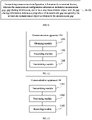
- the communication method on the network device side is described below with reference to FIG. 11 .
- FIG. 11 is a flowchart of a communication method according to another embodiment of this disclosure.
- the method includes, at SI 101, transmitting measurement configuration information to a terminal device.
- the measurement configuration information includes a measurement gap, gap sharing information, and at least one measurement object.
- the gap sharing information indicates a proportion of measurement gap occupied by the at least one measurement object in relation to the measurement gap.
- the measurement configuration information is the same as that described in the foregoing embodiment, and the implementation of the measurement configuration information will not be repeated here.
- the specific implementation may be learned by referring to the content in the foregoing embodiment.
- the communication method includes transmitting the measurement configuration information to the terminal device.
- the measurement configuration information includes a measurement gap, gap sharing information, and at least one measurement object.
- the gap sharing information indicates the proportion of measurement gap occupied by the at least one measurement object in relation to the measurement gap.
- the measurement configuration information is transmitted by the network device, so that various sharing proportions for the measurement gap occupied by the at least one measurement object can be indicated by the gap sharing information. In this way, measurement priorities of various requirements can be configured based on different sharing proportions, to perform the mobility measurement on each measurement object, which can effectively meet the diverse needs of various networks or operators for measurement priorities.
- FIG. 12 is a first schematic structural diagram of a communication apparatus according to an embodiment of the present disclosure.
- the communication apparatus 120 may include an obtaining module 1201, a processing module 1202 and a transmitting module 1203.
- the obtaining module 1201 is configured to obtain measurement configuration information transmitted by a network device.
- the measurement configuration information includes a measurement gap, gap sharing information and at least one measurement object, and the gap sharing information indicates a proportion of measurement gap occupied by the at least one measurement object in relation to the measurement gap.
- the processing module 1202 is configured to perform a mobility measurement on the at least one measurement object in the measurement gap based on the gap sharing information.
- the processing module 1102 is further configured to: determine a group corresponding to one of the at least one measurement object based on a measurement type to which said one of the at least one measurement object belongs.
- the measurement type includes any one of: a New Radio (NR) intra-frequency measurement, an NR inter-frequency measurement, an Evolved Universal Terrestrial Radio Access (E-UTRA) inter-frequency measurement, a Universal Terrestrial Radio Access (UTRA) inter-Radio Access Technology (RAT) measurement, a Global System For Mobile Communication (GSM) inter-RAT measurement, or a Reference Signal Time Difference (RSTD) measurement.
- NR New Radio
- E-UTRA Evolved Universal Terrestrial Radio Access
- UTRA Universal Terrestrial Radio Access
- RAT Global System For Mobile Communication
- GSM Global System For Mobile Communication
- RSTD Reference Signal Time Difference
- the gap sharing information includes N bits of information, where N is an integer greater than or equal to 2.
- the processing module 1102 is specifically configured to: determine, based on the gap sharing information and a group corresponding to each of the at least one measurement object, the proportion of measurement gap occupied by the at least one measurement object in relation to the measurement gap; and perform the mobility measurement on the at least one measurement object in the measurement gap, based on the proportion of measurement gap occupied by the at least one measurement object in relation to the measurement gap.
- the transmitting module 1203 is configured to transmit measurement capability information to a network device.
- the indication information indicates whether the terminal device supports a first measurement capability.
- the first measurement capability indicates that the terminal performs the mobility measurement on the at least one measurement object based on the gap sharing information.
- the processing module 1102 is further configured to: perform the mobility measurement on the at least one measurement object, based on a measurement gap with a predetermined proportion.
- the processing module 1102 is further configured to: perform the mobility measurement on the at least one measurement object based on the first measurement capability.
- the group is one of M groups, where M is an integer greater than or equal to 2.
- the groups at least include a first group, a second group and a third group.
- the first group includes an NR intra-frequency measurement
- the second group at least includes one of: an NR inter-frequency measurement or an E-UTRA inter-frequency measurement
- the third group at least includes one of: a UTRA inter-RAT measurement, a GSM inter-RAT measurement, or an RSTD measurement.
- the first group includes an NR intra-frequency measurement
- the second group at least includes an NR inter-frequency measurement
- the third group at least includes one of: an E-UTRA inter-frequency measurement, a UTRA inter-RAT measurement, a GSM inter-RAT measurement, or an RSTD measurement.
- the gap sharing information has N bits indicating a first proportion of measurement gap occupied by the at least one measurement object in relation to the measurement gap, where the first proportion has 2 N options.
- the gap sharing information has a first bit indicating activating no sharing of the measurement gap for a measurement object in a predetermined group, and remaining bits of the gap sharing information other than the first bit indicate a second proportion of measurement gap occupied by measurement objects in each remaining one of the M groups other than the predetermined group in relation to the measurement gap.
- the second proportion has 2 N-1 options, and the predetermined group is one or more of the M groups.
- the gap sharing information has a first bit indicating activating sharing of the measurement gap for a measurement object in a predetermined group, and remaining bits of the gap sharing information other than the first bit indicate a third proportion of measurement gap occupied by measurement objects in each remaining one of the M groups other than the predetermined group in relation to the measurement gap.
- the third proportion has 2 N- 1 options, and the predetermined group is one or more of the M groups.
- the groups at least include a first group and a second group.
- the first group includes an NR intra-frequency measurement
- the second group at least includes one of: an NR inter-frequency measurement, an E-UTRA inter-frequency measurement, a UTRA inter-RAT measurement, a GSM inter-RAT measurement, or an RSTD measurement.
- the gap sharing information has N bits indicating a fourth proportion of measurement gap occupied by the at least one measurement object in relation to the measurement gap, where the fourth proportion has 2 N options.
- the communication apparatus can implement the technical solutions shown in the foregoing method embodiments, and has similar implementation principles and beneficial effects, and details thereof are not repeated here.
- FIG. 13 is a second schematic structural diagram of a communication apparatus according to an embodiment of the present disclosure.
- the communication apparatus 130 may include a transmitting module 1301, a processing module 1302 and a receiving module 1303.
- the transmitting module 1301 is configured to transmit measurement configuration information to a terminal device.
- the measurement configuration information includes a measurement gap, gap sharing information and at least one measurement object, and the gap sharing information indicates a proportion of measurement gap occupied by the at least one measurement object in relation to the measurement gap.
- the processing module 1302 is configured to determine a group corresponding to one of the at least one measurement object based on a measurement type to which said one of the at least one measurement object belongs.
- the measurement type includes any one of: a New Radio (NR) intra-frequency measurement, an NR inter-frequency measurement, an Evolved Universal Terrestrial Radio Access (E-UTRA) inter-frequency measurement, a Universal Terrestrial Radio Access (UTRA) inter-Radio Access Technology (RAT) measurement, a Global System For Mobile Communication (GSM) inter-RAT measurement, or a Reference Signal Time Difference (RSTD) measurement.
- NR New Radio
- E-UTRA Evolved Universal Terrestrial Radio Access
- UTRA Universal Terrestrial Radio Access
- RAT Global System For Mobile Communication
- GSM Global System For Mobile Communication
- RSTD Reference Signal Time Difference
- the gap sharing information includes N bits of information, where N is an integer greater than or equal to 2.
- the receiving module 1303 is configured to receive measurement capability information from the terminal device.
- the measurement capability information indicates whether the terminal device supports a first measurement capability, and the first measurement capability indicates that the terminal performs the mobility measurement on the at least one measurement object based on the gap sharing information.
- the transmitting module 1301 is further configured to: indicate a predetermined proportion to the terminal device, for the terminal device to perform the mobility measurement on the at least one measurement object based on a measurement gap with the predetermined proportion.
- the group is one of M groups, where M is an integer greater than or equal to 2.
- the groups at least include a first group, a second group and a third group.
- the first group includes an NR intra-frequency measurement
- the second group at least includes one of: an NR inter-frequency measurement or an E-UTRA inter-frequency measurement
- the third group at least includes one of: a UTRA inter-RAT measurement, a GSM inter-RAT measurement, or an RSTD measurement.
- the first group includes an NR intra-frequency measurement
- the second group at least includes an NR inter-frequency measurement
- the third group at least includes one of: an E-UTRA inter-frequency measurement, a UTRA inter-RAT measurement, a GSM inter-RAT measurement, or an RSTD measurement.
- the gap sharing information has N bits indicating a first proportion of measurement gap occupied by the at least one measurement object in relation to the measurement gap, where the first proportion has 2 N options.
- the gap sharing information has a first bit indicating activating no sharing of the measurement gap for a measurement object in a predetermined group, and remaining bits of the gap sharing information other than the first bit indicate a second proportion of measurement gap occupied by measurement objects in each remaining one of the M groups other than the predetermined group in relation to the measurement gap.
- the second proportion has 2 N -1 options.
- the predetermined group is one or more of the M groups.
- the gap sharing information has a first bit indicating activating sharing of the measurement gap for a measurement object in a predetermined group, and remaining bits of the gap sharing information other than the first bit indicate a third proportion of measurement gap occupied by measurement objects in each remaining one of the M groups other than the predetermined group in relation to the measurement gap.
- the third proportion has 2 N-1 options.
- the predetermined group is one or more of the M groups.
- the groups at least include a first group and a second group.
- the first group includes an NR intra-frequency measurement
- the second group at least includes one of: an NR inter-frequency measurement, an E-UTRA inter-frequency measurement, a UTRA inter-RAT measurement, a GSM inter-RAT measurement, or an RSTD measurement.
- the gap sharing information has N bits indicating a fourth proportion of measurement gap occupied by the at least one measurement object in relation to the measurement gap.
- the fourth proportion has 2 N options.
- FIG. 14 is a schematic structural diagram of a terminal device according to an embodiment of the present disclosure.
- the terminal device 140 may include a transceiver 21, a memory 22, and a processor 23.
- the transceiver 21 may include a transmitter and/or a receiver.
- the transmitter can also be referred to as a sender, a transmitting device, a transmitting port, a transmitting interface or the like, and the receiver can also be referred to as a receiving device, a receiving apparatus, a receiving port, a receiving interface or the like.
- the transceiver 21, the memory 22, and the processor 23 are connected to each other through a bus 24.
- the memory 22 stores program instructions.
- the processor 23 is configured to execute the program instructions stored in the memory to cause the terminal device 140 to implement any of the communication methods described above.
- the receiver of the transceiver 21 can be configured to perform the receiving function of the terminal device in the above-mentioned communication methods.
- FIG. 15 is a schematic structural diagram of a network device according to an embodiment of the present disclosure.
- the network device 150 may include a transceiver 21, a memory 22, and a processor 23.
- the transceiver 21 may include a transmitter and/or a receiver.
- the transmitter can also be referred to as a sender, a transmitting device, a transmitting port, a transmitting interface or the like, and the receiver can also be referred to as a receiving device, a receiving apparatus, a receiving port, a receiving interface or the like.
- the transceiver 21, the memory 22, and the processor 23 are connected to each other through a bus 24.
- the memory 22 stores program instructions.
- the processor 23 is configured to execute the program instructions stored in the memory to cause the network device 150 to implement any of the communication methods described above.
- the receiver of the transceiver 21 can be configured to perform the receiving function of the network device in the above-mentioned communication methods.
- An embodiment of the present disclosure provides a computer-readable storage medium having computer-executable instructions stored thereon.
- the computer-executable instructions when executed by a processor, implement the above-mentioned communication methods.
- An embodiment of the present disclosure provides a computer-readable storage medium having computer-executable instructions stored thereon.
- the computer-executable instructions when executed by a processor, implement the above-mentioned communication methods.
- An embodiment of the present disclosure provides a computer program product, which can be executed by a processor.
- the computer program product when executed by the processor, implements any one of the above-described communication methods performed by the terminal device.
- the communication device, computer-readable storage medium, and computer program product according to embodiments of the present disclosure can be configured to perform the above-described communication methods performed by the terminal device. Specific implementations and beneficial effects can be found in the above descriptions, and repeated descriptions will be omitted here.
- the disclosed systems, devices and methods may be implemented in other ways.
- the apparatus embodiments described above are merely illustrative.
- the division of the units is only a kind of logical function division. In practice, other division manner may be used.
- multiple units or components may be combined or integrated into another system, or some features may be ignored or not performed.
- the illustrated or discussed mutual coupling or direct coupling or communication connection may be indirect coupling or communication connection through some interfaces, devices or units, and may be in electrical, mechanical or other forms.
- the units described as separated parts may or may not be physically separated, and the parts displayed as units may or may not be physical units, that is, the units may be located in one place, or may be distributed over multiple network units. Some or all of the units may be selected according to actual needs to achieve the objectives of the solutions in the embodiments.
- the functional units in the embodiments of the present disclosure may be integrated in one processing unit, or the units may exist alone physically, or two or more units may be integrated in one unit.
- the integrated unit may be implemented in a hardware form, or may be implemented in a form of software functional units.
- the aforementioned computer programs can be stored in a computer readable storage medium. When executed by a processor, the computer programs perform the actions in the foregoing method embodiments.
- the storage medium includes: ROM, RAM, magnetic disk, or optical disk or other medium that can store program codes.
Landscapes
- Engineering & Computer Science (AREA)
- Computer Networks & Wireless Communication (AREA)
- Signal Processing (AREA)
- Mobile Radio Communication Systems (AREA)
Applications Claiming Priority (1)
| Application Number | Priority Date | Filing Date | Title |
|---|---|---|---|
| PCT/CN2020/085481 WO2021208111A1 (zh) | 2020-04-18 | 2020-04-18 | 通信方法及装置 |
Publications (2)
| Publication Number | Publication Date |
|---|---|
| EP4138437A1 true EP4138437A1 (de) | 2023-02-22 |
| EP4138437A4 EP4138437A4 (de) | 2023-06-28 |
Family
ID=78083909
Family Applications (1)
| Application Number | Title | Priority Date | Filing Date |
|---|---|---|---|
| EP20931252.9A Withdrawn EP4138437A4 (de) | 2020-04-18 | 2020-04-18 | Verfahren und vorrichtung zur kommunikation |
Country Status (4)
| Country | Link |
|---|---|
| US (1) | US20230047684A1 (de) |
| EP (1) | EP4138437A4 (de) |
| CN (1) | CN115398955A (de) |
| WO (1) | WO2021208111A1 (de) |
Families Citing this family (14)
| Publication number | Priority date | Publication date | Assignee | Title |
|---|---|---|---|---|
| US20220046444A1 (en) * | 2020-08-04 | 2022-02-10 | Qualcomm Incorporated | Measurement gap sharing between radio resource management and positioning reference signal measurements |
| WO2022133688A1 (zh) * | 2020-12-21 | 2022-06-30 | 北京小米移动软件有限公司 | 一种测量间隙的共享方法及装置 |
| AU2020484046B2 (en) * | 2020-12-31 | 2024-11-28 | Huawei Technologies Co., Ltd. | Measurement method, scheduling method, and related apparatus |
| US20220217562A1 (en) * | 2021-01-04 | 2022-07-07 | Mediatek Singapore Pte. Ltd. | Multiple Concurrent Gap Configuration |
| US12108291B2 (en) * | 2021-01-13 | 2024-10-01 | Apple Inc. | Systems and methods for measurement solutions for inter-RAT MO from LTE MN in EN-DC |
| CN115443676B (zh) * | 2021-04-01 | 2026-02-06 | 北京小米移动软件有限公司 | 测量间隔预配置处理方法、装置、通信设备及存储介质 |
| CN116017525A (zh) * | 2021-10-21 | 2023-04-25 | 华为技术有限公司 | 测量方法、测量配置方法以及相关通信装置 |
| CN117480806A (zh) * | 2021-10-25 | 2024-01-30 | 北京小米移动软件有限公司 | 一种传输能力指示信息的方法、装置、及可读存储介质 |
| WO2023123118A1 (zh) * | 2021-12-29 | 2023-07-06 | 北京小米移动软件有限公司 | 一种测量间隙Gap的配置方法和装置 |
| WO2023155202A1 (zh) * | 2022-02-21 | 2023-08-24 | 北京小米移动软件有限公司 | 测量方法和装置 |
| CN118120276A (zh) * | 2022-09-29 | 2024-05-31 | 北京小米移动软件有限公司 | 测量间隔配置方法以及装置、通信设备及存储介质 |
| US12683661B2 (en) * | 2022-10-31 | 2026-07-14 | Qualcomm Incorporated | CSI-RS inter-intra frequency measurements |
| WO2024108526A1 (zh) * | 2022-11-25 | 2024-05-30 | Oppo广东移动通信有限公司 | 无线通信的方法, 终端设备和网络设备 |
| WO2025152084A1 (zh) * | 2024-01-17 | 2025-07-24 | 北京小米移动软件有限公司 | 移动性测量方法、终端、网络设备、通信系统和存储介质 |
Family Cites Families (6)
| Publication number | Priority date | Publication date | Assignee | Title |
|---|---|---|---|---|
| CN102595475B (zh) * | 2011-01-06 | 2017-12-19 | 中兴通讯股份有限公司 | 一种上报测量能力的方法 |
| CN106921991A (zh) * | 2015-12-25 | 2017-07-04 | 联芯科技有限公司 | 双模双待终端空口资源分配方法及双模双待终端 |
| US10932147B2 (en) * | 2018-03-30 | 2021-02-23 | Mediatek Inc. | Gap-based cell measurement in wireless communication system |
| WO2019193125A1 (en) * | 2018-04-05 | 2019-10-10 | Telefonaktiebolaget Lm Ericsson (Publ) | Configurable sharing between intra- and inter-frequency measurements |
| CN110831034B (zh) * | 2018-08-09 | 2024-02-13 | 北京三星通信技术研究有限公司 | 信道测量方法及设备 |
| CN110944351B (zh) * | 2018-09-21 | 2021-12-24 | 维沃移动通信有限公司 | 一种测量配置方法、设备及系统 |
-
2020
- 2020-04-18 CN CN202080099723.5A patent/CN115398955A/zh active Pending
- 2020-04-18 WO PCT/CN2020/085481 patent/WO2021208111A1/zh not_active Ceased
- 2020-04-18 EP EP20931252.9A patent/EP4138437A4/de not_active Withdrawn
-
2022
- 2022-10-18 US US17/968,528 patent/US20230047684A1/en not_active Abandoned
Also Published As
| Publication number | Publication date |
|---|---|
| US20230047684A1 (en) | 2023-02-16 |
| EP4138437A4 (de) | 2023-06-28 |
| WO2021208111A1 (zh) | 2021-10-21 |
| CN115398955A (zh) | 2022-11-25 |
Similar Documents
| Publication | Publication Date | Title |
|---|---|---|
| US20230047684A1 (en) | Communication method and communication apparatus | |
| US11910257B2 (en) | Radio resource management (RRM) measurement for new radio (NR) network | |
| US12269761B2 (en) | Method for NR radio link monitoring (RLM) and evaluation period determination | |
| US11606706B2 (en) | Cell measurement in communication systems, related configuration and devices | |
| US10979925B2 (en) | Measurement timing configuration for CSI-RS | |
| CN113287339B (zh) | 用于早期测量配置的方法和装置 | |
| EP3890391A1 (de) | Verfahren und vorrichtung für rrm-messung | |
| KR102543810B1 (ko) | 무선 링크의 모니터링 방법, 단말기 디바이스 및 네트워크 디바이스 | |
| TWI738185B (zh) | 換手方法及使用者設備 | |
| US20240236750A1 (en) | Method and apparatus for measurement interval enhancement, terminal device, and network device | |
| WO2018228593A1 (en) | Radio resource managmenet (rrm) measurement for new radio (nr) network | |
| KR101858378B1 (ko) | 우선순위화된 셀 식별 및 측정 방법 | |
| EP2941087B1 (de) | Mehrträgerkommunikationsverfahren, -einrichtung und -vorrichtung | |
| US12114195B2 (en) | Communications method and apparatus | |
| CN115428554B (zh) | 测量方法及装置 | |
| WO2017186537A1 (en) | Standalone lte unlicensed mobility | |
| CN112655273A (zh) | 网络标识的显示方法、终端设备和网络设备 | |
| CN114040508A (zh) | 通信方法和装置 | |
| CN114208262B (zh) | 载波测量方法和装置 | |
| CN107211471B (zh) | 一种无线局域网络wlan的测量上报方法及相关设备 | |
| US20250142423A1 (en) | Wireless communication method, user equipment, and network device | |
| WO2019134072A1 (zh) | 一种信号传输方法及装置、计算机存储介质 |
Legal Events
| Date | Code | Title | Description |
|---|---|---|---|
| STAA | Information on the status of an ep patent application or granted ep patent |
Free format text: STATUS: THE INTERNATIONAL PUBLICATION HAS BEEN MADE |
|
| PUAI | Public reference made under article 153(3) epc to a published international application that has entered the european phase |
Free format text: ORIGINAL CODE: 0009012 |
|
| STAA | Information on the status of an ep patent application or granted ep patent |
Free format text: STATUS: REQUEST FOR EXAMINATION WAS MADE |
|
| 17P | Request for examination filed |
Effective date: 20221117 |
|
| AK | Designated contracting states |
Kind code of ref document: A1 Designated state(s): AL AT BE BG CH CY CZ DE DK EE ES FI FR GB GR HR HU IE IS IT LI LT LU LV MC MK MT NL NO PL PT RO RS SE SI SK SM TR |
|
| REG | Reference to a national code |
Ref country code: DE Ref legal event code: R079 Free format text: PREVIOUS MAIN CLASS: H04W0024020000 Ipc: H04L0005000000 |
|
| A4 | Supplementary search report drawn up and despatched |
Effective date: 20230530 |
|
| RIC1 | Information provided on ipc code assigned before grant |
Ipc: H04W 36/00 20090101ALI20230523BHEP Ipc: H04L 5/00 20060101AFI20230523BHEP |
|
| DAV | Request for validation of the european patent (deleted) | ||
| DAX | Request for extension of the european patent (deleted) | ||
| STAA | Information on the status of an ep patent application or granted ep patent |
Free format text: STATUS: THE APPLICATION HAS BEEN WITHDRAWN |
|
| 18W | Application withdrawn |
Effective date: 20231206 |