EP4138465A1 - Drahtloses roamingverfahren und -system - Google Patents
Drahtloses roamingverfahren und -system Download PDFInfo
- Publication number
- EP4138465A1 EP4138465A1 EP21788030.1A EP21788030A EP4138465A1 EP 4138465 A1 EP4138465 A1 EP 4138465A1 EP 21788030 A EP21788030 A EP 21788030A EP 4138465 A1 EP4138465 A1 EP 4138465A1
- Authority
- EP
- European Patent Office
- Prior art keywords
- roaming
- terminal
- wireless
- protocol
- information
- Prior art date
- Legal status (The legal status is an assumption and is not a legal conclusion. Google has not performed a legal analysis and makes no representation as to the accuracy of the status listed.)
- Pending
Links
Images


Classifications
-
- H—ELECTRICITY
- H04—ELECTRIC COMMUNICATION TECHNIQUE
- H04W—WIRELESS COMMUNICATION NETWORKS
- H04W48/00—Access restriction; Network selection; Access point selection
- H04W48/20—Selecting an access point
-
- H—ELECTRICITY
- H04—ELECTRIC COMMUNICATION TECHNIQUE
- H04B—TRANSMISSION
- H04B17/00—Monitoring; Testing
- H04B17/30—Monitoring; Testing of propagation channels
- H04B17/309—Measuring or estimating channel quality parameters
- H04B17/318—Received signal strength
-
- H—ELECTRICITY
- H04—ELECTRIC COMMUNICATION TECHNIQUE
- H04W—WIRELESS COMMUNICATION NETWORKS
- H04W24/00—Supervisory, monitoring or testing arrangements
- H04W24/08—Testing, supervising or monitoring using real traffic
-
- H—ELECTRICITY
- H04—ELECTRIC COMMUNICATION TECHNIQUE
- H04W—WIRELESS COMMUNICATION NETWORKS
- H04W36/00—Hand-off or reselection arrangements
- H04W36/34—Reselection control
- H04W36/38—Reselection control by fixed network equipment
-
- H—ELECTRICITY
- H04—ELECTRIC COMMUNICATION TECHNIQUE
- H04W—WIRELESS COMMUNICATION NETWORKS
- H04W48/00—Access restriction; Network selection; Access point selection
- H04W48/16—Discovering, processing access restriction or access information
-
- H—ELECTRICITY
- H04—ELECTRIC COMMUNICATION TECHNIQUE
- H04W—WIRELESS COMMUNICATION NETWORKS
- H04W8/00—Network data management
- H04W8/22—Processing or transfer of terminal data, e.g. status or physical capabilities
-
- H—ELECTRICITY
- H04—ELECTRIC COMMUNICATION TECHNIQUE
- H04W—WIRELESS COMMUNICATION NETWORKS
- H04W8/00—Network data management
- H04W8/26—Network addressing or numbering for mobility support
-
- H—ELECTRICITY
- H04—ELECTRIC COMMUNICATION TECHNIQUE
- H04W—WIRELESS COMMUNICATION NETWORKS
- H04W84/00—Network topologies
- H04W84/02—Hierarchically pre-organised networks, e.g. paging networks, cellular networks, WLAN [Wireless Local Area Network] or WLL [Wireless Local Loop]
- H04W84/10—Small scale networks; Flat hierarchical networks
- H04W84/12—WLAN [Wireless Local Area Networks]
Definitions
- the present application relates to the technical field of communications, and in particular to a wireless roaming method and system.
- Wireless roaming is a key technology of WLAN and an important basis for realizing the mobility of wireless terminals.
- the roaming of a wireless terminal is implemented based on wireless roaming protocols.
- the existing wireless roaming protocols include an 802.11k-based roaming protocol, an 802.11v-based roaming protocol, and an 802.11r-based roaming protocol.
- some wireless terminals may support the above three roaming protocols at the same time, and some wireless terminals may only support one or two of them.
- the routers in the prior art deal with this situation in a confusing way, and there is no clear roaming scheme, in this way, it may not be possible to realize the roaming of the wireless terminal by using the optimal roaming scheme of the wireless terminal, resulting in the situation of high roaming delay, high packet loss rate or disconnection during the wireless roaming process.
- the purpose of the embodiments of the present application is to provide a wireless roaming method and system, so as to reduce the situation of high roaming delay, high packet loss rate or disconnection during the roaming of the wireless terminal.
- the specific technical solutions are as follows.
- an embodiment of the present application provides a wireless roaming method, which is applied to a wireless access device AP and includes: acquiring terminal information of each wireless terminal of wireless terminals currently accessing the AP; wherein the terminal information at least includes an RSSI (Received Signal Strength Indication) value and an idle duration of the wireless terminal; determining a roaming terminal currently in an active state from the wireless terminals according to the RSSI value and the idle duration of each wireless terminal; determining, for each roaming terminal, wireless roaming protocols supported by the roaming terminal; wherein the wireless roaming protocols include an 802.11k-based roaming protocol, an 802.11r-based roaming protocol and an 802.11v-based roaming protocol; performing a roaming operation on the roaming terminal according to the wireless roaming protocols supported by the roaming terminal.
- the wireless roaming protocols include an 802.11k-based roaming protocol, an 802.11r-based roaming protocol and an 802.11v-based roaming protocol
- an embodiment of the present application provides a wireless roaming system, which includes an AP and wireless terminals accessing the AP; the AP is configured for acquiring terminal information of each wireless terminal of the wireless terminals; wherein the terminal information at least includes an RSSI (Received Signal Strength Indication) value and an idle duration of the wireless terminal; determining a roaming terminal currently in an active state from the wireless terminals according to the RSSI value and the idle duration of each wireless terminal; determining, for each roaming terminal, wireless roaming protocols supported by the roaming terminal; performing a roaming operation on the roaming terminal according to the wireless roaming protocols supported by the roaming terminal; wherein, the wireless roaming protocols include an 802.11k-based roaming protocol, an 802.11r-based roaming protocol, and an 802.11v-based roaming protocol.
- the wireless roaming protocols include an 802.11k-based roaming protocol, an 802.11r-based roaming protocol, and an 802.11v-based roaming protocol.
- an embodiment of the present application provides a wireless access device AP, including: a wireless transceiver, configured for receiving terminal information of each wireless terminal of wireless terminals currently accessing the AP; wherein the terminal information at least includes an RSSI (Received Signal Strength Indication) value and an idle duration of the wireless terminal; a processor, configured for determining a roaming terminal currently in an active state from the wireless terminals according to the RSSI value and the idle duration of each wireless terminal; determining, for each roaming terminal, wireless roaming protocols supported by the roaming terminal; wherein, the wireless roaming protocols include an 802.11k-based roaming protocol, an 802.11r-based roaming protocol, and an 802.11v-based roaming protocol; performing a roaming operation on the roaming terminal according to the wireless roaming protocols supported by the roaming terminal; a processor, configured for storing data during running of the AP.
- a wireless transceiver configured for receiving terminal information of each wireless terminal of wireless terminals currently accessing the AP; wherein the terminal information at least
- an embodiment of the present application provides a computer device, including a processor, a communication interface, a memory, and a communication bus, wherein the processor, the communication interface, and the memory communicate with each other through the communication bus; the memory is configured for storing computer programs; and the processor is configured for performing any one wireless roaming method in the present.
- an embodiment of the present application provides a computer-readable storage medium storing computer programs that, when executed by a processor, cause the processor to implement any one wireless roaming method in the present application.
- an embodiment of the present application provides a computer program product that, when running on a computer, cause the computer to implement any one wireless roaming method in the present application.
- the above at least one technical solution utilized by the embodiment of the present application can achieve the following beneficial effects:
- a roaming operation is performed on the roaming terminal according to the wireless roaming protocols supported by the roaming terminal.
- the most appropriate roaming protocol is adopted according to the roaming protocol supported by the roaming terminal to realize the roaming of the roaming terminal.
- the problem of roaming delay, packet loss or disconnection caused by selecting an inappropriate roaming protocol to realize the roaming of the roaming terminal can be avoided to the maximum extent, thereby improving the roaming experience of the user.
- an embodiment of the present application provides a wireless roaming method, which is used to realize the roaming of each of wireless terminals accessing an AP.
- the method is applied to the AP, that is, the execution subject of the method may be the AP, and specifically, may be a wireless roaming apparatus installed on the AP.
- FIG. 1 is a flowchart of a first implementation of a wireless roaming method according to an embodiment of the present application. The method shown in FIG. 1 at least includes the following steps.
- Step 102 acquiring terminal information of each wireless terminal of wireless terminals currently accessing an AP; wherein the terminal information at least includes an RSSI value and an idle duration of the wireless terminal.
- the above wireless terminals may be understood as terminals for performing wireless network connection.
- the terminals may be smart devices that can perform wireless network connection, such as a mobile phone, a computer, a tablet computer, and a camera, etc.
- the above idle duration may be understood as a duration during which the wireless terminal does not use the network to perform operations. Specifically, the above idle duration may be determined according to the duration during which the wireless terminal and the AP do not interact with each other for messages. In one example, the idle duration of the wireless terminal within a specified duration before the current time may be acquired, and in one example, the total idle duration of the wireless terminal after the wireless terminal is connected to the AP may be acquired. For example, in a specific implementation, when acquiring the terminal information of the wireless terminal A, if the wireless terminal A has not received a message from the AP or has not sent a message to the AP for 30 consecutive seconds up to now, it is determined that the idle duration of the wireless terminal A is 30 seconds. In the embodiment of the present application, it can be determined whether the wireless terminal is in an active state by the idle duration.
- the Received Signal Strength Indication (RSSI) value of the wireless terminal can represent the wireless signal strength of the wireless terminal. Therefore, the RSSI value of the wireless terminal can determine whether the wireless terminal is moving away from the currently connected AP.
- RSSI Received Signal Strength Indication
- the terminal information obtained in the above step 102 also includes a Media Access Control Address (MAC) of the wireless terminal.
- MAC Media Access Control Address
- the terminal information of a currently accessing wireless terminal (which may also be understood as a currently online wireless terminal) may be periodically acquired.
- the specific length of the above period may be set according to an actual application scenario, which is not limited in this embodiment of the present application.
- the terminal information of the wireless terminal may be acquired through an ioctl interface matched with a wireless driver on the wireless terminal.
- Step 104 determining a roaming terminal currently in an active state from the wireless terminals according to the RSSI value and the idle duration of each wireless terminal.
- the above roaming terminal refers to a wireless terminal in a roaming state.
- the roaming terminal in an active state may be a roaming terminal whose idle duration is less than or equal to the set duration value.
- a wireless terminal if a wireless terminal is in an inactive state, it means that the wireless terminal is not currently performing network operations. Even if the wireless terminal is currently in a roaming state, it is unnecessary to consume resources to realize the roaming of the wireless terminal.
- the workload of the AP can be reduced, which not only improves the work efficiency of the roaming operation on the roaming terminal in an active state that urgently need to roam, but also saves resources.
- Step 106 determining, for each roaming terminal, wireless roaming protocols supported by the roaming terminal; wherein, the wireless roaming protocols include an 802.11k-based roaming protocol, an 802.11r-based roaming protocol and an 802.1 1v-based roaming protocol.
- the wireless roaming protocols herein include the 802.11k-based roaming protocol, the 802.11r-based roaming protocol and the 802.11v-based roaming protocol, which is not intended to impose limitations that each roaming terminal must support the above three wireless roaming protocols at the same time. Instead, it means that in the process of determining the wireless roaming protocols supported by the roaming terminal, the wireless roaming protocols supported by the roaming terminal that need to be determined include the 802.11k-based roaming protocol, the 802.11r-based roaming protocol, and the 802.11v-based roaming protocol.
- Step 108 performing a roaming operation on the roaming terminal according to the wireless roaming protocols supported by the roaming terminal.
- the AP includes one or more antennas, and can serve multiple roaming terminals through time division multiplexing and/or frequency division multiplexing. Therefore, for any one roaming terminal, the wireless roaming protocols supported by the roaming terminal can be used to perform the roaming operation on the roaming terminal.
- the most appropriate roaming protocol is used according to the roaming protocol supported by the roaming terminal to realize the roaming of the roaming terminal.
- the problem of roaming delay, packet loss or disconnection caused by selecting an inappropriate roaming protocol to realize the roaming of the roaming terminal can be avoided to the maximum extent, thereby improving the roaming experience of the user.
- the currently active roaming terminal is selected from the wireless terminals to adjust the roaming protocol, compared with adjusting the roaming protocols for all wireless terminals, the resources for adjusting the roaming protocols can be saved, and the limited resources can be used to adjust the roaming protocols for the roaming terminal in an active state, thereby improving the overall communications efficiency.
- the above step 104 of determining a roaming terminal currently in an active state from the wireless terminals according to the RSSI value and the idle duration of each wireless terminal specifically includes the following steps, as shown in FIG. 2 .
- Step 1042 determining, for each wireless terminal of the wireless terminals, whether the idle duration of the wireless terminal is less than or equal to a set duration value; if so, performing step 1044, otherwise, ending the process.
- Step 1044 determining that the wireless terminal is in an active state, and determining whether the RSSI value of the wireless terminal is less than or equal to a set RSSI value; if so, performing step 1046, otherwise, ending the process.
- Step 1046 sending a private protocol to the wireless terminal, and detecting whether response information is received from the wireless terminal for the private protocol; if not received, performing step 1048; otherwise, ending the process.
- the above private protocol is used to search the local area network for the wireless terminal of a fixed placement type.
- the wireless terminal of a fixed placement type can be understood as a wireless terminal that is placed fixedly and does not require roaming, such as a camera.
- Sending the private protocol to the wireless terminal refers to sending a message to the wireless terminal based on the private protocol. After receiving the message, the wireless terminal returns response information based on the private protocol.
- Step 1048 determining that the wireless terminal is a roaming terminal.
- the specific values of the above set duration value and the set RSSI value may be set according to actual application scenarios, which are not limited in the embodiments of the present application.
- the above set duration value may be 60 seconds.
- the wireless terminal is considered to be an active terminal. If the idle duration of the wireless terminal is greater than 60 seconds, the wireless terminal is considered not to be an active terminal. It can be understood that this is only an example and does not constitute a limitation on the embodiments of the present application.
- the RSSI value of the wireless terminal is less than the set RSSI value, it means that the wireless terminal may be moving away from the currently accessed AP or the signal of the wireless local area network suddenly deteriorates, etc. Therefore, only the RSSI value of the wireless terminal cannot determine whether the wireless terminal is a roaming terminal, in this embodiment of the present application, it is necessary to combine a private protocol to determine whether the wireless terminal is a roaming terminal.
- the above wireless terminal may also be a fixed-placed smart device such as a camera.
- the fixed-placed device such as a camera
- the fixed-placement device such as the camera will return response information for the private protocol to the AP. Therefore, in the embodiment of the present application, if it is determined that the RSSI value of the wireless terminal is less than the set RSSI value, the private protocol continues to be sent to the wireless terminal, and if the response information for the private protocol returned by the wireless terminal is not received, it is considered that the wireless terminal is not a fixed-placed device such as a camera, so it can be determined that the wireless terminal is a roaming terminal.
- the three steps of determining the idle duration, determining the RSSI value and sending the private protocol do not have an execution sequence, that is, the above three steps can be executed in any sequence.
- FIG. 2 is only used for illustration in the sequence of determining the idle duration, determining the RSSI value and sending the private protocol, and does not constitute a limitation on the embodiments of the present application.
- the above three steps can also be performed simultaneously, that is, in the embodiment of the present application, for each wireless terminal, it can be simultaneously determined through multithreading whether the wireless terminal satisfies the above three conditions.
- the above three steps can also be performed simultaneously, that is, in the embodiment of the present application, for each wireless terminal, it can be simultaneously determined through multithreading whether the wireless terminal satisfies the above three conditions.
- a first thread, a second thread and a third thread may be invoked at the same time for the wireless terminal A when determining whether the wireless terminal A is a roaming terminal in an active state.
- the step of determining whether the idle duration of the wireless terminal A is less than or equal to the set duration value is performed through the first thread
- the step of determining whether the RSSI value of the wireless terminal A is less than or equal to the set RSSI value is performed through the second thread
- the step of sending the private protocol to the wireless terminal A and detecting whether the response information for the private protocol is received from the wireless terminal is performed through the third thread.
- it is determined whether the wireless terminal A is a roaming terminal in an active state according to the execution results of the first thread, the second thread and the third thread.
- the number of threads performing each step may be set as more than one. For example, for the above example, there are multiple first threads, second threads, and third threads, so that the queuing duration of each of wireless terminals can be reduced and the efficiency can be improved.
- the above step 106 of determining the wireless roaming protocol supported by the roaming terminal for each roaming terminal specifically includes the following process: acquiring, for each roaming terminal, protocol-related information of the roaming terminal; extracting protocol-related field information from the above protocol-related information; determining whether the wireless network in the area where the wireless terminal is located is an encrypted network; if so, determining according to the above field information whether the roaming terminal supports the 802.11r-based roaming protocol; if the wireless network is not an encrypted network or the roaming terminal does not support the 802.11r-based roaming protocol, determining whether the roaming terminal supports the 802.11k-based roaming protocol and the 802.11v-based roaming protocol according to the above field information; wherein the above protocol-related information includes driving code information of the roaming terminal and message information sent and received by the roaming terminal.
- the driving code information of the wireless driver of the roaming terminal may be acquired through an ioctl interface matched with the wireless driver, or message information sent and received by the roaming terminal and other information that may be related to the wireless roaming protocol may be acquired. Then the protocol-related field information is extracted from the acquired information, and the wireless roaming protocol supported by the wireless terminal can be determined through the field information. For example, if the extracted field information includes 802.11r, or there are fields related to the working principle of 802.11r, etc., it can be determined that the wireless roaming protocol supported by the roaming terminal is an 802.11r-based roaming protocol.
- the working principle of the 802.11r-based roaming protocol is shown as follows.
- AP1 and AP2 secret keys of these two APs can be the same or different.
- these two APs are recorded as AP1 and AP2 respectively. If the roaming terminal A is closer to AP1 at the beginning, the roaming terminal A will be connected to AP1. When the roaming terminal A is connected to AP1, AP1 will send a message to AP2 to notify AP2 that the roaming terminal A is currently connected to AP1. After AP2 receives the message sent by AP1, AP2 will exchange the secret key with AP1, and this secret key is used to authenticate the roaming terminal A when the roaming terminal A accesses AP2.
- the roaming terminal A When the roaming terminal A is gradually approaching AP2, the roaming terminal A will send an authentication request to AP2. In this case, AP2 will authenticate the roaming terminal A based on the secret key obtained before. Therefore, the authentication process takes a short time, so that seamless roaming can be realized.
- the seamless roaming can be substantially realized by using the 802.11r-based roaming protocol for the roaming of the roaming terminal, when the roaming terminal supports the 802.11r-based roaming protocol, the 802.11r-based roaming protocol is preferred for the roaming of the roaming terminal. Therefore, in a possible implementation, it is possible to first detect whether the roaming terminal supports an 802.11r-based roaming protocol, and if it supports the 802.11r-based roaming protocol, it is unnecessary to detect whether the roaming terminal also supports other roaming protocols.
- the precondition for implementing the roaming of the roaming terminal by using the 802.11r-based roaming protocol is that the wireless network in the current area is an encrypted network, for example, it may be encrypted through Wi-Fi Protected Access (WPA).
- WPA Wi-Fi Protected Access
- the roaming terminal supports the 802.11k-based roaming protocol and the 802.11v-based roaming protocol.
- the wireless roaming protocols supported by the roaming terminal when the wireless roaming protocols supported by the roaming terminal are different, the roaming policies adopted by the roaming terminal are also different. Therefore, the wireless roaming protocols supported by the roaming terminal will be introduced below in different situations.
- performing the roaming operation on the roaming terminal according to the wireless roaming protocol supported by the roaming terminal specifically includes: controlling the AP to initiate an roaming operation according to the 802.1 1r-based roaming protocol.
- the wireless roaming protocols supported by the roaming terminal include the 802.11r-based roaming protocol. It can be that the roaming terminal only supports 802.11r roaming protocol; or the roaming terminal also supports other wireless roaming protocols in addition to the 802.11r roaming protocol, as long as the wireless roaming protocols supported by the roaming terminal include the 802.11r-based roaming protocol.
- the AP is controlled to initiate a roaming operation according to the 802.11r-based roaming protocol.
- the current area network is an encrypted network when determining the roaming protocol supported by the roaming terminal, it is possible to determine whether the current network is an encrypted network before controlling the AP to initiate the roaming operation according to the 802.11r-based roaming protocol. If the current network is an encrypted network, the AP is controlled to initiate the roaming operation according to the 802.11r-based roaming protocol. If the wireless network in the current area is not an encrypted network, the roaming operation cannot be performed on the roaming terminal based on the 802.11r roaming protocol. In this situation, the roaming operation can be performed on the roaming terminal according to other wireless roaming protocols supported by the roaming terminal.
- the 802.11r-based roaming protocol is automatically executed, if it is determined for a certain roaming terminal that the 802.11r-based roaming protocol can be used for the roaming operation, it is only required to control the router to enable this function.
- the seamless roaming can be substantially realized. Therefore, if it is determined that the roaming terminal supports the 802.11r-based roaming protocol and if the wireless network in the current area is an encrypted network, the 802.11r-based roaming protocol is preferred to realize the roaming of the roaming terminal. In this way, the roaming delay can be avoided and seamless roaming can be realized.
- the terminal information obtained in step 102 also includes the MAC address of the wireless terminal.
- step 108 of performing the roaming operation on the roaming terminal according to the wireless roaming protocols supported by the roaming terminal specifically includes the following steps 1, 2, 3, 4 and 5.
- Step 1 determining AP information of each of APs in the area where the roaming terminal is located according to the MAC address of the roaming terminal and the 802.1 1k-based roaming protocol; wherein, the AP information at least includes a Received Channel Power Indicator (RCPI) value of the AP.
- RCPI Received Channel Power Indicator
- Step 2 determining whether the maximum RCPI value in the RCPI values of the APs is not equal to the RCPI value of the AP currently accessed by the roaming terminal, and determining whether the above maximum RCPI value is greater than a set threshold; if so, performing step 3; otherwise, ending the process.
- Step 3 determining whether the wireless roaming protocols supported by the roaming terminal include an 802.11v-based roaming protocol; if so, performing step 4; otherwise, performing step 5.
- Step 4 controlling the AP to perform a roaming operation on the roaming terminal based on the 802.11v roaming protocol.
- Step 5 controlling the AP to remove the roaming terminal.
- the AP sends a Beacon Request message to the roaming terminal according to the MAC address of the roaming terminal, wherein the Beacon Request message is used to request AP information of the AP in the area where the roaming terminal is located.
- information such as the SSID, MAC address, and channel of the AP can be specified in the Beacon Request message.
- the roaming terminal After the roaming terminal receives the Beacon Request message sent by the AP, it returns a Beacon Report message to the AP, and the message carries the AP information of the AP that meets the conditions; wherein the AP information includes the RCPI value of the AP, and of course it may also include the MAC address and channel information of the AP.
- the AP After receiving the Beacon Report message returned by the roaming terminal, the AP parses the Beacon Report message, and determines the AP information with the largest RCPI value from the AP information obtained through parsing. Generally, the larger RCPI value of the AP is, the higher the signal quality of the AP is, that is, the smaller the distance between the roaming terminal and the AP is.
- N is a positive integer.
- the two determination processes in the above step 2 may be performed simultaneously, or may be performed sequentially.
- it can be determined whether the maximum RCPI value is not equal to the RCPI value of the AP currently accessed by the roaming terminal. If they are equal, it means that the AP closest to the current roaming terminal is the AP currently connected to the roaming terminal, and roaming is not required, i.e., the process can be ended. If it is determined that the maximum RCPI value is not equal to the RCPI value of the AP currently accessed by the roaming terminal, it continues to determine whether the maximum RCPI value is greater than a set threshold. If it is greater than the set threshold, it means that the roaming terminal is very close to the AP corresponding to the maximum RCPI value. At this time, the roaming terminal can access the AP.
- the 802.11v-based roaming protocol can be understood as an protocol for instructing the roaming terminal to access a designated AP. Therefore, in this embodiment of the present application, if the roaming terminal does not support the 802.11v-based roaming protocol, the roaming terminal can only be removed from the current AP, so that the roaming terminal can access the AP with the closest distance.
- controlling the AP to perform a roaming operation on the roaming terminal according to the 802.11v-based roaming protocol specifically includes the following process: controlling the AP to send access indication information to the roaming terminal; wherein, the access indication information carries the AP information of the AP corresponding to the maximum RCPI value to instruct the roaming terminal to access the above AP based on the AP information; determining whether access response information returned by the roaming terminal is received in a set duration; controlling, if not received, the AP to remove the roaming terminal.
- the access indication information sent to the roaming terminal may be BTM Request message information, wherein the BTM Request message information may carry the MAC address and channel information of the AP indicating the access of the roaming terminal, and the RCPI value of the AP.
- the roaming terminal receives the BTM Request message information sent by the AP, it parses the message information to obtain the AP information carried in the message information. If it is connected to the AP, it returns access response information to the AP.
- the access response information may be BTM Response.
- the currently connected AP is removed from the roaming terminal, which is equivalent to disconnecting the roaming terminal and the AP, which facilitates the roaming terminal to find and access the AP closest to its current location the AP.
- FIG. 3 is a flowchart of a roaming method according to a roaming protocol when the wireless roaming protocol supported by the roaming terminal includes an 802.11k-based roaming protocol according to an embodiment of the present application.
- the method shown in FIG. 3 includes at least the following steps.
- Step 302 sending Beacon Request message information to the roaming terminal according to the MAC address of the roaming terminal.
- the above Beacon Request message information is used to request AP information of the AP in the area where the roaming terminal is located.
- Step 304 detecting whether the Beacon Report message information returned by the roaming terminal is received, and if so, performing step 306; otherwise, ending the process.
- the Beacon Report message information carries the RCPI value, MAC address, and channel information of each of APs.
- Step 306 parsing the above Beacon Report message information, and determining the maximum RCPI value in the message information.
- Step 308 determining whether the above maximum RCPI value is equal to the RCPI value of the AP currently accessed by the roaming terminal; if so, ending the process; otherwise, performing step 310.
- Step 310 determining whether the maximum RCPI value is greater than the set RCPI value; if so, performing step 312; otherwise, ending the process.
- Step 312 determining whether the wireless roaming protocols supported by the roaming terminal include an 802.11v-based roaming protocol; if so, performing step 314; otherwise, performing step 318.
- Step 314 controlling the AP to send the BTM Request message information to the roaming terminal.
- the above BTM Request message information carries AP information of the AP corresponding to the maximum RCPI value, so as to instruct the roaming terminal to access the AP based on the AP information.
- Step 316 determining whether the BTM Response returned by the roaming terminal is received within a set time length; if so, ending the process; otherwise, performing step 318.
- Step 318 controlling the AP to remove the roaming terminal.
- a removal mechanism is introduced. In this way, the roaming terminal is allowed to autonomously find the AP closest to itself for access when the AP cannot realize the roaming of the roaming terminal, thereby improving the roaming success rate of the roaming terminal.
- the above step 108 of performing the roaming operation on the roaming terminal according to the wireless roaming protocols supported by the roaming terminal specifically includes: determining whether the RSSI value of the roaming terminal is less than or equal to a set removal threshold; if so, controlling the AP to remove the roaming terminal; otherwise, ending the process and waiting for a next cycle.
- the specific value of the above set removal threshold may be set according to actual application scenarios, and are not limited in the embodiments of the present application.
- the AP cannot acquire the AP information of all APs in the area where the roaming terminal is located. Therefore, in this situation, the removal process can be entered, that is, the roaming terminal is removed.
- the RSSI value of the roaming terminal is lower than the set removal threshold, it is indicated that the network signal of the roaming terminal here is poor, and it is substantially unable to carry out normal services. In this situation, removing the roaming terminal can enable the roaming terminal to find the AP closest to itself, thereby improving the roaming success rate.
- the above step 108 of performing the roaming operation on the roaming terminal according to the wireless roaming protocols supported by the roaming terminal specifically includes: determining whether the RSSI value of the roaming terminal is less than or equal to a set removal threshold; if so, controlling the AP to remove the roaming terminal.
- the AP when the roaming terminal does not support any one of the above three roaming protocols, at this time, the AP cannot realize the roaming of the roaming terminal. In this situation, in order to improve the roaming success rate of the roaming terminal, if the RSSI value of the roaming terminal is less than or equal to the set removal threshold, the AP is controlled to remove the roaming terminal, so that the roaming terminal can find the AP closest to itself.
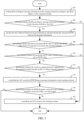
- FIG. 4 is a flowchart of a specific implementation of a wireless roaming method according to an embodiment of the present application. The method shown in FIG. 4 at least includes the following steps.
- Step 402 acquiring periodically the terminal information of the currently accessing wireless terminal.
- the above terminal information includes the MAC address, RSSI value and idle duration of the wireless terminal.
- Step 404 determining, for each wireless terminal, whether the idle duration of the wireless terminal is less than or equal to a set duration value; if so, performing step 406, otherwise, ending the process.
- Step 406 determining whether the RSSI value of the wireless terminal is less than or equal to a set RSSI value; if so, performing step 408, otherwise, ending the process.
- Step 408 sending a private protocol to the wireless terminal, and detecting whether response information returned by the wireless terminal for the private protocol is received; if not received, performing step 410; otherwise, ending the process.
- the above private protocol is used to search a local area network for the wireless terminal of a fixed placement type, for example a camera.
- Sending the private protocol to the wireless terminal refers to sending a message to the wireless terminal based on the private protocol. After receiving the message, the wireless terminal returns response information based on the private protocol.
- Step 410 determining whether the wireless network in the area where the wireless terminal is located is an encrypted network; if so, performing step 412; otherwise, performing step 416.
- Step 412 determining whether the wireless terminal supports an 802.11r-based roaming protocol; if so, performing step 414; otherwise, performing step 416.
- Step 414 controlling the AP to initiate the roaming operation according to the 802.11r-based roaming protocol.
- Step 416 determining whether the wireless terminal supports the 802.11r-based roaming protocol; if so, performing step 418; otherwise, performing step 436.
- Step 418 sending Beacon Request message information to the roaming terminal according to the MAC address of the wireless terminal.
- the above Beacon Request message information is used to request AP information of the AP in the area where the wireless terminal is located.
- Step 420 detecting whether the Beacon Report message information returned by the wireless terminal is received, and if so, performing step 422; otherwise, ending the process.
- the Beacon Report message information carries the RCPI value, MAC address, and channel information of each of APs.
- Step 422 parsing the above Beacon Report message information, and determining the maximum RCPI value in the message information.
- Step 424 determining whether the above maximum RCPI value is equal to the RCPI value of the AP currently accessed by the wireless terminal; if so, ending the process; otherwise, performing step 426.
- Step 426 determining whether the maximum RCPI value is greater than the set RCPI value; if so, performing step 428; otherwise, ending the process.
- Step 428 determining whether the wireless roaming protocols supported by the wireless terminal include an 802.11v-based roaming protocol; if so, performing step 430; otherwise, performing step 436.
- Step 430 controlling the AP to send the BTM Request message information to the wireless terminal.
- the above BTM Request message information carries AP information of the AP corresponding to the maximum RCPI value, so as to instruct the wireless terminal to access the AP based on the AP information.
- Step 432 determining whether the BTM Response returned by the wireless terminal is received within a set time length; if so, ending the process; otherwise, performing step 434.
- Step 434 controlling the AP to remove the wireless terminal.
- Step 436 determining whether the RSSI value of the wireless terminal is less than or equal to a set removal threshold; if so, performing step 434; otherwise, ending the process and waiting for a next cycle.
- the roaming operation is performed on the roaming terminal according to the wireless roaming protocols supported by the roaming terminal.
- the most appropriate roaming protocol is adopted according to the roaming protocol supported by the roaming terminal to realize the roaming of the roaming terminal. In this way, the problem of roaming delay, packet loss or disconnection caused by selecting an inappropriate roaming protocol to realize the roaming of the roaming terminal can be avoided to the maximum extent, thereby improving the roaming experience of the user.
- the embodiment of the present application also provides an AP (wireless access device), including:
- the processor is specifically configured for: determining, for each wireless terminal, whether the idle duration of the wireless terminal is less than or equal to a set duration value; if so, determining that the wireless terminal is in an active state, and determining whether the RSSI value of the wireless terminal is less than or equal to a set RSSI value; if so, sending a private protocol to the wireless terminal through the wireless transceiver, and detecting whether the wireless transceiver receives response information from the wireless terminal for the private protocol; wherein, the private protocol is used to search a local area network for a wireless terminal of a fixed-placement type; if the wireless transceiver does not receive response information from the wireless terminal for the private protocol, determining that the wireless terminal is the roaming terminal.
- the processor is specifically configured for: acquiring, for each roaming terminal, protocol-related information of the roaming terminal; wherein the protocol-related information includes driving code information of the roaming terminal and message information received and sent by the roaming terminal; extracting protocol-related field information from the protocol-related information; determining whether a wireless network in an area where the wireless terminal is located is an encrypted network; if so, determining according to the field information whether the roaming terminal supports the 802.11r-based roaming protocol; if the wireless network is not an encrypted network or the roaming terminal does not support the 802.11r-based roaming protocol, determining according to the field information whether the roaming terminal supports the 802.11k-based roaming protocol and the 802.11v-based roaming protocol.
- the processor is specifically configured for controlling the AP to initiate the roaming operation according to the 802.11r-based roaming protocol.
- the processor is specifically configured for:
- the processor is specifically configured for: sending, if it is determined that the wireless roaming protocols supported by the roaming terminal include the 802.11v-based roaming protocol, access indication information to the roaming terminal through the wireless transceiver; wherein the access indication information carries AP information of an AP corresponding to the maximum RCPI value to instruct the roaming terminal to access the AP based on the AP information; determining whether access response information returned by the roaming terminal is received within a set duration; controlling the AP to remove the roaming terminal if the access response information is not received.
- the processor is specifically configured for determining whether the RSSI value of the roaming terminal is less than or equal to a set removal threshold; if so, controlling the AP to remove the roaming terminal.
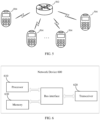
- FIG. 5 is a schematic structural diagram of a wireless roaming system according to an embodiment of the present application, as shown in FIG. 5 , the wireless roaming system includes an AP 502 and wireless terminals 504 accessing the AP;
- the AP 502 is configured for acquiring terminal information of each wireless terminal of wireless terminals 504; wherein the terminal information at least includes an RSSI value and an idle duration of the wireless terminal 504; determining a roaming terminal currently in an active state from the wireless terminals according to the RSSI value and the idle duration of each wireless terminal; determining, for each roaming terminal, wireless roaming protocols supported by the roaming terminal; performing a roaming operation on the roaming terminal according to the wireless roaming protocols supported by the roaming terminal; wherein, the wireless roaming protocols include an 802.11k-based roaming protocol, an 802.11r-based roaming protocol, and an 802.11v-based roaming protocol.
- the number of wireless terminals 504 accessing the AP may be one or more than one.
- FIG. 5 only takes the number of wireless terminals accessing the AP as more than one as an example for illustrative description, and does not constitute a limitation on the embodiments of the present application.
- the AP 502 is specifically configured for: determining, for each wireless terminal, whether the idle duration of the wireless terminal is less than or equal to a set duration value; if so, determining that the wireless terminal is in an active state, and determining whether the RSSI value of the wireless terminal is less than or equal to the set RSSI value; if so, sending a private protocol to the wireless terminal, and detecting whether response information is received from the wireless terminal for the private protocol; wherein, the private protocol is used to search a local area network for a wireless terminal of a fixed-placement type; if no response information is received from the wireless terminal for the private protocol, determining that the wireless terminal is the roaming terminal.
- the AP 502 is specifically configured for: acquiring, for each roaming terminal, protocol-related information of the roaming terminal; wherein the protocol-related information includes driving code information of the roaming terminal and message information sent and received by the roaming terminal; extracting protocol-related field information from the protocol-related information; determining whether a wireless network in an area where the wireless terminal is located is an encrypted network; if so, determining according to the field information whether the roaming terminal supports the 802.11r-based roaming protocol; if the wireless network is not an encrypted network or the roaming terminal does not support the 802.11r-based roaming protocol, then determining according to the field information whether the roaming terminal supports the 802.11k-based roaming protocol and the 802.11v-based roaming protocol.
- the wireless roaming protocols supported by the roaming terminal include an 802.11r-based roaming protocol
- the AP 502 is specifically configured for: controlling the AP to initiate the roaming operation according to the 802.11r-based roaming protocol.
- the terminal information further includes the MAC address (media access control address) of the wireless terminal.
- the AP 502 is specifically configured for: determining AP information of each AP of APs in an area where the roaming terminal is located according to the MAC address of the roaming terminal and the 802.11k-based roaming protocol; wherein the AP information at least includes an RCPI (receiving channel power indicator) value of the AP; determining whether a maximum RCPI value in the RCPI values of the APs is not equal to the RCPI value of an AP currently accessed by the roaming terminal, and determining whether the maximum RCPI value is greater than a set threshold; if so, determining whether the wireless roaming protocols supported by the roaming terminal include the 802.11v-based roaming protocol; if the wireless roaming protocols supported by the roaming terminal include the 802.11v-based roaming protocol, controlling the AP to perform a roaming operation on the roaming terminal according to the 802.11v-based roaming protocol; otherwise, controlling the AP to remove the roaming terminal.
- RCPI receiving channel power indicator
- the AP 502 is specifically configured for: controlling the AP to send access indication information to the roaming terminal; wherein, the access indication information carries the AP information of the AP corresponding to the maximum RCPI value to instruct the roaming terminal to access the above AP based on the AP information; determining whether the access response information returned by the roaming terminal is received in a set duration; controlling, if the access response information is not received, the AP to remove the roaming terminal.
- the wireless roaming protocols supported by the roaming terminal only include the 802.11v-based roaming protocol; or the roaming terminal does not support any wireless roaming protocol.
- the AP 502 is specifically configured for: determining whether the RSSI value of the roaming terminal is less than or equal to a set removal threshold; if so, controlling the AP to remove the roaming terminal.
- the wireless access device and the wireless roaming system provided by the embodiments of the present application are based on the same inventive concept as the wireless roaming method provided by the embodiments of the present application. Therefore, the specific implementation of this embodiment may refer to the implementation of the aforementioned wireless roaming method, and will not be repeatedly described again.
- the roaming operation is performed on the roaming terminal according to the wireless roaming protocols supported by each roaming terminal.
- the most appropriate roaming protocol is adopted according to the roaming protocol supported by the roaming terminal to realize the roaming of the roaming terminal. In this way, the problem of roaming delay, packet loss or disconnection caused by selecting an inappropriate roaming protocol to realize the roaming of the roaming terminal can be avoided to the maximum extent, thereby improving the roaming experience of the user.
- an embodiment of the present invention provides a network device.
- the network device 600 includes a processor 610, a transceiver 620, a memory 630, and a bus interface.
- the network device 600 further includes computer programs stored on the memory 630 and executable on the processor 610 that, when executed by the processor 610, cause the processor to implement the above wireless roaming method, and the same technical effect can be achieved. In order to avoid repetition, it will not be repeated here.
- the bus architecture may include any number of interconnected buses and bridges, which are specifically linked together by various circuits of one or more processors represented by the processor 610 and the memory represented by the memory 630.
- the bus architecture may also link together various other circuits, such as peripheral devices, voltage regulators, and power management circuits, etc. which are well known in the art and, therefore, which will not be described further herein.
- the bus interface provides an interface.
- the transceiver 620 may include multiple elements, including a transmitter and a receiver, which provide a unit for communicating with various other apparatus over a transmission medium.
- the processor 610 is responsible for managing the bus architecture and general processing, and the memory 630 may store data used by the processor 610 when performing operations.
- a computer program product including instructions which, when running on a computer, causes the computer to perform any wireless roaming method in the above embodiments.
- the embodiment of the present invention further provides a computer-readable storage medium having computer programs stored thereon which, when executed by a processor, cause the processor to implement any of the above method embodiments, and the same technical effect can be achieved. In order to avoid repetition, it will not be repeated here.
- the computer-readable storage medium is, for example, a read-only memory (ROM), a random access memory (RAM), a magnetic disk, or an optical disk.
- the methods of the above embodiments can be implemented by means of software and necessary general hardware platforms, and of course, they can also be implemented by hardware, but in many cases, the former is a better implementation.
- the technical solution of the present disclosure in essence, or a part contributing to the prior art or the part of the technical solution can be embodied in the form of a software product, the computer software product is stored in one storage medium (such as ROM/RAM, magnetic disk and optical disk), including several instructions to cause one computer device (which may be a mobile phone, a computer, a server, an air conditioner or a network device, etc) to perform the method of any of embodiments of the present invention.
Landscapes
- Engineering & Computer Science (AREA)
- Computer Networks & Wireless Communication (AREA)
- Signal Processing (AREA)
- Computer Security & Cryptography (AREA)
- Quality & Reliability (AREA)
- Physics & Mathematics (AREA)
- Electromagnetism (AREA)
- Databases & Information Systems (AREA)
- Mobile Radio Communication Systems (AREA)
Applications Claiming Priority (2)
| Application Number | Priority Date | Filing Date | Title |
|---|---|---|---|
| CN202010287688.1A CN113543282B (zh) | 2020-04-13 | 2020-04-13 | 一种无线漫游方法及系统 |
| PCT/CN2021/086108 WO2021208809A1 (zh) | 2020-04-13 | 2021-04-09 | 一种无线漫游方法及系统 |
Publications (2)
| Publication Number | Publication Date |
|---|---|
| EP4138465A1 true EP4138465A1 (de) | 2023-02-22 |
| EP4138465A4 EP4138465A4 (de) | 2023-09-27 |
Family
ID=78083935
Family Applications (1)
| Application Number | Title | Priority Date | Filing Date |
|---|---|---|---|
| EP21788030.1A Pending EP4138465A4 (de) | 2020-04-13 | 2021-04-09 | Drahtloses roamingverfahren und -system |
Country Status (4)
| Country | Link |
|---|---|
| US (1) | US12432654B2 (de) |
| EP (1) | EP4138465A4 (de) |
| CN (1) | CN113543282B (de) |
| WO (1) | WO2021208809A1 (de) |
Families Citing this family (6)
| Publication number | Priority date | Publication date | Assignee | Title |
|---|---|---|---|---|
| CN114531720A (zh) * | 2020-11-23 | 2022-05-24 | 华为技术有限公司 | 用于终端扫描的方法、系统、装置、电子设备及存储介质 |
| CN114828129B (zh) * | 2022-06-20 | 2022-09-30 | 统信软件技术有限公司 | 无线局域网的漫游方法、装置、移动终端及可读存储介质 |
| CN115460583B (zh) * | 2022-09-28 | 2024-07-12 | 成都长虹网络科技有限责任公司 | 一种分布式组网设备无线漫游优化方法 |
| CN115665812A (zh) * | 2022-10-21 | 2023-01-31 | 成都长虹网络科技有限责任公司 | 一种基于Mesh网络的漫游控制方法 |
| CN116017752B (zh) * | 2022-12-26 | 2025-11-07 | 深圳特发东智科技有限公司 | 一种现实无线漫游的方法及装置 |
| US12483906B2 (en) * | 2023-01-12 | 2025-11-25 | Qualcomm Incorporated | Signal strength mapping for steering a client |
Family Cites Families (21)
| Publication number | Priority date | Publication date | Assignee | Title |
|---|---|---|---|---|
| US8498229B2 (en) * | 2008-12-30 | 2013-07-30 | Intel Corporation | Reduced power state network processing |
| US8553662B2 (en) * | 2010-08-20 | 2013-10-08 | Time Warner Cable Inc. | System and method for Wi-Fi roaming |
| US20120076118A1 (en) * | 2010-09-29 | 2012-03-29 | Michael Montemurro | Methods and apparatus to present network capabilities available via wireless networks |
| US9077655B2 (en) * | 2011-03-02 | 2015-07-07 | 3Inova Networks Inc. | Traffic management in distributed wireless networks |
| US8549600B2 (en) * | 2011-03-11 | 2013-10-01 | Abbott Point Of Care Inc. | Systems, methods and analyzers for establishing a secure wireless network in point of care testing |
| JP5659350B2 (ja) * | 2011-06-24 | 2015-01-28 | サイレックス・テクノロジー株式会社 | 無線lan機器および無線ローミング方法 |
| KR20130073684A (ko) * | 2011-12-23 | 2013-07-03 | 삼성전자주식회사 | 무선 랜 통신 시스템에서 핸드오버 수행 장치 및 방법 |
| US8774150B1 (en) * | 2013-02-13 | 2014-07-08 | Magnolia Broadband Inc. | System and method for reducing side-lobe contamination effects in Wi-Fi access points |
| EP3117667A1 (de) * | 2014-03-14 | 2017-01-18 | Interdigital Patent Holdings, Inc. | Wifi-effizienter netzübergang |
| EP3985942B1 (de) * | 2014-06-23 | 2023-06-07 | Airties S.A.S. | System und verfahren zur auswahl einer optimalen kommunikationsroute in einem drahtlosnetzwerk |
| US10638409B2 (en) * | 2017-05-19 | 2020-04-28 | 7Signal Solutions, Inc. | Wi-Fi roaming management |
| US10244385B2 (en) * | 2016-12-05 | 2019-03-26 | Verizon Patent And Licensing Inc. | Coverage enhancement having call continuity |
| US10708966B2 (en) * | 2017-03-17 | 2020-07-07 | Huawei Technologies Co., Ltd. | Method and apparatus for uplink data transmission using multiple radio access technologies |
| US9972037B1 (en) * | 2017-06-06 | 2018-05-15 | T-Mobile Usa, Inc. | Systems and methods for authorization and billing of users for wireless charging |
| US20180376448A1 (en) * | 2017-06-23 | 2018-12-27 | Amazon Technologies, Inc. | Wi-fi protocol enhancement techniques for low power networking for the internet-of-things |
| CN109699055A (zh) * | 2017-10-20 | 2019-04-30 | 深圳市华茂欧特科技有限公司 | 一种通过冗余技术实现wifi无缝漫游的方法 |
| CN107959963B (zh) * | 2017-10-25 | 2020-10-23 | 合肥润东通信科技股份有限公司 | 一种家庭wifi漫游的实现方法 |
| CN108200592B (zh) * | 2018-03-27 | 2021-09-10 | 普联技术有限公司 | 一种无线漫游方法及漫游ap |
| US11251847B2 (en) * | 2018-03-28 | 2022-02-15 | Google Llc | User device beamforming |
| US10924995B2 (en) * | 2018-09-19 | 2021-02-16 | Hewlett Packard Enterprise Development Lp | Wake-up radio roaming |
| CN110519816B (zh) * | 2019-08-22 | 2021-09-10 | 普联技术有限公司 | 一种无线漫游控制方法、装置、存储介质及终端设备 |
-
2020
- 2020-04-13 CN CN202010287688.1A patent/CN113543282B/zh active Active
-
2021
- 2021-04-09 US US17/995,771 patent/US12432654B2/en active Active
- 2021-04-09 WO PCT/CN2021/086108 patent/WO2021208809A1/zh not_active Ceased
- 2021-04-09 EP EP21788030.1A patent/EP4138465A4/de active Pending
Also Published As
| Publication number | Publication date |
|---|---|
| EP4138465A4 (de) | 2023-09-27 |
| US20230171687A1 (en) | 2023-06-01 |
| US12432654B2 (en) | 2025-09-30 |
| CN113543282A (zh) | 2021-10-22 |
| WO2021208809A1 (zh) | 2021-10-21 |
| CN113543282B (zh) | 2022-08-23 |
Similar Documents
| Publication | Publication Date | Title |
|---|---|---|
| US12432654B2 (en) | Wireless roaming method and system | |
| US11218945B2 (en) | Access control method, terminal, and access network device | |
| US9462511B2 (en) | Method and apparatus for setting up call in mobile communication system | |
| EP3108694B1 (de) | Verkehrssteuerung zwischen wlan und mobilfunknetzen | |
| EP2983391B1 (de) | Verfahren und vorrichtung für einen erstverbindungsaufbau in einem wlan | |
| US11711711B2 (en) | Method for configuring measurement gap, access network device and terminal | |
| US20200022185A1 (en) | Signal transmission method and device | |
| US11290924B2 (en) | Communication method and communications device for improved handover with changed common system information | |
| EP2874436B1 (de) | Kanalschaltverfahren, -maschine und -vorrichtung | |
| JP2006518973A (ja) | 無線ローカルアクセスネットワークシステム検出及び選択 | |
| WO2016192225A1 (zh) | 一种漫游切换控制方法和中央控制单元 | |
| WO2023130471A1 (zh) | 小区接入方法、装置、设备及可读存储介质 | |
| EP4366455A1 (de) | Kommunikationsverfahren, ressourcenkonfigurationsverfahren, vorrichtung, netzwerkknoten, system und medium | |
| US10390278B2 (en) | Method for automatic switching between access points, and wireless routing device | |
| CN114079908A (zh) | 通信网络中的通信方法、设备、装置和存储介质 | |
| US12615568B2 (en) | Network handover method, terminal device, and access point device for performing handover by reusing an established protocol stack link | |
| US12532204B2 (en) | Measurement method, measurement apparatus, terminal, and network device | |
| US9813979B2 (en) | Voice call handover | |
| CN116113002A (zh) | 一种双频切换的方法、双频接入点及双频站点 | |
| CN118843136A (zh) | 一种通信感知方法及装置、网络设备、计算机存储介质及程序产品 | |
| CN107690174B (zh) | 一种兼容wlan无线局域网协议实现接入控制的方法 | |
| CN115038144B (en) | Wireless access method and device | |
| WO2015113263A1 (zh) | 一种业务转移的方法、用户设备和接入网设备 | |
| CN115119334B (zh) | 信息交互的方法及装置 | |
| US20250287291A1 (en) | Host network device identification method, apparatus and storage medium |
Legal Events
| Date | Code | Title | Description |
|---|---|---|---|
| STAA | Information on the status of an ep patent application or granted ep patent |
Free format text: STATUS: THE INTERNATIONAL PUBLICATION HAS BEEN MADE |
|
| PUAI | Public reference made under article 153(3) epc to a published international application that has entered the european phase |
Free format text: ORIGINAL CODE: 0009012 |
|
| STAA | Information on the status of an ep patent application or granted ep patent |
Free format text: STATUS: REQUEST FOR EXAMINATION WAS MADE |
|
| 17P | Request for examination filed |
Effective date: 20220927 |
|
| AK | Designated contracting states |
Kind code of ref document: A1 Designated state(s): AL AT BE BG CH CY CZ DE DK EE ES FI FR GB GR HR HU IE IS IT LI LT LU LV MC MK MT NL NO PL PT RO RS SE SI SK SM TR |
|
| DAV | Request for validation of the european patent (deleted) | ||
| DAX | Request for extension of the european patent (deleted) | ||
| A4 | Supplementary search report drawn up and despatched |
Effective date: 20230830 |
|
| RIC1 | Information provided on ipc code assigned before grant |
Ipc: H04W 36/08 20090101ALI20230824BHEP Ipc: H04W 48/20 20090101AFI20230824BHEP |