EP4138833B1 - Verwendung von tritoqualin zur behandlung von dysfunktionen der trockenen augen, der meibomdrüsen und dysfunktionen der tränendrüsen - Google Patents
Verwendung von tritoqualin zur behandlung von dysfunktionen der trockenen augen, der meibomdrüsen und dysfunktionen der tränendrüsen Download PDFInfo
- Publication number
- EP4138833B1 EP4138833B1 EP21717919.1A EP21717919A EP4138833B1 EP 4138833 B1 EP4138833 B1 EP 4138833B1 EP 21717919 A EP21717919 A EP 21717919A EP 4138833 B1 EP4138833 B1 EP 4138833B1
- Authority
- EP
- European Patent Office
- Prior art keywords
- tritoqualine
- dry eye
- isobenzofurannyl
- triethoxy
- dihydro
- Prior art date
- Legal status (The legal status is an assumption and is not a legal conclusion. Google has not performed a legal analysis and makes no representation as to the accuracy of the status listed.)
- Active
Links
Images




Classifications
-
- A—HUMAN NECESSITIES
- A61—MEDICAL OR VETERINARY SCIENCE; HYGIENE
- A61K—PREPARATIONS FOR MEDICAL, DENTAL OR TOILETRY PURPOSES
- A61K31/00—Medicinal preparations containing organic active ingredients
- A61K31/33—Heterocyclic compounds
- A61K31/395—Heterocyclic compounds having nitrogen as a ring hetero atom, e.g. guanethidine or rifamycins
- A61K31/435—Heterocyclic compounds having nitrogen as a ring hetero atom, e.g. guanethidine or rifamycins having six-membered rings with one nitrogen as the only ring hetero atom
- A61K31/47—Quinolines; Isoquinolines
- A61K31/4709—Non-condensed quinolines and containing further heterocyclic rings
-
- A—HUMAN NECESSITIES
- A61—MEDICAL OR VETERINARY SCIENCE; HYGIENE
- A61K—PREPARATIONS FOR MEDICAL, DENTAL OR TOILETRY PURPOSES
- A61K31/00—Medicinal preparations containing organic active ingredients
- A61K31/33—Heterocyclic compounds
- A61K31/395—Heterocyclic compounds having nitrogen as a ring hetero atom, e.g. guanethidine or rifamycins
- A61K31/435—Heterocyclic compounds having nitrogen as a ring hetero atom, e.g. guanethidine or rifamycins having six-membered rings with one nitrogen as the only ring hetero atom
- A61K31/47—Quinolines; Isoquinolines
- A61K31/4738—Quinolines; Isoquinolines ortho- or peri-condensed with heterocyclic ring systems
- A61K31/4741—Quinolines; Isoquinolines ortho- or peri-condensed with heterocyclic ring systems condensed with ring systems having oxygen as a ring hetero atom, e.g. tubocuraran derivatives, noscapine, bicuculline
-
- A—HUMAN NECESSITIES
- A61—MEDICAL OR VETERINARY SCIENCE; HYGIENE
- A61K—PREPARATIONS FOR MEDICAL, DENTAL OR TOILETRY PURPOSES
- A61K47/00—Medicinal preparations characterised by the non-active ingredients used, e.g. carriers or inert additives; Targeting or modifying agents chemically bound to the active ingredient
- A61K47/30—Macromolecular organic or inorganic compounds, e.g. inorganic polyphosphates
- A61K47/32—Macromolecular compounds obtained by reactions only involving carbon-to-carbon unsaturated bonds, e.g. carbomers, poly(meth)acrylates, or polyvinyl pyrrolidone
-
- A—HUMAN NECESSITIES
- A61—MEDICAL OR VETERINARY SCIENCE; HYGIENE
- A61K—PREPARATIONS FOR MEDICAL, DENTAL OR TOILETRY PURPOSES
- A61K47/00—Medicinal preparations characterised by the non-active ingredients used, e.g. carriers or inert additives; Targeting or modifying agents chemically bound to the active ingredient
- A61K47/30—Macromolecular organic or inorganic compounds, e.g. inorganic polyphosphates
- A61K47/36—Polysaccharides; Derivatives thereof, e.g. gums, starch, alginate, dextrin, hyaluronic acid, chitosan, inulin, agar or pectin
-
- A—HUMAN NECESSITIES
- A61—MEDICAL OR VETERINARY SCIENCE; HYGIENE
- A61P—SPECIFIC THERAPEUTIC ACTIVITY OF CHEMICAL COMPOUNDS OR MEDICINAL PREPARATIONS
- A61P27/00—Drugs for disorders of the senses
- A61P27/02—Ophthalmic agents
-
- A—HUMAN NECESSITIES
- A61—MEDICAL OR VETERINARY SCIENCE; HYGIENE
- A61P—SPECIFIC THERAPEUTIC ACTIVITY OF CHEMICAL COMPOUNDS OR MEDICINAL PREPARATIONS
- A61P27/00—Drugs for disorders of the senses
- A61P27/02—Ophthalmic agents
- A61P27/04—Artificial tears; Irrigation solutions
Definitions
- the present invention relates to the use of a multifunctional ligand and more particularly: the levorotatory and dextrorotary enantiomers of AMINO-7 TRIETHOXY-4, 5,6 OXO-1 DIHYDRO-1, 3 ISOBENZOFURANNYL-3) - lMETHOXY- 8 METHYL-2METHYLENEDIOXY- 6,7 TETRAHYDRO -, 2,3, 4ISOQUINOLINE or tritoqualine to treat dry eye syndrome and dysfunction of the meibomian glands, lacrimal glands.
- the present invention relates to the use of a multifunctional ligand having activity on the NK1 receptor but also activity on the transmembrane conductance regulator (CFTR) modulator for the treatment of dysfunctions of the meibomian glands, lacrimal glands and more generally. dry eye syndrome, as well as pharmaceutical compositions, and methods of treatment.
- CFTR transmembrane conductance regulator
- Dry eye syndrome is defined by the 2007 Dry Eye Workshop as a multifactorial disease of the tears and ocular surface resulting in symptoms of discomfort, visual disturbance and tear film instability with potential damage. of the ocular surface.
- the ocular surface can present more or less severe keratitis which can lead to a corneal ulcer. It is accompanied by an increase in tear film osmolarity and inflammation of the ocular surface.
- the etiologies are multiple, and we classically distinguish syndromes of dry eye due to reduced tear flow (such as Goujerot-Sjogren syndrome) and dry eye syndrome due to hyperevaporation of tears.
- MGD Meibomian gland dysfunction
- DED dry eye syndrome
- MGD Meibomian Gland Dysfunction
- Dry eye syndrome is a multifactorial and complex ocular surface disease that results in loss of tear film homeostasis and results in variable ocular symptoms.
- the negative effect of DED on visual function, quality of life, and economic burden is well recognized.
- DED DED
- ocular lubricants are often used during the initial management of DED, but do not address the underlying causes of the disease.
- the main approved treatments are cyclosporin A ophthalmic emulsion 0.05% (Restasis ® ; Allergan, Irvine, CA, USA) and lifitegrast ophthalmic solution 5.0% (Xiidra ® ; Shire, Lexington, USA). United) in North America, cationic emulsion. ; Ikervis® ; Santen Pharmaceutical, Osaka, Japan) in Europe and 3% diquafosol ophthalmic solution (Diquas ® ; Santen Pharmaceutical, Osaka, Japan) and a unit dose of 2% rebamipide ophthalmic suspension (Mucosta ® ; Otsuka Pharmaceutical, Tokyo , Japan) in Asia.
- SS is a chronic condition of autoimmune origin characterized by inflammatory, progressive and degenerative damage to the exocrine glands, which may be associated with a systemic pathology variably affecting the joints, skin, lungs, kidneys or peripheral nerves.
- the physiopathology of the disease is characterized by an infiltration of the salivary and lacrimal glands by CD4+ T lymphocytes and by B lymphocytes. The local activation and proliferation of these lymphocytes trigger the release of pro-inflammatory cytokines which maintain a state of inflammation. chronic, as well as the secretion of autoantibodies, ultimately leading to apoptotic death of epithelial cells.
- dry eye can progress despite replacement treatment and become self-sustaining according to the concept of the vicious circle of inflammation with progressive damage to all tissues on the ocular surface, including the cornea.
- dry eye can be responsible for major damage to the cornea [or keratitis] which causes a series of symptoms ranging from a sensation of a foreign body on the ocular surface and burning to permanent pain. with reduced visual acuity.
- the severity of dry eye is linked to the extent of keratitis, inflammatory component and painful eye symptoms.
- multifunctional ligands it is necessary to treat several pharmacological targets to treat the causes of the vicious cycles responsible for dry eye. This is what multifunctional ligands do.
- a multifunctional ligand as its name indicates, is active on several pharmacological targets.
- multifunctional ligands have a lower affinity on receptors, allowing them to diffuse in a balanced manner to multiple pharmacological targets. Their affinity is rather between 100 nanomolar and 1 micromolar.
- CFTR is a multifunctional protein.
- the CFTR protein is a member of the ABC transporter superfamily, which is found in all areas of life (bacteria, archaea and eukaryotes). It is distinguished from all other members of this superfamily by its status as an ion channel as well as by the presence of its unique regulatory domain (R). It forms a channel permeable to chloride and thiocyanate ions, epithelial cells. Other functions, independent of channel regulation, have been described: ATP transport, modulation of exocytosis/endocytosis phenomena, regulation of the pH of intracellular organelles.
- CFTR is a cAMP/ATP-mediated anion channel that is expressed in a variety of cell types, including secretory epithelial cells, where it regulates anion flux across the membrane, as well as the activity of other ion channels and proteins.
- epithelial cells normal function of CFTR is essential for maintaining electrolyte transport throughout the body, including respiratory and digestive and even ocular tissues.
- CFTR is composed of approximately 1480 amino acids constituting a protein composed of a repeat of transmembrane domains, each containing six transmembrane helices and a nucleotide binding domain. The two transmembrane domains are connected by a large polar regulatory [R] domain with several phosphorylation sites that regulate channel activity and cellular trafficking.
- Chloride transport occurs through the coordinated activity of ENaC and CFTR present on the apical membrane and Na+ and K+ ATPase and Cl ⁇ channels expressed on the basolateral surface of the cell. Secondary active chloride transport on the lumen side results in the accumulation of intracellular chloride, which can then leave the cell passively through Cl - channels, resulting in a transport from the basal pole to the apical pole. Thus water, which is probably never actively transported, is transported across the epithelia according to transepithelial osmotic gradients generated by the flow of sodium and chlorides.
- Neurogenic mechanisms may play an important role in chronic ocular surface inflammation. Manifestations may be associated with repeated damage to the ocular sensory nerve leading to an acute to chronic transition associated with neuropathological changes. These neuropathic changes are also the cause of dry eye pain.
- Substance P would be involved in this neurogenic inflammation. Stern ME and colleagues ( The Pathology of Dry Eye: The Interaction Between the Ocular Surface and Lacrimal Glands, Cornea 1998 November ).
- WO2007/117704A2 discloses tritoqualine in the treatment of a disease of the immune system such as, for example, conjunctivitis.
- the present invention relates to the use of a multifunctional ligand, comprising in particular isoquinoline-based compounds including the levorotatory and dextrorotatory enantiomers of AMINO-7 TRIETHOXY-4, 5,6 OXO-1 DIHYDRO-1, 3 ISOBENZOFURANNYL- 3) - lMETHOXY-8 METHYL-2 METHYLENEDIOXY - 6,7TETRAHYDRO-, 2,3, 4ISOQUINOLINE or tritoqualine and their pharmaceutically acceptable salts.
- the inventors discovered the astonishing properties of AMINO-7 TRIETHOXY-4, 5,6 OXO-1 DIHYDRO-1, 3 ISOBENZOFURANNYL-3) - lMETHOXY-8 METHYL-2 METHYLENEDIOXY - 6,7TETRAHYDRO-, 2,3, 4ISOQUINOLEINE, or tritoqualine and their pharmaceutically acceptable salts as a multifunctional ligand acting on the modulation of normal CFTR and the NK1 receptor.
- the invention also relates to pharmaceutical compositions comprising at least one of the compounds described in the present document and/or at least one of their pharmaceutically acceptable salts, these compositions may further comprise at least one other active pharmaceutical ingredient and/or at least one excipient.
- the invention also relates to methods of treating dry eye syndrome, as well as Sjögren's disease, comprising administering at least one of the compounds described herein and/or at least one thereof.
- pharmaceutically acceptable salts optionally as part of a pharmaceutical composition comprising at least one additional component, to a subject in need thereof.
- Tritoqualine is known for its antiallergic activity through its inhibitory action on histidine decarboxylase. This activity is, however, very weak and does not explain the numerous properties it presents on various clinical symptoms, rhinitis, urticaria, eczema, mastocytosis.
- tritoqualine had a very significant action on CFTR and the NK1 receptor, two important targets for treating dry eye.
- Many patents have been filed on tritoqualine, but none address its activity in treating dry eye syndrome.
- Tritoqualine is a benzylisoquinoline with a molecular weight of 500. This compound can be modified or substituted by compounds comprising either carbon 14 or deuterated compounds.
- Isotope-labeled compounds and salts can be used in different ways. They may be suitable for drugs and/or different types of tests, such as tissue-on-substrate distribution tests.
- compounds labeled with tritium and/or carbon-14 are particularly useful for various types of assays, such as substrate tissue distribution assays, due to their relatively simple preparation and excellent detectability.
- deuterium-labeled products are therapeutically useful and have potential therapeutic advantages over non-deuterium-labeled compounds.
- deuterium-labeled compounds and salts may have higher metabolic stability than those that are not isotope-labeled due to the isotope kinetic effect.
- Tritoqualine comes in the form of a white, crystalline powder. Insoluble in water; poorly soluble in benzene and acetone.
- the inventors have demonstrated the astonishing and surprising properties of tritoqualine in a human cellular model of CFTR modulation without mutation.
- the present invention concerns, AMINO-7 TRIETHOXY-4, 5,6 OXO-1 DIHYDRO-1, 3 ISOBENZOFURANNYL-3) - lMETHOXY-8 METHYL-2 METHYLENEDIOXY - 6,7TETRAHYDRO-, 2,3, 4ISOQUINOLEINE, or tritoqualine and its pharmaceutically acceptable salts for use in the treatment of diseases associated with reduced secretions of epithelial cells of the lacrimal glands and meibomian glands.
- the present invention also relates to AMINO-7 TRIETHOXY-4, 5,6 OXO-1 DIHYDRO-1, 3 ISOBENZOFURANNYL-3) - lMETHOXY-8 METHYL-2 METHYLENEDIOXY - 6,7TETRAHYDRO-, 2,3, 4ISOQUINOLEINE, or tritoqualine and its pharmaceutically acceptable salts for use in the treatment of dry eye syndrome.
- the present invention also relates to AMINO-7 TRIETHOXY-4, 5,6 OXO-1 DIHYDRO-1, 3 ISOBENZOFURANNYL-3) - lMETHOXY-8 METHYL-2 METHYLENEDIOXY - 6,7TETRAHYDRO-, 2,3, 4ISOQUINOLEINE, or tritoqualine and its pharmaceutically acceptable salts for its use in the treatment of dry eye syndrome linked to Gougerot-Sjögren's disease and secondary Gougerot-Sjögren's syndromes which accompany autoimmune diseases such as rheumatoid arthritis or systemic lupus erythematosus.
- the invention relates to AMINO-7 TRIETHOXY-4, 5,6 OXO-1 DIHYDRO-1, 3 ISOBENZOFURANNYL-3) - lMETHOXY-8 METHYL-2 METHYLENEDIOXY - 6,7TETRAHYDRO-, 2,3 , 4ISOQUINOLINE, or tritoqualine and its pharmaceutically acceptable salts for use in the treatment of pain in dry eye syndrome.
- the invention relates to AMINO-7 TRIETHOXY-4, 5,6 OXO-1 DIHYDRO-1, 3 ISOBENZOFURANNYL-3) - lMETHOXY-8 METHYL-2 METHYLENEDIOXY - 6,7TETRAHYDRO-, 2,3 , 4ISOQUINOLINE, or tritoqualine and its pharmaceutically acceptable salts for use in dry eye syndrome characterized in that it is administered in the form of eye drops or eye ointment.
- the invention relates to AMINO-7 TRIETHOXY-4, 5,6 OXO-1 DIHYDRO-1, 3 ISOBENZOFURANNYL-3) - lMETHOXY-8 METHYL-2 METHYLENEDIOXY - 6,7TETRAHYDRO-, 2,3 , 4ISOQUINOLINE, or tritoqualine and its pharmaceutically acceptable salts for use in dry eye syndrome characterized in that it is administered in the form of eye drops at a dose of 0.1 milligram to 5 milligram.
- the invention relates to AMINO-7 TRIETHOXY-4, 5,6 OXO-1 DIHYDRO-1, 3 ISOBENZOFURANNYL-3) - lMETHOXY-8 METHYL-2 METHYLENEDIOXY - 6,7TETRAHYDRO-, 2,3 , 4ISOQUINOLINE, or tritoqualine and its pharmaceutically acceptable salts for use in dry eye syndrome characterized in that it is administered in the form of eye drops in combination with humectants and lubricants based on hyaluronic acid or carbomers .
- the invention relates to AMINO-7 TRIETHOXY-4, 5,6 OXO-1 DIHYDRO-1, 3 ISOBENZOFURANNYL-3) - lMETHOXY-8 METHYL-2 METHYLENEDIOXY - 6,7TETRAHYDRO-, 2,3 , 4ISOQUINOLINE, or tritoqualine and its pharmaceutically acceptable salts for use in the treatment of dry eye syndrome characterized in that it is substituted at at least one of its methyls by a deuterated methyl.
- the present invention also relates to AMINO-7 TRIETHOXY-4, 5,6 OXO-1 DIHYDRO-1, 3 ISOBENZOFURANNYL-3) - lMETHOXY-8 METHYL-2 METHYLENEDIOXY - 6,7TETRAHYDRO-, 2,3, 4ISOQUINOLINE, or tritoqualine and its pharmaceutically acceptable salts for use in enhancing ion transport at both the apical and basal poles of the corneal epithelial, lacrimal glandular and meibomian glandular epithelial cells.
- the AMINO-7 TRIETHOXY-4, 5,6 OXO-1 DIHYDRO-1, 3 ISOBENZOFURANNYL-3) - lMETHOXY-8 METHYL-2 METHYLENEDIOXY - 6,7TETRAHYDRO-, 2,3, 4ISOQUINOLEINE , or tritoqualine and its pharmaceutically acceptable salts is remarkable in that it is substituted at its methyls by deuterated methyls to improve pharmacokinetics.
- AMINO-7 TRIETHOXY-4, 5,6 OXO-1 DIHYDRO-1, 3 ISOBENZOFURANNYL-3) - lMETHOXY-8 METHYL-2 METHYLENEDIOXY - 6,7TETRAHYDRO-, 2,3, 4ISOQUINOLEINE, or tritoqualine and its pharmaceutically acceptable salts also intended to be used for the treatment of dry eye syndrome is remarkable in that it is packaged in the form of eye drops, or eye ointment.
- the inventors used the Ussing chamber method, invented by the Dane Hans H. Ussing at the end of the 1950s.
- This technique makes it possible to study ionic exchanges through an epithelium, because they make it possible to maintain the tissue of interest in survival for a few hours under controlled conditions of temperature and environment.
- the positioning of the tissue between two half-chambers makes it possible to define an apical compartment (corresponding to the lumen of the organ) and a basolateral compartment (corresponding to the blood compartment) and to study the exchanges between these two compartments via the tissue.
- This technique is used routinely and is particularly well suited for a pharmacological approach to ionic transport and to search for molecules of therapeutic interest in the context of ionic secretions from epithelial cells. It consists of measuring the transepithelial current (known as short-circuit and denoted Ise). Ise is expressed in ampere relative to the surface unit of the epithelium (Ise in ⁇ A/cm 2 ). The cells are cultured on a porous filter for 10 to 15 days at the liquid-liquid then air-liquid interface in order to mimic conditions close to in vivo. Transepithelial resistance is measured regularly during culture. The higher this resistance (several hundred ohms) the more joined the epithelial tissue, polarized and therefore waterproof.
- the epithelial cells polarize and form a waterproof mat which can be studied with the Ussing chamber technique.
- Tritoqualine has a surprising action on CFTR which is not known. No publication or patent mentions any activity of tritoqualine on the CFTR of corneal epithelial cells or glandular epithelial cells.
- the inventors used USSING chambers to analyze the activity of tritoqualine on the CFTR of glandular epithelial cells.
- the inventors prepared a stock solution at 100 ⁇ M in DMSO. Compounds were aliquoted per 100 ⁇ L and stored at -20°C.
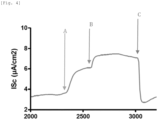
- Tritoqualine was added to USSING cells at a dose of 10 ⁇ M on non-mutated cells [ Fig. 5 ].
- Tritoqualine activates cellular potential in lacrimal gland epithelial cells expressing unmutated CFTR. This effect is additive with that of forskolin.
- tritoqualine activates ionic transport in the epithelial cells of the lacrimal gland. This effect is blocked by inh172, which specifically inhibits CFTR ion transport.
- Tritoqualine appears to be a molecule capable of stimulating ionic transport via unmutated CFTR.
- tritoqualine makes it possible to improve the tear secretion function of patients with a proven pathology of dry eye, including patients with Gougerot - Sjögren disease, but also so-called "secondary" Gougerot - Sjögren disease because they are associated with specific autoimmune diseases such as rheumatoid arthritis or systemic lupus erythematosus.
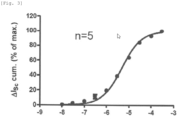
- the inventors also used an NK 1 agonist (substance P - Supplier: Sigma-Aldrich) to demonstrate that the activity of tritoqualine on the NK 1 receptor.
- Tritoqualine was tested on the NK 1 receptor according to the method described by Heuillet and colleagues, Characterization of a human NKl tachykinin receptor in the astrocytoma cell line U 373 MG. Heuillet E et al Neurochem. 1993 Mar .
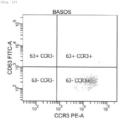
- the inventors used the CAST-Flow Kit (www.buhlmannlabs.ch/products-solutions/cellular-allergy/flow-cast/) to test the action of tritoqualine on the inhibition of basophil degranulation.
- the degranulation marker is CD63.
- CD63 markers linked to intracytoplasmic granules will fuse with the plasma membrane. They are then expressed on the surface of the cell: the activated basophils therefore become CD63+.
- CCR3 chemokine receptor 3
- the latter is always expressed by this cell type.
- the degranulation of basophils is identified in the flow cytometry window as being CD63+ and CCR3+.
- tritoqualine would have 2 actions via the inhibition of substance P: An action on the basophil and an action on the neurological vicious circle of dry eye.
- tritoqualine, through its action on NK1, would have 2 complementary actions; One on the inflammation linked to the inhibition of basophil degranulation and another on the pain linked to its action on the neurological vicious circle.
- the local action of tritoqualine on dry eye appears remarkable and surprising due to its 2 pharmacological actions on CFTR and substance P.
Landscapes
- Health & Medical Sciences (AREA)
- Chemical & Material Sciences (AREA)
- Public Health (AREA)
- Veterinary Medicine (AREA)
- Medicinal Chemistry (AREA)
- Pharmacology & Pharmacy (AREA)
- Life Sciences & Earth Sciences (AREA)
- Animal Behavior & Ethology (AREA)
- General Health & Medical Sciences (AREA)
- Epidemiology (AREA)
- Inorganic Chemistry (AREA)
- Ophthalmology & Optometry (AREA)
- Engineering & Computer Science (AREA)
- Bioinformatics & Cheminformatics (AREA)
- Chemical Kinetics & Catalysis (AREA)
- General Chemical & Material Sciences (AREA)
- Nuclear Medicine, Radiotherapy & Molecular Imaging (AREA)
- Organic Chemistry (AREA)
- Pharmaceuticals Containing Other Organic And Inorganic Compounds (AREA)
- Medicinal Preparation (AREA)
- Other In-Based Heterocyclic Compounds (AREA)
Claims (7)
- Amino-7-triethoxy-4,5,6-oxo-1-dihydro-1,3-isobenzofuranyl-3)-1-methoxy-8-methyl-2-methylendioxy-6,7-tetrahydro-2,3,4-isoquinolin oder Tritoqualin und pharmazeutisch verträgliche Salze davon zur Verwendung bei der Behandlung des Syndroms des trockenen Auges.
- Amino-7-triethoxy-4,5,6-oxo-1-dihydro-1,3-isobenzofuranyl-3)-1-methoxy-8-methyl-2-methylendioxy-6,7-tetrahydro-2,3,4-isoquinolin oder Tritoqualin und pharmazeutisch verträgliche Salze davon zur Verwendung nach Anspruch 1 bei der Behandlung der Schmerzen beim Syndrom des trockenen Auges.
- Amino-7-triethoxy-4,5,6-oxo-1-dihydro-1,3-isobenzofuranyl-3)-1-methoxy-8-methyl-2-methylendioxy-6,7-tetrahydro-2,3,4-isoquinolin oder Tritoqualin und pharmazeutisch verträgliche Salze davon zur Verwendung nach Anspruch 1 bei der Behandlung des Syndroms des trockenen Auges in Verbindung mit dem Sjögren-Syndrom.
- Amino-7-triethoxy-4,5,6-oxo-1-dihydro-1,3-isobenzofuranyl-3)-1-methoxy-8-methyl-2-methylendioxy-6,7-tetrahydro-2,3,4-isoquinolin oder Tritoqualin und pharmazeutisch verträgliche Salze davon zur Verwendung nach Anspruch 1 bei der Behandlung des Syndroms des trockenen Auges in Verbindung mit Autoimmunerkrankungen wie rheumatoider Arthritis oder systemischem Lupus Erythematodes.
- Amino-7-triethoxy-4,5,6-oxo-1-dihydro-1,3-isobenzofuranyl-3)-1-methoxy-8-methyl-2-methylendioxy-6,7-tetrahydro-2,3,4-isoquinolin oder Tritoqualin und pharmazeutisch verträgliche Salze davon in Kombination mit Feuchthaltemitteln auf Carbomerbasis oder Gleitmitteln auf Hyaluronsäurebasis zur Verwendung nach einem der Ansprüche 1 bis 4.
- Amino-7-triethoxy-4,5,6-oxo-1-dihydro-1,3-isobenzofuranyl-3)-1-methoxy-8-methyl-2-methylendioxy-6,7-tetrahydro-2,3,4-isoquinolin oder Tritoqualin und pharmazeutisch verträgliche Salze davon zur Verwendung bei der Behandlung des Syndroms des trockenen Auges, dadurch gekennzeichnet, dass es an mindestens einem seiner Methyle durch ein deuteriertes Methyl substituiert ist.
- Amino-7-triethoxy-4,5,6-oxo-1-dihydro-1,3-isobenzofuranyl-3)-1-methoxy-8-methyl-2-methylendioxy-6,7-tetrahydro-2,3,4-isoquinolin oder Tritoqualin und pharmazeutisch verträgliche Salze davon zur Verwendung nach einem der Ansprüche 1 bis 6, dadurch gekennzeichnet, dass es in Form von Augentropfen oder Augensalbe verpackt ist.
Applications Claiming Priority (2)
| Application Number | Priority Date | Filing Date | Title |
|---|---|---|---|
| FR2004022A FR3109524B1 (fr) | 2020-04-22 | 2020-04-22 | Utilisation d’un ligand multifonctionnel pour traiter l’œil sec et les dysfonctionnements des glandes de Meibomius et des glandes lacrymales. |
| PCT/EP2021/059813 WO2021213891A1 (fr) | 2020-04-22 | 2021-04-15 | Utilisation d'un ligand multifonctionnel pour traiter l'oeil sec et les dysfonctionnements des glandes de meibomius et des glandes lacrymales |
Publications (3)
| Publication Number | Publication Date |
|---|---|
| EP4138833A1 EP4138833A1 (de) | 2023-03-01 |
| EP4138833B1 true EP4138833B1 (de) | 2024-06-05 |
| EP4138833C0 EP4138833C0 (de) | 2024-06-05 |
Family
ID=71111615
Family Applications (1)
| Application Number | Title | Priority Date | Filing Date |
|---|---|---|---|
| EP21717919.1A Active EP4138833B1 (de) | 2020-04-22 | 2021-04-15 | Verwendung von tritoqualin zur behandlung von dysfunktionen der trockenen augen, der meibomdrüsen und dysfunktionen der tränendrüsen |
Country Status (7)
| Country | Link |
|---|---|
| US (1) | US20230181562A1 (de) |
| EP (1) | EP4138833B1 (de) |
| JP (1) | JP7833147B2 (de) |
| CN (1) | CN115515586B (de) |
| ES (1) | ES2985010T3 (de) |
| FR (1) | FR3109524B1 (de) |
| WO (1) | WO2021213891A1 (de) |
Family Cites Families (9)
| Publication number | Priority date | Publication date | Assignee | Title |
|---|---|---|---|---|
| FR2742336B1 (fr) * | 1995-12-19 | 1998-03-06 | Chauvin Lab Sa | Collyre destine notamment au traitement de l'oeil sec |
| US8067433B2 (en) * | 2005-11-09 | 2011-11-29 | Zalicus Inc. | Methods, compositions, and kits for the treatment of ophthalmic disorders |
| WO2007117704A2 (en) * | 2006-04-07 | 2007-10-18 | Michalis Nicolaou | Pure isomers of tritoqualine |
| US8207188B2 (en) * | 2006-04-07 | 2012-06-26 | Michalis Nicolaou | Treatment of diseases modulated by a H4 receptor agonist |
| ES2441958T3 (es) * | 2006-07-11 | 2014-02-07 | Janssen Pharmaceutica Nv | Moduladores de benzofuro- y benzotienopirimidina del receptor de histamina H4 |
| EP2659890A1 (de) * | 2012-04-30 | 2013-11-06 | Orphan Synergy Europe - Pharma | Verfahren und Zusammensetzungen zur Behandlung von Fibrose |
| US20160251367A1 (en) * | 2014-11-13 | 2016-09-01 | Chrysalis Pharma | Synthesis of tritoqualine salts |
| HK1258472A1 (zh) | 2015-09-21 | 2019-11-15 | Vertex Pharmaceuticals (Europe) Limited | 氘代cftr增效剂的施用 |
| FR3096890B1 (fr) * | 2019-06-07 | 2021-05-14 | H4 Orphan Pharma | Utilisation d’une molécule opioïde pour traiter l’œil sec et l’œil allergique. |
-
2020
- 2020-04-22 FR FR2004022A patent/FR3109524B1/fr active Active
-
2021
- 2021-04-15 JP JP2022564565A patent/JP7833147B2/ja active Active
- 2021-04-15 WO PCT/EP2021/059813 patent/WO2021213891A1/fr not_active Ceased
- 2021-04-15 CN CN202180033780.8A patent/CN115515586B/zh active Active
- 2021-04-15 ES ES21717919T patent/ES2985010T3/es active Active
- 2021-04-15 EP EP21717919.1A patent/EP4138833B1/de active Active
- 2021-04-15 US US17/920,916 patent/US20230181562A1/en active Pending
Also Published As
| Publication number | Publication date |
|---|---|
| CN115515586A (zh) | 2022-12-23 |
| US20230181562A1 (en) | 2023-06-15 |
| EP4138833A1 (de) | 2023-03-01 |
| ES2985010T3 (es) | 2024-11-04 |
| JP2023524410A (ja) | 2023-06-12 |
| FR3109524A1 (fr) | 2021-10-29 |
| JP7833147B2 (ja) | 2026-03-19 |
| EP4138833C0 (de) | 2024-06-05 |
| CN115515586B (zh) | 2025-08-22 |
| WO2021213891A1 (fr) | 2021-10-28 |
| FR3109524B1 (fr) | 2022-04-08 |
Similar Documents
| Publication | Publication Date | Title |
|---|---|---|
| Du et al. | Clinical doses of amikacin provide more effective suppression of the human CFTR-G542X stop mutation than gentamicin in a transgenic CF mouse model | |
| US20110130549A1 (en) | Method for the treatment of amyloidoses | |
| US20150079096A1 (en) | Method for the treatment of amyloidoses | |
| Güngör et al. | Trans-scleral iontophoretic delivery of low molecular weight therapeutics | |
| JP2009501727A (ja) | 巨大分子集合体の存在に関連した状態、特に眼科障害の治療 | |
| US20250122209A1 (en) | Methods and compositions for drugs to treat ophthalmic diseases | |
| Garneau et al. | Multiple facets and roles of Na+-K+-Cl− cotransport: mechanisms and therapeutic implications | |
| Stebbing et al. | Are there functional P2X receptors on cell bodies in intact dorsal root ganglia of rats? | |
| Cukurova et al. | Current and emerging pharmacological treatment options for patients with dry eye disease | |
| EP0977844B1 (de) | Säureempfindlicher neuronaler säugetierkationenkanal, dessen klonierung und anwendung | |
| Hu et al. | The role of calcium signaling in sensorineural hearing loss | |
| ES2400114T3 (es) | Efectos analgésicos de la toxina peptídica APETX2 | |
| EP3980014B1 (de) | Verwendung eines opioid-moleküls zur behandlung von trockenem auge und augen, die an allergien leiden | |
| EP4138833A1 (de) | Verwendung eines multifunktionellen liganden zur behandlung von dysfunktionen der trockenen augen, der meibomdrüsen und dysfunktionen der tränendrüsen | |
| Sugita et al. | Immunosuppressive effects of the heat shock protein 90‐binding antibiotic geldanamycin | |
| EP3386510B1 (de) | Phosphorderivate zur vorbeugung oder behandlung von muskulären myopathien und traumatischen muskelverletzungen | |
| Arcas Santos | The cold-activated TRPM8 channel: agonism by macrolide immunosuppressants and modulation by Gq protein-coupled receptors signaling pathways | |
| EP4536267B1 (de) | Annelidhämoglobin zur verwendung bei der behandlung von fuchs-krankheit | |
| JPH11279194A (ja) | ペプチド及び医薬組成物 | |
| Sun | Dipeptide transport mechanism in the pigmented rabbit conjunctiva | |
| Greene et al. | Age-Related Upregulation and Strong Expression Correlation of the Proinflammatory Cytokines IL-1β and IL-6 Across Multiple Segments of the Mouse Eye | |
| EP1206942A1 (de) | Zusammensetzungen zur eröffnung der wasserkanäle und medizinische zusammensetzungen zur opthalmischer verwendung | |
| JP3817122B2 (ja) | 水チャンネルオープナー組成物及び眼科用医薬組成物 | |
| FR3114739A1 (fr) | Nouveaux peptoides et leur utilisation dans la prevention ou le traitement de la douleur chronique | |
| Pike et al. | Dopamine Signaling Modulates Microglial NLRP3 In ammasome Activation: Implications for Parkinson’s Disease |
Legal Events
| Date | Code | Title | Description |
|---|---|---|---|
| STAA | Information on the status of an ep patent application or granted ep patent |
Free format text: STATUS: UNKNOWN |
|
| STAA | Information on the status of an ep patent application or granted ep patent |
Free format text: STATUS: THE INTERNATIONAL PUBLICATION HAS BEEN MADE |
|
| PUAI | Public reference made under article 153(3) epc to a published international application that has entered the european phase |
Free format text: ORIGINAL CODE: 0009012 |
|
| STAA | Information on the status of an ep patent application or granted ep patent |
Free format text: STATUS: REQUEST FOR EXAMINATION WAS MADE |
|
| 17P | Request for examination filed |
Effective date: 20221020 |
|
| AK | Designated contracting states |
Kind code of ref document: A1 Designated state(s): AL AT BE BG CH CY CZ DE DK EE ES FI FR GB GR HR HU IE IS IT LI LT LU LV MC MK MT NL NO PL PT RO RS SE SI SK SM TR |
|
| DAV | Request for validation of the european patent (deleted) | ||
| DAX | Request for extension of the european patent (deleted) | ||
| GRAP | Despatch of communication of intention to grant a patent |
Free format text: ORIGINAL CODE: EPIDOSNIGR1 |
|
| STAA | Information on the status of an ep patent application or granted ep patent |
Free format text: STATUS: GRANT OF PATENT IS INTENDED |
|
| INTG | Intention to grant announced |
Effective date: 20231123 |
|
| GRAS | Grant fee paid |
Free format text: ORIGINAL CODE: EPIDOSNIGR3 |
|
| RAP3 | Party data changed (applicant data changed or rights of an application transferred) |
Owner name: TERRASSE, GAETAN Owner name: H4 ORPHAN PHARMA |
|
| RIN1 | Information on inventor provided before grant (corrected) |
Inventor name: TERRASSE, GAETAN Inventor name: BUR, CATHERINE |
|
| GRAA | (expected) grant |
Free format text: ORIGINAL CODE: 0009210 |
|
| STAA | Information on the status of an ep patent application or granted ep patent |
Free format text: STATUS: THE PATENT HAS BEEN GRANTED |
|
| AK | Designated contracting states |
Kind code of ref document: B1 Designated state(s): AL AT BE BG CH CY CZ DE DK EE ES FI FR GB GR HR HU IE IS IT LI LT LU LV MC MK MT NL NO PL PT RO RS SE SI SK SM TR |
|
| REG | Reference to a national code |
Ref country code: CH Ref legal event code: EP |
|
| REG | Reference to a national code |
Ref country code: DE Ref legal event code: R096 Ref document number: 602021014087 Country of ref document: DE |
|
| REG | Reference to a national code |
Ref country code: IE Ref legal event code: FG4D Free format text: LANGUAGE OF EP DOCUMENT: FRENCH |
|
| U01 | Request for unitary effect filed |
Effective date: 20240701 |
|
| U07 | Unitary effect registered |
Designated state(s): AT BE BG DE DK EE FI FR IT LT LU LV MT NL PT SE SI Effective date: 20240709 |
|
| PG25 | Lapsed in a contracting state [announced via postgrant information from national office to epo] |
Ref country code: HR Free format text: LAPSE BECAUSE OF FAILURE TO SUBMIT A TRANSLATION OF THE DESCRIPTION OR TO PAY THE FEE WITHIN THE PRESCRIBED TIME-LIMIT Effective date: 20240605 |
|
| PG25 | Lapsed in a contracting state [announced via postgrant information from national office to epo] |
Ref country code: GR Free format text: LAPSE BECAUSE OF FAILURE TO SUBMIT A TRANSLATION OF THE DESCRIPTION OR TO PAY THE FEE WITHIN THE PRESCRIBED TIME-LIMIT Effective date: 20240906 |
|
| PG25 | Lapsed in a contracting state [announced via postgrant information from national office to epo] |
Ref country code: NO Free format text: LAPSE BECAUSE OF FAILURE TO SUBMIT A TRANSLATION OF THE DESCRIPTION OR TO PAY THE FEE WITHIN THE PRESCRIBED TIME-LIMIT Effective date: 20240905 Ref country code: HR Free format text: LAPSE BECAUSE OF FAILURE TO SUBMIT A TRANSLATION OF THE DESCRIPTION OR TO PAY THE FEE WITHIN THE PRESCRIBED TIME-LIMIT Effective date: 20240605 Ref country code: GR Free format text: LAPSE BECAUSE OF FAILURE TO SUBMIT A TRANSLATION OF THE DESCRIPTION OR TO PAY THE FEE WITHIN THE PRESCRIBED TIME-LIMIT Effective date: 20240906 Ref country code: RS Free format text: LAPSE BECAUSE OF FAILURE TO SUBMIT A TRANSLATION OF THE DESCRIPTION OR TO PAY THE FEE WITHIN THE PRESCRIBED TIME-LIMIT Effective date: 20240905 |
|
| REG | Reference to a national code |
Ref country code: ES Ref legal event code: FG2A Ref document number: 2985010 Country of ref document: ES Kind code of ref document: T3 Effective date: 20241104 |
|
| PG25 | Lapsed in a contracting state [announced via postgrant information from national office to epo] |
Ref country code: PL Free format text: LAPSE BECAUSE OF FAILURE TO SUBMIT A TRANSLATION OF THE DESCRIPTION OR TO PAY THE FEE WITHIN THE PRESCRIBED TIME-LIMIT Effective date: 20240605 |
|
| PG25 | Lapsed in a contracting state [announced via postgrant information from national office to epo] |
Ref country code: IS Free format text: LAPSE BECAUSE OF FAILURE TO SUBMIT A TRANSLATION OF THE DESCRIPTION OR TO PAY THE FEE WITHIN THE PRESCRIBED TIME-LIMIT Effective date: 20241005 |
|
| PG25 | Lapsed in a contracting state [announced via postgrant information from national office to epo] |
Ref country code: CZ Free format text: LAPSE BECAUSE OF FAILURE TO SUBMIT A TRANSLATION OF THE DESCRIPTION OR TO PAY THE FEE WITHIN THE PRESCRIBED TIME-LIMIT Effective date: 20240605 |
|
| PG25 | Lapsed in a contracting state [announced via postgrant information from national office to epo] |
Ref country code: RO Free format text: LAPSE BECAUSE OF FAILURE TO SUBMIT A TRANSLATION OF THE DESCRIPTION OR TO PAY THE FEE WITHIN THE PRESCRIBED TIME-LIMIT Effective date: 20240605 Ref country code: SK Free format text: LAPSE BECAUSE OF FAILURE TO SUBMIT A TRANSLATION OF THE DESCRIPTION OR TO PAY THE FEE WITHIN THE PRESCRIBED TIME-LIMIT Effective date: 20240605 |
|
| PG25 | Lapsed in a contracting state [announced via postgrant information from national office to epo] |
Ref country code: SM Free format text: LAPSE BECAUSE OF FAILURE TO SUBMIT A TRANSLATION OF THE DESCRIPTION OR TO PAY THE FEE WITHIN THE PRESCRIBED TIME-LIMIT Effective date: 20240605 |
|
| PG25 | Lapsed in a contracting state [announced via postgrant information from national office to epo] |
Ref country code: SM Free format text: LAPSE BECAUSE OF FAILURE TO SUBMIT A TRANSLATION OF THE DESCRIPTION OR TO PAY THE FEE WITHIN THE PRESCRIBED TIME-LIMIT Effective date: 20240605 Ref country code: SK Free format text: LAPSE BECAUSE OF FAILURE TO SUBMIT A TRANSLATION OF THE DESCRIPTION OR TO PAY THE FEE WITHIN THE PRESCRIBED TIME-LIMIT Effective date: 20240605 Ref country code: RO Free format text: LAPSE BECAUSE OF FAILURE TO SUBMIT A TRANSLATION OF THE DESCRIPTION OR TO PAY THE FEE WITHIN THE PRESCRIBED TIME-LIMIT Effective date: 20240605 Ref country code: PL Free format text: LAPSE BECAUSE OF FAILURE TO SUBMIT A TRANSLATION OF THE DESCRIPTION OR TO PAY THE FEE WITHIN THE PRESCRIBED TIME-LIMIT Effective date: 20240605 Ref country code: IS Free format text: LAPSE BECAUSE OF FAILURE TO SUBMIT A TRANSLATION OF THE DESCRIPTION OR TO PAY THE FEE WITHIN THE PRESCRIBED TIME-LIMIT Effective date: 20241005 Ref country code: CZ Free format text: LAPSE BECAUSE OF FAILURE TO SUBMIT A TRANSLATION OF THE DESCRIPTION OR TO PAY THE FEE WITHIN THE PRESCRIBED TIME-LIMIT Effective date: 20240605 |
|
| U20 | Renewal fee for the european patent with unitary effect paid |
Year of fee payment: 5 Effective date: 20250228 |
|
| PLBE | No opposition filed within time limit |
Free format text: ORIGINAL CODE: 0009261 |
|
| STAA | Information on the status of an ep patent application or granted ep patent |
Free format text: STATUS: NO OPPOSITION FILED WITHIN TIME LIMIT |
|
| 26N | No opposition filed |
Effective date: 20250306 |
|
| PG25 | Lapsed in a contracting state [announced via postgrant information from national office to epo] |
Ref country code: MC Free format text: LAPSE BECAUSE OF FAILURE TO SUBMIT A TRANSLATION OF THE DESCRIPTION OR TO PAY THE FEE WITHIN THE PRESCRIBED TIME-LIMIT Effective date: 20240605 |
|
| PG25 | Lapsed in a contracting state [announced via postgrant information from national office to epo] |
Ref country code: IE Free format text: LAPSE BECAUSE OF NON-PAYMENT OF DUE FEES Effective date: 20250415 |
|
| REG | Reference to a national code |
Ref country code: CH Ref legal event code: U11 Free format text: ST27 STATUS EVENT CODE: U-0-0-U10-U11 (AS PROVIDED BY THE NATIONAL OFFICE) Effective date: 20260501 |
|
| U20 | Renewal fee for the european patent with unitary effect paid |
Year of fee payment: 6 Effective date: 20260417 |
|
| PG25 | Lapsed in a contracting state [announced via postgrant information from national office to epo] |
Ref country code: CY Free format text: LAPSE BECAUSE OF FAILURE TO SUBMIT A TRANSLATION OF THE DESCRIPTION OR TO PAY THE FEE WITHIN THE PRESCRIBED TIME-LIMIT Effective date: 20240605 |
|
| PGFP | Annual fee paid to national office [announced via postgrant information from national office to epo] |
Ref country code: ES Payment date: 20260508 Year of fee payment: 6 |
|
| PGFP | Annual fee paid to national office [announced via postgrant information from national office to epo] |
Ref country code: GB Payment date: 20260414 Year of fee payment: 6 |
|
| PGFP | Annual fee paid to national office [announced via postgrant information from national office to epo] |
Ref country code: CH Payment date: 20260501 Year of fee payment: 6 |