EP4139480B1 - Amorces homopolymères pour l'amplification de polynucléotides créées par synthèse enzymatique - Google Patents
Amorces homopolymères pour l'amplification de polynucléotides créées par synthèse enzymatique Download PDFInfo
- Publication number
- EP4139480B1 EP4139480B1 EP21716582.8A EP21716582A EP4139480B1 EP 4139480 B1 EP4139480 B1 EP 4139480B1 EP 21716582 A EP21716582 A EP 21716582A EP 4139480 B1 EP4139480 B1 EP 4139480B1
- Authority
- EP
- European Patent Office
- Prior art keywords
- polynucleotides
- binding site
- unique
- polynucleotide
- primer binding
- Prior art date
- Legal status (The legal status is an assumption and is not a legal conclusion. Google has not performed a legal analysis and makes no representation as to the accuracy of the status listed.)
- Active
Links
Images



Classifications
-
- C—CHEMISTRY; METALLURGY
- C12—BIOCHEMISTRY; BEER; SPIRITS; WINE; VINEGAR; MICROBIOLOGY; ENZYMOLOGY; MUTATION OR GENETIC ENGINEERING
- C12Q—MEASURING OR TESTING PROCESSES INVOLVING ENZYMES, NUCLEIC ACIDS OR MICROORGANISMS; COMPOSITIONS OR TEST PAPERS THEREFOR; PROCESSES OF PREPARING SUCH COMPOSITIONS; CONDITION-RESPONSIVE CONTROL IN MICROBIOLOGICAL OR ENZYMOLOGICAL PROCESSES
- C12Q1/00—Measuring or testing processes involving enzymes, nucleic acids or microorganisms; Compositions therefor; Processes of preparing such compositions
- C12Q1/68—Measuring or testing processes involving enzymes, nucleic acids or microorganisms; Compositions therefor; Processes of preparing such compositions involving nucleic acids
- C12Q1/6844—Nucleic acid amplification reactions
- C12Q1/686—Polymerase chain reaction [PCR]
-
- C—CHEMISTRY; METALLURGY
- C12—BIOCHEMISTRY; BEER; SPIRITS; WINE; VINEGAR; MICROBIOLOGY; ENZYMOLOGY; MUTATION OR GENETIC ENGINEERING
- C12Q—MEASURING OR TESTING PROCESSES INVOLVING ENZYMES, NUCLEIC ACIDS OR MICROORGANISMS; COMPOSITIONS OR TEST PAPERS THEREFOR; PROCESSES OF PREPARING SUCH COMPOSITIONS; CONDITION-RESPONSIVE CONTROL IN MICROBIOLOGICAL OR ENZYMOLOGICAL PROCESSES
- C12Q1/00—Measuring or testing processes involving enzymes, nucleic acids or microorganisms; Compositions therefor; Processes of preparing such compositions
- C12Q1/68—Measuring or testing processes involving enzymes, nucleic acids or microorganisms; Compositions therefor; Processes of preparing such compositions involving nucleic acids
- C12Q1/6806—Preparing nucleic acids for analysis, e.g. for polymerase chain reaction [PCR] assay
-
- G—PHYSICS
- G11—INFORMATION STORAGE
- G11C—STATIC STORES
- G11C13/00—Digital stores characterised by the use of storage elements not covered by groups G11C11/00, G11C23/00, or G11C25/00
- G11C13/0002—Digital stores characterised by the use of storage elements not covered by groups G11C11/00, G11C23/00, or G11C25/00 using resistive RAM [RRAM] elements
- G11C13/0009—RRAM elements whose operation depends upon chemical change
- G11C13/0014—RRAM elements whose operation depends upon chemical change comprising cells based on organic memory material
- G11C13/0019—RRAM elements whose operation depends upon chemical change comprising cells based on organic memory material comprising bio-molecules
-
- G—PHYSICS
- G16—INFORMATION AND COMMUNICATION TECHNOLOGY [ICT] SPECIALLY ADAPTED FOR SPECIFIC APPLICATION FIELDS
- G16B—BIOINFORMATICS, i.e. INFORMATION AND COMMUNICATION TECHNOLOGY [ICT] SPECIALLY ADAPTED FOR GENETIC OR PROTEIN-RELATED DATA PROCESSING IN COMPUTATIONAL MOLECULAR BIOLOGY
- G16B30/00—ICT specially adapted for sequence analysis involving nucleotides or amino acids
-
- G—PHYSICS
- G16—INFORMATION AND COMMUNICATION TECHNOLOGY [ICT] SPECIALLY ADAPTED FOR SPECIFIC APPLICATION FIELDS
- G16B—BIOINFORMATICS, i.e. INFORMATION AND COMMUNICATION TECHNOLOGY [ICT] SPECIALLY ADAPTED FOR GENETIC OR PROTEIN-RELATED DATA PROCESSING IN COMPUTATIONAL MOLECULAR BIOLOGY
- G16B40/00—ICT specially adapted for biostatistics; ICT specially adapted for bioinformatics-related machine learning or data mining, e.g. knowledge discovery or pattern finding
-
- Y—GENERAL TAGGING OF NEW TECHNOLOGICAL DEVELOPMENTS; GENERAL TAGGING OF CROSS-SECTIONAL TECHNOLOGIES SPANNING OVER SEVERAL SECTIONS OF THE IPC; TECHNICAL SUBJECTS COVERED BY FORMER USPC CROSS-REFERENCE ART COLLECTIONS [XRACs] AND DIGESTS
- Y10—TECHNICAL SUBJECTS COVERED BY FORMER USPC
- Y10S—TECHNICAL SUBJECTS COVERED BY FORMER USPC CROSS-REFERENCE ART COLLECTIONS [XRACs] AND DIGESTS
- Y10S707/00—Data processing: database and file management or data structures
- Y10S707/964—Database arrangement
-
- Y—GENERAL TAGGING OF NEW TECHNOLOGICAL DEVELOPMENTS; GENERAL TAGGING OF CROSS-SECTIONAL TECHNOLOGIES SPANNING OVER SEVERAL SECTIONS OF THE IPC; TECHNICAL SUBJECTS COVERED BY FORMER USPC CROSS-REFERENCE ART COLLECTIONS [XRACs] AND DIGESTS
- Y10—TECHNICAL SUBJECTS COVERED BY FORMER USPC
- Y10S—TECHNICAL SUBJECTS COVERED BY FORMER USPC CROSS-REFERENCE ART COLLECTIONS [XRACs] AND DIGESTS
- Y10S707/00—Data processing: database and file management or data structures
- Y10S707/99931—Database or file accessing
-
- Y—GENERAL TAGGING OF NEW TECHNOLOGICAL DEVELOPMENTS; GENERAL TAGGING OF CROSS-SECTIONAL TECHNOLOGIES SPANNING OVER SEVERAL SECTIONS OF THE IPC; TECHNICAL SUBJECTS COVERED BY FORMER USPC CROSS-REFERENCE ART COLLECTIONS [XRACs] AND DIGESTS
- Y10—TECHNICAL SUBJECTS COVERED BY FORMER USPC
- Y10S—TECHNICAL SUBJECTS COVERED BY FORMER USPC CROSS-REFERENCE ART COLLECTIONS [XRACs] AND DIGESTS
- Y10S707/00—Data processing: database and file management or data structures
- Y10S707/99941—Database schema or data structure
Definitions
- Much of the data being produced by computing devices is stored on conventional data storage systems that include various kinds of magnetic storage media, optical storage media, and/or solid-state storage media.
- the capacity of conventional data storage systems is not keeping pace with the rates of data being produced by computing devices.
- Polynucleotides such as deoxyribonucleic acid (DNA) or ribonucleic acid (RNA), can be used to store very large amounts of data on a scale that exceeds the capacity of conventional storage systems.
- An arrangement of nucleotides included in a polynucleotide e.g., CTGAAGT ...) can correspond to an arrangement of bits that encodes digital data (e.g., 11010001 ).
- the digital data can include audio data, video data, image data, text data, software, combinations thereof, and the like.
- the retrieval of digital data stored in polynucleotides can be achieved using processes that amplify polynucleotides which encode the digital data that is requested. For example, polymerase chain reaction (PCR) can be used to amplify the polynucleotides that encode digital data. Amplification of polynucleotides produces an amplification product that includes an amount of the polynucleotides being amplified that is several orders of magnitude greater than the original quantity of the polynucleotides.
- PCR polymerase chain reaction
- the amplification of polynucleotides that encode digital data may be performed selectively such that the polynucleotides encoding the desired digital data are amplified while other polynucleotides are not amplified.
- polynucleotides of two different data files can be stored in a container of a polynucleotide data storage system and one of the data files can be the subject of a request for digital data. This type of selective request for data from a data store is a random access request.
- the number of polynucleotides associated with the requested data file will be orders of magnitude greater than the number of polynucleotides of the other data file.
- a sample of the amplification product can be sequenced by a polynucleotide sequencer and the sequence data can be decoded to reproduce the original bits of the requested digital data. Although some polynucleotides associated with the data file that was not requested are still provided to the polynucleotide sequencer, the probability of generating sequence data from these polynucleotides is very small because there are many more copies of the polynucleotides encoding the requested data file.
- the sequencing data produced by the polynucleotide sequencer corresponds to the requested digital data because the polynucleotides encoding this digital data were selectively amplified before sequencing while the polynucleotides corresponding to the other data file were not.
- Enzymatic synthesis uses an enzyme, a template independent polymerase, rather than chemical reactions to synthesize polynucleotides.
- Template independent polymerases are DNA or RNA polymerases that perform de novo polynucleotide synthesis without use of a template strand.
- TdT One characteristic of template independent polymerases such as TdT is their ability to perform unregulated synthesis by adding any available nucleotide. Synthesis of specific, arbitrary sequences with a template independent polymerase can be achieved by regulating the reaction environment in ways that limit the polymerase to adding one single, specific nucleotide at a time.
- EP 3506135 A1 discloses a method for writing data comprising a sequence of bits, the data being written in a form of DNA, by in-vitro enzymatically producing memory DNA from a strand of memory writing substrate DNA.
- the method comprises repeating of: receiving a sub-sequence of the sequence of bits, said sub-sequence comprising at least one bit; selecting memory nucleotides based on said sub-sequence; contacting, in liquid medium comprising the strand of memory writing substrate DNA contacted with an enzyme, the selected memory nucleotides and the enzyme; and synthesising a portion of the memory DNA from a portion of the strand of memory writing substrate DNA by the enzyme and at least one of the memory nucleotides of the solution, thereby producing memory DNA comprising memory nucleotides corresponding to bits of the sequence of bits.
- WO 2017/189914 A1 discloses methods for controlled segregation of blocks of information encoded in the sequence of a biopolymer, such as nucleic acids and polypeptides, with rapid retrieval based on multiply addressing nanostructured data have been developed.
- Sequence controlled polymer memory objects include data-encoded biopolymers of any length or form encapsulated by natural or synthetic polymers and including one or more address tags.
- the sequence address labels are used to associate or select memory objects for sequencing read-out, enabling organization and access of distinct memory objects or subsets of memory objects using Boolean logic.
- a memory object is a single-stranded nucleic acid scaffold strand encoding bit stream information that is folded into a nucleic acid nanostructure of arbitrary geometry, including one or more sequence address labels.
- PCR is used as a technique to achieve random access of selected polynucleotides from a pool of multiple different polynucleotides by selectively amplifying the desired polynucleotides.
- a pair of primers is used to specify which polynucleotides are amplified.
- the primers hybridize to only those polynucleotides with complementary primer binding sites.
- the uniqueness of the primers makes it possible to amplify one group of polynucleotides from the pool without amplifying other groups of polynucleotides.
- the sample is sequenced and the increased copy number of the amplified polynucleotides results in the polynucleotide sequencer reading only the amplified polynucleotides.
- the polynucleotides may encode digital data in a payload sequence and include primer binding sites. All polynucleotides with the same primer binding sites amplify together.
- different primer binding sites correspond to different digital files.
- a specific digital file can be selectively retrieved from polynucleotide storage by amplification with primers that correspond to the primer binding sites in the polynucleotides that encode the digital file.
- homopolymer sequences runs of the same nucleotide, can function as primers for PCR. But homopolymer sequences have only limited ability to uniquely identify a polynucleotide (i.e., there are only four options if using standard nucleotides). Enzymatic synthesis of polynucleotides is, unlike phosphoramidite synthesis, able to readily generate homopolymer sequences by repeatedly adding the same nucleotide. This is because template independent polymerases can perform unregulated synthesis. Unregulated synthesis in a reaction mixture that provides only a single species of nucleotide produces a homopolymer.
- Homopolymer sequences are easier to create with enzymatic synthesis than specific sequences of varied nucleotides. Generating a homopolymer sequence with enzymatic synthesis uses less time and reagents than generating a specific, varied sequence of the same length.
- Pairing a unique primer with a homopolymer primer allows specific polynucleotides to be selectively amplified based on the sequence of nucleotides in the unique primer and benefits from the ease of creating homopolymer sequences with enzymatic synthesis.
- synthesizing polynucleotides in which one of the primers is a homopolymer saves, time, reagents, and cost without losing the ability to uniquely identify many different groups of polynucleotides.
- an overhang primer can add a unique nucleotide sequence to the end of the homopolymer portion of a polynucleotide.
- An overhang primer includes a homopolymer region and a unique nucleotide sequence. PCR amplification with an overhang primer creates polynucleotides that include the unique nucleotide sequence appended to the end of the homopolymer sequence. Once added, the unique nucleotide sequence can be used as a second unique primer binding site that together with the first unique primer binding site provides an increased number of unique primer variations for random access.
- Polynucleotide data storage systems use polynucleotides such as DNA to store digital data.
- the region of a polynucleotide that encodes digital data is referred to herein as a "payload.”
- a nucleotide string encoding the digital data of a single data file may be split into a large number of payload segments. In some implementations, each payload segment is about 100-200 nucleotides long.
- a pool of polynucleotides or simply "pool" contains multiple polynucleotides each with its respective payload segment. There may be payload segments encoding digital data from multiple different data files in a single pool.
- polynucleotides rather than other storage media for storing digital data include information density and longevity.
- the sequence of nucleotide bases is designed on a computer and then polynucleotides with that sequence are synthesized.
- the polynucleotides may be stored, selectively retrieved from storage, read by a polynucleotide sequencer, and then decoded to retrieve the digital data.
- polynucleotides which are also referred to as oligonucleotides, include both DNA, RNA, and hybrids containing mixtures of DNA and RNA.
- DNA includes nucleotides with one of the four natural bases cytosine (C), guanine (G), adenine (A), or thymine (T) as well as unnatural bases, noncanonical bases, and/or modified bases.
- RNA includes nucleotides with one of the four natural bases cytosine, guanine, adenine, or uracil (U) as well as unnatural bases, noncanonical bases, and/or modified bases.
- Nucleotides include both deoxyribonucleotides and ribonucleotides covalently linked to one or more phosphate groups.
- polynucleotide sequence refers to the alphabetical representation of a polynucleotide molecule. The alphabetical representation may be input and stored the memory of a computing device.
- PCR is one molecular biology technique discussed in this disclosure.
- PCR refers to a reaction for the in vitro amplification of specific DNA sequences by the simultaneous primer extension of complementary strands of DNA.
- PCR is a reaction for making multiple copies or replicates of a target nucleic acid flanked by primer binding sites.
- the reaction comprising one or more repetitions of the following steps: (i) denaturing the target nucleic acid, (ii) annealing primers to the primer binding sites, and (iii) extending the primers by a template-dependent polymerase in the presence of nucleoside triphosphates.
- the reaction is cycled through different temperatures optimized for each step in a thermocycler.
- thermocycler also known as a thermal cycler, PCR machine, or DNA amplifier
- a thermal block that has holes where tubes holding an amplification reaction mixture can be inserted.
- Other implementations can use a microfluidic chip in which the amplification reaction mixture moves via a channel through hot and cold zones.
- a PCR reaction has three main components: a template, primers, and a PCR reaction mixture or "master mix.”
- the template is a single- or double-stranded polynucleotide containing the (sub)sequence of nucleotides to be amplified.
- the primers are short synthetic oligonucleotides that define the beginning and end of the region to be amplified. Primers are typically between 10-30 nucleotides, 15-25 nucleotides, or 18-22 nucleotides long.
- the PCR reaction mixture includes one or more template-dependent polymerases, nucleotide triphosphates, a buffer solution, and any cofactors used by the polymerases such as MgCl 2 .
- Natural nucleotide triphosphates can include dATP, dCTP, dGTP, dTTP, and dUTP. Nucleoside triphosphates of non-standard nucleotides can also be added if desired or needed.
- Template-dependent polymerases are DNA or RNA polymerases that use a single-strand of a polynucleotide as a template to guide the addition of nucleotides in a complementary strand.
- Suitable polymerases for PCR are known and include, for example, thermostable polymerases such as native and altered polymerases of Thermus species, including, but not limited to Thermus aquaticus (Taq), Thermus flavus (Tfl), and Thermus thermophilus (Tth), as well as the Klenow fragment of DNA polymerase I, the HIV-1 polymerase, and KAPA HIFI polymerase available from Kapa Biosystems.
- thermostable polymerases such as native and altered polymerases of Thermus species, including, but not limited to Thermus aquaticus (Taq), Thermus flavus (Tfl), and Thermus thermophilus (Tth), as well as the Klenow fragment of DNA polymerase I, the HIV-1 polymerase,
- a 20 ⁇ L PCR reaction 1 ⁇ L of 1 ng/ ⁇ L of ssDNA pool is mixed 1 ⁇ L of 10 uM of s forward primer (e.g., a unique primer) and 1 ⁇ L of 10 uM of a reverse primer (e.g., a homopolymer primer), 10 ⁇ L of 2X KAPA HIFI enzyme mix, and 7 ⁇ L of molecular biograde water.
- the reaction uses a thermal protocol: (1) 95°C for 3 min, (2) 98°C for 20 sec, (3) 62°C for 20 sec, (4) 72°C for 15 sec.
- Primers are complementary to and hybridize with primer binding sites.
- hybridizable or “complementary” or “substantially complementary” it is meant that a polynucleotide comprises a sequence of nucleotides that enables it to non-covalently bind, to another polynucleotide in a sequence-specific, antiparallel, manner (i.e., a polynucleotide specifically binds to a complementary polynucleotide) under the appropriate conditions of temperature and solution ionic strength.
- Hybridization and washing conditions are well known and exemplified in Sambrook, J., Fritsch, E. F. and Maniatis, T. Molecular Cloning: A Laboratory Manual, Second Edition, Cold Spring Harbor Laboratory Press, Cold Spring Harbor (1989), particularly Chapter 11 and Table 11.1 therein; and Sambrook, J. and Russell, W., Molecular Cloning: A Laboratory Manual, Third Edition, Cold Spring Harbor Laboratory Press, Cold Spring Harbor (2001 ).
- the conditions of temperature and ionic strength determine the "stringency" of the hybridization.
- sequence of polynucleotide need not be 100% complementary to that of its target polynucleotide to be specifically hybridizable.
- a polynucleotide may hybridize over one or more segments such that intervening or adjacent segments are not involved in the hybridization event (e.g., a loop structure or hairpin structure).
- a polynucleotide can comprise at least 70%, at least 80%, at least 90%, at least 95%, at least 99%, or 100% sequence complementarity to a target region within the target polynucleotide to which they are targeted.
- an antisense polynucleotide in which 18 of 20 nucleotides of the antisense compound are complementary to a target region, and would therefore specifically hybridize would represent 90 percent complementarity.
- the remaining non-complementary nucleotides may be clustered or interspersed with complementary nucleotides and need not be contiguous to each other or to complementary nucleotides. Percent complementarity between particular stretches of polynucleotide sequences within polynucleotides can be determined routinely using BLAST programs (basic local alignment search tools) and PowerBLAST programs known in the art ( Altschul et al., J. Mol.
- Random access is the ability to selectively access specific data randomly rather than sequentially.
- sequential access of data requires accessing data in the order it is stored which may result in accessing additional data before accessing the desired data.
- the ability to selectively access specific data randomly rather than sequentially is a desirable feature in a data storage system.
- every polynucleotide in a pool of polynucleotides must be sequenced to read data from any of the polynucleotides.
- the desired data is then obtained by using conventional digital computer techniques to analyze and decode the sequence data. For small pools this may be possible.
- sequencing the entire pool of polynucleotides for every data request quickly becomes unworkable.
- PCR may be used to perform random access of selected polynucleotides from a pool of polynucleotides. Random access in the context of polynucleotide data storage systems allows the requested polynucleotides to be sequenced and decoded without needing to sequence and decode all the polynucleotides in the pool. With this technique, the polynucleotides in the pool have payload regions that encode digital data and the payload regions are flanked by primer binding sites. The pool as a whole may be designed with a correspondence between the primer binding sites and encoded data. For example, all payload sequences encoding data from the same data file may be flanked by the same primer binding sites.
- the quantity of the selected polynucleotides will be much greater than the other polynucleotides stored with the selected polynucleotides.
- the probability of sequencing the selected polynucleotides will be greater than the probability of sequencing the non-target polynucleotides and the sequence data generated by a polynucleotide sequencer can be decoded to reproduce the requested digital data.
- Address space is the number of unique addresses that can be independently accessed in a storage system that provides for random access.
- primer specificity determines the number of polynucleotide groups that can be separately amplified and the address space. This type of address space is primarily determined primer length. Primer length can include the length of both forward and reverse primers if both are used to differentiate polynucleotides.
- the maximum theoretical address space given a four-letter alphabet i.e., A, G, C, T) is 4 n where n is the length of the primers. If two 15-nucleotide long primers are used for selective amplification, then the theoretical maximum address space is 4 30 or 1.15 ⁇ 10 18 .
- the maximum theoretical address space for a single 15-nucleotide primer is 4 15 or 1.07 ⁇ 10 9 .
- primer-dimers include long homopolymer sequences, have annealing temperatures that are too high or too low, or anneal to regions of a payload sequence in additional to a primer binding site.
- annealing temperatures that are too high or too low, or anneal to regions of a payload sequence in additional to a primer binding site.
- One illustrative set of criteria for identifying suitable primers are described in Organick, supra. Techniques for designing primers are known to those of skill in the art and tools exist to automate primer design. See Ye et al. Primer-Blast: A tool to design targetspecific primers for polymerase chain reaction BMC Bioinformatics vol. 13 article 134 (2012 ).
- Unique primers have specific sequences that vary along their length. Unique primers may include short homopolymer sequences (e.g., two or three nucleotides). However, in some implementations unique primers may exclude homopolymer sequences of any length. Every nucleotide in a unique primer contributes to increasing the address space. Even a single, relatively short unique primer can provide an address space with hundreds of thousands of unique addresses.
- homopolymer primers are primers that have the same nucleotide along their entire length. Examples of homopolymer primers are AAAA, TTTT or UUUU, GGGG, and CCCC. Although shown as four-nucleotide long primers in this example, homopolymer primers may be longer. Homopolymer primers may be the same length as the paired unique primer. Homopolymer primers may also be longer than the paired unique primer. In a pool of polynucleotides that each includes one homopolymer primer binding site, there are at most four options for the homopolymer primer using standard nucleotides. Thus, the homopolymer primer can provide an address space of four. If variation in homopolymer primer binding sites are used to create additional address space, homopolymer primers can quadruple the address space provided by the unique primer.
- Template independent polymerases are DNA or RNA polymerases that perform de novo oligonucleotide synthesis without use of a template strand.
- Currently known template independent polymerases include TdT, poly(A) polymerase, and tRNA nucleotidyltransferase.
- TdT includes both the full-length wild-type enzyme, as well as modified enzymes that are truncated or internally modified.
- modified TdT is provided in U.S. Pat. No. 10,059,929 .
- An example of truncated TdT is provided in U.S. Pat. No. 7,494,797 .
- template independent polymerase as used herein includes full-length wild-type, truncated, or otherwise modified TdT, poly(A) polymerase, tRNA nucleotidyltransferase, and any other polymerases that can perform template independent synthesis of polynucleotides.
- Template independent polymerase as used herein does not encompass modifications of TdT, poly(A) polymerase, or tRNA nucleotidyltransferase that render those enzymes incapable of performing template independent nucleotide polymerization.
- TdT evolved to rapidly catalyze the linkage of naturally occurring deoxynucleotide triphosphates (dNTPs).
- dNTPs deoxynucleotide triphosphates
- TdT adds nucleotides indiscriminately to the 3' hydroxyl group at the 3' end of single-stranded DNA.
- TdT performs unregulated synthesis adding any available dNTP.
- TdT uses an existing single-stranded polynucleotide referred to as an "initiator" as the starting point for synthesis. Initiators as short as three nucleotides have been successfully used with TdT for enzymatic synthesis of DNA. Suitable initiator length ranges from three nucleotides to about 30 nucleotides or longer.
- the template independent polymerase holds a single-stranded DNA strand (which initially is only the initiator) and adds dNTPs in a 5'-3' direction.
- TdT activity is maximized at approximately 37°C and performs enzymatic reactions in an aqueous environment.
- TdT to create a polynucleotide with a pre-specified arbitrary sequence requires regulation and control of the TdT activity.
- One technique to regulate TdT activity is limiting the available nucleotides to only a single species of dNTP or NTP.
- providing only one choice forces the enzyme to add that type of nucleotide.
- this does not prevent the TdT from adding that nucleotide multiple times thereby creating homopolymers.
- Techniques for limiting homopolymer creation by TdT include using nucleotides with removable protecting groups, covalently coupling individual nucleotides to TdT enzymes, and limiting the available quantity of nucleotides. Examples of these techniques are briefly described below.
- One technique for controlling enzymatic synthesis of oligonucleotides with TdT uses a modified TDT enzyme and dNTP analogs with protecting groups to prevent unregulated nucleotide addition.
- An example of this technique is described in U.S. Pat. No. 10,059,929 .
- Techniques for enzymatic polynucleotide synthesis that use protecting groups typically flood a reaction tube with only one species of dNTP. The protecting group prevents polymerization so only a single nucleotide is added to the growing polynucleotide strand. Once coupling has taken place, the free dNTPs are washed away, the protecting group is removed with a deblocking solution, and the system is primed for the next round of single-nucleotide addition.
- TdT enzymes each tethered to a single dNTP by a cleavable linker. See Sebastian Palluck et al., De novo DNA synthesis using polymerase-nucleotide conjugates, 36(7) Nature Biotechnology 645 (2018 ) and WO 2017/223517 . In this system, the TdT acts as its own protecting group preventing further chain elongation.
- a third technique for nucleotide synthesis using TdT regulates activity of the polymerase by including the enzyme apyrase, which degrades nucleoside triphosphates into their TdT-inactive diphosphate and monophosphate precursors.
- apyrase the enzyme that degrades nucleoside triphosphates into their TdT-inactive diphosphate and monophosphate precursors.
- Apyrase limits polymerization by competing with TdT for nucleoside triphosphates.
- template independent polymerases such as TdT perform unregulated synthesis, they can easily create homopolymers if provided with only a single species of dNTP or NTP (e.g., only dATP, dCTP, dGTP, dTTP, or UTP). As long as reaction conditions are suitable and free nucleotides remain, TdT will continue adding the nucleotide creating a homopolymer.
- the nucleotides used for unregulated synthesis do not include blocking groups which would prevent the creation of homopolymers.
- Homopolymer length may be controlled by regulating the reaction time. However, there may be variation in the length of homopolymer sequences even in a population of homopolymers created under the same conditions. Thus, in some implementations the length of a homopolymer primer binding site is not predetermined.
- Solid-phase synthesis techniques may be used for enzymatic synthesis of polynucleotides.
- Solid-phase synthesis is a method in which molecules are covalently bound on a solid support material and synthesized step-by-step in a single reaction vessel.
- Solid-phase synthesis may be performed on solid support that is an integrated circuit (IC) or "chip.”
- Solid phase synthesis may be used to make many types of polymers including, but not limited to, polynucleotides.
- Solid-phase synthesis may be performed on a microelectrode array.
- Array-based synthesis provides addressability and site-specific adaptation of reaction environments by using a rigid or semi-rigid surface that is substantially flat as the solid substrate for polynucleotide synthesis.
- This design provides multiple separately adjustable reaction environments with a structure that is more compact and requires less physical manipulation than a comparable system using beads and test tubes.
- Changes of electrical current in the microelectrode array can control reaction conditions that permit or prevent the activity of template independent polymerases in the proximity of a given electrode.
- Spatial control may be implemented by removing protecting groups attached to nucleotides only at a selected location on the array or by other techniques such as location-specific regulation of enzymatic activity. Techniques for solid-phase synthesis using template independent polymerases are discussed in U.S. Pat. No. 16/563,797 entitled "Array-Based Enzymatic Oligonucleotide Synthesis" filed on September 9, 2019 .
- a sequencing technology that can be used is sequencing-by-synthesis (Illumina ® sequencing). Sequencing by synthesis is based on amplification of DNA on a solid surface using fold-back PCR and anchored primers. The DNA is fragmented, and adapters are added to the 5'- and 3'-ends of the fragments. DNA fragments that are attached to the surface of flow cell channels are extended and bridge amplified. The fragments become double-stranded, and the double-stranded molecules are denatured. Multiple cycles of solid-phase amplification followed by denaturation can create several million clusters of approximately 1,000 copies of single-stranded DNA molecules of the same template in each channel of a flow cell.
- Primers, DNA polymerase, and four fluorophore-labeled, reversibly terminating nucleotides are used to perform sequential sequencing. After nucleotide incorporation, a laser is used to excite the fluorophores, an image is captured, and the identity of the first base is recorded. The 3' terminators and fluorophores from each incorporated base are removed and the incorporation, detection, and identification steps are repeated. Sequencing-by-synthesis has a relatively low error rate (e.g., less than 1%) and produces read lengths of a few hundred base pairs. This length is generally sufficient to read the entire length of a single synthetic polynucleotide.
- Nanopore sequencing Another sequencing technique that can be used is nanopore sequencing.
- a nanopore is a small hole of the order of one nanometer in diameter. Immersion of a nanopore in a conducting fluid and application of a potential across the nanopore results in a slight electrical current due to conduction of ions through the nanopore. The amount of current that flows through the nanopore is sensitive to the size of the nanopore.
- each nucleotide on the polynucleotide molecule obstructs the nanopore to a different degree depending on the base.
- the change in the current passing through the nanopore as the polynucleotide molecule passes through the nanopore represents a reading of the polynucleotide.
- Nanopore sequencing has much higher error rates (e.g., over 10%) than sequencing-by-synthesis. However, the read lengths of Nanopore sequencing are much longer - up to 800,000 bp long.
- FIG. 1 is a schematic diagram of a process 100 process that uses random access to selectively retrieve polynucleotides from a polynucleotide data storage system.
- the process 100 may be performed with a homopolymer primer and a unique primer as described above.
- the process 100 can include obtaining digital data 104.
- the digital data 104 can include a sequence of bits (e.g., 1s and 0s) that can be processed by a computing device.
- the digital data 104 can be related to at least one of audio content, video content, image content, or text content.
- the digital data 104 can be associated with one or more data files, software applications, or the like.
- the process 100 can include encoding the digital data 104 as one or more polynucleotide sequences 108.
- the polynucleotide sequence 108 may be represented as a string of letters, an alphabetical representation, stored electronically in the memory of a computing device.
- the encoding of the digital data 104 as polynucleotide sequences 108 can be performed according to one or more techniques that associate one or more bits of the digital data 104 with one or more nucleotides.
- the polynucleotide sequences 108 encoding digital data 104 may be referred to as payload sequences. Techniques to encode digital data 104 in polynucleotides are described in U.S. Pat. App. Publication No.
- a first group of bits can be associated with a first nucleotide, a second group of bits with a second nucleotide, a third group of bits with a third nucleotide, and a fourth group of bits with a fourth nucleotide.
- a first bit pair 00 can correspond to a first nucleotide, such as A
- a second bit pair 01 can correspond to a second nucleotide, such as C
- a third bit pair 10 can correspond to a third nucleotide, such as G
- a fourth bit pair 11 can correspond to a fourth nucleotide, such as T.
- the digital data 104 can be mapped to a base-4 string with each number in base-4 mapping to a corresponding letter representing a nucleotide.
- 0, 1, 2, and 3 can each map to one of A, C, G, or T.
- the digital data 104 can be mapped to a base-3 string with a nucleotide mapping to each number of the base 3 string (e.g., 0, 1, 2) based on a rotating (or rolling) code.
- the process 100 includes enzymatically synthesizing polynucleotides 112 and adding the polynucleotides 112 to a container 114 of a polynucleotide data storage system that holds a pool of polynucleotides 116.
- the polynucleotides 112 include nucleotides corresponding to the polynucleotide sequences 108 generated at operation 106.
- the polynucleotides 112 also include additional nucleotide sequences that do not encode digital data 104 such as primer binding sites.
- the design of the sequences for the polynucleotides 112 may create groups of polynucleotides 112 that share a logical relationship and that have the same primer binding sites.
- One example of a logical relationship is encoding digital data 104 from the same data file.
- the container 114 may be any type of physically isolated volume such as a well, tube, chamber, droplet, etc.
- the container 114 may contain an undifferentiated mixture of polynucleotides 112 encoding many different sets of digital data 104 such as many different data files.
- a polynucleotide data storage system may include any number of separate containers. Storage in separate containers provides physical addressing that can be used to retrieve one group of polynucleotides instead of another even if there are no molecular characteristics to distinguish the two groups of polynucleotides.
- Enzymatic synthesis may be performed by any template independent polymerase such as TdT. Enzymatic synthesis is performed under reaction conditions suitable for the specific enzyme and synthesis technique. Enzymatic synthesis may be performed in the container 114 or at a different location followed by transfer of the polynucleotides 112 to the container 114. Enzymatic synthesis is used because it can readily create homopolymer sequences that function as homopolymer primer binding sites.
- TdT template independent polymerase
- Enzymatic synthesis is performed under reaction conditions suitable for the specific enzyme and synthesis technique. Enzymatic synthesis may be performed in the container 114 or at a different location followed by transfer of the polynucleotides 112 to the container 114. Enzymatic synthesis is used because it can readily create homopolymer sequences that function as homopolymer primer binding sites.
- the polynucleotides 112 in the pool 116 may be stored as double-stranded molecules 120.
- a first primer 122 and a second primer 124 that correspond to primer target sites on the one or more polynucleotides 112 can be identified and obtained.
- the primers 122, 124 may be identified, for example, by the use of a data structure (e.g., look-up table, database, key, or the like) stored in the memory of a computing device.
- the data structure may include lists of primers and the corresponding digital data 104 such as file names.
- the primers 122, 124 may be synthesized on demand or synthesized in advance and stored until needed.
- the primers 122, 124 may be synthesized by any technique for creating polynucleotides such as phosphoramidite synthesis or enzymatic synthesis.
- Homopolymer primers may be created by enzymatic synthesis because phosphoramidite synthesis is inefficient at creating homopolymers of A, G, or C longer than about 10 nucleotides.
- desalted, unpurified primers may be obtained from a commercial source such as Integrated DNA Technologies of Coralville, IA.
- the primers may then be resuspended to 100 uM in 1X TE buffer (pH 7.5).
- the primers 122, 124 are then used to selectively amplify at least a portion of the pool 116 that contains the one or more polynucleotides 112. As described above, the amplification is specific for the polynucleotides encoding the specific digital data and does not amplify polynucleotides that encode different digital data.
- sequence data 132 may be referred to as "reads.”
- a read can represent a determination of which of the four nucleotides-A, G, C, and T (or U)-in a strand of DNA (or RNA) is present at a given position in the sequence.
- the format of reads varies based on the specific device used to generate the sequence data 132. One format for reads is the FASTQ format.
- sequence data 132 will contain the payload sequences of the one or more polynucleotides 112 that encode the specific digital data.
- the sequence data 132 is decoded to retrieve digital data 136.
- the digital data 136 should be the same as the digital data 104 that was originally encoded.
- a variety of techniques for error correction in polynucleotide data storage systems are known to those of skill in the art. Techniques to decode and reconstruct digital data 104 encoded in polynucleotides are described in U.S. Pat. App. Publication No. 2017/0141793 entitled "Error Correction For Nucleotide Data Stores" filed on January 22, 2016 , U.S. Pat. App. Publication No. 2018/0223341 entitled “Primer Design For Retrieval Of Stored Polynucleotides” filed on February 8, 2017 , U.S. Pat. App. Publication No.
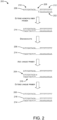
- FIG. 2 shows a schematic diagram 200 of a PCR amplification technique that uses a homopolymer primer 202 and a unique primer 204 to amplify a polynucleotide 206.
- the polynucleotide 206 may be the same as the polynucleotide 112 of FIG. 1 .
- the PCR may be performed using a PCR reaction mixture.
- the polynucleotide 206 includes a payload region 208 between a unique primer binding site 210 and a homopolymer primer binding site 212.
- the payload region 208 may encode digital data. In some implementations, the payload region 208 may be about 100-200 nucleotides long.
- the payload region 208 is illustrated as a series of dots in FIG. 2 .
- the polynucleotide 206 may exist as a single-stranded molecule or as a double-stranded molecule. If it is a double-stranded molecule, the polynucleotide 206 can disassociate into two single-stranded molecules during the PCR process.
- the homopolymer primer 202 hybridizes to the homopolymer primer binding site 212.
- the homopolymer primer binding site 212 is a stretch of a single nucleotide that is complementary to the single nucleotide of the homopolymer primer 202.
- the length of a homopolymer primer binding site 212 may vary in a population of polynucleotides due to the variations in the numbers of nucleotides added by uncontrolled synthesis. If, for example, the homopolymer primer 202 is formed from the nucleotide adenine (A) then the homopolymer primer binding site 212 is a series of thiamine (T) nucleotides.
- the homopolymer primer 202 may the same length as the homopolymer primer binding site 212, longer, or shorter.
- the homopolymer primer 202 is illustrated in FIG. 2 with a length of nine nucleotides, but it may be shorter or longer.
- the sequence of the homopolymer primer 202 and/or the homopolymer primer binding site 212 may include nucleotides that are not the same as the other nucleotides. For example, there may be other nucleotides included within a homopolymer sequence as the result of synthesis errors. However, any deviation from a constant homopolymer sequence is such that it does not prevent hybridization under suitable reaction conditions.
- a template-dependent polymerase extends the homopolymer primer 202 by sequentially incorporating nucleotide triphosphates that are complementary to the polynucleotide 206. This creates a complementary polynucleotide 214.
- the template-dependent polymerase and the nucleotide triphosphates may be provided as part of a PCR reaction mixture.
- the complementary polynucleotide 214 is disassociated from the polynucleotide 206 during PCR by elevated temperatures. This creates two single-stranded polynucleotides 206, 214 that include complementary binding sites for unique primers and complementary homopolymer regions.
- the unique primer 204 is added and hybridizes to the unique primer binding site 216 in the complementary polynucleotide 214. Because of the complementarity between primers and primer binding sites and between the two strands of a double-stranded polynucleotide, the sequence of the unique primer 204 that hybridizes to the complementary polynucleotide 214 may be the same as the unique primer binding site 210 of the polynucleotide 206. If the complementary polynucleotide 214 is present in a pool of polynucleotides that includes unique primer binding sites with different sequences which do not hybridize to the unique primer 204, those other polynucleotides will not be exponentially amplified during PCR.
- both primers 202, 204 will be added at the same time before thermocycling begins.
- FIG. 2 illustrates the homopolymer primer 202 as being complementary to the polynucleotide 206 and the unique primer 204 as being complementary to the complementary polynucleotide 214 the relationship may be switched.
- the unique primer 204 may be complementary to a polynucleotide 206 that is originally present and the homopolymer primer 202 may be complementary to the complementary polynucleotide 214 generated by extension of the unique primer 204.
- the unique primer 204 is extended by a template-dependent polymerase that sequentially incorporates nucleotides complementary to the complementary polynucleotide 214. This creates a new polynucleotide 218 with the same sequence as the original polynucleotide 202. This process is repeated multiple times exponentially amplifying the number of copies of the polynucleotide 206.
- FIG. 3 shows a schematic representation 300 of a PCR amplification technique that uses an overhang primer 302 and a unique primer 304 to amplify a polynucleotide 306 and add a unique nucleotide sequence 308 to the polynucleotide 306.
- the unique nucleotide sequence 308 can provide additional address space beyond that available from the combination of the homopolymer primer binding site 310 and the unique primer binding site 312. Adding the unique nucleotide sequence 308 may also allow two different groups of nucleotides that otherwise share the same primer binding sites to be combined in a single pool while maintaining separate addresses for each.
- the polynucleotide 306 includes a payload region 314 that may encode digital data, the unique primer binding site 312, and the homopolymer primer binding site 310.
- the overhang primer 302 is a primer that comprises a homopolymer region complementary to the homopolymer primer binding site 310 and a unique nucleotide sequence 308 that does not hybridize to the homopolymer primer binding site 310.
- the unique nucleotide sequence 308 overhangs the end of the polynucleotide 306 with the homopolymer primer binding site 310.
- the unique nucleotide sequence 308 is a sequence of varied nucleotides that is not a homopolymer but may contain short homopolymer sequences (e.g., two or three nucleotides long). In an implementation, the unique nucleotide sequence 308 may exclude homopolymers. In an implementation, any short homopolymer sequences in the unique nucleotide sequence 308 are homopolymers of a different nucleotide than the homopolymer region.
- Extension of the overhang primer 302 by a template-dependent polymerase creates a complementary polynucleotide 316 that is complementary to the polynucleotide 306 and includes the unique nucleotide sequence 308.
- the polynucleotide 306 and the complementary polynucleotide 316 are disassociated and the unique primer 304 hybridizes to the unique primer binding site 318 of the complementary polynucleotide 316.
- Extension of the unique primer 304 creates a new polynucleotide 320 that is complementary to the complementary polynucleotide 316 and includes a complementary unique nucleotide sequence that may function as a second unique primer binding site 322.
- the first is the unique primer binding site 312 that was present originally in the polynucleotide 306.
- the second is the unique nucleotide sequence 308 added by the overhang primer 302.
- a second unique primer 326 that hybridizes to complementary unique nucleotide sequence 322 may be used together with the unique primer 304 to specifically amplify the new double-stranded polynucleotide 324.
- the second unique primer 326 may include only a sequence that hybridizes to the complementary unique nucleotide sequence 322.
- the second unique primer 326 may also include a homopolymer region (not shown) that hybridizes to at least a portion of the homopolymer primer binding site 310.
- the overhang primer 302 may be used as the second unique primer 326.
- the overhang primer 302 and the unique primer 304 are illustrated as being added sequentially in FIG. 3 , in implementations both primers 302, 304 will be added at the same time before thermocycling begins. Additionally, although FIG. 3 illustrates the unique primer 302 as being complementary to the polynucleotide 306 and the unique primer 304 as being complementary to the complementary polynucleotide 316 the relationship may be switched. In other words, the unique primer 304 may be complementary to a polynucleotide 306 that is originally present and the overhang primer 302 may be complementary to the complementary polynucleotide 316 generated by extension of the unique primer 304.
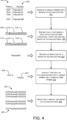
- FIG. 4 is a schematic diagram of a process 400 that uses a homopolymer primer and a unique primer to implement random access of a specific polynucleotide from the pool of polynucleotides. Portions of process 400 may be performed using the PCR amplification technique shown in FIG. 2 .
- unique primers are associated with groups of polynucleotides.
- Each group of polynucleotides includes a plurality of payload sequences that may be logically related or arbitrarily related to each other. One example of a logical relationship is encoding portions of the same data file.
- Each group of polynucleotides is associated with one of the unique primers.
- a group of polynucleotides may include many thousands or millions of different payload sequences.
- the correlation between unique primers and groups of polynucleotides may be recorded in a data structure 404 stored in memory of a computing device.
- the data structure 404 may be implemented as a look-up table, array, record, tree, linked list, or combinations thereof.
- the unique primers may be associated with payloads during in silico design of polynucleotide sequences.
- Design of the sequences of the polynucleotides precedes synthesis.
- Design of a polynucleotide includes at least identification of the payload sequence, a unique primer binding site, a homopolymer primer binding site, and determination of the orientation of the primer binding sites relative to the payload sequence. Either primer binding site may be located at the 3'-end or the 5'-end of the payload sequence.
- the design of the polynucleotides may also include other sequences of nucleotides such as error correction regions, and regions that encode metadata.
- Various techniques for designing polynucleotide sequences to encode digital data are known to those of skill in the art.
- a pool of polynucleotides is enzymatically synthesized.
- the pool of polynucleotides may be synthesized by providing the polynucleotide sequences designed at 402 to an automated or partially automated enzymatic synthesis system that performs synthesis with a template independent polymerase such as TdT to join nucleotides in specific sequences.
- a template independent polymerase such as TdT
- the pool of polynucleotides includes at least a first group of polynucleotides and a second group of polynucleotides. Although described with only two groups of polynucleotides, the pool may contain many thousands of different groups of polynucleotides.
- the first group of polynucleotides includes a first unique primer binding site 408, first payload regions 410 (e.g., payloads encoding digital data from a first data file), and a homopolymer primer binding site 412.
- the second group of polynucleotides includes a second unique primer binding site 414, second payload regions 416 (e.g., payloads encoding digital data from a second data file), and the same or different homopolymer primer binding site 418.
- the homopolymer primer binding site 412 in the first group of polynucleotides and the homopolymer primer binding site 418 in the second group of polynucleotides may be the same homopolymer.
- the homopolymer primer binding site 412 in the first group of polynucleotides is different than the homopolymer primer binding site 418 in the second group of polynucleotides.
- Different homopolymer primer binding sites can contribute to the address space. For example, use of four different homopolymer sequences in homopolymer primer binding sites within a pool of oligonucleotides can quadruple the address space provided by the unique primers.
- the polynucleotides may be synthesized using controlled enzymatic synthesis for the unique primer binding sites 408, 414 and the payload regions 410, 416 to generate specific sequences of varied nucleotides.
- Controlled enzymatic synthesis typically proceeds by a series of nucleotide addition, washing, and unblocking/regulation steps.
- the desired nucleotide is added, and the template independent polymerase joins it the 3'-prime end of the growing polynucleotide. Excess nucleotides and the template independent polymerase are washed away. Unblocking removes a blocking group that prevents addition of more than one nucleotide. Regulation controls activity of the template independent polymerase and servers to limit addition of nucleotides.
- nucleotides may be enzymatically degraded removing the substrates for the template independent polymerase.
- the template independent polymerase may also be regulated by controlling access to metal cofactors. Examples of techniques for regulating the activity of template independent polymerases are discussed in U.S. Pat. App. No. 16/543,433 entitled “Regulation of Polymerase Using Cofactor Oxidation States” filed on August 16, 2019 , and U.S. Pat. App. No. 16/563,797 entitled "Array-Based Enzymatic Oligonucleotide Synthesis” filed on September 6, 2019 .
- Unregulated enzymatic synthesis may be used to synthesize the homopolymer primer binding sites 412, 418.
- Unregulated enzymatic synthesis takes advantage of template independent polymerases' ability to continually add nucleotides. A single species of nucleotide is provided without a blocking group. The template independent polymerase repeatedly adds that nucleotide creating a homopolymer. The reaction can be stopped by washing away the nucleotides and the template independent polymerase or by regulating activity of the polymerase using techniques such as those described above. The length of a homopolymer created by unregulated enzymatic synthesis may be difficult to control precisely leading to variations in the length of the homopolymer primer bindings sites 412, 418 among polynucleotides in the same group.
- an indication of a group of polynucleotides is received.
- the indication may be received by a computing device.
- the computing device may include logic to generate and provide instructions to automated equipment such as a microfluidics device or laboratory robotics that causes the automated equipment to obtain a primer associated with the group of polynucleotides.
- the specific primer may be identified by the computing device, for example, through reference to the data structure 404.
- the indication of the group of polynucleotides may be an indication of a data file.
- the specified data file may be correlated with the group of polynucleotides by the data structure 404 or in another way.
- a portion of the pool of polynucleotides may be removed from the pool and placed into a different container (e.g., a tube or chamber of a thermocycler).
- the unique primer 424, the homopolymer primer 426, and the PCR reaction mixture may be brought into contact with the pool manually or by operation of an automated system.
- the group of polynucleotides indicated at 420 is selectively amplified by PCR.
- the selectivity is provided by the unique primer 424 and by the design of the pool of polynucleotides.
- PCR may be used to amplify only the selected group of polynucleotides. If multiple different homopolymer primer binding sites 412, 418 are used in the pool then the homopolymer primer 426 may also contribute to the selectivity.
- Selective amplification creates many copies of the selected group of polynucleotides 430 without increasing the number of copies of the other groups of polynucleotides 432.
- FIG. 5 is a schematic diagram of a process 500 that adds a unique nucleotide sequence onto polynucleotides by using overhang primers and combines two groups of polynucleotides into a single pool. Portions of process 500 may be performed using the PCR amplification technique shown in FIG. 3 .
- a homopolymer primer together with a unique primer for random access reduces the available address space as compared using two unique primers.
- the address space limits the number of uniquely addressable groups of polynucleotides in a pool. If the address space needs to be increased, it would be desirable to do so without needing to resynthesize the entire pool with new primer binding sites.
- a number of unique identifiers is determined.
- the unique identifiers are address locations in a pool of oligonucleotides that uniquely identify groups of polynucleotides.
- the unique identifiers may be implemented as primer binding sites. Polynucleotides that share the same primer binding sites, and thus are amplified by the same primers, belong to the same group of polynucleotides.
- the number of unique identifiers needed may be identified by determining how many different groups of polynucleotides will be combined in the same pool. If, for example, 10,000 different groups of polynucleotides are combined in a pool there will need to be 10,000 unique identifiers if each group is separately addressable.
- the threshold value may be the number of unique identifiers determined at operation 502. In some implementations, the threshold value may be based on the number of unique identifiers but be less than the number of unique identifiers (e.g., 90% of the number of unique identifiers).
- the address space determines the maximum number of unique identifiers and thus distinct groups that can be stored in a pool.
- the address space is affected by primer length and primer type. Longer primers provide a larger address space than shorter primers. Unique primers provide a larger address space than homopolymer primers.
- process 500 proceeds along the "yes" path to operation 506. If the available address space is not less than the threshold value (i.e., there are enough unique identifiers) then process 500 proceeds along the "no" path and returns to operation 502.
- the number of unique identifiers needed may be continually evaluated or evaluated periodically as storage needs change.
- a polynucleotide is contacted with a unique primer, an overhang primer, and a PCR reaction mixture.
- the polynucleotide includes a first unique primer binding site, a payload region, and a homopolymer primer binding site.
- the payload region may encode digital data.
- the unique primer hybridizes to the first unique primer binding site and includes a varied sequence of nucleotides that at least partially identifies the polynucleotide.
- the overhang primer includes a homopolymer region that hybridizes to the homopolymer primer binding site on the polynucleotide.
- the overhang primer also includes a unique nucleotide sequence that does not hybridize to the unique primer binding site or to the payload region of the polynucleotide.
- the polynucleotide may be contacted with the primers and PCR reaction mixture by placement into a reaction chamber of a thermocycler.
- the polynucleotide is a polynucleotide that was enzymatically synthesized by a template independent polymerase.
- the unique primer binding site and the payload regions of the polynucleotide can be synthesized by controlled enzymatic synthesis.
- the homopolymer primer binding site in the polynucleotide can be synthesized by unregulated enzymatic synthesis in the presence of a single species of nucleotide.
- the polynucleotide is selectively amplified by PCR to create an amplification product.
- Selective amplification uses the unique primer and the homopolymer primer to increase the number of copies of the polynucleotide without increasing the number of copies of other polynucleotides in the same pool.
- amplification with the overhang primer generates an amplification product that includes the unique nucleotide sequence adjacent to the homopolymer sequence.
- the unique nucleotide sequence in the amplification product can function as a second unique primer binding site.
- subsequent amplification of polynucleotides from the amplification product can be performed using two unique primers (i.e., one that hybridizes to the first unique primer binding site and one that hybridizes to the second unique primer binding site created by the overhang primer).
- the amplification product is combined with a second amplification product into a pool of polynucleotides.
- the second amplification product contains polynucleotides that share the same unique primer binding site but contain different payload regions.
- the payload regions of the second amplification product may, for example, encode digital data from a different data file.
- the polynucleotides in the second amplification product may also share the same homopolymer primer binding site. Thus, absent a modification the polynucleotides in the first and second amplification products would not be separately addressable if combined into the same pool.
- That modification is provided to the polynucleotides in the first amplification product by amplification with the overhang primers at 508.
- a similar modification may be made to the polynucleotides in the second amplification product.
- the second amplification product may be generated by PCR amplification using an overhang primer that includes a second unique nucleotide sequence different from the unique nucleotide sequence added to the first amplification product. The differences between the two unique nucleotide sequences may be such that they do not hybridize to each other and thus a primer that hybridizes to one will not hybridize to the other.
- the second unique nucleotide sequence added to the polynucleotides in the second amplification product may function as a third unique primer binding site distinct from the first unique primer binding site and from the second unique primer binding site.
- an indication of one of the groups of polynucleotides in the pool created at operation 510 is received.
- the indication may be an indication of the polynucleotides of the first amplification product or the polynucleotides of the second amplification product.
- the indication may be received by a computing device.
- the computing device may include logic to generate and provide instructions to automated equipment such as a microfluidics device or laboratory robotics that causes the automated equipment to obtain primers associated with the group of polynucleotides.
- the indication may be interpreted by the computing device as specifying a set of primers.
- the specific primers may be identified by reference to a data structure stored in computer memory such as a look-up table.
- the corresponding primers are the first unique primer and the second unique primer. But if the second amplification product is indicated, the corresponding primers are the first unique primer and the third unique primer. Thus, it is the second and third primer binding sites (created by amplification with overhang primers) that allow for differentiation between polynucleotides in the first amplification product and the polynucleotides in the second application product.
- the pool is contacted with the primers that correspond to the indication received at operation 512. This can be the first unique primer and one of the second unique primer or the third unique primer. If the indication at operation 512 indicates polynucleotides in the first amplification product, the primers will be the first unique primer and the second unique primer. If the indication at operation 512 indicates polynucleotides in the second amplification product, the primers will be the first unique primer and the third unique primer.
- the pool is also contacted with a PCR reaction mixture that may be the same or different than the PCR reaction mixture used at operation 506. PCR amplification will selectively amplify one but not both of the first amplification product and the second amplification product.
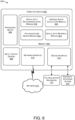
- FIG. 6 shows a block diagram of an example system 600 including at least one computing device 602 that functions as a part of a polynucleotide data storage system.
- the computing device 602 can be implemented with one or more processing unit(s) 604 and memory 606, both of which can be distributed across one or more physical or logical locations.
- the operations described as being performed by the computing device 602 can be performed by multiple computing devices.
- the operations described as being performed by the computing device 602 can be performed in a cloud computing architecture.
- the processing unit(s) 604 can include any combination of central processing units (CPUs), graphical processing units (GPUs), single core processors, multi-core processors, application-specific integrated circuits (ASICs), programmable circuits such as Field Programmable Gate Arrays (FPGA), and the like.
- CPUs central processing units
- GPUs graphical processing units
- ASICs application-specific integrated circuits
- FPGA Field Programmable Gate Arrays
- one or more of the processing units(s) 604 can use Single Instruction Multiple Data (SIMD) parallel architecture.
- the processing unit(s) 604 can include one or more GPUs that implement SIMD.
- One or more of the processing unit(s) 604 can be implemented as hardware devices.
- one or more of the processing unit(s) 604 can be implemented in software and/or firmware in addition to hardware implementations.
- Software or firmware implementations of the processing unit(s) 604 can include computer- or machine-executable instructions written in any suitable programming language to perform the various functions described.
- computing device 602 can be performed, at least in part, by one or more hardware logic components.
- illustrative types of hardware logic components include Field-programmable Gate Arrays (FPGAs), Application-specific Integrated Circuits (ASICs), Application-specific Standard Products (ASSPs), System-on-a-chip systems (SOCs), Complex Programmable Logic Devices (CPLDs), etc.
- Memory 606 of the computing device 602 can include removable storage, non-removable storage, local storage, and/or remote storage to provide storage of computer-readable instructions, data structures, program modules, and other data.
- the memory 606 can be implemented as computer-readable media.
- Computer-readable media includes at least two types of media: computer-readable storage media and communications media.
- Computer-readable storage media includes volatile and non-volatile, removable and non-removable media implemented in any method or technology for storage of information such as computer-readable instructions, data structures, program modules, or other data.
- Computer-readable storage media includes, but is not limited to, RAM, ROM, EEPROM, flash memory or other memory technology, CD-ROM, digital versatile disks (DVD) or other optical storage, magnetic cassettes, magnetic tape, magnetic disk storage or other magnetic storage devices, or any other non-transmission medium that can be used to store information for access by a computing device.
- communications media can embody computer-readable instructions, data structures, program modules, or other data in a modulated data signal, such as a carrier wave, or other transmission mechanism.
- a modulated data signal such as a carrier wave, or other transmission mechanism.
- computer-readable storage media and communications media are mutually exclusive.
- the computing device 602 can include and/or be coupled with one or more input/output devices 608 such as a keyboard, a pointing device, a touchscreen, a microphone, a camera, a display, a speaker, a printer, and the like.
- input/output devices 608 that are physically remote from the processing unit(s) 604 and the memory 606 can also be included within the scope of the input/output devices 608.
- the computing device 602 can include a network interface 610.
- the network interface 610 can be a point of interconnection between the computing device 602 and one or more networks 612.
- the network interface 610 can be implemented in hardware, for example, as a network interface card (NIC), a network adapter, a LAN adapter or physical network interface.
- the network interface 610 can be implemented in software.
- the network interface 610 can be implemented as an expansion card or as part of a motherboard.
- the network interface 610 can implement electronic circuitry to communicate using a specific physical layer and data link layer standard, such as Ethernet or Wi-Fi.
- the network interface 610 can support wired and/or wireless communication.
- the network interface 610 can provide a base for a full network protocol stack, allowing communication among groups of computers on the same local area network (LAN) and large-scale network communications through routable protocols, such as Internet Protocol (IP).
- IP Internet Protocol
- the one or more networks 612 can include any type of communications network, such as a local area network, a wide area network, a mesh network, an ad hoc network, a peer-to-peer network, the Internet, a telephone network, a wired network, a wireless network, combinations thereof, and the like.
- a device interface 614 can be part of the computing device 602 that provides hardware to establish communicative connections to other devices, such as a polynucleotide sequencer 130, an enzymatic synthesis system 616 that uses a template independent polymerase to synthesize polynucleotides.
- the device interface 614 can also include software that supports the hardware.
- the device interface 614 can be implemented as a wired or wireless connection that does not cross a network.
- a wired connection may include one or more wires or cables physically connecting the computing device 602 to another device.
- the wired connection can be created by a headphone cable, a telephone cable, a SCSI cable, a USB cable, an Ethernet cable, FireWire, or the like.
- the wireless connection may be created by radio waves (e.g., any version of Bluetooth, ANT, Wi-Fi IEEE 802.11, etc.), infrared light, or the like.
- radio waves e.g., any version of Bluetooth, ANT, Wi-Fi IEEE 802.11, etc.
- the polynucleotide sequence 130, the enzymatic synthesis system 616, or other hardware may be connected to the computing device 602 over the network 612.
- the computing device 602 can include multiple modules that may be implemented as instructions stored in the memory 606 for execution by processing unit(s) 604 and/or implemented, in whole or in part, by one or more hardware logic components or firmware.
- the memory 606 can be used to store any number of functional components that are executable by the one or more processing units 604.
- these functional components can comprise instructions or programs that are executable by the one or more processing units 604 and that, when executed, implement operational logic for performing the operations attributed to the computing device 602.
- Functional components of the computing device 602 can be executed on the one or more processing units 604 for implementing the various functions and features related to generating polynucleotide sequences for the storage and retrieval of digital data as described herein.
- the functional components can include a digital data encoding module 618, a polynucleotide design module 620, an address space calculation module 622, and a digital data retrieval module 624.
- a digital data encoding module 618 can be used to implement at least a portion of the processes shown in FIGS. 1 , 4 , and 5 .
- the digital data encoding module 618 can include computer-readable instructions that are executable by the processing unit(s) 604 to encode digital data as an alphabetic, or other, representation of a sequence of nucleotides.
- the digital data encoding module 618 can obtain digital data from one or more sources.
- the digital data can be stored by the memory 606 and obtained from there.
- the digital data can be stored by a data storage device coupled to, or otherwise accessible to, the computing device 602.
- the digital data can be related to image content, video content, text content, audio content, combinations thereof, and so forth.
- the digital data can include a bit string comprised of 1s and 0s.
- the digital data can be included in a data file.
- the digital data encoding module 618 can encode the 1s and 0s of the digital data as a sequence of nucleotides, such as A, T, G, C, or U.
- each 1 or 0 of the digital data can be encoded as a particular nucleotide.
- groups of 1s and groups of 0s of the digital data can be encoded as a particular nucleotide.
- the 1s and 0s of the digital data can be converted to a number in a number system other than base-2 before encoding.
- the 1s and 0s of the digital data can be converted to a base-3 format or a base-4 format before encoding.
- the digital data encoding module 618 can encode the 1s and 0s of the digital data according to a binary encoding scheme.
- the digital data encoding module 618 can encode the series of bits 00 as a first nucleotide (e.g., A), the series of bits 01 as a second nucleotide (e.g., T), the series of bits 10 as a third nucleotide (e.g., G), and the series of bits 11 as a fourth nucleotide (e.g., C).
- the digital data encoding module 618 can encode the 1s and 0s of the digital data according to a ternary encoding scheme. For example, the digital data encoding module 618 can convert the 1s and 0s of the digital data to modified digital data comprising 0s, 1s, and 2s. Subsequently, the digital data encoding module 618 can encode the 0s, 1s, and 2s of the modified digital data as nucleotides. In some implementations, the data encoding module 618 can encode the 0s, 1s, and 2s of the modified digital data as nucleotides according to a preceding nucleotide in the sequence of nucleotides. To illustrate, a 0 preceded by G could be encoded as T, while a 0 preceded by A could be encoded as C.
- the digital data encoding module 618 can encode the 1s and 0s of the digital data according to a base-4 encoding scheme.
- the digital data encoding module 618 can convert the 1s and 0s of the digital data to modified digital data comprising 0s, 1s, 2s, and 3s.
- each species of nucleotide used to do the encoding can correspond with a respective base-4 number.
- 0 can correspond with A
- 1 can correspond with T
- 2 can correspond with G
- 3 can correspond with C.
- the length of the polynucleotide sequences encoding the digital data can be limited. For example, if the length of the sequence of nucleotides encoding the digital data is greater than a particular number of nucleotides, the polynucleotide can become unstable and/or otherwise lose its linear arrangement, such as by forming secondary structures.
- the sequences of nucleotides used to encode digital data can have from 60 to 300 nucleotides, from 80 to 150 nucleotides, from 90 to 120 nucleotides, or from 100 to 140 nucleotides. In situations where multiple sequences are used to encode the digital data, the digital data encoding module 618 can divide the bits of the digital data into segments.
- the digital data encoding module 618 can encode each of the segments of the digital data as a separate sequence of nucleotides.
- the segments can be the same length, while in other situations, the segments can have varying lengths.
- the length of the segments can be within a range of lengths. The range of lengths can be based at least partly on a probability that polynucleotides may lose a linear structure when the length is greater than an upper threshold length or when the length is less than a lower threshold length.
- the polynucleotide design module 620 can include computer-readable instructions that, when executed by the processing unit(s) 604, generate polynucleotide sequences that include payload regions which encode digital data as well as other regions that do not encode digital data.
- the polynucleotide design module 620 can use data corresponding to payloads produced by the digital data encoding module 618 to generate the polynucleotide data.
- the polynucleotide design module 620 can also utilize data corresponding to group identifiers associated with the payloads to generate polynucleotide data. Additionally, the polynucleotide design module 620 can design both unique primers and homopolymer primers to associate with the payloads to generate polynucleotide data.
- the polynucleotide design module 620 can design primers according to any currently known or later-developed techniques for PCR primer design.
- addressing information can be assigned to each payload.
- the addressing information can indicate the segment of the bit string that is encoded and the location of the segment within the original bit string.
- the polynucleotide design module 620 can generate one or more nucleotides that encode this addressing information and add those nucleotides to the polynucleotide sequence.
- the polynucleotide design module 620 can also add nucleotides that correspond to error correction information. Further, the polynucleotide design module 620 can add nucleotides that correspond to a file identifier which may be distinct from the primer binding sites.
- the polynucleotide design module 620 may determine identifiers for each group of polynucleotides. In some instances, the group identifiers the data file that is encoded by the polynucleotides in the group. For example, the polynucleotide design module 620 can assign one or more group identifiers to respective groups that include the polynucleotides which encode digital data of a particular data file. The polynucleotide design module 620 can also generate metadata that indicates the group identifiers that correspond to the data file. The group identifiers may be primer binding sites that allow for selective amplification of polynucleotides belonging to the same group. The polynucleotide design module 620 can also pair homopolymer sequences with unique primer binding sites.
- the polynucleotide sequences generated by the polynucleotide design module 620 can be used as instructions to synthesize polynucleotides.
- the polynucleotide design module 620 can communicate polynucleotide data corresponding to the polynucleotide sequences to one or more devices such as an enzymatic synthesis system 616.
- the polynucleotide design module 620 may also provide primer sequences to an oligonucleotide synthesizer that uses phosphoramidite chemistry or other non-enzymatic techniques to create polynucleotides.
- the address space calculation module 622 can include computer-readable instructions that when executed by the processing unit(s) 604 determine an available or a necessary address space.
- the address space calculation module 622 can determine the address space needed to store groups of polynucleotides in the same pool. It may do this simply by counting the number of different groups of polynucleotides. The number of groups and the number of polynucleotides in each group determines the resolution of random access.
- the address space calculation module 622 may also determine the available address space based on a set of unique primers and homopolymer primers.
- the address space may be determined by counting the number of different unique primers that satisfy all other existing constraints on primer design.
- the address space may be determined by multiplying the number of different unique primers (that satisfy all other constraints) by the number of homopolymer primer variations used in the pool. For example, if two different homopolymer sequences are used as homopolymer primer binding sites, this will double the address space.
- the digital data retrieval module 624 can include computer-readable instructions that when executed by the processing unit(s) 604 can provide digital data in response to a request for the digital data.
- the digital data retrieval module 624 can receive a request to obtain digital data.
- the digital data retrieval module 624 can receive a request for a data file including a digital image.
- the digital data retrieval module 624 can identify one or more primers and/or at least one file identifier that corresponds to the requested data.
- the digital data retrieval module 624 can parse a data structure, such as a lookup table, to identify the primers that correspond to the requested digital data.
- the digital data retrieval module 624 can communicate with one or more devices, such as via the device interface 614, to request the polynucleotides that correspond to the group identifiers.
- the one or more devices in communication with the digital data retrieval module 624 can be coupled to, or otherwise associated with, a polynucleotide data storage system.
- the digital data retrieval module 624 can provide to another computing device the primers to be used to amplify the polynucleotides of the groups.
- the digital data retrieval module 624 can access metadata indicating a storage location (e.g., one or more container identifiers) within a polynucleotide data storage system that stores polynucleotides which correspond to the requested digital data.
- a storage location e.g., one or more container identifiers
- the storage location can be identified based at least partly on matching the group identifiers associated with the requested digital data with the group identifiers associated with the containers of the polynucleotide data storage system.
- the digital data retrieval module 624 can provide the information regarding the primers and/or the storage location to one or more additional computing devices, such as a computing device coupled with a polynucleotide data storage system.
- the digital data retrieval module 624 can receive the sequences of the polynucleotides from one or more devices, such as polynucleotide sequencer 130, and decode the polynucleotides using a reverse process from the encoding performed by the digital data encoding module 618. For example, in implementations where 00 in a string of bits is encoded as A, the digital data retrieval module 624 can decode each A in the polynucleotide sequences as 00. The digital data retrieval module 624 can reproduce the bit string of the digital data being requested and provide the bit string to one or more devices that requested the digital data. The digital data retrieval module 624 may also implement one or more error correction techniques in the decoding of polynucleotide sequences.
Landscapes
- Chemical & Material Sciences (AREA)
- Life Sciences & Earth Sciences (AREA)
- Physics & Mathematics (AREA)
- Health & Medical Sciences (AREA)
- Engineering & Computer Science (AREA)
- Organic Chemistry (AREA)
- Proteomics, Peptides & Aminoacids (AREA)
- General Health & Medical Sciences (AREA)
- Biophysics (AREA)
- Biotechnology (AREA)
- Bioinformatics & Cheminformatics (AREA)
- Zoology (AREA)
- Wood Science & Technology (AREA)
- Analytical Chemistry (AREA)
- Medical Informatics (AREA)
- Chemical Kinetics & Catalysis (AREA)
- Spectroscopy & Molecular Physics (AREA)
- Bioinformatics & Computational Biology (AREA)
- Evolutionary Biology (AREA)
- Theoretical Computer Science (AREA)
- General Engineering & Computer Science (AREA)
- Genetics & Genomics (AREA)
- Biochemistry (AREA)
- Molecular Biology (AREA)
- Microbiology (AREA)
- Immunology (AREA)
- Artificial Intelligence (AREA)
- Bioethics (AREA)
- Computer Vision & Pattern Recognition (AREA)
- Data Mining & Analysis (AREA)
- Databases & Information Systems (AREA)
- Epidemiology (AREA)
- Evolutionary Computation (AREA)
- Public Health (AREA)
- Software Systems (AREA)
- Measuring Or Testing Involving Enzymes Or Micro-Organisms (AREA)
- Preparation Of Compounds By Using Micro-Organisms (AREA)
- Enzymes And Modification Thereof (AREA)
Claims (15)
- Procédé de stockage et de récupération de données numériques dans des polynucléotides :le codage de données numériques (104) dans une séquence de charge utile (108) ;l'association de la séquence de charge utile à une amorce unique (204) ;la synthèse enzymatique d'un polynucléotide (112 ; 202) ayant une séquence qui comprend un site de liaison d'amorce unique (210) qui s'hybride avec l'amorce unique (204), la séquence de charge utile (208) et un site de liaison d'amorce homopolymère (206) ;la mise en contact du polynucléotide (112 ; 206) avec l'amorce unique (204), une amorce homopolymère (202) qui s'hybride au site de liaison de l'amorce homopolymère (212), et un mélange réactionnel de réaction en chaîne par polymérase (PCR) ;l'amplification sélective, par PCR, du polynucléotide (428) ;le séquençage du polynucléotide (126) pour générer des données de séquence (132) ; etle décodage des données de séquence (132) pour récupérer les données numériques (136).
- Procédé selon la revendication 1, dans lequel la synthèse enzymatique du polynucléotide comprend la régulation de l'activité d'une polymérase indépendante de la matrice pendant la synthèse du site de liaison d'amorce unique et de la séquence de charge utile.
- Procédé selon la revendication 1 ou 2, dans lequel la synthèse enzymatique du polynucléotide comprend la synthèse du site de liaison de l'amorce homopolymère par synthèse non régulée avec une polymérase indépendante de la matrice en présence d'une seule espèce de nucléotide sans groupes bloquants.
- Procédé selon l'une quelconque des revendications 1 à 3, dans lequel la synthèse enzymatique du polynucléotide comprend la synthèse en phase solide avec une extrémité du polynucléotide qui comprend le site de liaison d'amorce unique attaché à un substrat solide.
- Procédé selon l'une quelconque des revendications 1 à 4, comprenant :le mélange du polynucléotide dans un ensemble de polynucléotides qui contient un second polynucléotide comprenant un deuxième site de liaison d'amorce unique, une seconde séquence de charge utile et le site de liaison d'amorce homopolymère ; etla réception d'une indication du polynucléotide.
- Procédé selon l'une quelconque des revendications 1 à 4, dans lequel la longueur du site de liaison de l'amorce homopolymère n'est pas prédéterminée.
- Procédé pour effectuer un accès aléatoire pour obtenir des polynucléotides spécifiques à partir d'un ensemble de polynucléotides, le procédé comprenant :
la synthèse enzymatique d'un ensemble (116) de polynucléotides (112) contenant :un premier groupe de polynucléotides comprenant chacun un premier site de liaison d'amorce unique (408) et un site de liaison à l'amorce homopolymère (412), etun second groupe de polynucléotides comprenant chacun un deuxième site de liaison d'amorce unique (414) et un site de liaison à l'amorce homopolymère identique ou différent (418) ; dans lequelle premier groupe de polynucléotides comprend des premières régions de charge utile codant pour des parties d'un premier fichier de données et le second groupe de polynucléotides comprend des secondes régions de charge utile codant des parties d'un second fichier de données ;la réception d'une indication du premier groupe de polynucléotides (420) ;la mise en contact d'au moins une partie de l'ensemble (116) de polynucléotides (112) avec une première amorce unique (424) complémentaire au premier site de liaison d'amorce unique (408), une amorce homopolymère (426) complémentaire à au moins une partie du site de liaison d'amorce homopolymère (412) et un mélange réactionnel PCR ; etl'amplification sélective, par PCR, du premier groupe de polynucléotides (428). - Procédé selon la revendication 7, dans lequel la synthèse enzymatique comprend la synthèse par une polymérase indépendante de la matrice.
- Procédé selon la revendication 8, dans lequel la synthèse enzymatique du site de liaison de l'amorce homopolymère comprend la combinaison de la polymérase indépendante de la matrice et d'une seule espèce de nucléotides sans groupes bloquants pour effectuer une synthèse enzymatique non régulée du site de liaison de l'amorce homopolymère.
- Procédé selon la revendication 8 ou 9, dans lequel la synthèse enzymatique du premier site de liaison d'amorce unique et du deuxième site de liaison d'amorce unique comprend la combinaison de la polymérase indépendante de la matrice et de nucléotides de séquence ordonnée avec des groupes bloquants pour effectuer une synthèse enzymatique contrôlée de séquences spécifiques du premier site de liaison d'amorce unique et du deuxième site de liaison d'amorce unique.
- Procédé selon la revendication 8 ou 9, dans lequel la synthèse enzymatique du premier site de liaison d'amorce unique dans le premier groupe de polynucléotides comprend la fourniture d'un oligonucléotide préalablement synthétisé avec la séquence du premier site de liaison d'amorce unique en tant qu'initiateur de la polymérase indépendante de la matrice.
- Procédé comprenant :
la mise en contact d'un polynucléotide (306) comprenant un premier site de liaison d'amorce unique (312), une région de charge utile (314) codant pour des données numériques, et un site de liaison d'amorce homopolymère (310) avec :une amorce unique (204) ayant une séquence qui s'hybride au premier site de liaison d'amorce unique (210),une amorce en surplomb (302) qui s'hybride au site de liaison de l'amorce homopolymère (310) et qui comprend une séquence nucléotidique unique (308) qui surplombe une extrémité du polynucléotide (306), etun mélange réactionnel PCR ; etl'amplification sélective, par PCR, du polynucléotide (306) pour créer un premier produit d'amplification ayant un deuxième site de liaison d'amorce unique (322) formé à partir de la séquence nucléotidique unique (308) de l'amorce en surplomb (302). - Procédé selon la revendication 12, dans lequel la séquence nucléotidique unique de l'amorce en surplomb n'est pas complémentaire du premier site de liaison de l'amorce unique ou de la région de charge utile du polynucléotide.
- Procédé selon la revendication 12 ou 13, comprenant en outre la détermination qu'un espace d'adressage créé au moins en partie par le premier site de liaison d'amorce unique fournit un nombre d'identifiants uniques qui est inférieur à une valeur seuil.
- Procédé selon l'une quelconque des revendications 12 à 14, comprenant en outre la combinaison, en un ensemble, du premier produit d'amplification avec un second produit d'amplification ayant le premier site de liaison d'amorce unique, une région de charge utile différente et un troisième site de liaison d'amorce unique.
Priority Applications (1)
| Application Number | Priority Date | Filing Date | Title |
|---|---|---|---|
| EP24173096.9A EP4397772B1 (fr) | 2020-04-24 | 2021-03-16 | Amorces homopolymères pour l'amplification de polynucléotides créées par synthèse enzymatique |
Applications Claiming Priority (2)
| Application Number | Priority Date | Filing Date | Title |
|---|---|---|---|
| US16/858,253 US11702689B2 (en) | 2020-04-24 | 2020-04-24 | Homopolymer primers for amplification of polynucleotides created by enzymatic synthesis |
| PCT/US2021/022453 WO2021216223A1 (fr) | 2020-04-24 | 2021-03-16 | Amorces homopolymères pour l'amplification de polynucléotides créées par synthèse enzymatique |
Related Child Applications (1)
| Application Number | Title | Priority Date | Filing Date |
|---|---|---|---|
| EP24173096.9A Division EP4397772B1 (fr) | 2020-04-24 | 2021-03-16 | Amorces homopolymères pour l'amplification de polynucléotides créées par synthèse enzymatique |
Publications (2)
| Publication Number | Publication Date |
|---|---|
| EP4139480A1 EP4139480A1 (fr) | 2023-03-01 |
| EP4139480B1 true EP4139480B1 (fr) | 2024-05-01 |
Family
ID=75377866
Family Applications (2)
| Application Number | Title | Priority Date | Filing Date |
|---|---|---|---|
| EP21716582.8A Active EP4139480B1 (fr) | 2020-04-24 | 2021-03-16 | Amorces homopolymères pour l'amplification de polynucléotides créées par synthèse enzymatique |
| EP24173096.9A Active EP4397772B1 (fr) | 2020-04-24 | 2021-03-16 | Amorces homopolymères pour l'amplification de polynucléotides créées par synthèse enzymatique |
Family Applications After (1)
| Application Number | Title | Priority Date | Filing Date |
|---|---|---|---|
| EP24173096.9A Active EP4397772B1 (fr) | 2020-04-24 | 2021-03-16 | Amorces homopolymères pour l'amplification de polynucléotides créées par synthèse enzymatique |
Country Status (3)
| Country | Link |
|---|---|
| US (2) | US11702689B2 (fr) |
| EP (2) | EP4139480B1 (fr) |
| WO (1) | WO2021216223A1 (fr) |
Families Citing this family (3)
| Publication number | Priority date | Publication date | Assignee | Title |
|---|---|---|---|---|
| GB2563105B (en) | 2016-11-16 | 2022-10-19 | Catalog Tech Inc | Nucleic acid-based data storage |
| AU2019236289B2 (en) | 2018-03-16 | 2024-12-05 | Catalog Technologies, Inc. | Chemical methods for nucleic acid-based data storage |
| AU2019315604B2 (en) | 2018-08-03 | 2025-04-17 | Catolog Technologies, Inc | Systems and methods for storing and reading nucleic acid-based data with error protection |
Family Cites Families (26)
| Publication number | Priority date | Publication date | Assignee | Title |
|---|---|---|---|---|
| US4683202A (en) | 1985-03-28 | 1987-07-28 | Cetus Corporation | Process for amplifying nucleic acid sequences |
| US4683195A (en) | 1986-01-30 | 1987-07-28 | Cetus Corporation | Process for amplifying, detecting, and/or-cloning nucleic acid sequences |
| CA1284931C (fr) | 1986-03-13 | 1991-06-18 | Henry A. Erlich | Procede de detection de variations specifiques de nucleotides et de polymorphismes genetiques dans les acides nucleiques |
| WO2002010392A2 (fr) * | 2000-08-01 | 2002-02-07 | Oregon Health & Science University | Gene codant pour des proteines d'enveloppe se liant a l'adn mammalien et utilisations dudit gene |
| US6875595B2 (en) * | 2001-09-13 | 2005-04-05 | Divergence, Inc. | Nematode fatty acid desaturase-like sequences |
| DE10215035A1 (de) | 2002-04-05 | 2003-10-23 | Roche Diagnostics Gmbh | Rekombinante terminale Deoxynukleotidyltransferase mit verbesserter Funktionalität |
| US7867749B2 (en) * | 2002-06-21 | 2011-01-11 | Divergence, Inc. | Nematode phosphoethanolamine N-methyltransferase-like sequences |
| EP1604040B1 (fr) | 2003-03-07 | 2010-10-13 | Rubicon Genomics, Inc. | Amplification et analyse d'un genome entier et de bibliotheques de transcriptomes entiers generees par un procede de polymerisation d'adn |
| US20060286082A1 (en) * | 2005-06-20 | 2006-12-21 | Kurzweil Raymond C | Systems and methods for generating biological material |
| US9677130B2 (en) * | 2011-02-15 | 2017-06-13 | Institute For Systems Biology | Methods to detect and quantify RNA |
| ES3028417T3 (en) * | 2012-06-01 | 2025-06-19 | European Molecular Biology Laboratory | High-capacity storage of digital information in dna |
| JP2017538234A (ja) * | 2014-10-18 | 2017-12-21 | マリク、ギリクMALIK, Girik | データ保管システム |
| EP3699283A1 (fr) | 2014-10-20 | 2020-08-26 | Molecular Assemblies Inc. | Enzymes indépendantes de la matrice modifiées pour la synthèse de polydésoxynucléotides |
| EP3067809A1 (fr) * | 2015-03-13 | 2016-09-14 | Thomson Licensing | Procédé et appareil permettant de stocker et d'extraire sélectivement des données codées dans des molécules d'acide nucléique |
| US11164661B2 (en) * | 2015-04-10 | 2021-11-02 | University Of Washington | Integrated system for nucleic acid-based storage and retrieval of digital data using keys |
| US10349697B2 (en) | 2015-07-30 | 2019-07-16 | Donald Edward Morgan | Compressible damping system for head protection |
| US20170141793A1 (en) * | 2015-11-13 | 2017-05-18 | Microsoft Technology Licensing, Llc | Error correction for nucleotide data stores |
| WO2017189914A1 (fr) | 2016-04-27 | 2017-11-02 | Massachusetts Institute Of Technology | Espace de mémoire vive en polymère contrôlé en séquence |
| WO2017189469A1 (fr) | 2016-04-29 | 2017-11-02 | Microsoft Technology Licensing, Llc | Reconstruction de trace à partir de lectures bruitées d'un séquenceur de polynucléotides |
| WO2017223517A1 (fr) | 2016-06-24 | 2017-12-28 | The Regents Of The University Of California | Synthèse et séquençage d'acide nucléique en utilisant des nucléosides triphosphates fixés |
| CA3038535A1 (fr) * | 2016-10-01 | 2018-04-05 | Berkeley Lights, Inc. | Compositions de code-barres d'adn et procedes d'identification in situ dans un dispositif microfluidique |
| US10787699B2 (en) | 2017-02-08 | 2020-09-29 | Microsoft Technology Licensing, Llc | Generating pluralities of primer and payload designs for retrieval of stored nucleotides |
| US10774379B2 (en) | 2017-03-15 | 2020-09-15 | Microsoft Technology Licensing, Llc | Random access of data encoded by polynucleotides |
| WO2019079802A1 (fr) * | 2017-10-20 | 2019-04-25 | President And Fellows Of Harvard College | Procédés de codage et de décodage à haut débit de l'information stockée dans l'adn |
| EP3506135A1 (fr) | 2017-12-29 | 2019-07-03 | IMEC vzw | Procédé d'écriture de données |
| WO2020089218A1 (fr) * | 2018-10-29 | 2020-05-07 | Koninklijke Nederlandse Akademie Van Wetenschappen | Séquençage monocellulaire d'arn pleine longueur |
-
2020
- 2020-04-24 US US16/858,253 patent/US11702689B2/en active Active
-
2021
- 2021-03-16 WO PCT/US2021/022453 patent/WO2021216223A1/fr not_active Ceased
- 2021-03-16 EP EP21716582.8A patent/EP4139480B1/fr active Active
- 2021-03-16 EP EP24173096.9A patent/EP4397772B1/fr active Active
-
2023
- 2023-06-01 US US18/204,920 patent/US12385086B2/en active Active
Also Published As
| Publication number | Publication date |
|---|---|
| US20210332412A1 (en) | 2021-10-28 |
| US11702689B2 (en) | 2023-07-18 |
| EP4397772B1 (fr) | 2025-08-13 |
| EP4397772A2 (fr) | 2024-07-10 |
| EP4397772A3 (fr) | 2024-07-24 |
| US20230323443A1 (en) | 2023-10-12 |
| US12385086B2 (en) | 2025-08-12 |
| WO2021216223A1 (fr) | 2021-10-28 |
| EP4139480A1 (fr) | 2023-03-01 |
Similar Documents
| Publication | Publication Date | Title |
|---|---|---|
| US12385086B2 (en) | Homopolymer primers for amplification of polynucleotides created by enzymatic synthesis | |
| US20230395198A1 (en) | Dna random access storage system via ligation | |
| US10774379B2 (en) | Random access of data encoded by polynucleotides | |
| US12400738B2 (en) | Whole pool amplification and in-sequencer random-access of data encoded by polynucleotides | |
| EP3580675B1 (fr) | Conception d'amorces pour la récupération de polynucléotides stockés | |
| CN104093890B (zh) | 用于靶向核酸序列富集和高效文库产生的组合物和方法 | |
| US20240018511A1 (en) | Array-based enzymatic oligonucleotide synthesis | |
| CN110678547B (zh) | 分子条码化 | |
| US20240371470A1 (en) | Efficient clustering of noisy polynucleotide sequence reads | |
| US20170141793A1 (en) | Error correction for nucleotide data stores | |
| EP4065729B1 (fr) | Assemblage oligonucléotide par hybridation à contrôle électrique | |
| WO2006073504A2 (fr) | Sequençage des oscillations dans l'anticodon | |
| EP3580674A1 (fr) | Conception d'amorce pour la récupération de polynucléotides stockés | |
| US20230257788A1 (en) | Oligonucleotide assembly using hairpins and invading strands | |
| WO2020227382A1 (fr) | Procédés et compositions de séquençage séquentiel | |
| JP7191115B2 (ja) | エンドヌクレアーゼ媒介移動平衡(EM-SEq)による核酸の増幅のための方法 | |
| US6670120B1 (en) | Categorising nucleic acid | |
| Nutter | New frontiers in plant functional genomics using next generation sequencing technologies | |
| HK1234450A (en) | Methods for selecting and amplifying polynucleotides |
Legal Events
| Date | Code | Title | Description |
|---|---|---|---|
| STAA | Information on the status of an ep patent application or granted ep patent |
Free format text: STATUS: UNKNOWN |
|
| STAA | Information on the status of an ep patent application or granted ep patent |
Free format text: STATUS: THE INTERNATIONAL PUBLICATION HAS BEEN MADE |
|
| PUAI | Public reference made under article 153(3) epc to a published international application that has entered the european phase |
Free format text: ORIGINAL CODE: 0009012 |
|
| STAA | Information on the status of an ep patent application or granted ep patent |
Free format text: STATUS: REQUEST FOR EXAMINATION WAS MADE |
|
| 17P | Request for examination filed |
Effective date: 20221003 |
|
| AK | Designated contracting states |
Kind code of ref document: A1 Designated state(s): AL AT BE BG CH CY CZ DE DK EE ES FI FR GB GR HR HU IE IS IT LI LT LU LV MC MK MT NL NO PL PT RO RS SE SI SK SM TR |
|
| DAV | Request for validation of the european patent (deleted) | ||
| DAX | Request for extension of the european patent (deleted) | ||
| STAA | Information on the status of an ep patent application or granted ep patent |
Free format text: STATUS: EXAMINATION IS IN PROGRESS |
|
| 17Q | First examination report despatched |
Effective date: 20230912 |
|
| GRAP | Despatch of communication of intention to grant a patent |
Free format text: ORIGINAL CODE: EPIDOSNIGR1 |
|
| STAA | Information on the status of an ep patent application or granted ep patent |
Free format text: STATUS: GRANT OF PATENT IS INTENDED |
|
| INTG | Intention to grant announced |
Effective date: 20231122 |
|
| P01 | Opt-out of the competence of the unified patent court (upc) registered |
Effective date: 20231211 |
|
| GRAS | Grant fee paid |
Free format text: ORIGINAL CODE: EPIDOSNIGR3 |
|
| GRAA | (expected) grant |
Free format text: ORIGINAL CODE: 0009210 |
|
| STAA | Information on the status of an ep patent application or granted ep patent |
Free format text: STATUS: THE PATENT HAS BEEN GRANTED |
|
| AK | Designated contracting states |
Kind code of ref document: B1 Designated state(s): AL AT BE BG CH CY CZ DE DK EE ES FI FR GB GR HR HU IE IS IT LI LT LU LV MC MK MT NL NO PL PT RO RS SE SI SK SM TR |
|
| REG | Reference to a national code |
Ref country code: GB Ref legal event code: FG4D |
|
| REG | Reference to a national code |
Ref country code: CH Ref legal event code: EP |
|
| REG | Reference to a national code |
Ref country code: DE Ref legal event code: R096 Ref document number: 602021012701 Country of ref document: DE |
|
| REG | Reference to a national code |
Ref country code: IE Ref legal event code: FG4D |
|
| REG | Reference to a national code |
Ref country code: LT Ref legal event code: MG9D |
|
| REG | Reference to a national code |
Ref country code: NL Ref legal event code: MP Effective date: 20240501 |
|
| PG25 | Lapsed in a contracting state [announced via postgrant information from national office to epo] |
Ref country code: IS Free format text: LAPSE BECAUSE OF FAILURE TO SUBMIT A TRANSLATION OF THE DESCRIPTION OR TO PAY THE FEE WITHIN THE PRESCRIBED TIME-LIMIT Effective date: 20240901 |
|
| PG25 | Lapsed in a contracting state [announced via postgrant information from national office to epo] |
Ref country code: BG Free format text: LAPSE BECAUSE OF FAILURE TO SUBMIT A TRANSLATION OF THE DESCRIPTION OR TO PAY THE FEE WITHIN THE PRESCRIBED TIME-LIMIT Effective date: 20240501 |
|
| PG25 | Lapsed in a contracting state [announced via postgrant information from national office to epo] |
Ref country code: FI Free format text: LAPSE BECAUSE OF FAILURE TO SUBMIT A TRANSLATION OF THE DESCRIPTION OR TO PAY THE FEE WITHIN THE PRESCRIBED TIME-LIMIT Effective date: 20240501 Ref country code: HR Free format text: LAPSE BECAUSE OF FAILURE TO SUBMIT A TRANSLATION OF THE DESCRIPTION OR TO PAY THE FEE WITHIN THE PRESCRIBED TIME-LIMIT Effective date: 20240501 |
|
| PG25 | Lapsed in a contracting state [announced via postgrant information from national office to epo] |
Ref country code: GR Free format text: LAPSE BECAUSE OF FAILURE TO SUBMIT A TRANSLATION OF THE DESCRIPTION OR TO PAY THE FEE WITHIN THE PRESCRIBED TIME-LIMIT Effective date: 20240802 |
|
| PG25 | Lapsed in a contracting state [announced via postgrant information from national office to epo] |
Ref country code: PT Free format text: LAPSE BECAUSE OF FAILURE TO SUBMIT A TRANSLATION OF THE DESCRIPTION OR TO PAY THE FEE WITHIN THE PRESCRIBED TIME-LIMIT Effective date: 20240902 |
|
| REG | Reference to a national code |
Ref country code: AT Ref legal event code: MK05 Ref document number: 1682414 Country of ref document: AT Kind code of ref document: T Effective date: 20240501 |
|
| PG25 | Lapsed in a contracting state [announced via postgrant information from national office to epo] |
Ref country code: NL Free format text: LAPSE BECAUSE OF FAILURE TO SUBMIT A TRANSLATION OF THE DESCRIPTION OR TO PAY THE FEE WITHIN THE PRESCRIBED TIME-LIMIT Effective date: 20240501 |
|
| PG25 | Lapsed in a contracting state [announced via postgrant information from national office to epo] |
Ref country code: ES Free format text: LAPSE BECAUSE OF FAILURE TO SUBMIT A TRANSLATION OF THE DESCRIPTION OR TO PAY THE FEE WITHIN THE PRESCRIBED TIME-LIMIT Effective date: 20240501 |
|
| PG25 | Lapsed in a contracting state [announced via postgrant information from national office to epo] |
Ref country code: AT Free format text: LAPSE BECAUSE OF FAILURE TO SUBMIT A TRANSLATION OF THE DESCRIPTION OR TO PAY THE FEE WITHIN THE PRESCRIBED TIME-LIMIT Effective date: 20240501 |
|
| PG25 | Lapsed in a contracting state [announced via postgrant information from national office to epo] |
Ref country code: PL Free format text: LAPSE BECAUSE OF FAILURE TO SUBMIT A TRANSLATION OF THE DESCRIPTION OR TO PAY THE FEE WITHIN THE PRESCRIBED TIME-LIMIT Effective date: 20240501 |
|
| PG25 | Lapsed in a contracting state [announced via postgrant information from national office to epo] |
Ref country code: LV Free format text: LAPSE BECAUSE OF FAILURE TO SUBMIT A TRANSLATION OF THE DESCRIPTION OR TO PAY THE FEE WITHIN THE PRESCRIBED TIME-LIMIT Effective date: 20240501 |
|
| PG25 | Lapsed in a contracting state [announced via postgrant information from national office to epo] |
Ref country code: PT Free format text: LAPSE BECAUSE OF FAILURE TO SUBMIT A TRANSLATION OF THE DESCRIPTION OR TO PAY THE FEE WITHIN THE PRESCRIBED TIME-LIMIT Effective date: 20240902 Ref country code: PL Free format text: LAPSE BECAUSE OF FAILURE TO SUBMIT A TRANSLATION OF THE DESCRIPTION OR TO PAY THE FEE WITHIN THE PRESCRIBED TIME-LIMIT Effective date: 20240501 Ref country code: NO Free format text: LAPSE BECAUSE OF FAILURE TO SUBMIT A TRANSLATION OF THE DESCRIPTION OR TO PAY THE FEE WITHIN THE PRESCRIBED TIME-LIMIT Effective date: 20240801 Ref country code: NL Free format text: LAPSE BECAUSE OF FAILURE TO SUBMIT A TRANSLATION OF THE DESCRIPTION OR TO PAY THE FEE WITHIN THE PRESCRIBED TIME-LIMIT Effective date: 20240501 Ref country code: LV Free format text: LAPSE BECAUSE OF FAILURE TO SUBMIT A TRANSLATION OF THE DESCRIPTION OR TO PAY THE FEE WITHIN THE PRESCRIBED TIME-LIMIT Effective date: 20240501 Ref country code: IS Free format text: LAPSE BECAUSE OF FAILURE TO SUBMIT A TRANSLATION OF THE DESCRIPTION OR TO PAY THE FEE WITHIN THE PRESCRIBED TIME-LIMIT Effective date: 20240901 Ref country code: HR Free format text: LAPSE BECAUSE OF FAILURE TO SUBMIT A TRANSLATION OF THE DESCRIPTION OR TO PAY THE FEE WITHIN THE PRESCRIBED TIME-LIMIT Effective date: 20240501 Ref country code: GR Free format text: LAPSE BECAUSE OF FAILURE TO SUBMIT A TRANSLATION OF THE DESCRIPTION OR TO PAY THE FEE WITHIN THE PRESCRIBED TIME-LIMIT Effective date: 20240802 Ref country code: FI Free format text: LAPSE BECAUSE OF FAILURE TO SUBMIT A TRANSLATION OF THE DESCRIPTION OR TO PAY THE FEE WITHIN THE PRESCRIBED TIME-LIMIT Effective date: 20240501 Ref country code: ES Free format text: LAPSE BECAUSE OF FAILURE TO SUBMIT A TRANSLATION OF THE DESCRIPTION OR TO PAY THE FEE WITHIN THE PRESCRIBED TIME-LIMIT Effective date: 20240501 Ref country code: BG Free format text: LAPSE BECAUSE OF FAILURE TO SUBMIT A TRANSLATION OF THE DESCRIPTION OR TO PAY THE FEE WITHIN THE PRESCRIBED TIME-LIMIT Effective date: 20240501 Ref country code: AT Free format text: LAPSE BECAUSE OF FAILURE TO SUBMIT A TRANSLATION OF THE DESCRIPTION OR TO PAY THE FEE WITHIN THE PRESCRIBED TIME-LIMIT Effective date: 20240501 Ref country code: RS Free format text: LAPSE BECAUSE OF FAILURE TO SUBMIT A TRANSLATION OF THE DESCRIPTION OR TO PAY THE FEE WITHIN THE PRESCRIBED TIME-LIMIT Effective date: 20240801 |
|
| PG25 | Lapsed in a contracting state [announced via postgrant information from national office to epo] |
Ref country code: DK Free format text: LAPSE BECAUSE OF FAILURE TO SUBMIT A TRANSLATION OF THE DESCRIPTION OR TO PAY THE FEE WITHIN THE PRESCRIBED TIME-LIMIT Effective date: 20240501 |
|
| PG25 | Lapsed in a contracting state [announced via postgrant information from national office to epo] |
Ref country code: EE Free format text: LAPSE BECAUSE OF FAILURE TO SUBMIT A TRANSLATION OF THE DESCRIPTION OR TO PAY THE FEE WITHIN THE PRESCRIBED TIME-LIMIT Effective date: 20240501 |
|
| PG25 | Lapsed in a contracting state [announced via postgrant information from national office to epo] |
Ref country code: CZ Free format text: LAPSE BECAUSE OF FAILURE TO SUBMIT A TRANSLATION OF THE DESCRIPTION OR TO PAY THE FEE WITHIN THE PRESCRIBED TIME-LIMIT Effective date: 20240501 |
|
| PG25 | Lapsed in a contracting state [announced via postgrant information from national office to epo] |
Ref country code: RO Free format text: LAPSE BECAUSE OF FAILURE TO SUBMIT A TRANSLATION OF THE DESCRIPTION OR TO PAY THE FEE WITHIN THE PRESCRIBED TIME-LIMIT Effective date: 20240501 Ref country code: SK Free format text: LAPSE BECAUSE OF FAILURE TO SUBMIT A TRANSLATION OF THE DESCRIPTION OR TO PAY THE FEE WITHIN THE PRESCRIBED TIME-LIMIT Effective date: 20240501 |
|
| PG25 | Lapsed in a contracting state [announced via postgrant information from national office to epo] |
Ref country code: SM Free format text: LAPSE BECAUSE OF FAILURE TO SUBMIT A TRANSLATION OF THE DESCRIPTION OR TO PAY THE FEE WITHIN THE PRESCRIBED TIME-LIMIT Effective date: 20240501 |
|
| PG25 | Lapsed in a contracting state [announced via postgrant information from national office to epo] |
Ref country code: SM Free format text: LAPSE BECAUSE OF FAILURE TO SUBMIT A TRANSLATION OF THE DESCRIPTION OR TO PAY THE FEE WITHIN THE PRESCRIBED TIME-LIMIT Effective date: 20240501 Ref country code: SK Free format text: LAPSE BECAUSE OF FAILURE TO SUBMIT A TRANSLATION OF THE DESCRIPTION OR TO PAY THE FEE WITHIN THE PRESCRIBED TIME-LIMIT Effective date: 20240501 Ref country code: RO Free format text: LAPSE BECAUSE OF FAILURE TO SUBMIT A TRANSLATION OF THE DESCRIPTION OR TO PAY THE FEE WITHIN THE PRESCRIBED TIME-LIMIT Effective date: 20240501 Ref country code: EE Free format text: LAPSE BECAUSE OF FAILURE TO SUBMIT A TRANSLATION OF THE DESCRIPTION OR TO PAY THE FEE WITHIN THE PRESCRIBED TIME-LIMIT Effective date: 20240501 Ref country code: DK Free format text: LAPSE BECAUSE OF FAILURE TO SUBMIT A TRANSLATION OF THE DESCRIPTION OR TO PAY THE FEE WITHIN THE PRESCRIBED TIME-LIMIT Effective date: 20240501 Ref country code: CZ Free format text: LAPSE BECAUSE OF FAILURE TO SUBMIT A TRANSLATION OF THE DESCRIPTION OR TO PAY THE FEE WITHIN THE PRESCRIBED TIME-LIMIT Effective date: 20240501 |
|
| REG | Reference to a national code |
Ref country code: DE Ref legal event code: R097 Ref document number: 602021012701 Country of ref document: DE |
|
| PG25 | Lapsed in a contracting state [announced via postgrant information from national office to epo] |
Ref country code: IT Free format text: LAPSE BECAUSE OF FAILURE TO SUBMIT A TRANSLATION OF THE DESCRIPTION OR TO PAY THE FEE WITHIN THE PRESCRIBED TIME-LIMIT Effective date: 20240501 |
|
| PLBE | No opposition filed within time limit |
Free format text: ORIGINAL CODE: 0009261 |
|
| STAA | Information on the status of an ep patent application or granted ep patent |
Free format text: STATUS: NO OPPOSITION FILED WITHIN TIME LIMIT |
|
| 26N | No opposition filed |
Effective date: 20250204 |
|
| PG25 | Lapsed in a contracting state [announced via postgrant information from national office to epo] |
Ref country code: SI Free format text: LAPSE BECAUSE OF FAILURE TO SUBMIT A TRANSLATION OF THE DESCRIPTION OR TO PAY THE FEE WITHIN THE PRESCRIBED TIME-LIMIT Effective date: 20240501 |
|
| PG25 | Lapsed in a contracting state [announced via postgrant information from national office to epo] |
Ref country code: SE Free format text: LAPSE BECAUSE OF FAILURE TO SUBMIT A TRANSLATION OF THE DESCRIPTION OR TO PAY THE FEE WITHIN THE PRESCRIBED TIME-LIMIT Effective date: 20240501 |
|
| PG25 | Lapsed in a contracting state [announced via postgrant information from national office to epo] |
Ref country code: MC Free format text: LAPSE BECAUSE OF FAILURE TO SUBMIT A TRANSLATION OF THE DESCRIPTION OR TO PAY THE FEE WITHIN THE PRESCRIBED TIME-LIMIT Effective date: 20240501 |
|
| REG | Reference to a national code |
Ref country code: CH Ref legal event code: H13 Free format text: ST27 STATUS EVENT CODE: U-0-0-H10-H13 (AS PROVIDED BY THE NATIONAL OFFICE) Effective date: 20251023 |
|
| PG25 | Lapsed in a contracting state [announced via postgrant information from national office to epo] |
Ref country code: LU Free format text: LAPSE BECAUSE OF NON-PAYMENT OF DUE FEES Effective date: 20250316 |
|
| GBPC | Gb: european patent ceased through non-payment of renewal fee |
Effective date: 20250316 |
|
| REG | Reference to a national code |
Ref country code: BE Ref legal event code: MM Effective date: 20250331 |
|
| PG25 | Lapsed in a contracting state [announced via postgrant information from national office to epo] |
Ref country code: GB Free format text: LAPSE BECAUSE OF NON-PAYMENT OF DUE FEES Effective date: 20250316 |
|
| PG25 | Lapsed in a contracting state [announced via postgrant information from national office to epo] |
Ref country code: FR Free format text: LAPSE BECAUSE OF NON-PAYMENT OF DUE FEES Effective date: 20250331 |
|
| PG25 | Lapsed in a contracting state [announced via postgrant information from national office to epo] |
Ref country code: BE Free format text: LAPSE BECAUSE OF NON-PAYMENT OF DUE FEES Effective date: 20250331 |
|
| PG25 | Lapsed in a contracting state [announced via postgrant information from national office to epo] |
Ref country code: CH Free format text: LAPSE BECAUSE OF NON-PAYMENT OF DUE FEES Effective date: 20250331 |
|
| PG25 | Lapsed in a contracting state [announced via postgrant information from national office to epo] |
Ref country code: IE Free format text: LAPSE BECAUSE OF NON-PAYMENT OF DUE FEES Effective date: 20250316 |
|
| PGFP | Annual fee paid to national office [announced via postgrant information from national office to epo] |
Ref country code: DE Payment date: 20260219 Year of fee payment: 6 |