EP4140097B1 - Exécution d'intention pour commande automatisée de réseaux de communication - Google Patents
Exécution d'intention pour commande automatisée de réseaux de communication Download PDFInfo
- Publication number
- EP4140097B1 EP4140097B1 EP20720909.9A EP20720909A EP4140097B1 EP 4140097 B1 EP4140097 B1 EP 4140097B1 EP 20720909 A EP20720909 A EP 20720909A EP 4140097 B1 EP4140097 B1 EP 4140097B1
- Authority
- EP
- European Patent Office
- Prior art keywords
- intent
- logic
- execution
- communication networks
- logic unit
- Prior art date
- Legal status (The legal status is an assumption and is not a legal conclusion. Google has not performed a legal analysis and makes no representation as to the accuracy of the status listed.)
- Active
Links
Images




Classifications
-
- H—ELECTRICITY
- H04—ELECTRIC COMMUNICATION TECHNIQUE
- H04L—TRANSMISSION OF DIGITAL INFORMATION, e.g. TELEGRAPHIC COMMUNICATION
- H04L41/00—Arrangements for maintenance, administration or management of data switching networks, e.g. of packet switching networks
- H04L41/08—Configuration management of networks or network elements
- H04L41/0803—Configuration setting
-
- H—ELECTRICITY
- H04—ELECTRIC COMMUNICATION TECHNIQUE
- H04L—TRANSMISSION OF DIGITAL INFORMATION, e.g. TELEGRAPHIC COMMUNICATION
- H04L41/00—Arrangements for maintenance, administration or management of data switching networks, e.g. of packet switching networks
- H04L41/08—Configuration management of networks or network elements
- H04L41/0876—Aspects of the degree of configuration automation
- H04L41/0886—Fully automatic configuration
-
- G—PHYSICS
- G06—COMPUTING OR CALCULATING; COUNTING
- G06F—ELECTRIC DIGITAL DATA PROCESSING
- G06F3/00—Input arrangements for transferring data to be processed into a form capable of being handled by the computer; Output arrangements for transferring data from processing unit to output unit, e.g. interface arrangements
- G06F3/16—Sound input; Sound output
- G06F3/167—Audio in a user interface, e.g. using voice commands for navigating, audio feedback
-
- H—ELECTRICITY
- H04—ELECTRIC COMMUNICATION TECHNIQUE
- H04L—TRANSMISSION OF DIGITAL INFORMATION, e.g. TELEGRAPHIC COMMUNICATION
- H04L41/00—Arrangements for maintenance, administration or management of data switching networks, e.g. of packet switching networks
- H04L41/08—Configuration management of networks or network elements
- H04L41/0803—Configuration setting
- H04L41/084—Configuration by using pre-existing information, e.g. using templates or copying from other elements
- H04L41/0843—Configuration by using pre-existing information, e.g. using templates or copying from other elements based on generic templates
-
- H—ELECTRICITY
- H04—ELECTRIC COMMUNICATION TECHNIQUE
- H04L—TRANSMISSION OF DIGITAL INFORMATION, e.g. TELEGRAPHIC COMMUNICATION
- H04L41/00—Arrangements for maintenance, administration or management of data switching networks, e.g. of packet switching networks
- H04L41/08—Configuration management of networks or network elements
- H04L41/0889—Techniques to speed-up the configuration process
Definitions
- At least some embodiments relate to an apparatus and a method for intent fulfillment for automated control of communication networks.
- At least some embodiments relate to Cognitive Autonomous Networks (CAN) in 5G (radio access) networks and other (future) generations of wireless/mobile networks and specifically, the use of intents in managing networks.
- CAN Cognitive Autonomous Networks
- IBN Intent-Based Networking
- Reference [1] proposes an intent refinement process with a chatbot that is trained using machine learning to capture intents from Google ® assistant to assist non-expert users to configure their home networks.
- Mobile communication networks are however very complex to use a simple chatbot. A more comprehensive intent capture platform is required.
- Intent-based Networks (BARUN KUMAR SAHA ET AL, FUTURE INDUSTRIAL COMMUNICATION NETWORKS, ACM, 2 PENN PLAZA, SUITE 701NEW YORKNY10121-0701USA, (20181102), doi:10.1145/3243318.3243324, ISBN 978-1-4503-5929-0, pages 35 - 40, XP058418092 ) identifes several use cases in the context of industrial networks that can potentially benefit from IBN.
- EP3553710A1 discloses a system including multiple artificial intelligence skill agents that have each been trained to perform different actions in a telecommunications system.
- the system also includes an orchestrator agent that interacts with each of the artificial intelligence skill agents and coordinates which of the artificial intelligence agents performs actions in response to user inputs.
- the orchestrator agent receives a user input and determines an intent expressed by the user input.
- the orchestrator agent transmits an instruction to an artificial intelligence skill agent to perform an action that provides a response to the intent.
- the artificial intelligence skill agent performs the action when the artificial intelligence skill agent is capable of carrying out the action.
- At least some embodiments aim at overcoming the above drawbacks.
- an apparatus and a method for fulfilling user or operator specified intents within automated control of communication networks are provided according to independent claims.
- IBN Intent-Based Networking
- Example intents for example include:
- an intent system a means is required to fulfill an intent that is specified by an operator or system user.
- a user has access to an intent specification platform (ISP) 110 of a high-level intent system.
- ISP intent specification platform
- the user specifies an intent to be executed.
- the intent which regards control of communication networks is specified using a syntax which comprises at least a control object of the communication networks and a verb which indicates what action to do with the control object.
- the syntax further comprises at least one of: a context and one or more parameters, wherein the context and the one or more parameters indicate with what parameters and under what conditions the action is to be done.
- the syntax for specifying network control intents e.g. network management intents captures what needs to be done, where, with what parameters and under what conditions it should be done.
- the ISP 110 comprises interfaces 114 and mechanisms for submitting intents, e.g. GUI 101, CLI 102, means for inputting a text string 103 and/or means for inputting an audio command 104.
- the ISP 110 provides for mechanisms (e.g. parsers) 111 for recognizing and parsing user input for implicit intents into a network management intent, i.e. identifying the different fields in the input string/audio in line with the defined syntax.
- the input is received from different user interfaces 114 and mechanisms including CLI 102, GUI 101 (e.g. drop downs).
- the parsers 111 parse the input to identify the different intent-related fields therein that match the defined syntax.
- the ISP 110 comprises a mechanism 112 for enforcing syntax rules and checking for correctness and completeness of the specified intent, and an authenticator 113 to authenticate a user for the right to execute a specific intent.
- an intent specification interface 115 is used for exchanging information with an intent fulfillment system 130 e.g. to send an intent for execution to the intent fulfillment system 130 or to receive reports on the success of the execution from the intent fulfillment system 130.
- the intent fulfillment system 130 is connected to network functions and processes 140.
- the outcome of the intent specification platform 110 will be a hash function that describes the intent to be fulfilled, similar to the hash function for specifying an intent indicated by Expression (1) below:
- Such a hash function specifies the verb to be executed and the object on which it should be executed.
- the hash function also includes the context and parameters as optional information.
- the intent specifications are similar to the entries in Table 1 as shown below, illustrating an example specification of network management intents.
- Table 1 Intent Verb Object Context Parameters 1. Collect/get Carrier Aggregation statistics for all cells in city X. Collect / get all cells city X Carrier Aggregation statistics 2. Restrict/deny Handovers of high mobility users to small cells Restrict / deny small cells high mobility users Handovers 3. Allow load balancing to a cell Y or to small cells or to only urban cells Allow cell Y / small cells / urban cells load balancing 4. Rehome a base station from controller A to controller B. Rehome base station controller B
- an apparatus and a method for fulfilling user or operator intents using Intent Logic Units are provided.
- the ILUs are stored in an Intent Logic Library (ILL).
- ILL Intent Logic Library
- Fig. 2 shows a flowchart illustrating an intent fulfillment method according to at least some example embodiments.
- At S201 of Fig. 2 for an intent to be executed, at least one intent logic unit (ILU) is acquired out of a plurality of intent logic units.
- the plurality of ILUs is stored in an ILL.
- the intent regards control of communication networks.
- the intent logic units comprise logic or command sequences to be executed for achieving intents regarding control of the communication networks.
- Fig. 3 illustrates an intent system comprising an intent fulfillment system which includes an intent-logic library (ILL) 134 and an intent-logic execution platform 133 according to at least some example embodiments.
- ILL intent-logic library
- an apparatus for fulfilling user or operator intents comprises or is part of the intent-logic execution platform 133 which is connected to the ILL 134 via an interface 136.
- the apparatus comprises the ILL.
- the ILL is provided separately from the apparatus.
- the intent-logic execution platform 133 is connected to an ISP (e.g. the ISP shown in Fig. 1 ) 110 via interface 115, and with user interfaces 105 via an interface 137.
- the user interfaces 105 comprise interfaces 101-104 shown in Fig. 1 .
- intent-logic execution platform 133 is connected to network functions and processes 140 of communication networks.
- an intent logic unit of the plurality of intent logic units is a wrapper around logic or command sequences required to be executed for achieving a specific intent regarding control of the communication networks (e.g. the network functions and processes 140).
- each ILU is a wrapper around the logic or command sequences that need to be executed to achieve a specific intent.
- the intent logic unit comprises the logic or command sequences to be executed and further comprises at least one of an identifier, a name and a description which is understandable by a user.
- each ILU is mandatorily characterized by: an identifier; a name and the logic or command sequences to be executed.
- each ILU further has a description intended for human users who may either want to revise, reuse or remove the ILU.
- the scheduling execution at S203 in Fig. 2 comprises immediately executing the at least one intent logic unit, or executing the at least one intent logic unit at a later time.
- the acquiring at S201 in Fig. 2 comprises searching the above-mentioned intent logic library 134 storing the plurality of intent logic units to find the at least one intent logic unit comprising logic or command sequences to be executed for achieving the intent.
- the ILL 134 is a database/catalogue of ILUs that can be searched to find the appropriate ILU for a given intent.
- the method illustrated in Fig. 2 further comprises, following S203, checking if the intent has been fulfilled by its execution. In case the intent has not been fulfilled, the at least one intent logic unit is deleted from the intent logic library 134.
- two or more intent logic units are acquired out of the plurality of intent logic units, and the two or more intent logic units are combined into another intent logic unit comprising logic or command sequences to be executed for achieving the intent. Then, at S203, execution of the other intent logic unit is scheduled for activating the other intent logic unit on the communication networks.
- the method illustrated in Fig. 2 further comprises, following S203, checking if the intent has been fulfilled by its execution. In case the intent has been fulfilled, the other intent logic unit is added to the intent logic library 134.
- the method illustrated in Fig. 2 is implemented in the intent-logic execution platform 133.
- intent execution is fulfilled via the Intent-Logic Execution Platform (ILEP) 133 that identifies the appropriate logic and executes it onto the network or its objects.
- VEP Intent-Logic Execution Platform
- At least some of the plurality of intent logic units are manually written intent logic units.
- ILUs are written manually by a system manufacturer and operators.
- At least some of the plurality of intent logic units are learned intent logic units.
- ILUs are learned by the system illustrated in Fig. 3 .
- S201 of Fig. 2 comprises sending at least one message towards a user.
- S203 of Fig. 2 comprises sending at least one message to the communication networks.
- the method of Fig. 2 further comprises receiving at least one message from the communication networks.
- the at least one message sent towards the user indicates that the intent to be executed is incomplete or incorrect.
- the at least one message sent towards the user indicates success or failure of the execution of the intent.
- the at least one message sent towards the user indicates failure of the execution of the intent including a reason for the failure.
- the at least one message sent to the communication networks causes execution of the actions according to the at least one intent logic unit on the communication networks.
- the at least one message received from the communication networks indicates success or failure of the execution of the intent.
- the at least one message received from the communication networks indicates failure of the execution of the intent including a reason for the failure.
- messages are sent by the ILEP 133 to fulfil different aspects of the intent fulfillment method.
- messages sent to the network functions 140, e.g. to execute the intent, and to the user e.g. via interface 137, e.g. for response regarding syntax problems, or responses on success /failure of the intent execution with a respective reason where applicable.
- messages are received by the ILEP 133 to fulfil the aspects of the intent fulfillment method.
- messages are received from the network functions regarding the success /failure of intent execution with the respective reason where applicable.
- Fig. 4 shows a signaling diagram illustrating an intent fulfillment process according to at least some example embodiments.
- Signaling in Fig. 4 is performed between ISP 110, ILEP 133, ILL 134 and network functions and processes 140, such as depicted in Fig. 3 , for example.
- the ILEP 133 receives a message from the ISP 110 e.g. via interface 115, the message indicating that an intent x shall be executed.
- the intent x is specified as hash function as indicated by Expression (1) above.
- the ILEP 133 checks completeness and correctness of the specification of intent x. For example, the ILEP confirms that for a verb stated in the specification of intent x applicable context and parameters are supplied.
- the ILEP 133 informs the ISP 110 by returning a message to the ISP 110 e.g. via interface 115, which indicates an error. Otherwise, at S02b, the ILEP 133, in a message sent to the ILL 134 via interface 136, requests an ILU for intent x from the ILL 134.
- the ILL 134 searches for an ILU that matches the specification of intent x.
- the ILL 134 returns this ILU to the ILEP 133. Otherwise, at S04, in a message sent via interface 136, the ILL 134 returns a failure event to the ILEP 133.
- the ILEP 133 schedules execution of the ILU for activating actions according to the ILU on the network functions and processes 140. For example, the ILEP 133 checks if the ILU can be immediately executed or if it has to wait and must be scheduled at a different time. The ILEP 133 schedules execution of the ILU by sending a message to the network functions and processes 140.
- the ILU found in the ILL 134 is activated on the network functions and processes 140.
- the ILEP 133 evaluates the outcome of the ILU activation to confirm that the intent is achieved.
- the ILEP 133 deletes this ILU from the ILL 134 or marks it as ineffective, by sending a message via interface 136.
- the ILEP 133 determines which ILUs (e.g. ILUs stored in the ILL 134) can be combined to achieve intent x.
- the ILEP 133 returns an execution failure to the ISP 110 by sending a message via interface 115. Otherwise, if such combined ILU can be constructed, at S05b2, the ILEP 133 schedules its execution by sending a message to the network functions and processes 140.
- the ILEP 133 evaluates the outcome of the combined ILU activation to confirm that the intent is achieved.
- the ILEP 133 adds the combined ILU to the ILL 134 as new ILU for intent x, by sending a message via interface 136.
- TS Traffic Steering
- the traffic steering feature as summarized by Fig. 5 , is very complicated, so it is a good candidate for intent based network control operations.
- the operator may wish to readjust the traffic steering behavior without looking into the specific details and options of the traffic steering feature(s).
- the configuration options are too many and complicated, so the intent-based control should abstract the complexity and simplify the operator actions through the intent system comprising an ISP 110 and the intent fulfillment system 130 according to at least some example embodiments.
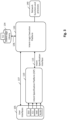
- the intent fulfillment system 130 shown in Fig. 6 comprises the ILEP 133 and the ILL 134 of Fig. 3 .
- traffic steering related intents rely on multiple automation/SON or network functions as represented by Fig. 6 . It is noted that in Fig. 6 similar reference signs are used to refer to elements similar to those shown in Fig. 1 .
- the intent fulfillment system 130 comprises traffic steering intent execution logic.
- Network functions and processes 140 comprise energy savings, carrier aggregation, traffic steering, load balancing and handover optimization.
- example specifications according to the vocabulary of the ISP 110 for the three intents are as described by Table 2 which indicates elements of intent instances in intent catalogue 120: Table 2 Action
- Urban TS ESM TS Flexible TS Declaration Create_intent Urban_TS ⁇ change Multi-RAT HO settings; all_cells_in CBD; L1 High_Load threshold 75%; L2_High_Load_threshold 80%" ⁇ Create_intent ESM_TS ⁇ change Multi-RAT HO settings; any_cell; L1 High_Load threshold 0%; ⁇ Create intent Flexible_TS ⁇ change Multi-RAT HO settings; any_cell; reduce all HO metrics by x% ⁇
- ILUs which are stored in the ILL 134, and are to be executed when called by the ILEP 133.
- the ILUs are described as shown in Table 3 illustrating example ILUs for the three TS regimes: Table 3 TS Regime ILU to be executed Call to execute ILU Interpretation of call Urban_TS change Multi-RAT HO settings; all_cells_in CBD; L1 High_Load threshold 75%; L2_High_Load_threshold 80%" Change TS cell x to urban Ensure that for the cell x the TS setting match an urban cell Set cell x to urban cell With x set as an urban cell, the traffic steering characteristics should match those of an urban cell, so Urban _TS should be executed on cell x ESM_TS change Multi-RAT HO settings; any_cell; L1 High_Load threshold 0%; Change TS cell x to urban Ensure that for the cell x the TS setting match an urban cell Change TS cell x to
- the ILUs to be executed for the intents "Urban_TS” and "ESM_TS” are called by the ILEP 133 in case a TS cell x is changed to urban to ensure that for the TS cell x the TS setting matches an urban cell.
- the ILU to be executed for the intent "Urban_TS" is called by the ILEP 133 in case a cell x is set to an urban cell. With x set as an urban cell, the traffic steering characteristics should match those of an urban cell, so Urban_TS should be executed on cell x.
- the ILU to be executed for the intent "ESM_TS" is called by the ILEP 133 in case a TS cell x is changed to rural to set TS to prioritize ESM against overload for cell x.
- the ILU to be executed for the intent "Flexible_TS" is called by the ILEP 133 in case a TS cell x is changed to urban.
- the intent fulfillment system 130 allows network operators to run their intents without having to specify the details on how those intents should be fulfilled.
- the intent fulfillment system 130 in particular the ILEP 133, allows intents specified on one vendor's system to be executed or fulfilled on another vendor's system using a simple interface between the two systems.
- FIG. 7 illustrating a simplified block diagram of a control unit 10 that is suitable for use in practicing at least some of the example embodiments.
- control unit 10 implements at least one of hardware, software and firmware of the above-described intent fulfillment apparatus, e.g. the ILEP 133, and intent fulfillment method, e.g. the method shown in Fig. 2 .
- the control unit 10 comprises processing resources (e.g. processing circuitry) 11, memory resources (e.g. memory circuitry) 12 and interfaces (e.g. interface circuitry) 13, connected via a link 14. At least some embodiments are implemented by the memory resources 12 storing a program which is executable by the processing resources 11.
- processing resources e.g. processing circuitry
- memory resources e.g. memory circuitry
- interfaces e.g. interface circuitry
- connection means any connection or coupling, either direct or indirect, between two or more elements, and, according to at least some embodiments, encompass the presence of one or more intermediate elements between two elements that are “connected” or “coupled” together.
- the coupling or connection between the elements can be physical, logical, or a combination thereof.
- two elements are considered to be “connected” or “coupled” together by the use of one or more wires, cables and printed electrical connections, as well as by the use of electromagnetic energy, such as electromagnetic energy having wavelengths in the radio frequency region, the microwave region and the optical (both visible and invisible) region, as non-limiting examples.
- circuitry refers to one or more or all of the following:
- circuitry applies to all uses of this term in this application, including in any claims.
- circuitry would also cover an implementation of merely a processor (or multiple processors) or portion of a processor and its (or their) accompanying software and/or firmware.
- circuitry would also cover, for example and if applicable to the particular claim element, a baseband integrated circuit or applications processor integrated circuit for a mobile phone or a similar integrated circuit in server, a cellular network device, or other network device.
- an apparatus which comprises, for an intent to be executed, means for acquiring at least one intent logic unit out of a plurality of intent logic units, wherein the intent regards control of communication networks, and wherein the intent logic units comprise logic or command sequences to be executed for achieving intents regarding control of the communication networks, and means for scheduling execution of the at least one intent logic unit for activating actions according to the at least one intent logic unit on the communication networks.
- the apparatus executed the method illustrated in Fig. 2 .
- the apparatus comprises and/or uses the control unit shown in Fig. 7 .
- the means for scheduling execution comprises means for immediately executing the at least one intent logic unit, or means for executing the at least one intent logic unit at a later time.
- the means for acquiring comprises means for searching an intent logic library storing the plurality of intent logic units to find the at least one intent logic unit comprising logic or command sequences to be executed for achieving the intent.
- the apparatus further comprises means for checking if the intent has been fulfilled by its execution, and means for, in case the intent has not been fulfilled, deleting the at least one intent logic unit from the intent logic library.
- the apparatus further comprises means for, for the intent to be executed, acquiring two or more intent logic units out of the plurality of intent logic units, and means for combining the two or more intent logic units into another intent logic unit comprising logic or command sequences to be executed for achieving the intent, wherein the means for scheduling execution comprises means for scheduling execution of the other intent logic unit for activating the other intent logic unit on the communication networks.
- the apparatus further comprises means for checking if the intent has been fulfilled by its execution, and means for, in case the intent has been fulfilled, adding the other intent logic unit to the intent logic library.
- the apparatus comprises an intent-logic execution platform.
- the means for acquiring comprises means for sending at least one message towards a user.
- the means for scheduling execution comprises means for sending and/or receiving at least one message to/from the communication networks.
Landscapes
- Engineering & Computer Science (AREA)
- Computer Networks & Wireless Communication (AREA)
- Signal Processing (AREA)
- Automation & Control Theory (AREA)
- Devices For Executing Special Programs (AREA)
- Telephone Function (AREA)
- Mobile Radio Communication Systems (AREA)
Claims (13)
- Appareil comprenant au moins un processeur et au moins une mémoire comportant un code de programme informatique, la au moins une mémoire et le code de programme informatique étant configurés pour, avec le au moins un processeur, amener l'appareil à réaliser au moins ce qui suit :pour une intention à exécuter, acquérir au moins une unité logique d'intention parmi une pluralité d'unités logiques d'intention, dans lequel l'intention concerne la commande de réseaux de communication, et dans lequel les unités logiques d'intention comprennent des séquences logiques ou d'instruction à exécuter pour réaliser des intentions concernant la commande des réseaux de communication ;planifier l'exécution de la au moins une unité logique d'intention pour activer des actions selon la au moins une unité logique d'intention sur les réseaux de communication, etl'appareil étant caractérisé en ce que : dans lequel la au moins une mémoire et le code de programme informatique sont configurés pour, avec le au moins un processeur, amener l'appareil à réaliser en outre ce qui suit :pour l'intention à exécuter, acquérir deux unités logiques d'intention ou plus parmi la pluralité d'unités logiques d'intention, et combiner les deux unités logiques d'intention ou plus en une autre unité logique d'intention comprenant des séquences logiques ou d'instruction à exécuter pour réaliser l'intention ;dans lequel l'exécution de la planification comprend les étapes suivantes :planifier l'exécution de l'autre unité logique d'intention pour activer l'autre unité logique d'intention sur les réseaux de communication ;vérifier si l'intention a été satisfaite par son exécution ; etdans le cas où l'intention est satisfaite, ajouter l'autre unité logique d'intention à une bibliothèque de logiques d'intention (134).
- Appareil selon la revendication 1, dans lequel une unité logique d'intention de la pluralité d'unités logiques d'intention est une enveloppe autour de séquences logiques ou d'instruction requises à exécuter pour réaliser une intention spécifique concernant la commande des réseaux de communication.
- Appareil selon la revendication 2, dans lequel l'unité logique d'intention comprend les séquences logiques ou d'instruction à exécuter et comprend en outre au moins un parmi un identifiant, un nom et une description qui est compréhensible par un utilisateur.
- Appareil selon l'une des revendications 1 à 3, l'exécution de la planification comprenant :l'exécution immédiate de la au moins une unité logique d'intention, oul'exécution de la au moins une unité logique d'intention à un moment ultérieur.
- Appareil selon l'une des revendications 1 à 4, l'acquisition comprenant :
la recherche de la bibliothèque de logiques d'intention stockant la pluralité d'unités logiques d'intention pour trouver la au moins une unité logique d'intention comprenant des séquences logiques ou d'instruction à exécuter pour réaliser l'intention. - Appareil selon la revendication 5, dans lequel la au moins une mémoire et le code de programme informatique sont configurés pour, avec le au moins un processeur, amener l'appareil à réaliser en outre ce qui suit :vérifier si l'intention a été satisfaite par son exécution ; etdans le cas où l'intention n'est pas satisfaite, supprimer la au moins une unité logique d'intention de la bibliothèque de logiques d'intention.
- Appareil selon l'une des revendications 1 à 6, dans lequel l'appareil comprend une plate-forme d'exécution de logique d'intention (133).
- Appareil selon l'une des revendications 1 à 7, dans lequelau moins certaines de la pluralité d'unités logiques d'intention sont des unités logiques d'intention écrites manuellement, et/ouau moins certaines de la pluralité d'unités logiques d'intention sont des unités logiques d'intention apprises.
- Appareil selon l'une des revendications 1 à 8, dans lequell'acquisition comprend l'envoi d'au moins un message à un utilisateur ; et/oul'exécution de la planification comprend l'envoi et/ou la réception d'au moins un message vers/depuis les réseaux de communication.
- Appareil selon la revendication 9, dans lequelle au moins un message envoyé à l'utilisateur indique que l'intention à exécuter est incomplète ou incorrecte, et/oule au moins un message envoyé à l'utilisateur indique le succès ou l'échec de l'exécution de l'intention, et/oule au moins un message envoyé à l'utilisateur indique l'échec de l'exécution de l'intention comportant une raison de l'échec, et/oule au moins un message envoyé aux réseaux de communication provoque l'exécution des actions selon la au moins une unité logique d'intention sur les réseaux de communication, et/oule au moins un message reçu des réseaux de communication indique le succès ou l'échec de l'exécution de l'intention, et/oule au moins un message reçu des réseaux de communication indique l'échec de l'exécution de l'intention comportant une raison de l'échec.
- Appareil selon l'une des revendications 1 à 10, dans lequel l'intention est spécifiée à l'aide d'une syntaxe qui comprend au moins un objet de commande des réseaux de communication et un verbe qui indique quelle action à effectuer avec l'objet de commande.
- Appareil selon la revendication 11, dans lequel la syntaxe comprend en outre au moins un parmi : un contexte et un ou plusieurs paramètres, dans lequel le contexte et les et un ou plusieurs paramètres indiquent avec quels paramètres et dans quelles conditions l'action doit être effectuée.
- Procédé comprenant les étapes suivantes :pour une intention à exécuter, acquérir (S201) au moins une unité logique d'intention parmi une pluralité d'unités logiques d'intention, dans lequel l'intention concerne la commande de réseaux de communication, et dans lequel les unités logiques d'intention comprennent des séquences logiques ou d'instruction à exécuter pour réaliser des intentions concernant la commande des réseaux de communication ;planifier (S203) l'exécution de la au moins une unité logique d'intention pour activer des actions selon la au moins une unité logique d'intention sur les réseaux de communication, etle procédé étant caractérisé en ce que : le procédé comprend en outre les étapes suivantes :pour l'intention à exécuter, acquérir deux unités logiques d'intention ou plus parmi la pluralité d'unités logiques d'intention, et combiner les deux unités logiques d'intention ou plus en une autre unité logique d'intention comprenant des séquences logiques ou d'instruction à exécuter pour réaliser l'intention,dans lequel l'exécution de la planification comprend les étapes suivantes :planifier l'exécution de l'autre unité logique d'intention pour activer l'autre unité logique d'intention sur les réseaux de communication ;vérifier si l'intention a été satisfaite par son exécution ; etdans le cas où l'intention est satisfaite, ajouter l'autre unité logique d'intention à une bibliothèque de logiques d'intention.
Applications Claiming Priority (1)
| Application Number | Priority Date | Filing Date | Title |
|---|---|---|---|
| PCT/EP2020/061069 WO2021213632A1 (fr) | 2020-04-21 | 2020-04-21 | Exécution d'intention pour commande automatisée de réseaux de communication |
Publications (2)
| Publication Number | Publication Date |
|---|---|
| EP4140097A1 EP4140097A1 (fr) | 2023-03-01 |
| EP4140097B1 true EP4140097B1 (fr) | 2025-01-15 |
Family
ID=70416439
Family Applications (1)
| Application Number | Title | Priority Date | Filing Date |
|---|---|---|---|
| EP20720909.9A Active EP4140097B1 (fr) | 2020-04-21 | 2020-04-21 | Exécution d'intention pour commande automatisée de réseaux de communication |
Country Status (2)
| Country | Link |
|---|---|
| EP (1) | EP4140097B1 (fr) |
| WO (1) | WO2021213632A1 (fr) |
Families Citing this family (5)
| Publication number | Priority date | Publication date | Assignee | Title |
|---|---|---|---|---|
| EP4050851B1 (fr) | 2021-02-26 | 2024-12-25 | Nokia Solutions and Networks Oy | Transformation des expressions d'intention en commandes et configurations |
| US12250132B2 (en) | 2021-04-30 | 2025-03-11 | Nokia Solutions And Networks Oy | Intent fulfillment satisfaction |
| CN116095706A (zh) * | 2021-10-30 | 2023-05-09 | 华为技术有限公司 | 一种意图执行的方法和装置 |
| CN116266267A (zh) * | 2021-12-17 | 2023-06-20 | 华为技术有限公司 | 一种意图合法性检查方法及装置 |
| WO2023241802A1 (fr) | 2022-06-16 | 2023-12-21 | Nokia Technologies Oy | Appareils et procédés de mappage d'applications basées sur l'apprentissage automatique à des unités logiques d'intention |
Family Cites Families (2)
| Publication number | Priority date | Publication date | Assignee | Title |
|---|---|---|---|---|
| US10530697B2 (en) * | 2015-02-17 | 2020-01-07 | Futurewei Technologies, Inc. | Intent based network configuration |
| US11416740B2 (en) * | 2018-04-13 | 2022-08-16 | Adtran, Inc. | Artificial intelligence optimized telecommunications systems |
-
2020
- 2020-04-21 EP EP20720909.9A patent/EP4140097B1/fr active Active
- 2020-04-21 WO PCT/EP2020/061069 patent/WO2021213632A1/fr not_active Ceased
Also Published As
| Publication number | Publication date |
|---|---|
| EP4140097A1 (fr) | 2023-03-01 |
| WO2021213632A1 (fr) | 2021-10-28 |
Similar Documents
| Publication | Publication Date | Title |
|---|---|---|
| EP4140097B1 (fr) | Exécution d'intention pour commande automatisée de réseaux de communication | |
| TWI870645B (zh) | 一種通信方法和通信裝置 | |
| US10785655B2 (en) | Telecommunication network utilizing network slice information | |
| CN110603837B (zh) | 将移动无线电通信网络的网络切片实例与网络功能相关联的方法 | |
| EP4324125B1 (fr) | Appareil, procédé et programme informatique permettant de gérer une requête concernant des fonctions de réseau cognitif et/ou des modèles d'apprentissage machine | |
| EP4107909A1 (fr) | Spécification d'intention permettant une commande automatisée de réseaux de communication | |
| CN110944361B (zh) | 用于负载均衡的方法与网元 | |
| JP2026506910A (ja) | 人工知能/機械学習モデル識別子の使用 | |
| WO2023179709A1 (fr) | Procédé et appareil de traitement d'informations, dispositif de communication et support de stockage lisible | |
| US20260025708A1 (en) | Traffic steering for non-public networks and public land mobile network clouds | |
| CN102725999A (zh) | 数据配置方法和电信系统设备 | |
| WO2025130494A1 (fr) | Procédé et appareil de communication | |
| CN114598737A (zh) | 用于建立会话的dnn获取方法、网元、通信系统及介质 | |
| CN107333322A (zh) | 一种家长控制方法和基站 | |
| US11419045B2 (en) | Automatic evaluation and management of slice reselection experiences | |
| CN118368671A (zh) | 算力资源的确定方法、装置及网络侧设备 | |
| WO2022028497A1 (fr) | Procédé et appareil de configuration d'informations, dispositif, et support | |
| JP7801453B2 (ja) | セルラネットワークにおいてデータを視覚化するシステムおよび方法 | |
| KR102722740B1 (ko) | EID 기반의 eSIM 트랜스퍼 서비스 제공 방법 및 장치 | |
| US20260067790A1 (en) | Information processing method and apparatus, information transmission method and apparatus, and related device | |
| US11706694B1 (en) | System and method for closed subscriber group identity allocation for radio access network sharing | |
| US20260113697A1 (en) | Accessbility management of a user equipment to a home network | |
| WO2020057488A1 (fr) | Procédé d'équilibrage de charge et élément de réseau | |
| CN111385110A (zh) | 网络的管理方法及装置 | |
| CN118139144A (zh) | 一种终端接入方法、装置、网络设备及可读存储介质 |
Legal Events
| Date | Code | Title | Description |
|---|---|---|---|
| STAA | Information on the status of an ep patent application or granted ep patent |
Free format text: STATUS: UNKNOWN |
|
| STAA | Information on the status of an ep patent application or granted ep patent |
Free format text: STATUS: THE INTERNATIONAL PUBLICATION HAS BEEN MADE |
|
| PUAI | Public reference made under article 153(3) epc to a published international application that has entered the european phase |
Free format text: ORIGINAL CODE: 0009012 |
|
| STAA | Information on the status of an ep patent application or granted ep patent |
Free format text: STATUS: REQUEST FOR EXAMINATION WAS MADE |
|
| 17P | Request for examination filed |
Effective date: 20221121 |
|
| AK | Designated contracting states |
Kind code of ref document: A1 Designated state(s): AL AT BE BG CH CY CZ DE DK EE ES FI FR GB GR HR HU IE IS IT LI LT LU LV MC MK MT NL NO PL PT RO RS SE SI SK SM TR |
|
| DAV | Request for validation of the european patent (deleted) | ||
| DAX | Request for extension of the european patent (deleted) | ||
| REG | Reference to a national code |
Ref country code: DE Ref legal event code: R079 Free format text: PREVIOUS MAIN CLASS: H04L0012240000 Ipc: H04L0041080300 Ref country code: DE Ref legal event code: R079 Ref document number: 602020044786 Country of ref document: DE Free format text: PREVIOUS MAIN CLASS: H04L0012240000 Ipc: H04L0041080300 |
|
| GRAP | Despatch of communication of intention to grant a patent |
Free format text: ORIGINAL CODE: EPIDOSNIGR1 |
|
| STAA | Information on the status of an ep patent application or granted ep patent |
Free format text: STATUS: GRANT OF PATENT IS INTENDED |
|
| RIC1 | Information provided on ipc code assigned before grant |
Ipc: H04L 41/084 20220101ALN20240806BHEP Ipc: G06F 3/16 20060101ALN20240806BHEP Ipc: H04L 41/08 20220101ALI20240806BHEP Ipc: H04L 41/0803 20220101AFI20240806BHEP |
|
| INTG | Intention to grant announced |
Effective date: 20240821 |
|
| GRAS | Grant fee paid |
Free format text: ORIGINAL CODE: EPIDOSNIGR3 |
|
| GRAA | (expected) grant |
Free format text: ORIGINAL CODE: 0009210 |
|
| STAA | Information on the status of an ep patent application or granted ep patent |
Free format text: STATUS: THE PATENT HAS BEEN GRANTED |
|
| AK | Designated contracting states |
Kind code of ref document: B1 Designated state(s): AL AT BE BG CH CY CZ DE DK EE ES FI FR GB GR HR HU IE IS IT LI LT LU LV MC MK MT NL NO PL PT RO RS SE SI SK SM TR |
|
| REG | Reference to a national code |
Ref country code: CH Ref legal event code: EP Ref country code: GB Ref legal event code: FG4D |
|
| REG | Reference to a national code |
Ref country code: DE Ref legal event code: R096 Ref document number: 602020044786 Country of ref document: DE |
|
| REG | Reference to a national code |
Ref country code: IE Ref legal event code: FG4D |
|
| REG | Reference to a national code |
Ref country code: NL Ref legal event code: MP Effective date: 20250115 |
|
| PG25 | Lapsed in a contracting state [announced via postgrant information from national office to epo] |
Ref country code: NL Free format text: LAPSE BECAUSE OF FAILURE TO SUBMIT A TRANSLATION OF THE DESCRIPTION OR TO PAY THE FEE WITHIN THE PRESCRIBED TIME-LIMIT Effective date: 20250115 |
|
| PG25 | Lapsed in a contracting state [announced via postgrant information from national office to epo] |
Ref country code: RS Free format text: LAPSE BECAUSE OF FAILURE TO SUBMIT A TRANSLATION OF THE DESCRIPTION OR TO PAY THE FEE WITHIN THE PRESCRIBED TIME-LIMIT Effective date: 20250415 |
|
| PG25 | Lapsed in a contracting state [announced via postgrant information from national office to epo] |
Ref country code: FI Free format text: LAPSE BECAUSE OF FAILURE TO SUBMIT A TRANSLATION OF THE DESCRIPTION OR TO PAY THE FEE WITHIN THE PRESCRIBED TIME-LIMIT Effective date: 20250115 |
|
| PG25 | Lapsed in a contracting state [announced via postgrant information from national office to epo] |
Ref country code: PL Free format text: LAPSE BECAUSE OF FAILURE TO SUBMIT A TRANSLATION OF THE DESCRIPTION OR TO PAY THE FEE WITHIN THE PRESCRIBED TIME-LIMIT Effective date: 20250115 |
|
| PGFP | Annual fee paid to national office [announced via postgrant information from national office to epo] |
Ref country code: DE Payment date: 20250305 Year of fee payment: 6 |
|
| PG25 | Lapsed in a contracting state [announced via postgrant information from national office to epo] |
Ref country code: ES Free format text: LAPSE BECAUSE OF FAILURE TO SUBMIT A TRANSLATION OF THE DESCRIPTION OR TO PAY THE FEE WITHIN THE PRESCRIBED TIME-LIMIT Effective date: 20250115 |
|
| REG | Reference to a national code |
Ref country code: LT Ref legal event code: MG9D |
|
| PG25 | Lapsed in a contracting state [announced via postgrant information from national office to epo] |
Ref country code: NO Free format text: LAPSE BECAUSE OF FAILURE TO SUBMIT A TRANSLATION OF THE DESCRIPTION OR TO PAY THE FEE WITHIN THE PRESCRIBED TIME-LIMIT Effective date: 20250415 Ref country code: IS Free format text: LAPSE BECAUSE OF FAILURE TO SUBMIT A TRANSLATION OF THE DESCRIPTION OR TO PAY THE FEE WITHIN THE PRESCRIBED TIME-LIMIT Effective date: 20250515 |
|
| REG | Reference to a national code |
Ref country code: AT Ref legal event code: MK05 Ref document number: 1760548 Country of ref document: AT Kind code of ref document: T Effective date: 20250115 |
|
| PG25 | Lapsed in a contracting state [announced via postgrant information from national office to epo] |
Ref country code: HR Free format text: LAPSE BECAUSE OF FAILURE TO SUBMIT A TRANSLATION OF THE DESCRIPTION OR TO PAY THE FEE WITHIN THE PRESCRIBED TIME-LIMIT Effective date: 20250115 |
|
| PG25 | Lapsed in a contracting state [announced via postgrant information from national office to epo] |
Ref country code: LV Free format text: LAPSE BECAUSE OF FAILURE TO SUBMIT A TRANSLATION OF THE DESCRIPTION OR TO PAY THE FEE WITHIN THE PRESCRIBED TIME-LIMIT Effective date: 20250115 Ref country code: PT Free format text: LAPSE BECAUSE OF FAILURE TO SUBMIT A TRANSLATION OF THE DESCRIPTION OR TO PAY THE FEE WITHIN THE PRESCRIBED TIME-LIMIT Effective date: 20250515 |
|
| PG25 | Lapsed in a contracting state [announced via postgrant information from national office to epo] |
Ref country code: GR Free format text: LAPSE BECAUSE OF FAILURE TO SUBMIT A TRANSLATION OF THE DESCRIPTION OR TO PAY THE FEE WITHIN THE PRESCRIBED TIME-LIMIT Effective date: 20250416 Ref country code: BG Free format text: LAPSE BECAUSE OF FAILURE TO SUBMIT A TRANSLATION OF THE DESCRIPTION OR TO PAY THE FEE WITHIN THE PRESCRIBED TIME-LIMIT Effective date: 20250115 |
|
| PG25 | Lapsed in a contracting state [announced via postgrant information from national office to epo] |
Ref country code: AT Free format text: LAPSE BECAUSE OF FAILURE TO SUBMIT A TRANSLATION OF THE DESCRIPTION OR TO PAY THE FEE WITHIN THE PRESCRIBED TIME-LIMIT Effective date: 20250115 |
|
| PG25 | Lapsed in a contracting state [announced via postgrant information from national office to epo] |
Ref country code: SE Free format text: LAPSE BECAUSE OF FAILURE TO SUBMIT A TRANSLATION OF THE DESCRIPTION OR TO PAY THE FEE WITHIN THE PRESCRIBED TIME-LIMIT Effective date: 20250115 |
|
| PG25 | Lapsed in a contracting state [announced via postgrant information from national office to epo] |
Ref country code: SM Free format text: LAPSE BECAUSE OF FAILURE TO SUBMIT A TRANSLATION OF THE DESCRIPTION OR TO PAY THE FEE WITHIN THE PRESCRIBED TIME-LIMIT Effective date: 20250115 |
|
| PG25 | Lapsed in a contracting state [announced via postgrant information from national office to epo] |
Ref country code: DK Free format text: LAPSE BECAUSE OF FAILURE TO SUBMIT A TRANSLATION OF THE DESCRIPTION OR TO PAY THE FEE WITHIN THE PRESCRIBED TIME-LIMIT Effective date: 20250115 |
|
| PG25 | Lapsed in a contracting state [announced via postgrant information from national office to epo] |
Ref country code: IT Free format text: LAPSE BECAUSE OF FAILURE TO SUBMIT A TRANSLATION OF THE DESCRIPTION OR TO PAY THE FEE WITHIN THE PRESCRIBED TIME-LIMIT Effective date: 20250115 |
|
| REG | Reference to a national code |
Ref country code: DE Ref legal event code: R097 Ref document number: 602020044786 Country of ref document: DE |
|
| PG25 | Lapsed in a contracting state [announced via postgrant information from national office to epo] |
Ref country code: CZ Free format text: LAPSE BECAUSE OF FAILURE TO SUBMIT A TRANSLATION OF THE DESCRIPTION OR TO PAY THE FEE WITHIN THE PRESCRIBED TIME-LIMIT Effective date: 20250115 Ref country code: EE Free format text: LAPSE BECAUSE OF FAILURE TO SUBMIT A TRANSLATION OF THE DESCRIPTION OR TO PAY THE FEE WITHIN THE PRESCRIBED TIME-LIMIT Effective date: 20250115 |
|
| PG25 | Lapsed in a contracting state [announced via postgrant information from national office to epo] |
Ref country code: RO Free format text: LAPSE BECAUSE OF FAILURE TO SUBMIT A TRANSLATION OF THE DESCRIPTION OR TO PAY THE FEE WITHIN THE PRESCRIBED TIME-LIMIT Effective date: 20250115 |
|
| PG25 | Lapsed in a contracting state [announced via postgrant information from national office to epo] |
Ref country code: SK Free format text: LAPSE BECAUSE OF FAILURE TO SUBMIT A TRANSLATION OF THE DESCRIPTION OR TO PAY THE FEE WITHIN THE PRESCRIBED TIME-LIMIT Effective date: 20250115 |
|
| PLBE | No opposition filed within time limit |
Free format text: ORIGINAL CODE: 0009261 |
|
| STAA | Information on the status of an ep patent application or granted ep patent |
Free format text: STATUS: NO OPPOSITION FILED WITHIN TIME LIMIT |
|
| REG | Reference to a national code |
Ref country code: CH Ref legal event code: H13 Free format text: ST27 STATUS EVENT CODE: U-0-0-H10-H13 (AS PROVIDED BY THE NATIONAL OFFICE) Effective date: 20251125 |
|
| REG | Reference to a national code |
Ref country code: CH Ref legal event code: L10 Free format text: ST27 STATUS EVENT CODE: U-0-0-L10-L00 (AS PROVIDED BY THE NATIONAL OFFICE) Effective date: 20251126 |
|
| PG25 | Lapsed in a contracting state [announced via postgrant information from national office to epo] |
Ref country code: LU Free format text: LAPSE BECAUSE OF NON-PAYMENT OF DUE FEES Effective date: 20250421 |
|
| PG25 | Lapsed in a contracting state [announced via postgrant information from national office to epo] |
Ref country code: MC Free format text: LAPSE BECAUSE OF FAILURE TO SUBMIT A TRANSLATION OF THE DESCRIPTION OR TO PAY THE FEE WITHIN THE PRESCRIBED TIME-LIMIT Effective date: 20250115 |
|
| 26N | No opposition filed |
Effective date: 20251016 |
|
| GBPC | Gb: european patent ceased through non-payment of renewal fee |
Effective date: 20250421 |
|
| REG | Reference to a national code |
Ref country code: BE Ref legal event code: MM Effective date: 20250430 |
|
| PG25 | Lapsed in a contracting state [announced via postgrant information from national office to epo] |
Ref country code: GB Free format text: LAPSE BECAUSE OF NON-PAYMENT OF DUE FEES Effective date: 20250421 |
|
| PG25 | Lapsed in a contracting state [announced via postgrant information from national office to epo] |
Ref country code: FR Free format text: LAPSE BECAUSE OF NON-PAYMENT OF DUE FEES Effective date: 20250430 |
|
| PG25 | Lapsed in a contracting state [announced via postgrant information from national office to epo] |
Ref country code: BE Free format text: LAPSE BECAUSE OF NON-PAYMENT OF DUE FEES Effective date: 20250430 |
|
| PG25 | Lapsed in a contracting state [announced via postgrant information from national office to epo] |
Ref country code: CH Free format text: LAPSE BECAUSE OF NON-PAYMENT OF DUE FEES Effective date: 20250430 |
|
| PG25 | Lapsed in a contracting state [announced via postgrant information from national office to epo] |
Ref country code: IE Free format text: LAPSE BECAUSE OF NON-PAYMENT OF DUE FEES Effective date: 20250421 |