EP4141013A1 - Stereochemisch reine lipide zur abgabe von nukleinsäuren - Google Patents
Stereochemisch reine lipide zur abgabe von nukleinsäuren Download PDFInfo
- Publication number
- EP4141013A1 EP4141013A1 EP21194182.8A EP21194182A EP4141013A1 EP 4141013 A1 EP4141013 A1 EP 4141013A1 EP 21194182 A EP21194182 A EP 21194182A EP 4141013 A1 EP4141013 A1 EP 4141013A1
- Authority
- EP
- European Patent Office
- Prior art keywords
- alkyl
- formula
- alkylene
- group
- same
- Prior art date
- Legal status (The legal status is an assumption and is not a legal conclusion. Google has not performed a legal analysis and makes no representation as to the accuracy of the status listed.)
- Withdrawn
Links
Images

Classifications
-
- C—CHEMISTRY; METALLURGY
- C07—ORGANIC CHEMISTRY
- C07C—ACYCLIC OR CARBOCYCLIC COMPOUNDS
- C07C219/00—Compounds containing amino and esterified hydroxy groups bound to the same carbon skeleton
- C07C219/02—Compounds containing amino and esterified hydroxy groups bound to the same carbon skeleton having esterified hydroxy groups and amino groups bound to acyclic carbon atoms of the same carbon skeleton
- C07C219/04—Compounds containing amino and esterified hydroxy groups bound to the same carbon skeleton having esterified hydroxy groups and amino groups bound to acyclic carbon atoms of the same carbon skeleton the carbon skeleton being acyclic and saturated
- C07C219/06—Compounds containing amino and esterified hydroxy groups bound to the same carbon skeleton having esterified hydroxy groups and amino groups bound to acyclic carbon atoms of the same carbon skeleton the carbon skeleton being acyclic and saturated having the hydroxy groups esterified by carboxylic acids having the esterifying carboxyl groups bound to hydrogen atoms or to acyclic carbon atoms of an acyclic saturated carbon skeleton
-
- C—CHEMISTRY; METALLURGY
- C07—ORGANIC CHEMISTRY
- C07C—ACYCLIC OR CARBOCYCLIC COMPOUNDS
- C07C213/00—Preparation of compounds containing amino and hydroxy, amino and etherified hydroxy or amino and esterified hydroxy groups bound to the same carbon skeleton
- C07C213/06—Preparation of compounds containing amino and hydroxy, amino and etherified hydroxy or amino and esterified hydroxy groups bound to the same carbon skeleton from hydroxy amines by reactions involving the etherification or esterification of hydroxy groups
-
- C—CHEMISTRY; METALLURGY
- C07—ORGANIC CHEMISTRY
- C07F—ACYCLIC, CARBOCYCLIC OR HETEROCYCLIC COMPOUNDS CONTAINING ELEMENTS OTHER THAN CARBON, HYDROGEN, HALOGEN, OXYGEN, NITROGEN, SULFUR, SELENIUM OR TELLURIUM
- C07F7/00—Compounds containing elements of Groups 4 or 14 of the Periodic Table
- C07F7/02—Silicon compounds
- C07F7/08—Compounds having one or more C—Si linkages
- C07F7/18—Compounds having one or more C—Si linkages as well as one or more C—O—Si linkages
- C07F7/1804—Compounds having Si-O-C linkages
-
- C—CHEMISTRY; METALLURGY
- C07—ORGANIC CHEMISTRY
- C07B—GENERAL METHODS OF ORGANIC CHEMISTRY; APPARATUS THEREFOR
- C07B2200/00—Indexing scheme relating to specific properties of organic compounds
- C07B2200/07—Optical isomers
Definitions
- the present application generally relates to stereochemically pure lipids that can be used, also in combination with other lipid components, such as neutral lipids, cholesterol and polymer conjugated lipids, to form lipid nanoparticles with oligonucleotides, to facilitate the intracellular delivery of therapeutic nucleic acids such as oligonucleotides, messenger RNA both in vitro and in vivo.
- lipid components such as neutral lipids, cholesterol and polymer conjugated lipids
- embodiments of the present invention generally relate to the preparation and characterization of stereochemically pure lipids to be used in lipid nanoparticles that facilitate or enable the delivery of pharmaceutically active compounds such as nucleic acids (e.g., oligonucleotides, messenger RNA) into cells.
- pharmaceutically active compounds such as nucleic acids (e.g., oligonucleotides, messenger RNA) into cells.
- nucleic acids e.g., oligonucleotides, messenger RNA
- two problems currently face the use of oligonucleotides in therapeutic contexts.
- lipid nanoparticles have been designed and developed that facilitate intracellular delivery of the nucleic acid pharmaceutical.
- One constituent of these lipid nanoparticles (LNP) are synthetic lipids that contain amines, which under physiological conditions, are protonated and therefore positively charged.
- LNP lipid nanoparticles
- Several lipids of that kind are disclosed in WO2017075531 or WO2018081480 of Acuitas Therapeutics Inc., exemplified by Acuitas-5.
- ALC - 0315 Another specific frequently used example is ALC - 0315, which has found prominent utility in mRNA vaccine delivery, among other applications.
- ALC-0315 contains two stereogenic centers, which are sp3-hybridized carbon atoms that are surrounded by four different substituents.
- ALC-0315 exists in three stereoisomeric forms, two chiral enantiomers (R,R)-ALC-0315 and (S,S)-ALC-0315, and one so-called meso-compound (R,S)-ALC-0315, which is achiral. None of these isomers has previously been mentioned, characterized or preparateively accessed, either synthetically or chromatographically, or by any other means.
- the inventors therefore suggest here that the ALC-0315 stereoisomers as well as related lipids will similarly differ with regard to their ability (a) to prevent nucleic acid degradation and (b) to deliver the nucleic acids locally or systemically and intracellularily, Furthermore, (c) the inventors anticipate the stereoisomers to significantly differ with regard to tolerance, therapeutic index, and toxicity.
- This patent application therefore is directed to the separation, preparation and characterization of stereochemically pure forms of NLPs such as ALC-315.
- the present invention is directed to a lipid compound as represented by the following Formula (I): or a pharmaceutically acceptable salt thereof, wherein:
- lipid compound wherein the stereogenic centers are independently from each other enriched in one stereogenic form selected from the (R)-form or the (S)-form.
- Enriched in the sense of the invention means that a stereogenic center being generally present in the (R)-form or the (S)-form is predominantly in one of those forms, starting at a ratio of more than 50:50, preferably more than 60:40, more preferably more than 70/30, even more preferred 80:20 or even more than 90:10 up and ideally in a ratio of 100:0 of one of the two forms.
- C 1a and C 2a represent the same group selected from C 6 -C 24 alkyl or C 6 -C 24 alkenyl
- C 1b and C 2b represent the same group selected from C 6 -C 24 alkyl or C 6 -C 24 alkenyl in Formula (I).
- the number can be reduced in order to facilitate the synthesis of an enantiopure product.
- R 1 and R 2 are the same and each unsubstituted C 1 -C 12 alkylene in Formula (I).
- R 3 is C 1 -C 24 alkylene.
- F 3 is OR 4 , -NR 4 2 , -CN, -or halogen, R 4 being H or C 1 to C 6 alkyl.
- a particular lipid compound is represented by Formula (I), wherein
- the present invention is also directed to a process for preparing a lipid compound as represented by the Formula (I): wherein, in Formula (I),
- inventive process is exemplified for a limited number of functional groups, the skilled man can easily adapt the process to other functional groups and protective groups, if needed, on the basis of the understanding of the inventive process and his chemical skills.
- the present invention is directed to a process for preparing a lipid compound as represented by Formula (I) wherein a X-C 2 -C 4 alkylene-NH 2 , wherein X is an -OY or -NR 4 2 , Y being a protective group and R 4 being Y or C 1 to C 6 alkyl, is reacted in a first reaction step with an at least twofold equimolar amount of a HO-C 4-8 alkylenal to obtain a product as represented by the Formula (II), wherein R 3 is C 2 to C 4 alkylene and R 1 and R 2 are the same and are each C 4-8 alkylene, and the obtained reaction product of Formula (II) is reacted in a further reaction step with an at least twofold equimolar amount of a carboxylic acid of Formula (IIIa) having a stereogenic center C* in the (R) form or in the (S) form:
- Formula (I) wherein a X-C 2 -C
- each lipid compound covered by the main claim can be obtained by reacting said starting compound with the appropriate reaction partner and subjecting the obtained reaction product to suitable further treatment and purifying steps: wherein R 1 and R 2 are the same or different and are each C 4-8 alkylene;
- the present invention is also directed to said compound of Formula (IV), and more particularly also to the more specified starting compound as represented by Formula (II) wherein R 1 and R 2 are the same or different and are each C 4-8 alkylene;
- any reaction partner or reacting compound having one or more stereogenic center will be used in its enriched form, idealy enantiopure form, where the one or more stereogenic center(s) is present in one of the two forms (R)-form or (S)-form,
- the respective enriched form may be obtained by synthesis or resolution.
- the choice of the organic solvent is not critical as long as it is an aprotic organic solvent selected from THF, acetonitrile, other nitriles, chlorinated hydrocarbons, or other aprotic solvents, or mixtures thereof.
- the reaction conditions are also not critical and the reaction is usually carried out at a temperature between -78°C and 50°C, preferably -40°C to 30°C, under an non-reactive atmosphere under ambient pressure.
- C 1-6 is intended to encompass, C 1 , C 2 , C 3 , C 4 , C 5 , C 6 , C 1-6 , C 1-5 , C 1-4 , C 1-3 , C 1-2 , C 2-6 , C 2-5 , C 2-4 , C 2-3 , C 3-6 , C 3-5 , C 3-4 , C 4-6 , C 4-5 , and C 5-6 .
- alkyl refers to a radical of a straight-chain, branched or cyclic saturated hydrocarbon group having from 1 to 24 carbon atoms (“C 1-24 alkyl”). In some embodiments, an alkyl group has 1 to 10 carbon atoms (“C 1-10 alkyl”). In some embodiments, an alkyl group has 1 to 9 carbon atoms ("C 1-9 alkyl”). In some embodiments, an alkyl group has 1 to 8 carbon atoms (“C 1-8 alkyl”). In some embodiments, an alkyl group has 1 to 7 carbon atoms (“C 1-7 alkyl”). In some embodiments, an alkyl group has 1 to 6 carbon atoms (“C 1-6 alkyl”).
- an alkyl group has 1 to 5 carbon atoms ("C 1-5 alkyl”). In some embodiments, an alkyl group has 1 to 4 carbon atoms ("C 1-4 alkyl”). In some embodiments, an alkyl group has 1 to 3 carbon atoms ("C 1-3 alkyl”). In some embodiments, an alkyl group has 1 to 2 carbon atoms ("C 1-2 alkyl”). In some embodiments, an alkyl group has 1 carbon atom (“C 1 alkyl”). In some embodiments, an alkyl group has 4 to 8 carbon atoms (“C 4-8 alkyl”), in others 1 to 6 carbon atoms.
- C 1-6 alkyl groups include methyl (C 1 ), ethyl (C 2 ), n-propyl (C 3 ), isopropyl (C 3 ), n-butyl (C 4 ), tert-butyl (C 4 ), sec-butyl (C 4 ), isobutyl (C 4 ), n-pentyl (C 5 ), 3-pentanyl (C 5 ), amyl (C 5 ), neopentyl (C 5 ), 3-methyl-2-butanyl (C 5 ), tertiary amyl (C 5 ), and n-hexyl (C 6 ).
- alkyl groups include n-heptyl (C 7 ), n-octyl (C 8 ) and the like. Unless otherwise specified, each instance of an alkyl group is independently unsubstituted (an "unsubstituted alkyl") or substituted (a "substituted alkyl") with one or more substituents. In certain embodiments, the alkyl group is an unsubstituted alkyl ( e.g ., -CH 3 ). In certain embodiments, the alkyl group is a substituted alkyl.
- Alkenyl refers to a radical of a straight-chain or branched hydrocarbon group having from 2 to 24 carbon atoms, and one or more carbon-carbon double bonds("C 2-24 alkenyl”). In some embodiments, an alkenyl group has 2 carbon atoms ("C 2 alkenyl”). The one or more carbon-carbon double bonds can be internal (such as in 2-butenyl) or terminal (such as in 1-butenyl).
- Examples of C 2-4 alkenyl groups include ethenyl (C 2 ), 1-propenyl (C 3 ), 2-propenyl (C 3 ), 1-butenyl (C 4 ), 2-butenyl (C 4 ), butadienyl (C 4 ), and the like.
- Examples of C 2-6 alkenyl groups include the aforementioned C 2-4 alkenyl groups as well as pentenyl (C 5 ), pentadienyl (C 5 ), hexenyl (C 6 ), and the like. Additional examples of alkenyl include heptenyl (C 7 ), octenyl (C 8 ), octatrienyl (C 8 ), and the like.
- each instance of an alkenyl group is independently optionally substituted, i.e., unsubstituted (an "unsubstituted alkenyl") or substituted (a "substituted alkenyl") with one or more substituents.
- the alkenyl group is unsubstituted C 2-10 alkenyl.
- the alkenyl group is substituted C 2-10 alkenyl.
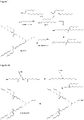
- ALC-315 as used in the prior art and illustrated in Figure 1 , starts from commercially available alpha-branched acid (rac)-1.
- Such acids which, in the alpha-position are substituted with two n-alkyl chains that differ by an element of ethylene (CH 2 CH 2 ), are technically produced in a dimerization of two aldehydes of alcohols and are abundant and inexpensive.
- the produced acids are racemic, which means a mixture of the two mirror image forms described as (R)- and (S)-enantiomers.
- ( rac )- 1 is esterified with 1,6-hexanediol.
- the resulting alcohol is oxidized to the corresponding aldehyde, which in turn undergoes a double reductive amination with 4-aminobutan-1-ol to furnish ALC-315.
- Said process is less favorable in view of its restriction to obtain various enantiopure compounds.
- the approach of the inventors starts from an enantiopure carboxylic acid, either from its ( R )- or from ( S )-form.
- the enantiopure acid in turn could be obtained either via separation of the racemate by physical or chemical methods, or obtained in an enantioselective synthesis.
- the enantiopure acid 1 either ( R,R )-ALC-0315 and ( S,S )-ALC-0315 can then be accessed following the known synthesis of the ALC-315 isomers, or an alternative synthesis.
- the synthesis of the corresponding ( meso )-ALC-315 would require a modified synthesis, in which the two enantiomers of acid 1 , will have to be introduced in two separate steps.
- the inventors describe the synthesis of all possible stereoisomers of LNPs such as ALC-315 using the approach on the basis of their considerations, in which the chiral acid 1 is first prepared in an enantiomerically pure form. Following this, the three ALC-315 isomers are prepared separately in a modified procedure.
- the chiral acid is obtained via a chiral auxiliary approach, in which a chiral amide can be alkylated in the alpha position diastereoselectively.
- the amide is the hydrolyzed to furnish the desired acid 1. Accordingly, (+)-pseudoephedrine is first converted to the corresponding amide with caprylic acid chloride.
- the amide is the alkylated with 1-iodooctane, followed by hydrolysis to obtain enantioenriched ( R )- 1 with an enantiomeric ratio (e.r.) of 98:2.
- the enantiomer of ( R )- 1 , ( S )- 1 can be accessed similarly: By first reacting (+)-pseudoephedrine with capric anhydride, alkylating the resulting amide with 1-iodohexane, followed by hydrolysis. In this case, ( S )- 1 is obtained with an e.r. of 98.5:1.5.
- racemic acid 1 is separated by high-performance liquid chromatography. Accordingly, the inventors found that rac - 1 can be separated on a preparative scale using HPLC with a chiral stationary phase (Chiralpak IG-3).
- racemic acid 1 is converted to the corresponding amide and separated by high-performance liquid chromatography. Accordingly, the inventors found that rac - 1 in its amide form can be separated on a preparative scale using HPLC with a chiral stationary phase (Chiralpak IG-3).
- ( R,S )-ALC-0315 (or ( meso )-ALC-0315) has also been prepared. Accordingly, the silyl-protected diol described above is subsequently esterified, in a first step with ( S )- 1 , and in a second step with ( R )- 1 . Finally, the silyl group is removed to obtain the pure product ( meso )-ALC-0315.
- the present invention is further illustrated by the following Experimental Part.
- Step 1 A flame dried 250 mL two-neck flask was charged with (+)-pseudoephedrine (4.0 g, 24.2 mmol, 1.0 equiv.) and triethylamine (4.8 mL, 27.8 mmol, 1.3 equiv.) followed by addition of anhydrous tetrahydrofuran (50 mL). The reaction mixture was stirred and cooled to 0 °C. An ice-cold solution of caprylic acid chloride (4.8 mL, 27.8 mmol, 1.15 equiv.) in tetrahydrofuran (10 mL) was added via addition funnel over 10 min.
- (+)-pseudoephedrine 4.0 g, 24.2 mmol, 1.0 equiv.
- triethylamine 4.8 mL, 27.8 mmol, 1.3 equiv.
- Step 2 A flame dried 250 mL two-neck flask was charged with a magnetic stirrer, lithium chloride (3.2 g, 76.1 mmol, 6.0 equiv.), diisopropylamine (4.0 mL, 28.6 mmol, 2.25 equiv.), and anhydrous tetrahydrofuran (15 mL). The suspension was cooled to -78 °C. After 10 min, a solution of n-butyllithium in hexanes (2.8 M, 9.4 mL, 26.4 mmol, 2.08 equiv.) was added. The reaction mixture was warmed to 0 °C for 10 min and then cooled to -78 °C.
- Step 3 A 50 mL one-neck flask was charged with a magnetic stirrer, ( R )-2-hexyl-N-(( 1S , 2S )-1-hydroxy-1-phenylpropan-2-yl)-N-methyldecanamide (1.2 g, 3.0 mmol, 1.0 equiv.), and 1,4-dioxane (6 mL). Aq. 18 M H 2 SO 4 acid solution (6 mL) was added slowly. The reaction mixture was heated at 110 °C for 1 h. After 1 h the reaction mixture was cooled to 0 °C and basified to pH >10 using 50% (w/w) aqueous sodium hydroxide solution.
- Step 1 A flame dried 100 mL two-neck flask was charged with (+)-pseudoephedrine (2.0 g, 12.1 mmol, 1.0 equiv.) and triethylamine (2.1 mL, 14.5 mmol, 1.2 equiv.) followed by addition of anhydrous dichloromethane (24 mL). At rt, capric anhydride (4.8 mL, 13.0 mmol, 1.1 equiv.) was added over 10 min. After 3 h, excess anhydride was quenched by the addition of water (1 mL).
- Step 2 A flame dried 250 mL two-neck flask was charged with a magnetic stirrer, lithium chloride (2.1 g, 69.5 mmol, 6.0 equiv.), diisopropylamine (3.7 mL, 26 mmol, 2.25 equiv.), and anhydrous tetrahydrofuran (14 mL). The suspension was cooled to -78 °C. After 10 min, a solution of n-butyllithium in hexanes (2.8 M, 8.6 mL, 24 mmol, 2.08 equiv.) was added. The reaction mixture was warmed to 0 °C for 10 min and then cooled to -78 °C.
- Step 3 A 50 mL one-neck flask was charged with a magnetic stirrer, (S)-2-hexyl-N-(( 1S , 2S )-1-hydroxy-1-phenylpropan-2-yl)-N-methyldecanamide (0.94 g, 2.3 mmol, 1.0 equiv.) and 1,4-dioxane (5 mL). Aq. 18 M H 2 SO 4 acid solution (5 mL) was added slowly. The reaction mixture was heated at 110 °C for 1 h. After 1 h the reaction mixture was cooled to 0 °C and basified to pH >10 using 50% (w/w) aqueous sodium hydroxide solution.
- rac -2-hexyldecanoic acid was converted into the corresponding acid chloride (CICOCOCI, cat. DMF, DCM, rt, 2h), which was reacted with several different chiral and achiral amines (see below graphic). Then the corresponding amides were separated using HPLC (chiral and achiral stationary phases). After hydrolysis (as described in step 3), the enantiopure 2-hexyldecanoic acids can be obtained.
- CICOCOCI cat. DMF, DCM, rt, 2h
- the reaction mixture was cooled to 0 °C and 1-ethyl-3-(3-dimethyllaminopropyl)carbodiimide hydrochloride (44.9 mg, 0.24 mmol, 2.4 equiv.) was added. The mixture was allowed to stir overnight at rt. The reaction mixture was then diluted with saturated aq. sodium bicarbonate solution (2 mL), brine (5 mL) and extracted with dichloromethane (3 x 5 mL). The combined organics were dried over Na 2 SO 4 and concentrated under reduced pressure. The crude product was purified by flash column chromatography on silica (eluent: 40% ethyl acetate in hexanes v / v ).
- reaction mixture was cooled to 0 °C and 1-ethyl-3-(3-dimethyllaminopropyl)carbodiimide hydrochloride (21.5 mg, 0.11 mmol, 1.2 equiv.) was added. The mixture was allowed to stir overnight at rt. The reaction mixture was then diluted with saturated aq. sodium bicarbonate solution (2 mL), brine (5 mL) and extracted with dichloromethane (3 x 5 mL). The combined organics were dried over Na 2 SO 4 and concentrated under reduced pressure. The crude product was purified by flash column chromatography on silica (eluent: 50% acetone in diethyl ether v / v ).
- reaction mixture was cooled to 0 °C and 1-ethyl-3-(3-dimethyllaminopropyl)carbodiimide hydrochloride (21.5 mg, 0.11 mmol, 1.2 equiv.) was added. The mixture was allowed to stir overnight at rt. The reaction mixture was then diluted with saturated aq. sodium bicarbonate solution (2 mL), brine (5 mL) and extracted with dichloromethane (3 x 5 mL). The combined organics were dried over Na 2 SO 4 and concentrated under reduced pressure. The crude product was purified by flash column chromatography on silica (eluent: 40% ethyl acetate in hexanes v / v ).
Landscapes
- Chemical & Material Sciences (AREA)
- Organic Chemistry (AREA)
- Chemical Kinetics & Catalysis (AREA)
- Organic Low-Molecular-Weight Compounds And Preparation Thereof (AREA)
- Pharmaceuticals Containing Other Organic And Inorganic Compounds (AREA)
- Medicinal Preparation (AREA)
- Medicines That Contain Protein Lipid Enzymes And Other Medicines (AREA)
Priority Applications (10)
| Application Number | Priority Date | Filing Date | Title |
|---|---|---|---|
| EP21194182.8A EP4141013A1 (de) | 2021-08-31 | 2021-08-31 | Stereochemisch reine lipide zur abgabe von nukleinsäuren |
| IL310687A IL310687A (en) | 2021-08-31 | 2022-08-30 | Stereochemically pure lipids for nucleic acid delivery |
| EP22764434.1A EP4396160A1 (de) | 2021-08-31 | 2022-08-30 | Stereochemisch reine lipide zur nukleinsäurefreisetzung |
| PCT/EP2022/074100 WO2023031210A1 (en) | 2021-08-31 | 2022-08-30 | Stereochemically pure lipids for nucleic acid delivery |
| JP2024513192A JP2024530306A (ja) | 2021-08-31 | 2022-08-30 | 核酸送達のための立体化学的に純粋な脂質 |
| CA3227784A CA3227784A1 (en) | 2021-08-31 | 2022-08-30 | Stereochemically pure lipids for nucleic acid delivery |
| KR1020247010317A KR20240056546A (ko) | 2021-08-31 | 2022-08-30 | 핵산 전달을 위한 입체화학적으로 순수한 지질 |
| CN202280058246.7A CN117881654A (zh) | 2021-08-31 | 2022-08-30 | 用于核酸递送的立体化学纯的脂质 |
| AU2022339010A AU2022339010A1 (en) | 2021-08-31 | 2022-08-30 | Stereochemically pure lipids for nucleic acid delivery |
| US18/688,061 US20250122143A1 (en) | 2021-08-31 | 2022-08-30 | Stereochemically pure lipids for nucleic acid delivery |
Applications Claiming Priority (1)
| Application Number | Priority Date | Filing Date | Title |
|---|---|---|---|
| EP21194182.8A EP4141013A1 (de) | 2021-08-31 | 2021-08-31 | Stereochemisch reine lipide zur abgabe von nukleinsäuren |
Publications (1)
| Publication Number | Publication Date |
|---|---|
| EP4141013A1 true EP4141013A1 (de) | 2023-03-01 |
Family
ID=77595349
Family Applications (2)
| Application Number | Title | Priority Date | Filing Date |
|---|---|---|---|
| EP21194182.8A Withdrawn EP4141013A1 (de) | 2021-08-31 | 2021-08-31 | Stereochemisch reine lipide zur abgabe von nukleinsäuren |
| EP22764434.1A Pending EP4396160A1 (de) | 2021-08-31 | 2022-08-30 | Stereochemisch reine lipide zur nukleinsäurefreisetzung |
Family Applications After (1)
| Application Number | Title | Priority Date | Filing Date |
|---|---|---|---|
| EP22764434.1A Pending EP4396160A1 (de) | 2021-08-31 | 2022-08-30 | Stereochemisch reine lipide zur nukleinsäurefreisetzung |
Country Status (9)
| Country | Link |
|---|---|
| US (1) | US20250122143A1 (de) |
| EP (2) | EP4141013A1 (de) |
| JP (1) | JP2024530306A (de) |
| KR (1) | KR20240056546A (de) |
| CN (1) | CN117881654A (de) |
| AU (1) | AU2022339010A1 (de) |
| CA (1) | CA3227784A1 (de) |
| IL (1) | IL310687A (de) |
| WO (1) | WO2023031210A1 (de) |
Citations (2)
| Publication number | Priority date | Publication date | Assignee | Title |
|---|---|---|---|---|
| WO2017075531A1 (en) | 2015-10-28 | 2017-05-04 | Acuitas Therapeutics, Inc. | Novel lipids and lipid nanoparticle formulations for delivery of nucleic acids |
| WO2018081480A1 (en) | 2016-10-26 | 2018-05-03 | Acuitas Therapeutics, Inc. | Lipid nanoparticle formulations |
Family Cites Families (1)
| Publication number | Priority date | Publication date | Assignee | Title |
|---|---|---|---|---|
| RS63030B1 (sr) * | 2015-09-17 | 2022-04-29 | Modernatx Inc | Jedinjenja i kompozicije za intracelularno isporučivanje terapeutskih sredstava |
-
2021
- 2021-08-31 EP EP21194182.8A patent/EP4141013A1/de not_active Withdrawn
-
2022
- 2022-08-30 JP JP2024513192A patent/JP2024530306A/ja active Pending
- 2022-08-30 US US18/688,061 patent/US20250122143A1/en active Pending
- 2022-08-30 IL IL310687A patent/IL310687A/en unknown
- 2022-08-30 CA CA3227784A patent/CA3227784A1/en active Pending
- 2022-08-30 AU AU2022339010A patent/AU2022339010A1/en active Pending
- 2022-08-30 KR KR1020247010317A patent/KR20240056546A/ko active Pending
- 2022-08-30 EP EP22764434.1A patent/EP4396160A1/de active Pending
- 2022-08-30 CN CN202280058246.7A patent/CN117881654A/zh active Pending
- 2022-08-30 WO PCT/EP2022/074100 patent/WO2023031210A1/en not_active Ceased
Patent Citations (2)
| Publication number | Priority date | Publication date | Assignee | Title |
|---|---|---|---|---|
| WO2017075531A1 (en) | 2015-10-28 | 2017-05-04 | Acuitas Therapeutics, Inc. | Novel lipids and lipid nanoparticle formulations for delivery of nucleic acids |
| WO2018081480A1 (en) | 2016-10-26 | 2018-05-03 | Acuitas Therapeutics, Inc. | Lipid nanoparticle formulations |
Non-Patent Citations (4)
| Title |
|---|
| DATABASE CAPLUS [online] STN; 1 January 1992 (1992-01-01), FUKUSHIMA TETSUAKI ET AL: "Odorless catalysts for manufacture of polyurethanes", XP055886809, Database accession no. 1992:256253 * |
| DATABASE CAPLUS [online] STN; 1 January 1992 (1992-01-01), NISHIZAKI ET AL: "Dispersants for fine powders in nonaqueous media", XP055886811, Database accession no. 1992:216790 * |
| DATABASE Reaxys [online] 1 January 1967 (1967-01-01), KORSHUNOV MA: "No title", XP055886797, Database accession no. 2475815 * |
| DATABASE Reaxys [online] 1 January 1971 (1971-01-01), CRONIN TIMOTHY ET AL: "Xylene-diamines as antiviral agents", XP055886803, Database accession no. 2487662 * |
Also Published As
| Publication number | Publication date |
|---|---|
| CN117881654A (zh) | 2024-04-12 |
| EP4396160A1 (de) | 2024-07-10 |
| KR20240056546A (ko) | 2024-04-30 |
| US20250122143A1 (en) | 2025-04-17 |
| WO2023031210A1 (en) | 2023-03-09 |
| AU2022339010A1 (en) | 2024-03-28 |
| CA3227784A1 (en) | 2023-03-09 |
| IL310687A (en) | 2024-04-01 |
| JP2024530306A (ja) | 2024-08-16 |
Similar Documents
| Publication | Publication Date | Title |
|---|---|---|
| CN104058991B (zh) | 制备氨基酸衍生物的新方法 | |
| AU2019420442A1 (en) | L-glufosinate intermediate and L-glufosinate preparation method | |
| PT1352896E (pt) | Derivados de adamantano para o tratamento de doenças inflamatórias, imunitárias e cardiovasculares | |
| CN112430235B (zh) | 一种pf-06651600中间体的制备方法 | |
| EP1439164A1 (de) | Neue phenylethanolaminverbindungen mit erregender wirkung an beta2-akzeptor und verfahren zu deren herstellung | |
| EP2027103A1 (de) | Neues chirales zwischenprodukt, herstellungsverfahren dafür und seine verwendung bei der herstellung von tolterodin, fesoterodin oder des aktiven metaboliten davon | |
| US20250122143A1 (en) | Stereochemically pure lipids for nucleic acid delivery | |
| CN103012350B (zh) | 苯并吡喃类手性化合物的合成方法 | |
| CN117510465B (zh) | 一种5,6-二苯基吡嗪-2-哌啶类化合物及其制备方法和应用 | |
| Labikova et al. | Chiral recognition without π− π-interactions: Highly efficient chiral strong cation exchangers lacking an aromatic unit in the molecular structure | |
| KR100583806B1 (ko) | R-(-)-카르니틴의 입체선택적인 합성을 위한 화학적인방법 | |
| CA1292012C (en) | Process for making and isolating (r)-2-hydroxy-4- phenylbutyric acid and esters | |
| CN115716799A (zh) | 有机硼氢化金属试剂还原制备顺式手性-3-氟-4-羟基哌啶及其衍生物的方法 | |
| EP3260442B1 (de) | Verfahren zur herstellung von optisch reinen n-substituierten-3-methoxypropionsäure-derivate | |
| CN111808040A (zh) | 多构型2-氧代噁唑烷-4-羧酸类化合物的合成方法 | |
| JPH07588B2 (ja) | ポリエン酸誘導体 | |
| EP0354078B1 (de) | Derivate von Benzocyclohepten, Verfahren zu ihrer Herstellung und sie enthaltende Arzneimittel | |
| JPH0150218B2 (de) | ||
| CA2261843A1 (fr) | Derives du thienylcyclohexane pour la synthese de thienylcyclohexyles | |
| KR100247561B1 (ko) | 신규한 피리디닐메틸아민 유도체와 그 제조방법 및 이를 함유하는 약제조성물 | |
| CN120383576A (zh) | 一种降眼压的药物及其制备方法 | |
| EP2938595B1 (de) | Verfahren zur synthese eines hydrazin zur behandlung des papillomavirus | |
| JP3418725B2 (ja) | 1,1−ビス(4−アミノフェニル)エタンの簡易製造方法 | |
| CN115246781A (zh) | 一种沙芬酰胺的制备方法 | |
| CN116234812A (zh) | 大麻素类化合物的制备方法 |
Legal Events
| Date | Code | Title | Description |
|---|---|---|---|
| PUAI | Public reference made under article 153(3) epc to a published international application that has entered the european phase |
Free format text: ORIGINAL CODE: 0009012 |
|
| STAA | Information on the status of an ep patent application or granted ep patent |
Free format text: STATUS: THE APPLICATION HAS BEEN PUBLISHED |
|
| AK | Designated contracting states |
Kind code of ref document: A1 Designated state(s): AL AT BE BG CH CY CZ DE DK EE ES FI FR GB GR HR HU IE IS IT LI LT LU LV MC MK MT NL NO PL PT RO RS SE SI SK SM TR |
|
| STAA | Information on the status of an ep patent application or granted ep patent |
Free format text: STATUS: THE APPLICATION IS DEEMED TO BE WITHDRAWN |
|
| 18D | Application deemed to be withdrawn |
Effective date: 20230902 |