EP4141509A1 - Projektionslinse und projektionsvorrichtung - Google Patents
Projektionslinse und projektionsvorrichtung Download PDFInfo
- Publication number
- EP4141509A1 EP4141509A1 EP22190495.6A EP22190495A EP4141509A1 EP 4141509 A1 EP4141509 A1 EP 4141509A1 EP 22190495 A EP22190495 A EP 22190495A EP 4141509 A1 EP4141509 A1 EP 4141509A1
- Authority
- EP
- European Patent Office
- Prior art keywords
- optical element
- lens
- lens group
- refractive
- projection
- Prior art date
- Legal status (The legal status is an assumption and is not a legal conclusion. Google has not performed a legal analysis and makes no representation as to the accuracy of the status listed.)
- Withdrawn
Links
Images


Classifications
-
- G—PHYSICS
- G02—OPTICS
- G02B—OPTICAL ELEMENTS, SYSTEMS OR APPARATUS
- G02B27/00—Optical systems or apparatus not provided for by any of the groups G02B1/00 - G02B26/00, G02B30/00
- G02B27/18—Optical systems or apparatus not provided for by any of the groups G02B1/00 - G02B26/00, G02B30/00 for optical projection, e.g. combination of mirror and condenser and objective
-
- G—PHYSICS
- G03—PHOTOGRAPHY; CINEMATOGRAPHY; ANALOGOUS TECHNIQUES USING WAVES OTHER THAN OPTICAL WAVES; ELECTROGRAPHY; HOLOGRAPHY
- G03B—APPARATUS OR ARRANGEMENTS FOR TAKING PHOTOGRAPHS OR FOR PROJECTING OR VIEWING THEM; APPARATUS OR ARRANGEMENTS EMPLOYING ANALOGOUS TECHNIQUES USING WAVES OTHER THAN OPTICAL WAVES; ACCESSORIES THEREFOR
- G03B21/00—Projectors or projection-type viewers; Accessories therefor
- G03B21/14—Details
- G03B21/20—Lamp housings
-
- G—PHYSICS
- G02—OPTICS
- G02B—OPTICAL ELEMENTS, SYSTEMS OR APPARATUS
- G02B13/00—Optical objectives specially designed for the purposes specified below
- G02B13/16—Optical objectives specially designed for the purposes specified below for use in conjunction with image converters or intensifiers, or for use with projectors, e.g. objectives for projection TV
-
- G—PHYSICS
- G02—OPTICS
- G02B—OPTICAL ELEMENTS, SYSTEMS OR APPARATUS
- G02B17/00—Systems with reflecting surfaces, with or without refracting elements
- G02B17/08—Catadioptric systems
- G02B17/0856—Catadioptric systems comprising a refractive element with a reflective surface, the reflection taking place inside the element, e.g. Mangin mirrors
-
- G—PHYSICS
- G02—OPTICS
- G02B—OPTICAL ELEMENTS, SYSTEMS OR APPARATUS
- G02B9/00—Optical objectives characterised both by the number of the components and their arrangements according to their sign, i.e. + or -
- G02B9/64—Optical objectives characterised both by the number of the components and their arrangements according to their sign, i.e. + or - having more than six components
-
- G—PHYSICS
- G03—PHOTOGRAPHY; CINEMATOGRAPHY; ANALOGOUS TECHNIQUES USING WAVES OTHER THAN OPTICAL WAVES; ELECTROGRAPHY; HOLOGRAPHY
- G03B—APPARATUS OR ARRANGEMENTS FOR TAKING PHOTOGRAPHS OR FOR PROJECTING OR VIEWING THEM; APPARATUS OR ARRANGEMENTS EMPLOYING ANALOGOUS TECHNIQUES USING WAVES OTHER THAN OPTICAL WAVES; ACCESSORIES THEREFOR
- G03B21/00—Projectors or projection-type viewers; Accessories therefor
- G03B21/14—Details
- G03B21/28—Reflectors in projection beam
Definitions
- the disclosure relates to an optical lens and an optical apparatus, and more particularly to a projection lens and a projection apparatus.
- the conventional ultra-short throw projection lens generally includes a first optical system, a second optical system, a first aperture stop, a second aperture stop, and a reflective optical system (which can be a concave mirror) arranged from a minified side to a magnified side.
- the first optical system includes a plurality of lenses for receiving an image from the light valve at the minified side and forming a first intermediate image.
- the second optical system includes a plurality of lenses for receiving the first intermediate image from the minified side and forming a second intermediate image.
- the reflective optical system has positive refractive power and is closer to the magnified side than the second intermediate image.
- the first aperture stop is provided between the light emitting surface of the light valve and the first intermediate image.
- the second aperture stop is provided between the first intermediate image and the second intermediate image.
- the second intermediate image is enlarged and projected on the screen by the reflective surface of the reflective optical system.
- the conventional ultra-short throw projection lens has too many lenses, which leads to higher production costs and weight.
- the mechanism design of the optical system is relatively complicated, and the overall length of the projection lens is longer.
- An embodiment of the disclosure provides a projection lens.
- the projection lens is configured for receiving an image beam.
- the projection lens includes a first lens group, an aperture stop, a second lens group, a reflective optical element, and a refractive optical element arranged in sequence on a transmission path of the image beam. And the first lens group, the aperture stop and the second lens group are arranged in sequence from a minified side to a magnified side along an optical axis.
- the first lens group includes a plurality of lenses having refractive power.
- the second lens group includes a plurality of lenses having refractive power.
- the aperture stop is located between the first lens group and the second lens group.
- the reflective optical element and the refractive optical element are respectively located on two opposite sides of the optical axis.
- the image beam passes through the first lens group and the second lens group in sequence from the minified side, and then is transmitted to the reflective optical element.
- the image beam is reflected by the reflective optical element to the refractive optical element, and then passes through the refractive optical element to form a projection beam toward the magnified side.
- the first lens group may comprise six lenses.
- the refractive powers of the six lenses may be positive, positive, negative, positive, positive, and negative in sequence from the minified side to the magnified side.
- the second lens group may comprise five lenses.
- the refractive powers of the five lenses may be positive, negative, negative, negative, and positive in sequence from the minified side to the magnified side.
- the first lens group may comprise at least one cemented lens.
- the first lens group may comprise at least one aspheric lens
- the second lens group may comprise at least one aspheric lens
- the reflective optical element may comprise a light incident surface, a reflective surface, and a first plane.
- the light incident surface may be disposed adjacent to the second lens group.
- the refractive optical element may have a negative refractive power.
- the image beam may be reflected by the reflective surface to the first plane.
- the image beam may then pass through the first plane to be transmitted to the refractive optical element.
- the light incident surface may have a positive refractive power and is aspherical.
- the reflective surface may have the positive refractive power and is aspherical.
- the refractive optical element may comprise a second plane and a refractive surface.
- the image beam from the reflective optical element may pass through the second plane and the refractive surface in sequence to form the projection beam.
- the refractive surface of the refractive optical element may be a convex surface facing the magnified side.
- the refractive surface may have a negative refractive power and is aspherical.
- the first plane and the second plane may be coplanar.
- the optical axis may fall on the first plane.
- the reflective optical element and the refractive optical element may have the same refractive index.
- the reflective optical element and the refractive optical element may be integrally formed.
- the second lens group may comprise at least one asymmetric lens.
- an aperture of the projection lens may fall within a range of 1.7 to 2.0.
- the first lens group may be a compensation group.
- the second lens group may be a focusing group, when the projection lens is focusing, the first lens group and the second lens group may move along the optical axis.
- An embodiment of the disclosure provides a projection apparatus, which includes an illumination system, a light valve, and a projection lens.
- the illumination system is configured to provide an illumination beam.
- the light valve is arranged on the transmission path of the illumination beam, and is configured to convert the illumination beam into an image beam.
- the projection lens is arranged on the transmission path of the image beam, and is configured for receiving the image beam and projecting the projection beam.
- the projection lens includes a first lens group, an aperture stop, a second lens group, a reflective optical element and a refractive optical element arranged in sequence on a transmission path of the image beam. And the first lens group, the aperture stop and the second lens group are arranged in sequence from a minified side to a magnified side along an optical axis.
- the first lens group includes a plurality of lenses having refractive power.
- the second lens group includes a plurality of lenses having refractive power.
- the aperture stop is located between the first lens group and the second lens group.
- the reflective optical element and the refractive optical element are respectively located on two opposite sides of the optical axis.
- the image beam passes through the first lens group and the second lens group in sequence from the minified side, and then is transmitted to the reflective optical element.
- the image beam is reflected by the reflective optical element to the refractive optical element, and then passes through the refractive optical element to form a projection beam toward the magnified side.
- the projection lens is designed with a smaller number of lenses to reduce the overall size, and then the image beam from the first lens group and the second lens group is projected through the reflective optical element and the refractive optical element to form a projection beam. Therefore, the optical structure of the projection lens or the projection apparatus is relatively simple, which makes the design of the mechanism easier.
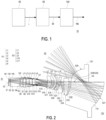
- FIG. 1 is a block diagram of a projection apparatus according to an embodiment of the disclosure.
- an embodiment of the disclosure provides a projection apparatus 10, which includes an illumination system 50, a light valve 60 and a projection lens 100.
- the illumination system 50 is configured to provide an illumination beam I.
- the light valve 60 is disposed on the transmission path of the illumination beam I emitted from the illumination system 50, and is configured to convert the illumination beam I into an image beam IB.
- the projection lens 100 is disposed on the transmission path of the image beam IB, and is configured for receiving the image beam IB from the light valve 60 and projecting the projection beam PB to the outside of the projection apparatus 10.
- the illumination system 50 of this embodiment includes, for example, multiple light-emitting elements, wavelength conversion element, homogenizing element, filter element, and multiple light splitting and combining elements.
- the illumination system 50 is used to provide light of different wavelengths as the source of image beam.
- the multiple light-emitting elements are, for example, a metal halide lamp, a high-pressure mercury lamp, or a solid-state illumination source, such as a light-emitting diode array, a laser diode array, and etc.
- the disclosure provides no limitation to the type or form of the illumination system 50 in the projection apparatus 10.
- the detailed structure and implementation of the illumination system 50 can be obtained from the common knowledge in the technical field with sufficient teaching, suggestion and implementation, so no further description is incorporated herein.
- the light valve 60 is, for example, a reflective light modulator such as a liquid crystal on silicon panel (LCOS panel) or a digital micro-mirror device (DMD).
- the light valve 60 may also be a transmissive light modulator such as a transparent liquid crystal panel, an electro-optical modulator, a magneto-optic modulator and an acousto-optic modulator (AOM).
- AOM acousto-optic modulator
- the disclosure provides no limitation to the form and type of the light valve 60.
- the detailed steps and implementation of the method for the light valve 60 to convert the illumination beam I into the image beam IB can be obtained from the common knowledge in the technical field with sufficient teaching, suggestion and implementation, and therefore no further description is incorporated herein.
- the number of light valves 60 is one.
- a single digital micro-mirror element (DMD) is disposed in the projection apparatus 10, but in other embodiments there may be more than one light valve 60, and the disclosure is not limited thereto.
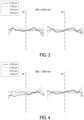
- FIG. 2 is a schematic diagram of a projection lens in the projection apparatus of FIG. 1 .
- the projection lens 100 has an optical axis OA.
- the projection lens 100 includes a first lens group G1, an aperture stop ST, a second lens group G2, a reflective optical element 110, and a refractive optical element 120 arranged in sequence on the transmission path of the image beam IB.
- the first lens group G1, the aperture stop ST and the second lens group G2 are arranged in sequence from a minified side A1 to a magnified side A2 along the optical axis OA.
- the reflective optical element 110 and the refractive optical element 120 are disposed between the second lens group G2 and the magnified side A2, and are respectively located on two opposite sides of the optical axis OA.
- the first lens group G1 includes a plurality of lenses having refractive power.
- the second lens group G2 includes a plurality of lenses having refractive power.
- the aperture stop ST is an equivalent aperture stop, and the element may not be provided physically in actual applications.
- the aperture stop ST is located between the first lens group G1 and the second lens group G2.
- the image beam IB passes through the first lens group G1 and the second lens group G2 in sequence from the minified side A1, and then is transmitted to the reflective optical element 110.
- the image beam IB is reflected by the reflective optical element 110 and transmitted to the refractive optical element 120 located on the other side of the optical axis OA, and then passes through the refractive optical element 120 to form a projection beam PB toward the magnified side A2.
- the first lens group G1 includes six lenses L1, L2, L3, L4, L5, and L6 that are arranged in sequence from the minified side A1 to the magnified side A2 along the optical axis OA.
- the refractive powers of the six lenses L1, L2, L3, L4, L5, and L6 are positive, positive, negative, positive, positive, and negative in sequence.
- the second lens group G2 includes five lenses L7, L8, L9, L10, and L11 arranged in sequence from the minified side A1 to the magnified side A2 along the optical axis OA.
- the refractive powers of the five lenses L7, L8, L9, L10, and L11 are positive, negative, negative, negative, and positive in sequence. In this manner, the number of lenses used in the projection lens 100 is reduced to 11, so that the length of the projection lens is reduced, the volume of material of the system can also be decreased, and the cost is further lowered.
- the first lens group G1 includes at least one cemented lens.
- the first lens group G1 includes two cemented lenses.
- One of the two cemented lenses is formed by cementing the lenses L2, L3, and L4, and the other of the two cemented lenses is formed by cementing the lenses L5 and L6.
- the first lens group G1 includes at least one aspheric lens.
- the second lens group G2 includes at least one aspheric lens.
- the lens L5 in the first lens group G1 or the lenses L8 and L10 in the second lens group G2 are aspheric lenses.
- the second lens group G2 includes at least one asymmetric lens, where the asymmetry is defined relative to the optical axis OA.
- both the lens L10 and the lens L11 are asymmetric lenses, that is, the optical axis OA does not pass through the center point of the lens L10 and the lens L11. Therefore, the design of the asymmetric lens in the second lens group G2 prevents the optical path of the image beam IB from being interfered by the lens, which helps reduce the volume of the system.
- the projection lens 100 is disposed on the transmission path of the image beam IB.
- the reflective optical element 110 includes a light incident surface S26, a reflective surface S27, and a first plane S28.
- the first plane S28 is the light emitting surface of the reflective optical element 110, and the optical axis OA falls on the first plane S28.
- the light incident surface S26 of the reflective optical element 110 is disposed adjacent to the second lens group G2.
- the light incident surface S26 of the reflective optical element 110 is arranged adjacent to the lens L11 in the second lens group G2, so that the image beam from the second lens group G2 enters the reflective optical element 110 from the light incident surface S26 and is transmitted to the reflective surface S27 on one side of the optical axis OA.
- the light incident surface S26 has positive refractive power and is an aspherical surface.
- the reflective surface S27 has positive refractive power and is an aspherical surface.
- the image beam IB is reflected by the reflective surface S27 to the first plane S28, and then passes through the first plane S28 to be transmitted to the refractive optical element 120 located on the other side of the optical axis OA.
- the refractive optical element 120 has a negative refractive power.
- the refractive optical element 120 includes a second plane S30 and a refractive surface S29.
- the optical axis OA falls on the second plane S30, that is, the first plane S28 of the reflective optical element 110 and the second plane S30 of the refractive optical element 120 are arranged corresponding to each other and parallel to the optical axis OA.
- the refractive surface S29 of the refractive optical element 120 is a convex surface facing the magnified side A2.
- the refractive surface S29 has a negative refractive power and is an aspherical surface.
- the refractive surface S29 of the refractive optical element 120 may also be designed as a concave surface.
- the image beam IB from the reflective optical element 110 passes through the second plane S30 and the refractive surface S29 of the refractive optical element 120 in sequence to form a projection beam PB.
- the reflective optical element 110 and the refractive optical element 120 have the same refractive index.
- the reflective optical element 110 and the refractive optical element 120 may be integrally formed, and the first plane S28 and the second plane S30 are the same surface.
- Table 1 and Table 2 list the data of a preferred embodiment of the projection lens 100. However, the information listed below is not intended to limit the disclosure.
- anyone familiar with the art in the related field can make appropriate changes to its parameters or settings after referring to the disclosure, but the change should still fall within the scope of the disclosure.
- Table 1 Element Surface Type Curvature (1/mm) Distance (mm) Refractive index (Nd) Abbe number (Vd) 60 S0 Plane Infinite 0.303 130 S1 Plane Infinite 1.100 1.51 62.9 S2 Plane Infinite 0.500 140 S3 Plane Infinite 11.200 1.72 38.0 S4 Plane Infinite 1.000 150 S5 Plane Infinite 2.000 1.52 58.5 S6 Plane Infinite 0.865 L1 S7 Spherical 22.13576 3.241 1.92 18.8 S8 Spherical -56.9036 1.758 L2 S9 Spherical 9.251041 2.777 1.50 81.3 L3 S10 Spherical 33.78041 0.592 1.78 31.9 L4 S11 Spherical 6.286626 2.817 1.53 74.3 S12 Spherical 53.82898 0.200 L5 S13 Aspherical 15.66435 2.433 1.51 6
- the lens L1 has a surface S7 and a surface S8 from the minified side A1 to the magnified side A2, and the lens L2 has a surface S9 and a surface S10 from the minified side A1 to the magnified side A2 in sequence.
- the lens L2, lens L3, and lens L4 are a set of cemented lenses, so the surface S10 of lens L2 facing the magnified side A2 and the surface S10 of lens L3 facing the minified side A1 are the same surface, and the surface S11 of lens L3 facing the magnified side A2 and the surface S11 of lens L4 facing the minified side A1 are the same surface.
- distance refers to the distance between two adjacent surfaces along the optical axis OA.
- distance corresponding to the surface S1 refers to the distance between the surface S1 and the surface S2 along the optical axis OA
- the distance corresponding to the surface S2 is the linear distance between the surface S2 and the surface S3 along the optical axis OA, and so on.
- the surface S13 of the lens L5, the surface S18 and the surface S19 of the lens L8, the surface S22 and the surface S23 of the lens L10, the light incident surface S26 and the reflective surface S27 of the reflective optical element 110, and the refractive surface S29 of the refractive optical element 120 are all aspherical, and the surfaces of the rest of lenses are all spherical.
- x is a sag in a direction of the optical axis
- c' is a reciprocal of radius of an osculating sphere, i.e., a reciprocal of a radius of curvature near the optical axis
- K is a conic coefficient
- y is an aspheric height, i.e., a height from a lens center to a lens edge.
- A-G respectively represent the various aspheric coefficients of the aspheric polynomial.
- Table 2 lists the parameter values of the surface S13 of the lens L5, the surface S18 and the surface S19 of the lens L8, the surface S22 and the surface S23 of the lens L10, the light incident surface S26 and the reflective surface S27 of the reflective optical element 110, and the refractive surface S29 of the refractive optical element 120, and the second-order aspheric coefficients A are all 0.
- the aperture of the projection lens 100 falls within the range of 1.7 to 2.0.
- the first lens group G1 of the projection lens 100 is a compensation group
- the second lens group G2 is a focusing group.
- the first lens group G1 moves along the optical axis OA to compensate for the clarity of the paraxial image
- the second lens group G2 moves along the optical axis OA to adjust the resolution of the image in the off-axis field of view. Since the focal length of the projection lens 100 can be adjusted, a clear projection image can be maintained.
- the distance between the second lens group G2 and the reflective optical element 110 on the optical axis OA is relatively small, for example, as shown in Table 1, the distance between the surface S25 of the lens L11 and the light incident surface S26 of the reflective optical element 110 is 4 mm, the overall length of the projection lens 100 is reduced by setting a smaller interval.
- the distance between the second lens group G2 and the reflective optical element 110 on the optical axis OA is changeable and is greater than 0 during adjusting the resolution of the image.
- the projection lens 100 further includes glass members 130 and 150 and a prism 140 disposed between the light valve 60 and the first lens group G1.
- the glass member 130, the prism 140 and the glass member 150 are arranged in sequence from the minified side A1 to the magnified side A2 along the optical axis OA.
- the glass member 130 is, for example, a protection cover for the light valve 60.
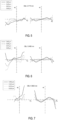
- FIG. 3 to FIG. 7 are the transverse ray fan plots of the projection lens of FIG. 2 at different object heights, in which the maximum and minimum scales of the ex, ey, Px and Py axes are +500 ⁇ m and -500 ⁇ m respectively. Please refer to FIG. 3 to FIG. 7 .
- the graphics shown in FIG. 3 to FIG. 7 are all within the standard range, which proves that the projection lens 100 of this embodiment can achieve a good optical imaging quality.
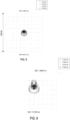
- FIG. 8 to FIG. 12 are respectively spot diagrams of different wavelengths of light after passing through the projection lens of FIG. 2 at different image heights and object heights.
- the maximum range of the axis x and the axis y is 1000 ⁇ m.
- the light spot of various wavelengths of light after passing through the projection lens 100 is not too large, so the image projected by the projection lens 100 of this embodiment has a higher imaging quality.
- FIG. 13 is a modulation transfer function diagram of the projection lens of FIG. 2 .
- FIG. 13 is a modulation transfer function (MTF) diagram of the projection lens 100 at different image heights, in which the horizontal axis represents the focus shift, and the vertical axis represents the modulus of the optical transfer function, T represents the curve in the tangential direction, S represents the curve in the sagittal direction, and the value marked next to "TS" represents the image height.
- MTF modulation transfer function
- the projection lens or the projection apparatus is provided with a reflective optical element and a refractive optical element both.
- the image beam is transmitted to the reflective optical element through the first lens group and the second lens group of the projection lens, and then the image beam is projected through the reflective optical element and the refractive optical element to form a projection beam. Therefore, the optical structure of the projection lens or the projection apparatus is relatively simple, which makes the design of the mechanism easier.
- the term “the disclosure”, “the present disclosure” or the like does not necessarily limit the claim scope to a specific embodiment, and the reference to particularly preferred exemplary embodiments of the disclosure does not imply a limitation on the disclosure, and no such limitation is to be inferred.
- the disclosure is limited only by the scope of the appended claims. Moreover, these claims may refer to use “first”, “second”, etc. following with noun or element. Such terms should be understood as a nomenclature and should not be construed as giving the limitation on the number of the elements modified by such nomenclature unless specific number has been given.
- the abstract of the disclosure is provided to comply with the rules requiring an abstract, which will allow a searcher to quickly ascertain the subject matter of the technical disclosure of any patent issued from this disclosure.
Landscapes
- Physics & Mathematics (AREA)
- General Physics & Mathematics (AREA)
- Optics & Photonics (AREA)
- Lenses (AREA)
- Projection Apparatus (AREA)
Applications Claiming Priority (1)
| Application Number | Priority Date | Filing Date | Title |
|---|---|---|---|
| CN202111008721.3A CN115729018A (zh) | 2021-08-31 | 2021-08-31 | 投影镜头及投影装置 |
Publications (1)
| Publication Number | Publication Date |
|---|---|
| EP4141509A1 true EP4141509A1 (de) | 2023-03-01 |
Family
ID=82939832
Family Applications (1)
| Application Number | Title | Priority Date | Filing Date |
|---|---|---|---|
| EP22190495.6A Withdrawn EP4141509A1 (de) | 2021-08-31 | 2022-08-16 | Projektionslinse und projektionsvorrichtung |
Country Status (4)
| Country | Link |
|---|---|
| US (1) | US20230083141A1 (de) |
| EP (1) | EP4141509A1 (de) |
| JP (1) | JP2023035891A (de) |
| CN (1) | CN115729018A (de) |
Families Citing this family (2)
| Publication number | Priority date | Publication date | Assignee | Title |
|---|---|---|---|---|
| CN117930460A (zh) * | 2022-10-17 | 2024-04-26 | 中强光电股份有限公司 | 超短焦投影镜头及投影装置 |
| JP2024127047A (ja) | 2023-03-08 | 2024-09-20 | セイコーエプソン株式会社 | 電子制御式機械時計 |
Citations (3)
| Publication number | Priority date | Publication date | Assignee | Title |
|---|---|---|---|---|
| US20200278601A1 (en) * | 2019-03-01 | 2020-09-03 | Seiko Epson Corporation | Projection optical system, projection-type image display device, imaging device, and method of manufacturing optical element |
| US20210173292A1 (en) * | 2019-12-06 | 2021-06-10 | Seiko Epson Corporation | Projection system and projector |
| US20210232035A1 (en) * | 2020-01-24 | 2021-07-29 | Seiko Epson Corporation | Projection system and projector |
Family Cites Families (19)
| Publication number | Priority date | Publication date | Assignee | Title |
|---|---|---|---|---|
| JP4890771B2 (ja) * | 2005-02-28 | 2012-03-07 | 富士フイルム株式会社 | 投写光学系およびこれを用いた投写型表示装置 |
| JP2008309988A (ja) * | 2007-06-14 | 2008-12-25 | Fujinon Corp | 投写レンズおよびこれを用いた投写型表示装置 |
| JP2008309990A (ja) * | 2007-06-14 | 2008-12-25 | Fujinon Corp | 投写レンズおよびこれを用いた投写型表示装置 |
| US9507271B1 (en) * | 2008-12-17 | 2016-11-29 | Applied Materials, Inc. | System and method for manufacturing multiple light emitting diodes in parallel |
| KR101215272B1 (ko) * | 2010-03-30 | 2012-12-26 | 방주광학 주식회사 | 대용량 광 픽업용 대물렌즈 |
| JP5727591B2 (ja) * | 2011-03-28 | 2015-06-03 | 富士フイルム株式会社 | 投写光学系および投写型表示装置 |
| CN103293642B (zh) * | 2012-03-02 | 2015-08-26 | 扬明光学股份有限公司 | 投影镜头和投影装置 |
| JP2013195574A (ja) * | 2012-03-16 | 2013-09-30 | Casio Comput Co Ltd | 投射光学系及び投射型表示装置 |
| CN103454757A (zh) * | 2012-06-05 | 2013-12-18 | 台达电子工业股份有限公司 | 投影变焦镜头 |
| JP6243353B2 (ja) * | 2012-12-28 | 2017-12-06 | 株式会社nittoh | 投射光学系およびプロジェクタ装置 |
| JP6040105B2 (ja) * | 2013-06-17 | 2016-12-07 | 富士フイルム株式会社 | 撮像レンズおよび撮像装置 |
| CN103576290B (zh) * | 2013-10-30 | 2016-01-06 | 宁波舜宇车载光学技术有限公司 | 一种广角镜头 |
| CN103605200B (zh) * | 2013-10-30 | 2016-03-30 | 宁波舜宇车载光学技术有限公司 | 一种光学镜头 |
| TWI551884B (zh) * | 2013-10-31 | 2016-10-01 | 揚明光學股份有限公司 | 投影鏡頭 |
| CN104297906A (zh) * | 2014-10-20 | 2015-01-21 | 宁波舜宇车载光学技术有限公司 | 一种光学镜头 |
| TWI662291B (zh) * | 2015-04-14 | 2019-06-11 | 佳能企業股份有限公司 | 光學鏡頭 |
| KR102255272B1 (ko) * | 2015-08-21 | 2021-05-24 | 삼성전자주식회사 | 프로젝션 렌즈 시스템 및 이를 포함한 프로젝션 시스템 |
| CN110208923B (zh) * | 2019-05-21 | 2021-04-06 | 浙江大华技术股份有限公司 | 成像系统及具有该系统的光学镜头 |
| JP2022040640A (ja) * | 2020-08-31 | 2022-03-11 | セイコーエプソン株式会社 | 光学系、プロジェクター、および撮像装置 |
-
2021
- 2021-08-31 CN CN202111008721.3A patent/CN115729018A/zh active Pending
-
2022
- 2022-08-09 US US17/883,613 patent/US20230083141A1/en not_active Abandoned
- 2022-08-10 JP JP2022127578A patent/JP2023035891A/ja active Pending
- 2022-08-16 EP EP22190495.6A patent/EP4141509A1/de not_active Withdrawn
Patent Citations (3)
| Publication number | Priority date | Publication date | Assignee | Title |
|---|---|---|---|---|
| US20200278601A1 (en) * | 2019-03-01 | 2020-09-03 | Seiko Epson Corporation | Projection optical system, projection-type image display device, imaging device, and method of manufacturing optical element |
| US20210173292A1 (en) * | 2019-12-06 | 2021-06-10 | Seiko Epson Corporation | Projection system and projector |
| US20210232035A1 (en) * | 2020-01-24 | 2021-07-29 | Seiko Epson Corporation | Projection system and projector |
Also Published As
| Publication number | Publication date |
|---|---|
| CN115729018A (zh) | 2023-03-03 |
| JP2023035891A (ja) | 2023-03-13 |
| US20230083141A1 (en) | 2023-03-16 |
Similar Documents
| Publication | Publication Date | Title |
|---|---|---|
| EP2490062B1 (de) | Projektionslinse und Projektionsvorrichtung | |
| US9733457B2 (en) | Zoom lens | |
| US8089706B2 (en) | Fixed-focus lens | |
| US11422336B2 (en) | Projection lens and projection device | |
| US10928612B1 (en) | Projection lens and projector | |
| US7859763B2 (en) | Fixed-focus lens | |
| EP4141509A1 (de) | Projektionslinse und projektionsvorrichtung | |
| JP2020034690A (ja) | 投射光学系および画像投射装置 | |
| US8054541B2 (en) | Fixed-focus lens | |
| CN114460721A (zh) | 投影镜头、投影装置、电子设备及车辆 | |
| EP4141506A1 (de) | Projektionslinse und projektionsvorrichtung | |
| US9612515B2 (en) | Projection apparatus and projection lens thereof capable of reducing focal length and aberration | |
| CN116841020B (zh) | 投影镜头及投影装置 | |
| EP4001987A1 (de) | Bildgebungssystem und projektionsvorrichtung | |
| US20110007402A1 (en) | Projection variable focus lens and projection display device | |
| US11966012B2 (en) | Projection lens including four lenses of −+−+ refractive powers | |
| US20210096341A1 (en) | Projection zoom lens and projector | |
| US11856337B2 (en) | Projection-type display device | |
| US20240134170A1 (en) | Ultra-short focus projection lens and projection device | |
| US7911716B1 (en) | Lens module | |
| TWI803955B (zh) | 投影鏡頭及投影裝置 | |
| TWI798802B (zh) | 投影鏡頭及投影裝置 | |
| US20250093760A1 (en) | Projection lens and projection device | |
| US12493173B2 (en) | Fixed-focus projection lens module | |
| EP4130840A1 (de) | Kopfmontierte anzeige |
Legal Events
| Date | Code | Title | Description |
|---|---|---|---|
| PUAI | Public reference made under article 153(3) epc to a published international application that has entered the european phase |
Free format text: ORIGINAL CODE: 0009012 |
|
| STAA | Information on the status of an ep patent application or granted ep patent |
Free format text: STATUS: THE APPLICATION HAS BEEN PUBLISHED |
|
| AK | Designated contracting states |
Kind code of ref document: A1 Designated state(s): AL AT BE BG CH CY CZ DE DK EE ES FI FR GB GR HR HU IE IS IT LI LT LU LV MC MK MT NL NO PL PT RO RS SE SI SK SM TR |
|
| STAA | Information on the status of an ep patent application or granted ep patent |
Free format text: STATUS: REQUEST FOR EXAMINATION WAS MADE |
|
| 17P | Request for examination filed |
Effective date: 20230831 |
|
| RBV | Designated contracting states (corrected) |
Designated state(s): AL AT BE BG CH CY CZ DE DK EE ES FI FR GB GR HR HU IE IS IT LI LT LU LV MC MK MT NL NO PL PT RO RS SE SI SK SM TR |
|
| STAA | Information on the status of an ep patent application or granted ep patent |
Free format text: STATUS: EXAMINATION IS IN PROGRESS |
|
| 17Q | First examination report despatched |
Effective date: 20260209 |
|
| STAA | Information on the status of an ep patent application or granted ep patent |
Free format text: STATUS: THE APPLICATION HAS BEEN WITHDRAWN |
|
| 18W | Application withdrawn |
Effective date: 20260316 |