EP4142319A1 - Procédé et appareil pour transférer des informations d'accès au réseau entre des terminaux dans un système de communication mobile - Google Patents
Procédé et appareil pour transférer des informations d'accès au réseau entre des terminaux dans un système de communication mobile Download PDFInfo
- Publication number
- EP4142319A1 EP4142319A1 EP21814202.4A EP21814202A EP4142319A1 EP 4142319 A1 EP4142319 A1 EP 4142319A1 EP 21814202 A EP21814202 A EP 21814202A EP 4142319 A1 EP4142319 A1 EP 4142319A1
- Authority
- EP
- European Patent Office
- Prior art keywords
- terminal
- authentication
- profile
- device transfer
- information
- Prior art date
- Legal status (The legal status is an assumption and is not a legal conclusion. Google has not performed a legal analysis and makes no representation as to the accuracy of the status listed.)
- Pending
Links
Images




Classifications
-
- H—ELECTRICITY
- H04—ELECTRIC COMMUNICATION TECHNIQUE
- H04W—WIRELESS COMMUNICATION NETWORKS
- H04W12/00—Security arrangements; Authentication; Protecting privacy or anonymity
- H04W12/40—Security arrangements using identity modules
- H04W12/43—Security arrangements using identity modules using shared identity modules, e.g. SIM sharing
-
- H—ELECTRICITY
- H04—ELECTRIC COMMUNICATION TECHNIQUE
- H04W—WIRELESS COMMUNICATION NETWORKS
- H04W12/00—Security arrangements; Authentication; Protecting privacy or anonymity
- H04W12/06—Authentication
-
- H—ELECTRICITY
- H04—ELECTRIC COMMUNICATION TECHNIQUE
- H04W—WIRELESS COMMUNICATION NETWORKS
- H04W12/00—Security arrangements; Authentication; Protecting privacy or anonymity
- H04W12/04—Key management, e.g. using generic bootstrapping architecture [GBA]
- H04W12/043—Key management, e.g. using generic bootstrapping architecture [GBA] using a trusted network node as an anchor
- H04W12/0431—Key distribution or pre-distribution; Key agreement
-
- H—ELECTRICITY
- H04—ELECTRIC COMMUNICATION TECHNIQUE
- H04W—WIRELESS COMMUNICATION NETWORKS
- H04W12/00—Security arrangements; Authentication; Protecting privacy or anonymity
- H04W12/40—Security arrangements using identity modules
- H04W12/42—Security arrangements using identity modules using virtual identity modules
-
- H—ELECTRICITY
- H04—ELECTRIC COMMUNICATION TECHNIQUE
- H04W—WIRELESS COMMUNICATION NETWORKS
- H04W8/00—Network data management
- H04W8/18—Processing of user or subscriber data, e.g. subscribed services, user preferences or user profiles; Transfer of user or subscriber data
- H04W8/20—Transfer of user or subscriber data
Definitions
- the disclosure relates to a method and apparatus for transferring and reinstalling access information for accessing a communication system installed in one device to another device in a wireless communication system.
- the 5G or pre-5G communication system is also called a 'Beyond 4G Network' or a 'Post LTE System'.
- the 5G communication system is considered to be implemented in higher frequency (mmWave) bands, e.g., 60GHz bands, so as to accomplish higher data rates.
- mmWave e.g., 60GHz bands
- MIMO massive multiple-input multiple-output
- FD-MIMO Full Dimensional MIMO
- array antenna an analog beam forming, large scale antenna techniques are discussed in 5G communication systems.
- RANs Cloud Radio Access Networks
- D2D device-to-device
- CoMP Coordinated Multi-Points
- FQAM Hybrid FSK and QAM Modulation
- SWSC sliding window superposition coding
- ACM advanced coding modulation
- FBMC filter bank multi carrier
- NOMA non-orthogonal multiple access
- SCMA sparse code multiple access
- the Internet which is a human centered connectivity network where humans generate and consume information
- IoT Internet of Things
- IoE Internet of Everything
- sensing technology “wired/wireless communication and network infrastructure”, “service interface technology”, and “Security technology”
- M2M Machine-to-Machine
- MTC Machine Type Communication
- loT may provide intelligent Internet technology services that create a new value to human life by collecting and analyzing data generated among connected things.
- loT may be applied to a variety of fields including smart home, smart building, smart city, smart car or connected cars, smart grid, health care, smart appliances and advanced medical services through convergence and combination between existing Information Technology (IT) and various industrial applications.
- IT Information Technology
- 5G communication systems to loT networks.
- technologies such as a sensor network, Machine Type Communication (MTC), and Machine-to-Machine (M2M) communication may be implemented by beamforming, MIMO, and array antennas.
- Application of a cloud Radio Access Network (RAN) as the above-described Big Data processing technology may also be considered to be as an example of convergence between the 5G technology and the loT technology.
- RAN Radio Access Network
- a universal integrated circuit card is a smart card inserted and used in a mobile communication terminal and is also referred to as a UICC card.
- the UICC may include an access control module for accessing a network of a mobile communication service provider. Examples of the access control module include a universal subscriber identity module (USIM), a subscriber identity module (SIM), and an IP multimedia service identity module (ISIM).
- USIM universal subscriber identity module
- SIM subscriber identity module
- ISIM IP multimedia service identity module
- a UICC including a USIM is commonly referred to as a USIM card.
- a UICC including a SIM module is commonly referred to as a SIM card.
- SIM card will be used in a general sense including a UICC card, a USIM card, a UICC including an ISIM, and the like. That is, the technical application of the SIM card may be equally applied even to a USIM card, an ISIM card, or a general UICC card.
- the SIM card stores personal information of a mobile communication subscriber, and performs subscriber authentication and traffic security key generation when accessing a mobile communication network, thereby enabling safe mobile communication use.
- the SIM card is generally produced as a dedicated card for a corresponding provider by the request of a specific mobile communication service provider upon producing a card, and authentication information, for example, a universal subscriber identity module (USIM) application and international mobile subscriber identity (IMSI), K value, OPc value, and the like for network access of the provider are loaded in advance in the card, and the card is launched. Accordingly, the produced SIM card is transferred to the corresponding mobile communication service provider and provided to a subscriber, and then, if necessary, management of installation, modification, and deletion of applications in the UICC may be performed using technologies such as over the air (OTA).
- OTA over the air
- Subscribers may insert the UICC card into a mobile communication terminal thereof to use the network and application services of the mobile communication service provider, and when replacing the terminal, by moving and inserting the UICC card from an existing terminal to a new terminal, the subscribers may use authentication information, mobile communication phone number, personal phone book, and the like stored in the UICC card as it is in the new terminal.
- the SIM card is inconvenient for a mobile communication terminal user to receive services from other mobile communication companies.
- the mobile communication terminal user is inconvenient to physically acquire a SIM card in order to receive a service from a mobile communication service provider.
- a roaming service solves to some extent the above inconvenience, but there is a problem that the service cannot be provided in the case that a contract between communication companies is not made and an expensive fee.
- a SIM module of a mobile communication service that the user wants to use at a desired time point may be downloaded to the UICC card.
- a UICC card may download and install a plurality of SIM modules and select and use only one SIM module of the plurality of SIM modules.
- Such a UICC card may or may not be fixed to the terminal.
- a UICC fixed to and used in a terminal is referred to as an embedded UICC (eUICC), and the eUICC commonly means a UICC card fixed to and used in the terminal and that may be selected by remotely downloading a SIM module.
- eUICC embedded UICC
- a UICC card that may remotely download and select a SIM module will be collectively referred to as an eUICC. That is, among UICC cards that may remotely download and select a SIM module, a UICC card fixed or not fixed to the terminal will be collectively referred to as an eUICC. Further, downloaded SIM module information will be collectively referred to as the term eSIM profile. That is, among UICC cards that may remotely download and select a SIM module, a UICC card fixed to a terminal and a UICC card that is not fixed to a terminal are collectively referred to as an eUICC. Further, downloaded SIM module information will be collectively referred to as the term profile.
- On device service activation is a generic term for a solution that enables a user to subscribe and open a new communication service through a web portal or app in a terminal, or to transfer, install, and open a communication service upon changing a device.
- the on device service activation service may be used interchangeably with terms ODSA or ODA.
- a module that needs to be installed in the terminal so as to support ODSA is referred to as an ODSA client, and the ODSA client may be used interchangeably with the term ODSA or ODA.
- a service provider may introduce an entitlement configuration server (ECS).
- ECS may determine whether a requesting terminal can provide a communication-based service in consideration of subscriber information of the terminal user and a network state of the terminal, and in the case that the requesting terminal can provide the communication-based service, the ECS may transmit predetermined information for the terminal to provide the communication-based service to the terminal.
- the ECS is currently being introduced for services such as voice over LTE (VoLTE), voice over Wi-Fi (VoWiFi), and on device service activation (ODSA).
- the ECS serves as an ODSA gateway server of a provider accessed by the ODSA client of the terminal, and a message protocol between the ODSA client and the ECS is defined in the TS.43 standard by the GSM Association (GSMA).
- GSM Association GSM Association
- An ECS address may be expressed in various ways, but an example of the expression is full qualified domain name (FQDN), which may be created and used as in ase.mnc ⁇ MNC>.mcc ⁇ MCC>.pub.3gppnetwork.org according to the combination of MCC and MNC, which is an intrinsic identification number of a communication service provider.
- FQDN full qualified domain name
- ⁇ MNC> and ⁇ MCC> are a decimal format of the corresponding MNC and MCC, respectively, and in the case that the corresponding information is a two-digit number, the ⁇ MNC> and ⁇ MCC> may be used as a three-digit number by adding 0 to the beginning.
- a communication service subscriber may use mobile communication network access as it is using authentication information stored in the UICC card.
- a downloaded profile is decoded and installed only inside the eUICC, and after the profile is installed, the profile cannot be again extracted to the outside of the terminal, whereby it is necessary to download and (re)install a profile in a new terminal.
- communication service providers are standardizing a method of using LPA and SM-DP+ and a method of using an ODSA client and an ECS to GSMA, and it is expected that communication service providers will select one of these methods to support transfer installation of communication services.
- support is available only in an existing terminal (the existing terminal in which the profile is installed) or a new terminal to be changed; thus, there is inconvenience that the user cannot perform transfer installation of the communication service according to the combination of the user's start terminal and the provider's support method. This will be further described with reference to FIG. 2 .
- the existing mobile communication company provides a procedure of verifying an identity or ID authentication process of a subscriber when a SIM card is lost to reissue a SIM card, and the procedure may be applied to the purpose of downloading a profile to an eUICC of a new terminal when changing a device of an eUlCC-equipped terminal.
- a process is usually processed only when a subscriber visits an offline branch, or when such a process is processed online, a stricter identity authentication or ID verification process is required compared to an offline branch.
- a strict identity authentication or ID verification process is required compared to an offline branch.
- a communication service provider may authenticate the subscriber using an EAP-AKA method, which is a method commonly used by the communication service provider for subscriber authentication in communication services, but authentication is possible only when the SIM module is activated and access to SIM information is thus possible, and the EAP-AKA method cannot be used when the SIM module is deactivated.
- EAP-AKA method is a method commonly used by the communication service provider for subscriber authentication in communication services, but authentication is possible only when the SIM module is activated and access to SIM information is thus possible, and the EAP-AKA method cannot be used when the SIM module is deactivated.
- the technical problem to be achieved by the disclosure is to use a communication service used in an existing terminal in a communication system by transfer reinstalling/opening the communication service to a replaced new terminal.
- a device transfer method is selected in consideration of the combination of a user start terminal and a provider support method.
- the disclosure provides a method of supporting an ODSA method in the existing terminal and supporting an LPA method in a new terminal. Further, the disclosure provides a download method that does not require separate subscriber ID authentication, which may be provided even in the case that an SIM module is deactivated.
- a method performed by a terminal in a wireless communication system may include acquiring information related to a device transfer; determining a device transfer method based on the information related to the device transfer; transmitting, to a server, a first message including information related to authentication and an identifier of the terminal through the determined device transfer method, wherein the server transmits the first message identified based on the information related to the device transfer; and receiving, from the server, a second message including an authentication method determined by the server based on the information related to authentication and the identifier of the terminal.
- the device transfer method may be at least one of an on device service activation (ODSA) method or a local profile assistant (LPA) method.
- ODSA on device service activation
- LPA local profile assistant
- the information related to the device transfer may be acquired through at least one of information received by a second server, information stored in advance in the terminal, or profile metadata information.
- the authentication method may be at least one of authentication using subscription manager data preparation plus (SM-DP+), extensible authentication protocol for 3rd generation authentication and key agreement (EAP-AKA) authentication, authentication using an entitlement configuration server (ECS) and the SM-DP+, or OAuth/Open ID protocol-based authentication.
- SM-DP+ subscription manager data preparation plus
- EAP-AKA extensible authentication protocol for 3rd generation authentication and key agreement
- ECS entitlement configuration server
- OAuth/Open ID protocol-based authentication OAuth/Open ID protocol-based authentication.
- a method performed by a server in a wireless communication system may include receiving, from a terminal, a first message including information related to authentication and an identifier of the terminal through a device transfer method determined by the terminal; determining a processable authentication method based on the information related to authentication and an identifier of the terminal; and transmitting, to the terminal, a second message including the determined authentication method, wherein the device transfer method may be determined based on information related to a device transfer acquired by the terminal.
- a terminal may include a transceiver configured to transmit and receive at least one signal; and a controller coupled to the transceiver, wherein the controller may be configured to acquire information related to a device transfer, to determine a device transfer method based on the information related to the device transfer, to transmit, to a server, a first message including information related to authentication and an identifier of the terminal through the determined device transfer method, wherein the server is identified based on the information related to the device transfer, and to receive, from the server, a second message including an authentication method determined by the server based on the information related to the authentication and the identifier of the terminal.
- a server may include a transceiver configured to transmit and receive at least one signal; and a controller coupled to the transceiver, wherein the controller may be configured to receive, from a terminal, a first message including information related to authentication and an identifier of the terminal through a device transfer method determined by the terminal, to determine a processable authentication method based on the information related to the authentication and the identifier of the terminal, and to transmit, to the terminal, a second message including the determined authentication method, wherein the device transfer method may be determined based on information related to a device transfer acquired by the terminal.
- a method performed by a first terminal may include receiving an input for moving an installed first profile, acquiring information on whether to support a device transfer of a communication service provider and a support method; transmitting predetermined information necessary for selecting a subscriber authentication method including profile server authentication method support to an ECS; acquiring ECS generation data and a profile server address proving that it is an ECS request for subscriber authentication processing from the ECS to the profile server; and performing subscriber authentication through the profile server and replying a result thereof to the ECS.
- a method performed by a terminal may include determining a provider support method to be used in the terminal by identifying a user start terminal and a provider support method and collecting a user authentication method supportable in the terminal and transmitting the collected user authentication method to an ECS server.
- a method performed by an ECS may include selecting an authentication method with reference to possible authentication method information provided by a first terminal; generating predetermined data to be used for authentication according to the selected authentication method and transmitting the predetermined data to the terminal; verifying a user authentication result received from the terminal; and processing a series of procedures necessary for a device transfer according to the verification result and transmitting predetermined information required for profile download to the first terminal.
- a method performed by a profile server may include receiving, from a first terminal, a subscriber authentication request including data generated by an ECS; and performing subscriber authentication and replying a result thereof to the first terminal.
- a method performed by a second terminal may include acquiring, from a first terminal, predetermined information transmitted by an ECS to the first terminal; and transmitting the predetermined information to a profile server and receiving and installing a profile.
- seamlessly UI/UX can be provided to a user in consideration of the combination of the communication service provider's device transfer support method and the user's device transfer start terminal may be provided.
- the terminal and the ECS can conveniently move a profile a device to another device using authentication information of an USIM or a profile server without inputting additional information on the user's identity authentication information.
- a profile can be conveniently moved a device to another device using authentication information with a profile server without requiring an ID input to the user.
- the communication service provider can delete a profile installed in the existing terminal as needed to reuse the profile later.
- a base station is a subject performing resource allocation of a terminal, and may be at least one of a gNode B, an eNode B, a node B, a base station (BS), a radio access unit, a base station controller, or a node on a network.
- the terminal may include a user equipment (UE), a mobile station (MS), a cellular phone, a smart phone, a computer, or a multimedia system capable of performing a communication function.
- a downlink (DL) is a wireless transmission path of a signal transmitted from a base station to a terminal
- an uplink (UL) is a wireless transmission path of a signal transmitted from a terminal to a base station.
- LTE or LTE-A system may be described as an example, embodiments of the disclosure may be applied to other communication systems having a similar technical background or channel type.
- 5G mobile communication technology (5G, new radio (NR)) developed after LTE-A may be included in a system to which an embodiment of the disclosure may be applied, and the following 5G may be a concept including existing LTE, LTE-A and other similar services.
- the disclosure may be applied to other communication systems through some modifications within a range that does not significantly deviate from the scope of the disclosure by the determination of a person having skilled technical knowledge. In this case, it will be understood that each block of message flow diagrams and combinations of the message flow diagrams may be performed by computer program instructions.
- these computer program instructions may be mounted in a processor of a general purpose computer, special purpose computer, or other programmable data processing equipment, the instructions performed by a processor of a computer or other programmable data processing equipment generate a means that performs functions described in the message flow diagram block(s). Because these computer program instructions may be stored in a computer usable or computer readable memory that may direct a computer or other programmable data processing equipment in order to implement a function in a particular manner, the instructions stored in the computer usable or computer readable memory may produce a production article containing instruction means for performing the function described in the message flow diagram block(s).
- the computer program instructions may be mounted on a computer or other programmable data processing equipment, a series of operational steps are performed on the computer or other programmable data processing equipment to generate a computer-executed process; thus, instructions for performing the computer or other programmable data processing equipment may provide steps for performing functions described in the message flow diagram block(s).
- each block may represent a module, a segment, or a portion of a code including one or more executable instructions for executing specified logical function(s).
- functions recited in the blocks may occur out of order.
- two blocks illustrated one after another may in fact be performed substantially simultaneously, or the blocks may be sometimes performed in the reverse order according to the corresponding function.
- a term '-unit' used in this embodiment means software or hardware components such as a field programmable gate array (FPGA) or an application specific integrated circuit (ASIC), and '-unit' performs certain roles.
- FPGA field programmable gate array
- ASIC application specific integrated circuit
- '-unit' is not limited to software or hardware.
- '-unit' may be configured to reside in an addressable storage medium or may be configured to reproduce one or more processors. Therefore, as an example, '-unit' includes components such as software components, object-oriented software components, class components, and task components, processes, functions, properties, procedures, subroutines, segments of program code, drivers, firmware, microcode, circuit, data, databases, data structures, tables, arrays, and variables. Functions provided in the components and '-units' may be combined into a smaller number of components and '-units' or may be further separated into additional components and '-units'. Further, components and '-units' may be implemented to reproduce one or more CPUs in a device or secure multimedia card. Further, in an embodiment, '-unit' may include one or more processors.
- an UICC is a smart card using by inserting into a mobile communication terminal, and means a chip that enables secure mobile communication by performing subscriber authentication and traffic security key generation when accessing a mobile communication system such as GSM, WCDMA, LTE, and 5G by storing personal information such as network access authentication information, phone book, and SMS of a mobile communication subscriber.
- the UICC may be loaded with communication applications such as a subscriber identification module (SIM), a universal SIM (USIM), and an IP multimedia SIM (ISIM) according to a type of a mobile communication network to which the subscriber accesses and provide high-level security functions for loading various application applications such as e-wallet, ticketing, and e-passport.
- SIM subscriber identification module
- USIM universal SIM
- ISIM IP multimedia SIM
- an embedded UICC is a security module in the form of a chip embedded in a terminal, not a removable type that may be inserted into and removed from the terminal.
- the eUICC may be installed by downloading a profile using over the air (OTA) technology.
- OTA over the air
- the eUICC may be referred to as a UICC that can download and install a profile.
- a method of downloading and installing a profile using OTA technology in the eUICC may be applied to a removable UICC that may be inserted into and removed from a terminal. That is, an embodiment of the disclosure may be applied to a UICC that may be installed by downloading a profile using OTA technology.
- UICC may be used interchangeably with the SIM
- eUICC may be used interchangeably with an eSIM.
- a profile may mean that an application, a file system, an authentication key value, and the like stored in the UICC are packaged in software form. Further, the profile may be referred to as access information.
- the USIM profile may have the same meaning as the profile or may mean that information included in the USIM application in the profile is packaged in the form of software.
- the profile server includes a function of generating a profile, encrypting the generated profile, generating a profile remote management instruction, or encrypting the generated profile remote management instruction, and may be represented as subscription manager data preparation (SM-DP), subscription manager data preparation plus (SM-DP+), or subscription manager secure routing (SM-SR).
- SM-DP subscription manager data preparation
- SM-DP+ subscription manager data preparation plus
- SM-SR subscription manager secure routing
- the term 'terminal' or 'device' used in this specification may be referred to as a mobile station (MS), a user equipment (UE), a user terminal (UT), a wireless terminal, an access terminal (AT), a terminal, a subscriber unit, a subscriber station (SS), a wireless device, a wireless communication device, a wireless transmit/receive unit (WTRU), a mobile node, a mobile, or other terms.
- MS mobile station
- UE user equipment
- UT user terminal
- AT access terminal
- SS subscriber unit
- WTRU wireless transmit/receive unit
- mobile node a mobile, or other terms.
- the terminal may include a cellular phone, a smart phone having a wireless communication function, a personal digital assistant (PDA) having a wireless communication function, a wireless modem, a portable computer having a wireless communication function, a photographing device such as a digital camera having a wireless communication function, a gaming device having a wireless communication function, music storage and playback appliances having a wireless communication function, Internet home appliances capable of performing wireless Internet access and browsing, as well as portable units or terminals incorporating combinations of such functions.
- the terminal may include a machine to machine (M2M) terminal and a machine type communication (MTC) terminal/device, but is not limited thereto.
- M2M machine to machine
- MTC machine type communication
- the terminal may be referred to as an electronic device or simply a device.
- the terminal or the device may include software or an application installed in the terminal or the device so as to control the UICC or eUICC.
- the software or the application may be referred to as, for example, a local profile assistant (LPA).
- LPA local profile assistant
- the eUICC identifier eUICC ID
- EID an intrinsic identifier of the eUICC embedded in the terminal
- an application protocol data unit may be a message for a controller in a terminal or a device to interwork with the eUICC.
- a profile package may be used interchangeably with a profile or may be used as a term indicating a data object of a specific profile and be referred to as a profile TLV or a profile package TLV.
- the profile identifier is an intrinsic identification number of the profile and may be referred to as an integrated circuit card identifier (ICCID).
- ICCID integrated circuit card identifier
- the profile package may be referred to as a protected profile package (PPP) or a protected profile package TLV (PPP TLV).
- the profile package may be referred to as a bound profile package (BPP) or a bound profile package TLV (BPP TLV).
- the profile package TLV may be a data set representing information constituting a profile in a TLV (tag, length, value) format.
- an AKA is authentication and key agreement, and may indicate an authentication algorithm for accessing 3GPP and 3GPP2 networks.
- K is an encryption key value stored in the eUICC used for the AKA authentication algorithm, and in this specification, OPc is a parameter value that may be stored in the eUICC used for the AKA authentication algorithm.
- an NAA is an application program of a network access application, and may be an application program such as an USIM or ISIM stored in the UICC or eUICC to access a network.
- the NAA may be a network access module.
- an ECS may be used interchangeably with an entitlement configuration server, a subscription authentication server, a subscription server, an entitlement authentication server, and an entitlement server (ES), and an ODSA client may be used interchangeably with an ODSA and ODA.
- an end-user, a user, a subscriber, a service subscriber, and a user mean a person who performs a device transfer and may be used interchangeably.
- eSIM transfer means a profile movement corresponding to the USIM card movement when the device is changed from a first terminal to a second terminal, which is equipped with the eUICC, and may be used interchangeably. This should be interpreted according to the context.
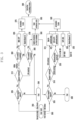
- FIG. 1 is a block diagram illustrating a constitution of a communication system to which an embodiment of the disclosure is applied.
- an end user 100 is a user who performs profile movement between devices, and a device 105 means a terminal or device capable of a wireless communication service.
- the device 105 includes an LPA 140 and an eUICC 160, and in the case of supporting entitlement configuration exchange with an ECS, the device 105 includes an ODSA client 110.
- the LPA 140 and an SM-DP+ 150 are standard entities defined in GSMA SGP.22, and when downloading and installing a profile in the eUICC and when changing a device, the LPA may involve in moving the profile to another profile.
- the terminal 105 may receive an input for profile movement from the user 100 from the ODSA client 110 or the LPA 140 and start a device transfer procedure.
- the terminal may access a configuration server 170, which is a separate server in order to acquire the information, and acquire and utilize all or part of information necessary for determining a device transfer method of the terminal.
- the configuration server 170 may be implemented alone or into one of a BSS/OSS 130 of the communication service provider.
- the mobile network operator (MNO) BSS/OSS 130 is a server system for a communication service provider to operate and process a communication service, and is also referred to as a back-end system of a communication company, and in some descriptions of the disclosure, the MNO BSS/OSS 130 and the communication service provider may be used interchangeably.
- the MNO BSS/OSS may perform subscription and cancellation of a communication service in eUICC device and processing of a device transfer through information exchange with SM-DP+ 150 server, which is a profile server, or an ECS 120, which is a server that processes service subscription management.
- the ECS 120 and the SM-DP+ 150 server may be interworked with the back-end system of the communication service provider and be implemented independently of the back-end system of the communication service or as a part of the back-end system.
- the ODSA client 110 and the LPA 140 may be integrated into one application or may be implemented separately.
- FIG. 1 illustrates that the configuration server 170 is connected to the ODSA client 110, but the disclosure is not limited thereto, and other applications of the terminal or the LPA may directly access the configuration server 170 to acquire information for device transfer processing and process subsequent procedures.
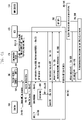
- FIG. 2 is a diagram illustrating whether to support a device transfer according to a combination of a user start terminal and a communication service movement support method of a communication company for an eSIM device transfer.
- An As-Is table 200 represents a method that may be provided in consideration of the combination of the user start terminal and the provider support method at a time point of disclosing the disclosure.
- the provider support method is the ODSA method, and the provider does not provide for the user to start a device transfer in a first terminal 300, and the processing procedure is not defined in TS. 43 standard.
- the provider support method is the LPA method and that the user starts to change a device in the second terminal 350, there is no method in which the second terminal 350 processes this.
- the method is a method in which the second terminal 350 cannot currently support, but in the case that the user 100 may use the first terminal, the method may be usable by allowing it to be processed through the corresponding terminal.
- the terminal does not provide a corresponding processing method. Therefore, the method of a device transfer to be provided when the disclosure is introduced is illustrated in a to-be table 210.
- the as-is table 200 all parts marked as unsupported, that is, FAIL, may be supported through the disclosure, and for this purpose, a user interface (UI), user experience (UX), and call flow of the case of supporting this are illustrated with reference to FIGS. 5D and 6C .
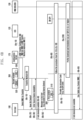
- FIG. 3 is a flowchart illustrating an eSIM device transfer processing procedure and a determination criterion of a terminal.
- a terminal 105 may determine whether the terminal generating an event for a device transfer by the user is an existing terminal that intends to move an existing profile or a new terminal in which the profile is to be reinstalled.
- a terminal that intends to move the existing profile will be referred to as a first terminal 300
- a terminal in which the profile is to be reinstalled will be referred to as a second terminal 350.
- a device 105 may be used. The device 105 may identify whether the user enters from the first terminal or the second terminal by separating the user 100 entry menu.
- the device 105 may identify information collected through information stored in advance in the terminal and the configuration server 170 or metadata of a profile, as described later with reference to FIG. 4 to identify whether a communication service provider supports a device transfer (305) and a support method (310) for the profile, and in performing the device transfer, the device 105 may identify a status of the terminal, including information on whether the device transfer request terminal 105 is the first terminal 300 or the second terminal 350, and finally determine (310) a device transfer method of the communication service to be used by the terminal 105.
- Whether to support a device transfer (305) refers to determining whether a profile previously installed in an eUICC of the first terminal 300 may be downloaded as a profile having the same communication service subscription configuration in the second terminal 350.
- the terminal 105 may acquire information on whether it supports a device transfer method using the ODSA client and the ECS as a device transfer support method of the communication service provider for the profile or information on whether it supports a device transfer method using the LPA and SM-DP+ server.
- the communication service provider may support one or more device transfer methods among the above-described two device transfer methods. In the case that there is one or more device transfer support method for a profile to move by the communication service provider collected from the terminal, the communication service provider may additionally store information on a priority for applying the device transfer method to the profile metadata or the configuration server 170 and provide the information to the terminal.
- the terminal 105 may display a screen requesting selection to the user 100 so that the user may select it or may select and use one of two methods according to a terminal basic configuration.
- the device transfer method using the ODSA client and the ECS will be described in the ODSA method for convenience of description later, and the device transfer method using the LPA and SM-DP+ server will be described in the LPA method, and detailed procedures including each device transfer method will be described in detail with reference to FIGS. 5A to 5D and FIGS. 6A to 6C .
- subsequent procedures should be performed differently according to whether the terminal 105 initiating a device transfer is the first terminal 300 or the second terminal 350.
- the LPA 140 of the terminal may request a command requesting profile movement including predetermined information on the profile to change the device to the SM-DP+ 150.
- the SM-DP+ 150 may notify the communication service provider 130 of the device transfer request, and create a profile that will be downloaded for a device transfer in the second terminal 350 through an ES2+ interface defined in GSMA SGP.22 and the communication service provider 130.
- the SM-DP+ 150 may exchange (common mutual authentication) a signature value of the eUICC certificate and the SM-DP+ between the SM-DP+ 150 and the eUICC 160 of the first terminal 300 in which the profile to move is installed, and authenticate a subscriber by authenticating the eUICC 160 and the terminal in which the profile is installed.
- an SM-DP+ authentication method 315 the above method will be referred to as an SM-DP+ authentication method 315.
- the SM-DP+ 150 may send data necessary for downloading a profile to be generated in the second terminal 350 to the first terminal 300.
- the second terminal 350 may scan (340) a QR code displayed on a screen of the first terminal and receive and install the profile from the profile server 150 included in the QR code, thereby completing (390) profile transfer installation according to the device transfer.
- the first terminal 300 may transmit information to the second terminal 350 via short-distance communication such as NFC, Bluetooth, UWB, or WiFi communication, or a server.
- the second terminal 350 may install the profile through a normal eSIM profile download process of scanning the QR code; thus, there is an advantage in performing a device transfer operation without modification of the existing profile download procedure.
- an example using a QR code is exemplified, but the embodiment of the disclosure is not limited thereto.
- the following illustrates a constitution example of data required to download a profile to be displayed in a QR code.
- SMDP.TEST.COM means a profile server address as an example, $ is a delimiter that distinguishes each information
- LPA means that the data is an activation code format used for downloading a profile
- x means the type of activation code, and for example, the value may be a number such as 1, or 2, or 3, or 4
- XXXXX is data of an activation code token (ACToken) area, may be information that encodes information including part or all of ASN.1 Data below, and is marked with XXXXX for convenience.
- the encoding may be a method of 1) encoding data of the following ASN.1 format in a DER method and then hexadecimal-encoding again the data to enable to express the data in characters and 2) encoding data of the following ASN.1 format in a DER method and then BASE64-encoding the data to enable to express the data in characters.
- the corresponding data required to download a profile may be collectively referred to as an activation code.
- the first terminal 300 may acquire device information (e.g., eUICCInfo, DeviceInfo) of the second terminal 350, then transmit the device information to the profile server to check whether profile reinstallation is possible in the second terminal 350, and then perform the subsequent process. Further, although not described in the drawing, the first terminal 300 may acquire an international mobile equipment identity (IMEI) of the second terminal 350 and request (e.g., identify with *#06# on the terminal keypad) an input through a user screen to add and transmit the IMEI when requesting a device transfer to the ECS or the LPA.
- IMEI international mobile equipment identity
- the second terminal 350 may create a menu that can guide different procedures to the user according to whether the first terminal 300 is available and display the menu on the screen. In the case that the first terminal 300 is available, the second terminal 350 may display a guide message on the progress in the first terminal 300 and move to a menu that may scan a QR code displayed from the first terminal 300 and stand by.
- the second terminal 350 may scan (385) the QR code to process the subsequent procedure in the same way.
- the second terminal 350 may display a guide message indicating that the communication service provider cannot support a device transfer service of the profile without the existing first terminal 300 and end (308) the procedure.
- the terminal may collect status information of a profile to move installed in the terminal and information on the authentication method implemented in the terminal to transmit the information from the ODSA client 110 to the ECS 120, and the terminal or the server may determine an authentication method for the corresponding profile.
- the profile status information is information on whether the profile is enabled or disabled and enabled means a state that the network is activated to a state in which the terminal 105 can access file data of the corresponding profile. Disabled means a state that the network is not activated to a state in which the terminal 105 cannot access file data of the corresponding profile.
- the terminal may determine an authentication method according to the priority of the authentication method configured therein and transmit the authentication method to the ECS 120, and the authentication method may be determined in a manner in which the ECS 120 finally identifies, determines and replies.
- the terminal may transmit status information of a profile to move from the terminal 120 and information on all authentication methods capable of being supported by the terminal to the ECS 120, and the ECS 120 may select one authentication method and reply the method in a method to use in consideration of the authentication method and the priority of authentication method application of the service provider for the profile.
- the first terminal 300 may select one of an ECS & DP+ method 325, which is an ECS 120 and SM-DP+ 150 cooperative authentication method 315 as an authentication method that may be supported by the terminal for proofing ODSA service access qualification, an EAP-AKA method 330 using a k value and an internal mobile subscriber identifier (IMSI), which is subscriber identifier information stored in the SIM module, and an OAuth/Open ID method 335, which is a web service login-based authentication method and then identify whether the corresponding access terminal and the subscriber have ODSA service qualification authentication through data exchange with the ECS 120.
- IMSI internal mobile subscriber identifier
- OAuth/Open ID method 335 which is a web service login-based authentication method and then identify whether the corresponding access terminal and the subscriber have ODSA service qualification authentication through data exchange with the ECS 120.
- a procedure including each authentication method will be described later in detail with reference to FIGS. 5A to 5D .
- the ECS 120 may acquire data necessary for the second terminal 350 to download a profile from the SM-DP+ 150 through a communication company back-end system 130 and reply the data to the ODSA client of the first terminal 300.
- the communication company back-end system 130 may reply including a method of acquiring data by data self-generation of the first terminal 300 instead of transmitting data necessary for downloading the profile from the corresponding SM-DP+ 150. A detailed method in which the first terminal 300 acquires the corresponding data will be described later with reference to FIG. 5C .
- the second terminal 350 may scan the QR code displayed on the screen of the first terminal 300 and receive and install the profile from the profile server 150 included in the QR code to complete (390) profile movement and installation according to the device transfer.
- the terminal may acquire corresponding information from the user 100 through a user input on whether the first terminal 300 exists.
- the second terminal 350 may receive an input of a phone number (MSISDN) of the first terminal 300 to receive an authentication code from the user and transmit the phone number (MSISDN) to the ECS 120.
- the ECS 120 may exchange a message with a separate authentication server of the communication company, and the separate authentication server of the communication company may transmit an authentication code with a text message to a corresponding phone number (MSISDN).
- MSISDN phone number
- the user may input the authentication code to the second terminal 350 to authenticate that there is the right to access to the ODSA service.
- the second terminal 350 may connect to a web portal or web application to select and authenticate the OAuth/Open ID method 370, which is a subscriber authentication method through a login method.
- the ECS 120 may transmit data required for the second terminal 350 to download a profile from the profile server 170 to the ODSA client 110 of the second terminal 350 in an activation code format.
- the data is transmitted from the ODSA client 110 of the terminal to the LPA 140, and the LPA 140 may download a profile to be transfer-installed from the SM-DP+ server 150 and install the profile in the eUICC 160 to process profile movement according to the device transfer.
- the LPA 140 may download a profile to be transfer-installed from the SM-DP+ server 150 and install the profile in the eUICC 160 to process profile movement according to the device transfer.
- FIG. 3 and subsequent drawings because the point may be harmed, a procedure for combining and using a plurality of authentication methods has not been described in detail, but by processing authentication with one or more authentication methods according to information acquired in FIG. 4 (e.g., provider support authentication methods) and a user input (e.g., whether the first terminal is available), profile status information (e.g., profile activation status), and the like, the terminal may enhance authentication for processing a device transfer.
- information acquired in FIG. 4 e.g., provider support authentication methods
- the second terminal 350 may log in to a web portal of the provider in the OAuth/Open ID method 370 to authenticate a subscriber, and the first terminal 300 is available; thus, the second terminal 350 may additionally provide authentication (355) through the SMS-OTP.
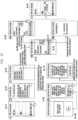
- FIG. 4 is a message flow diagram illustrating a method of acquiring configuration information for profile movement processing when a device is changed in a terminal 105 equipped with an eUICC.
- the terminal may acquire an MCC+MNC (meaning mobile country codes (MCC) and mobile network codes (MNC) defined in the ITU-T recommendation E.212) value with mobile communication company identification information from metadata information of the profile.
- MCC+MNC meaning mobile country codes (MCC) and mobile network codes (MNC) defined in the ITU-T recommendation E.212
- MCC+MNC meaning mobile country codes
- MNC mobile network codes
- the terminal 105 may provide a menu for selecting a communication service provider to the user 100, thereby acquiring MCC+MNC information of the communication service provider.
- MCC+MNC meaning mobile country codes (MCC) and mobile network codes (MNC) defined in the ITU-T recommendation E.212
- the terminal 105 may provide a menu for moving the profile for the end user 100 to select to acquire information on the start of a procedure for changing the device of the profile and whether to access through which terminal of the first terminal 300 or the second terminal 350.
- the terminal 105 may identify device transfer configuration information of the provider for profile movement to select (470) one of an LPA method or an ECS method as a method to be used for profile movement.
- Device transfer configuration information required by the terminal may include information on whether the communication service provider for the profile supports a device transfer and include authentication method identification information and information on a preference priority such as a device transfer support method (LPA method or ODSA method), SM-DP+ server address or ECS address according to the support method, and a support user authentication method, for example, EAP-AKA, ECS&DP+ and OAuth/Open ID.
- a device transfer support method LPA method or ODSA method
- SM-DP+ server address or ECS address SM-DP+ server address or ECS address according to the support method
- a support user authentication method for example, EAP-AKA, ECS&DP+ and OAuth/Open ID.
- the terminal 105 may use one or more of the above-described four methods in combination, and in the case that device transfer configuration information acquired through the corresponding option is different, the terminal 105 may determine and configure a method according to the terminal configuration. As an example, the terminal may determine the most recent configuration information or the priority in selecting metadata of a profile as another example.
- a procedure for receiving and using the corresponding configuration information will be described in detail for each situation through the embodiments to be described with reference to FIGS. 5A to 5D and FIGS. 6A to 6C .
- FIGS. 5A to 5D illustrate embodiments of a device transfer method in the case of starting in the first terminal 300.
- the entire procedure for device transfer processing may be roughly divided into the following procedures: step in which the first terminal 300 determines eSIM configuration information, step of performing terminal and user authentication for identifying an ODSA service qualification, step of issuing an activation code when the authentication is completed, and step that the second terminal 350 acquires the corresponding information to download a profile, and completes movement installation.
- FIG. 5A is a message flow diagram illustrating an embodiment in which a communication company provides an ODSA method and uses EAP-AKA authentication.
- the end user 100 may select a profile to move for a device transfer in the LPA of the first terminal 300 or a screen of an application in which the LPA is implemented, and select a menu to move the corresponding profile (step 5a-10).
- the terminal 300 may have communication service provider identification ID information (MCC+MNC) of the corresponding profile, identify whether configuration information for changing an eSIM device of the corresponding communication company is stored in the terminal, and the LPA1 140 of the terminal may perform an ES10c.GetProfilesInfo() function call defined in GSMA SGP.22 to the eUICC 160 of the terminal to acquire status information of the corresponding profile.
- MCC+MNC communication service provider identification ID information
- the LPA1 410 may additionally identify information on whether to support a device transfer in metadata of the corresponding profile from the eUICC 160 of the terminal and whether there is identification information on a support method or a server address for subsequent processing together with the status information.
- steps 5a-10 to 5a-30 a method of identifying through option 1 and option 3 is exemplified, but the method of acquiring status information is not limited thereto, and as described above with reference to FIG. 4 , status information may be acquired by using and combining one or more of options 1 to 4.
- the first terminal 300 may support the ODSA method in which the communication company uses the ODSA client 110 and the ECS 120, and acquire an ECS address for processing the corresponding method and determine a device transfer method to be processed thereafter in the terminal (step 5a-40).
- the ODSA client of the first terminal 300 or the ODSA1 500 which is an app in which the ODSA client is implemented, may acquire status information of the profile acquired through profile metadata identification (step 5a-30) from the LPA1 510, and identify a capability of the terminal to collect possible authentication methods of the terminal and transmit an authentication request to the ECS 120.
- the authentication request may be represented as step 5a-50.
- the corresponding authentication request message may include an IMEl as a terminal identifier, identification information on authentication methods implemented in the terminal, and define and include an ICCID, IMEl, or extensible authentication protocol (EAP) ID, or a new identifier as identification information that may infer that the requesting terminal is the first terminal 300 and include an ICCID as a target profile ID to move and status information of the corresponding profile.
- EAP extensible authentication protocol
- Information required for device transfer processing such as identification information indicating that the requesting terminal is the first terminal 300, an ICCID as the target profile ID to move, and status information of the corresponding profile may not be added to the authentication request message but be included at the device transfer request time point (step 5a-160) after authentication is completed and be transmitted from the terminal.
- Identification information on the authentication method implemented in the terminal may be used as an identifier indicating whether the corresponding authentication method has been implemented in the terminal or has been implemented in the terminal and is available at the corresponding transmission time point.
- the ECS 120 may determine profile status information through identification information on the corresponding authentication method
- the terminal may transmit the message without including profile status information.
- identification information on the authentication method implemented in the terminal in the case that extensible authentication protocol for 3rd generation authentication and key agreement (EAP-AKA) is implemented in the terminal, the terminal may include an EAP ID in the authentication request and transmit the authentication request (step 5a-50).
- EAP-AKA extensible authentication protocol for 3rd generation authentication and key agreement
- a new identifier to distinguish the ECS&DP+ method may be defined or an existing identifier (e.g., SM-DP+Address) may be used as the corresponding identification information.
- the corresponding identifier will be referred to as DP+AuthSupport for convenience in the disclosure.
- the ECS may determine that the terminal may provide only OAuth/Open ID.
- the ECS 120 may select one possible method according to the provider's preference and whether the provider supports an authentication server, and reply the selected method to the terminal.
- the ECS 120 may determine whether relay with the AAA (authentication, authorization, and accounting) authentication server of the provider may be supported in order to perform EAP-AKA authentication and identify a priority of the authentication method that the provider wants to provide in the case that multiple authentication methods are available.
- Steps 5a-60 to 5a-170 illustrate a method when the ECS 120 performs authentication with EAP-AKA through the corresponding identification.
- the terminal may transmit the authentication request including EAP_ID, as described above (step 5a-50).
- the first terminal 300 may include an international subscriber identity module (IMSI) value of the profile selected by the user for moving in the EAP ID to transmit the EAP ID to the ECS 120, and cannot acquire the corresponding value, but in the case that EAP-AKA is implemented in the terminal, the first terminal 300 may configure and transmit the EAP ID value to NULL or empty value or may define and provide a separate identifier or value for indicating the EAP ID value.
- IMSI value is information that may acquire from internal data of the profile or metadata of the profile when status information of the profile is enabled and it may indicate that EAP-AKA is implemented so that it may be provided and that the corresponding authentication may be used at the current request time point that performs a device transfer.
- the failure to acquire the corresponding information means that EAP-AKA has been implemented in the terminal at the corresponding time point, but that the profile status information is disabled and the ECS 120 may determine status information.
- the first terminal 300 may include and transmit together status information of the profile acquired in step 5a-30 to the ECS 120 to clearly notify the ECS 120 that EAP-AKA authentication is available in the corresponding terminal (step 5a-50).
- the ECS 120 may reply, to the terminal, the provider message including information on whether to perform user authentication with EAP-AKA and a processing guide (step 5a-70).
- the terminal may display the provider message to acquire the user's consent, and the user 100 may approve or reject an authentication process with EAP-AKA (step 5a-80).
- the LPA1 510 may acquire user consent to enable EAP-AKA authentication and then in the case that the user permits, the LPA1 510 may process 10c.EnabIdProfile() with the eUICC.
- the LPA1 510 may acquire the profile status information and IMSI value from the eUICC and transmit them to the ODSA1 500.
- the ODSA1 500 of the first terminal that has received them may transmit an authentication request message to the ECS 120 using the EAP_ID as an IMSI value, as in step 5a-95.
- the ODSA1 500 may additionally include and transmit the profile status information to notify the ECS 120 that the profile state has been changed and that EAP-AKA authentication is available.
- the first terminal 300 transmits a rejection message to the ECS 120, and when the ECS 120 receives the rejection message, the ECS 120 may select an authentication method to be used with reference to another authentication method of the terminal received through the existing received (step 5a-50) to process the authentication procedure (step 5a-180).
- the EAP-AKA method may use a problem-response mechanism and generate an encrypted session through symmetric key-based authentication.
- the ECS 120 may request the EAP-AKA challenge to a provider authentication server 540 (step 5a-120).
- the provider authentication server 540 performs the AKA algorithm to generate an EAP-AKA Challenge value as defined in "RFC4187 Extensible Authentication Protocol Method for 3rd Generation Authentication and Key Agreement (EAP-AKA)" and replies the value to the ECS 120, and the ECS 120 may reply, to the terminal, together the EAP-AKA challenge with the selected authentication method (here, the EAP-AKA method) and a value required for verification (steps 5a-110).
- EAP-AKA Extensible Authentication Protocol Method for 3rd Generation Authentication and Key Agreement
- the authentication method selected by the ECS 120 may be notified by a separate delimiter (e.g., AuthType (EAP-AKA) in step 5a-110), or it may be determined that the ECS 120 has determined the corresponding authentication method by receiving (e.g., receiving only the EAP-AKA challenge value of step 5a-110) predetermined information that may determine the corresponding authentication method.
- a separate delimiter e.g., AuthType (EAP-AKA) in step 5a-110
- predetermined information e.g., receiving only the EAP-AKA challenge value of step 5a-110) predetermined information that may determine the corresponding authentication method.
- the eUICC of the first terminal 300 may perform the EAP-AKA algorithm using the corresponding challenge value and a security key value of the SIM module, and reply information including the result value to the ECS 120 (step 5a-130).
- the ECS 120 may relay the received information to the provider authentication server 540, and the provider authentication server 540 may verify the EAP-AKA challenge value from the value received from the first terminal 300 (step 5a-130) and reply (step 5a-140) to the ECS 120 whether to authenticate. In the case that the corresponding authentication result (steps 5a-140) is successful, the ECS 120 may generate an authentication token (AuthToken) that may be used thereafter for a session connection with the ECS 120 and transmit the authentication token (AuthToken) to the first terminal 300 (steps 5a-150).
- AuthToken authentication token
- the first terminal 300 may request the movement of the device subscribed to the communication service (steps 5a-160) using the IMEI and the received authentication token as parameters with intrinsic identification information of the terminal (steps 5a-160).
- information required for device transfer processing such as identification information indicating that the requesting terminal is the first terminal 300, an ICCID as the target profile ID to move, and status information of the corresponding profile may be not added to the authentication request message, and after authentication is completed, a method of transmitting information including the information from the terminal at the device transfer request time point (steps 5a-160) is possible.
- This may be equally applied to another embodiment in which the first terminal 300 requests a device transfer.
- Specific authentication procedures and parameters between the authentication server and the terminal using EAP-AKA refer to the "RFC4187 Extensible Authentication Protocol Method for 3rd Generation Authentication and Key Agreement(EAP-AKA)" specification.
- the ECS 120, the SM-DP+ server 150, and the MNO BSS/OSS 130 may acquire information necessary to change service subscription information, and the SM-DP+ server 150 and the MNO BSS/OSS 130 may prepare to generate a profile (step 5a-190).
- the ECS 120 may request new subscription information including a subscription ID mapped to the current ICCID of the corresponding profile or an IMEI of a new terminal to the communication service provider's back-end system.
- the MNO BSS/OSS 130 may perform a series of processes for profile generation through the SM-DP+ server 150 and the ES2+Interface defined in SGP.22 to acquire information including an ICCID and activation code of a profile to be installed in the second terminal 350 and reply the information to the ECS 120.
- the ICCID and the activation code may be acquired and replied to the ECS 120.
- Information required for changing the ECS service subscription information may be updated at the corresponding time point or at a specific time point later to change subscription information stored in the ECS 120.
- the ECS 120 may transmit the received activation code to the ODSA1 500 of the first terminal (step 5a-200).
- the ECS 120 may transmit (step 5a-200) information including a value on whether to delete the corresponding profile from the first terminal 300.
- the first terminal 300 displays a method of acquiring the activation code transmitted from the second terminal 350 to the first terminal 300 with a user guide message of the corresponding terminal (step 5a-210).
- the first terminal 300 may guide the user of deletion of the existing profile and notify that the device transfer may be processed only when the existing profile is deleted, thereby acquiring the user's consent.
- the LPA1 510 may perform an "ES10c.DeleteProfile" function call for the profile to move to delete the profile from the eUICC, and reply a notification on deletion of the profile to the LPA1 510 or ODSA1 500.
- the UE may process to activate and provide the activation code.
- the end user 100 may acquire an activation code from the second terminal 350 (step 5a-220) according to the guidance in step 5a-210.
- the activation code may be displayed in the form of a QR code with the user's UI of the second terminal 350, and the QR code may be scanned using a camera of the first terminal 300.
- the LPA2 530 may acquire an activation code, and access an SM-DP+ server address configured in the activation code to download the profile to the second terminal according to a remote SIM provisioning procedure defined in GSMA SGP. 22, thereby completing installation (step 5a-230).
- the back-end system 130 of the MNO transmits an ICCID of the new profile installed in the second terminal 350 or an ICCID together with the IMEI of the second terminal 350 to the ECS 120, and the ECS 120 matches the ICCID to the ICCID value acquired in (step 5a-120), and in the case that the ICCID and the ICCID value are the same, the ECS 120 may update the corresponding subscription information and optionally reply the update result to the provider back-end system 130.
- FIG. 5B is a message flow diagram illustrating an embodiment that uses an ECS/DP+ method as an authentication method for a profile movement supporting an ODSA method starting in a first terminal.
- the first terminal 300 may acquire configuration information on a device transfer through a profile, a memory, and a configuration server 170. Thereafter, in performing terminal and subscriber authentication, in the case of performing an ECS&DP+ authentication method, the terminal may request authentication by including an identifier indicating that DP+AuthSupport is possible in an authentication request transmitted to the ECS 120.
- DP+AuthSupport of step 5a-50 is indicated as an arbitrary identifier, but the disclosure is not limited to the name, and the terminal may use an SM-DP+ address capable of performing authentication as an identifier with identifier information indicating that authentication may be performed with SM-DP+.
- the ECS 120 may identify a capability for supporting the corresponding authentication method by including information on whether a GSMA root certification issuer (CI) certificate and the SM-DP+ address to be redirected so as to perform the corresponding authentication are configured and determine processing with the corresponding authentication method.
- the ECS 120 may additionally determine whether to use the received SM-DP+ address as the SM-DP+ address to be redirected.
- the ECS 120 may generate a nonce value, which is arbitrary data (step 5b-20), and reply a message including an ECS&DP+ authentication method, an SM-DP+ server address to be authenticated, and a generated nonce value to the first terminal 300 (step 5b-30).
- the ECS 120 may explicitly notify the terminal of the selected authentication type, and even if the selected authentication type is not explicitly provided, the terminal may determine the authentication type through provision of predetermined information that the terminal may determine, that is, for example, a reply to the SM-DP+ server address to be authenticated.
- the ECS may request redirection to the SM-DP+ server address to be authenticated with the HTTP(s) "302 Found" response structure that replies when the ECS selects the OAuth/Open ID authentication method, and in this case, one of the following examples may be included.
- the terminal may determine that the ECS requests to authenticate with ECS&DP+ instead of an OAuth/Open ID method, the ODSA1 500 may transmit received data to the LPA1 510 with an internal operation of the first terminal 300 (steps 5b-40), and then perform the DP+ authentication procedure as follows.
- a code received as a response type requires a client id, redirection URI, and binding, and the initial Http(s) response - 302 Found includes the client id and redirection URI and should be transmitted.
- the OAuth2.0/OIDC sever may issue a client ID for the ECS in advance through a prior contract and have information on redirection URI, and when the terminal requests authentication with a specific client ID and redirection URI, the OAuth2.0/OIDC sever may verify the information, issue a code, and reply.
- Http(s) response - 302 Found includes an identifier indicating DP+ authentication, even if the Http(s) response - 302 Found does not include one or all of the client ID and the redirect URI, the terminal does not process it as an error but should process it as a DP+ authentication procedure.
- a mutual authentication procedure may be first performed before performing the procedure (step 5b-50) between the eUICC and the SM-DP+.
- the LPA1 510 may request ES10b.GetEUICCChallenge to the eUICC of the first terminal 300 in which the corresponding profile is installed, receive an eUICCChallenge value with the corresponding message value, and transmit ES9+.InitiateAuthenticate request message with a message including the eUICCChallenge value to the SM-DP+ 150.
- the profile server may verify the corresponding value to generate a transaction ID, and generate and reply a signature of the profile server for data including the transaction ID and eUICCChallenge value.
- the InitiateAuthenticate reply message may include the profile signature value and Transaction ID.
- the first terminal 300 may generate a nonce value (step 5b-40) received from the ECS 120, an ICCID of the device transfer target profile, and eUICC signature data in which the ICCID is installed and transmit data including them to the SM-DP+ server 150.
- An EID may be included in addition to the eUICC signature data or as information replacing the eUICC signature data, and a message including the EID may be transmitted.
- the SM-DP+ server 150 may perform a validation verification process including subscription information included in the AuthenticateClientRequest message, an ICCID (indicated as ICCID1) of a profile to transfer, and signature data verification of the eUICC of the first terminal to verify eUICC installation of the first terminal of the ICCID, generate a signature of the profile server as a result of the verification, and include an authentication token including the nonce, eUICC signature data, and signature data of the profile server received in step 5b-50 in the AuthenticateClientResponse message and reply the message (step 5b-60).
- the corresponding reply information may additionally include an EID mapped to the ICCID.
- An example of the corresponding reply message may be ES9+.
- AuthResponse AuthToken (EID, ICCID, Nonce, DP+ Signature)
- signature data verification of the eUICC 160 of the first terminal 300 may be signature verification using a certificate of the eUICC 160 of the first terminal 300 for data including the ICCID or additional data (ECS Nounce, eUICC signature value, processing sequence number) in the ICCID.
- the signature verification may be elliptic curve digital signature authentication (ECDSA).
- the eUICC certificate may be authenticated by the eUICC manufacturer (EUM) certificate.
- the EUM certificate may be verified with a certificate authority (CA) certificate possessed by the profile server 150.
- CA certificate may also be referred to as a root certificate issuer (CI) certificate.
- the validation verification process may include a process of identifying that an eUICC that was finally installed for the ICCID is the eUICC 160 of the first terminal 300 and a process of identifying the validity of the message using the message processing sequence number.
- the validation verification process of the profile server 150 may include a process of inquiring the provider server whether to allow reinstallation of the profile for authentication of the ICCID, and replying the result.
- the LPA1 510 may transmit the corresponding information to the ODSA1 500, and the ODSA1 500 may reply the corresponding authentication token together with the terminal identification information to the ECS 120 (step 5b-70).
- the ECS 120 may verify the validity of the nonce value initially generated (step 5b-20) and transmitted with the received authentication token, and verify the SM-DP+ signature value (step 5b-80) to perform the subsequent procedure as described above (steps 5a-190 to 5a-230), thereby completing the device transfer procedure.
- the nonce value generated by the ECS 120 may be used as an identifier for determining whether to reuse the nonce value for the authentication request and proving/verifying whether it is a request from the ECS 120.
- the ECS 120 may determine the validity of the nonce value and include a process of determining that the transmitted message is a reply value to a message initially generated in the ECS and whether the nonce value is not reused and. Further, as described above, because the ECS 120 supporting the corresponding authentication stores a GSMA CI certificate as the same root CI certificate as that of the SM-DP+ server 150, the SM-DP+ signature value may be verified with the CI certificate possessed by the ECS server 120 (step 5b-80).
- the ECS 120 may support the corresponding authentication.
- FIG. 5C is a message flow diagram illustrating an embodiment in which a communication company provides an LPA method and uses LPA and SM-DP+ authentication in a first terminal (old terminal).
- the terminal may identify configuration information on a device transfer method to determine processing with the LPA method (step 5c-30). Because a procedure for identifying the configuration information on the device transfer method is the same as or similar to that described above with reference to FIG. 4 , a detailed description thereof will be omitted.
- the LPA1 510 may request a device transfer (step 5c-40) with a message including an ICCID and device transfer indicator of a profile to move with an ES9+.AuthenticationClientRequest message.
- the profile server 150 that has received the message may perform a process of inquiring whether to allow reinstallation of the profile for the ICCID to the provider server 130, and replying the result (step 5c-50). Further, the provider's policy for the profile may be notified to the profile server before the provider server starts step 5c-20 or as one of the processes in step 5c-50.
- the SM-DP+ and the provider server 130 may process the profile order, preparation, and generation (step 5c-60).
- the corresponding message may be an ES2+.DownloadOrder, ES2+.ConfirmOrder, or ES2+.ReleaseProfile command message.
- the SM-DP+ 150 server may reply (step 5c-70) an ES9+.AuthenticationClientResponse message including a TransferType, ServiceProviderMesage, and additionally an activation code.
- the TransferType is an identifier for the provider's device transfer support method and may represent whether it is profile download through reissuance of a new activation code with the corresponding identification information or whether the terminal deletes the existing profile and generates an activation code including the information with delete notification, and whether the profile server is to verify through some or all delete notification included in an activation code generated later.
- the ServiceProviderMesage represents data for guiding a user about profile processing for a device transfer, and the like.
- the LPA1 510 may reply, to the SM-DP+ 150, a message including the user response to the device transfer processing.
- the message may be an ES9+.CanceISession (end user confirmation result) (step 5c-90) message.
- the first terminal 300 may delete the previously installed profile when moving the profile, and perform a procedure of generating and utilizing an activation code in the terminal through the deletion message (steps 5c-95 and 5c-100).
- Steps 5c-95 and 5c-100 procedure may be provided even in the case that a request (DeleteOldProfile) for deleting a profile is included, as in step 5a-200.
- the first terminal 300 may delete the profile (step 5c-95), and constitute and display a QR code using all or part of generated delete notification information (step 5c-100).
- the eUICC 160 may delete the profile (step 5c-95) and transfer the result message to the LPA1 510.
- the LPA1 510 may set a bit meaning DeleteProfile in event information (NotificationEvent) data to be received in a second control message (e.g., ES10c.ListNotificationRequest message) and transmit the message to the eUICC 160.
- the eUICC 160 that has received the second message may reply all notification information corresponding to the DeleteProfile to the LPA1 510.
- the notification includes at least one of processing sequence number information (indicated by sequence, Seq, or seqNumber) or a profile ID (or iccid or ICCID).
- the LPA1 510 may select a notification corresponding to the deleted profile or a Seq value and send a third control message (e.g., ES10c.RetrieveNotification message) including the Seq value to the eUICC.
- the eUICC 160 may transmit notification information corresponding to the Seq value among the stored notification information to the LPA1 510.
- the information included in the notification information may include at least one of the following information.
- the first terminal 300 may encode and display information including the information in the QR code (step 5c-100).
- the QR code is information to be transmitted to the second terminal 350 for profile download and installation, and according to an embodiment of the disclosure, the second terminal 350 may finally transmit some or all of information acquired through the QR code to the profile server.
- the second terminal 350 may scan the QR code to initiate a profile download procedure (step 5a-230).
- the profile download procedure may be performed thereafter according to the procedure defined in GSMA SGP.22 v2.
- the second terminal 350 may transmit an InitiateAuthenticate message including an eUICCChallenge value of the eUICC to install the profile to the profile server corresponding to a profile server address included in the QR code.
- the profile server may verify the corresponding value to generate a Transaction ID, and generate and reply a signature of the profile server for data including the Transaction ID and eUICCChallenge value.
- the InitiateAuthenticate reply message may include the profile signature value and Transaction ID.
- the second terminal 350 may receive data including the ICCID included in the QR code and eUICC signature data of the first terminal 300, generate eUICC signature data signed by an eUICC of the second terminal 350 for the data, and include the data in the AuthenticateClientRequest message and transmit the AuthenticateClientRequest message to the profile server.
- the profile server 150 may determine whether to download the corresponding profile and include and reply data including ProfileMetadata corresponding to the profile in the AuthenticateClientResponse message. Further, signature data verification of the eUICC 160 of the first terminal may be signature verification using the certificate of the eUICC 160 of the first terminal 300 for data (processing sequence number, profile deletion delimiter, profile server address, deleted profile ICCID, eUICC signature value) including the ICCID and additional data.
- the second terminal 350 receives the AuthenticateClientResponse message and when the AuthenticateClientResponse message includes ProfileMetadata, the second terminal 350 may perform some or all of a process of receiving consent to receive the profile through a UI displaying to the user, a process of requesting an input of a confirmation code and receiving an input, and a process of generating an one time public key (otpk.eUICC) of the eUICC.
- otpk.eUICC one time public key
- the profile server may reply BoundProfilePackage including information encrypted with an encryption key generated using otpk.eUICC to the second terminal 350.
- the second terminal 350 may install the profile in the eUICC of the second terminal 350 to complete all procedures.
- FIG. 5D is a diagram illustrating a representative processing procedure for a user interface (Ul) and user experience (UX) for an eSIM device transfer starting in the first terminal.
- FIG. 5D illustrates an example of an expected UI and UX of the user when the procedure processing of FIGS. 5A to 5C is implemented in the terminal.
- the order indicated by the number is the processing order of the corresponding procedure
- the order indicated by 3-A to 3-C represents a time point branched according to the device transfer method and the provider support method in processing the corresponding procedure.
- the user 100 may identify SIM card information currently installed in the corresponding terminal through a menu such as a terminal configuration of the first terminal 300.
- profile information stored in the SIM card and eUICC may be illustrated to the user, as illustrated in No. 1 screen.
- the user may select a profile to move (step 5d-10) or select one or more profile through a separate menu (e.g., move all).
- a separate menu list may be displayed so that the terminal may receive a command to process for the corresponding profile as in step 5d-20, and a separate menu may be provided with an identifier indicating that a device transfer is performed as one of them.
- the menu entry may recognize the terminal as the first terminal 300 and process in the case that the user selects a profile to move in the terminal and selects the corresponding menu in even the case of entering the same device transfer menu or processing a menu differently from the case of processing in a new terminal.
- the LPA1 510 of the first terminal 300 performs an ES10c.GetProfilesInfo() function call in the eUICC to bring metadata information of the profile
- the LPA1 510 may identify MCC+MNC with the intrinsic identification number of the communication service provider of the profile. Further, in this case, the LPA1 510 may identify status information of the corresponding profile.
- the terminal may acquire the provider identification number of the profile to move by the user from the terminal without user interaction, and constitute and display No. 2 screen through predetermined information acquired through metadata of the corresponding profile along with the provider identification number.
- the terminal may start a procedure for acquiring provider configuration information on a device transfer, including whether and how the communication service provider supports a device transfer, as described above with reference to FIG. 4 to determine a device transfer method to be used in the terminal through metadata of the profile to move and information acquired from a separate configuration server or the memory of the terminal.
- the first terminal 300 may display different screens according to whether and how the device transfer method is supported, as in steps 5d-30, 5d-40, and 5d-50.
- Step 5d-30 illustrates an example of displaying on the screen in the case that the communication company of the selected profile does not support the device transfer method.
- the terminal may bring the provider's device transfer configuration information from metadata or the memory of the terminal, and in the case that there is no information on device transfer support in the corresponding information, the terminal may process not to selectively expose the device transfer menu in the menu itself in step 5d-20. In this case, only the device transfer support provider may expose the corresponding device transfer menu.
- the provider may determine EAP-AKA method support information and profile status information, and notify the user that the profile should be enabled to support the EAP-AKA method.
- the terminal determines processing in the LPA method as a result of identifying the information acquired in steps 5d-10 and 5d-20
- the first terminal 300 may process authentication through the SM-DP+, as illustrated in FIG. 5C and display a provider message preconfigured in the LPA or received through the SM-DP+ on the terminal screen.
- the first terminal 300 may display a message for processing user consent for deleting an existing profile for moving a corresponding profile.
- the terminal may trigger an ODSA1 500, which is the ODSA client thereof, and when the ODSA1 500 requests a device transfer to the ECS 120 (step 5a-50), performs subscriber authentication as illustrated in FIGS. 5A or 5B , and in the case that the subscriber is authenticated as a result of the subscriber authentication, the terminal may display a web screen of the provider on information for device movement processing of a communication service of the (profile) to move as in step 5d-50.
- the constitution of the web screen may vary according to the provider.
- the ECS 120 may select OAuth/Open ID with a subscriber authentication method, as in step 6a-140 of FIG. 6A . Further, as described above, the ECS 120 may select one method, and for example, the EAP_ID was transmitted as an identifier that requests EAP-AKA with the authentication method requested by the terminal, but the ECS that has received the EAP_ID does not process this for reasons such as not supporting a relay with an AAA server, but in the case that the ECS supports an OAuth/Open ID, the ECS may reply including the client ID and redirection URI in the initial http(s) response - 302 found in order to request processing with the OAuth/Open ID.
- the terminal may receive a log-in page (i.e., redirection URI) requesting an input of the user's ID and password from the ECS 120 and display the log-in page on the user's screen (step 6c-70) to process subscriber authentication with the ID and password, and then move to the same screen as that of step 5d-50.
- a log-in page i.e., redirection URI
- the EAP-AKA method or the ECS&DP+ authentication method is determined through a terminal configuration, user selection, or ECS selection, as described above, the user may complete a subscriber authentication process without interaction in the terminal UI such as ID generation.
- the first terminal 300 may generate an activation code and provide the activation code together with a method of acquiring the activation code from the second terminal 350 (step 5d-60).
- a method of providing the activation code in the form of a QR code is illustrated in step 5d-60, activation code information may be transmitted through an inter-terminal transmission protocol.
- the user 100 may input activation code information into the LPA2 530 of the second terminal 350 through the method provided in (step 5d-60) (steps 5d-70 and 5d-80).
- the second terminal 350 may download and install the profile, as described above in step 5a-230, and when downloading and installation of the profile is completed, the user may identify that reinstallation of the profile has been completed in the first terminal 300, as in the example of step 5d-90.
- the profile in which the device transfer processing has been completed is deleted from the profile list of the first terminal 300 according to the provider's policy of the first terminal 300 and the user's consent for the deletion process; thus, the profile may be processed not to be no longer exposed to the user.
- FIGS. 6A to 6C are diagrams illustrating procedures in which a user initiates a device transfer in a second terminal (new terminal).
- FIG. 6A is a message flow diagram illustrating an embodiment in which a communication company provides an ODSA method and uses OTP or OAuth/Open ID authentication.
- the end user 100 may select a communication company for a user to change a device in the second terminal 350, and the terminal acquires configuration information, as described with reference to FIG. 4 (step 6a-30); thus, the terminal may determine subsequent device transfer processing in the ODSA method (steps 6a-30). Because the detailed method for acquiring configuration information has been described with reference to FIG. 4 , an additional description will be omitted here.
- the second terminal 350 may generate and display a menu indicating whether there is a user-owned terminal capable of receiving an SMS (step 6a-40), and in the case that the user 100 may receive an authentication code through the existing terminal 300, the user may input a subscriber phone number, that is, MSISDN, which is an intrinsic number for identifying a subscriber in the mobile network on the screen (step 6a-60).
- MSISDN subscriber phone number
- messages are exchanged between the ODSA 110 and the ECS 120 of the terminal using an HTTP(s)-based mechanism.
- the ODSA2 520 of the second terminal 350 that has received the input may transmit an authentication request Https Request message including the IMEI of the requesting terminal 350 and the MSISDN of the first terminal 300 to the ECS 120 (step 6a-70).
- the ECS 120 that has received the message parses the message, and in case that there is an MSISDN value, the ECS 120 may transmit the OTP to the phone number (MSISDN) provided by the end user 100 (step 6a-90) and include a cookie in HTTP(S) 200 OK and transmit the HTTP(S) 200 OK to the ODSA2 520 (step 6a-80).
- the ODSA2 520 may reply a new get request to the ECS 120 (step 6a-110), including OTP parameters received and input by the end user 100 through the first terminal 300 and a cookie received from the previous HTTP 200 OK response.
- the ECS 120 may verify the received OTP, generate a new authentication token (AuthToken), and reply the new authentication token (AuthToken) to the ODSA2 520 (step 6a-120). Thereafter, the ODSA2 520 may request the ECS 120 to change the device, including the corresponding authentication token (step 6a-130). As described above, in order to acquire device transfer configuration information for profile installation for device transfer processing and to verify a service state of the terminal, when the ODSA 110 transmits an HTTP(s) request to the ECS 120, the ECS 120 may process the request and reply a result value to the ODSA 110.
- AuthToken new authentication token
- AuthToken new authentication token
- the ECS 120 may request OAuth/Open ID authentication (step 6a-140) to the terminal.
- step 6a-100 The following describes in more detail a method of performing OAuth/Open Id authentication (step 6a-100).
- the ECS 120 may reply "302 Found” as a response for retransmitting the received GET request from the ODSA client of the terminal to the authentication server of the service provider.
- the ECS 120 may transmit an URL address of an authentication point to be redirected for open ID processing to the corresponding "302 Found" as a location value of the header.
- 'openid' is one of the possible values of the Scope parameter, and may indicate that the application wants to use the open ID Connect standard protocol for user identification.
- the open ID authentication server (authentication point to be redirected) may select an authentication method (additional SMS authentication, and the like) according to the policy of the service provider to authenticate the user 100, and reply a code value as a result thereof.
- the OAuth2.0 authentication code temporary code provided for exchange with an access token
- the terminal includes the corresponding authentication code as a reply value for "302 Found" and transmits it to the ECS 120.
- the ECS 120 may transmit the corresponding authentication code to the open ID authentication server to request an access token and an ID token.
- the open ID authentication server may reply an access token and an ID token to the ECS 120.
- the ECS 120 may identify subscriber information of the corresponding user with the corresponding token values, resume an original GET resource request, and perform a subsequent procedure for a device transfer. Because the procedure for updating subscriber information and generating a profile for a communication service of a subscriber between the ECS 120, the SM-DP+ 150, and the MNO BSS/OSS 130 has been previously described with reference to FIG. 5A , a detailed description thereof will be omitted.
- the ECS 120 After processing the corresponding procedure, the ECS 120 receives an activation code as predetermined information required for downloading the corresponding profile from the MNO BSS/OSS 130 or the SM-DP+ 150 and transmits the activation code to the ODSA2 520, and the ODSA2 520 transmits activation code information to the LPA2 530 through the LPA API; thus, the LPA2 530 may trigger profile download in the SM-DP+150 to complete a process of downloading and installing the profile according to the procedure defined in GSMA SGP.22 (step 5a-230).
- FIG. 6B is a message flow diagram illustrating an embodiment in which a communication company provides an LPA method and uses LPA and SM-DP+ authentication in a first terminal (old terminal).
- the end user 100 may select a communication company in which the user is to perform a device transfer in a second terminal, and the terminal may acquire configuration information, as described with reference to FIG. 4 to identify that the provider's device transfer method is an LPA method through the combination.
- the terminal may determine and proceed the process (step 6b-10) in the LPA method.
- the terminal may display a message identifying whether the existing terminal is available for the user on a screen of the second terminal 350 (step 6b-20).
- the message on whether the existing terminal is used in step 6b-20 may be processed differently from step 6a-40.
- the message in step 6a-40 may identify together whether the existing terminal is available and whether the terminal is a terminal capable of receiving an SMS, but in step 6b-20, only whether the existing terminal is available may be identified and processed.
- the second terminal 350 may enable the first terminal 300 to perform a device transfer procedure through an LPA procedure, as in step 6b-40.
- step 6b-50 after generating and displaying a guide message to proceed (step 6b-50) with a procedure of steps 5c-10 to 5c-100 of FIG. 5C are displayed in the first terminal 300 on the screen of the second terminal 350 so that the user 100 may proceed the subsequent procedure in the first terminal 300, the screen of the second terminal 350 may move to a screen of the LPA2 530 for receiving the activation code and stand by.
- UI/UX for the corresponding processing will be described later with reference to FIG. 6C .
- the second terminal 350 may receive an input of the corresponding information through the displayed activation code scan (step 5c-110) through a camera in the LPA2 530, access an SM-DP+ server address extracted from the activation code, and download the profile and complete installation of the profile.
- the terminal may display a user guide message to inquire to a communication service provider (step 6b-50) and end all procedures.
- FIG. 6C is a diagram illustrating a representative processing procedure for an UI and UX for an eSIM device transfer starting in a second terminal.
- FIG. 6C is a diagram representatively illustrating UI/UX implemented in FIGS. 6A and 6B as a case in which the user starts a device transfer in the second terminal 350.
- (4-A, 4-B) and (6-A, 6-B) on a mobile phone screen in a scenario starting in the second terminal 350 represent a representative branching time point.
- the terminal may collect provider configuration information on the device transfer and display the provider configuration information on the screen (step 6-30), as described above with reference to FIG. 4 .
- the terminal may list all communication service provider information acquired using the configuration server (option 2 and option 3 of FIG. 4 ) or through information (option 4 of FIG. 4 ) stored in the memory or extract only a provider that can provide a device transfer in the corresponding region by additionally combining location information of the terminal, and the like with the corresponding information, and then expose a list of the providers on the screen.
- the terminal may identify a selected communication service provider name or MCC+MNC of the communication service provider in the memory in the terminal or the configuration server and selectively display only information of the mapped provider.
- the terminal may display a separate guide message on the screen and end the procedure without entering step 6c-40 or step 6c-90 after step 6c-30.
- the terminal may process by branching to the screen of step 6c-40 or 6c-90 according to an identified device transfer support method of the provider.
- Processing in step 6c-40 is the case that the selected communication service provider supports an ODSA-based device transfer, and the terminal provides an additional menu on whether there is the existing terminal as in step 6c-50, and is connected to an SMS-OTP authentication progress screen (step 6c-60) provided in the terminal or an URL in a location header received from the ECS 120 through 302 found http(s) response according to the user's response to display the provider providing screen (step 6c-70).
- a communication service subscription app or web portal of the second terminal 350 receives activation code information, and transfers the corresponding activation code information to the LPA2 530 through the LPA API, and when the LPA2 530 that has received the corresponding activation code information completes all processing/installation of the profile download, the LPA2 530 may display to the user 100 that a profile to move has been installed, as in step 6c-80.
- the second terminal 350 may notify that a process is changed according to whether there is the existing terminal 300 as in step 6c-90, and in case that the existing terminal 300 is unavailable, the second terminal 350 may display a provider contact message as in step 6c-100 and end all procedures. In the case that the second terminal 350 responds that the existing terminal 300 is available, the second terminal 350 may generate an additional guide message to guide the user to process in the first terminal 300, and an activation code such as a scan QR code may standby in the procedure for input (step 6c-110).
- the terminal may display a user guide message and end a device transfer procedure or may extend standby.
- the user may process the subsequent procedure of FIG. 5D to complete the device transfer through menu selection for receiving the activation code in the second terminal 350, as in the example of step 6c-110.
- FIG. 7 is a block diagram illustrating a block constitution of a terminal in a wireless communication system according to an embodiment of the disclosure.
- a terminal 700 includes a transceiver 710, a message processer 720, a processor (controller) 730, a memory 740, and a screen display unit 750.
- the components of the terminal 700 are not limited to the above-described example.
- the base station may include more or fewer components than the foregoing components.
- at least one component of the terminal 700 may be implemented in the form of one chip.
- the transceiver 710 may perform a function for transmitting and receiving a signal through a wireless channel, such as band conversion and amplification of a signal.
- the transceiver 710 may include an RF processer that up-converts a baseband signal into an RF band signal, transmits the RF band signal through an antenna, and down-converts an RF band signal received through the antenna into a baseband signal, and further include a transmission filter, a reception filter, an amplifier, a mixer, an oscillator, a digital to analog converter (DAC), and an analog to digital converter (ADC).
- an RF processer that up-converts a baseband signal into an RF band signal, transmits the RF band signal through an antenna, and down-converts an RF band signal received through the antenna into a baseband signal
- a transmission filter a reception filter
- an amplifier a mixer
- an oscillator a digital to analog converter
- ADC analog to digital converter
- the transceiver 710 may receive a signal through a wireless channel, output the signal to the processor 730, and transmit the signal output from the processor 730 through a wireless channel.
- the terminal may include a plurality of antennas.
- the transceiver 710 may include a plurality of RF chains.
- the transceiver 710 may perform beamforming. For beamforming, the transceiver 710 may adjust a phase and magnitude of each of signals transmitted and received through a plurality of antennas or antenna elements. Further, a baseband processer in the transceiver 710 may perform a conversion function between a baseband signal and a bit string according to a physical layer specification of a system. For example, when transmitting data, the baseband processer may encode and modulate a transmitted bit string, thereby generating complex symbols. Further, when receiving data, the baseband processer may demodulate and decode the baseband signal provided from the RF processer, thereby restoring a received bit string.
- the baseband processer when transmitting data, may encode and modulate the transmission bit string to generate complex symbols, map the complex symbols to subcarriers, and then constitute OFDM symbols through an inverse fast Fourier transform (IFFT) operation and cyclic prefix (CP) insertion.
- IFFT inverse fast Fourier transform
- CP cyclic prefix
- the baseband processor may divide the baseband signal provided from the RF processor into OFDM symbol units, restore signals mapped to subcarriers through a fast Fourier transform (FFT) operation, and then restore the received bit string through demodulation and decoding.
- FFT fast Fourier transform
- the transceiver 710 may be defined as a transceiver and include a message transceiver.
- the message processer 720 may perform an operation of determining what kind of message data transmitted or received through the transceiver 710 is. For example, the message processer 720 may determine whether the received message is a radio resource control (RRC) layer control message (including a system information block (SIB)) or a user data message.
- RRC radio resource control
- SIB system information block
- the message processer 720 may be included in the controller 730.
- the controller 730 controls overall operations of the terminal 700.
- the controller 730 may transmit and receive a signal through the message processer 720. Further, the controller 730 writes and reads data in the memory 740.
- the controller 730 may be at least one.
- the controller 730 may include a communication processor (CP) that controls for communication and an application processor (AP) that controls an upper layer such as an application program.
- CP communication processor
- AP application processor
- the controller 730 may request the information to the memory 740 to control the screen display unit 750 to display the information or may receive the information to perform additional operations.
- the controller 730, the message processer 720, and the transceiver 710 may control the terminal 700 to access a selected provider network according to the user or terminal configuration. Further, according to some embodiments, the controller 730 may perform a process in which the terminal infers information that may be referred to in selecting a service by matching data record read through the memory 740 or information collected through the controller 730, the message processer 720, and the transceiver 710. According to some embodiments, the controller 730 may determine whether user consent is required for specific information stored in the terminal 700, and display it on the screen display unit 750.
- the controller 730 may control the terminal 700 to perform a corresponding operation.
- the controller 730 may include an LPA in charge of driving and controlling an eUICC, an ODSA client for communication service subscription and device transfer processing, an LPA, or ODSA client, or an application in which the two are integrated. Further, the controller 730 may acquire predetermined information required for a device transfer through the memory 740, determine whether an LPA or ODSA client operation is necessary for a communication service device transfer, and process subsequent processes.
- the controller 730 may acquire device transfer information that may be provided by a communication service provider collected through the message processer 720 and the transceiver 710, combine the device transfer information with device transfer additional information identified through the memory 740 of the terminal 700 and profile status information acquired through the controller 730, and control the terminal 700 with a method to be processed among LPA and ODSA device transfer methods and an authentication method to be applied.
- the controller 730 may combine terminal capability information acquired from the message processer 720, the transceiver 710, and the memory 740, device transfer method information of the provider, and predetermined information input in the screen display unit 750 to determine whether the terminal is to support a profile movement, and in the case that the terminal supports profile movement, the controller 730 may determine whether to perform the role of a first terminal or a second terminal and whether to proceed with which device transfer method procedure.
- the controller 730 may transmit a request for securing information on whether the provider supports a device transfer, a support method and a configuration server address to be connected for support, an ECS or DP+ server address, or a supporting subscriber authentication method, and the like to the memory 740 to control the terminal 700 to process the request.
- the controller 730 may receive device transfer configuration information in addition to an authentication method support capability of the terminal from the memory 740, and transmit information to the ECS server through the message processer 720 and the message transceiver 710 or may select a specific parameter and transmit information through the message processer 720 and the message transceiver 710.
- the processor 730 may control the terminal 700 to limit an operation for EAP-AKA processing.
- the memory 740 stores data such as a basic program, an application program, and configuration information for the operation of the terminal 700.
- the memory 740 may include an UICC, eUICC, iSSP, and iUICC, which are hardware security modules embedded in the terminal.
- the memory 740 may be formed with a storage medium such as a ROM, RAM, hard disk, CD-ROM, and DVD or a combination of storage media and provide stored data such as a transfer configuration according to the request of the controller 730. Further, the memory 740 may be integrated with the controller 730 and a system on chip (SoC).
- SoC system on chip
- the screen display unit 750 may display information processed by the controller 730 or may display a process of an operation performed by the terminal 700 through processing of the controller 730 or consent on an event requesting the user to perform. According to some embodiments, the screen display unit 750 may reply and display stored profile information, a movement menu between profile devices, and input and input results for an activation code to the user. According to some embodiments, the LPA or ODSA application or an application in which the two are integrated may include a screen display unit 750 and a controller 730. The disclosure is not limited to the above example.
Landscapes
- Engineering & Computer Science (AREA)
- Computer Security & Cryptography (AREA)
- Computer Networks & Wireless Communication (AREA)
- Signal Processing (AREA)
- Databases & Information Systems (AREA)
- Mobile Radio Communication Systems (AREA)
Applications Claiming Priority (3)
| Application Number | Priority Date | Filing Date | Title |
|---|---|---|---|
| KR20200064948 | 2020-05-29 | ||
| KR1020200103768A KR102941305B1 (ko) | 2020-05-29 | 2020-08-19 | 이동 통신 시스템에서 단말 간 네트워크 액세스 정보를 이전하는 방법 및 장치 |
| PCT/KR2021/006757 WO2021242071A1 (fr) | 2020-05-29 | 2021-05-31 | Procédé et appareil pour transférer des informations d'accès au réseau entre des terminaux dans un système de communication mobile |
Publications (2)
| Publication Number | Publication Date |
|---|---|
| EP4142319A1 true EP4142319A1 (fr) | 2023-03-01 |
| EP4142319A4 EP4142319A4 (fr) | 2023-11-01 |
Family
ID=78744814
Family Applications (1)
| Application Number | Title | Priority Date | Filing Date |
|---|---|---|---|
| EP21814202.4A Pending EP4142319A4 (fr) | 2020-05-29 | 2021-05-31 | Procédé et appareil pour transférer des informations d'accès au réseau entre des terminaux dans un système de communication mobile |
Country Status (4)
| Country | Link |
|---|---|
| US (1) | US12439250B2 (fr) |
| EP (1) | EP4142319A4 (fr) |
| CN (1) | CN115699837B (fr) |
| WO (1) | WO2021242071A1 (fr) |
Cited By (1)
| Publication number | Priority date | Publication date | Assignee | Title |
|---|---|---|---|---|
| WO2025048693A1 (fr) * | 2023-09-01 | 2025-03-06 | Telefonaktiebolaget Lm Ericsson (Publ) | Procédés et dispositifs pour un profil d'identité de carte de circuit intégré |
Families Citing this family (14)
| Publication number | Priority date | Publication date | Assignee | Title |
|---|---|---|---|---|
| US11983284B2 (en) * | 2021-01-19 | 2024-05-14 | Arm Cloud Technology, Inc. | Consent management methods |
| US20220311626A1 (en) * | 2021-03-24 | 2022-09-29 | Cisco Technology, Inc. | Cloud-based identity provider interworking for network access authentication |
| US12425837B2 (en) | 2021-09-16 | 2025-09-23 | Apple Inc. | Direct eSIM transfer between wireless devices |
| CN114828011B (zh) * | 2022-04-26 | 2024-11-12 | 中国电信股份有限公司 | 接入控制方法、装置和系统 |
| US12580827B2 (en) | 2022-07-29 | 2026-03-17 | T-Mobile Usa, Inc. | Systems and methods for improved network services management |
| US12439239B2 (en) * | 2022-07-29 | 2025-10-07 | T-Mobile Usa, Inc. | Systems and methods for improved network services management |
| US12457485B2 (en) | 2022-07-29 | 2025-10-28 | T-Mobile Usa, Inc. | Systems and methods for improved network services management |
| US12543026B2 (en) | 2022-07-29 | 2026-02-03 | T-Mobile Usa, Inc. | Systems and methods for improved network services management |
| EP4602851A1 (fr) * | 2022-10-10 | 2025-08-20 | Telefonaktiebolaget LM Ericsson (publ) | Réseau privé virtuel de couverture cinquième génération avec provisionnement sans contact |
| WO2024112315A1 (fr) * | 2022-11-21 | 2024-05-30 | Rakuten Symphony India Pte. Ltd. | Transition de profil esim sans coupure au niveau d'un serveur de préparation de données de gestion d'abonnement (smdp+) par l'intermédiaire d'un serveur radio (ota) |
| US12543032B2 (en) * | 2022-12-28 | 2026-02-03 | T-Mobile Usa, Inc. | Sourcing multiple profile management servers via a single quick response code in wireless networks |
| CN116610737A (zh) * | 2023-05-29 | 2023-08-18 | 上海数禾信息科技有限公司 | 一种Dataphin数据同步方法、装置、设备和介质 |
| JP2024176044A (ja) * | 2023-06-07 | 2024-12-19 | トヨタ自動車株式会社 | 情報処理装置、方法、及び、システム |
| US20250113174A1 (en) * | 2023-09-28 | 2025-04-03 | Samsung Electronics Co., Ltd. | System and method for seamless mobile plan signup and activation |
Family Cites Families (14)
| Publication number | Priority date | Publication date | Assignee | Title |
|---|---|---|---|---|
| KR102164447B1 (ko) | 2012-11-19 | 2020-10-13 | 삼성전자주식회사 | 단말 장치에 내장되어 설치되는 가입자 인증 모듈의 프로파일 구성 방법 및 이를 이용하는 장치 |
| JP6062828B2 (ja) * | 2013-08-26 | 2017-01-18 | 株式会社Nttドコモ | 加入者プロファイル転送方法、加入者プロファイル転送システム及びユーザ装置 |
| US10785645B2 (en) * | 2015-02-23 | 2020-09-22 | Apple Inc. | Techniques for dynamically supporting different authentication algorithms |
| KR102358130B1 (ko) | 2015-03-25 | 2022-02-04 | 삼성전자 주식회사 | 이동통신시스템에서 단말을 변경하여 이동 통신 서비스를 이용하는 방법 및 장치 |
| MX2018015011A (es) | 2016-06-23 | 2019-03-06 | Ericsson Telefon Ab L M | Metodos y entidades para finalizar una suscripcion. |
| EP3852415B1 (fr) * | 2016-10-20 | 2024-07-31 | Huawei Technologies Co., Ltd. | Procédé et appareil pour la gestion d'une carte sim embarquée (euicc) |
| US20180146365A1 (en) | 2016-11-23 | 2018-05-24 | Qualcomm Incorporated | Device capability exchange in multi-sim and concurrent-rat devices |
| US20200382956A9 (en) | 2017-03-31 | 2020-12-03 | Huawei Technologies Co., Ltd. | Method for adding authentication algorithm program, and relevant device and system |
| EP3596952A4 (fr) | 2017-05-02 | 2020-01-22 | Samsung Electronics Co., Ltd. | Appareil et procédé de fourniture d'un service spécifique à un opérateur |
| US11032704B2 (en) | 2017-12-01 | 2021-06-08 | Qualcomm Incorporated | Techniques for subscription-based authentication in wireless communications |
| US11082838B2 (en) * | 2018-08-06 | 2021-08-03 | Charter Communications Operating, Llc | Extensible authentication protocol with mobile device identification |
| CN116996876A (zh) | 2018-10-29 | 2023-11-03 | 苹果公司 | 蜂窝服务账户转移和认证 |
| KR102741007B1 (ko) | 2019-02-19 | 2024-12-11 | 삼성전자 주식회사 | 이동 통신 시스템의 기기변경 방법 및 장치 |
| US11395132B2 (en) * | 2019-07-03 | 2022-07-19 | Samsung Electronics Co., Ltd. | Method for transferring subscription and electronic device for supporting the same |
-
2021
- 2021-05-31 WO PCT/KR2021/006757 patent/WO2021242071A1/fr not_active Ceased
- 2021-05-31 CN CN202180039118.3A patent/CN115699837B/zh active Active
- 2021-05-31 US US17/999,759 patent/US12439250B2/en active Active
- 2021-05-31 EP EP21814202.4A patent/EP4142319A4/fr active Pending
Cited By (1)
| Publication number | Priority date | Publication date | Assignee | Title |
|---|---|---|---|---|
| WO2025048693A1 (fr) * | 2023-09-01 | 2025-03-06 | Telefonaktiebolaget Lm Ericsson (Publ) | Procédés et dispositifs pour un profil d'identité de carte de circuit intégré |
Also Published As
| Publication number | Publication date |
|---|---|
| CN115699837B (zh) | 2025-05-13 |
| CN115699837A (zh) | 2023-02-03 |
| US12439250B2 (en) | 2025-10-07 |
| US20230209340A1 (en) | 2023-06-29 |
| EP4142319A4 (fr) | 2023-11-01 |
| WO2021242071A1 (fr) | 2021-12-02 |
Similar Documents
| Publication | Publication Date | Title |
|---|---|---|
| US12439250B2 (en) | Method and apparatus for transferring network access information between terminals in mobile communication system | |
| US11729618B2 (en) | Method and apparatus for providing communication service | |
| US11871227B2 (en) | Device changing method and apparatus of wireless communication system | |
| US11496883B2 (en) | Apparatus and method for access control on eSIM | |
| CN108028758B (zh) | 在通信系统中下载简档的方法和装置 | |
| KR20220150843A (ko) | 무선 통신 시스템에서 디바이스들의 프로파일 이동을 지원하는 방법 및 장치 | |
| US11184769B2 (en) | Method and apparatus for discussing digital certificate by ESIM terminal and server | |
| CN113796111A (zh) | 在无线通信系统中提供移动边缘计算服务的装置和方法 | |
| KR20200130141A (ko) | 무선 통신 시스템에서 모바일 엣지 컴퓨팅 서비스를 제공하기 위한 장치 및 방법 | |
| KR20190117302A (ko) | eUICC 버전을 협상하는 방법 및 장치 | |
| KR102941305B1 (ko) | 이동 통신 시스템에서 단말 간 네트워크 액세스 정보를 이전하는 방법 및 장치 | |
| KR102960456B1 (ko) | 통신서비스를 제공하는 방법 및 장치 | |
| KR20200145775A (ko) | 통신서비스를 제공하는 방법 및 장치 |
Legal Events
| Date | Code | Title | Description |
|---|---|---|---|
| STAA | Information on the status of an ep patent application or granted ep patent |
Free format text: STATUS: THE INTERNATIONAL PUBLICATION HAS BEEN MADE |
|
| PUAI | Public reference made under article 153(3) epc to a published international application that has entered the european phase |
Free format text: ORIGINAL CODE: 0009012 |
|
| STAA | Information on the status of an ep patent application or granted ep patent |
Free format text: STATUS: REQUEST FOR EXAMINATION WAS MADE |
|
| 17P | Request for examination filed |
Effective date: 20221122 |
|
| AK | Designated contracting states |
Kind code of ref document: A1 Designated state(s): AL AT BE BG CH CY CZ DE DK EE ES FI FR GB GR HR HU IE IS IT LI LT LU LV MC MK MT NL NO PL PT RO RS SE SI SK SM TR |
|
| DAV | Request for validation of the european patent (deleted) | ||
| DAX | Request for extension of the european patent (deleted) | ||
| A4 | Supplementary search report drawn up and despatched |
Effective date: 20231005 |
|
| RIC1 | Information provided on ipc code assigned before grant |
Ipc: H04W 12/43 20210101ALI20230928BHEP Ipc: H04W 12/06 20210101ALI20230928BHEP Ipc: H04W 12/42 20210101ALI20230928BHEP Ipc: H04W 8/20 20090101AFI20230928BHEP |
|
| STAA | Information on the status of an ep patent application or granted ep patent |
Free format text: STATUS: EXAMINATION IS IN PROGRESS |
|
| 17Q | First examination report despatched |
Effective date: 20240624 |