EP4142414B1 - Procédé et appareil permettant de rapporter un processus d'accès aléatoire - Google Patents
Procédé et appareil permettant de rapporter un processus d'accès aléatoire Download PDFInfo
- Publication number
- EP4142414B1 EP4142414B1 EP20936940.4A EP20936940A EP4142414B1 EP 4142414 B1 EP4142414 B1 EP 4142414B1 EP 20936940 A EP20936940 A EP 20936940A EP 4142414 B1 EP4142414 B1 EP 4142414B1
- Authority
- EP
- European Patent Office
- Prior art keywords
- random access
- parameter
- step random
- list
- terminal device
- Prior art date
- Legal status (The legal status is an assumption and is not a legal conclusion. Google has not performed a legal analysis and makes no representation as to the accuracy of the status listed.)
- Active
Links
Images


Classifications
-
- H—ELECTRICITY
- H04—ELECTRIC COMMUNICATION TECHNIQUE
- H04W—WIRELESS COMMUNICATION NETWORKS
- H04W74/00—Wireless channel access
- H04W74/002—Transmission of channel access control information
-
- H—ELECTRICITY
- H04—ELECTRIC COMMUNICATION TECHNIQUE
- H04W—WIRELESS COMMUNICATION NETWORKS
- H04W74/00—Wireless channel access
- H04W74/08—Non-scheduled access, e.g. ALOHA
- H04W74/0833—Random access procedures, e.g. with 4-step access
- H04W74/0841—Random access procedures, e.g. with 4-step access with collision treatment
- H04W74/0858—Random access procedures, e.g. with 4-step access with collision treatment collision detection
-
- H—ELECTRICITY
- H04—ELECTRIC COMMUNICATION TECHNIQUE
- H04W—WIRELESS COMMUNICATION NETWORKS
- H04W74/00—Wireless channel access
- H04W74/002—Transmission of channel access control information
- H04W74/004—Transmission of channel access control information in the uplink, i.e. towards network
-
- H—ELECTRICITY
- H04—ELECTRIC COMMUNICATION TECHNIQUE
- H04W—WIRELESS COMMUNICATION NETWORKS
- H04W74/00—Wireless channel access
- H04W74/08—Non-scheduled access, e.g. ALOHA
- H04W74/0833—Random access procedures, e.g. with 4-step access
-
- H—ELECTRICITY
- H04—ELECTRIC COMMUNICATION TECHNIQUE
- H04W—WIRELESS COMMUNICATION NETWORKS
- H04W74/00—Wireless channel access
- H04W74/08—Non-scheduled access, e.g. ALOHA
- H04W74/0833—Random access procedures, e.g. with 4-step access
- H04W74/0836—Random access procedures, e.g. with 4-step access with 2-step access
Definitions
- Embodiments of the present disclosure generally relate to the communication technical field, and more particularly, to methods and devices for reporting a random access procedure.
- the two-step random access procedure is a new implementation of the random access procedure introduced in Rel-16 (Release 16).
- the two-step random access procedure and the four-step random access procedure are quite different in terms of resource configuration and access process.
- the existing methods and contents of random access reporting are designed based on four-step random access, and thus the existing process of reporting random access cannot reflect the two-step random access procedure. Therefore, the parameter configuration of the two-step random access procedure cannot be adaptively optimized according to the related parameters for the two-step random access procedure, and there is a technical problem that the optimization for parameter configuration of the two-step random access procedure is poor.
- an example communication system may be a Global System of Mobile communication (GSM) system, a Code Division Multiple Access (CDMA) system, a Wideband Code Division Multiple Access (WCDMA) system, a General Packet Radio Service (GPRS), a Long Term Evolution (LTE) system, a LTE Frequency Division Duplex (FDD) system, a LTE Time Division Duplex (TDD) system, an Advanced long term evolution (LTE-A) system, a New Radio (NR) system, an evolution system of NR system, a LTE-based access to unlicensed spectrum (LTE-U) system, a New Radio based access to unlicensed spectrum (NR-U), a Universal Mobile Telecommunication System (UMTS), a Worldwide Interoperability for Microwave Access (WiMAX) communication systems, a Wireless Local Area Networks (WLAN), Wireless Fidelity (WiFi), next-generation communication systems or other communication systems.
- GSM Global System of Mobile communication
- CDMA Code Division Multiple Access
- WCDMA Wideband Code
- the terminals involved in the example embodiments of the present disclosure may include various handheld devices with wireless communication functions, vehicle-mounted devices, wearable devices, computing devices or other processing devices connected to wireless modems, as well as various forms of User Equipment (UE), Mobile Station (MS), terminal device and so on.
- UE User Equipment
- MS Mobile Station
- terminal devices For the convenience of description, the devices mentioned above are collectively referred to as terminal devices.
- system and “network” are often used interchangeably herein.
- the term “and/or” herein is only an association relationship to describe the associated objects, indicating that there can be three kinds of relationships, for example, A and/or B can mean three situations: A alone, B alone, and A and B together.
- the character “/” herein generally indicates that the related objects before or after "/" are in an "or” relationship.
- B corresponding to A means that B is associated with A, and B may be determined according to A.
- determining B based on A does not mean determining B based only on A, but also determining B based on A and/or other information.
- FIG. 1 is a system architecture of a communication system to which the following example embodiments of the present disclosure may be applied.
- the system architecture includes: a base station A and a terminal device B.
- NR new radio
- Rel-16 Self-Organizing Network can optimize network parameter configuration according to information reported by the terminal device B.
- the base station A obtains the terminal device information through the information reporting procedure of the terminal device B.
- the base station A sends a UEInformationRequest (terminal device information request) message to the terminal device B in a connected state whose security information is successfully activated.
- the UEInformationRequest message contains the information type that the base station A needs the terminal device B to report. When the value corresponding to each parameter field is "true", it means that the base station A needs the terminal device B to report the information corresponding to the parameter field.
- connEstFailReportReq indicates whether the terminal device B needs to report the connection failure related information
- logMeasReportReq indicates whether the terminal device B needs to report logged measurement related information
- mobilityHistoryReportReq indicates whether the terminal device B needs to report mobility history information
- ra-ReportReq random access report request indicates whether the terminal device B needs to report information related to the random access procedure
- rlf-ReportReq indicates whether the terminal device B needs to report information about radio link failure.
- the terminal device B feeds back the recorded information to the base station A via a UEInformationResponse (terminal device information response) message in response to the UEInformationRequest initiated by the base station A.
- UEInformationResponse terminal device information response
- the terminal device B may record each random access attempt information in perRAInfoList (each random access information list) in temporal order for each random access attempt.
- the recorded information includes: the selected SSB (Synchronization Signal Block)/CSI-RS (Channel Status Indicator Reference Signal) index, downlink beam quality corresponding to the selected SSB/CSI-RS, and contention detection.
- the downlink beam quality indicates through a Boolean value whether the measurement result corresponding to the selected SSB/CSI-RS is higher than a threshold configured by the network side.
- the contention detection indicates through a Boolean value whether other user's CRID (Contention Resolution Identity) is detected in received Msg4 (the fourth message).
- the two-step random access (2-step Random Access Channel) procedure is a new feature introduced by NR (new radio) Rel-16, which aims to reduce delay and signaling overhead in the four-step random access (4-step Random Access Channel) procedure.
- MsgA (message A) contains the preamble transmitted on PRACH (Physical Random Access Channel) and the load information (Msg3, the third message) transmitted on the PUSCH (Physical Uplink Shared Channel).
- the terminal device B monitors the response from the base station A in a configured window. If the terminal device B receives an indication of successful contention resolution sent by the base station A, the terminal device B ends the random access procedure; if a fallback indication is received in MsgB (message B), terminal device B performs Msg3 transmission and monitors the contention resolution result. If the contention resolution fails after Msg3 transmission, the terminal device B continues to try transmission of MsgA.
- the base station A can configure the maximum number 'N' of two-step random access attempts for the terminal device B.
- the terminal device B can switch to the four-step random access procedure to continue access attempt.
- MsgA After MsgA is sent, there may be the following situations for the reception on the terminal device B side:
- the existing methods and contents of random access reporting are designed based on four-step random access, and thus the existing process of reporting random access cannot reflect the two-step random access procedure. Therefore, the parameter configuration of the two-step random access procedure cannot be adaptively optimized according to the related parameters for the two-step random access procedure, and there is a technical problem that the optimization for parameter configuration of the two-step random access procedure is poor.
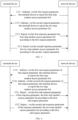
- FIG. 2 is a flowchart of a method for reporting a random access procedure according to an example embodiment 1 of the present disclosure. The method includes the following steps: In step 110, a terminal device receives a first message sent by a network device.
- the first message is used to indicate the terminal device to report a random access parameter list to the network device, and the random access parameter list includes a two-step random access parameter list or includes the two-step random access parameter list and a four-step random access parameter list.
- step 130 the terminal device reports the random access parameter list to the network device according to the first message.
- the random access parameter list includes a random access procedure parameter for at least one successfully completed random access procedure, and the random access procedure parameter includes: a random access resource parameter, and a collision detection and fallback indication parameter.
- a random access type switching parameter is optionally included.
- a request parameter and a response parameter may be introduced separately for different random access types. Specifically, the following options which are not according to the claimed invention are included:
- FIG. 3 is an interaction diagram of a method for reporting a random access procedure according to an example embodiment 1 of the present disclosure.
- the first message includes: a first request parameter and/or a second request parameter.
- step 1111 the network device indicates, via the first request parameter, the terminal device to report the four-step random access parameter list.
- the network device indicates, via the second request parameter, the terminal device to report the two-step random access parameter list.
- the terminal device sends the first response parameter and the second response parameter.
- Step 130 may include the following steps:
- the first message may be a UEInformationRequest message, and the first message may include the first request parameter and the second request parameter.
- the first request parameter may be ra-ReportReq.
- the first request parameter is configured as true, it means that the network device indicates the terminal device to report the four-step random access procedure.
- the terminal device reports the four-step random access parameter list to the network device via a first response parameter in UEInformationResponse which is set correspondingly to the first request parameter; otherwise, the terminal device does not respond.
- the second request parameter is configured to be true, it means that the network device indicates the terminal device to report the two-step random access procedure.
- the terminal device reports the reportable two-step random access parameter list to the network device via a second response parameter in UEInformationResponse which is set correspondingly to the second request parameter; otherwise, the terminal device does not respond.
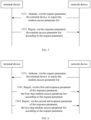
- FIG. 4 is an interaction diagram of a method for reporting a random access procedure according to an example embodiment 1 of the present disclosure.
- the first message includes a request parameter
- the request parameter includes a first sub-request parameter and a second sub-request parameter.
- the network device indicates, via the second sub-request parameter, the terminal device to report the two-step random access parameter list.
- the terminal device sends a response parameter, and the response parameter includes a first sub-response parameter and a second sub-response parameter.
- the request parameter includes the first sub-request parameter and the second sub-request parameter.
- a response parameter is set corresponding to the request parameter and the response parameter is used for the terminal device to report the four-step random access procedure and the two-step random access procedure.
- the response parameter includes the first sub-response parameter and the second sub-response parameter.
- the two-step random access parameter list is reported to the network device via the second sub-response parameter of the response parameters in the UEInformationResponse; otherwise, the terminal device does not respond.
- the network device may initiate a report request to the terminal device in a targeted manner according to optimization requirements.
- the terminal device may also be possible to request the terminal device to report all the random access parameter lists that can be reported without distinguishing the types. Specifically, the following optional methods which are not according to the claimed invention may be included:
- FIG. 5 is an interaction diagram of a method for reporting a random access procedure according to an example embodiment 1 of the present disclosure.
- the first message includes a request parameter.
- the network device indicates via the request parameter the terminal device to report the random access parameter list, and the random access parameter list includes a two-step random access parameter list and/or a four-step random access parameter list.
- Step 130 may include the following steps: In step 1331, the terminal device reports via a response parameter the random access parameter list according to the request parameter.
- the first message may include the request parameter, and the response parameter is set corresponding to the request parameter.
- the response parameter is used for the terminal device to report the four-step random access procedure and the two-step random access procedure.
- the request parameter is set to be true, if there is a four-step random access parameter list and a two-step random access parameter list that can be reported at the terminal device side, the reportable random access parameter lists are reported to the network device via the response parameter in UEInformationResponse which is set corresponding to the request parameter; otherwise, the terminal device does not respond.
- FIG. 6 is an interaction diagram of a method for reporting a random access procedure according to an example embodiment 1 of the present disclosure.
- the first message includes a request parameter.
- the network device indicates, via the request parameter, the terminal device to report the random access parameter list.
- the random access parameter list includes a two-step random access parameter list and/or a four-step random access parameter list.
- the terminal device sends a response parameter, and the response parameter includes a first sub-response parameter and a second sub-response parameter.
- Step 130 may include the following steps:
- the first sub-response parameter and the second sub-response parameter of the response parameter are used for the terminal device to report the four-step random access parameter list and the two-step random access parameter list, respectively.
- the request parameter is set to be true, if there is a reportable four-step random access parameter list at the terminal device side, the four-step random access parameter list is reported to the network device via the first sub-response parameter of the response parameter in the UEInformationResponse; otherwise, the terminal device does not respond.
- the two-step random access parameter list is reported to the network device via the second sub-response parameter of the response parameter in UEInformationResponse; otherwise, the terminal device does not respond.
- FIG. 7 is an interaction diagram of a method for reporting a random access procedure according to an example embodiment 1 of the present disclosure.
- the first message includes a request parameter.
- the network device indicates, via the request parameter, the terminal device to report the random access parameter list.
- the random access parameter list includes a two-step random access parameter list and/or a four-step random access parameter list.
- the terminal device sends a first response parameter and a second response parameter.
- Step 130 may include the following steps:
- the request parameter configuration When the request parameter configuration is true, if there is a reportable four-step random access parameter list at the terminal device side, the four-step random access parameter list is reported to the network device via the first response parameter in the UEInformationResponse; otherwise, the terminal device does not respond. If there is a reportable two-step random access parameter list at the terminal device side, the reportable two-step random access parameter list is reported to the network device via the second response parameter in the UEInformationResponse; otherwise, the terminal device does not respond.
- the terminal device reports all the random access parameter lists, so the network device does not need to obtain in advance the type of random access parameter list at the terminal device side.
- the terminal device reports the two-step random access parameter list and the four-step random access parameter list respectively, or report the two-step random access parameter list and the four-step random access parameter list together, depending on the storage method of the two-step random access parameter list and the four-step random access parameter list. For example, when the two-step random access parameter list and the four-step random access parameter list are stored in different list entries, they are respectively reported by different response parameters. If the two-step random access parameter list and the four-step random access parameter list are stored in the same list entry, they are reported together with a response parameter.
- the storage methods of the two-step random access parameter list and the four-step random access parameter list will be described in detail in the following contents.
- the random access resource parameters include:
- the random access resource parameters include: a frequency domain starting point of a physical uplink shared channel resource;
- the random access resource parameters include a guard period for a physical uplink shared channel resource unit in a frequency domain.
- the two-step random access includes a PRACH resource for preamble transmission and a PUSCH resource for payload transmission.
- the network device needs the corresponding physical resource configuration during the access procedure of the terminal device, so as to make corresponding adjustments according to the access performance. Therefore, the terminal device needs to report the random access resource parameter used in two-step random access procedure each time.
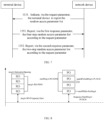
- FIG. 8 is a schematic diagram of random access resource parameters. As shown in FIG. 8 , the random access resource parameters may include the following parameters:
- the random access resource parameters include:
- the random access resource parameters include:
- the msgA-RO-FrequencyStart, msgA-RO-FDM and msgA-SubcarrierSpacing are used to reflect the frequency domain information of PRACH resources.
- the three can be used to jointly determine the starting position, number and occupied bandwidth of PRACH on BWP.
- the frequencyStartMsgA-PUSCH, nrofMsgA-PO-FDM, nrofPRBs-PerMsgA, and guardPeriodMsgA-PUSCH are used to reflect the frequency domain information of PUSCH resources, and the four can be used to jointly determine the starting position, number and occupied bandwidth of PUSCH resources on the BWP.
- the contention detection and fallback indication parameter include:
- the contention detection indication and the fallback indication are configured.
- the contention detection indication is used to indicate whether the terminal device can detect that the contention resolution fails after the MsgA and/or Msg3 are sent.
- the fallback indication is used to indicate whether the terminal device has received the fallbackRAR sent by the network device.
- the contention detection indication is set to "false (no)' and the fallback indication is set to 'false';
- the contention detection indication includes:
- the contention detection indication may include the first detection indication and the second detection indication.
- the first detection indication is used to indicate whether a contention resolution failure is detected in the MsgB in the two-step random access procedure.
- the second contention detection indication is used to indicate whether a contention resolution failure is detected in Msg4 when a fallback occurs, and the second contention detection indication can be used to implicitly indicate that a fallback procedure has occurred to the terminal device.
- the first contention detection indication is set to 'false'
- the terminal device when the network device only detects the MsgA preamble but fails to detect/decode the MsgA payload, the terminal device will receive the fallbackRAR and transmit Msg3 according to the indication in the fallbackRAR.
- the reasons why the payload is not successfully detected/decoded may be as follows:
- the terminal device feeds back the fallback situation in the two-step random access procedure to the network device, and the network device determines the reason for the terminal device fallback in combination with the resource configuration, the number of attempts and so on, and then optimizes the PRACH and PUSCH resource configuration and adjusts power control parameters in combination with PUSCH resource information.
- the network device can optimize the number of PUSCH resource configurations through nrofMsgA-PO-FDM and a fallback indication. For example, in a certain PUSCH configuration, nrofMsgA-PO-FDM is set to 2, and a total of N users initiate random access in this configuration and the access succeeds finally. According to the random access parameters reported by N terminal devices, the network device finds that 80% of the terminal devices have undergone a fallback procedure before the access is successful, and the number of PUSCH resources multiplexed in the frequency domain is small.
- the network device can determine that the reason why the terminal device has a high fallback probability may be due to less PUSCH resource configuration which results in multiple preambles associated with one PUSCH resource unit.
- the network device can adjust the nrofMsgA-PO-FDM, such as increasing it to 6, to reduce the probability of fallback of the terminal device.
- the network device may further optimize the grouping threshold through frequencyStartMsgA-PUSCH and nrofPRBs-PerMsgA and the fallback indication.
- the network device configures different preamble groups for the terminal device.
- Preamble groupA corresponds to PUSCH configuration #1, the frequency starting point is frequencyStartMsgA-PUSCH#1, and nrofPRBs-PerMsgA is 8;
- preamble groupB corresponds to PUSCH configuration #2, the frequency starting point is frequencyStartMsgA-PUSCH#2, and nrofPRBs-PerMsgA is 16.
- the data volume threshold ra-MsgASizeGroupA used to select the preamble group A is 48 bits.
- a total of N terminal devices select groupA or groupB and the corresponding PUSCH resources to initiate two-step random access according to the relationship between the size of the MsgA paylaod to be transmitted and the data volume threshold, and the access is finally successful.
- the network device finds that 80% of the terminal devices that initiate random access on the PUSCH resources corresponding to groupA are notified by the network to fall back, while only 30% of terminal devices that initiate random access on the PUSCH resources corresponding to groupB are notified by the network to fall back.
- the network device determines that the number of terminal devices belonging to group A is too large, and then adjusts the data volume threshold ra-MsgASizeGroupA used for preamble group A selection to be smaller, for example, to 40 bits to balance the user data under the two preamble groups and reduce the occurrence probability of fallback.
- the network device may further optimize the frequency domain interval of PUSCH resources through guardPeriodMsgA-PUSCH and the fallback indication. For example, in a certain PUSCH configuration, guardPeriodMsgA-PUSCH is 0, and a total of N users initiate random access in this configuration and the access succeeds finally. According to the random access parameters reported by N terminal devices, the network device found that 80% of the terminal devices had a fallback procedure before the access was successful, and guardPeriodMsgA-PUSCH was set to 0.
- the random access parameter list stored by the terminal device and whether there is a random access type switching parameter may include the following situations:
- the random access type switching parameter includes: the switching indication for the two-step random access parameter list and the switching indication for the four-step random access parameter list.
- FIG. 10 is a schematic diagram of a random access parameter list.
- different random access procedure parameters are stored as the same list entry in the same list entry of the two-step random access parameter list or the four-step random access parameter.
- both the two-step random access procedure parameters and the four-step random access procedure parameters are stored in the random access parameter list as the third list entry.
- both the successfully completed two-step random access procedure parameters and four-step random access procedure parameters are stored in the random access parameter list as the third list entry, including the two-step random access parameter list or the four-step random access parameter list.
- the two-step random access procedure parameters and four-step random access procedure parameters are stored in temporal order, that is, the third list entry includes both the two-step random access procedure parameters and the four-step random access procedure parameters.
- the two-step random access procedure parameters and the four-step random access procedure parameters are stored as a single access procedure in the random access parameter list as a whole, and type information needs to be introduced to distinguish two different access types in the same list entry.
- the first list entry and/or the third list entry includes: reference signal received power for downlink path loss reference.
- the reference signal received power for downlink path loss reference is used to indicate a threshold for optimizing random access type selection.
- the reasons for the terminal to switch the access type may be as follows:
- the terminal device records and reports the type switching that occurs during the two-step random access procedure and the specific access information under the corresponding type, which can assist the network device to infer the cause of access problem in the two-step random access in the terminal device, and then optimize the resource configuration, the threshold for selecting the access type and the power control parameter for the two-step random access.
- the network device determines that the users with poor channel status select two-step random access because the access type selection threshold is set low, and then the network device can increase the threshold for random access type selection, for example, to -40dBm, so as to ensure that users with better channel status choose two-step random access to reduce the occurrence probability of switching.
- the first message sent by the network device is received.
- the first message is used to indicate the terminal device to report the random access parameter list to the network device.
- the random access parameter list includes a two-step random access parameter list and/or a four-step random access parameter list.
- the random access parameter list is reported to the network device according to the first message. Therefore, the terminal device can report the random access parameter list to the network device, ensuring that the network device can obtain the two-step random access parameter list, and further, according to the relevant parameters for the two-step random access procedure, the parameter configuration for the two-step random access procedure can be adaptively optimized, thereby solving the technical problem that the optimization for parameter configuration of the two-step random access procedure is poor.
- FIG. 11 is a block diagram of a device for reporting a random access procedure according to an example embodiment 2 of the present disclosure. As shown in FIG. 11 , the device is a terminal device. The device may include but not limited to: a receiving module 210 and a sending module 230.
- the receiving module 210 is configured to receive a first message sent by a network device, wherein the first message is used to indicate the terminal device to report a random access parameter list to the network device, and the random access parameter list includes a two-step random access parameter list or includes the two-step random access parameter list and a four-step random access parameter list.
- the sending module 230 is configured to report the random access parameter list to the network device according to the first message.
- the random access parameter list includes a random access procedure parameter for at least one successfully completed random access procedure, and the random access procedure parameter includes: a random access resource parameter, and a collision detection and fallback indication parameter.
- a random access type switching parameter is optionally included.
- the first message includes: a first request parameter and/or a second request parameter;
- the first message includes a request parameter
- the request parameter is used to indicate the terminal device to report the two-step random access parameter list and/or the four-step random access parameter list.
- the sending module 230 is further configured to: according to the request parameter, report the random access parameter list via a response parameter.
- the sending module 230 is further configured to:
- the sending module 230 is further configured to:
- the request parameter includes a first sub-request parameter and a second sub-request parameter
- the first sub-request parameter is used to indicate the terminal device to report the four-step random access parameter list
- the second sub-request parameter is used to indicate the terminal device to report the two-step random access parameter list
- the sending module 230 is further configured to:
- the random access resource parameter includes:
- the random access parameters include:
- the random access parameters include a guard period for a physical uplink shared channel resource unit in a frequency domain.
- the contention detection and fallback indication parameter include:
- the contention detection indication includes:
- a two-step random access procedure parameter is stored as a first list entry in the two-step random access parameter list
- a four -step random access procedure parameter is stored as a second list entry in the four-step random access parameter list
- the random access type switching parameter includes:
- both a two-step random access procedure parameter and a four-step random access procedure parameter are stored in the random access parameter list as a third list entry.
- the first list entry and/or the third list entry includes: a reference signal received power for a downlink pathloss reference.
- FIG. 12 is a block diagram of a device for reporting a random access procedure according to an example embodiment 3 of the present disclosure.
- the device may be a network device.
- the device may include but not limited to a sending module 310 and a receiving module 330.
- the sending module 310 is configured to send a first message to a terminal device, wherein the first message is used to indicate the terminal device to report a random access parameter list to the network device, and the random access parameter list includes a two-step random access parameter list or includes the two-step random access parameter list and a four-step random access parameter list.
- the receiving module 330 is configured to receive the random access parameter list which is reported by the terminal device according to the first message.
- the random access parameter list includes a random access procedure parameter for at least one successfully completed random access procedure, and the random access procedure parameter includes: a random access resource parameter, and a collision detection and fallback indication parameter.
- a random access type switching parameter is optionally included.
- the first message includes: a first request parameter and/or a second request parameter;
- the first message includes a request parameter
- the request parameter is used to indicate the terminal device to report the two-step random access parameter list and/or the four-step random access parameter list.
- the receiving module 330 is further configured to: receive the random access parameter list which is reported by the terminal device via a response parameter according to the request parameter.
- the receiving module 330 is further configured to:
- the receiving module 330 is further configured to:
- the request parameter includes a first sub-request parameter and a second sub-request parameter
- the first sub-request parameter is used to indicate the terminal device to report the four-step random access parameter list
- the second sub-request parameter is used to indicate the terminal device to report the two-step random access parameter list
- the random access resource parameter includes:
- the random access parameters include:
- the random access resource parameters include a guard period for a physical uplink shared channel resource unit in a frequency domain.
- the contention detection and fallback indication parameter include:
- the contention detection indication includes:
- a two-step random access procedure parameter is stored as a first list entry in the two-step random access parameter list
- a four -step random access procedure parameter is stored as a second list entry in the four-step random access parameter list
- the random access type switching parameter includes:
- both a two-step random access procedure parameter and a four-step random access procedure parameter are stored in the random access parameter list as a third list entry.
- the first list entry and/or the third list entry includes: a reference signal received power for a downlink pathloss reference.
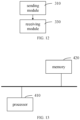
- FIG. 13 is a schematic diagram of the hardware structure of a device for reporting a random access procedure according to an example embodiment 4 of the present disclosure.
- the device includes: a processor 410 and a memory 420, and the above components of the device are connected to each other through a bus system for communication.
- the memory 420 stores a program that can be run on the processor 410.
- the processor 410 executes the program, it implements some or all of the steps of the method for reporting the random access procedure in the embodiment 1 of the above method.
- the processor 410 may be an independent component, or may be a collective term for multiple processing components. For example, it may be a CPU, an ASIC, or one or more integrated circuits configured to implement the above method embodiments, such as at least one microprocessor DSP, or at least one programmable gate FPGA, etc.
- the steps of the methods or algorithms described in the example embodiments of the present application may be implemented in a hardware, or may be implemented in a manner of a processor executing software instructions.
- Software instructions can be composed of corresponding software modules, and software modules can be stored in Random Access Memory (RAM), flash memory, Read Only Memory (ROM), Erasable Programmable ROM (EPROM), Electrically EPROM (EEPROM), registers, hard disks, removable hard disks, read-only optical disks (CD-ROMs), or any other form of storage medium known in the art.
- An exemplary storage medium is coupled to the processor, such that the processor can read information from, and write information to, the storage medium.
- the storage medium can also be an integral part of the processor.
- the processor and storage medium may reside in an ASIC. Additionally, the ASIC may reside in access network device, a target network device or a core network device. According to some embodiments, the processor and the storage medium may also exist in the access network device, the target network device or the core network device as discrete components.
- the functions described in the example embodiments of the present disclosure may be implemented in whole or in part by software, hardware, firmware or any combination thereof.
- the functions can be implemented in whole or in part in the form of a computer program product.
- the computer program product includes one or more computer instructions. When the computer program instructions are loaded and executed on a computer, all or part of the processes or functions described in the example embodiments of the present disclosure are produced.
- the computer may be a general purpose computer, a special purpose computer, a computer network, or other programmable device.
- the computer instructions may be stored in the computer-readable storage medium or transmitted from one computer-readable storage medium to another computer-readable storage medium, for example, the computer instructions may be downloaded from a website, computer, server, or data center to another website, computer, server, or data center in a wired manner (e.g., coaxial cable, optical fiber, Digital Subscriber Line (DSL)) or in a wireless manner (e.g., infrared, wireless, microwave, etc.).
- the computer-readable storage medium may be any available medium that can be accessed by a computer or a data storage device such as a server, data center, etc. that includes an integration of one or more available medium.
- the available medium may be magnetic medium (e.g., floppy disks, hard disks, magnetic tapes), optical medium (e.g., Digital Video Disc (DVD)), or semiconductor medium (e.g., Solid State Disk (SSD)), and so on.
- magnetic medium e.g., floppy disks, hard disks, magnetic tapes
- optical medium e.g., Digital Video Disc (DVD)
- semiconductor medium e.g., Solid State Disk (SSD)
Landscapes
- Engineering & Computer Science (AREA)
- Computer Networks & Wireless Communication (AREA)
- Signal Processing (AREA)
- Mobile Radio Communication Systems (AREA)
Claims (15)
- Procédé de signalement d'une procédure d'accès aléatoire, appliqué dans un dispositif terminal, le procédé comprenant :la réception (110) d'un premier message envoyé par un dispositif de réseau, le premier message servant à indiquer au dispositif terminal de signaler une liste de paramètres d'accès aléatoire au dispositif de réseau, et la liste de paramètres d'accès aléatoire comprenant une liste de paramètres d'accès aléatoire en deux étapes, ou comprenant la liste de paramètres d'accès aléatoire en deux étapes et une liste de paramètres d'accès aléatoire en quatre étapes ; etle signalement (130) de la liste de paramètres d'accès aléatoire au dispositif de réseau selon le premier message ;la liste de paramètres d'accès aléatoire comprenant un paramètre de procédure d'accès aléatoire pour au moins une procédure d'accès aléatoire effectuée avec succès, etcaractérisé en ce que le paramètre de procédure d'accès aléatoire comprend :des paramètres de ressources d'accès aléatoire, et un paramètre d'indication de détection de collision et de repli ;les paramètres de ressources d'accès aléatoire comprenant :un point de départ de domaine fréquentiel d'une ressource de canal physique partagé sur la liaison montante pour un accès aléatoire en deux étapes ; etle nombre de ressources multiplexées de canal physique partagé sur la liaison montante pour un accès aléatoire en deux étapes dans un domaine fréquentiel ; etle nombre de blocs de ressources physiques occupés par chaque unité de ressource de canal physique partagé sur la liaison montante pour un accès aléatoire en deux étapes dans un domaine fréquentiel.
- Procédé selon la revendication 1, le premier message comprenant : un deuxième paramètre de requête ou comprenant le deuxième paramètre de requête et un premier paramètre de requête ;le premier paramètre de requête servant à indiquer au dispositif terminal de signaler la liste de paramètres d'accès aléatoire en quatre étapes, et le deuxième paramètre de requête servant à indiquer au dispositif terminal de signaler la liste de paramètres d'accès aléatoire en deux étapes ;le signalement de la liste de paramètres d'accès aléatoire au dispositif de réseau selon le premier message comprenant :selon le deuxième paramètre de requête, le signalement de la liste de paramètres d'accès aléatoire en deux étapes au dispositif de réseau au moyen d'un deuxième paramètre de réponse ;ou, le signalement de la liste de paramètres d'accès aléatoire au dispositif de réseau selon le premier message comprenant :selon le premier paramètre de requête, le signalement de la liste de paramètres d'accès aléatoire en quatre étapes au dispositif de réseau au moyen d'un premier paramètre de réponse ; et,selon le deuxième paramètre de requête, le signalement de la liste de paramètres d'accès aléatoire en deux étapes au dispositif de réseau au moyen du deuxième paramètre de réponse.
- Procédé selon la revendication 1, le premier message comprenant un paramètre de requête, et le paramètre de requête servant à indiquer au dispositif terminal de signaler la liste de paramètres d'accès aléatoire en deux étapes, ou à indiquer au dispositif terminal de signaler la liste de paramètres d'accès aléatoire en deux étapes et la liste de paramètres d'accès aléatoire en quatre étapes.
- Procédé selon la revendication 3, le signalement de la liste de paramètres d'accès aléatoire au dispositif de réseau selon le premier message comprenant :selon le paramètre de requête, le signalement de la liste de paramètres d'accès aléatoire en deux étapes au dispositif de réseau au moyen d'un deuxième paramètre de sous-réponse d'un paramètre de réponse ;ou, le signalement de la liste de paramètres d'accès aléatoire au dispositif de réseau selon le premier message comprenant :selon le paramètre de requête, le signalement de la liste de paramètres d'accès aléatoire en quatre étapes au dispositif de réseau au moyen d'un premier paramètre de sous-réponse du paramètre de réponse ; etselon le paramètre de requête, le signalement de la liste de paramètres d'accès aléatoire en deux étapes au dispositif de réseau au moyen d'un deuxième paramètre de sous-réponse du paramètre de réponse.
- Procédé selon la revendication 1, les paramètres de ressources d'accès aléatoire comprenant en outre :un point de départ de domaine fréquentiel d'une ressource d'occasion d'accès aléatoire pour un accès aléatoire en deux étapes ; et/ou,le nombre de ressources multiplexées d'occasion d'accès aléatoire pour un accès aléatoire en deux étapes dans un domaine fréquentiel ; et/ou,un espacement de sous-porteuses correspondant à une ressource d'occasion d'accès aléatoire pour un accès aléatoire en deux étapes ; et/ou,une période de garde pour une unité de ressource de canal physique partagé sur la liaison montante pour un accès aléatoire en deux étapes dans un domaine fréquentiel.
- Procédé selon la revendication 1, le paramètre d'indication de détection de contention et de repli comprenant :une indication de détection de contention servant à indiquer si le dispositif terminal détecte ou non un échec de résolution de contention ; et/ouune indication de repli servant à indiquer si le dispositif terminal reçoit ou non une réponse d'accès aléatoire de repli envoyée par le dispositif de réseau.
- Procédé selon la revendication 1, lorsqu'une commutation de type d'accès aléatoire existe, qu'un paramètre de procédure d'accès aléatoire en deux étapes est stocké comme première entrée de liste dans la liste de paramètres d'accès aléatoire en deux étapes, et qu'un paramètre de procédure d'accès aléatoire en quatre étapes est stocké comme deuxième entrée de liste dans la liste de paramètres d'accès aléatoire en quatre étapes, le paramètre de procédure d'accès aléatoire comprenant en outre un paramètre de commutation de type d'accès aléatoire et le paramètre de commutation de type d'accès aléatoire comprenant :une indication de commutation pour la liste de paramètres d'accès aléatoire en deux étapes, qui est stockée dans la première entrée de liste et sert à indiquer un index de la deuxième entrée de liste ; et/ou,une indication de commutation pour la liste de paramètres d'accès aléatoire en quatre étapes, qui est stockée dans la deuxième entrée de liste et sert à indiquer un index de la première entrée de liste.
- Procédé selon la revendication 1, lorsqu'une commutation de type d'accès aléatoire existe, un paramètre de procédure d'accès aléatoire en deux étapes et un paramètre de procédure d'accès aléatoire en quatre étapes étant tous deux stockés dans la liste de paramètres d'accès aléatoire comme troisième entrée de liste.
- Procédé selon la revendication 7 ou 8, la première entrée de liste et/ou la troisième entrée de liste comprenant : une puissance reçue de signal de référence pour une référence d'affaiblissement de trajet sur la liaison descendante.
- Procédé de signalement d'une procédure d'accès aléatoire, appliqué dans un dispositif de réseau, le procédé comprenant :l'envoi d'un premier message à un dispositif terminal, le premier message servant à indiquer au dispositif terminal de signaler une liste de paramètres d'accès aléatoire au dispositif de réseau, et la liste de paramètres d'accès aléatoire comprenant une liste de paramètres d'accès aléatoire en deux étapes, ou comprenant une liste de paramètres d'accès aléatoire en deux étapes et une liste de paramètres d'accès aléatoire en quatre étapes ; etla réception de la liste de paramètres d'accès aléatoire qui est signalée par le dispositif terminal selon le premier message ;la liste de paramètres d'accès aléatoire comprenant un paramètre de procédure d'accès aléatoire pour au moins une procédure d'accès aléatoire effectuée avec succès, etcaractérisé en ce que le paramètre de procédure d'accès aléatoire comprend :des paramètres de ressources d'accès aléatoire, et un paramètre d'indication de détection de collision et de repli ;les paramètres de ressources d'accès aléatoire comprenant :un point de départ de domaine fréquentiel d'une ressource de canal physique partagé sur la liaison montante pour un accès aléatoire en deux étapes ; etle nombre de ressources multiplexées de canal physique partagé sur la liaison montante pour un accès aléatoire en deux étapes dans un domaine fréquentiel ; etle nombre de blocs de ressources physiques occupés par chaque unité de ressource de canal physique partagé sur la liaison montante pour un accès aléatoire en deux étapes dans un domaine fréquentiel.
- Procédé selon la revendication 10, les paramètres de ressources d'accès aléatoire comprenant en outre :un point de départ de domaine fréquentiel d'une ressource d'occasion d'accès aléatoire pour un accès aléatoire en deux étapes ; et/ou,le nombre de ressources multiplexées d'occasion d'accès aléatoire pour un accès aléatoire en deux étapes dans un domaine fréquentiel ; et/ou,un espacement de sous-porteuses correspondant à une ressource d'occasion d'accès aléatoire pour un accès aléatoire en deux étapes ; et/ou,une période de garde pour une unité de ressource de canal physique partagé sur la liaison montante pour un accès aléatoire en deux étapes dans un domaine fréquentiel.
- Procédé selon la revendication 10, le premier message comprenant un paramètre de requête, et le paramètre de requête servant à indiquer au dispositif terminal de signaler la liste de paramètres d'accès aléatoire en deux étapes, ou à indiquer au dispositif terminal de signaler la liste de paramètres d'accès aléatoire en deux étapes et la liste de paramètres d'accès aléatoire en quatre étapes.
- Procédé selon la revendication 10, le paramètre d'indication de détection de contention et de repli comprenant :une indication de détection de contention servant à indiquer si le dispositif terminal détecte ou non un échec de résolution de contention ; et/ouune indication de repli servant à indiquer si le dispositif terminal reçoit ou non une réponse d'accès aléatoire de repli envoyée par le dispositif de réseau.
- Dispositif terminal configuré pour réaliser le procédé selon l'une quelconque des revendications 1 à 9.
- Dispositif de réseau configuré pour réaliser le procédé selon l'une quelconque des revendications 10 à 13.
Priority Applications (1)
| Application Number | Priority Date | Filing Date | Title |
|---|---|---|---|
| EP25173286.3A EP4590060A3 (fr) | 2020-05-18 | 2020-05-18 | Procédé et appareil de rapport de processus d'accès aléatoire |
Applications Claiming Priority (1)
| Application Number | Priority Date | Filing Date | Title |
|---|---|---|---|
| PCT/CN2020/090755 WO2021232178A1 (fr) | 2020-05-18 | 2020-05-18 | Procédé et appareil permettant de rapporter un processus d'accès aléatoire |
Related Child Applications (2)
| Application Number | Title | Priority Date | Filing Date |
|---|---|---|---|
| EP25173286.3A Division EP4590060A3 (fr) | 2020-05-18 | 2020-05-18 | Procédé et appareil de rapport de processus d'accès aléatoire |
| EP25173286.3A Division-Into EP4590060A3 (fr) | 2020-05-18 | 2020-05-18 | Procédé et appareil de rapport de processus d'accès aléatoire |
Publications (3)
| Publication Number | Publication Date |
|---|---|
| EP4142414A1 EP4142414A1 (fr) | 2023-03-01 |
| EP4142414A4 EP4142414A4 (fr) | 2023-05-03 |
| EP4142414B1 true EP4142414B1 (fr) | 2025-06-25 |
Family
ID=78708941
Family Applications (2)
| Application Number | Title | Priority Date | Filing Date |
|---|---|---|---|
| EP20936940.4A Active EP4142414B1 (fr) | 2020-05-18 | 2020-05-18 | Procédé et appareil permettant de rapporter un processus d'accès aléatoire |
| EP25173286.3A Pending EP4590060A3 (fr) | 2020-05-18 | 2020-05-18 | Procédé et appareil de rapport de processus d'accès aléatoire |
Family Applications After (1)
| Application Number | Title | Priority Date | Filing Date |
|---|---|---|---|
| EP25173286.3A Pending EP4590060A3 (fr) | 2020-05-18 | 2020-05-18 | Procédé et appareil de rapport de processus d'accès aléatoire |
Country Status (5)
| Country | Link |
|---|---|
| US (2) | US12382515B2 (fr) |
| EP (2) | EP4142414B1 (fr) |
| CN (2) | CN117395804B (fr) |
| ES (1) | ES3037005T3 (fr) |
| WO (1) | WO2021232178A1 (fr) |
Families Citing this family (4)
| Publication number | Priority date | Publication date | Assignee | Title |
|---|---|---|---|---|
| US20230232444A1 (en) * | 2020-06-03 | 2023-07-20 | Beijing Xiaomi Mobile Software Co., Ltd. | Method and apparatus for determining random access configuration, communication device, and storage medium |
| CN114007203A (zh) * | 2020-07-28 | 2022-02-01 | 华为技术有限公司 | 一种随机接入资源选择的方法以及相关装置 |
| JP7385773B2 (ja) * | 2020-08-06 | 2023-11-22 | エルジー エレクトロニクス インコーポレイティド | 無線通信システムにおいて無線信号の送受信方法及び装置 |
| CN119521434A (zh) * | 2023-08-09 | 2025-02-25 | 北京三星通信技术研究有限公司 | 用户设备执行的方法、基站执行的方法、用户设备和基站 |
Family Cites Families (9)
| Publication number | Priority date | Publication date | Assignee | Title |
|---|---|---|---|---|
| WO2012141483A2 (fr) * | 2011-04-11 | 2012-10-18 | 삼성전자 주식회사 | Procédé et appareil pour transmettre efficacement à une station de base des informations acquises par un terminal |
| CN110662251B (zh) * | 2018-06-29 | 2023-11-07 | 夏普株式会社 | 由用户设备执行的方法以及用户设备 |
| CN110753324B (zh) * | 2018-07-23 | 2023-03-31 | 中国移动通信有限公司研究院 | 一种信息上报及接收方法、装置和存储介质 |
| CN110831227B (zh) | 2018-08-09 | 2022-02-11 | 维沃移动通信有限公司 | 一种随机接入方法、网络设备及终端 |
| JP2022501925A (ja) * | 2018-09-27 | 2022-01-06 | テレフオンアクチーボラゲット エルエム エリクソン(パブル) | Mtc rachレポートの拡張 |
| CN110972322B (zh) | 2018-09-28 | 2022-10-28 | 华为技术有限公司 | 一种随机接入的方法和通信装置 |
| CN111436159B (zh) * | 2019-02-14 | 2022-08-02 | 维沃移动通信有限公司 | 随机接入处理方法、装置、终端、网络设备及存储介质 |
| WO2021056311A1 (fr) | 2019-09-26 | 2021-04-01 | 北京小米移动软件有限公司 | Procédé et appareil de configuration d'occasion d'accès aléatoire, et support d'enregistrement |
| EP4518560A3 (fr) * | 2020-04-09 | 2025-04-16 | ZTE Corporation | Systèmes et procédés de rapport d'informations d'accès aléatoire dans des réseaux de communication sans fil |
-
2020
- 2020-05-18 EP EP20936940.4A patent/EP4142414B1/fr active Active
- 2020-05-18 EP EP25173286.3A patent/EP4590060A3/fr active Pending
- 2020-05-18 WO PCT/CN2020/090755 patent/WO2021232178A1/fr not_active Ceased
- 2020-05-18 ES ES20936940T patent/ES3037005T3/es active Active
- 2020-05-18 CN CN202311467549.7A patent/CN117395804B/zh active Active
- 2020-05-18 CN CN202080100680.8A patent/CN115516990A/zh active Pending
-
2022
- 2022-10-14 US US17/966,076 patent/US12382515B2/en active Active
-
2025
- 2025-07-09 US US19/264,805 patent/US20250338323A1/en active Pending
Also Published As
| Publication number | Publication date |
|---|---|
| CN117395804B (zh) | 2025-08-05 |
| US12382515B2 (en) | 2025-08-05 |
| WO2021232178A1 (fr) | 2021-11-25 |
| EP4590060A3 (fr) | 2025-08-13 |
| CN115516990A (zh) | 2022-12-23 |
| CN117395804A (zh) | 2024-01-12 |
| US20250338323A1 (en) | 2025-10-30 |
| EP4142414A1 (fr) | 2023-03-01 |
| EP4590060A2 (fr) | 2025-07-23 |
| ES3037005T3 (en) | 2025-09-26 |
| EP4142414A4 (fr) | 2023-05-03 |
| US20230029520A1 (en) | 2023-02-02 |
Similar Documents
| Publication | Publication Date | Title |
|---|---|---|
| US11632793B2 (en) | Method and apparatus for random access procedure | |
| US12408193B2 (en) | Method and apparatus for LBT failure detection | |
| US12382515B2 (en) | Method and apparatus for reporting random access process | |
| US20230292357A1 (en) | System and method for random access resource selection | |
| US10893544B2 (en) | Beam refinement in two-step random access channel (RACH) procedure | |
| US10840992B2 (en) | User equipment, radio network node and methods performed therein for handling communication in a wireless communication network | |
| EP4171165A1 (fr) | Récupération de faisceau de cellule secondaire | |
| EP3751881A1 (fr) | Procédé de gestion de faisceau, terminal, dispositif de réseau et support de stockage | |
| CN116158105B (zh) | 用于侧行链路中波束故障检测及恢复的方法及装置 | |
| EP3614739B1 (fr) | Procédé de commutation de porteuse de liaison montante, dispositif réseau et dispositif terminal | |
| KR20220070493A (ko) | 정보 보고 및 수신 방법, 장치, 단말, 서비스 노드 및 저장매체 | |
| US20230262820A1 (en) | Beam failure recovery method and apparatus, terminal, and storage medium | |
| KR20190088473A (ko) | 측정 방법, 단말 장비 및 네트워크 장비 | |
| EP3691393A2 (fr) | Procédé et dispositif de détermination de paramètres d'accès aléatoire | |
| EP3753292A1 (fr) | Procédés et appareils pour un accès aléatoire priorisé lors d'un transfert | |
| US12028898B2 (en) | UE, radio network node and methods performed therein for handling communication | |
| US9930699B2 (en) | Providing access control parameters to a user equipment |
Legal Events
| Date | Code | Title | Description |
|---|---|---|---|
| STAA | Information on the status of an ep patent application or granted ep patent |
Free format text: STATUS: THE INTERNATIONAL PUBLICATION HAS BEEN MADE |
|
| PUAI | Public reference made under article 153(3) epc to a published international application that has entered the european phase |
Free format text: ORIGINAL CODE: 0009012 |
|
| STAA | Information on the status of an ep patent application or granted ep patent |
Free format text: STATUS: REQUEST FOR EXAMINATION WAS MADE |
|
| 17P | Request for examination filed |
Effective date: 20221123 |
|
| AK | Designated contracting states |
Kind code of ref document: A1 Designated state(s): AL AT BE BG CH CY CZ DE DK EE ES FI FR GB GR HR HU IE IS IT LI LT LU LV MC MK MT NL NO PL PT RO RS SE SI SK SM TR |
|
| REG | Reference to a national code |
Ref country code: DE Free format text: PREVIOUS MAIN CLASS: H04W0074080000 Ref country code: DE Ref legal event code: R079 Ref document number: 602020053572 Country of ref document: DE Free format text: PREVIOUS MAIN CLASS: H04W0074080000 Ipc: H04W0074000000 |
|
| A4 | Supplementary search report drawn up and despatched |
Effective date: 20230330 |
|
| RIC1 | Information provided on ipc code assigned before grant |
Ipc: H04W 74/08 20090101ALN20230324BHEP Ipc: H04W 74/00 20090101AFI20230324BHEP |
|
| DAV | Request for validation of the european patent (deleted) | ||
| DAX | Request for extension of the european patent (deleted) | ||
| STAA | Information on the status of an ep patent application or granted ep patent |
Free format text: STATUS: EXAMINATION IS IN PROGRESS |
|
| 17Q | First examination report despatched |
Effective date: 20231207 |
|
| GRAP | Despatch of communication of intention to grant a patent |
Free format text: ORIGINAL CODE: EPIDOSNIGR1 |
|
| STAA | Information on the status of an ep patent application or granted ep patent |
Free format text: STATUS: GRANT OF PATENT IS INTENDED |
|
| RIC1 | Information provided on ipc code assigned before grant |
Ipc: H04W 74/0833 20240101ALN20240625BHEP Ipc: H04W 74/00 20090101AFI20240625BHEP |
|
| INTG | Intention to grant announced |
Effective date: 20240711 |
|
| RIC1 | Information provided on ipc code assigned before grant |
Ipc: H04W 74/0833 20240101ALN20240703BHEP Ipc: H04W 74/00 20090101AFI20240703BHEP |
|
| GRAJ | Information related to disapproval of communication of intention to grant by the applicant or resumption of examination proceedings by the epo deleted |
Free format text: ORIGINAL CODE: EPIDOSDIGR1 |
|
| STAA | Information on the status of an ep patent application or granted ep patent |
Free format text: STATUS: EXAMINATION IS IN PROGRESS |
|
| INTC | Intention to grant announced (deleted) | ||
| GRAP | Despatch of communication of intention to grant a patent |
Free format text: ORIGINAL CODE: EPIDOSNIGR1 |
|
| STAA | Information on the status of an ep patent application or granted ep patent |
Free format text: STATUS: GRANT OF PATENT IS INTENDED |
|
| INTG | Intention to grant announced |
Effective date: 20241223 |
|
| RIC1 | Information provided on ipc code assigned before grant |
Ipc: H04W 74/0833 20240101ALN20241216BHEP Ipc: H04W 74/00 20090101AFI20241216BHEP |
|
| GRAS | Grant fee paid |
Free format text: ORIGINAL CODE: EPIDOSNIGR3 |
|
| GRAA | (expected) grant |
Free format text: ORIGINAL CODE: 0009210 |
|
| STAA | Information on the status of an ep patent application or granted ep patent |
Free format text: STATUS: THE PATENT HAS BEEN GRANTED |
|
| AK | Designated contracting states |
Kind code of ref document: B1 Designated state(s): AL AT BE BG CH CY CZ DE DK EE ES FI FR GB GR HR HU IE IS IT LI LT LU LV MC MK MT NL NO PL PT RO RS SE SI SK SM TR |
|
| REG | Reference to a national code |
Ref country code: GB Ref legal event code: FG4D |
|
| REG | Reference to a national code |
Ref country code: CH Ref legal event code: EP |
|
| REG | Reference to a national code |
Ref country code: DE Ref legal event code: R096 Ref document number: 602020053572 Country of ref document: DE |
|
| REG | Reference to a national code |
Ref country code: CH Ref legal event code: EP |
|
| REG | Reference to a national code |
Ref country code: IE Ref legal event code: FG4D |
|
| REG | Reference to a national code |
Ref country code: NL Ref legal event code: FP |
|
| REG | Reference to a national code |
Ref country code: ES Ref legal event code: FG2A Ref document number: 3037005 Country of ref document: ES Kind code of ref document: T3 Effective date: 20250926 |
|
| P01 | Opt-out of the competence of the unified patent court (upc) registered |
Free format text: CASE NUMBER: UPC_APP_5187_4142414/2025 Effective date: 20250829 |
|
| PG25 | Lapsed in a contracting state [announced via postgrant information from national office to epo] |
Ref country code: FI Free format text: LAPSE BECAUSE OF FAILURE TO SUBMIT A TRANSLATION OF THE DESCRIPTION OR TO PAY THE FEE WITHIN THE PRESCRIBED TIME-LIMIT Effective date: 20250625 |
|
| REG | Reference to a national code |
Ref country code: LT Ref legal event code: MG9D |
|
| PG25 | Lapsed in a contracting state [announced via postgrant information from national office to epo] |
Ref country code: NO Free format text: LAPSE BECAUSE OF FAILURE TO SUBMIT A TRANSLATION OF THE DESCRIPTION OR TO PAY THE FEE WITHIN THE PRESCRIBED TIME-LIMIT Effective date: 20250925 Ref country code: GR Free format text: LAPSE BECAUSE OF FAILURE TO SUBMIT A TRANSLATION OF THE DESCRIPTION OR TO PAY THE FEE WITHIN THE PRESCRIBED TIME-LIMIT Effective date: 20250926 |
|
| PG25 | Lapsed in a contracting state [announced via postgrant information from national office to epo] |
Ref country code: BG Free format text: LAPSE BECAUSE OF FAILURE TO SUBMIT A TRANSLATION OF THE DESCRIPTION OR TO PAY THE FEE WITHIN THE PRESCRIBED TIME-LIMIT Effective date: 20250625 |
|
| PG25 | Lapsed in a contracting state [announced via postgrant information from national office to epo] |
Ref country code: HR Free format text: LAPSE BECAUSE OF FAILURE TO SUBMIT A TRANSLATION OF THE DESCRIPTION OR TO PAY THE FEE WITHIN THE PRESCRIBED TIME-LIMIT Effective date: 20250625 |
|
| PG25 | Lapsed in a contracting state [announced via postgrant information from national office to epo] |
Ref country code: RS Free format text: LAPSE BECAUSE OF FAILURE TO SUBMIT A TRANSLATION OF THE DESCRIPTION OR TO PAY THE FEE WITHIN THE PRESCRIBED TIME-LIMIT Effective date: 20250925 |
|
| PG25 | Lapsed in a contracting state [announced via postgrant information from national office to epo] |
Ref country code: LV Free format text: LAPSE BECAUSE OF FAILURE TO SUBMIT A TRANSLATION OF THE DESCRIPTION OR TO PAY THE FEE WITHIN THE PRESCRIBED TIME-LIMIT Effective date: 20250625 |
|
| PG25 | Lapsed in a contracting state [announced via postgrant information from national office to epo] |
Ref country code: PT Free format text: LAPSE BECAUSE OF FAILURE TO SUBMIT A TRANSLATION OF THE DESCRIPTION OR TO PAY THE FEE WITHIN THE PRESCRIBED TIME-LIMIT Effective date: 20251027 |
|
| REG | Reference to a national code |
Ref country code: AT Ref legal event code: MK05 Ref document number: 1808008 Country of ref document: AT Kind code of ref document: T Effective date: 20250625 |
|
| PG25 | Lapsed in a contracting state [announced via postgrant information from national office to epo] |
Ref country code: IS Free format text: LAPSE BECAUSE OF FAILURE TO SUBMIT A TRANSLATION OF THE DESCRIPTION OR TO PAY THE FEE WITHIN THE PRESCRIBED TIME-LIMIT Effective date: 20251025 |
|
| PG25 | Lapsed in a contracting state [announced via postgrant information from national office to epo] |
Ref country code: AT Free format text: LAPSE BECAUSE OF FAILURE TO SUBMIT A TRANSLATION OF THE DESCRIPTION OR TO PAY THE FEE WITHIN THE PRESCRIBED TIME-LIMIT Effective date: 20250625 Ref country code: SM Free format text: LAPSE BECAUSE OF FAILURE TO SUBMIT A TRANSLATION OF THE DESCRIPTION OR TO PAY THE FEE WITHIN THE PRESCRIBED TIME-LIMIT Effective date: 20250625 |
|
| PG25 | Lapsed in a contracting state [announced via postgrant information from national office to epo] |
Ref country code: CZ Free format text: LAPSE BECAUSE OF FAILURE TO SUBMIT A TRANSLATION OF THE DESCRIPTION OR TO PAY THE FEE WITHIN THE PRESCRIBED TIME-LIMIT Effective date: 20250625 |
|
| PG25 | Lapsed in a contracting state [announced via postgrant information from national office to epo] |
Ref country code: PL Free format text: LAPSE BECAUSE OF FAILURE TO SUBMIT A TRANSLATION OF THE DESCRIPTION OR TO PAY THE FEE WITHIN THE PRESCRIBED TIME-LIMIT Effective date: 20250625 |
|
| PG25 | Lapsed in a contracting state [announced via postgrant information from national office to epo] |
Ref country code: EE Free format text: LAPSE BECAUSE OF FAILURE TO SUBMIT A TRANSLATION OF THE DESCRIPTION OR TO PAY THE FEE WITHIN THE PRESCRIBED TIME-LIMIT Effective date: 20250625 |
|
| PG25 | Lapsed in a contracting state [announced via postgrant information from national office to epo] |
Ref country code: SK Free format text: LAPSE BECAUSE OF FAILURE TO SUBMIT A TRANSLATION OF THE DESCRIPTION OR TO PAY THE FEE WITHIN THE PRESCRIBED TIME-LIMIT Effective date: 20250625 |
|
| PGFP | Annual fee paid to national office [announced via postgrant information from national office to epo] |
Ref country code: GB Payment date: 20260325 Year of fee payment: 7 |
|
| PG25 | Lapsed in a contracting state [announced via postgrant information from national office to epo] |
Ref country code: DK Free format text: LAPSE BECAUSE OF FAILURE TO SUBMIT A TRANSLATION OF THE DESCRIPTION OR TO PAY THE FEE WITHIN THE PRESCRIBED TIME-LIMIT Effective date: 20250625 |
|
| PLBE | No opposition filed within time limit |
Free format text: ORIGINAL CODE: 0009261 |
|
| STAA | Information on the status of an ep patent application or granted ep patent |
Free format text: STATUS: NO OPPOSITION FILED WITHIN TIME LIMIT |