EP4145403B1 - Systeme und verfahren zum extrahieren, digitalisieren und verwenden von technischen zeichendaten - Google Patents
Systeme und verfahren zum extrahieren, digitalisieren und verwenden von technischen zeichendaten Download PDFInfo
- Publication number
- EP4145403B1 EP4145403B1 EP22184582.9A EP22184582A EP4145403B1 EP 4145403 B1 EP4145403 B1 EP 4145403B1 EP 22184582 A EP22184582 A EP 22184582A EP 4145403 B1 EP4145403 B1 EP 4145403B1
- Authority
- EP
- European Patent Office
- Prior art keywords
- engineering drawing
- views
- data
- ddems
- hardware processors
- Prior art date
- Legal status (The legal status is an assumption and is not a legal conclusion. Google has not performed a legal analysis and makes no representation as to the accuracy of the status listed.)
- Active
Links
Images


Classifications
-
- G—PHYSICS
- G06—COMPUTING OR CALCULATING; COUNTING
- G06V—IMAGE OR VIDEO RECOGNITION OR UNDERSTANDING
- G06V10/00—Arrangements for image or video recognition or understanding
- G06V10/70—Arrangements for image or video recognition or understanding using pattern recognition or machine learning
- G06V10/82—Arrangements for image or video recognition or understanding using pattern recognition or machine learning using neural networks
-
- G—PHYSICS
- G06—COMPUTING OR CALCULATING; COUNTING
- G06F—ELECTRIC DIGITAL DATA PROCESSING
- G06F16/00—Information retrieval; Database structures therefor; File system structures therefor
- G06F16/30—Information retrieval; Database structures therefor; File system structures therefor of unstructured textual data
- G06F16/35—Clustering; Classification
-
- G—PHYSICS
- G06—COMPUTING OR CALCULATING; COUNTING
- G06V—IMAGE OR VIDEO RECOGNITION OR UNDERSTANDING
- G06V10/00—Arrangements for image or video recognition or understanding
- G06V10/20—Image preprocessing
- G06V10/24—Aligning, centring, orientation detection or correction of the image
- G06V10/242—Aligning, centring, orientation detection or correction of the image by image rotation, e.g. by 90 degrees
-
- G—PHYSICS
- G06—COMPUTING OR CALCULATING; COUNTING
- G06V—IMAGE OR VIDEO RECOGNITION OR UNDERSTANDING
- G06V10/00—Arrangements for image or video recognition or understanding
- G06V10/20—Image preprocessing
- G06V10/34—Smoothing or thinning of the pattern; Morphological operations; Skeletonisation
-
- G—PHYSICS
- G06—COMPUTING OR CALCULATING; COUNTING
- G06V—IMAGE OR VIDEO RECOGNITION OR UNDERSTANDING
- G06V10/00—Arrangements for image or video recognition or understanding
- G06V10/40—Extraction of image or video features
- G06V10/44—Local feature extraction by analysis of parts of the pattern, e.g. by detecting edges, contours, loops, corners, strokes or intersections; Connectivity analysis, e.g. of connected components
-
- G—PHYSICS
- G06—COMPUTING OR CALCULATING; COUNTING
- G06V—IMAGE OR VIDEO RECOGNITION OR UNDERSTANDING
- G06V10/00—Arrangements for image or video recognition or understanding
- G06V10/40—Extraction of image or video features
- G06V10/56—Extraction of image or video features relating to colour
-
- G—PHYSICS
- G06—COMPUTING OR CALCULATING; COUNTING
- G06V—IMAGE OR VIDEO RECOGNITION OR UNDERSTANDING
- G06V30/00—Character recognition; Recognising digital ink; Document-oriented image-based pattern recognition
- G06V30/10—Character recognition
- G06V30/19—Recognition using electronic means
- G06V30/19007—Matching; Proximity measures
- G06V30/19013—Comparing pixel values or logical combinations thereof, or feature values having positional relevance, e.g. template matching
-
- G—PHYSICS
- G06—COMPUTING OR CALCULATING; COUNTING
- G06V—IMAGE OR VIDEO RECOGNITION OR UNDERSTANDING
- G06V30/00—Character recognition; Recognising digital ink; Document-oriented image-based pattern recognition
- G06V30/10—Character recognition
- G06V30/19—Recognition using electronic means
- G06V30/19007—Matching; Proximity measures
- G06V30/19093—Proximity measures, i.e. similarity or distance measures
-
- G—PHYSICS
- G06—COMPUTING OR CALCULATING; COUNTING
- G06V—IMAGE OR VIDEO RECOGNITION OR UNDERSTANDING
- G06V30/00—Character recognition; Recognising digital ink; Document-oriented image-based pattern recognition
- G06V30/40—Document-oriented image-based pattern recognition
- G06V30/41—Analysis of document content
- G06V30/412—Layout analysis of documents structured with printed lines or input boxes, e.g. business forms or tables
-
- G—PHYSICS
- G06—COMPUTING OR CALCULATING; COUNTING
- G06V—IMAGE OR VIDEO RECOGNITION OR UNDERSTANDING
- G06V30/00—Character recognition; Recognising digital ink; Document-oriented image-based pattern recognition
- G06V30/40—Document-oriented image-based pattern recognition
- G06V30/41—Analysis of document content
- G06V30/413—Classification of content, e.g. text, photographs or tables
-
- G—PHYSICS
- G06—COMPUTING OR CALCULATING; COUNTING
- G06V—IMAGE OR VIDEO RECOGNITION OR UNDERSTANDING
- G06V30/00—Character recognition; Recognising digital ink; Document-oriented image-based pattern recognition
- G06V30/40—Document-oriented image-based pattern recognition
- G06V30/42—Document-oriented image-based pattern recognition based on the type of document
- G06V30/422—Technical drawings; Geographical maps
-
- G—PHYSICS
- G06—COMPUTING OR CALCULATING; COUNTING
- G06V—IMAGE OR VIDEO RECOGNITION OR UNDERSTANDING
- G06V10/00—Arrangements for image or video recognition or understanding
- G06V10/20—Image preprocessing
- G06V10/30—Noise filtering
Definitions
- the disclosure herein generally relates to engineering drawing, and, more particularly, to systems and methods for extracting, digitizing, and using engineering drawing data.
- An engineering drawing document (EDD) created corresponding to a component generally include multiple views of the same component that is to be manufactured as every process involved in the manufacturing of the component depends on the information included in the engineering drawing document. So, the engineering drawing document serves as one of a basis for manufacturing of a component.
- Manufacturing of components/products is an expensive process both in terms of cost and time. If a manufactured component can be reused in manufacturing field, it can save a lot of cost. But for reusing the component in manufacturing, information about availability of similar components is required. This lack of proper information regarding similar existing products is a cause of concern as it leads to manufacturing of similar components again and again overtime, which ultimately leads to wastage of time and money. This wastage can be avoided if proper information regarding similar existing products is easily available and accessible.
- Embodiments of the present disclosure present technological improvements as solutions to one or more of the above-mentioned technical problems recognized by the inventors in conventional systems.
- the invention is defined in the appended claims.
- an automated engineering drawing data digitizing mechanism is provided by the present disclosure to ensure easy availability and accessibility of available engineering drawings.
- an Engineering Drawing Data Extraction and Management System (DDEMS) (also referred as system and interchangeably used herein) is provided for extracting, digitizing, and using engineering drawing data.
- DDEMS receives an engineering drawing document associated with a product that a user wants to digitize.
- DDEMS extracts table data present in tables provided in the engineering drawing document and identifies different views of the product that are represented as engineering drawings available in the document.
- DDEMS extracts view labels and view coordinate information from the identified views.
- DDEMS then stores the table data, the views, the view labels, and the view coordinate information as the engineering drawing data for the engineering drawing document.
- FIGS. 1 through 9 where similar reference characters denote corresponding features consistently throughout the figures, there are shown preferred embodiments and these embodiments are described in the context of the following exemplary system and/or method.
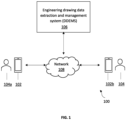
- FIG. 1 illustrates an exemplary representation of an environment 100 related to at least some example embodiments of the present disclosure.
- the environment 100 is presented in one arrangement, other embodiments may include the parts of the environment 100 (or other parts) arranged otherwise depending on, for example, extracting data from engineering drawing, saving extracted data, etc.
- the environment 100 generally includes a plurality of user devices, such as a data creator device 102a and a data searcher device 102b, and an engineering drawing data extraction and management system (hereinafter referred as 'DDEMS') 106, each coupled to, and in communication with (and/or with access to) a network 108.
- 'DDEMS' engineering drawing data extraction and management system
- the network 108 may include, without limitation, a light fidelity (Li-Fi) network, a local area network (LAN), a wide area network (WAN), a metropolitan area network (MAN), a satellite network, the Internet, a fiber optic network, a coaxial cable network, an infrared (IR) network, a radio frequency (RF) network, a virtual network, and/or another suitable public and/or private network capable of supporting communication among two or more of the parts or users illustrated in FIG. 1 , or any combination thereof.
- Li-Fi light fidelity
- LAN local area network
- WAN wide area network
- MAN metropolitan area network
- satellite network the Internet
- a fiber optic network a coaxial cable network
- IR infrared
- RF radio frequency
- Various entities in the environment 100 may connect to the network 108 in accordance with various wired and wireless communication protocols, such as Transmission Control Protocol and Internet Protocol (TCP/IP), User Datagram Protocol (UDP), 2nd Generation (2G), 3rd Generation (3G), 4th Generation (4G), 5th Generation (5G) communication protocols, Long Term Evolution (LTE) communication protocols, or any combination thereof.
- TCP/IP Transmission Control Protocol and Internet Protocol
- UDP User Datagram Protocol
- 2G 2nd Generation
- 3G 3rd Generation
- 4G 4th Generation
- 5G 5th Generation
- LTE Long Term Evolution
- the data creator device 102a is shown to be associated with a data creator 104a (e.g., a user or an entity such as an organization) who wants to digitize engineering drawings using the DDEMS 106.
- the data searcher device 102b is shown to be associated with a data searcher 104b who wants to perform an engineering drawing search to check availability of objects that are similar to a searched object using the DDEMS 106.
- the data creator device 102a and the data searcher device 102b can be a same user device.
- Example of the data creator device 102a and the data searcher device 102b include, but are not limited to, a personal computer (PC), a mobile phone, a tablet device, a Personal Digital Assistant (PDA), a voice activated assistant, a smartphone and a laptop.
- PC personal computer
- PDA Personal Digital Assistant
- smartphone a laptop
- laptop a laptop
- the engineering drawing data extraction and management system (DDEMS) 106 includes one or more hardware processors and a memory.
- the DDEMS 106 is configured to perform one or more of the operations described herein.
- the DDEMS 106 is configured to receive an engineering drawing document via the network 108 from the data creator device 102a of the data creator 104a who wants to digitize an engineering drawing image created corresponding to an object by storing the information associated with the engineering drawing image.
- the DDEMS 106 for digitizing engineering drawing image, scans, and extracts information from the received engineering drawing document.
- the DDEMS 106 facilitates detection of text and one or more engineering drawing views associated with the engineering drawing image provided in the engineering drawing document.
- the DDEMS 106 performs categorization of the information extracted from the engineering drawing document for storing the information.
- the information extracted for the engineering drawing image is referred as the engineering drawing data.
- the DDEMS 106 stores the engineering drawing data corresponding to the received engineering drawing document in a database.
- the DDEMS 106 utilizes a data extraction algorithm (e.g., data extraction technique(s) as known in the art) for extracting text data present in the engineering drawing image.
- the DDEMS 106 also utilizes a color masking and an image area property technique for identifying isometric views present in the engineering drawing image.
- DDEMS 106 utilizes a pre-trained machine learning based model which may detect different kind of views other than the isometric views that are present in the engineering drawing image.
- a view label extraction technique is utilized by the DDEMS 106 for assigning view labels to the identified views.
- the DDEMS 106 is configured to receive search request via the network 108 from the data searcher device 102b associated with data searcher 104b who wants to perform either a text-based and/or a cognitive engineering drawing search to access objects whose engineering drawing images are similar to an object being searched.
- the search request may be received from the data searcher device 102b and/or data creator device 102a locally without the use of any network/internet - such scenarios can be realized when the DDEMS 106 is implemented within the data searcher device 102b and/or the data creator device 102a. In such scenarios, the data searcher device 102b and data creator device 102a can be the same device.
- the data searcher 104b can now access and view information associated with the similar objects on the data searcher device 102b.
- FIG. 1 The number and arrangement of systems, devices, and/or networks shown in FIG. 1 are provided as an example. There may be additional systems, devices, and/or networks; fewer systems, devices, and/or networks; different systems, devices, and/or networks; and/or differently arranged systems, devices, and/or networks than those shown in FIG. 1 . Furthermore, two or more systems or devices shown in FIG. 1 may be implemented within a single system or device, or a single system or device shown in FIG. 1 may be implemented as multiple, distributed systems or devices.
- a set of systems (e.g., one or more systems) or a set of devices (e.g., one or more devices) of the environment 100 may perform one or more functions described as being performed by another set of systems or another set of devices of the environment 100 (e.g., refer scenarios described above).
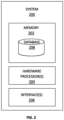
- FIG. 2 illustrates an exemplary block diagram of an engineering drawing data extraction and management system (DDEMS) 200 for extracting, digitizing, and using engineering drawing data, in accordance with an embodiment of the present disclosure.
- the engineering drawing data extraction and management system may also be referred as system and may be interchangeably used herein.
- the system 200 is similar to the DDEMS 106 explained with reference to FIG. 1 .
- the system 200 is embodied as a cloud-based and/or SaaS-based (software as a service) architecture.
- the system 200 may be implemented in a server system.
- the system 200 may be implemented in a variety of computing systems, such as laptop computers, notebooks, hand-held devices, workstations, mainframe computers, and the like.
- the system 200 includes one or more processors 204, communication interface device(s) or input/output (I/O) interface(s) 206, and one or more data storage devices or memory 202 operatively coupled to the one or more processors 204.
- the one or more processors 204 may be one or more software processing modules and/or hardware processors.
- the hardware processors can be implemented as one or more microprocessors, microcomputers, microcontrollers, digital signal processors, central processing units, state machines, logic circuitries, and/or any devices that manipulate signals based on operational instructions.
- the processor(s) is configured to fetch and execute computer-readable instructions stored in the memory 202.
- the I/O interface device(s) 206 can include a variety of software and hardware interfaces, for example, a web interface, a graphical user interface, and the like and can facilitate multiple communications within a wide variety of networks N/W and protocol types, including wired networks, for example, LAN, cable, etc., and wireless networks, such as WLAN, cellular, or satellite.
- the I/O interface device(s) can include one or more ports for connecting a number of devices to one another or to another server.
- the memory 202 may include any computer-readable medium known in the art including, for example, volatile memory, such as static random access memory (SRAM) and dynamic random access memory (DRAM), and/or non-volatile memory, such as read only memory (ROM), erasable programmable ROM, flash memories, hard disks, optical disks, and magnetic tapes.
- volatile memory such as static random access memory (SRAM) and dynamic random access memory (DRAM)
- non-volatile memory such as read only memory (ROM), erasable programmable ROM, flash memories, hard disks, optical disks, and magnetic tapes.
- ROM read only memory
- erasable programmable ROM erasable programmable ROM
- flash memories such as compact flash drives, digital versatile disks, and Blu-rays, etc.
- the memory 202 further comprises (or may further comprise) information pertaining to input(s)/output(s) of each step performed by the systems and methods of the present disclosure.
- input(s) fed at each step and output(s) generated at each step are comprised in the memory 202 and can be utilized in further processing and analysis.
- FIG. 3 illustrates a schematic block diagram representation 300 of an extraction process associated with the system 200 of FIG. 2 or the DDEMS 106 of FIG. 1 for extracting information from an engineering drawing image, in accordance with an embodiment of the present disclosure.
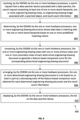
- FIG. 4 illustrates an exemplary flow diagram 400 of a method for extracting, digitizing, and using engineering drawing data using the system 200 of FIG. 2 or the DDEMS 106 of FIG. 1 , in accordance with an embodiment of the present disclosure.
- the system(s) 200 comprises one or more data storage devices or the memory 202 operatively coupled to the one or more hardware processors 204 and is configured to store instructions for execution of steps of the method by the one or more hardware processors 204.
- the steps of the method of the present disclosure will now be explained with reference to the components of the system 200 as depicted in FIG. 2 , and the DDEMS 106 of FIG. 1 .
- the one or more hardware processors 204 of the engineering drawing data extraction and management system (DDEMS) 200 receive an engineering drawing document and a template information associated with the engineering drawing document from a data creator device (e.g., the data creator device 102a) associated with a data creator (e.g., the data creator 104a).
- the engineering drawing document includes one or more engineering drawing views associated with an engineering drawing image of an object and one or more tables.
- the expression "engineering drawing document” refers a document including a collection of engineering drawings associated with an object.
- the object can be any object that is capable of being manufactured using the engineering drawings (e.g., a two-dimensional and/or a three-dimensional object, and the like).
- the collection of engineering drawings associated with the object are collectively referred as the engineering drawing image of the object.
- each engineering drawing in the collection of engineering drawings may be providing a different view of the object, we refer them as engineering drawing views. So, one or more engineering drawing views are associated with the engineering drawing image of the object.
- the engineering drawing document also includes one or more tables that may contain some important information regarding the object to be manufactured and the engineering drawing document.
- Example of the information that may be included in the one or more tables include part name, revision category, material used (or to be used), dimensions, company details, names of persons involved in drawings, etc. Such information shall not be construed as limiting the scope of the present disclosure.
- one big table is the most important table among the one or more tables that are present.
- position of that important table is not fixed, and the table can be at any location, such as top, bottom, center etc., in the engineering drawing document.
- the data creator while providing the engineering drawing document, the data creator also provides the relative position of the table such as 'table at top', 'table at bottom' etc., in the engineering drawing document and that is referred as the template information.
- the DDEMS 200 may automatically identify such position of the important table and annotate with suitable label accordingly.
- Such annotation may either be by the DDEMS 200 on its own or via one or more inputs from the user (e.g., data searcher/data creator), in one example embodiment.
- the one or more hardware processors 204 of the engineering drawing data extraction and management system (DDEMS) 200 identify table location of a table of the one or more tables in the engineering drawing document based on the template information.
- the table includes one or more cells.
- the big table is the important table and the location of same table among the one or more tables is to be identified at this step using the template information provided by the data creator.
- tables generally include horizontal and vertical lines and is of rectangular/square shape
- the location of the table is identified by passing the engineering drawing image through horizontal and vertical line filters and external vertex identifier that performs a check for rectangular shape at the relative position of the table provided in the template information. If the rectangular/square shape is identified in the relative position, the hardware processors 104 consider that location as the table location.
- the table includes a plurality of rows and columns.
- a unit in the table where a row and a column intersect is refereed as a cell.
- the table generally includes one or more cells. Each cell of the table stores some text data. However, in some scenarios, not all cells contain information/text/values, etc.
- the step of identifying the table location of the table of the one or more tables in the engineering drawing document based on the template information is preceded by: pre-processing the received engineering drawing document to obtain a pre-processed engineering drawing document.
- pre-processing the received engineering drawing document to obtain a pre-processed engineering drawing document.
- the one or more hardware processors 204 of the DDEMS 200 passes the engineering drawing image included in the engineering drawing document through one or more pre-processing steps that eliminates noise from the engineering drawing image, which further improves the readability of the engineering drawing image.
- the pre-processed engineering drawing document includes pre-processed engineering drawing views associated with the engineering drawing image.
- the pre-processing of the engineering drawing document may be performed by the DDEMS 200 using any pre-processing technique known in the art wherein the pre-processing technique may comprise but not limited to, removal of noise, filtering unwanted regions, enhance the image quality and resolution, and the like.
- the one or more hardware processors 204 of the DDEMS 200 extract the text data present in each cell of the one or more cells of the table in the table location as table data using a data extraction algorithm.
- the data extraction algorithm is better understood by way of following description:
- the hardware processors 204 of the DDEMS 200 may use the data extraction algorithm to extract text data present in each cell of the table present in the table location.
- the data extraction algorithm first involves identification and extraction of a table region from the pre-processed engineering drawing document using the table location. So, once the table location is known to the DDEMS 200, the hardware processors 204 identify the table region associated with the table based on one or more pre-defined criteria.
- the one or more pre-defined criteria include identification of image contours of the rectangular shape for identification of maximum area surrounding the rectangular shape. The identified maximum area is refereed as the table region associated with the table.
- the hardware processors 204 further extract the table region associated with the table in the pre-processed engineering drawing document.
- the hardware processors 204 may try to extract cell data included in one or more cells of the table(s) present in the table region. However, extraction of the cell data present in cell(s) of the table may not be possible at this stage due to the very small size of the cell data. So, to improve the data content readability of each cell in the table, the hardware processors 204 of the DDEMS 200 as part of the data extraction algorithm perform rescaling on the table region using a predefined scale factor to obtain a rescaled table. In an embodiment, the scale factor value of 2.75 may be used to perform the rescaling on the table region. The hardware processors 204 further apply a thresholding on the rescaled table using a thresholding technique to obtain a clear table.
- threshold of '225-255' as white while rest as '0' or black may be applied over pixels of clear table to ensure that the rescaled table is readable. Thereafter, the hardware processors 204 perform erosion of the clear table to obtain an eroded table.
- the hardware processors 204 may now perform extraction of the text data present in each cell of the eroded table using a data mapping mechanism.
- the data mapping mechanism is better understood by way of following description:
- mapping of text data present in each cell of the eroded table is still a challenge due to the non-structured format of the table.
- tables do not follow a fixed template. So, the text data for an identified cell can be present in the same cell or neighboring cell or can be absent in the table.
- the placement of the text data can also be different i.e., the text data can be placed horizontally, vertically or tilted and font characteristics can also vary from one cell to another cell. Due to these limitations, data extraction in prior arts is limited to title extraction or a specific data extraction, like version or data extraction for only a particular type of identified table.
- the objective of the data mapping mechanism used at step 406 of the present disclosure is to extract maximum text data this is present in the table i.e., the eroded table by taking into consideration the various placements and sizes of the text data.
- the hardware processors 204 of the DDEMS 200 identify each cell that is present in the table.
- the hardware processors 204 pass the engineering drawing image through vertical and horizontal line filters in which the coefficients are fine-tuned for identification of cells.
- the coefficients that are fine-tuned include parameters of kernel size of erosion and dilation to control extend of darkening of detected vertical and horizontal lines of each cell.
- the hardware processors 204 upon receiving the relative position and probable secondary view information of each engineering drawing view, identify each engineering drawing view as either front view, top view, left side view, right side view, bottom view based on the relative position and the probable secondary view information of the corresponding engineering drawing view.
- the hardware processors 204 may classify an engineering drawing view as an 'assembly view' if the relative position of the corresponding engineering drawing view is found to be at a center in the engineering drawing image. Further, the hardware processors 204 categorize an engineering drawing view as an 'invalid view' if the relative position information is not available for the engineering drawing view or a discrepancy exist between the relative position and the probable secondary view information. For example, the relative position is identified as 'top left position' and 'top view' is identified as the probable secondary view information. In that case, the engineering drawing view may be marked as the 'invalid view'.
- the engineering drawings images are provided to the dataset building block 510 that is configured to create the dataset.
- scaling is performed on each received engineering drawing image by maintaining an aspect ratio of the same engineering drawing image.
- 'N' scaled up and scaled down images are created for each engineering drawing image for addressing the possible scale variations in the input engineering drawing image.
- GAN generative adversarial network
- the view identification module performs a comparison between the CNN prediction accuracy and the prediction score obtained for the corresponding engineering drawing view (refer, 610).
- the view identification module may consider the view identified using the relative position as a final view in case the prediction score is found to be greater than 60% (e.g., threshold percentage) otherwise the machine learning based model identified view is considered as the final view.
- threshold percentage shall not be construed as limiting the scope of the present disclosure.
- FIG. 6B illustrates an exemplary flow diagram 650 of a method for training a machine leaning based model for view identification using the image-based classifier, in accordance with an embodiment of the present disclosure. The method is performed by the training system of FIG. 6A .
- the one or more hardware processors of the training system convert each resized engineering drawing view image into a one-dimensional (1D) image. It should be noted that 1D conversion can be performed using any technique known in the art.
- the one or more hardware processors of the training system train the machine learning based model with encoded images in which manually labelled potential drawing view is to be identified as a view label for the corresponding engineering drawing view.
- the hardware processors of the training system may perform testing of the machine learning based model using the 20% of the datasets available for testing the machine learning based model.
- FIG. 7A illustrates a schematic block diagram representation 700 of a table data extraction process associated with the system 200 of FIG. 2 or the DDEMS 106 of FIG. 1 for extracting table data from a table present in an engineering drawing document, in accordance with an embodiment of the present disclosure.
- FIG. 7B illustrates a schematic block diagram representation 750 of a data extraction algorithm used by the system 200 of FIG. 2 or the DDEMS 106 of FIG. 1 for extracting and mapping text data present in each cell of the table present in the engineering drawing document, in accordance with an embodiment of the present disclosure.
- the hardware processors 204 may the provide the preprocessed engineering drawing views to an OCR engine/OCR technique to extract the data present in the processed engineering drawing views (refer, 804).
- the data extracted at this stage may include the view labels that are provided in a horizontal direction in the pre-processed engineering drawing views.
- the hardware processors 204 may rotate the preprocessed engineering drawing views that include the vertical view labels by 90 degrees (refer, 806). After the rotation, the hardware processors 204 may provide the pre-processed engineering drawing views to the OCR engine for extracting the data i.e., view labels present in the pre-processed engineering drawing views (refer, 808).
- the hardware processors 204 check whether there is any overlap in the view labels (refer, 810).
- the hardware processors 204 may remove the redundant view labels at this step.
- FIG. 9 illustrates an exemplary flow diagram 900 of a method for performing a cognitive engineering drawing search using the system 200 of FIG. 1 and the DDEMS 106 of FIG. 2 , in accordance with an embodiment of the present disclosure.
- the steps of the method of the present disclosure will now be explained with reference to the components of the system 200 as depicted in FIG. 1 , and the DDEMS 106 of FIG. 2 .
- the one or more hardware processors 204 of the DDEMS 200 receive a search request from a data searcher device (e.g., the data searcher device 102b shown in FIG. 1 ) associated with a data searcher (e.g., the data searcher 104b).
- the search request comprising at least one of one or more search keywords, one or more engineering drawing views, an engineering drawing image associated with a searched object, and result count information.
- the search keywords may include any words that can represent the searched object in some way.
- the result count information includes a count of the number of search results user wants to see for the searched object.
- the one or more hardware processors 204 of the DDEMS 200 determine one or more engineering drawing documents whose table data is matching with the one or more search keywords based on one or more pre-defined matching criteria.
- the predefined matching criteria include performing a character-by-character similarity check between the stored table data and the search keywords. Also, a similarity percentage score is computed for each similarity check performed between the table data and the search keywords. Thereafter, the similarity percentage score is compared with a predefined threshold percentage. If the similarity percentage score is found to be greater than the predefined threshold percentage, the engineering drawing document associated with the same table data will be considered as matching otherwise non-matching.
- the hardware processors 204 may consider the engineering drawing document as non-matching due to the unfulfillment of the predefined matching criteria. So, the engineering drawing documents whose table data is found to be matching are considered as shortlisted engineering drawing documents at this step. In case of only the keyword-based search, the step 906 and 908 will not be performed and the matching documents will be displayed on the data searcher device based on the result count information.
- the one or more hardware processors 204 of the DDEMS 200 in case of cognitive engineering drawing search, compare the one or more engineering drawing views with one or more primary views and one or more secondary views of each determined engineering drawing document to generate a feature-based comparison score for the corresponding determined engineering drawing document.
- the above step 906 can be better understood by way of following description.
- the one or more engineering drawing views or the engineering drawing image included in the search request can be skewed. So, a skew correction technique is applied over the engineering drawing views or the engineering drawing views included in the engineering drawing image to obtain the skew corrected engineering drawing views.
- the skew corrected engineering drawing views are compared with the one or more primary views and one or more secondary views of each shortlisted engineering drawing documents based on feature variants like vertices and corners to obtain the feature-based comparison score for the respective engineering drawing document.
- the feature variants are computed by passing the skew corrected engineering drawing views through Gaussian filters and blurring filters, and by applying k-means clustering.
- the feature-based comparison score represents the degree of a match between the views of the engineering drawing document and the views included in the search query. So, a higher value of the feature-based comparison score represents the higher degree of comparison.
- the one or more hardware processors 204 of the DDEMS 200 arrange the one or more determined engineering drawing documents (i.e., the shortlisted engineering drawing document) in a list based on, at least in part of, a decreasing order of the feature-based comparison score obtained for each determined engineering drawing document and the result count information.
- the list is created.
- the engineering drawing documents with higher feature-based comparison score are included in the list.
- the number of engineering drawing documents that are included in the list depends on the result count information. For example, if result count information includes '10' and there are '20' matching engineering drawing documents that are available. Then only top 10 engineering drawing documents will be added in the list.
- the one or more hardware processors 204 of the DDEMS 200 displays the created list on the data searcher device.
- the data searcher can now view the available products and the engineering drawing data associated with the available products that are matching with the searched products.
- the DDEMS 200 also provides translation of the engineering drawing data in a desired language using a data translation engine.
- the data translation engine can be any translation engine known in the art. So, in case the data searcher wants to convert the engineering drawing data associated with a particular product in a language other the used language, the data searcher can perform the translation using the data searcher device.
- Such computer-readable storage means contain program-code means for implementation of one or more steps of the method, when the program runs on a server or mobile device or any suitable programmable device.
- the hardware device can be any kind of device which can be programmed including e.g., any kind of computer like a server or a personal computer, or the like, or any combination thereof.
- the device may also include means which could be e.g., hardware means like e.g., an application-specific integrated circuit (ASIC), a field-programmable gate array (FPGA), or a combination of hardware and software means, e.g., an ASIC and an FPGA, or at least one microprocessor and at least one memory with software processing components located therein.
- the means can include both hardware means and software means.
- the method embodiments described herein could be implemented in hardware and software.
- the device may also include software means. Alternatively, the embodiments may be implemented on different hardware devices, e.g., using a plurality of CPUs.
- the embodiments herein can comprise hardware and software elements.
- the embodiments that are implemented in software include but are not limited to, firmware, resident software, microcode, etc.
- the functions performed by various components described herein may be implemented in other components or combinations of other components.
- a computer-usable or computer readable medium can be any apparatus that can comprise, store, communicate, propagate, or transport the program for use by or in connection with the instruction execution system, apparatus, or device.
- a computer-readable storage medium refers to any type of physical memory on which information or data readable by a processor may be stored.
- a computer-readable storage medium may store instructions for execution by one or more processors, including instructions for causing the processor(s) to perform steps or stages consistent with the embodiments described herein.
- the term "computer-readable medium” should be understood to include tangible items and exclude carrier waves and transient signals, i.e., be non-transitory. Examples include random access memory (RAM), read-only memory (ROM), volatile memory, nonvolatile memory, hard drives, CD ROMs, DVDs, flash drives, disks, and any other known physical storage media.
Landscapes
- Engineering & Computer Science (AREA)
- Theoretical Computer Science (AREA)
- Computer Vision & Pattern Recognition (AREA)
- Physics & Mathematics (AREA)
- General Physics & Mathematics (AREA)
- Multimedia (AREA)
- Artificial Intelligence (AREA)
- Databases & Information Systems (AREA)
- Evolutionary Computation (AREA)
- General Engineering & Computer Science (AREA)
- Data Mining & Analysis (AREA)
- Health & Medical Sciences (AREA)
- Computing Systems (AREA)
- General Health & Medical Sciences (AREA)
- Medical Informatics (AREA)
- Software Systems (AREA)
- Information Retrieval, Db Structures And Fs Structures Therefor (AREA)
- Processing Or Creating Images (AREA)
Claims (13)
- Prozessorimplementiertes Verfahren (400), umfassend:Empfangen (402), durch ein technisches Zeichnungsdatenextraktions- und - verwaltungssystem (DDEMS) über einen oder mehrere Hardwareprozessoren (204), eines technischen Zeichnungsdokuments und einer Vorlageninformation, die dem technischen Zeichnungsdokument zugeordnet ist, von einer Datenerzeugervorrichtung, die einem Datenerzeuger zugeordnet ist, wobei das technische Zeichnungsdokument eine oder mehrere technische Zeichnungsansichten, die einem technischen Zeichnungsbild eines Objekts zugeordnet sind, und eine oder mehrere Tabellen umfasst;Identifizieren (404), durch das DDEMS über den einen oder die mehreren Hardwareprozessoren (204), einer Tabellenposition einer Tabelle der einen oder mehreren Tabellen in dem technischen Zeichnungsdokument basierend auf der Vorlageninformation, wobei die Tabelle eine oder mehrere Zellen umfasst;Extrahieren (406), durch das DDEMS über den einen oder die mehreren Hardwareprozessoren (204), von Textdaten, die in jeder Zelle der einen oder mehreren Zellen der Tabelle an der Tabellenposition vorhanden sind, als Tabellendaten unter Verwendung eines Datenextraktionsalgorithmus;Maskieren eines der Tabelle zugeordneten Tabellenbereichs, der die maximale Fläche darstellt, die die rechteckige Form der Tabelle umgibt, in dem technischen Zeichnungsdokument;Identifizieren (408), durch das DDEMS über den einen oder die mehreren Hardwareprozessoren (204), einer oder mehrerer isometrischer Ansichten aus der einen oder den mehreren technischen Zeichnungsansichten, die in dem technischen Zeichnungsdokument vorhanden sind, als eine oder mehrere primäre Ansichten, wobei das Identifizieren der einen oder mehreren primären Ansichten ferner umfasst:Anwenden einer Farbmaskierungstechnik, bei der das technische Zeichnungsbild mit der maskierten Tabelle durch eine nichtbinäre Filtermaske geleitet wird, die ein oder mehrere farbige Segmente trennt, die in dem technischen Zeichnungsbild vorhanden sind; undAnwenden einer Bildbereichseigenschaftstechnik über die getrennten ein oder mehreren farbigen Segmente, um die eine oder mehreren isometrischen Ansichten, die in dem technischen Zeichnungsbild vorhanden sind, als eine oder mehrere primäre Ansichten zu segmentieren;Identifizieren (410), durch das DDEMS über den einen oder die mehreren Hardwareprozessoren (204), einer oder mehrerer sekundärer Ansichten aus der einen oder den mehreren technischen Zeichnungsansichten unter Verwendung eines vortrainierten auf maschinellem Lernen basierenden Modells, wobei die eine oder mehreren sekundären Ansichten eines oder mehrere umfassen von: Vorderansichten, Oberansichten, Unteransichten, Linksseitenansichten, Rechtsseitenansichten, Montageansichten und ungültigen Ansichten, die dem technischen Zeichnungsbild des Objekts zugeordnet sind, und wobei das vortrainierte auf maschinellem Lernen basierende Modell ein RetinaNet-Modell ist;Extrahieren (412), durch das DDEMS über den einen oder die mehreren Hardwareprozessoren (204), von Ansichtsetiketten und Ansichtskoordinateninformationen aus der einen oder den mehreren primären Ansichten und der einen oder den mehreren sekundären Ansichten unter Verwendung einer Ansichtsetikettenextraktionstechnik; undAnzeigen (414), durch das DDEMS über den einen oder die mehreren Hardwareprozessoren, der (204) Tabellendaten, der einen oder mehreren primären Ansichten, der einen oder mehreren sekundären Ansichten, der Ansichtsetiketten und der Ansichtskoordinateninformationen als technische Zeichnungsdaten für das technische Zeichnungsdokument auf der Datenerzeugervorrichtung.
- Prozessorimplementiertes Verfahren (400) nach Anspruch 1, ferner umfassend:Erleichtern, durch das DDEMS über den einen oder die mehreren Hardwareprozessoren (204), des Bearbeitens der technischen Zeichnungsdaten für das technische Zeichnungsdokument durch den Datenerzeuger, um aktualisierte technische Zeichnungsdaten für das technische Zeichnungsdokument zu erhalten; undSpeichern, durch das DDEMS über den einen oder die mehreren Hardwareprozessoren (204), der aktualisierten technischen Zeichnungsdaten für das technische Zeichnungsdokument in einer Datenbank.
- Prozessorimplementiertes Verfahren (400) nach Anspruch 1, wobei dem Schritt des Identifizierens, durch das DDEMS über den einen oder die mehreren Hardwareprozessoren (204), einer Tabellenposition vorausgeht:
Vorverarbeiten, durch das DDEMS über den einen oder die mehreren Hardwareprozessoren, des empfangenen technischen Zeichnungsdokuments, um ein vorverarbeitetes technisches Zeichnungsdokument zu erhalten, wobei das vorverarbeitete technische Zeichnungsdokument vorverarbeitete technische Zeichnungsansichten umfasst, die dem technischen Zeichnungsbild des Objekts zugeordnet sind. - Prozessorimplementiertes Verfahren (400) nach Anspruch 2, wobei das Identifizieren, durch das DDEMS über den einen oder die mehreren Hardwareprozessoren, der einen oder mehreren isometrischen Ansichten aus der einen oder den mehreren Zeichnungsansichten, die in dem technischen Zeichnungsdokument vorhanden sind, als primäre Ansichten ferner das Durchführen, durch das DDEMS über den einen oder die mehreren Hardwareprozessoren, des Maskierens der identifizierten einen oder mehreren isometrischen Ansichten in den vorverarbeiteten technischen Zeichnungsansichten umfasst, die in dem vorverarbeiteten technischen Zeichnungsdokument vorhanden sind, und wobei der Schritt des Extrahierens, durch das DDEMS über den einen oder die mehreren Hardwareprozessoren, von Textdaten, die in jeder Zelle der einen oder mehreren Zellen der Tabelle an der Tabellenposition vorhanden sind, als Tabellendaten unter Verwendung des Datenextraktionsalgorithmus umfasst:Extrahieren, durch das DDEMS über den einen oder die mehreren Hardwareprozessoren, einer Tabellenregion, die der Tabelle in dem vorverarbeiteten technischen Zeichnungsdokument zugeordnet ist, unter Verwendung der Tabellenposition basierend auf einem vordefinierten Kriterium;Durchführen, durch das DDEMS über den einen oder die mehreren Hardwareprozessoren, einer Neuskalierung an der Tabellenregion unter Verwendung eines vordefinierten Skalierungsfaktors, um eine neu skalierte Tabelle zu erhalten;Anwenden, durch das DDEMS über den einen oder die mehreren Hardwareprozessoren, einer Schwellenwertbildung an der neu skalierten Tabelle unter Verwendung einer Schwellenwertbildungstechnik, um eine klare Tabelle zu erhalten;Durchführen, durch das DDEMS über den einen oder die mehreren Hardwareprozessoren, einer Erosion der klaren Tabelle, um eine erodierte Tabelle zu erhalten;Extrahieren, durch das DDEMS über den einen oder die mehreren Hardwareprozessoren, von Textdaten, die in jeder Zelle der erodierten Tabelle vorhanden sind, unter Verwendung eines Datenabbildungsmechanismus; undDurchführen, durch das DDEMS über den einen oder die mehreren Hardwareprozessoren, einer Maskierung der Tabellenregion, die der Tabelle in dem vorverarbeiteten technischen Zeichnungsdokument zugeordnet ist.
- Prozessorimplementiertes Verfahren (400) nach Anspruch 4, wobei der Datenabbildungsmechanismus umfasst:Identifizieren jeder Zelle, die in der Tabelle vorhanden ist;Lesen von Textdaten, die in jeder identifizierten Zelle vorhanden sind;Identifizieren eines erwarteten Datentyps für jede identifizierte Zelle basierend auf den Textdaten der jeweiligen Zelle;Durchführen eines Vergleichs des tatsächlichen Datentyps und des erwarteten Datentyps für jede identifizierte Zelle;Prüfen von Textdaten von benachbarten Zellen um die entsprechende identifizierte Zelle, um wahrscheinliche Daten für die identifizierte Zelle basierend auf dem Vergleich zu bestimmen, wobei die wahrscheinlichen Daten basierend auf dem erwarteten Datentyp bestimmt werden; undSpeichern von wahrscheinlichen Daten als die Textdaten für jede identifizierte Zelle, deren tatsächlicher Datentyp und erwarteter Datentyp sich basierend auf dem Vergleich unterscheiden.
- Prozessorimplementiertes Verfahren (400) nach Anspruch 1, ferner umfassend:Empfangen, durch das DDEMS über den einen oder die mehreren Hardwareprozessoren, einer Suchanforderung von einer Datensuchervorrichtung, die einem Datensucher zugeordnet ist, wobei die Suchanforderung mindestens eines von einem oder mehreren Suchschlüsselwörtern, einer oder mehreren technischen Zeichnungsansichten, einem technischen Zeichnungsbild, das einem gesuchten Objekt zugeordnet ist, und Ergebniszählinformationen umfasst.Bestimmen, durch das DDEMS über den einen oder die mehreren Hardwareprozessoren, eines oder mehrerer technischen Zeichnungsdokumente, deren Tabellendaten mit dem einen oder den mehreren Suchschlüsselwörtern übereinstimmen, basierend auf einem oder mehreren vordefinierten Übereinstimmungskriterien;Vergleichen, durch das DDEMS über den einen oder die mehreren Hardwareprozessoren, der einen oder mehreren technischen Zeichnungsansichten mit einer oder mehreren primären Ansichten und einer oder mehreren sekundären Ansichten jedes bestimmten technischen Zeichnungsdokuments, um eine merkmalsbasierte Vergleichsbewertung für das entsprechende bestimmte technischen Zeichnungsdokument zu erzeugen;Anordnen, durch das DDEMS über den einen oder die mehreren Hardwareprozessoren, des einen oder der mehreren bestimmten technischen Zeichnungsdokumente in einer Liste basierend zumindest teilweise auf einer abnehmenden Reihenfolge der merkmalsbasierten Vergleichsbewertung, die für jedes bestimmte technische Zeichnungsdokument erhalten wird, und den Ergebniszählinformationen; undAnzeigen, durch das DDEMS über den einen oder die mehreren Hardwareprozessoren, der Liste auf der Datensuchervorrichtung.
- Technisches Zeichnungsdatenextraktions- und -verwaltungssystem (DDEMS) (200), umfassend:einen Speicher (202), der Anweisungen speichert;eine oder mehrere Kommunikationsschnittstellen (206); undeinen oder mehrere Hardwareprozessoren (204), die mit dem Speicher (202) über die eine oder die mehreren Kommunikationsschnittstellen (206) gekoppelt sind, wobei der eine oder die mehreren Hardwareprozessoren (204) durch die Anweisungen konfiguriert sind zum:Empfangen eines technischen Zeichnungsdokuments und einer Vorlageninformation, die dem technischen Zeichnungsdokument zugeordnet ist, von einer Datenerzeugervorrichtung, die einem Datenerzeuger zugeordnet ist, wobei das technische Zeichnungsdokument eine oder mehrere technische Zeichnungsansichten, die einem technischen Zeichnungsbild eines Objekts zugeordnet sind, und eine oder mehrere Tabellen umfasst;Identifizieren einer Tabellenposition einer Tabelle der einen oder mehreren Tabellen in dem technischen Zeichnungsdokument basierend auf der Vorlageninformation, wobei die Tabelle eine oder mehrere Zellen umfasst;Extrahieren von Textdaten, die in jeder Zelle der einen oder mehreren Zellen der Tabelle an der Tabellenposition vorhanden sind, als Tabellendaten unter Verwendung eines Datenextraktionsalgorithmus;Maskieren eines der Tabelle zugeordneten Tabellenbereichs, der die maximale Fläche darstellt, die die rechteckige Form der Tabelle umgibt, in dem technischen Zeichnungsdokument;Identifizieren einer oder mehrerer isometrischer Ansichten aus der einen oder den mehreren technischen Zeichnungsansichten, die in dem technischen Zeichnungsdokument vorhanden sind, als eine oder mehrere primäre Ansichten, wobei das Identifizieren der einen oder mehreren primären Ansichten ferner umfasst:Anwenden einer Farbmaskierungstechnik, bei der das technische Zeichnungsbild mit der maskierten Tabelle durch eine nichtbinäre Filtermaske geleitet wird, die ein oder mehrere farbige Segmente trennt, die in dem technischen Zeichnungsbild vorhanden sind; undAnwenden einer Bildbereichseigenschaftstechnik über die getrennten ein oder mehreren farbigen Segmente, um die eine oder mehreren isometrischen Ansichten, die in dem technischen Zeichnungsbild vorhanden sind, als eine oder mehrere primäre Ansichten zu segmentieren;Identifizieren einer oder mehrerer sekundärer Ansichten aus der einen oder den mehreren technischen Zeichnungsansichten unter Verwendung eines vortrainierten auf maschinellem Lernen basierenden Modells, wobei die eine oder mehreren sekundären Ansichten eines oder mehrere umfassen von: Vorderansichten, Oberansichten, Unteransichten, Linksseitenansichten, Rechtsseitenansichten, Montageansichten und ungültigen Ansichten, die dem technischen Zeichnungsbild des Objekts zugeordnet sind, und wobei das vortrainierte auf maschinellem Lernen basierende Modell ein RetinaNet-Modell ist;Extrahieren von Ansichtsetiketten und Ansichtskoordinateninformationen aus der einen oder den mehreren primären Ansichten und der einen oder den mehreren sekundären Ansichten unter Verwendung einer Ansichtsetikettenextraktionstechnik; undAnzeigen der Tabellendaten, der einen oder mehreren primären Ansichten, der einen oder mehreren sekundären Ansichten, der Ansichtsetiketten und der Ansichtskoordinateninformationen als technische Zeichnungsdaten für das technische Zeichnungsdokument auf der Datenerzeugervorrichtung.
- System (200) nach Anspruch 7, wobei der eine oder die mehreren Hardwareprozessoren durch die Anweisungen konfiguriert sind zum:Erleichtern des Bearbeitens der technischen Zeichnungsdaten für das technische Zeichnungsdokument durch den Datenerzeuger, um aktualisierte technische Zeichnungsdaten für das technische Zeichnungsdokument zu erhalten; undSpeichern der aktualisierten technischen Zeichnungsdaten für das technische Zeichnungsdokument in einer Datenbank.
- System (200) nach Anspruch 7, wobei dem Schritt des Identifizierens der Tabellenposition das Vorverarbeiten des empfangenen technischen Zeichnungsdokuments vorausgeht, um ein vorverarbeitetes technisches Zeichnungsdokument zu erhalten, wobei das vorverarbeitete technische Zeichnungsdokument vorverarbeitete technische Zeichnungsansichten umfasst, die dem technischen Zeichnungsbild des Objekts zugeordnet sind, und wobei der Schritt des Identifizierens des einen oder der mehreren isometrischen Ansichtszeichnungsbilder aus dem einen oder den mehreren Zeichnungsbildern, die in dem technischen Zeichnungsdokument vorhanden sind, als primäre Ansichtszeichnungsbilder ferner das Durchführen des Maskierens der identifizierten einen oder mehreren isometrischen Ansichten in den vorverarbeiteten technischen Zeichnungsansichten umfasst, die in dem vorverarbeiteten technischen Zeichnungsdokument vorhanden sind.
- System (200) nach Anspruch 9, wobei der Schritt des Extrahierens von Textdaten, die in jeder Zelle der einen oder mehreren Zellen der Tabelle an der Tabellenposition vorhanden sind, als Tabellendaten unter Verwendung des Datenextraktionsalgorithmus umfasst:Extrahieren einer Tabellenregion, die der Tabelle in dem vorverarbeiteten technischen Zeichnungsdokument zugeordnet ist, unter Verwendung der Tabellenposition basierend auf einem vordefinierten Kriterium;Durchführen einer Neuskalierung an der Tabellenregion unter Verwendung eines vordefinierten Skalierungsfaktors, um eine neu skalierte Tabelle zu erhalten;Anwenden einer Schwellenwertbildung an der neu skalierten Tabelle unter Verwendung einer Schwellenwertbildungstechnik, um eine klare Tabelle zu erhalten;Durchführen einer Erosion der klaren Tabelle, um eine erodierte Tabelle zu erhalten;Extrahieren von Textdaten, die in jeder Zelle der erodierten Tabelle vorhanden sind, unter Verwendung eines Datenabbildungsmechanismus; undDurchführen einer Maskierung der Tabellenregion, die der Tabelle in dem vorverarbeiteten technischen Zeichnungsdokument zugeordnet ist.
- System (200) nach Anspruch 10, wobei der Datenabbildungsmechanismus umfasst:Identifizieren jeder Zelle, die in der Tabelle vorhanden ist;Lesen von Textdaten, die in jeder identifizierten Zelle vorhanden sind;Identifizieren eines erwarteten Datentyps für jede identifizierte Zelle basierend auf den Textdaten der jeweiligen Zelle;Durchführen eines Vergleichs des tatsächlichen Datentyps und des erwarteten Datentyps für jede identifizierte Zelle;Prüfen von Textdaten von benachbarten Zellen um die entsprechende identifizierte Zelle, um wahrscheinliche Daten für die identifizierte Zelle basierend auf dem Vergleich zu bestimmen, wobei die wahrscheinlichen Daten basierend auf dem erwarteten Datentyp bestimmt werden; undSpeichern von wahrscheinlichen Daten als die Textdaten für jede identifizierte Zelle, deren tatsächlicher Datentyp und erwarteter Datentyp sich basierend auf dem Vergleich unterscheiden.
- System (200) nach Anspruch 7, wobei der eine oder die mehreren Hardwareprozessoren durch die Anweisungen konfiguriert sind zum:Empfangen einer Suchanforderung von einer Datensuchervorrichtung, die einem Datensucher zugeordnet ist, wobei die Suchanforderung mindestens eines von einem oder mehreren Suchschlüsselwörtern, einer oder mehreren technischen Zeichnungsansichten, einem technischen Zeichnungsbild, das einem gesuchten Objekt zugeordnet ist, und Ergebniszählinformationen umfasst;Bestimmen eines oder mehrerer technischer Zeichnungsdokumente, deren Tabellendaten mit dem einen oder den mehreren Suchschlüsselwörtern übereinstimmen, basierend auf einem oder mehreren vordefinierten Übereinstimmungskriterien;Vergleichen der einen oder mehreren technischen Zeichnungsansichten mit einer oder mehreren primären Ansichten und einer oder mehreren sekundären Ansichten jedes bestimmten technischen Zeichnungsdokuments, um eine merkmalsbasierte Vergleichsbewertung für das entsprechende bestimmte technische Zeichnungsdokument zu erzeugen;Anordnen des einen oder der mehreren bestimmten technischen Zeichnungsdokumente in einer Liste basierend zumindest teilweise auf einer abnehmenden Reihenfolge der merkmalsbasierten Vergleichsbewertung, die für jedes bestimmte technische Zeichnungsdokument erhalten wird, und den Ergebniszählinformationen; undAnzeigen der Liste auf der Datensuchervorrichtung.
- Ein oder mehrere nichtflüchtige maschinenlesbare Informationsspeichermedien, die eine oder mehrere Anweisungen umfassen, die, wenn sie von einem oder mehreren Hardwareprozessoren ausgeführt werden, bewirken:Empfangen, durch ein technisches Zeichnungsdatenextraktions- und - verwaltungssystem (DDEMS), eines technischen Zeichnungsdokuments und einer Vorlageninformation, die dem technischen Zeichnungsdokument zugeordnet ist, von einer Datenerzeugervorrichtung, die einem Datenerzeuger zugeordnet ist, wobei das technische Zeichnungsdokument eine oder mehrere technische Zeichnungsansichten, die einem technischen Zeichnungsbild eines Objekts zugeordnet sind, und eine oder mehrere Tabellen umfasst;Identifizieren, durch das DDEMS über den einen oder die mehreren Hardwareprozessoren, einer Tabellenposition einer Tabelle der einen oder mehreren Tabellen in dem technischen Zeichnungsdokument basierend auf der Vorlageninformation, wobei die Tabelle eine oder mehrere Zellen umfasst;Extrahieren, durch das DDEMS über den einen oder die mehreren Hardwareprozessoren, von Textdaten, die in jeder Zelle der einen oder mehreren Zellen der Tabelle an der Tabellenposition vorhanden sind, als Tabellendaten unter Verwendung eines Datenextraktionsalgorithmus;Maskieren eines der Tabelle zugeordneten Tabellenbereichs, der die maximale Fläche darstellt, die die rechteckige Form der Tabelle umgibt, in dem technischen Zeichnungsdokument;Identifizieren, durch das DDEMS über den einen oder die mehreren Hardwareprozessoren, einer oder mehrerer isometrischer Ansichten aus der einen oder den mehreren technischen Zeichnungsansichten, die in dem technischen Zeichnungsdokument vorhanden sind, als eine oder mehrere primäre Ansichten, wobei das Identifizieren der einen oder mehreren primären Ansichten ferner umfasst:Anwenden einer Farbmaskierungstechnik, bei der das technische Zeichnungsbild mit der maskierten Tabelle durch eine nichtbinäre Filtermaske geleitet wird, die ein oder mehrere farbige Segmente trennt, die in dem technischen Zeichnungsbild vorhanden sind; undAnwenden einer Bildbereichseigenschaftstechnik über die getrennten ein oder mehreren farbigen Segmente, um die eine oder mehreren isometrischen Ansichten, die in dem technischen Zeichnungsbild vorhanden sind, als eine oder mehrere primäre Ansichten zu segmentieren;Identifizieren, durch das DDEMS über den einen oder die mehreren Hardwareprozessoren, einer oder mehrerer sekundärer Ansichten aus der einen oder den mehreren technischen Zeichnungsansichten unter Verwendung eines vortrainierten auf maschinellem Lernen basierenden Modells, wobei die eine oder mehreren sekundären Ansichten eines oder mehrere umfassen von: Vorderansichten, Oberansichten, Unteransichten, Linksseitenansichten, Rechtsseitenansichten, Montageansichten und ungültigen Ansichten, die dem technischen Zeichnungsbild des Objekts zugeordnet sind, und wobei das vortrainierte auf maschinellem Lernen basierende Modell ein RetinaNet-Modell ist;Extrahieren, durch das DDEMS über den einen oder die mehreren Hardwareprozessoren, von Ansichtsetiketten und Ansichtskoordinateninformationen aus der einen oder den mehreren primären Ansichten und der einen oder den mehreren sekundären Ansichten unter Verwendung einer Ansichtsetikettenextraktionstechnik; undAnzeigen, durch das DDEMS über den einen oder die mehreren Hardwareprozessoren, der Tabellendaten, der einen oder mehreren primären Ansichten, der einen oder mehreren sekundären Ansichten, wobei die Ansichtsetiketten und die Ansichtskoordinateninformationen als technische Zeichnungsdaten für das technische Zeichnungsdokument auf der Datenerzeugervorrichtung angezeigt werden.
Applications Claiming Priority (1)
| Application Number | Priority Date | Filing Date | Title |
|---|---|---|---|
| IN202121040056 | 2021-09-03 |
Publications (3)
| Publication Number | Publication Date |
|---|---|
| EP4145403A1 EP4145403A1 (de) | 2023-03-08 |
| EP4145403C0 EP4145403C0 (de) | 2025-03-12 |
| EP4145403B1 true EP4145403B1 (de) | 2025-03-12 |
Family
ID=82594842
Family Applications (1)
| Application Number | Title | Priority Date | Filing Date |
|---|---|---|---|
| EP22184582.9A Active EP4145403B1 (de) | 2021-09-03 | 2022-07-13 | Systeme und verfahren zum extrahieren, digitalisieren und verwenden von technischen zeichendaten |
Country Status (2)
| Country | Link |
|---|---|
| US (1) | US11899704B2 (de) |
| EP (1) | EP4145403B1 (de) |
Families Citing this family (4)
| Publication number | Priority date | Publication date | Assignee | Title |
|---|---|---|---|---|
| US12361679B1 (en) * | 2022-12-12 | 2025-07-15 | Amazon Technologies, Inc. | Image classification with modality dropout |
| CN118170715B (zh) * | 2023-05-05 | 2024-12-17 | 广东美创希科技有限公司 | 设计图纸归档方法及索引方法、装置、设备、介质、产品 |
| US20250245715A1 (en) * | 2024-01-31 | 2025-07-31 | Walmart Apollo, Llc | Systems and methods for modifying a graphical user interface based on semantic analysis |
| CN120783351A (zh) * | 2025-05-30 | 2025-10-14 | 凯通科技股份有限公司 | Cad图纸的处理方法、装置、设备和存储介质 |
Family Cites Families (9)
| Publication number | Priority date | Publication date | Assignee | Title |
|---|---|---|---|---|
| US5493679A (en) * | 1993-10-29 | 1996-02-20 | Hughes Aircraft Company | Automated logistical relational database support system for engineering drawings and artwork |
| US6621941B1 (en) * | 1998-12-18 | 2003-09-16 | Xerox Corporation | System of indexing a two dimensional pattern in a document drawing |
| DE60204066T2 (de) * | 2001-02-22 | 2006-02-02 | Oce Print Logic Technologies S.A. | Automatische Lokalisierung von Tabellen in Dokumenten |
| US6996295B2 (en) * | 2002-01-10 | 2006-02-07 | Siemens Corporate Research, Inc. | Automatic document reading system for technical drawings |
| US7392480B2 (en) | 2003-06-30 | 2008-06-24 | United Technologies Corporation | Engineering drawing data extraction software |
| US20180330018A1 (en) * | 2017-05-12 | 2018-11-15 | The Boeing Company | Methods and systems for part geometry extraction |
| CN112700529A (zh) * | 2019-10-07 | 2021-04-23 | 奥比塞德技术公司 | 根据规范文档生成三维模型的方法和系统 |
| US11935288B2 (en) * | 2019-12-01 | 2024-03-19 | Pointivo Inc. | Systems and methods for generating of 3D information on a user display from processing of sensor data for objects, components or features of interest in a scene and user navigation thereon |
| US11900705B2 (en) * | 2021-04-02 | 2024-02-13 | Accenture Global Solutions Limited | Intelligent engineering data digitization |
-
2022
- 2022-07-13 EP EP22184582.9A patent/EP4145403B1/de active Active
- 2022-07-15 US US17/812,895 patent/US11899704B2/en active Active
Non-Patent Citations (2)
| Title |
|---|
| DATABASE COMPENDEX [online] ENGINEERING INFORMATION, INC., NEW YORK, NY, US; 1998, TOMBRE K: "Analysis of engineering drawings: State of the art and challenges", Database accession no. E20160501879031 * |
| TOMBRE K: "Analysis of engineering drawings: State of the art and challenges", LECTURE NOTES IN COMPUTER SCIENCE (INCLUDING SUBSERIES LECTURE NOTES IN ARTIFICIAL INTELLIGENCE AND LECTURE NOTES IN BIOINFORMATICS) - GRAPHICS RECOGNITION: ALGORITHMS AND SYSTEMS - 2ND INTERNATIONAL WORKSHOP, GREC 1997, SELECTED PAPERS 1998 SPRINGER, vol. 1389, 22 August 1997 (1997-08-22), pages 257 - 264, DOI: 10.1007/3-540-64381-8_54 * |
Also Published As
| Publication number | Publication date |
|---|---|
| US11899704B2 (en) | 2024-02-13 |
| EP4145403C0 (de) | 2025-03-12 |
| EP4145403A1 (de) | 2023-03-08 |
| US20230109144A1 (en) | 2023-04-06 |
Similar Documents
| Publication | Publication Date | Title |
|---|---|---|
| EP4145403B1 (de) | Systeme und verfahren zum extrahieren, digitalisieren und verwenden von technischen zeichendaten | |
| AU2020200251B2 (en) | Label and field identification without optical character recognition (OCR) | |
| AU2018237196B2 (en) | Extracting data from electronic documents | |
| US11386897B2 (en) | Method and system for extraction of key-terms and synonyms for the key-terms | |
| EP2166488B1 (de) | Auffinden von handgeschriebenen Worten mithilfe von mit Tastatur eingegebenen synthetisierten Anfragen | |
| WO2019237549A1 (zh) | 验证码识别方法、装置、计算机设备及存储介质 | |
| US20240212380A1 (en) | Systems and methods for automatic context-based annotation | |
| JP2012500428A (ja) | 印刷媒体ページの記事へのセグメント化 | |
| US20240144711A1 (en) | Reliable determination of field values in documents with removal of static field elements | |
| Úbeda et al. | Pattern spotting in historical documents using convolutional models | |
| EP4026055B1 (de) | Verfahren und system zur schlüsselpunktextraktion aus bildern von dokumenten | |
| WO2025003209A1 (en) | Image analysis | |
| Rocha et al. | Skew angle detection and correction in text images using RGB gradient | |
| Konya et al. | Adaptive methods for robust document image understanding | |
| US12045953B2 (en) | Extracting region of interest from scanned images and determining an associated image type thereof | |
| Pack | Enhancing Document Layout Analysis on Historical Newspapers: Visual Representation, Pseudo-Ground-Truth, and Downscaling | |
| CN114202761B (zh) | 一种基于图片信息聚类的信息批量提取方法 | |
| CN119888768A (zh) | 一种图像识别的档案管理方法、系统以及电子设备 | |
| Bucciero et al. | R-CNN based Polygonal Wedge Detection Learned from Annotated 3D Renderings and Mapped Photographs of Open Data Cuneiform Tablets | |
| GB2635833A (en) | Image analysis | |
| Fiel et al. | Text Classification and Layout Analysis of Paper Fragments |
Legal Events
| Date | Code | Title | Description |
|---|---|---|---|
| PUAI | Public reference made under article 153(3) epc to a published international application that has entered the european phase |
Free format text: ORIGINAL CODE: 0009012 |
|
| STAA | Information on the status of an ep patent application or granted ep patent |
Free format text: STATUS: THE APPLICATION HAS BEEN PUBLISHED |
|
| AK | Designated contracting states |
Kind code of ref document: A1 Designated state(s): AL AT BE BG CH CY CZ DE DK EE ES FI FR GB GR HR HU IE IS IT LI LT LU LV MC MK MT NL NO PL PT RO RS SE SI SK SM TR |
|
| STAA | Information on the status of an ep patent application or granted ep patent |
Free format text: STATUS: REQUEST FOR EXAMINATION WAS MADE |
|
| 17P | Request for examination filed |
Effective date: 20230316 |
|
| RBV | Designated contracting states (corrected) |
Designated state(s): AL AT BE BG CH CY CZ DE DK EE ES FI FR GB GR HR HU IE IS IT LI LT LU LV MC MK MT NL NO PL PT RO RS SE SI SK SM TR |
|
| GRAP | Despatch of communication of intention to grant a patent |
Free format text: ORIGINAL CODE: EPIDOSNIGR1 |
|
| STAA | Information on the status of an ep patent application or granted ep patent |
Free format text: STATUS: GRANT OF PATENT IS INTENDED |
|
| INTG | Intention to grant announced |
Effective date: 20241205 |
|
| GRAS | Grant fee paid |
Free format text: ORIGINAL CODE: EPIDOSNIGR3 |
|
| GRAA | (expected) grant |
Free format text: ORIGINAL CODE: 0009210 |
|
| STAA | Information on the status of an ep patent application or granted ep patent |
Free format text: STATUS: THE PATENT HAS BEEN GRANTED |
|
| AK | Designated contracting states |
Kind code of ref document: B1 Designated state(s): AL AT BE BG CH CY CZ DE DK EE ES FI FR GB GR HR HU IE IS IT LI LT LU LV MC MK MT NL NO PL PT RO RS SE SI SK SM TR |
|
| REG | Reference to a national code |
Ref country code: GB Ref legal event code: FG4D |
|
| REG | Reference to a national code |
Ref country code: CH Ref legal event code: EP |
|
| REG | Reference to a national code |
Ref country code: DE Ref legal event code: R096 Ref document number: 602022011628 Country of ref document: DE |
|
| REG | Reference to a national code |
Ref country code: IE Ref legal event code: FG4D |
|
| U01 | Request for unitary effect filed |
Effective date: 20250312 |
|
| U07 | Unitary effect registered |
Designated state(s): AT BE BG DE DK EE FI FR IT LT LU LV MT NL PT RO SE SI Effective date: 20250318 |
|
| PG25 | Lapsed in a contracting state [announced via postgrant information from national office to epo] |
Ref country code: RS Free format text: LAPSE BECAUSE OF FAILURE TO SUBMIT A TRANSLATION OF THE DESCRIPTION OR TO PAY THE FEE WITHIN THE PRESCRIBED TIME-LIMIT Effective date: 20250612 |
|
| PG25 | Lapsed in a contracting state [announced via postgrant information from national office to epo] |
Ref country code: ES Free format text: LAPSE BECAUSE OF FAILURE TO SUBMIT A TRANSLATION OF THE DESCRIPTION OR TO PAY THE FEE WITHIN THE PRESCRIBED TIME-LIMIT Effective date: 20250312 |
|
| PG25 | Lapsed in a contracting state [announced via postgrant information from national office to epo] |
Ref country code: NO Free format text: LAPSE BECAUSE OF FAILURE TO SUBMIT A TRANSLATION OF THE DESCRIPTION OR TO PAY THE FEE WITHIN THE PRESCRIBED TIME-LIMIT Effective date: 20250612 |
|
| PG25 | Lapsed in a contracting state [announced via postgrant information from national office to epo] |
Ref country code: HR Free format text: LAPSE BECAUSE OF FAILURE TO SUBMIT A TRANSLATION OF THE DESCRIPTION OR TO PAY THE FEE WITHIN THE PRESCRIBED TIME-LIMIT Effective date: 20250312 |
|
| PG25 | Lapsed in a contracting state [announced via postgrant information from national office to epo] |
Ref country code: GR Free format text: LAPSE BECAUSE OF FAILURE TO SUBMIT A TRANSLATION OF THE DESCRIPTION OR TO PAY THE FEE WITHIN THE PRESCRIBED TIME-LIMIT Effective date: 20250613 |
|
| U20 | Renewal fee for the european patent with unitary effect paid |
Year of fee payment: 4 Effective date: 20250725 |
|
| PG25 | Lapsed in a contracting state [announced via postgrant information from national office to epo] |
Ref country code: SM Free format text: LAPSE BECAUSE OF FAILURE TO SUBMIT A TRANSLATION OF THE DESCRIPTION OR TO PAY THE FEE WITHIN THE PRESCRIBED TIME-LIMIT Effective date: 20250312 |
|
| PG25 | Lapsed in a contracting state [announced via postgrant information from national office to epo] |
Ref country code: PL Free format text: LAPSE BECAUSE OF FAILURE TO SUBMIT A TRANSLATION OF THE DESCRIPTION OR TO PAY THE FEE WITHIN THE PRESCRIBED TIME-LIMIT Effective date: 20250312 |
|
| PGFP | Annual fee paid to national office [announced via postgrant information from national office to epo] |
Ref country code: CH Payment date: 20250801 Year of fee payment: 4 |
|
| PG25 | Lapsed in a contracting state [announced via postgrant information from national office to epo] |
Ref country code: CZ Free format text: LAPSE BECAUSE OF FAILURE TO SUBMIT A TRANSLATION OF THE DESCRIPTION OR TO PAY THE FEE WITHIN THE PRESCRIBED TIME-LIMIT Effective date: 20250312 |
|
| PG25 | Lapsed in a contracting state [announced via postgrant information from national office to epo] |
Ref country code: SK Free format text: LAPSE BECAUSE OF FAILURE TO SUBMIT A TRANSLATION OF THE DESCRIPTION OR TO PAY THE FEE WITHIN THE PRESCRIBED TIME-LIMIT Effective date: 20250312 |
|
| PG25 | Lapsed in a contracting state [announced via postgrant information from national office to epo] |
Ref country code: IS Free format text: LAPSE BECAUSE OF FAILURE TO SUBMIT A TRANSLATION OF THE DESCRIPTION OR TO PAY THE FEE WITHIN THE PRESCRIBED TIME-LIMIT Effective date: 20250712 |
|
| PLBE | No opposition filed within time limit |
Free format text: ORIGINAL CODE: 0009261 |
|
| STAA | Information on the status of an ep patent application or granted ep patent |
Free format text: STATUS: NO OPPOSITION FILED WITHIN TIME LIMIT |
|
| REG | Reference to a national code |
Ref country code: CH Ref legal event code: L10 Free format text: ST27 STATUS EVENT CODE: U-0-0-L10-L00 (AS PROVIDED BY THE NATIONAL OFFICE) Effective date: 20260121 |
|
| 26N | No opposition filed |
Effective date: 20251215 |