EP4146160B1 - Composition cosmétique comprenant des cellodextrines - Google Patents
Composition cosmétique comprenant des cellodextrines Download PDFInfo
- Publication number
- EP4146160B1 EP4146160B1 EP21724283.3A EP21724283A EP4146160B1 EP 4146160 B1 EP4146160 B1 EP 4146160B1 EP 21724283 A EP21724283 A EP 21724283A EP 4146160 B1 EP4146160 B1 EP 4146160B1
- Authority
- EP
- European Patent Office
- Prior art keywords
- cosmetic composition
- composition according
- cellodextrin
- component
- oil
- Prior art date
- Legal status (The legal status is an assumption and is not a legal conclusion. Google has not performed a legal analysis and makes no representation as to the accuracy of the status listed.)
- Active
Links
Images



Classifications
-
- A—HUMAN NECESSITIES
- A61—MEDICAL OR VETERINARY SCIENCE; HYGIENE
- A61K—PREPARATIONS FOR MEDICAL, DENTAL OR TOILETRY PURPOSES
- A61K8/00—Cosmetics or similar toiletry preparations
- A61K8/18—Cosmetics or similar toiletry preparations characterised by the composition
- A61K8/72—Cosmetics or similar toiletry preparations characterised by the composition containing organic macromolecular compounds
- A61K8/73—Polysaccharides
- A61K8/731—Cellulose; Quaternized cellulose derivatives
-
- A—HUMAN NECESSITIES
- A61—MEDICAL OR VETERINARY SCIENCE; HYGIENE
- A61K—PREPARATIONS FOR MEDICAL, DENTAL OR TOILETRY PURPOSES
- A61K8/00—Cosmetics or similar toiletry preparations
- A61K8/02—Cosmetics or similar toiletry preparations characterised by special physical form
- A61K8/0204—Specific forms not provided for by any of groups A61K8/0208 - A61K8/14
-
- A—HUMAN NECESSITIES
- A61—MEDICAL OR VETERINARY SCIENCE; HYGIENE
- A61Q—SPECIFIC USE OF COSMETICS OR SIMILAR TOILETRY PREPARATIONS
- A61Q11/00—Preparations for care of the teeth, of the oral cavity or of dentures; Dentifrices, e.g. toothpastes; Mouth rinses
-
- A—HUMAN NECESSITIES
- A61—MEDICAL OR VETERINARY SCIENCE; HYGIENE
- A61Q—SPECIFIC USE OF COSMETICS OR SIMILAR TOILETRY PREPARATIONS
- A61Q19/00—Preparations for care of the skin
-
- A—HUMAN NECESSITIES
- A61—MEDICAL OR VETERINARY SCIENCE; HYGIENE
- A61Q—SPECIFIC USE OF COSMETICS OR SIMILAR TOILETRY PREPARATIONS
- A61Q19/00—Preparations for care of the skin
- A61Q19/10—Washing or bathing preparations
-
- A—HUMAN NECESSITIES
- A61—MEDICAL OR VETERINARY SCIENCE; HYGIENE
- A61K—PREPARATIONS FOR MEDICAL, DENTAL OR TOILETRY PURPOSES
- A61K2800/00—Properties of cosmetic compositions or active ingredients thereof or formulation aids used therein and process related aspects
- A61K2800/20—Chemical, physico-chemical or functional or structural properties of the composition as a whole
- A61K2800/28—Rubbing or scrubbing compositions; Peeling or abrasive compositions; Containing exfoliants
-
- A—HUMAN NECESSITIES
- A61—MEDICAL OR VETERINARY SCIENCE; HYGIENE
- A61K—PREPARATIONS FOR MEDICAL, DENTAL OR TOILETRY PURPOSES
- A61K2800/00—Properties of cosmetic compositions or active ingredients thereof or formulation aids used therein and process related aspects
- A61K2800/40—Chemical, physico-chemical or functional or structural properties of particular ingredients
- A61K2800/41—Particular ingredients further characterized by their size
- A61K2800/412—Microsized, i.e. having sizes between 0.1 and 100 microns
-
- A—HUMAN NECESSITIES
- A61—MEDICAL OR VETERINARY SCIENCE; HYGIENE
- A61K—PREPARATIONS FOR MEDICAL, DENTAL OR TOILETRY PURPOSES
- A61K2800/00—Properties of cosmetic compositions or active ingredients thereof or formulation aids used therein and process related aspects
- A61K2800/40—Chemical, physico-chemical or functional or structural properties of particular ingredients
- A61K2800/60—Particulates further characterized by their structure or composition
- A61K2800/65—Characterized by the composition of the particulate/core
- A61K2800/654—The particulate/core comprising macromolecular material
Definitions
- the invention relates to a cosmetic composition
- a cosmetic composition comprising a cellodextrin component comprising a cellosaccharide selected from the group consisting of cellobiose, cellotriose, cellotetraose, cellopentaose, cellohexaose, celloheptaose, cellooctaose, cellononaose, cellodecaose, celloundecaose, cellododecaose and combinations thereof; and a surfactant component comprising an anionic surfactant, cationic surfactant, amphoteric surfactant, nonionic surfactant, or any combination thereof; wherein at least a portion of said cellodextrin component is present within the cosmetic composition in undissolved form, wherein the cosmetic composition has a turbidity of at least 5 NTU, determined by nephelometric analysis.
- raw materials such as polyethylene, polyurethane, polyamide, polyacrylates, and others are used, typically for functions such as exfoliating, cleansing, viscosity modification, optical appearance modification (e.g. white creamy optical effect) and others.
- these raw materials are present in form of small particles, also referred to as microplastic.
- microplastic-containing cosmetic compositions have two major drawbacks: They are usually based on non-renewable resources and, especially when used in rinse-off cosmetics such as peelings, scrubs, tooth pastes or masks, are harmful for the environment.
- Environmental-friendly alternatives such as shells & kernels, fruits, seeds, minerals and others are known.
- EP 1 930 012 relates to a cellooligosaccharide-containing composition for prevention or improvement of lifestyle-related diseases in the fields of foods and internal medicines.
- Toothpastes generally include an abrasive material which is dispersed in a gel or paste base. Abrasives remove stains and plaque, as well as polish teeth. Common abrasives include calcium phosphates, alumina, calcium carbonate, and silica. Toothpaste must be abrasive enough to remove plaque and stains, but should not be so abrasive as to damage tooth enamel. Toothpastes are generally classified into two types: Opaque and transparent. Opaque toothpastes are usually white or colored. Such toothpastes usually contain calcium-based abrasives, in particular chalk. Gel toothpastes usually contain abrasive silica. Also known are multiphase toothpastes, which have an opaque phase and a transparent phase.
- Toothpastes in particular-chalk based types, also contain thickening silica.
- Silica helps build up the viscosity.
- the thickening silica-based agent especially at higher levels, may adversely affect the flavor delivery. This often compels formulators to dose an appropriate overage of the flavor. Since flavors are very expensive, even a slight reduction in flavor can be economically significant. Therefore, it is desirable to either reduce the level of thickening silica, or preferably, have no thickening silica.
- Toothpastes usually contain some polymers that are used for the delivery of flavor.
- One of the disadvantages of such polymers is that the unbalanced amount of such polymers can affect the spreadability of the paste. Furthermore, the paste becomes unstable after about a month of storage at elevated temperature. An arbitrary reduction in the level of such polymers cannot be a viable solution, as it may adversely affect delivery of flavor.
- the weight content of celloheptaose is at least 10 wt.-%, or at least 20 wt.-%, at least 30 wt.-%, or at least 40 wt.-%, at least 50 wt.-%, or at least 60 wt.-%, at least 70 wt.-%, or at least 80 wt.-%, at least 90 wt.-%, or at least 95 wt.-%, in each case relative to the total weight of the cellodextrin component.
- the weight content of celloheptaose is at most 90 wt. -%, or at most 80 wt. -%, at most 70 wt. -%, or at most 60 wt. -%, at most 50 wt. -%, or at most 40 wt.-%, at most 30 wt.-%, or at most 20 wt.-%, at most 10 wt.-%, or at most 5.0 wt.-%, in each case relative to the total weight of the cellodextrin component.
- the weight content of cellooctaose is at least at least 0.01 wt.-%, or at least 0.05 wt.-%, or at least 0.1 wt.-%, or at least 0.5 wt.-%, or at least 1.0 wt.-%, or at least 2.0 wt.-%, or at least 3.0 wt.-%, or at least 4.0 wt.-%, or at least 5.0 wt.-%, or at least 7.5 wt.-%, or at least 10 wt.-%, or at least 12.5 wt.-%, or at least 15 wt.-%, or at least 17.5 wt.-%, or at least 20 wt.-%, in each case relative to the total weight of the cosmetic composition.
- the weight content of cellooctaose is at most 45 wt.-%, or at most 42.5 wt.-%, or at most 40 wt.-%, or at most 37.5 wt.-%, or at most 35 wt.-%, or at most 32.5 wt.-%, or at most 30 wt.-%, or at most 27.5 wt.-%, or at most 25 wt.-%, or at most 22.5 wt.-%, in each case relative to the total weight of the cosmetic composition.
- the weight content of cellooctaose is at most 90 wt.-%, or at most 80 wt.-%, at most 70 wt.-%, or at most 60 wt.-%, at most 50 wt.-%, or at most 40 wt.-%, at most 30 wt.-%, or at most 20 wt.-%, at most 10 wt.-%, or at most 5.0 wt.-%, in each case relative to the total weight of the cellodextrin component.
- the weight content of cellononaose is at least at least 0.01 wt.-%, or at least 0.05 wt.-%, or at least 0.1 wt.-%, or at least 0.5 wt.-%, or at least 1.0 wt.-%, or at least 2.0 wt.-%, or at least 3.0 wt.-%, or at least 4.0 wt.-%, or at least 5.0 wt.-%, or at least 7.5 wt.-%, or at least 10 wt.-%, or at least 12.5 wt.-%, or at least 15 wt.-%, or at least 17.5 wt.-%, or at least 20 wt.-%, in each case relative to the total weight of the cosmetic composition.
- the weight content of cellononaose is at most 45 wt.-%, or at most 42.5 wt.-%, or at most 40 wt.-%, or at most 37.5 wt.-%, or at most 35 wt.-%, or at most 32.5 wt.-%, or at most 30 wt.-%, or at most 27.5 wt.-%, or at most 25 wt.-%, or at most 22.5 wt.-%, in each case relative to the total weight of the cosmetic composition.
- the weight content of cellononaose is at least 10 wt.-%, or at least 20 wt.-%, at least 30 wt.-%, or at least 40 wt.-%, at least 50 wt.-%, or at least 60 wt.-%, at least 70 wt.-%, or at least 80 wt.-%, at least 90 wt.-%, or at least 95 wt.-%, in each case relative to the total weight of the cellodextrin component.
- the weight content of cellononaose is at most 90 wt.-%, or at most 80 wt.-%, at most 70 wt.-%, or at most 60 wt.-%, at most 50 wt.-%, or at most 40 wt.-%, at most 30 wt.-%, or at most 20 wt.-%, at most 10 wt.-%, or at most 5.0 wt.-%, in each case relative to the total weight of the cellodextrin component.
- the weight content of cellodecaose is at least at least 0.01 wt.-%, or at least 0.05 wt.-%, or at least 0.1 wt.-%, or at least 0.5 wt.-%, or at least 1.0 wt.-%, or at least 2.0 wt.-%, or at least 3.0 wt.-%, or at least 4.0 wt.-%, or at least 5.0 wt.-%, or at least 7.5 wt.-%, or at least 10 wt.-%, or at least 12.5 wt.-%, or at least 15 wt.-%, or at least 17.5 wt.-%, or at least 20 wt.-%, in each case relative to the total weight of the cosmetic composition.
- the weight content of cellodecaose is at most 45 wt.-%, or at most 42.5 wt.-%, or at most 40 wt.-%, or at most 37.5 wt.-%, or at most 35 wt.-%, or at most 32.5 wt.-%, or at most 30 wt.-%, or at most 27.5 wt.-%, or at most 25 wt.-%, or at most 22.5 wt.-%, in each case relative to the total weight of the cosmetic composition.
- the weight content of cellodecaose is at least 10 wt.-%, or at least 20 wt.-%, at least 30 wt.-%, or at least 40 wt.-%, at least 50 wt.-%, or at least 60 wt.-%, at least 70 wt.-%, or at least 80 wt.-%, at least 90 wt.-%, or at least 95 wt.-%, in each case relative to the total weight of the cellodextrin component.
- the weight content of cellodecaose is at most 90 wt.-%, or at most 80 wt.-%, at most 70 wt.-%, or at most 60 wt.-%, at most 50 wt.-%, or at most 40 wt.-%, at most 30 wt.-%, or at most 20 wt.-%, at most 10 wt.-%, or at most 5.0 wt.-%, in each case relative to the total weight of the cellodextrin component.
- the weight content of celloundecaose is at least at least 0.01 wt.-%, or at least 0.05 wt.-%, or at least 0.1 wt.-%, or at least 0.5 wt.-%, or at least 1.0 wt.-%, or at least 2.0 wt.-%, or at least 3.0 wt.-%, or at least 4.0 wt.-%, or at least 5.0 wt.-%, or at least 7.5 wt.-%, or at least 10 wt.-%, or at least 12.5 wt.-%, or at least 15 wt.-%, or at least 17.5 wt.-%, or at least 20 wt.-%, in each case relative to the total weight of the cosmetic composition.
- the weight content of celloundecaose is at most 45 wt.-%, or at most 42.5 wt.-%, or at most 40 wt.-%, or at most 37.5 wt.-%, or at most 35 wt.-%, or at most 32.5 wt.-%, or at most 30 wt.-%, or at most 27.5 wt.-%, or at most 25 wt.-%, or at most 22.5 wt.-%, in each case relative to the total weight of the cosmetic composition.
- the weight content of celloundecaose is at least 10 wt.-%, or at least 20 wt.-%, at least 30 wt.-%, or at least 40 wt.-%, at least 50 wt.-%, or at least 60 wt.-%, at least 70 wt.-%, or at least 80 wt.-%, at least 90 wt.-%, or at least 95 wt.-%, in each case relative to the total weight of the cellodextrin component.
- the weight content of celloundecaose is at most 90 wt.-%, or at most 80 wt.-%, at most 70 wt.-%, or at most 60 wt.-%, at most 50 wt.-%, or at most 40 wt.-%, at most 30 wt.-%, or at most 20 wt.-%, at most 10 wt.-%, or at most 5.0 wt.-%, in each case relative to the total weight of the cellodextrin component.
- the weight content of cellododecaose is at least at least 0.01 wt.-%, or at least 0.05 wt.-%, or at least 0.1 wt.-%, or at least 0.5 wt.-%, or at least 1.0 wt.-%, or at least 2.0 wt.-%, or at least 3.0 wt.-%, or at least 4.0 wt.-%, or at least 5.0 wt.-%, or at least 7.5 wt.-%, or at least 10 wt.-%, or at least 12.5 wt.-%, or at least 15 wt.-%, or at least 17.5 wt.-%, or at least 20 wt.-%, in each case relative to the total weight of the cosmetic composition.
- the weight content of cellododecaose is at most 45 wt.-%, or at most 42.5 wt.-%, or at most 40 wt.-%, or at most 37.5 wt.-%, or at most 35 wt.-%, or at most 32.5 wt.-%, or at most 30 wt.-%, or at most 27.5 wt.-%, or at most 25 wt.-%, or at most 22.5 wt.-%, in each case relative to the total weight of the cosmetic composition.
- the weight content of cellododecaose is at most 90 wt.-%, or at most 80 wt.-%, at most 70 wt.-%, or at most 60 wt.-%, at most 50 wt.-%, or at most 40 wt.-%, at most 30 wt.-%, or at most 20 wt.-%, at most 10 wt.-%, or at most 5.0 wt.-%, in each case relative to the total weight of the cellodextrin component.
- the cosmetic composition according to the invention essentially comprises neither cellotriose, nor cellotetraose, nor cellopentaose, nor cellohexaose, nor celloheptaose, nor cellooctaose, nor cellononaose, nor cellodecaose, nor celloundecaose, nor cellododecaose.
- Suitable methods for determining undissolved constituents in liquid compositions are known to the skilled person.
- the presence of an undissolved portion of the cellodextrin component in the cosmetic composition according to the invention may be detectable through the naked eye or by means of turbidity measurements or absorbance-based optical density measurements using a nephelometer, spectrophotometer or Near-Infrared (NIR) spectrometer, e.g. using a Dencytee ® Sensor by the Hamilton Company (e.g. Dencytee ® Unit DN12 - 120 having a length of 120 mm).
- NIR Near-Infrared
- the portion of the cellodextrin component that is present in undissolved form amounts to at least 5.0 wt.-%, or at least 10 wt.-%, or at least 15 wt.-%, or at least 20 wt.-%, or at least 25 wt.-%, or at least 30 wt.-%, or at least 35 wt.-%, or at least 40 wt.-%, or at least 45 wt.-%, or at least 50 wt.-%, or at least 55 wt.-%, or at least 60 wt.-%, or at least 65 wt.-%, or at least 70 wt.-%, or at least 75 wt.-%, or at least 80 wt.-%, or at least 85 wt.-%, or at least 90 wt.-%, or at least 95 wt.%, in each case of the total amount of the cellodextr
- the portion of the cellodextrin component that is present in dissolved form amounts to at least 5.0 wt.-%, or at least 10 wt.-%, or at least 15 wt.-%, or at least 20 wt.-%, or at least 25 wt.-%, or at least 30 wt.-%, or at least 35 wt.-%, or at least 40 wt.-%, or at least 45 wt.-%, or at least 50 wt.-%, or at least 55 wt.-%, or at least 60 wt.-%, or at least 65 wt.-%, or at least 70 wt.-%, or at least 75 wt.-%, or at least 80 wt.-%, or at least 85 wt.-%, or at least 90 wt.-%, or at least 95 wt.-%, in each case of the total amount of the cellodextrin component
- the cosmetic composition comprises a multitude of solid particles, wherein at least a portion of the multitude of solid particles comprises at least a portion of the cellodextrin component (in the following said at least portion of solid particles is also referred to as "cellodextrin-containing particles").
- the solid particles which comprise at least a portion of the cellodextrin component i.e. the cellodextrin-containing particles
- the cellodextrin component i.e. the cellodextrin-containing particles
- substantially all particles of the multitude of solid particles comprise at least a portion of the cellodextrin component, i.e. preferably all particles contained in the cosmetic composition according to the invention are cellodextrin-containing particles.
- the particles within the multitude of solid particles i.e. the cellodextrin-containing particles, have a D50(v) value of at most 100 ⁇ m, or at most 50 ⁇ m, or at most 10 ⁇ m, or at most 5.0 ⁇ m, or at most 1.0 ⁇ m, or at most 0.5 ⁇ m, or at most 0.1 ⁇ m, or at most 0.05 ⁇ m, or at most 0.01 ⁇ m, or at most 0.005 ⁇ m, or at most 0.001 ⁇ m, determined by laser diffraction analysis according to ISO 13 320.
- the particles within the multitude of solid particles i.e. the cellodextrin-containing particles, have an
- the particles within the multitude of solid particles i.e. the cellodextrin-containing particles, exhibit a span of at least 0.5, or at least 1.0, or at least 1.5, or at least 2.0, or at least 2.5, or at least 3.0, or at least 3.5, or at least 4.0, or at least 4.5, or at least 5.0, or at least 5.5, or at least 6.0, or at least 6.5, or at least 7.0, or at least 7.5, or at least 8.0, or at least 8.5, or at least 9.0, or at least 9.5, or at least 10, determined by laser diffraction analysis according to ISO 13 320.
- the particles within the multitude of solid particles i.e. the cellodextrin-containing particles, exhibit a span of at most 10, or at most 9.5, or at most 9.0, or at most 8.5, or at most 8.0, or at most 7.5, or at most 7.0, or at most 6.5, or at most 6.0, or at most 5.5, or at most 5.0, or at most 4.5, or at most 4.0, or at most 3.5, or at most 3.0, or at most 2.5, or at most 2.0, or at most 1.5, or at most 1.0, determined by laser diffraction analysis according to ISO 13 320.
- the cellodextrin-containing particles have an average particle size, preferably expressed as D50(v) value, within the range (i) of from 0.1 ⁇ m to 4.0 ⁇ m; or (ii) of from 0.2 ⁇ m to 2.0 ⁇ m; or (iii) of from 0.3 ⁇ m to 1.0 ⁇ m; or (iv) of from 0.3 ⁇ m to 0.8 ⁇ m; determined by laser diffraction analysis according to ISO 13 320.
- the cellodextrin-containing particles have an average particle size, preferably expressed as D50(v) value, within the range (i) of from 0.1 ⁇ m to 4.0 ⁇ m; or (ii) of from 0.2 ⁇ m to 2.0 ⁇ m; or (iii) of from 0.3 ⁇ m to 1.0 ⁇ m; or (iv) of from 0.3 ⁇ m to 0.8 ⁇ m; determined by laser diffraction analysis according to ISO 13 320.
- the cosmetic composition according to the invention preferably also comprises a lipoid component comprising one or more natural or synthetic lipoids.
- the weight content of the lipoid component is at least 5 wt.-%, or at least 10 wt.-%, or at least 15 wt.-%, or at least 20 wt.-%, or at least 25 wt.-%, or at least 30 wt.-%, or at least 35 wt.-%, or at least 40 wt.-%, or at least 45 wt.-%, or at least 50 wt.-%, or at least 55 wt.-%, or at least 60 wt.-%, or at least 65 wt.-%, in each case relative to the total weight of the cosmetic composition.
- the weight content of the lipoid component is at most 95 wt.-%, or at most 90 wt.-%, or at most 85 wt.-%, or at most 80 wt.-%, or at most 75 wt.-%, or at most 70 wt.-%, in each case relative to the total weight of the cosmetic composition.
- the lipoid component comprises or essentially consists of a natural lipoid.
- Natural lipoids can be selected from lipids of plant origin or animal origin.
- Preferred natural lipoids of plant origin are selected from the group consisting of amaranth oil, apricot kernel oil, argan oil, avocado oil, acai oil, babassu oil, baobab oil, bayberry wax, black cumin oil, black currant seed oil, borage seed oil, brazil nut oil, broccoli seed oil, cacao butter, calendula oil, camelina oil, camellia seed oil, carrot seed oil, castor oil, cedarwood seed oil, chamomile oil, chia oil, coconut oil, corn oil, cottonseed oil, cupuacu butter, cranberry seed oil, eucalyptus oil, evening primrose oil, frankincense oil, geranium oil, grape seed oil, groundnut oil, hazelnut oil, hemp oil, illipe butter, Japan wax, jasmine oil, jojoba oil, kokum butter, kukui nut oil, laurel oil, lavender oil, lemongrass oil, linseed oil, macadamia
- Hydrocarbon oils of natural origin are for example terpene hydrocarbons such as squalene and squalane.
- Preferred natural lipoids of animal origin are marine oils selected from the group consisting of fish oil, whale oil, fish liver oil, and seal oil.
- the lipoid component comprises or essentially consists of a synthetic lipoid.
- Synthetic lipoids include but are not limited to
- the lipoid component comprises or essentially consists of a combination of at least two, or at least three, or at least four, or at least five, or at least six of said natural and/or synthetic lipoids.
- the cosmetic composition according to the invention may contain a wax.
- Suitable waxes are the waxes typically used in cosmetic compositions, and may be of natural and/or synthetic origin. Examples of natural waxes are beeswax or cera alba, carnauba wax, candelilla wax, Japan wax, rice wax, waxes deriving from hydrogenated oils such as jojoba oil or sunflower or coconut oils, esters of long chain saturated fatty acids with long chain monoalcohols or their glycerides, such as cetyl palmitate, cetyl stearate, palmitic and stearic triglycerides.
- mineral or synthetic waxes examples include lignite wax, microcrystalline wax, paraffin, ozokerite, ceresin, synthetic beeswax, lanolin and their esters with polyethylene glycols, polyethylene waxes, fatty acid esters having a melting point above 25 °C, cetyl esters, polyamides. Silicone waxes may also be used.
- the cosmetic composition according to the invention comprises essentially no water.
- the cosmetic composition according to the invention additionally comprises water.
- Suitable methods for determining the water content are known to the skilled person, e.g. Karl-Fischer titration.
- the water content is at least 20 wt.-%, or at least 25 wt.-%, or at least 30 wt.-%, or at least 35 wt.-%, or at least 40 wt.-%, or at least 45 wt.-%, or at least 50 wt.-%, or at least 55 wt.-%, or at least 60 wt.-%, or at least 65 wt.-%, or at least 70 wt.-%, or at least 75 wt.-%, or at least 80 wt.-%, or at least 85 wt.-%, in each case relative to the total weight of the cosmetic composition.
- the water content is at most 85 wt.-%, or at most 80 wt.-%, or at most 75 wt.-%, or at most 70 wt.-%, or at most 65 wt.-%, or at most 60 wt.-%, or at most 55 wt.-%, or at most 50 wt.-%, or at most 45 wt.-%, or at most 40 wt.-%, or at most 35 wt.-%, or at most 30 wt.-%, or at most 25 wt.-%, or most 20 wt.-%, or most 15 wt.-%, or at most 10 wt.-%, or at most 5.0 wt.-%, or at most 1.0 wt.-%, or at most 0.5 wt.-%, in each case relative to the total weight of the cosmetic composition.
- the cosmetic composition according to the invention may be a dispersion, an emulsion, a suspension, or any mixture thereof.
- colloidal dispersion is defined as a system in which particles of colloidal size of any nature (e.g. solid, liquid or gas) are dispersed in a continuous phase of a different composition (or state) (https://doi.org/10.1351/goldbook.C01174).
- emulsion is defined as fluid colloidal system in which liquid droplets and/or liquid crystals are dispersed in a liquid.
- An emulsion is denoted by the symbol O/W if the continuous phase is an aqueous solution and by W/O if the continuous phase is an organic liquid (an 'oil') (https://doi.org/10.1351/goldbook.E02065).
- the term "suspension” is defined as a liquid in which solid particles are dispersed (https://doi.org/10.1351/goldbook. 506198).
- the cosmetic composition according to the invention is a water-in-oil emulsion.
- the cosmetic composition according to the invention is an oil-in-water emulsion.
- the cosmetic composition according to the invention comprises a surfactant component comprising an anionic surfactant, cationic surfactant, amphoteric surfactant, nonionic surfactant, or any combination thereof.
- the weight content of the surfactant component is at least 0.1 wt.-%, or at least 1.0 wt.-%, or at least 2.0 wt.-%, or at least 4.0 wt.-%, or at least 6.0 wt.-%, or at least 8.0 wt.-%, or at least 10 wt.-%, or at least 15 wt.-%, or at least 20 wt.-%, or at least 25 wt.-%, or at least 30 wt.-%, or at least 35 wt.-%, or at least 40 wt.-%, or at least 45 wt.-%, or at least 50 wt.-%, or at least 55 wt.-%, or at least 60 wt.-%, or at least 65 wt.-%, or at least 70 wt.-%, or at least 75 wt.-%, or at least 80 wt.
- the weight content of the surfactant component is at most 1.0 wt.-%, or at most 2.0 wt.-%, 4.0 wt.-%, or at most 6.0 wt.-%, or at most 8.0 wt.-%, or at most 10 wt.-%, or at most 15 wt.-%, or at most 20 wt.-%, or at most 25 wt.-%, or at most 30 wt.-%, or at most 35 wt.-%, or at most 40 wt.-%, or at most 45 wt.-%, or at most 50 wt.-%, or at most 55 wt.-%, or at most 60 wt.-%, or at most 65 wt.-%, or at most 70 wt.-%, or at most 75 wt.-%, or at most 80 wt.-%, or at most 85 wt.-%, or
- the surfactant component comprises or essentially consists of a surfactant selected from the group consisting of
- the cosmetic composition according to the invention additionally comprises an antioxidant.
- the antioxidant is selected from tocopherols.
- Other antioxidants that can be used in the cosmetic composition according to the invention include but are not limited to citric acid, gallic acid, esters of gallic acid, nordihydroguaiaretic acid, thioctic acid (lipoic acid), dihydrolipoic acid, glycolic acid, butylated hydroxytoluene (BHT), butylated hydroxyanisole (BHA), vitamins (e.g. tocopherol, retinol, ⁇ -carotene, ascorbic acid) vitamin derivatives (e.g. retinyl acetate, retinyl palmitate, ascorbyl palmitate, magnesium ascorbyl phosphate, tocophoryl acetate), flavonoids, polyphenolic compounds, and the like.
- the cosmetic composition according to the invention additionally comprises one or more additives independently of one another selected from the group consisting of acids, fragrances, essential oils, dyes, pigments (e.g. a pigment component), solvents, fillers, thickening agents (e.g. a thickening component), sequestrants, chelating agents, UV absorbers, preservatives, emulsifiers, emollients, and humectants.
- additives independently of one another selected from the group consisting of acids, fragrances, essential oils, dyes, pigments (e.g. a pigment component), solvents, fillers, thickening agents (e.g. a thickening component), sequestrants, chelating agents, UV absorbers, preservatives, emulsifiers, emollients, and humectants.
- the thickening agent comprises or essentially consists of
- opaque means not transparent or translucent.
- the cosmetic composition according to the invention has an opacity of at least 25 %, or at least 30 %, or at least 35 %, or at least 40 %, or at least 45 %, or at least 50 %, or at least 55 %, or at least 60 %, or at least 65 %, or at least 70 %, or at least 75 %, or at least 80 %, or at least 85 %, or at least 90 %, or at least 95 %, or at least 100 %, determined by colorimeter measurements.
- the cosmetic composition according to the invention has an opacity of at most 95 %, or at most 90 %, or at most 85 %, or at most 80 %, or at most 75 %, or at most 70 %, or at most 65 %, or at most 60 %, or at most 55 %, or at most 50 %, or at most 45 %, or at most 40 %, or at most 35 %, or at most 30 %, or at most 25 %, determined by colorimeter measurements.
- the cosmetic composition according to the invention has a turbidity of at least 10 NTU, or at least 20 NTU, or at least 40 NTU, or at least 60 NTU, or at least 80 NTU, or at least 100 NTU, or at least 200 NTU, or at least 400 NTU, or at least 600 NTU, or at least 800 NTU, or at least 1000 NTU, determined by nephelometric analysis.
- the cosmetic composition according to the invention has a turbidity of at most 900 NTU, or at most 800 NTU, or at most 600 NTU or at most 400 NTU or at most 200 NTU or at most 100 NTU, or at most 80 NTU or at most 60 NTU or at most 40 NTU or at most 20 NTU or at most 10 NTU, determined by nephelometric analysis.
- the cellodextrin component that is present within the cosmetic composition in undissolved form causes the turbidity of the cosmetic composition according to the invention.
- the cosmetic composition according to the invention has an intensity of pearlescence, on a scale of 0 to 10, of at least 1, or at least 2, or at least 3, or at least 4, or at least 5, or at least 6, or at least 7, or at least 8, or at least 9, determined in a sensory test according to ISO 13 299.
- the cosmetic composition according to the invention has an intensity of pearlescence, on a scale of 0 to 10, of at most 9, or at most 8, or at most 7, or at most 6, or at most 5, or at most 4, or at most 3, or at most 2, or at most 1, determined in a sensory test according to ISO 13 299.
- the cellodextrin component that is present within the cosmetic composition in undissolved form causes the pearlescence of the cosmetic composition according to the invention.
- the cosmetic composition according to the invention has a dynamic viscosity of at least 10 mPa s, or at least 20 mPa s, or at least 40 mPa s, or at least 80 mPa s, or at least 100 mPa s, or at least 200 mPa ⁇ s, or at least 400 mPa ⁇ s, or at least 600 mPa ⁇ s, or at least 800 mPa ⁇ s, or at least 1000 mPa ⁇ s, determined according to ISO 3 219.
- the cosmetic composition according to the invention has a dynamic viscosity of at most 1000 mPa ⁇ s, or at most 800 mPa ⁇ s, or at most 600 mPa ⁇ s, or at most 400 mPa ⁇ s, or at most 200 mPa ⁇ s, or at most 100 mPa s, or at most 80 mPa ⁇ s, or at most 40 mPa s, or at most 20 mPa ⁇ s, or at most 10 mPa ⁇ s, determined according to ISO 3 219.
- the cosmetic composition according to the invention has a dynamic viscosity of at least 2000 mPa s, or at least 4000 mPa s, or at least 6000 mPa s, or at least 8000 mPa s, or at least 10000 mPa s, or at least 11000 mPa s, or at least 12000 mPa s, or at least 13 000 mPa s, or at least 14000 mPa s, or at least 15000 mPa s, determined according to ISO 3 219.
- the cosmetic composition according to the invention has a dynamic viscosity of at most 100000000 mPa ⁇ s, or at most 10000000 mPa ⁇ s, or at most 5 000 000 mPa ⁇ s, or at most 1 000000 mPa ⁇ s, or at most 500000 mPa ⁇ s, or at most 250000 mPa ⁇ s, or at most 100000 mPa ⁇ s, or at most 50000 mPa ⁇ s, or at most 25000 mPa ⁇ s, or at most 15000 mPa ⁇ s, or at most 14000 mPa ⁇ s, or at most 13000 mPa ⁇ s, or at most 12000 mPa ⁇ s, or at most 11000 mPa ⁇ s, or at most 10000 mPa ⁇ s, or at most 8000 mPa ⁇ s, or at most 4000 mPa ⁇ s, or at most 2000 mPa ⁇ determined according to ISO 3 219.
- the cosmetic composition according to the invention comprises a thickening component.
- the thickening component is generally used to control or modify the viscosity of the cosmetic composition. This embodiment is particularly relevant when the cosmetic composition according to the invention is e.g. a tooth paste.
- the weight content of the thickening component is at least 0.01 wt.-%, or at least 0.025 wt.-%, or at least 0.05 wt.-%, or at least 0.075 wt.-%, or at least 0.1 wt.-%, or at least 0.25 wt.-%, or at least 0.5 wt.-%, or at least 0.75 wt.-%, or at least 1.0 wt.-%, or at least 1.25 wt.-%, or at least 1.5 wt.-%, or at least 1.75 wt.-%, or at least 2.0 wt.-%, or at least 2.25 wt.-%, or at least 2.5 wt.-%, or at least 2.75 wt.-%, or at least 3.0 wt.-%, or at least 3.25 wt.-%, or at least 3.5 wt.-%, or at least 3.75
- the weight content of the thickening component is at most 2.5 wt.-%, or at most 3.0 wt.-%, or at most 3.5 wt.-%, or at most 4.0 wt.-%, or at most 4.5 wt.-%, or at most 5.0 wt.-%, or at most 6.5 wt.-%, or at most 7.0 wt.-%, or at most 7.5 wt.-%, or at most 8.0 wt.-%, or at most 9.0 wt.-%, or at most 10 wt.-%, or at most 12.5 wt.-%, or at most 15 wt.-%, or at most 17.5 wt.-%, or at most 20 wt.-%, or at most 22.5 wt.-%, or at most 25 wt.-%, in each case relative to the total weight of the cosmetic composition.
- the thickening component comprises or essentially consists of
- the cosmetic composition according to the invention comprises a pigment component.
- the pigment component is generally used to provide chromatic modifications to the cosmetic composition, e.g. to make-ups.
- This embodiment is particularly relevant when the cosmetic composition according to the invention is a make-up, especially a powdery make-up selected from loose powders and compact powders, face powders, foundations, blushers, and eyeshadows.
- the weight content of the pigment component is at least 0.01 wt.-%, or at least 0.025 wt.-%, or at least 0.05 wt.-%, or at least 0.075 wt.-%, or at least 0.1 wt.-%, or at least 0.25 wt.-%, or at least 0.5 wt.-%, or at least 0.75 wt.-%, or at least 1.0 wt.-%, or at least 1.25 wt.-%, or at least 1.5 wt.-%, or at least 1.75 wt.-%, or at least 2.0 wt.-%, or at least 2.25 wt.-%, or at least 2.5 wt.-%, or at least 2.75 wt.-%, or at least 3.0 wt.-%, or at least 3.25 wt.-%, or at least 3.5 wt.-%, or at least 3.75 wt
- the weight content of the pigment component is at most 2.5 wt.-%, or at most 3.0 wt.-%, or at most 3.5 wt.-%, or at most 4.0 wt.-%, or at most 4.5 wt.-%, or at most 5.0 wt.-%, or at most 6.5 wt.-%, or at most 7.0 wt.-%, or at most 7.5 wt.-%, or at most 8.0 wt.-%, or at most 9.0 wt.-%, or at most 10 wt.-%, or at most 12.5 wt.-%, or at most 15 wt.-%, or at most 17.5 wt.-%, or at most 20 wt.-%, or at most 22.5 wt.-%, or at most 25 wt.-%, in each case relative to the total weight of the cosmetic composition.
- the pigment component comprises or essentially consists of an organic pigment, a mineral pigment, a nacreous pigment, or any combination thereof.
- Preferred organic pigments are precipitated onto a substrate, e.g. aluminum hydroxide or calcium hydroxide, thus forming an insoluble salt.
- Preferred examples or nacreous pigments include but are not limited to guanine (2-amino-6-hydroxy-purine), bismuth oxychloride, titanium dioxide/mica or mica coated by several different layers (silica, iron oxide, titanium dioxide, etc.).
- Additional powder components that may be contained in the cosmetic composition according to the invention include, but are not limited to, inorganic powders such as talc, gums, chalk, Fuller's earth, sericite, muscovite, phlogopite, synthetic mica, lepidolite, biotite, lithia mica, vermiculite, aluminum silicate, alkyl and/or trialkyl aryl ammonium smectites, chemically modified magnesium aluminum silicate, organically modified montmorillonite clay, hydrated aluminum silicate, fumed aluminum starch, octenyl succinate, barium silicate, calcium silicate, magnesium silicate, strontium silicate, metal tungstate, magnesium, silica alumina, zeolite, barium sulfate, calcined calcium sulfate (calcined gypsum), calcium phosphate, fluorine apatite, hydroxyapatite, ceramic powder, colloidal silicone dioxide, and boron nit
- the cosmetic composition according to the invention may be available in the form of different product types.
- the cosmetic composition according to the invention is a skin or tooth cleansing composition to be rinsed off with water after topical application to the skin or teeth and cleaning.
- the cosmetic composition according to the invention is selected from the group consisting of exfoliating scrub soaps, body scrubs, peels (face peels, hand peels, foot peels), handwashing pastes, liquid soaps, shower gels, hair-removal compositions, face masks, and antiacne compositions.
- the cosmetic composition according to the invention is a skin care composition to remain on the skin after topical application.
- the cosmetic composition according to the invention is selected from hand care composition, body care composition, intimate care compositions, footcare compositions, sunscreen compositions, nailcare compositions, make-up, and repellents.
- Another aspect of the invention relates to the use of a cosmetic composition according to the invention as a skin cleansing composition to be rinsed off with water after topical application to the skin and cleaning.
- the skin cleansing composition is selected from liquid soap, foam soap, shower gel and hair shampoo.
- the cosmetic composition according to the invention is used as exfoliating scrub soap, body scrub, peel (face peel, lip peel, hand peel, foot peel), handwashing paste, tooth paste, hair-removal composition, face mask, or antiacne composition and lotions, powders or make-up.
- the cosmetic composition according to the invention may be provided in suitable containers that are conventionally used, such as bottles, boxes, packages, dispensers, and the like.
- the containers can dispense a predetermined amount of the cosmetic composition.
- the cosmetic composition is dispensed in a spray, dollop, or liquid.
- Another aspect of the invention relates to the use of a cosmetic composition according to the invention as a skin care composition to remain on the skin after topical application.
- the cosmetic composition according to the invention is used as hand care composition, body care composition, intimate care composition, footcare composition, tooth paste, sunscreen composition, nailcare composition, make-up or repellent.
- Example 1 and Example 2 All exemplified cosmetic compositions in Example 1 and Example 2 have been prepared from three phases (A, B and C) with different ingredients.
- the ingredients of PHASE A have been mixed sequentially and heated to a temperature of 80 °C under continuous stirring until a clear solution was obtained. Subsequently, the solution was allowed to cool down under continuous stirring until a turbid (hazy) solution was obtained.
- PHASE B was added and homogenized for 2 minutes using a homogenizer. Finally, PHASE C was added and the components were mixed thoroughly and left untouched. All percentages are based on the total content of the ingredients of PHASE A + PHASE B + PHASE C.
- the cosmetic compositions were tested and evaluated in a panel test with 12 panelists (volunteers).
- the two different kinds of water-free cosmetic compositions (body peeling oil gel-scrubs of Example 1 and lip scrubs of Example 2) were tested for abrasive action and application performance of cellobiose powders during the sensory test on human skin. Assessment was made by means of a questionnaire.
- the inventive formulation I1 vs. C1-C7
- the inventive formulation I2 vs. C8-C14
- the inventive formulation I2 vs. C8-C14
- Cellobiose powder is easy and quickly to rinse-off and leaves a good skin feel after use based from the volunteer's response in comparison to other scrubbing agents available in the market.
- Liquid handwash soaps (Example 3 and Example 4):
- liquid handwash soap compositions were prepared from three different types of liquid handwash soaps A, B and C with clear appearance.
- a liquid handwash soap D with creamy white appearance was used.
- Liquid handwash soaps type A to D are commercially available, e.g. type A as Palmolive ® "Aquarium”, type B as Frosch ® “Sensitiv Seife”, type C as Balea ® “Milde Seife Vietnamese & Hygiene” and type D as Sagrotan ® "Sanft Kunststoff Haut Stark gegen Bakterien".
- composition of the commercially available liquid hand soaps A, B, C and D used for the experiments A: Liquid handwash soap (clear appearance) B: Liquid handwash soap (clear appearance) C: Liquid handwash soap (creamy white appearance) D: Liquid handwash soap (creamy white appearance) Aqua Aqua Aqua Aqua Aqua Sodium Laureth Sulfate Sodium Laureth Sulfate Sodium Laureth Sulfate Sodium Laureth Sulfate Sodium Chloride Sodium Chloride Sodium Chloride Sodium Chloride Sodium Chloride Sodium Chloride
- liquid handwash soap D was used as a reference example for a liquid handwash soap with creamy white appearance.
- Fig. 1 shows that liquid handwash soaps A, B and C which have been mixed with 2.0 g cellobiose have a brighter and more homogenous looking creamy white appearance than reference example liquid handwash soap D.
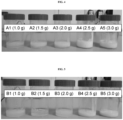
- Figures 2 and 3 show photographs of samples A1 to A5 after 2.5 h ( Fig. 2) and 3 days ( Fig. 3 ) of stirring.
- Figures 4 and 5 show photographs of samples B1 to B5 after 2.5 h ( Fig. 4 ) and 3 days ( Fig. 5 ) of stirring
- FIG. 6 shows photographs of centrifuged samples A1 to A5 and reference liquid handwash soap D.
- FIG. 7 shows photographs of centrifuged samples B1 to B5 and reference liquid handwash soap D.
Landscapes
- Health & Medical Sciences (AREA)
- Life Sciences & Earth Sciences (AREA)
- Animal Behavior & Ethology (AREA)
- General Health & Medical Sciences (AREA)
- Public Health (AREA)
- Veterinary Medicine (AREA)
- Dermatology (AREA)
- Birds (AREA)
- Epidemiology (AREA)
- Oral & Maxillofacial Surgery (AREA)
- Cosmetics (AREA)
Claims (15)
- Composition cosmétique comprenant un constituant cellodextrine comprenant :- un cellosaccharide choisi parmi le groupe consistant de cellobiose, cellotriose, cellotétraose, cellopentaose, cellohexaose, celloheptaose, cellooctaose, cellononaose, cellodécaose, celloundécaose, cellododécaose, et en combinaisons de ceux-ci ; et- un constituant tensioactif comprenant un tensioactif anionique, un tensioactif cationique, un tensioactif amphotère, un tensioactif non ionique ou toute combinaison de ceux-ci ;dans laquelle au moins une partie dudit constituant cellodextrine est présente dans la composition cosmétique sous forme non dissoute ; etdans laquelle la composition cosmétique présente une turbidité d'au moins 5 NTU, déterminée par analyse néphélométrique.
- Composition cosmétique selon la revendication 1, dans laquelle la teneur totale du constituant cellodextrine est d'au moins 0,01 % en poids, ou d'au moins 0,1 % en poids, ou d'au moins 1,0 % en poids, de préférence d'au moins 5,0 % en poids, plus préférentiellement d'au moins 10 % en poids, et encore plus préférentiellement d'au moins 15 % en poids, mais encore plus préférentiellement d'au moins 20 % en poids, encore plus préférentiellement d'au moins 25 % en poids, de manière préférée entre toutes d'au moins 30 % en poids, et le plus préférentiellement d'au moins 35 % en poids, dans chaque cas, par rapport au poids total de la composition cosmétique.
- Composition cosmétique selon l'une quelconque des revendications précédentes, dans laquelle la partie du constituant cellodextrine qui est présente sous forme non dissoute correspond à au moins 5,0 % en poids, ou au moins 10 % en poids, ou au moins 15 % en poids, ou au moins 20 % en poids, ou au moins 25 % en poids, ou au moins 30 % en poids, ou au moins 35 % en poids, ou au moins 40 % en poids, ou au moins 45 % en poids, ou au moins 50 % en poids, ou au moins 55 % en poids, ou au moins 60 % en poids, ou au moins 65 % en poids, ou au moins 70 % en poids, ou au moins 75 % en poids, ou au moins 80 % en poids, ou au moins 85 % en poids, ou au moins 90 % en poids, ou au moins 95 % en poids, dans chaque cas, de la quantité totale du constituant cellodextrine qui est contenu dans la composition cosmétique.
- Composition cosmétique selon l'une quelconque des revendications précédentes, dans laquelle la composition cosmétique comprend une multitude de particules solides, dans laquelle au moins une partie de la multitude de particules solides comprend au moins une partie du constituant cellodextrine.
- Composition cosmétique selon la revendication 4, dans laquelle les particules solides qui comprennent au moins une partie du constituant cellodextrine sont essentiellement constituées du constituant cellodextrine.
- Composition cosmétique selon la revendication 4 ou 5, dans laquelle sensiblement la quantité totale du constituant cellodextrine qui est compris dans la composition cosmétique est comprise dans la multitude de particules solides.
- Composition cosmétique selon l'une quelconque des revendications 4 à 6, dans laquelle les particules parmi la multitude de particules solides (c'est-à-dire les particules contenant de la cellodextrine) ont une valeur D50(v) d'au plus 100 µm, ou d'au plus 50 µm, ou d'au plus 10 µm, ou d'au plus 5,0 µm, ou d'au plus 1,0 µm, ou d'au plus 0,5 µm, ou d'au plus 0,1 µm, ou d'au plus 0,05 µm, ou d'au plus 0,01 µm, ou d'au plus 0,005 µm, ou d'au plus 0,001 µm, déterminée par analyse par diffraction laser selon la norme ISO 13 320.
- Composition cosmétique selon l'une quelconque des revendications précédentes, dans laquelle la teneur en poids du constituant tensioactif est d'au moins 0,1 % en poids, ou d'au moins 1,0 % en poids, ou d'au moins 2,0 % en poids, ou d'au moins 4,0 % en poids, ou d'au moins 6,0 % en poids, ou d'au moins 8,0 % en poids, ou d'au moins 10 % en poids, ou d'au moins 15 % en poids, ou d'au moins 20 % en poids, ou d'au moins 25 % en poids, ou d'au moins 30 % en poids, ou d'au moins 35 % en poids, ou d'au moins 40 % en poids, ou d'au moins 45 % en poids, ou d'au moins 50 % en poids, ou d'au moins 55 % en poids, ou d'au moins 60 % en poids, ou d'au moins 65 % en poids, ou d'au moins 70 % en poids, ou d'au moins 75 % en poids, ou d'au moins 80 % en poids, ou d'au moins 85 % en poids, ou d'au moins 90 % en poids, ou d'au moins 95 % en poids, dans chaque cas, par rapport au poids total de la composition cosmétique.
- Composition cosmétique selon l'une quelconque des revendications précédentes, dans laquelle la teneur en poids du constituant tensioactif est de 1,0 % en poids, ou de 2,0 %, ou de 4,0 % en poids, ou d'au plus 6,0 % en poids, ou d'au plus 8,0 % en poids, ou d'au plus 10 % en poids, ou d'au plus 15 % en poids, ou d'au plus 20 % en poids, ou d'au plus 25 % en poids, ou d'au plus 30 % en poids, ou d'au plus 35 % en poids, ou d'au plus 40 % en poids, ou d'au plus 45 % en poids, ou d'au plus 50 % en poids, ou d'au plus 55 % en poids, ou d'au plus 60 % en poids, ou d'au plus 65 % en poids, ou d'au plus 70 % en poids, ou d'au plus 75 % en poids, ou d'au plus 80 % en poids, ou d'au plus 85 % en poids, ou d'au plus 90 % en poids, ou d'au plus 95 % en poids, dans chaque cas, par rapport au poids total de la composition cosmétique.
- Composition cosmétique selon l'une quelconque des revendications précédentes, dans laquelle le constituant tensioactif comprend ou est essentiellement constitué d'un tensioactif choisi dans le groupe consistant de :- des tensioactifs anioniques qui sont de préférence choisis dans : le laureth sulfate de sodium, le dodécylsulfate de sodium, le laurylsulfate de sodium, le laurylsulfate d'ammonium, les sulfosuccinates (par exemple le dioctyl sulfosuccinate, le laureth sulfosuccinate de disodium, le PEG-5 laurylcitrate sulfosuccinate disodique, le diéthylhexyl sulfosuccinate de sodium, le disodium ricinoléamido-MEA-sulfosuccinate, l'undécylénamido disodique MEA-sulfosuccinate), les taurates d'acyle-méthyle (par exemple le N-méthyl lauroyl taurate de sodium), les sulfonates d'alkylbenzène (par exemple le dodécylbenzène sulfonate), les sarcosinates d'acyle (par exemple le sarcosinate de lauroylsodium), les sulfonates glycérol éther gras (par exemple le (3-lauryloxy)-2-hydroxypropane sulfonate de sodium), l'acyliséthionate (par exemple le lauroyl iséthionate de sodium), les monoglycérides sulfates (par exemple le (3-lauroyloxy)-2-hydroxypropyle sulfate de sodium), les condensats de propylpeptides ;- tensioactifs cationiques qui sont de préférence choisis dans : les chlorures de stéaralkonium (chlorure de benzyldiméthyloctadécylammonium), le chlorure de dicétyldimonium, le chlorure de docosyltriméthylammonium ;- tensioactifs amphotères qui sont de préférence choisis dans : le lauraminopropionate de sodium, le cocoamphopropionate de sodium, les cocamidopropyl bétaïnes (par exemple lauramidopropyl bétaïne), la capryl/capramidopropyl bétaïne, l'undécylénamidopropyl bétaïne, le cocoamphodiacétate disodique, le cocoamphoacétate de sodium ;- tensioactifs non ioniques qui sont de préférence choisis dans : le lauramide, le lauramide diéthanolamine, l'oxyde de lauramide, l'oxyde de stéaramine, les poloxamères (par exemple Poloxamer 101, Poloxamer 124), le PEG-7 cocoate de glycéryle, le laurate de glycéryle, la cocamide diéthanolamine, la cocamide monoéthanolamine ;- bio-tensioactifs qui sont de préférence choisis dans : (i) les glycolipides (glucides-lipides) tels que les rhamnolipides, les lipides mannosyl-érythritol, les sophorolipides, les cellobioselipides et similaires ; (ii) les phospholipides ; (iii) les lipides de polyol ; (iv) les lipoprotéines ; (v) les lipopeptides ; (vi) les lipides d'ornithine ; (vii) les lipides neutres ; (viii) les lipides d'acides aminés ; (ix) les exolipides ; (x) les liposanes ; (xi) les sidérolipides ; (xii) les polyamines protéiques diglycosyl diglycérides ; (xiii) les fimbriae ; et les combinaisons de ceux-ci.
- Composition cosmétique selon l'une quelconque des revendications précédentes, dans laquelle :- le constituant cellodextrine comprend ou est essentiellement constitué de cellobiose ;- la composition cosmétique comprend des particules solides comprenant ou constituées essentiellement du constituant cellodextrine sous forme non dissoute ;- les particules ont une granulométrie moyenne, de préférence exprimée en valeur D50(v) déterminée par analyse par diffraction laser selon la norme ISO 13 320, d'au plus 100 µm, ou d'au plus 50 µm, ou d'au plus 10 µm, ou d'au plus 5,0 µm, ou d'au plus 1,0 µm, ou d'au plus 0,5 µm, ou d'au plus 0,1 µm, ou d'au plus 0,05 µm, ou d'au plus 0,01 µm, ou d'au plus 0,005 µm, ou d'au plus 0,001 µm ;- la teneur en poids du constituant tensioactif est d'au moins 0,1 % en poids, de préférence d'au moins 1,0 % en poids, plus préférentiellement d'au moins 5,0 % en poids, encore plus préférentiellement d'au moins 10 % en poids, par rapport au poids total de la composition cosmétique ;- la composition cosmétique comprend en outre de l'eau, dans laquelle la teneur en eau est d'au moins 20 % en poids, de préférence d'au moins 40 % en poids, plus préférentiellement d'au moins 60 % en poids, encore plus préférentiellement d'au moins 80 % en poids, par rapport au poids total de la composition cosmétique ;- la composition cosmétique est choisie dans le savon liquide, le savon mousse, le gel douche et le shampooing capillaire.
- Composition cosmétique selon l'une quelconque des revendications précédentes, dans laquelle la teneur en poids de cellobiose est d'au moins 1,0 % en poids, ou d'au moins 2,0 % en poids, ou d'au moins 3,0 % en poids, ou d'au moins 4,0 % en poids, ou d'au moins 5,0 % en poids, ou d'au moins 7,5 % en poids, ou d'au moins 10 % en poids, ou d'au moins 12,5 % en poids, ou d'au moins 15 % en poids, ou d'au moins 17,5 % en poids, ou d'au moins 20 % en poids, dans chaque cas, par rapport au poids total de la composition cosmétique.
- Composition cosmétique selon l'une quelconque des revendications précédentes, qui comprend en outre un antioxydant.
- Composition cosmétique selon l'une quelconque des revendications précédentes, qui présente une opacité d'au moins 25 %, ou d'au moins 30 %, ou d'au moins 35 %, ou d'au moins 40 %, ou d'au moins 45 %, ou d'au moins 50 %, ou d'au moins 55 %, ou d'au moins 60 %, ou d'au moins 65 %, ou d'au moins 70 %, ou d'au moins 75 %, ou d'au moins 80 %, ou d'au moins 85 %, ou d'au moins 90 %, ou d'au moins 95 %, ou d'au moins 100 %, déterminée par des mesures colorimétriques.
- Composition cosmétique selon l'une quelconque des revendications précédentes, qui présente une intensité de reflets, sur une échelle de 0 à 10, d'au moins 1, ou d'au moins 2, ou d'au moins 3, ou d'au moins 4, ou d'au moins 5, ou d'au moins 6, ou d'au moins 7, ou d'au moins 8, ou d'au moins 9, déterminée au cours d'un test sensoriel selon la norme ISO 13 299.
Applications Claiming Priority (2)
| Application Number | Priority Date | Filing Date | Title |
|---|---|---|---|
| EP20173630 | 2020-05-08 | ||
| PCT/EP2021/062167 WO2021224463A1 (fr) | 2020-05-08 | 2021-05-07 | Composition cosmétique comprenant des cellodextrines |
Publications (3)
| Publication Number | Publication Date |
|---|---|
| EP4146160A1 EP4146160A1 (fr) | 2023-03-15 |
| EP4146160C0 EP4146160C0 (fr) | 2025-01-01 |
| EP4146160B1 true EP4146160B1 (fr) | 2025-01-01 |
Family
ID=70680223
Family Applications (1)
| Application Number | Title | Priority Date | Filing Date |
|---|---|---|---|
| EP21724283.3A Active EP4146160B1 (fr) | 2020-05-08 | 2021-05-07 | Composition cosmétique comprenant des cellodextrines |
Country Status (5)
| Country | Link |
|---|---|
| US (1) | US20230181447A1 (fr) |
| EP (1) | EP4146160B1 (fr) |
| JP (1) | JP2023525293A (fr) |
| CN (1) | CN115551473A (fr) |
| WO (1) | WO2021224463A1 (fr) |
Family Cites Families (5)
| Publication number | Priority date | Publication date | Assignee | Title |
|---|---|---|---|---|
| FR2780901B1 (fr) * | 1998-07-09 | 2000-09-29 | Coletica | Particules, en particulier micro- ou nanoparticules de monosaccharides et oligosaccharides reticules, leurs procedes de preparation et compositions cosmetiques, pharmaceutiques ou alimentaires en contenant |
| JP5001847B2 (ja) | 2005-09-27 | 2012-08-15 | 旭化成ケミカルズ株式会社 | セロオリゴ糖含有組成物 |
| EP2054010A1 (fr) * | 2006-08-22 | 2009-05-06 | Innovation Deli Limited | Compositions de nettoyage structurées |
| US20160128944A1 (en) * | 2013-06-04 | 2016-05-12 | Vyome Biosciences Pvt. Ltd. | Coated particles and compositions comprising same |
| US20160166489A1 (en) * | 2014-12-11 | 2016-06-16 | Mary Kay Inc. | Gel-based sugar scrub |
-
2021
- 2021-05-07 WO PCT/EP2021/062167 patent/WO2021224463A1/fr not_active Ceased
- 2021-05-07 EP EP21724283.3A patent/EP4146160B1/fr active Active
- 2021-05-07 US US17/923,676 patent/US20230181447A1/en not_active Abandoned
- 2021-05-07 CN CN202180033901.9A patent/CN115551473A/zh active Pending
- 2021-05-07 JP JP2022567828A patent/JP2023525293A/ja not_active Withdrawn
Also Published As
| Publication number | Publication date |
|---|---|
| EP4146160A1 (fr) | 2023-03-15 |
| US20230181447A1 (en) | 2023-06-15 |
| CN115551473A (zh) | 2022-12-30 |
| EP4146160C0 (fr) | 2025-01-01 |
| WO2021224463A1 (fr) | 2021-11-11 |
| JP2023525293A (ja) | 2023-06-15 |
Similar Documents
| Publication | Publication Date | Title |
|---|---|---|
| EP3137045B1 (fr) | Composition comprenant des microcapsules contenant des particules avec un "wet point" eleve | |
| US20160367959A1 (en) | Multiphase Compositions | |
| EP1366737A1 (fr) | Formulation de produits cosmétiques avec de la poudre de verre | |
| WO2015166448A1 (fr) | Composition comprenant des microcapsules contenant un élastomère de silicone | |
| JP6799242B2 (ja) | 化粧料 | |
| EP3452008B1 (fr) | Compositions cosmétiques contenant du tétrapélargonate de diglycérol | |
| CN105980429B (zh) | 化妆品和个人护理产品中的苯乙烯马来酸酐聚合物 | |
| EP1553914A2 (fr) | Nouvelles formulations cosmetiques a base d'un agent gelifiant et/ou epaississant et leurs applications | |
| US20250127705A1 (en) | Cosmetic compositions comprising a cyclodextrin having a particle size distribution | |
| EP3346979B1 (fr) | Compositions cosmétiques aqueuses contenant des esters d'acide pélargonique | |
| KR20140113730A (ko) | 폴리올을 함유하는 색상 변화 조성물 | |
| EP3346982B1 (fr) | Mélanges d'esters d'acide pélargonique. | |
| EP4146160B1 (fr) | Composition cosmétique comprenant des cellodextrines | |
| JP7629184B2 (ja) | 固形粉末化粧料およびその使用方法 | |
| JP7242257B2 (ja) | ゴニオクロマチック顔料及び白色顔料を含むメークアップ用の液状組成物 | |
| JP2020007274A (ja) | ヘアケア用又は皮膚用外用剤に使用するための乳化剤及びその外用剤組成物 | |
| JP7799352B2 (ja) | 油性または乳化メーキャップ化粧料 | |
| JP7608534B1 (ja) | 固形粉末化粧料 | |
| CN104168959B (zh) | 具有uv过滤剂的变色组合物 | |
| JP2024090367A (ja) | 粉体含有組成物 | |
| JP4896650B2 (ja) | 新規な水溶性スクラブ剤及び該スクラブ剤を配合する油性皮膚洗浄料 | |
| JP2024171061A (ja) | 油中水型乳化組成物 | |
| JP2024020748A (ja) | 粉末固形化粧料およびその使用方法 | |
| KR20240106559A (ko) | 복합 분체 및 이를 포함하는 화장료 조성물 | |
| US20150238408A1 (en) | Ester Gels, Methods of Manufacture, and Uses Thereof |
Legal Events
| Date | Code | Title | Description |
|---|---|---|---|
| STAA | Information on the status of an ep patent application or granted ep patent |
Free format text: STATUS: UNKNOWN |
|
| STAA | Information on the status of an ep patent application or granted ep patent |
Free format text: STATUS: THE INTERNATIONAL PUBLICATION HAS BEEN MADE |
|
| PUAI | Public reference made under article 153(3) epc to a published international application that has entered the european phase |
Free format text: ORIGINAL CODE: 0009012 |
|
| STAA | Information on the status of an ep patent application or granted ep patent |
Free format text: STATUS: REQUEST FOR EXAMINATION WAS MADE |
|
| 17P | Request for examination filed |
Effective date: 20221006 |
|
| AK | Designated contracting states |
Kind code of ref document: A1 Designated state(s): AL AT BE BG CH CY CZ DE DK EE ES FI FR GB GR HR HU IE IS IT LI LT LU LV MC MK MT NL NO PL PT RO RS SE SI SK SM TR |
|
| DAV | Request for validation of the european patent (deleted) | ||
| DAX | Request for extension of the european patent (deleted) | ||
| GRAP | Despatch of communication of intention to grant a patent |
Free format text: ORIGINAL CODE: EPIDOSNIGR1 |
|
| STAA | Information on the status of an ep patent application or granted ep patent |
Free format text: STATUS: GRANT OF PATENT IS INTENDED |
|
| INTG | Intention to grant announced |
Effective date: 20240724 |
|
| GRAS | Grant fee paid |
Free format text: ORIGINAL CODE: EPIDOSNIGR3 |
|
| GRAA | (expected) grant |
Free format text: ORIGINAL CODE: 0009210 |
|
| STAA | Information on the status of an ep patent application or granted ep patent |
Free format text: STATUS: THE PATENT HAS BEEN GRANTED |
|
| AK | Designated contracting states |
Kind code of ref document: B1 Designated state(s): AL AT BE BG CH CY CZ DE DK EE ES FI FR GB GR HR HU IE IS IT LI LT LU LV MC MK MT NL NO PL PT RO RS SE SI SK SM TR |
|
| REG | Reference to a national code |
Ref country code: GB Ref legal event code: FG4D |
|
| REG | Reference to a national code |
Ref country code: DE Ref legal event code: R096 Ref document number: 602021024255 Country of ref document: DE |
|
| REG | Reference to a national code |
Ref country code: CH Ref legal event code: EP |
|
| REG | Reference to a national code |
Ref country code: IE Ref legal event code: FG4D |
|
| U01 | Request for unitary effect filed |
Effective date: 20250127 |
|
| U07 | Unitary effect registered |
Designated state(s): AT BE BG DE DK EE FI FR IT LT LU LV MT NL PT RO SE SI Effective date: 20250131 |
|
| U20 | Renewal fee for the european patent with unitary effect paid |
Year of fee payment: 5 Effective date: 20250516 |
|
| PG25 | Lapsed in a contracting state [announced via postgrant information from national office to epo] |
Ref country code: PL Free format text: LAPSE BECAUSE OF FAILURE TO SUBMIT A TRANSLATION OF THE DESCRIPTION OR TO PAY THE FEE WITHIN THE PRESCRIBED TIME-LIMIT Effective date: 20250101 |
|
| PG25 | Lapsed in a contracting state [announced via postgrant information from national office to epo] |
Ref country code: ES Free format text: LAPSE BECAUSE OF FAILURE TO SUBMIT A TRANSLATION OF THE DESCRIPTION OR TO PAY THE FEE WITHIN THE PRESCRIBED TIME-LIMIT Effective date: 20250101 |
|
| PG25 | Lapsed in a contracting state [announced via postgrant information from national office to epo] |
Ref country code: IS Free format text: LAPSE BECAUSE OF FAILURE TO SUBMIT A TRANSLATION OF THE DESCRIPTION OR TO PAY THE FEE WITHIN THE PRESCRIBED TIME-LIMIT Effective date: 20250501 Ref country code: NO Free format text: LAPSE BECAUSE OF FAILURE TO SUBMIT A TRANSLATION OF THE DESCRIPTION OR TO PAY THE FEE WITHIN THE PRESCRIBED TIME-LIMIT Effective date: 20250401 |
|
| PG25 | Lapsed in a contracting state [announced via postgrant information from national office to epo] |
Ref country code: HR Free format text: LAPSE BECAUSE OF FAILURE TO SUBMIT A TRANSLATION OF THE DESCRIPTION OR TO PAY THE FEE WITHIN THE PRESCRIBED TIME-LIMIT Effective date: 20250101 |
|
| PG25 | Lapsed in a contracting state [announced via postgrant information from national office to epo] |
Ref country code: GR Free format text: LAPSE BECAUSE OF FAILURE TO SUBMIT A TRANSLATION OF THE DESCRIPTION OR TO PAY THE FEE WITHIN THE PRESCRIBED TIME-LIMIT Effective date: 20250402 |
|
| PG25 | Lapsed in a contracting state [announced via postgrant information from national office to epo] |
Ref country code: CZ Free format text: LAPSE BECAUSE OF FAILURE TO SUBMIT A TRANSLATION OF THE DESCRIPTION OR TO PAY THE FEE WITHIN THE PRESCRIBED TIME-LIMIT Effective date: 20250101 |
|
| PG25 | Lapsed in a contracting state [announced via postgrant information from national office to epo] |
Ref country code: SM Free format text: LAPSE BECAUSE OF FAILURE TO SUBMIT A TRANSLATION OF THE DESCRIPTION OR TO PAY THE FEE WITHIN THE PRESCRIBED TIME-LIMIT Effective date: 20250101 |
|
| PG25 | Lapsed in a contracting state [announced via postgrant information from national office to epo] |
Ref country code: SK Free format text: LAPSE BECAUSE OF FAILURE TO SUBMIT A TRANSLATION OF THE DESCRIPTION OR TO PAY THE FEE WITHIN THE PRESCRIBED TIME-LIMIT Effective date: 20250101 |
|
| PLBE | No opposition filed within time limit |
Free format text: ORIGINAL CODE: 0009261 |
|
| STAA | Information on the status of an ep patent application or granted ep patent |
Free format text: STATUS: NO OPPOSITION FILED WITHIN TIME LIMIT |
|
| REG | Reference to a national code |
Ref country code: CH Ref legal event code: L10 Free format text: ST27 STATUS EVENT CODE: U-0-0-L10-L00 (AS PROVIDED BY THE NATIONAL OFFICE) Effective date: 20251112 |
|
| 26N | No opposition filed |
Effective date: 20251002 |
|
| REG | Reference to a national code |
Ref country code: CH Ref legal event code: H13 Free format text: ST27 STATUS EVENT CODE: U-0-0-H10-H13 (AS PROVIDED BY THE NATIONAL OFFICE) Effective date: 20251223 |
|
| PG25 | Lapsed in a contracting state [announced via postgrant information from national office to epo] |
Ref country code: CH Free format text: LAPSE BECAUSE OF NON-PAYMENT OF DUE FEES Effective date: 20250531 |
|
| GBPC | Gb: european patent ceased through non-payment of renewal fee |
Effective date: 20250507 |
|
| PG25 | Lapsed in a contracting state [announced via postgrant information from national office to epo] |
Ref country code: MC Free format text: LAPSE BECAUSE OF FAILURE TO SUBMIT A TRANSLATION OF THE DESCRIPTION OR TO PAY THE FEE WITHIN THE PRESCRIBED TIME-LIMIT Effective date: 20250101 |
|
| PG25 | Lapsed in a contracting state [announced via postgrant information from national office to epo] |
Ref country code: GB Free format text: LAPSE BECAUSE OF NON-PAYMENT OF DUE FEES Effective date: 20250507 |
|
| PG25 | Lapsed in a contracting state [announced via postgrant information from national office to epo] |
Ref country code: IE Free format text: LAPSE BECAUSE OF NON-PAYMENT OF DUE FEES Effective date: 20250507 |