EP4147591A1 - Aerosolerzeugungsvorrichtung zur bereitstellung einer personalisierten raucherfahrung und darauf angewandter aerosolerzeugungsartikel - Google Patents
Aerosolerzeugungsvorrichtung zur bereitstellung einer personalisierten raucherfahrung und darauf angewandter aerosolerzeugungsartikel Download PDFInfo
- Publication number
- EP4147591A1 EP4147591A1 EP22796046.5A EP22796046A EP4147591A1 EP 4147591 A1 EP4147591 A1 EP 4147591A1 EP 22796046 A EP22796046 A EP 22796046A EP 4147591 A1 EP4147591 A1 EP 4147591A1
- Authority
- EP
- European Patent Office
- Prior art keywords
- aerosol
- flavoring
- additive
- sheet
- heater
- Prior art date
- Legal status (The legal status is an assumption and is not a legal conclusion. Google has not performed a legal analysis and makes no representation as to the accuracy of the status listed.)
- Pending
Links
Images



Classifications
-
- A—HUMAN NECESSITIES
- A24—TOBACCO; CIGARS; CIGARETTES; SIMULATED SMOKING DEVICES; SMOKERS' REQUISITES
- A24F—SMOKERS' REQUISITES; MATCH BOXES; SIMULATED SMOKING DEVICES
- A24F40/00—Electrically operated smoking devices; Component parts thereof; Manufacture thereof; Maintenance or testing thereof; Charging means specially adapted therefor
- A24F40/40—Constructional details, e.g. connection of cartridges and battery parts
- A24F40/46—Shape or structure of electric heating means
-
- A—HUMAN NECESSITIES
- A24—TOBACCO; CIGARS; CIGARETTES; SIMULATED SMOKING DEVICES; SMOKERS' REQUISITES
- A24B—MANUFACTURE OR PREPARATION OF TOBACCO FOR SMOKING OR CHEWING; TOBACCO; SNUFF
- A24B15/00—Chemical features or treatment of tobacco; Tobacco substitutes, e.g. in liquid form
- A24B15/10—Chemical features of tobacco products or tobacco substitutes
- A24B15/12—Chemical features of tobacco products or tobacco substitutes of reconstituted tobacco
- A24B15/14—Chemical features of tobacco products or tobacco substitutes of reconstituted tobacco made of tobacco and a binding agent not derived from tobacco
-
- A—HUMAN NECESSITIES
- A24—TOBACCO; CIGARS; CIGARETTES; SIMULATED SMOKING DEVICES; SMOKERS' REQUISITES
- A24B—MANUFACTURE OR PREPARATION OF TOBACCO FOR SMOKING OR CHEWING; TOBACCO; SNUFF
- A24B15/00—Chemical features or treatment of tobacco; Tobacco substitutes, e.g. in liquid form
- A24B15/18—Treatment of tobacco products or tobacco substitutes
- A24B15/28—Treatment of tobacco products or tobacco substitutes by chemical substances
- A24B15/281—Treatment of tobacco products or tobacco substitutes by chemical substances the action of the chemical substances being delayed
- A24B15/282—Treatment of tobacco products or tobacco substitutes by chemical substances the action of the chemical substances being delayed by indirect addition of the chemical substances, e.g. in the wrapper, in the case
-
- A—HUMAN NECESSITIES
- A24—TOBACCO; CIGARS; CIGARETTES; SIMULATED SMOKING DEVICES; SMOKERS' REQUISITES
- A24B—MANUFACTURE OR PREPARATION OF TOBACCO FOR SMOKING OR CHEWING; TOBACCO; SNUFF
- A24B15/00—Chemical features or treatment of tobacco; Tobacco substitutes, e.g. in liquid form
- A24B15/18—Treatment of tobacco products or tobacco substitutes
- A24B15/28—Treatment of tobacco products or tobacco substitutes by chemical substances
- A24B15/285—Treatment of tobacco products or tobacco substitutes by chemical substances characterised by structural features, e.g. particle shape or size
-
- A—HUMAN NECESSITIES
- A24—TOBACCO; CIGARS; CIGARETTES; SIMULATED SMOKING DEVICES; SMOKERS' REQUISITES
- A24B—MANUFACTURE OR PREPARATION OF TOBACCO FOR SMOKING OR CHEWING; TOBACCO; SNUFF
- A24B3/00—Preparing tobacco in the factory
- A24B3/14—Forming reconstituted tobacco products, e.g. wrapper materials, sheets, imitation leaves, rods, cakes; Forms of such products
-
- A—HUMAN NECESSITIES
- A24—TOBACCO; CIGARS; CIGARETTES; SIMULATED SMOKING DEVICES; SMOKERS' REQUISITES
- A24D—CIGARS; CIGARETTES; TOBACCO SMOKE FILTERS; MOUTHPIECES OF CIGARS OR CIGARETTES; MANUFACTURE OF TOBACCO SMOKE FILTERS OR MOUTHPIECES
- A24D1/00—Cigars; Cigarettes
- A24D1/002—Cigars; Cigarettes with additives, e.g. for flavouring
-
- A—HUMAN NECESSITIES
- A24—TOBACCO; CIGARS; CIGARETTES; SIMULATED SMOKING DEVICES; SMOKERS' REQUISITES
- A24D—CIGARS; CIGARETTES; TOBACCO SMOKE FILTERS; MOUTHPIECES OF CIGARS OR CIGARETTES; MANUFACTURE OF TOBACCO SMOKE FILTERS OR MOUTHPIECES
- A24D1/00—Cigars; Cigarettes
- A24D1/02—Cigars; Cigarettes with special covers
- A24D1/025—Cigars; Cigarettes with special covers the covers having material applied to defined areas, e.g. bands for reducing the ignition propensity
-
- A—HUMAN NECESSITIES
- A24—TOBACCO; CIGARS; CIGARETTES; SIMULATED SMOKING DEVICES; SMOKERS' REQUISITES
- A24D—CIGARS; CIGARETTES; TOBACCO SMOKE FILTERS; MOUTHPIECES OF CIGARS OR CIGARETTES; MANUFACTURE OF TOBACCO SMOKE FILTERS OR MOUTHPIECES
- A24D1/00—Cigars; Cigarettes
- A24D1/20—Cigarettes specially adapted for simulated smoking devices
-
- A—HUMAN NECESSITIES
- A24—TOBACCO; CIGARS; CIGARETTES; SIMULATED SMOKING DEVICES; SMOKERS' REQUISITES
- A24F—SMOKERS' REQUISITES; MATCH BOXES; SIMULATED SMOKING DEVICES
- A24F40/00—Electrically operated smoking devices; Component parts thereof; Manufacture thereof; Maintenance or testing thereof; Charging means specially adapted therefor
- A24F40/50—Control or monitoring
-
- A—HUMAN NECESSITIES
- A24—TOBACCO; CIGARS; CIGARETTES; SIMULATED SMOKING DEVICES; SMOKERS' REQUISITES
- A24F—SMOKERS' REQUISITES; MATCH BOXES; SIMULATED SMOKING DEVICES
- A24F40/00—Electrically operated smoking devices; Component parts thereof; Manufacture thereof; Maintenance or testing thereof; Charging means specially adapted therefor
- A24F40/60—Devices with integrated user interfaces
-
- A—HUMAN NECESSITIES
- A24—TOBACCO; CIGARS; CIGARETTES; SIMULATED SMOKING DEVICES; SMOKERS' REQUISITES
- A24D—CIGARS; CIGARETTES; TOBACCO SMOKE FILTERS; MOUTHPIECES OF CIGARS OR CIGARETTES; MANUFACTURE OF TOBACCO SMOKE FILTERS OR MOUTHPIECES
- A24D1/00—Cigars; Cigarettes
- A24D1/02—Cigars; Cigarettes with special covers
-
- A—HUMAN NECESSITIES
- A24—TOBACCO; CIGARS; CIGARETTES; SIMULATED SMOKING DEVICES; SMOKERS' REQUISITES
- A24F—SMOKERS' REQUISITES; MATCH BOXES; SIMULATED SMOKING DEVICES
- A24F40/00—Electrically operated smoking devices; Component parts thereof; Manufacture thereof; Maintenance or testing thereof; Charging means specially adapted therefor
- A24F40/20—Devices using solid inhalable precursors
-
- A—HUMAN NECESSITIES
- A24—TOBACCO; CIGARS; CIGARETTES; SIMULATED SMOKING DEVICES; SMOKERS' REQUISITES
- A24F—SMOKERS' REQUISITES; MATCH BOXES; SIMULATED SMOKING DEVICES
- A24F40/00—Electrically operated smoking devices; Component parts thereof; Manufacture thereof; Maintenance or testing thereof; Charging means specially adapted therefor
- A24F40/30—Devices using two or more structurally separated inhalable precursors, e.g. using two liquid precursors in two cartridges
Definitions
- the present disclosure relates to an aerosol generation device providing a customized smoking experience and an aerosol-generating article applied thereto, and more particularly, to an aerosol generation device capable of providing a customized smoking experience according to user preferences through various control functions such as flavor control and vapor production control, and an aerosol-generating article designed to be applied to the device.
- Crush-type flavor capsules added to a filter are one product of such research.
- the crush-type flavor capsules contain a flavoring liquid therein and may provide general flavors or enhanced flavors to users according to whether the capsules are crushed.
- the flavor capsules have a disadvantage that the flavoring liquid is rapidly expressed upon crushing and flavor expression progressively decreases towards the end of smoking, and there is also a disadvantage that a precise control function is not provided for a flavor intensity.
- Some embodiments of the present disclosure are directed to providing an aerosol generation device capable of providing a customized smoking experience according to user preferences.
- Some embodiments of the present disclosure are also directed to providing an aerosol-generating article applied to the aerosol generation device to provide a customized smoking experience.
- Some embodiments of the present disclosure are also directed to providing an aerosol generation device capable of providing a precise control function according to user preferences and an aerosol-generating article applied thereto.
- an aerosol generation device including a housing configured to form an accommodation space in which an aerosol-generating article is accommodated and a heater part configured to heat the aerosol-generating article accommodated in the accommodation space to generate an aerosol, wherein the aerosol-generating article includes an aerosol-forming substrate part and an additive accommodation part in which an additive is accommodated, and the heater part includes a heater configured to heat the aerosol-forming substrate part and a user control-type heater configured to heat the additive accommodation part while being controlled on the basis of a user input.
- the user input may be received through a button formed on an outer surface of the housing.
- the additive may be a flavoring agent.
- the flavoring agent may be a flavoring sheet produced in the form of a sheet.
- the additive may be a moisturizer.
- the additive accommodation part may include a first accommodation part and a second accommodation part
- the user control-type heater may include a first heater configured to heat the first accommodation part and a second heater configured to heat the second accommodation part
- a heating strength of the user control-type heater may be controlled on the basis of the user input.
- the user control-type heater may be an external heating type
- the additive may be a flavoring agent
- the flavoring agent may also be added to a wrapper of the additive accommodation part.
- the user control-type heater may be an external heating type
- the additive may be a flavoring agent
- the flavoring agent may also be added to a wrapper of a segment adjacent to the additive accommodation part.
- an aerosol-generating article including an additive accommodation part and an aerosol generation device including a user control-type heater
- the user control-type heater may heat the additive accommodation part on the basis of a user input to provide a customized smoking experience to the user.
- a customized smoking experience can be provided through flavor control
- a customized smoking experience can be provided through vapor production control.
- a heating strength of the user control-type heater can be controlled on the basis of a user input.
- a more precise control function can be provided.
- the additive is a flavoring agent
- a more precise flavor control function can be provided.
- a flavoring sheet produced in the form of a sheet may be used as the flavoring agent.
- the flavoring sheet may, when heated, slowly release a flavoring fixed therein to ensure better flavor persistence than flavor capsules.
- first, second, A, B, (a), and (b) may be used. Such terms are only used for distinguishing one component from another component, and the essence, order, sequence, or the like of the corresponding component is not limited by the terms.
- a certain component is described as being “connected,” “coupled,” or “linked” to another component, it should be understood that, although the component may be directly connected or linked to the other component, still another component may also be “connected,” “coupled,” or “linked” between the two components.
- aerosol-forming substrate may refer to a material that is able to form an aerosol.
- the aerosol may include a volatile compound.
- the aerosol-forming substrate may be a solid or liquid.
- solid aerosol-forming substrates may include solid materials based on tobacco raw materials such as reconstituted tobacco leaves, shredded tobacco, and reconstituted tobacco
- liquid aerosol-forming substrates may include liquid compositions based on nicotine, tobacco extracts, and/or various flavoring agents.
- the scope of the present disclosure is not limited to the above-listed examples.
- aerosol generation device may refer to a device that generates an aerosol using an aerosol-forming substrate in order to generate an aerosol that can be inhaled directly into the user's lungs through the user's mouth.
- aerosol-generating article may refer to an article that is able to generate an aerosol.
- the aerosol-generating article may include an aerosol-forming substrate.
- a typical example of the aerosol-generating article may include a cigarette, but the scope of the present disclosure is not limited thereto.
- upstream or upstream direction may refer to a direction moving away from an oral region of a user
- downstream or downstream direction may refer to a direction approaching the oral region of the user.
- upstream and downstream may be used to describe relative positions of elements constituting an aerosol-generating article.
- a filter part 152 is disposed downstream of or in a downstream direction from an aerosol-forming substrate part 151
- the aerosol-forming substrate part 151 is disposed upstream of or in an upstream direction from the filter part 152.
- longitudinal direction may refer to a direction corresponding to a longitudinal axis of an aerosol-generating article.
- puff refers to inhalation by a user, and the inhalation may be a situation in which a user draws smoke into his or her oral cavity, nasal cavity, or lungs through the mouth or nose.
- sheet may refer to a thin layer component whose width and length are substantially larger than a thickness thereof.
- sheet may be interchangeably used with the term “web” or “film” in the art.
- flavor sheet or “flavoring sheet” may refer to a material that contains a flavoring agent or a flavoring and is produced in the form of a sheet.
- aerosol generation devices 100-1 to 100-3 according to various embodiments of the present disclosure will be described with reference to FIGS. 1 to 3 .
- FIG. 1 is an exemplary view schematically illustrating the aerosol generation device 100-1 according to some embodiments of the present disclosure.
- FIG. 1 illustrates a state in which an aerosol-generating article 150 is accommodated in the device 100-1 as an example.
- the aerosol generation device 100-1 may include a housing, a heater part 140, a battery 130, and a controller 120.
- this is only an exemplary embodiment for achieving the objectives of the present disclosure, and, of course, some components may be added or omitted as necessary.
- the components of the aerosol generation device 100-1 illustrated in FIG. 1 represent functional components that are functionally distinct, and the plurality of components may be implemented in a form of being integrated with each other in an actual physical environment, or a single component may be implemented in a form of being divided into a plurality of specific functional components.
- each component of the aerosol generation device 100-1 will be described.
- the housing may form an exterior of the aerosol generation device 100-1. Also, the housing may form an accommodation space in which the aerosol-generating article 150 is accommodated.
- the housing may be made of a sturdy material to protect components therein.
- a user interface module may be formed on an outer surface of the housing.
- the aerosol generation device 100-1 may control the heater part 140 on the basis of a user input received through the user interface module to provide a customized smoking experience.
- the user interface module may be implemented in various forms such as a button or a touchable display. The present embodiment will be described in more detail below with reference to FIG. 4 and so on.
- the heater part 140 may be disposed to heat the aerosol-generating article 150 accommodated in the accommodation space.
- the aerosol-generating article 150 may include a solid aerosol-forming substrate and may generate an aerosol when heated.
- the generated aerosol may be inhaled through an oral region of a user.
- the operation, heating temperature, or the like of the heater part 140 may be controlled by the controller 120.
- the heater part 140 may include a user control-type heater (hereinafter referred to as "control-type heater") that can be controlled on the basis of a user input.
- control-type heater a user control-type heater
- the heater part 140 may include a basic heater, which heats the aerosol-generating article 150 according to a pre-stored temperature profile, and the control-type heater. The user may directly control the control-type heater to receive a customized smoking experience.
- control-type heater a user control-type heater
- the battery 130 may supply power used to operate the aerosol generation device 100-1.
- the battery 130 may supply power to allow the heater part 140 to heat the aerosol-forming substrate included in the aerosol-generating article 150 and may supply power required for the operation of the controller 120.
- the battery 130 may supply power required to operate electrical components such as a display (not illustrated), a sensor (not illustrated), and a motor (not illustrated) which are installed in the aerosol generation device 100-1.
- the controller 120 may control the overall operation of the aerosol generation device 100-1.
- the controller 120 may control the operation of the heater part 140 and the battery 130 and may also control the operation of other components included in the aerosol generation device 100-1.
- the controller 120 may control the power supplied by the battery 130, a heating temperature of the heater part 140, and the like.
- the controller 120 may check a state of each of the components of the aerosol generation device 100-1 and determine whether the aerosol generation device 100-1 is in an operable state.
- the controller 120 may be implemented with at least one processor.
- the processor may also be implemented with an array of a plurality of logic gates or implemented with a combination of a general-purpose microprocessor and a memory which stores a program that may be executed by the microprocessor.
- the controller 120 may also be implemented with other forms of hardware.
- a customized smoking experience can be provided through an additive accommodation part of the aerosol-generating article 150 and the control-type heater configured to heat the additive accommodation part.
- an additive accommodated in the additive accommodation part is a material that can change a smoking experience and whose degree of expression may be changed by heating.
- the additive may be a flavoring agent, a moisturizer, a sound-generating agent, or the like but is not limited thereto. The present embodiment will be described in more detail below with reference to FIG. 4 and so on.
- FIG. 2 illustrates an aerosol generation device 100-2 in which a vaporizer 1 and the aerosol-generating article 150 are disposed in parallel
- FIG. 3 illustrates an aerosol generation device 100-3 in which the vaporizer 1 and the aerosol-generating article 150 are disposed in series.
- internal structures of the aerosol generation devices are not limited to those illustrated in FIGS. 2 and 3 , and the arrangement of the components may be changed according to a design method.
- the vaporizer 1 may include a liquid reservoir configured to store a liquid aerosol-forming substrate, a wick configured to absorb the aerosol-forming substrate, and a vaporizing element configured to vaporize the absorbed aerosol-forming substrate to generate an aerosol.
- the vaporizing element may be implemented in various forms such as a heating element and a vibration element.
- the vaporizer 1 may be designed to have a structure that does not include a wick.
- the aerosol generated in the vaporizer 1 may be inhaled through an oral region of a user after passing through the aerosol-generating article 150.
- the vaporizing element of the vaporizer 1 may also be controlled by the controller 120.
- the aerosol generation devices 100-1 to 100-3 have been schematically described above with reference to FIGS. 1 to 3 .
- the operation principle of the aerosol-generating article 150 and the heater part 140 that can provide a customized smoking experience will be described in detail with reference to FIG. 4 and so on.
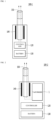
- FIGS. 4 and 5 are exemplary views for describing a detailed structure of the aerosol-generating article 150-1 and an operation principle of the heater part 140 according to the first embodiment of the present disclosure.
- the aerosol-generating article 150-1 may include the aerosol-forming substrate part 151, the filter part 152, and an additive accommodation part 153.
- the aerosol-generating article 150-1 may further include general-purpose components other than the components illustrated in FIGS. 4 and 5 .
- FIGS. 4 and 5 only illustrate some examples of aerosol-generating articles according to various embodiments of the present disclosure, and a detailed structure of the aerosol-generating article may be changed from that illustrated.
- each component of the aerosol-generating article 150-1 will be described.
- the aerosol-forming substrate part 151 may be disposed upstream of the filter part 152 and perform a function of forming an aerosol A.
- the aerosol-forming substrate part 151 may include an aerosol-forming substrate and may form an aerosol using the aerosol-forming substrate.
- the aerosol-forming substrate part 151 may form an aerosol when heated by the heater part 140.
- the formed aerosol may be delivered to an oral region of a user via the filter part 152 according to a puff.
- the aerosol-forming substrate part 151 may further include a wrapper that wraps around the aerosol-forming substrate.
- the aerosol-forming substrate part 151 is produced in the form of a rod, the aerosol-forming substrate part 151 may be referred to as an "aerosol-forming rod 151" or a “tobacco rod 151” in some cases. Alternatively, the aerosol-forming substrate part 151 may also be referred to as a "medium part 151" in some cases.
- the aerosol-forming substrate part 151 may further include a flavoring sheet.
- a flavoring sheet For example, cut pieces of the flavoring sheet and shredded tobacco (e.g., shredded tobacco leaves, shredded reconstituted tobacco leaves) may be mixed and included in the aerosol-forming substrate part 151.
- cut pieces of the flavoring sheet and shredded tobacco e.g., shredded tobacco leaves, shredded reconstituted tobacco leaves
- flavor persistence of the aerosol-generating article 150-1 can be significantly improved.
- the flavoring sheet will be described in more detail below.
- the filter part 152 may be disposed downstream of the aerosol-forming substrate part 151 and perform a function of filtering an aerosol.
- the filter part 152 may include a filter material. Examples of the filter material may include a cellulose acetate fiber, paper, or the like, but the filter material is not limited thereto.
- the filter part 152 may be disposed at a downstream end portion of the aerosol-generating article 150-1 and also serve as a mouthpiece that comes into contact with an oral region of a user.
- the filter part 152 may further include a wrapper that wraps around the filter material (plug).
- the filter part 152 is also produced in the form of a rod, the filter part 152 may be referred to as a "filter rod 152" in some cases and may be produced in various shapes such as a cylindrical shape, a tubular shape including a hollow therein (e.g., a cellulose acetate filter having a tubular shape), and a recessed shape.
- the filter part 152 serves as a mouthpiece, the filter part 152 may also be referred to as a "mouthpiece part 152.”
- the additive accommodation part 153 may accommodate a predetermined additive.
- the additive may be a material of any form that can change a smoking experience of a user and whose degree of expression is controlled by heating.
- the additive may be a flavoring agent that can change a gustatory or olfactory experience element, a moisturizer (wetting agent) that can change a visual experience element, or a sound-generating agent that can change an aural experience element but is not limited thereto.
- the additive accommodation part 153 may further include a wrapper.
- the moisturizer may include at least one of glycerin, propylene glycol, ethylene glycol, dipropylene glycol, diethylene glycol, triethylene glycol, tetraethylene glycol, and oleyl alcohol but is not limited thereto.
- the moisturizer may maintain moisture at an optimum level and thus soften the inherent flavor and produce a large amount of vapor.
- the flavoring agent may include licorice, saccharose, fructose syrup, isosweet, cocoa, lavender, cinnamon, cardamom, celery, fenugreek, cascarilla, white sandalwood, bergamot, geranium, honey essence, rose oil, vanilla, lemon oil, orange oil, mint oil, caraway, cognac, jasmine, chamomile, menthol, cinnamon, ylang-ylang, sage, spearmint, ginger, cilantro, a clove extract (or a clove material), coffee, or the like but is not limited thereto.
- the flavoring sheet may be used as a flavoring agent.
- the flavoring sheet may be processed in various forms such as a cut form or a rolled or folded form and added to the additive accommodation part 153. By slowly releasing a flavoring fixed therein when heated, the flavoring sheet can significantly improve flavor persistence.
- the flavoring sheet will be described in more detail below.
- the sound-generating agent may be a material that generates sound when heated.
- the sound-generating agent may include a flavoring sheet produced to be porous.
- the flavoring sheet may generate sound as inner pores (or films forming the pores) rupture when heated.
- the porous flavoring sheet may be produced from a sheet composition that includes a solvent such as distilled water and/or ethanol, a hydrocolloid material, and an oil-type flavoring.
- the flavoring sheet produced from the sheet composition may serve as a sound-generating element in the aerosol-generating article 150-1 due to having porosity.
- a plurality of pores may be formed in the composition as a hydrophilic hydrocolloid material and a lipophilic flavoring are mixed with a solvent, and a porous flavoring sheet may be produced as the sheet composition is dried. Additional description of the flavoring sheet will be given below.
- the additive accommodation part 153 may be disposed downstream of the aerosol-forming substrate part 151.
- the accommodated additive can be easily expressed (transferred).
- the scope of the present disclosure is not limited thereto, and the additive accommodation part 153 may also be disposed upstream of the aerosol-forming substrate part 151.
- the additive accommodation part 153 may be disposed upstream of the aerosol-forming substrate part 151.
- the heater part 140 may include a basic heater 141 configured to heat the aerosol-forming substrate part 151 and a control-type heater 142 configured to heat the additive accommodation part 153.
- the basic heater 141 may heat the aerosol-forming substrate part 151 to provide a basic (general) smoking experience, and the control-type heater 142 may be controlled on the basis of a user input to provide a customized smoking experience.
- the basic heater 141 may heat the aerosol-forming substrate part 151 on the basis of a pre-stored temperature profile.
- the basic heater 141 may be a heater that is controlled by the controller 120 on the basis of a pre-stored temperature profile.
- the basic heater 141 may be implemented in various forms.
- the basic heater 141 may be implemented as an internal heating type as illustrated in FIG. 4 or implemented as an external heating type as illustrated in FIG. 5 .
- the basic heater 141 may be implemented as an electrically resistive heater or implemented by an induction heating method.
- control-type heater 142 may heat the additive accommodation part 153 to provide a customized smoking experience.
- the control-type heater 142 may be implemented as an external heating type and heat at least a portion of the additive accommodation part 153 from the outside.
- the control-type heater 142 may control a degree of heating of the additive accommodation part 153 (that is, control a degree of expression of the accommodated additive) on the basis of a user input to provide a customized smoking experience.
- a specific control method may vary according to embodiments.
- control-type heater 142 operation of the control-type heater 142 may be controlled on the basis of a user input.
- the control-type heater 142 may be turned on or off according to a user input.
- the user may control the on or off of the control-type heater 142 to receive a customized smoking experience.
- a heating strength of the control-type heater 142 may be controlled on the basis of a user input.
- the control-type heater 142 may operate with a first heating strength in response to a first user input or may operate with a second heating strength in response to a second user input.
- the first user input and the second user input may be the same type of user input (e.g., a button push).
- a degree of expression of an additive e.g., a flavor intensity, a vapor production level
- a further customized smoking experience can be provided.
- a heating mode of the control-type heater 142 may be controlled on the basis of a user input.
- the control-type heater 142 may operate in a manual mode according to a first user input or may operate in an automatic mode according to a second user input.
- the first user input and the second user input may be the same type of user input (e.g., a button push).
- the operation and heating strength of the control-type heater 142 may be controlled according to a user input.
- the control-type heater 142 may operate regardless of a user input. For instance, the controller 120 may automatically control the control-type heater 142 on the basis of a user's puff pattern.
- the controller 120 may turn on the control-type heater 142 or increase the heating strength thereof in a case in which a puff intensity is increased, a puff interval is shortened, or a puff length is increased. In the opposite case, the controller 120 may turn off the control-type heater 142 or decrease the heating strength thereof. Also, in the automatic mode, the controller 120 may operate the control-type heater 142 according to a pre-stored temperature profile.
- control-type heater 142 may be controlled on the basis of a user input received through a user interface module.
- the controller 120 may control the control-type heater 142 on the basis of a user input received through the user interface module, but the present disclosure is not limited thereto.
- the user interface module may be implemented in various forms such as a button, a touchable display, or a voice recognition module.
- the user interface module may be implemented as a button formed on an outer surface of a housing of an aerosol generation device (e.g., 100-1). In this case, since the user can control the control-type heater 142 through a simple input made by pushing the button, user convenience can be improved.
- control-type heater 142 may be implemented as an external heating type, and a flavoring agent may be added to the additive accommodation part 153.
- a flavoring agent e.g., a flavoring sheet
- a wrapper of the additive accommodation part 153 or a segment adjacent thereto e.g., the aerosol-forming substrate part 151, the filter part 152, or a filter part 154, 155, or 158 of FIG. 7 or 8 .
- control-type heater 142 even when the control-type heater 142 is operated (turned on) by the user, some amount of time may be taken for a flavor to be transferred. This is because some amount of time is necessary for the additive accommodation part 153 to be sufficiently heated. In other words, flavor transfer may be delayed until the additive accommodation part 153 is sufficiently heated by the control-type heater 142, and according to the present embodiment, such a problem can be easily addressed.
- control-type heater 142 which is a dedicated heater for the additive accommodation part 153 and is controlled by a user may be provided.
- the control-type heater 142 may heat the additive accommodation part 153 on the basis of a user input to provide a customized smoking experience according to the user's preferences.
- FIG. 6 is an exemplary view for describing the detailed structure of the aerosol-generating article 150-2 and the operation principle of the heater part 140 according to the second embodiment of the present disclosure.
- illustration of the basic heater 141 has been omitted in FIG. 6 and so on in order to provide convenience of understanding.
- the aerosol-generating article 150-2 may include a plurality of additive accommodation parts 153-1 and 153-2, and the heater part 140 may include a plurality of control-type heaters 142-1 and 142-2.
- a first control-type heater 142-1 may heat a first additive accommodation part 153-1
- a second control-type heater 142-2 may heat a second additive accommodation part 153-2.
- FIG. 6 illustrates a case in which the aerosol-generating article 150-2 includes two additive accommodation parts 153-1 and 153-2 as an example, but the number of additive accommodation parts may be three or more. Also, FIG. 6 illustrates a case in which the plurality of additive accommodation parts 153-1 and 153-2 are disposed adjacent to each other as an example, but the plurality of additive accommodation parts 153-1 and 153-2 may be not disposed adjacent to each other.
- the first additive accommodation part 153-1 may be disposed upstream of the aerosol-forming substrate part 151
- the second additive accommodation part 153-2 may be disposed downstream of the aerosol-forming substrate part 151.
- Additives added to the additive accommodation parts 153-1 and 153-2 may be the same as or different from each other.
- a degree of transfer of the additive can be more precisely controlled.
- the flavor intensity can be more precisely controlled by the two control-type heaters 142-1 and 142-2.
- a user may operate (turn on) both of the two control-type heaters 142-1 and 142-2 to taste a very strong flavor or may operate (turn on) only any one control-type heater 142-1 or 142-2 to taste a moderate flavor.
- a diverse smoking experience can be provided to a user.
- different flavoring agents are added to the two additive accommodation parts 153-1 and 153-2 and both of the two control-type heaters 142-1 and 142-2 are operated, two flavors may be combined and transferred to a user.
- only any one control-type heater 142-1 or 142-2 is operated, only the flavoring agent added to the corresponding additive accommodation part 153-1 or 153-2 may be strongly transferred.
- a flavoring agent and a moisturizer are added to the two additive accommodation parts 153-1 and 153-2 and both of the two control-type heaters 142-1 and 142-2 are operated, both flavor transfer and vapor production may be enhanced.
- control precision can be improved through the plurality of additive accommodation parts 153-1 and 153-2 and the plurality of control-type heaters 142-1 and 142-2, and a diverse smoking experience can be provided to the user.
- FIG. 7 is an exemplary view for describing the detailed structure of the aerosol-generating article 150-3 and the operation principle of the heater part 140 according to the third embodiment of the present disclosure.
- the aerosol-generating article 150-3 may include the aerosol-forming substrate part 151, the additive accommodation part 153, and a plurality of filter parts (or filter segments) 154 to 156.
- a first filter part 154 may be disposed downstream of the aerosol-forming substrate part 151.
- the first filter part 154 may provide a movement path for an aerosol formed in the aerosol-forming substrate part 151 and may also perform a function of filtering or cooling the aerosol.
- the first filter part 154 may be made of a filter structure having a hollow formed therein.
- the first filter part 154 may be a tubular cellulose acetate filter or a paper tube, but the scope of the present disclosure is not limited thereto.
- a second filter part 155 may perform a function of cooling an aerosol.
- the second filter part 155 may allow an aerosol at a suitable temperature to be delivered to a user and thus improve the user's smoking satisfaction.
- the second filter part 155 may be made of a structure having a hollow or a cavity formed therein.
- the second filter part 155 may be a paper tube or a tubular cellulose acetate filter but is not limited thereto.
- the second filter part 155 may also be referred to as a "cooling part 155" or a "cooling segment 155" in some cases.
- a third filter part 156 may correspond to the filter part 152 described above. Therefore, description thereof will be omitted.
- FIG. 8 is an exemplary view for describing the detailed structure of the aerosol-generating article 150-4 and the operation principle of the heater part 140 according to the fourth embodiment of the present disclosure.
- the aerosol-generating article 150-4 may include a first filter part 157, the aerosol-forming substrate part 151, the additive accommodation part 153, a second filter part 158, and a third filter part 159.
- the first filter part 157 may be disposed at an upstream end of the aerosol-generating article 150-4 and prevent the aerosol-forming substrate part 151 from falling to the outside. Also, the first filter part 157 may prevent a liquefied aerosol from flowing from the aerosol-forming substrate part 151 into an aerosol generation device (e.g., 100-2). Alternatively, the first filter part 157 may perform a function of controlling the aerosol-forming substrate part 151 to be disposed at an appropriate position inside the aerosol generation device (e.g., 100-2) in a case in which the aerosol-generating article 150-4 is inserted into the aerosol generation device (e.g., 100-2).
- the first filter part 157 is disposed at a front end of the aerosol-forming substrate part 151, the first filter part 157 may also be referred to as a "front end filter part 157," a “front end filter segment 157,” or a “front end plug 157” in some cases.
- the second filter part 158 and the third filter part 159 may respectively correspond to the filter parts 155 and 156 described above. Therefore, descriptions thereof will be omitted.
- the flavoring agent added to the aerosol-forming substrate part 151 or the additive accommodation part 153 may be a flavoring sheet produced in the form of a sheet. Due to being able to slowly release a flavoring fixed therein when heated, the flavoring sheet can ensure better flavor persistence than a flavoring liquid.
- a specific method of adding the flavoring sheet and a form in which the flavoring sheet is processed may vary.
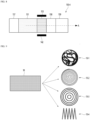
- a flavoring sheet 10 may be added in a cut form.
- the flavoring sheet 10 in a cut form may be mixed with shredded tobacco and added to the aerosol-forming substrate part 151.
- the flavoring sheet 10 in a cut form may be added to the additive accommodation part 153.
- the flavoring sheet 10 may be added in a rolled or folded form.
- the flavoring sheet 10 may be added to the aerosol-forming substrate part 151 or the additive accommodation part 153 while having a form in which it is rolled or folded in irregular patterns (see “10-1"), having a vortex form (see “10-2”), having a concentric form (see “10-3”), or having a form in which it is folded several times (e.g., a form in which it is folded to secure an airflow path in the longitudinal direction; see "10-4").
- an airflow path can be secured in the longitudinal direction, and thus a smooth airflow and appropriate resistance to draw can be ensured. Also, an area of contact between the flavoring sheet 10 and a high-temperature airflow is increased, and thus the amount of transferred flavoring can be increased.
- the flavoring sheet 10 may be applied (e.g., attached) to a wrapper of an aerosol-generating article (e.g., 150).
- the flavoring sheet 10 may be disposed on an inner side of a wrapper of the additive accommodation part 153 or a segment adjacent thereto (e.g., the aerosol-forming substrate part 151 or the filter parts 152, 154, and 156 to 159).
- the wrapper includes a metal foil
- the flavoring sheet 10 may be disposed on an inner side of the metal foil.
- the flavoring sheet 10 may constitute at least a portion of the wrapper.
- the flavoring sheet 10 itself may serve as (be used as) the wrapper, or a wrapping material produced in a form in which the flavoring sheet 10 and wrapping paper are integrated may be used as the wrapper.
- the flavoring sheet 10 may be processed through a predetermined process. However, a specific form in which the flavoring sheet 10 is processed may vary.
- the flavoring sheet 10 may be processed to be pleated or folded in the longitudinal direction (that is, the machine direction) of the aerosol-generating article (e.g., 150).
- the flavoring sheet 10 may be pleated or folded according to at least one of a crimping process, a pleating process, a folding process, and a gathering process.
- the crimping process is a process in which creep is assigned to a sheet surface through a difference between a pressure and a speed of a roller of a crimping device, and the crimping process may be divided into a wet process and a dry process.
- the wet process refers to a process in which a base paper is soaked in water, then softened and crimped, and undergoes a re-drying process.
- the dry process refers to a drying process using two dryers with different temperatures. Since the pleating process, folding process, and gathering process should already be familiar to those of ordinary skill in the art, further descriptions thereof will be omitted.
- a plurality of channels may be formed in the flavoring sheet 10 in the longitudinal direction thereof by at least one of the processes described above, and a smooth airflow and appropriate resistance to draw can be ensured by the formed channels. Further, an area of contact between the flavoring sheet 10 and a high-temperature airflow is increased, and thus the amount of transferred flavoring can be increased.
- the flavoring sheet 10 may be processed so that a plurality of holes 101 are formed therein.
- the plurality of holes 101 may be formed in the flavoring sheet 10 by a punching process.
- a diameter of the hole 101 may be in a range of about 0.05 mm to 5 mm and may be in a range of about 0.1 mm to 3 mm, in a range of about 0.2 mm to 2.5 mm, in a range of about 0.3 mm to 2.1 mm, or in a range of about 0.4 mm to 1.8 mm.
- a smooth airflow and appropriate resistance to draw can be ensured.
- an area of contact between the flavoring sheet 10 and the high-temperature airflow may be increased, and thus the amount of transferred flavoring can also be increased.
- the flavoring sheet 10 may be added to a filter part (e.g., 155 or 158) performing the cooling function or may be added to a hollow-type filter part (e.g., 154).
- the flavoring sheet 10 may be added into a filter part (e.g., 154, 155, or 158) or attached to an inner wall thereof.
- flavor expression and cooling performance of an aerosol-generating article e.g., 150-3) can be improved.
- both the flavor expression and cooling performance can be improved.
- the flavoring sheet 10 descried above may be produced through a step in which a sheet composition is produced in a liquid phase (e.g., a slurry form) and a step in which the produced sheet composition is dried.
- the liquid phase may not only include a liquid form but also include a form in which a liquid and a solid are mixed (e.g., a slurry form).
- the flavoring sheet 10 may be produced by casting a sheet composition on a predetermined substrate and drying the sheet composition.
- the flavoring sheet 10 is not limited thereto, and a specific method of producing the flavoring sheet 10 may be changed.
- a specific composition of the sheet composition may be designed in various ways, but in some embodiments, the sheet composition may be formed by mixing a solvent such as distilled water or ethanol, a polysaccharide material (or a hydrocolloid material), and a flavoring.
- the flavoring sheet 10 produced from the sheet composition may hold a large amount of flavor and have excellent flavor retention and thus can significantly enhance flavor expression and flavor persistence of the aerosol-generating article (e.g., 150).
- a solvent such as distilled water or ethanol
- a polysaccharide material or a hydrocolloid material
- the flavoring sheet 10 produced from the sheet composition may hold a large amount of flavor and have excellent flavor retention and thus can significantly enhance flavor expression and flavor persistence of the aerosol-generating article (e.g., 150).
- each material constituting the sheet composition will be described.
- the solvent such as distilled water or ethanol may be a component for controlling the viscosity of the slurry-type sheet composition.
- the polysaccharide material may be a material for covering and fixing the flavoring and may be a sheet-forming agent for forming a sheet.
- the polysaccharide material may include cellulose-based materials such as hydroxypropyl methylcellulose (HPMC), methyl cellulose (MC), carboxymethyl cellulose (CMC), and agar.
- HPMC hydroxypropyl methylcellulose
- MC methyl cellulose
- CMC carboxymethyl cellulose
- agar agar.
- Such cellulose-based materials have a property of easily absorbing heat through a phase change upon contact with a high-temperature airflow, and thus the flavoring sheet 10 may be utilized as a cooling material as well as a flavor expressing material.
- the sheet composition may include modified cellulose among various polysaccharide materials.
- modified cellulose may refer to cellulose in which a specific functional group is substituted in a molecular structure.
- modified cellulose may include HPMC, MC, CMC, and ethyl cellulose (EC), but modified cellulose is not limited thereto.
- HPMC may have a grade in a range of about 4 to 40000 according to a proportion and molecular weight in which a hydroxypropyl group and a methyl group (or methoxy group) are substituted.
- the viscosity of modified cellulose may be determined according to the grade.
- HPMC physicochemical characteristics of HPMC relate to a proportion of the methoxy group and a proportion and molecular weight of the hydroxypropyl group
- USP The United States Pharmacopeial Convention
- types of HPMC may be classified into HPMC 1828, HPMC2208, HPMC2906, HPMC2910, and the like according to proportions of the methoxy group and hydroxypropyl group.
- the first two numbers may refer to a proportion of the methoxy group
- the last two numbers may refer to a proportion of the hydroxypropyl group.
- examples of the flavoring may include menthol, nicotine, nicotine salt, a leaf tobacco extract, a leaf tobacco extract containing nicotine, a natural vegetable flavoring (e.g., cinnamon, sage, herb, chamomile, kudzu, amacha, clove, lavender, cardamom, clove, nutmeg, bergamot, geranium, honey essence, rose oil, lemon, orange, cinnamon, caraway, jasmine, ginger, coriander, vanilla extract, spearmint, peppermint, cassia, coffee, celery, cascarilla, sandalwood, cocoa, ylang-ylang, fennel, anise, licorice, St.
- a natural vegetable flavoring e.g., cinnamon, sage, herb, chamomile, kudzu, amacha, clove, lavender, cardamom, clove, nutmeg, bergamot, geranium, honey essence, rose oil, lemon, orange, cinnamon, caraway, jasmine, ginger
- John's bread, plum extract, peach extract, etc. sugars (e.g., glucose, fructose, isomerized sugar, caramel, etc.), cocoa (e.g., powder, extract, etc.), esters (e.g., isoamyl acetate, linalyl acetate, isoamyl propionate, linalyl butyrate, etc.), ketones (e.g., menthone, ionone, damascenone, ethyl maltol, etc.), alcohols (e.g., geraniol, linalool, anetol, eugenol, etc.), aldehydes (e.g., vanillin, benzaldehyde, anisaldehyde, etc.), lactones, (e.g., ⁇ -undecalactone, ⁇ -nonalactone, etc.), an animal flavoring (e.g., musk, ambergris
- the flavoring may be used in a solid state or may be used by being dissolved or dispersed in an appropriate solvent, e.g., propylene glycol, ethyl alcohol, benzyl alcohol, or triethyl citrate. Also, a flavoring that is easily dispersed in a solvent by addition of an emulsifier, e.g., a hydrophobic flavoring or an oil-soluble flavoring, may be used. These flavorings may be used alone or used as a mixture. However, the scope of the present disclosure is not limited by the examples described above.
- a flavoring whose melting point is about 80 °C or lower may be used.
- the flavoring sheet 10 comes into contact with an airflow having a temperature of 80 °C or higher, the flavoring may undergo a phase change and further absorb the heat.
- the cooling performance of the flavoring sheet 10 can be further improved.
- a heated aerosol generally has a temperature of 80 °C or higher
- the use of the above flavorings can effectively improve cooling performance of most aerosol-generating articles (e.g., 150).
- the flavor expression of the aerosol-generating article e.g., 150
- An example of the flavoring whose melting point is about 80 °C or lower may include menthol, but the flavoring is not limited thereto.
- the sheet composition may further include low methoxyl pectin (LM-pectin).
- LM-pectin is a low ester-pectin or low methoxyl pectin in which relatively little esterification is performed.
- LM pectin may be pectin that contains a carboxyl group by less than about 50% in a molecular structure. Due to having a characteristic of not gelating when cooled unlike carrageenan, LM-pectin may lower the viscosity of the slurry-type sheet composition (e.g., to about 600 cp to 800 cp). Further, since the slurry-type sheet composition can be produced without an emulsifier, a safety problem due to emulsifiers may not occur.
- LM-pectin may contain a carboxyl group by less than about 50%, less than about 40%, less than about 30%, less than about 20%, or less than about 10% in a molecular structure.
- the sheet composition may further include a bulking agent.
- the bulking agent may be a material that increases the total mass of components other than distilled water (that is, dry mass) to increase the volume of the flavoring sheet 10 being produced but does not affect the original function of the flavoring sheet 10.
- the bulking agent may have characteristics of increasing the volume of the flavoring sheet 10 but not adversely affecting the flavor retaining function of the flavoring sheet 10 while not substantially increasing the viscosity of the slurry.
- the bulking agent may be starch, modified starch, or starch hydrolyzate but is not limited thereto.
- Modified starch refers to starch acetate, oxidized starch, hydroxypropyl distarch phosphate, hydroxypropyl starch, distarch phosphate, monostarch phosphate, phosphorylated distarch phosphate, or the like.
- Starch hydrolyzate refers to a material obtained by a process that includes a process of hydrolyzing starch.
- starch hydrolyzate may include a material obtained by directly hydrolyzing starch (that is, dextrin) or a material obtained by heating and hydrolyzing starch (that is, indigestible dextrin).
- the bulking agent may be dextrin, more specifically, cyclodextrin.
- starch hydrolyzate may be starch hydrolyzate having a dextrose equivalent (DE) value in a range of about 2 to about 40, preferably, starch hydrolyzate having a DE value in a range of about 2 to about 20.
- DE dextrose equivalent
- starch hydrolyzate having a DE value in a range of about 2 to about 20 may be utilized as the starch hydrolyzate having a DE value in a range of about 2 to about 20.
- Pinedex #100 Matsutani Chemical Industry Co. Ltd
- Pinefiber Matsutani Chemical Industry Co. Ltd
- TK-16 Matsutani Chemical Industry Co. Ltd
- DE is an abbreviation of "dextrose equivalent”
- the DE value indicates a degree of hydrolysis of starch, that is, a saccharification rate of starch.
- the DE value may be a value measured by the Willstatter-Schudel method.
- Characteristics of hydrolyzed starch (starch hydrolyzate) for example, characteristics such as a molecular weight of starch hydrolyzate and arrangement of sugar molecules constituting starch hydrolyzate, may not be constant for each moledule of starch hydrolyzate and may be present with a certain distribution or variation.
- each molecule of starch hydrolyzate may exhibit different physical properties (e.g., DE value).
- DE value e.g., a measurement result by the Willstatter-Schudel method is considered a representative value indicating the degree of hydrolysis of starch.
- starch hydrolyzate may be selected from the group consisting of dextrin having a DE value in a range of about 2 to about 5, indigestible dextrin having a DE value in a range of about 10 to about 15, and a mixture thereof.
- dextrin having a DE value in a range of about 2 to about 5 Pinedex #100 (Matsutani Chemical Industry Co. Ltd) may be utilized.
- indigestible dextrin having a DE value in a range of about 10 to about 15 may be utilized.
- the sheet composition may further include a plasticizer.
- the plasticizer may add appropriate flexibility to the flavoring sheet 10 and thus improve the physical property of the sheet.
- the plasticizer may include at least one of glycerin and propylene glycol but is not limited thereto.
- the sheet composition may further include an emulsifier.
- the emulsifier may allow a highly fat-soluble flavoring and a water-soluble polysaccharide material to be mixed well and increase the amount of flavor held in the flavoring sheet 10.
- An example of the emulsifier may include lecithin, but the emulsifier is not limited thereto.
- the flavoring sheet 10 produced from the above-described sheet composition may have various content ratios (composition ratios).
- the flavoring sheet 10 may include, with respect to a total of 100 parts by weight, about 20 to 60 parts by weight of the polysaccharide material and about 10 to 50 parts by weight of the flavoring.
- the flavoring sheet 10 may further include an appropriate amount of moisture. The flavoring sheet 10 configured in this way was confirmed as significantly improving the flavor expression, flavor persistence and cooling performance of the aerosol-generating article (e.g., 150).
- the flavoring sheet 10 may include, with respect to a total of 100 parts by weight, about 2 to about 15 parts by weight of moisture, about 25 to about 90 parts by weight of modified cellulose, and about 0.1 to about 60 parts by weight of flavoring.
- the flavoring sheet 10 may include, with respect to a total of 100 parts by weight, about 2 to about 15 parts by weight of moisture, about 1 to about 60 parts by weight of polysaccharide material, about 1 to about 60 parts by weight of LM-pectin, and about 0.1 to about 60 parts by weight of flavoring.
- the plasticizer may be included by about 0.1 to about 15 parts by weight and may be included by about 1 to 10 parts by weight.
- the flavoring sheet 10 may include, with respect to a total of 100 parts by weight, about 20 to 60 parts by weight of polysaccharide material, about 10 to 50 parts by weight of flavoring, and about 1 to 10 parts by weight of plasticizer.
- a sheet having appropriate flexibility (physical property) may be formed, and since processing (e.g., crimping, rolling, folding, etc.) of the flavoring sheet 10 is easy, workability may be improved.
- the amount of added plasticizer is too small, flexibility of the sheet may be decreased and thus the sheet may be easily damaged during processes, and in a case in which the amount of added plasticizer is too large, the sheet may not be formed well.
- the flavoring sheet 10 according to some embodiments of the present disclosure has been described above.
Landscapes
- Engineering & Computer Science (AREA)
- Human Computer Interaction (AREA)
- Chemical & Material Sciences (AREA)
- Chemical Kinetics & Catalysis (AREA)
- General Chemical & Material Sciences (AREA)
- Health & Medical Sciences (AREA)
- General Health & Medical Sciences (AREA)
- Toxicology (AREA)
- Cigarettes, Filters, And Manufacturing Of Filters (AREA)
Applications Claiming Priority (2)
| Application Number | Priority Date | Filing Date | Title |
|---|---|---|---|
| KR1020210056294A KR102623332B1 (ko) | 2021-04-30 | 2021-04-30 | 맞춤형 흡연 체험을 제공하는 에어로졸 발생 장치 및 이에 적용되는 에어로졸 발생 물품 |
| PCT/KR2022/005746 WO2022231213A1 (ko) | 2021-04-30 | 2022-04-21 | 맞춤형 흡연 체험을 제공하는 에어로졸 발생 장치 및 이에 적용되는 에어로졸 발생 물품 |
Publications (2)
| Publication Number | Publication Date |
|---|---|
| EP4147591A1 true EP4147591A1 (de) | 2023-03-15 |
| EP4147591A4 EP4147591A4 (de) | 2023-12-27 |
Family
ID=83848189
Family Applications (1)
| Application Number | Title | Priority Date | Filing Date |
|---|---|---|---|
| EP22796046.5A Pending EP4147591A4 (de) | 2021-04-30 | 2022-04-21 | Aerosolerzeugungsvorrichtung zur bereitstellung einer personalisierten raucherfahrung und darauf angewandter aerosolerzeugungsartikel |
Country Status (6)
| Country | Link |
|---|---|
| US (1) | US20230292841A1 (de) |
| EP (1) | EP4147591A4 (de) |
| JP (1) | JP7655496B2 (de) |
| KR (1) | KR102623332B1 (de) |
| CN (1) | CN115697102A (de) |
| WO (1) | WO2022231213A1 (de) |
Cited By (3)
| Publication number | Priority date | Publication date | Assignee | Title |
|---|---|---|---|---|
| EP4273189A4 (de) * | 2021-09-06 | 2024-07-10 | KT & G Corporation | Geschmacksfolie mit verbesserten physikalischen eigenschaften, rauchartikel damit und verfahren zur herstellung einer geschmacksfolie und rauchartikel |
| EP4276139A4 (de) * | 2021-09-06 | 2024-08-21 | KT&G Corporation | Duftstofffolie mit verbesserter aromaretention und aromarückhaltefähigkeit sowie rauchartikel damit |
| EP4298926A4 (de) * | 2021-09-06 | 2024-09-18 | KT&G Corporation | Schallerzeugende duftfolie und rauchprodukt damit |
Family Cites Families (29)
| Publication number | Priority date | Publication date | Assignee | Title |
|---|---|---|---|---|
| CN104114049A (zh) * | 2012-03-26 | 2014-10-22 | 韩国极光科技有限公司 | 雾化控制单元及包括该雾化控制单元的便携式雾化装置 |
| WO2014066730A1 (en) * | 2012-10-25 | 2014-05-01 | Lbs Imports, Llc. | Electronic cigarette |
| US20140261488A1 (en) * | 2013-03-15 | 2014-09-18 | Altria Client Services Inc. | Electronic smoking article |
| CN105592736B (zh) * | 2013-09-30 | 2018-10-16 | 日本烟草产业株式会社 | 非燃烧型香味吸取器 |
| CN105792688B (zh) * | 2013-12-19 | 2019-03-08 | 菲利普莫里斯生产公司 | 用于生成和控制尼古丁盐颗粒数量的气溶胶生成系统 |
| KR101552254B1 (ko) * | 2015-02-05 | 2015-09-09 | 백주영 | 전자 담배 |
| KR102628155B1 (ko) * | 2015-02-27 | 2024-01-23 | 필립모리스 프로덕츠 에스.에이. | 에어로졸 발생 장치에 대한 피드백 제어 rtd 조정 |
| EP2921065A1 (de) * | 2015-03-31 | 2015-09-23 | Philip Morris Products S.a.s. | Aufheizungs- und heizungsanordnung für ein aerosolerzeugungssystem |
| GB201602831D0 (en) * | 2016-02-18 | 2016-04-06 | British American Tobacco Co | Flavour delivery device |
| WO2017211600A1 (en) * | 2016-06-08 | 2017-12-14 | Philip Morris Products S.A. | Electrically operated aerosol-generating system with multiple-component aerosol-generating article |
| WO2018176487A1 (zh) * | 2017-04-01 | 2018-10-04 | 常州聚为智能科技有限公司 | 电子烟控制系统、方法、电子烟及可穿戴电子设备 |
| GB201705550D0 (en) * | 2017-04-06 | 2017-05-24 | British American Tobacco Investments Ltd | Electronic vapour provision device with variable power supply |
| RU2762188C2 (ru) * | 2017-05-03 | 2021-12-16 | Филип Моррис Продактс С.А. | Система и способ регулирования температуры в электрически нагреваемом устройстве, генерирующем аэрозоль |
| KR102330286B1 (ko) * | 2017-09-29 | 2021-11-24 | 주식회사 케이티앤지 | 에어로졸 생성 장치 및 제어 방법 |
| GB201801257D0 (en) * | 2018-01-25 | 2018-03-14 | British American Tobacco Investments Ltd | Apparatus for heating aerosol-generating material |
| KR102360810B1 (ko) * | 2018-01-31 | 2022-02-09 | 주식회사 케이티앤지 | 에어로졸 발생 시스템 |
| KR102343888B1 (ko) * | 2018-01-31 | 2021-12-27 | 주식회사 케이티앤지 | 에어로졸 발생 시스템 |
| CN109043665B (zh) * | 2018-05-25 | 2020-12-15 | 威滔电子科技(深圳)有限公司 | 一种控制气溶胶产生的方法及装置 |
| KR20200005074A (ko) * | 2018-07-05 | 2020-01-15 | 주식회사 케이티앤지 | 향미 성분을 포함하는 흡연 물품 및 향미 화합물을 제조하는 방법 |
| GB201812500D0 (en) * | 2018-07-31 | 2018-09-12 | Nicoventures Holdings Ltd | Aerosol generation |
| KR102278589B1 (ko) * | 2018-12-06 | 2021-07-16 | 주식회사 케이티앤지 | 유도가열방식을 이용하는 에어로졸 생성장치 및 유도가열방식을 이용하여 에어로졸을 생성시키는 방법 |
| KR102199797B1 (ko) * | 2018-12-14 | 2021-01-07 | 주식회사 케이티앤지 | 에어로졸 생성 장치 및 그 동작 방법 |
| CN109613945A (zh) * | 2018-12-17 | 2019-04-12 | 威滔电子科技(深圳)有限公司 | 一种预加热时间控制方法和气溶胶产生装置 |
| CN109349690A (zh) * | 2018-12-24 | 2019-02-19 | 四川三联新材料有限公司 | 一种气溶胶发生装置及抽吸香烟保持口感一致的方法 |
| KR102419878B1 (ko) * | 2019-05-17 | 2022-07-12 | 니뽄 다바코 산교 가부시키가이샤 | 향미 흡인기용의 담배 로드 |
| GB201907702D0 (en) * | 2019-05-30 | 2019-07-17 | Nicoventures Trading Ltd | Aerosol generation |
| KR20210042756A (ko) | 2019-10-10 | 2021-04-20 | 주식회사 케이티앤지 | 에어로졸 생성 장치 |
| CN110973704A (zh) * | 2019-11-22 | 2020-04-10 | 深圳市吉迩科技有限公司 | 温度曲线调节方法及气溶胶产生装置 |
| JP6858915B1 (ja) * | 2020-09-30 | 2021-04-14 | 日本たばこ産業株式会社 | エアロゾル生成装置の電源ユニット、エアロゾル生成装置 |
-
2021
- 2021-04-30 KR KR1020210056294A patent/KR102623332B1/ko active Active
-
2022
- 2022-04-21 CN CN202280004896.3A patent/CN115697102A/zh active Pending
- 2022-04-21 EP EP22796046.5A patent/EP4147591A4/de active Pending
- 2022-04-21 US US18/008,994 patent/US20230292841A1/en active Pending
- 2022-04-21 JP JP2022571842A patent/JP7655496B2/ja active Active
- 2022-04-21 WO PCT/KR2022/005746 patent/WO2022231213A1/ko not_active Ceased
Cited By (3)
| Publication number | Priority date | Publication date | Assignee | Title |
|---|---|---|---|---|
| EP4273189A4 (de) * | 2021-09-06 | 2024-07-10 | KT & G Corporation | Geschmacksfolie mit verbesserten physikalischen eigenschaften, rauchartikel damit und verfahren zur herstellung einer geschmacksfolie und rauchartikel |
| EP4276139A4 (de) * | 2021-09-06 | 2024-08-21 | KT&G Corporation | Duftstofffolie mit verbesserter aromaretention und aromarückhaltefähigkeit sowie rauchartikel damit |
| EP4298926A4 (de) * | 2021-09-06 | 2024-09-18 | KT&G Corporation | Schallerzeugende duftfolie und rauchprodukt damit |
Also Published As
| Publication number | Publication date |
|---|---|
| JP2023527969A (ja) | 2023-07-03 |
| US20230292841A1 (en) | 2023-09-21 |
| KR20220149099A (ko) | 2022-11-08 |
| KR102623332B1 (ko) | 2024-01-09 |
| CN115697102A (zh) | 2023-02-03 |
| JP7655496B2 (ja) | 2025-04-02 |
| EP4147591A4 (de) | 2023-12-27 |
| WO2022231213A1 (ko) | 2022-11-03 |
Similar Documents
| Publication | Publication Date | Title |
|---|---|---|
| EP4140328B1 (de) | Aerosolerzeugender artikel mit verbesserter kühlleistung und duftpersistenz sowie verfahren zur herstellung davon | |
| EP4140329B1 (de) | Aerosolerzeugender artikel mit verbesserter kühlleistung und duftpersistenz sowie verfahren zur herstellung davon | |
| KR102620738B1 (ko) | 가향시트가 적용된 전자식 무연담배 | |
| US20230172259A1 (en) | Electronic smokeless tobacco to which flavoring sheet is applied | |
| US20230292841A1 (en) | Aerosol generation device providing customized smoking experience and aerosol-generating article applied thereto | |
| EP4276139A1 (de) | Duftstofffolie mit verbesserter aromaretention und aromarückhaltefähigkeit sowie rauchartikel damit | |
| US12575597B2 (en) | Nicotine sheet and aerosol-generating article including the same | |
| JP7725608B2 (ja) | 香持続性が増進された喫煙物品及びその製造方法 | |
| EP4268625A1 (de) | Rauchartikel mit verbessertem tabakgeschmack und verfahren zur herstellung davon | |
| RU2833403C2 (ru) | Курительное изделие с улучшенной стойкостью аромата и способ его изготовления |
Legal Events
| Date | Code | Title | Description |
|---|---|---|---|
| STAA | Information on the status of an ep patent application or granted ep patent |
Free format text: STATUS: THE INTERNATIONAL PUBLICATION HAS BEEN MADE |
|
| PUAI | Public reference made under article 153(3) epc to a published international application that has entered the european phase |
Free format text: ORIGINAL CODE: 0009012 |
|
| STAA | Information on the status of an ep patent application or granted ep patent |
Free format text: STATUS: REQUEST FOR EXAMINATION WAS MADE |
|
| 17P | Request for examination filed |
Effective date: 20221208 |
|
| AK | Designated contracting states |
Kind code of ref document: A1 Designated state(s): AL AT BE BG CH CY CZ DE DK EE ES FI FR GB GR HR HU IE IS IT LI LT LU LV MC MK MT NL NO PL PT RO RS SE SI SK SM TR |
|
| P01 | Opt-out of the competence of the unified patent court (upc) registered |
Effective date: 20230526 |
|
| A4 | Supplementary search report drawn up and despatched |
Effective date: 20231129 |
|
| RIC1 | Information provided on ipc code assigned before grant |
Ipc: A24D 1/02 20060101ALN20231123BHEP Ipc: A24D 1/20 20200101ALI20231123BHEP Ipc: A24B 15/28 20060101ALI20231123BHEP Ipc: A24B 3/14 20060101ALI20231123BHEP Ipc: A24F 40/50 20200101ALI20231123BHEP Ipc: A24F 40/60 20200101ALI20231123BHEP Ipc: A24F 40/46 20200101AFI20231123BHEP |
|
| DAV | Request for validation of the european patent (deleted) | ||
| DAX | Request for extension of the european patent (deleted) |