EP4148429A2 - Procédé et kit de détection d'anticorps de l'herpès bovin de type 1 (bohv-1) - Google Patents
Procédé et kit de détection d'anticorps de l'herpès bovin de type 1 (bohv-1) Download PDFInfo
- Publication number
- EP4148429A2 EP4148429A2 EP22194619.7A EP22194619A EP4148429A2 EP 4148429 A2 EP4148429 A2 EP 4148429A2 EP 22194619 A EP22194619 A EP 22194619A EP 4148429 A2 EP4148429 A2 EP 4148429A2
- Authority
- EP
- European Patent Office
- Prior art keywords
- type
- polypeptide
- bohv
- protein
- herpes virus
- Prior art date
- Legal status (The legal status is an assumption and is not a legal conclusion. Google has not performed a legal analysis and makes no representation as to the accuracy of the status listed.)
- Granted
Links
Images




Classifications
-
- G—PHYSICS
- G01—MEASURING; TESTING
- G01N—INVESTIGATING OR ANALYSING MATERIALS BY DETERMINING THEIR CHEMICAL OR PHYSICAL PROPERTIES
- G01N33/00—Investigating or analysing materials by specific methods not covered by groups G01N1/00 - G01N31/00
- G01N33/48—Biological material, e.g. blood, urine; Haemocytometers
- G01N33/50—Chemical analysis of biological material, e.g. blood, urine; Testing involving biospecific ligand binding methods; Immunological testing
- G01N33/68—Chemical analysis of biological material, e.g. blood, urine; Testing involving biospecific ligand binding methods; Immunological testing involving proteins, peptides or amino acids
-
- G—PHYSICS
- G01—MEASURING; TESTING
- G01N—INVESTIGATING OR ANALYSING MATERIALS BY DETERMINING THEIR CHEMICAL OR PHYSICAL PROPERTIES
- G01N33/00—Investigating or analysing materials by specific methods not covered by groups G01N1/00 - G01N31/00
- G01N33/48—Biological material, e.g. blood, urine; Haemocytometers
- G01N33/50—Chemical analysis of biological material, e.g. blood, urine; Testing involving biospecific ligand binding methods; Immunological testing
- G01N33/53—Immunoassay; Biospecific binding assay; Materials therefor
- G01N33/569—Immunoassay; Biospecific binding assay; Materials therefor for microorganisms, e.g. protozoa, bacteria, viruses
- G01N33/56983—Viruses
- G01N33/56994—Herpetoviridae, e.g. cytomegalovirus, Epstein-Barr virus
-
- G—PHYSICS
- G01—MEASURING; TESTING
- G01N—INVESTIGATING OR ANALYSING MATERIALS BY DETERMINING THEIR CHEMICAL OR PHYSICAL PROPERTIES
- G01N2333/00—Assays involving biological materials from specific organisms or of a specific nature
- G01N2333/005—Assays involving biological materials from specific organisms or of a specific nature from viruses
- G01N2333/01—DNA viruses
- G01N2333/03—Herpetoviridae, e.g. pseudorabies virus
- G01N2333/06—Infectious bovine rhinotracheitis virus
Definitions
- the invention relates to novel methods, kits and use of polypeptides for the detection of antibodies against Bovine Herpes Virus Type 1 (BoHV-1) in individual and pooled milk samples or in samples of serum or plasma.
- BoHV-1 Bovine Herpes Virus Type 1
- Bovine Herpes Virus Type 1 (BoHV-1) causes IBR (infectious bovine rhinotracheitis) and is highly contagious, affects respiratory tract and reproductive system. The disease has a significant economic impact because it leads to a reduction in milk yield, weight loss, abortions, infertility and higher susceptibility to secondary bacterial infections. Consequently, several European countries established control and programs which led to the eradication of the disease in some countries (Switzerland, Austria, Denmark, Germany, Finland, Sweden) and reduction of disease prevalence in others (France, Belgium, Czech Republic).
- BoHV-1 control and surveillance programs are the screening of animals for presence of antibodies directed against the virus.
- enzyme-linked immunosorbent assays based on detection of antibodies against the whole virus or the two viral glycoproteins gB and gE are used.
- ELISA enzyme-linked immunosorbent assays
- For testing on a herd level indirect tank milk ELISA tests using whole virus preparations as antibody targets have been proven to be superior in sensitivity to gB or gE blocking ELISA tests, hence indirect ELISA tests are used as the main tool for surveillance testing in disease-free countries like Germany, Austria and Switzerland.
- the invention is directed to novel polypeptides useful in the detection of BoHV-1 antibodies.
- the invention is directed to a method of making a protein or polypeptide useful in the detection of antibodies against BoHV-1.
- the invention is directed to a method of detection of antibodies against BoHV-1.
- the invention is directed to the use of novel polypeptides in the detection of antibodies against BoHV-1.
- the invention is directed to a kit useful in the detection of antibodies against BoHV-1.
- the invention is directed to a nucleic acid encoding a polypeptide as disclosed herein.
- the invention is directed to method as disclosed herein further comprising treating the non-human animal with one or more antivirals, one or more non-steroidal anti-inflammatories, and/or one or more antibiotics if a complex is detected in the sample.
- BoHV-1 refers to the Bovine Herpes Virus 1.
- BoHV-1 is a member of the genus Varicellovirus, subfamily Alphaherpesvirinae, and causes reproductive, respiratory, enteric, and neurologic disease in cattle. The infection is characterized by upper respiratory tract disease with a purulent nasal discharge, hyperemia of the muzzle and conjunctivitis.
- the BoHV-1 is composed of about 33 proteins.
- One is the glycoprotein C (gC) which serves for cell attachment.
- the N-terminal or soluble domain of said polypeptide can be produced with known biotechnology procedures, e.g. it can be produced in E. coli or HEK cells or CHO or Expi293 cells, known to the skilled person.
- BoHV-1 gC protein or a fragment or a polypeptide thereof can serve as antigen (Ag) for coating a solid support, like a multiwell plate or a test strip, and the same or a different gC or fragment thereof or a polypeptide thereof can serve as means for visualization by way of coupling a marker to said gC antigen.
- Amino acid refers to naturally occurring and synthetic amino acids. Amino acid residues are abbreviated as follows: Alanine is A or Ala; Arginine is R or Arg; Asparagine is Nor Asn; Aspartic Acid is D or Asp; Cysteine is C or Cys; Glutamic Acid is E or Glu; Glutamine is Q or Gin; Glycine is G or Gly; Histidine is H or His; Isoleucine is I or Ile; Leucine is L or Leu; Lysine is K or Lys; Methionine is M or Met; Phenylalanine is F or Phe; Proline is P or Pro; Serine is S or Ser; Threonine is T or Thr; Tryptophan is W or Trp; Tyrosine is Y or Tyr; and Valine is V or Val.
- X or Xaa represents any amino acid.
- Other relevant amino acids include, but are not limited to being, 4-hydroxyproline and 5-hydroxylysine.
- the amino acid sequence of a polypeptide described or otherwise referred to herein is presented in conventional form in that the left-most, or first, amino acid residue of the sequence is the N- terminal residue and the right-most, or last, amino acid residue of the sequence is the C-terminal residue.
- a "conservative variant" of any particular nucleic acid sequence includes any sequence having one or more degenerate codon substitutions to that particular nucleic acid sequence, any sequence having one or more nucleotide substitutions to, insertions to, and deletions from that particular nucleic acid sequence, and the complementary sequence of that particular nucleic acid and the conservative variants of that complementary sequence.
- Conservative variants of a particular nucleic acid sequence preferably have at least about 78% identity, more preferably have at least about 90% identity, and even more preferably at least about 95-99% identity, to that particular nucleic acid sequence.
- Conservative variants of a particular nucleic acid sequence may be artificially synthesized or they may be isolated in their natural form from an organism.
- a "conservative variant" of any particular polypeptide sequence is any polypeptide having an amino acid sequence that varies from the amino acid sequence of that particular polypeptide but still retains the specific binding properties of that particular polypeptide, such that an antibody of the present invention that is raised against the particular polypeptide is capable of specifically binding the variant polypeptide. Therefore, for example, a conservative variant of a particular polypeptide may have one or more amino acid substitutions, deletions, additions, and insertions to that particular polypeptide. For example, a conserved variant of a particular polypeptide may have 30 or fewer, 25 or fewer, 20 or fewer, 15 or fewer, 10 or fewer, or 5 or fewer, conserved amino acid substitutions to that particular polypeptide.
- Conservative variants of a particular polypeptide preferably, but not essentially, have at least about 78% identity, more preferably have at least about 90% identity, and even more preferably at least about 91-99% identity, to that particular polypeptide.
- a percent identity for any subject nucleic acid or amino acid sequence (e.g., any of polypeptides described herein) relative to another "target" nucleic acid or amino acid sequence can be determined as follows.
- a target nucleic acid or amino acid sequence of the invention can be compared and aligned to a subject nucleic acid or amino acid sequence, using the BLAST 2 Sequences (Bl2seq) program from the stand-alone version of BLASTZ containing BLASTN and BLASTP (e.g., version 2.0.14).
- the stand-alone version of BLASTZ can be obtained at www.ncbi.nlm.nih.gov. Instructions explaining how to use BLASTZ, and specifically the Bl2seq program, can be found in the 'readme' file accompanying BLASTZ.
- the programs are also described in detail by Karlin et al. (1990) Proc. Natl. Acad. Sci. 87:2264 ; Karlin et al. (1990) Proc. Natl. Acad. Sci. 90:5873 ;and Altschul et al. (1997) Nucl. Acids Res. 25:3389 .
- the term "peptide” or “polypeptide” refers to a compound of a single chain of amino acid residues linked by peptide bonds.
- the chain may be of any length.
- the polypeptide is capable of binding one or more antibodies specific to one or more epitopes of the BoHV-1 polypeptides and preferably to recognize the BoHV-1.
- the sequence or/and epitope can consist e.g. of between 3 and 25 amino acids, preferably of 5 to 12 amino acids.
- the polypeptides of the present disclosure are capable of eliciting an immune response in a host animal and/or are capable of binding an antibody present in a sample of an infected animal due to an immune response after infection.
- an “epitope” or “antigenic determinant” is the sequence stretch in two or three dimensional configuration on a polypeptide of BoHV-1 that is recognized for binding by a paratope on antibodies specific to said BoHV-1 polypeptide.
- Antibodies in the context of the invention recognize particular epitopes having a sequence of 3 to 15, preferably 5 to 10, more preferable 5 to 7 amino acids.
- the antibody may further be characterized by its binding affinity to the protein, polypeptide or peptide applied in the methods and kits of the invention and the binding affinity is in the range of 10 -9 to 10 -10 nM.
- Particular antibodies recognized in the invention are monoclonal or polyclonal antibodies, or fragments thereof directed against a gC polypeptide according to the disclosure and applied as detection means.
- label refers to a detectable compound, composition, or solid support, which can be conjugated directly or indirectly (e.g., via covalent or non-covalent means, alone or encapsulated) to a polypeptide or polyclonal or monoclonal antibody or fragments thereof.
- the label may be detectable by itself (e.g., radioisotope labels, chemiluminescent dye, electrochemical labels, metal chelates, latex particles, or fluorescent labels) or, in the case of an enzymatic label, may catalyze chemical alteration of a substrate compound or composition which is detectable (e.g., enzymes such as horseradish peroxidase, alkaline phosphatase, and the like).
- the label employed in the current invention could be, but is not limited to alkaline phosphatase; glucose-6-phosphate dehydrogenase ("G6PDH”); horseradish peroxidase (HRP); chemiluminescers such as isoluminol, fluorescers such as fluorescein and rhodamine compounds; ribozymes; and dyes.
- the label may also be a specific binding molecule which itself may be detectable (e.g., biotin, avidin, streptavidin, digoxigenin, maltose, oligohistidine, 2, 4-dinitrobenzene, phenylarsenate, ssDNA, dsDNA, and the like).
- the utilization of a label produces a signal that may be detected by means such as detection of electromagnetic radiation or direct visualization, and that can optionally be measured.
- a gC polypeptide of the disclosure can be linked to a label using methods well known to those skilled in the art. (E.g., Immunochemical Protocols; Methods in Molecular Biology, Vol. 295, edited by R. Bums (2005 )).
- the detectable gC polypeptide conjugate may be used in any known diagnostic test format, e.g. ELISA format, to generate a signal that is related to the presence or amount of specific antibodies against BoHV-1 in a test sample.
- “Substantial binding” or “substantially bind” refer to an amount of specific binding or recognizing between molecules in an assay mixture under particular assay conditions.
- substantial binding relates to the difference between a first molecule's incapability of binding or recognizing a second molecule, and the first molecules capability of binding or recognizing a third molecule, such that the difference is sufficient to allow a meaningful assay to be conducted to distinguish specific binding under a particular set of assay conditions, which includes the relative concentrations of the molecules, and the time and temperature of an incubation.
- one molecule is substantially incapable of binding or recognizing another molecule in a cross-reactivity sense where the first molecule exhibits a reactivity for a second molecule that is less than 25%, preferably less than 10%, more preferably less than 5%, most preferably less than 1% of the reactivity exhibited toward a third molecule under a particular set of assay conditions, which includes the relative concentration and incubation of the molecules.
- Specific binding can be tested using a number of widely known methods, e.g., an immunohistochemical assay, an enzyme-linked immunosorbent assay (ELISA), and any ELISA format described herein, a radioimmunoassay (RIA), surface plasmon resonance, or a western blot assay.
- a “biological sample” refers to a sample from an animal subject (or a pool of samples from one or more animal subjects) including saliva, whole blood, serum, plasma, milk, whole milk, skim milk, bulk milk, tank milk or other sample that may contain anti-BoHV-1 antibodies.
- a biological sample can be collected and stored by any convenient means that does not impact the ability of the sample to be tested in the method of the invention. Samples for use in the method of the invention may require preparation prior to use in the method. For example, samples may need to be precipitated, diluted, filtered or centrifuged to remove unwanted components or components may be added to the sample such as salts, detergents or additional proteins.
- solid support refers to a non-aqueous matrix to which a BoHV-1 polypeptide or an antibody against BoHV-1 can adhere by covalent or non-covalent binding.
- solid support include supports formed partially or entirely of glass (e.g., controlled pore glass), synthetic and natural polymers, polysaccharides (e.g., agarose), polyacrylamides, polystyrene, polyvinyl alcohols and silicones, magnetic or paramagnetic particles, barcoded particles, latex particles, chromatographic strips, microtiter polystyrene plates, or any other substances that will allow bound antigens to be washed or separated from unbound materials.
- the solid support can be the well of an assay plate or can be a purification column (e.g., an affinity chromatography column).
- kits refers to an assembly of useful compounds and other means like solid support plates or test stripes for detecting antibodies against BoHV-1 in a mammalian sample, preferably ruminants.
- a kit therefore may include one or more devices and/or compositions of the present invention.
- such a kit includes the device having an immobilized BoHV-1 polypeptide, fragment thereof, and comprising one or more labeled BoHV-1 polypeptide and other useful reagents like wash reagent, as well as detector reagent and positive and negative control reagents, if desired or appropriate.
- test kits Other components such as buffers, controls, and the like, known to those of ordinary skill in art, may be included in such test kits.
- the relative amounts of the various reagents can be varied, to provide for concentrations in solution of the reagents that substantially optimize the sensitivity and specificity of the assay.
- the reagents can be provided as dry powders, usually lyophilized, which on dissolution will provide for a reagent solution having the appropriate concentrations for combining with a sample.
- the present kit may further include instructions for carrying out one or more methods of the present invention, including instructions for using any device and/or composition of the present invention that is included with the kit.
- BoHV-1 gC comprising or consisting of SEQ ID NO. 3 or 4, or any of SEQ ID Nos. 6 to 128 or a combination of any thereof or a fragment thereof, preferably having at least 90% sequence identity with of SEQ ID NO. 3 or 4, or any of SEQ ID Nos. 6 to 128, preferably at least 95%, more preferably at least 98% sequence identity, or consisting of at least 7, preferably at least 11, more preferably at least 15 contiguous amino acids of an amino acid sequence set forth as SEQ ID NO. 3 or 4, or any of SEQ ID Nos. 6 to 128.
- kits for the detection of a BoHV-1 infection in a sample comprising:
- a method for making or/and isolating a polypeptide as described herein comprising the steps of i. expressing the polypeptide in a prokaryotic or a eukaryotic cell, preferably Expi293 cells, ii. desalting, iii. one or more ion-exchange, and iv. one or more size exclusion steps.
- an ELISA test was developed based on the recombinantly expressed viral glycoprotein C (gC) which is different from the target proteins used so far.
- an ELISA format changed from a bi-phasic indirect ELISA to a mono-phasic double antigen sandwich ELISA showed advantageous performance. See e.g. Böttcher et al. (Vet. Microbiol. 2012 ); Valas et al. (Prev. Vet. Medicine 2019 ); Isa et al. (Berl Munch 381 Tier GmbHlitzr 116, 192-196 ); Tumble et al. (J Virol Meth 2017 ).
- the problem underlying the application was solved by a method as described above further comprising treating the non-human animal with one or more antivirals, one or more non-steroidal anti-inflammatories, and/or one or more antibiotics if a complex is detected in the sample.
- nucleic acid sequence encoding a polypeptide as set forth in any of SEQ ID NOs. 3 or 4, or 6 to 128.
- the test and test format according to the disclosure is preferably a gC-based assay which is the first monophasic ELISA test for detecting anti-BoHV-1 antibodies in bovine milk.
- the test according to the disclosure is also applicable in serum or plasma.
- the prior art tank milk assays used for IBR screening are using whole virus preparations that are more prone to non-specific binding and less defined than recombinants.
- Other recombinant protein-based ELISAs according to the prior art are usually suffering from poor sensitivity for pooled tank milk testing.
- the inventors achieved positive and superior test results with the test format according to the disclosure as well as a simplified test setup is provided wherein a number of gC polypeptides were selected as useful and effective tools in anti-BoHV-1 antibody detection in bulk milk, or plasma and serum, and BoHV-1 infection.
- a double antigen sandwich (DAS) ELISA format could be established using purified gC on the solid phase and the same or a different gC as conjugate detector.
- This assay format according to one aspect of the invention is showing advantageous differentiation between positive and negative samples.
- test format can be a classic indirect ELISA using, e.g. an anti-bovine IgG HRP conjugate.
- blocking and competitive ELISA formats can be applied using purified gC according to the disclosure.
- an advantageous specificity in the detection assay and method can be achieved by using a double antigen sandwich (DAS) ELISA with a gC-HRP conjugate.
- the gC part can preferably be a fragment of the full length gC part, or the extracellular domain or a fragment thereof, e.g. a stretch of 40, 35, 30 25, 20, 15 or 10 amino acids.
- Various HRP conjugation methods can be used according to the disclosure such as direct HRP-conjugation, and complexing of biotinylated-gC with various streptavidin-(poly)-HRP versions.
- the resulting assay combining the gC according to SEQ ID. NO. 3 or 4 and fragments thereof or any of SEQ ID Nos. 6 to 128 or a combination of any thereof as described above in combination with a DAS ELISA test format demonstrated superior specificity as compared to the state-of-the-art indirect ELISA assay using anti-bovine IgG as conjugate.
- the disclosure relates to an isolated polypeptide as described herein selected from the group consisting of the sequences SEQ ID Nos. 3 or 4, or any of SEQ ID Nos. 6 to 128 or a combination of any thereof.
- an isolated polypeptide as described herein can preferably be derived from BoHV-1.
- sequences of preferred polypeptides useful in the methods as described herein are set forth in Table 1, 3, 4 and 5 of Example 3 and relate to any of SEQ ID NOs. 6 to 115, or/and to SEQ ID NOs. 116 to 120, or/and to SEQ ID NOs. 121 to 128.
- Polypeptides useful in the methods as described herein can comprise less than a certain number of contiguous naturally occurring BoHV-1 amino acids (e.g., about less than 400, 375, 350, 325, 300, 275, 250, 225, 200, 175, 150, 125, 100, 75, 50, 45, 40, 35, 30, 25, 20, 19, 18, 17, 16, 15, 14, 13, 12, 11, 10, or 9 amino acids (or any range between about 400 and about 8 amino acids)) of SEQ ID NOs: 1-4.
- BoHV-1 amino acids e.g., about less than 400, 375, 350, 325, 300, 275, 250, 225, 200, 175, 150, 125, 100, 75, 50, 45, 40, 35, 30, 25, 20, 19, 18, 17, 16, 15, 14, 13, 12, 11, 10, or 9 amino acids (or any range between about 400 and about 8 amino acids)
- these polypeptides are smaller than a full length BoHV-1 polypeptide, or smaller than a soluble domain of a BoHV-1 polypeptide is important because smaller polypeptides can have greater specificity and/or sensitivity than full length polypeptides in BoHV-1 assays. Additionally, these smaller polypeptides can be less expensive to manufacture, and may be obtained at greater purity, than the full length polypeptide.
- an isolated polypeptide as described herein can be produced in prokaryotic or eukaryotic cells, preferably in CHO or Expi293 or HEK cells.
- an isolated polypeptide as described herein can be produced synthetically.
- An isolated polypeptide as described herein can preferably comprise an antigenic determinant that is recognized by antibodies specific for BoHV-1.
- An isolated polypeptide as described herein can preferably be characterized in that the one or more isolated polypeptides are linked to an indicator reagent, a signal sequence, a stop transfer sequence, an amino acid spacer, a transmembrane domain, a protein purification ligand, a heterologous polypeptide, a moiety that enhances an immune response, a moiety that facilitates purification, a moiety that facilitates polypeptide stability, one or more additional polypeptides as described herein or a combination thereof.
- the disclosure relates to a method as described herein wherein the complex is detected by labeling said complex with a detectable agent.
- the detectable agent can preferably be conjugated to a polypeptide as described herein.
- the detectable agent is selected from biotin*SA-HRP, an enzyme, a fluorophore, and a colorimetric agent.
- Biotinylation is a technique known to the skilled person and the biotin and biotinylation process can be selected form e.g. enzymatic, primary amine, sulfhydryl, carboxyl, glycoprotein, oligonucleotide or non-specific biotinylation processes and can be chosen from single or poly biotinylation. See e.g. R.A. Kohanski, in Encyclopedia of Biological Chemistry (Second Edition), 2013.
- polypeptide in a preferred method as described herein can be immobilized on a solid support.
- an antibody specific against BoHV-1 is immobilized on a solid support.
- any useful detection method can be applied in combination with the isolated polypeptide as disclosed herein.
- the method is an ELISA (enzyme linked immune-sorbent assay), preferably a multi-step or single-step method.
- the ELISA format can be selected from an indirect, competitive, or blocking ELISA, or combinations thereof.
- the method as described herein can be applied with any suitable sample and any sample usually applied in such detection methods.
- the method as described herein preferably also can be applied and shows advantageous results wherein the sample is whole milk or tank milk.
- the method can use in preferred embodiments samples from serum or plasma.
- the test is a monophasic test which does not need a data/results subtraction step with a control, e.g. a control well. It can be advantageous that also an elution step is not needed in a preferred embodiment according to the disclosure simplifying the format even further.
- the method and/or kit in a preferred embodiment of the disclosure are directed to a monophasic test format without elution step.
- the method and kit according to the disclosure exhibits a high specificity and sensitivity.
- the specificity is 94% or higher, 97% or higher, 98% or higher, or 98.5% or higher or substantially 100%.
- the sensitivity is at least 95%, more preferably at least 98% and more preferably at least 99%, e.g. 99,3%, or substantially 100%.
- the antigen is a recombinant BoHV-1 gC, with a biotinylation tag and a 6His-tag and the conjugate is a gC-biotin*SA-HRP complex wherein the gC is selected from a polypeptide or fragment of SEQ ID NO. 3 or 4, or a polypeptide having at least 95%, more preferably at least 98% sequence identity, or consisting of at least 10 or 15 contiguous amino acids of an amino acid sequence set forth as SEQ ID NOs. 3 or 4.
- Peptide no Sequence Length 7 TTGATPPTPNSPDAT 15 8 TPPTPNSPDATPEDS 15 13 TPVGTPEPPSVSEHD 15 14 TPEPPSVSEHDPPVT 15 15 PSVSEHDPPVTNSTP 15 18 STPPPAPPEDGRPGG 15 23 RDGRPSGGGRPRPPR 15 41 GDDEAVRNPFPRAPP 15 64 QPALEGAGYAAVCRA 15 66 YAAVCRAAEYYPPRS 15 79 EDATPTAHPPNLRCD 15 103 RLLSTTDGPVDYTCT 15 104 TTDGPVDYTCTATGY 15 109 EFSATATYDASPGLI 15 110 TATYDASPGLIGS 13
- One or more of the above peptides can be applied in the disclosure and in particular the methods as above described.
- One or more of these peptides show advantageous results in the methods as described and claimed herein.
- the methods described herein can further include administering to the animal one or more treatments comprising non-steroidal anti-inflammatories, antibiotics to manage secondary bacterial infections, antivirals, reduction of stress, isolation, and/or provision of adequate food and water.
- Certain embodiments provide methods for diagnosing and treating a disease condition in a subject.
- the methods comprise a test to determine the presence of anti-BoHV-1 antibodies in a sample from the subject. Treatment is administered to the subject for the disease condition if the sample contains anti-BoHV-1 antibodies as described herein.
- Treatment of BoHV-1 infection in infected individuals may include non steroidal anti-inflammatories, antibiotics to manage secondary bacterial infections, antivirals, reduction of stress, isolation from the rest of the herd, and/or provision of adequate food and water.
- Treatment with antibiotics may include danofloxacin, ampicillin, enrofloxacin, ceftiofur, tilmicosin, florfenicol, penicillin, tetracycline, oxytetracycline, gamithromycin, and/or tildipirosin.
- Treatment with non steroidal anti-inflammatories may include flunixin, meloxicam, ketoprofen, and/or firocoxib.
- Amino acids Met1-Gly20 comprise a signal sequence followed by seven non-native amino acids (Asp21-Arg28) derived from the AscI cloning site.
- the Avi- and the His-tag are separated from the native gC sequence by a GGSGGSS-linker and from each other by a GS-linker.
- pHA25401 was propagated in E. coli Dh5alpha.
- Expi293 cells (Thermo Fisher Scientific, Basel, Switzerland) were propagated in Expi293 growth medium i.e. Expi293 expression medium (Thermo Fisher Scientific, Basel, Switzerland) containing 100 U/ml K-penicillin, 100 ug/ml streptomycin-sulfate, 0,05% Pluronic (Gibco, Thermo Fisher Scientific, Basel, Switzerland) and 0,02% AntiClump (Gibco, Thermo Fisher Scientific, Basel, Switzerland) at 37 °C, 8% CO 2 , at 120 rpm in single use Erlenmeyer flasks. One day before transfection cells were diluted to a cell density of 2 x 10 ⁇ 6 cells/ml.
- Expi293 expression medium i.e. Expi293 expression medium (Thermo Fisher Scientific, Basel, Switzerland) containing 100 U/ml K-penicillin, 100 ug/ml streptomycin-sulfate, 0,
- Expi293 transfection medium i.e. Expi293 growth medium w/o AntiClump.
- Transfection was carried out according to manufacturer's instructions using 3.2 ul Expifectamine (Thermo Fisher Scientific, Basel, Switzerland)/ug pHA25401. Plasmid DNA and Expifectamine were premixed in Opti-MEM medium (Thermo Fisher Scientific, Basel, Switzerland) according to manufacturer's instructions. Enhancers were added as indicated by the manufacturer on day 1 after transfection. On day 2 after transfection, 3 g/l glucose were added to the expression culture and cells were incubated for another 4 days. Cells were pelleted at 4800 g for 20 min at RT and the supernatant was either processed the same day or stored at -20 °C for up to one year.
- Fractions containing gC were pooled and subjected to size exclusion chromatography (SEC) using a column equilibrated with 20 mM Tris-Cl, 150 mM NaCl, pH 7.4. Fractions containing gC were pooled and 10% glycerol was added as cryoprotectant. The concentration of gC was determined by UV/VIS-spectroscopy. The pooled gC protein was aliquoted, snap-frozen in liquid nitrogen and stored at -80 °C.
- SEC size exclusion chromatography
- Biotin was added enzymatically to the polypeptide chain of choice.
- gC-biotin and Streptavidin-HRP were mixed in a predefined molar ratio.
- the gC-biotin : Streptavidin-HRP complex was then diluted to the desired concentration in a stabilizing agent wherein stabilizing agents known to the skilled person can be applied.
- Purified recombinant BoHV-1 gC glycoprotein was diluted in 0.1 M Na-carbonate, pH 9.5 and 200 ul of this were added to the wells of a 96-well microtiter plates. The plates were incubated for 1 h at RT, washed twice with 300 ul/well PBS, 0.1% Tween 20, and 250 ul of a buffered stabilizing solution containing sugar and a detergent were added to each well, followed by incubation for 1 h at RT. The solution was aspirated and plates were dried.
- Negative bovine milk samples were collected from IBR-free countries including Germany and Switzerland.
- BoHV-1 antibody positive milk samples were collected from various vaccinated and/or infected herds originating from Dutch and Danish farms.
- German Reference samples were obtained from Friedrich Loeffler Institute (FLI, Germany) and consisted of positive serum (R26 and R27) or milk (R28 and R29) diluted in negative milk. Dilution in negative milk simulates and is equivalent to pooling of the milk of an infected (positive) cow with milks from negative cows. For example, a 1:50 diution of the milk of an infected (positive) cow in negative milk simulates the pooling of the milk of a single infected (positive) cow with milks from 49 negative cows. Such pooling occurs when milks from multiple cows are pooled (combined) in a tank.
- Control Diluent containing salts, a nonionic detergent and a preservative was used as Negative Control (NC).
- the Positive Control consisted of a BoHV-1 antibody positive serum diluted in Control Diluent. 100 ul sample diluent (containing a detergent and a preservative) were added to the wells and 100 ul of the controls and undiluted skimmed milk samples were dispensed into the wells. The content of the microwells was subsequently mixed by gently tapping the plate or using a microplate shaker. Covered plates were then incubated for 14-18 hours at 2-8°C in a humid chamber.
- Stop Solution (0.31 M maleic acid) was finally added to each well (100 ⁇ l/well). The absorbance of the samples and controls was then measured at 450 nm or using a dual wavelength of 450 nm and 650 nm. Sample to positive control signal ratio (S/P %) was then calculated for each sample.
- the optimal assay cutoff (for tank milk pools of 50 samples) was determined with a ROC (receiver operator characteristic) analysis (positive and negative field samples) and German reference samples (R26 to R29 samples). The cutoffs for the other pool sizes were then derived from the results obtained with the corresponding dilution of a weak positive sample (R29). Table 1. Cutoff table. Cutoff is indicated for each pool size: from individual milk to pools of 50 milk samples.
- Test results were compared to standard commercially available classical biphasic bulk milk indirect ELISA tests which are using whole virus preparations as solid phase antigen.
- Figure 1 shows the analytical sensitivity of the gC-DAS-ELISA according to the invention which is comparable to that of IDEXX BHV-1 Bulk Milk (ELISA 1).
- the cut-offs for pools of 50 milk samples (pool 50) are indicated by a blue dotted line (IBR Tank Milk) or a red dotted line (ELISA 1), and the cutoff of both assays for individual milk samples is indicated by a purple dotted line.
- PC positive control
- NC negative control
- SBES BoHV-1 antibody positive serum used as positive control for the gC-DAS-ELISA
- NL-C1/NL-C13/NL-C36 milk field samples of cows infected with BoHV-1 from the Netherlands.
- detectability thresholds of the gC-based assay according to the invention were comparable to classical tests using whole virus-derived antigens ( Fig. 1 ).
- the gC-based ELISA also detected anti-BoHV-1 antibodies in serum samples.
- DK infected 1:100
- the vast majority of samples were indeed successfully identified as positive by the gC-assay when tested at a dilution factor of 1:100.
- the sensitivity at a dilution of 1:100 was 98.4% (95% confidence interval: 90.7%-100%)
- gC can be used as a single recombinant antigen instead of whole virus-based antigens without any gap in detection due to "non gC reactors" or weak reactivity.
- Diagnostic specificity I - Currently available assays are biphasic: They are all using a control well in addition to the BoHV-1 antigen well to remove non-specific signal caused by non-specific binding.
- the monophasic gC-based assay demonstrated equivalent to superior specificity as compared to classical biphasic indirect ELISA kits using whole virus antigen preparations (Table 3).
- Table 3 Diagnostic specificity (I) of the gC-DAS-ELISA assessed with samples from countries free of BoHV-1. A total of 493 samples were tested with the gC-DAS-ELISA, 158 samples were tested with ELISA 1 and 16 with ELISA 2 sample description IBR Tank Milk ELISA 1 ELISA 2 N positive negative n positive negative n positive negative Switzerland 2019, pools 107 0 107 7 0 7 7 0 7 Switzerland 2021, fresh pools 187 0 187 n.a. n.a. n.a. n.a. n.a.
- Table 4 Diagnostic specificity (II) of the gC-DAS-ELISA assessed with 336 samples preselected by customers using the IDEXX BHV-1 Bulk Milk test (ELISA 1). Of these samples, 334 samples were tested on ELISA 1 and 41 were tested on ELISA 2.
- the N-terminal region of glycoprotein c (gC-Nterm) of bovine herpesvirus 1 (BoHV-1) was recombinantly produced in E. coli as a fusion protein with a maltose binding protein (MBP) and an Avi-tag at its N- and C-terminus, respectively.
- the biotinylated protein was immobilized on microtiter plates and tested in an ELISA to assess reactivity with anti-BoHV-1 antibodies (Ab) present in bovine milk.
- the ELISA showed a strong signal for two BoHV-1 Ab positive milk samples and no signal for a BoHV-1 Ab negative milk demonstrating the antigenicity of gC-Nterm and its suitability as antigen in an ELISA for detection of BoHV-1 antibodies.
- the resulting strain was grown in LB supplemented with 100 ug/ml ampicillin and 10 ug/ml chloramphenicol at 37 °C for 2 h. Biotin was added to a final concentration of 50 uM. Expression was induced by addition of 100 uM IPTG and the culture was further grown for 4 h at 30 °C.
- Cells were pelleted by centrifugation at 4500 g for 15 min at 4 °C, resuspended in 3 ml column buffer A (20 mM Tris-Cl, 1 mM EDTA, 150 mM NaCl, pH 8) per g wet cells in the presence of protease inhibitor (cOmplete EDTA-free; Roche, Basel, Switzerland) and 50 ug/ml DNase I. Cells were lysed by passing the suspension twice through a Microfluidizer LV1 (Microfluidics, Westwood, USA) at 30000 psi.
- Microfluidizer LV1 Microfluidizer
- the lysate was centrifuged at 100000 g for 1 h at 4 °C and the supernatant was filtered through 0.2 um. The supernatant was loaded onto amylose resin (NEB) previously equilibrated with column buffer A. The resin was washed twice with 2 CV column buffer A and bound protein was eluted with 5 CV column buffer B (column buffer A + 10 mM maltose). The eluate was pooled and subjected to digestion with factor Xa in the presence of 4 mM CaCl 2 for 1 h at room temperature (RT). The degree of biotinylation was assessed by a streptavidin gel-shift assay.
- Fractions containing gC-Nterm were pooled and concentrated using a Amicon Ultra spin concentrator (Millipore, Burlington, USA) with a molecular weight cutoff of 3 kDa. The concentration of gC-Nterm was determined spectrophotometrically using an extinction coefficient of 11000 M-1 cm-1 at 280 nm.
- ELISA - 96 well Maxisorp microtiter plates (Thermo, Waltham, USA) were coated with 100 ul/well of gC-Nterm at a concentration from 7.8 ng/ml - 500 ng/ml in 0.1 M Na-carbonate, pH 9.5 at 4 °C for 14-18 h. Plates were washed five times with 350 ul/well of PBS+0,1% Tween 20. Plates were dried for 2 h at 28 °C, 28% relative humidity. Where applicable, samples were diluted in commercial skimmed milk containing ⁇ 0.1% fat. Samples (50 ul) were diluted in well 1:2 with 1% non-ionic detergent and this was incubated for 2 h in a humid chamber at RT.
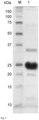
- BoHV-1 gC The N-terminus of BoHV-1 gC was recombinantly produced in E. coli and analyzed by SDS PAGE.
- gC-Nterm has a theoretical molecular weight of 13889 Da but migrated at approximately 25 kDa. This unusual electrophoretic mobility can be attributed to the large number of prolines (i.e. approx. 23% of the amino acid of the gC N-terminus are prolines) and negatively charged residues (Asp, Glu) present in the amino acid sequence of gC-Nterm.
- the bands at ⁇ 32 kDa and ⁇ 17 kDa correspond to the two subunits of factor Xa which was co-purified ( Fig. 3 ).
- gC-Nterm was used as antigen in an indirect ELISA for detection of BoHV-1 antibodies in bovine milk samples.
- Two BoHV-1 Ab positive samples and one negative sample were tested with the gC-Nterm ELISA.
- R28 is a German reference sample with a low Ab titer. According to German regulations, 50-fold diluted R28 should test positive commercial ELISA tests used for screening of tank milks consisting of up to 50 individual milks. The negative milk sample did not generate positive signal over the whole concentration range of gC-Nterm, with the exception that some signal was observed at a gC-Nterm concentration of 31.25 ng/ml which was considered an artifact ( Fig. 4 ).
- Glycoprotein C (gC) of bovine herpesvirus 1 (BoHV-1) is used as antigen and detector in the IDEXX IBR Tank Milk ELISA kit.
- the goal of the present study was to determine the most immunogenic regions of gC by epitope mapping using a peptide array consisting of biotinylated 15-mer peptides spanning the soluble domain of gC (Ala26-Ser474). Adjacent peptides had an overlap of 11 amino acids (aa).
- Bovine IgG bound to peptides was detected by incubation with a secondary goat anti-bovine IgG antibody coupled to horseradish peroxidase (HRP).
- HRP horseradish peroxidase
- Bovine serum was mixed with an equal volume of binding buffer (200 mM NaPi, 2 M NaCl, pH 7.4). Diluted bovine serum and milk samples were spun at 100 k g for 1 h at 4 °C. The supernatant of the serum samples and the serum-phase of the milk samples were obtained and filtered through 0.2 um. Resulting samples were loaded onto PROchieveA resin (Avantor, Radnor, PA, USA) equilibrated with 10 CV binding buffer.
- binding buffer 200 mM NaPi, 2 M NaCl, pH 7.4
- the column was washed with 20 CV binding buffer and 10 CV elution buffer pH 7 (0.2 M phosphate-citrate buffer, 3 M NaCl, pH 7), and bound IgG was eluted with 5 CV elution buffer pH 3 (0.2 M phosphate-citrate buffer, 3 M NaCl, pH 3).
- IgG containing fractions were neutralized by addition of 1 ⁇ 4 vol. of 1 M Tris-HCl, pH 8.
- IgG concentration was determined spectrophotometrically using an extinction coefficient of 210000 M-1 cm-1 at 280 nm. Purity of IgG preparations was checked by SDS-PAGE.
- the amino acid sequence of the soluble domain of BoHV-1 gC (accession NP_045314) i.e. the full length sequence without signal peptide and transmembrane domain (Ala26-Ser474), was used as the template for the synthesis of a peptide array consisting of 15-mers spanning the entire 494 aa such that adjacent peptide sequences overlapped by 11 aa.
- DMSO dimethyl sulfoxide
- Peptides were diluted to 0.1 ug/ml in phosphate buffered saline (PBS) and 100 ul of each peptide were added to the wells of streptavidin coated 96-well microtiter plates previously hydrated with 300 ul double distilled water (ddH2O).
- ddH2O double distilled water
- the biotinylated soluble domain of gC was coated at 0.01 uM or 0.005 uM.
- Plates were incubated for 90 min at RT, washed twice with 400 ul/well PBS + 0.1% Tween20 (PBST), and 100 ul/well of 1 ug/ml purified IgG in PBST were added to each well followed by incubation at RT for 1 h. Plates were washed five times with 400 ul/well PBST and 100 ul/well of 1 ug/ml goat anti-bovine IgG-HRP diluted in a proprietary buffer were added and incubated for 1 h at RT. Plates were washed again five times with 400 ul/well PBST and 100 ul/well of TMB solution were added, followed by incubation for 10 min at RT.
- PBST 400 ul/well PBS + 0.1% Tween20
- each IgG sample was tested in duplicate with each peptide that gave a positive result with any sample in the screening ELISA.
- peptide binding was confirmed for 8 samples.
- 15 peptides of the array were recognized by the IgG samples.
- 6 peptides were recognized exclusively by milk IgG (peptide 7, 15, 18, 23, 103, 104), 6 were recognized by serum IgG (peptides 13, 41, 64, 66, 79, 109) and 3 were recognized by milk and serum IgG (peptides 8, 14, 110) ( Fig. 6 , Table 2+3).
- the X at position 4 of SEQ ID NO: 121 stands for A or T.
- the X at position 3 of SEQ ID NO: 122 stands for V or G.
- the X at position 15 of SEQ ID NO: 123 stands for R or Q.
- the X at position 1 of SEQ ID NO: 124 stands for Q or R.
- the X at position 5 of SEQ ID NO: 124 stands for E or Q.
- the X at position 9 of SEQ ID NO: 125 stands for E or K.
- the X at position 15 of SEQ ID NO: 126 stands for I or V.
- the X at position 11 of SEQ ID NO: 127 stands for I or V.
- the X at position 11 of SEQ ID NO: 128 stands for I or V.
Landscapes
- Health & Medical Sciences (AREA)
- Life Sciences & Earth Sciences (AREA)
- Engineering & Computer Science (AREA)
- Immunology (AREA)
- Urology & Nephrology (AREA)
- Molecular Biology (AREA)
- Biomedical Technology (AREA)
- Chemical & Material Sciences (AREA)
- Hematology (AREA)
- Virology (AREA)
- Medicinal Chemistry (AREA)
- Analytical Chemistry (AREA)
- Cell Biology (AREA)
- Biotechnology (AREA)
- Food Science & Technology (AREA)
- Pathology (AREA)
- Physics & Mathematics (AREA)
- Microbiology (AREA)
- Biochemistry (AREA)
- General Health & Medical Sciences (AREA)
- General Physics & Mathematics (AREA)
- Tropical Medicine & Parasitology (AREA)
- Proteomics, Peptides & Aminoacids (AREA)
- Peptides Or Proteins (AREA)
- Measuring Or Testing Involving Enzymes Or Micro-Organisms (AREA)
Applications Claiming Priority (1)
| Application Number | Priority Date | Filing Date | Title |
|---|---|---|---|
| EP21196189 | 2021-09-11 |
Publications (3)
| Publication Number | Publication Date |
|---|---|
| EP4148429A2 true EP4148429A2 (fr) | 2023-03-15 |
| EP4148429A3 EP4148429A3 (fr) | 2023-06-07 |
| EP4148429B1 EP4148429B1 (fr) | 2026-02-25 |
Family
ID=77738960
Family Applications (1)
| Application Number | Title | Priority Date | Filing Date |
|---|---|---|---|
| EP22194619.7A Active EP4148429B1 (fr) | 2021-09-11 | 2022-09-08 | Procédé et kit de détection d'anticorps de l'herpès bovin de type 1 (bohv-1) |
Country Status (2)
| Country | Link |
|---|---|
| EP (1) | EP4148429B1 (fr) |
| WO (1) | WO2023039484A1 (fr) |
Families Citing this family (1)
| Publication number | Priority date | Publication date | Assignee | Title |
|---|---|---|---|---|
| CN119371494B (zh) * | 2024-11-02 | 2025-07-15 | 河北大学 | BoHV-1病毒抗原表位多肽、其偶联蛋白、酶联免疫试剂盒及应用 |
-
2022
- 2022-09-08 EP EP22194619.7A patent/EP4148429B1/fr active Active
- 2022-09-08 WO PCT/US2022/076132 patent/WO2023039484A1/fr not_active Ceased
Non-Patent Citations (18)
| Title |
|---|
| "Immunochemical Protocols", METHODS IN MOLECULAR BIOLOGY, vol. 295, 2005 |
| ALTSCHUL ET AL., NUCL. ACIDS RES., vol. 25, 1997, pages 3389 |
| ANONYMOUS: "PRINCIPLES AND METHODS OF VALIDATION OF DIAGNOSTIC ASSAYS FOR INFECTIOUS DISEASES", OIE TERRESTRIAL MANUAL, 1 January 2013 (2013-01-01), pages 1 - 16, XP093139531, [retrieved on 20240311] |
| BOTTCHER ET AL., VET. MICROBIOL., 2012 |
| CHOWDHURY S.I.: "Fine mapping of bovine herpesvirus 1 (BHV-1) glycoprotein C neutralizing epitopes by type-specific monoclonal antibodies and synthetic peptides", VETERINARY MICROBIOLOGY, vol. 58, no. 2-4, 1 November 1997 (1997-11-01), NL , pages 309 - 314, XP093003418, ISSN: 0378-1135, DOI: 10.1016/S0378-1135(97)00146-6 |
| COLITTI BARBARA, MURATORE ELVIRA, CAREDDU MARIA ELENA, BERTOLOTTI LUIGI, IOTTI BRYAN, GIACOBINI MARIO, PROFITI MARGHERITA, NOGAROL: "Field application of an indirect gE ELISA on pooled milk samples for the control of IBR in free and marker vaccinated dairy herds", BMC VETERINARY RESEARCH, vol. 14, no. 1, 1 December 2018 (2018-12-01), XP093003544, DOI: 10.1186/s12917-018-1716-5 |
| GUPTA P. K, ACTA VIROLOGICA: "BOVINE HERPESVIRUS TYPE 1 GLYCOPROTEIN C EXPRESSION IN MDBK CELLS AND ITS REACTIVITY IN ENZYME-LINKED IMMUNOSORBENT ASSAY", ACTA VIROLOGICA, vol. 42, no. 6, 1 January 1998 (1998-01-01), pages 397 - 400, XP093139559 |
| HU WEI PING, LU YANG, PRECIOSO NESTOR AMADEO, CHEN HSIAO YING, HOWARD TERESA, ANDERSON DAVID, GUAN MING: "Double-Antigen Enzyme-Linked Immunosorbent Assay for Detection of Hepatitis E Virus-Specific Antibodies in Human or Swine Sera", CLINICAL AND VACCINE IMMUNOLOGY, vol. 15, no. 8, 1 August 2008 (2008-08-01), pages 1151 - 1157, XP055937087, ISSN: 1556-6811, DOI: 10.1128/CVI.00186-07 |
| ISA: "Berl Munch 381", TIERARZTL WOCHENSCHR, vol. 116, pages 192 - 196 |
| JANET M DALY;BARNABAS KING;RACHAEL A TARLINTON;KEVIN C GOUGH;BEN C MADDISON;ROGER BLOWEY: "Comparison of Schmallenberg virus antibody levels detected in milk and serum from individual cows", BMC VETERINARY RESEARCH, vol. 11, no. 1, 11 March 2015 (2015-03-11), GB , pages 1 - 4, XP021220420, ISSN: 1746-6148, DOI: 10.1186/s12917-015-0365-1 |
| KARLIN ET AL., PROC. NATL. ACAD. SCI., vol. 90, 1990, pages 5873 |
| MARTINEZ S.: "Bovine herpesvirus 1: within-herd seroprevalence and antibody levels in bulktank milk", REV. SCI. TECH., vol. 35, no. 3, 1 December 2016 (2016-12-01), pages 1 - 11, XP093139542 |
| MILOVANOVIĆ MILOVAN, MILIĆEVIĆ VESNA, RADOJIČIĆ SONJA, VALČIĆ MIROSLAV, HOFFMANN BERND, DIETZE KLAAS: "Suitability of individual and bulk milk samples to investigate the humoral immune response to lumpy skin disease vaccination by ELISA", VIROLOGY JOURNAL, vol. 17, no. 1, 1 December 2020 (2020-12-01), GB , pages 1 - 7, XP093139489, ISSN: 1743-422X, DOI: 10.1186/s12985-020-01298-x |
| NYLIN BRITTA, STRØGER ULLA, RØNSHOLT LEIF: "A retrospective evaluation of a Bovine Herpesvirus-1 (BHV-1) antibody ELISA on bulk-tank milk samples for classification of the BHV-1 status of Danish dairy herds", PREVENTIVE VETERINARY MEDICINE, vol. 47, no. 1-2, 1 October 2000 (2000-10-01), NL , pages 91 - 105, XP093139548, ISSN: 0167-5877, DOI: 10.1016/S0167-5877(00)00163-X |
| R.A. KOHANSKI: "Encyclopedia of Biological Chemistry", 2013 |
| SPILKI, F.R. ; ESTEVES, P.A. ; SILVA, A.D.D. ; FRANCO, A.C. ; RIJSEWIJK, F.A.M. ; ROEHE, P.M.: "A monoclonal antibody-based ELISA allows discrimination between responses induced by bovine herpesvirus subtypes 1 (BoHV-1.1) and 2 (BoHV-1.2)", JOURNAL OF VIROLOGICAL METHODS, vol. 129, no. 2, 1 November 2005 (2005-11-01), NL , pages 191 - 193, XP027667400, ISSN: 0166-0934 |
| TIGNON ET AL., J VIROL METH, 2017 |
| VALAS ET AL., PREV. VET. MEDICINE, 2019 |
Also Published As
| Publication number | Publication date |
|---|---|
| EP4148429A3 (fr) | 2023-06-07 |
| EP4148429B1 (fr) | 2026-02-25 |
| WO2023039484A1 (fr) | 2023-03-16 |
Similar Documents
| Publication | Publication Date | Title |
|---|---|---|
| KR102443389B1 (ko) | Sarsr-cov에 대한 항체의 검출 | |
| US7696310B2 (en) | Peptides for detection of antibody to Anaplasma phagocytophilum | |
| JP7557896B2 (ja) | O-糖タンパク質のためのプロテアーゼ及び結合ポリペプチド | |
| CN110376384B (zh) | 检测中蜂蜂蜜与意蜂蜂蜜的elisa检测试剂盒 | |
| EP2488872B1 (fr) | Procédés pour détection de prrsv | |
| EP4148429B1 (fr) | Procédé et kit de détection d'anticorps de l'herpès bovin de type 1 (bohv-1) | |
| AU2011273451A1 (en) | Histone citrullinated peptides and uses thereof | |
| JP2001507447A (ja) | H. pylori診断薬 | |
| US20080305098A1 (en) | Recombinant Polypeptides and Methods for Detecting and/or Quantifying Autoantibodies Against Tsh Receptor | |
| WO2006033413A1 (fr) | Procédé de quantification de peptide | |
| CN114163539A (zh) | Tp重组抗原及其制备方法和应用 | |
| US20140106381A1 (en) | Method for the diagnosis of rheumatoid arthritis | |
| US20230303629A1 (en) | Fusion proteins comprising sars-cov-2 nucleocapsid domains | |
| US20240270795A1 (en) | Fusion proteins comprising sars-cov-2 receptor binding domain | |
| CN114478716A (zh) | 一种多肽组合及其在新型冠状病毒抗体检测中的应用 | |
| US12566179B2 (en) | Coronavirus assays, diagnostic methods, treatment methods, and compositions related thereto | |
| CN104849462B (zh) | 一种高灵敏度抗cd20单克隆抗体及其应用 | |
| CN115806595B (zh) | 非洲猪瘟病毒检测用重组抗原蛋白及其制备方法、检测试剂盒和应用 | |
| US20250258182A1 (en) | Rocky mountain spotted fever detection and treatment | |
| CN106699895B (zh) | 一种新型融合抗原和包含其的检测试剂盒及应用 | |
| CN114460306A (zh) | 一种Protein G磁珠快速检测新冠病毒IgG抗体的方法和检测装置 | |
| CN107056931A (zh) | 一种抗原肽和nod1抗体及应用、制备方法和试剂盒 | |
| CN111875679A (zh) | CAstV-Cap特异性多肽抗原、CAstV抗体、ELISA检测试剂盒及其应用 |
Legal Events
| Date | Code | Title | Description |
|---|---|---|---|
| PUAI | Public reference made under article 153(3) epc to a published international application that has entered the european phase |
Free format text: ORIGINAL CODE: 0009012 |
|
| STAA | Information on the status of an ep patent application or granted ep patent |
Free format text: STATUS: REQUEST FOR EXAMINATION WAS MADE |
|
| 17P | Request for examination filed |
Effective date: 20220908 |
|
| AK | Designated contracting states |
Kind code of ref document: A2 Designated state(s): AL AT BE BG CH CY CZ DE DK EE ES FI FR GB GR HR HU IE IS IT LI LT LU LV MC MK MT NL NO PL PT RO RS SE SI SK SM TR |
|
| PUAL | Search report despatched |
Free format text: ORIGINAL CODE: 0009013 |
|
| AK | Designated contracting states |
Kind code of ref document: A3 Designated state(s): AL AT BE BG CH CY CZ DE DK EE ES FI FR GB GR HR HU IE IS IT LI LT LU LV MC MK MT NL NO PL PT RO RS SE SI SK SM TR |
|
| RIC1 | Information provided on ipc code assigned before grant |
Ipc: G01N 33/569 20060101AFI20230502BHEP |
|
| P01 | Opt-out of the competence of the unified patent court (upc) registered |
Effective date: 20230522 |
|
| STAA | Information on the status of an ep patent application or granted ep patent |
Free format text: STATUS: EXAMINATION IS IN PROGRESS |
|
| TPAC | Observations filed by third parties |
Free format text: ORIGINAL CODE: EPIDOSNTIPA |
|
| 17Q | First examination report despatched |
Effective date: 20240215 |
|
| GRAP | Despatch of communication of intention to grant a patent |
Free format text: ORIGINAL CODE: EPIDOSNIGR1 |
|
| STAA | Information on the status of an ep patent application or granted ep patent |
Free format text: STATUS: GRANT OF PATENT IS INTENDED |
|
| INTG | Intention to grant announced |
Effective date: 20250910 |
|
| GRAJ | Information related to disapproval of communication of intention to grant by the applicant or resumption of examination proceedings by the epo deleted |
Free format text: ORIGINAL CODE: EPIDOSDIGR1 |
|
| STAA | Information on the status of an ep patent application or granted ep patent |
Free format text: STATUS: EXAMINATION IS IN PROGRESS |
|
| GRAS | Grant fee paid |
Free format text: ORIGINAL CODE: EPIDOSNIGR3 |
|
| STAA | Information on the status of an ep patent application or granted ep patent |
Free format text: STATUS: GRANT OF PATENT IS INTENDED |
|
| GRAP | Despatch of communication of intention to grant a patent |
Free format text: ORIGINAL CODE: EPIDOSNIGR1 |
|
| INTC | Intention to grant announced (deleted) | ||
| INTG | Intention to grant announced |
Effective date: 20251211 |
|
| GRAA | (expected) grant |
Free format text: ORIGINAL CODE: 0009210 |
|
| STAA | Information on the status of an ep patent application or granted ep patent |
Free format text: STATUS: THE PATENT HAS BEEN GRANTED |
|
| AK | Designated contracting states |
Kind code of ref document: B1 Designated state(s): AL AT BE BG CH CY CZ DE DK EE ES FI FR GB GR HR HU IE IS IT LI LT LU LV MC MK MT NL NO PL PT RO RS SE SI SK SM TR |
|
| REG | Reference to a national code |
Ref country code: CH Ref legal event code: F10 Free format text: ST27 STATUS EVENT CODE: U-0-0-F10-F00 (AS PROVIDED BY THE NATIONAL OFFICE) Effective date: 20260225 Ref country code: GB Ref legal event code: FG4D |
|
| REG | Reference to a national code |
Ref country code: DE Ref legal event code: R096 Ref document number: 602022031015 Country of ref document: DE |
|
| REG | Reference to a national code |
Ref country code: IE Ref legal event code: FG4D |