EP4148509A1 - Méthode de commande prédictive basée sur un modèle pour la réduction de la charge structurale dans des turbines éoliennes - Google Patents
Méthode de commande prédictive basée sur un modèle pour la réduction de la charge structurale dans des turbines éoliennes Download PDFInfo
- Publication number
- EP4148509A1 EP4148509A1 EP21733480.4A EP21733480A EP4148509A1 EP 4148509 A1 EP4148509 A1 EP 4148509A1 EP 21733480 A EP21733480 A EP 21733480A EP 4148509 A1 EP4148509 A1 EP 4148509A1
- Authority
- EP
- European Patent Office
- Prior art keywords
- model
- mpc
- structural load
- control method
- wind turbines
- Prior art date
- Legal status (The legal status is an assumption and is not a legal conclusion. Google has not performed a legal analysis and makes no representation as to the accuracy of the status listed.)
- Pending
Links
Images


Classifications
-
- G—PHYSICS
- G05—CONTROLLING; REGULATING
- G05B—CONTROL OR REGULATING SYSTEMS IN GENERAL; FUNCTIONAL ELEMENTS OF SUCH SYSTEMS; MONITORING OR TESTING ARRANGEMENTS FOR SUCH SYSTEMS OR ELEMENTS
- G05B13/00—Adaptive control systems, i.e. systems automatically adjusting themselves to have a performance which is optimum according to some preassigned criterion
- G05B13/02—Adaptive control systems, i.e. systems automatically adjusting themselves to have a performance which is optimum according to some preassigned criterion electric
- G05B13/04—Adaptive control systems, i.e. systems automatically adjusting themselves to have a performance which is optimum according to some preassigned criterion electric involving the use of models or simulators
- G05B13/048—Adaptive control systems, i.e. systems automatically adjusting themselves to have a performance which is optimum according to some preassigned criterion electric involving the use of models or simulators using a predictor
-
- F—MECHANICAL ENGINEERING; LIGHTING; HEATING; WEAPONS; BLASTING
- F03—MACHINES OR ENGINES FOR LIQUIDS; WIND, SPRING, OR WEIGHT MOTORS; PRODUCING MECHANICAL POWER OR A REACTIVE PROPULSIVE THRUST, NOT OTHERWISE PROVIDED FOR
- F03D—WIND MOTORS
- F03D7/00—Controlling wind motors
- F03D7/02—Controlling wind motors the wind motors having rotation axis substantially parallel to the air flow entering the rotor
- F03D7/04—Automatic control; Regulation
- F03D7/042—Automatic control; Regulation by means of an electrical or electronic controller
- F03D7/043—Automatic control; Regulation by means of an electrical or electronic controller characterised by the type of control logic
- F03D7/045—Automatic control; Regulation by means of an electrical or electronic controller characterised by the type of control logic with model-based controls
-
- H—ELECTRICITY
- H02—GENERATION; CONVERSION OR DISTRIBUTION OF ELECTRIC POWER
- H02J—ELECTRIC POWER NETWORKS; CIRCUIT ARRANGEMENTS OR SYSTEMS FOR SUPPLYING OR DISTRIBUTING ELECTRIC POWER; SYSTEMS FOR STORING ELECTRIC ENERGY
- H02J3/00—Circuit arrangements for AC mains or AC distribution networks
- H02J3/38—Arrangements for feeding a single network from two or more generators or sources in parallel; Arrangements for feeding already energised networks from additional generators or sources in parallel
- H02J3/381—Dispersed generators
-
- F—MECHANICAL ENGINEERING; LIGHTING; HEATING; WEAPONS; BLASTING
- F03—MACHINES OR ENGINES FOR LIQUIDS; WIND, SPRING, OR WEIGHT MOTORS; PRODUCING MECHANICAL POWER OR A REACTIVE PROPULSIVE THRUST, NOT OTHERWISE PROVIDED FOR
- F03D—WIND MOTORS
- F03D1/00—Wind motors with rotation axis substantially parallel to the air flow entering the rotor
-
- F—MECHANICAL ENGINEERING; LIGHTING; HEATING; WEAPONS; BLASTING
- F03—MACHINES OR ENGINES FOR LIQUIDS; WIND, SPRING, OR WEIGHT MOTORS; PRODUCING MECHANICAL POWER OR A REACTIVE PROPULSIVE THRUST, NOT OTHERWISE PROVIDED FOR
- F03D—WIND MOTORS
- F03D7/00—Controlling wind motors
-
- F—MECHANICAL ENGINEERING; LIGHTING; HEATING; WEAPONS; BLASTING
- F05—INDEXING SCHEMES RELATING TO ENGINES OR PUMPS IN VARIOUS SUBCLASSES OF CLASSES F01-F04
- F05B—INDEXING SCHEME RELATING TO WIND, SPRING, WEIGHT, INERTIA OR LIKE MOTORS, TO MACHINES OR ENGINES FOR LIQUIDS COVERED BY SUBCLASSES F03B, F03D AND F03G
- F05B2260/00—Function
- F05B2260/84—Modelling or simulation
-
- F—MECHANICAL ENGINEERING; LIGHTING; HEATING; WEAPONS; BLASTING
- F05—INDEXING SCHEMES RELATING TO ENGINES OR PUMPS IN VARIOUS SUBCLASSES OF CLASSES F01-F04
- F05B—INDEXING SCHEME RELATING TO WIND, SPRING, WEIGHT, INERTIA OR LIKE MOTORS, TO MACHINES OR ENGINES FOR LIQUIDS COVERED BY SUBCLASSES F03B, F03D AND F03G
- F05B2270/00—Control
- F05B2270/40—Type of control system
- F05B2270/404—Type of control system active, predictive, or anticipative
-
- F—MECHANICAL ENGINEERING; LIGHTING; HEATING; WEAPONS; BLASTING
- F05—INDEXING SCHEMES RELATING TO ENGINES OR PUMPS IN VARIOUS SUBCLASSES OF CLASSES F01-F04
- F05B—INDEXING SCHEME RELATING TO WIND, SPRING, WEIGHT, INERTIA OR LIKE MOTORS, TO MACHINES OR ENGINES FOR LIQUIDS COVERED BY SUBCLASSES F03B, F03D AND F03G
- F05B2270/00—Control
- F05B2270/80—Devices generating input signals, e.g. transducers, sensors, cameras or strain gauges
- F05B2270/804—Optical devices
- F05B2270/8042—Lidar systems
-
- G—PHYSICS
- G05—CONTROLLING; REGULATING
- G05B—CONTROL OR REGULATING SYSTEMS IN GENERAL; FUNCTIONAL ELEMENTS OF SUCH SYSTEMS; MONITORING OR TESTING ARRANGEMENTS FOR SUCH SYSTEMS OR ELEMENTS
- G05B2219/00—Program-control systems
- G05B2219/20—Pc systems
- G05B2219/26—Pc applications
- G05B2219/2619—Wind turbines
-
- H—ELECTRICITY
- H02—GENERATION; CONVERSION OR DISTRIBUTION OF ELECTRIC POWER
- H02J—ELECTRIC POWER NETWORKS; CIRCUIT ARRANGEMENTS OR SYSTEMS FOR SUPPLYING OR DISTRIBUTING ELECTRIC POWER; SYSTEMS FOR STORING ELECTRIC ENERGY
- H02J2101/00—Supply or distribution of decentralised, dispersed or local electric power generation
- H02J2101/20—Dispersed power generation using renewable energy sources
- H02J2101/28—Wind energy
-
- Y—GENERAL TAGGING OF NEW TECHNOLOGICAL DEVELOPMENTS; GENERAL TAGGING OF CROSS-SECTIONAL TECHNOLOGIES SPANNING OVER SEVERAL SECTIONS OF THE IPC; TECHNICAL SUBJECTS COVERED BY FORMER USPC CROSS-REFERENCE ART COLLECTIONS [XRACs] AND DIGESTS
- Y02—TECHNOLOGIES OR APPLICATIONS FOR MITIGATION OR ADAPTATION AGAINST CLIMATE CHANGE
- Y02E—REDUCTION OF GREENHOUSE GAS [GHG] EMISSIONS, RELATED TO ENERGY GENERATION, TRANSMISSION OR DISTRIBUTION
- Y02E10/00—Energy generation through renewable energy sources
- Y02E10/70—Wind energy
- Y02E10/72—Wind turbines with rotation axis in wind direction
Definitions
- the present invention is aimed at, as its name suggests, the development of a method that, using Model-based Predictive Control or MPC, is capable of improving the performance of wind turbines.
- the flexibility of the MPC allows achieving the proposed objective in various ways, such as, for example, reducing torsional vibrations in the turbine drive train (shaft and/or gearbox) and vibrations of the blades in the plane of rotation, reducing the structural loads and balancing the relationship between mechanical and electrical disturbances, limiting the maximum torsion of the shaft and/or blades, the maximum rotor speed, etc, ...
- the present invention specifically focuses on the application of the model-based predictive control (MPC) method using a single internal linear model to, as a control objective, reduce torsional vibrations in the turbine drive train (shaft and/or gear box), as well as to attenuate the vibrations of the blades appearing in the plane of rotation which, moreover, are very often the trigger for the first ones.
- the drive train is one of the elements with the greatest susceptibility to failure throughout the life of the turbine, especially in the increasingly frequent and flexible large turbines installed in locations that are quite inaccessible and subject to great excitation disturbances (such as those located off the coast or "offshore”).
- the method is explicitly proposed for the operating zone of the turbines above the nominal wind speed (zone III), where the mentioned structural load is greater, without prejudice to the fact that it can be easily extended to the rest of the zones.
- control theory is an interdisciplinary field of engineering and mathematics that deals with the behavior of dynamic systems, that is, systems whose state evolves over time and which, basically, consist of controlling the input to the system to obtain the desired effect on the output.
- One specification thereof is the so-called optimal control, which solves optimization problems in systems that evolve over time and are susceptible to being influenced by external forces, where, once the problem has been solved, it provides us with an optimal behavior path for the control variables, that is, it indicates what actions must be followed in order to bring the entire system from an initial state to a final state, on an optimal basis.
- LQR Linear Quadratic Regulators
- infinite prediction horizon methods such as LQR
- LQR infinite prediction horizon methods
- the LQR is a classic optimal control method that cannot be used practically in wind, precisely because it needs a very long prediction time horizon given the slow dynamics of the turbine, which leads to computational overhead.
- this classical method of optimal control does not consider restrictions on the variables involved in the optimization. Therefore, if in practice, a restriction, for example, the saturation of the manipulated variable, alters the linear dynamic behavior that the LQR controller has predicted, this behavior can be greatly affected, becoming unstable, even when the plant and the controller are nominally stable.
- linear MMPC techniques requires the design of multiple controllers, for the various operating points, each one with a different internal model and keeping active, in parallel, at least an important part -the state observer- of all these controllers during operation; to ensure smooth transition from one to the other, as the turbine passes through the entire operating range, depending on the incident wind, which must also be estimated online.
- NMPC methodology requires solving online a nonlinear optimization problem that involves a much higher computational load, at least if the internal model includes sufficient degrees of freedom and, what is more important, whose convergence in a reasonable number of iterations is not guaranteed in advance.
- EP 2799711 for "Method of operating a wind turbine", although it uses a standard MPC controller, it is based on the use of multiple linearized models to impose restrictions on the maximum values of aerodynamic thrust supported by the turbine as a whole, using the management of the aforementioned angle of attack of the blades or "pitch”, with the above mentioned problems that this entails.
- the present invention solves the problems of the aforementioned state of the art, proposing an MPC methodology for wind turbines that, using a single internal linear model, allows making use of the undeniable potentials of said methodology to improve an important aspect of the operation of wind turbines in great size and flexibility, such as the reduction of the structural load they support in zone III.
- the main novelty of this method consists in proposing a MPC with a single linear internal model.
- the model can be helped, if necessary, by exogenous blocks - not included in the optimization problem - that can contain auxiliary non-linear models.
- the convergence and computational load of the optimization algorithm are not compromised.
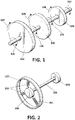
- Such a linear internal model will describe, with a certain degree of accuracy, the dynamic behavior of at least the rotor, drive train and generator of the wind turbine.
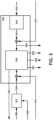
- the model will have as inputs, at least, the aerodynamic torque generated by the wind on the rotor and the "set-point" for the generator torque, the first being considered as disturbance and the second as manipulated variable.
- the aerodynamic torque (310) is again considered as measured disturbance (MD), but now the disturbance can also be incorporated with a certain temporal preview that allows the MPC to take into account the future disturbance during the internal calculation of the prediction horizon and, thus, to be able to anticipate the control action, compensating for the generator delay and largely avoiding transients.
- the implementation platform shall be able to widely bear the calculated load and, at that moment, the implementation of the anti-vibration system can be considered an update of the software related to the generator control, since it does not require any change in the turbine hardware. The latter is considered important in order to favor the applicability of the proposed method.
- the controller once the controller has been planned and adjusted, it must be verified that the available control platform meets the necessary execution requirements.
- the computational load that said platform shall face and the application restrictions that shall be imposed in the execution of the algorithm.
- restrictions shall be taken into account to calculate the computational load, because it is known that the activation of restrictions significantly influences the number of iterations necessary for the convergence of the optimization algorithm.
- the maximum number of iterations should be limited so that, under no circumstances, overload problems may appear in the control processing.
- figure 6 shows the aerodynamic torque applied by the rotor (thin line) and the estimate we make of said torque based on the physical description that we have described in step 4 (thick line).
- LSS low speed shaft
- controller has been implemented in C code and executed in real time on a computer with an Intel TM Core 2 Duo E6750 microprocessor (2.66 GHz, 1333 MHz FSB), with characteristics very similar to the devices found on mid-range control platforms today.
Landscapes
- Engineering & Computer Science (AREA)
- Life Sciences & Earth Sciences (AREA)
- General Engineering & Computer Science (AREA)
- Mechanical Engineering (AREA)
- Combustion & Propulsion (AREA)
- Chemical & Material Sciences (AREA)
- Sustainable Energy (AREA)
- Sustainable Development (AREA)
- Evolutionary Computation (AREA)
- Automation & Control Theory (AREA)
- General Physics & Mathematics (AREA)
- Physics & Mathematics (AREA)
- Software Systems (AREA)
- Medical Informatics (AREA)
- Health & Medical Sciences (AREA)
- Computer Vision & Pattern Recognition (AREA)
- Artificial Intelligence (AREA)
- Power Engineering (AREA)
- Wind Motors (AREA)
Applications Claiming Priority (2)
| Application Number | Priority Date | Filing Date | Title |
|---|---|---|---|
| ES202030405A ES2875674B2 (es) | 2020-05-07 | 2020-05-07 | Método de control predictivo basado en modelo para la reducción de carga estructural en turbinas eólicas, y turbina configurada para aplicar este método |
| PCT/ES2021/070310 WO2021224532A1 (fr) | 2020-05-07 | 2021-05-05 | Méthode de commande prédictive basée sur un modèle pour la réduction de la charge structurale dans des turbines éoliennes |
Publications (1)
| Publication Number | Publication Date |
|---|---|
| EP4148509A1 true EP4148509A1 (fr) | 2023-03-15 |
Family
ID=76522974
Family Applications (1)
| Application Number | Title | Priority Date | Filing Date |
|---|---|---|---|
| EP21733480.4A Pending EP4148509A1 (fr) | 2020-05-07 | 2021-05-05 | Méthode de commande prédictive basée sur un modèle pour la réduction de la charge structurale dans des turbines éoliennes |
Country Status (4)
| Country | Link |
|---|---|
| US (1) | US20230176533A1 (fr) |
| EP (1) | EP4148509A1 (fr) |
| ES (1) | ES2875674B2 (fr) |
| WO (1) | WO2021224532A1 (fr) |
Families Citing this family (4)
| Publication number | Priority date | Publication date | Assignee | Title |
|---|---|---|---|---|
| CN115933643A (zh) * | 2022-11-21 | 2023-04-07 | 深圳市智绘科技有限公司 | 机器人的控制方法、装置、电子设备及存储介质 |
| CN118092147B (zh) * | 2024-04-28 | 2024-07-30 | 浙江大学 | 海上风电机组的工业规划控制器设计方法 |
| CN119982371B (zh) * | 2025-01-20 | 2025-08-08 | 华能广西清洁能源有限公司 | 基于动态博弈优化的风机轴系故障预警方法 |
| CN120466845B (zh) * | 2025-07-16 | 2025-09-19 | 湖南工程学院 | 一种用于大型碟式太阳能热发电的抗风减振系统 |
Family Cites Families (11)
| Publication number | Priority date | Publication date | Assignee | Title |
|---|---|---|---|---|
| US7309930B2 (en) | 2004-09-30 | 2007-12-18 | General Electric Company | Vibration damping system and method for variable speed wind turbines |
| EP1911968A1 (fr) * | 2006-10-10 | 2008-04-16 | Ecotecnia Energias Renovables S.L. | Système de réglage pour une turbine éolienne et procédé de réglage |
| CN102588211B (zh) * | 2012-02-29 | 2013-08-14 | 沈阳华人风电科技有限公司 | 一种风力发电机组全工况模型预测控制方法及系统 |
| US10302067B2 (en) * | 2013-02-08 | 2019-05-28 | Vestas Wind Systems A/S | Model based controller for a wind turbine generator |
| DK2799711T3 (en) * | 2013-05-03 | 2017-10-23 | Ge Renewable Tech Wind Bv | Method of operating a wind turbine |
| CN107532568B (zh) * | 2015-03-23 | 2021-09-21 | 维斯塔斯风力系统集团公司 | 使用中央控制器计算局部控制目标的多转子风力涡轮机的控制 |
| KR101939903B1 (ko) * | 2017-04-26 | 2019-01-17 | 군산대학교산학협력단 | 가변 속도를 갖는 풍력 터빈의 모델 예측 제어 방법 및 그 시스템 |
| WO2020125901A1 (fr) * | 2018-12-21 | 2020-06-25 | Vestas Wind Systems A/S | Commande d'éolienne basée sur des routines de dispositifs de commande avec optimisation et sans optimisation |
| EP3730780B1 (fr) * | 2019-04-24 | 2022-01-19 | Vestas Wind Systems A/S | Contrôle de la vitesse de rotor d'une éolienne |
| US11125211B2 (en) * | 2019-05-16 | 2021-09-21 | General Electric Company | System and method for wind turbine multivariable control using state dependent quadratic regulator |
| US11629694B2 (en) * | 2019-10-22 | 2023-04-18 | General Electric Company | Wind turbine model based control and estimation with accurate online models |
-
2020
- 2020-05-07 ES ES202030405A patent/ES2875674B2/es active Active
-
2021
- 2021-05-05 WO PCT/ES2021/070310 patent/WO2021224532A1/fr not_active Ceased
- 2021-05-05 EP EP21733480.4A patent/EP4148509A1/fr active Pending
- 2021-05-05 US US17/923,836 patent/US20230176533A1/en active Pending
Also Published As
| Publication number | Publication date |
|---|---|
| US20230176533A1 (en) | 2023-06-08 |
| ES2875674B2 (es) | 2022-03-21 |
| WO2021224532A1 (fr) | 2021-11-11 |
| ES2875674A1 (es) | 2021-11-10 |
Similar Documents
| Publication | Publication Date | Title |
|---|---|---|
| EP4148509A1 (fr) | Méthode de commande prédictive basée sur un modèle pour la réduction de la charge structurale dans des turbines éoliennes | |
| Selvam et al. | Feedback–feedforward individual pitch control for wind turbine load reduction | |
| Bossanyi et al. | Validation of individual pitch control by field tests on two-and three-bladed wind turbines | |
| Wright et al. | Advanced control design for wind turbines; Part I: control design, implementation, and initial tests | |
| Yuan et al. | Adaptive pitch control of wind turbine for load mitigation under structural uncertainties | |
| Bossanyi | Wind turbine control for load reduction | |
| DK3080446T3 (en) | OPERATING PROCEDURE FOR A WINDMILL | |
| EP3976959B1 (fr) | Réduction de vibrations de chant à l'aide d'un signal de charge de pale | |
| EP2107236B1 (fr) | Procédé d'amortissement de vibrations de tour d'une éolienne et système de contrôle pour éoliennes | |
| US8803351B2 (en) | Control method for a wind turbine | |
| US9617978B2 (en) | Method and device for preventing a lateral oscillation of a wind power installation | |
| CN101688518B (zh) | 可变速度风力涡轮机、谐振控制系统、运行可变速度风力涡轮机的方法、可变速度风力涡轮机中方法的使用以及谐振控制系统的使用 | |
| EP2063110B2 (fr) | Procédé d'amortissement des vibrations de puissance d'une éolienne et système de commande d'inclinaison | |
| Camblong | Digital robust control of a variable speed pitch regulated wind turbine for above rated wind speeds | |
| DK3156646T3 (en) | WIND ENERGY INSTALLATION WITH A SPEED AND GENERATOR REGULATOR | |
| Jiang et al. | Load mitigation method for wind turbines during emergency shutdowns | |
| Camblong et al. | Wind turbine mechanical stresses reduction and contribution to frequency regulation | |
| EP4019768B1 (fr) | Procédé et système pour déterminer un signal de consigne d'un système de conversion d'énergie éolienne | |
| Neshati et al. | H∞ drive train control for hardware-in-the-loop simulation with a scaled dynamometer test bench | |
| WO2023088416A1 (fr) | Dispositif de commande pour éolienne | |
| Wright et al. | Refinements and tests of an advanced controller to mitigate fatigue loads in the controls advanced research turbine | |
| US20230314130A1 (en) | Method for detecting a blade misalignment of a rotor blade of a rotor of a wind turbine | |
| WO2023088432A1 (fr) | Dispositif de commande destiné à une éolienne | |
| US12313037B2 (en) | Controlling a wind turbine with respect to dynamic stability | |
| CN118765348A (zh) | 基于当前扭矩值的扭矩限制器 |
Legal Events
| Date | Code | Title | Description |
|---|---|---|---|
| STAA | Information on the status of an ep patent application or granted ep patent |
Free format text: STATUS: UNKNOWN |
|
| STAA | Information on the status of an ep patent application or granted ep patent |
Free format text: STATUS: THE INTERNATIONAL PUBLICATION HAS BEEN MADE |
|
| PUAI | Public reference made under article 153(3) epc to a published international application that has entered the european phase |
Free format text: ORIGINAL CODE: 0009012 |
|
| STAA | Information on the status of an ep patent application or granted ep patent |
Free format text: STATUS: REQUEST FOR EXAMINATION WAS MADE |
|
| 17P | Request for examination filed |
Effective date: 20221201 |
|
| AK | Designated contracting states |
Kind code of ref document: A1 Designated state(s): AL AT BE BG CH CY CZ DE DK EE ES FI FR GB GR HR HU IE IS IT LI LT LU LV MC MK MT NL NO PL PT RO RS SE SI SK SM TR |
|
| P01 | Opt-out of the competence of the unified patent court (upc) registered |
Effective date: 20230621 |
|
| DAV | Request for validation of the european patent (deleted) | ||
| DAX | Request for extension of the european patent (deleted) | ||
| STAA | Information on the status of an ep patent application or granted ep patent |
Free format text: STATUS: EXAMINATION IS IN PROGRESS |
|
| 17Q | First examination report despatched |
Effective date: 20250916 |