EP4148682A1 - Procédé, appareil et produit-programme informatique pour réseaux de neurones artificiels - Google Patents
Procédé, appareil et produit-programme informatique pour réseaux de neurones artificiels Download PDFInfo
- Publication number
- EP4148682A1 EP4148682A1 EP22186854.0A EP22186854A EP4148682A1 EP 4148682 A1 EP4148682 A1 EP 4148682A1 EP 22186854 A EP22186854 A EP 22186854A EP 4148682 A1 EP4148682 A1 EP 4148682A1
- Authority
- EP
- European Patent Office
- Prior art keywords
- joint
- skeletal
- parameters
- source
- animation
- Prior art date
- Legal status (The legal status is an assumption and is not a legal conclusion. Google has not performed a legal analysis and makes no representation as to the accuracy of the status listed.)
- Pending
Links
Images




Classifications
-
- G—PHYSICS
- G06—COMPUTING OR CALCULATING; COUNTING
- G06T—IMAGE DATA PROCESSING OR GENERATION, IN GENERAL
- G06T13/00—Animation
- G06T13/20—Three-dimensional [3D] animation
- G06T13/40—Three-dimensional [3D] animation of characters, e.g. humans, animals or virtual beings
-
- G—PHYSICS
- G06—COMPUTING OR CALCULATING; COUNTING
- G06T—IMAGE DATA PROCESSING OR GENERATION, IN GENERAL
- G06T7/00—Image analysis
- G06T7/70—Determining position or orientation of objects or cameras
- G06T7/73—Determining position or orientation of objects or cameras using feature-based methods
-
- G—PHYSICS
- G06—COMPUTING OR CALCULATING; COUNTING
- G06T—IMAGE DATA PROCESSING OR GENERATION, IN GENERAL
- G06T2207/00—Indexing scheme for image analysis or image enhancement
- G06T2207/20—Special algorithmic details
- G06T2207/20084—Artificial neural networks [ANN]
-
- G—PHYSICS
- G06—COMPUTING OR CALCULATING; COUNTING
- G06T—IMAGE DATA PROCESSING OR GENERATION, IN GENERAL
- G06T2207/00—Indexing scheme for image analysis or image enhancement
- G06T2207/30—Subject of image; Context of image processing
- G06T2207/30196—Human being; Person
Definitions
- the present solution generally relates to computer graphics, in particular to computer generated animation.
- Computer generated animation is a field of computer graphics, where moving images are created by using computers.
- Computer animation may be based on three-dimensional (3D) computer graphics.
- 3D three-dimensional
- an image comprising the object is displayed on the computer screen, and replaced by a new image that is similar to the previous image, but shifted slightly.
- objects are built on the computer monitors, and 3D figures are rigged with virtual skeleton.
- EXtended reality is a concept that covers all computer-altered reality areas such as Augmented Reality (AR), Mixed Reality (MR) and Virtual Reality (VR).
- AR Augmented Reality
- MR Mixed Reality
- VR Virtual Reality
- a concept of using 3D pointcloud in realtime XR conversation is gaining lots of momentum and resource of popularity lately. This is mostly due to sudden increase in Augmented Reality (AR) deployment capabilities, Virtual Reality (VR) headmounted displays available to the consumer market, as well as accessibility and affordability of these devices for Mixed Reality (MR) experiences.
- an apparatus comprising means for regressing a source mesh to a corresponding source three-dimensional skeletal-joint in a kinematic hierarchy; means for extracting target skeletal joint from a depth sensor to be represented by a kinematic hierarchy; means for extracting joint parameters from the target skeletal-joint by an optimization iteration scheme; and means for updating joint parameters in the source skeletal-joint according to the extracted joint parameters to produce accurate estimated joint parameters for skeletal animation and/or pointcloud animation.
- a method comprising regressing a source mesh to a corresponding source three-dimensional skeletal-joint in a kinematic hierarchy; extracting target skeletal joint from a depth sensor to be represented by a kinematic hierarchy; extracting joint parameters from the target skeletal-joint by an optimization iteration scheme; and updating joint parameters in the source skeletal-joint according to the extracted joint parameters to produce accurate estimated joint parameters for skeletal animation and/or pointcloud animation.
- an apparatus comprising at least one processor, memory including computer program code, the memory and the computer program code configured to, with the at least one processor, cause the apparatus to perform at least the following: regress a source mesh to a corresponding source three-dimensional skeletal-joint in a kinematic hierarchy; extract target skeletal joint from a depth sensor to be represented by a kinematic hierarchy; extract joint parameters from the target skeletal-joint by an optimization iteration scheme; and update joint parameters in the source skeletal-joint according to the extracted joint parameters to produce accurate estimated joint parameters for skeletal animation and/or pointcloud animation.
- a computer program product comprising computer program code configured to, when executed on at least one processor, cause an apparatus or a system to: regress a source mesh to a corresponding source three-dimensional skeletal-joint in a kinematic hierarchy; extract target skeletal joint from a depth sensor to be represented by a kinematic hierarchy; extract joint parameters from the target skeletal-joint by an optimization iteration scheme; and update joint parameters in the source skeletal-joint according to the extracted joint parameters to produce accurate estimated joint parameters for skeletal animation and/or pointcloud animation.
- joint parameters comprises of scale and joint angle.
- an orientation of a three-dimensional character is determined by the estimated joint parameters.
- vertices are bound to source skeleton, and the bound vertices are deformed to deformed vertices.
- a three-dimensional joint coordinate position is determined by a kinematic mapping function of a joint angle and scale.
- the joint angle and scale is estimated with an inverse kinematic mapping function of a coordinate position.
- joint parameters update is derived from an inverse of Jacobian matrix taking into account a reprojection error.
- the computer program product is embodied on a non-transitory computer readable medium.
- the present solution is targeted to computer animation, and in particular to real-time pointcloud animation using scale constrained inverse kinematics.
- Computer animation is widely used in many applications, such as movie making, game development, and virtual reality with the aim of producing visually desirable character animation results.
- the focus in the present disclosure is on how a source three-dimensional (3D) mesh/pointclouds can be animated using a given 3D target skeletal-joint.
- Figures 1a and 1b show example of a present embodiments.
- Figures 1a, 1b show a proposed animation system for a source 3D mesh using the target 3D skeletal-joint extracted from Microsoft Kinect Azure.
- a 3D source mesh is animated using the target skeletal-joint located on the image plane.
- a relation "skeletal deformation" is established between the source skeletal-joint 110, 150 and target skeletal-joint 120, 160.
- the target 3D skeletal-joint 120, 160 is readily available from RGB-D sensors such as Microsoft Kinect V1, V2, Azure and Intel Realsense.
- the method according to various embodiments is invariance to scale which has been constrained as part of an optimization process, and thus invariance to bone length between source and target entities. As a result, the skeletal bone length and mesh shapes are preserved during animation.
- the present embodiments are targeted to provide a working implementation (use case example) for 3D mesh animation.
- One of the aims is to incorporate this demonstration as part of 3GPP and MPEG standards under XR conversational scene description, whereby 3D skeletal joints are being signalled and sent at every time from one caller to the other instead of directly sending animated pointcloud at every time.
- XR Extended Reality
- AR Augmented Reality
- MR Mixed Reality
- VR Virtual Reality
- avatar refers to 3D (three-dimensional) pointcloud that can be an avatar-like pointcloud of human but also high level detail representation of human and also 3D mesh representation.
- real-time 3D Avatar conversation enables a user to transmit a virtual representation of themselves to a receiver's virtual environment or as AR/MR in their physical environment enabling deep immersive experience. This kind of experience enables interaction up to the facial expression, hand gestures, and live commands to impact the receivers virtual space during live conversation.
- a 3D avatar would allow for substantially more engaging person-to-person interaction in a virtual environment.
- Body language can much more closely approach the ability it has in the real world to convey meaning, as movements can be displayed and interpreted more accurately, and virtual or mixed reality environments would create an illusion of a shared physical location.
- 3D avatar vital for future conversational system and opening up the possibility of simulating experiences that have not yet been able to be recreated with current technologies and methods, due to the importance of spatial factors that are not able to be captured by 2D (two-dimensional) video.
- ISO/IEC 18040 2019 Live actor and entity representation in mixed and augmented reality
- (MAR)ISO/IEC 18520 2019 Benchmarking of vision-based spatial registration and tracking methods for mixed and augmented reality
- ISO/IEC 23488 CD Object/Environmental Representation for Image-based Rendering in Virtual/Mixed and Augmented Reality
- ISO/IEC 23884 DTS Material Property and Parameter Representation for Model based Haptic Simulation of Objects in Virtual, Mixed and Augmented Reality (VR, MAR);
- ISO/IEC 18023-1 and AMD Functional specification ISO/IEC 18023-2: transmission formats.
- Keypoint is a term referring to human skeletal representation. Keypoint defines a hierarchy connection of parent-child pair of human body joints. By picking a joint denoted, for example as “r_shoulder”, its immediate child “ r _ elbow” can be retrieved, as well as its grandchildren “r_wrist” and this cycle goes on until the whole family tree is retrieved.
- This straightforward representation of joints as keypoints hierarchy allow easy retrieval of information regarding a joint which is useful for various animation framework such as popular skeletal animation based on forward and inverse kinematics.
- a keypoint can be referred to as a joint with hierarchy definitions while joint is simply a joint without hierarchy formation.
- Skeletal animation or "Rigging” is a technique in computer animation in which a character (or other articulated object) is represented in two parts: a surface representation used to draw the character (called the mesh or skin) and a hierarchical set of interconnected parts (called joints or nodes, and collectively forming the skeleton or rig).
- the character has virtual armature used to animate (pose and keyframe) the mesh. While this technique is often used to animate humans and other organic figures, it can be used to control the deformation of any object - such as a door, a spoon, a machine, or a galaxy.
- the set of "joints" may not be hierarchical or interconnected, but simply represent a higher-level description of the motion of the part of mesh it is influencing.
- skeletal node and skeletal joint are to be considered equal.
- the prerequisites for skeletal animation for a 3D mesh are the presence of:
- Such a set of data together with the 3D mesh is also called skinned mesh:
- Joints also known as skeleton nodes or joint nodes:
- Rigging process comprises binding each vertex of the input 3D mesh to one or more bones of the underlying 3D skeletal-joint. These vertices are then deformed through a skinning process, that involves the use of appropriate skinning weights which determine how each bone influences the animated mesh.
- a certain vertex may be associated to one or more skeletal bones, through one or more skinning weights. Also, a certain bone may be associated to more than one vertex.
- the approach of rigging-skinning requires additional effort to create an animated human character, with huge effort done in rigging the model to provide appropriate control mechanism and deformation behaviour.
- the rigging process do not explicitly/implicitly resolve the scale issue that arise from difference in local and global size, between the source and target skeletal-joint pairs.
- subsequent skinning process assume good bone orientations are available for accurate deformation. This is not necessarily true and can go wildly off especially under non-constrained conversational application where the subject can move uncontrollable. If scale problem is not resolved, the eventual bones orientation will be wildly off and badly affecting the vertices deformation.
- the skinning process itself depends hugely on extracting proper skinning weights which tends to vary for different character.
- a good low bandwidth XR conversation system is desired to be easy and should have a generic metadata structure, which should allow easy deployment to various standard related bodies.
- the system should be able to animate a source mesh with huge structural/size difference to the target skeletal-joint, such as animate a "chunky man” using a target skeletal-joint from a "little girl” and vice versa.
- One of the way to tackle the animation scale problem will be to use a neural network based approach, but might not reach real-time expectations.
- the animation scale problem can be formulated under skeletal based animation by implicitly incorporating scale resolved in the optimization process.
- the scale resolved through proposed optimization allows getting accurate joint parameters needed to deform the mesh as animation.
- the proposed optimization scheme is used to extract accurate joint rotation parameters from target skeletal-joint. This results in accurate deformation of sources skeletal-joint preserving its shape and length, thanks to the scale resolved.
- attached vertices bound to the source skeletal-joint are deformed using projective dynamics.
- projective dynamics incorporate physical properties as part of the deformation, and thus there is no need to estimate skinning weights.
- skeletal animation and/or Linear Blend Skinning (LBS).
- LBS Linear Blend Skinning
- Most of the skeletal animation methods somewhat assume that skeletal orientations are accurate and scale information has been resolved (scale resolved).
- some of the methods are not targeted for real-time conversation applications but offline processing suitable for game engines or media playbacks.
- Linear Blend Skinning is one of the most popular techniques for character animation.
- LBS relies on a good rigging process where an underlying bone structure is placed inside the source mesh, followed by assigning weights to those mesh vertices in relation to the corresponding bones.
- Some works under rigging-skinning can provide intuitive skinning result, but highly dependent on prerequisite rigging process, and also accurate bone orientation.
- most of these methods require manual intervention in the rigging process to produce realistic characters.
- Figure 2 illustrates an example of a system according to the present embodiments.
- a graph convolution neural network 210 may be directly used to regress a source mesh 200 to corresponding source three-dimensional (3D) skeletal-joint 220.
- the outcome produces a hierarchy tree representation of the source skeletal-joints, which can be in various formats such as BVH (BioVision Motion Capture) motion capture format.
- BVH BioVision Motion Capture
- This representation forms a kinematic chain (parent-child-grandchildren relation) that is needed for subsequent Forward Kinematics (FK) process.
- target 3D skeletal-joints 230 may be directly extracted from a depth sensor, such as Microsoft Kinect azure and/or Intel-RGB-D sensors, for example.
- a temporal smooth filter may be applied to improve the outcome.
- a hierarchy tree representation can be set up that is semantically consistent with that of the source skeletal-joint.
- the present embodiments are targeted to the "scale constrained skeletal animation" 240 framework, the example of which is shown in Figure 2 .
- This framework accepts both the source skeletal-joint 220 and target skeletal-joint 230 as input. It is worth noticing that these inputs do not necessarily have to be the same scale or size, thus not from the same person.
- the framework 240 contains two main steps which are (i) scaled constrained Inverse Kinematics and (ii) projective dynamics.
- the scale constrained Inverse Kinematics (IK) estimate accurate joint parameters with scale resolved (optimal rotation and scale). This eventually allows the scale information to be resolved during forward kinematic process performed on the kinematic chain.
- the projective dynamics step takes the estimated rotation as input to deform the mesh vertices.
- the formulation according to present embodiments is inspired by forward and inverse kinematics idea used in robotics. Given joint parameters, the orientation of a 3D character can be calculated directly using multiple applications of trigonometric formulas, a process known as forward kinematics.
- the aim of the present embodiments is to be able to estimate both the scale s and joint angle q (i.e., rotation) given known coordinate position x .
- a joint parameter being formed on joint angles q , and scale s , needs to be estimated to reach target skeletal-joint position.
- the joint parameters and scale are estimated, then refined as part of IK process in equation (3).
- the forward kinematic will be used to resolve the scale while also rotating the source to target skeletal-joint. This produces accurate estimated parameters (scale, angles) for skeletal animation and pointcloud animation.
- the method according to present embodiments incorporate the scale estimation as part of the inverse optimization process in equation (3).
- Equation (4) is an orthogonal problem and can be solved using Singular Value Decomposition. However, in order to solve equation (4), one needs to create the inverse of the first-order Jacobian matrix J* at first.
- the Jacobian matrix can be computed analytically which is faster and effective since the current animation task is a small dimension problem involving few number of joints.
- j 1,.., m is defined as number of parameters to optimize
- k 1 ,.., K blocks such that each block correspond to total number of DOF of a joint (rotation and scale).
- the DOF of a joint may be 3 for rotation around x,y,z axis, and 3 for scale around x,y,z axis respectively. It is to be noticed that in some cases, some joints may only move over x,y axis or z alone which thus changes the size of the DOF.
- the ⁇ act as a stiffness to regularize to best solution for the optimization, by scaling the derivative larger while preserving vector direction.
- the total number of ⁇ may be 2 and positioned in the Jacobian matrix so that the first value regularizes scale entries ⁇ e ⁇ ⁇ j that influences the upper-body parts and the second value regularizes the Jacobian scale entries ⁇ e ⁇ ⁇ j that influences the lower body parts.
- ⁇ is chosen in the beginning of the optimization step t using the bone length difference between source and target joints, and made fixed throughout the iteration. Indeed, the proposed solution compensate with a smaller value for ⁇ ⁇ t for all scale related gradient, therefore making it act stiff.
- ⁇ can be make adaptively to change during the iterative steps rather than being fixed. Its value can be directly tied to the derivative to smooth its transition to optimum. It is to be noticed that the total number of ⁇ can be more than two (e.g., have one for each joint or bone relation). However, this will increase the size of Jacobian matrix's DOF and thus increase computational complexity and time.
- Equation (4) may be solved with damped Jacobian pseudo-inverse using SVD.
- the result produces appropriate joint rotation parameter compatible for forward kinematic process, thanks to the scale resolve.
- the rotation needed is extracted for the subsequent projective dynamics.
- the skeletal animation for bone transformation that preserve the scale and size can be effected.
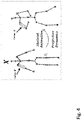
- the task of projective dynamics is to deform vertices V bound to source skeleton bone to deformed vertices v with bone movement. An example of this is shown in Figure 4 .
- One of the major constraints is to avoid the need to use skinning weights as done in popular state of art LBS.
- Projective dynamics method exploit dynamic physical properties of human bodies by preserving some form of constraint energy.
- the bones and joints may be represented as tetrahedral elements ⁇ . Thereafter, the vertices may be shrank-wrapped to their corresponding bones as in the Figure 4 .
- Projective Dynamics chooses to conduct the minimization of equation (8) by alternating both local and global optimization steps until convergence:
- the vertices have been shrank-wrapped to bone and joint elements which create an indexing to particular bones/joint elements.
- This indexing information can further be processed to manipulate collision and simulate interpenetration effect of the 3D mesh as future embodiments.
- skeletal-joints representing full human skeletal hierarchy.
- unlimited number of skeletal-joints can be used with the proposed system.
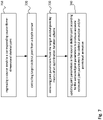
- the method generally comprises regressing 710 a source mesh to a corresponding source three-dimensional skeletal-joint in a kinematic hierarchy; extracting 720 target skeletal joint from a depth sensor to be represented by a kinematic hierarchy; extracting 730 joint parameters from the target skeletal-joint by an optimization iteration scheme; and updating 740 joint parameters in the source skeletal-joint according to the extracted joint parameters to produce accurate estimated joint parameters for skeletal animation and/or pointcloud animation.
- Each of the steps can be implemented by a respective module of a computer system.
- An apparatus comprises means for regressing a source mesh to a corresponding source three-dimensional skeletal-joint in a kinematic hierarchy; means for extracting target skeletal joint from a depth sensor to be represented by a kinematic hierarchy; means for extracting joint parameters from the target skeletal-joint by an optimization iteration scheme; and means for updating joint parameters in the source skeletal-joint according to the extracted joint parameters to produce accurate estimated joint parameters for skeletal animation and/or pointcloud animation.
- the means comprises at least one processor, and a memory including a computer program code, wherein the processor may further comprise processor circuitry.
- the memory and the computer program code are configured to, with the at least one processor, cause the apparatus to perform the method of Figure 7 according to various embodiments.
- the apparatus is a user equipment for the purposes of the present embodiments.
- the apparatus 90 comprises a main processing unit 91, a memory 92, a user interface 94, a communication interface 93.
- the apparatus may also comprise a camera module 95.
- the apparatus may be configured to receive image and/or video data from an external camera device over a communication network.
- the memory 92 stores data including computer program code in the apparatus 90.
- the computer program code is configured to implement the method according various embodiments by means of various computer modules.
- the camera module 95 or the communication interface 93 receives data, in the form of images or video stream, to be processed by the processor 91.
- the communication interface 93 forwards processed data, i.e. the image file, for example to a display of another device, such a virtual reality headset.
- the apparatus 90 is a video source comprising the camera module 95, user inputs may be received from the user interface.
- the various embodiments may provide advantages.
- the proposed approach is generic, easy ported to standards use case, suitable for XR conversation, computationally less expensive, fully automatic with no need for intervention.
- the use of popular IK technique as base ensures easy deployments on mobile devices, and servers since major software and engines have IK frameworks.
- a device may comprise circuitry and electronics for handling, receiving and transmitting data, computer program code in a memory, and a processor that, when running the computer program code, causes the device to carry out the features of an embodiment.
- a network device like a server may comprise circuitry and electronics for handling, receiving and transmitting data, computer program code in a memory, and a processor that, when running the computer program code, causes the network device to carry out the features of various embodiments.
Landscapes
- Engineering & Computer Science (AREA)
- Physics & Mathematics (AREA)
- General Physics & Mathematics (AREA)
- Theoretical Computer Science (AREA)
- Computer Vision & Pattern Recognition (AREA)
- Processing Or Creating Images (AREA)
Applications Claiming Priority (1)
| Application Number | Priority Date | Filing Date | Title |
|---|---|---|---|
| FI20215945 | 2021-09-09 |
Publications (1)
| Publication Number | Publication Date |
|---|---|
| EP4148682A1 true EP4148682A1 (fr) | 2023-03-15 |
Family
ID=82742693
Family Applications (1)
| Application Number | Title | Priority Date | Filing Date |
|---|---|---|---|
| EP22186854.0A Pending EP4148682A1 (fr) | 2021-09-09 | 2022-07-26 | Procédé, appareil et produit-programme informatique pour réseaux de neurones artificiels |
Country Status (1)
| Country | Link |
|---|---|
| EP (1) | EP4148682A1 (fr) |
Cited By (4)
| Publication number | Priority date | Publication date | Assignee | Title |
|---|---|---|---|---|
| CN116912433A (zh) * | 2023-09-15 | 2023-10-20 | 摩尔线程智能科技(北京)有限责任公司 | 三维模型骨骼绑定方法、装置、设备及存储介质 |
| CN117132687A (zh) * | 2023-08-14 | 2023-11-28 | 北京元跃科技有限公司 | 一种动画生成方法、装置及电子设备 |
| CN118967989A (zh) * | 2024-07-05 | 2024-11-15 | 吉林动画学院 | 三维角色模型外形变换方法、装置、设备、介质及产品 |
| CN120276587A (zh) * | 2025-01-21 | 2025-07-08 | 金象文化发展股份有限公司 | 基于数字人演示的多维互动控制系统 |
Citations (3)
| Publication number | Priority date | Publication date | Assignee | Title |
|---|---|---|---|---|
| US20120019517A1 (en) * | 2010-07-23 | 2012-01-26 | Mixamo, Inc. | Automatic generation of 3d character animation from 3d meshes |
| WO2020259855A1 (fr) * | 2019-06-28 | 2020-12-30 | RLT IP Ltd. | Avatar personnalisé pour analyse de mouvement et accompagnement |
| US20210150806A1 (en) * | 2019-11-15 | 2021-05-20 | Ariel Al Ltd | 3d body model generation |
-
2022
- 2022-07-26 EP EP22186854.0A patent/EP4148682A1/fr active Pending
Patent Citations (3)
| Publication number | Priority date | Publication date | Assignee | Title |
|---|---|---|---|---|
| US20120019517A1 (en) * | 2010-07-23 | 2012-01-26 | Mixamo, Inc. | Automatic generation of 3d character animation from 3d meshes |
| WO2020259855A1 (fr) * | 2019-06-28 | 2020-12-30 | RLT IP Ltd. | Avatar personnalisé pour analyse de mouvement et accompagnement |
| US20210150806A1 (en) * | 2019-11-15 | 2021-05-20 | Ariel Al Ltd | 3d body model generation |
Non-Patent Citations (2)
| Title |
|---|
| CHA YOUNG-WOON ET AL: "Towards Fully Mobile 3D Face, Body, and Environment Capture Using Only Head-worn Cameras", IEEE TRANSACTIONS ON VISUALIZATION AND COMPUTER GRAPHICS, IEEE, USA, vol. 24, no. 11, 1 November 2018 (2018-11-01), pages 2993 - 3004, XP011693723, ISSN: 1077-2626, [retrieved on 20181029], DOI: 10.1109/TVCG.2018.2868527 * |
| WANG SEN ET AL: "A Generative Human-Robot Motion Retargeting Approach Using a Single RGBD Sensor", IEEE ACCESS, vol. 7, 29 April 2019 (2019-04-29), pages 51499 - 51512, XP011721775, DOI: 10.1109/ACCESS.2019.2911883 * |
Cited By (6)
| Publication number | Priority date | Publication date | Assignee | Title |
|---|---|---|---|---|
| CN117132687A (zh) * | 2023-08-14 | 2023-11-28 | 北京元跃科技有限公司 | 一种动画生成方法、装置及电子设备 |
| CN117132687B (zh) * | 2023-08-14 | 2024-06-11 | 北京元跃科技有限公司 | 一种动画生成方法、装置及电子设备 |
| CN116912433A (zh) * | 2023-09-15 | 2023-10-20 | 摩尔线程智能科技(北京)有限责任公司 | 三维模型骨骼绑定方法、装置、设备及存储介质 |
| CN116912433B (zh) * | 2023-09-15 | 2023-12-19 | 摩尔线程智能科技(北京)有限责任公司 | 三维模型骨骼绑定方法、装置、设备及存储介质 |
| CN118967989A (zh) * | 2024-07-05 | 2024-11-15 | 吉林动画学院 | 三维角色模型外形变换方法、装置、设备、介质及产品 |
| CN120276587A (zh) * | 2025-01-21 | 2025-07-08 | 金象文化发展股份有限公司 | 基于数字人演示的多维互动控制系统 |
Similar Documents
| Publication | Publication Date | Title |
|---|---|---|
| EP4148682A1 (fr) | Procédé, appareil et produit-programme informatique pour réseaux de neurones artificiels | |
| US11610331B2 (en) | Method and apparatus for generating data for estimating three-dimensional (3D) pose of object included in input image, and prediction model for estimating 3D pose of object | |
| EP3980974B1 (fr) | Animation de corps en temps réel basée sur une image unique | |
| CN111294665B (zh) | 视频的生成方法、装置、电子设备及可读存储介质 | |
| CN111260764B (zh) | 一种制作动画的方法、装置及存储介质 | |
| EP2880633B1 (fr) | Animation d'objets utilisant le corps humain | |
| EP4302273A1 (fr) | Modélisation d'objets à partir de sorties de caméra monoculaire | |
| US8988435B1 (en) | Deforming a skin representation using muscle geometries | |
| CN111223171A (zh) | 图像处理方法、装置、电子设备及存储介质 | |
| US11093037B2 (en) | Computer-implemented method, system and computer program product for simulating the behaviour of a hand that interacts with objects in a virtual environment | |
| Al Borno et al. | Robust Physics‐based Motion Retargeting with Realistic Body Shapes | |
| US20140285513A1 (en) | Animation of a virtual object | |
| CN115841534A (zh) | 虚拟对象的运动控制方法以及装置 | |
| CN119137621A (zh) | 用于虚拟表示的并发人类身体姿态估计 | |
| JP2008102972A (ja) | 自動3dモデリングシステム及び方法 | |
| CN115131528B (zh) | 虚拟现实场景确定方法、装置及系统 | |
| CN114998490B (zh) | 一种虚拟对象生成方法、装置、设备及存储介质 | |
| CN116977506A (zh) | 模型动作重定向的方法、装置、电子设备及存储介质 | |
| US20020118197A1 (en) | Collision flypapering: a method for defining realistic behavior for simulated objects in computer animation | |
| CN115375570B (zh) | 补全遮挡信息的方法及相关设备 | |
| Dermawan et al. | Moving Mixed Reality Game to the Cloud: A Survey on Feasibility | |
| CN117916773A (zh) | 用于在移动设备中同时重建姿态和参数化3d人体模型的方法和系统 | |
| JP2026501495A (ja) | 仮想体験における動的に変化するアバターボディ | |
| Rompapas et al. | Project esky: An open source software framework for high fidelity extended reality | |
| Song et al. | 3D character animation: A brief review |
Legal Events
| Date | Code | Title | Description |
|---|---|---|---|
| PUAI | Public reference made under article 153(3) epc to a published international application that has entered the european phase |
Free format text: ORIGINAL CODE: 0009012 |
|
| STAA | Information on the status of an ep patent application or granted ep patent |
Free format text: STATUS: THE APPLICATION HAS BEEN PUBLISHED |
|
| AK | Designated contracting states |
Kind code of ref document: A1 Designated state(s): AL AT BE BG CH CY CZ DE DK EE ES FI FR GB GR HR HU IE IS IT LI LT LU LV MC MK MT NL NO PL PT RO RS SE SI SK SM TR |
|
| STAA | Information on the status of an ep patent application or granted ep patent |
Free format text: STATUS: REQUEST FOR EXAMINATION WAS MADE |
|
| 17P | Request for examination filed |
Effective date: 20230912 |
|
| RBV | Designated contracting states (corrected) |
Designated state(s): AL AT BE BG CH CY CZ DE DK EE ES FI FR GB GR HR HU IE IS IT LI LT LU LV MC MK MT NL NO PL PT RO RS SE SI SK SM TR |