EP4149012B1 - Nulldatenpaketansagerahmenübertragungsverfahren und zugehörige vorrichtung - Google Patents
Nulldatenpaketansagerahmenübertragungsverfahren und zugehörige vorrichtung Download PDFInfo
- Publication number
- EP4149012B1 EP4149012B1 EP21807657.8A EP21807657A EP4149012B1 EP 4149012 B1 EP4149012 B1 EP 4149012B1 EP 21807657 A EP21807657 A EP 21807657A EP 4149012 B1 EP4149012 B1 EP 4149012B1
- Authority
- EP
- European Patent Office
- Prior art keywords
- mhz
- ndpa frame
- tone
- subfield
- bandwidth
- Prior art date
- Legal status (The legal status is an assumption and is not a legal conclusion. Google has not performed a legal analysis and makes no representation as to the accuracy of the status listed.)
- Active
Links
Images







Classifications
-
- H—ELECTRICITY
- H04—ELECTRIC COMMUNICATION TECHNIQUE
- H04L—TRANSMISSION OF DIGITAL INFORMATION, e.g. TELEGRAPHIC COMMUNICATION
- H04L5/00—Arrangements affording multiple use of the transmission path
- H04L5/003—Arrangements for allocating sub-channels of the transmission path
- H04L5/0053—Allocation of signalling, i.e. of overhead other than pilot signals
- H04L5/0057—Physical resource allocation for CQI
-
- H—ELECTRICITY
- H04—ELECTRIC COMMUNICATION TECHNIQUE
- H04L—TRANSMISSION OF DIGITAL INFORMATION, e.g. TELEGRAPHIC COMMUNICATION
- H04L5/00—Arrangements affording multiple use of the transmission path
- H04L5/003—Arrangements for allocating sub-channels of the transmission path
- H04L5/0053—Allocation of signalling, i.e. of overhead other than pilot signals
-
- H—ELECTRICITY
- H04—ELECTRIC COMMUNICATION TECHNIQUE
- H04W—WIRELESS COMMUNICATION NETWORKS
- H04W24/00—Supervisory, monitoring or testing arrangements
- H04W24/10—Scheduling measurement reports ; Arrangements for measurement reports
-
- H—ELECTRICITY
- H04—ELECTRIC COMMUNICATION TECHNIQUE
- H04W—WIRELESS COMMUNICATION NETWORKS
- H04W72/00—Local resource management
- H04W72/04—Wireless resource allocation
- H04W72/044—Wireless resource allocation based on the type of the allocated resource
- H04W72/0457—Variable allocation of band or rate
-
- H—ELECTRICITY
- H04—ELECTRIC COMMUNICATION TECHNIQUE
- H04W—WIRELESS COMMUNICATION NETWORKS
- H04W84/00—Network topologies
- H04W84/02—Hierarchically pre-organised networks, e.g. paging networks, cellular networks, WLAN [Wireless Local Area Network] or WLL [Wireless Local Loop]
- H04W84/10—Small scale networks; Flat hierarchical networks
- H04W84/12—WLAN [Wireless Local Area Networks]
-
- H—ELECTRICITY
- H04—ELECTRIC COMMUNICATION TECHNIQUE
- H04B—TRANSMISSION
- H04B7/00—Radio transmission systems, i.e. using radiation field
- H04B7/02—Diversity systems; Multi-antenna system, i.e. transmission or reception using multiple antennas
- H04B7/04—Diversity systems; Multi-antenna system, i.e. transmission or reception using multiple antennas using two or more spaced independent antennas
- H04B7/06—Diversity systems; Multi-antenna system, i.e. transmission or reception using multiple antennas using two or more spaced independent antennas at the transmitting station
- H04B7/0613—Diversity systems; Multi-antenna system, i.e. transmission or reception using multiple antennas using two or more spaced independent antennas at the transmitting station using simultaneous transmission
- H04B7/0615—Diversity systems; Multi-antenna system, i.e. transmission or reception using multiple antennas using two or more spaced independent antennas at the transmitting station using simultaneous transmission of weighted versions of same signal
- H04B7/0619—Diversity systems; Multi-antenna system, i.e. transmission or reception using multiple antennas using two or more spaced independent antennas at the transmitting station using simultaneous transmission of weighted versions of same signal using feedback from receiving side
- H04B7/0621—Feedback content
- H04B7/0634—Antenna weights or vector/matrix coefficients
-
- H—ELECTRICITY
- H04—ELECTRIC COMMUNICATION TECHNIQUE
- H04W—WIRELESS COMMUNICATION NETWORKS
- H04W28/00—Network traffic management; Network resource management
- H04W28/16—Central resource management; Negotiation of resources or communication parameters, e.g. negotiating bandwidth or QoS [Quality of Service]
- H04W28/18—Negotiating wireless communication parameters
- H04W28/20—Negotiating bandwidth
Definitions
- This application relates to the field of wireless local area network technologies, and in particular, to a null data packet announcement frame transmission method and a related apparatus.
- a wireless local area network such as a wireless local area network (wireless local area network, WLAN)
- an access point access point, AP
- a station STA
- channel state information in advance for performing functions such as beamforming (beamforming, BF), rate control, and resource allocation.
- a procedure for obtaining channel state information is referred to as channel sounding.
- the AP in a process in which the AP performs channel sounding, the AP first transmits a null data packet announcement (null data packet announcement, NDPA) frame to notify the STA that needs to perform channel sounding.
- NDPA null data packet announcement
- the AP transmits a null data packet (null data packet, NDP) without a data field part.
- NDP null data packet
- the STA performs channel estimation based on the NDP, and then feeds back channel state information (channel state information, CSI) by using a beamforming report (beamforming report, BF Report) frame.
- channel state information channel state information, CSI
- the NDPA frame is referred to as a high efficient (high efficient, HE) NDPA frame.
- the HE NDPA frame includes a station information field.
- the station information field includes a station association identifier (Association Identifier, AID) subfield, a partial bandwidth information (partial bandwidth information, Partial BW Info) subfield, a feedback type (feedback type) and number of grouping (Number of grouping) subfield, and a number of columns (Number of columns, Nc) subfield.
- the partial bandwidth information subfield is used to indicate a frequency domain range for which the STA needs to feed back channel state information.
- the partial bandwidth information subfield includes a resource unit (resource unit, RU) start index (start index) and a resource unit end index (end index) to indicate a segment of contiguous RUs, thereby indicating a frequency domain range corresponding to the segment of contiguous RUs.
- a maximum bandwidth allowed for transmission is 160 MHz.
- the bandwidth of 160 MHz corresponds to a maximum of seventy-four 26-tone resource units (26-tone RU).
- the RU start index and the RU end index separately indicate one of the seventy-four 26-tone RUs.
- next-generation Wi-Fi standard for example, 802.11be or Wi-Fi 7
- transmission in a bandwidth greater than 160 MHz For example, transmission in a bandwidth greater than 160 MHz.
- channel sounding needs to be performed. Therefore, the following is crucial: how to perform channel sounding on a channel with a larger bandwidth (for example, a bandwidth greater than 160 MHz) to obtain channel state information, so as to support data transmission in a larger bandwidth and improve a transmission rate in the next-generation Wi-Fi standard.
- US 2017/0079027 A1 discloses a sounding method of a station for sending feedback information about a downlink channel state in a WLAN system.
- An STA that has received a frequency granularity (FG) indication information may generate feedback information based on the indicated FG size unit based on a predetermined tone plan, and may send it in UL.
- FG frequency granularity
- US 2018/0205442 A1 discloses a method of resource feedback with an access point in a WLAN.
- the AP may indicate the request of RU based CSI feedback and detailed feedback mode, for example, in the NDPA frame.
- STAs may detect the NDPA frame and may prepare the RU based CSI feedback accordingly.
- an implementation of this application provides an NDPA frame transmission method, including the following steps.
- a station receives an NDPA frame.
- the NDPA frame includes a station information field.
- the station information field includes an AID subfield indicating an association identifier AID of a station.
- the station information field further includes a partial bandwidth information subfield and/or a number of columns subfield.
- the partial bandwidth information subfield indicates an RU that is in a bandwidth corresponding to the NDPA frame and for which the station needs to feed back channel state information.
- the bandwidth corresponding to the NDPA frame is greater than 160 MHz.
- a column quantity indicated by the number of columns subfield is greater than 8.
- the station obtains, from the NDPA frame, the RU for which channel state information needs to be fed back.
- an implementation of this application further provides a transmission apparatus, including a processing unit and a transmitting unit.
- the processing unit is configured to generate an NDPA frame.
- the NDPA frame includes a station information field.
- the station information field includes an AID subfield indicating an association identifier AID of a station.
- the station information field further includes a partial bandwidth information subfield and/or a number of columns subfield.
- the partial bandwidth information subfield indicates a resource unit (resource unit, RU) that is in a bandwidth corresponding to the NDPA frame and for which the station needs to feed back channel state information.
- the number of columns subfield indicates a quantity of columns in a compressed beamforming feedback matrix.
- the bandwidth corresponding to the NDPA frame is greater than 160 MHz.
- a column quantity indicated by the number of columns subfield is greater than 8.
- the transmitting unit is configured to transmit the NDPA frame.
- an implementation of this application further provides a transmission apparatus, including a processing unit and a receiving unit.
- the receiving unit is configured to receive an NDPA frame.
- the NDPA frame includes a station information field.
- the station information field includes an AID subfield indicating an association identifier AID of a station.
- the station information field further includes a partial bandwidth information subfield and/or a number of columns subfield.
- the partial bandwidth information subfield indicates an RU that is in a bandwidth corresponding to the NDPA frame and for which the station needs to feed back channel state information.
- the bandwidth corresponding to the NDPA frame is greater than 160 MHz.
- a column quantity indicated by the number of columns subfield is greater than 8.
- the processing unit is configured to obtain, from the NDPA frame, the RU for which channel state information needs to be fed back.
- the partial bandwidth information subfield in the NDPA frame indicates an RU that is in a bandwidth greater than 160 MHz and for which channel state information needs to be fed back.
- the station information field can indicate the station to sound a channel with a bandwidth greater than 160 MHz, and feed back a beamforming report based on a channel sounding result, thereby implementing data transmission in a larger bandwidth and improving transmission efficiency.
- the column quantity indicated by the number of columns subfield is greater than 8.
- the station information field can indicate the station to sound a channel with a bandwidth whose column quantity is greater than 8, and feed back a beamforming report based on a channel sounding result, thereby implementing data transmission in more streams and improving transmission efficiency.
- a channel with a stream quantity greater than 8 is sounded, and a beamforming report is fed back based on a channel sounding result, thereby implementing data transmission in a larger bandwidth and/or in more streams and improving transmission efficiency.
- the NDPA frame includes type information, and the type information indicates that the NDPA frame is an extremely high throughput EHT NDPA frame.
- the type information can indicate an NDPA frame variant corresponding to 802.11be or another standard that occurs after 802.11be.
- the NDPA frame variant may be an extremely high throughput (extremely high throughput, EHT) NDPA frame corresponding to the 802.11be standard.
- EHT extremely high throughput
- the EHT NDPA frame can indicate an RU that is in a bandwidth greater than 160 MHz and for which channel state information needs to be fed back, to indicate a station to sound a channel with a bandwidth greater than 160 MHz, and feed back a beamforming report based on a channel sounding result, thereby implementing data transmission in a larger bandwidth and improving transmission efficiency.
- the two station information fields indicate, in two manners, an RU for which the station needs to feed back channel state information.
- a resource unit start index in one of the two station information fields and a resource unit start index in the other station information field indicate a first RU that is in the bandwidth corresponding to the NDPA frame and for which the station needs to feed back channel state information
- a resource unit end index in the one station information field and a resource unit end index in the other station information field indicate a last RU for which the station needs to feed back channel state information.
- a station receives an NDPA frame.
- the NDPA frame includes a sounding dialog token field, a special station information field, and a station information field.
- the sounding dialog token field includes a frame type subfield.
- the special station information field includes a frame subtype subfield.
- the frame type subfield indicates that the NDPA frame is not an HE NDPA frame or a ranging NDPA frame.
- the frame subtype subfield indicates that the NDPA frame is an EHT NDPA frame.
- the station obtains the frame type subfield and the frame subtype subfield from the NDPA frame, to determine that the NDPA frame is an EHT NDPA frame.
- an implementation of this application further provides a transmission apparatus, including a processing unit and a transmitting unit.
- the processing unit is configured to generate an NDPA frame.
- the NDPA frame includes a sounding dialog token field, a special station information field, and a station information field.
- the sounding dialog token field includes a frame type subfield.
- the special station information field includes a frame subtype subfield.
- the frame type subfield indicates that the NDPA frame is not an HE NDPA frame or a ranging NDPA frame.
- the frame subtype subfield indicates that the NDPA frame is an EHT NDPA frame.
- the transmitting unit is configured to transmit the NDPA frame.
- an implementation of this application further provides a transmission apparatus, including a processing unit and a receiving unit.
- the receiving unit is configured to receive an NDPA frame.
- the NDPA frame includes a sounding dialog token field, a special station information field, and a station information field.
- the sounding dialog token field includes a frame type subfield.
- the special station information field includes a frame subtype subfield.
- the frame type subfield indicates that the NDPA frame is not an HE NDPA frame or a ranging NDPA frame.
- the frame subtype subfield indicates that the NDPA frame is an EHT NDPA frame.
- the processing unit is configured to obtain the frame type subfield and the frame subtype subfield from the NDPA frame, to determine that the NDPA frame is an EHT NDPA frame.
- the frame type subfield and the frame subtype subfield jointly indicate that the NDPA frame is an EHT NDPA frame.
- the EHT NDPA frame can indicate an RU that is in a bandwidth greater than 160 MHz and for which channel state information needs to be fed back, to indicate a station to sound a channel with a bandwidth greater than 160 MHz, and feed back a beamforming report based on a channel sounding result, thereby implementing data transmission in a larger bandwidth and improving transmission efficiency.
- the EHT NDPA frame can further indicate a column quantity greater than 8, to indicate a station to sound a channel with a bandwidth whose column quantity is greater than 8, and feed back a beamforming report based on a channel sounding result, thereby implementing data transmission in more streams and improving transmission efficiency.
- a new frame does not need to be defined, and an available type remaining in a MAC frame is fully utilized, thereby saving resources.
- an implementation of this application further provides a communication apparatus.
- the communication apparatus may include a processor and a transceiver, and optionally, further includes a memory.
- the processor executes a computer program or instructions in the memory, the method according to any one of the implementations of the first aspect, the second aspect, the fifth aspect, the sixth aspect, the ninth aspect, or the tenth aspect is performed.
- an implementation of this application further provides a computer-readable storage medium.
- the computer-readable storage medium stores computer instructions.
- the computer instructions instruct a communication device to perform the method according to any one of the implementations of the first aspect, the second aspect, the fifth aspect, the sixth aspect, the ninth aspect, or the tenth aspect.
- an implementation of this application further provides a computer program product.
- the computer program product includes a computer program.
- the computer program When the computer program is run on a computer, the computer is enabled to perform the method according to any one of the implementations of the first aspect, the second aspect, the fifth aspect, the sixth aspect, the ninth aspect, or the tenth aspect.
- this application further provides a processor, configured to perform any method according to the first aspect, the second aspect, the fifth aspect, the sixth aspect, the ninth aspect, or the tenth aspect.
- a process of sending the foregoing information and a process of receiving the foregoing information in the foregoing methods may be understood as a process of outputting the foregoing information by the processor and a process of receiving the foregoing input information by the processor.
- the processor when outputting the information, the processor outputs the information to a transceiver, so that the transceiver transmits the information.
- the transceiver receives the information and inputs the information into the processor.
- the transceiver receives the information, other processing may need to be performed on the information before the information is input into the processor.
- the operations may be more generally understood as operations such as output, receiving, and input of the processor, instead of operations such as transmission, sending, and receiving directly performed by a radio frequency circuit and an antenna.
- the processor may be a processor specially configured to perform these methods, or a processor, for example, a general-purpose processor, configured to execute computer instructions in a memory to perform these methods.
- the memory may be a non-transitory (non-transitory) memory such as a read-only memory (read-only memory, ROM).
- the memory and the processor may be integrated on a same chip, or may be separately disposed on different chips. A type of the memory and a manner of disposing the memory and the processor are not limited in embodiments of the present invention.
- this application provides a chip system.
- the chip system includes a processor and an interface, and is configured to support a communication transmission device in implementing a function in the method according to any one of the first aspect to the fourth aspect, for example, determining or processing at least one of data and information in the foregoing method.
- the chip system further includes a memory.
- the memory is configured to store information and data that are necessary for the communication apparatus.
- the chip system may include a chip, or may include a chip and another discrete component.
- this application provides a functional entity.
- the functional entity is configured to implement the method according to the first aspect, the second aspect, the fifth aspect, the sixth aspect, the ninth aspect, or the tenth aspect.
- An embodiment of this application provides an NDPA frame transmission method that is applied to a wireless communication system.
- the wireless communication system may be a wireless local area network (Wireless local area network, WLAN) or a cellular network.
- the method may be implemented by a communication device in the wireless communication system or by a chip or a processor in the communication device.
- the communication device supports communication performed by using protocols of the IEEE 802.11 series.
- the protocols of the IEEE 802.11 series include 802.11be, 802.11ax, or 802.11a/b/g/n/ac.
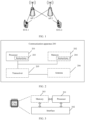
- FIG. 1 is used as an example to describe a network structure to which the NDPA frame transmission method in this application is applicable.
- FIG. 1 is a schematic diagram of a network structure according to an embodiment of this application.
- the network structure may be a wireless local area network.
- the network structure may include one or more access point (access point, AP) stations and one or more non-access point stations (none access point station, non-AP STA).
- access point station is referred to as an access point (AP)
- AP access point
- STA station
- the APs are, for example, an AP 1 and an AP 2 in FIG. 1
- the STAs are, for example, a STA 1 and a STA 2 in FIG. 1 .
- the access point may be an access point through which a terminal device (for example, a mobile phone) accesses a wired (or wireless) network, and is mainly deployed in a home, a building, and a campus, with a typical coverage radius ranging from dozens of meters to hundreds of meters.
- a terminal device for example, a mobile phone
- the access point may be alternatively deployed outdoors.
- the access point is equivalent to a bridge that connects a wired network and a wireless network.
- a main function of the access point is to connect various wireless network clients together and then connect the wireless network to an Ethernet.
- the access point may be a terminal device (for example, a mobile phone) or a network device (for example, a router) with a wireless fidelity (wireless-fidelity, WiFi) chip.
- the access point may be a device supporting the 802.11be standard.
- the access point may be a device supporting a plurality of wireless local area network (wireless local area networks, WLAN) standards of the 802.11 family, such as 802.11be, 802.11ax, 802.11ac, 802.11n, 802.11g, 802.11b, and 802.11a.
- the access point in this application may be an extremely high throughput (extremely high throughput, EHT) AP, or may be an access point to which a specific generation of a Wi-Fi standard in the future is applicable.
- EHT extremely high throughput
- the access point may include a processor and a transceiver.
- the processor is configured to control and manage an action of the access point.
- the transceiver is configured to receive or transmit information.
- the station may be a wireless communication chip, a wireless sensor, a wireless communication terminal, or the like, and may also be referred to as a user.
- the station may be a mobile phone supporting a Wi-Fi communication function, a tablet computer supporting a Wi-Fi communication function, a set-top box supporting a Wi-Fi communication function, a smart TV supporting a Wi-Fi communication function, a smart wearable device supporting a Wi-Fi communication function, a vehicle-mounted communication device supporting a Wi-Fi communication function, a computer supporting a Wi-Fi communication function, or the like.
- the station may support the 802.11be standard.
- the station may also support a plurality of wireless local area network (wireless local area networks, WLAN) standards of the 802.11 family, such as 802.11be, 802.11ax, 802.11ac, 802.11n, 802.11g, 802.11b, and 802.11a.
- WLAN wireless local area network
- the station may include a processor and a transceiver.
- the processor is configured to control and manage an action of the station.
- the transceiver is configured to receive or transmit information.
- the station in this application may be an extremely high throughput (extremely high throughput, EHT) STA, or may be a STA to which a specific generation of the Wi-Fi standard in the future is applicable.
- EHT extremely high throughput
- the access point and the station may be devices applied to an internet of vehicles; internet of things nodes, sensors, or the like in an internet of things (IoT, internet of things); smart cameras, smart remote controls, smart water meters, or smart power meters in a smart household; sensors in a smart city; or the like.
- IoT internet of things
- smart cameras, smart remote controls, smart water meters, or smart power meters in a smart household sensors in a smart city; or the like.
- the access point and the station in embodiments of this application may also be collectively referred to as communication apparatuses.
- the communication apparatus may include a hardware structure and a software module, and implement the foregoing functions in a form of the hardware structure, the software module, or a combination of the hardware structure and the software module.
- a specific function of the foregoing functions may be implemented in a manner of the hardware structure, the software module, or the combination of the hardware structure and the software module.
- an implementation form of the communication apparatus may be as follows: (1) an independent integrated circuit IC, chip, chip system, or chip subsystem; (2) a set with one or more ICs, where optionally, the IC set may also include a storage component configured to store data or instructions; (3) a module that can be embedded in another device; (4) a receiver, an intelligent terminal, a wireless device, a handset, a mobile unit, a vehicle-mounted device, a cloud device, an artificial intelligence device, or the like; or (5) others or the like.
- the implementation form of the communication apparatus is a chip or a chip system
- the chip shown in FIG. 3 includes a processor 301 and an interface 302. There may be one or more processors 301 and a plurality of interfaces 302.
- the interface 302 is configured to receive and transmit signals.
- the chip or the chip system may include a memory 303.
- the memory 303 is configured to store program instructions and data that are necessary for the chip or the chip system.
- WLANs Since the 802.11a/g standard, WLANs have gone through a plurality of generations of standards, for example, 802.11n, 802.11ac, and 802.11ax that is currently under discussion.
- An NDPA frame has different variants (variant) in different standards.
- 802.11ac is a previous-generation standard of 802.11ax.
- an NDPA frame variant may be referred to as a very high throughput (very high throughput, VHT) NDPA frame.
- FIG. 4A is a schematic diagram of a structure of a VHT NDPA frame.
- the VHT NDPA frame includes a frame control (frame control) field, a duration field, a receiving address (Receiving Address, RA) field, a transmitting address (Transmitting Address, TA) field, a sounding dialog token (Sounding Dialog Token) field, and one or more station information (STA information, STA Info) fields.
- the frame control field includes a frame type subfield and a frame subtype subfield, indicating that the frame is an NDPA frame.
- the sounding dialog token field is used to index a channel sounding sequence number.
- the RA field and the TA field are used to identify a receive end and a transmit end of a MAC frame.
- the station information field includes an AID subfield indicating an association identifier (association identifier, AID), a feedback type (feedback type) subfield, and a number of columns (number of columns, Nc) subfield.
- association identifier association identifier
- feedback type feedback type
- Nc number of columns
- the AID subfield indicates an AID of a station corresponding to the station information field.
- the feedback type subfield indicates whether feedback is single-user feedback or multi-user feedback.
- the number of columns (number of columns, Nc) subfield indicates a quantity of columns for which the station needs to feed back channel state information, or may be understood as indicating a quantity of spatial streams for which the station needs to feed back channel state information.
- a corresponding NDPA frame variant is a high throughput (high throughput, HE) NDPA frame.
- FIG. 4B is a schematic diagram of a structure of an HE NDPA frame.
- the HE NDPA frame includes a frame control field, a duration field, an RA field, a TA field, a sounding dialog token field, and one or more station information fields.
- the sounding dialog token may use one octet, that is, the sounding dialog token may use eight bits, namely, B0 to B7.
- the sounding dialog token field includes a 1-bit frame type subfield.
- the frame type subfield is located at B1 of the sounding dialog token, and used to indicate whether the NDPA frame is an HE NDPA frame. 0 indicates that the NDPA frame is not an HE NDPA frame, and 1 indicates that the NDPA frame is an HE NDPA frame.
- the station information field includes an AID subfield, a partial bandwidth information (partial BW Info) subfield, a feedback type and Ng (feedback type and Ng) subfield, a disambiguation (disambiguation) subfield, a codebook size (codebook Size) subfield, and a number of columns (number of columns, Nc) subfield.
- One station information field is four octets.
- the AID subfield and the number of columns subfield serve the same purposes as the AID subfield and the number of columns subfield in the VHT NDPA frame.
- the partial bandwidth information subfield indicates a frequency domain range for which a station corresponding to the AID needs to feed back channel state information.
- a bandwidth used for transmitting data may be divided into one or more resource units (resource unit, RU).
- An RU may be a 26-tone RU, a 52-tone RU, a 106-tone RU, a 242-tone RU, a 484-tone RU, a 996-tone RU, or the like.
- a tone represents a subcarrier.
- the 26-tone RU represents an RU including 26 subcarriers.
- a frequency domain resource of 20 MHz may include one entire 242-tone resource unit (242-tone RU), or may include nine 26-tone RUs.
- the partial bandwidth information subfield indicates, by indicating a segment of contiguous 26-tone RUs, a frequency domain range for which a station needs to feed back channel state information.
- the partial bandwidth information subfield indicates RUs for which a STA corresponding to the AID needs to feed back channel state information, to indicate a frequency domain range of a partial bandwidth for which the station needs to feed back channel state information. It should be understood that the frequency domain range of the partial bandwidth belongs to a bandwidth corresponding to the NDPA frame.
- the partial bandwidth information subfield includes a resource unit start index and a resource unit end index, and indicates a segment of contiguous RUs by using the resource unit start index and the resource unit end index.
- the feedback type and Ng subfield indicates whether feedback is single-user feedback or multi-user feedback, and indicates that Ng subcarriers are allocated into one group. In this way, channel state information of subcarriers in a same group is fed back together, helping reduce overheads.
- the disambiguation subfield is used to prevent a VHT STA from misreading an NDPA frame as a VHT NDPA frame.
- the VHT STA in this application is an earlier-version VHT STA that supports the 802.11ac protocol but does not support an NDPA frame variant occurring after the VHT NDPA frame.
- the codebook size (codebook size) subfield indicates precision of quantization. Different precisions correspond to different overheads.
- a corresponding NDPA frame variant is a ranging NDPA frame.
- a structure of the ranging NDPA frame is basically the same as the structure of the HE NDPA frame.
- a frame type subfield in a sounding dialog token field in the ranging NDPA frame is two bits.
- the two bits are B0 and B1 of B0 to B7.
- One bit (B1) is used to indicate whether the NDPA frame is an HE NDPA frame
- the other bit (B0) is used to indicate whether the NDPA frame is a ranging NDPA frame.
- a ranging STA determines an NDPA frame variant based on the 2-bit frame type subfield. Specific indication relationships of the frame type subfield are shown in Table 1 below.
- Table 1 Frame type subfield Variant (Variant) Ranging HE 0 0 VHT NDPA frame 0 1 HE NDPA frame 1 0 Ranging NDPA frame 1 1 Undefined
- an HE STA does not read the bit that is of the frame type subfield and that is used to indicate whether an NDPA frame is a ranging NDPA frame.
- the HE STA in this application is an earlier-version HE STA that supports the 802.11ax protocol but does not support an NDPA frame variant occurring after the HE NDPA frame.
- the ranging STA in this application is an earlier-version ranging STA that supports the 802.11az protocol but does not support an NDPA frame variant occurring after the ranging NDPA frame.
- the partial bandwidth information subfield may indicate a bandwidth by using seventy-four 26-tone RUs.
- Ordinal values corresponding to the seventy-four 26-tone RUs are 0, 1, 2, 3, ..., and 73 sequentially in ascending order of a corresponding frequency.
- an indication manner of the partial bandwidth information subfield is as follows: A resource unit start index in the partial bandwidth information subfield indicates one of the seventy-four 26-tone RUs, and a resource unit end index in the partial bandwidth information subfield is used to indicate one of the seventy-four 26-tone RUs. Specifically, the resource unit start index indicates one of the seventy-four 26-tone RUs by indicating an ordinal value of the 26-tone RU, and the resource unit end index indicates one of the seventy-four 26-tone RUs by indicating an ordinal value of the 26-tone RU.
- a maximum bandwidth that can be supported is 320 MHz.
- 320 MHz may correspond to a maximum of one hundred and forty-eight 26-tone RUs, and 148 cases need to be indicated.
- the partial bandwidth information subfield in the HE NDPA frame cannot meet a requirement for indicating an RU that is in a larger bandwidth and for which channel state information needs to be fed back in the 802.11be standard.
- the following describes manners in which the number of columns subfield indicates a column quantity in different generations of the standard.
- a largest column quantity is 8.
- the 3-bit number of columns subfield in the HE NDPA frame indicates a column quantity by indicating a value of 1 to 8.
- a maximum of 16 columns need to be indicated.
- the number of columns subfield in the HE NDPA frame cannot meet a requirement for indicating a larger column quantity in the 802.11be standard.
- FIG. 5 is a schematic flowchart of an NDPA frame transmission method according to an embodiment of this application. The method includes the following steps.
- the NDPA frame includes one or more station information fields.
- the station information field includes an AID subfield indicating an AID, a partial bandwidth information subfield, and/or a number of columns subfield.
- the partial bandwidth information subfield indicates an RU that is of RUs included in a bandwidth corresponding to the NDPA frame and for which a beamformee (Beamformee, Bfee) corresponding to the AID needs to feed back channel state information. It may be alternatively understood that the partial bandwidth information subfield indicates an RU for which the Bfer requests feedback.
- the RU for which the station needs to feed back channel state information or the RU for which the Bfer requests feedback may be one RU or a combination of a plurality of RUs.
- RUs indicated by the partial bandwidth information subfield are a segment of contiguous RUs, and the partial bandwidth information subfield is not limited to indicating a segment of contiguous 26-tone RUs.
- the partial bandwidth information subfield may indicate a segment of contiguous 52-tone RUs, a segment of contiguous 242-tone RUs, or a combination of a plurality of contiguous RUs of different sizes.
- the RU indicated by the partial bandwidth information subfield is not necessarily an actual RU.
- RUs correspond to subcarriers.
- the partial bandwidth information subfield indicates a range of subcarriers by indicating RUs in a bandwidth, to indicate a frequency domain range of a partial bandwidth for which the Bfer requests feedback. For example, indicating 320 MHz as one hundred and forty-eight 26-tone RUs does not mean that a bandwidth of 320 MHz includes one hundred and forty-eight 26-tone RUs.
- the RU indicated by the partial bandwidth information subfield is only used to indicate a corresponding frequency domain range.
- the bandwidth corresponding to the NDPA frame is greater than 160 MHz, or a column quantity indicated by the number of columns subfield is greater than 8; or the bandwidth corresponding to the NDPA frame is greater than 160 MHz, and a column quantity indicated by the number of columns subfield is greater than 8.
- the bandwidth corresponding to the NDPA frame may be understood as a channel sounding bandwidth.
- the bandwidth corresponding to the NDPA frame is a bandwidth of an NDP transmitted by the AP after the AP transmits the NDPA frame.
- the station information field may include any one of the partial bandwidth information subfield and the number of columns subfield, or may include the partial bandwidth information subfield and the number of columns subfield.
- the NDPA frame in this embodiment of this application meets the following: any one of a case in which the bandwidth corresponding to the NDPA frame is greater than 160 MHz and a case in which a column quantity indicated by the number of columns subfield is greater than 8; or a case in which the bandwidth corresponding to the NDPA frame is greater than 160 MHz and a case in which a column quantity indicated by the number of columns subfield is greater than 8.
- the Bfer transmits the NDPA frame.
- the Bfee receives the NDPA frame and obtains a related channel sounding parameter from the NDPA frame, for example, partial bandwidth information and/or a quantity of columns in a compressed beamforming feedback matrix.
- the Bfer may be an AP or a STA.
- the Bfee may be a STA or an AP.
- the beamformee may start a channel sounding procedure.
- the channel sounding procedure may include the following steps.
- the Bfer transmits a null data packet (null data packet, NDP).
- NDP null data packet
- the Bfer transmits the NDP after a short inter-frame space (short inter-frame space, SIFS) elapses.
- SIFS short inter-frame space
- the Bfee receives the NDP based on the related channel sounding parameter obtained from the NDPA frame.
- the Bfee performs channel estimation based on the NDP to obtain channel state information, and forms a beamforming report based on the channel state information.
- the Bfee determines, based on the AID subfield in the station information field in the NDPA frame, that the AID subfield matches an AID of the Bfee, and determines that the Bfee itself needs to perform channel sounding.
- the Bfee may determine, based on the partial bandwidth information subfield in the station information field, a frequency range for which channel state information needs to be fed back, and then perform channel estimation based on the NDP, to obtain channel state information of the frequency range for which the station needs to feed back channel state information.
- the Bfee may determine the quantity of columns in the compressed beamforming feedback matrix based on Nc.
- the compressed beamforming feedback matrix is a part of the beamforming report and carries at least a part of channel state information.
- the Bfee transmits the beamforming report.
- the beamforming report includes the channel state information.
- the Bfer may be an AP or a STA.
- the Bfee may be a STA or an AP.
- an example in which the Bfer is an AP and the Bfee is a STA is used for description. It should be understood that the technical solutions in this embodiment of this application are also applicable to a case in which the Bfer is a STA or the Bfee is an AP.
- the channel sounding procedure is not limited to a solution of steps 503 to 505 proposed in this embodiment of this application.
- the channel sounding procedure may be alternatively as follows: Another Bfer transmits an NDP frame, and the beamformee performs sounding based on the NDP frame.
- the partial bandwidth information subfield in the NDPA frame indicates an RU that is in a bandwidth greater than 160 MHz and for which channel state information needs to be fed back.
- the station information field can indicate the station to sound a channel with a bandwidth greater than 160 MHz, and feed back a beamforming report based on a channel sounding result, thereby implementing data transmission in a larger bandwidth and improving transmission efficiency.
- the column quantity indicated by the number of columns subfield is greater than 8.
- the station information field can indicate the station to sound a channel with a bandwidth whose column quantity is greater than 8, and feed back a beamforming report based on a channel sounding result, thereby implementing data transmission in more streams and improving transmission efficiency.
- the NDPA frame includes type information.
- the type information is used to indicate an NDPA frame variant.
- the type information indicates that the NDPA frame is an EHT NDPA frame.
- the type information is carried in a field preceding one or more station information fields.
- a station when receiving an NDPA frame, a station first obtains type information from the NDPA frame, determines an NDPA frame variant based on the type information, and then determines, based on the NDPA frame variant, a policy for reading a station information field.
- the station is an EHT STA
- the type information indicates that the NDPAframe variant is an EHT NDPA frame.
- the EHT STA reads the station information field according to a structure of a station information field in an EHT NDPA frame.
- the EHT STA obtains the station information field that includes an AID of the EHT STA, and obtains a related channel sounding parameter (for example, an RU that is in a bandwidth greater than 160 MHz and for which channel state information needs to be fed back and/or indication of a column quantity greater than 8) from the station information field. Then, the EHT STA receives an NDP based on the related channel sounding parameter, then obtains channel state information based on the NDP, and feeds back the channel state information to an access point by using a beamforming report.
- a related channel sounding parameter for example, an RU that is in a bandwidth greater than 160 MHz and for which channel state information needs to be fed back and/or indication of a column quantity greater than 8
- the type information can indicate that a new NDPA frame variant is an EHT NDPA frame.
- the EHT NDPA frame can indicate an RU that is in a bandwidth greater than 160 MHz and for which channel state information needs to be fed back, to indicate a station to sound a channel with a bandwidth greater than 160 MHz, and feed back a beamforming report based on a channel sounding result, thereby implementing data transmission in a larger bandwidth and improving transmission efficiency.
- the EHT NDPA frame can further indicate a column quantity greater than 8, to indicate a station to sound a channel with a bandwidth whose column quantity is greater than 8, and feed back a beamforming report based on a channel sounding result, thereby implementing data transmission in more streams and improving transmission efficiency.
- a new frame does not need to be defined, and an available type remaining in a MAC frame is fully utilized, thereby saving resources.
- the EHT STA can also read the NDPA frame separately according to a format corresponding to the VHT NDPA frame, the HE NDPA frame, or the ranging NDPA frame.
- the type information indication solutions in this embodiment of this application are not limited to a scenario of indicating that an NDPA frame variant is an EHT NDPA frame, and are also applicable to a scenario of indicating that an NDPA frame variant is a new NDPA frame variant corresponding to a standard that occurs after 802.11be.
- An NDPA frame further includes a sounding dialog token.
- the sounding dialog token includes a frame type indication field.
- a sounding dialog token field includes a 2-bit frame type indication field.
- the new variant may be, for example, an EHT NDPA frame corresponding to 802.11be, or an NDPA frame corresponding to a standard that occurs after 802.11be.
- an example is used for description in which an NDPA frame variant transmitted by an AP is an EHT NDPA frame, and a frame type subfield in a sounding dialog token field indicates that an NDPA frame variant is an EHT NDPA frame.
- the type information is carried in the frame type subfield.
- defining a new NDPA frame variant as an EHT NDPA frame can be implemented with no need to change an existing correspondence between a value of the frame type subfield and an indicated NDPA frame variant.
- An EHT STA receives an NDPA frame from an AP, and determines the NDPA frame variant by reading a 2-bit frame type subfield in the NDPA frame.
- the frame type subfield indicates that the NDPA frame variant is an EHT NDPA frame.
- the EHT STA determines, based on the frame type subfield, that the NDPA frame is an EHT NDPA frame.
- the EHT STA may read a station information field in the EHT NDPA frame according to a format of an EHT NDPA frame.
- the EHT NDPA frame can indicate an RU that is in a bandwidth greater than 160 MHz and for which channel state information needs to be fed back, so that the station can sound a channel with a bandwidth greater than 160 MHz, and feed back a beamforming report based on a channel sounding result, thereby implementing data transmission in a larger bandwidth and improving transmission efficiency.
- the EHT NDPA frame can further indicate a column quantity greater than 8, so that the station can sound a channel with a bandwidth whose column quantity is greater than 8, and feed back a beamforming report based on a channel sounding result, thereby implementing data transmission in more streams and improving transmission efficiency.
- the frame type subfield in a sounding dialog token field indicates that the NDPA frame variant is an EHT NDPA frame
- the frame type subfield in the sounding dialog token field may alternatively indicate that the NDPA frame variant is a VHT NDPA frame, an HE NDPA frame, or a ranging NDPA frame. If the frame type subfield indicates that the NDPA frame is a VHT NDPA frame, an HE NDPA frame, or a ranging NDPA frame, the EHT STA can also read the NDPA frame separately according to a format corresponding to the VHT NDPA frame, the HE NDPA frame, or the ranging NDPA frame.
- the foregoing entry used to indicate the ranging NDPA frame is exchanged with the foregoing entry used to indicate the EHT NDPA frame.
- a frame type subfield when a value of a bit indicating whether an NDPA frame is a ranging NDPA frame is 1, and a value of a bit indicating whether an NDPA frame is an HE NDPA frame is 0, an indicated NDPA frame variant is an EHT NDPA frame; and when the value of the bit indicating whether an NDPA frame is a ranging NDPA frame is 1, and the value of the bit indicating whether an NDPA frame is an HE NDPA frame is 1, an indicated NDPA frame variant is a ranging NDPA frame.
- a frame type subfield in a sounding dialog token field can indicate that a type of a frame variant is EHT NDPA.
- the EHT NDPA frame can indicate an RU that is in a bandwidth greater than 160 MHz and for which channel state information needs to be fed back, to indicate a station to sound a channel with a bandwidth greater than 160 MHz, and feed back a beamforming report based on a channel sounding result, thereby implementing data transmission in a larger bandwidth and improving transmission efficiency.
- the EHT NDPA frame can further indicate a column quantity greater than 8, to indicate a station to sound a channel with a bandwidth whose column quantity is greater than 8, and feed back a beamforming report based on a channel sounding result, thereby implementing data transmission in more streams and improving transmission efficiency.
- Table 3 Frame type subfield Variant (Variant) Ranging HE 0 0 VHT NDPA frame 0 1 HE NDPA frame 1 0 EHT NDPA frame 1 1 Ranging NDPA frame
- a (16n+12) th bit (for example, a 28 th bit or a 44 th bit) of each station information field in the EHT NDPA frame is a disambiguation subfield, where n is a positive integer.
- a first bit of a station information field corresponds to B0 of the station information field. In this way, compared with the solution corresponding to Table 2, the solution corresponding to Table 3 can prevent an HE STA from misreading.
- the HE STA does not read the bit that is of the frame type subfield and that indicates whether an NDPA frame is a ranging NDPA frame.
- the HE STA reads the NDPA frame as an HE NDPA frame.
- the NDPA frame may indeed be an HE NDPA frame, or may be an EHT NDPA frame.
- the EHT NDPA frame may use more than four octets, for example, six octets.
- the HE STA reads first 11 bits of third two octets as an AID. If the first 11 bits of the third two octets of the station information field happen to match an AID of the HE STA, the HE STA reads the two octets indicating the AID and two adjacent octets following the two octets as a station information field of the HE STA, causing the HE STA to misread.
- the HE STA when the value of the bit that is of the NDPA frame and that indicates whether an NDPA frame is an HE NDPA frame is 0, the HE STA can identify the NDPA frame as a VHT NDPA frame and read the NDPA frame according to a format of a VHT NDPA frame. If the NDPA frame is indeed a VHT NDPA frame, the HE STA can correctly read the VHT NDPA frame. If the NDPA frame is an EHT NDPA frame, first 11 or 12 bits of each station information field in the EHT NDPA frame indicate an AID.
- the AID is not the AID of the HE STA, and the (16n+12) th bit of the station information field is the disambiguation subfield. In this case, first 12 bits of each two octets in the EHT NDPA frame do not match the AID of the HE STA.
- the HE STA Even if the HE STA considers the EHT NDPA frame as a VHT NDPA frame, reads the NDPA frame according to the format of the VHT NDPA frame, and reads the first 12 bits of each two octets of each station information field as an AID, the HE STA can recognize that the first 12 bits of each two octets do not match the AID of the HE STA, thereby preventing the HE STA from mistaking a station information field in the EHT NDPA frame for the station information field of the HE STA and consequently misreading the NDPA frame.
- the HE STA can correctly read the HE NDPA frame. If the NDPA frame is actually a ranging NDPA frame, the HE STA can read an AID in the NDPA frame at a correct position, because a station information field in a ranging NDPA frame has a same structure as a station information field in an HE NDPA frame.
- Station information fields in the ranging NDPA frame do not include the AID of the HE STA, and the HE STA can also find, by reading the station information fields, that an AID in each station information field does not match the AID of the HE STA. In this way, the HE STA does not consider one of the station information fields in the NDPA frame as the station information field of the HE STA, and therefore, does not misread the NDPA frame.
- next-generation standard may support a larger bandwidth.
- another NDPA frame variant occurring after the EHT NDPA frame cannot be indicated by the foregoing 2-bit frame type subfield.
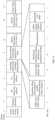
- FIG. 6 is a schematic diagram of a structure of an NDPA frame according to an embodiment of this application.
- a special station information field is newly added to the NDPA frame.
- the special station information field includes a special AID field and a frame subtype field.
- the special AID indicates the special station information field.
- a special AID may be 2047, indicating that the station information field is a special station information field.
- An AID of 2047 is not defined in an existing standard. Therefore, a STA can identify the special station information field based on the special AID.
- the special AID is not limited to 2047, and may be, for example, another AID that is not defined.
- a frame type subfield in a sounding dialog token field and the frame subtype subfield in the newly added special station information field jointly indicate an NDPA frame variant.
- the frame type subfield indicates that the NDPA frame is not an HE NDPA frame or a ranging NDPA frame
- the frame subtype subfield in the special station information field indicates a specific NDPA frame variant.
- the frame subtype subfield in the special station information field may indicate that the NDPA frame is an EHT NDPA frame. It should be understood that the frame subtype subfield may alternatively indicate that an NDPA frame variant is another NDPA frame variant occurring after the EHT NDPA frame.
- An STA supporting a new NDPA frame variant can determine, based on the frame subtype subfield in the special station field, which variant the NDPA frame is specifically, so as to read the NDPA frame according to a structure of the NDPA frame variant.
- the frame type subfield and the frame subtype subfield indicate that the NDPA frame variant is an EHT NDPA frame.
- the EHT STA may determine, based on the frame subtype subfield, that the NDPA frame is an EHT NDPA frame.
- the EHT STA reads a partial bandwidth information subfield and a number of columns subfield in the NDPA frame according to a structure of an EHT NDPA frame, thereby accurately obtaining information about a partial bandwidth for which channel state information needs to be fed back and a quantity of columns for which feedback needs to be provided.
- the EHT STA can also read the NDPA frame separately according to a format corresponding to the VHT NDPA frame, the HE NDPA frame, or the ranging NDPA frame.
- an octet quantity of a station information field in this embodiment of this application is an integer multiple of 2.
- the station information field may use four octets, or may use more than four octets, for example, six octets.
- the frame type subfield in the sounding dialog token field indicates NDPA frames other than the HE NDPA frame and the ranging NDPA frame as a category of NDPA frames, and then the frame subtype subfield in the special station field indicates which variant the NDPA frame is specifically. This can prevent an HE STA or a ranging STA from misreading a new NDPA frame variant.
- the frame subtype subfield indicates that the NDPA frame is an EHT NDPA frame.
- the HE STA or the ranging STA can consider the EHT NDPA frame as a VHT NDPA frame based on the frame type subfield in the sounding dialog token field, and read the EHT NDPA frame according to a structure of a VHT NDPA frame.
- the station information field in the EHT NDPA frame does not include an AID of the HE STA or the ranging STA.
- the earlier-version HE STA or ranging STA receiving the EHT NDPA frame does not provide feedback based on the EHT NDPA frame, because an AID in the station information field does not match the AID of the earlier-version HE STA or ranging STA. This can prevent the earlier-version HE STA or ranging STA from misreading the EHT NDPA frame.
- a (16n+12) th bit of a special station information field is a disambiguation subfield
- a (16n+12) th bit (for example, a 28 th bit) of each station information field is a disambiguation subfield, where n is a positive integer.
- a first bit of the special station information field corresponds to B0 of the special station information field.
- a first bit of each station information field corresponds to B0 of the station information field.
- a VHT STA when the frame type subfield indicates that the NDPA frame is not an HE NDPA frame or a ranging NDPA frame, a VHT STA does not read the frame type subfield in the sounding dialog token field, and cannot identify the NDPA frame variant.
- an NDPA frame variant indicated when the values of the two bits of the frame type subfield are both 0 is changed, which does not cause the VHT STA to misread another NDPA frame variant.
- an NDPA frame transmitted by an AP is an EHT NDPA frame
- first 11 bits of a special station information field and first 11 bits of any station information field in the EHT NDPA frame are set as an 11-bit AID
- the AID is not an AID of the VHT STA
- a (16n+12) th bit of the special station information field and a (16n+12) th bit of any station information field are the disambiguation subfield.
- first 12 bits of each two octets of the station information field and the special station information field in the EHT NDPA frame do not match the AID of the VHT STA.
- the VHT STA Even if the VHT STA reads the EHT NDPA frame according to the structure of the VHT NDPA frame, and reads the first 12 bits of each two octets of the special station information field or the station information field as an AID, the VHT STA can recognize that the first 12 bits of each two octets do not match the AID of the VHT STA, thereby preventing the VHT STA from mistaking the special station information field or a station information field in the EHT NDPA frame for a station information field of the VHT STA and consequently misreading the NDPA frame.
- the ranging STA can still normally identify a ranging NDPA frame based on the frame type subfield.
- a new NDPA frame variant (for example, an EHT NDPA frame) can be indicated, and the VHT STA, the HE STA, and the ranging STA can be prevented from misreading the new NDPA frame variant.
- the special station information field may further include a disallowed subchannel bitmap.
- the disallowed subchannel bitmap is used to indicate preamble puncturing information.
- each bit of the disallowed subchannel bitmap corresponds to frequency domain resources of one granularity, and each bit indicates whether the corresponding frequency domain resources are punctured.
- the granularity may be 2"*10 MHz, where n is a positive integer.
- the granularity may be 20 MHz, 40 MHz, 80 MHz, or the like.
- a bit quantity of the disallowed subchannel bitmap may be fixed.
- a bit quantity of a disallowed subchannel bitmap in an EHT NDPA frame may be set to 16.
- Sixteen bits can indicate preamble puncturing information of a bandwidth of 320 MHz.
- each 20 MHz corresponds to one bit of the disallowed subchannel bitmap, and a remaining bit in the disallowed subchannel bitmap indicates that corresponding frequency domain resources are punctured.
- first 12 bits of the disallowed subchannel bitmap indicate preamble puncturing information of 240 MHz, and last four bits indicate that corresponding frequency domain resources are punctured.
- the bit quantity of the disallowed subchannel bitmap may be alternatively variable.
- the bit quantity of the disallowed subchannel bitmap may be determined based on a bandwidth. For example, when the granularity is 20 MHz, if a bandwidth is 160 MHz, the bit quantity of the disallowed subchannel bitmap may be 8; or if a bandwidth is 320 MHz, the bit quantity of the disallowed subchannel bitmap may be 16. When the granularity is 40 MHz, if a bandwidth is 160 MHz, the bit quantity of the disallowed subchannel bitmap may be 4; or if a bandwidth is 320 MHz, the bit quantity of the disallowed subchannel bitmap may be 8.
- the bit quantity of the disallowed subchannel bitmap may also be 4, each 20 MHz corresponds to one bit in the disallowed subchannel bitmap, and a remaining bit in the disallowed subchannel bitmap indicates that corresponding frequency domain resources are punctured.
- a bandwidth is 40 MHz
- first two bits of the disallowed subchannel bitmap are used to indicate a puncturing status of a first 20 MHz and a puncturing status of a second 20 MHz of the 40 MHz
- last two bits of the disallowed subchannel bitmap indicate that corresponding frequency domain resources are punctured.
- the disallowed subchannel bitmap may be alternatively carried in an NDP that is transmitted by an AP after the AP transmits an NDPA frame.
- the disallowed subchannel bitmap is carried only in an NDP.
- the special station information field further includes a bandwidth indication subfield for indicating a bandwidth.
- a partial bandwidth indicated by the partial bandwidth information subfield is in a frequency domain range of the bandwidth indicated by the bandwidth indication subfield.
- an embodiment of this application provides some station information field design solutions.
- an example is used for description in which an NDPA frame variant transmitted by an AP is an EHT NDPA frame.
- the station information field design solutions in this application are not limited to the EHT NDPA frame, and are also applicable to an NDPA frame variant corresponding to a standard that occurs after 802.11be.
- the following describes the station information field design solutions that are provided in a case in which a bandwidth corresponding to an NDPA frame is greater than 160 MHz.
- a quantity of octets of a station information field are increased, and a quantity of bits of a partial bandwidth information subfield are also increased, to implement that the partial bandwidth information subfield indicates an RU that is in a bandwidth greater than 160 MHz and for which channel state information needs to be fed back.
- a station information field in an NDPA frame may use six octets, and a partial bandwidth information subfield uses more than seven bits. In this way, an RU that is in a larger bandwidth and for which channel state information needs to be fed back can be indicated.
- the station information field is six octets, a quantity of bits of a number of columns subfield can also be increased.
- the VHT STA can recognize that the first 12 bits of each two octets do not match an AID of the VHT STA, thereby preventing the VHT STA from mistaking a station information field in the new NDPA frame variant for a station information field of the VHT STA and consequently misreading the new NDPA frame variant.
- the partial bandwidth information subfield in the station information field includes an RU start index and an RU end index.
- the RU start index uses more than seven bits
- the RU end index also uses more than seven bits.
- the number of columns subfield in the station information field is more than three bits.
- a bandwidth is 320 MHz
- a length of a station information field is six octets.
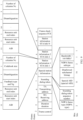
- a structure of a station information field in an EHT NDPA frame is shown in FIG. 7 .
- a partial bandwidth information subfield in the station information field includes an RU start index and an RU end index.
- the RU start index uses eight bits and is used to indicate one 26-tone RU in 320 MHz.
- the RU end index also uses eight bits and is used to indicate one 26-tone RU in 320 MHz.
- a 12 th bit of a second octet (a 28 th bit of the station information field) and a 12 th bit of a third octet (a 44 th bit of the station information field) are set as a disambiguation field.
- a length of a station information field in a VHT NDPA frame is two octets, that is, 16 bits in total.
- First 12 bits of the station information field in the VHT NDPA frame are an AID.
- a VHT STA does not read a frame type subfield or identify an NDPA frame variant. The VHT STA reads the EHT NDPA frame as a VHT NDPA frame. This causes the VHT STA to read first 12 bits of each two octets of a station information field in the EHT NDPA frame as an AID.
- first 12 bits of second two octets of a station information field in the station information field happen to match an AID of the VHT STA receiving the EHT NDPA frame, misreading is caused.
- first 11 bits of first two octets are an AID of an EHT STA.
- first 12 bits of the first two octets do not match the AID of the VHT STA.
- a 12 th bit (B11) of the second two octets of the station information field is a disambiguation field.
- the first 12 bits of the second two octets of the station information field do not match the AID of the VHT STA, either. In this way, the VHT STA can be prevented from mistaking a station information field for a station information field of the VHT STA, consequently causing the VHT STA to misread the EHT NDPA frame.
- 320 MHz may include a maximum of one hundred and forty-eight 26-tone RUs.
- the 8-bit RU start index may indicate one of one hundred and forty-eight 26-tone RUs.
- the 8-bit RU end index may also indicate one of one hundred and forty-eight 26-tone RUs.
- the bandwidth corresponding to the NDPA frame is not limited to 320 MHz in the foregoing example, and may be alternatively another bandwidth greater than 160 MHz, for example, 240 MHz or 480 MHz. Accordingly, a bit quantity of the partial bandwidth information subfield may be adaptively adjusted based on a size of the bandwidth.
- first station information field design solution may be implemented in combination with the foregoing second and third type information indication solutions, or may be implemented separately.
- the EHT NDPA frame using the foregoing first station information field design solution setting of the disambiguation field can prevent the VHT STA from misreading.
- an HE STA does not read a bit that is of a frame type subfield and that indicates whether an NDPA frame is a ranging NDPA frame.
- the HE STA cannot distinguish an HE NDPA frame from an EHT NDPA frame.
- the HE STA reads the EHT NDPA frame as an HE NDPA frame.
- the HE STA When reading third two octets of a station information field in the EHT NDPA frame, the HE STA reads first 11 bits of the third two octets as an AID indicated by first 11 bits of a station information field in an HE NDPA frame. If the first 11 bits of the third two octets of the station information field in the EHT NDPA frame match an AID of the HE STA receiving the EHT NDPA frame, it causes the HE STA to misread the EHT NDPA frame.
- the HE STA reads the EHT NDPA frame as a VHT NDPA frame.
- the station information field in the EHT NDPA frame does not include an AID of an HE STA, an AID of a ranging STA, or an AID of a VHT STA, and a disambiguation subfield is set at another position that may be considered by the HE STA, the ranging STA, or the VHT STA to have an AID specified. In this way, the HE STA can be prevented from misreading the EHT NDPA frame.
- the EHT NDPA frame using the foregoing first station information field design solution uses the third type information indication solution, when an indication of a bit that is of the frame type subfield and that indicates whether an NDPA frame is an HE NDPA frame is 1, it only indicates that the NDPA frame is an HE NDPA frame, and there is no other indication case.
- the HE STA can accurately determine, based on the indication of the bit that is of the frame type subfield and that indicates whether an NDPA frame is an HE NDPA frame, whether the NDPA frame is an HE NDPA frame, and does not read another NDPA frame variant as an HE NDPA frame.
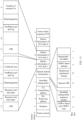
- FIG. 8 is a schematic diagram of a structure of a station information field in an EHT NDPA frame according to an embodiment of this application.
- a station information field is four octets.
- an octet quantity of a station information field is not changed.
- a quantity of bits of a partial bandwidth information subfield are compressed, and an indication manner of the partial bandwidth information subfield is improved, to indicate an RU that is in a larger bandwidth and for which channel state information needs to be fed back and/or to indicate a column quantity greater than 8.
- the quantity of the bits of the partial bandwidth information subfield may be compressed.
- the partial bandwidth information subfield may use 13 or less bits.
- a quantity of bits of a number of columns subfield can be increased, so that the number of columns subfield uses four or more bits, and the number of columns subfield can indicate a larger column quantity.
- a resource unit start index and a resource unit end index may support indication of an RU that is in a larger bandwidth and for which channel state information needs to be fed back.
- a bit quantity of the number of columns subfield needs to be increased to be greater than or equal to 4.
- the number of columns subfield may alternatively use three bits.
- the partial bandwidth information subfield in the station information field includes a resource unit start index and a resource unit offset index.
- the resource unit start index is used to indicate a first RU of RUs for which a station corresponding to an AID needs to feed back channel state information.
- the resource unit offset index indicates an offset, relative to the first RU, of a last RU for which channel state information needs to be fed back.
- the resource unit start index indicates a first RU for which a Bfer requests feedback
- the resource unit offset index indicates an offset, relative to the first RU, of a last RU for which the Bfer requests feedback.
- the offset may be 0.
- the RU offset indicated by the resource unit offset index does not indicate an RU actually included in a bandwidth.
- the resource unit offset index indicates a subcarrier offset in frequency domain by indicating the RU offset, to cooperate with the resource unit start index to indicate a contiguous frequency domain range.
- the station information field is not limited to being used by the EHT NDPA frame, and may also be used by another NDPA frame variant occurring after the EHT NDPA frame.
- the resource unit start index uses eight bits. In this case, when a bandwidth is 320 MHz, the resource unit start index can indicate one of one hundred and forty-eight 26-tone RUs corresponding to 320 MHz.
- the resource unit offset index may use five or less bits. In this case, the partial bandwidth information subfield uses 13 or less bits. Therefore, the number of columns subfield can use four or more bits, thereby indicating a larger column quantity.
- a 28 th bit (B27) of the station information field is set as a disambiguation subfield, which is used to prevent an earlier-version STA from misreading.
- B27 a 28 th bit of the station information field
- offsets of different sizes may be indicated by different resource unit offset indexes.
- a bandwidth is 320 MHz
- the following uses an example for description.
- a correspondence between a resource unit offset index and a corresponding offset is shown in Table 5 below.
- Table 5 Resource unit offset index Offset 0000 0 0001 26-tone RU 0010 52-tone RU 0011 106-tone RU 0100 242-tone RU 0101 484-tone RU 0111 996-tone RU 0111 2*996-tone RU 1000 3*996-tone RU 1001 4*996-tone RU
- the resource unit offset index is 0010, it indicates that an offset, relative to a first RU, of a last RU for which channel state information needs to be fed back is a 52-tone RU. Further, if the resource unit start index indicates that a first RU for which a station needs to feed back channel state information is a first 26-tone RU, an RU for which the station needs to feed back channel state information is the first 26-tone RU and a 52-tone RU adjacent to the first 26-tone RU.
- a frequency domain range for which the station needs to feed back channel state information is a frequency domain range corresponding to the first 26-tone RU and the 52-tone RU adjacent to the first 26-tone RU, that is, first 78 subcarriers with lowest frequencies in 320 MHz.
- a correspondence between a resource unit offset index and a corresponding offset is shown in Table 6 below.
- Table 6 Resource unit offset index Offset 0000 0 0001 26-tone RU 0010 2*26-tone RU 0011 4*26-tone RU 0100 9*26-tone RU 0101 18*26-tone RU 0111 37*26-tone RU 0111 74*26-tone RU 1000 111*26-tone RU 1001 148*26-tone RU
- the resource unit start index and the resource unit end index each require eight bits.
- the partial bandwidth information subfield requires at least 16 bits.
- 10 resource unit offset indexes can indicate 10 resource offsets of different sizes, and the resource unit offset index may use four bits. In this way, a bit quantity of the partial bandwidth information subfield can be reduced.
- a saved bit may be used to increase bits of the number of columns subfield, thereby indicating a larger quantity of space-time streams.
- a resource unit offset index and an offset is not limited to the foregoing example shown in Table 5 or Table 6, and another correspondence may be alternatively set.
- a bit quantity of the resource unit offset index is also not limited to 4, provided that a sum of a bit quantity of the resource unit start index and the bit quantity of the resource unit offset index is less than or equal to 13.
- the resource unit offset index indicates an offset by indicating a multiple that an RU for which channel state information needs to be fed back is of a basic granularity.
- the basic granularity is greater than or equal to a 26-tone RU.
- the resource unit offset index indicates the offset by indicating a value obtained by dividing the offset by the basic granularity.
- the resource unit offset index may indicate the offset by indicating N, where N is a positive integer.
- a bandwidth is 320 MHz, including one hundred and forty-eight 26-tone RUs, and a basic granularity is an 8*26-tone RU.
- an offset has 20 values.
- the resource unit offset index may use five bits to indicate 20 values. For a correspondence between a resource unit offset index and a corresponding offset, refer to Table 7.
- an ordinal value of the last RU that is determined based on the resource unit start index and the resource unit offset index and for which the STA needs to feed back channel state information is greater than 148, it can be determined that the last RU for which the STA needs to feed back channel state information is a 148 th RU.
- the first RU that is indicated by the resource unit start index and for which channel state information needs to be fed back is a 142 nd RU of the one hundred and forty-eight 26-tone RUs, and the resource unit offset index indicates that the offset is eight 26-tone RUs, it can be determined that the last RU for which the STA needs to feed back channel state information is the 148 th RU.
- a degree of compression of the resource unit offset index may be adjusted by adjusting the basic granularity.
- a larger basic granularity indicates a greater degree of compression.
- a greater degree of compression indicates a smaller quantity of bits required to indicate a same offset.
- the partial bandwidth information subfield can support indication of an RU that is in a larger bandwidth and for which channel state information needs to be fed back.
- the partial bandwidth information subfield includes an RU indication index.
- the RU indication index includes a frequency domain indication part and an RU indication part.
- the frequency domain indication part is used to indicate a frequency domain range in which an RU for which a station corresponding to an AID needs to feed back channel state information is located.
- the RU indication part is used to indicate the RU for which channel state information needs to be fed back.
- a bandwidth is 320 MHz
- the 320 MHz is divided into four frequency domain ranges, which may also be referred to as four frequency segments.
- the four frequency domain ranges correspond to a first 80 MHz, a second 80 MHz, a third 80 MHz, and a fourth 80 MHz in the 320 MHz sequentially in ascending order of frequency.
- the frequency domain indication part may use two bits, and indicates that a frequency domain range in which an RU for which a STA needs to feed back channel state information is located is one of the four frequency domain ranges. For example, for a correspondence between a frequency domain indication part and an indicated frequency domain range, refer to Table 8.
- Table 8 Frequency domain indication part Frequency domain range 00 First 80 MHz 01 Second 80 MHz 10 Third 80 MHz 11 Fourth 80 MHz
- the RU indication part uses seven bits, and is used to indicate that the RU for which channel state information needs to be fed back is one RU or a combination of a plurality of RUs in the frequency domain range indicated by the frequency domain indication part.
- Table 9 RU indication part (seven bits) Description of an indicated RU (description) Number of entries (number of entries) 0-36 May indicate thirty-seven 26-tone RUs in 80 MHz, respectively. 37 (Possible 26-tone RU cases in 80 MHz) 37-52 May indicate sixteen 52-tone RUs in 80 MHz, respectively.
- a currently indicated 996-tone RU is combined with a 484-tone RU that is in an adjacent 80 MHz and is not adjacent to the 996-tone RU.
- the two entries correspond to a 484-tone RU that is located in an adjacent 80 MHz at a low frequency and a 484-tone RU that is located in an adjacent 80 MHz at a high frequency, respectively)
- 103-104 A currently indicated 996-tone RU is combined with a 484-tone RU and a 242-tone RU that are in an adjacent 80 MHz and are not adjacent to the 996-tone RU.
- a 996-tone RU at a lowest frequency in 320 MHz is combined with two 996-tone RUs at a highest frequency.
- 1 109 Three 996-tone RUs at a lowest frequency in 320 MHz are combined.
- 1 110 Three 996-tone RUs at a highest frequency in 320 MHz are combined.
- 1 111-126 A 484-tone RU and a 242-tone RU that are in a currently indicated 80 MHz are combined with a 484-tone RU and a 242-tone RU that are in an adjacent 80 MHz. 16 127 Reserved 1
- the RU indication part of each entry in Table 9 is a decimal value.
- the RU indication part of the RU indication index is a binary value corresponding to the decimal value in Table 9.
- a correspondence between the RU indication part and the indicated RU that are of each entry in Table 9 is merely an optional embodiment.
- the correspondence between an RU indication part and an indicated RU is not limited to the correspondence in Table 9.
- the correspondence between an RU indication part and an indicated RU may be alternatively different from the correspondence in Table 9.
- first two bits of an RU indication index are a frequency domain indication part
- last seven bits of the RU indication index are an RU indication part. If the RU indication index is 000000001, 00 indicates a first 80 MHz, 0000001 indicates a second 26-tone RU in the 80 MHz, and therefore, 000000001 indicates that an RU for which a station needs to feed back channel state information is the second 26-tone RU in the first 80 MHz.
- RU indication index is 111000010
- 11 indicates a fourth 80 MHz
- 1000010 indicates a second 484-tone RU in the 80 MHz
- 111000010 indicates that an RU for which a station needs to feed back channel state information is the second 484-tone RU in the fourth 80 MHz.
- the partial bandwidth information subfield includes a resource unit start index and a resource unit end index.
- the resource unit start index is used to indicate a first RU for which a station corresponding to an AID needs to feed back channel state information.
- the resource unit end index is used to indicate a last RU for which the station corresponding to the AID needs to feed back channel state information.
- the resource unit start index and the resource unit end index are compressed, and granularities of RUs indicated by the resource unit start index and the resource unit end index are increased.
- the granularity is increased from a 26-tone RU to a 2*26-tone RU or a 4*26-tone RU.
- the first RU indicated by the resource unit start index is a (k 1 *n+c 1 ) th 26-tone RU, where c 1 and k 1 are positive integers, and n is a natural number.
- the last RU indicated by the resource unit end index is a (k 2 *m+c 2 ) th 26-tone RU, where c 2 and k 2 are positive integers, and m is a natural number.
- the resource unit start index indicates the first RU by indicating n.
- the resource unit end index indicates the last RU by indicating m. k 1 ⁇ 2 and/or k 2 ⁇ 2.
- a bandwidth is 320 MHz
- k 1 is 2
- c 1 is 1.
- a resource unit start index indicates a first, third, fifth, ..., (2n+1) th, or 147 th 26-tone RU, where n ⁇ 73.
- a granularity of a first RU indicated by the resource unit start index is a 2*26-tone RU.
- the resource unit start index indicates a total of 74 cases and requires seven bits.
- k 2 is 4, and c 2 is 2.
- a resource unit end index indicates a second, sixth, ..., (4n+2) th , or 150 th 26-tone RU.
- a granularity of a last RU indicated by the resource unit end index is a 4*26-tone RU.
- the resource unit end index indicates a total of 37 cases and requires six bits, and n ⁇ 37.
- an ordinal value of an RU indicated by the resource unit end index is greater than an ordinal value of a last RU corresponding to a bandwidth
- the RU indicated by the resource unit end index is the last RU corresponding to the bandwidth.
- a bandwidth is 320 MHz
- the resource unit end index indicates the 150 th 26-tone RU
- an indicated RU is actually a 148 th 26-tone RU.
- a degree of compression of the partial bandwidth information subfield can be adjusted by adjusting a value of k 1 or k 2 or adjusting values of both k 1 and k 2 .
- a larger k 1 indicates a greater degree of compression of the partial bandwidth information subfield
- a larger k 2 also indicates a greater degree of compression of the partial bandwidth information subfield.
- a greater degree of compression indicates a smaller quantity of bits required to indicate same partial bandwidth information. In this way, the partial bandwidth information subfield can indicate an RU that is in a larger bandwidth and for which channel state information needs to be fed back.
- the partial bandwidth information subfield may indicate partial bandwidth information in a manner used in an HE NDPA frame.
- an octet quantity of a station information field is 4 and is consistent with an octet quantity of a station information field in an HE NDPA frame.
- the station information field in the EHT NDPA frame does not include an AID of an HE STA, an AID of a ranging STA, or an AID of a VHT STA, and a disambiguation subfield is set at another position that may be considered by the HE STA, the ranging STA, or the VHT STA to have an AID specified. In this way, the HE STA, the ranging STA, or the VHT STA can be prevented from misreading the EHT NDPA frame.
- the following describes a design solution of a number of columns subfield in a station information field, where the design solution is provided in a case in which a column quantity indicated by a number of columns subfield in an NDPA frame is greater than 8.
- the number of columns subfield design solution is applicable to a case in which the station information field uses six octets, and is also applicable to a case in which the station information field uses four octets.
- a quantity of bits of the number of columns subfield may be increased to indicate a larger column quantity.
- the number of columns subfield may use four bits.
- the number of columns subfield may indicate a column quantity by using a column quantity index.
- Table 12 Column quantity index Quantity of columns 0000 1 0001 2 0010 3 ... ... 1110 15 1111 16
- the correspondence between a column quantity index and a column quantity is not limited to the correspondence shown in Table 12. In another embodiment, the correspondence between a column quantity index and a column quantity may be flexibly set.
- the foregoing number of columns subfield design solution may be implemented in combination with any one of the foregoing station information field design solutions, or may be implemented separately.
- a design solution of a partial bandwidth information subfield in a station information field may be any one of the foregoing station information field design solutions that are provided in a case in which a bandwidth corresponding to an NDPA frame is greater than 160 MHz, and for a number of columns subfield design solution, reference may be made to the foregoing number of columns subfield design solution that is provided in a case in which a column quantity indicated by a number of columns subfield is greater than 8.
- a partial bandwidth information subfield when a bandwidth is less than or equal to 160 MHz, indicates partial bandwidth information in a manner used in an HE NDPA frame, whereas when a bandwidth is greater than 160 MHz, a partial bandwidth information subfield indicates partial bandwidth information according to the foregoing indication solutions of the partial bandwidth information subfield.
- a station information field in an EHT NDPA frame may alternatively use the station information field design solution in any one of the foregoing embodiments of this application.
- the station information field in the EHT NDPA frame uses a uniform format. That is, the station information field in the EHT NDPA frame uses a uniform format. In this way, an EHT STA can read station information fields in all EHT NDPA frames by using a uniform read policy. Therefore, it is more convenient for the EHT STA to read the EHT NDPA frames.
- An embodiment of this application further provides another station information field design solution in which when a bandwidth is greater than 160 MHz, one station corresponds to two station information fields.
- an NDPA frame includes two station information fields corresponding to a same station.
- the two station information fields include an AID of the same station.
- the solution may be implemented in combination with any one of the foregoing type information indication solutions, or may be implemented separately.
- a manner of indicating partial bandwidth information of the station is as follows: Partial bandwidth information subfields in the two station information fields jointly indicate a first RU and a last RU for which the STA corresponding to the AID needs to feed back channel state information. It may be understood that in this solution, a partial bandwidth information subfield corresponding to the STA that corresponds to the AID is divided into two parts, which are respectively transmitted in the two station information fields including the AID.
- a station information field corresponding to a station can be newly added without changing a station information field that is originally included in an NDPA frame and that corresponds to the station.
- the two station information fields cooperate to indicate partial bandwidth information, thereby implementing indication of an RU that is in a larger bandwidth and for which channel state information needs to be fed back.
- a partial bandwidth information subfield in an EHT NDPA frame may use a setting manner of a partial bandwidth information subfield in an HE NDPA frame.
- an EHT NDPA frame includes two station information fields including an AID of the station. The two station information fields cooperate to indicate partial bandwidth information. Therefore, a quantity of bits occupied by a station information field corresponding to each station can be increased on demand, instead of blindly increasing a quantity of bits of station information fields corresponding to all stations, thereby reducing overheads.
- FIG. 9 is a schematic diagram of a structure of another NDPA frame according to an embodiment of this application.
- a resource unit start index in one of two station information fields and a resource unit start index in the other station information field indicate a first RU for which a station corresponding to a same AID needs to feed back channel state information
- a resource unit end index in the one station information field and a resource unit end index in the other station information field indicate a last RU for which the station corresponding to the same AID needs to feed back channel state information.
- the resource unit start index in the one station information field is seven bits, and the resource unit start index in the other station information field is one bit.
- the 7-bit resource unit start index in the one station information field and the 1-bit resource unit start index in the other station information field cooperate to indicate the first RU for which the STA corresponding to the same AID needs to feed back channel state information.
- the 7-bit resource unit start index in the one station information field and the 1-bit resource unit start index in the other station information field jointly form a complete resource unit start index.
- the 1-bit resource unit start index in the other station information field may be a most significant bit (most significant bit, MSB), which may also be referred to as a highest bit, of the complete resource unit start index.
- the 1-bit resource unit end index in the one station information field and the 1-bit resource unit end index in the other station information field jointly form a complete resource unit end index.
- the complete resource unit end index can indicate the last RU for which the station needs to feed back channel state information.
- the 1-bit resource unit end index in the other station information field may be a most significant bit, which may also be referred to as a highest bit, of the complete resource unit end index.
- bit quantities of the resource unit start indexes and the resource unit end indexes in the two station information fields are not limited to the foregoing examples, and may be alternatively other values.
- FIG. 10 is a schematic diagram of a structure of still another NDPA frame according to an embodiment of this application.
- one of two station information fields includes a resource unit start index but not a resource unit end index
- the other station information field includes a resource unit end index but not a resource unit start index.
- the resource unit start index in the one station information field indicates a first RU for which a STA corresponding to the two station information fields needs to feed back channel state information
- the resource unit end index in the other station information field indicates a last RU for which the STA corresponding to the two station information fields needs to feed back channel state information.
- both partial bandwidth information subfields in the two station information fields use only eight bits, thereby controlling an octet quantity of the station information field to be 4 or less, and supporting indication of an RU that is in 320 MHz and for which channel state information needs to be fed back.
- a quantity of bits of a partial bandwidth information subfield in each station information field are reduced, thereby increasing a quantity of bits of a number of columns subfield and also indicating a larger column quantity.
- an indication manner of the column quantity may be as follows: A number of columns subfield in one of two station information fields and a number of columns subfield in the other station information field indicate a quantity of columns for which a station corresponding to a same AID needs to feed back channel state information.
- a number of columns subfield in one station information field uses three bits, and a number of columns subfield in the other station information field uses one bit.
- the number of columns subfield in the one station information field and the number of columns subfield in the other station information field form a complete number of columns subfield.
- the complete number of columns subfield can accurately indicate a column quantity.
- the 1-bit number of columns subfield in the other station information field may be a most significant bit (MSB) or a highest bit of the complete number of columns subfield.
- the foregoing partial bandwidth information indication manner may be implemented in combination with the foregoing column quantity indication manner, or may be implemented separately. This is not limited in this application.
- FIG. 11 is a schematic diagram of a structure of still another NDPA frame according to an embodiment of this application.
- one of two station information fields includes a partial bandwidth information subfield but not a number of columns subfield, and the other station information field includes a number of columns subfield but not a partial bandwidth information subfield.
- a station corresponds to two station information fields only when frequencies of a partial bandwidth for which the station needs to feed back channel state information are not in a first 160 MHz of an entire bandwidth in ascending order of frequency.
- the two station information fields include an AID of the station. That is, AIDs included in the two station information fields are the same.
- the STA corresponds to only one station information field, thereby avoiding an increase in overheads caused by addition of an excess station information field.
- a beamforming report includes category (category) information, EHT action information, EHT multiple input multiple output (Multiple Input Multiple Output, MIMO) control (control) information, a compressed beamforming report, and a multiuser exclusive beamforming report (MU exclusive beamforming report).
- category categories
- EHT action EHT action
- EHT multiple input multiple output Multiple Input Multiple Output, MIMO
- control information
- a compressed beamforming report a multiuser exclusive beamforming report
- MU exclusive beamforming report multiuser exclusive beamforming report
- a MIMO control field in a beamforming report is the EHT MIMO control field that carries EHT MIMO control information.
- FIG. 12 is a schematic diagram of a structure of an EHT MIMO control field according to an embodiment of this application.
- the EHT MIMO control field includes a number of columns subfield, a number of rows subfield, a bandwidth (bandwidth, BW) subfield, a number of groups subfield, a codebook information subfield, a feedback type subfield, a remaining feedback segment subfield, a first feedback segment subfield, a resource unit start index, a resource unit end index, a sounding dialog token subfield, a disallowed subchannel bitmap present/length subfield, and a disallowed subchannel bitmap.
- the number of columns subfield is used to indicate a quantity of columns for which feedback needs to be provided.
- the number of rows subfield is used to indicate a quantity of rows for which feedback needs to be provided.
- the channel bandwidth subfield is used to indicate a bandwidth of a channel.
- the number of groups subfield is a number of groups bitmap, and is used to indicate how subcarriers are grouped. Channel state information of subcarriers in a same group is fed back together.
- the feedback type subfield is used to indicate a type of feedback.
- the remaining feedback segment subfield is used to indicate a segment that is not yet fed back.
- the first feedback segment subfield is used to indicate whether the segment is a first feedback segment.
- the resource unit start index is used to indicate a first RU for which a station needs to feed back channel state information.
- the resource unit end index is used to indicate a last RU for which a station needs to feed back channel state information.
- the disallowed subchannel bitmap present/length subfield indicates whether a disallowed subchannel bitmap is present; and when a disallowed subchannel bitmap is present, indicates a length of the disallowed subchannel bitmap. For example, when an indication of the disallowed subchannel bitmap present/length subfield is 0, it may be understood as indicating that no disallowed subchannel bitmap is present.
- each bit in the disallowed subchannel bitmap is used to indicate preamble puncturing information of 20 MHz.
- the EHT MIMO control field in the beamforming report also includes the disallowed subchannel bitmap. This can prevent the EHT MIMO control field from being misread.
- the resource unit start index and the resource unit end index in the EHT MIMO control field may be compressed by using any one of the foregoing solutions of compressing a quantity of bits of a partial bandwidth information subfield.
- the disallowed subchannel bitmap present/length subfield may indicate a length of a disallowed subchannel bitmap by indicating a bandwidth or a bit quantity.
- the disallowed subchannel bitmap present/length subfield may indicate that a bandwidth is 320 MHz, to indicate that the length of the disallowed subchannel bitmap is 16 bits; or the disallowed subchannel bitmap present/length subfield indicates that a bandwidth is 240 MHz, to indicate that the length of the disallowed subchannel bitmap is 12 bits; or the disallowed subchannel bitmap present/length subfield indicates that a bandwidth is 160 MHz, to indicate that the length of the disallowed subchannel bitmap is eight bits.
- an indication manner of the disallowed subchannel bitmap present/length subfield and an indicated length are not limited to the foregoing examples.
- the disallowed subchannel bitmap present/length subfield may perform indication in another manner, or may indicate another length.
- a network device receiving the EHT MIMO control field can accurately receive the EHT MIMO control field based on the disallowed subchannel bitmap present/length subfield.
- the foregoing NDPA frame may be implemented by using a trigger frame.
- the NDPA frame in step 502 may be a trigger frame.
- the trigger frame includes content in the NDPA frame in any one of the foregoing embodiments provided in this application.
- FIG. 13 is a schematic diagram of a structure of a trigger frame.
- the trigger frame includes a trigger frame type field.
- the field indicates that the trigger frame is an NDPA trigger frame.
- the trigger frame further includes a bandwidth field, a sounding dialog token field, and an NDPA frame type field.
- Type information is carried in the NDPA frame type field and used to indicate an NDPA frame variant.
- the station information field in the trigger frame may not include a disambiguation field. This is because in 802.11ax and earlier standard protocols, an NDPA frame is not transmitted by using a trigger frame. Accordingly, an HE STA and a STA that adapts to a standard occurring before 802. 11ax (for example, a VHT STA) do not receive an NDPA frame by using a trigger frame, either. In the solution of transmitting an NDPA frame by using a trigger frame, there is no need to consider a problem that a device adapting to 802.11ax and earlier standard protocols misreads the NDPA frame. Therefore, there is no need to set the disambiguation field, either.
- FIG. 14 is a schematic diagram of a feedback process of a beamforming report.
- An NDPA frame is transmitted by using a trigger frame.
- Bfees include a plurality of stations (for example, a STA 1, a STA 2, and a STA 3 in FIG. 14 ).
- An AP first transmits the NDPA frame in a form of a trigger frame, and then transmits an NDP after an SIFS elapses.
- the trigger frame can trigger a plurality of stations to simultaneously perform uplink transmission.
- the STA 1, the STA 2, and the STA 3 can simultaneously feed back a beamforming report, thereby improving efficiency of channel sounding.
- An embodiment of this application further provides another partial bandwidth information indication solution.
- Station information includes an RU indication index.
- the RU indication index indicates information about a bandwidth for which channel state information needs to be fed back by indicating an RU corresponding to a partial or full bandwidth for which channel state information needs to be fed back.
- the RU indication index may be understood as a partial bandwidth information field or a partial bandwidth information subfield.
- a minimum RU granularity indicated by the RU indication index is one 242-tone RU. In this way, it is unnecessary to indicate a small RU, thereby helping reduce a quantity of bits of the RU indication index and reducing indication overheads.
- the RU indication index indicates a size of an RU corresponding to a partial or full bandwidth for which channel state information needs to be fed back, and indicates a frequency position of the RU in a complete bandwidth.
- a corresponding bandwidth is 20 MHz
- 16 different RU indication indexes may be used to indicate different positions of the 242-tone RU in 320 MHz.
- the 16 different RU indication indexes are used to indicate corresponding sixteen 20 MHz segments in 320 MHz in ascending order of frequency, respectively.
- a corresponding bandwidth is 40 MHz
- eight different RU indication indexes may be used to indicate different positions of the 484-tone RU in 320 MHz.
- the eight different RU indication indexes are used to indicate corresponding eight 40 MHz segments in 320 MHz in ascending order of frequency, respectively.
- a corresponding bandwidth is 60 MHz
- 16 different RU indication indexes may be used to indicate different positions of the 242+484-tone RU in 320 MHz.
- 320 MHz is understood as a first 80 MHz, a second 80 MHz, a third 80 MHz, and a fourth 80 MHz in ascending order of frequency.
- Four different RU indication indexes may be used to indicate positions of the 242+484-tone RU in the first 80 MHz, respectively; another four different RU indication indexes may be used to indicate positions of the 242+484-tone RU in the second 80 MHz, respectively; still another four different RU indication indexes may be used to indicate positions of the 242+484-tone RU in the third 80 MHz, respectively; and yet another four different RU indication indexes may be used to indicate positions of the 242+484-tone RU in the fourth 80 MHz, respectively.
- a corresponding bandwidth is 120 MHz; four different RU indication indexes may be used to indicate different positions of the 484+996-tone RU in 160 MHz that is of 320 MHz and that is at a lowest frequency, respectively; and another four different RU indication indexes may be used to indicate different positions of the 484+996-tone RU in 160 MHz that is of 320 MHz and that is at a highest frequency, respectively.
- a corresponding bandwidth is 160 MHz, and six different RU indication indexes may be used to indicate different positions of the 2*996-tone RU in 320 MHz. Alternatively, a position of the 2*996-tone RU may be further specified. In a bandwidth of 320 MHz, only the 2*996-tone RU in 160 MHz at a lowest frequency and the 2*996-tone RU in 160 MHz at a highest frequency are supported, and correspond to only two different RU indication indexes.
- a corresponding bandwidth is 240 MHz, and four different RU indication indexes may be used to indicate different positions of the 3*996-tone RU in 320 MHz.
- a corresponding bandwidth is 320 MHz.
- it may be understood as indicating a full bandwidth, and one RU indication index may be used for indication.
- the RU indication index may use, for example, but not limited to, six or seven bits.
- a type of an RU indicated by the RU indication index is not limited to the foregoing example types, and the RU indication index may alternatively indicate an RU of another type and a position of the RU in a bandwidth.
- the RU indication index may use six bits.
- the RU indication index may perform indication according to Table 14.
- Table 14 RU indication index (six bits) Indicated bandwidth/RU (indicated BW/RU) Comments (comments) 000000 to 001111 242-tone RUs (20 MHz) 16 options (16 options), corresponding to sixteen 20 MHz segments in ascending order of frequency, respectively 010000 to 010011 242+484-tone RU in a first 80 MHz (242+484 in 1st 80 MHz Segment)
- Four options (4 options) 010100 to 010111 242+484-tone RU in a second 80 MHz (242+484 in 2nd 80 MHz Segment)
- Four options (4 options) 011000 to 011011 242+484-tone RU in a third 80 MHz (242+484 in 3rd 80 MHz Segment)
- correspondences between the RU indication index and the indicated bandwidth/RU are arranged in ascending order of RU size.
- correspondences between the RU indication index and the indicated bandwidth/RU are not limited to the correspondences in Table 14.
- the correspondences between the RU indication index and the indicated bandwidth/RU may be adjusted and converted, provided that a corresponding bandwidth/RU can be obtained based on an RU indication index.
- a corresponding bandwidth is N*80 MHz
- the RU indication index indicating the N*996-tone RU may include four bits, which are used as a bitmap. Each of the four bits corresponds to one 80 MHz of 320 MHz. For example, if the bitmap is 1100, it indicates that the 2*996-tone RU is located in a first 80 MHz and a second 80 MHz of 320 MHz; or if the bitmap is 0010, it indicates that the 996-tone RU is located in a third 80 MHz of 320 MHz.
- the 4-bit bitmap is last four bits of the RU indication index.
- an RU indication index indicating the 4*996-tone RU also includes a 4-bit bitmap.
- the bitmap is 1111, indicating that the 4*996-tone RU is located in the first 80 MHz to a fourth 80 MHz of 320 MHz.
- an RU indication index indicating a 4*996-tone RU may be used to indicate a 4*996-tone RU, or may be used to indicate a full bandwidth (a complete bandwidth).
- the RU indication index may use six bits.
- the RU indication index may perform indication according to Table 15-1.
- Table 15-1 RU indication index (six bits) Indicated bandwidth/RU (indicated BW/RU) Comments (comments) 000000 to 001111 242-tone RUs (20 MHz) 16 options (16 options), corresponding to sixteen 20 MHz segments in ascending order of frequency, respectively 010000 to 010111 484-tone RUs (40 MHz)
- Eight options (8 options), corresponding to eight 40 MHz segments in ascending order of frequency, respectively 011000 to 011011 484+996-tone RU in a first 160 MHz (484+996 in 1st 160 MHz)
- Four options 011100 to 011111 484+996-tone RU in a second 160 MHz (484+996 in 2nd 160 MHz)
- Four options ( options) 100000 Reserved (reserved)
- an RU indication index indicates the full bandwidth or an RU corresponding to the full bandwidth, regardless of a size of a bandwidth. For example, when the bandwidth is 20 MHz, 40 MHz, 80 MHz, 160 MHz, or 320 MHz, the RU indication index indicates the full bandwidth or the RU corresponding to the full bandwidth (for example, in Table 15-1, an RU indication index (for example, 101111) is used to indicate the full bandwidth or the 4*996-tone RU).
- an RU indication index (for example, 101111 in Table 15-1) indicating the 4*996-tone RU is used for indication only when a bandwidth is equal to the full bandwidth, for example, only when a bandwidth corresponding to an RU is 320 MHz, which is equal to the full bandwidth of 320 MHz, where the bandwidth for which channel state information needs to be fed back is the full bandwidth.
- an RU indication index of an RU corresponding to the bandwidth is used for indication. Examples are as follows: When the bandwidth is 20 MHz, if the bandwidth for which channel state information needs to be fed back is the full bandwidth, an RU indication index indicating a 242-tone RU in which the 20 MHz is located may be used for indication. For example, based on Table 15-1, one of 000000 to 001111 may be used for indication.
- an RU indication index indicating a 484-tone RU in which the 40 MHz is located may be used for indication. For example, based on Table 15-1, one of 010000 to 010111 may be used for indication.
- an RU indication index indicating a 996-tone RU in which the 80 MHz is located may be used for indication. For example, based on Table 15-1, one of 100001 to 101110 may be used for indication.
- an RU indication index indicating a 2*996-tone RU in which the 160 MHz is located may be used for indication. For example, based on Table 15-1, one of 100001 to 101110 may be used for indication.
- the RU indication index may alternatively use seven bits, thereby supporting indication of more RU types.
- a corresponding bandwidth is 200 MHz
- 12 different RU indication indexes may be used to indicate different positions of the 2*996+484-tone RU in 320 MHz.
- 240 MHz that is of 320 MHz and that is at a lowest frequency corresponds to six different RU indication indexes, which indicate 2*996+484-tone RUs that are in different positions in the 240 MHz at the lowest frequency; and 240 MHz that is of 320 MHz and that is at a highest frequency corresponds to another six different RU indication indexes.
- a corresponding bandwidth is 280 MHz, and eight different RU indication indexes may be used to indicate different positions of the 3 *996+484-tone RU in 320 MHz.
- the RU indication index may perform indication according to Table 17.
- Table 17 RU indication index (seven bits) Indicated bandwidth/RU (indicated BW/RU) Comments (comments) 0000000 to 0001111 242-tone RUs (20 MHz) 16 options (16 options), corresponding to sixteen 20 MHz segments in ascending order of frequency, respectively 0010000 to 0010011 242+484-tone RU in a first 80 MHz (242+484 in 1st 80 MHz Segment)
- Four options (4 options) 0010100 to 0010111 242+484-tone RU in a second 80 MHz (242+484 in 2nd 80 MHz Segment)
- the RU indication index may perform indication according to Table 18.
- RU indication indexes other than an RU indication index indicating an N*996-tone RU are arranged in ascending order of RU size.
- the index indicating the N*996-tone RU includes a 4-bit bitmap.
- the RU indication index may alternatively use seven bits, thereby supporting indication of more RU types.
- a corresponding bandwidth is 200 MHz
- 12 different RU indication indexes may be used to indicate different positions of the 2*996+484-tone RU in 320 MHz.
- a corresponding bandwidth is 280 MHz
- eight different RU indication indexes may be used to indicate different positions of the 3*996+484-tone RU in 320 MHz.
- the RU indication index may perform indication according to Table 19.
- An index indicating an N*996-tone RU includes a 4-bit bitmap.
- Table 19 RU indication index (seven bits) Indicated bandwidth/RU (indicated BW/RU) Comments (comments) 0000000 to 0001111 242-tone RUs (20 MHz) 16 options (16 options), corresponding to sixteen 20 MHz segments in ascending order of frequency, respectively 0010000 to 0010111 484-tone RUs (40 MHz) Eight options (8 options), corresponding to eight 40 MHz segments in ascending order of frequency, respectively 0011000 to 0011011 484+996-tone RU in a first 160 MHz (484+996 in 1st 160 MHz) Four options (4 options) 0011100 to 0011111 484+996-tone RU in a second 160 MHz (484+996 in 2nd 160 MHz) Four options (4 options) 0100000 Reserved One option (1 options) 0100001 to 0101110 N*996-tone
- Correspondences between the RU indication index and the indicated bandwidth/RU in Table 19 may be adjusted and converted.
- the RU indication index may perform indication according to Table 20.
- RU indication indexes other than an RU indication index indicating an N*996-tone RU are arranged in ascending order of RU size.
- the index indicating the N*996-tone RU includes a 4-bit bitmap.
- the RU indication index uses five bits, indicating a single RU. In this way, indication overheads can be further reduced.
- the RU indication index may perform indication according to Table 21.
- Table 21 RU indication index (five bits) Indicated bandwidth/RU (indicated BW/RU) Comments (comments) 00000 to 01111 242-tone RUs (20 MHz) 16 options (16 options), corresponding to sixteen 20 MHz segments in ascending order of frequency, respectively 10000 to 10111 484-tone RUs (40 MHz) Eight options (8 options), corresponding to eight 40 MHz segments in ascending order of frequency, respectively 11000 to 11011 996-tone RU (80 MHz) Four options (4 options) 11100 to 11101 2*996-tone RU (160 MHz) Two options (2 options) 11110 4*996-tone RU (320 MHz) One option (1 options) 11111 Reserved (reserved) One option (1 options)
- the access point and the station may include a hardware structure and a software module, and implement the foregoing functions in a form of the hardware structure, the software module, or a combination of the hardware structure and the software module.
- a function in the foregoing functions may be performed in a manner of the hardware structure, the software module, or a combination of the hardware structure and the software module.
- FIG. 15 is a schematic diagram of a structure of a transmission apparatus according to an embodiment of this application.
- the transmission apparatus includes a processing unit 1501 and a transmitting unit 1502.
- the processing unit 1501 is configured to generate an NDPA frame.
- the NDPA frame includes a station information field.
- the station information field includes an AID subfield indicating an association identifier AID of a station.
- the station information field further includes a partial bandwidth information subfield and/or a number of columns subfield.
- the partial bandwidth information subfield indicates an RU that is in a bandwidth corresponding to the NDPA frame and for which the station needs to feed back channel state information.
- the number of columns subfield indicates a quantity of columns in a compressed beamforming feedback matrix.
- the bandwidth corresponding to the NDPA frame is greater than 160 MHz.
- a column quantity indicated by the number of columns subfield is greater than 8.
- the transmitting unit 1502 is configured to transmit the NDPA frame.
- the partial bandwidth information subfield in the NDPA frame indicates an RU that is in a bandwidth greater than 160 MHz and for which channel state information needs to be fed back.
- the station information field can indicate the station to sound a channel with a bandwidth greater than 160 MHz, and feed back a beamforming report based on a channel sounding result, thereby implementing data transmission in a larger bandwidth and improving transmission efficiency.
- the column quantity indicated by the number of columns subfield is greater than 8.
- the station information field can indicate the station to sound a channel with a bandwidth whose column quantity is greater than 8, and feed back a beamforming report based on a channel sounding result, thereby implementing data transmission in more streams and improving transmission efficiency.
- the transmission apparatus 1500 may be a communication apparatus or an access point, or the transmission apparatus 1500 may be deployed in a communication apparatus or in an access point.
- the processing unit 1501 of the transmission apparatus 1500 may be a processor, and the transmitting unit 1502 of the transmission apparatus 1500 may be a transceiver.
- FIG. 16 is a schematic diagram of a structure of a transmission apparatus according to an embodiment of this application.
- the transmission apparatus includes a processing unit 1601 and a transmitting unit 1602.
- the processing unit 1601 is configured to generate an NDPA frame.
- the NDPA frame includes two station information fields.
- the two station information fields include an AID subfield indicating an association identifier AID of a same station.
- the transmitting unit 1602 is configured to transmit the NDPA frame.
- a station information field corresponding to a station can be newly added without changing a station information field that is originally included in an NDPA frame and that corresponds to the station.
- Partial bandwidth information subfields in the two station information fields cooperate to indicate an RU that is in a bandwidth greater than 160 MHz and for which channel state information needs to be fed back.
- the station can be indicated to sound a channel with a bandwidth greater than 160 MHz, and feed back a beamforming report based on a channel sounding result, thereby implementing data transmission in a larger bandwidth and improving transmission efficiency.
- Number of columns subfields in the two station information fields cooperate to indicate a column quantity greater than 8.
- the station can be indicated to sound a channel with a bandwidth whose column quantity is greater than 8, and feed back a beamforming report based on a channel sounding result, thereby implementing data transmission in more streams and improving transmission efficiency.
- the transmission apparatus 1600 may be a communication apparatus or an access point, or the transmission apparatus 1600 may be deployed in a communication apparatus or in an access point.
- the processing unit 1601 of the transmission apparatus 1600 may be a processor, and the transmitting unit 1602 of the transmission apparatus 1600 may be a transceiver.
- NAPD frame transmission method is also applicable to the transmission apparatus 1600. Details are not described herein again.
- FIG. 17 is a schematic diagram of a structure of a transmission apparatus according to an embodiment of this application.
- the transmission apparatus includes a processing unit 1701 and a transmitting unit 1702.
- the processing unit 1701 is configured to generate an NDPA frame.
- the NDPA frame includes a sounding dialog token field, a special station information field, and a station information field.
- the sounding dialog token field includes a frame type subfield.
- the special station information field includes a frame subtype subfield.
- the type information is carried in the frame type subfield and the frame subtype subfield.
- the frame type subfield indicates that the NDPA frame is not an HE NDPA frame or a ranging NDPA frame.
- the frame subtype subfield indicates that the NDPA frame is an EHT NDPA frame.
- the transmitting unit 1702 is configured to transmit the NDPA frame.
- the frame type subfield and the frame subtype subfield jointly indicate that the NDPA frame is an EHT NDPA frame.
- the EHT NDPA frame can indicate an RU that is in a bandwidth greater than 160 MHz and for which channel state information needs to be fed back, to indicate a station to sound a channel with a bandwidth greater than 160 MHz, and feed back a beamforming report based on a channel sounding result, thereby implementing data transmission in a larger bandwidth and improving transmission efficiency.
- the EHT NDPA frame can further indicate a column quantity greater than 8, to indicate a station to sound a channel with a bandwidth whose column quantity is greater than 8, and feed back a beamforming report based on a channel sounding result, thereby implementing data transmission in more streams and improving transmission efficiency.
- a new frame does not need to be defined, and an available type remaining in a MAC frame is fully utilized, thereby saving resources.
- the transmission apparatus 1700 may be a communication apparatus or an access point, or the transmission apparatus 1700 may be deployed in a communication apparatus or in an access point.
- the processing unit 1701 of the transmission apparatus 1700 may be a processor, and the transmitting unit 1702 of the transmission apparatus 1700 may be a transceiver.
- NAPD frame transmission method is also applicable to the transmission apparatus 1700. Details are not described herein again.
- FIG. 18 is a schematic diagram of a structure of a transmission apparatus according to an embodiment of this application.
- the transmission apparatus includes a processing unit 1801 and a receiving unit 1802.
- the receiving unit 1802 is configured to receive an NDPA frame.
- the NDPA frame includes a station information field.
- the station information field includes an AID subfield indicating an association identifier AID of a station.
- the station information field further includes a partial bandwidth information subfield and/or a number of columns subfield.
- the partial bandwidth information subfield indicates an RU that is in a bandwidth corresponding to the NDPA frame and for which the station needs to feed back channel state information.
- the number of columns subfield indicates a quantity of columns in a compressed beamforming feedback matrix.
- the bandwidth corresponding to the NDPA frame is greater than 160 MHz.
- a column quantity indicated by the number of columns subfield is greater than 8.
- the processing unit 1801 is configured to obtain, from the NDPA frame, the RU for which channel state information needs to be fed back.
- the partial bandwidth information subfield in the NDPA frame indicates an RU that is in a bandwidth greater than 160 MHz and for which channel state information needs to be fed back.
- the station information field can indicate the station to sound a channel with a bandwidth greater than 160 MHz, and feed back a beamforming report based on a channel sounding result, thereby implementing data transmission in a larger bandwidth and improving transmission efficiency.
- the column quantity indicated by the number of columns subfield is greater than 8.
- the station information field can indicate the station to sound a channel with a bandwidth whose column quantity is greater than 8, and feed back a beamforming report based on a channel sounding result, thereby implementing data transmission in more streams and improving transmission efficiency.
- the transmission apparatus may be a communication apparatus or a station, or the transmission apparatus may be deployed in a communication apparatus or in a station.
- the processing unit 1801 of the transmission apparatus 1800 may be a processor, and the receiving unit 1802 of the transmission apparatus 1800 may be a transceiver.
- NAPD frame transmission method is also applicable to the transmission apparatus 1800. Details are not described herein again.
- FIG. 19 is a schematic diagram of a structure of a transmission apparatus according to an embodiment of this application.
- the transmission apparatus includes a processing unit 1901 and a receiving unit 1902.
- the receiving unit 1902 is configured to receive an NDPA frame.
- the NDPA frame includes two station information fields.
- the two station information fields include an AID subfield indicating an association identifier AID of a same station.
- the processing unit 1901 is configured to obtain, from the NDPA frame, the RU for which channel state information needs to be fed back and/or the quantity of the columns in the compressed beamforming feedback matrix.
- a station information field corresponding to a station can be newly added without changing a station information field that is originally included in an NDPA frame and that corresponds to the station.
- Partial bandwidth information subfields in the two station information fields cooperate to indicate an RU that is in a bandwidth greater than 160 MHz and for which channel state information needs to be fed back.
- the station can be indicated to sound a channel with a bandwidth greater than 160 MHz, and feed back a beamforming report based on a channel sounding result, thereby implementing data transmission in a larger bandwidth and improving transmission efficiency.
- Number of columns subfields in the two station information fields cooperate to indicate a column quantity greater than 8.
- the station can be indicated to sound a channel with a bandwidth whose column quantity is greater than 8, and feed back a beamforming report based on a channel sounding result, thereby implementing data transmission in more streams and improving transmission efficiency.
- the transmission apparatus may be a communication apparatus or a station, or the transmission apparatus may be deployed in a communication apparatus or in a station.
- the processing unit 1901 of the transmission apparatus 1900 may be a processor, and the receiving unit 1902 of the transmission apparatus 1900 may be a transceiver.
- NAPD frame transmission method is also applicable to the transmission apparatus 1900. Details are not described herein again.
- FIG. 20 is a schematic diagram of a structure of a transmission apparatus according to an embodiment of this application.
- the transmission apparatus includes a processing unit 2001 and a receiving unit 2002.
- the receiving unit 2002 is configured to receive an NDPA frame.
- the NDPA frame includes a sounding dialog token field, a special station information field, and a station information field.
- the sounding dialog token field includes a frame type subfield.
- the special station information field includes a frame subtype subfield.
- the frame type subfield indicates that the NDPA frame is not an HE NDPA frame or a ranging NDPA frame.
- the frame subtype subfield indicates that the NDPA frame is an EHT NDPA frame.
- the processing unit 2001 is configured to obtain the frame type subfield and the frame subtype subfield from the NDPA frame, to determine that the NDPA frame is an EHT NDPA frame.
- the frame type subfield and the frame subtype subfield jointly indicate that the NDPA frame is an EHT NDPA frame.
- the EHT NDPA frame can indicate an RU that is in a bandwidth greater than 160 MHz and for which channel state information needs to be fed back, to indicate a station to sound a channel with a bandwidth greater than 160 MHz, and feed back a beamforming report based on a channel sounding result, thereby implementing data transmission in a larger bandwidth and improving transmission efficiency.
- the EHT NDPA frame can further indicate a column quantity greater than 8, to indicate a station to sound a channel with a bandwidth whose column quantity is greater than 8, and feed back a beamforming report based on a channel sounding result, thereby implementing data transmission in more streams and improving transmission efficiency.
- a new frame does not need to be defined, and an available type remaining in a MAC frame is fully utilized, thereby saving resources.
- the transmission apparatus may be a communication apparatus or a station, or the transmission apparatus may be deployed in a communication apparatus or in a station.
- the processing unit 2001 of the transmission apparatus 2000 may be a processor, and the receiving unit 2002 of the transmission apparatus 2000 may be a transceiver.
- NAPD frame transmission method is also applicable to the transmission apparatus 2000. Details are not described herein again.
- An embodiment of this application further provides a computer-readable storage medium.
- the computer-readable storage medium stores a computer program; and when the computer-readable storage medium is executed by a computer, functions of any one of the foregoing method embodiments are implemented.
- An embodiment of this application further provides a computer program product.
- the computer program product is executed by a computer, functions of any one of the foregoing method embodiments are implemented.
- An embodiment of this application further provides a processor.
- the processor is configured to perform steps that can be performed by an access point in any one of the foregoing method embodiments, or is configured to perform steps that can be performed by a station in any one of the foregoing method embodiments.
- a process of sending the foregoing information and a process of receiving the foregoing information in the foregoing methods may be understood as a process of outputting the foregoing information by the processor and a process of receiving the foregoing input information by the processor.
- the processor outputs the information to a transceiver, so that the transceiver transmits the information.
- the transceiver receives the information and inputs the information into the processor. Still further, after the transceiver receives the information, other processing may need to be performed on the information before the information is input into the processor.
- the operations may be more generally understood as operations such as output, receiving, and input of the processor, instead of operations such as transmission, sending, and receiving directly performed by a radio frequency circuit and an antenna.
- the processor may be a processor specially configured to perform these methods, or a processor, for example, a general-purpose processor, configured to execute computer instructions in a memory to perform these methods.
- the memory may be a non-transitory (non-transitory) memory such as a read-only memory (read-only memory, ROM).
- the memory and the processor may be integrated on a same chip, or may be separately disposed on different chips. A type of the memory and a manner of disposing the memory and the processor are not limited in embodiments of the present invention.
- An embodiment of this application further provides a chip system.
- the chip system includes a processor and an interface, and is configured to support a communication transmission device in implementing a function related to an access point or a station in any one of the foregoing method embodiments, for example, determining or processing at least one of data and information in the foregoing method.
- the chip system further includes a memory.
- the memory is configured to store information and data that are necessary for the communication apparatus.
- the chip system may include a chip, or may include a chip and another discrete component.
- an embodiment of this application provides a functional entity.
- the functional entity is configured to implement the foregoing NDPA frame transmission method.
- the disclosed system, apparatus, and method may be implemented in other manners.
- the described apparatus embodiments are merely examples.
- division into the units is merely logical function division and may be other division during actual implementation.
- a plurality of units or components may be combined or integrated into another system, or some features may be ignored or not performed.
- the displayed or discussed mutual couplings or direct couplings or communication connections may be implemented through some interfaces.
- the indirect couplings or communication connections between the apparatuses or units may be implemented in electrical, mechanical, or other forms.
- the units described as separate parts may or may not be physically separate, and parts displayed as units may or may not be physical units, and may be located in one location, or may be distributed on a plurality of network units. Some or all of the units may be selected depending on actual requirements to achieve the objectives of the solutions in the embodiments.
- functional units in embodiments of this application may be integrated into one processing unit, or each of the units may exist alone physically, or two or more units are integrated into one unit.
- the functions When the functions are implemented in a form of a software functional unit and sold or used as an independent product, the functions may be stored in a computer-readable storage medium. Based on such an understanding, the technical solutions of this application essentially, or the part contributing to the conventional technology, or some of the technical solutions may be implemented in a form of a computer software product.
- the computer software product is stored in a storage medium, and includes several instructions for instructing a computer device (which may be a personal computer, a server, or a network device) to perform all or some of the steps of the methods described in embodiments of this application.
- the foregoing storage medium includes: any medium that can store program code, such as a USB flash drive, a removable hard disk, a read-only memory (Read-Only Memory, ROM), a random access memory (Random Access Memory, RAM), a magnetic disk, or an optical disc.
- program code such as a USB flash drive, a removable hard disk, a read-only memory (Read-Only Memory, ROM), a random access memory (Random Access Memory, RAM), a magnetic disk, or an optical disc.
Landscapes
- Engineering & Computer Science (AREA)
- Signal Processing (AREA)
- Computer Networks & Wireless Communication (AREA)
- Quality & Reliability (AREA)
- Mobile Radio Communication Systems (AREA)
- Communication Control (AREA)
Claims (15)
- Nulldatenpaketankündigungs(NDPA)-Rahmenübertragungsverfahren, das durch eine Kommunikationseinrichtung durchgeführt wird, das umfasst:Erzeugen (501) eines NDPA-Rahmens, wobei der NDPA-Rahmen ein Stationsinformationsfeld umfasst und das Stationsinformationsfeld ein Zuordnungskennungs(AID)-Unterfeld, das eine AID einer Station anzeigt, umfasst; das Stationsinformationsfeld ferner ein Teilbandbreiteninformationsunterfeld umfasst; das Teilbandbreiteninformationsunterfeld einen Ressourceneinheits(RU)-Anzeigeindex umfasst, wobei der RU-Anzeigeindex eine RU in einer Bandbreite, die dem NDPA-Rahmen entspricht und wofür die Station Kanalzustandsinformationen zurückmelden muss, anzeigt; und eine Granularität der RU, die durch den RU-Anzeigeindex angezeigt wird, mindestens eine von 242-Ton-RU, 484-Ton-RU oder 996-Ton-RU umfasst; undÜbertragen (502) des NDPA-Rahmens.
- Verfahren nach Anspruch 1, wobei die RU eine 484-Ton-RU ist und wobei unterschiedliche RU-Anzeigeindizes unterschiedliche Positionen einer 484-Ton-RU in den 320 MHz anzeigen.
- Verfahren nach Anspruch 2, wobei die 484-Ton-RU einer 40-MHz-Bandbreite entspricht, wobei der RU-Anzeigeindex einer von acht unterschiedlichen RU-Anzeigeindizes ist und wobei die acht unterschiedlichen RU-Anzeigeindizes jeweils acht 40-MHz-Segmente in den 320 MHz in aufsteigender Frequenzreihenfolge anzeigen.
- Verfahren nach Anspruch 1, wobei die RU eine 996-Ton-RU ist und wobei unterschiedliche RU-Anzeigeindizes unterschiedliche Positionen einer 996-Ton-RU in den 320 MHz anzeigen.
- Verfahren nach Anspruch 4, wobei die 996-Ton-RU einer 80-MHz-Bandbreite entspricht, wobei der RU-Anzeigeindex einer von vier unterschiedlichen RU-Anzeigeindizes ist und wobei die vier unterschiedlichen RU-Anzeigeindizes jeweils vier 80-MHz-Segmente in den 320 MHz in aufsteigender Frequenzreihenfolge anzeigen.
- Verfahren nach Anspruch 1, wobei die RU eine 484+996-Ton-RU ist, wobei unterschiedliche RU-Anzeigeindizes unterschiedliche Positionen einer 484+996-Ton-RU in einer 160-MHz-Bandbreite anzeigen und wobei die 160-MHz-Bandbreite die niedrigsten 160 MHz der 320 MHz sind oder die 160-MHz-Bandbreite die höchsten 160 MHz der 320 MHz sind.
- Verfahren nach Anspruch 1, wobei die RU eine 2*996-Ton-RU ist und wobei unterschiedliche RU-Anzeigeindizes unterschiedliche Positionen einer 2*996-Ton-RU in den 320 MHz anzeigen; wobei die 2*996-Ton-RU einer 160-MHz-Bandbreite entspricht, wobei der RU-Anzeigeindex einer von zwei unterschiedlichen RU-Anzeigeindizes ist und wobei die zwei unterschiedlichen RU-Anzeigeindizes jeweils zwei 160-MHz-Segmente in den 320 MHz in aufsteigender Frequenzreihenfolge anzeigen.
- Verfahren nach Anspruch 1, wobei die RU eine 3*996-Ton-RU ist, wobei der RU-Anzeigeindex einer von vier unterschiedlichen RU-Anzeigeindizes ist und wobei die vier unterschiedlichen RU-Anzeigeindizes unterschiedliche Positionen einer 3*996-Ton-RU in den 320 MHz anzeigen.
- Verfahren nach einem der Ansprüche 1 bis 8, wobei der NDPA-Rahmen ferner ein Sounding-Dialog-Token-Feld umfasst, das Sounding-Dialog-Token-Feld ein Rahmentypunterfeld, das anzeigt, dass der NDPA-Rahmen ein NDPA-Rahmen mit extrem hohem Durchsatz (EHT) ist, umfasst.
- Verfahren nach einem der Ansprüche 1 bis 9, wobei der RU-Anzeigeindex einen Frequenzbereichsanzeigeteil und einen RU-Anzeigeteil umfasst, der Frequenzbereichsanzeigeteil verwendet wird, um einen Frequenzbereichsraum, in dem sich die RU befindet, anzuzeigen, und der RU-Anzeigeteil verwendet wird, um die RU anzuzeigen.
- Verfahren nach einem der Ansprüche 1 bis 8, wobei das
Teilbandbreiteninformationsunterfeld neun Bits ist. - Verfahren nach einem der Ansprüche 1 bis 10, wobei das Stationsinformationsfeld vier Oktette umfasst.
- Kommunikationseinrichtung, die einen Prozessor und einen Speicher umfasst, wobei der Speicher konfiguriert ist, um Anweisungen zu speichern; und wenn der Prozessor die Anweisungen ausführt, die Kommunikationseinrichtung das Verfahren nach einem der Ansprüche 1 bis 12 durchführt.
- Computerlesbares Speicherungsmedium, wobei das computerlesbare Speicherungsmedium Computeranweisungen speichert und die Computeranweisungen eine Kommunikationsvorrichtung anweisen, das Verfahren nach einem der Ansprüche 1 bis 12 durchzuführen.
- Computerprogrammprodukt, wobei das Computerprogrammprodukt ein Computerprogramm umfasst; und wenn das Computerprogramm auf einem Computer ausgeführt wird, der Computer das Verfahren nach einem der Ansprüche 1 bis 12 durchführt.
Priority Applications (1)
| Application Number | Priority Date | Filing Date | Title |
|---|---|---|---|
| EP25162021.7A EP4601233A3 (de) | 2020-05-22 | 2021-05-14 | Nulldatenpaketansagerahmenübertragungsverfahren und zugehörige vorrichtung |
Applications Claiming Priority (3)
| Application Number | Priority Date | Filing Date | Title |
|---|---|---|---|
| CN202010443487 | 2020-05-22 | ||
| CN202010963022.3A CN113709819A (zh) | 2020-05-22 | 2020-09-14 | 空数据分组声明帧的传输方法及相关装置 |
| PCT/CN2021/093950 WO2021233233A1 (zh) | 2020-05-22 | 2021-05-14 | 空数据分组声明帧的传输方法及相关装置 |
Related Child Applications (2)
| Application Number | Title | Priority Date | Filing Date |
|---|---|---|---|
| EP25162021.7A Division EP4601233A3 (de) | 2020-05-22 | 2021-05-14 | Nulldatenpaketansagerahmenübertragungsverfahren und zugehörige vorrichtung |
| EP25162021.7A Division-Into EP4601233A3 (de) | 2020-05-22 | 2021-05-14 | Nulldatenpaketansagerahmenübertragungsverfahren und zugehörige vorrichtung |
Publications (4)
| Publication Number | Publication Date |
|---|---|
| EP4149012A1 EP4149012A1 (de) | 2023-03-15 |
| EP4149012A4 EP4149012A4 (de) | 2023-11-15 |
| EP4149012C0 EP4149012C0 (de) | 2025-04-23 |
| EP4149012B1 true EP4149012B1 (de) | 2025-04-23 |
Family
ID=78646599
Family Applications (2)
| Application Number | Title | Priority Date | Filing Date |
|---|---|---|---|
| EP25162021.7A Pending EP4601233A3 (de) | 2020-05-22 | 2021-05-14 | Nulldatenpaketansagerahmenübertragungsverfahren und zugehörige vorrichtung |
| EP21807657.8A Active EP4149012B1 (de) | 2020-05-22 | 2021-05-14 | Nulldatenpaketansagerahmenübertragungsverfahren und zugehörige vorrichtung |
Family Applications Before (1)
| Application Number | Title | Priority Date | Filing Date |
|---|---|---|---|
| EP25162021.7A Pending EP4601233A3 (de) | 2020-05-22 | 2021-05-14 | Nulldatenpaketansagerahmenübertragungsverfahren und zugehörige vorrichtung |
Country Status (9)
| Country | Link |
|---|---|
| US (3) | US20230086669A1 (de) |
| EP (2) | EP4601233A3 (de) |
| JP (3) | JP7457162B2 (de) |
| KR (1) | KR102901789B1 (de) |
| CN (3) | CN116963190B (de) |
| AU (3) | AU2021277365B2 (de) |
| BR (1) | BR112022023636A2 (de) |
| ES (1) | ES3026460T3 (de) |
| WO (1) | WO2021233233A1 (de) |
Families Citing this family (12)
| Publication number | Priority date | Publication date | Assignee | Title |
|---|---|---|---|---|
| US12022322B2 (en) * | 2020-06-30 | 2024-06-25 | Intel Corporation | Null data packet (NDP) announcement frame and trigger frame for extremely high-throughput (EHT) |
| EP4331121A1 (de) * | 2021-04-30 | 2024-03-06 | InterDigital Patent Holdings, Inc. | Multi-ap-kanal-sounding-verfahren für wlan-systeme |
| WO2022250340A1 (ko) * | 2021-05-24 | 2022-12-01 | 엘지전자 주식회사 | 무선랜 시스템에서 20/80/160mhz에서만 동작하는 sta에 대한 일부 대역의 피드백을 요청하는 방법 및 장치 |
| WO2022270892A1 (ko) * | 2021-06-22 | 2022-12-29 | 엘지전자 주식회사 | 무선랜 시스템에서 센싱에 대한 측정 보고 방법 및 장치 |
| EP4425998A4 (de) * | 2021-10-28 | 2025-09-24 | Lg Electronics Inc | Verfahren und vorrichtung zur durchführung eines erfassungsverfahrens in einem wlan-system |
| EP4213584A1 (de) * | 2022-01-14 | 2023-07-19 | INTEL Corporation | Anzeigen der zukünftigen beweis-null-datenpaketansage (ndpa) |
| CN114667753A (zh) * | 2022-02-16 | 2022-06-24 | 北京小米移动软件有限公司 | 通信方法及装置、电子设备及存储介质 |
| US12200529B2 (en) * | 2022-03-18 | 2025-01-14 | Huawei Technologies Canada Co., Ltd. | Methods and systems for improved WLAN channel information gathering mechanism |
| US20250212038A1 (en) * | 2022-04-08 | 2025-06-26 | Beijing Xiaomi Mobile Software Co., Ltd. | Communication method and communication apparatus |
| EP4723567A1 (de) * | 2023-05-31 | 2026-04-08 | LG Electronics Inc. | Verfahren und vorrichtung zur durchführung eines sounding-verfahrens in einem wlan-system |
| WO2025060078A1 (zh) * | 2023-09-22 | 2025-03-27 | Oppo广东移动通信有限公司 | 无线通信方法以及通信设备 |
| CN120226430A (zh) * | 2023-10-25 | 2025-06-27 | 北京小米移动软件有限公司 | 资源分配方法、设备以及存储介质 |
Family Cites Families (18)
| Publication number | Priority date | Publication date | Assignee | Title |
|---|---|---|---|---|
| EP2661939B1 (de) * | 2011-01-03 | 2019-03-20 | LG Electronics Inc. | Kanalpeilverfahren in einem wlan-system und vorrichtung dafür |
| US9756612B2 (en) | 2011-08-07 | 2017-09-05 | Lg Electronics Inc. | Method and apparatus for transmitting and receiving frame on the basis of frequency selection transmission |
| US10505595B2 (en) * | 2015-02-27 | 2019-12-10 | Newracom, Inc. | Mixed fine/coarse sounding methods for HE STAs for MIMO and OFDMA |
| KR102063217B1 (ko) * | 2015-04-16 | 2020-01-07 | 엘지전자 주식회사 | 무선 통신 시스템에서 채널 사운딩 방법 및 이를 위한 장치 |
| CN115189727B (zh) * | 2015-07-10 | 2024-06-07 | 交互数字专利控股公司 | 针对ofdma wlan的统一反馈 |
| US20170054542A1 (en) * | 2015-08-19 | 2017-02-23 | Qualcomm Incorporated | Sounding design for channel feedback |
| WO2017030295A1 (ko) * | 2015-08-19 | 2017-02-23 | 엘지전자(주) | 무선 통신 시스템에서 채널 상태의 피드백 방법 및 이를 위한 장치 |
| US10517006B2 (en) * | 2016-04-13 | 2019-12-24 | Qualcomm Incorporated | Techniques for reporting channel feedback in wireless communications |
| US10897285B2 (en) * | 2017-02-15 | 2021-01-19 | Qualcomm Incorporated | Distributed multi-user (MU) wireless communication |
| US11159207B2 (en) * | 2018-01-10 | 2021-10-26 | Mediatek Singapore Pte. Ltd. | Null data packet sounding for preamble puncture techniques |
| US10772099B2 (en) | 2018-02-16 | 2020-09-08 | Qualcomm Incorporated | Punctured sounding and partial bandwidth feedback |
| US10979169B2 (en) | 2018-04-13 | 2021-04-13 | Intel IP Corporation | High efficiency (HE) beacon and HE formats |
| CN116405159A (zh) * | 2018-07-17 | 2023-07-07 | 华为技术有限公司 | 一种通信方法及装置 |
| CN110740457A (zh) * | 2018-07-20 | 2020-01-31 | 华为技术有限公司 | 信息传输方法、发起节点及响应节点 |
| CN117728872A (zh) * | 2018-11-07 | 2024-03-19 | 华为技术有限公司 | 信道状态信息的反馈方法及装置 |
| US11588603B2 (en) * | 2019-03-21 | 2023-02-21 | Marvell Asia Pte Ltd | Allocating resource units for uplink multi-user transmissions in wide bandwidths |
| US11825493B2 (en) * | 2020-04-17 | 2023-11-21 | Mediatek Singapore Pte. Ltd. | Resource unit allocation subfield designs for trigger-based and self-contained signaling in extreme high-throughput systems |
| US11743016B2 (en) * | 2020-04-24 | 2023-08-29 | Nxp Usa, Inc. | Method and apparatus for wireless communications |
-
2020
- 2020-09-14 CN CN202310810749.1A patent/CN116963190B/zh active Active
- 2020-09-14 CN CN202010963022.3A patent/CN113709819A/zh active Pending
- 2020-09-14 CN CN202511467970.7A patent/CN121194261A/zh active Pending
-
2021
- 2021-05-14 AU AU2021277365A patent/AU2021277365B2/en active Active
- 2021-05-14 JP JP2022571362A patent/JP7457162B2/ja active Active
- 2021-05-14 BR BR112022023636A patent/BR112022023636A2/pt unknown
- 2021-05-14 ES ES21807657T patent/ES3026460T3/es active Active
- 2021-05-14 WO PCT/CN2021/093950 patent/WO2021233233A1/zh not_active Ceased
- 2021-05-14 KR KR1020227045085A patent/KR102901789B1/ko active Active
- 2021-05-14 EP EP25162021.7A patent/EP4601233A3/de active Pending
- 2021-05-14 EP EP21807657.8A patent/EP4149012B1/de active Active
-
2022
- 2022-11-22 US US17/992,705 patent/US20230086669A1/en active Pending
-
2023
- 2023-08-04 US US18/365,841 patent/US11943170B2/en active Active
-
2024
- 2024-03-14 JP JP2024039537A patent/JP7693880B2/ja active Active
- 2024-10-10 AU AU2024227228A patent/AU2024227228B2/en active Active
-
2025
- 2025-06-05 JP JP2025093984A patent/JP2025131738A/ja active Pending
- 2025-10-21 US US19/365,093 patent/US20260100800A1/en active Pending
- 2025-12-23 AU AU2025287270A patent/AU2025287270A1/en active Pending
Also Published As
| Publication number | Publication date |
|---|---|
| KR102901789B1 (ko) | 2025-12-17 |
| AU2021277365B2 (en) | 2024-07-18 |
| JP2023526108A (ja) | 2023-06-20 |
| EP4149012A4 (de) | 2023-11-15 |
| AU2025287270A1 (en) | 2026-01-22 |
| WO2021233233A1 (zh) | 2021-11-25 |
| US20230421333A1 (en) | 2023-12-28 |
| EP4601233A3 (de) | 2025-10-22 |
| EP4149012A1 (de) | 2023-03-15 |
| BR112022023636A2 (pt) | 2022-12-20 |
| CN116963190A (zh) | 2023-10-27 |
| JP7457162B2 (ja) | 2024-03-27 |
| US11943170B2 (en) | 2024-03-26 |
| US20230086669A1 (en) | 2023-03-23 |
| KR20230014750A (ko) | 2023-01-30 |
| AU2024227228A1 (en) | 2024-10-31 |
| CN116963190B (zh) | 2024-07-23 |
| AU2024227228B2 (en) | 2025-10-02 |
| JP7693880B2 (ja) | 2025-06-17 |
| ES3026460T3 (en) | 2025-06-11 |
| JP2025131738A (ja) | 2025-09-09 |
| JP2024073555A (ja) | 2024-05-29 |
| EP4149012C0 (de) | 2025-04-23 |
| CN113709819A (zh) | 2021-11-26 |
| US20260100800A1 (en) | 2026-04-09 |
| CN121194261A (zh) | 2025-12-23 |
| EP4601233A2 (de) | 2025-08-13 |
| AU2021277365A1 (en) | 2023-01-05 |
Similar Documents
| Publication | Publication Date | Title |
|---|---|---|
| EP4149012B1 (de) | Nulldatenpaketansagerahmenübertragungsverfahren und zugehörige vorrichtung | |
| US12256426B2 (en) | Trigger-based random access in a multiple BSSID network | |
| EP3866505A1 (de) | Rückkopplungsverfahren und -vorrichtung für kanalzustandsinformationen | |
| EP4171142B1 (de) | Ppdu-übertragungsverfahren und zugehörige vorrichtung | |
| EP4161189A1 (de) | Verfahren und vorrichtung zum senden/empfangen eines nulldatenpaketansagerahmens | |
| CN115208508B (zh) | 用于在无线通信系统中配置穿透模式的方法和装置 | |
| EP4135399A1 (de) | Verfahren zur drahtlosen kommunikationsübertragung und zugehörige vorrichtung | |
| EP4366256A1 (de) | Kommunikationsverfahren und -vorrichtung | |
| US20260067047A1 (en) | Unified initial control frame designs | |
| WO2026055136A1 (en) | Unified initial control frame designs | |
| HK40015345B (en) | Trigger-based random access in a multiple bssid network | |
| HK40015345A (en) | Trigger-based random access in a multiple bssid network | |
| HK40015343A (en) | Trigger-based random access in a multiple bssid network |
Legal Events
| Date | Code | Title | Description |
|---|---|---|---|
| STAA | Information on the status of an ep patent application or granted ep patent |
Free format text: STATUS: THE INTERNATIONAL PUBLICATION HAS BEEN MADE |
|
| PUAI | Public reference made under article 153(3) epc to a published international application that has entered the european phase |
Free format text: ORIGINAL CODE: 0009012 |
|
| STAA | Information on the status of an ep patent application or granted ep patent |
Free format text: STATUS: REQUEST FOR EXAMINATION WAS MADE |
|
| 17P | Request for examination filed |
Effective date: 20221207 |
|
| AK | Designated contracting states |
Kind code of ref document: A1 Designated state(s): AL AT BE BG CH CY CZ DE DK EE ES FI FR GB GR HR HU IE IS IT LI LT LU LV MC MK MT NL NO PL PT RO RS SE SI SK SM TR |
|
| DAV | Request for validation of the european patent (deleted) | ||
| DAX | Request for extension of the european patent (deleted) | ||
| A4 | Supplementary search report drawn up and despatched |
Effective date: 20231017 |
|
| RIC1 | Information provided on ipc code assigned before grant |
Ipc: H04L 5/00 20060101ALI20231011BHEP Ipc: H04B 7/06 20060101AFI20231011BHEP |
|
| RIC1 | Information provided on ipc code assigned before grant |
Ipc: H04L 5/00 20060101ALI20240808BHEP Ipc: H04B 7/06 20060101AFI20240808BHEP |
|
| GRAP | Despatch of communication of intention to grant a patent |
Free format text: ORIGINAL CODE: EPIDOSNIGR1 |
|
| STAA | Information on the status of an ep patent application or granted ep patent |
Free format text: STATUS: GRANT OF PATENT IS INTENDED |
|
| INTG | Intention to grant announced |
Effective date: 20240913 |
|
| GRAJ | Information related to disapproval of communication of intention to grant by the applicant or resumption of examination proceedings by the epo deleted |
Free format text: ORIGINAL CODE: EPIDOSDIGR1 |
|
| STAA | Information on the status of an ep patent application or granted ep patent |
Free format text: STATUS: REQUEST FOR EXAMINATION WAS MADE |
|
| GRAP | Despatch of communication of intention to grant a patent |
Free format text: ORIGINAL CODE: EPIDOSNIGR1 |
|
| STAA | Information on the status of an ep patent application or granted ep patent |
Free format text: STATUS: GRANT OF PATENT IS INTENDED |
|
| INTC | Intention to grant announced (deleted) | ||
| INTG | Intention to grant announced |
Effective date: 20241206 |
|
| GRAS | Grant fee paid |
Free format text: ORIGINAL CODE: EPIDOSNIGR3 |
|
| GRAA | (expected) grant |
Free format text: ORIGINAL CODE: 0009210 |
|
| STAA | Information on the status of an ep patent application or granted ep patent |
Free format text: STATUS: THE PATENT HAS BEEN GRANTED |
|
| AK | Designated contracting states |
Kind code of ref document: B1 Designated state(s): AL AT BE BG CH CY CZ DE DK EE ES FI FR GB GR HR HU IE IS IT LI LT LU LV MC MK MT NL NO PL PT RO RS SE SI SK SM TR |
|
| REG | Reference to a national code |
Ref country code: GB Ref legal event code: FG4D |
|
| REG | Reference to a national code |
Ref country code: CH Ref legal event code: EP |
|
| REG | Reference to a national code |
Ref country code: IE Ref legal event code: FG4D |
|
| U01 | Request for unitary effect filed |
Effective date: 20250423 |
|
| U07 | Unitary effect registered |
Designated state(s): AT BE BG DE DK EE FI FR IT LT LU LV MT NL PT RO SE SI Effective date: 20250429 |
|
| REG | Reference to a national code |
Ref country code: ES Ref legal event code: FG2A Ref document number: 3026460 Country of ref document: ES Kind code of ref document: T3 Effective date: 20250611 |
|
| PGFP | Annual fee paid to national office [announced via postgrant information from national office to epo] |
Ref country code: GB Payment date: 20250430 Year of fee payment: 5 Ref country code: ES Payment date: 20250603 Year of fee payment: 5 |
|
| U20 | Renewal fee for the european patent with unitary effect paid |
Year of fee payment: 5 Effective date: 20250729 |
|
| PG25 | Lapsed in a contracting state [announced via postgrant information from national office to epo] |
Ref country code: NO Free format text: LAPSE BECAUSE OF FAILURE TO SUBMIT A TRANSLATION OF THE DESCRIPTION OR TO PAY THE FEE WITHIN THE PRESCRIBED TIME-LIMIT Effective date: 20250723 Ref country code: GR Free format text: LAPSE BECAUSE OF FAILURE TO SUBMIT A TRANSLATION OF THE DESCRIPTION OR TO PAY THE FEE WITHIN THE PRESCRIBED TIME-LIMIT Effective date: 20250724 |
|
| PG25 | Lapsed in a contracting state [announced via postgrant information from national office to epo] |
Ref country code: PL Free format text: LAPSE BECAUSE OF FAILURE TO SUBMIT A TRANSLATION OF THE DESCRIPTION OR TO PAY THE FEE WITHIN THE PRESCRIBED TIME-LIMIT Effective date: 20250423 |
|
| PG25 | Lapsed in a contracting state [announced via postgrant information from national office to epo] |
Ref country code: HR Free format text: LAPSE BECAUSE OF FAILURE TO SUBMIT A TRANSLATION OF THE DESCRIPTION OR TO PAY THE FEE WITHIN THE PRESCRIBED TIME-LIMIT Effective date: 20250423 |
|
| PG25 | Lapsed in a contracting state [announced via postgrant information from national office to epo] |
Ref country code: RS Free format text: LAPSE BECAUSE OF FAILURE TO SUBMIT A TRANSLATION OF THE DESCRIPTION OR TO PAY THE FEE WITHIN THE PRESCRIBED TIME-LIMIT Effective date: 20250723 |
|
| PG25 | Lapsed in a contracting state [announced via postgrant information from national office to epo] |
Ref country code: IS Free format text: LAPSE BECAUSE OF FAILURE TO SUBMIT A TRANSLATION OF THE DESCRIPTION OR TO PAY THE FEE WITHIN THE PRESCRIBED TIME-LIMIT Effective date: 20250823 |
|
| REG | Reference to a national code |
Ref country code: CH Ref legal event code: H13 Free format text: ST27 STATUS EVENT CODE: U-0-0-H10-H13 (AS PROVIDED BY THE NATIONAL OFFICE) Effective date: 20251223 |
|
| PG25 | Lapsed in a contracting state [announced via postgrant information from national office to epo] |
Ref country code: SM Free format text: LAPSE BECAUSE OF FAILURE TO SUBMIT A TRANSLATION OF THE DESCRIPTION OR TO PAY THE FEE WITHIN THE PRESCRIBED TIME-LIMIT Effective date: 20250423 |
|
| PG25 | Lapsed in a contracting state [announced via postgrant information from national office to epo] |
Ref country code: CH Free format text: LAPSE BECAUSE OF NON-PAYMENT OF DUE FEES Effective date: 20250531 |
|
| PG25 | Lapsed in a contracting state [announced via postgrant information from national office to epo] |
Ref country code: CZ Free format text: LAPSE BECAUSE OF FAILURE TO SUBMIT A TRANSLATION OF THE DESCRIPTION OR TO PAY THE FEE WITHIN THE PRESCRIBED TIME-LIMIT Effective date: 20250423 |
|
| PG25 | Lapsed in a contracting state [announced via postgrant information from national office to epo] |
Ref country code: SK Free format text: LAPSE BECAUSE OF FAILURE TO SUBMIT A TRANSLATION OF THE DESCRIPTION OR TO PAY THE FEE WITHIN THE PRESCRIBED TIME-LIMIT Effective date: 20250423 |
|
| PG25 | Lapsed in a contracting state [announced via postgrant information from national office to epo] |
Ref country code: MC Free format text: LAPSE BECAUSE OF FAILURE TO SUBMIT A TRANSLATION OF THE DESCRIPTION OR TO PAY THE FEE WITHIN THE PRESCRIBED TIME-LIMIT Effective date: 20250423 |
|
| PLBE | No opposition filed within time limit |
Free format text: ORIGINAL CODE: 0009261 |
|
| STAA | Information on the status of an ep patent application or granted ep patent |
Free format text: STATUS: NO OPPOSITION FILED WITHIN TIME LIMIT |
|
| REG | Reference to a national code |
Ref country code: CH Ref legal event code: L10 Free format text: ST27 STATUS EVENT CODE: U-0-0-L10-L00 (AS PROVIDED BY THE NATIONAL OFFICE) Effective date: 20260304 |
|
| 26N | No opposition filed |
Effective date: 20260126 |
|
| U1K | Transfer of rights of the unitary patent after the registration of the unitary effect |
Owner name: NOKIA TECHNOLOGIES OY; FI |
|
| REG | Reference to a national code |
Ref country code: GB Ref legal event code: 732E Free format text: REGISTERED BETWEEN 20260312 AND 20260318 |
|
| PG25 | Lapsed in a contracting state [announced via postgrant information from national office to epo] |
Ref country code: IE Free format text: LAPSE BECAUSE OF NON-PAYMENT OF DUE FEES Effective date: 20250514 |