EP4150465B1 - Simulation beim autonomen fahren - Google Patents
Simulation beim autonomen fahren Download PDFInfo
- Publication number
- EP4150465B1 EP4150465B1 EP21730899.8A EP21730899A EP4150465B1 EP 4150465 B1 EP4150465 B1 EP 4150465B1 EP 21730899 A EP21730899 A EP 21730899A EP 4150465 B1 EP4150465 B1 EP 4150465B1
- Authority
- EP
- European Patent Office
- Prior art keywords
- agent
- goal
- ego
- behaviour
- simulation
- Prior art date
- Legal status (The legal status is an assumption and is not a legal conclusion. Google has not performed a legal analysis and makes no representation as to the accuracy of the status listed.)
- Active
Links
Images







Classifications
-
- G—PHYSICS
- G06—COMPUTING OR CALCULATING; COUNTING
- G06F—ELECTRIC DIGITAL DATA PROCESSING
- G06F11/00—Error detection; Error correction; Monitoring
- G06F11/36—Prevention of errors by analysis, debugging or testing of software
- G06F11/3668—Testing of software
- G06F11/3672—Test management
- G06F11/3684—Test management for test design, e.g. generating new test cases
-
- G—PHYSICS
- G06—COMPUTING OR CALCULATING; COUNTING
- G06F—ELECTRIC DIGITAL DATA PROCESSING
- G06F11/00—Error detection; Error correction; Monitoring
- G06F11/36—Prevention of errors by analysis, debugging or testing of software
- G06F11/3668—Testing of software
-
- G—PHYSICS
- G06—COMPUTING OR CALCULATING; COUNTING
- G06F—ELECTRIC DIGITAL DATA PROCESSING
- G06F11/00—Error detection; Error correction; Monitoring
- G06F11/36—Prevention of errors by analysis, debugging or testing of software
- G06F11/3668—Testing of software
- G06F11/3672—Test management
- G06F11/3692—Test management for test results analysis
-
- B—PERFORMING OPERATIONS; TRANSPORTING
- B60—VEHICLES IN GENERAL
- B60W—CONJOINT CONTROL OF VEHICLE SUB-UNITS OF DIFFERENT TYPE OR DIFFERENT FUNCTION; CONTROL SYSTEMS SPECIALLY ADAPTED FOR HYBRID VEHICLES; ROAD VEHICLE DRIVE CONTROL SYSTEMS FOR PURPOSES NOT RELATED TO THE CONTROL OF A PARTICULAR SUB-UNIT
- B60W50/00—Details of control systems for road vehicle drive control not related to the control of a particular sub-unit, e.g. process diagnostic or vehicle driver interfaces
- B60W2050/0001—Details of the control system
- B60W2050/0002—Automatic control, details of type of controller or control system architecture
- B60W2050/0018—Method for the design of a control system
-
- G—PHYSICS
- G05—CONTROLLING; REGULATING
- G05B—CONTROL OR REGULATING SYSTEMS IN GENERAL; FUNCTIONAL ELEMENTS OF SUCH SYSTEMS; MONITORING OR TESTING ARRANGEMENTS FOR SUCH SYSTEMS OR ELEMENTS
- G05B17/00—Systems involving the use of models or simulators of said systems
- G05B17/02—Systems involving the use of models or simulators of said systems electric
-
- G—PHYSICS
- G06—COMPUTING OR CALCULATING; COUNTING
- G06F—ELECTRIC DIGITAL DATA PROCESSING
- G06F30/00—Computer-aided design [CAD]
- G06F30/10—Geometric CAD
- G06F30/15—Vehicle, aircraft or watercraft design
-
- G—PHYSICS
- G06—COMPUTING OR CALCULATING; COUNTING
- G06F—ELECTRIC DIGITAL DATA PROCESSING
- G06F30/00—Computer-aided design [CAD]
- G06F30/20—Design optimisation, verification or simulation
Definitions
- An autonomous vehicle is a vehicle which is equipped with sensors and control systems which enabled it to operate without a human controlling its behaviour.
- An autonomous vehicle is equipped with sensors which enable it to perceive its physical environment, such sensors including for example cameras, radar and lidar.
- Autonomous vehicles (AVs) are equipped with suitably programmed computers which are capable of processing data received from the sensors and making safe and predictable decisions based on the context which has been perceived by the sensors. There are different facets to testing the behaviour of the sensors and control systems aboard a particular autonomous vehicle, or a type of autonomous vehicle.
- a "level 5" vehicle is one that can operate entirely autonomously in any circumstances, because it is always guaranteed to meet some minimum level of safety. Such a vehicle would not require manual controls (steering wheel, pedals etc.) at all.
- Simulation environments need to be able to represent real-world factors that may change in the road layout in which it is navigating. This can include weather conditions, road types, road structures, junction types etc. This list is not exhaustive, as there are many factors that may affect the operation of an ego vehicle.
- a complex AV stack can be highly sensitive to small changes in road layout, environmental conditions, or a particular combination of factors might result in failure in a way that is very hard to predict.
- GALCERAN ENRIC ET AL "Multipolicy decision-making for autonomous driving via changepoint-based behavior prediction: Theory and experiment”
- AUTONOMOUS ROBOTS KLUWER ACADEMIC PUBLISHERS
- DORDRECHT DORDRECHT
- NL vol. 41, no. 6, doi:10.1007/S10514-017-9619-Z
- ISSN 0929-5593 (20170209), pages 1367 - 1382, (20170209 )
- the performance metrics may be numerical and the test oracle may be configured compare the score-time plot to a failure threshold.
- a defined reward function may be applied to both the expected trajectory model and the best-available trajectory model for each goal, to determine respective rewards of those trajectory models, wherein the above comparison comprises comparing those rewards.
- the computer system may comprise a sampling component configured to sample a goal or behaviour from the distribution over the possible goals or behaviours, and the agent decision logic may be configured to determine the closed-loop behaviour of the non-ego agent based on the sampled goal or behaviour.
- the above test oracle may be configured to score the simulated ego trace against the set of predetermined performance metrics in dependence on a simulated non-ego trace of the non-ego agent.
- the motion components of the agent trajectory may, for example, be used to define target motion values along the spatial agent path, which the agent has the aim of matching, but is permitted to deviate when implementing the goal or behaviour autonomously.
- the method may comprise using an output provided by the test oracle to identify and mitigate a performance issue within the AV stack under testing, the output for assessing the performance of the AV stack in the simulation.
- the structured training process may be a reinforcement learning process, in which the parameters are trained based on a training cost or reward function applied to each simulation.
- the described embodiments provide a testing pipeline to facilitate rules-based testing of mobile robot stacks in real or simulated scenarios.
- Agent (actor) behaviour in real or simulated scenarios is evaluated by a test oracle based on defined performance evaluation rules.
- Such rules may evaluate different facets of safety.
- a safety rule set may be defined to assess the performance of the stack against a particular safety standard, regulation or safety model (such as RSS), or bespoke rule sets may be defined for testing any aspect of performance.
- the testing pipeline is not limited in its application to safety, and can be used to test any aspects of performance, such as comfort or progress towards some defined goal.
- a rule editor allows performance evaluation rules to be defined or modified and passed to the test oracle.
- Scenarios may be represented or defined at different levels of abstraction. More abstracted scenarios accommodate a greater degree of variation.
- a "cut-in scenario” or a "lane change scenario” are examples of highly abstracted scenarios, characterized by a maneuver or behaviour of interest, that accommodate many variations (e.g. different agent starting locations and speeds, road layout, environmental conditions etc.).
- a “scenario run” refers to a concrete occurrence of an agent(s) navigating a physical context, optionally in the presence of one or more other agents.
- multiple runs of a cut-in or lane change scenario could be performed (in the real-world and/or in a simulator) with different agent parameters (e.g. starting location, speed etc.), different road layouts, different environmental conditions, and/or different stack configurations etc.
- agent parameters e.g. starting location, speed etc.
- the performance of the stack is assessed, at least in part, by evaluating the behaviour of the ego agent in the test oracle against a given set of performance evaluation rules, over the course of one or more runs.
- the rules are applied to "ground truth" of the (or each) scenario run which, in general, simply means an appropriate representation of the scenario run (including the behaviour of the ego agent) that is taken as authoritative for the purpose of testing.
- Ground truth is inherent to simulation; a simulator computes a sequence of scenario states, which is, by definition, a perfect, authoritative representation of the simulated scenario run.
- a "perfect" representation of the scenario run does not exist in the same sense; nevertheless, suitably informative ground truth can be obtained in numerous ways, e.g. based on manual annotation of on-board sensor data, automated/semi-automated annotation of such data (e.g. using offline/non-real time processing), and/or using external information sources (such as external sensors, maps etc.) etc.
- the scenario ground truth typically includes a "trace” of the ego agent and any other (salient) agent(s) as applicable.
- a trace is a history of an agent's location and motion over the course of a scenario.
- Trace data will typically include spatial and motion data of an agent within the environment. The term is used in relation to both real scenarios (with real-world traces) and simulated scenarios (with simulated traces).
- the trace typically records an actual trajectory realized by the agent in the scenario.
- a "trace” and a "trajectory” may contain the same or similar types of information (such as a series of spatial and motion states over time).
- the term trajectory is generally favoured in the context of planning (and can refer to future/predicted trajectories), whereas the term trace is generally favoured in relation to past behaviour in the context of testing/evaluation.
- scenario may also be used to refer to a scenario run, as well a scenario in the more abstracted sense.
- the meaning of the term scenario will be clear from the context in which it is used.
- Trajectory planning is an important function in the present context, and the terms “trajectory planner”, “trajectory planning system” and “trajectory planning stack” may be used interchangeably herein to refer to a component or components that can plan trajectories for a mobile robot into the future. Trajectory planning decisions ultimately determine the actual trajectory realized by the ego agent (although, in some testing contexts, this may be influenced by other factors, such as the implementation of those decisions in the control stack, and the real or modelled dynamic response of the ego agent to the resulting control signals).
- stack encompasses software, but can also encompass hardware.
- software of the stack may be tested on a "generic" off-board computer system, before it is eventually uploaded to an on-board computer system of a physical vehicle.
- the testing may extend to underlying hardware of the vehicle itself.
- the stack software may be run on the on-board computer system (or a replica thereof) that is coupled to the simulator for the purpose of testing.
- the stack under testing extends to the underlying computer hardware of the vehicle.
- certain functions of the stack 110 e.g. perception functions
- hardware-in-the loop testing could involve feeding synthetic sensor data to dedicated hardware perception components.
- the ground truth of the real-world run 144 comprises an extracted ego trace of the ego agent and one or more extracted agent trace(s) of one or more other (non-ego) agents.
- the ground-truthing process could be based on manual annotation of the 'raw' run data 142, or the process could be entirely automated (e.g. using offline perception method(s)), or a combination of manual and automated ground truthing could be used.
- 3D bounding boxes may be placed around vehicles and/or other agents captured in the run data 140, in order to determine spatial and motion states of their traces.
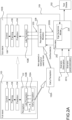
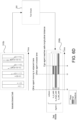
- a scenario extraction component 146 receives the scenario ground truth 144, and processes the scenario ground truth 144 to extract a more abstracted scenario description 148 that can be used for the purpose of simulation.
- the scenario description 148 is consumed by the simulator 202, allowing multiple simulated runs to be performed.
- the simulated runs are variations of the original real-world run, with the degree of possible variation determined by the extent of abstraction.
- Ground truth 150 is provided for each
- the trajectory realized by the non-ego agent (under the control of the agent decision logic 210) also matches the observed trace of the real-world non-ego agent.
- the aim is to re-create observed behaviour in a simulator, but in a closed-loop (reactive manner). That is, the goal/behaviour recognition method of the above references can be applied for the purpose of associating a goal or behaviour with an agent to be simulated.
- simulation-based testing is to run a simulated driving scenario that an ego agent must navigate under the control of the stack 100 being tested.
- the scenario includes a static drivable area (e.g. a particular static road layout) that the ego agent is required to navigate, typically in the presence of one or more other dynamic agents (such as other vehicles, bicycles, pedestrians etc.).
- simulated inputs 203 are provided from the simulator 202 to the stack 100 under testing.
- the dynamic layer instead defines at least one behaviour to be followed along a static path (such as an ACC behaviour).
- the agent decision logic 210 implements that behaviour within the simulation in a reactive manner, i.e. reactive to the ego agent and/or other external agent(s).
- Motion data may still be associated with the static path but in this case is less prescriptive and may for example serve as a target along the path.
- target speeds may be set along the path which the agent will seek to match, but the agent decision logic 210 might be permitted to reduce the speed of the external agent below the target at any point along the path in order to maintain a target headway from a forward vehicle.
- the evaluation of the rules 254 is time-based - a given rule may have a different outcome at different points in the scenario.
- the scoring is also time-based: for each performance evaluation metric, the test oracle 252 tracks how the value of that metric (the score) changes over time as the simulation progresses.
- the test oracle 252 provides an output 256 comprising a time sequence 256a of categorical (e.g. pass/fail) results for each rule, and a score-time plot 256b for each performance metric, as described in further detail later.
- the results and scores 256a, 256b are informative to the expert 122 and can be used to identify and mitigate performance issues within the tested stack 100.
- the later perception components 102B would receive actual perception inputs 213 from earlier perception components 102A.
- the earlier perception components 102A might comprise one or more 2D or 3D bounding box detectors, in which case the simulated perception inputs provided to the late perception components could include simulated 2D or 3D bounding box detections, derived in the simulation via ray tracing.
- the earlier perception components 102A would generally include component(s) that operate directly on sensor data. With the slicing of Figure 2A , the simulated perception inputs 203 would correspond in form to the actual perception inputs 213 that would normally be provided by the earlier perception components 102A.
- the later perception components 102b within the sub-stack 100S process the simulated perception inputs 203 in exactly the same way as they would process the real-world perception inputs 213 within the full stack 100, and their outputs, in turn, drive prediction, planning and control.
- the performance metrics 254 can be based on various factors, such as distance speed etc. In the described system, these can mirror a set of applicable road rules, such as the Highway Code applicable to road users in the United Kingdom.
- the term "Digital Highway Code” (DHC) may be used in relation to the set of performance metrics 254, however, this is merely a convenient shorthand and does not imply any particular jurisdiction.
- the DHC can be made up of any set of performance metrics 254 that can assess driving performance numerically. As noted, each metric is numerical and time-dependent. The value of a given metric at a partial time is referred to as a score against that metric at that time.
- One or both of the metrics 254 and their associated failure thresholds may be adapted to a given scenario.
- speed-based metrics and/or their associated performance functions may be adapted in dependence on an applicable speed limit but also weather/lighting conditions etc.
- the performance evaluation rules 254 are constructed as computational graphs (rule trees) to be applied within the test oracle. Unless otherwise indicated, the term "rule tree” herein refers to the computational graph that is configured to implement a given rule. Each rule is constructed as a rule tree, and a set of multiple rules may be referred to as a "forest" of multiple rule trees.
- Each assessor node 304 is shown to have at least one child object (node), where each child object is one of the extractor nodes 302 or another one of the assessor nodes 304.
- Each assessor node receives output(s) from its child node(s) and applies an assessor function to those output(s).
- the output of the assessor function is a time-series of categorical results. The following examples consider simple binary pass/fail results, but the techniques can be readily extended to non-binary results.
- Each assessor function assesses the output(s) of its child node(s) against a predetermined atomic rule. Such rules can be flexibly combined in accordance with a desired safety model.
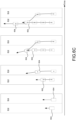
- Figure 3B visually depicts an example of a derived signal 312 and a corresponding time-series of results 314 computed by an assessor node 304.
- the results 314 are correlated with the derived signal 312, in that a pass result is returned when (and only when) the derived signal exceeds a failure threshold 316.
- this is merely one example of a threshold condition that relates a time-sequence of results to a corresponding signal.
- a rule editor 400 is provided for constructing rules to be implemented with the test oracle 252.
- the rule editor 400 receives rule creation inputs from a user (who may or may not be the end-user of the system).
- the rule creation inputs are coded in a domain specific language (DSL) and define at least one rule graph 408 to be implemented within the test oracle 252.
- DSL domain specific language
- the rules are logical rules in the following examples, with TRUE and FALSE representing pass and failure respectively (as will be appreciated, this is purely a design choice).
- a Gt function is to implement a safe lateral distance rule between an ego agent and another agent in the scenario (having agent identifier "other_agent_id").
- Two extractor nodes (latd, latsd) apply LateralDistance and LateralSafeDistance extractor functions respectively.
- Those functions operate directly on the scenario ground truth 310 to extract, respectively, a time-varying lateral distance signal (measuring a lateral distance between the ego agent and the identified other agent), and a time-varying safe lateral distance signal for the ego agent and the identified other agent.
- the safe lateral distance signal could depend on various factors, such as the speed of the ego agent and the speed of the other agent (captured in the traces 212), and environmental conditions (e.g. weather, lighting, road type etc.) captured in the contextual data 214.
- the test oracle 252 applies the rule tree 408 to the scenario ground truth 310, and provides the results via a user interface (UI) 418.
- UI user interface
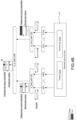
- Figure 4B shows an example of a rule tree that includes a lateral distance branch corresponding to that of Figure 4A .
- the rule tree includes a longitudinal distance branch, and a top-level OR predicate (safe distance node, is_d_safe) to implement a safe distance metric.
- the longitudinal distance brand extracts longitudinal distance and longitudinal distance threshold signals from the scenario data (extractor nodes lond and lonsd respectively), and a longitudinal safety assessor node (is_lond_safe) returns TRUE when the longitudinal distance is above the safe longitudinal distance threshold.
- the top-level OR node returns TRUE when one or both of the lateral and longitudinal distances is safe (below the applicable threshold), and FALSE if neither is safe.
- Different rule trees can be constructed, e.g. to implement different rules of a given safety model, to implement different safety models, or to apply rules selectively to different scenarios (in a given safety model, not every rule will necessarily be applicable to every scenario; with this approach, different rules or combinations of rules can be applied to different scenarios).
- rules can also be constructed for evaluating comfort (e.g. based on instantaneous acceleration and/or jerk along the trajectory), progress (e.g. based on time taken to reach a defined goal) etc.
- a requirement of the safety model may be that an ego agent responds to a certain event within a set time frame.
- Such rules can be encoded in a similar manner, using temporal logic predicates within the rule tree.
- an overall test result e.g. pass/fail
- certain rules e.g. safety-critical rules
- the overall pass/fail criteria may be "softer" (e.g. failure may only be triggered for a certain rule if that rule is failed over some number of sequential time steps), and such criteria may be context dependent.
- a "no collision" rule or the safe distance rule considered above Each such rule is evaluated in a pairwise fashion between the ego agent and each other agent.
- a "pedestrian emergency braking" rule may only be activated when a pedestrian walks out in front of the ego vehicle, and only in respect of that pedestrian agent.
- Rule evaluation logic 424 evaluates each active rule for any time period(s) it remains active. Each interactive rule is evaluated in a pairwise fashion between the ego agent and any other agent to which it applies.
- rules may be non-binary. For example, two categories for failure - "acceptable” and “unacceptable” - may be introduced. Again, considering the relationship between a comfort rule and an emergency braking rule, an acceptable failure on a comfort rule may occur when the rule is failed but at a time when an emergency braking rule was active. Interdependency between rules can, therefore, be handled in various ways.
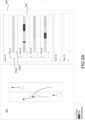
- Figure 6A depicts a first instance of a cut-in scenario in the simulator 202 that terminates in a collision event between an ego vehicle 602 and another vehicle 604.
- the cut-in scenario is characterized as a multi-lane driving scenario, in which the ego vehicle 602 is moving along a first lane 612 (the ego lane) and the other vehicle 604 is initially moving along a second, adjacent lane 604. At some point in the scenario, the other vehicle 604 moves from the adjacent lane 614 into the ego lane 612 ahead of the ego vehicle 602 (the cut-in distance). In this scenario, the ego vehicle 602 is unable to avoid colliding with the other vehicle 604.
- the first scenario instance terminates in response to the collision event.
- inverse planning may be implemented at the goal-level, in order to make a probabilistic prediction about a current goal of a non-ego agent.
- the goal recognition component 156 may predict a probability distribution P ( G
- the goals could be a "turn left” goal or a "continue straight” goal (i.e. remain on the current road and do not take the left turn), captured as suitable goal locations.
- Inverse planning at the goal-level is a form of (probabilistic) goal recognition.
- inverse planning refers to this underlying assumption that a non-ego agent will plan its decisions in a predictable manner. More formally, the assumption is that the other vehicle will plan and execute with a generative model that can be hypothesised.
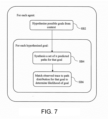
- a set of hypothesised goals is determined for the other vehicle in question.
- An assumption is that the other vehicle is currently executing one of these goals.
- a driving context such as the road-layout in the vicinity of the other vehicle, is determined.
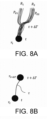
- step SB6 the trace of the other vehicle as actually observed over the time period ⁇ t (i.e. between time t and t + ⁇ t ) is matched to the distribution of trajectories associated with the goal in question for that time period ⁇ t , in order to determine a likelihood for that goal.
- Figure 8B shows an actual observed trace ⁇ of the vehicle in question between time t and t + ⁇ t .
- the observed trace ⁇ is (one of) the non-ego trace(s) 144b of Figure 8C.
- ⁇ t can be any period for which trace data is available. There is no requirement for the method to run in real-time in this context, as the aim is to infer a goal for the purpose of subsequent simulation.
- the goal recognition component 156 predicts, for each of the hypothesised goals, a set of one or more possible trajectories that the other vehicle might have taken in the time interval ⁇ t and a likelihood of each trajectory, on the assumption that the other vehicle was executing that goal during that time period (i.e. what the other vehicle might have done during time interval ⁇ t had it been executing that goal). This is then compared with the actual trace of the other vehicle within that time period (i.e. what the other vehicle actually did), to determine a likelihood of each goal for the time period ⁇ t .
- a local state contains a vehicle's pose, velocity, and acceleration (herein, velocity and speed are used interchangeably); an observation contains the poses and velocities of nearby vehicles; and an action controls the vehicle's steering and acceleration.
- a policy is a function ⁇ : ( ) ⁇ which maps an observation sequence o 1 : n ⁇ (observed trajectory) to an action a t ⁇ .
- a goal can be any (partial) state description g ⁇ ⁇ , though, by way of example, the following description focuses on goals that specify target locations.
- ⁇ n s 1 : n s n ⁇ ⁇ g ⁇ ⁇ ⁇ m ⁇ n : s m ⁇ ⁇ g ⁇ where s n ⁇ ⁇ g ⁇ ⁇ means that s n ⁇ satisfies g ⁇ .
- inverse planning searches over macro actions rather than maneuvers, which significantly increases their efficiency by reducing search depth.
- Table 1 Macro actions used in our system. Each macro action concatenates one or more maneuvers and sets their parameters (see Sec. III-C) Macro action Additional applicability condition Maneuver sequence (maneuver parameters in brackets) Continue lane-follow (end of visible lane) Continue to new exit Must be in roundabout and not in outer-lane Lane-follow (next exit point) Change left / right There is a lane to the left/right lane-follow (until target lane clear, lane-change-left / right Exit left / right Exit point on same lane ahead of car and in correct direction Lane-follow (exit point), give-way (relevant lanes), turn-left / right Stop There is a stopping goal ahead of the car on the current lane Lane-follow (close to stopping point), stop
- Equation (4) is a nonlinear non-convex optimisation problem which can be solved, e.g., using a primal-dual interior point method (e.g. IPOPT [27]).
- a primal-dual interior point method e.g. IPOPT [27]
- the goal recognition component 156 interpolates to obtain achievable velocities at the original points x ⁇ t . If x ⁇ t ⁇ x n for all t, then the goal recognition component 156 can interpolate from this solution for x ⁇ 1: n . Otherwise, the goal recognition component 156 can solve a similar problem starting from x n , and repeat the procedure until all x ⁇ 1: t are within the bound.
- the goal recognition component 156 includes reward components for execution time, longitudinal jerk, lateral jerk, path curvature, and safety distance to leading vehicle.
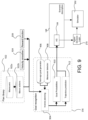
- R i represents the reward function 926 for goal g i in mathematical notation.
- the likelihood is a computed as function of the reward difference between two plans: the reward r ⁇ of the optimal trajectory from i's initial observed state s 1 i to goal g i after velocity smoothing, and the reward r of the trajectory which follows the observed trajectory until time t and then continues optimally to goal g i with smoothing applied only to the trajectory after t .
- Algorithm 1 shows pseudo code for an implementation of the goal recognition algorithm, with further details in below subsections.
- the algorithm allows for efficient parallel processing by using parallel threads for each vehicle i, goal g i and rewards r ⁇ , r .
- Maneuver detection is used to detect the current executed maneuver of a vehicle (at time t), allowing inverse planning to complete the maneuver before planning onward.
- a maneuver detection module of the goal recognition component 156 computes probabilities over current maneuvers, p ( ⁇ i ) for each vehicle i .
- One option is Bayesian changepoint detection algorithms such as CHAMP [19]. Maneuver detection methods are known per se, and are therefore not described in further detail. In the experiments detailed below, a simulated detector was used.
- Inverse Planning is done using A* search [12] over macro actions.
- A* starts after completing the current maneuver ⁇ i which produces the initial trajectory ⁇ 1: ⁇
- Each search node q corresponds to a state s ⁇ , with initial node at state ⁇ ⁇ and macro actions are filtered by their applicability conditions applied to s.
- cost is used in keeping with standard A* terminology and to differentiate the simpler cost definition used by the A* search from the reward function defined in Sec. III-E.
- the cost h is approximating the reward by considering only travel time (see below), which is sufficient for the purpose of the A* search.
- different forms of cost/reward can be defined in this context.
- the cost l ( q' ) to reach node q' is given by the driving time from i's location in the initial search node to its location in q', following the trajectories returned by the macro actions leading to q'.
- the cost heuristic h ( q' ) to estimate remaining cost from q' to goal g i is given by the driving time from i's location in q' to goal via straight line at speed limit.
- This definition of h ( q' ) is admissible as per A* theory, which ensures that the search returns an optimal plan. After the optimal plan is found, a complete trajectory s ⁇ 1 : n i is extracted from the maneuvers in the plan and the initial segment ⁇ 1: ⁇ from the current maneuver.
- a second A* search is run for a fixed amount of time and is free to compute a set of plans with associated rewards (up to some fixed number of plans). Any time A* search finds a node that reaches the goal, the corresponding plan is added to the set of plans. The A* search may find trajectories that do not reach the goal, but those are not added to the set of plans considered in the next stage.
- G i ) for a given goal G i ⁇ G is defined as the difference between the respective rewards of two plans:
- the car's initial location r t may for example be the first observed location of the car.
- a reasonable approach is to use a moving window of past observations defined by the ego car's sensor ranges to define the initial location r t .
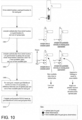
- An optimal plan (1 above) is computed for each goal G 1 , G 2 at step 1004 in Figure 10 . Once computed, this allows an optimal trajectory to be determined for each goal G 1 , G 2 , for example, using an A* search (see below for details). Having computed the optimal trajectory, a full reward associated with the optimal trajectory can then be computed (also described below). The optimal trajectory is a full trajectory, i.e. for reaching the goal in question from the initial location r t .
- trajectories are denoted by points along the trajectory that are evenly spaced in time, such that evenly-spaced points imply constant velocity and increasing (resp. decreasing) distance between points implies acceleration (resp. deceleration).
- White circles are used to represent optimal trajectory points. It can thus be seen that, for goal G 1 , the optimal trajectory is a straight-line path continuing along the road at constant speed, whereas for goal G 2 the optimal trajectory gradually slows as the car approaches a turning point for the exit.
- probabilistic maneuver detection is applied to predict a probability distribution over possible current maneuvers for the car.
- the current maneuver may not be known definitely but only probabilistically, in terms of a distribution p ( M
- an initial maneuver may be sampled in a similar manner to goals.
- an optimal plan for that goal can be determined given the car's initial location r t , and a best available plan for that goal can be determined given the observations in the subsequent time interval ⁇ T. It moreover assumes that, given an optimal (resp. best available) plan, an optimal (resp. best available) trajectory can be determined.
- An optimal (resp. best available) trajectory can be determined.
- Such general-purpose processors typically execute computer readable instructions held in memory coupled to or internal to the processor and carry out the relevant steps in accordance with those instructions.
- Other forms of programmable processors include field programmable gate arrays (FPGAs) having a circuit configuration programmable though circuit description code. Examples of non-programmable processors include application specific integrated circuits (ASICs). Code, instructions etc. may be stored as appropriate on transitory or non-transitory media (examples of the latter including solid state, magnetic and optical storage device(s) and the like).
- the subsystems 102-108 of the runtime stack Figure 1A may be implemented in programmable or dedicated processor(s), or a combination of both, on-board a vehicle or in an off-board computer system in the context of testing and the like.
- the various components of Figure 2 such as the simulator 202 and the test oracle 252 may be similarly implemented in programmable and/or dedicated hardware.
Landscapes
- Engineering & Computer Science (AREA)
- Theoretical Computer Science (AREA)
- Physics & Mathematics (AREA)
- General Physics & Mathematics (AREA)
- Computer Hardware Design (AREA)
- General Engineering & Computer Science (AREA)
- Geometry (AREA)
- Quality & Reliability (AREA)
- Evolutionary Computation (AREA)
- Aviation & Aerospace Engineering (AREA)
- Automation & Control Theory (AREA)
- Computational Mathematics (AREA)
- Mathematical Analysis (AREA)
- Mathematical Optimization (AREA)
- Pure & Applied Mathematics (AREA)
- Traffic Control Systems (AREA)
- Management, Administration, Business Operations System, And Electronic Commerce (AREA)
- Software Systems (AREA)
- Artificial Intelligence (AREA)
- Computer Vision & Pattern Recognition (AREA)
- Medical Informatics (AREA)
Claims (14)
- Ein Computersystem zum Testen eines autonomen Fahrzeugstapels AV (100) in Simulation, wobei das Computersystem umfasst:eine Spur-Extraktionskomponente (142), die dazu eingerichtet ist, reale Fahrdaten (140) zu verarbeiten, um daraus mindestens eine beobachtete Spur eines realen Agenten innerhalb eines Straßenlayouts zu extrahieren, wobei die beobachtete Spur räumliche und Bewegungsbestandteile aufweist;eine Fahrtszenario-Extraktionskomponente (146), die dazu eingerichtet ist, mindestens eine der Zielerkennung (151) und Verhaltenskennung auf die beobachtete Spur anzuwenden, um ein Ziel oder Verhalten des realen Agenten innerhalb des Straßenlayouts zu erkennen und ein Fahrtszenario zu extrahieren, das eine Version des Straßenlayouts und mindestens einen Nicht-Ego-Agenten definiert, der simuliert werden soll, wobei der Nicht-Ego-Agent mit dem erkannten Ziel oder Verhalten für die Implementierung in der Simulation innerhalb des definierten Straßenlayouts verbunden ist;einen Simulator (202), der dazu eingerichtet ist, eine Simulation basierend auf dem extrahierten Fahrtszenario durchzuführen, in der ein Ego-Agent und der Nicht-Ego-Agent jeweils ein geschlossenes Regelverhalten zeigen, wobei das geschlossene Regelverhalten des Ego-Agenten durch autonome Entscheidungen bestimmt wird, die im zu testenden AV-Stapel (100) als Reaktion auf simulierte Eingaben getroffen werden, die auf den Nicht-Ego-Agenten reagieren;eine Agenten-Entscheidungslogik (210), die dazu eingerichtet ist, das geschlossene Regelverhalten des Nicht-Ego-Agenten in der Simulation zu bestimmen, indem das erkannte Ziel oder Verhalten implementiert wird, das auf den Ego-Agenten reagiert; undein Testorakel, das dazu eingerichtet ist, die Leistung des AV-Stapels in der Simulation zu bewerten, indem es eine simulierte Ego-Spur des Ego-Agenten empfängt, wie sie in der Simulation erzeugt wurde, und die simulierte Ego-Spur anhand einer Reihe vorbestimmter Leistungsmetriken bewertet.
- Das Computersystem nach Anspruch 1, wobei das Testorakel (252) dazu eingerichtet ist, eine Ausgabe bereitzustellen, die ein Punkt-Zeit-Diagramm (256b) für jede Leistungsmetrik umfasst, und wobei die Leistungsmetriken optional numerisch sind und das Testorakel dazu eingerichtet ist, das Punkt-Zeit-Diagramm (256b) mit einem Fehlergrenzwert zu vergleichen.
- Das Computersystem nach Anspruch 1 oder 2, wobei die Agenten-Entscheidungslogik (210) dazu eingerichtet ist, das geschlossene Regelverhalten des Nicht-Ego-Agenten mit dem Ziel zu bestimmten, Zielbewegungswerte entlang eines räumlichen Agentenpfads zu erreichen, wobei jedoch Abweichungen von den Zielbewegungswerten in Reaktion auf den Ego-Agenten erlaubt sind, wobei der räumliche Agentenpfad mit dem erkannten Ziel oder Verhalten verbunden ist.
- Das Computersystem nach einem der vorhergehenden Ansprüche, wobei die Fahrtszenario-Extraktionskomponente (146) dazu eingerichtet ist, das Ziel oder Verhalten probabilistisch als Verteilung über verfügbare Ziele oder Verhaltensweisen zu erkennen, wobei die verfügbaren Ziele oder Verhaltensweisen optional aus dem Straßenlayout bestimmt werden.
- Das Computersystem nach einem der vorhergehenden Ansprüche, wobei die Fahrtszenario-Extraktionskomponente (146) dazu eingerichtet ist, das Ziel oder Verhalten probabilistisch zu erkennen durch:Bestimmen der Menge verfügbarer Ziele oder Verhaltensweisen für den realen Agenten, wobei die verfügbaren Ziele oder Verhaltensweisen optional aus dem Straßenlayout bestimmt werden;für jedes der verfügbaren Ziele oder Verhaltensweisen ein erwartetes Trajektorienmodell bestimmen, wobei das erwartete Trajektorienmodell optional eine einzelne vorhergesagte Trajektorie ist, die mit diesem Ziel oder Verhalten verbunden ist, oder eine Verteilung vorhergesagter Trajektorien, die mit diesem Ziel oder Verhalten verbunden sind; undVergleichen der beobachteten Spur des realen Agenten mit dem erwarteten Trajektorienmodell für jedes der verfügbaren Ziele oder Verhaltensweisen, um eine Wahrscheinlichkeit für dieses Ziel oder Verhalten zu bestimmen, wodurch eine Verteilung über die verfügbaren Ziele oder Verhaltensweisen bestimmt wird.
- Das Computersystem nach Anspruch 5, wobei die Fahrtszenario-Extraktionskomponente (146) dazu eingerichtet ist, die beobachtete Spur zu verwenden, um ein bestverfügbares Trajektorienmodell für das Ziel oder Verhalten vorherzusagen, wobei der Vergleich das Vergleichen des bestverfügbaren Trajektorienmodells mit dem erwarteten Trajektorienmodell umfasst, wobei eine definierte Belohnungsfunktion optional sowohl auf das erwartete Trajektorienmodell als auch auf das bestverfügbare Trajektorienmodell für jedes Ziel angewendet wird, um die jeweiligen Belohnungen dieser Trajektorienmodelle zu bestimmen, wobei der Vergleich das Vergleichen dieser Belohnungen umfasst, wobei die Belohnungsfunktion optional reduzierte Fahrzeit belohnt und unsichere Trajektorien bestraft.
- Das Computersystem nach einem der Ansprüche 4 bis 6, umfassend eine Abtastkomponente (150), die dazu eingerichtet ist, ein Ziel oder Verhalten aus der Verteilung über die möglichen Ziele oder Verhaltensweisen abzutasten, wobei die Agenten-Entscheidungslogik (210) dazu eingerichtet ist, das geschlossene Regelverhalten des Nicht-Ego-Agenten basierend auf dem abgetasteten Ziel oder Verhalten zu bestimmen.
- Das Computersystem nach einem der vorhergehenden Ansprüche, umfassend eine Rendering-Komponente, die dazu eingerichtet ist, eine grafische Benutzeroberfläche (500) zu erzeugen, die eine vom Testorakel bereitgestellte Ausgabe zur Bewertung der Leistung des AV-Stapels in der Simulation umfasst.
- Das Computersystem nach einem der vorhergehenden Ansprüche, wobei das Testorakel dazu eingerichtet ist, die simulierte Ego-Spur (212a) anhand der Reihe vorbestimmter Leistungsmetriken in Abhängigkeit von einer simulierten Nicht-Ego-Spur (212b) des Nicht-Ego-Agenten und/oder in Abhängigkeit von Umweltdaten der Simulation oder anderen Kontextdaten (214), die sich auf einen physischen Kontext der Simulation beziehen, zu bewerten.
- Das Computersystem nach einem der vorhergehenden Ansprüche, wobei die Spur-Extraktionskomponente (142) dazu eingerichtet ist, ein oder mehrere nichtechtzeitliche Wahrnehmungsalgorithmen auf die realen Fahrdaten (140) anzuwenden, um die beobachtete Spur zu extrahieren, und wobei die Agenten-Entscheidungslogik (210) optional so abgestimmt ist, dass sie den Nicht-Ego-Agenten dazu veranlasst, eine Trajektorie zu realisieren, die im Wesentlichen der beobachteten Spur entspricht, falls das Verhalten des Ego-Agenten in der Simulation im Wesentlichen dem Verhalten eines realen Ego-Agenten in den realen Fahrdaten (140) entspricht.
- Ein computerimplementiertes Verfahren zum Testen eines autonomen Fahrzeugstapels AV in Simulation, wobei das Verfahren umfasst:Ausführen einer Simulation in einem Simulator (202) basierend auf einem extrahierten Fahrtszenario, in dem ein Ego-Agent und mindestens ein Nicht-Ego-Agent jeweils ein geschlossenes Regelverhalten zeigen, wobei das geschlossene Regelverhalten des Ego-Agenten durch autonome Entscheidungen bestimmt wird, die im zu testenden AV-Stapel (100) als Reaktion auf simulierte Eingaben getroffen werden, die auf den Nicht-Ego-Agenten reagieren, wobei das geschlossene Regelverhalten des Nicht-Ego-Agenten durch Implementierung eines erkannten Ziels oder Verhaltens bestimmt wird, das auf den Ego-Agenten reagiert; undBewerten der Leistung des AV-Stapels in der Simulation durch ein Testorakel, indem eine Ego-Spur des Ego-Agenten empfangen wird, wie sie in der Simulation erzeugt wurde, und die Ego-Spur anhand einer Reihe vorbestimmter Leistungsmetriken bewertet wird; und das Fahrtszenario aus realen Fahrdaten (140), die innerhalb eines Straßenlayouts erfasst wurden, extrahiert wurde, indem: die realen Fahrdaten (140) verarbeitet werden, um mindestens eine beobachtete Spur eines realen Agenten zu extrahieren, wobei die beobachtete Spur räumliche und Bewegungsbestandteile aufweist, mindestens eine der Zielerkennung und Verhaltenskennung auf die beobachtete Spur angewendet wird, um das Ziel oder Verhalten des realen Agenten innerhalb des Straßenlayouts zu erkennen, das extrahierte Fahrtszenario eine Version des Straßenlayouts und mindestens einen Nicht-Ego-Agenten definiert, der simuliert werden soll, wobei der Nicht-Ego-Agent mit dem erkannten Ziel oder Verhalten für die Implementierung in der Simulation innerhalb der definierten Version des Straßenlayouts verbunden ist.
- Das Verfahren nach Anspruch 11, umfassend:
Verwenden einer vom Testorakel bereitgestellten Ausgabe, um ein Leistungsproblem im zu testenden AV-Stapel zu identifizieren und zu beheben, wobei die Ausgabe zur Bewertung der Leistung des AV-Stapels in der Simulation dient. - Das Verfahren nach Anspruch 12, wobei der AV-Stapel (100) mindestens eine trainierbare maschinelle Lernkomponente umfasst, das Verfahren mehrmals als Teil eines strukturierten Trainingsprozesses durchgeführt wird, wobei die Leistung des AV-Stapels (100) in jeder Simulation bewertet wird, und diese Bewertung verwendet wird, um Parameter der maschinellen Lernkomponente zu trainieren, wobei der strukturierte Trainingsprozess optional ein Verstärkungslernprozess ist, bei dem die Parameter basierend auf einer Trainingskosten- oder Belohnungsfunktion, die auf jede Simulation angewendet wird, trainiert werden.
- Ein Computerprogramm, das Programmierbefehle zum Programmieren eines Computersystems umfasst, um das Verfahren nach einem der Ansprüche 11 bis 13 zu implementieren.
Applications Claiming Priority (2)
| Application Number | Priority Date | Filing Date | Title |
|---|---|---|---|
| GBGB2008353.1A GB202008353D0 (en) | 2020-06-03 | 2020-06-03 | Simulation in autonomous driving |
| PCT/EP2021/064937 WO2021245200A1 (en) | 2020-06-03 | 2021-06-03 | Simulation in autonomous driving |
Publications (2)
| Publication Number | Publication Date |
|---|---|
| EP4150465A1 EP4150465A1 (de) | 2023-03-22 |
| EP4150465B1 true EP4150465B1 (de) | 2025-04-16 |
Family
ID=71526291
Family Applications (1)
| Application Number | Title | Priority Date | Filing Date |
|---|---|---|---|
| EP21730899.8A Active EP4150465B1 (de) | 2020-06-03 | 2021-06-03 | Simulation beim autonomen fahren |
Country Status (4)
| Country | Link |
|---|---|
| US (1) | US20230289281A1 (de) |
| EP (1) | EP4150465B1 (de) |
| GB (1) | GB202008353D0 (de) |
| WO (1) | WO2021245200A1 (de) |
Families Citing this family (28)
| Publication number | Priority date | Publication date | Assignee | Title |
|---|---|---|---|---|
| US11334762B1 (en) * | 2017-09-07 | 2022-05-17 | Aurora Operations, Inc. | Method for image analysis |
| EP3920103B1 (de) * | 2020-06-05 | 2024-08-07 | Robert Bosch GmbH | Vorrichtung und verfahren zur planung eines betriebs eines technischen systems |
| WO2022074824A1 (ja) * | 2020-10-09 | 2022-04-14 | 日本電気株式会社 | 時相論理式生成装置、時相論理式生成方法及び記憶媒体 |
| CN112906126B (zh) * | 2021-01-15 | 2023-04-07 | 北京航空航天大学 | 基于深度强化学习的车辆硬件在环仿真训练系统及方法 |
| WO2022171812A1 (en) * | 2021-02-12 | 2022-08-18 | Five AI Limited | Performance testing for trajectory planners |
| IL308800A (en) * | 2021-06-08 | 2024-01-01 | Five Ai Ltd | Visual display tool for testing |
| US12242933B1 (en) * | 2021-09-03 | 2025-03-04 | Lytx, Inc. | Adaptive model for vehicle processing of images |
| US20230185992A1 (en) * | 2021-12-14 | 2023-06-15 | Gm Cruise Holdings Llc | Managing states of a simulated environment |
| US20230195972A1 (en) * | 2021-12-22 | 2023-06-22 | Gm Cruise Holdings Llc | Autonomous vehicle simulation and code build scheduling |
| US12499298B2 (en) | 2022-01-11 | 2025-12-16 | Volkswagen Group of America Investments, LLC | Automated generation and refinement of variation parameters for simulation scenarios |
| CN114860556B (zh) * | 2022-03-31 | 2025-10-28 | 广州文远知行科技有限公司 | 统计功效评估方法、装置、设备及存储介质 |
| DE102022112059B3 (de) * | 2022-05-13 | 2023-04-20 | Dr. Ing. H.C. F. Porsche Aktiengesellschaft | Verfahren, System und Computerprogrammprodukt zur Kalibrierung und Validierung eines Fahrerassistenzsystems (ADAS) und/oder eines automatisierten Fahrsystems (ADS) |
| US20220289253A1 (en) * | 2022-05-25 | 2022-09-15 | Baidu Usa Llc | Method for evaluating autonomous driving system, apparatus and storage medium |
| US12430236B2 (en) * | 2022-07-29 | 2025-09-30 | Volkswagen Group of America Investments, LLC | Systems and methods for monitoring progression of software versions and detection of anomalies |
| US20260111627A1 (en) * | 2022-10-14 | 2026-04-23 | Motional Ad Llc | Simulated smart pedestrians |
| JP2024068496A (ja) * | 2022-11-08 | 2024-05-20 | トヨタ自動車株式会社 | 車両及び自動運転装置の性能評価方法 |
| US12606206B2 (en) * | 2022-11-17 | 2026-04-21 | Gm Cruise Holdings Llc | Filtering autonomous driving simulation scenarios |
| DE102023114503A1 (de) | 2023-06-02 | 2024-12-05 | Dr. Ing. H.C. F. Porsche Aktiengesellschaft | Verfahren, System und Computerprogrammprodukt zum datengetriebenen Testen eines ADAS/ADS-Systems |
| US20250026365A1 (en) * | 2023-07-17 | 2025-01-23 | Mercedes-Benz Group AG | Autonomous perception human-in-loop verification |
| US20250148911A1 (en) * | 2023-11-02 | 2025-05-08 | Nec Laboratories America, Inc. | Closed-loop simulator for multiagent behavior with controllable diffusion |
| CN117899487B (zh) * | 2024-03-15 | 2024-05-31 | 腾讯科技(深圳)有限公司 | 一种数据处理方法、装置、设备、存储介质及程序产品 |
| WO2025231169A1 (en) * | 2024-04-30 | 2025-11-06 | Aerovironment, Inc. | Systems, devices, and methods for depot management |
| GB2642419A (en) * | 2024-05-14 | 2026-01-14 | Toyota Motor Co Ltd | Driving policy training |
| CN118410875B (zh) * | 2024-06-27 | 2024-10-11 | 广汽埃安新能源汽车股份有限公司 | 一种自动驾驶行为模型生成方法及系统 |
| CN118467400B (zh) * | 2024-07-11 | 2024-12-20 | 广州汽车集团股份有限公司 | 仿真背景车行为控制方法、装置、设备及计算机程序产品 |
| CN119290029B (zh) * | 2024-09-30 | 2026-04-03 | 北京控制工程研究所 | 基于动态光学模拟的空间运动目标捕获验证系统及方法 |
| DE102024209910A1 (de) | 2024-10-11 | 2026-04-16 | Robert Bosch Gesellschaft mit beschränkter Haftung | Computerimplementiertes Verfahren zum Erzeugen mindestens eines gewichteten Trainingsbeispiels, Verwendung mindestens eines gewichteten Trainingsbeispiels zum Trainieren eines Verhaltensplaners, Verhaltensplaner |
| CN119882431B (zh) * | 2025-01-03 | 2025-11-04 | 上海交通大学 | 基于数据驱动的自动驾驶决策优化系统及方法 |
Family Cites Families (16)
| Publication number | Priority date | Publication date | Assignee | Title |
|---|---|---|---|---|
| US10031526B1 (en) * | 2017-07-03 | 2018-07-24 | Baidu Usa Llc | Vision-based driving scenario generator for autonomous driving simulation |
| US10739775B2 (en) * | 2017-10-28 | 2020-08-11 | Tusimple, Inc. | System and method for real world autonomous vehicle trajectory simulation |
| US10860018B2 (en) * | 2017-11-30 | 2020-12-08 | Tusimple, Inc. | System and method for generating simulated vehicles with configured behaviors for analyzing autonomous vehicle motion planners |
| US11086318B1 (en) * | 2018-03-21 | 2021-08-10 | Uatc, Llc | Systems and methods for a scenario tagger for autonomous vehicles |
| JP2022516383A (ja) | 2018-10-16 | 2022-02-25 | ファイブ、エーアイ、リミテッド | 自律型車両の計画 |
| US11814059B1 (en) * | 2019-04-05 | 2023-11-14 | Zoox, Inc. | Simulating autonomous driving using map data and driving data |
| US11150660B1 (en) * | 2019-04-23 | 2021-10-19 | Zoox, Inc. | Scenario editor and simulator |
| US11568100B2 (en) * | 2019-06-28 | 2023-01-31 | Zoox, Inc. | Synthetic scenario simulator based on events |
| GB201912145D0 (en) | 2019-08-23 | 2019-10-09 | Five Ai Ltd | Performance testing for robotic systems |
| US11565709B1 (en) * | 2019-08-29 | 2023-01-31 | Zoox, Inc. | Vehicle controller simulations |
| GB202001308D0 (en) | 2020-01-30 | 2020-03-18 | Five Ai Ltd | Prediction and planning for mobile robots |
| US12005892B2 (en) * | 2019-11-14 | 2024-06-11 | Nec Corporation | Simulating diverse long-term future trajectories in road scenes |
| US11526721B1 (en) * | 2020-02-21 | 2022-12-13 | Zoox, Inc. | Synthetic scenario generator using distance-biased confidences for sensor data |
| US11628850B2 (en) * | 2020-05-05 | 2023-04-18 | Zoox, Inc. | System for generating generalized simulation scenarios |
| US11338825B2 (en) * | 2020-06-01 | 2022-05-24 | Zoox, Inc. | Agent behavior model for simulation control |
| US11681296B2 (en) * | 2020-12-11 | 2023-06-20 | Motional Ad Llc | Scenario-based behavior specification and validation |
-
2020
- 2020-06-03 GB GBGB2008353.1A patent/GB202008353D0/en not_active Ceased
-
2021
- 2021-06-03 US US18/008,145 patent/US20230289281A1/en active Pending
- 2021-06-03 EP EP21730899.8A patent/EP4150465B1/de active Active
- 2021-06-03 WO PCT/EP2021/064937 patent/WO2021245200A1/en not_active Ceased
Also Published As
| Publication number | Publication date |
|---|---|
| GB202008353D0 (en) | 2020-07-15 |
| EP4150465A1 (de) | 2023-03-22 |
| US20230289281A1 (en) | 2023-09-14 |
| WO2021245200A1 (en) | 2021-12-09 |
Similar Documents
| Publication | Publication Date | Title |
|---|---|---|
| EP4150465B1 (de) | Simulation beim autonomen fahren | |
| EP3863904B1 (de) | Planung für ein autonomes fahrzeug | |
| US20230234613A1 (en) | Testing and simulation in autonomous driving | |
| WO2021073781A9 (en) | Prediction and planning for mobile robots | |
| US20240370360A1 (en) | Support tools for autonomous vehicle testing | |
| US20240123615A1 (en) | Performance testing for mobile robot trajectory planners | |
| US20240194004A1 (en) | Performance testing for mobile robot trajectory planners | |
| US20250021714A1 (en) | Generating simulation environments for testing autonomous vehicle behaviour | |
| US20240419572A1 (en) | Performance testing for mobile robot trajectory planners | |
| EP4533269B1 (de) | Identifizierung von hervorstechenden testläufen mit bewegungsplanern für mobilen roboter | |
| WO2023021208A1 (en) | Support tools for av testing | |
| US20240354462A1 (en) | Perception testing | |
| CN116888578A (zh) | 用于移动机器人轨迹规划器的性能测试 | |
| WO2024115772A1 (en) | Support tools for autonomous vehicle testing | |
| EP4627442A1 (de) | Unterstützungswerkzeuge zum testen von autonomen fahrzeugen | |
| CN117242449A (zh) | 移动机器人轨迹规划器的性能测试 |
Legal Events
| Date | Code | Title | Description |
|---|---|---|---|
| STAA | Information on the status of an ep patent application or granted ep patent |
Free format text: STATUS: UNKNOWN |
|
| STAA | Information on the status of an ep patent application or granted ep patent |
Free format text: STATUS: THE INTERNATIONAL PUBLICATION HAS BEEN MADE |
|
| PUAI | Public reference made under article 153(3) epc to a published international application that has entered the european phase |
Free format text: ORIGINAL CODE: 0009012 |
|
| STAA | Information on the status of an ep patent application or granted ep patent |
Free format text: STATUS: REQUEST FOR EXAMINATION WAS MADE |
|
| 17P | Request for examination filed |
Effective date: 20221216 |
|
| AK | Designated contracting states |
Kind code of ref document: A1 Designated state(s): AL AT BE BG CH CY CZ DE DK EE ES FI FR GB GR HR HU IE IS IT LI LT LU LV MC MK MT NL NO PL PT RO RS SE SI SK SM TR |
|
| RAP3 | Party data changed (applicant data changed or rights of an application transferred) |
Owner name: FIVE AI LIMITED |
|
| DAV | Request for validation of the european patent (deleted) | ||
| DAX | Request for extension of the european patent (deleted) | ||
| STAA | Information on the status of an ep patent application or granted ep patent |
Free format text: STATUS: EXAMINATION IS IN PROGRESS |
|
| 17Q | First examination report despatched |
Effective date: 20230921 |
|
| GRAP | Despatch of communication of intention to grant a patent |
Free format text: ORIGINAL CODE: EPIDOSNIGR1 |
|
| STAA | Information on the status of an ep patent application or granted ep patent |
Free format text: STATUS: GRANT OF PATENT IS INTENDED |
|
| RIC1 | Information provided on ipc code assigned before grant |
Ipc: G06F 30/15 20200101ALN20241015BHEP Ipc: G06F 30/20 20200101ALN20241015BHEP Ipc: G05B 17/02 20060101ALN20241015BHEP Ipc: B60W 50/00 20060101ALI20241015BHEP Ipc: G05B 13/04 20060101ALI20241015BHEP Ipc: G05D 1/00 20060101ALI20241015BHEP Ipc: G06F 11/36 20060101AFI20241015BHEP |
|
| INTG | Intention to grant announced |
Effective date: 20241106 |
|
| RIC1 | Information provided on ipc code assigned before grant |
Ipc: G06F 30/15 20200101ALN20241028BHEP Ipc: G06F 30/20 20200101ALN20241028BHEP Ipc: G05B 17/02 20060101ALN20241028BHEP Ipc: B60W 50/00 20060101ALI20241028BHEP Ipc: G05B 13/04 20060101ALI20241028BHEP Ipc: G05D 1/00 20060101ALI20241028BHEP Ipc: G06F 11/36 20060101AFI20241028BHEP |
|
| GRAS | Grant fee paid |
Free format text: ORIGINAL CODE: EPIDOSNIGR3 |
|
| GRAA | (expected) grant |
Free format text: ORIGINAL CODE: 0009210 |
|
| STAA | Information on the status of an ep patent application or granted ep patent |
Free format text: STATUS: THE PATENT HAS BEEN GRANTED |
|
| AK | Designated contracting states |
Kind code of ref document: B1 Designated state(s): AL AT BE BG CH CY CZ DE DK EE ES FI FR GB GR HR HU IE IS IT LI LT LU LV MC MK MT NL NO PL PT RO RS SE SI SK SM TR |
|
| REG | Reference to a national code |
Ref country code: GB Ref legal event code: FG4D |
|
| REG | Reference to a national code |
Ref country code: CH Ref legal event code: EP |
|
| REG | Reference to a national code |
Ref country code: IE Ref legal event code: FG4D |
|
| REG | Reference to a national code |
Ref country code: DE Ref legal event code: R096 Ref document number: 602021029236 Country of ref document: DE |
|
| PGFP | Annual fee paid to national office [announced via postgrant information from national office to epo] |
Ref country code: DE Payment date: 20250625 Year of fee payment: 5 |
|
| PGFP | Annual fee paid to national office [announced via postgrant information from national office to epo] |
Ref country code: AT Payment date: 20250721 Year of fee payment: 5 |
|
| REG | Reference to a national code |
Ref country code: NL Ref legal event code: MP Effective date: 20250416 |
|
| PG25 | Lapsed in a contracting state [announced via postgrant information from national office to epo] |
Ref country code: NL Free format text: LAPSE BECAUSE OF FAILURE TO SUBMIT A TRANSLATION OF THE DESCRIPTION OR TO PAY THE FEE WITHIN THE PRESCRIBED TIME-LIMIT Effective date: 20250416 |
|
| REG | Reference to a national code |
Ref country code: AT Ref legal event code: MK05 Ref document number: 1786219 Country of ref document: AT Kind code of ref document: T Effective date: 20250416 |
|
| PG25 | Lapsed in a contracting state [announced via postgrant information from national office to epo] |
Ref country code: FI Free format text: LAPSE BECAUSE OF FAILURE TO SUBMIT A TRANSLATION OF THE DESCRIPTION OR TO PAY THE FEE WITHIN THE PRESCRIBED TIME-LIMIT Effective date: 20250416 Ref country code: ES Free format text: LAPSE BECAUSE OF FAILURE TO SUBMIT A TRANSLATION OF THE DESCRIPTION OR TO PAY THE FEE WITHIN THE PRESCRIBED TIME-LIMIT Effective date: 20250416 Ref country code: PT Free format text: LAPSE BECAUSE OF FAILURE TO SUBMIT A TRANSLATION OF THE DESCRIPTION OR TO PAY THE FEE WITHIN THE PRESCRIBED TIME-LIMIT Effective date: 20250818 |
|
| REG | Reference to a national code |
Ref country code: LT Ref legal event code: MG9D |
|
| PG25 | Lapsed in a contracting state [announced via postgrant information from national office to epo] |
Ref country code: GR Free format text: LAPSE BECAUSE OF FAILURE TO SUBMIT A TRANSLATION OF THE DESCRIPTION OR TO PAY THE FEE WITHIN THE PRESCRIBED TIME-LIMIT Effective date: 20250717 Ref country code: NO Free format text: LAPSE BECAUSE OF FAILURE TO SUBMIT A TRANSLATION OF THE DESCRIPTION OR TO PAY THE FEE WITHIN THE PRESCRIBED TIME-LIMIT Effective date: 20250716 |
|
| PG25 | Lapsed in a contracting state [announced via postgrant information from national office to epo] |
Ref country code: PL Free format text: LAPSE BECAUSE OF FAILURE TO SUBMIT A TRANSLATION OF THE DESCRIPTION OR TO PAY THE FEE WITHIN THE PRESCRIBED TIME-LIMIT Effective date: 20250416 |
|
| PG25 | Lapsed in a contracting state [announced via postgrant information from national office to epo] |
Ref country code: BG Free format text: LAPSE BECAUSE OF FAILURE TO SUBMIT A TRANSLATION OF THE DESCRIPTION OR TO PAY THE FEE WITHIN THE PRESCRIBED TIME-LIMIT Effective date: 20250416 |
|
| PG25 | Lapsed in a contracting state [announced via postgrant information from national office to epo] |
Ref country code: HR Free format text: LAPSE BECAUSE OF FAILURE TO SUBMIT A TRANSLATION OF THE DESCRIPTION OR TO PAY THE FEE WITHIN THE PRESCRIBED TIME-LIMIT Effective date: 20250416 |
|
| PG25 | Lapsed in a contracting state [announced via postgrant information from national office to epo] |
Ref country code: AT Free format text: LAPSE BECAUSE OF FAILURE TO SUBMIT A TRANSLATION OF THE DESCRIPTION OR TO PAY THE FEE WITHIN THE PRESCRIBED TIME-LIMIT Effective date: 20250416 |
|
| PG25 | Lapsed in a contracting state [announced via postgrant information from national office to epo] |
Ref country code: RS Free format text: LAPSE BECAUSE OF FAILURE TO SUBMIT A TRANSLATION OF THE DESCRIPTION OR TO PAY THE FEE WITHIN THE PRESCRIBED TIME-LIMIT Effective date: 20250716 |
|
| PG25 | Lapsed in a contracting state [announced via postgrant information from national office to epo] |
Ref country code: IS Free format text: LAPSE BECAUSE OF FAILURE TO SUBMIT A TRANSLATION OF THE DESCRIPTION OR TO PAY THE FEE WITHIN THE PRESCRIBED TIME-LIMIT Effective date: 20250816 |
|
| PG25 | Lapsed in a contracting state [announced via postgrant information from national office to epo] |
Ref country code: LV Free format text: LAPSE BECAUSE OF FAILURE TO SUBMIT A TRANSLATION OF THE DESCRIPTION OR TO PAY THE FEE WITHIN THE PRESCRIBED TIME-LIMIT Effective date: 20250416 |
|
| REG | Reference to a national code |
Ref country code: DE Ref legal event code: R082 Ref document number: 602021029236 Country of ref document: DE Representative=s name: WESTPHAL, MUSSGNUG & PARTNER PATENTANWAELTE MI, DE |
|
| PG25 | Lapsed in a contracting state [announced via postgrant information from national office to epo] |
Ref country code: DK Free format text: LAPSE BECAUSE OF FAILURE TO SUBMIT A TRANSLATION OF THE DESCRIPTION OR TO PAY THE FEE WITHIN THE PRESCRIBED TIME-LIMIT Effective date: 20250416 Ref country code: SM Free format text: LAPSE BECAUSE OF FAILURE TO SUBMIT A TRANSLATION OF THE DESCRIPTION OR TO PAY THE FEE WITHIN THE PRESCRIBED TIME-LIMIT Effective date: 20250416 |
|
| REG | Reference to a national code |
Ref country code: DE Ref legal event code: R097 Ref document number: 602021029236 Country of ref document: DE |
|
| PG25 | Lapsed in a contracting state [announced via postgrant information from national office to epo] |
Ref country code: CZ Free format text: LAPSE BECAUSE OF FAILURE TO SUBMIT A TRANSLATION OF THE DESCRIPTION OR TO PAY THE FEE WITHIN THE PRESCRIBED TIME-LIMIT Effective date: 20250416 |
|
| PG25 | Lapsed in a contracting state [announced via postgrant information from national office to epo] |
Ref country code: EE Free format text: LAPSE BECAUSE OF FAILURE TO SUBMIT A TRANSLATION OF THE DESCRIPTION OR TO PAY THE FEE WITHIN THE PRESCRIBED TIME-LIMIT Effective date: 20250416 |
|
| PG25 | Lapsed in a contracting state [announced via postgrant information from national office to epo] |
Ref country code: SK Free format text: LAPSE BECAUSE OF FAILURE TO SUBMIT A TRANSLATION OF THE DESCRIPTION OR TO PAY THE FEE WITHIN THE PRESCRIBED TIME-LIMIT Effective date: 20250416 |
|
| REG | Reference to a national code |
Ref country code: CH Ref legal event code: H13 Free format text: ST27 STATUS EVENT CODE: U-0-0-H10-H13 (AS PROVIDED BY THE NATIONAL OFFICE) Effective date: 20260127 |
|
| PG25 | Lapsed in a contracting state [announced via postgrant information from national office to epo] |
Ref country code: IT Free format text: LAPSE BECAUSE OF FAILURE TO SUBMIT A TRANSLATION OF THE DESCRIPTION OR TO PAY THE FEE WITHIN THE PRESCRIBED TIME-LIMIT Effective date: 20250416 |
|
| PG25 | Lapsed in a contracting state [announced via postgrant information from national office to epo] |
Ref country code: MC Free format text: LAPSE BECAUSE OF FAILURE TO SUBMIT A TRANSLATION OF THE DESCRIPTION OR TO PAY THE FEE WITHIN THE PRESCRIBED TIME-LIMIT Effective date: 20250416 |
|
| PG25 | Lapsed in a contracting state [announced via postgrant information from national office to epo] |
Ref country code: RO Free format text: LAPSE BECAUSE OF FAILURE TO SUBMIT A TRANSLATION OF THE DESCRIPTION OR TO PAY THE FEE WITHIN THE PRESCRIBED TIME-LIMIT Effective date: 20250416 |
|
| PG25 | Lapsed in a contracting state [announced via postgrant information from national office to epo] |
Ref country code: LU Free format text: LAPSE BECAUSE OF NON-PAYMENT OF DUE FEES Effective date: 20250603 |
|
| PLBE | No opposition filed within time limit |
Free format text: ORIGINAL CODE: 0009261 |
|
| STAA | Information on the status of an ep patent application or granted ep patent |
Free format text: STATUS: NO OPPOSITION FILED WITHIN TIME LIMIT |
|
| REG | Reference to a national code |
Ref country code: CH Ref legal event code: L10 Free format text: ST27 STATUS EVENT CODE: U-0-0-L10-L00 (AS PROVIDED BY THE NATIONAL OFFICE) Effective date: 20260225 |
|
| REG | Reference to a national code |
Ref country code: BE Ref legal event code: MM Effective date: 20250630 |
|
| 26N | No opposition filed |
Effective date: 20260119 |
|
| GBPC | Gb: european patent ceased through non-payment of renewal fee |
Effective date: 20250716 |
|
| PG25 | Lapsed in a contracting state [announced via postgrant information from national office to epo] |
Ref country code: GB Free format text: LAPSE BECAUSE OF NON-PAYMENT OF DUE FEES Effective date: 20250716 |
|
| PG25 | Lapsed in a contracting state [announced via postgrant information from national office to epo] |
Ref country code: IE Free format text: LAPSE BECAUSE OF NON-PAYMENT OF DUE FEES Effective date: 20250603 |
|
| PG25 | Lapsed in a contracting state [announced via postgrant information from national office to epo] |
Ref country code: BE Free format text: LAPSE BECAUSE OF NON-PAYMENT OF DUE FEES Effective date: 20250630 |
|
| PG25 | Lapsed in a contracting state [announced via postgrant information from national office to epo] |
Ref country code: FR Free format text: LAPSE BECAUSE OF NON-PAYMENT OF DUE FEES Effective date: 20250616 |
|
| PG25 | Lapsed in a contracting state [announced via postgrant information from national office to epo] |
Ref country code: CH Free format text: LAPSE BECAUSE OF NON-PAYMENT OF DUE FEES Effective date: 20250630 |