EP4150940B1 - Protection d'intégrité partielle dans des systèmes de télécommunication - Google Patents
Protection d'intégrité partielle dans des systèmes de télécommunication Download PDFInfo
- Publication number
- EP4150940B1 EP4150940B1 EP20935919.9A EP20935919A EP4150940B1 EP 4150940 B1 EP4150940 B1 EP 4150940B1 EP 20935919 A EP20935919 A EP 20935919A EP 4150940 B1 EP4150940 B1 EP 4150940B1
- Authority
- EP
- European Patent Office
- Prior art keywords
- integrity protection
- data packets
- integrity
- timer
- configuration information
- Prior art date
- Legal status (The legal status is an assumption and is not a legal conclusion. Google has not performed a legal analysis and makes no representation as to the accuracy of the status listed.)
- Active
Links
Images



Classifications
-
- G—PHYSICS
- G06—COMPUTING OR CALCULATING; COUNTING
- G06F—ELECTRIC DIGITAL DATA PROCESSING
- G06F21/00—Security arrangements for protecting computers, components thereof, programs or data against unauthorised activity
- G06F21/60—Protecting data
- G06F21/64—Protecting data integrity, e.g. using checksums, certificates or signatures
-
- H—ELECTRICITY
- H04—ELECTRIC COMMUNICATION TECHNIQUE
- H04L—TRANSMISSION OF DIGITAL INFORMATION, e.g. TELEGRAPHIC COMMUNICATION
- H04L63/00—Network architectures or network communication protocols for network security
- H04L63/12—Applying verification of the received information
- H04L63/123—Applying verification of the received information received data contents, e.g. message integrity
-
- H—ELECTRICITY
- H04—ELECTRIC COMMUNICATION TECHNIQUE
- H04W—WIRELESS COMMUNICATION NETWORKS
- H04W12/00—Security arrangements; Authentication; Protecting privacy or anonymity
- H04W12/10—Integrity
- H04W12/106—Packet or message integrity
-
- H—ELECTRICITY
- H04—ELECTRIC COMMUNICATION TECHNIQUE
- H04W—WIRELESS COMMUNICATION NETWORKS
- H04W8/00—Network data management
- H04W8/22—Processing or transfer of terminal data, e.g. status or physical capabilities
- H04W8/24—Transfer of terminal data
Definitions
- Embodiments of the present disclosure generally relate to the field of telecommunication and in particular, to methods, devices, apparatuses and computer readable storage medium for partial integrity protection in telecommunication systems.
- Embodiments of the present disclosure may be applied in various communication systems. Given the rapid development in communications, there will of course also be future type communication technologies and systems with which the present disclosure may be embodied. It should not be seen as limiting the scope of the present disclosure to only the aforementioned system.
- the gNB can be split into a centralized unit (CU) and a decentralized unit (DU). That CU hosts the higher layers of the protocol stack including the radio resource control (RRC) and packet data convergence protocol (PDCP) while the DU hosts the lower layers such as the physical layer, medium access control (MAC) layer and radio link control (RLC) layer.
- RRC radio resource control
- PDCP packet data convergence protocol
- RLC radio link control
- terminal device refers to any end device that may be capable of wireless communication.
- a terminal device may also be referred to as a communication device, user equipment (UE), a Subscriber Station (SS), a Portable Subscriber Station, a Mobile Station (MS), or an Access Terminal (AT).
- UE user equipment
- SS Subscriber Station
- MS Mobile Station
- AT Access Terminal
- the terminal device may include, but not limited to, a mobile phone, a cellular phone, a smart phone, voice over IP (VoIP) phones, wireless local loop phones, a tablet, a wearable terminal device, a personal digital assistant (PDA), portable computers, desktop computer, image capture terminal devices such as digital cameras, gaming terminal devices, music storage and playback appliances, vehicle-mounted wireless terminal devices, wireless endpoints, mobile stations, laptop-embedded equipment (LEE), laptop-mounted equipment (LME), USB dongles, smart devices, wireless customer-premises equipment (CPE), an Internet of Things (loT) device, a watch or other wearable, a head-mounted display (HMD), a vehicle, a drone, a medical device and applications (e.g., remote surgery), an industrial device and applications (e.g., a robot and/or other wireless devices operating in an industrial and/or an automated processing chain contexts), a consumer electronics device, a device operating on commercial and/or industrial wireless networks, and the like.
- the terminal device
- RAN radio access network
- SRBs signaling radio bearers
- LTE long term evolution
- NR new radio
- the NG-RAN node shall perform user plane integrity protection or ciphering, respectively, for the concerned PDU session. If the nest generation (NG)-RAN node cannot perform the user plane integrity protection or ciphering, it shall reject the setup of the PDU session resources with an appropriate cause value.
- the Security Indication information element IE
- the Integrity Protection Indication IE or Confidentiality Protection Indication IE is set to "required”
- Integrity protection can be configured per DRB but all DRBs belonging to a PDU session for which the User Plane Security Enforcement information indicates that UP integrity protection is required, are configured with integrity protection.
- Integrity protection may be performed at the packet data convergence protocol (PDCP) sublayer.
- the integrity protection function may include both integrity protection and integrity verification and may be performed in PDCP, if configured.
- the data unit that is integrity protected is the PDU header and the data part of the PDU before ciphering.
- the integrity protection is always applied to PDCP Data PDUs of signaling radio bears (SRBs).
- SRBs signaling radio bears
- the integrity protection is applied to PDCP Data PDUs of DRBs for which integrity protection is configured.
- the integrity protection is not applicable to PDCP Control PDUs.
- the integrity protection algorithm and key to be used by the PDCP entity are configured by upper layers.
- the integrity protection function may be activated/suspended/resumed by upper layers. When security is activated and not suspended, the integrity protection function shall be applied to all PDUs including and subsequent to the PDU indicated by upper layers for the downlink and the uplink, respectively.
- the integrity protection may be either turned off or on for a PDU session.
- the terminal device has no other choice but to integrity protect all packets from that PDU session when integrity protection is configured.
- the terminal device receives configuration of the partial integrity protection and applies the integrity protection on a portion of data packets which are communicated between communication devices.
- the communication devices can always provide integrity protection for services, regardless of their bit rate.
- security of communication can be improved. It also allows to provide integrity protection with limited impacts to power consumption and overheating.
- Fig. 1 illustrates a schematic diagram of a communication environment 100 in which embodiments of the present disclosure can be implemented.
- the communication environment 100 which is a part of a communication network, comprises a device 110-1, a device 110-2, .... , a device 110-N, which can be collectively referred to as "first device(s) 110.”
- the communication environment 100 further comprises a second device 120 that can communicate with the first device(s) 110.
- the communication environment 100 may comprise any suitable number of devices and cells.
- the first device 110 and the second device 120 can communicate data and control information to each other.
- a link from the second device 120 to the first device 110 is referred to as a downlink (DL), while a link from the first device 110 to the second device 120 is referred to as an uplink (UL).
- DL downlink
- UL uplink
- the second device 120 and the first device 110 are interchangeable.
- Communications in the communication environment 100 may be implemented according to any proper communication protocol(s), comprising, but not limited to, cellular communication protocols of the first generation (1G), the second generation (2G), the third generation (3G), the fourth generation (4G) and the fifth generation (5G) and on the like, wireless local network communication protocols such as Institute for Electrical and Electronics Engineers (IEEE) 802.11 and the like, and/or any other protocols currently known or to be developed in the future.
- cellular communication protocols of the first generation (1G), the second generation (2G), the third generation (3G), the fourth generation (4G) and the fifth generation (5G) and on the like wireless local network communication protocols such as Institute for Electrical and Electronics Engineers (IEEE) 802.11 and the like, and/or any other protocols currently known or to be developed in the future.
- IEEE Institute for Electrical and Electronics Engineers
- the communication may utilize any proper wireless communication technology, comprising but not limited to: Code Division Multiple Access (CDMA), Frequency Division Multiple Access (FDMA), Time Division Multiple Access (TDMA), Frequency Division Duplex (FDD), Time Division Duplex (TDD), Multiple-Input Multiple-Output (MIMO), Orthogonal Frequency Division Multiple (OFDM), Discrete Fourier Transform spread OFDM (DFT-s-OFDM) and/or any other technologies currently known or to be developed in the future.
- CDMA Code Division Multiple Access
- FDMA Frequency Division Multiple Access
- TDMA Time Division Multiple Access
- FDD Frequency Division Duplex
- TDD Time Division Duplex
- MIMO Multiple-Input Multiple-Output
- OFDM Orthogonal Frequency Division Multiple
- DFT-s-OFDM Discrete Fourier Transform spread OFDM
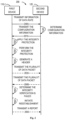
- Fig. 2 illustrates a signaling flow 200 for reporting reports of random access procedures according to example embodiments of the present disclosure.
- the signaling flow 200 may involve the first device 110-1 and the second device 120.
- the first device 110-1 transmits 2005 information of data rate for the integrity protection which can be supported by the first device 110-1.
- the information may indicate the maximum data rate up to which the first device 110-1 can support integrity protection.
- the maximum supported data rate for integrity protected DRBs may be a UE capability indicated at non-access stratum (NAS) layer.
- NAS non-access stratum
- the maximum supported data rate for integrity protected DRBs may be indicated at access stratum layer.
- the information may indicate that the partial integrity protection is preferred at the first device 110-1.
- an indication may be included in the information concerning the partial integrity protection.
- the second device 120 determines 2010 configuration information of the integrity protection.
- the configuration information indicates that the integrity protection is performed on a portion of a plurality of data packets which are communicated between the first device 110-1 and the second device 120.
- the configuration information can be applied for uplink transmissions. Alternatively or in addition, the configuration information can also be applied for downlink transmissions.
- the second device 120 may calculate the partial integrity protection based on the UE capability and the data rate. In this way, the communication device (for example, the first device 110-1 or the second device) with integrity protection processing limitations (for example, due to lack of dedicated hardware accelerators) can always provide some level of integrity protection for all type of services, regardless of how high their bit rates are. It also allows to provide integrity protection with limited impacts to power consumption and overheating.
- the configuration information may be configured per radio bearer, which means the partial integrity protection can be applied to the data packets on the radio bearer. In this situation, as many subsets of data packets as bearers with partial integrity protection can be configured.
- the configuration information may also be configured per PDU session, which means that all the bearers belong to the same PDU session can apply the partial integrity protection. In this situation, as many subsets of data packets as PDU sessions with partial integrity protection can be configured.
- the configuration information may also be configured per UE. For example, all bearers of all PDU sessions can apply the same subset of data packets and only one subset can be configured.
- the configuration information may also be configured per 5G quality of service identifier, 5QI.
- the configuration information may indicate the first device 110-1 to perform the integrity protection on a best effort basis.
- the configuration information may not explicitly indicate the portion of the data packets for the integrity protection.
- the first device 110-1 can understand that the integrity protection shall be performed on a best effort basis. In that case, both the first device 110-1 and the second device 120 should minimize the number of PDCP PDUs that are not integrity protected and performs integrity protection to the best of their abilities. Radio bearers with the highest priority may be given a higher priority.
- the configuration information may indicate a proportion value of the plurality of data packets for the integrity protection. For example, if the proportion value is 1/2, the integrity protection may be performed on a half of the plurality of data packets and which PDUs are integrity protected are known implicitly by the sequence numbers.
- the configuration information may indicate a first timer. During the running of the first timer, the first device 110-1 may apply the integrity protection on the portion of data packets. Alternatively or in addition, the configuration information may further comprise a second timer during which at least one integrity protected data packet is performed. In other embodiments, the configuration information may indicate a third timer during which at least one unprotected data packet is allowed. Details of the timers will be described later.
- the second device 120 transmits 2015 the configuration information to the first device 110-1.
- the configuration information may be transmitted via RRC signaling. If the second device 120 determine to activate the integrity protection, the configuration information may be transmitted. Alternatively, the configuration information may be transmitted if the integrity protection is to be deactivated.
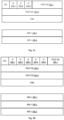
- the first device 110-1 applies 2020 the integrity protection on the portion of the plurality of data packets. For example, the first device 110-1 may perform 2025 the integrity protection on the portion of the plurality of data packets. In some example embodiments, the first device 110-1 may obtain a sequence number of the PDU from the configuration information. The first device 110-1 may perform the integrity protection on the portion of the plurality of data packets to be transmitted in the PDU. For example, if the sequence number indicates 4 th PDU, the first device 110-1 may perform the integrity protection on every 4 th PDU.
- the first device 110-1 may transmit 2035 the plurality of data packets with the header to the second device 120.
- the second device 120 may decode the portion of the data packets based on the configuration information and perform an integrity protection verification on the portion of data packets.
- the first device 110-1 may obtain the second timer from the configuration information.
- the second timer may be restarted every time integrity verification passes for a received PDCP PDU. If the second timer expires without having received any integrity protected PDCP PDUs, the first device 110-1 may determine that the integrity protection is failed. The PDCP layer can then indicate integrity verification failure to upper layer.
- the second timer may be linked to a discontinuous reception timer. For example, if the first device 110-1 is not in active time, the second timer may be paused.
- the first device 110-1 may obtain the second timer from the configuration information.
- the second timer may be restarted every time integrity verification passes for a received PDCP PDU. If the second timer expires without having received any integrity protected PDCP PDUs, the first device 110-1 may determine that the integrity protection is failed. The PDCP layer can then indicate integrity verification failure to upper layer.
- the second timer may be linked to a discontinuous reception timer. For example, if the first device 110-1 is not in active time, the second timer may be paused.
- the first device 110-1 may obtain the third timer from the configuration information.
- the third timer may be restarted every time an integrity protected PDCP PDU (with verification passed) is received.
- the third time is running, non-integrity protected PDCP PDUs are allowed. If the third timer is not running and a number of non-integrity protected PDCP PDUs are received, the first device 110-1 may determine that the integrity protection is failed. The PDCP layer can then indicate integrity verification failure to upper layer.
- Fig. 5 shows a flowchart of an example method 500 implemented at a second device 120 in accordance with some example embodiments of the present disclosure.
- the method 800 will be described from the perspective of the second device 120.
- the information may indicate that the partial integrity protection is preferred at the first device 110-1.
- an indication may be included in the information concerning the partial integrity protection.
- the configuration information may be configured per radio bearer, which means the partial integrity protection can be applied to the data packets on the radio bearer. In this situation, as many subsets of data packets as bearers with partial integrity protection can be configured.
- the configuration information may also be configured per PDU session, which means that all the bearers belong to the same PDU session can apply the partial integrity protection. In this situation, as many subsets of data packets as PDU sessions with partial integrity protection can be configured.
- the configuration information may also be configured per UE. For example, all bearers of all PDU sessions can apply the same subset of data packets and only one subset can be configured.
- the configuration information may also be configured per 5G quality of service identifier, 5QI.
- the configuration information may indicate the first device 110-1 to perform the integrity protection on a best effort basis.
- the configuration information may not explicitly indicate the portion of the data packets for the integrity protection.
- the first device 110-1 can understand that the integrity protection shall be performed on a best effort basis. In that case, both the first device 110-1 and the second device 120 should minimize the number of PDCP PDUs that are not integrity protected and performs integrity protection to the best of their abilities. Radio bearers with the highest priority may be given a higher priority.
- the configuration information may indicate a sequence number of a PDU.
- the integrity protection may be performed on the portion of the plurality of data packets to be transmitted in this PDU. For example, if the sequence number indicates 4 th PDU, the integrity protection may be performed on the PDU.
- the configuration information may indicate a proportion value of the plurality of data packets for the integrity protection. For example, if the proportion value is 1/2, the integrity protection may be performed on a half of the plurality of data packets.
- the configuration information may indicate a first timer. During the running of the first timer, the first device 110-1 may apply the integrity protection on the portion of data packets. Alternatively or in addition, the configuration information may further comprise a second timer during which at least one integrity protected data packet is performed. In other embodiments, the configuration information may indicate a third timer during which at least one unprotected data packet is allowed. Alternatively, the configuration information may a fourth timer during which no integrity protection is performed.
- the second device 120 transmits the configuration information to the first device 110-1.
- the configuration information may be transmitted via RRC signaling.
- the second device 120 may transmit the plurality of data packets to the first device 110-1. If the integrity protection is failed, the first device 110-1 may initiate 2050 re-establishment of RRC connection between the first device 110-1 and the second device 120. Alternatively, the first device 110-1 may transmit 2055 a report indicating the integrity protection failure to the second device 120.
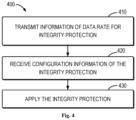
- a first apparatus capable of performing any of the method 400 may comprise means for performing the respective operations of the method 400.
- the means may be implemented in any suitable form.
- the means may be implemented in a circuitry or software module.
- the first apparatus may be implemented as or included in the first device 110.
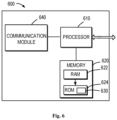
- the means may comprise at least one processor and at least one memory including computer program code. The at least one memory and computer program code are configured to, with the at least one processor, cause performance of the apparatus.
- the means for applying the integrity protection comprises means for obtaining a sequence number of a protocol data unit from the configuration information; means for determining to perform integrity protection of the protocol data unit based on the configuration information and the sequence number; and means for performing the integrity protection on the portion of the plurality of data packets to be transmitted in the protocol data unit .
- the means for applying the integrity protection comprises means for obtaining a proportion value of the plurality of data packets from the configuration information; means for determining the portion of data packets from the plurality of data packets based on the proportion value; and means for performing the integrity protection on the portion of data packets.
- the means for applying the integrity protection comprises means for obtaining a first timer from the configuration information; and means for performing the integrity protection on the portion of data packets during running of the first timer.
- the apparatus comprises means for determining whether the integrity verification is failed; means for in accordance with a determination that the integrity verification is failed, initiating a re-establishment of radio resource control, RRC, connection between the first device and the second device; or means for in accordance with a determination that the integrity verification is failed, transmitting a report indicating a failure of the integrity protection to the second device.
- RRC radio resource control
- the means for determining whether the integrity verification is failed comprises means for obtaining a second timer from the configuration information; and means for in accordance with a determination that there is lack of integrity protected data packet in the plurality of data packets during running of the second timer, determining the integrity verification is failed.
- the means for determining whether the integrity verification is failed comprises means for obtaining a third timer from the configuration information; and in accordance with a determination that at least one unprotected data packet is received without running the third timer, determining the integrity verification is failed.
- the means for applying the integrity protection comprises means for obtaining a fourth timer from the configuration information; means for performing the integrity protection on the portion of the plurality of data packets after an expiration of the fourth timer; and means for restarting the fourth timer.
- the means for transmitting the information of data rate for integrity protection comprises means for transmitting an indication indicating a partial integrity protection is preferred.
- the configuration information is configured: per radio bearer, per protocol data unit session, per user equipment, or per 5G quality of service identifier, 5QI.
- the first device comprises a terminal device and the second device comprises a network device.
- a second apparatus capable of performing any of the method 500 may comprise means for performing the respective operations of the method 500.
- the means may be implemented in any suitable form.
- the means may be implemented in a circuitry or software module.
- the means may comprise at least one processor and at least one memory including computer program code. The at least one memory and computer program code are configured to, with the at least one processor, cause performance of the apparatus.
- the second apparatus may be implemented as or included in the second device 120.
- the apparatus comprises means for receiving, at a second device and from a first device, information of data rate for integrity protection which is supported by the first device; means for determining configuration information of the integrity protection based at least in part on the information of data rate, the configuration information indicating that the integrity protection is performed on a portion of a plurality of data packets which are communicated between the first device and the second device; and means for transmitting to the first device the configuration information.
- the means for receiving the information of data rate for integrity protection comprises means for receiving an indication which indicates that a partial integrity protection is preferred.
- the means for determining the configuration information comprises means for determining at least one of a sequence number of a protocol data unit, wherein the integrity protection is performed on the portion of the plurality of data packets to be transmitted in the protocol data unit, a first timer during which the integrity protection is performed on the portion of data packets, a second timer during which at least one integrity protected data packet is performed, a third timer during which at least one unprotected data packet is allowed, or a fourth timer during which no integrity protection is performed.
Landscapes
- Engineering & Computer Science (AREA)
- Computer Security & Cryptography (AREA)
- Computer Networks & Wireless Communication (AREA)
- Signal Processing (AREA)
- Databases & Information Systems (AREA)
- Computer Hardware Design (AREA)
- General Engineering & Computer Science (AREA)
- Theoretical Computer Science (AREA)
- Bioethics (AREA)
- General Health & Medical Sciences (AREA)
- Health & Medical Sciences (AREA)
- Software Systems (AREA)
- Physics & Mathematics (AREA)
- General Physics & Mathematics (AREA)
- Computing Systems (AREA)
- Mobile Radio Communication Systems (AREA)
Claims (7)
- Premier dispositif comprenant :au moins un processeur ; etau moins une mémoire comprenant des codes de programmes informatiques ;l'au moins une mémoire et les codes de programmes informatiques sont configurés pour, avec l'au moins un processeur, amener le premier dispositif à :transmettre à un deuxième dispositif des informations de débit de données pour la protection d'intégrité qui est pris en charge par le premier dispositif ;recevoir du deuxième dispositif des informations de configuration de la protection d'intégrité, les informations de configuration indiquant que la protection d'intégrité est effectuée sur une partie d'une pluralité de paquets de données qui sont communiqués entre le premier dispositif et le deuxième dispositif ; etappliquer la protection d'intégrité à la partie de la pluralité de paquets de données sur la base des informations de configuration,dans lequel le premier dispositif est amené à appliquer la protection d'intégrité :en obtenant un numéro de séquence d'une unité de données de protocole ;en déterminant d'effectuer la protection d'intégrité de l'unité de données de protocole sur la base des informations de configuration et du numéro de séquence ; eten effectuant la protection d'intégrité sur la partie de la pluralité de paquets de données à transmettre dans l'unité de données de protocole.
- Premier dispositif de la revendication 1, dans lequel le premier dispositif est amené à appliquer la protection d'intégrité à la partie de la pluralité de paquets de données :en effectuant la protection d'intégrité sur un paquet de données de la pluralité de paquets de données qui doit être transmis dans une unité de données de protocole ;en générant un en-tête de l'unité de données de protocole, l'en-tête indiquant que l'intégrité de l'unité de données de protocole est protégée ; eten transmettant au deuxième dispositif le paquet de données dans l'unité de données de protocole avec l'en-tête.
- Premier dispositif de la revendication 1, dans lequel le premier dispositif est amené à effectuer la protection d'intégrité :en obtenant une valeur de proportion de la pluralité de paquets de données à partir des informations de configuration ;en déterminant la partie de paquets de données de la pluralité de paquets de données sur la base de la valeur de proportion ; eten effectuant la protection d'intégrité sur la partie de paquets de données.
- Premier dispositif de la revendication 1, dans lequel le premier dispositif est amené à appliquer la protection d'intégrité :en obtenant un premier temporisateur à partir des informations de configuration ; ouen effectuant la protection d'intégrité sur la partie de paquets de données pendant l'exécution du premier temporisateur ; ouen obtenant un quatrième temporisateur à partir des informations de configuration ; ouen effectuant la protection d'intégrité sur la partie de la pluralité de paquets de données après l'expiration du quatrième temporisateur ; ouen redémarrant le quatrième temporisateur.
- Premier dispositif de la revendication 1, dans lequel le premier dispositif est amené à appliquer la protection d'intégrité sur la partie de la pluralité de paquets de données :en recevant la pluralité de paquets de données du deuxième dispositif ;en décodant la partie de paquets de données sur la base des informations de configuration ; eten effectuant une vérification de protection d'intégrité sur la partie de paquets de données, et de préférencedans lequel le premier dispositif est en outre amené à :déterminer si la vérification d'intégrité a échoué ;lorsqu'il est déterminé que la vérification d'intégrité a échoué, un rétablissement de la connexion de contrôle de ressources radio, RRC, entre le premier dispositif et le deuxième dispositif est initié ; oulorsqu'il est déterminé que la vérification d'intégrité a échoué, un rapport indiquant l'échec de la protection d'intégrité au deuxième dispositif est transmis, et de préférence dans lequel le premier dispositif est en outre amené à déterminer si la vérification d'intégrité a échoué par l'une des actions suivantes :déterminer un nombre de paquets de données consécutifs non protégés de la pluralité de paquets de données ; etlorsqu'il est déterminé que le nombre de paquets de données non protégés dépasse un nombre seuil, déterminer que la vérification d'intégrité a échoué ; etobtenir un troisième temporisateur à partir des informations de configuration ; etlorsqu'il est déterminé qu'au moins un paquet de données non protégé est reçu sans exécuter le troisième temporisateur, déterminer que la vérification d'intégrité a échoué.
- Premier dispositif de la revendication 5, dans lequel le premier dispositif est en outre amené à déterminer si la vérification d'intégrité a échoué :en obtenant un deuxième temporisateur à partir des informations de configuration ; etlorsqu'il est déterminé qu'il n'y a pas de paquet de données dont l'intégrité est protégée dans la pluralité de paquets de données pendant l'exécution du deuxième temporisateur, en déterminant que la vérification d'intégrité a échoué, et de préférencedans lequel le deuxième temporisateur lié à un temporisateur de réception discontinue et le deuxième temporisateur est mis en pause si le premier dispositif n'est pas en temps actif.
- Premier dispositif de la revendication 1, dans lequel le premier dispositif est amené à transmettre les informations de débit de données pour la protection d'intégrité :
en transmettant une indication selon laquelle une protection d'intégrité partielle est privilégiée.
Applications Claiming Priority (1)
| Application Number | Priority Date | Filing Date | Title |
|---|---|---|---|
| PCT/CN2020/090350 WO2021226960A1 (fr) | 2020-05-14 | 2020-05-14 | Protection d'intégrité partielle dans des systèmes de télécommunication |
Publications (3)
| Publication Number | Publication Date |
|---|---|
| EP4150940A1 EP4150940A1 (fr) | 2023-03-22 |
| EP4150940A4 EP4150940A4 (fr) | 2024-01-24 |
| EP4150940B1 true EP4150940B1 (fr) | 2025-07-09 |
Family
ID=78526296
Family Applications (1)
| Application Number | Title | Priority Date | Filing Date |
|---|---|---|---|
| EP20935919.9A Active EP4150940B1 (fr) | 2020-05-14 | 2020-05-14 | Protection d'intégrité partielle dans des systèmes de télécommunication |
Country Status (4)
| Country | Link |
|---|---|
| US (1) | US12408038B2 (fr) |
| EP (1) | EP4150940B1 (fr) |
| CN (1) | CN115552940A (fr) |
| WO (1) | WO2021226960A1 (fr) |
Families Citing this family (5)
| Publication number | Priority date | Publication date | Assignee | Title |
|---|---|---|---|---|
| WO2021235879A1 (fr) * | 2020-05-21 | 2021-11-25 | 삼성전자 주식회사 | Procédé et appareil de gestion de session tenant compte d'informations de liaison terrestre dans un système de communication sans fil |
| CN114158041B (zh) * | 2021-11-29 | 2023-12-08 | 北京航空航天大学 | 实现5g网络数据机密性和完整性多级安全的方法 |
| CN116709331A (zh) * | 2022-02-25 | 2023-09-05 | 华为技术有限公司 | 数据包的完整性保护方法及装置、存储介质 |
| WO2025017065A1 (fr) * | 2023-07-17 | 2025-01-23 | Telefonaktiebolaget Lm Ericsson (Publ) | Protection d'intégrité dans un réseau de communication |
| GB2637518A (en) * | 2024-01-25 | 2025-07-30 | Nokia Technologies Oy | Partial user plane protection in mobile networks |
Family Cites Families (11)
| Publication number | Priority date | Publication date | Assignee | Title |
|---|---|---|---|---|
| CA2177622A1 (fr) | 1996-05-29 | 1997-11-30 | Thierry Moreau | Appareil et methode de cryptographie a integrite des donnees assuree utilisant des generateurs de bits pseudo-aleatoires |
| WO2017074247A1 (fr) | 2015-10-30 | 2017-05-04 | Telefonaktiebolaget Lm Ericsson (Publ) | Gestion de protection d'intégrité d'une unité de données en paquets de commande de liaison logique |
| DE102016219926A1 (de) | 2016-10-13 | 2018-04-19 | Siemens Aktiengesellschaft | Verfahren, Sender und Empfänger zum Authentisieren und zum Integritätsschutz von Nachrichteninhalten |
| CN115278658B (zh) | 2017-01-30 | 2026-03-17 | 瑞典爱立信有限公司 | 针对用户平面数据的完整性保护的方法 |
| CN112203281B (zh) * | 2017-06-15 | 2023-07-21 | 维沃移动通信有限公司 | 一种数据无线承载完整性保护配置方法、终端及网络设备 |
| WO2019063087A1 (fr) * | 2017-09-28 | 2019-04-04 | Nokia Technologies Oy | Génération de rapport de protection d'intégrité dans un système de communication sans fil |
| WO2019095209A1 (fr) | 2017-11-16 | 2019-05-23 | Zte Corporation | Procédé et dispositif informatique pour réaliser la protection d'intégrité de données |
| EP3753277A4 (fr) | 2018-02-16 | 2021-03-31 | NEC Corporation | Protection d'intégrité pour données de plan utilisateur dans un réseau 5g |
| WO2020035341A1 (fr) * | 2018-08-16 | 2020-02-20 | Telefonaktiebolaget Lm Ericsson (Publ) | Procédés fournissant une protection d'intégrité sélective et stations de base de réseau d'accès radio associées et dispositifs sans fil mobiles |
| WO2020053646A1 (fr) * | 2018-09-13 | 2020-03-19 | Lenovo (Singapore) Pte. Ltd. | Protection d'intégrité dune unité de données par paquets |
| AU2020329305A1 (en) * | 2019-08-14 | 2022-03-03 | Google Llc | Managing security keys in a communication system |
-
2020
- 2020-05-14 EP EP20935919.9A patent/EP4150940B1/fr active Active
- 2020-05-14 WO PCT/CN2020/090350 patent/WO2021226960A1/fr not_active Ceased
- 2020-05-14 CN CN202080100840.9A patent/CN115552940A/zh active Pending
- 2020-05-14 US US17/997,910 patent/US12408038B2/en active Active
Also Published As
| Publication number | Publication date |
|---|---|
| EP4150940A4 (fr) | 2024-01-24 |
| CN115552940A (zh) | 2022-12-30 |
| EP4150940A1 (fr) | 2023-03-22 |
| US20230232234A1 (en) | 2023-07-20 |
| US12408038B2 (en) | 2025-09-02 |
| WO2021226960A1 (fr) | 2021-11-18 |
Similar Documents
| Publication | Publication Date | Title |
|---|---|---|
| EP4150940B1 (fr) | Protection d'intégrité partielle dans des systèmes de télécommunication | |
| EP3869903A1 (fr) | Mécanisme de récupération de défaillance de faisceau | |
| US12464422B2 (en) | Serving cell change procedure utilizing multiple candidate target cells | |
| US11849497B2 (en) | Methods, devices, and medium for handling of non-SDT data | |
| JP7705951B2 (ja) | スモールデータ伝送の開始 | |
| US12439246B2 (en) | Security communication in prose U2N relay | |
| WO2023274617A1 (fr) | Transmission de petites données | |
| CN117501797A (zh) | Sdt期间的数据处理 | |
| WO2024197750A1 (fr) | Mécanisme de transmission de petites données | |
| WO2024152356A1 (fr) | Procédés et appareils de transmission de petites données | |
| WO2024207349A1 (fr) | Transmission de petites données à terminaison mobile | |
| WO2024227300A1 (fr) | Achèvement d'une procédure de strate de non-accès dans une architecture stockage et transmission | |
| US12507313B2 (en) | Mobile terminated small data transmission bearer handling | |
| WO2024259597A1 (fr) | Mécanisme de reprise après défaillance de faisceau | |
| WO2024065209A1 (fr) | Transmission de données précoce à destination d'un mobile pour internet des objets | |
| WO2024259596A1 (fr) | Améliorations portant sur une activation d'un groupe de cellules secondaires | |
| WO2025065231A1 (fr) | Commande de liaisons de communication | |
| WO2024192643A1 (fr) | Duplication sélective | |
| WO2023208472A1 (fr) | Dispositifs, procédés, appareil et support lisible par ordinateur pour communications | |
| HK40055243A (en) | Beam failure recovery mechanism | |
| WO2025209699A1 (fr) | Rejet de paquets | |
| WO2021203318A1 (fr) | Procédés, dispositifs, et support lisible par ordinateur pour la communication | |
| WO2024120741A1 (fr) | Amélioration de contrôle d'admission pour des utilisateurs classés par ordre de priorité |
Legal Events
| Date | Code | Title | Description |
|---|---|---|---|
| STAA | Information on the status of an ep patent application or granted ep patent |
Free format text: STATUS: THE INTERNATIONAL PUBLICATION HAS BEEN MADE |
|
| PUAI | Public reference made under article 153(3) epc to a published international application that has entered the european phase |
Free format text: ORIGINAL CODE: 0009012 |
|
| STAA | Information on the status of an ep patent application or granted ep patent |
Free format text: STATUS: REQUEST FOR EXAMINATION WAS MADE |
|
| 17P | Request for examination filed |
Effective date: 20221214 |
|
| AK | Designated contracting states |
Kind code of ref document: A1 Designated state(s): AL AT BE BG CH CY CZ DE DK EE ES FI FR GB GR HR HU IE IS IT LI LT LU LV MC MK MT NL NO PL PT RO RS SE SI SK SM TR |
|
| DAV | Request for validation of the european patent (deleted) | ||
| DAX | Request for extension of the european patent (deleted) | ||
| A4 | Supplementary search report drawn up and despatched |
Effective date: 20231222 |
|
| RIC1 | Information provided on ipc code assigned before grant |
Ipc: H04W 12/106 20210101ALI20231218BHEP Ipc: H04W 8/24 20090101ALI20231218BHEP Ipc: H04L 9/40 20220101ALI20231218BHEP Ipc: G06F 21/64 20130101ALI20231218BHEP Ipc: H04W 12/10 20210101ALI20231218BHEP Ipc: H04W 8/22 20090101AFI20231218BHEP |
|
| STAA | Information on the status of an ep patent application or granted ep patent |
Free format text: STATUS: EXAMINATION IS IN PROGRESS |
|
| 17Q | First examination report despatched |
Effective date: 20240731 |
|
| GRAP | Despatch of communication of intention to grant a patent |
Free format text: ORIGINAL CODE: EPIDOSNIGR1 |
|
| STAA | Information on the status of an ep patent application or granted ep patent |
Free format text: STATUS: GRANT OF PATENT IS INTENDED |
|
| INTG | Intention to grant announced |
Effective date: 20250207 |
|
| GRAS | Grant fee paid |
Free format text: ORIGINAL CODE: EPIDOSNIGR3 |
|
| GRAA | (expected) grant |
Free format text: ORIGINAL CODE: 0009210 |
|
| STAA | Information on the status of an ep patent application or granted ep patent |
Free format text: STATUS: THE PATENT HAS BEEN GRANTED |
|
| AK | Designated contracting states |
Kind code of ref document: B1 Designated state(s): AL AT BE BG CH CY CZ DE DK EE ES FI FR GB GR HR HU IE IS IT LI LT LU LV MC MK MT NL NO PL PT RO RS SE SI SK SM TR |
|
| REG | Reference to a national code |
Ref country code: GB Ref legal event code: FG4D |
|
| REG | Reference to a national code |
Ref country code: CH Ref legal event code: EP |
|
| P01 | Opt-out of the competence of the unified patent court (upc) registered |
Free format text: CASE NUMBER: APP_30234/2025 Effective date: 20250624 |
|
| REG | Reference to a national code |
Ref country code: IE Ref legal event code: FG4D |
|
| REG | Reference to a national code |
Ref country code: DE Ref legal event code: R096 Ref document number: 602020054415 Country of ref document: DE |
|
| REG | Reference to a national code |
Ref country code: NL Ref legal event code: MP Effective date: 20250709 |
|
| PG25 | Lapsed in a contracting state [announced via postgrant information from national office to epo] |
Ref country code: PT Free format text: LAPSE BECAUSE OF FAILURE TO SUBMIT A TRANSLATION OF THE DESCRIPTION OR TO PAY THE FEE WITHIN THE PRESCRIBED TIME-LIMIT Effective date: 20251110 |
|
| PG25 | Lapsed in a contracting state [announced via postgrant information from national office to epo] |
Ref country code: NL Free format text: LAPSE BECAUSE OF FAILURE TO SUBMIT A TRANSLATION OF THE DESCRIPTION OR TO PAY THE FEE WITHIN THE PRESCRIBED TIME-LIMIT Effective date: 20250709 |
|
| REG | Reference to a national code |
Ref country code: AT Ref legal event code: MK05 Ref document number: 1813013 Country of ref document: AT Kind code of ref document: T Effective date: 20250709 |
|
| PG25 | Lapsed in a contracting state [announced via postgrant information from national office to epo] |
Ref country code: IS Free format text: LAPSE BECAUSE OF FAILURE TO SUBMIT A TRANSLATION OF THE DESCRIPTION OR TO PAY THE FEE WITHIN THE PRESCRIBED TIME-LIMIT Effective date: 20251109 |
|
| PG25 | Lapsed in a contracting state [announced via postgrant information from national office to epo] |
Ref country code: NO Free format text: LAPSE BECAUSE OF FAILURE TO SUBMIT A TRANSLATION OF THE DESCRIPTION OR TO PAY THE FEE WITHIN THE PRESCRIBED TIME-LIMIT Effective date: 20251009 |
|
| REG | Reference to a national code |
Ref country code: LT Ref legal event code: MG9D |
|
| PG25 | Lapsed in a contracting state [announced via postgrant information from national office to epo] |
Ref country code: AT Free format text: LAPSE BECAUSE OF FAILURE TO SUBMIT A TRANSLATION OF THE DESCRIPTION OR TO PAY THE FEE WITHIN THE PRESCRIBED TIME-LIMIT Effective date: 20250709 |
|
| PG25 | Lapsed in a contracting state [announced via postgrant information from national office to epo] |
Ref country code: FI Free format text: LAPSE BECAUSE OF FAILURE TO SUBMIT A TRANSLATION OF THE DESCRIPTION OR TO PAY THE FEE WITHIN THE PRESCRIBED TIME-LIMIT Effective date: 20250709 |
|
| PG25 | Lapsed in a contracting state [announced via postgrant information from national office to epo] |
Ref country code: HR Free format text: LAPSE BECAUSE OF FAILURE TO SUBMIT A TRANSLATION OF THE DESCRIPTION OR TO PAY THE FEE WITHIN THE PRESCRIBED TIME-LIMIT Effective date: 20250709 |
|
| PG25 | Lapsed in a contracting state [announced via postgrant information from national office to epo] |
Ref country code: GR Free format text: LAPSE BECAUSE OF FAILURE TO SUBMIT A TRANSLATION OF THE DESCRIPTION OR TO PAY THE FEE WITHIN THE PRESCRIBED TIME-LIMIT Effective date: 20251010 |
|
| PG25 | Lapsed in a contracting state [announced via postgrant information from national office to epo] |
Ref country code: SE Free format text: LAPSE BECAUSE OF FAILURE TO SUBMIT A TRANSLATION OF THE DESCRIPTION OR TO PAY THE FEE WITHIN THE PRESCRIBED TIME-LIMIT Effective date: 20250709 |
|
| PG25 | Lapsed in a contracting state [announced via postgrant information from national office to epo] |
Ref country code: LV Free format text: LAPSE BECAUSE OF FAILURE TO SUBMIT A TRANSLATION OF THE DESCRIPTION OR TO PAY THE FEE WITHIN THE PRESCRIBED TIME-LIMIT Effective date: 20250709 |
|
| PG25 | Lapsed in a contracting state [announced via postgrant information from national office to epo] |
Ref country code: PL Free format text: LAPSE BECAUSE OF FAILURE TO SUBMIT A TRANSLATION OF THE DESCRIPTION OR TO PAY THE FEE WITHIN THE PRESCRIBED TIME-LIMIT Effective date: 20250709 Ref country code: BG Free format text: LAPSE BECAUSE OF FAILURE TO SUBMIT A TRANSLATION OF THE DESCRIPTION OR TO PAY THE FEE WITHIN THE PRESCRIBED TIME-LIMIT Effective date: 20250709 |
|
| PG25 | Lapsed in a contracting state [announced via postgrant information from national office to epo] |
Ref country code: RS Free format text: LAPSE BECAUSE OF FAILURE TO SUBMIT A TRANSLATION OF THE DESCRIPTION OR TO PAY THE FEE WITHIN THE PRESCRIBED TIME-LIMIT Effective date: 20251009 |
|
| PG25 | Lapsed in a contracting state [announced via postgrant information from national office to epo] |
Ref country code: ES Free format text: LAPSE BECAUSE OF FAILURE TO SUBMIT A TRANSLATION OF THE DESCRIPTION OR TO PAY THE FEE WITHIN THE PRESCRIBED TIME-LIMIT Effective date: 20250709 |
|
| PG25 | Lapsed in a contracting state [announced via postgrant information from national office to epo] |
Ref country code: SM Free format text: LAPSE BECAUSE OF FAILURE TO SUBMIT A TRANSLATION OF THE DESCRIPTION OR TO PAY THE FEE WITHIN THE PRESCRIBED TIME-LIMIT Effective date: 20250709 |
|
| PG25 | Lapsed in a contracting state [announced via postgrant information from national office to epo] |
Ref country code: DK Free format text: LAPSE BECAUSE OF FAILURE TO SUBMIT A TRANSLATION OF THE DESCRIPTION OR TO PAY THE FEE WITHIN THE PRESCRIBED TIME-LIMIT Effective date: 20250709 |
|
| PG25 | Lapsed in a contracting state [announced via postgrant information from national office to epo] |
Ref country code: IT Free format text: LAPSE BECAUSE OF FAILURE TO SUBMIT A TRANSLATION OF THE DESCRIPTION OR TO PAY THE FEE WITHIN THE PRESCRIBED TIME-LIMIT Effective date: 20250709 |
|
| PG25 | Lapsed in a contracting state [announced via postgrant information from national office to epo] |
Ref country code: CZ Free format text: LAPSE BECAUSE OF FAILURE TO SUBMIT A TRANSLATION OF THE DESCRIPTION OR TO PAY THE FEE WITHIN THE PRESCRIBED TIME-LIMIT Effective date: 20250709 |
|
| PG25 | Lapsed in a contracting state [announced via postgrant information from national office to epo] |
Ref country code: SK Free format text: LAPSE BECAUSE OF FAILURE TO SUBMIT A TRANSLATION OF THE DESCRIPTION OR TO PAY THE FEE WITHIN THE PRESCRIBED TIME-LIMIT Effective date: 20250709 Ref country code: EE Free format text: LAPSE BECAUSE OF FAILURE TO SUBMIT A TRANSLATION OF THE DESCRIPTION OR TO PAY THE FEE WITHIN THE PRESCRIBED TIME-LIMIT Effective date: 20250709 |