EP4152232B1 - Sichere und überprüfbare verfolgung von landwirtschaftlichen produkten - Google Patents
Sichere und überprüfbare verfolgung von landwirtschaftlichen produkten Download PDFInfo
- Publication number
- EP4152232B1 EP4152232B1 EP22173107.8A EP22173107A EP4152232B1 EP 4152232 B1 EP4152232 B1 EP 4152232B1 EP 22173107 A EP22173107 A EP 22173107A EP 4152232 B1 EP4152232 B1 EP 4152232B1
- Authority
- EP
- European Patent Office
- Prior art keywords
- container
- product
- data
- external database
- record
- Prior art date
- Legal status (The legal status is an assumption and is not a legal conclusion. Google has not performed a legal analysis and makes no representation as to the accuracy of the status listed.)
- Active
Links
Images












Classifications
-
- G—PHYSICS
- G06—COMPUTING OR CALCULATING; COUNTING
- G06Q—INFORMATION AND COMMUNICATION TECHNOLOGY [ICT] SPECIALLY ADAPTED FOR ADMINISTRATIVE, COMMERCIAL, FINANCIAL, MANAGERIAL OR SUPERVISORY PURPOSES; SYSTEMS OR METHODS SPECIALLY ADAPTED FOR ADMINISTRATIVE, COMMERCIAL, FINANCIAL, MANAGERIAL OR SUPERVISORY PURPOSES, NOT OTHERWISE PROVIDED FOR
- G06Q10/00—Administration; Management
- G06Q10/10—Office automation; Time management
-
- G—PHYSICS
- G06—COMPUTING OR CALCULATING; COUNTING
- G06Q—INFORMATION AND COMMUNICATION TECHNOLOGY [ICT] SPECIALLY ADAPTED FOR ADMINISTRATIVE, COMMERCIAL, FINANCIAL, MANAGERIAL OR SUPERVISORY PURPOSES; SYSTEMS OR METHODS SPECIALLY ADAPTED FOR ADMINISTRATIVE, COMMERCIAL, FINANCIAL, MANAGERIAL OR SUPERVISORY PURPOSES, NOT OTHERWISE PROVIDED FOR
- G06Q50/00—Information and communication technology [ICT] specially adapted for implementation of business processes of specific business sectors, e.g. utilities or tourism
- G06Q50/02—Agriculture; Fishing; Forestry; Mining
Definitions
- GSG Greenhouse Gases
- BMPs best management practices
- Nitrogen is an essential component of life, required for building proteins and DNA, and despite being abundant in the atmosphere, only limited reserves of inorganic soil nitrogen are available to plants in useable form, those being primarily nitrate (NO3-) and/or ammonium (NH4+). Thus, agricultural yields are often limited by nitrogen availability unless supplemental forms of nitrogen are applied.
- German chemists, Fritz Haber and Carl Bosch invented and developed an industrial scale process for the conversion of atmospheric nitrogen into ammonium, one of the forms of nitrogen which is readily available and useable by plants.
- the use of synthetic or manufactured nitrogen fertilizer was the primary contributor to drastically increased crop production during the Green Revolution, especially in developing countries.
- any fertilizer manufactured from one or more synthetic materials containing no animal parts, animal byproducts, manures, or renderings shall be considered as "synthetic" fertilizer, so all nitrogen fertilizer that is manufactured using an adaptation of the Haber-Bosch process is considered to be synthetic fertilizer.
- N 2 O nitrous oxide
- CO 2 carbon dioxide
- Ammonium nitrate is the most commonly used source of nitrogen in European agriculture.
- UAN urea ammonium nitrate
- AN urea ammonium nitrate
- the average carbon footprint from AN fertilizer use is approximately 5.6 kg CO 2 -eqv per kg applied nitrogen. Said another way, approximately 5.6 tons of GHG are released into the atmosphere for each ton of applied nitrogen fertilizer.
- ACR American Carbon Registry
- ACR is a leading US-based carbon offset program that has been recognized for strong environmental integrity standards. Founded in 1996 as the first private voluntary offset program in the world, ACR developed rigorous, science-based carbon offset standards and methodologies, and has operational experience in carbon offset project registration, verification oversight and offset issuance. ACR is also an approved Carbon Offset Project Registry and Early Action Carbon Offset Program for the California Cap-and-Trade program, the first economy-wide Cap-and-Trade program in the U.S. As an accrediting organization, ACR oversees the registration and verification of carbon offset projects following approved carbon accounting methodologies or protocols and issues offsets on a transparent registry system. Each offset represents the reduction or removal from the atmosphere equivalent to one metric ton of carbon dioxide.
- the Delta Institute launched a USDA/NRCS-supported nitrogen Credit Program that provided eligible Corn Belt farmers a financial incentive for the carbon credits that were credited to their accounts for having voluntarily reduced nitrous oxide (N 2 O) emissions as a consequence of using less nitrogen-based fertilizer to produce their corn crop. Participating farmers were compensated for the GHG emissions reductions they achieved by selling their carbon credits to The climate Trust, a non-profit formed in 1997 that manages carbon offset acquisition programs and projects for organizations seeking to reduce their carbon footprint.
- N 2 O nitrous oxide
- MSU-EPRI Electric Power Research Institute
- Nitrogen is a major component of chlorophyll, the compound by which plants use sunlight energy to produce sugars from water and carbon dioxide (i.e., photosynthesis). It is also a major component of amino acids, the building blocks of proteins. Without proteins, plants wither and die.
- Corn plants use large quantities of nitrogen to grow and to produce economically viable yields. Corn removes approximately 1 pound of nitrogen from the soil for every bushel of grain produced, so a 250 bushel per acre yield goal will remove approximately 250 pounds of nitrogen from the soil. Because even the most productive soils do not naturally contain that much nitrogen, supplemental, manufactured nitrogen fertilizer that is produced using various adaptations of the previously described Haber-Bosch method is added to the soil by farmers in order to achieve the high yields that are necessary to satisfy global demand at commercially acceptable profit levels for farmers.
- legume crops such as soybeans, peanuts, peas, vetches, clovers, and others, grow in a symbiotic relationship with soil-dwelling nitrogen-fixing rhizobia bacteria that take or "fix” gaseous nitrogen from the air in the soil and feed this nitrogen to the legumes.
- leguminous plants provide necessary carbohydrates to the bacteria.
- the ability of legumes to receive essentially all of their nitrogen requirements from atmospheric nitrogen is based primarily on their ability to produce root nodules in which the nitrogen-fixing bacteria reside and reproduce.
- Nitrogen fixation by legumes can be in the range of 25-75 pounds of nitrogen per acre per year in a natural ecosystem, and several hundred pounds per acre per year in a cropping system. Consequently, in most commercial crop production schemes, leguminous crops do not normally require or receive supplemental nitrogen fertilizer treatments.
- Some legume crops are inoculated with rhizobia bacteria-based products to enhance the early development of the root nodules that enable legumes to fix nitrogen from the atmosphere.
- N-fixing bacterial product that can be used to replace a portion of manufactured nitrogen fertilizer is Envita TM from Azotic North America.
- Azotic-published results from well-managed on-farm trials reveal that Envita-inoculated non-leguminous crops that were produced using approximately 25% less manufactured nitrogen than was used in the control comparison, produced yields that were comparable to the comparison control crops which were produced while using a full-rate of manufactured nitrogen fertilizer.
- Envita-based microbes are present throughout the plant, including the leaves, and the nitrogen that is fixed by these microbes is used by the plant to produce chlorophyll.
- Envita is only one product of a number of nitrogen-producing microbial products that are currently available or in development, with the purpose of enabling non-leguminous plants to satisfy a portion of their nitrogen requirements from fixed atmospheric nitrogen.
- An additional example of an N-fixing product is PROVEN TM , from Pivot Bio. According to statements from Pivot Bio, "PROVEN takes nitrogen out of the air, and through the use of bacteria, it makes ammonia. That bacteria lives on the roots of corn and it feeds that ammonia to the corn plant. This process provides a constant source of nitrogen for the plant during the growing season, no matter the weather.”
- N-fixing microbial products such as Envita, PROVEN, and others demonstrate that the potential for significant reductions in nitrogen fertilizer-related GHG emissions is real, but wide-scale adoption will only occur if farmers have a financial incentive to replace the known performance of applying manufactured nitrogen fertilizer at 100% of historical rates, with the yet-to-be-proven consistency of applying fertilizer at, for example, 75% of historical rates in combination with an N-fixing microbial product like Envita.
- Some N-fixing products have demonstrated that it is possible to maintain historic average yield production while reducing applied nitrogen fertilizer rates by as much or more than 50%, when such fertilizer reduction is combined with the use of N-fixing microbial products.
- grassland are used for the purpose of hay production, for use as livestock food, or for livestock grazing, where rather than being harvested by machine and stored, livestock, via the process of grazing, consumes as food, the living plant material from the area in which they graze.
- Much grassland, whether used for hay production or for livestock grazing is also fertilized with synthetic nitrogen fertilizer, so the objective of reducing fertilizer use on grassland in order to reduce the GHG emissions associated with grassland fertilization, and the practices for doing so, fall within the definition of reducing agricultural use of synthetic nitrogen fertilizer.
- a method or system of validating the total quantity of manufactured nitrogen fertilizer that is applied to each of many fields is not feasible to implement manually, nor is the process of validating that an N-fixing microbial product was applied to each of many fields in order to supplement the crop's nitrogen requirements in the presence of less applied manufactured nitrogen fertilizer.
- Validation of where and at what rate N-fixing and other soil health and regenerative agricultural crop inputs are applied is also important with regard to farmer-earned carbon credits, because in addition to being able to earn carbon credits for reducing the GHG emissions associated with producing a crop, farmers can also earn carbon credits for INCREASING the quantity of carbon that is stored or sequestered in field soils where commercially produced crops are grown.
- Document US 2021/264550 A1 relates to a system for recording a "chain-of-custody" of a bailment of hemp.
- Document US 2014/368318 A1 relates to a system for monitoring the amount and expiry date of products within stationary distribution containers.
- Document WO 2020/252013 A1 relates to a system for verifying and tracking the sequestering of greenhouse gases into a bulk material used in producing durable goods, and logging how many 'carbon credits' are associated with said durable goods.
- Document WO 2018/213428 A1 relates to a method for monitoring of closed container systems for agricultural products and more particularly to tracking one or more of product quantity, product type, container handling, product dispensing by location, user authentication, and container authentication.
- Embodiments of the present invention may be directed to computer-implemented methods and systems for recording, in an external database (such as a distributed ledger, e.g., a blockchain), information about agricultural products in containers.
- an external database such as a distributed ledger, e.g., a blockchain
- a distributed ledger e.g., a blockchain
- Embodiments of the present invention may be used, for example, to verify that certain carbon credit-eligible activities were conducted in conformity with the requirements associated with earning a carbon credit or credits.
- embodiments of the present invention may track a product at the point of manufacture, where the product is transferred to a tagged container that can communicate with product transfer equipment and product application equipment.
- product information may include, for example, the type of product, the amount of product filled in the container, the location of the container at the time of filling, the date and time of filling, and the manufacturer, owner, and possessor of the product in the container and/or of the container itself. This establishes the provenance or forensic validity of the product that may be tracked, such as for the purpose of earning a carbon credit.
- Embodiments of the present invention may also be used to verify that a reduction in product usage has been achieved, compared to some baseline. Such reduction in product usage may be beneficial for a variety of reasons, such as to reduce greenhouse gas emissions from synthetically manufactured nitrogen fertilizer, to reduce pesticide and nutrient environmental loading, to reduce effluent run-off in environmentally sensitive areas such as the Gulf of Mexico, Chesapeake Bay, and the Great Lakes, and/or in forest preserves, wetlands, and endangered species breeding areas.
- a key benefit of embodiments of the present invention is that they provide, in a way that is difficult or impossible to circumvent via fraud or human error, the ability to verify that such reductions have, or perhaps more importantly, have not, been achieved in compliance with environmental laws and regulations and corporate policies.
- Embodiments of the present invention may also be used to verify that a particular product (e.g., pesticide or fertilizer) was used, or was not used (e.g., applied, dispensed, transferred, planted, or consumed), in a particular location or area (e.g., a specific latitude and longitude or set of latitudes and longitudes), or that no less or no more than a particular amount of a particular product was used (e.g., applied, dispensed, transferred, planted, or consumed) in a particular location or area.
- a particular product e.g., pesticide or fertilizer
- a particular location or area e.g., a specific latitude and longitude or set of latitudes and longitudes
- no less or no more than a particular amount of a particular product was used (e.g., applied, dispensed, transferred, planted, or consumed) in a particular location or area.
- embodiments of the present invention may use the records created and stored in an external database (e
- Embodiments disclosed herein use distributed ledgers to store information.
- a distributed ledger gives control of all its information and transactions to users of the ledger and promotes transparency.
- Distributed ledger technology minimizes transaction time and facilitates increased efficiency and automation. Greater security and customer confidence is frequently associated with distributed ledger accounting versus non-distributed ledger central database accounting, due to its decentralized nature and transaction record immutability.
- Blockchain is one type of distributed ledger.
- Blockchain technology provides a way to securely and efficiently create a tamper-proof log of transaction activity.
- Blockchain technology is frequently used to provide forensic quality transaction accounting for a wide range of products, including international money transfers, non-fungible token (NFT) or crypto-currency transactions, shareholder records, and even agricultural produce, to name just a few.
- NFT non-fungible token
- Distributed ledger accounting processes are fast and provide users a more secure, digital alternative to clearinghouse processes that are often time-consuming, paper-intensive, and expensive.
- Data that is written to a distributed ledger is immutably etched on the network. With a series of transactions over time, an accurate and immutable audit trail is created. For audit and/or forensic purposes, this is very useful, as all data is stored in a place where no single entity owns or controls it, and no one can change what is already written. This provides benefits that are similar to double-entry book-keeping, but with fewer chances of errors or fraud.
- Transactional data stored in a central database that does not utilize distributed ledger technology can be as accurate as data that is stored in a distributed ledger, and embodiments disclosed herein may use distributed ledger technology and/or central databases to store data. While both types of systems can be 100% accurate and verifiable, distributed ledger technology facilitates the audit process and is generally perceived to be more trustworthy due to the immutability of the transactional records, since, as previously stated, all data is stored in a place where no single entity owns or controls it, and no one can change what has already been recorded.
- the ability to employ distributed ledger technology for the purpose of verifying time-stamped, geotagged application/consumption records of agricultural inputs and fuel can greatly increase the confidence associated with those records.
- Forensic accountants analyze, interpret, and summarize complex financial and business matters, and may be employed by insurance companies, banks, police forces, government agencies, etc. Forensic accountants investigate and compile financial evidence that can be presented as evidence in court.
- One significant objective of certain embodiments disclosed herein is to facilitate the creation and capture of audit data that is suitable for use as forensic evidence.
- a verifiable record such as a distributed ledger
- a verifiable record such as a distributed ledger
- penalties e.g., taxes or other fines
- the verifiable record indicates that a party has taken one or more actions which violate and/or fail to comply with a requirement (such as a law, regulation, and/or production protocol established by, for example, a private entity or government legislation or regulatory agency)
- a requirement such as a law, regulation, and/or production protocol established by, for example, a private entity or government legislation or regulatory agency
- embodiments of the present invention may determine that a penalty should be imposed on that party, and may select the penalty based on the data in the record and/or the requirement.
- embodiments of the present invention may determine that a subsidy should not be issued for that field and/or that a tax or penalty should be imposed on the buyer.
- the records may be used to provide incentives or rewards, for example, carbon credits, to entities whose records show compliance with the requirements associated with earning such incentives.
- embodiments of the present invention may use the verifiable record to establish the provenance of harvested product that needs to be tracked with its identity preserved following harvest of the product. For example, most seed is produced using some means of identity preservation. Without such identity preservation, it would not be practical to sell seed as a distinct variety or hybrid.
- identity preservation it would not be practical to sell seed as a distinct variety or hybrid.
- seed is harvested from a seed production field, that seed is harvested separately from all other products, and the equipment that is used to harvest the seed from the production field is cleaned thoroughly before harvest to ensure that the equipment is not contaminated with other varieties of seed or other products. After harvesting the seed, the seed is transported, stored, and cleaned separately from all other seed in order to maintain the integrity of the seed. This process, however, does not always preserve the identity of the seed perfectly, primarily due to human error.
- a bag of seed that is marketed as containing solely Variety A of seed may also contain some amount of Variety B of seed.
- Embodiments of the present invention may be used to track each variety of seed from the time of its harvest, through all subsequent handling of the seed, through and including the sale of the seed to the end customer. The resulting verifiable record of the seed from harvest to ultimate sale may be used to confirm that the identity of the seed has been preserved throughout that entire process.
- Embodiments of the present invention may also be used to track and identify agricultural products to which a food product has been exposed. For example, if a particular food product is exposed to a particular agricultural product (e.g., pesticide or fertilizer) in the field, information about that agricultural product may be stored in one or more container data records in a container data module that is associated with the particular food product.
- a container data module may, for example, be affixed to the food product itself (such as by using a sticker) or to a container that contains the food product.
- the container data module may not be associated with a "container," as that term is used herein.
- the container data records stored on such a container may contain any of a variety of information, such as information identifying the food product, the applied agricultural product, and the date, time, and location of application of the agricultural product to the food product.
- data may be read from the container data record(s) on the container data module to identify the agricultural product that was applied to the food product. For example, a consumer may read such data at or before the point of sale of the food product in order to identify the agricultural product(s) that were applied to the food product.
- Embodiments of the present invention may also be used to produce a verifiable record of the path that the contents of a particular container have traveled, from the time the container was originally filled with the contents, through each of a plurality of movements of the container (including, for example, a record of a plurality of locations and corresponding times at which the container was located at those locations), to and including a time and/or times and location and/or locations at which the contents of the container were consumed.
- Embodiments of the present invention may also be used to produce a verifiable record of the transfer of product from one container to another over time (which may be in addition to tracking the location(s) of those containers over time).
- a product that may be tracked by embodiments of the present invention is nitrogen fertilizer.
- the initial container into which the nitrogen fertilizer is placed after manufacture is typically a large tank or even a bulk warehouse that is only segregated by bins or divider walls within the warehouse. Nitrogen fertilizer is often sold by the ton, so it is frequently transported by rail car or ocean container.
- Embodiments of the present invention may be used to tag and track the filling and dispensing of fertilizer and other products from such bulk containers, such as for the purpose of creating a verifiable chain of custody and application record for purposes of carbon credit validation.
- An amount of material may be the unit quantity, weight, mass, or volume of any one or more of the following:
- a dry material e.g., granular, prilled, or powdered products for application to soil or plants, fertilizer, seed, etc.
- the amount of the dry material may, for example, be an amount of the dry material itself, such as the dry material' s mass or volume.
- the amount of the mixture may be either: (1) an amount of the material that was mixed with the liquid; or (2) an amount of the mixture.
- the amount of the material may be the amount (e.g., mass or volume) of the material that was sprayed onto the granules, rather than the amount (e.g., mass or volume) of the granules with the material sprayed onto them, or it may include both the amount (e.g., mass or volume) of the dry material and the amount (e.g., mass or volume) of liquid material that was sprayed onto the dry material.
- An example of a product where the recorded weight of the material includes both the weight of the dry material and the weight of the liquid that is sprayed onto the dry material is Force 10G, where 50 pounds of dry material includes the weight of the clay granules onto which a liquid formulation of tefluthrin insecticide is impregnated onto the granules, where 10% of the recorded weight will be represented by the tefluthrin active ingredient that was sprayed onto and impregnated into the dry clay granules.
- Area a geographical location that is greater in size than a set of latitude and longitude coordinates.
- an area may include a plurality of coordinates.
- An area is an example of a location.
- Central database an external database that has a centralized administrator.
- a central database may be located, stored, and maintained in a single location.
- a central database may be maintained by a single computer.
- a central database may be stored on a single computer-readable storage device.
- a central database may, for example, store its data in a single database file.
- a central database may, for example, make its data accessible only via a direct cable connection or via a local area network.
- a central database may be distributed across more than one computer and/or storage device, a central database is not a distributed ledger, and a distributed ledger is not a central database, as those terms are used herein, although a central database and a distributed ledger are both examples of external databases, as those terms are used herein.
- a product is consumed when it is removed from a container without transferring the removed product to another container.
- Applying a product is an example of consuming the product.
- Burning fuel is an example of consuming a product without applying the product.
- Spilling or disposing of a product from a container are also examples of consuming the product.
- Consumption of a product (e.g., by a human, animal, fungus, or bacteria) from a container is also an example of consuming the product.
- Applying a medicine to a human or animal (e.g., by injection or ingestion) from a container is also an example of consuming the product.
- Destroying a product, while the product is in a container or after dispensing the product from a container is also an example of consuming the product.
- Container any device that is capable of storing a product. Examples include a closed delivery container, a vehicle (e.g., a truck, automobile, marine vessel, or airplane), a trailer, a rail car, a seed hopper on a planter, the tank or hopper on application equipment), a tank trailer, a stationary or mobile bulk tank, a bulk warehouse, loading equipment (e.g., the hopper on a front- end loader), an auger tube, a pipe or pipeline, or any type of smaller package types such as but not limited to a drum, a mini-bulk, a tote, a 1 or 2.5 gallon jug, bottle, can, or even smaller sized containers.
- a vehicle e.g., a truck, automobile, marine vessel, or airplane
- a trailer e.g., a rail car, a seed hopper on a planter, the tank or hopper on application equipment
- a tank trailer e.g., a stationary or mobile bulk tank
- a bulk warehouse
- a container may contain one or more other containers.
- a tagged container may contain one or more other tagged containers.
- a compartment or other portion of a container may be a container.
- Container Data Module a physical object that contains one or more container data records associated with one or more containers, and which does not store those container data records in an external database.
- a single CDM may contain one or more container data records for only a single corresponding container or for a plurality of containers.
- a container's CDM may, for example, be on, integrated into, coupled (e.g., affixed) to, or otherwise be associated with the container.
- a CDM may be electronic (e.g., a CDM may be or include a static or dynamic RFID tag ) or non-electronic (e.g., a CDM may be or include a bar code or QR code, which may be printed on paper or other non-electronic medium).
- a CDM may be static or dynamic.
- a CDM may include a component (e.g., an RFID tag) for transmitting and/or receiving signals, such as signals representing data stored within the CDM or intended to be stored within the CDM.
- a CDM may be or include any kind of electronic memory (such as a non-transitory computer-readable medium), which may store any of the kinds of data disclosed herein.
- a CDM may include one or more Automatic Identification and Data Capture (AIDC) components, such as a "smart card” or other device which can be updated via magnetic fields, optical radiation, or other wireless transmissions.
- AIDC Automatic Identification and Data Capture
- Container Data Module (CDM) Identifier data that uniquely identifies a particular container data module (CDM). As this implies, a plurality of container data modules may each be identified by a corresponding distinct CDM identifier. A CDM ID may be contained within a container data record. As this implies, a CDM ID may be stored on a CDM, such as an electronic or non-electronic CDM.
- Container Data Record a data record that includes data associated with a container, which may or may not relate to one or more transactions associated with the container.
- a CDR may, for example, include any one or more of the following, in any combination: a container identifier of the container; a CDM ID of a CDM associated with the container; a unique identifier of a product contained in the container; data representing an amount of a product contained in the container; and one or more transaction data records.
- a container data record may include, in addition to or instead of the data described above, aggregate data derived from a plurality of container data records, such as the aggregate amount of a particular product that has been consumed from a container in a particular location or during a particular time period (such as the lifetime of the container, or since the container was filled with the consumed product ).
- Data from a plurality of container data records associated with a particular container may be used to identify the amount of a particular product that is in that container at any particular time. For example, when a particular product is first filled into a container, information about the type and amount of product filled may be stored in a container data record associated with the container.
- a container data record may be, be contained within, or contain, one or more non-fungible tokens (NFTs).
- NFTs non-fungible tokens
- Container History Data the set of one or more container data records associated with a particular container.
- the container history data for a particular Container A may include a first container data record containing data about first product with which Container A was filled by a manufacturer, and a second container data record containing data about second product with which Container A was filled or refilled by an entity other than the original filler.
- a container's container history data may constitute or include a verifiable record of the contents of the container over time and space.
- a container 's container history data may be stored in one or more container data modules.
- a specific example is that a container 's container history data may be stored in an external database or a distributed ledger (e.g., a blockchain).
- Each of a plurality of containers may have its own corresponding container history data.
- Container identifier data that uniquely represents a particular container. As this implies the container IDs of different containers may differ from each other. A container ID may be contained within a container data record.
- Coordinates data representing a location at a specific point, such as may be represented by GPS geographical coordinates, which can include both horizontal coordinates for latitude and longitude, and vertical coordinates which correspond with horizontal coordinates, for the purpose of establishing altitude or height above sea level or ground level.
- Data Profiles data stored in a CDM may be tagged as public or private.
- Public data stored in a CDM may be read by any entity without restriction.
- Private data stored in a CDM may be readable only by entities satisfying specified criteria. For example, private data stored in a CDM may be readable only by a manufacturer, owner, possessor, or user of the CDM.
- Dispense removing product from a container, whether to transfer the product to another container or not.
- Examples of dispensing product that is not transferred to another container include when product is dispensed (i.e., applied ) from a container onto a field, and when petroleum-based fuel is metered from a fuel container or fuel system into an engine. When product is dispensed without being transferred into another container, it is consumed.
- Distributed ledger a database that is consensually shared and synchronized across multiple sites, institutions, or geographies, accessible by multiple people.
- a distributed ledger allows transactions to have public witnesses. The participant at each node of the network can access the recordings shared across that network and can own an identical copy of it. Any changes or additions made to a distributed ledger typically are reflected and copied to all participants quickly, such as within a few seconds or minutes.
- a blockchain is an example of a distributed ledger.
- a distributed ledger is not a central database, as those terms are used herein.
- EMD Electronic Memory Device
- CDM Compact Disk: a specific example of a CDM, which includes any kind of electronic memory (such as one or more non-transitory computer-readable media) for storing any of the kinds of data disclosed herein as being capable of being stored in a CDM.
- Entity a natural person or legal entity (e.g., corporation).
- An entity may, for example, be a manufacturer of a product, an owner or possessor of a container, the user of a product or container, or an individual or legal entity who is responsible for the use of the container or product.
- An entity may be an actor in a transaction (e.g., the entity who caused or executed the transaction ).
- Entity identifier a unique identifier of an entity, such as a manufacturer, possessor, owner or user of a container. Specific terms, such as “Manufacturer ID,” are examples of entity IDs.
- External database a data store that stores container history data on media that is not a CDM.
- An external database may be or include a central database or a distributed ledger. Examples of external databases are inventory management systems, shipping management systems, and databases stored on application equipment. Any techniques disclosed herein for storing data into and/or reading data from a distributed ledger or a CDM should be understood to be applicable, additionally or alternatively, to storing such data into and/or reading such data from an external database, unless otherwise stated herein. Data stored in an external database might have been previously stored on a CDM before subsequently being stored on an external database, and data previously stored on an external database might subsequently be stored on a CDM.
- Filling putting product into a container. If the product was received directly from another container, then this is an example of transferring the product from one container to another. This includes when material from multiple potentially non-traceable products are mixed/processed/amalgamated/formulated/synthesized together for the purpose of creating a product that will be added (e.g., for the first time) to a container which will be identifiable via container history data.
- Geolocation Service any device and/or software that includes means for automatically identifying a location, such as a location of a container.
- a geolocation service may, for example, use Global Positioning System (GPS) and/or other satellite-based technologies, Internet Protocol (IP), RADAR, SONAR, LIDAR, real-time kinetic (RTK), signal in space (SIS), and/or image analysis technologies to identify a location.
- GPS Global Positioning System
- IP Internet Protocol
- RADAR RADAR
- SONAR SONAR
- LIDAR real-time kinetic
- SIS signal in space
- image analysis technologies to identify a location.
- a geolocation service may identify a location as a known (current or past) location of an entity (e.g., the owner or possessor of a container ), such as by looking up that location in a container data module or external database (e.g., distributed ledger ).
- Location a generic term that includes both coordinates and areas
- Material one of a possible plurality of constituent components of a product. As this implies, a product may include one or a plurality of materials.
- Owner the entity that is the legal owner of a particular container and/or product at a particular time, whether or not that entity is the possessor of that container at that time.
- the owner of a container may or may not be the same as the owner of a product contained in the container.
- the owner of a container at a particular time may or may not be the same entity as the possessor of that container at that particular time.
- Possessor the entity that is in possession of a particular container at a particular time, whether or not that entity is the owner of that container and/or the product in that container, at that time
- Product a material that can be contained within a container, or the admixture that results when multiple materials are contained within a container.
- a product may be of any of a variety of product types.
- Product amount data data representing an amount of product, such as: the amount of product contained within a particular container that contains only one type of product; the amount of a particular differentiated product contained within a particular container that contains multiple types of products and/or single types of products that are differentiated from one another by, for example, manufacturing batch or lot number, date of manufacture, etc.; the amount of product or products filled into a container during a filling operation; or the amount of product dispensed from a container during a dispensing operation.
- a container data record may include product amount data representing an amount of product stored in the container associated with the container data record.
- Product application equipment equipment that is capable of applying product from a container.
- Product consumption equipment equipment that is capable of consuming product (i.e., dispensing the product without applying it).
- Product type data that identifies a class to which a particular material belongs.
- a product type may, for example, include an entity ID identifying the manufacturer of the product, and product name.
- Examples of product types include: soil-applied inputs and/or plantapplied inputs, such as fertilizer/plant nutritional products (e.g., nitrogen fertilizer), pesticides, soil health additives, plant health additives, nitrogen-fixing microbes; soil-applied inputs, such as seed; unrefined and/or refined petroleum products, such as oil, gasoline, kerosene, jet fuel, diesel fuel, and/or mixtures of one or more petroleum fuels with ethanol and/or other combustive fuels or additives; and food/beverage products.
- fertilizer/plant nutritional products e.g., nitrogen fertilizer
- pesticides e.g., soil health additives, plant health additives, nitrogen-fixing microbes
- soil-applied inputs such as seed
- unrefined and/or refined petroleum products such as
- a product type may specify a product type at any level of generality, such as at a very high level (e.g., "fertilizer” or "pesticide”).
- a product type may include information such as any one or more of the following in any combination: manufacturer, brand name, variety, batch number, lot number, chemical makeup, formulation, expiration date, and bulk density, etc.
- Provenance The place of origin or earliest known history of a thing, and/or the records or documents authenticating an object's history.
- Data in an external database and/or CDM may be used to establish the provenance of the product that is stored in the corresponding container.
- An example of the provenance of a product is the location at which the product was first filled into a container, e.g., by the manufacturer of the product and/or container.
- Another example of the provenance of a product is the owner of the product when the product was first filled into a container, or the owner of the container at that time.
- Container Data Records ( CDR s) from any combination of CDM and/or external database may be used to authenticate the history of individual containers and/or the history of individual container:product combinations.
- RFID Tag a type of CDM which includes an RFID transmitter/receiver module.
- An RFID tag may store static and/or dynamic data.
- a tag may be, but is not necessarily, an RFID tag.
- Tagged container a container having an associated CDM, whether or not that CDM is or includes an EMD.
- a tagged container's CDM may, for example, be integrated into, affixed to, coupled to, contained within, and/or in electronic communication with the tagged container.
- a tagged container may have one or more associated CDMs.
- Transaction a recordable event involving a particular container.
- Data about a transaction involving a particular container may be recorded in: (1) a container data module associated with the particular container or (2) a data store other than a container data module, based on data stored in a container data module.
- Examples of transactions include moving the container to a new location; transferring possession, ownership, or use of the container; filling a container with product; dispensing product from a container; and the satisfaction of a condition by the container (such as achieving the dispensing of at least some amount or percentage of a product in the container or the passage of at least some particular amount of time).
- Transaction data record data representing a transaction.
- a transaction data record representing a particular transaction may include any one or more of the following in any combination: the product type; the product amount; an entity ID of a manufacturer of the product; an entity ID of an owner of the container at the time of the operation; an entity ID of a possessor of the container at the time of the operation; an entity ID of a user of application equipment that is used to perform the operation; a rate at which the product is filled or dispensed as part of the operation; date and/or time of the operation; or a location of the operation.
- Transferring removing a product from one container and storing that product in another container. Transferring may, but need not, be performed in a tamper-proof or tamper-evident manner.
- User an entity that performs a transaction on a container and/or product, such as filling the container with the product or dispensing the product from the container.
- the user of a container may, but need not be, the owner of the container.
- embodiments of the present invention store one or more CDRs in an external database that is a distributed ledger. At any time after performing such storing, such embodiments may store some or all of the CDRs in an external database that is not a distributed ledger (such as by copying the contents of the CDRs from the external database that is not a distributed ledger into one or more CDRs in the external database that is a distributed ledger).
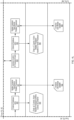
- FIG. 1 a diagram is shown of a system 100 for implementing one embodiment of the present invention.
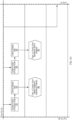
- FIG. 2 a flowchart is shown of a method 200 performed by the system 100 of FIG. 1 according to one embodiment of the present invention.
- the system 100 may include at least one computer processor executing computer program instructions stored on at least one first non-transitory computer-readable medium to perform the method 200 of FIG. 2 .
- the system 100 includes a first container 102.
- the first container 102 includes a first product 104.
- the first container 102 may have come to include the first product 104 in any of a variety of ways.
- the system 100 may include a second container 152 (also referred to herein as a "source container"), which may include a second product 154 (also referred to herein as a "source product”).
- the system 100 may also include a filling module 130, which may fill the first container 102 with the first product 104 ( FIG. 2 , operation 202), such as by transferring some or all of the second product 154 from the second container 152 to the first container 102.
- the first product 104 and the second product 154 may be of the same product type.
- the system 100 includes a first storage module 106 and an external database 108 (which comprises a distributed ledger).
- the first storage module 106 stores, in at least one container data record 110 in the external database 108, data representing the filling operation performed by the filling module 130 to fill the first product 104 into the first container 102 ( FIG. 2 , operation 204).
- the collection of container data records 110 are an example of "container history data," as that term is used herein.
- the first storage module 106 stores in the container data records 110 in the external database 108, the following:
- the second storage module 116 may, for example, store, in one or more container data records 120 in the container data module 118: (1) any one or more of the types of data disclosed above in connection with operation 204, and/or (2) a CDM ID of the CDM 118 ( FIG. 2 , operation 206). If both operations 204 and 206 are performed, such operations may, but need not, store the same data in the external database 108 and the container data module 118.
- the first storage module 106 may store some data (e.g., user ID) in the external database 108 that the second storage module 116 does not store in the container data module 118.
- the filling operation 202 may, for example, be performed at the point of origin of the first container 102, e.g., after the first container 102 has been manufactured and is filled for the first time with product (e.g., the first product 104) by the manufacturer of the first product 104 and/or the manufacturer of the first container 102, or after the first container 102 has been emptied and cleaned and is then filled with product (e.g., the first product 104).
- the first product 104 may, for example, be a liquid or dry product.
- the system 100 and method 200 may measure the amount of the first product 104 that has been filled into the first container 102 and store that measured amount in the external database 108 and/or the container data record(s) 120 in the container data module 118.
- the measured amount that is stored may, for example, be represented as a volume, weight, volumetric, or other unit of measure. Such a measured amount is one of the characteristics related to the first container 102's Certificate of Origination that may be captured and stored in the container data module 118. As described in more detail elsewhere herein, when some or all of the first product 104 is dispensed from the first container 102, the quantity of the first product 104 remaining in the first container 102 may be stored in the external database 108 and/or the container data module 118.
- the amount of product filled into a container and/or dispensed from a container may be measured in any of a variety of ways. For example, if the mechanism that dispenses the product (such as in the process of transferring the product from one container to another) uses auger meters, then the system 100 may calculate the quantity of product dispensed by the meter as a function of the number of times the auger rotates and/or the number of times and the duration of time at which the meter is operated. The system 100 may, for example, count the revolutions, strokes, openings, impulses, flow rate, and/or cycle-time of a dispensing meter and calculate the quantity of product dispensed from the dispensing container with each measured cycle or operational unit.
- the data stored in the CDR 118 in operation 206 may, for example, include data (referred to herein as "lookup data"), such as a container ID of the first container 102 and/or a CDM ID of the CDM 118, which may be used by the external database 108 or other external computer system (not shown in FIG. 1 ) to identify data associated with the first container 102 and/or the first product 104, such as some or all of the data stored in the external database 108's CDR 110 in operation 204. That external computer system, which may include the external database 108, may use the data stored in the CDR 120 to look up such data associated with the first container 102 and/or the first product 104.
- lookup data data (referred to herein as "lookup data”), such as a container ID of the first container 102 and/or a CDM ID of the CDM 118, which may be used by the external database 108 or other external computer system (not shown in FIG. 1 ) to identify data associated with the first container 102 and/or
- a CDM ID of the CDM 118 may be stored in the CDR 120 in operation 206.
- the external computer system may read the CDM ID of the CDM 118 from the CDM 118 (or otherwise receive that CDM ID) and use that CDM to look up (e.g., as an index, key, or query), in an external database (e.g., the external database 108), data associated with the first container 102 and/or the first product 104, such as data associated with the filling operation 202, such as some or all of the data stored in the external database 108's CDR 110 (e.g., any one or more of the container ID of the first container 102, the type of the first product 104, the amount of the first product 104 filled into the first container 102, and the time and location of the filling operation 202).
- the CDM 118's CDR 120 may, for example, include such lookup data and not include any of the data stored in the external database 108's CDR 110. In this way, the CDM 118's CDR 120 may make efficient use of storage space, and the system 100 may rely instead on the more extensive storage space of the external computer system to store the details of the filling operation 202.
- the first container 102 may be filled with the first product 104 (in operation 202) in a tamper-evident manner.
- the first container 102 may be filled with the first product 104 in a tamper-evident and/or tamper-proof manner.
- the techniques disclosed herein for storing data in the external database 108 may provide tamper evidence.
- the first container 102 is empty and then is filled with X 1 pounds of a product Y, and this filling is recorded in the external database 108 when in possession of a first possessor of the first container 102 using any of the techniques disclosed herein, and possession of the first container 102 is then transferred to a second possessor, and techniques disclosed herein are used to record, on the external database 108, that the first container 102 contains X 2 pounds of a product Y (where X 1 ⁇ X 2 ).
- Embodiments of the present invention may determine whether the external database 108 contains any records, other than the records just described, indicating that the first container 102 has been filled with product Y.
- the external database 108 comprises a distributed ledger, such as a blockchain.
- the CDR 110 (and any other CDRs disclosed herein as being stored in the external database 108) may include one or more blocks in the blockchain.
- Operations 202, 204, and 206 may, but need not, be performed in the sequence shown in FIG. 2 . As merely some examples:
- the first storage module 106 may also, at some time after the first container 102 comes into possession of a second possessor (which differs from the first possessor), the first storage module 106 may store, in at least one second record in the external database 108, data representing the second possessor of the first container 102.
- the second storage module 116 may also, at some time after the first container 102 comes into possession of a second possessor (which differs from the first possessor), the second storage module 116 may store, in the container data record 120 or another container data record in the CDM 118, data representing the second possessor of the first container 102.
- the first storage module 106 may also, at some time after the first container 102 moves to a second location (which differs from the first location), the first storage module 106 may store, in at least one second record in the external database 108, data representing the second location of the first container 102.
- Some or all of the first product 104 may be dispensed from the first container 102. In response to, or at any time after, such dispensing:
- embodiments of the present invention may read data about the transfer from the first container 102's CDM 118 and store some or all of the read data about the transfer in the third container's CDM. For example, embodiments of the present invention may read, from the first container 102's CDM 118, information about the type and amount of product transferred from the first container 102, and store, in the third container's CDM, the information about the type and amount of product transferred from the first container and into the third container.
- Such transferring from the first container 102 to a third container may be repeated for any number of containers. For example, after transferring at least some of the first product from the first container 102 to the third container, at least some of the first product may be transferred from the third container to a fourth container (not shown), and so on. At or after the time of each such transfer, embodiments of the present invention may perform any of the functions disclosed herein in connection with transferring material from the first container to the third container, such as storing, in the external database 108 and/or a CDM associated with (e.g., coupled to) the receiving container, data representing the transfer in any of the ways disclosed herein. Any such container into which material is transferred may be a closed delivery container that is suitable for being part of a mobile product dispensing apparatus, from which the product may be dispensed onto a field or other area.
- Any of the techniques disclosed herein in connection with transferring product from the first container 102 to a third container may be application to the transfer of the second product 154 from the second container 152 to the first container 102.
- Container A may be filled with some amount of Product A, and any of the techniques disclosed herein may be used to store a first record of that filling (e.g., in an external database and/or Container A's CDM).
- Some or all of Product A may be transferred from Container A to Container B, and any of the techniques disclosed herein may be used to store a second record of that transfer (e.g., in the external database, Container A's CDM, and/or Container B's CDM).
- the method 200 of FIG. 2 may include establishing the provenance of the first product 104, based on data stored in the CDR 110 in the external database 108 and/or the data stored in the CDR 120 in the CDM 118.
- embodiments of the present invention may use data stored in a plurality of container data records to trace a particular product over time and space, and to identify, based on the plurality of container data records, any one or more of the following states of the product at a previous point in time (such as the time when the product was first filled into a container, e.g., by the entity who manufactured the product in the container and/or who filled the container with product):
- Such tracing may be performed in a manner that is verifiable and tamper-proof, or at least tamper-evident if, for example, the container data records are stored in a distributed ledger.
- Such tracing may involve, for example:
- Examples of broken or missing links in such a chain include two or more container data records (e.g., two or more consecutive data records) in such a chain which:
- the plurality of container data records may, for example, include data representing an as-applied map which represents a plurality of geocoordinates at which the product has been applied.
- Embodiments of the present invention may determine whether the plurality of geocoordinates in the as-applied map include specific geocoordinates, such as specific geocoordinates required for a carbon credit.
- any of the data stored by the first storage module 106 e.g., any of the data stored in the external database 108, the container data record 110, the container data module 118, and/or the container data record 120
- the second storage module 116 may be stored in an encrypted form. The same is true of any data disclosed herein.
- any such update of the container data records 110 and/or the container data records 120 may update any of a variety of data in the container data records 110 and/or the container data records 120, such as by updating data representing(e.g., changing, adding to, or deleting) any one or more of the following:
- the system 100 may, for example, store any such updated data by adding the updated data to the container data records 110 and/or the container data records 120.
- the system 100 generates and stores, at least in the external database 108, container data records representing all filling and dispensing operations performed on the container 102.
- the system 100 may also generate and store, at least in the distributed ledger, container data records representing all changes in possession of the container 102. In this way, the system may record, in a verifiable ledger, records of all important changes to the container 102 over time, such as a verifiable chain of custody of the product 154 and/or the product 104.
- the CDR 110 and/or 120 may be used to verifiably trace back any applied product (e.g., any of the product 104 that was applied from the container 102) to its original point of manufacture (e.g., back to the second product 154 in the second container 152), thereby protecting against human error and fraud, and enabling carbon credit validation.
- any applied product e.g., any of the product 104 that was applied from the container 102
- its original point of manufacture e.g., back to the second product 154 in the second container 152
- the system 100 may perform any number of such updates.
- the container 102 may undergo many filling and dispensing operations, many changes in location, and many changes in owner/possessor/user.
- the system 100 may record each such event by updating the container data record 110 and/or the container data record 120.
- the result may be container history data that contains a large number (e.g., 10, 100, 500, or more) of container data records for the container 102.
- Any data representing a time that is stored in the external database 108 and/or the CDM 118 may be represented in any of a variety of ways, such as by a combination of date (e.g., a combination of year, month, and day) and time of day, or by a timestamp that uniquely represents a point in time.
- Any data representing a location that is stored in the external database 108 and/or the CDM 118 may be represented in any of a variety of ways, such as by coordinates obtained using Global Positioning System (GPS) technology or by a combination of latitude and longitude.
- GPS Global Positioning System
- One means of establishing the geocoordinates associated with the filling process may be to associate the IP address of the filling operation with latitude/longitude information provided by a separate and independent Global Navigation System such as Google Maps.
- any of the updates to the CDRs 110 and/or 120 may be performed automatically or semi-automatically.
- the system 100 may automatically detect that such dispensing is occurring or has occurred, automatically identify the type and amount of the first product 104 that has been dispensed from the first container 102 (such as by reading the type and amount of the first product 104 from the CDR 110 and/or 120), and automatically store (in the CDR 110 and/or 120) information about the dispensing, such as the type and amount of the dispensed product 104; the rate at which the product 104 was dispensed from the container 102; the location, date, and/or time of the dispensing; and the owner, possessor, and/or user of the container 102 at the time of dispensing.
- one entity might own a container ship, while a different entity may operate the container ship and may be considered to be in possession of the container without owning it, while yet another entity or individual might own the product in the container that is owned by the first entity while in the possession of a second entity.
- embodiments of the present invention may track and store, in the container's CDM 118 and/or the external database 108, any one or more of the following, in any combination: (1) a first owner of the first container 102 at a first time and a second owner of the first container 102 at a second time, where the first owner differs from the second owner; (2) a first possessor of the first container 102 at a first time and a second possessor of the first container 102 at a second time, where the first possessor differs from the second possessor; and (3) a first location of the first container 102 at a first time and a second location of the first container 102 at a second time, where the first location differs from the second location.
- the first time may differ from the second time (e.g., the second time may be later than the first time).
- the application equipment may be configured to determine whether all necessary information has been read from the container 102's CDM 118. Such confirmation may be performed automatically or manually (e.g., by receiving input from an operator of the application equipment indicating whether all necessary information has been read from the container 102's CDM 118).
- the application equipment may be configured to dispense product 104 from the container 102 only if it has been determined that all necessary information has been read from the container 102's CDM 118.
- embodiments of the present invention may be used to enable entities that assign carbon credits to farmers who apply less fertilizer than would have been applied using historical Best Management Practices (BMPs) to be confident that the information recorded (e.g., on the CDM 118 and/or in the external database 108) is accurate.
- BMPs Best Management Practices
- the external data store may be searched, using the unique container ID, for information about the current or most recent owner/possessor of the container, and any resulting information that is found in the external data store may be used to identify the current or most recent owner/possessor of the container.
- the container's CDM contains data representing the current or most recent owner/possessor of the container
- that owner/possessor data may be read directly from the container's CDM to identify the current or most recent owner/possessor of the container.
- Embodiments of the present invention may establish and maintain an unbroken transaction record as a material-filled container (e.g., the first container 102) moves through the supply chain, such as for the purpose of producing forensic quality records regarding the validity of application or consumption of product or material from the container. Absent an unbroken forensic chain of transactions, it may be impossible to verify the application record that results from application of the contents of the tracked container. For an as-applied record to be created, information regarding the product being applied must be supplied to the application equipment. Historically, that information is supplied by the application equipment operator at the time of application, but as described previously, the potential for operator error is substantial. In embodiments of the present invention, information regarding the applied or consumed product may be delivered to the application equipment from the CDM.
- Embodiments of the present invention may track and store each attribute independently and/or collectively, for the purpose of creating and producing a comprehensive forensic record of who owns or owned a container, in whose possession it is now and in whose possession it has been in the past, and where it is or has been located at any given point in time. It is also possible for the owner of a container to be different from the owner of the container's contents. However, within the combined distributed ledger and/or CDM system, embodiments of the present invention may track ownership of the contents of individual and/or blended constituent content components within the container, even if multiple owners are involved.
- a container may only be in one place at a time, and it may only be in the possession of one entity at a time, (even if the possessing entity has multiple owners), but for example, Entity A might own the container itself, while Entity B might own Product 1 within the container, and simultaneously, Entity C might own Product 2 within the same container.
- Products 1 and 2 may maintain their individual constituent integrity within the container as a result of physical separation within the container via walls, bulkheads, compartmentalization, etc., or the quantity of Product 1 and Product 2 may be blended together, with each Entity continuing to own the tracked quantity of that Entity's constituent contribution to the blended product.
- the system 500 includes network 502, which may be any type of communication network, such as a Local Area Network (LAN) and/or a Wide Area Network (e.g., the Internet).
- the network 502 may include mechanisms for transmitting and receiving data by wire and/or wirelessly. Any of the techniques disclosed herein for using the first storage module 106 to store data in the external database 108 may include the first storage module 106 transmitting such data over the network 502, and the external database 108 may receive such data and store the data in the external database 108.
- the external database 108 is, contains, or is contained within a distributed ledger.
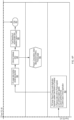
- the filling module 130 may fill the first container 102 with the first product 104 ( FIG. 6 , operation 602), such as in any of the ways disclosed herein in connection with operation 202 of method 200 ( FIG. 2 ).
- the first storage module 106 receives data representing filling of the first container 102 with the first product 104 ( FIG. 6 , operation 604).
- the first storage module 106 may, for example, receive such data in the form of an RFID signal received at an RFID tag on the first container 102.
- the first storage module 106 determines whether the external database 108 is accessible over the network 502 ( FIG. 6 , operation 606). The first storage module 106 makes this determination by determining whether a network connection exists between the first storage module 106 and the external database 108. If the first storage module 106 determines that the external database 108 is accessible over the network 502, the first storage module 106 stores the received data in the external database 108, such as in any of the ways disclosed above in connection with operation 204 of FIG. 2 ( FIG. 6 , operation 608) .
- the second non-transitory computer-readable medium may be in or on application equipment, such as application equipment that contains or is coupled to the first container 102 and/or the first storage module 106.
- application equipment may contain a computer, which contains or is coupled to the second non-transitory computer-readable medium.
- the second non-transitory computer-readable medium may be a container data module in or coupled to the first container.
- the first storage module 106 determines that the external database 108 is accessible over the network 502, by determining that a network connection has been established between the first storage module and the external database 108. In response to determining that the external database 108 is accessible over the network 502, the first storage module 106 stores the data that was previously stored in the second non-transitory computer-readable medium in at least one first record in the external database 108 (e.g., in the container data record 110) ( FIG. 6 , operation 608).
- the external database 108 may, for example, be a blockchain, and the at least one first record may be at least one first block in the blockchain.
- the first storage module 106 may again (e.g., after some delay) determine whether the external database 108 is accessible over the network 502. This process of determining whether the external database 108 is accessible over the network and only storing the received data in response to determining that the external database 108 is accessible over the network may repeat any number of times.
- the description above describes storing the received data in the second non-transitory computer-readable medium in response to determining that the external database 108 is not accessible over the network 502.
- Other embodiments of the present invention may store the received data in the second non-transitory computer-readable medium even if the external database 108 is accessible over the network 502.
- embodiments of the present invention may store the received data in the second non-transitory computer-readable medium even while the external database 108 is accessible over the network 502 in order to collect and store some minimum amount of such data before transmitting it over the network 502 for storage in the external database 108, thereby reducing utilization of the network.
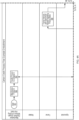
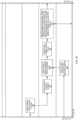
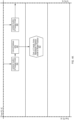
- FIGS. 3A-3N a swim lane diagram is shown of a method for validating carbon credit-eligible activities according to one embodiment of the present invention.
- Each of the rows in FIGS. 3A-3N corresponds to a particular actor and shows actions taken by that actor.
- the diagram of FIGS. 3A-3N contains rows corresponding to the following actors:
- the method may begin (step 301) and include the following.
- the manufacturer manufactures a Product A (step 302).
- the manufacturer transfers some amount of Product A to a tagged Container A (i.e., fills Container A with some amount of Product A) (step 303).
- the Manufacturer in FIGS. 3A-3N may be a manufacturer of Product A and/or a manufacturer of Container A.
- the Manufacturer in FIGS. 3A-3N may not be a manufacturer of either Product A or Container A, but may instead be any party who performs the functions shown in the swim lane labeled "Manufacturer" in FIGS. 3A-3N .
- One or more records 5 containing data representing information about the storage of Product A into Container A are stored in the external database (step 304).
- the storing in step 304 may be performed by any of a variety of parties in any of a variety of ways.
- the following description of examples of ways in which step 304 may be performed is equally applicable to other steps in the method of FIGS. 3A-3N for storing data in the distributed ledger (i.e., steps 310, 313, 318, 321, 326, 329, 334, 337, 340, 348, and 351).
- 3A-3N may similarly use one or more computing devices to transmit (over a network, such as the Internet) some or all of the information to be stored in some or all of the records 314, 319, 322, 327, 330, 335, 338, 343, and 349 to the same external database intermediary, which may then communicate with the external database (e.g., over a network, such as the Internet) and thereby cause those records to be stored in the external database.
- the external database intermediary may act as a centralized mechanism, for use by some or all of the actors in FIGS. 3A-3N , for storing records in the external database.
- 3A-3N may communicate directly (i.e., without using the external database intermediary) with the external database to cause records to be stored in the external database, while other actors in FIGS. 3A-3N may communicate indirectly with the external database, through the external database intermediary, to cause records to be stored in the external database.
- the record 305 may contain any of a variety of data, such as data representing any one or more of the following, in any combination:
- Step 306 is optional and may be omitted from the method of FIGS. 3A-3N .
- Container A's CDM may store data in the form of a bar code, QR code, or other non-updateable (static) data.
- Data representing information about Container A may, for example, be stored in Container A's CDM before step 306 (and even before the start 301 of the method of FIGS. 3A-3N ), such as the unique container ID of Container A.
- Embodiments of the present invention may, at any of a variety of times, read the container ID from Container A's CDM and correlate that container ID with the container ID stored elsewhere, such as in the external database.
- the Manufacturer may store some or all of the information contained in the external database record 305 in a data store other than the external database and Container A's CDM, such as a database that is local to or remote from the Manufacturer.
- a data store other than the external database and Container A's CDM, such as a database that is local to or remote from the Manufacturer.
- Other updates to the external database shown in FIGS. 3A-3N may also be stored in such another data store, and may contain Container A's unique ID.
- the manufacturer may read Container A's container ID from Container A's CDM, correlate that container ID with the container ID stored in one or more records in the other data store, and thereby retrieve information about Container A that is not stored in Container A's CDM.
- Possessor 1 accepts possession of Container A (step 312).
- One or more records 314 containing data representing information about the acceptance of possession of Container A by Possessor 1 are stored in the distributed ledger (step 313).
- the storing in step 313 may be performed by Possessor 1, or any other party, in any of the ways disclosed above in connection with step 304.
- the record 314 may contain any of a variety of data, such as data representing any one or more of the following, in any combination:
- Possessor 1 transfers possession of Container A to Possessor 2 (step 317).
- Possessor 2 may, for example, be a farmer who uses Product A, but more generally may be any party who performs the functions shown in the swim lane labeled "Possessor 2" in FIGS. 3A-3N . In practice, there may not be any Possessor 2.
- step 317, and the other steps shown in the swim lane labeled "Possessor 2" in FIGS. 3A-3N are optional and may be omitted from the method of FIGS. 3A-3N .
- Possessor 2 transfers possession of Container A to Possessor N (step 325).
- Possessor N there may not be any Possessor N.
- step 325, and the other steps shown in the swim lane labeled "Possessor N" in FIGS. 3A-3N are optional and may be omitted from the method of FIGS. 3A-3N .
- step 325, and the other steps shown in the swim lane labeled "Possessor N" in FIGS. 3A-3N may be performed multiple times, once for each of a plurality of possessors.
- Possessor N accepts possession of Container A (step 328).
- One or more records 330 containing data representing information about the acceptance of possession of Container A by Possessor N are stored in the external database (step 329).
- the storing in step 329 may be performed by Possessor N, or any other party, in any of the ways disclosed above in connection with step 313.
- the record 335 may contain any of a variety of data, such as any of the data disclosed in connection with record 311, except that the data in record 335 may represent data representing the transfer of possession from Possessor N (or other most recent possessor of Container A) to the Customer, rather than the transfer of possession from the Manufacturer to Possessor 1.
- Step 339 Some or all of the information stored in the external database record 338 may be stored in Container A's CDM, such as in a record 340 in the CDM or by otherwise updating the CDM (step 339).
- the Customer may, for example, perform step 339 in any of the ways disclosed above in connection with step 315.
- Step 339 is optional and may be omitted from the method of FIGS. 3A-3N , as described above in connection with the optional nature of step 306.
- the record 343 may contain any of a variety of data, such as data representing any one or more of the following, in any combination:
- Step 3444 Some or all of the information stored in the external database record 343 may be stored in Container A's CDM, such as in a record 345 in the CDM or by otherwise updating the CDM (step 344).
- the Customer may, for example, perform step 344 in any of the ways disclosed above in connection with step 315.
- Step 344 is optional and may be omitted from the method of FIGS. 3A-3N , as described above in connection with the optional nature of step 306.
- Container A is a returnable container
- the Customer transfers possession of Container A to a prior possessor of Container A, such as the Manufacturer, Possessor 1, Possessor 2, or Possessor N (step 347).
- FIGS. 3A-3N shows the Customer transferring possession to the Manufacturer. More generally, however, the Customer may return Container A by transferring possession of Container A to any of the parties shown in FIGS. 3A-3N , such as Possessor 1 or Possessor 2.
- the prior possessor e.g., Manufacturer accepts possession of Container A (step 350).
- One or more records 352 containing data representing information about the acceptance of possession of Container A by the prior possessor are stored in the distributed ledger (step 351).
- the storing in step 351 may be performed by the prior possessor, or any other party, in any of the ways disclosed above in connection with step 313.
- the product usage data tracking system may be implemented in any of a variety of ways. For example, it may include a software system that is accessible over one or more networks (e.g., as a Software as a Service (SaaS) product) from one or more computing devices. Data about containers and/or products that are filled into and/or applied from the containers may be stored by the product usage data tracking system at one or more locations that are remote from the containers, such as on one or more servers that are remote from the containers.
- SaaS Software as a Service
- the product usage tracking system may include one or more computers and other devices that are local to a container containing a product, such as a computer on application equipment that applies the product, and which is capable of reading data from and writing data to an container data module (CDM) (e.g., RFID tag) associated with (e.g., contained within or coupled to) the container.
- CDM container data module
- Each such computer may include suitable client software to enable the computer to act as a client in communication over a network with one or more servers of the product usage data tracking system.
- RFID scanning software may be executable on a handheld computing device, which may read data from a CDM (e.g., RFID tag) associated with a container, and transmit that data over a network to a server of the product usage data tracking system, which may store that data remotely from the container.
- CDM e.g., RFID tag
- the prescription may include, for example, any one or more of the following, in any combination: a definition of geographic boundaries of a field; a unique product ID (e.g., the product ID of Product A) for each of one or more products specified by the prescription; an application rate; and an ID of a crop.
- a definition of geographic boundaries of a field e.g., a unique product ID (e.g., the product ID of Product A) for each of one or more products specified by the prescription
- an application rate e.g., the product ID of Product A
- the product usage data tracking system creates an external database entry 417 containing some or all of the data in the enhanced prescription file (plus an indication of the type of the action represented by the external database entry, e.g., "product need action") (step 416), and stores the external database entry 417 in the external database.
- the retailer transfers possession/custody of Container A to the farmer (step 433).
- the product usage data tracking system knows the location and possessor of Container A after the farmer accepts possession/custody of Container A (step 434)
- the product usage data tracking system creates an external database entry 436 containing information about the chain of custody of Container A, such as data indicating that the retailer has transferred possession/custody of Container A to the farmer, and an indication of the action represented by the external database entry 436, e.g., "chain of custody action" (step 435).
- the product usage data tracking system may also update Container A's CDM with some or all of the information in the external database entry 436, thereby creating record 38 in Container A's CDM (step 437).
- the retailer delivers Container A to the farmer (step 439).
- the farmer accepts possession/custody of Container A (step 440).
- the farmer installs Container A on application equipment and authenticates Container A (step 441).
- the agronomist or farmer uploads the enhanced prescription file to the application equipment (step 442).
- step 447a If Container A is returnable (step 447a), then the method of FIGS. 4A-4P proceeds to step 447b, in which the farmer transfers possession/custody of Container A to the retailer (step 447b); otherwise, the method ends (step 467).
- step 461 The manufacturer performs a container return process, (step 461), which may include any one or more of the following steps, in any combination (step 462):
- the product usage data tracking system creates an external database entry 65 that contains data indicating that the manufacturer has confirmed product usage (step 464).
- the techniques described above may be implemented, for example, in hardware, one or more computer programs tangibly stored on one or more computer-readable media, firmware, or any combination thereof.
- the techniques described above may be implemented in one or more computer programs executing on (or executable by) a programmable computer including any combination of any number of the following: a processor, a storage medium readable and/or writable by the processor (including, for example, volatile and non-volatile memory and/or storage elements), an input device, and an output device.
- Program code may be applied to input entered using the input device to perform the functions described and to generate output using the output device.
- any claims herein which affirmatively require a computer, a processor, a memory, or similar computer-related elements, are intended to require such elements, and should not be interpreted as if such elements are not present in or required by such claims. Such claims are not intended, and should not be interpreted, to cover methods and/or systems which lack the recited computer-related elements.
- any method claim herein which recites that the claimed method is performed by a computer, a processor, a memory, and/or similar computer-related element is intended to, and should only be interpreted to, encompass methods which are performed by the recited computer-related element(s).
- Such a method claim should not be interpreted, for example, to encompass a method that is performed mentally or by hand (e.g., using pencil and paper).
- Each such computer program may be implemented in a computer program product tangibly embodied in a machine-readable storage device for execution by a computer processor.
- Method steps of the invention may be performed by one or more computer processors executing a program tangibly embodied on a computer-readable medium to perform functions of the invention by operating on input and generating output.
- Suitable processors include, by way of example, both general and special purpose microprocessors.
- the processor receives (reads) instructions and data from a memory (such as a read-only memory and/or a random access memory) and writes (stores) instructions and data to the memory.
- Any step or act disclosed herein as being performed, or capable of being performed, by a computer or other machine, may be performed automatically by a computer or other machine, whether or not explicitly disclosed as such herein.
- a step or act that is performed automatically is performed solely by a computer or other machine, without human intervention.
- a step or act that is performed automatically may, for example, operate solely on inputs received from a computer or other machine, and not from a human.
- a step or act that is performed automatically may, for example, be initiated by a signal received from a computer or other machine, and not from a human.
- a step or act that is performed automatically may, for example, provide output to a computer or other machine, and not to a human.
- a or B at least one of A or/and B,” “at least one of A and B,” “at least one of A or B,” or “one or more of A or/and B” used in the various embodiments of the present disclosure include any and all combinations of words enumerated with it.
- “A or B,” “at least one of A and B” or “at least one of A or B” may mean: (1) including at least one A, (2) including at least one B, (3) including either A or B, or (4) including both at least one A and at least one B.
Landscapes
- Business, Economics & Management (AREA)
- Engineering & Computer Science (AREA)
- Strategic Management (AREA)
- Human Resources & Organizations (AREA)
- Theoretical Computer Science (AREA)
- Tourism & Hospitality (AREA)
- Entrepreneurship & Innovation (AREA)
- General Physics & Mathematics (AREA)
- Economics (AREA)
- General Business, Economics & Management (AREA)
- Physics & Mathematics (AREA)
- Marketing (AREA)
- General Health & Medical Sciences (AREA)
- Agronomy & Crop Science (AREA)
- Primary Health Care (AREA)
- Animal Husbandry (AREA)
- Mining & Mineral Resources (AREA)
- Health & Medical Sciences (AREA)
- Life Sciences & Earth Sciences (AREA)
- Data Mining & Analysis (AREA)
- Marine Sciences & Fisheries (AREA)
- Operations Research (AREA)
- Quality & Reliability (AREA)
- Management, Administration, Business Operations System, And Electronic Commerce (AREA)
Claims (12)
- Ein Verfahren, das von mindestens einem Computerprozessor ausgeführt wird, der Computerprogrammanweisungen ausführt, die auf mindestens einem ersten nicht-transitorischen computerlesbaren Medium gespeichert sind, wobei das Verfahren umfasst: (A) ein erstes Speichermodul (106), das Daten erhält, die eine Befüllung eines ersten Behälters (102) mit einem ersten Produkt (104) darstellen; (B) das erste Speichermodul (106) bestimmt, ob eine Netzwerkverbindung zwischen dem ersten Speichermodul (106) und einer externen Datenbank (108) besteht, um zu bestimmen, dass die externe Datenbank (108) über ein Netzwerk (502) nicht zugänglich ist; (C) als Reaktion auf die Bestimmung, dass die externe Datenbank (108) über das Netzwerk (502) nicht zugänglich ist, speichert das erste Speichermodul (106) in einem zweiten nicht- transitorischen computerlesbaren Medium (514), ohne das Netzwerk (502) zu nutzen, Daten, die darstellen: einen Produkttyp des ersten Produkts (104); eine Menge des ersten Produkts (104), die in den ersten Behälter (102) gefüllt wurde; eine eindeutige Identität des ersten Behälters (102); und eine eindeutige Identität eines ersten Benutzers des ersten Behälters (102) zum Zeitpunkt der Befüllung des ersten Behälters (102) mit dem ersten Produkt (104); und (D) nach (B) und (C), das erste Speichermodul (106) bestimmt, ob eine Netzwerkverbindung zwischen dem ersten Speichermodul (106) und einer externen Datenbank (108) besteht, um zu bestimmen, dass die externe Datenbank (108) über das Netzwerk (502) zugänglich ist; (E) als Reaktion auf die Bestimmung, dass die externe Datenbank (108) über das Netzwerk (502) zugänglich ist, speichert das erste Speichermodul (106) die Daten aus (C) in mindestens einem ersten Datensatz in der externen Datenbank (108); und (F) entnehmen mindestens einen Teil des ersten Produkts (104) aus dem ersten Behälter (102), und Speichern von Daten, in mindestens einem zweiten Datensatz in der externen Datenbank (108), die die Entnahme darstellen; wobei die Entnahme umfasst, dass mindestens ein Teil des ersten Produkts (104) an jedem von mehreren Standorten L verbraucht wird, und wobei (F) umfasst: speichern der Daten für jeden der mehreren Standorte L, die die Entnahme darstellen: (1) Daten, die eine Menge des ersten Produkts (104) darstellen, die aus dem ersten Behälter (102) an Standort L verbraucht wurden; und (2) Daten, die den Standort L darstellen, wobei die externe Datenbank (108) ein verteiltes Register umfasst.
- Das Verfahren nach Anspruch 1, wobei (D) umfasst:(D) (1) nach (B) und (C), Bestimmen, ob die externe Datenbank über das Netzwerk zugänglich ist, und(D) (2) wenn die externe Datenbank als über das Netzwerk zugänglich bestimmt wird, dann Schritt (E) ausführen;(D) (3) wenn die externe Datenbank nicht als über das Netzwerk zugänglich bestimmt wird, dann Schritt (D) (1) wiederholen.
- Das Verfahren nach Anspruch 1, wobei das verteilte Register eine Blockchain umfasst, und wobei der mindestens eine erste Datensatz mindestens einen ersten Block in der Blockchain umfasst.
- Das Verfahren nach einem der Ansprüche 1-3, wobei das zweite nicht- transitorische computerlesbare Medium auf dem ersten Behälter liegt.
- Das Verfahren nach einem der Ansprüche 1-3, wobei ein Computer den mindestens einen Computerprozessor, das mindestens eine erste nicht-transitorische computerlesbare Medium und das zweite nicht-transitorische computerlesbare Medium umfasst.
- Das Verfahren nach einem der Ansprüche 1-5, wobei (C) umfasst Empfangen, an einem RFID-Tag auf dem ersten Behälter, eines Signals, das die in (C) gespeicherten Daten darstellt.
- Das Verfahren nach einem der Ansprüche 1-6, weiter umfassend: (F) nach (E), basierend auf den in (C) gespeicherten Daten, Ermitteln der Herkunft des ersten Produkts.
- Das Verfahren nach einem der Ansprüche 1-7, weiter umfassend: (F) Speichern, mindestens einen zweiten Datensatz in der externen Datenbank, der einen zweiten Standort des ersten Behälters darstellt, wobei sich der erste Standort vom zweiten Standort unterscheidet.
- Das Verfahren nach Anspruch 1-8, weiter umfassend: (G) Bestimmen, basierend auf dem mindestens einen ersten Datensatz in der externen Datenbank und dem mindestens einen zweiten Datensatz in der externen Datenbank, ob ein Kriterium für eine CO2-Gutschrift erfüllt ist; und (H) Generieren einer Ausgabe, die angibt, ob das Kriterium für die CO2-Gutschrift erfüllt ist.
- Das Verfahren nach einem der Ansprüche 1-9, weiter umfassend: (F) nach der Übertragung von mindestens einem Teil des ersten Produkts aus dem ersten Behälter in einen zweiten Behälter, Speichern, mindestens einen zweiten Datensatz in der externen Datenbank Daten, die die Übertragung darstellen.
- Das Verfahren nach einem der Ansprüche 1-10, wobei Schritt (E) des, als Reaktion auf die Bestimmung, dass die externe Datenbank über das Netzwerk zugänglich ist, das erste Speichermodul die Daten in (C) in mindestens einem ersten Datensatz in der externen Datenbank speichert, weiter umfassend: das erste Speichermodul bestimmt, dass eine Mindestmenge der Daten in (C) im zweiten nicht-transitorischen computerlesbaren Medium gespeichert ist; und als Reaktion auf die Bestimmung, dass eine Mindestmenge der Daten in (C) im zweiten nicht-transitorischen computerlesbaren Medium gespeichert ist, speichert das erste Speichermodul die Daten in (C) in mindestens einem ersten Datensatz in der externen Datenbank; und das erste Speichermodul bestimmt, dass eine Mindestmenge der Daten in (C) nicht im zweiten nicht-transitorischen computerlesbaren Medium gespeichert ist; und als Reaktion auf die Bestimmung, dass eine Mindestmenge der Daten in (C) nicht im zweiten nicht-transitorischen computerlesbaren Medium gespeichert ist, behält das erste Speichermodul die Daten in (C) im zweiten nicht-transitorischen computerlesbaren Medium, bis eine Mindestmenge solcher Daten gespeichert ist, bevor das erste Speichermodul die Daten in (C) in mindestens einem ersten Datensatz in der externen Datenbank speichert.
- Ein System, das mindestens ein erstes nicht-transitorisches computerlesbares Medium umfasst, auf dem Computerprogrammanweisungen gespeichert sind, wobei die Computerprogrammanweisungen ausführbar sind durch mindestens einen Computerprozessor, um das Verfahren eines vorangegangenen Anspruchs auszuführen.
Applications Claiming Priority (2)
| Application Number | Priority Date | Filing Date | Title |
|---|---|---|---|
| US202163245184P | 2021-09-16 | 2021-09-16 | |
| US17/727,482 US20220240434A1 (en) | 2013-10-25 | 2022-04-22 | Secure and verifiable tracking of agricultural products |
Publications (2)
| Publication Number | Publication Date |
|---|---|
| EP4152232A1 EP4152232A1 (de) | 2023-03-22 |
| EP4152232B1 true EP4152232B1 (de) | 2025-04-16 |
Family
ID=81748528
Family Applications (1)
| Application Number | Title | Priority Date | Filing Date |
|---|---|---|---|
| EP22173107.8A Active EP4152232B1 (de) | 2021-09-16 | 2022-05-12 | Sichere und überprüfbare verfolgung von landwirtschaftlichen produkten |
Country Status (1)
| Country | Link |
|---|---|
| EP (1) | EP4152232B1 (de) |
Families Citing this family (2)
| Publication number | Priority date | Publication date | Assignee | Title |
|---|---|---|---|---|
| US11229155B2 (en) | 2013-10-25 | 2022-01-25 | Amvac Chemical Corporation | Tagged container tracking |
| US11864485B2 (en) | 2013-10-25 | 2024-01-09 | Amvac Chemical Corporation | Tagged container tracking |
Citations (1)
| Publication number | Priority date | Publication date | Assignee | Title |
|---|---|---|---|---|
| WO2018213428A1 (en) * | 2017-05-18 | 2018-11-22 | Amvac C.V. | Tagged Container Tracking |
Family Cites Families (3)
| Publication number | Priority date | Publication date | Assignee | Title |
|---|---|---|---|---|
| WO2014204857A1 (en) * | 2013-06-17 | 2014-12-24 | Prime ITS | Material tracking system |
| EP3983908A4 (de) * | 2019-06-14 | 2023-07-05 | Newlight Technologies, Inc. | Blockchainverfolgung von kohlenstoffgutschriften für materialien mit sequestriertem kohlenstoff |
| US11682095B2 (en) * | 2020-02-25 | 2023-06-20 | Mark Coast | Methods and apparatus for performing agricultural transactions |
-
2022
- 2022-05-12 EP EP22173107.8A patent/EP4152232B1/de active Active
Patent Citations (1)
| Publication number | Priority date | Publication date | Assignee | Title |
|---|---|---|---|---|
| WO2018213428A1 (en) * | 2017-05-18 | 2018-11-22 | Amvac C.V. | Tagged Container Tracking |
Also Published As
| Publication number | Publication date |
|---|---|
| EP4152232A1 (de) | 2023-03-22 |
Similar Documents
| Publication | Publication Date | Title |
|---|---|---|
| US20220240434A1 (en) | Secure and verifiable tracking of agricultural products | |
| US11810021B2 (en) | Systems and methods for ecosystem credit recommendations | |
| Brooks et al. | Eliminating uncertainty in market access: The impact of new bridges in rural Nicaragua | |
| TWI848364B (zh) | 用於安全且可驗證之農產品追蹤之方法與系統 | |
| US7415418B2 (en) | Method and apparatus for generating standardized environmental benefit credits | |
| US7974853B1 (en) | Techniques for minimizing nitrous oxide emissions and increasing certainty in generating, quantifying and verifying standardized environmental attributes relating to nitrous oxide | |
| KR20240024787A (ko) | 탄소 집약도 자동 계산 및 추적을 위한 시스템들 및 방법들 | |
| US20020173980A1 (en) | GPS-based system for handling information | |
| US20020173979A1 (en) | GPS-based system related to verifiable carbon credits | |
| EP4152232B1 (de) | Sichere und überprüfbare verfolgung von landwirtschaftlichen produkten | |
| Wanzala-Mlobela et al. | Practices and policy options for the improved design and implementation of fertilizer subsidy programs in sub-Saharan Africa | |
| Prikhodko et al. | Digital technologies in the grain sector of Ukraine | |
| Benson et al. | The supply of inorganic fertilizers to smallholder farmers in Uganda: Evidence for fertilizer policy development | |
| Capalbo et al. | Understanding tradeoffs in the context of farm-scale impacts: An application of decision-support tools for assessing climate smart agriculture | |
| Schulte Moore et al. | Carbon science for carbon markets: Emerging opportunities in Iowa | |
| Zhang et al. | Simulation of variable-rate manure application under different application scenarios | |
| Lema et al. | Smallholder farmers and the voluntary carbon market: A balancing act: Navigating pricing, co-benefits, and challenges | |
| Clay et al. | Voluntary versus state-based compliance markets in the United States | |
| Alemu et al. | Market integration in Mozambican maize markets | |
| Moonga et al. | Financial Inclusion and CSA Adoption-Enhancing the Resilience of Smallholder Farmers to Climate Change in Zambia | |
| Oates | Blockchain from farm to fork-a new business model for tracing local South African market food supply chains using blockchain technology | |
| Karpavicius et al. | Practice-or results-based subsidies: balancing the direct costs for soil carbon sequestration and transaction costs for farmers and monitoring agencies | |
| Crotti | Traceability in the Agrifood sector: business models design options and most relevant features | |
| Adetoyinbo et al. | Digital innovations and institutional barriers in agricultural input subsidy programmes in sub‐Saharan Africa: Evidence from Nigeria | |
| Banerjee | Socioeconomic and environmental impacts of forest concessions in Brazil: A computable general equilibrium analysis |
Legal Events
| Date | Code | Title | Description |
|---|---|---|---|
| PUAI | Public reference made under article 153(3) epc to a published international application that has entered the european phase |
Free format text: ORIGINAL CODE: 0009012 |
|
| STAA | Information on the status of an ep patent application or granted ep patent |
Free format text: STATUS: REQUEST FOR EXAMINATION WAS MADE |
|
| 17P | Request for examination filed |
Effective date: 20230208 |
|
| AK | Designated contracting states |
Kind code of ref document: A1 Designated state(s): AL AT BE BG CH CY CZ DE DK EE ES FI FR GB GR HR HU IE IS IT LI LT LU LV MC MK MT NL NO PL PT RO RS SE SI SK SM TR |
|
| STAA | Information on the status of an ep patent application or granted ep patent |
Free format text: STATUS: EXAMINATION IS IN PROGRESS |
|
| RBV | Designated contracting states (corrected) |
Designated state(s): AL AT BE BG CH CY CZ DE DK EE ES FI FR GB GR HR HU IE IS IT LI LT LU LV MC MK MT NL NO PL PT RO RS SE SI SK SM TR |
|
| 17Q | First examination report despatched |
Effective date: 20230428 |
|
| P01 | Opt-out of the competence of the unified patent court (upc) registered |
Effective date: 20230607 |
|
| GRAP | Despatch of communication of intention to grant a patent |
Free format text: ORIGINAL CODE: EPIDOSNIGR1 |
|
| STAA | Information on the status of an ep patent application or granted ep patent |
Free format text: STATUS: GRANT OF PATENT IS INTENDED |
|
| INTG | Intention to grant announced |
Effective date: 20241125 |
|
| GRAS | Grant fee paid |
Free format text: ORIGINAL CODE: EPIDOSNIGR3 |
|
| GRAA | (expected) grant |
Free format text: ORIGINAL CODE: 0009210 |
|
| STAA | Information on the status of an ep patent application or granted ep patent |
Free format text: STATUS: THE PATENT HAS BEEN GRANTED |
|
| AK | Designated contracting states |
Kind code of ref document: B1 Designated state(s): AL AT BE BG CH CY CZ DE DK EE ES FI FR GB GR HR HU IE IS IT LI LT LU LV MC MK MT NL NO PL PT RO RS SE SI SK SM TR |
|
| REG | Reference to a national code |
Ref country code: GB Ref legal event code: FG4D |
|
| REG | Reference to a national code |
Ref country code: CH Ref legal event code: EP Ref country code: DE Ref legal event code: R096 Ref document number: 602022013114 Country of ref document: DE |
|
| REG | Reference to a national code |
Ref country code: IE Ref legal event code: FG4D |
|
| PGFP | Annual fee paid to national office [announced via postgrant information from national office to epo] |
Ref country code: DE Payment date: 20250529 Year of fee payment: 4 |
|
| PGFP | Annual fee paid to national office [announced via postgrant information from national office to epo] |
Ref country code: FR Payment date: 20250526 Year of fee payment: 4 |
|
| PGFP | Annual fee paid to national office [announced via postgrant information from national office to epo] |
Ref country code: AT Payment date: 20250721 Year of fee payment: 4 |
|
| REG | Reference to a national code |
Ref country code: NL Ref legal event code: MP Effective date: 20250416 |
|
| PG25 | Lapsed in a contracting state [announced via postgrant information from national office to epo] |
Ref country code: NL Free format text: LAPSE BECAUSE OF FAILURE TO SUBMIT A TRANSLATION OF THE DESCRIPTION OR TO PAY THE FEE WITHIN THE PRESCRIBED TIME-LIMIT Effective date: 20250416 |
|
| REG | Reference to a national code |
Ref country code: AT Ref legal event code: MK05 Ref document number: 1786268 Country of ref document: AT Kind code of ref document: T Effective date: 20250416 |
|
| PG25 | Lapsed in a contracting state [announced via postgrant information from national office to epo] |
Ref country code: FI Free format text: LAPSE BECAUSE OF FAILURE TO SUBMIT A TRANSLATION OF THE DESCRIPTION OR TO PAY THE FEE WITHIN THE PRESCRIBED TIME-LIMIT Effective date: 20250416 Ref country code: ES Free format text: LAPSE BECAUSE OF FAILURE TO SUBMIT A TRANSLATION OF THE DESCRIPTION OR TO PAY THE FEE WITHIN THE PRESCRIBED TIME-LIMIT Effective date: 20250416 Ref country code: PT Free format text: LAPSE BECAUSE OF FAILURE TO SUBMIT A TRANSLATION OF THE DESCRIPTION OR TO PAY THE FEE WITHIN THE PRESCRIBED TIME-LIMIT Effective date: 20250818 |
|
| REG | Reference to a national code |
Ref country code: LT Ref legal event code: MG9D |
|
| PG25 | Lapsed in a contracting state [announced via postgrant information from national office to epo] |
Ref country code: NO Free format text: LAPSE BECAUSE OF FAILURE TO SUBMIT A TRANSLATION OF THE DESCRIPTION OR TO PAY THE FEE WITHIN THE PRESCRIBED TIME-LIMIT Effective date: 20250716 Ref country code: GR Free format text: LAPSE BECAUSE OF FAILURE TO SUBMIT A TRANSLATION OF THE DESCRIPTION OR TO PAY THE FEE WITHIN THE PRESCRIBED TIME-LIMIT Effective date: 20250717 |
|
| PG25 | Lapsed in a contracting state [announced via postgrant information from national office to epo] |
Ref country code: PL Free format text: LAPSE BECAUSE OF FAILURE TO SUBMIT A TRANSLATION OF THE DESCRIPTION OR TO PAY THE FEE WITHIN THE PRESCRIBED TIME-LIMIT Effective date: 20250416 |
|
| PG25 | Lapsed in a contracting state [announced via postgrant information from national office to epo] |
Ref country code: BG Free format text: LAPSE BECAUSE OF FAILURE TO SUBMIT A TRANSLATION OF THE DESCRIPTION OR TO PAY THE FEE WITHIN THE PRESCRIBED TIME-LIMIT Effective date: 20250416 |
|
| PG25 | Lapsed in a contracting state [announced via postgrant information from national office to epo] |
Ref country code: AT Free format text: LAPSE BECAUSE OF FAILURE TO SUBMIT A TRANSLATION OF THE DESCRIPTION OR TO PAY THE FEE WITHIN THE PRESCRIBED TIME-LIMIT Effective date: 20250416 Ref country code: HR Free format text: LAPSE BECAUSE OF FAILURE TO SUBMIT A TRANSLATION OF THE DESCRIPTION OR TO PAY THE FEE WITHIN THE PRESCRIBED TIME-LIMIT Effective date: 20250416 |
|
| PG25 | Lapsed in a contracting state [announced via postgrant information from national office to epo] |
Ref country code: RS Free format text: LAPSE BECAUSE OF FAILURE TO SUBMIT A TRANSLATION OF THE DESCRIPTION OR TO PAY THE FEE WITHIN THE PRESCRIBED TIME-LIMIT Effective date: 20250716 |
|
| PG25 | Lapsed in a contracting state [announced via postgrant information from national office to epo] |
Ref country code: IS Free format text: LAPSE BECAUSE OF FAILURE TO SUBMIT A TRANSLATION OF THE DESCRIPTION OR TO PAY THE FEE WITHIN THE PRESCRIBED TIME-LIMIT Effective date: 20250816 |
|
| PG25 | Lapsed in a contracting state [announced via postgrant information from national office to epo] |
Ref country code: LV Free format text: LAPSE BECAUSE OF FAILURE TO SUBMIT A TRANSLATION OF THE DESCRIPTION OR TO PAY THE FEE WITHIN THE PRESCRIBED TIME-LIMIT Effective date: 20250416 |
|
| REG | Reference to a national code |
Ref country code: CH Ref legal event code: H13 Free format text: ST27 STATUS EVENT CODE: U-0-0-H10-H13 (AS PROVIDED BY THE NATIONAL OFFICE) Effective date: 20251223 |
|
| PG25 | Lapsed in a contracting state [announced via postgrant information from national office to epo] |
Ref country code: SM Free format text: LAPSE BECAUSE OF FAILURE TO SUBMIT A TRANSLATION OF THE DESCRIPTION OR TO PAY THE FEE WITHIN THE PRESCRIBED TIME-LIMIT Effective date: 20250416 Ref country code: DK Free format text: LAPSE BECAUSE OF FAILURE TO SUBMIT A TRANSLATION OF THE DESCRIPTION OR TO PAY THE FEE WITHIN THE PRESCRIBED TIME-LIMIT Effective date: 20250416 |
|
| PG25 | Lapsed in a contracting state [announced via postgrant information from national office to epo] |
Ref country code: LU Free format text: LAPSE BECAUSE OF NON-PAYMENT OF DUE FEES Effective date: 20250512 |
|
| PG25 | Lapsed in a contracting state [announced via postgrant information from national office to epo] |
Ref country code: CH Free format text: LAPSE BECAUSE OF NON-PAYMENT OF DUE FEES Effective date: 20250531 |
|
| REG | Reference to a national code |
Ref country code: DE Ref legal event code: R097 Ref document number: 602022013114 Country of ref document: DE |
|
| PG25 | Lapsed in a contracting state [announced via postgrant information from national office to epo] |
Ref country code: CZ Free format text: LAPSE BECAUSE OF FAILURE TO SUBMIT A TRANSLATION OF THE DESCRIPTION OR TO PAY THE FEE WITHIN THE PRESCRIBED TIME-LIMIT Effective date: 20250416 |
|
| PG25 | Lapsed in a contracting state [announced via postgrant information from national office to epo] |
Ref country code: EE Free format text: LAPSE BECAUSE OF FAILURE TO SUBMIT A TRANSLATION OF THE DESCRIPTION OR TO PAY THE FEE WITHIN THE PRESCRIBED TIME-LIMIT Effective date: 20250416 |
|
| PG25 | Lapsed in a contracting state [announced via postgrant information from national office to epo] |
Ref country code: SK Free format text: LAPSE BECAUSE OF FAILURE TO SUBMIT A TRANSLATION OF THE DESCRIPTION OR TO PAY THE FEE WITHIN THE PRESCRIBED TIME-LIMIT Effective date: 20250416 |
|
| PG25 | Lapsed in a contracting state [announced via postgrant information from national office to epo] |
Ref country code: IT Free format text: LAPSE BECAUSE OF FAILURE TO SUBMIT A TRANSLATION OF THE DESCRIPTION OR TO PAY THE FEE WITHIN THE PRESCRIBED TIME-LIMIT Effective date: 20250416 |
|
| REG | Reference to a national code |
Ref country code: BE Ref legal event code: MM Effective date: 20250531 |
|
| PG25 | Lapsed in a contracting state [announced via postgrant information from national office to epo] |
Ref country code: MC Free format text: LAPSE BECAUSE OF FAILURE TO SUBMIT A TRANSLATION OF THE DESCRIPTION OR TO PAY THE FEE WITHIN THE PRESCRIBED TIME-LIMIT Effective date: 20250416 |
|
| PG25 | Lapsed in a contracting state [announced via postgrant information from national office to epo] |
Ref country code: RO Free format text: LAPSE BECAUSE OF FAILURE TO SUBMIT A TRANSLATION OF THE DESCRIPTION OR TO PAY THE FEE WITHIN THE PRESCRIBED TIME-LIMIT Effective date: 20250416 |
|
| PLBE | No opposition filed within time limit |
Free format text: ORIGINAL CODE: 0009261 |
|
| STAA | Information on the status of an ep patent application or granted ep patent |
Free format text: STATUS: NO OPPOSITION FILED WITHIN TIME LIMIT |
|
| REG | Reference to a national code |
Ref country code: CH Ref legal event code: L10 Free format text: ST27 STATUS EVENT CODE: U-0-0-L10-L00 (AS PROVIDED BY THE NATIONAL OFFICE) Effective date: 20260225 |
|
| 26N | No opposition filed |
Effective date: 20260119 |
|
| PG25 | Lapsed in a contracting state [announced via postgrant information from national office to epo] |
Ref country code: IE Free format text: LAPSE BECAUSE OF NON-PAYMENT OF DUE FEES Effective date: 20250512 |
|
| PG25 | Lapsed in a contracting state [announced via postgrant information from national office to epo] |
Ref country code: BE Free format text: LAPSE BECAUSE OF NON-PAYMENT OF DUE FEES Effective date: 20250531 |