EP4153295B1 - Implantierbare medizinische vorrichtung zur stimulation eines menschlichen oder tierischen herzens mit anwendung einer auswertung von signalen zwischen einer his-elektrode und einer weiteren elektrode - Google Patents
Implantierbare medizinische vorrichtung zur stimulation eines menschlichen oder tierischen herzens mit anwendung einer auswertung von signalen zwischen einer his-elektrode und einer weiteren elektrode Download PDFInfo
- Publication number
- EP4153295B1 EP4153295B1 EP21726385.4A EP21726385A EP4153295B1 EP 4153295 B1 EP4153295 B1 EP 4153295B1 EP 21726385 A EP21726385 A EP 21726385A EP 4153295 B1 EP4153295 B1 EP 4153295B1
- Authority
- EP
- European Patent Office
- Prior art keywords
- electrode
- bundle
- signals
- heart
- medical device
- Prior art date
- Legal status (The legal status is an assumption and is not a legal conclusion. Google has not performed a legal analysis and makes no representation as to the accuracy of the status listed.)
- Active
Links
Images
Classifications
-
- A—HUMAN NECESSITIES
- A61—MEDICAL OR VETERINARY SCIENCE; HYGIENE
- A61N—ELECTROTHERAPY; MAGNETOTHERAPY; RADIATION THERAPY; ULTRASOUND THERAPY
- A61N1/00—Electrotherapy; Circuits therefor
- A61N1/18—Applying electric currents by contact electrodes
- A61N1/32—Applying electric currents by contact electrodes alternating or intermittent currents
- A61N1/36—Applying electric currents by contact electrodes alternating or intermittent currents for stimulation
- A61N1/362—Heart stimulators
- A61N1/37—Monitoring; Protecting
- A61N1/3702—Physiological parameters
-
- A—HUMAN NECESSITIES
- A61—MEDICAL OR VETERINARY SCIENCE; HYGIENE
- A61B—DIAGNOSIS; SURGERY; IDENTIFICATION
- A61B5/00—Measuring for diagnostic purposes; Identification of persons
- A61B5/0002—Remote monitoring of patients using telemetry, e.g. transmission of vital signals via a communication network
- A61B5/0031—Implanted circuitry
-
- A—HUMAN NECESSITIES
- A61—MEDICAL OR VETERINARY SCIENCE; HYGIENE
- A61B—DIAGNOSIS; SURGERY; IDENTIFICATION
- A61B5/00—Measuring for diagnostic purposes; Identification of persons
- A61B5/02—Detecting, measuring or recording for evaluating the cardiovascular system, e.g. pulse, heart rate, blood pressure or blood flow
- A61B5/024—Measuring pulse rate or heart rate
-
- A—HUMAN NECESSITIES
- A61—MEDICAL OR VETERINARY SCIENCE; HYGIENE
- A61B—DIAGNOSIS; SURGERY; IDENTIFICATION
- A61B5/00—Measuring for diagnostic purposes; Identification of persons
- A61B5/24—Detecting, measuring or recording bioelectric or biomagnetic signals of the body or parts thereof
- A61B5/316—Modalities, i.e. specific diagnostic methods
- A61B5/318—Heart-related electrical modalities, e.g. electrocardiography [ECG]
- A61B5/346—Analysis of electrocardiograms
- A61B5/349—Detecting specific parameters of the electrocardiograph cycle
-
- A—HUMAN NECESSITIES
- A61—MEDICAL OR VETERINARY SCIENCE; HYGIENE
- A61N—ELECTROTHERAPY; MAGNETOTHERAPY; RADIATION THERAPY; ULTRASOUND THERAPY
- A61N1/00—Electrotherapy; Circuits therefor
- A61N1/02—Details
- A61N1/04—Electrodes
- A61N1/05—Electrodes for implantation or insertion into the body, e.g. heart electrode
- A61N1/056—Transvascular endocardial electrode systems
-
- A—HUMAN NECESSITIES
- A61—MEDICAL OR VETERINARY SCIENCE; HYGIENE
- A61N—ELECTROTHERAPY; MAGNETOTHERAPY; RADIATION THERAPY; ULTRASOUND THERAPY
- A61N1/00—Electrotherapy; Circuits therefor
- A61N1/02—Details
- A61N1/08—Arrangements or circuits for monitoring, protecting, controlling or indicating
-
- A—HUMAN NECESSITIES
- A61—MEDICAL OR VETERINARY SCIENCE; HYGIENE
- A61N—ELECTROTHERAPY; MAGNETOTHERAPY; RADIATION THERAPY; ULTRASOUND THERAPY
- A61N1/00—Electrotherapy; Circuits therefor
- A61N1/18—Applying electric currents by contact electrodes
- A61N1/32—Applying electric currents by contact electrodes alternating or intermittent currents
- A61N1/36—Applying electric currents by contact electrodes alternating or intermittent currents for stimulation
- A61N1/362—Heart stimulators
- A61N1/3627—Heart stimulators for treating a mechanical deficiency of the heart, e.g. congestive heart failure or cardiomyopathy
-
- A—HUMAN NECESSITIES
- A61—MEDICAL OR VETERINARY SCIENCE; HYGIENE
- A61N—ELECTROTHERAPY; MAGNETOTHERAPY; RADIATION THERAPY; ULTRASOUND THERAPY
- A61N1/00—Electrotherapy; Circuits therefor
- A61N1/18—Applying electric currents by contact electrodes
- A61N1/32—Applying electric currents by contact electrodes alternating or intermittent currents
- A61N1/36—Applying electric currents by contact electrodes alternating or intermittent currents for stimulation
- A61N1/362—Heart stimulators
- A61N1/365—Heart stimulators controlled by a physiological parameter, e.g. heart potential
- A61N1/36514—Heart stimulators controlled by a physiological parameter, e.g. heart potential controlled by a physiological quantity other than heart potential, e.g. blood pressure
- A61N1/36521—Heart stimulators controlled by a physiological parameter, e.g. heart potential controlled by a physiological quantity other than heart potential, e.g. blood pressure the parameter being derived from measurement of an electrical impedance
-
- A—HUMAN NECESSITIES
- A61—MEDICAL OR VETERINARY SCIENCE; HYGIENE
- A61N—ELECTROTHERAPY; MAGNETOTHERAPY; RADIATION THERAPY; ULTRASOUND THERAPY
- A61N1/00—Electrotherapy; Circuits therefor
- A61N1/18—Applying electric currents by contact electrodes
- A61N1/32—Applying electric currents by contact electrodes alternating or intermittent currents
- A61N1/36—Applying electric currents by contact electrodes alternating or intermittent currents for stimulation
- A61N1/362—Heart stimulators
- A61N1/37—Monitoring; Protecting
- A61N1/3706—Pacemaker parameters
-
- A—HUMAN NECESSITIES
- A61—MEDICAL OR VETERINARY SCIENCE; HYGIENE
- A61N—ELECTROTHERAPY; MAGNETOTHERAPY; RADIATION THERAPY; ULTRASOUND THERAPY
- A61N1/00—Electrotherapy; Circuits therefor
- A61N1/18—Applying electric currents by contact electrodes
- A61N1/32—Applying electric currents by contact electrodes alternating or intermittent currents
- A61N1/36—Applying electric currents by contact electrodes alternating or intermittent currents for stimulation
- A61N1/362—Heart stimulators
- A61N1/37—Monitoring; Protecting
- A61N1/371—Capture, i.e. successful stimulation
-
- A—HUMAN NECESSITIES
- A61—MEDICAL OR VETERINARY SCIENCE; HYGIENE
- A61N—ELECTROTHERAPY; MAGNETOTHERAPY; RADIATION THERAPY; ULTRASOUND THERAPY
- A61N1/00—Electrotherapy; Circuits therefor
- A61N1/18—Applying electric currents by contact electrodes
- A61N1/32—Applying electric currents by contact electrodes alternating or intermittent currents
- A61N1/36—Applying electric currents by contact electrodes alternating or intermittent currents for stimulation
- A61N1/362—Heart stimulators
- A61N1/37—Monitoring; Protecting
- A61N1/371—Capture, i.e. successful stimulation
- A61N1/3712—Auto-capture, i.e. automatic adjustment of the stimulation threshold
-
- A—HUMAN NECESSITIES
- A61—MEDICAL OR VETERINARY SCIENCE; HYGIENE
- A61N—ELECTROTHERAPY; MAGNETOTHERAPY; RADIATION THERAPY; ULTRASOUND THERAPY
- A61N1/00—Electrotherapy; Circuits therefor
- A61N1/02—Details
- A61N1/04—Electrodes
- A61N1/05—Electrodes for implantation or insertion into the body, e.g. heart electrode
- A61N1/056—Transvascular endocardial electrode systems
- A61N2001/0585—Coronary sinus electrodes
Definitions
- the present description relates to an implantable medical device for stimulating a human or animal heart, to a method for determining the condition of human or animal heart with such an implantable medical device and to a computer program product.
- Implantable medical devices for stimulating a human or animal heart have been known for a long time. They can perform different functions. Different stimulation programs can be carried out by an appropriate pacemaker to restore the treated heart to a normal state. Pacemakers are also known to stimulate the His bundle.
- the His bundle is a bundle of specific heart muscle cells that is part of the cardiac conduction system.
- the His bundle is located distally of the atrioventricular node towards the apex of the heart.
- a detecting (sensing) and stimulation electrode is not implanted into the ventricle of the human or animal heart be treated, but rather at or near to the His bundle of the heart.
- a His bundle electrode enables a particularly physiologic stimulation of the human or animal heart. It is possible to detect an intrinsic stimulation of the right ventricle (RV) of the human or animal heart at the His bundle, although the R wave signals are much smaller at the His bundle than in the right ventricle.
- stimulation signals of the His bundle itself are additionally detected with a His electrode.
- US 8,942,805 B2 describes the possibility of determining an intrinsic atrial-His bundle (AH) delay interval by an action potential mapping procedure.
- AH atrial-His bundle
- US 2014/0172035 A1 describes an apparatus comprising a cardiac signal sensing circuit and a first implantable electrode pair. At least one electrode of the first implantable electrode pair is configured for placement at a location in a right branch of a His bundle of the subject.
- US 2019/0022378 A1 teaches a method of pacing a His bundle of a patient heart using a stimulation system including a memory, a pulse generator, a stimulating electrode and at least one sensing electrode includes applying a plurality of impulses through the stimulating electrode to induce a plurality of responses from the patient heart. Each impulse of the plurality of impulses is delivered at a different impulse energy corresponding to a respective output setting of the stimulation system.
- a medical system includes an electrostimulation circuit to generate pacing pulses to stimulate a His bundle or a bunch branch.
- a sensing circuit senses a far-field ventricular activation, determines a cardiac synchrony indicator using the far-field ventricular activation in response to His bundle or bundle branch pacing, and verifies His-bundle capture status using the determined cardiac synchrony indicator.
- US 2005/0137671 A1 teaches a cardiac rhythm management system including a lead assembly for intracardiac mapping, pacing, and drug delivery.
- the lead assembly includes an implantable endocardial lead having a proximal end for connection to an implantable cardiac rhythm management device and a distal end for disposal in an intracardiac region.
- the lead includes a pacing-sensing electrode and a drug delivery device, both located at or near the distal end.
- US 8,725,257 B2 describes systems and methods for pacing the heart using resynchronization pacing delays that achieve improvement of cardiac function.
- An early activation pacing interval is calculated based on an optimal AV delay and an atrial to early ventricular activation interval between an atrial event and early activation of a ventricular depolarization.
- a medical system includes an electrostimulation circuit to generate His-bundle pacing (HBP) pulses.
- HBP His-bundle pacing
- a sensing circuit senses a physiologic signal, and detect a local His-bundle activation discrete from a pacing artifact of the HBP pulse.
- an implantable medical device for stimulating a human or animal heart having the features of claim 1.
- Such an implantable medical device comprises a processor, a memory unit, a His electrode and at least one further electrode.
- the His electrode comprises a first electrode pole configured to detect an electrical signal at a His bundle of a human or animal heart.
- the at least one further electrode comprises at least one further electrode pole configured to detect an electrical signal at a cardiac region of the same heart. In this context, this cardiac region is different from the His bundle.
- the His electrode and the at least one further electrode contact different cardiac regions of one and the same heart.
- the implantable medical device comprises exactly one further electrode, wherein this one further electrode might comprise a single further electrode pole or two or more further electrode poles. Furthermore, it is also possible that the implantable medical device comprises more than one further electrode, wherein each of the further electrodes comprises a single further electrode pole or two or more further electrode poles. In case of a plurality (two or more) further electrodes, some of them might comprise a single further electrode pole, wherein others might comprise a plurality of further electrode poles.
- the memory unit comprises a computer-readable program that causes the processor to perform the steps explained in the following when executed on the processor.
- IEGM intracardiac electrogram
- IEGM signals and/or impedance signals are evaluated.
- these IEGM signals and/or impedance signals are measured between the first electrode pole and the at least one further electrode pole.
- this evaluating does not only comprise a determination of an atrial-His bundle (AH) transition time (also denoted as AH delay interval). This is due to the fact that a knowledge of such atrial-His bundle transition time will not enable the implantable medical device to sufficiently improve algorithms or functions for stimulating a cardiac region of the heart.
- AH atrial-His bundle
- An evaluation of signals detected between the His electrode and the at least one further electrode located at a cardiac region different from the His bundle of the same heart enables a wealth of improvements of existing algorithms/functions by considering additional physiologic data not measured or not considered in prior art implantable medical devices.
- Many implantable medical devices for stimulating the human or animal heart known from prior art only use signals derived from a single electrode such as a right ventricular electrode. However, such unipolar measurements of electrical signals are interference-prone. Therefore, in some instances also electric signals from other electrodes such as a right atrial electrode or a left ventricular electrode are used together with right ventricular signals according to prior art techniques. However, so far, general usage of His electrode signals has not been described.
- the implantable medical device is a pacemaker such as an implantable pulse generator (IPG).
- the implantable medical device is an implantable cardioverter/defibrillator (ICD).
- the implantable medical device is specifically adapted to deliver His bundle pacing to the heart to be stimulated.
- the cardiac region different from the His bundle is a right ventricle, or a left ventricle of the same heart.
- the at least one further electrode is a right ventricle electrode.
- the at least one further electrode is a left ventricular electrode.
- the computer-readable program causes the processor to determine the relation (in particular a ratio) between a signal detected by the first electrode and a signal detected by the at least one further electrode.
- a particularly direct correlation between a His bundle signal and a signal derived from another cardiac region can be obtained. In doing so, a direct influence or interdependence between two signals of different cardiac regions (one of the cardiac regions being the His bundle of the heart) can be observed.
- the relation is or comprises a time relation between two signals.
- the relation can be a delay time between a cardiac excitation of different cardiac regions belonging to the same heart cycle so that conclusions can be drawn with respect to signal conduction in the heart.
- the relation is or comprises an amplitude relation between two signals.
- a different signal strength of a cardiac excitation of different cardiac regions belonging to the same heart cycle can allow to draw conclusions on the condition of the heart, e.g., the contractility of different cardiac regions.
- the computer-readable program causes the processor to determine the condition of the human or animal heart on the basis of the evaluated intracardiac electrogram signals and/or the evaluated impedance signals.
- a condition can be expressed in relative values and can be stored by the implantable medical device or transferred by the device to an evaluation unit. Then, medical staff can use this information as original data for drawing medically relevant conclusions like making a diagnosis.
- the condition of the heart is a hemodynamic condition.
- the condition of the heart is a contractility condition.
- the computer-readable program causes the processor to determine, based on the performed evaluating step, at least one parameter representative for a hemodynamics and/or a contractility of the heart.
- this parameter can be stored in the implantable medical device to be read out at a later stage or can be transferred by the medical device to a (remotely located) evaluation unit to immediately inform medical staff on the hemodynamic parameter or the contractility parameter of the evaluated heart.
- the computer-readable program causes the processor to adjust, based on the performed evaluating step, an algorithm for controlling the implantable medical device.
- the determined condition of the heart and/or the determined parameter regarding the hemodynamics and/or the contractility of the heart are used to optimize stimulation and/or analysis parameters or algorithms of the implantable medical device.
- a capture verification with respect to the His bundle electrode or a timing optimization of intended stimulation pulses can be the parameters to be optimized on the basis of the determined cardiac condition.
- the algorithm to be adjusted is chosen from the group consisting of a capture classification algorithm, an automatic threshold test (ATT), a beat-to-beat capture control algorithm, and a closed-loop stimulation (CLS) algorithm.
- the capture classification algorithm is used to determine the type of His bundle capture by the His bundle electrode (first electrode). If exclusively the His bundle is captured by the His bundle electrode, a so-called selective capture is given. This results in a specific excitation of the right ventricle in a narrow time window after stimulating the His bundle. If not only the His bundle, but also surrounding myocardium is captured by the His bundle electrode, a so-called non-selective capture is given. This results in a less selective excitation of the right ventricle and ventricular contractions over a broader time window after a stimulus with the His electrode. Finally, if neither the His bundle nor the surrounding myocardium has been captured by the His electrode, a no capture situation is given.
- the ATT algorithm is an already established algorithm that typically measures once a day the detection threshold of a cardiac region to be stimulated. Based on this ATT algorithm, the stimulation amplitude is adjusted as needed. If signals detected with the first electrode at the His bundle are additionally used for employing the ATT algorithm, the determined detection threshold or the efficacy of the new stimulation parameter can be double-checked or complemented with the help of the detected His electrode signals.
- the beat-to-beat capture control algorithm is also an established algorithm that checks the efficacy of each right ventricle stimulation. For this purpose, once a day the right ventricular detection threshold is measured and optionally the stimulation amplitude is adjusted.
- This algorithm can be complemented by the method steps described herein such that not only an intracardiac electrogram based on right ventricular signals, but also based on right ventricular and His bundle signals is used for the capture classification and the determination of the right ventricular detection threshold.
- the currently applied closed-loop stimulation (CLS) algorithm physiologically regulates the heart rate during any form of physical and mental stress in synchrony with metabolic needs.
- CLS closed-loop stimulation
- the condition of stress and the stimulation need can be even more accurately determined than in case of the currently used input information. This is due to the fact that the impedance signal of the unipolar right ventricular signals as well as the impedance of the bipolar right ventricular and His bundle signals change with changing contractility of the heart. The ratio of both changes can particularly well be used for improving the CLS algorithm.
- the at least one further electrode is a quadrupolar electrode having four electric poles.
- the quadrupolar at least one further electrode can be a left ventricular electrode.
- each of the four electrode poles can pair with the His electrode.
- four different electrical signals between the His bundle and the left ventricle will be obtained.
- it is, e.g., possible to detect changes of the effective length between two electrode poles (i.e., between the His electrode pole and each of the electrode poles of the quadrupolar electrode to determine the contractility of the heart.
- This information can be used as original data for subsequent diagnostic purposes and/or adjustments or optimizations of stimulation therapy to be applied by the implantable medical device.
- the computer-readable program causes the processor to determine a change of impedance between each of the four electric poles and the first electrode pole during a cardiac cycle over a first period of time.
- the first period of time is longer than a cardiac cycle, so that intercyclic variations of the impedance change can be determined.
- the first period of time is a time between 1.5 seconds and 1 month, in particular between 5 seconds and 3 weeks, in particular between 10 seconds and 2 weeks, in particular between 30 seconds and 1 week, in particular between 1 minute and 6 days, in particular between 2 minutes and 5 days, in particular between 5 minutes and 4 days, in particular between 10 minutes and 3 days, in particular between 20 minutes and 2 days, in particular between 30 minutes and one day, in particular between 1 hour and 20 hours, in particular between 2 hours and 15 hours, in particular between 5 hours and 10 hours.
- the impedance change is typically an indicator of a length change of the heart since the impedance of blood is smaller than the impedance of muscle tissue. Thus, the longer the conductivity pathway is established through blood, the lower is the impedance.
- the impedance and the dynamic of impedance change (after intrinsic or stimulated depolarization) are also an indicator of physical or mental stress of a patient. If a patient is under stress, the conductivity pathway of electrical signals in the heart is guided over a higher portion of muscle tissue than in case of a relaxed condition of the patient. Thus, the dynamic of impedance in case of stress is different from the impedance change in case of a relaxed condition. This is due to the fact that the heart muscle is more contracted in a stressed state than in a relaxed state. Thus, the electrode tip typically comprising the electrode pole is surrounded in a stressed state to a higher extent by muscle tissue than in a relaxed state.
- the present description relates to a non-claimed method for determining the condition of a human or animal heart by an implantable medical device for stimulating a human or animal heart.
- Such an implantable medical device comprises a processor, a memory unit, a His electrode and at least one further electrode.
- the His electrode comprises a first electrode pole configured to detect an electrical signal at a His bundle of a human or animal heart.
- the at least one further electrode comprises at least one further electrode pole configured to detect an electrical signal at a cardiac region of the same heart. In this context, this cardiac region is different from the His bundle.
- the His electrode and the at least one further electrode contact different cardiac regions of one and the same heart.
- electric signals at a His bundle of a human or animal heart are measured with the first electrode pole.
- IEGM intracardiac electrogram
- IEGM signals and/or impedance signals are evaluated. Thereby, these IEGM signals and/or impedance signals are measured between the first electrode pole and the at least one further electrode pole.
- this evaluating does not only comprise a determination of an atrial-His bundle (AH) transition time (also denoted as AH delay interval).
- AH atrial-His bundle
- a condition of the heart is determined on the basis of the preceding evaluating step.
- this determining does not encompass a diagnostic step. Rather, the determined condition serves as original data on the basis of which a diagnosis can be made later on by medical staff considering further factors, data and/or information.
- the present description relates to a non-claimed diagnostic method comprising all method steps of the precedingly explained method, but additionally also comprises a step of making a diagnosis with respect to a specific health condition or disease condition of the patient, the heart of whom has been examined.
- This diagnosis can, in an embodiment, be automatically be performed by the implantable medical device.
- the result of the diagnosis is stored within the implantable medical device or transferred to a display or an evaluation unit and is optionally displayed or presented on a (printed) report comprising further information on the patient and/or physiologic patient parameters.
- the present description relates to a computer program product comprising computer-readable code that causes the processor to perform the steps explained in the following when executed on the processor.
- electric signals at a cardiac region of the same heart different from the His bundle are measured with at least one further electrode having at least one further electrode pole. Consequently, electric signals are measured at at least two different cardiac regions of one and the same heart.
- IEGM intracardiac electrogram
- IEGM signals and/or impedance signals are evaluated. Thereby, these IEGM signals and/or impedance signals are measured between the first electrode pole and the at least one further electrode pole.
- this evaluating does not only comprise a determination of an atrial-His bundle (AH) transition time (also denoted as AH delay interval).
- AH atrial-His bundle
- the present description relates to a non-claimed medical method of treatment of a human or animal patient in need of such treatment by means of an implantable medical device for stimulating a human or animal heart.
- an implantable medical device for stimulating a human or animal heart.
- Such an implantable medical device comprises a processor, a memory unit, a His electrode and at least one further electrode.
- the His electrode comprises a first electrode pole configured to detect an electrical signal at a His bundle of a human or animal heart.
- the at least one further electrode comprises at least one further electrode pole configured to detect an electrical signal at a cardiac region of the same heart. In this context, this cardiac region is different from the His bundle.
- the His electrode and the at least one further electrode contact different cardiac regions of one and the same heart.
- electric signals at a cardiac region of the same heart different from the His bundle are measured with at least one further electrode having at least one further electrode pole. Consequently, electric signals are measured at least two different cardiac regions of one and the same heart.
- IEGM intracardiac electrogram
- IEGM signals and/or impedance signals are evaluated. Thereby, these IEGM signals and/or impedance signals are measured between the first electrode pole and the at least one further electrode pole.
- this evaluating does not only comprise a determination of an atrial-His bundle (AH) transition time (also denoted as AH delay interval).
- AH atrial-His bundle
- an algorithm for controlling the implantable medical device is adjusted on the basis of the preceding evaluating step.
- a cardiac region of the human or animal heart is stimulated with the His electrode, with the at least one further electrode and/or with a stimulation unit configured to stimulate a cardiac region of the heart.
- the stimulation is performed by applying the adjusted algorithm.
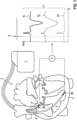
- FIG. 1 shows an implantable pulse generator 1 as example for a device for stimulating the human heart.
- This implantable pulse generator 1 comprises a His electrode 2 and a right ventricular electrode 3.
- the His electrode 2 is implanted such to contact a His bundle 4 of a human heart 5, wherein the right ventricular electrode 3 is implanted such to contact the myocardium within a right ventricle 6 of the same heart 5.
- IEGM intracardiac electrogram
- FIG. 1 During operation of the implantable pulse generator 1, and intracardiac electrogram (IEGM) between the His electrode 2 and the right ventricular electrode 3 is measured.
- IEGM intracardiac electrogram
- FIG. 1 On the righthand side of Figure 1 , exemplary IEGMs 7 are depicted.
- IEGMs 7 Upon a stimulation pulse 8 with the His electrode 2, different types of IEGMs 7 can be detected. This depends on the exact positioning of the His electrode 2.
- a selective capture of the His bundle 4 a elective capture IEGM 71 can be recorded.
- a non-selective capture IEGM 72 In case of a non-selective capture of the His bundle 4, a non-selective capture IEGM 72 can be recorded.
- a no-capture IEGM 73 can be detected.
- the different IEGMs 7 recorded between the His electrode 2 and the right ventricular electrode 3, or, to be more precise between a His electrode pole 20 serving as first electrode pole and a right ventricular electrode pole 30 serving as further electrode pole serve in assisting capture classification of the His bundle electrode 2.
- the information obtained by the IEGMs 7 recorded between the His electrode pole 20 and the right ventricular electrode pole 30 represents more exact and more reliable data than data obtained by relying only on a single electrode.
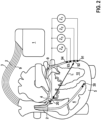
- FIG 2 shows another embodiment of an implantable pulse generator 1, wherein similar elements are denoted with the same numeral references as in Figure 1 .
- the implantable pulse generator 1 of Figure 2 also comprises a His electrode 2 and right ventricular electrode 3, but additionally also comprises a left ventricular electrode 9.
- the His electrode 2 comprises a His electrode pole 20 being in contact with a His bundle 4 of the human heart 5.
- the right ventricular electrode 3 comprises a right ventricular electrode pole 30 contacting the myocardium within the right ventricle 6 of the same heart 5.
- the left ventricular electrode 9 comprises four electrode poles 91, 92, 93 and 94 that are in contact with myocardium at the left ventricle 10 of the same heart 5.
- first impedance Z1 between the first left ventricular electrode pole 91 and the His electrode pole 20
- second impedance Z2 between the second left ventricular electrode pole 92 and the His electrode pole 20
- third impedance Z3 between a third left ventricular electrode pole 93 and the His electrode pole 20
- fourth impedance Z4 between the fourth left ventricular electrode pole 94 and the His electrode pole 20.
Landscapes
- Health & Medical Sciences (AREA)
- Life Sciences & Earth Sciences (AREA)
- Cardiology (AREA)
- Heart & Thoracic Surgery (AREA)
- Engineering & Computer Science (AREA)
- Animal Behavior & Ethology (AREA)
- General Health & Medical Sciences (AREA)
- Biomedical Technology (AREA)
- Veterinary Medicine (AREA)
- Public Health (AREA)
- Radiology & Medical Imaging (AREA)
- Nuclear Medicine, Radiotherapy & Molecular Imaging (AREA)
- Biophysics (AREA)
- Physiology (AREA)
- Medical Informatics (AREA)
- Surgery (AREA)
- Molecular Biology (AREA)
- Physics & Mathematics (AREA)
- Pathology (AREA)
- Hematology (AREA)
- Neurology (AREA)
- Vascular Medicine (AREA)
- Hospice & Palliative Care (AREA)
- Computer Networks & Wireless Communication (AREA)
- Electrotherapy Devices (AREA)
Claims (9)
- Implantierbare medizinische Vorrichtung zur Stimulierung eines Herzens eines Menschen oder eines Tiers, umfassend: einen Prozessor, eine Speichereinheit, eine His-Elektrode (2) mit einem ersten Elektrodenpol (20), der ausgebildet ist, um an einem His-Bündel (4) eines Herzens (5) eines Menschen oder eines Tiers ein elektrisches Signal zu detektieren, mindestens eine weitere Elektrode (3, 9) mit mindestens einem weiteren Elektrodenpol (30, 91, 92, 93, 94), der ausgebildet ist, um ein elektrisches Signal in einer von dem His-Bündel (4) verschiedenen Herzregion (6, 10) desselben Herzens (5) zu detektieren,
wobei die Speichereinheit ein computerlesbares Programm umfasst, das bei seiner Ausführung an dem Prozessor den Prozessor veranlasst, die folgenden Schritte durchzuführen:Messen von elektrischen Signalen an einem His-Bündel (4) eines Herzens (5) eines Menschen oder eines Tiers mit dem ersten Elektrodenpol (20),Messen von elektrischen Signalen in einer von dem His-Bündel (4) verschiedenen Herzregion (6, 10) desselben Herzens (5) mit dem mindestens einen weiteren Elektrodenpol (30, 91, 92, 93, 94), undEvaluieren von intrakardialen Elektrogrammsignalen und/oder Impedanzsignalen, die zwischen dem ersten Elektrodenpol (20) und dem mindestens einen weiteren Elektrodenpol (30, 91, 92, 93, 94) gemessen werden, mit der Maßgabe, dass diese Evaluierung nicht nur eine Bestimmung einer Vorhof-His-Bündel-Transitionszeit umfasst,dadurch gekennzeichnet, dassdie von dem His-Bündel (4) verschiedene Herzregion eine rechte Herzkammer (6) oder eine linke Herzkammer (10) ist,und wobei das computerlesbare Programm den Prozessor veranlasst, eine Beziehung zwischen einem von der ersten Elektrode (2) erfassten Signal und einem von der mindestens einen weiteren Elektrode (3, 9) erfassten Signal zu bestimmen,und wobei die Beziehung eine zeitliche Beziehung zwischen den zwei Signalen ist oder umfasst. - Implantierbare medizinische Vorrichtung nach Anspruch 1, dadurch gekennzeichnet, dass die Beziehung eine Amplitudenbeziehung zwischen zwei Signalen ist oder umfasst.
- Implantierbare medizinische Vorrichtung nach Anspruch 1 oder 2, dadurch gekennzeichnet, dass das computerlesbare Programm den Prozessor veranlasst, einen Zustand des Herzens (5) des Menschen oder des Tiers auf Basis der evaluierten intrakardialen Elektrogrammsignale und/oder Impedanzsignale zu bestimmen.
- Implantierbare medizinischen Vorrichtung nach einem der vorangehenden Ansprüche, dadurch gekennzeichnet, dass das computerlesbare Programm den Prozessor veranlasst, auf Basis der durchgeführten Evaluierung mindestens einen Parameter zu bestimmen, der für eine Hämodynamik und/oder eine Kontraktilität des Herzens (5) repräsentativ ist.
- Implantierbare medizinischen Vorrichtung nach einem der vorangehenden Ansprüche, dadurch gekennzeichnet, dass das computerlesbare Programm den Prozessor veranlasst, auf Basis der durchgeführten Evaluierung einen Algorithmus zur Steuerung der implantierbaren medizinischen Vorrichtung (1) anzupassen.
- Implantierbare medizinische Vorrichtung nach Anspruch 5, dadurch gekennzeichnet, dass der Algorithmus ausgewählt ist aus der Gruppe bestehend aus einem Erfassungsklassifizierungsalgorithmus, einem automatischen Schwellenwerttest, einem Herzschlag-zu-Herzschlag-Erfassungen steuernden Algorithmus und einem Stimulationsalgorithmus mit geschlossenem Regelkreis, closed loop stimulation.
- Implantierbare medizinischen Vorrichtung nach einem der vorangehenden Ansprüche, dadurch gekennzeichnet, dass die mindestens eine weitere Elektrode (3, 9) eine Quadrupolelektrode (9) mit vier elektrischen Polen (91, 92, 93, 94) ist.
- Implantierbare medizinische Vorrichtung nach Anspruch 7, dadurch gekennzeichnet, dass das computerlesbare Programm den Prozessor veranlasst, während eines Herzzyklus über einer ersten Zeitperiode eine Änderung einer Impedanz zwischen jedem von den vier elektrischen Polen (91, 92, 93, 94) und dem ersten elektrischen Pol (20) zu bestimmen.
- Computerprogrammprodukt, einen computerlesbaren Code umfassend, der bei seiner Ausführung durch einen Prozessor den Prozessor veranlasst, die folgenden Schritte durchzuführen:Messen von elektrischen Signalen an einem His-Bündel (4) eines Herzens (5) eines Menschen oder eines Tiers mit einer His-Elektrode (2), die einen ersten Elektrodenpol (20) aufweist,Messen von elektrischen Signalen in einer von dem His-Bündel (4) verschiedenen Herzregion (6, 10) desselben Herzens (5) mit mindestens einer weiteren Elektrode (3, 9), die mindestens einen weiteren Elektrodenpol (30, 91, 92, 93, 94) aufweist, wobei die von dem His-Bündel (4) verschiedene Herzregion eine rechte Herzkammer (6) oder eine linke Herzkammer (10) ist,Evaluieren von intrakardialen Elektrogrammsignalen und/oder Impedanzsignalen, die zwischen dem ersten Elektrodenpol (20) und dem mindestens einen weiteren Elektrodenpol (30, 91, 92, 93, 94) gemessen werden, mit der Maßgabe, dass diese Evaluierung nicht nur eine Bestimmung einer Vorhof-His-Bündel-Transitionszeit umfasst, undBestimmen einer Beziehung zwischen einem von der ersten Elektrode (2) erfassten Signal und einem von der mindestens einen weiteren Elektrode (3, 9) erfassten Signal, wobei die Beziehung eine zeitliche Beziehung zwischen zwei Signalen ist oder umfasst.
Applications Claiming Priority (2)
| Application Number | Priority Date | Filing Date | Title |
|---|---|---|---|
| EP20175429 | 2020-05-19 | ||
| PCT/EP2021/062994 WO2021233826A1 (en) | 2020-05-19 | 2021-05-17 | Implantable medical device for stimulating a human or animal heart employing an evaluation of signals between a his electrode and a further electrode |
Publications (2)
| Publication Number | Publication Date |
|---|---|
| EP4153295A1 EP4153295A1 (de) | 2023-03-29 |
| EP4153295B1 true EP4153295B1 (de) | 2024-11-20 |
Family
ID=70779497
Family Applications (1)
| Application Number | Title | Priority Date | Filing Date |
|---|---|---|---|
| EP21726385.4A Active EP4153295B1 (de) | 2020-05-19 | 2021-05-17 | Implantierbare medizinische vorrichtung zur stimulation eines menschlichen oder tierischen herzens mit anwendung einer auswertung von signalen zwischen einer his-elektrode und einer weiteren elektrode |
Country Status (3)
| Country | Link |
|---|---|
| US (1) | US11779771B2 (de) |
| EP (1) | EP4153295B1 (de) |
| WO (1) | WO2021233826A1 (de) |
Families Citing this family (2)
| Publication number | Priority date | Publication date | Assignee | Title |
|---|---|---|---|---|
| WO2024191633A1 (en) * | 2023-03-15 | 2024-09-19 | Cardiac Pacemakers, Inc. | Unipolar impedance monitoing to diagnose lead stability |
| WO2025108643A1 (en) * | 2023-11-22 | 2025-05-30 | Biotronik Se & Co. Kg | Implantable medical device for performing a cardiac stimulation |
Family Cites Families (6)
| Publication number | Priority date | Publication date | Assignee | Title |
|---|---|---|---|---|
| US7245973B2 (en) * | 2003-12-23 | 2007-07-17 | Cardiac Pacemakers, Inc. | His bundle mapping, pacing, and injection lead |
| JP5128707B2 (ja) * | 2008-10-06 | 2013-01-23 | カーディアック ペースメイカーズ, インコーポレイテッド | 内因性伝導の追跡による動的心臓再同期療法 |
| WO2014099595A2 (en) * | 2012-12-19 | 2014-06-26 | Cardiac Pacemakers, Inc. | Method and apparatus for right ventricular resynchronization |
| US10981001B2 (en) * | 2017-07-18 | 2021-04-20 | Pacesetter, Inc. | Systems and methods for automated capture threshold testing and associated his bundle pacing |
| WO2019173003A1 (en) * | 2018-03-06 | 2019-09-12 | Cardiac Pacemakers, Inc. | Auto-threshold test for his-bundle pacing |
| US11707630B2 (en) * | 2018-10-24 | 2023-07-25 | Cardiac Pacemakers, Inc. | His-bundle or bundle branch pacing capture verification |
-
2021
- 2021-05-17 EP EP21726385.4A patent/EP4153295B1/de active Active
- 2021-05-17 WO PCT/EP2021/062994 patent/WO2021233826A1/en not_active Ceased
- 2021-05-19 US US17/324,282 patent/US11779771B2/en active Active
Also Published As
| Publication number | Publication date |
|---|---|
| US20210361953A1 (en) | 2021-11-25 |
| WO2021233826A1 (en) | 2021-11-25 |
| US11779771B2 (en) | 2023-10-10 |
| EP4153295A1 (de) | 2023-03-29 |
Similar Documents
| Publication | Publication Date | Title |
|---|---|---|
| US9168382B2 (en) | Method and apparatus for selective his bundle pacing | |
| CN106029166B (zh) | 用于检测失夺获的设备 | |
| US8437851B2 (en) | Diagnosis and therapy of bigeminy and frequent premature contractions | |
| EP2629844B1 (de) | Erfassung von schwellenmessungen zur auswahl von schrittmachervektoren | |
| US8509896B2 (en) | Biventricular cardiac stimulator | |
| US5476486A (en) | Automatic atrial pacing pulse threshold determination utilizing an external programmer and a V-sense electrode | |
| US20120191153A1 (en) | Diagnosis of lead fracture and connection problems | |
| CN105579093B (zh) | 采用机械和电再同步的反馈的结合来选择治疗参数的医疗设备系统 | |
| US20130289640A1 (en) | Heart sound-based pacing vector selection system and method | |
| EP2016976A1 (de) | System und Verfahren zur Verbesserung des CRT Ansprechens und Identifizierung potentieller Nicht-Responder auf die CRT-Therapie | |
| US9610447B2 (en) | Systems and methods for selecting pacing vectors based on site of latest activation for use with implantable cardiac rhythm management devices | |
| EP2135549B1 (de) | Nachtatmungsrate zur Herzfehlerüberwachung | |
| CN108348755B (zh) | 用于刺激部位选择的系统和方法 | |
| CN104968393A (zh) | 用于基于所感测的信号的正偏转是否在该信号的负偏转之前的判定而确定捕获的装置 | |
| US20120221069A1 (en) | Systems and Methods for Activating and Controlling Impedance-Based Detection Systems of Implantable Medical Devices | |
| EP1905480B1 (de) | Biventrikulärer Herzstimulator | |
| US8974397B2 (en) | Dislocation sensor | |
| EP4153295B1 (de) | Implantierbare medizinische vorrichtung zur stimulation eines menschlichen oder tierischen herzens mit anwendung einer auswertung von signalen zwischen einer his-elektrode und einer weiteren elektrode | |
| US9248294B2 (en) | Method and apparatus for optimization of cardiac resynchronization therapy using vectorcardiograms derived from implanted electrodes | |
| US20100114232A1 (en) | Initiation tests and guidelines for implementing cardiac therapy | |
| US9044615B2 (en) | Method and system for validating local capture in multisite pacing delivery | |
| US20140236032A1 (en) | Implantable heart monitoring device | |
| US20230191134A1 (en) | Implantable medical device with system integrity determination for expedited patient discharge | |
| US7587243B1 (en) | System and method for verifying capture and/or event sensing during manual threshold evaluations of an implantable cardiac stimulation device | |
| WO2023114063A1 (en) | Implantable medical device with system integrity determination for expedited patient discharge |
Legal Events
| Date | Code | Title | Description |
|---|---|---|---|
| STAA | Information on the status of an ep patent application or granted ep patent |
Free format text: STATUS: UNKNOWN |
|
| STAA | Information on the status of an ep patent application or granted ep patent |
Free format text: STATUS: THE INTERNATIONAL PUBLICATION HAS BEEN MADE |
|
| PUAI | Public reference made under article 153(3) epc to a published international application that has entered the european phase |
Free format text: ORIGINAL CODE: 0009012 |
|
| STAA | Information on the status of an ep patent application or granted ep patent |
Free format text: STATUS: REQUEST FOR EXAMINATION WAS MADE |
|
| 17P | Request for examination filed |
Effective date: 20221214 |
|
| AK | Designated contracting states |
Kind code of ref document: A1 Designated state(s): AL AT BE BG CH CY CZ DE DK EE ES FI FR GB GR HR HU IE IS IT LI LT LU LV MC MK MT NL NO PL PT RO RS SE SI SK SM TR |
|
| DAV | Request for validation of the european patent (deleted) | ||
| DAX | Request for extension of the european patent (deleted) | ||
| GRAP | Despatch of communication of intention to grant a patent |
Free format text: ORIGINAL CODE: EPIDOSNIGR1 |
|
| STAA | Information on the status of an ep patent application or granted ep patent |
Free format text: STATUS: GRANT OF PATENT IS INTENDED |
|
| RIC1 | Information provided on ipc code assigned before grant |
Ipc: A61B 5/00 20060101ALI20240620BHEP Ipc: A61B 5/349 20210101ALI20240620BHEP Ipc: A61B 5/024 20060101ALI20240620BHEP Ipc: A61N 1/08 20060101ALI20240620BHEP Ipc: A61N 1/05 20060101ALI20240620BHEP Ipc: A61N 1/365 20060101ALI20240620BHEP Ipc: A61N 1/362 20060101ALI20240620BHEP Ipc: A61N 1/37 20060101AFI20240620BHEP |
|
| INTG | Intention to grant announced |
Effective date: 20240715 |
|
| GRAS | Grant fee paid |
Free format text: ORIGINAL CODE: EPIDOSNIGR3 |
|
| GRAA | (expected) grant |
Free format text: ORIGINAL CODE: 0009210 |
|
| STAA | Information on the status of an ep patent application or granted ep patent |
Free format text: STATUS: THE PATENT HAS BEEN GRANTED |
|
| AK | Designated contracting states |
Kind code of ref document: B1 Designated state(s): AL AT BE BG CH CY CZ DE DK EE ES FI FR GB GR HR HU IE IS IT LI LT LU LV MC MK MT NL NO PL PT RO RS SE SI SK SM TR |
|
| REG | Reference to a national code |
Ref country code: GB Ref legal event code: FG4D |
|
| REG | Reference to a national code |
Ref country code: CH Ref legal event code: EP |
|
| REG | Reference to a national code |
Ref country code: DE Ref legal event code: R096 Ref document number: 602021022093 Country of ref document: DE |
|
| REG | Reference to a national code |
Ref country code: IE Ref legal event code: FG4D |
|
| P01 | Opt-out of the competence of the unified patent court (upc) registered |
Free format text: CASE NUMBER: APP_62607/2024 Effective date: 20241125 |
|
| REG | Reference to a national code |
Ref country code: LT Ref legal event code: MG9D |
|
| REG | Reference to a national code |
Ref country code: NL Ref legal event code: MP Effective date: 20241120 |
|
| PG25 | Lapsed in a contracting state [announced via postgrant information from national office to epo] |
Ref country code: HR Free format text: LAPSE BECAUSE OF FAILURE TO SUBMIT A TRANSLATION OF THE DESCRIPTION OR TO PAY THE FEE WITHIN THE PRESCRIBED TIME-LIMIT Effective date: 20241120 Ref country code: IS Free format text: LAPSE BECAUSE OF FAILURE TO SUBMIT A TRANSLATION OF THE DESCRIPTION OR TO PAY THE FEE WITHIN THE PRESCRIBED TIME-LIMIT Effective date: 20250320 Ref country code: PT Free format text: LAPSE BECAUSE OF FAILURE TO SUBMIT A TRANSLATION OF THE DESCRIPTION OR TO PAY THE FEE WITHIN THE PRESCRIBED TIME-LIMIT Effective date: 20250320 |
|
| PG25 | Lapsed in a contracting state [announced via postgrant information from national office to epo] |
Ref country code: FI Free format text: LAPSE BECAUSE OF FAILURE TO SUBMIT A TRANSLATION OF THE DESCRIPTION OR TO PAY THE FEE WITHIN THE PRESCRIBED TIME-LIMIT Effective date: 20241120 Ref country code: NL Free format text: LAPSE BECAUSE OF FAILURE TO SUBMIT A TRANSLATION OF THE DESCRIPTION OR TO PAY THE FEE WITHIN THE PRESCRIBED TIME-LIMIT Effective date: 20241120 |
|
| REG | Reference to a national code |
Ref country code: AT Ref legal event code: MK05 Ref document number: 1743046 Country of ref document: AT Kind code of ref document: T Effective date: 20241120 |
|
| PG25 | Lapsed in a contracting state [announced via postgrant information from national office to epo] |
Ref country code: BG Free format text: LAPSE BECAUSE OF FAILURE TO SUBMIT A TRANSLATION OF THE DESCRIPTION OR TO PAY THE FEE WITHIN THE PRESCRIBED TIME-LIMIT Effective date: 20241120 |
|
| PG25 | Lapsed in a contracting state [announced via postgrant information from national office to epo] |
Ref country code: ES Free format text: LAPSE BECAUSE OF FAILURE TO SUBMIT A TRANSLATION OF THE DESCRIPTION OR TO PAY THE FEE WITHIN THE PRESCRIBED TIME-LIMIT Effective date: 20241120 |
|
| PG25 | Lapsed in a contracting state [announced via postgrant information from national office to epo] |
Ref country code: NO Free format text: LAPSE BECAUSE OF FAILURE TO SUBMIT A TRANSLATION OF THE DESCRIPTION OR TO PAY THE FEE WITHIN THE PRESCRIBED TIME-LIMIT Effective date: 20250220 |
|
| PG25 | Lapsed in a contracting state [announced via postgrant information from national office to epo] |
Ref country code: GR Free format text: LAPSE BECAUSE OF FAILURE TO SUBMIT A TRANSLATION OF THE DESCRIPTION OR TO PAY THE FEE WITHIN THE PRESCRIBED TIME-LIMIT Effective date: 20250221 Ref country code: LV Free format text: LAPSE BECAUSE OF FAILURE TO SUBMIT A TRANSLATION OF THE DESCRIPTION OR TO PAY THE FEE WITHIN THE PRESCRIBED TIME-LIMIT Effective date: 20241120 Ref country code: AT Free format text: LAPSE BECAUSE OF FAILURE TO SUBMIT A TRANSLATION OF THE DESCRIPTION OR TO PAY THE FEE WITHIN THE PRESCRIBED TIME-LIMIT Effective date: 20241120 |
|
| PG25 | Lapsed in a contracting state [announced via postgrant information from national office to epo] |
Ref country code: PL Free format text: LAPSE BECAUSE OF FAILURE TO SUBMIT A TRANSLATION OF THE DESCRIPTION OR TO PAY THE FEE WITHIN THE PRESCRIBED TIME-LIMIT Effective date: 20241120 |
|
| PG25 | Lapsed in a contracting state [announced via postgrant information from national office to epo] |
Ref country code: RS Free format text: LAPSE BECAUSE OF FAILURE TO SUBMIT A TRANSLATION OF THE DESCRIPTION OR TO PAY THE FEE WITHIN THE PRESCRIBED TIME-LIMIT Effective date: 20250220 |
|
| PG25 | Lapsed in a contracting state [announced via postgrant information from national office to epo] |
Ref country code: SM Free format text: LAPSE BECAUSE OF FAILURE TO SUBMIT A TRANSLATION OF THE DESCRIPTION OR TO PAY THE FEE WITHIN THE PRESCRIBED TIME-LIMIT Effective date: 20241120 |
|
| PGFP | Annual fee paid to national office [announced via postgrant information from national office to epo] |
Ref country code: DE Payment date: 20250519 Year of fee payment: 5 |
|
| PG25 | Lapsed in a contracting state [announced via postgrant information from national office to epo] |
Ref country code: DK Free format text: LAPSE BECAUSE OF FAILURE TO SUBMIT A TRANSLATION OF THE DESCRIPTION OR TO PAY THE FEE WITHIN THE PRESCRIBED TIME-LIMIT Effective date: 20241120 |
|
| PG25 | Lapsed in a contracting state [announced via postgrant information from national office to epo] |
Ref country code: EE Free format text: LAPSE BECAUSE OF FAILURE TO SUBMIT A TRANSLATION OF THE DESCRIPTION OR TO PAY THE FEE WITHIN THE PRESCRIBED TIME-LIMIT Effective date: 20241120 |
|
| PGFP | Annual fee paid to national office [announced via postgrant information from national office to epo] |
Ref country code: CH Payment date: 20250601 Year of fee payment: 5 |
|
| PG25 | Lapsed in a contracting state [announced via postgrant information from national office to epo] |
Ref country code: RO Free format text: LAPSE BECAUSE OF FAILURE TO SUBMIT A TRANSLATION OF THE DESCRIPTION OR TO PAY THE FEE WITHIN THE PRESCRIBED TIME-LIMIT Effective date: 20241120 |
|
| PG25 | Lapsed in a contracting state [announced via postgrant information from national office to epo] |
Ref country code: SK Free format text: LAPSE BECAUSE OF FAILURE TO SUBMIT A TRANSLATION OF THE DESCRIPTION OR TO PAY THE FEE WITHIN THE PRESCRIBED TIME-LIMIT Effective date: 20241120 |
|
| PG25 | Lapsed in a contracting state [announced via postgrant information from national office to epo] |
Ref country code: CZ Free format text: LAPSE BECAUSE OF FAILURE TO SUBMIT A TRANSLATION OF THE DESCRIPTION OR TO PAY THE FEE WITHIN THE PRESCRIBED TIME-LIMIT Effective date: 20241120 |
|
| PG25 | Lapsed in a contracting state [announced via postgrant information from national office to epo] |
Ref country code: IT Free format text: LAPSE BECAUSE OF FAILURE TO SUBMIT A TRANSLATION OF THE DESCRIPTION OR TO PAY THE FEE WITHIN THE PRESCRIBED TIME-LIMIT Effective date: 20241120 |
|
| PGFP | Annual fee paid to national office [announced via postgrant information from national office to epo] |
Ref country code: IE Payment date: 20250522 Year of fee payment: 5 |
|
| REG | Reference to a national code |
Ref country code: DE Ref legal event code: R097 Ref document number: 602021022093 Country of ref document: DE |
|
| PG25 | Lapsed in a contracting state [announced via postgrant information from national office to epo] |
Ref country code: SE Free format text: LAPSE BECAUSE OF FAILURE TO SUBMIT A TRANSLATION OF THE DESCRIPTION OR TO PAY THE FEE WITHIN THE PRESCRIBED TIME-LIMIT Effective date: 20241120 |
|
| PLBE | No opposition filed within time limit |
Free format text: ORIGINAL CODE: 0009261 |
|
| STAA | Information on the status of an ep patent application or granted ep patent |
Free format text: STATUS: NO OPPOSITION FILED WITHIN TIME LIMIT |
|
| 26N | No opposition filed |
Effective date: 20250821 |
|
| PG25 | Lapsed in a contracting state [announced via postgrant information from national office to epo] |
Ref country code: LU Free format text: LAPSE BECAUSE OF NON-PAYMENT OF DUE FEES Effective date: 20250517 |
|
| GBPC | Gb: european patent ceased through non-payment of renewal fee |
Effective date: 20250517 |
|
| REG | Reference to a national code |
Ref country code: BE Ref legal event code: MM Effective date: 20250531 |
|
| PG25 | Lapsed in a contracting state [announced via postgrant information from national office to epo] |
Ref country code: MC Free format text: LAPSE BECAUSE OF FAILURE TO SUBMIT A TRANSLATION OF THE DESCRIPTION OR TO PAY THE FEE WITHIN THE PRESCRIBED TIME-LIMIT Effective date: 20241120 |
|
| PG25 | Lapsed in a contracting state [announced via postgrant information from national office to epo] |
Ref country code: GB Free format text: LAPSE BECAUSE OF NON-PAYMENT OF DUE FEES Effective date: 20250517 |
|
| PG25 | Lapsed in a contracting state [announced via postgrant information from national office to epo] |
Ref country code: BE Free format text: LAPSE BECAUSE OF NON-PAYMENT OF DUE FEES Effective date: 20250531 |
|
| PG25 | Lapsed in a contracting state [announced via postgrant information from national office to epo] |
Ref country code: FR Free format text: LAPSE BECAUSE OF NON-PAYMENT OF DUE FEES Effective date: 20250531 |