EP4155286A1 - Verfahren zur herstellung von isopropylalkohol - Google Patents
Verfahren zur herstellung von isopropylalkohol Download PDFInfo
- Publication number
- EP4155286A1 EP4155286A1 EP22799068.6A EP22799068A EP4155286A1 EP 4155286 A1 EP4155286 A1 EP 4155286A1 EP 22799068 A EP22799068 A EP 22799068A EP 4155286 A1 EP4155286 A1 EP 4155286A1
- Authority
- EP
- European Patent Office
- Prior art keywords
- discharge stream
- isopropyl alcohol
- stripper
- supplied
- stream
- Prior art date
- Legal status (The legal status is an assumption and is not a legal conclusion. Google has not performed a legal analysis and makes no representation as to the accuracy of the status listed.)
- Pending
Links
Images
Classifications
-
- C—CHEMISTRY; METALLURGY
- C07—ORGANIC CHEMISTRY
- C07C—ACYCLIC OR CARBOCYCLIC COMPOUNDS
- C07C29/00—Preparation of compounds having hydroxy or O-metal groups bound to a carbon atom not belonging to a six-membered aromatic ring
- C07C29/03—Preparation of compounds having hydroxy or O-metal groups bound to a carbon atom not belonging to a six-membered aromatic ring by addition of hydroxy groups to unsaturated carbon-to-carbon bonds, e.g. with the aid of H2O2
- C07C29/04—Preparation of compounds having hydroxy or O-metal groups bound to a carbon atom not belonging to a six-membered aromatic ring by addition of hydroxy groups to unsaturated carbon-to-carbon bonds, e.g. with the aid of H2O2 by hydration of carbon-to-carbon double bonds
-
- C—CHEMISTRY; METALLURGY
- C07—ORGANIC CHEMISTRY
- C07C—ACYCLIC OR CARBOCYCLIC COMPOUNDS
- C07C31/00—Saturated compounds having hydroxy or O-metal groups bound to acyclic carbon atoms
- C07C31/02—Monohydroxylic acyclic alcohols
- C07C31/10—Monohydroxylic acyclic alcohols containing three carbon atoms
-
- C—CHEMISTRY; METALLURGY
- C07—ORGANIC CHEMISTRY
- C07C—ACYCLIC OR CARBOCYCLIC COMPOUNDS
- C07C29/00—Preparation of compounds having hydroxy or O-metal groups bound to a carbon atom not belonging to a six-membered aromatic ring
- C07C29/74—Separation; Purification; Use of additives, e.g. for stabilisation
- C07C29/76—Separation; Purification; Use of additives, e.g. for stabilisation by physical treatment
-
- C—CHEMISTRY; METALLURGY
- C07—ORGANIC CHEMISTRY
- C07C—ACYCLIC OR CARBOCYCLIC COMPOUNDS
- C07C29/00—Preparation of compounds having hydroxy or O-metal groups bound to a carbon atom not belonging to a six-membered aromatic ring
- C07C29/74—Separation; Purification; Use of additives, e.g. for stabilisation
- C07C29/76—Separation; Purification; Use of additives, e.g. for stabilisation by physical treatment
- C07C29/78—Separation; Purification; Use of additives, e.g. for stabilisation by physical treatment by condensation or crystallisation
-
- C—CHEMISTRY; METALLURGY
- C07—ORGANIC CHEMISTRY
- C07C—ACYCLIC OR CARBOCYCLIC COMPOUNDS
- C07C29/00—Preparation of compounds having hydroxy or O-metal groups bound to a carbon atom not belonging to a six-membered aromatic ring
- C07C29/74—Separation; Purification; Use of additives, e.g. for stabilisation
- C07C29/76—Separation; Purification; Use of additives, e.g. for stabilisation by physical treatment
- C07C29/80—Separation; Purification; Use of additives, e.g. for stabilisation by physical treatment by distillation
Definitions
- the present invention relates to a method of preparing isopropyl alcohol, and more particularly, to a method of reducing the number of devices in separating isopropyl alcohol in a high purity from a reaction product of an isopropyl alcohol preparation process and effectively recovering an unreacted product, thereby reducing costs of devices and energy.
- Isopropyl alcohol is used for various purposes including uses as a cleaning agent or the like, in the electronic industry such as the manufacture of a semiconductor or a liquid crystal display (LCD).
- propylene and water are used as raw material components.
- the propylene and water react to produce isopropyl alcohol.
- the reaction product of the isopropyl alcohol preparation process includes isopropyl alcohol, an unreacted propylene monomer, and unreacted water.
- isopropyl alcohol is separated and recovered, and the unreacted propylene monomer is recovered and reused in the isopropyl alcohol preparation process.
- an absorption column is used for separating the isopropyl alcohol and the unreacted propylene monomer from the reaction product of the isopropyl alcohol preparation process.
- the isopropyl alcohol preparation process is performed by a gaseous reaction, in which the gaseous reaction product produced here is supplied to a lower stage of an absorption column, isopropyl alcohol in the reaction product is dissolved using water as a solvent and separated into a lower stage of the absorption column, and a stream including the propylene monomer is separated into an upper portion.
- the separation efficiency of the absorption column is low and about 1 wt% to 5 wt% of the propylene monomer outflows into a lower portion of the absorption column, and thus, since a flash drum, a distillation column, and the like are further required for recovering the monomer, the process becomes complicated and investment costs and equipment maintenance costs are increased.
- 25 wt% or more of water relative to the flow rate of the reaction product supplied to the absorption column is needed, much energy is used in separating water and isopropyl alcohol and recovering water in the latter stage of the absorption column.
- inert gas present in the propylene monomer supplied to a reactor is not removed and is accumulated in the process, and thus, a high-purity propylene monomer should be used.
- an object of the present invention is to provide a method of reducing costs of devices and energy by reducing the number of devices used for effectively separating isopropyl alcohol and a propylene monomer from a reaction product of an isopropyl alcohol preparation process.
- the present invention may provide a method of producing a reaction product in a reaction unit and separating the reaction product into a gaseous first discharge stream and a liquid second discharge stream and supplying each of them to a stripper, thereby preventing outflow of a propylene monomer into a lower portion of a stripper and easily recovering a propylene monomer recovered in an upper portion to a reactor in the reaction unit.
- a method of preparing isopropyl alcohol includes: supplying a feed stream including a propylene monomer and water to a reaction unit and performing a reaction to produce a reaction product including isopropyl alcohol, the propylene monomer, and the water; supplying a first discharge stream including a gaseous reaction product and a second discharge stream including a liquid reaction product which are discharged from the reaction unit to a stripper, respectively; and in the stripper, circulating an upper discharge stream including the propylene monomer to the reaction unit and supplying a lower discharge stream including water and isopropyl alcohol to an isopropyl alcohol purification unit, wherein the first discharge stream is condensed by a first heat exchanger and supplied as a liquid phase to the stripper.
- a reaction product in an isopropyl alcohol preparation process is separated into a gaseous first discharge stream and a liquid second discharge stream which are supplied to a stripper, respectively, thereby increasing separation efficiency in the stripper.
- the content of isopropyl alcohol in the upper discharge stream from the stripper which is circulated to a reactor is minimized to promote a forward reaction of an equilibrium reaction, thereby increasing the production of isopropyl alcohol.
- the term "stream" in the present invention may refer to a fluid flow in a process, or may refer to a fluid itself flowing in a pipe. Specifically, the stream may refer to both a fluid itself flowing in a pipe connecting each device and a fluid flow.
- the fluid may refer to a gas or a liquid.
- a case in which a solid component is included in the fluid is not excluded.
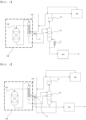
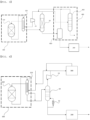
- FIGS. 1 and 2 for better understanding of the present invention.
- the isopropyl alcohol may be produced by a reaction of a propylene monomer and water in a vapor phase. Specifically, a feed stream including a propylene monomer and water is supplied to a reaction unit 100, and a reaction product produced in the reaction unit 100 may include isopropyl alcohol, an unreacted propylene monomer, and unreacted water.
- the isopropyl alcohol is separated from the reaction product and recovered, and the unreacted propylene monomer is recovered and reused in the isopropyl alcohol preparation process.
- an absorption column is used for separating the isopropyl alcohol and the unreacted propylene monomer from the reaction product.
- the isopropyl alcohol preparation process is performed by a gaseous reaction, in which the reaction product produced here is supplied to a lower stage of the absorption column, isopropyl alcohol in the reaction product is dissolved using a solvent and separated into a lower portion of the absorption column, and a stream including the propylene monomer is separated into an upper portion.
- the separation efficiency of the absorption column is low and about 1 wt% to 5 wt% of the propylene monomer outflows into a lower portion of the absorption column, and thus, since a flash drum, a distillation column, and the like are further required for recovering the monomer, the process becomes complicated and investment costs and equipment maintenance costs are increased.
- 25 wt% or more of the solvent relative to the flow rate of the reaction product supplied to the absorption column is needed, much energy is used in separating water and isopropyl alcohol and recovering water in the latter stage of the absorption column.
- inert gas present in the propylene monomer supplied to the reactor is not removed and accumulated in the process, and thus, a high-purity propylene monomer should be used.
- a method of preparing isopropyl alcohol including: supplying a feed stream including a propylene monomer and water to a reaction unit 100 and performing a reaction to produce a reaction product including isopropyl alcohol, the propylene monomer, and the water; supplying a first discharge stream including a gaseous reaction product and a second discharge stream including a liquid reaction product which are discharged from the reaction unit 100 to a stripper 10, respectively; and in the stripper 10, circulating an upper discharge stream including the propylene monomer to the reaction unit 100 and supplying a lower discharge stream including water and isopropyl alcohol to an isopropyl alcohol purification unit 200, wherein the first discharge stream is condensed by a first heat exchanger 11 and supplied as a liquid phase to the stripper 10, may be provided.
- a mole ratio of water to the propylene monomer included in the feed stream supplied to the reaction unit 100 may be 0.3 to 0.5, 0.35 to 0.5, or 0.35 to 0.45.
- a forward reaction of an equilibrium reaction is promoted and progression of a reverse reaction is prevented to increase the production of isopropyl alcohol.
- the reaction unit 100 may include a reactor 110 and one or more heat exchangers. Specifically, the feed stream including the propylene monomer and water may be supplied to the reactor 110 of the reaction unit 100, and may react in a gaseous phase in the reactor 110 to produce a reaction product.
- An operation pressure of the reactor 110 may be, for example, 30 kg/cm 2 ⁇ g to 50 kg/cm 2 ⁇ g, 35 kg/cm 2 ⁇ g to 50 kg/cm 2 ⁇ g, or 35 kg/cm 2 ⁇ g to 45 kg/cm 2 ⁇ g.
- isopropyl alcohol may be produced by a gaseous reaction using the propylene monomer and water.
- a gaseous reaction product By reacting the propylene monomer and water in a gaseous phase in the reactor 110, a gaseous reaction product may be discharged from the reactor 110.
- the temperature of the gaseous reaction product discharged from the reactor 110 may be, for example, 200°C to 220°C, 205°C to 220°C, or 205°C to 215°C.
- the gaseous reaction product discharged from the reactor 110 passes through one or more heat exchangers, and a part of the product is condensed into a liquid reaction product and a remaining product may be present as the gaseous reaction product.
- the gaseous reaction product discharged from the reactor 110 passes through a second heat exchange 120, and may be separated into a first discharge stream including a gaseous reaction product and a second discharge stream including a liquid reaction product.
- the first discharge stream and the second discharge stream may be separated and discharged by a separate pipe formed in the second heat exchanger 120, or may be separated by a gas-liquid separation device installed in the latter stage of the second heat exchanger 120.
- the gaseous reaction product discharged from the reactor 110 may exchange heat with a feed stream supplied to the reactor 110 in one or more heat exchangers.
- the gaseous reaction product discharged from the reactor 110 may be partly condensed while passing through one or more heat exchangers, and the feed stream may be heated while passing through the one or more heat exchangers before being supplied to the reactor 110.
- the temperature of the feed stream before passing through the one or more heat exchangers may be, for example, 90°C to 130°C, 100°C to 120°C, or 105°C to 115°C.
- the temperature of the feed stream which has passed through the one or more heat exchangers may be, for example, 170°C to 210°C, 180°C to 200°C, or 185°C to 195°C.
- the temperature of the first discharge stream and the second discharge stream which have passed through the one or more heat exchangers may be, for example, 105°C to 150°C, 110°C to 140°C, or 115°C to 140°C.
- the first discharge stream may include 85 wt% to 95 wt% of the propylene monomer, 4 wt% to 8 wt% of isopropyl alcohol, and 1 wt% to 5 wt% of water.
- the first discharge stream includes a very high content of the propylene monomer and very low contents of isopropyl alcohol and water.
- the second discharge stream may include 1 wt% to 10 wt% of the propylene monomer, 5 wt% to 15 wt% of isopropyl alcohol, and 80 wt% to 90 wt% of water.
- the second discharge stream includes a very low content of the propylene monomer and very high contents of water.
- the content of isopropyl alcohol included in the second discharge stream may be higher than the content of isopropyl alcohol included in the first discharge stream.
- a ratio of the flow rate of the first discharge stream to the flow rate of the second discharge stream, discharged from the reaction unit 100 may be 5 to 11, 6 to 10, or 7 to 9.
- the gaseous reaction product stream discharged from the reactor 110 is cooled to a temperature of 105 to 150°C, thereby controlling the ratio of the flow rate of the first discharge stream to the flow rate of the second discharge stream to 5 to 11.
- the "flow rate” may refer to a flow of a weight per unit hour.
- the unit of the flow rate may be ton/hr.
- the first discharge stream and the second discharge stream may be supplied to the stripper 10 as respective streams, and separated.
- an upper discharge stream including the propylene monomer and a lower discharge stream including water and isopropyl alcohol from the stripper 10 may be separated.
- the first discharge stream including a gaseous reaction product may be condensed by the first heat exchanger 11 and supplied to the stripper 10 as a liquid phase.
- a separate refrigerant is used or heat exchange with a stream in the process is performed, thereby condensing the first discharge stream.
- a cooler may be further used in addition to the first heat exchanger 11. In this case, when the first discharge stream is firstly condensed by the first heat exchanger 11 and secondarily cooled in the cooler, the refrigerant used in the cooler may be replaced with low-priced coolant, and the amount of coolant used may be minimized.
- the supply stages of the first discharge stream and the second discharge stream supplied to the stripper 10 are controlled, thereby increasing the separation efficiency of the isopropyl alcohol and the propylene monomer.
- the first discharge stream may be supplied to an upper side of the stripper 10.
- the first discharge stream is condensed by the first heat exchanger 11, and the condensed first discharge stream may be supplied to a first stage of the stripper 10.
- the second discharge stream may be supplied to a side of the stripper 10 lower than the side to which the first discharge stream is supplied.
- the second discharge stream may be supplied to a stage at 10% to 50% or 15% to 35% of the theoretical number of stages of the stripper 10.
- the top stage may be a first stage and a bottom stage may be a 100th stage, and the stage at 3% to 10% of the theoretical number of stages of the stripper 10 may be a third stage to a 10th stage of the stripper 10.
- the second discharge stream may have a lower content of the propylene monomer and higher contents of isopropyl alcohol and water than the first discharge stream
- the second discharge stream is supplied to the stages in the above range of the stripper 10, thereby reducing the operation cost of a reboiler 12 installed in the lower portion of the stripper 10, and securing a rectifying unit in the stripper 10 to increase the separation efficiency of isopropyl alcohol and water.
- the operation pressure of the stripper 10 may be 0 kg/cm 2 ⁇ g to 5 kg/cm 2 ⁇ g, 1 kg/cm 2 ⁇ g to 4 kg/cm 2 ⁇ g, or 1 kg/cm 2 ⁇ g to 3 kg/cm 2 ⁇ g.
- the propylene monomer may be separated in a high purity from the upper discharge stream.
- the upper discharge stream from the stripper 10 may be circulated to the reactor 110 of the reaction unit 100 without further purification. More specifically, by minimizing the content of isopropyl alcohol in the upper discharge stream from the stripper 10, when isopropyl alcohol is circulated to the reactor 110, a problem of promoting a reverse reaction of an equilibrium reaction to decrease the production of isopropyl alcohol may be solved.
- a part branched from the upper discharge stream from the stripper 10 is supplied to an inert gas removal unit 300, and after removing an inert gas component in the inert gas removal unit 300, the stream may be circulated to the reaction unit 100.
- a part of inert gas may be included in the propylene monomer introduced as a reactant.
- the inert gas may include, for example, one or more selected from the group consisting of hydrocarbons having 2 or 3 carbon atoms, and as a specific example, the inert gas may include one or more selected from the group consisting of ethane and propane.
- the inert gas removal unit 300 when a part branched from the upper discharge stream from the stripper 10 is supplied to the inert gas removal unit 300 to remove inert gas and then circulated to the reaction unit 100, the inert gas is not accumulated in the process, so that the productivity of isopropyl alcohol may be improved without using a high-purity propylene monomer.
- the upper discharge stream from the stripper 10 may exchange heat with the gaseous reaction product stream discharged from the reactor 110 while passing through one or more heat exchangers of the reaction unit 100, and then may be supplied to the reactor 110.
- the temperature of the upper discharge stream from the stripper 10 may be, for example, -10°C to 30°C, 5°C to 30°C, or 10°C to 20°C.
- the upper discharge stream from the stripper 10 may be mixed with the feed stream and pass through one or more heat exchangers of the reaction unit 100.
- the lower discharge stream from the stripper 10 may be a stream including isopropyl alcohol and water but no propylene monomer.
- the temperature of the lower discharge stream from the stripper 10 may be, for example, 40°C to 110°C, 60°C to 110°C, or 80°C to 90°C.
- a part of the lower discharge stream from the stripper 10 at a low temperature may be supplied to a reboiler 12, heated in the reboiler 12, and then refluxed to the stripper 10.
- the rest of the lower discharge stream from the stripper 10 which is not supplied to the reboiler 12 may be supplied to the isopropyl alcohol purification unit 200.
- the part of the lower discharge stream from the stripper 10 at a low temperature may be supplied to the first heat exchanger 11 and the residual stream may be supplied to the isopropyl alcohol purification unit 200.
- the part of the lower discharge stream from the stripper 10 which has exchanged heat with the first discharge stream in the first heat exchanger 11 may be heated using condensed heat of the first discharge stream, and a heated part of the lower discharge stream from the stripper 10 may be refluxed to the stripper 10.
- the rest of the lower discharge stream from the stripper 10 which is not supplied to the first heat exchanger 11 is supplied to the isopropyl alcohol purification unit 200 to separate high-purity isopropyl alcohol from which water has been removed.
- water separated in the isopropyl alcohol purification unit 200 may be supplied to the reactor 110 and reused, and in this case, impurities such as a propylene monomer or isopropyl alcohol are not included, and thus, it may be easy to control a mole ratio of water to the propylene monomer in preparing isopropyl alcohol in the reactor 110.
- the reaction product is supplied to a lower stage of the absorption column, isopropyl alcohol in the reaction product is dissolved using water as a solvent and separated from the lower portion of the absorption column 20, and a stream including the propylene monomer is separated from the upper portion.
- separation efficiency in the absorption column 20 is low, so that the propylene monomer outflows into the lower discharge stream from the absorption column 20, and thus, in order to recover it, a gas purification unit 400 requiring a plurality of devices is needed.
- the gas purification unit 400 further requires a flash drum 410, a distillation column 420, and the like for recovering an unreacted propylene monomer, which causes the process to be complicated and investment costs, equipment maintenance costs, and energy costs to increase.
- devices such as a distillation column, a condenser, a reboiler, a valve, a pump, a separator, and a mixer may be further installed and used.
- a reaction product including isopropyl alcohol (IPA) was prepared, and isopropyl alcohol was separated from the reaction product.
- IPA isopropyl alcohol
- a feed stream was supplied at a flow rate of 10 ton/hr to a reactor 110 operating at a pressure of 40 kg/cm 2 ⁇ g, and in the feed stream, a mole ratio of water (H 2 O) to a propylene monomer (PP) in the feed stream was controlled to 0.4 and ethane and propane were included as inert gas.
- the feed stream passed through a second heat exchanger 120 and then was supplied to a reactor 110.
- the gaseous reaction product stream discharged from the reactor 110 was separated into a first discharge stream and a second discharge stream while passing through a second heat exchanger 120 and discharged, and the first discharge stream was condensed in a first heat exchanger 11 and then supplied to a first stage of a stripper 10.
- the second discharge stream was supplied to a fifth stage of the stripper 10.
- the stripper 10 was operated at an operating pressure of 2 kg/cm 2 ⁇ g, the upper discharge stream from the stripper 10 was compressed using a compressor 13, mixed with the feed stream, and circulated to the reactor 110, and a part branched from the upper discharge stream from the stripper 10 was supplied to an inert gas removal unit 300 to remove ethane and propane, and then circulated to the reactor 110.
- a part of the lower discharge stream from the stripper 10 was supplied to a reboiler 12 and then refluxed, and a residual stream was supplied to an isopropyl alcohol purification unit 200 to obtain isopropyl alcohol from which water was removed.
- the total number of stages of the stripper 10 was 19.
- the flow rate, the temperature, and the components of the first discharge stream and the second discharge stream and the supply stages of the stripper 10 are shown in the following Table 1.
- the flow rate, the temperature, and the components of the upper discharge stream and the lower discharge stream from the stripper 10 and the amount of steam used for heating the lower discharge stream from the stripper 10 are shown in the following Table 2.
- a reaction product including isopropyl alcohol (IPA) was prepared, and isopropyl alcohol was separated from the reaction product.
- IPA isopropyl alcohol
- a feed stream was supplied at a flow rate of 10 ton/hr to the reactor 110 operated at a pressure of 40 kg/cm 2 ⁇ g, and the mole ratio of water to the propylene monomer in the feed stream was controlled to 0.4.
- the feed stream passed through a second heat exchanger 120 and then was supplied to a reactor 110.
- the gaseous reaction product stream discharged from the reactor 110 was separated into a first discharge stream and a second discharge stream while passing through a second heat exchanger 120 and discharged, and the first discharge stream was supplied to the first heat exchanger 11, condensed by heat exchange with a part of the lower discharge stream from the stripper 10, and supplied to the first stage of the stripper 10.
- the second discharge stream was supplied to a fifth stage of the stripper 10.
- a separate condenser was installed to further condense an uncondensed first discharge stream using a coolant.
- the stripper 10 was operated at an operating pressure of 2 kg/cm 2 ⁇ g, the upper discharge stream from the stripper 10 was compressed to the pressure of the reactor 110 using a compressor 13, mixed with the feed stream, and circulated to the reactor 110, and a part branched from the upper discharge stream from the stripper 10 was supplied to an inert gas removal unit 300 to remove ethane and propane, and then circulated to the reactor 110.
- a part of the lower discharge stream from the stripper 10 was supplied to the first heat exchanger 11 and then refluxed, and a residual stream was supplied to an isopropyl alcohol purification unit 200 to obtain isopropyl alcohol from which water was removed.
- the total number of stages of the stripper 10 was 19.
- the flow rate, the temperature, and the components of the first discharge stream and the second discharge stream and the supply stages of the stripper 10 are shown in the following Table 1.
- the flow rate, the temperature, and the components of the upper discharge stream and the lower discharge stream from the stripper 10 and the amount of steam used for heating the lower discharge stream from the stripper 10 are shown in the following Table 2.
- Isopropyl alcohol was prepared in the same manner as in Example 2, except that the temperatures of the first discharge stream and the second discharge stream were controlled to 110°C.
- the flow rate, the temperature, and the components of the first discharge stream and the second discharge stream and the supply stages of the stripper 10 are shown in the following Table 1.
- the flow rate, the temperature, and the components of the upper discharge stream and the lower discharge stream from the stripper 10 and the amount of steam used for heating the lower discharge stream from the stripper 10 are shown in the following Table 2.
- Isopropyl alcohol was prepared in the same manner as in Example 2, except that the supply stage of the second discharge stream was adjusted to a 3rd stage.
- the flow rate, the temperature, and the components of the first discharge stream and the second discharge stream and the supply stages of the stripper 10 are shown in the following Table 1.
- the flow rate, the temperature, and the components of the upper discharge stream and the lower discharge stream from the stripper 10 and the amount of steam used for heating the lower discharge stream from the stripper 10 are shown in the following Table 2.
- Isopropyl alcohol was prepared in the same manner as in Example 2, except that the supply stage of the second discharge stream was adjusted to a 10th stage.
- the flow rate, the temperature, and the components of the first discharge stream and the second discharge stream and the supply stages of the stripper 10 are shown in the following Table 1.
- the flow rate, the temperature, and the components of the upper discharge stream and the lower discharge stream from the stripper 10 and the amount of steam used for heating the lower discharge stream from the stripper 10 are shown in the following Table 2.
- a reaction product including isopropyl alcohol (IPA) was prepared, and isopropyl alcohol was separated from the reaction product.
- IPA isopropyl alcohol
- a feed stream was supplied at a flow rate of 10 ton/hr to the reactor 110 operated at a pressure of 40 kg/cm 2 ⁇ g, and the mole ratio of water to the propylene monomer in the feed stream was controlled to 0.4.
- the feed stream passed through a second heat exchanger 120 and then was supplied to a reactor 110.
- the reaction product stream discharged from the reactor 110 was condensed while passing through the second heat exchanger 120, and then was supplied to the 20th stage of an absorption column 20. At this time, the total number of stages of the absorption column 20 was 20.
- Isopropyl alcohol in the reaction product stream was absorbed using water supplied to an upper stage of the absorption column 20, thereby performing separation into an upper discharge stream including a propylene monomer and a lower discharge stream including water and isopropyl alcohol.
- the upper discharge stream from the absorption column 20 was circulated to the reactor 110 using a compressor 23, and a part branched from the upper discharge stream from the absorption column 20 was supplied to a distillation column 420 of a gas purification unit 400 and was further separated into water with isopropyl alcohol and the propylene monomer.
- the lower discharge stream from the absorption column 20 was supplied to a flash drum 410 of the gas purification unit 400 and was further separated into water with isopropyl alcohol and the propylene monomer.
- the stream including propylene separated from the gas purification unit 400 was circulated to the reactor 110, and the stream including isopropyl alcohol and water was supplied to an isopropyl alcohol purification unit 200 to obtain isopropyl alcohol from which water was removed.
- the flow rate of the reaction product stream was 10 ton/hr
- its temperature was 124°C
- its components were 80.8 wt% of the propylene monomer (PP), 6.3 wt% of isopropyl alcohol, and 12.9 wt% of water (H 2 O).
- the flow rate, the temperature, and the components of the upper discharge stream and the lower discharge stream of the absorption column 20 are shown in the following Table 2.
- a reaction product including isopropyl alcohol (IPA) was prepared, and isopropyl alcohol was separated from the reaction product.
- IPA isopropyl alcohol
- a feed stream was supplied at a flow rate of 10 ton/hr to the reactor 110 operated at a pressure of 40 kg/cm 2 ⁇ g, and the mole ratio of water to the propylene monomer in the feed stream was controlled to 0.4.
- the feed stream passed through a second heat exchanger 120 and then was supplied to a reactor 110.
- the gaseous reaction product stream discharged from the reactor 110 was supplied to the first stage of the stripper 10 by mixing the separated first discharge stream and second discharge stream while passing through a second heat exchanger 120.
- the stripper 10 was operated at an operating pressure of 2 kg/cm 2 ⁇ g, the upper discharge stream from the stripper 10 was compressed to the pressure of the reactor 110 using a compressor 13, mixed with the feed stream, and circulated to the reactor 110, and a part branched from the upper discharge stream from the stripper 10 was supplied to an inert gas removal unit 300 to remove ethane and propane, and then circulated to the reactor 110.
- a part of the lower discharge stream from the stripper 10 was supplied to a reboiler 12 and then refluxed, and a residual stream was supplied to an isopropyl alcohol purification unit 200 to obtain isopropyl alcohol from which water was removed.
- the total number of stages of the stripper 10 was 19.
- the flow rate, the temperature, and the components of the first discharge stream and the second discharge stream and the supply stages of the stripper 10 are shown in the following Table 1.
- the flow rate, the temperature, and the components of the upper discharge stream and the lower discharge stream from the stripper 10 and the amount of steam used for heating the lower discharge stream from the stripper 10 are shown in the following Table 2.
- Example 1 Example 2
- Example 3 Example 4
- Example 5 Comparative Example 2 Flow rate of first discharge stream (ton/hr) 9 9 9 9 9 9 9 9 Flow rate of second discharge stream (ton/hr) 1 1 1 1 1 1 1
- First discharge stream PP (wt%) 91.0 91.0 92.5 91.0 91.0 91.0 IPA (wt%) 6.2 6.2 5.8 6.2 6.2 6.2 H 2 O (wt%) 2.8 2.8 1.7 2.8 2.8 2.8 2.8 2.8 2.8 2.8 2.8 1.7 2.8 2.8 2.8 2.8 Second discharge
- isopropyl alcohol was prepared in the same manner as in Example 1, except that heat was exchanged between the lower discharge stream from the stripper 10 and the first discharge stream, and it was confirmed that there was no need to use separate steam for heating the lower discharge stream from the stripper 10.
- Comparative Example 1 which is a conventional method of preparing isopropyl alcohol and in which the absorption column 20 was used instead of the stripper 10, about 4 wt% of the propylene monomer was present in the lower discharge stream from the absorption column 20 to essentially require the gas purification unit 400, and at this time, it was recognized that a flash drum, a distillation column, and the like were further needed for recovering an unreacted propylene monomer from the gas purification unit 400.
- Comparative Example 2 in which isopropyl alcohol was prepared in the same manner as in Example 1, but the first discharge stream and the second discharge stream were mixed and supplied to the first stage of the stripper 10, since the gaseous reaction product at a high temperature was supplied to the stripper 10, the amount of steam used for heating the lower discharge stream from the stripper 10 was relatively small, but since the first discharge stream was introduced in a gaseous stage to the stripper without being condensed, isopropyl alcohol and water included in the first discharge stream were discharged in a gaseous state to the upper portion of the stripper.
Landscapes
- Chemical & Material Sciences (AREA)
- Organic Chemistry (AREA)
- Crystallography & Structural Chemistry (AREA)
- Organic Low-Molecular-Weight Compounds And Preparation Thereof (AREA)
Applications Claiming Priority (2)
| Application Number | Priority Date | Filing Date | Title |
|---|---|---|---|
| KR1020210058712A KR102792304B1 (ko) | 2021-05-06 | 2021-05-06 | 이소프로필 알코올 제조방법 |
| PCT/KR2022/006219 WO2022235025A1 (ko) | 2021-05-06 | 2022-04-29 | 이소프로필 알코올 제조방법 |
Publications (2)
| Publication Number | Publication Date |
|---|---|
| EP4155286A1 true EP4155286A1 (de) | 2023-03-29 |
| EP4155286A4 EP4155286A4 (de) | 2024-03-13 |
Family
ID=83932735
Family Applications (1)
| Application Number | Title | Priority Date | Filing Date |
|---|---|---|---|
| EP22799068.6A Pending EP4155286A4 (de) | 2021-05-06 | 2022-04-29 | Verfahren zur herstellung von isopropylalkohol |
Country Status (7)
| Country | Link |
|---|---|
| US (1) | US12122740B2 (de) |
| EP (1) | EP4155286A4 (de) |
| JP (1) | JP7494442B2 (de) |
| KR (1) | KR102792304B1 (de) |
| CN (1) | CN115589781B (de) |
| CA (1) | CA3178359A1 (de) |
| WO (1) | WO2022235025A1 (de) |
Families Citing this family (1)
| Publication number | Priority date | Publication date | Assignee | Title |
|---|---|---|---|---|
| KR20250043104A (ko) * | 2023-09-21 | 2025-03-28 | 주식회사 엘지화학 | 이소프로필 알코올의 제조 방법 |
Family Cites Families (15)
| Publication number | Priority date | Publication date | Assignee | Title |
|---|---|---|---|---|
| DE2759237A1 (de) * | 1977-12-31 | 1979-07-12 | Huels Chemische Werke Ag | Verfahren zur herstellung von alkoholen mit 2 - 4 c-atomen durch katalytische hydratation von olefinen |
| US4469903A (en) * | 1983-09-21 | 1984-09-04 | Uop Inc. | Process for the production of isopropyl alcohol |
| JP2834495B2 (ja) * | 1989-10-20 | 1998-12-09 | 三井化学株式会社 | イソプロパノールの製造方法及び装置 |
| US5233060A (en) | 1992-08-13 | 1993-08-03 | The Dow Chemical Company | Ethylene recovery in direct-oxidation ethylene oxide processes |
| US5763693A (en) | 1995-02-24 | 1998-06-09 | Mitsui Chemicals, Inc. | Process for producing isopropyl alcohol |
| JP3693404B2 (ja) | 1995-02-24 | 2005-09-07 | 三井化学株式会社 | イソプロピルアルコールの製造方法 |
| TW338031B (en) | 1995-02-24 | 1998-08-11 | Mitsui Toatsu Chemicals | Process for producing isopropyl alcohol |
| EP2208719A1 (de) * | 2009-01-15 | 2010-07-21 | Sasol Solvents Germany GmbH | Verfahren zur Herstellung niederer Alkohole durch Olefinhydratisierung |
| KR101956407B1 (ko) | 2011-07-29 | 2019-03-08 | 사우디 아라비안 오일 컴퍼니 | 인터스테이지 증기 스트리핑을 갖는 수소화분해 공정 |
| EP2939995A1 (de) * | 2014-04-30 | 2015-11-04 | Sasol Solvents Germany GmbH | Verbessertes Wassermanagement zur Herstellung von Isopropylalkohol durch Gasphasenpropylenhydrierung |
| KR102313108B1 (ko) * | 2016-06-17 | 2021-10-15 | 가부시키가이샤 도쿠야마 | 이소프로필 알코올의 제조 방법 및 불순물이 저감된 이소프로필 알코올 |
| JP7118898B2 (ja) | 2017-01-23 | 2022-08-16 | 株式会社トクヤマ | イソプロピルアルコール組成物及びイソプロピルアルコールの製造方法 |
| CN107501042B (zh) * | 2017-08-17 | 2020-08-11 | 惠州宇新化工有限责任公司 | 一种通过乙酸异丙酯水解制备异丙醇的方法 |
| KR102423688B1 (ko) | 2018-09-04 | 2022-07-21 | 주식회사 엘지화학 | 에틸렌 제조방법 및 에틸렌 제조장치 |
| KR102586512B1 (ko) * | 2020-06-23 | 2023-10-06 | 주식회사 엘지화학 | 이소프로필 알코올 제조방법 |
-
2021
- 2021-05-06 KR KR1020210058712A patent/KR102792304B1/ko active Active
-
2022
- 2022-04-29 CA CA3178359A patent/CA3178359A1/en active Pending
- 2022-04-29 WO PCT/KR2022/006219 patent/WO2022235025A1/ko not_active Ceased
- 2022-04-29 US US17/924,625 patent/US12122740B2/en active Active
- 2022-04-29 JP JP2022566405A patent/JP7494442B2/ja active Active
- 2022-04-29 CN CN202280004006.9A patent/CN115589781B/zh active Active
- 2022-04-29 EP EP22799068.6A patent/EP4155286A4/de active Pending
Also Published As
| Publication number | Publication date |
|---|---|
| US12122740B2 (en) | 2024-10-22 |
| CN115589781B (zh) | 2024-03-22 |
| JP2023529282A (ja) | 2023-07-10 |
| KR20220151452A (ko) | 2022-11-15 |
| EP4155286A4 (de) | 2024-03-13 |
| CA3178359A1 (en) | 2022-11-10 |
| JP7494442B2 (ja) | 2024-06-04 |
| KR102792304B1 (ko) | 2025-04-04 |
| WO2022235025A1 (ko) | 2022-11-10 |
| CN115589781A (zh) | 2023-01-10 |
| US20230183156A1 (en) | 2023-06-15 |
Similar Documents
| Publication | Publication Date | Title |
|---|---|---|
| EP3950654B1 (de) | Verfahren zur herstellung von isopropylalkohol | |
| TW201125839A (en) | Process for the preparation of isocyanates | |
| CN101671277A (zh) | 一种甲苯二异氰酸酯连续生产中热集成的溶剂回收方法 | |
| EP4119532B1 (de) | Verfahren zur herstellung von isopropylalkohol | |
| EP4122908B1 (de) | Verfahren zur herstellung von isopropylalkohol | |
| EP4155286A1 (de) | Verfahren zur herstellung von isopropylalkohol | |
| EP2941417A1 (de) | Harnstoffsyntheseverfahren und anlage | |
| KR20240026843A (ko) | 이소프로필 알코올의 제조 방법 | |
| CN114149330B (zh) | 一种硝基苯液相加氢制苯胺的节能工艺 | |
| CN101671276A (zh) | 甲苯二异氰酸酯连续生产过程中回收光气的方法 | |
| EA025632B1 (ru) | Способ получения смеси, содержащей циклогексанол и циклогексанон | |
| EP4692036A1 (de) | Verfahren zur herstellung von isopropylalkohol | |
| EP4640660A1 (de) | Verfahren zur reinigung von isopropylalkohol | |
| EP4640662A1 (de) | Verfahren zur herstellung von isopropylalkohol | |
| KR20250071836A (ko) | 이소프로필 알코올의 정제 방법 | |
| CN118812394A (zh) | 光气法合成1,5-戊二异氰酸酯的精制工艺及设备 |
Legal Events
| Date | Code | Title | Description |
|---|---|---|---|
| STAA | Information on the status of an ep patent application or granted ep patent |
Free format text: STATUS: THE INTERNATIONAL PUBLICATION HAS BEEN MADE |
|
| PUAI | Public reference made under article 153(3) epc to a published international application that has entered the european phase |
Free format text: ORIGINAL CODE: 0009012 |
|
| STAA | Information on the status of an ep patent application or granted ep patent |
Free format text: STATUS: REQUEST FOR EXAMINATION WAS MADE |
|
| 17P | Request for examination filed |
Effective date: 20221114 |
|
| AK | Designated contracting states |
Kind code of ref document: A1 Designated state(s): AL AT BE BG CH CY CZ DE DK EE ES FI FR GB GR HR HU IE IS IT LI LT LU LV MC MK MT NL NO PL PT RO RS SE SI SK SM TR |
|
| A4 | Supplementary search report drawn up and despatched |
Effective date: 20240209 |
|
| RIC1 | Information provided on ipc code assigned before grant |
Ipc: C07C 29/04 20060101ALI20240205BHEP Ipc: C07C 31/10 20060101ALI20240205BHEP Ipc: C07C 29/78 20060101AFI20240205BHEP |
|
| DAV | Request for validation of the european patent (deleted) | ||
| DAX | Request for extension of the european patent (deleted) |