EP4155387A1 - Verfahren zur herstellung von zielzellen, verfahren zur herstellung eines produkts unter verwendung von zielzellen und serumfreies medium - Google Patents
Verfahren zur herstellung von zielzellen, verfahren zur herstellung eines produkts unter verwendung von zielzellen und serumfreies medium Download PDFInfo
- Publication number
- EP4155387A1 EP4155387A1 EP21807713.9A EP21807713A EP4155387A1 EP 4155387 A1 EP4155387 A1 EP 4155387A1 EP 21807713 A EP21807713 A EP 21807713A EP 4155387 A1 EP4155387 A1 EP 4155387A1
- Authority
- EP
- European Patent Office
- Prior art keywords
- cells
- serum
- serum albumin
- human
- mass
- Prior art date
- Legal status (The legal status is an assumption and is not a legal conclusion. Google has not performed a legal analysis and makes no representation as to the accuracy of the status listed.)
- Withdrawn
Links
- 239000012679 serum free medium Substances 0.000 title claims abstract description 108
- 238000004519 manufacturing process Methods 0.000 title claims abstract description 84
- 108091006905 Human Serum Albumin Proteins 0.000 claims abstract description 206
- 102000008100 Human Serum Albumin Human genes 0.000 claims abstract description 206
- 239000002609 medium Substances 0.000 claims abstract description 136
- 239000000654 additive Substances 0.000 claims abstract description 73
- 230000000996 additive effect Effects 0.000 claims abstract description 73
- 239000002994 raw material Substances 0.000 claims abstract description 72
- 229920000609 methyl cellulose Polymers 0.000 claims abstract description 51
- 239000001923 methylcellulose Substances 0.000 claims abstract description 51
- VUDQSRFCCHQIIU-UHFFFAOYSA-N 1-(3,5-dichloro-2,6-dihydroxy-4-methoxyphenyl)hexan-1-one Chemical compound CCCCCC(=O)C1=C(O)C(Cl)=C(OC)C(Cl)=C1O VUDQSRFCCHQIIU-UHFFFAOYSA-N 0.000 claims abstract description 45
- 101000942967 Homo sapiens Leukemia inhibitory factor Proteins 0.000 claims abstract description 45
- 102100032352 Leukemia inhibitory factor Human genes 0.000 claims abstract description 45
- 102000007562 Serum Albumin Human genes 0.000 claims abstract description 41
- 108010071390 Serum Albumin Proteins 0.000 claims abstract description 41
- 229940122924 Src inhibitor Drugs 0.000 claims abstract description 41
- 239000012190 activator Substances 0.000 claims abstract description 41
- 239000003102 growth factor Substances 0.000 claims abstract description 32
- 238000012258 culturing Methods 0.000 claims abstract description 28
- 210000004027 cell Anatomy 0.000 claims description 317
- 238000000034 method Methods 0.000 claims description 114
- 210000003593 megakaryocyte Anatomy 0.000 claims description 84
- 210000002901 mesenchymal stem cell Anatomy 0.000 claims description 48
- 210000002361 Megakaryocyte Progenitor Cell Anatomy 0.000 claims description 28
- BOJKFRKNLSCGHY-HXGSDTCMSA-N prostratin Chemical group C1=C(CO)C[C@]2(O)C(=O)C(C)=C[C@H]2[C@@]2(O)[C@H](C)C[C@@]3(OC(C)=O)C(C)(C)[C@H]3[C@@H]21 BOJKFRKNLSCGHY-HXGSDTCMSA-N 0.000 claims description 25
- NUQJULCGNZMBEF-UHFFFAOYSA-N Prostratin Natural products COC(=O)C12CC(C)C3(O)C(C=C(CO)CC4(O)C3C=C(C)C4=O)C1C2(C)C NUQJULCGNZMBEF-UHFFFAOYSA-N 0.000 claims description 24
- 210000004413 cardiac myocyte Anatomy 0.000 claims description 21
- 210000002950 fibroblast Anatomy 0.000 claims description 18
- 230000002062 proliferating effect Effects 0.000 claims description 18
- FDVSOQRNTAPCHB-UHFFFAOYSA-N 7-[4-(4-methylpiperazin-1-yl)cyclohexyl]-5-(4-phenoxyphenyl)pyrrolo[2,3-d]pyrimidin-4-amine Chemical group C1CN(C)CCN1C1CCC(N2C3=NC=NC(N)=C3C(C=3C=CC(OC=4C=CC=CC=4)=CC=3)=C2)CC1 FDVSOQRNTAPCHB-UHFFFAOYSA-N 0.000 claims description 17
- 210000002966 serum Anatomy 0.000 description 89
- 102000003923 Protein Kinase C Human genes 0.000 description 39
- 108090000315 Protein Kinase C Proteins 0.000 description 39
- 230000035755 proliferation Effects 0.000 description 32
- 239000006144 Dulbecco’s modified Eagle's medium Substances 0.000 description 29
- 210000001772 blood platelet Anatomy 0.000 description 29
- 230000004069 differentiation Effects 0.000 description 26
- 102000009027 Albumins Human genes 0.000 description 22
- 108010088751 Albumins Proteins 0.000 description 22
- 108091003079 Bovine Serum Albumin Proteins 0.000 description 17
- 235000007164 Oryza sativa Nutrition 0.000 description 17
- -1 bosutinibh Chemical compound 0.000 description 17
- 229940098773 bovine serum albumin Drugs 0.000 description 16
- 241000209094 Oryza Species 0.000 description 15
- 235000009566 rice Nutrition 0.000 description 15
- 239000000126 substance Substances 0.000 description 14
- 239000007640 basal medium Substances 0.000 description 13
- 239000013641 positive control Substances 0.000 description 13
- 239000013642 negative control Substances 0.000 description 12
- 102000004127 Cytokines Human genes 0.000 description 11
- 108090000695 Cytokines Proteins 0.000 description 11
- 239000007760 Iscove's Modified Dulbecco's Medium Substances 0.000 description 10
- 240000004808 Saccharomyces cerevisiae Species 0.000 description 10
- PHEDXBVPIONUQT-UHFFFAOYSA-N Cocarcinogen A1 Natural products CCCCCCCCCCCCCC(=O)OC1C(C)C2(O)C3C=C(C)C(=O)C3(O)CC(CO)=CC2C2C1(OC(C)=O)C2(C)C PHEDXBVPIONUQT-UHFFFAOYSA-N 0.000 description 8
- 210000004748 cultured cell Anatomy 0.000 description 8
- PHEDXBVPIONUQT-RGYGYFBISA-N phorbol 13-acetate 12-myristate Chemical compound C([C@]1(O)C(=O)C(C)=C[C@H]1[C@@]1(O)[C@H](C)[C@H]2OC(=O)CCCCCCCCCCCCC)C(CO)=C[C@H]1[C@H]1[C@]2(OC(C)=O)C1(C)C PHEDXBVPIONUQT-RGYGYFBISA-N 0.000 description 8
- XTWYTFMLZFPYCI-KQYNXXCUSA-N 5'-adenylphosphoric acid Chemical compound C1=NC=2C(N)=NC=NC=2N1[C@@H]1O[C@H](COP(O)(=O)OP(O)(O)=O)[C@@H](O)[C@H]1O XTWYTFMLZFPYCI-KQYNXXCUSA-N 0.000 description 6
- XTWYTFMLZFPYCI-UHFFFAOYSA-N Adenosine diphosphate Natural products C1=NC=2C(N)=NC=NC=2N1C1OC(COP(O)(=O)OP(O)(O)=O)C(O)C1O XTWYTFMLZFPYCI-UHFFFAOYSA-N 0.000 description 6
- 101001078143 Homo sapiens Integrin alpha-IIb Proteins 0.000 description 6
- 101001070790 Homo sapiens Platelet glycoprotein Ib alpha chain Proteins 0.000 description 6
- 102100025306 Integrin alpha-IIb Human genes 0.000 description 6
- 102100034173 Platelet glycoprotein Ib alpha chain Human genes 0.000 description 6
- 238000012758 nuclear staining Methods 0.000 description 6
- 239000012128 staining reagent Substances 0.000 description 6
- OCKGFTQIICXDQW-ZEQRLZLVSA-N 5-[(1r)-1-hydroxy-2-[4-[(2r)-2-hydroxy-2-(4-methyl-1-oxo-3h-2-benzofuran-5-yl)ethyl]piperazin-1-yl]ethyl]-4-methyl-3h-2-benzofuran-1-one Chemical compound C1=C2C(=O)OCC2=C(C)C([C@@H](O)CN2CCN(CC2)C[C@H](O)C2=CC=C3C(=O)OCC3=C2C)=C1 OCKGFTQIICXDQW-ZEQRLZLVSA-N 0.000 description 5
- 239000012980 RPMI-1640 medium Substances 0.000 description 4
- 230000009471 action Effects 0.000 description 4
- 239000001963 growth medium Substances 0.000 description 4
- 239000007758 minimum essential medium Substances 0.000 description 4
- 230000001737 promoting effect Effects 0.000 description 4
- YQNRVGJCPCNMKT-JLPGSUDCSA-N 2-(4-benzylpiperazin-1-yl)-n-[(2-hydroxy-3-prop-2-enyl-phenyl)methylideneamino]acetamide Chemical compound OC1=C(CC=C)C=CC=C1\C=N/NC(=O)CN1CCN(CC=2C=CC=CC=2)CC1 YQNRVGJCPCNMKT-JLPGSUDCSA-N 0.000 description 3
- 102100032528 C-type lectin domain family 11 member A Human genes 0.000 description 3
- 101710167766 C-type lectin domain family 11 member A Proteins 0.000 description 3
- 229960005552 PAC-1 Drugs 0.000 description 3
- 239000012503 blood component Substances 0.000 description 3
- 238000012832 cell culture technique Methods 0.000 description 3
- 230000010261 cell growth Effects 0.000 description 3
- 239000003795 chemical substances by application Substances 0.000 description 3
- 239000000306 component Substances 0.000 description 3
- 230000001939 inductive effect Effects 0.000 description 3
- 239000000463 material Substances 0.000 description 3
- FWBHETKCLVMNFS-UHFFFAOYSA-N 4',6-Diamino-2-phenylindol Chemical compound C1=CC(C(=N)N)=CC=C1C1=CC2=CC=C(C(N)=N)C=C2N1 FWBHETKCLVMNFS-UHFFFAOYSA-N 0.000 description 2
- CONYTTFKIUJZOF-UHFFFAOYSA-N 8-[2-[(2-pentylcyclopropyl)methyl]cyclopropyl]octanoic acid Chemical compound CCCCCC1CC1CC1C(CCCCCCCC(O)=O)C1 CONYTTFKIUJZOF-UHFFFAOYSA-N 0.000 description 2
- 235000005956 Cosmos caudatus Nutrition 0.000 description 2
- VDJHFHXMUKFKET-UHFFFAOYSA-N Ingenol mebutate Natural products CC1CC2C(C)(C)C2C2C=C(CO)C(O)C3(O)C(OC(=O)C(C)=CC)C(C)=CC31C2=O VDJHFHXMUKFKET-UHFFFAOYSA-N 0.000 description 2
- ZDXPYRJPNDTMRX-VKHMYHEASA-N L-glutamine Chemical compound OC(=O)[C@@H](N)CCC(N)=O ZDXPYRJPNDTMRX-VKHMYHEASA-N 0.000 description 2
- 229930182816 L-glutamine Natural products 0.000 description 2
- 241001465754 Metazoa Species 0.000 description 2
- 240000007594 Oryza sativa Species 0.000 description 2
- UIIMBOGNXHQVGW-UHFFFAOYSA-M Sodium bicarbonate Chemical compound [Na+].OC([O-])=O UIIMBOGNXHQVGW-UHFFFAOYSA-M 0.000 description 2
- 229930003779 Vitamin B12 Natural products 0.000 description 2
- 210000004102 animal cell Anatomy 0.000 description 2
- AGVAZMGAQJOSFJ-WZHZPDAFSA-M cobalt(2+);[(2r,3s,4r,5s)-5-(5,6-dimethylbenzimidazol-1-yl)-4-hydroxy-2-(hydroxymethyl)oxolan-3-yl] [(2r)-1-[3-[(1r,2r,3r,4z,7s,9z,12s,13s,14z,17s,18s,19r)-2,13,18-tris(2-amino-2-oxoethyl)-7,12,17-tris(3-amino-3-oxopropyl)-3,5,8,8,13,15,18,19-octamethyl-2 Chemical compound [Co+2].N#[C-].[N-]([C@@H]1[C@H](CC(N)=O)[C@@]2(C)CCC(=O)NC[C@@H](C)OP(O)(=O)O[C@H]3[C@H]([C@H](O[C@@H]3CO)N3C4=CC(C)=C(C)C=C4N=C3)O)\C2=C(C)/C([C@H](C\2(C)C)CCC(N)=O)=N/C/2=C\C([C@H]([C@@]/2(CC(N)=O)C)CCC(N)=O)=N\C\2=C(C)/C2=N[C@]1(C)[C@@](C)(CC(N)=O)[C@@H]2CCC(N)=O AGVAZMGAQJOSFJ-WZHZPDAFSA-M 0.000 description 2
- 150000001875 compounds Chemical class 0.000 description 2
- 230000007783 downstream signaling Effects 0.000 description 2
- 230000000694 effects Effects 0.000 description 2
- 238000001943 fluorescence-activated cell sorting Methods 0.000 description 2
- 210000005260 human cell Anatomy 0.000 description 2
- VDJHFHXMUKFKET-WDUFCVPESA-N ingenol mebutate Chemical compound C[C@@H]1C[C@H]2C(C)(C)[C@H]2[C@@H]2C=C(CO)[C@@H](O)[C@]3(O)[C@@H](OC(=O)C(\C)=C/C)C(C)=C[C@]31C2=O VDJHFHXMUKFKET-WDUFCVPESA-N 0.000 description 2
- 229960002993 ingenol mebutate Drugs 0.000 description 2
- NOESYZHRGYRDHS-UHFFFAOYSA-N insulin Chemical compound N1C(=O)C(NC(=O)C(CCC(N)=O)NC(=O)C(CCC(O)=O)NC(=O)C(C(C)C)NC(=O)C(NC(=O)CN)C(C)CC)CSSCC(C(NC(CO)C(=O)NC(CC(C)C)C(=O)NC(CC=2C=CC(O)=CC=2)C(=O)NC(CCC(N)=O)C(=O)NC(CC(C)C)C(=O)NC(CCC(O)=O)C(=O)NC(CC(N)=O)C(=O)NC(CC=2C=CC(O)=CC=2)C(=O)NC(CSSCC(NC(=O)C(C(C)C)NC(=O)C(CC(C)C)NC(=O)C(CC=2C=CC(O)=CC=2)NC(=O)C(CC(C)C)NC(=O)C(C)NC(=O)C(CCC(O)=O)NC(=O)C(C(C)C)NC(=O)C(CC(C)C)NC(=O)C(CC=2NC=NC=2)NC(=O)C(CO)NC(=O)CNC2=O)C(=O)NCC(=O)NC(CCC(O)=O)C(=O)NC(CCCNC(N)=N)C(=O)NCC(=O)NC(CC=3C=CC=CC=3)C(=O)NC(CC=3C=CC=CC=3)C(=O)NC(CC=3C=CC(O)=CC=3)C(=O)NC(C(C)O)C(=O)N3C(CCC3)C(=O)NC(CCCCN)C(=O)NC(C)C(O)=O)C(=O)NC(CC(N)=O)C(O)=O)=O)NC(=O)C(C(C)CC)NC(=O)C(CO)NC(=O)C(C(C)O)NC(=O)C1CSSCC2NC(=O)C(CC(C)C)NC(=O)C(NC(=O)C(CCC(N)=O)NC(=O)C(CC(N)=O)NC(=O)C(NC(=O)C(N)CC=1C=CC=CC=1)C(C)C)CC1=CN=CN1 NOESYZHRGYRDHS-UHFFFAOYSA-N 0.000 description 2
- IBIKHMZPHNKTHM-RDTXWAMCSA-N merck compound 25 Chemical compound C1C[C@@H](C(O)=O)[C@H](O)CN1C(C1=C(F)C=CC=C11)=NN1C(=O)C1=C(Cl)C=CC=C1C1CC1 IBIKHMZPHNKTHM-RDTXWAMCSA-N 0.000 description 2
- 102000004169 proteins and genes Human genes 0.000 description 2
- 108090000623 proteins and genes Proteins 0.000 description 2
- 238000010186 staining Methods 0.000 description 2
- 210000000130 stem cell Anatomy 0.000 description 2
- 239000011715 vitamin B12 Substances 0.000 description 2
- 235000019163 vitamin B12 Nutrition 0.000 description 2
- LUZOFMGZMUZSSK-LRDDRELGSA-N (-)-indolactam V Chemical compound C1[C@@H](CO)NC(=O)[C@H](C(C)C)N(C)C2=CC=CC3=C2C1=CN3 LUZOFMGZMUZSSK-LRDDRELGSA-N 0.000 description 1
- NSXLMTYRMFVYNT-UHFFFAOYSA-N (1-hydroxy-3-octadecanoyloxypropan-2-yl) icosa-5,8,11,14-tetraenoate Chemical compound CCCCCCCCCCCCCCCCCC(=O)OCC(CO)OC(=O)CCCC=CCC=CCC=CCC=CCCCCC NSXLMTYRMFVYNT-UHFFFAOYSA-N 0.000 description 1
- ZQBULZYTDGUSSK-KRWDZBQOSA-N 1,2-dioctanoyl-sn-glycerol Chemical compound CCCCCCCC(=O)OC[C@H](CO)OC(=O)CCCCCCC ZQBULZYTDGUSSK-KRWDZBQOSA-N 0.000 description 1
- XSHQBIXMLULFEV-UHFFFAOYSA-N 1-NA-PP1 Chemical compound C12=C(N)N=CN=C2N(C(C)(C)C)N=C1C1=CC=CC2=CC=CC=C12 XSHQBIXMLULFEV-UHFFFAOYSA-N 0.000 description 1
- PWTCCMJTPHCGMS-YRBAHSOBSA-N 1-Oleoyl-2-acetyl-sn-glycerol Chemical compound CCCCCCCC\C=C/CCCCCCCC(=O)OC[C@H](CO)OC(C)=O PWTCCMJTPHCGMS-YRBAHSOBSA-N 0.000 description 1
- ZVPDNRVYHLRXLX-UHFFFAOYSA-N 1-ter-butyl-3-p-tolyl-1h-pyrazolo[3,4-d]pyrimidin-4-ylamine Chemical compound C1=CC(C)=CC=C1C1=NN(C(C)(C)C)C2=NC=NC(N)=C12 ZVPDNRVYHLRXLX-UHFFFAOYSA-N 0.000 description 1
- MJMJERJFCHYXEM-UHFFFAOYSA-N 5-chloro-N-heptyl-1-naphthalenesulfonamide Chemical compound C1=CC=C2C(S(=O)(=O)NCCCCCCC)=CC=CC2=C1Cl MJMJERJFCHYXEM-UHFFFAOYSA-N 0.000 description 1
- IKYCZSUNGFRBJS-UHFFFAOYSA-N Euphorbia factor RL9 = U(1) = Resiniferatoxin Natural products COC1=CC(O)=CC(CC(=O)OCC=2CC3(O)C(=O)C(C)=CC3C34C(C)CC5(OC(O4)(CC=4C=CC=CC=4)OC5C3C=2)C(C)=C)=C1 IKYCZSUNGFRBJS-UHFFFAOYSA-N 0.000 description 1
- 102000003974 Fibroblast growth factor 2 Human genes 0.000 description 1
- 108090000379 Fibroblast growth factor 2 Proteins 0.000 description 1
- 238000012413 Fluorescence activated cell sorting analysis Methods 0.000 description 1
- MCAHMSDENAOJFZ-UHFFFAOYSA-N Herbimycin A Natural products N1C(=O)C(C)=CC=CC(OC)C(OC(N)=O)C(C)=CC(C)C(OC)C(OC)CC(C)C(OC)C2=CC(=O)C=C1C2=O MCAHMSDENAOJFZ-UHFFFAOYSA-N 0.000 description 1
- LUZOFMGZMUZSSK-UHFFFAOYSA-N Indolactam-V Natural products C1C(CO)NC(=O)C(C(C)C)N(C)C2=CC=CC3=C2C1=CN3 LUZOFMGZMUZSSK-UHFFFAOYSA-N 0.000 description 1
- 102000004877 Insulin Human genes 0.000 description 1
- 108090001061 Insulin Proteins 0.000 description 1
- ACFGRWJEQJVZTM-LEJBHHMKSA-L Magnesium L-ascorbic acid-2-phosphate Chemical compound [Mg+2].OC[C@H](O)[C@H]1OC(=O)C(OP([O-])([O-])=O)=C1O ACFGRWJEQJVZTM-LEJBHHMKSA-L 0.000 description 1
- RXSVYGIGWRDVQC-UHFFFAOYSA-N N-[6-[[(cyclohexylideneamino)oxy-oxomethyl]amino]hexyl]carbamic acid (cyclohexylideneamino) ester Chemical compound C1CCCCC1=NOC(=O)NCCCCCCNC(=O)ON=C1CCCCC1 RXSVYGIGWRDVQC-UHFFFAOYSA-N 0.000 description 1
- 101150037263 PIP2 gene Proteins 0.000 description 1
- PBBRWFOVCUAONR-UHFFFAOYSA-N PP2 Chemical compound C12=C(N)N=CN=C2N(C(C)(C)C)N=C1C1=CC=C(Cl)C=C1 PBBRWFOVCUAONR-UHFFFAOYSA-N 0.000 description 1
- 102000004022 Protein-Tyrosine Kinases Human genes 0.000 description 1
- 108090000412 Protein-Tyrosine Kinases Proteins 0.000 description 1
- LOGJQOUIVKBFGH-UHFFFAOYSA-N SU6656 Chemical compound C1CCCC(N2)=C1C=C2C=C1C(=O)NC2=CC=C(S(=O)(=O)N(C)C)C=C21 LOGJQOUIVKBFGH-UHFFFAOYSA-N 0.000 description 1
- 101100262439 Saccharomyces cerevisiae (strain ATCC 204508 / S288c) UBA2 gene Proteins 0.000 description 1
- 102000004338 Transferrin Human genes 0.000 description 1
- 108090000901 Transferrin Proteins 0.000 description 1
- 230000002776 aggregation Effects 0.000 description 1
- 238000004220 aggregation Methods 0.000 description 1
- 150000001413 amino acids Chemical class 0.000 description 1
- 230000008901 benefit Effects 0.000 description 1
- 210000001185 bone marrow Anatomy 0.000 description 1
- MJQUEDHRCUIRLF-TVIXENOKSA-N bryostatin 1 Chemical compound C([C@@H]1CC(/[C@@H]([C@@](C(C)(C)/C=C/2)(O)O1)OC(=O)/C=C/C=C/CCC)=C\C(=O)OC)[C@H]([C@@H](C)O)OC(=O)C[C@H](O)C[C@@H](O1)C[C@H](OC(C)=O)C(C)(C)[C@]1(O)C[C@@H]1C\C(=C\C(=O)OC)C[C@H]\2O1 MJQUEDHRCUIRLF-TVIXENOKSA-N 0.000 description 1
- 229960005539 bryostatin 1 Drugs 0.000 description 1
- LIPGUSBNMQRYNL-IZBIBDMISA-N bryostatin 2 Chemical compound C([C@@H]1CC(/[C@@H]([C@@](C(C)(C)/C=C/2)(O)O1)OC(=O)/C=C/C=C/CCC)=C\C(=O)OC)[C@H]([C@@H](C)O)OC(=O)C[C@H](O)C[C@@H](O1)C[C@H](O)C(C)(C)[C@]1(O)C[C@@H]1C\C(=C\C(=O)OC)C[C@H]\2O1 LIPGUSBNMQRYNL-IZBIBDMISA-N 0.000 description 1
- 230000024245 cell differentiation Effects 0.000 description 1
- FQCPPVRJPILDIK-UHFFFAOYSA-N chembl126077 Chemical compound N1C2=CC=CC=C2C(N=O)=C1C1=C(O)NC2=CC=CC=C21 FQCPPVRJPILDIK-UHFFFAOYSA-N 0.000 description 1
- YPHMISFOHDHNIV-FSZOTQKASA-N cycloheximide Chemical compound C1[C@@H](C)C[C@H](C)C(=O)[C@@H]1[C@H](O)CC1CC(=O)NC(=O)C1 YPHMISFOHDHNIV-FSZOTQKASA-N 0.000 description 1
- 238000009795 derivation Methods 0.000 description 1
- 239000012091 fetal bovine serum Substances 0.000 description 1
- 102000018146 globin Human genes 0.000 description 1
- 108060003196 globin Proteins 0.000 description 1
- 229920000669 heparin Polymers 0.000 description 1
- ZFGMDIBRIDKWMY-PASTXAENSA-N heparin Chemical compound CC(O)=N[C@@H]1[C@@H](O)[C@H](O)[C@@H](COS(O)(=O)=O)O[C@@H]1O[C@@H]1[C@@H](C(O)=O)O[C@@H](O[C@H]2[C@@H]([C@@H](OS(O)(=O)=O)[C@@H](O[C@@H]3[C@@H](OC(O)[C@H](OS(O)(=O)=O)[C@H]3O)C(O)=O)O[C@@H]2O)CS(O)(=O)=O)[C@H](O)[C@H]1O ZFGMDIBRIDKWMY-PASTXAENSA-N 0.000 description 1
- 229960001008 heparin sodium Drugs 0.000 description 1
- MCAHMSDENAOJFZ-BVXDHVRPSA-N herbimycin Chemical compound N1C(=O)\C(C)=C\C=C/[C@H](OC)[C@@H](OC(N)=O)\C(C)=C\[C@H](C)[C@@H](OC)[C@@H](OC)C[C@H](C)[C@@H](OC)C2=CC(=O)C=C1C2=O MCAHMSDENAOJFZ-BVXDHVRPSA-N 0.000 description 1
- 229910017053 inorganic salt Inorganic materials 0.000 description 1
- 229940125396 insulin Drugs 0.000 description 1
- 229940043355 kinase inhibitor Drugs 0.000 description 1
- IXAQOQZEOGMIQS-SSQFXEBMSA-M lipoxin A4(1-) Chemical compound CCCCC[C@H](O)\C=C\C=C/C=C/C=C/[C@@H](O)[C@@H](O)CCCC([O-])=O IXAQOQZEOGMIQS-SSQFXEBMSA-M 0.000 description 1
- 239000003550 marker Substances 0.000 description 1
- DLEDLHFNQDHEOJ-UDTOXTEMSA-N mezerein Chemical compound O([C@@H]1[C@H]([C@@]23[C@H]4[C@](C(C(C)=C4)=O)(O)[C@H](O)[C@@]4(CO)O[C@H]4[C@H]3[C@H]3O[C@@](O2)(O[C@]31C(C)=C)C=1C=CC=CC=1)C)C(=O)\C=C\C=C\C1=CC=CC=C1 DLEDLHFNQDHEOJ-UDTOXTEMSA-N 0.000 description 1
- DLEDLHFNQDHEOJ-KVZAMRGJSA-N mezerein Natural products CC1C(OC(=O)C=C/C=C/c2ccccc2)C3(OC4(OC3C5C6OC6(CO)C(O)C7(O)C(C=C(C)C7=O)C15O4)c8ccccc8)C(=C)C DLEDLHFNQDHEOJ-KVZAMRGJSA-N 0.000 description 1
- 239000000203 mixture Substances 0.000 description 1
- WPOXAFXHRJYEIC-UHFFFAOYSA-N n-(2-chloro-5-methoxyphenyl)-6-methoxy-7-[(1-methylpiperidin-4-yl)methoxy]quinazolin-4-amine Chemical compound COC1=CC=C(Cl)C(NC=2C3=CC(OC)=C(OCC4CCN(C)CC4)C=C3N=CN=2)=C1 WPOXAFXHRJYEIC-UHFFFAOYSA-N 0.000 description 1
- 235000015097 nutrients Nutrition 0.000 description 1
- BQJRUJTZSGYBEZ-YVQNUNKESA-N phorbol 12,13-dibutanoate Chemical compound C([C@]1(O)C(=O)C(C)=C[C@H]1[C@@]1(O)[C@H](C)[C@H]2OC(=O)CCC)C(CO)=C[C@H]1[C@H]1[C@]2(OC(=O)CCC)C1(C)C BQJRUJTZSGYBEZ-YVQNUNKESA-N 0.000 description 1
- XGPRSRGBAHBMAF-NQWCLMGHSA-N phorbol-12,13-dihexanoate Chemical compound C([C@]1(O)C(=O)C(C)=C[C@H]1[C@@]1(O)[C@H](C)[C@H]2OC(=O)CCCCC)C(CO)=C[C@H]1[C@H]1[C@]2(OC(=O)CCCCC)C1(C)C XGPRSRGBAHBMAF-NQWCLMGHSA-N 0.000 description 1
- 239000003757 phosphotransferase inhibitor Substances 0.000 description 1
- DSDNAKHZNJAGHN-UHFFFAOYSA-N resinferatoxin Natural products C1=C(O)C(OC)=CC(CC(=O)OCC=2CC3(O)C(=O)C(C)=CC3C34C(C)CC5(OC(O4)(CC=4C=CC=CC=4)OC5C3C=2)C(C)=C)=C1 DSDNAKHZNJAGHN-UHFFFAOYSA-N 0.000 description 1
- DSDNAKHZNJAGHN-MXTYGGKSSA-N resiniferatoxin Chemical compound C1=C(O)C(OC)=CC(CC(=O)OCC=2C[C@]3(O)C(=O)C(C)=C[C@H]3[C@@]34[C@H](C)C[C@@]5(O[C@@](O4)(CC=4C=CC=CC=4)O[C@@H]5[C@@H]3C=2)C(C)=C)=C1 DSDNAKHZNJAGHN-MXTYGGKSSA-N 0.000 description 1
- 229940073454 resiniferatoxin Drugs 0.000 description 1
- 150000003839 salts Chemical class 0.000 description 1
- 238000012216 screening Methods 0.000 description 1
- HVAKSLUOHARFLM-UHFFFAOYSA-N selenium;sodium Chemical compound [Se][Na] HVAKSLUOHARFLM-UHFFFAOYSA-N 0.000 description 1
- 238000012807 shake-flask culturing Methods 0.000 description 1
- HBMJWWWQQXIZIP-UHFFFAOYSA-N silicon carbide Chemical compound [Si+]#[C-] HBMJWWWQQXIZIP-UHFFFAOYSA-N 0.000 description 1
- 229910000030 sodium bicarbonate Inorganic materials 0.000 description 1
- 102000009076 src-Family Kinases Human genes 0.000 description 1
- 108010087686 src-Family Kinases Proteins 0.000 description 1
- 230000002195 synergetic effect Effects 0.000 description 1
- 239000012581 transferrin Substances 0.000 description 1
- 235000013343 vitamin Nutrition 0.000 description 1
- 239000011782 vitamin Substances 0.000 description 1
- 229930003231 vitamin Natural products 0.000 description 1
- 229940088594 vitamin Drugs 0.000 description 1
- 150000003722 vitamin derivatives Chemical class 0.000 description 1
Images




Classifications
-
- C—CHEMISTRY; METALLURGY
- C12—BIOCHEMISTRY; BEER; SPIRITS; WINE; VINEGAR; MICROBIOLOGY; ENZYMOLOGY; MUTATION OR GENETIC ENGINEERING
- C12N—MICROORGANISMS OR ENZYMES; COMPOSITIONS THEREOF; PROPAGATING, PRESERVING, OR MAINTAINING MICROORGANISMS; MUTATION OR GENETIC ENGINEERING; CULTURE MEDIA
- C12N5/00—Undifferentiated human, animal or plant cells, e.g. cell lines; Tissues; Cultivation or maintenance thereof; Culture media therefor
- C12N5/06—Animal cells or tissues; Human cells or tissues
- C12N5/0602—Vertebrate cells
- C12N5/0634—Cells from the blood or the immune system
- C12N5/0644—Platelets; Megakaryocytes
-
- C—CHEMISTRY; METALLURGY
- C12—BIOCHEMISTRY; BEER; SPIRITS; WINE; VINEGAR; MICROBIOLOGY; ENZYMOLOGY; MUTATION OR GENETIC ENGINEERING
- C12N—MICROORGANISMS OR ENZYMES; COMPOSITIONS THEREOF; PROPAGATING, PRESERVING, OR MAINTAINING MICROORGANISMS; MUTATION OR GENETIC ENGINEERING; CULTURE MEDIA
- C12N2500/00—Specific components of cell culture medium
- C12N2500/90—Serum-free medium, which may still contain naturally-sourced components
-
- C—CHEMISTRY; METALLURGY
- C12—BIOCHEMISTRY; BEER; SPIRITS; WINE; VINEGAR; MICROBIOLOGY; ENZYMOLOGY; MUTATION OR GENETIC ENGINEERING
- C12N—MICROORGANISMS OR ENZYMES; COMPOSITIONS THEREOF; PROPAGATING, PRESERVING, OR MAINTAINING MICROORGANISMS; MUTATION OR GENETIC ENGINEERING; CULTURE MEDIA
- C12N2501/00—Active agents used in cell culture processes, e.g. differentation
- C12N2501/10—Growth factors
- C12N2501/125—Stem cell factor [SCF], c-kit ligand [KL]
-
- C—CHEMISTRY; METALLURGY
- C12—BIOCHEMISTRY; BEER; SPIRITS; WINE; VINEGAR; MICROBIOLOGY; ENZYMOLOGY; MUTATION OR GENETIC ENGINEERING
- C12N—MICROORGANISMS OR ENZYMES; COMPOSITIONS THEREOF; PROPAGATING, PRESERVING, OR MAINTAINING MICROORGANISMS; MUTATION OR GENETIC ENGINEERING; CULTURE MEDIA
- C12N2501/00—Active agents used in cell culture processes, e.g. differentation
- C12N2501/70—Enzymes
- C12N2501/72—Transferases [EC 2.]
- C12N2501/727—Kinases (EC 2.7.)
-
- C—CHEMISTRY; METALLURGY
- C12—BIOCHEMISTRY; BEER; SPIRITS; WINE; VINEGAR; MICROBIOLOGY; ENZYMOLOGY; MUTATION OR GENETIC ENGINEERING
- C12N—MICROORGANISMS OR ENZYMES; COMPOSITIONS THEREOF; PROPAGATING, PRESERVING, OR MAINTAINING MICROORGANISMS; MUTATION OR GENETIC ENGINEERING; CULTURE MEDIA
- C12N2501/00—Active agents used in cell culture processes, e.g. differentation
- C12N2501/998—Proteins not provided for elsewhere
-
- C—CHEMISTRY; METALLURGY
- C12—BIOCHEMISTRY; BEER; SPIRITS; WINE; VINEGAR; MICROBIOLOGY; ENZYMOLOGY; MUTATION OR GENETIC ENGINEERING
- C12N—MICROORGANISMS OR ENZYMES; COMPOSITIONS THEREOF; PROPAGATING, PRESERVING, OR MAINTAINING MICROORGANISMS; MUTATION OR GENETIC ENGINEERING; CULTURE MEDIA
- C12N2506/00—Differentiation of animal cells from one lineage to another; Differentiation of pluripotent cells
- C12N2506/13—Differentiation of animal cells from one lineage to another; Differentiation of pluripotent cells from connective tissue cells, from mesenchymal cells
- C12N2506/1346—Differentiation of animal cells from one lineage to another; Differentiation of pluripotent cells from connective tissue cells, from mesenchymal cells from mesenchymal stem cells
-
- C—CHEMISTRY; METALLURGY
- C12—BIOCHEMISTRY; BEER; SPIRITS; WINE; VINEGAR; MICROBIOLOGY; ENZYMOLOGY; MUTATION OR GENETIC ENGINEERING
- C12N—MICROORGANISMS OR ENZYMES; COMPOSITIONS THEREOF; PROPAGATING, PRESERVING, OR MAINTAINING MICROORGANISMS; MUTATION OR GENETIC ENGINEERING; CULTURE MEDIA
- C12N2506/00—Differentiation of animal cells from one lineage to another; Differentiation of pluripotent cells
- C12N2506/13—Differentiation of animal cells from one lineage to another; Differentiation of pluripotent cells from connective tissue cells, from mesenchymal cells
- C12N2506/1346—Differentiation of animal cells from one lineage to another; Differentiation of pluripotent cells from connective tissue cells, from mesenchymal cells from mesenchymal stem cells
- C12N2506/1353—Differentiation of animal cells from one lineage to another; Differentiation of pluripotent cells from connective tissue cells, from mesenchymal cells from mesenchymal stem cells from bone marrow mesenchymal stem cells (BM-MSC)
-
- C—CHEMISTRY; METALLURGY
- C12—BIOCHEMISTRY; BEER; SPIRITS; WINE; VINEGAR; MICROBIOLOGY; ENZYMOLOGY; MUTATION OR GENETIC ENGINEERING
- C12N—MICROORGANISMS OR ENZYMES; COMPOSITIONS THEREOF; PROPAGATING, PRESERVING, OR MAINTAINING MICROORGANISMS; MUTATION OR GENETIC ENGINEERING; CULTURE MEDIA
- C12N2506/00—Differentiation of animal cells from one lineage to another; Differentiation of pluripotent cells
- C12N2506/45—Differentiation of animal cells from one lineage to another; Differentiation of pluripotent cells from artificially induced pluripotent stem cells
Definitions
- the present invention relates to a cell culture technique using a serum alternative.
- animal cells including human cells are cultured by further adding serum to a chemically defined medium.
- serum contains various components necessary for maintaining functions of a living body.
- fetal bovine serum is used for culturing animal cells including human cells.
- Serum is derived from animals, which causes problems of cost, inter-lot differences, etc.
- a serum-free medium containing a serum alternative instead of serum has been developed (for example, see Patent Literature 1).
- the present invention aims to provide a cell culture technique using a serum alternative, which can maintain a culture efficiency of cells comparable to that in the use of serum, and which can also solve the problems of cost and quality stability of cultured cells otherwise accompanying the use of serum.
- a method for producing a target cell comprising producing the target cell by culturing a raw material cell in a serum-free medium containing:
- a method for producing a product using target cells including comprising producing target cells and producing a product using the target cells by culturing raw material cells according to the method described above.
- a serum-free medium for use in production of target cells, the serum-free medium containing: at least one culture factor selected from a growth factor and a differentiation inducing factor; human serum albumin; and at least one additive selected from a group consisting of a Src inhibitor, a PKC activator, methylcellulose, an Essential 8 medium, recombinant human serum albumin, and non-human animal serum albumin.
- a serum-free medium for use in production of a product using target cells, the serum-free medium containing: at least one culture factor selected from a growth factor and a differentiation inducing factor; human serum albumin; and at least one additive selected from a group consisting of a Src inhibitor, a PKC activator, methylcellulose, an Essential 8 medium, recombinant human serum albumin, and non-human animal serum albumin.
- the present invention it is possible to provide a cell culture technique using a serum alternative, which can maintain the culture efficiency of cells obtained when serum is used, and which can also solve the problems of cost and quality stability of cultured cells that occur when serum is used.
- the inventors of the present invention carried out screening for a serum alternative among various substances.
- the inventors have found that when a combination of (a) human serum albumin and (b) at least one additive selected from a group consisting of a Src inhibitor, a PKC activator, methylcellulose, an Essential 8 medium, recombinant human serum albumin, and non-human animal serum albumin is used as a serum alternative, the culture efficiency of cells obtained when serum is used can be maintained, and thus have accomplished the present invention.
- the term "culture efficiency” refers to the differentiation efficiency in the case of a differentiation culture and the proliferation efficiency in the case of a proliferation culture.
- a method for producing target cells comprising producing the target cells by culturing raw material cells in a serum-free medium containing: at least one culture factor selected from a growth factor and a differentiation inducing factor; human serum albumin; and at least one additive selected from a group consisting of a Src inhibitor, a PKC activator, methylcellulose, an Essential 8 medium, recombinant human serum albumin, and non-human animal serum albumin.
- the culture factor is at least one differentiation inducing factor and the target cells are differentiated cells.
- a differentiation inducing factor has an action of promoting differentiation of the raw material cells.
- the aforementioned method is a "method for producing differentiated cells". That is, the "method for producing differentiated cells” includes producing differentiated cells by culturing raw material cells in a serum-free medium containing: at least one differentiation inducing factor; human serum albumin; and at least one additive selected from a group consisting of a Src inhibitor, a PKC activator, methylcellulose, an Essential 8 medium, recombinant human serum albumin, and non-human animal serum albumin.
- the culture factor is at least one growth factor and the target cells are proliferating cells.
- the growth factor has an action of promoting the proliferation of raw material cells.
- the aforementioned method is a "method for producing proliferating cells". That is, the "method for producing proliferating cells” includes producing proliferating cells by culturing raw material cells in a serum-free medium containing: at least one growth factor; human serum albumin; and at least one additive selected from a group consisting of a Src inhibitor, a PKC activator, methylcellulose, an Essential 8 medium, recombinant human serum albumin, and non-human animal serum albumin.
- a method for producing differentiated cells produces differentiated cells by culturing raw material cells in the presence of a differentiation inducing factor.
- the raw material cells may be selected from a group consisting of, for example, megakaryocyte progenitor cells, iPS cells, mesenchymal stem cells, and fibroblasts.
- the raw material cells may preferably be selected from a group consisting of human megakaryocyte progenitor cells, human iPS cells, human mesenchymal stem cells, and human fibroblasts.
- the differentiated cells may be selected from a group consisting of, for example, megakaryocytes, mesenchymal stem cells, fibroblasts, and cardiomyocytes.
- the differentiated cells may preferably be selected from a group consisting of human megakaryocytes, human mesenchymal stem cells, human fibroblasts, and human cardiomyocytes.
- the raw material cells are megakaryocyte progenitor cells and the differentiated cells are megakaryocytes.
- the raw material cells are human megakaryocyte progenitor cells and the differentiated cells are human megakaryocytes.
- the raw material cells are iPS cells and the differentiated cells are mesenchymal stem cells.
- the raw material cells are human iPS cells, and the differentiated cells are human mesenchymal stem cells.
- the raw material cells are iPS cells and the differentiated cells are fibroblasts.
- the raw material cells are human iPS cells and the differentiated cells are human fibroblasts.
- the raw material cells are iPS cells and the differentiated cells are cardiomyocytes.
- the raw material cells are human iPS cells and the differentiated cells are human cardiomyocytes.
- the raw material cells are mesenchymal stem cells and the differentiated cells are cardiomyocytes.
- the raw material cells are human mesenchymal stem cells and the differentiated cells are human cardiomyocytes.
- the raw material cells are fibroblasts and the differentiated cells are cardiomyocytes.
- the raw material cells are human fibroblasts and the differentiated cells are human cardiomyocytes.
- the method for producing differentiated cells is characterized by using, as a serum alternative, a combination of:
- Human serum albumin is prepared from human plasma or serum, and is not recombinant. Human serum albumin is commercially available from, for example, Sigma-Aldrich.
- the additive is preferably a Src inhibitor. That is, the serum alternative is preferably a combination of human serum albumin and a Src inhibitor.
- the term "Src inhibitor” refers to a substance that inhibits a tyrosine kinase Src or its downstream signaling pathway. As the Src inhibitor, a known Src inhibitor can be used.
- Src inhibitor examples include A419259, SU6656, PP1, 1-naphthyl PP1, PP2, indirubin-3'-(2,3-dihydroxypropyl)-oxime ether), TX-1123, Src kinase inhibitor I ( CAS 179248-59-0 ), AZM475271, bosutinibh, herbimycin A, KB SRC4, MNS, PD166285, TC-S7003, etc.
- the Src inhibitor is preferably A419259.
- A419259 has the following structure, and the compound name of A419259 is 7-[4-(4-methylpiperazin-1-yl)cyclohexyl]-5-(4-phenoxyphenyl)pyrrolo[2,3-d]pyrimidin-4-amine.
- A419259 may be added in the form of salt.
- A419259 is commercially available from, for example, FUJIFILM Wako Pure Chemical Corporation.
- the additive is preferably a PKC activator.
- the serum alternative is preferably a combination of human serum albumin and a PKC activator.
- PKC activator refers to a substance that activates protein kinase C (PKC) or its downstream signaling pathway.
- PKC activator a known PKC activator can be used.
- PKC activator examples include phorbol 12-myristate 13-acetate (PMA), prostratin, bryostatin 1, bryostatin 2, FR236924, (-)-Indolactam V, PEP005, phorbol 12,13-dibutyrate, SC-9, SC-10, 1-Oleoyl-2-acetyl-sn-glycerol, 1-O-Hexadecyl-2-O-arachidonyl-sn-glycerol, 1,2-Dioctanoyl-sn-glycerol, PIP2, Resiniferatoxin, Phorbol 12,13-Dihexanoate, Mezerein, Ingenol 3-Angelate, RHC-80267, DCP-LA, Lipoxin A4, etc.
- the PKC activator is preferably prostratin.
- the prostratin has the following structure, and the compound name of prostratin is (1aR, 1bS, 4aR, 7aS, 7bR, 8R, 9aS)-4a, 7b-dihydroxy-3-(hydroxymethyl)-1,1,6,8-tetramethyl-5-oxo-1, 1a, 1b, 4, 4a, 5, 7a, 7b, 8, 9-decahydro-9aH-cyclopropa[3,4]benz[1,2-e]azulen-9a-yl acetate.
- the prostratin is commercially available from, for example, FUJIFILM Wako Pure Chemical Corporation.
- the additive is preferably methylcellulose. That is, the serum alternative is preferably a combination of human serum albumin and methylcellulose.
- the methylcellulose is commercially available from, for example, R&D Systems.
- the additive is preferably an Essential 8 medium. That is, the serum alternative is preferably a combination of human serum albumin and an Essential 8 medium. According to Article 1 ( Chen G et al, Chemically defined conditions for human iPSC derivation and culture. Nat Methods. 2011 May; 8(5) :424-9. doi: 10.1038/nmeth.1593.
- the Essential 8 medium has the following composition: DMEM/F12, L-ascorbic acid-2-phosphate magnesium (64 mg/l), sodium selenium (14 ⁇ g/l), FGF2 (100 ⁇ g/l), insulin (19.4 mg/l), NaHCO 3 (543 mg/l), transferrin (10.7 mg/l), and either TGF ⁇ 1 (2 ⁇ g/l) or NODAL (100 pg/l).
- the Essential 8 medium is commercially available from, for example, Invitrogen.
- the additive is preferably recombinant human serum albumin or non-human animal serum albumin. That is, the serum alternative is preferably a combination of human serum albumin and either recombinant human serum albumin or non-human animal serum albumin.
- the recombinant human serum albumin is, for example, human serum albumin expressed using oryza sativa or human serum albumin expressed using yeast.
- the non-human animal serum albumin is, for example, bovine serum albumin.
- the recombinant human serum albumin and non-human animal serum albumin are commercially available from, for example, Sigma-Aldrich or FUJIFILM Wako Pure Chemical Corporation.
- the serum alternative can be used at the concentrations described below.
- the concentrations described below represent the final concentration in the culture medium.
- the concentration of human serum albumin in a serum-free medium is, for example, 0.01 to 2.0 mass%, preferably 0.05 to 1.5 mass%, and more preferably 0.075 to 0.75 mass%.
- the concentration of Src inhibitor in the serum-free medium is, for example, 0.001 to 10 ⁇ M, preferably 0.01 to 1.0 ⁇ M, and more preferably 0.03 to 0.2 ⁇ M.
- the concentration of the PKC activator in the serum-free medium is, for example, 0.001 to 10 ⁇ M, preferably 0.01 to 1.0 ⁇ M, and more preferably 0.015 to 0.2 ⁇ M.
- the concentration of methylcellulose in the serum-free medium is, for example, 0.001 to 3.0 mass%, preferably 0.01 to 1.0 mass%, and more preferably 0.018 to 0.3 mass%.
- the concentration of the Essential 8 medium in the serum-free medium is, for example, 0.5 to 100 mass%, preferably 0.5 to 50 mass%, and more preferably 0.625 to 30 mass%.
- the concentration of recombinant human serum albumin in the serum-free medium is, for example, 0.001 to 1.0 mass%, preferably 0.01 to 0.5 mass%, and more preferably 0.015 to 0.3 mass%.
- the concentration of non-human animal serum albumin in the serum-free medium is, for example, 0.01 to 2.0 mass%, preferably 0.05 to 1.5 mass%, and more preferably 0.125 to 0.75 mass%.
- the method for producing differentiated cells can be carried out according to a method similar to the method for a conventional differentiation culture using serum, except that a combination of (a) human serum albumin and (b) at least one additive selected from a group consisting of a Src inhibitor, a PKC activator, methylcellulose, an Essential 8 medium, recombinant human serum albumin, and non-human animal serum albumin is used as the serum alternative.
- a combination of a) human serum albumin and (b) at least one additive selected from a group consisting of a Src inhibitor, a PKC activator, methylcellulose, an Essential 8 medium, recombinant human serum albumin, and non-human animal serum albumin is used as the serum alternative.
- the method for producing differentiated cells can be carried out by culturing raw material cells in a serum-free medium containing a basal medium (for example, MEM, DMEM, IMDM, Ham's F-12, DMEM/F12, RPMI1640, etc.), a differentiation inducing factor, and the aforementioned serum alternative.
- a basal medium for example, MEM, DMEM, IMDM, Ham's F-12, DMEM/F12, RPMI1640, etc.
- a differentiation inducing factor for example, MEM, DMEM, IMDM, Ham's F-12, DMEM/F12, RPMI1640, etc.
- the differentiation inducing factor a known factor can be used depending on the types of target cells and differentiated cells.
- the differentiation inducing factor may have an action of promoting proliferation of raw material cells in addition to an action of promoting differentiation thereof.
- the differentiation culture may be composed of a single culture step using one or more specific differentiation inducing factors, or may be composed of a plurality of culture steps using one or more different differentiation inducing factors for each culture step.
- the raw material cells are differentiated to produce differentiated cells.
- proliferation of cells may occur in addition to differentiation thereof.
- a differentiation culture from megakaryocyte progenitor cells to megakaryocytes can be carried out by adding a megakaryocyte differentiation inducing factor and the above-described serum alternative to a basal medium to prepare a serum-free medium and then culturing the megakaryocyte progenitor cells in this serum-free medium.
- a basal medium for example, IMDM can be used
- the megakaryocyte differentiation inducing factor for example, SCF, TA-316, KP-457, GNF-351, and Y39983 can be used.
- SCF is a known protein called a stem cell factor and is available from, for example, R&D Systems.
- TA-316 has the following structure and is available from, for example, Nissan Chemical Corporation.
- KP-457 has the following structure and is available from, for example, GLPBIO (https://www.glpbio.com/kp-457.html).
- GNF-351 has the following structure and is available from, for example, Santa Cruz Biotechnology (https://www.scbt.com/ja/p/ahr-antagonist-iii-gnf351).
- Y39983 has the following structure and is available from, for example, Selleck Biotechnology Co., Ltd (https://www.selleck.co.jp/products/y-39983-hcl.html) .
- KP-457 is known to function as a material for retaining the functions of platelets produced using megakaryocytes, i.e., as a platelet function-retaining agent (see WO2012/157586 ).
- GNF-351 and Y-39983 are known to function as a substance that promotes the production of platelets using megakaryocytes, i.e., as a platelet-production promoter (see WO2016/204256 ).
- the megakaryocyte differentiation inducing factor was described as an example in the above description; however, it is clear that the differentiation inducing factor is contained in the serum-free medium in the case where the differentiation of the cells is caused by carrying out the "method for producing differentiated cells" described above, and it is not always necessary to specify which component in the serum-free medium is the differentiation inducing factor.
- the method described above is superior in that the differentiation efficiency of cells obtained when serum is used can be maintained even though the method uses the serum alternative.
- use of the serum alternative can solve the problems of cost and quality stability of cultured cells that occur when serum is used.
- the method for producing proliferating cells produces proliferating cells by culturing raw material cells in the presence of a growth factor.
- growth factor refers to any substance that contributes to the proliferation of cells, such as a substance serving as a nutrient for the proliferation of cells or a substance that promotes the proliferation of cells.
- the raw material cells and the target cells may be selected from, for example, the group consisting of iPS cells and mesenchymal stem cells.
- the raw material cells and the target cells may preferably be selected from a group consisting of human iPS cells and human mesenchymal stem cells.
- the method for producing proliferating cells is characterized by using, as a serum alternative, a combination of (a) human serum albumin and (b) at least one additive selected from a group consisting of a Src inhibitor, a PKC activator, methylcellulose, an Essential 8 medium, recombinant human serum albumin, and non-human animal serum albumin.
- the serum alternative is as described in the above section ⁇ 1-1. Method for Producing Differentiated Cells>.
- the serum alternative can be used at the concentration described in the above section ⁇ 1-1. Method for Producing Differentiated Cells>.
- the method for producing proliferating cells can be carried out according to a method similar to the method for a conventional proliferation culture using serum, except that a combination of (a) human serum albumin and (b) at least one additive selected from a group consisting of a Src inhibitor, a PKC activator, methylcellulose, an Essential 8 medium, recombinant human serum albumin, and non-human animal serum albumin is used as the serum alternative.
- a combination of (a) human serum albumin and (b) at least one additive selected from a group consisting of a Src inhibitor, a PKC activator, methylcellulose, an Essential 8 medium, recombinant human serum albumin, and non-human animal serum albumin is used as the serum alternative.
- the method for producing proliferating cells can be carried out by culturing raw material cells in a serum-free medium containing a basal medium (for example, MEM, DMEM, IMDM, Ham's F-12, DMEM/F12, RPMI1640, etc.) containing a growth factor, and the aforementioned serum alternative.
- a basal medium for example, MEM, DMEM, IMDM, Ham's F-12, DMEM/F12, RPMI1640, etc.
- the basal medium usually contains a growth factor such as an amino acid, vitamin, inorganic salt, etc.
- a growth factor such as an amino acid, vitamin, inorganic salt, etc.
- an additional growth factor may be added to the basal medium.
- a proliferation culture of iPS cells can be performed by adding the aforementioned serum alternative to a commercially available medium for proliferation of iPS cells to prepare a serum-free medium, thereby culturing the iPS cells in this serum-free medium.
- DMEM/F12 can be used as a medium for proliferation of iPS cells, and DMEM/F12 contains, for example, L-glutamine, vitamin B12, etc., as an iPS cell growth factor.
- the serum alternative preferably a combination of human serum albumin and prostratin or a combination of human serum albumin and recombinant human serum albumin can be used.
- a proliferation culture of mesenchymal stem cells can be performed by adding the aforementioned serum alternative to a commercially available medium for proliferation of mesenchymal stem cells to prepare a serum-free medium, thereby culturing mesenchymal stem cells in this serum-free medium.
- DMEM/F12 can be used as a medium for proliferation of mesenchymal stem cells, and DMEM/F12 contains, for example, L-glutamine, vitamin B12, etc., as a mesenchymal stem cell growth factor.
- the serum alternative preferably, a combination of human serum albumin and A419259 or a combination of human serum albumin and recombinant human serum albumin can be used.
- the iPS cell growth factor and the mesenchymal stem cell growth factor were described as an example in the above description; however, it is clear that the growth factor is contained in the serum-free medium in the case where the proliferation of cells is caused by carrying out the "method for producing proliferating cells", and it is not always necessary to specify which component in the serum-free medium is the growth factor.
- the method described above is superior in that the proliferation efficiency of cells obtained when serum is used can be maintained even though the method uses the serum alternative.
- use of the serum alternative can solve the problems of cost and quality stability of cultured cells that occur when serum is used.
- a method for producing a product using target cells comprising producing target cells and producing a product using the target cells by culturing raw material cells according to the method described above. That is, there is provided a method for producing a product using target cells, the method comprising producing target cells and producing a product using the target cells by culturing raw material cells in a serum-free medium containing: at least one culture factor selected from a growth factor and a differentiation inducing factor; human serum albumin; and at least one additive selected from a group consisting of a Src inhibitor, a PKC activator, methylcellulose, an Essential 8 medium, recombinant human serum albumin, and non-human animal serum albumin.
- a culture of the raw material cells can be performed according to the same method as that described in the above section ⁇ 1-1.
- the method may further contain a step of collecting the product produced using the target cells.
- the raw material cells are megakaryocyte progenitor cells
- the target cells are megakaryocytes
- the product is platelets. That is, according to one aspect, there is provided a method for producing platelets using megakaryocytes, the method comprising producing megakaryocytes and producing the platelets using the megakaryocytes by culturing megakaryocyte progenitor cells in a serum-free medium containing: at least one megakaryocyte differentiation inducing factor; human serum albumin; and at least one additive selected from a group consisting of a Src inhibitor, a PKC activator, methylcellulose, an Essential 8 medium, recombinant human serum albumin, and non-human animal serum albumin.
- production of platelets using megakaryocytes can be performed by adding a megakaryocyte differentiation inducing factor and the aforementioned serum alternative to a basal medium to prepare a serum-free medium and then culturing the megakaryocyte progenitor cells in this serum-free medium.
- a basal medium for example, IMDM can be used
- the megakaryocyte differentiation inducing factor for example, SCF, TA-316, KP-457, GNF-351, and Y39983 can be used.
- the megakaryocyte progenitor cells are differentiated to produce megakaryocytes, and platelets are produced using the produced megakaryocytes.
- KP-457 is known to function as a material for retaining the functions of platelets produced using megakaryocytes, i.e., as a platelet function-retaining agent (see WO2012/157586 ).
- GNF-351 and Y-39983 are known to function as a substance that promotes the production of platelets using megakaryocytes, i.e., as a platelet-production promoter (see WO2016/204256 ).
- another embodiment may enable iPS cells or mesenchymal stem cells to produce cytokines by performing a proliferation culture thereon.
- a method for producing cytokines using iPS cells comprising producing cytokines by culturing the iPS cells in a serum-free medium containing: at least one iPS cell growth factor; human serum albumin; and at least one additive selected from a group consisting of a Src inhibitor, a PKC activator, methylcellulose, an Essential 8 medium, recombinant human serum albumin, and non-human animal serum albumin.
- a culture of iPS cells can be performed according to the same method as that described in connection with the proliferation culture on the iPS cells in the above section ⁇ 1-2.
- Method for Producing Proliferating Cells >.
- iPS cells proliferate and cytokines are produced using the iPS cells.
- a method for producing cytokines using mesenchymal stem cells comprising producing cytokines by culturing mesenchymal stem cells in a serum-free medium containing: at least one mesenchymal stem cell growth factor; human serum albumin; and at least one additive selected from a group consisting of a Src inhibitor, a PKC activator, methylcellulose, an Essential 8 medium, recombinant human serum albumin, and non-human animal serum albumin.
- a culture of mesenchymal stem cells can be performed according to the same method as that described in connection with the proliferation culture on the mesenchymal stem cells in the above section ⁇ 1-2.
- Method for Producing Proliferating Cells By culturing, mesenchymal stem cells proliferate, and cytokines are produced using the mesenchymal stem cells.
- the method described above is superior in that the culture efficiency of cells and the production efficiency of a product using the cells obtained when serum is used can be maintained even though the method uses the serum alternative.
- use of the serum alternative can solve the problems of cost and quality stability of cultured cells obtained when serum is used.
- a serum-free medium for use in production of target cells, the serum-free medium containing: at least one culture factor selected from a growth factor and a differentiation inducing factor; human serum albumin; and at least one additive selected from a group consisting of a Src inhibitor, a PKC activator, methylcellulose, an Essential 8 medium, recombinant human serum albumin, and non-human animal serum albumin.
- This serum-free medium is used in the production of target cells, and specifically, can be used for the method described in the above section ⁇ 1.
- Method of Producing Target Cells> That is, the serum-free medium can be used in the production of proliferating cells or in the production of differentiated cells. Therefore, for the details of the serum-free medium, reference can be made to the description of the medium described in the above section ⁇ 1. Method of Producing Target Cells>.
- the serum-free medium is characterized in including, as a serum alternative, a combination of (a) human serum albumin and (b) at least one additive selected from a group consisting of a Src inhibitor, a PKC activator, methylcellulose, an Essential 8 medium, recombinant human serum albumin, and non-human animal serum albumin.
- the serum alternative is as described in the above section ⁇ 1-1. Method for Producing Differentiated Cells>.
- the serum alternative may be contained in the serum-free medium at the concentration described in the above section ⁇ 1-1. Method for Producing Differentiated Cells>.
- the serum-free medium is a medium obtained by replacing the serum contained in a known cell differentiation-inducing medium containing a differentiation inducing factor with the serum alternative described above.
- the serum-free medium contains a basal medium (e.g., MEM, DMEM, IMDM, Ham's F-12, DMEM/F12, RPMI1640, etc.), a differentiation inducing factor, and the serum alternative described above.
- the serum-free medium is a medium obtained by replacing the serum contained in a known medium for proliferation of cells containing a growth factor with the serum alternative described above.
- the serum-free medium contains a basal medium (e.g., MEM, DMEM, IMDM, Ham's F-12, DMEM/F12, RPMI1640, etc.) containing a growth factor, and the serum alternative described above.
- the target cells are megakaryocytes and the culture factor is a megakaryocyte differentiation inducing factor.
- the serum-free medium comprises a basal medium (such as IMDM), a megakaryocyte differentiation inducing factor, and the serum alternative described above.
- examples of the megakaryocyte differentiation inducing factor include SCF, TA-316, KP-457, GNF-351, and Y39983.
- the serum-free medium described above is superior in that the culture efficiency (specifically, the differentiation efficiency and proliferation efficiency) of cells as in the use of a corresponding medium containing serum can be maintained even though the serum-free medium contains the serum alternative.
- use of the serum alternative can solve the problems of cost and quality stability of cultured cells that occur when serum is used.
- a serum-free medium for use in production of a product using target cells, the serum-free medium containing: at least one culture factor selected from a growth factor and a differentiation inducing factor; human serum albumin; and at least one additive selected from a group consisting of a Src inhibitor, a PKC activator, methylcellulose, an Essential 8 medium, recombinant human serum albumin, and non-human animal serum albumin.
- This serum-free medium is used in the production of a product using target cells, and specifically, can be used for the method described in the above section ⁇ 2. Method of Producing Product Using Target Cells>. Therefore, for the details of the serum-free medium, reference can be made to the description of the medium described in the above section
- the serum-free medium is characterized in including, as a serum alternative, a combination of (a) human serum albumin and (b) at least one additive selected from a group consisting of a Src inhibitor, a PKC activator, methylcellulose, an Essential 8 medium, recombinant human serum albumin, and non-human animal serum albumin.
- the serum alternative is as described in the above section ⁇ 1-1. Method for Producing Differentiated Cells>.
- the serum alternative may be contained in the serum-free medium at the concentration described in the above section ⁇ 1-1. Method for Producing Differentiated Cells>.
- a serum-free medium for use in production of a product using target cells production of the product using the target cells is production of megakaryocytes and the culture factor is a megakaryocyte differentiation inducing factor.
- the serum-free medium comprises a basal medium (such as IMDM), a megakaryocyte differentiation inducing factor, and the serum alternative described above.
- examples of the megakaryocyte differentiation inducing factor include SCF, TA-316, KP-457, GNF-351, and Y39983.
- KP-457 is known to function as a material for retaining the functions of platelets produced using megakaryocytes, i.e., as a platelet function-retaining agent (see WO2012/157586 ).
- GNF-351 and Y-39983 are known to function as a substance that promotes the production of platelets using megakaryocytes, i.e., as a platelet-production promoter (see WO2016/204256 ).
- the serum-free medium described above is superior in that the culture efficiency of cells and the production efficiency of a product using the cells as in the use of a corresponding medium containing serum can be maintained even though the serum-free medium contains the serum alternative.
- use of the serum alternative can solve the problems of cost and quality stability of cultured cells that occur when serum is used.
- a method for producing target cells comprising producing the target cells by culturing raw material cells in a serum-free medium containing: at least one culture factor selected from a growth factor and a differentiation inducing factor; human serum albumin; and at least one additive selected from a group consisting of a Src inhibitor, a PKC activator, methylcellulose, an Essential 8 medium, recombinant human serum albumin, and non-human animal serum albumin.
- the raw material cells are selected from a group consisting of megakaryocyte progenitor cells, iPS cells, mesenchymal stem cells, and fibroblasts.
- the raw material cells are selected from a group consisting of human megakaryocyte progenitor cells, human iPS cells, human mesenchymal stem cells, and human fibroblasts.
- the target cells are selected from a group consisting of megakaryocytes, mesenchymal stem cells, fibroblasts, and cardiomyocytes.
- the target cells are selected from a group consisting of human megakaryocytes, human mesenchymal stem cells, human fibroblasts, and human cardiomyocytes.
- concentration (final concentration) of the human serum albumin in the serum-free medium is 0.01 to 2.0 mass%, preferably 0.05 to 1.5 mass%, and more preferably 0.075 to 0.75 mass%.
- the additive is a PKC activator, preferably prostratin
- the concentration (final concentration) of the PKC activator in the serum-free medium is 0.001 to 10 ⁇ M, preferably 0.01 to 1.0 ⁇ M, and more preferably 0.015 to 0.2 ⁇ M.
- a method for producing a product using target cells comprising producing target cells and producing a product using the target cells by culturing raw material cells according to the method according to any one of [A1] to [A18], [B1] to [B11] and [C1] to [C14].
- a serum-free medium for use in production of target cells the serum-free medium containing at least one culture factor selected from a growth factor and a differentiation inducing factor; human serum albumin; and at least one additive selected from a group consisting of a Src inhibitor, a PKC activator, methylcellulose, an Essential 8 medium, recombinant human serum albumin, and non-human animal serum albumin.
- a serum-free medium for use in production of a product using target cells the serum-free medium containing at least one culture factor selected from a growth factor and a differentiation inducing factor; human serum albumin; and at least one additive selected from a group consisting of a Src inhibitor, a PKC activator, methylcellulose, an Essential 8 medium, recombinant human serum albumin, and non-human animal serum albumin.
- the serum-free medium according to any one of [E1] to [E6], wherein the additive is a Src inhibitor, preferably A419259.
- the serum-free medium according to any one of [E1] to [E6], wherein the additive is a PKC activator, preferably prostratin.
- the serum-free medium according to any one of [E1] to [E6], wherein the additive is methylcellulose.
- the serum-free medium according to any one of [E1] to [E6], wherein the additive is an Essential 8 medium.
- the serum-free medium according to any one of [E1] to [E6], wherein the additive is recombinant human serum albumin or non-human animal serum albumin.
- the serum-free medium according to any one of [E1] to [E6] and [E11], wherein the additive is recombinant human serum albumin, preferably recombinant human serum albumin expressed using rice or recombinant human serum albumin expressed using yeast.
- the serum-free medium according to any one of [E1] to [E6] and [E11], wherein the additive is non-human animal serum albumin, preferably bovine serum albumin.
- the serum-free medium according to any one of [E1] to [E13], wherein the concentration (final concentration) of the human serum albumin in the serum-free medium is 0.01 to 2.0 mass%, preferably 0.05 to 1.5 mass%, and more preferably 0.075 to 0.75 mass%.
- the serum-free medium according to any one of [E1] to [E7] and [E14], wherein the additive is a Src inhibitor, preferably A419259, and the concentration (final concentration) of the Src inhibitor in the serum-free medium is 0.001 to 10 ⁇ M, preferably 0.01 to 1.0 ⁇ M, and more preferably 0.03 to 0.2 ⁇ M.
- the serum-free medium according to any one of [E1] to [E6], [E8], and [E14], wherein the additive is a PKC activator, preferably prostratin, and the concentration (final concentration) of the PKC activator in the serum-free medium is 0.001 to 10 ⁇ M, preferably 0.01 to 1.0 ⁇ M, and more preferably 0.015 to 0.2 ⁇ M.
- the serum-free medium according to any one of [E1] to [E6], [E9], and [E14], wherein the additive is methylcellulose, and the concentration (final concentration) of the methylcellulose in the serum-free medium is 0.001 to 3.0 mass%, preferably 0.01 to 1.0 mass%, and more preferably 0.018 to 0.3 mass%.
- the serum-free medium according to any one of [E1] to [E6], [E10], and [E14], wherein the additive is an Essential 8 medium, and the concentration (final concentration) of the Essential 8 medium in the serum-free medium is 0.5 to 100 mass%, preferably 0.5 to 50 mass%, and more preferably 0.625 to 30 mass%.
- the serum-free medium according to any one of [E1] to [E6], [E11], [E12], and [E14], wherein the additive is recombinant human serum albumin, and the concentration (final concentration) of the recombinant human serum albumin in the serum-free medium is 0.001 to 1.0 mass%, preferably 0.01 to 0.5 mass%, and more preferably 0.015 to 0.3 mass%.
- the serum-free medium according to any one of [E1] to [E6], [E11], [E13], and [E14], wherein the additive is non-human animal serum albumin, and the concentration (final concentration) of the non-human animal serum albumin in the serum-free medium is 0.01 to 2.0 mass%, preferably 0.05 to 1.5 mass%, and more preferably 0.125 to 0.75 mass%.
- Example 1 a differentiation culture from human iPS cell-derived megakaryocyte progenitor cells to megakaryocytes was performed.
- the differentiation culture was performed using the method described in Article 2 ( Ito et al., 2018, Cell 174, 636-648 ).
- heparin sodium 10U of heparin sodium (Yoshindo Inc., #(01) 14987476163428), 50 ng/ml of SCF (Stem Cell Factor) (Wako, #193-15513), 200 ng/ml of TA-316 (Nissan Chemical), 15 ⁇ M of KP-457 (Kaken Pharmaceutical), 0.5 ⁇ M of GNF-351 (Calbiochem), 0.5 ⁇ M of Y-39983 (MedChemExpress) were added to IMDM (Iscove's Modified Dulbecco's Medium) (Sigma-Aldrich, #I3390) (the concentrations were the final concentrations).
- a positive control medium was prepared by adding human plasma (HP) (Cosmo Bio) in an amount of 5 mass% to the resultant medium, and a medium to which human plasma was not added was used as a negative control (NC) medium.
- HSA human serum albumin
- R rice-derived human recombinant albumin
- Y yeast-derived human recombinant albumin
- BSA bovine serum albumin
- E Essential 8 medium
- A419259 compound A
- P prostratin
- M methylcellulose
- a differentiation culture of megakaryocytes was performed using these media. Specifically, the human iPS cell-derived megakaryocyte progenitor cells were cultured in a 96-well plate (Corning) with a medium volume of 100 ⁇ l per well for every 2 wells under each condition for 7 days.
- cells were analyzed using a confocal quantitative image cytometer CQ1 (Yokogawa Electric Corporation).
- the nuclei were stained with DRAQ5 TM (Cosmo Bio), and the number of cells having a nuclear size of 20 ⁇ m or more (i.e., megakaryocytes) was counted in each well.
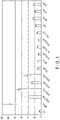
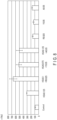
- FIGS. 1 , 2 , 3 , and 4A to 4E are graphs showing the number of megakaryocytes differentiated in each medium.
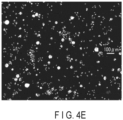
- FIGS. 4A to 4E are photographs showing the megakaryocytes stained with a nuclear staining reagent (DRAQ5).
- FIG. 1 shows the results of using the following media in order from the left.
- FIG. 2 shows the results of using the following media in order from the left.
- FIG. 3 (FIG. 3)
- FIG. 3 shows the results of using the following media in order from the left.
- Example 3H medium containing 0.25 mass% of human serum albumin (HSA) and 1.25 mass% of Essential 8 medium.
- HSA human serum albumin
- Example 3A 0.25 mass% of HSA was added alone as the serum alternative, and in Examples 3B to 3H, 0.25 mass% of HSA and each additive (any one of R, Y, BSA, A, P, M, and E) were added in combination as the serum alternative.
- Examples 3B to 3H there was a tendency for the number of megakaryocytes to increase compared to the case of HSA alone (Example 3A), and a number of megakaryocytes equivalent to that of the positive control 2 (HP 5%) was obtained.
- FIGS. 4A to 4E show DRAQ5 stained images of the negative control, the positive control 2, Example 2A, Example 2B, and Example 2E, respectively.
- Example 2B HAS 0.125% + R 0.03%
- Example 2E HAS 0.125% + A 0.06 ⁇ M
- this number is approximate to the number of cells in the positive control 2 (HP 5%).
- FIGS. 1 , 2 , and 3 , and 4A to 4E demonstrate that a differentiation culture of megakaryocyte progenitor cells using a combination of human serum albumin and a specific additive as a serum alternative enables production of megakaryocytes with a differentiation efficiency similar to that of the case of using human plasma. Since the serum alternative requires no blood component, the production cost of megakaryocytes can be reduced and the inter-lot stability of the megakaryocytes can be improved.
- the inventors of the present invention demonstrated that the use of the media described below also allows the production of megakaryocytes with a differentiation efficiency similar to that of the case using human plasma.
- HSA human serum albumin
- R rice-derived human recombinant albumin
- HSA human serum albumin
- R rice-derived human recombinant albumin
- A an A419259 compound
- FACS fluorescence activated cell sorting
- CD41 antibody-staining and CD42b antibody-staining were performed, thereby analyzing the ratio of CD41 positive cells and the ratio of CD42b positive cells in platelets.
- an increase in the ratio of PAC1 positive cells by the addition of 0.2 ⁇ M PMA (phorbol 12-myristate 13-acetate) and an increase in the ratio of PAC1 positive cells by the addition of 100 ⁇ M ADP (adenosine diphosphate) were analyzed.
- FIG. 5 (FIG. 5)
- FIG. 5 shows the ratio of positive cells in CD41 and CD42b.
- FIG. 5 shows the results of the case using the following media in order from the left.
- FIG. 6 (FIG. 6)
- FIG. 6 shows the ratio of PAC1 positive cells after PMA treatment and the ratio of PAC1 positive cells after ADP treatment.
- FIG. 6 shows the results of the case using the following media in order from the left.
- Example 6C As compared to Example 6B (HAS 0.25%), Example 6C (HAS 0.25% + R 0.05%) and Example 6D (HAS 0.25% + A 0.05 ⁇ M) brought an increase in the ratio of PAC1 positive cells after PMA treatment and the ratio of PAC1 positive cells after ADP treatment, and achieved a ratio of PAC1 positive cells equivalent to that of Example 6A (HP 5%), which is the positive control.
- FIGS. 5 and 6 demonstrate that a culture of megakaryocyte progenitor cells using the serum alternative (the combination of human serum albumin and a specific additive) which was effective for megakaryocyte differentiation in Example 1 enables production of functional platelets as in the case of using human plasma. Since the serum alternative requires no blood component, the production cost of platelets can be reduced and the lot stability of the platelets can be improved.
- the serum alternative the combination of human serum albumin and a specific additive
- HSA human serum albumin
- prostratin human serum albumin
- iPS cells (253G1 strain) were seeded in 96 well plates (Corning) coated with iMatrix-511 (0.1 ⁇ g/well) (Nippi, Incorporated) for every 6 wells under each condition and at 1.0x10e4/well, and were cultured in the following media for 5 days.
- bone marrow-derived mesenchymal stem cells (JCRB1154 strain) were seeded in 96 well plates (Corning) for every 6 wells under each condition and at 1.0x10e4/well, and were cultured in the following media for 5 days.
- FIG. 7 shows the number of iPS cells after culture under each condition.
- Example 7A HSA alone
- Example 7B and 7C a combination of HSA and recombinant human serum albumin
- Example 7D a combination of HSA and prostratin
- Example 7E and Example 7F recombinant human serum albumin alone
- Example 7 prostratin alone
- FIG. 8 shows the number of MSC cells after culture under each condition. As compared to the control and Example 8A (HSA alone), a significant increase in the number of MSC cells was observed in Example 8B and 8C (a combination of HSA and recombinant human serum albumin) and Example 8D (a combination of HSA and A419259). On the other hand, no significant increase in the number of MSC cells was observed in Example 8E and Example 8F (recombinant human serum albumin alone) and Example 8G (A419259 alone).
- FIGS. 7 and 8 demonstrate that a proliferation culture of iPS cells and a proliferation culture of mesenchymal stem cells using the serum alternative (a combination of human serum albumin and a specific additive) which was effective for megakaryocyte differentiation in Example 1 achieves high proliferation efficiency because of a synergistic effect. Since the serum alternative requires no blood component, the production cost of cells by the proliferation culture can be reduced and the lot stability of the proliferating cells can be improved.
- serum alternative a combination of human serum albumin and a specific additive
Landscapes
- Health & Medical Sciences (AREA)
- Engineering & Computer Science (AREA)
- Biomedical Technology (AREA)
- Life Sciences & Earth Sciences (AREA)
- Bioinformatics & Cheminformatics (AREA)
- Wood Science & Technology (AREA)
- Biotechnology (AREA)
- Organic Chemistry (AREA)
- Hematology (AREA)
- Genetics & Genomics (AREA)
- Chemical & Material Sciences (AREA)
- Zoology (AREA)
- Immunology (AREA)
- Microbiology (AREA)
- Biochemistry (AREA)
- General Engineering & Computer Science (AREA)
- General Health & Medical Sciences (AREA)
- Cell Biology (AREA)
- Micro-Organisms Or Cultivation Processes Thereof (AREA)
Applications Claiming Priority (2)
| Application Number | Priority Date | Filing Date | Title |
|---|---|---|---|
| JP2020086836A JP7521738B2 (ja) | 2020-05-18 | 2020-05-18 | 目的細胞の生産方法、目的細胞による生産物の生産方法、および無血清培地 |
| PCT/JP2021/018542 WO2021235377A1 (ja) | 2020-05-18 | 2021-05-17 | 目的細胞の生産方法、目的細胞による生産物の生産方法、および無血清培地 |
Publications (2)
| Publication Number | Publication Date |
|---|---|
| EP4155387A1 true EP4155387A1 (de) | 2023-03-29 |
| EP4155387A4 EP4155387A4 (de) | 2024-07-31 |
Family
ID=78605793
Family Applications (1)
| Application Number | Title | Priority Date | Filing Date |
|---|---|---|---|
| EP21807713.9A Withdrawn EP4155387A4 (de) | 2020-05-18 | 2021-05-17 | Verfahren zur herstellung von zielzellen, verfahren zur herstellung eines produkts unter verwendung von zielzellen und serumfreies medium |
Country Status (5)
| Country | Link |
|---|---|
| US (1) | US20230242882A1 (de) |
| EP (1) | EP4155387A4 (de) |
| JP (2) | JP7521738B2 (de) |
| CN (1) | CN115667499A (de) |
| WO (1) | WO2021235377A1 (de) |
Families Citing this family (1)
| Publication number | Priority date | Publication date | Assignee | Title |
|---|---|---|---|---|
| WO2020009188A1 (ja) * | 2018-07-06 | 2020-01-09 | 株式会社マイオリッジ | 細胞シートの製造方法、心筋細胞シート、および心筋細胞シート製造用キット |
Family Cites Families (27)
| Publication number | Priority date | Publication date | Assignee | Title |
|---|---|---|---|---|
| IL102929A (en) * | 1992-08-24 | 1996-11-14 | Interpharm Lab Ltd | Serum-free medium for mammalian cells |
| AU702871B2 (en) * | 1993-08-23 | 1999-03-11 | Nexell Therapeutics Inc. | (In vitro) growth of neutrophil and megakaryocyte precursors in serum-free media |
| EP0891419A4 (de) * | 1996-03-12 | 2000-03-01 | Life Technologies Inc | Nährstoffzusatz für hematopoetische zellkulturen |
| CA2277278A1 (en) * | 1997-01-10 | 1998-07-16 | Life Technologies, Inc. | Embryonic stem cell serum replacement |
| EP1536688B1 (de) | 2002-09-13 | 2011-12-28 | The Board Of Trustees Of The Leland Stanford Junior University | Säugetier-megakaryozytenstammzelle |
| JP2007000077A (ja) * | 2005-06-23 | 2007-01-11 | Hitachi Medical Corp | 付着性動物細胞の無血清培養方法及び付着性動物細胞の無血清培養用培地 |
| AU2007294731B2 (en) * | 2006-09-13 | 2014-04-17 | Abbvie Inc. | Cell culture improvements |
| CN101412985B (zh) * | 2007-10-15 | 2012-06-13 | 华东理工大学 | 用于骨髓间充质干细胞体外培养和扩增的无血清培养基 |
| CN101864396B (zh) | 2010-05-17 | 2012-08-22 | 中国人民解放军军事医学科学院野战输血研究所 | 一种体外诱导巨核祖细胞和巨核细胞的方法 |
| KR20130112028A (ko) * | 2010-06-17 | 2013-10-11 | 스템알디, 인크. | 무혈청 합성 세포배양 배지 |
| EP2686420B1 (de) | 2011-03-18 | 2017-03-01 | New York Blood Center, Inc. | Megakaryozyten- und blutplättchenherstellung aus stammzellen |
| WO2012157586A1 (ja) | 2011-05-13 | 2012-11-22 | 国立大学法人東京大学 | 多核化巨核球細胞、及び血小板の製造方法 |
| JP6247210B2 (ja) * | 2011-07-05 | 2017-12-13 | アルブミディクス アクティーゼルスカブ | アルブミン製剤及び用途 |
| SG11201505965TA (en) | 2013-01-31 | 2015-09-29 | Ajinomoto Kk | Culture method for stable undifferentiated proliferation of pluripotent stem cells |
| JP6206792B2 (ja) * | 2013-04-03 | 2017-10-04 | 誠一 横尾 | 培地及び細胞の培養方法 |
| EP3074505B1 (de) * | 2014-02-14 | 2018-06-06 | National University of Ireland Galway | Serumfreies medium |
| JP6651218B2 (ja) * | 2014-05-30 | 2020-02-19 | 国立大学法人京都大学 | 低分子化合物を用いた多能性幹細胞の心筋分化誘導法 |
| JP6780638B2 (ja) * | 2015-03-30 | 2020-11-04 | 味の素株式会社 | ヒト血清アルブミンを含む神経幹細胞増殖培地 |
| EP3303566B1 (de) * | 2015-06-03 | 2020-10-14 | Takara Bio Europe AB | Reifung von säugerhepatozyten |
| ES2839220T3 (es) | 2015-06-16 | 2021-07-05 | Univ Kyoto | Procedimiento de fabricación de plaquetas de alto rendimiento |
| CN105112365A (zh) * | 2015-08-18 | 2015-12-02 | 广州暨南生物医药研究开发基地有限公司 | 一种人脐带间充质干细胞的无血清培养基及其制备方法 |
| GB201701509D0 (en) * | 2017-01-30 | 2017-03-15 | Cambridge Entpr Ltd | Pluripotenet stem cells |
| WO2019078278A1 (ja) * | 2017-10-18 | 2019-04-25 | 国立大学法人京都大学 | 心筋細胞に分化させるための多能性幹細胞の製造方法 |
| JP7144872B2 (ja) * | 2018-08-31 | 2022-09-30 | 株式会社Gcリンフォテック | ヒトリンパ球細胞培養用無血清培地 |
| JP7104611B2 (ja) | 2018-11-22 | 2022-07-21 | 株式会社デンソーアイティーラボラトリ | 情報処理装置、情報処理方法およびプログラム |
| CN110699317A (zh) * | 2019-10-30 | 2020-01-17 | 湖南丰晖生物科技有限公司 | 一种人脐带间充质干细胞无血清培养基及其制备方法与应用 |
| CN111019889A (zh) * | 2019-12-25 | 2020-04-17 | 依科赛生物科技(太仓)有限公司 | 一种间充质干细胞化学成分限定无血清培养基及其用途 |
-
2020
- 2020-05-18 JP JP2020086836A patent/JP7521738B2/ja active Active
-
2021
- 2021-05-17 US US17/998,563 patent/US20230242882A1/en active Pending
- 2021-05-17 EP EP21807713.9A patent/EP4155387A4/de not_active Withdrawn
- 2021-05-17 CN CN202180036247.7A patent/CN115667499A/zh active Pending
- 2021-05-17 WO PCT/JP2021/018542 patent/WO2021235377A1/ja not_active Ceased
-
2023
- 2023-02-15 JP JP2023021933A patent/JP7612230B2/ja active Active
Also Published As
| Publication number | Publication date |
|---|---|
| JP2021180620A (ja) | 2021-11-25 |
| US20230242882A1 (en) | 2023-08-03 |
| EP4155387A4 (de) | 2024-07-31 |
| JP2023056008A (ja) | 2023-04-18 |
| CN115667499A (zh) | 2023-01-31 |
| JP7521738B2 (ja) | 2024-07-24 |
| WO2021235377A1 (ja) | 2021-11-25 |
| JP7612230B2 (ja) | 2025-01-14 |
Similar Documents
| Publication | Publication Date | Title |
|---|---|---|
| Sankaran et al. | Cyclin D3 coordinates the cell cycle during differentiation to regulate erythrocyte size and number | |
| EP2997135B1 (de) | Menschliche extensiv selbsterneuernde erythroblasten (esre) | |
| Mikdar et al. | The equilibrative nucleoside transporter ENT1 is critical for nucleotide homeostasis and optimal erythropoiesis | |
| Ashley et al. | Steroid resistance in Diamond Blackfan anemia associates with p57 Kip2 dysregulation in erythroid progenitors | |
| Sgambato et al. | Gaucher disease-induced pluripotent stem cells display decreased erythroid potential and aberrant myelopoiesis | |
| Bian et al. | Early development and functional properties of tryptase/chymase double-positive mast cells from human pluripotent stem cells | |
| EP4155387A1 (de) | Verfahren zur herstellung von zielzellen, verfahren zur herstellung eines produkts unter verwendung von zielzellen und serumfreies medium | |
| Elagib et al. | Relieving DYRK1A repression of MKL1 confers an adult-like phenotype to human infantile megakaryocytes | |
| Trakarnsanga et al. | Secretory factors from OP9 stromal cells delay differentiation and increase the expansion potential of adult erythroid cells in vitro | |
| US11371019B2 (en) | Efficient generation of human red blood cells via enriching peripheral blood erythroid progenitors | |
| Otake et al. | CLEC‐2 stimulates IGF‐1 secretion from podoplanin‐positive stromal cells and positively regulates erythropoiesis in mice | |
| Murate et al. | Aphidicolin, an inhibitor of DNA replication, blocks the TPA-induced differentiation of a human megakaryoblastic cell line, MEG-O1 | |
| US20070087364A1 (en) | In vitro erythroid micronucleus assay for genotoxicity | |
| Schippel et al. | Erythropoietin-dependent acquisition of CD71hiCD105hi phenotype within CD235a− early erythroid progenitors | |
| Conway et al. | A xeno-free red blood cell differentiation formula models Sickle Cell Disease from somatically-sourced patient iPSCs | |
| Karalyan et al. | Cell development in primary culture of porcine bone marrow | |
| Miharada et al. | In vitro production of enucleated red blood cells from hematopoietic stem and progenitor cells | |
| Schippel et al. | Erythropoietin Mediates Glycerophospholipid Remodeling During Human Early Erythropoiesis | |
| Oktar | Relationship of Telomerase Inhibitor 1 (PinX1) and Nucleostemin (GNL3) Expression with Telomerase Reverse Tran-scriptase (TERT) Concentration in Myeloid and Erythroid Origin Cell Groups | |
| Bretherton | Determining the Effect and Mechanism of EpoR Mutations on Erythroid Cell Differentiation | |
| Zini et al. | Silencing CD34 antigen in human hematopoietic stem cells | |
| Ogawa et al. | Hematopoietic colony-forming cells | |
| Zhu et al. | Removal of CD34− cells to increase self-renewal symmetric division and expansion ex vivo of cord blood CD34+ cells through reducing the TGF-β1 | |
| Beneš et al. | Retinoic acid enhances differentiation of v-myb-transformed monoblasts induced by okadaic acid | |
| Leecharoenkiat et al. | Erythroblast cell expansion as a marker for disease severity in β0-thalassemia/Hb E disease |
Legal Events
| Date | Code | Title | Description |
|---|---|---|---|
| STAA | Information on the status of an ep patent application or granted ep patent |
Free format text: STATUS: THE INTERNATIONAL PUBLICATION HAS BEEN MADE |
|
| PUAI | Public reference made under article 153(3) epc to a published international application that has entered the european phase |
Free format text: ORIGINAL CODE: 0009012 |
|
| STAA | Information on the status of an ep patent application or granted ep patent |
Free format text: STATUS: REQUEST FOR EXAMINATION WAS MADE |
|
| 17P | Request for examination filed |
Effective date: 20221123 |
|
| AK | Designated contracting states |
Kind code of ref document: A1 Designated state(s): AL AT BE BG CH CY CZ DE DK EE ES FI FR GB GR HR HU IE IS IT LI LT LU LV MC MK MT NL NO PL PT RO RS SE SI SK SM TR |
|
| DAV | Request for validation of the european patent (deleted) | ||
| DAX | Request for extension of the european patent (deleted) | ||
| A4 | Supplementary search report drawn up and despatched |
Effective date: 20240627 |
|
| RIC1 | Information provided on ipc code assigned before grant |
Ipc: C12N 5/10 20060101ALI20240621BHEP Ipc: C12N 5/078 20100101ALI20240621BHEP Ipc: C12N 5/0775 20100101ALI20240621BHEP Ipc: C12N 5/077 20100101AFI20240621BHEP |
|
| STAA | Information on the status of an ep patent application or granted ep patent |
Free format text: STATUS: THE APPLICATION HAS BEEN WITHDRAWN |
|
| 18W | Application withdrawn |
Effective date: 20250327 |