EP4158953B1 - Réallocation de charge entre deux unités baseband - Google Patents
Réallocation de charge entre deux unités baseband Download PDFInfo
- Publication number
- EP4158953B1 EP4158953B1 EP20731601.9A EP20731601A EP4158953B1 EP 4158953 B1 EP4158953 B1 EP 4158953B1 EP 20731601 A EP20731601 A EP 20731601A EP 4158953 B1 EP4158953 B1 EP 4158953B1
- Authority
- EP
- European Patent Office
- Prior art keywords
- bbu
- data traffic
- sector carrier
- cell
- trp
- Prior art date
- Legal status (The legal status is an assumption and is not a legal conclusion. Google has not performed a legal analysis and makes no representation as to the accuracy of the status listed.)
- Active
Links
Images






Classifications
-
- H—ELECTRICITY
- H04—ELECTRIC COMMUNICATION TECHNIQUE
- H04W—WIRELESS COMMUNICATION NETWORKS
- H04W36/00—Hand-off or reselection arrangements
- H04W36/06—Reselecting a communication resource in the serving access point
-
- H—ELECTRICITY
- H04—ELECTRIC COMMUNICATION TECHNIQUE
- H04W—WIRELESS COMMUNICATION NETWORKS
- H04W36/00—Hand-off or reselection arrangements
- H04W36/16—Performing reselection for specific purposes
- H04W36/22—Performing reselection for specific purposes for handling the traffic
-
- H—ELECTRICITY
- H04—ELECTRIC COMMUNICATION TECHNIQUE
- H04W—WIRELESS COMMUNICATION NETWORKS
- H04W28/00—Network traffic management; Network resource management
- H04W28/02—Traffic management, e.g. flow control or congestion control
- H04W28/0247—Traffic management, e.g. flow control or congestion control based on conditions of the access network or the infrastructure network
-
- H—ELECTRICITY
- H04—ELECTRIC COMMUNICATION TECHNIQUE
- H04W—WIRELESS COMMUNICATION NETWORKS
- H04W88/00—Devices specially adapted for wireless communication networks, e.g. terminals, base stations or access point devices
- H04W88/08—Access point devices
- H04W88/085—Access point devices with remote components
Definitions
- Embodiments herein relate to a network node, a Transmission and Reception Point (TRP) and methods therein. In some aspects, they relate to handling data traffic between the TRP and a UE in a wireless communications network (100).
- TRP Transmission and Reception Point
- Embodiments herein further relates to computer programs and carriers corresponding to the above methods and network nodes.
- wireless devices also known as wireless communication devices, mobile stations, stations (STA) and/or User Equipment (UE), communicate via a Local Area Network such as a Wi-Fi network or a Radio Access Network (RAN) to one or more core networks (CN).
- the RAN covers a geographical area which is divided into service areas or cell areas, which may also be referred to as a beam or a beam group, with each service area or cell area being served by a radio network node such as a radio access node e.g., a Wi-Fi access point or a radio base station (RBS), which in some networks may also be denoted, for example, a NodeB, eNodeB (eNB), or gNB as denoted in 5G.
- a service area or cell area is a geographical area where radio coverage is provided by the radio network node.
- the radio network node communicates over an air interface operating on radio frequencies with the wireless device within range of the radio network node.
- the Evolved Packet System also called a Fourth Generation (4G) network
- EPS also called a Fourth Generation (4G) network
- 3GPP 3rd Generation Partnership Project
- 5G Fifth Generation
- NR 5G New Radio
- NG Next Generation
- the EPS comprises the Evolved Universal Terrestrial Radio Access Network (E-UTRAN), also known as the Long Term Evolution (LTE) radio access network, and the Evolved Packet Core (EPC), also known as System Architecture Evolution (SAE) core network.
- E-UTRAN also known as the Long Term Evolution (LTE) radio access network
- EPC Evolved Packet Core
- SAE System Architecture Evolution
- E-UTRAN/LTE is a variant of a 3GPP radio access network wherein the radio network nodes are directly connected to the EPC core network rather than to RNCs used in 3G networks.
- the functions of a 3G RNC are distributed between the radio network nodes, e.g. eNodeBs in LTE, and the core network.
- the RAN of an EPS has an essentially "flat" architecture comprising radio network nodes connected directly to one or more core networks, i.e. they are not connected to RNCs.
- the E-UTRAN specification defines a direct interface between the radio network nodes, this interface being denoted the X2 interface.
- Multi-antenna techniques may significantly increase the data rates and reliability of a wireless communication system. The performance is in particular improved if both the transmitter and the receiver are equipped with multiple antennas, which results in a Multiple-Input Multiple-Output (MIMO) communication channel.
- MIMO Multiple-Input Multiple-Output
- Such systems and/or related techniques are commonly referred to as MIMO.
- Baseband refers to the original frequency range of a transmission signal before it is modulated.
- a baseband unit is a unit that processes baseband in telecomm systems.
- a typical base station comprises a BBU and an Radio Frequency (RF) processing unit also referred to as a remote radio unit - RRU.
- the BBU may e.g. be located in an equipment room of a base station and may be connected with the RRU via optical fiber.
- the handover procedure is coordinated with the de-activation of the first sector carrier and activation of the second sector carrier, so UE 120 ongoing communication of data traffic is not dropped.
- the decision to re-allocate the processing of the data traffic in the first BBU 111 to a second BBU (112), may be adapted to be based on one or more criterion related to any one or more out of: processor load, memory load, coordination performance.
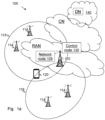
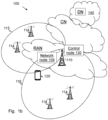
- the first BBU 111 may be configured to process data traffic in a first cell 115, and the second BBU 112 is configured to process data traffic in a second cell 116.
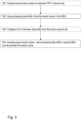
- the control node 130 is further configured to, e.g. by means of a sending unit 520 in the control node 130, send a second order to the network node 109.
- the second order is to stop processing the data traffic of the first sector carrier in the first BBU 111.
- the control node 130 is further configured to, e.g. by means of the sending unit 520 in the control node 130, send a third order to the network node 109.
- the third order is to activate the second sector carrier, start processing the data traffic in the second BBU 112 and to deactivate the first sector carrier.
- control node 130 is further configured to, e.g. by means of the sending unit 520 in the control node 130, send a first order to the network node 109.
- the first order is to prepare the second sector carrier to represent the TRP 110 in the second cell 116.
- control node 130 is further configured to, e.g. by means of the sending unit 520 in the control node 130, send an instruction to the network node 109.
- the instruction is to configure active UEs, e.g. the UE 120, on the first sector carrier to handover the data traffic from the first cell 115 to the second cell 116.
- Each respective memory 540 is arranged to be used to store orders, requirements, , information, data, configurations, and applications to perform the methods herein when being executed in the control node 130.
- a respective computer program 550 comprises instructions, which when executed by the at least one processor 530, cause the at least one processor 530 of the control node 130 to perform the actions above.
- a respective carrier 560 comprises the respective computer program 550, wherein the carrier 560 is one of an electronic signal, an optical signal, an electromagnetic signal, a magnetic signal, an electric signal, a radio signal, a microwave signal, or a computer-readable storage medium.
- the units in the units described above may refer to a combination of analog and digital circuits, and/or one or more processors configured with software and/or firmware, e.g. stored in the network node 110, that when executed by the respective one or more processors such as the processors or processor circuitry described above.
- processors such as the processors or processor circuitry described above.
- One or more of these processors, as well as the other digital hardware, may be included in a single Application-Specific Integrated Circuitry (ASIC), or several processors and various digital hardware may be distributed among several separate components, whether individually packaged or assembled into a system-on-a-chip (SoC).
- ASIC Application-Specific Integrated Circuitry
- SoC system-on-a-chip
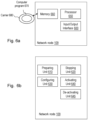
- the TRP 110 may comprise the arrangement as shown in Figures 6 a and b.
- the TRP 110 is configured to handle data traffic between the TRP 110 and a UE 120 in a wireless communications network 100.
- the TRP 110 is related to a network node 109.
- the TRP 110 is adapted to serve the data traffic in a first sector carrier.
- the data traffic in the first sector carrier is adapted to be processed by a first BBU 111.
- the TRP 110 may comprise a respective input and output interface 600 configured to communicate with the control node 130, see Figure 6a .
- the input and output interface 600 may comprise a wireless receiver (not shown) and a wireless transmitter (not shown).
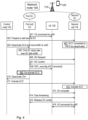
- the TRP 110 is further configured to, e.g. by means of a preparing unit 610 in the TRP 110, triggered by a first order, prepare the second sector carrier to represent the TRP 110 in the second cell 116.
- the first order is adapted to be received from the control node 130.
- the TRP 110 is further configured to, e.g. by means of a stopping unit 620 in the TRP 110, triggered by a second order, stop processing the data traffic of the first sector carrier in the first BBU 111.
- the second order is adapted to be received from a control node 130 in the wireless communications network 100 when decided to re-allocate the processing of the data traffic in the first BBU 111 to a second BBU 112.
- the TRP 110 is further configured to, e.g. by means of a configuring unit 630 in the TRP 110, triggered by an instruction, configure the UE 120 to handover the data traffic from the first cell 115 to the second cell 116.
- the instruction is adapted to be received from the control node 130.
- the TRP 110 is further configured to, e.g. by means of an activating unit 640 and a de-activating unit 145 in the TRP 110, triggered by a third order, activate the second sector carrier, start processing the data traffic in the second BBU 112, and deactivate the first sector carrier.
- the third order is adapted to be received from the control node 130.
- the second BBU 112 is adapted to process data traffic in a second sector carrier provided by the TRP 110.
- the re-allocation of the processing of the data traffic in the first BBU 111 to the second BBU 112 may be adapted to be performed as a run-time switch.
- the first BBU 111 may be configured to process data traffic in a first cell 115, and wherein the second BBU 112 is configured to process data traffic in a second cell 116.
- the embodiments herein may be implemented through a respective processor or one or more processors, such as the processor 650 of a processing circuitry in the TRP 110, depicted in Figures 6 a and b, together with computer program code for performing the functions and actions of the embodiments herein.
- the program code mentioned above may also be provided as a computer program product, for instance in the form of a data carrier carrying computer program code for performing the embodiments herein when being loaded into the network node 109.
- One such carrier may be in the form of a CD ROM disc. It is however feasible with other data carriers such as a memory stick.
- the computer program code may furthermore be provided as pure program code on a server and downloaded to the network node 109.
- the TRP 110 may further comprise a respective memory 660 comprising one or more memory units. Each memory comprises instructions executable by the processor 650 in the TRP 110. Each respective memory 660 is arranged to be used to store orders, requirements, , information, data, configurations, and applications to perform the methods herein when being executed in the TRP 110.
- a respective computer program 670 comprises instructions, which when executed by the at least one processor 650, cause the at least one processor 650 of the TRP 110 to perform the actions above.
- a respective carrier 680 comprises the respective computer program 670, wherein the carrier is one of an electronic signal, an optical signal, an electromagnetic signal, a magnetic signal, an electric signal, a radio signal, a microwave signal, or a computer-readable storage medium.
- the units in the units described above may refer to a combination of analog and digital circuits, and/or one or more processors configured with software and/or firmware, e.g. stored in the network node 110, that when executed by the respective one or more processors such as the processors or processor circuitry described above.
- processors such as the processors or processor circuitry described above.
- One or more of these processors, as well as the other digital hardware, may be included in a single Application-Specific Integrated Circuitry (ASIC), or several processors and various digital hardware may be distributed among several separate components, whether individually packaged or assembled into a system-on-a-chip (SoC).
- ASIC Application-Specific Integrated Circuitry
- SoC system-on-a-chip
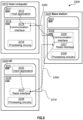
- the wireless connection 3370 between the UE 3330 and the base station 3320 is in accordance with the teachings of the embodiments described throughout this disclosure.
- One or more of the various embodiments improve the performance of OTT services provided to the UE 3330 using the OTT connection 3350, in which the wireless connection 3370 forms the last segment. More precisely, the teachings of these embodiments may improve the applicable RAN effect: data rate, latency, power consumption, and thereby provide benefits such as corresponding effect on the OTT service: e.g. reduced user waiting time, relaxed restriction on file size, better responsiveness, extended battery lifetime.
- FIG 10 is a flowchart illustrating a method implemented in a communication system, in accordance with one embodiment.
- the communication system includes a host computer, a base station such as a AP STA, and a UE such as a Non-AP STA which may be those described with reference to Figure 7 and Figure 8 .
- a first action 3510 of the method the host computer provides user data.
- the host computer provides the user data by executing a host application.
- the host computer initiates a transmission carrying the user data to the UE. The transmission may pass via the base station, in accordance with the teachings of the embodiments described throughout this disclosure.
- the UE receives the user data carried in the transmission.
- FIG 11 is a flowchart illustrating a method implemented in a communication system, in accordance with one embodiment.
- the communication system includes a host computer, a base station such as a AP STA, and a UE such as a Non-AP STA which may be those described with reference to Figure 7 and Figure 8 .
- a first action 3610 of the method the UE receives input data provided by the host computer.
- the UE provides user data.
- the UE provides the user data by executing a client application.
- the UE executes a client application which provides the user data in reaction to the received input data provided by the host computer.
- the executed client application may further consider user input received from the user.
- the UE initiates, in an optional third subaction 3630, transmission of the user data to the host computer.
- the host computer receives the user data transmitted from the UE, in accordance with the teachings of the embodiments described throughout this disclosure.
- FIG 12 is a flowchart illustrating a method implemented in a communication system, in accordance with one embodiment.
- the communication system includes a host computer, a base station such as an AP STA, and a UE such as a Non-AP STA which may be those described with reference to Figure 7 and Figure 8 .
- a first action 3710 of the method in accordance with the teachings of the embodiments described throughout this disclosure, the base station receives user data from the UE.
- the base station initiates transmission of the received user data to the host computer.
- the host computer receives the user data carried in the transmission initiated by the base station.
Landscapes
- Engineering & Computer Science (AREA)
- Computer Networks & Wireless Communication (AREA)
- Signal Processing (AREA)
- Mobile Radio Communication Systems (AREA)
Claims (14)
- Procédé réalisé par un nœud de commande (130) pour le traitement du trafic de données entre un point de transmission et de réception, TRP, (110), et un équipement utilisateur, UE, (120) dans un réseau de communications sans fil (100), lequel TRP (110) est commandé par un nœud de réseau (109) et dessert le trafic de données dans une première porteuse de secteur, et lequel trafic de données dans la première porteuse de secteur est traité par une première unité de bande de base, BBU, (111), le procédé comprenant :la décision (201) de réaffecter le traitement du trafic de données dans la première BBU (111) à une deuxième BBU (112), laquelle deuxième BBU (112) traite le trafic de données dans une deuxième porteuse de secteur fournie par le TRP (110),dans lequel la première BBU (111) traite le trafic de données de la première porteuse de secteur dans une première cellule (115), etdans lequel la deuxième BBU (112) traite le trafic de données de la deuxième porteuse de secteur dans une deuxième cellule (116),l'envoi (202) d'un premier ordre au nœud de réseau (109) pour préparer la deuxième porteuse de secteur afin de représenter le TRP (110) dans la deuxième cellule (116),l'envoi (203) d'un deuxième ordre au nœud de réseau (109) pour arrêter le traitement du trafic de données de la première porteuse de secteur dans la première BBU (111),l'envoi (204) d'une instruction au nœud de réseau (109) pour configurer des UE actifs sur la première porteuse de secteur afin de transférer le trafic de données de la première cellule (115) à la deuxième cellule (116),l'envoi (205) d'un troisième ordre au nœud de réseau (109) pour activer la deuxième porteuse de secteur, commencer à traiter le trafic de données dans la deuxième BBU (112), et désactiver la première porteuse de secteur.
- Procédé selon la revendication 1, dans lequel la décision (201) de réaffecter le traitement du trafic de données de la première BBU ou de la deuxième BBU est basée sur un ou plusieurs critères liés à un ou plusieurs parmi :
la charge du processeur, la charge de la mémoire, la performance de coordination, l'efficacité énergétique, les décisions d'opérateur, par exemple la migration de site dans la première BBU (111). - Procédé selon l'une quelconque des revendications 1 à 2, dans lequel la réaffectation du traitement du trafic de données dans la première BBU (111) à la deuxième BBU (112) est effectuée en tant que commutation d'exécution.
- Programme informatique (550) comprenant des instructions qui, lorsqu'elles sont exécutées par un processeur (530), amènent le processeur (530) à effectuer des actions selon l'une quelconque des revendications 1 à 3.
- Porteuse (560) comprenant le programme informatique (550) selon la revendication 4, dans laquelle la porteuse (560) est l'un parmi un signal électronique, un signal optique, un signal électromagnétique, un signal magnétique, un signal électrique, un signal radio, un signal micro-ondes, ou un support de stockage lisible par ordinateur.
- Procédé réalisé par un nœud de réseau (109) pour traiter un trafic de données entre un point de transmission et de réception, TRP, (110) et un équipement d'utilisateur, UE, (120) dans un réseau de communications sans fil (100), dans lequel le TRP (110) est commandé par le nœud de réseau (109) et dessert le trafic de données dans une première porteuse de secteur, et dans lequel le trafic de données dans la première porteuse de secteur est traité par une première unité de bande de base, BBU, (111), le procédé comprenant :déclenché par un deuxième ordre, l'arrêt (302) du traitement du trafic de données de l'UE 120 de la première porteuse de secteur dans la première BBU (111), lequel deuxième ordre est reçu d'un nœud de commande (130) dans le réseau de communications sans fil (100) lorsqu'il est décidé de réaffecter le traitement du trafic de données dans la première BBU (111) à une deuxième BBU (112),dans lequel la première BBU (111) traite le trafic de données de la première porteuse de secteur dans une première cellule (115), etdans lequel la deuxième BBU (112) traite le trafic de données de la deuxième porteuse de secteur dans une deuxième cellule (116),déclenché par un premier ordre, la préparation (301) d'une deuxième porteuse de secteur pour représenter le TRP (110) dans la deuxième cellule (116), lequel premier ordre est reçu du nœud de commande (130),déclenché par une instruction, la configuration (303) de l'UE (120) pour transférer le trafic de données de la première cellule (115) à la deuxième cellule (116), laquelle instruction est reçue du nœud de commande (130),déclenché par un troisième ordre activant (304) la deuxième porteuse de secteur, le commencement du traitement du trafic de données dans la deuxième BBU (112) et la désactivation de la première porteuse de secteur, lequel troisième ordre est reçu du nœud de commande (130), laquelle deuxième BBU (112) traite le trafic de données dans la deuxième porteuse de secteur fournie par le TRP (110).
- Procédé selon la revendication 6, dans lequel la réaffectation du traitement du trafic de données dans la première BBU (111) à la deuxième BBU (112) est effectuée en tant que commutation d'exécution.
- Programme informatique (670) comprenant des instructions qui, lorsqu'elles sont exécutées par un processeur (650), amènent le processeur (650) à effectuer des actions selon l'une quelconque des revendications 6 à 7.
- Porteuse (680) comprenant le programme informatique (670) selon la revendication 8, dans laquelle la porteuse (680) est l'un parmi un signal électronique, un signal optique, un signal électromagnétique, un signal magnétique, un signal électrique, un signal radio, un signal micro-ondes, ou un support de stockage lisible par ordinateur.
- Nœud de commande (130) configuré pour gérer le trafic de données entre un point de transmission et de réception, TRP, (110), et un équipement d'utilisateur, UE, (120) dans un réseau de communications sans fil (100), lequel TRP (110) est commandé par un nœud de réseau (109) et est adapté pour desservir le trafic de données dans une première porteuse de secteur, et lequel trafic de données dans la première porteuse de secteur est en outre adapté pour être traité par une première unité de bande de base, BBU, (111), le nœud de commande (130) étant en outre configuré pour :décider de réaffecter le traitement du trafic de données dans la première BBU (111) à une deuxième BBU (112), laquelle deuxième BBU (112) est adaptée au traitement du trafic de données dans une deuxième porteuse de secteur fournie par le TRP (110),dans lequel la première BBU (111) est configurée pour traiter le trafic de données de la première porteuse de secteur dans une première cellule (115), et dans lequel la deuxième BBU (112) est configurée pour traiter le trafic de données de la deuxième porteuse de secteur dans une deuxième cellule (116),envoyer un premier ordre au nœud de réseau (109), pour préparer la deuxième porteuse de secteur pour représenter le TRP (110) dans la deuxième cellule (116),envoyer un deuxième ordre au nœud de réseau (109), pour désactiver la première porteuse de secteur et arrêter le traitement du trafic de données de la première porteuse de secteur dans la première BBU (111),envoyer une instruction au nœud de réseau (109), pour configurer les UE actifs sur la première porteuse de secteur pour transférer le trafic de données de la première cellule (115) à la deuxième cellule (116),envoyer un troisième ordre au nœud de réseau (109), pour activer la deuxième porteuse de secteur, commencer à traiter le trafic de données dans la deuxième BBU (112), et pour désactiver la première porteuse de secteur.
- Nœud de commande (130) selon la revendication 10, dans lequel la décision de réaffecter le traitement du trafic de données dans la première BBU (111) à la deuxième BBU (112) est adaptée pour être basée sur un ou plusieurs critères liés à un ou plusieurs parmi :
la charge du processeur, la charge de la mémoire, la performance de coordination, l'efficacité énergétique, les décisions de l'opérateur dans la première BBU (111). - Nœud de commande (130) selon l'une quelconque des revendications 10 à 11, dans lequel la réaffectation du traitement du trafic de données dans la première BBU (111) à la deuxième BBU (112) est adaptée pour être effectuée en tant que commutation d'exécution.
- Nœud de réseau (109) configuré pour traiter le trafic de données entre un point de transmission et de réception, TRP, (110) et un équipement d'utilisateur, UE, (120) dans un réseau de communications sans fil (100), dans lequel le TRP (110) est commandé par le nœud de réseau (109), est adapté pour desservir le trafic de données dans une première porteuse de secteur, et dans lequel le trafic de données dans la première porteuse de secteur est adapté pour être traité par une première unité de bande de base, BBU, (111), le nœud de réseau (109) étant en outre configuré pour :déclenché par un deuxième ordre, arrêter le traitement du trafic de données de la première porteuse de secteur dans la première BBU (111), lequel deuxième ordre est adapté pour être reçu d'un nœud de commande (130) dans le réseau de communications sans fil (100) lorsqu'il est décidé de réaffecter le traitement du trafic de données dans la première BBU (111) à une deuxième BBU (112),dans lequel la première BBU (111) est configurée pour traiter le trafic de données de la première porteuse de secteur dans une première cellule (115), et dans lequel la deuxième BBU (112) est configurée pour traiter le trafic de données de la deuxième porteuse de secteur dans une deuxième cellule (116),déclenché par un premier ordre, préparer une deuxième porteuse de secteur pour représenter le TRP (110) dans la deuxième cellule (116), lequel premier ordre est adapté pour être reçu du nœud de commande (130)déclenché par une instruction, configurer l'UE (120) pour transférer le trafic de données de la première cellule (115) à la deuxième cellule (116), laquelle instruction est adaptée pour être reçue du nœud de commande (130),déclenché par un troisième ordre, activer la deuxième porteuse de secteur, commencer à traiter le trafic de données dans la deuxième BBU (112) et désactiver la première porteuse de secteur, lequel troisième ordre est adapté pour être reçu du nœud de commande (130), laquelle deuxième BBU (112) est adaptée pour traiter le trafic de données dans la deuxième porteuse de secteur fournie par le TRP (110).
- Nœud de réseau (109) selon la revendication 13, dans lequel la réaffectation du traitement du trafic de données dans la première BBU (111) à la deuxième BBU (112) est adaptée pour être effectuée en tant que commutation d'exécution.
Applications Claiming Priority (1)
| Application Number | Priority Date | Filing Date | Title |
|---|---|---|---|
| PCT/SE2020/050544 WO2021242153A1 (fr) | 2020-05-29 | 2020-05-29 | Réaffection de charge de traitement entre des unités de bande de base |
Publications (3)
| Publication Number | Publication Date |
|---|---|
| EP4158953A1 EP4158953A1 (fr) | 2023-04-05 |
| EP4158953B1 true EP4158953B1 (fr) | 2025-07-02 |
| EP4158953C0 EP4158953C0 (fr) | 2025-07-02 |
Family
ID=71069909
Family Applications (1)
| Application Number | Title | Priority Date | Filing Date |
|---|---|---|---|
| EP20731601.9A Active EP4158953B1 (fr) | 2020-05-29 | 2020-05-29 | Réallocation de charge entre deux unités baseband |
Country Status (5)
| Country | Link |
|---|---|
| US (1) | US20230209389A1 (fr) |
| EP (1) | EP4158953B1 (fr) |
| CN (1) | CN115699847A (fr) |
| AR (1) | AR122207A1 (fr) |
| WO (1) | WO2021242153A1 (fr) |
Families Citing this family (1)
| Publication number | Priority date | Publication date | Assignee | Title |
|---|---|---|---|---|
| US12550003B2 (en) * | 2022-06-15 | 2026-02-10 | Microsoft Technology Licensing, Llc | Repurposing mobility management with virtual radio in software radio access networks |
Family Cites Families (11)
| Publication number | Priority date | Publication date | Assignee | Title |
|---|---|---|---|---|
| CN103167515B (zh) * | 2011-12-09 | 2016-08-24 | 华为技术有限公司 | 一种载波控制方法及相应的基站设备 |
| US9301198B2 (en) * | 2012-02-24 | 2016-03-29 | Intel Corporation | Cooperative radio access network with centralized base station baseband unit (BBU) processing pool |
| IN2015DN01455A (fr) * | 2012-09-21 | 2015-07-03 | Ericsson Telefon Ab L M | |
| US9867034B2 (en) * | 2013-09-10 | 2018-01-09 | Lg Electronics Inc. | Baseband unit and method of obtaining information on a remote radio unit and another baseband unit connected to the remote radio unit supporting the operation of the remote radio unit |
| EP2953399B1 (fr) * | 2014-06-02 | 2018-10-24 | Alcatel Lucent | Procédé pour le fonctionnement d'un réseau de communication radio et un élément de réseau de celui-ci |
| US9516521B2 (en) * | 2014-07-28 | 2016-12-06 | Intel IP Corporation | Apparatus, system and method of transferring control of a remote radio head between base-band unit (BBU) processing pools |
| WO2017070635A1 (fr) * | 2015-10-22 | 2017-04-27 | Phluido, Inc. | Virtualisation et organisation d'un réseau d'accès radio |
| CN110383937B (zh) * | 2017-02-21 | 2022-11-25 | 瑞典爱立信有限公司 | 用于将ue与ran连接的方法、基带单元、ue和介质 |
| US10966115B2 (en) * | 2018-03-29 | 2021-03-30 | Verizon Patent And Licensing Inc. | Resource management for interworking between LTE and next generation mobile networks |
| CN111526497B (zh) * | 2019-02-02 | 2021-12-03 | 华为技术有限公司 | 一种信息传输方法及通信装置 |
| WO2021225872A1 (fr) * | 2020-05-05 | 2021-11-11 | Smartsky Networks LLC | Banc d'essai dynamique pour test de système d'aéronef |
-
2020
- 2020-05-29 CN CN202080101458.XA patent/CN115699847A/zh active Pending
- 2020-05-29 EP EP20731601.9A patent/EP4158953B1/fr active Active
- 2020-05-29 US US17/927,912 patent/US20230209389A1/en active Pending
- 2020-05-29 WO PCT/SE2020/050544 patent/WO2021242153A1/fr not_active Ceased
-
2021
- 2021-05-28 AR ARP210101457A patent/AR122207A1/es active IP Right Grant
Also Published As
| Publication number | Publication date |
|---|---|
| AR122207A1 (es) | 2022-08-24 |
| WO2021242153A1 (fr) | 2021-12-02 |
| EP4158953C0 (fr) | 2025-07-02 |
| CN115699847A (zh) | 2023-02-03 |
| US20230209389A1 (en) | 2023-06-29 |
| EP4158953A1 (fr) | 2023-04-05 |
Similar Documents
| Publication | Publication Date | Title |
|---|---|---|
| EP3711357B1 (fr) | Transfert à une cellule de destination qui est une cellule de nr comprenant une première porteuse de liaison montante (ul) qui est une porteuse ul de nr et une seconde porteuse ul qui est une porteuse complémentaire (sul) | |
| EP3858010B1 (fr) | Équipement utilisateur permettant d'obtenir une partie de bande passante pour un accès aléatoire, noeud de réseau et procédés correspondants dans un réseau de communication sans fil | |
| EP3858058B1 (fr) | Noeuds de réseau radio, équipement utilisateur (ue) et procédés réalisés dans un réseau de communication sans fil | |
| CN106465185B (zh) | 在蜂窝管理器间通信无线局域网(wlan)卸载信息的装置、系统和方法 | |
| US20240381216A1 (en) | User Equipment or Source Master Node, Network Nodes and Methods in a Wireless Communications Network | |
| US11924683B2 (en) | Network node and method in a wireless communications network | |
| EP4158953B1 (fr) | Réallocation de charge entre deux unités baseband | |
| US20240129839A1 (en) | Radio network node, network node and methods performed therein | |
| US12052623B2 (en) | Relocation of user equipment connection | |
| EP4360359B1 (fr) | Orientation d'un trafic de données pendant une communication avec un équipement utilisateur dans un réseau de communication sans fil | |
| US20240022958A1 (en) | Radio Network Node, User Equipment, and Methods Performed Therein | |
| US20250024442A1 (en) | Network node, user equipment and methods performed therein | |
| EP3633870A1 (fr) | Noeud de réseau et procédé dans un réseau de communications sans fil | |
| EP4487596B1 (fr) | Noeud de réseau et procédés de gestion de configurations de connexion x2-c dans un système de réseau d'accès radio multi-opérateur | |
| WO2025078431A2 (fr) | Communication avec des dispositifs de communication sans fil à l'aide de groupes de ports d'antenne de réception | |
| US12490249B2 (en) | Radio network node, and method performed therein | |
| WO2023096548A1 (fr) | Nœud de réseau et procédé de configuration de cellules pour un dispositif sans fil dans un réseau de communication sans fil | |
| WO2022177483A1 (fr) | Nœud de réseau et procédé permettant de coordonner des signaux de référence dans un réseau de communication sans fil | |
| HK1233417A1 (en) | Apparatus, system and method of communicating wireless local area network (wlan) offloading information between cellular managers |
Legal Events
| Date | Code | Title | Description |
|---|---|---|---|
| STAA | Information on the status of an ep patent application or granted ep patent |
Free format text: STATUS: UNKNOWN |
|
| STAA | Information on the status of an ep patent application or granted ep patent |
Free format text: STATUS: THE INTERNATIONAL PUBLICATION HAS BEEN MADE |
|
| PUAI | Public reference made under article 153(3) epc to a published international application that has entered the european phase |
Free format text: ORIGINAL CODE: 0009012 |
|
| STAA | Information on the status of an ep patent application or granted ep patent |
Free format text: STATUS: REQUEST FOR EXAMINATION WAS MADE |
|
| 17P | Request for examination filed |
Effective date: 20221025 |
|
| AK | Designated contracting states |
Kind code of ref document: A1 Designated state(s): AL AT BE BG CH CY CZ DE DK EE ES FI FR GB GR HR HU IE IS IT LI LT LU LV MC MK MT NL NO PL PT RO RS SE SI SK SM TR |
|
| DAV | Request for validation of the european patent (deleted) | ||
| DAX | Request for extension of the european patent (deleted) | ||
| REG | Reference to a national code |
Ref country code: DE Ref legal event code: R079 Free format text: PREVIOUS MAIN CLASS: H04W0052020000 Ipc: H04W0036060000 Ref country code: DE Ref legal event code: R079 Ref document number: 602020053793 Country of ref document: DE Free format text: PREVIOUS MAIN CLASS: H04W0052020000 Ipc: H04W0036060000 |
|
| GRAP | Despatch of communication of intention to grant a patent |
Free format text: ORIGINAL CODE: EPIDOSNIGR1 |
|
| STAA | Information on the status of an ep patent application or granted ep patent |
Free format text: STATUS: GRANT OF PATENT IS INTENDED |
|
| RIC1 | Information provided on ipc code assigned before grant |
Ipc: H04W 28/02 20090101ALN20250219BHEP Ipc: H04W 88/08 20090101ALN20250219BHEP Ipc: H04W 36/22 20090101ALI20250219BHEP Ipc: H04W 36/06 20090101AFI20250219BHEP |
|
| INTG | Intention to grant announced |
Effective date: 20250304 |
|
| GRAS | Grant fee paid |
Free format text: ORIGINAL CODE: EPIDOSNIGR3 |
|
| GRAA | (expected) grant |
Free format text: ORIGINAL CODE: 0009210 |
|
| STAA | Information on the status of an ep patent application or granted ep patent |
Free format text: STATUS: THE PATENT HAS BEEN GRANTED |
|
| AK | Designated contracting states |
Kind code of ref document: B1 Designated state(s): AL AT BE BG CH CY CZ DE DK EE ES FI FR GB GR HR HU IE IS IT LI LT LU LV MC MK MT NL NO PL PT RO RS SE SI SK SM TR |
|
| REG | Reference to a national code |
Ref country code: GB Ref legal event code: FG4D |
|
| REG | Reference to a national code |
Ref country code: CH Ref legal event code: EP |
|
| REG | Reference to a national code |
Ref country code: DE Ref legal event code: R096 Ref document number: 602020053793 Country of ref document: DE |
|
| REG | Reference to a national code |
Ref country code: IE Ref legal event code: FG4D |
|
| U01 | Request for unitary effect filed |
Effective date: 20250702 |
|
| U07 | Unitary effect registered |
Designated state(s): AT BE BG DE DK EE FI FR IT LT LU LV MT NL PT RO SE SI Effective date: 20250709 |
|
| PG25 | Lapsed in a contracting state [announced via postgrant information from national office to epo] |
Ref country code: IS Free format text: LAPSE BECAUSE OF FAILURE TO SUBMIT A TRANSLATION OF THE DESCRIPTION OR TO PAY THE FEE WITHIN THE PRESCRIBED TIME-LIMIT Effective date: 20251102 |
|
| PG25 | Lapsed in a contracting state [announced via postgrant information from national office to epo] |
Ref country code: NO Free format text: LAPSE BECAUSE OF FAILURE TO SUBMIT A TRANSLATION OF THE DESCRIPTION OR TO PAY THE FEE WITHIN THE PRESCRIBED TIME-LIMIT Effective date: 20251002 |
|
| PG25 | Lapsed in a contracting state [announced via postgrant information from national office to epo] |
Ref country code: HR Free format text: LAPSE BECAUSE OF FAILURE TO SUBMIT A TRANSLATION OF THE DESCRIPTION OR TO PAY THE FEE WITHIN THE PRESCRIBED TIME-LIMIT Effective date: 20250702 |
|
| PG25 | Lapsed in a contracting state [announced via postgrant information from national office to epo] |
Ref country code: GR Free format text: LAPSE BECAUSE OF FAILURE TO SUBMIT A TRANSLATION OF THE DESCRIPTION OR TO PAY THE FEE WITHIN THE PRESCRIBED TIME-LIMIT Effective date: 20251003 |
|
| PG25 | Lapsed in a contracting state [announced via postgrant information from national office to epo] |
Ref country code: CZ Free format text: LAPSE BECAUSE OF FAILURE TO SUBMIT A TRANSLATION OF THE DESCRIPTION OR TO PAY THE FEE WITHIN THE PRESCRIBED TIME-LIMIT Effective date: 20250702 |
|
| PG25 | Lapsed in a contracting state [announced via postgrant information from national office to epo] |
Ref country code: PL Free format text: LAPSE BECAUSE OF FAILURE TO SUBMIT A TRANSLATION OF THE DESCRIPTION OR TO PAY THE FEE WITHIN THE PRESCRIBED TIME-LIMIT Effective date: 20250702 |
|
| PG25 | Lapsed in a contracting state [announced via postgrant information from national office to epo] |
Ref country code: RS Free format text: LAPSE BECAUSE OF FAILURE TO SUBMIT A TRANSLATION OF THE DESCRIPTION OR TO PAY THE FEE WITHIN THE PRESCRIBED TIME-LIMIT Effective date: 20251002 |
|
| PG25 | Lapsed in a contracting state [announced via postgrant information from national office to epo] |
Ref country code: ES Free format text: LAPSE BECAUSE OF FAILURE TO SUBMIT A TRANSLATION OF THE DESCRIPTION OR TO PAY THE FEE WITHIN THE PRESCRIBED TIME-LIMIT Effective date: 20250702 |
|
| PG25 | Lapsed in a contracting state [announced via postgrant information from national office to epo] |
Ref country code: SM Free format text: LAPSE BECAUSE OF FAILURE TO SUBMIT A TRANSLATION OF THE DESCRIPTION OR TO PAY THE FEE WITHIN THE PRESCRIBED TIME-LIMIT Effective date: 20250702 |
|
| PG25 | Lapsed in a contracting state [announced via postgrant information from national office to epo] |
Ref country code: SK Free format text: LAPSE BECAUSE OF FAILURE TO SUBMIT A TRANSLATION OF THE DESCRIPTION OR TO PAY THE FEE WITHIN THE PRESCRIBED TIME-LIMIT Effective date: 20250702 |