EP4160610A1 - System und verfahren zur erfassung der aufmerksamkeit einer betreuungsperson - Google Patents
System und verfahren zur erfassung der aufmerksamkeit einer betreuungsperson Download PDFInfo
- Publication number
- EP4160610A1 EP4160610A1 EP21199652.5A EP21199652A EP4160610A1 EP 4160610 A1 EP4160610 A1 EP 4160610A1 EP 21199652 A EP21199652 A EP 21199652A EP 4160610 A1 EP4160610 A1 EP 4160610A1
- Authority
- EP
- European Patent Office
- Prior art keywords
- sign
- caregiver
- server
- caregiving
- coordinates
- Prior art date
- Legal status (The legal status is an assumption and is not a legal conclusion. Google has not performed a legal analysis and makes no representation as to the accuracy of the status listed.)
- Withdrawn
Links
Images




Classifications
-
- G—PHYSICS
- G16—INFORMATION AND COMMUNICATION TECHNOLOGY [ICT] SPECIALLY ADAPTED FOR SPECIFIC APPLICATION FIELDS
- G16H—HEALTHCARE INFORMATICS, i.e. INFORMATION AND COMMUNICATION TECHNOLOGY [ICT] SPECIALLY ADAPTED FOR THE HANDLING OR PROCESSING OF MEDICAL OR HEALTHCARE DATA
- G16H40/00—ICT specially adapted for the management or administration of healthcare resources or facilities; ICT specially adapted for the management or operation of medical equipment or devices
- G16H40/20—ICT specially adapted for the management or administration of healthcare resources or facilities; ICT specially adapted for the management or operation of medical equipment or devices for the management or administration of healthcare resources or facilities, e.g. managing hospital staff or surgery rooms
-
- G—PHYSICS
- G16—INFORMATION AND COMMUNICATION TECHNOLOGY [ICT] SPECIALLY ADAPTED FOR SPECIFIC APPLICATION FIELDS
- G16H—HEALTHCARE INFORMATICS, i.e. INFORMATION AND COMMUNICATION TECHNOLOGY [ICT] SPECIALLY ADAPTED FOR THE HANDLING OR PROCESSING OF MEDICAL OR HEALTHCARE DATA
- G16H40/00—ICT specially adapted for the management or administration of healthcare resources or facilities; ICT specially adapted for the management or operation of medical equipment or devices
- G16H40/60—ICT specially adapted for the management or administration of healthcare resources or facilities; ICT specially adapted for the management or operation of medical equipment or devices for the operation of medical equipment or devices
- G16H40/67—ICT specially adapted for the management or administration of healthcare resources or facilities; ICT specially adapted for the management or operation of medical equipment or devices for the operation of medical equipment or devices for remote operation
-
- G—PHYSICS
- G01—MEASURING; TESTING
- G01S—RADIO DIRECTION-FINDING; RADIO NAVIGATION; DETERMINING DISTANCE OR VELOCITY BY USE OF RADIO WAVES; LOCATING OR PRESENCE-DETECTING BY USE OF THE REFLECTION OR RERADIATION OF RADIO WAVES; ANALOGOUS ARRANGEMENTS USING OTHER WAVES
- G01S19/00—Satellite radio beacon positioning systems; Determining position, velocity or attitude using signals transmitted by such systems
- G01S19/38—Determining a navigation solution using signals transmitted by a satellite radio beacon positioning system
- G01S19/39—Determining a navigation solution using signals transmitted by a satellite radio beacon positioning system the satellite radio beacon positioning system transmitting time-stamped messages, e.g. GPS [Global Positioning System], GLONASS [Global Orbiting Navigation Satellite System] or GALILEO
- G01S19/42—Determining position
-
- G—PHYSICS
- G06—COMPUTING OR CALCULATING; COUNTING
- G06Q—INFORMATION AND COMMUNICATION TECHNOLOGY [ICT] SPECIALLY ADAPTED FOR ADMINISTRATIVE, COMMERCIAL, FINANCIAL, MANAGERIAL OR SUPERVISORY PURPOSES; SYSTEMS OR METHODS SPECIALLY ADAPTED FOR ADMINISTRATIVE, COMMERCIAL, FINANCIAL, MANAGERIAL OR SUPERVISORY PURPOSES, NOT OTHERWISE PROVIDED FOR
- G06Q10/00—Administration; Management
- G06Q10/06—Resources, workflows, human or project management; Enterprise or organisation planning; Enterprise or organisation modelling
- G06Q10/063—Operations research, analysis or management
- G06Q10/0639—Performance analysis of employees; Performance analysis of enterprise or organisation operations
- G06Q10/06398—Performance of employee with respect to a job function
-
- G—PHYSICS
- G07—CHECKING-DEVICES
- G07C—TIME OR ATTENDANCE REGISTERS; REGISTERING OR INDICATING THE WORKING OF MACHINES; GENERATING RANDOM NUMBERS; VOTING OR LOTTERY APPARATUS; ARRANGEMENTS, SYSTEMS OR APPARATUS FOR CHECKING NOT PROVIDED FOR ELSEWHERE
- G07C1/00—Registering, indicating or recording the time of events or elapsed time, e.g. time-recorders for work people
- G07C1/10—Registering, indicating or recording the time of events or elapsed time, e.g. time-recorders for work people together with the recording, indicating or registering of other data, e.g. of signs of identity
-
- G—PHYSICS
- G16—INFORMATION AND COMMUNICATION TECHNOLOGY [ICT] SPECIALLY ADAPTED FOR SPECIFIC APPLICATION FIELDS
- G16H—HEALTHCARE INFORMATICS, i.e. INFORMATION AND COMMUNICATION TECHNOLOGY [ICT] SPECIALLY ADAPTED FOR THE HANDLING OR PROCESSING OF MEDICAL OR HEALTHCARE DATA
- G16H15/00—ICT specially adapted for medical reports, e.g. generation or transmission thereof
-
- H—ELECTRICITY
- H04—ELECTRIC COMMUNICATION TECHNIQUE
- H04W—WIRELESS COMMUNICATION NETWORKS
- H04W4/00—Services specially adapted for wireless communication networks; Facilities therefor
- H04W4/02—Services making use of location information
Definitions
- the disclosure relates to a system and a method for recording attendance of a caregiver.
- an object of the disclosure is to provide a system and a method for recording attendance of a caregiver.
- the server is configured to communicate with a digital map provider and a geolocation service provider, to store an appointment record that is related to the appointment and that has an address corresponding to the caregiving location, and to transmit the address to the digital map provider for the digital map provider to convert the address into a set of caregiving coordinates in a geographic coordinate system (GCS) and to transmit the set of caregiving coordinates to the server.
- GCS geographic coordinate system
- the caregiver device is adapted to be possessed by the caregiver, and is configured to communicate with the geolocation service provider, to communicate with the server to obtain from the server interface data that is related to an attendance interface containing a sign-in button, to display the attendance interface based on the interface data so as to allow the caregiver to sign in with respect to the care session by operating the sign-in button.
- the server is further configured to, when it is determined that the sign-in button of the attendance interface is operated, enable the geolocation service provider to request sign-in position data related to a first current geographic position of the caregiver device from the caregiver device, and to transmit, to the server with reference to the sign-in position data, a set of sign-in coordinates corresponding to the first current geographic position of the caregiver device in the GCS.
- the client device is further configured to request the set of sign-in coordinates from the server, and to display the set of sign-in coordinates together with the set of caregiving coordinates so as to allow the client to determine whether the caregiver signed in at the caregiving location.
- a method for recording attendance of a caregiver who is expected to provide care service at a caregiving location according to an appointment made by a client is provided.
- the method is to be implemented by a server communicating with a client device, a caregiver device, a digital map provider and a geolocation service provider.
- the server stores an appointment record that is related to the appointment and that has an address corresponding to the caregiving location.
- the client device is possessed by the client.
- the caregiver device is possessed by the caregiver and is capable of communicating with the geolocation service provider.
- the method includes steps of:
- the caregiver is expected to provide a care session of care service at a caregiving location within a caregiving period according to an appointment made by a client with the caregiver.
- the appointment may include a single care session or multiple care sessions.
- Each care session may be part of a long-term care for caring an elderly person, a one-time service for caring an elderly person, part of a long-term babysitting service for caring an infant or a child, a one-time babysitting service, or the like.
- the caregiver may be a nursing personnel or a babysitter.
- the client may be related to a person who demands and is going to receive the care service (i.e., the care receiver) .
- the client and the care receiver are family.
- the server 1 is configured to communicate with a digital map provider 8 and a geolocation service provider 9.
- Each of the digital map provider 8 and the geolocation service provider 9 is a server providing web map service such as Google Maps and Apple Maps, but is not limited thereto.
- the server 1 is configured to store an appointment record 14 that is related to the appointment made between the caregiver and the client.
- the appointment record 14 has a current state of a switch 140, an entry of the caregiving period 143, and an address 142 corresponding to the caregiving location.
- the server 1 is configured to transmit the address 142 to the digital map provider 8 for the digital map provider 8 to convert the address 142 into a set of caregiving coordinates in a geographic coordinate system (GCS), and then the digital map provider 8 transmits the set of caregiving coordinates to the server 1.
- GCS geographic coordinate system
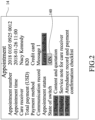
- Figure 3 illustrates an operation screen that is displayed by the client device 2 or the caregiver device 3 of the system and that shows the set of caregiving coordinates 144 according to an embodiment.
- the attendance-recording module 15 may be implemented by one of hardware, firmware, software, and any combination thereof.
- the attendance-recording module 15 may be implemented to be software modules in a program, where the software modules contain codes and instructions to carry out specific functionalities, and can be called individually or together to fulfill functions of the attendance-recording module 15 of this disclosure.
- modules may be embodied in: executable software as a set of logic instructions stored in a machine- or computer-readable storage medium of a memory such as random access memory (RAM), read only memory (ROM) , programmable ROM (PROM), firmware, flash memory, etc.; configurable logic such as programmable logic arrays (PLAs), field programmable gate arrays (FPGAs), complex programmable logic devices (CPLDs), etc.; fixed-functionality logic hardware using circuit technology such as application specific integrated circuit (ASIC), complementary metal oxide semiconductor (CMOS), transistor-transistor logic (TTL) technology, etc.; or any combination thereof.
- executable software as a set of logic instructions stored in a machine- or computer-readable storage medium of a memory such as random access memory (RAM), read only memory (ROM) , programmable ROM (PROM), firmware, flash memory, etc.
- configurable logic such as programmable logic arrays (PLAs), field programmable gate arrays (FPGAs), complex programmable logic devices (CP
- Each client device 2 is possessed by a corresponding client, and is configured to store an application program (APP) 29 and to execute the APP 29 to communicate with the server 1.
- a possessor of the client device 2 can operate the APP 29 to register as a client of the care service, and then the APP 29 allows the client to request the care service, to make payment for the care service, to designate the current state of the switch 140, and to check attendance history of the caregiver.
- the client device 2 may be a smartphone, a personal computer, a tablet computer, etc., but implementation of the client device 2 is not limited to the disclosure herein and may vary in other embodiments.
- the client device 2 is configured to be operated by the client to make payment for the care service (e.g., for specific care session(s), or the entire appointment including one or multiple care sessions), and the server 1 is configured to, when it is determined that the payment for the care service has been made, transmit the address 142 to the digital map provider 8 for the digital map provider 8 to convert the address 142 into the set of caregiving coordinates 144 and transmit the set of caregiving coordinates 144 to the server 1.
- the client device 2 is configured to communicate with the server 1, to request from the server 1 the set of caregiving coordinates 144 corresponding to the caregiving location, and to display the set of caregiving coordinates 144 as shown in Figures 3 and 6 .
- the caregiver device 3 is also capable of requesting from the server 1 the set of caregiving coordinates 144 corresponding to the caregiving location, and displaying the set of caregiving coordinates 144.
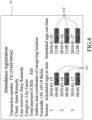
- the server 1 is configured to provide interface data that is related to an attendance interface 31 (see Figure 4 ) to the caregiver device 3 so as to allow the caregiver device 3 to display the attendance interface 31 for allowing the caregiver to sign in and sign out.
- the attendance interface 31 contains a plurality of sign-in buttons 311 and a plurality of sign-out buttons 312 corresponding respectively to the sign-in buttons 311.
- Each of the sign-in buttons 311 and the corresponding one of the sign-out buttons 312 are used respectively to sign in and sign out with respect to a single care session of care service (e.g., with the caregiving period being from 08:00 to 12:00 on January 15, 2018).
- the caregiver is allowed to sign in with respect to a care session by operating the sign-in button 311, and to sign out with respect to the care session by operating the sign-out button 312.
- the caregiver device 3 may include a touch screen for displaying the attendance interface 31, and the caregiver can operate each of the sign-in buttons 311 and the sign-out buttons 312 by touching a position of the touch screen that corresponds thereto.
- the caregiver device 3 is configured to communicate with the geolocation service provider 9, to communicate with the server 1 to obtain from the server 1 the interface data, and to display the attendance interface 31 based on the interface data for allowing the caregiver to sign in and sign out when it is determined that the current state of the switch 140 is in the ON state and that a current time is within a preset period, for example, 30 minutes before a start time point of the caregiving period 143.
- the caregiver device 3 is further configured to, when it is determined that the sign-out button 312 is operated, record a time instant when the sign-out button 312 is being operated (referred to as a "second time instant") as a sign-out time for the care session, and transmit the sign-out time to the server 1 for storage of the sign-out time in the server 1.
- the server 1 is configured to transmit a request for the set of sign-in coordinates 145 to the geolocation service provider 9 for the geolocation service provider 9 to request the sign-in position data related to the current geographic position of the caregiver device 3 from the caregiver device 3 and to transmit, to the server 1 with reference to the sign-in position data, the set of sign-in coordinates 145, thereby obtaining the set of sign-in coordinates 145 from the geolocation service provider 9.
- the server 1 does not transmit the request for the set of sign-in coordinates 145 to the geolocation service provider 9, thereby not obtaining the set of sign-in coordinates 145 from the geolocation service provider 9. Additionally, after it is determined that the disallowing button 322 is operated on the caregiver device 3, the server 1 is configured to enable the caregiver device 3 to display the authorization interface 32 again to ask the caregiver whether to allow the server 1 to obtain the current geographic position of the caregiver device 3 or not when it is determined that the sign-out button 312 is operated on the caregiver device 3 or that the sign-in button 311 is operated again.
- the set of caregiving coordinates 144 corresponding to the caregiving location, the set of sign-in coordinates 145 corresponding to the first current geographic position of the caregiver device 3, and the set of sign-out coordinates 146 corresponding to the second current geographic position of the caregiver device 3 are each a set of horizontal coordinates that contains longitude and latitude each being measured in decimal degrees and having five decimal places. For example, for an address corresponding to a caregiving location "TorstraBe 139, 10119 Berlin", the set of caregiving coordinates 144 corresponding thereto is "52.52967, 13.39910".
- the server 1 transmits the address 142 to the digital map provider 8 when it is determined that the payment for the care service has been made.
- the client may operate the APP 29 executed by the client device 2 to make the payment for the care service via a bank server (not shown) operated by a bank, and the bank server is configured to transmit a message to the server 1 to notify the server of completion of the payment for the care service upon receiving the payment.
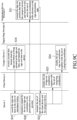
- step S07 the server 1 designates the current state of the switch 140 to the ON state when it is determined that the payment for the care service has been made.
- step S08 the server 1 transmits the interface data to the caregiver device 3 so as to allow the caregiver device 3 to display the attendance interface 31 when the server 1 determines that the current state of the switch 140 is the ON state.
- step S09 the caregiver device 3 determines whether a current time is within the preset period (e.g., 30 minutes) before the start time point of the caregiving period 143, and displays the attendance interface 31 based on the interface data for allowing the caregiver to sign in and sign out when it is determined that the current time is within the preset period (e.g., 30 minutes) before the start time of the caregiving period 143.
- the preset period e.g. 30 minutes
- Steps S10 to S18 are implemented when the caregiver operates the sign-in button 311 on the caregiver device 3.
- the server 1 may automatically transmit a request for the set of sign-in coordinates 145 or a request for the set of sign-out coordinates 146 to the geolocation service provider 9 for the geolocation service provider 9, without enabling the caregiver device 3, to display the authorization interface 32 when the corresponding one of the sign-in button 311 and the sign-out button 312 is operated again.
- the server 1 when it is determined that the disallowing button 322 is operated on the caregiver device 3, the server 1 does not transmit the request for the set of sign-in coordinates 145 to the geolocation service provider 9. As a result, the geolocation service provider 9 will not request the sign-in position data from the caregiver device 3, and thus the server 1 will not obtain the set of sign-in coordinates 145 from the geolocation service provider 9. Further, in the case that the disallowing button 322 was operated, when it is determined later that the sign-out button 312 is operated on the caregiver device 3 or that the sign-in button 311 is operated again on the caregiver device 3, the server 1 enables the caregiver device 3 to display the authorization interface 32 again to ask the caregiver whether to allow the server 1 to obtain a current geographic position of the caregiver device 3 or not.
- Steps S18 to S24 are implemented when the caregiver operates the sign-out button 312 on the caregiver device 3.
- step S18 when it is determined by the caregiver device 3 that the sign-out button 312 is operated, the caregiver device 3 records a time instant when the sign-out button 312 is being operated (a second time instant) as the sign-out time, and transmits the sign-out time to the server 1 for storage of the sign-out time in the server 1.
- the caregiver device 3 when the sign-out button 312 is operated, the caregiver device 3 further communicates with the server 1 through the APP 39 to notify the server 1 that the sign-out button 312 is operated.
- step S19 the server 1 records the sign-out time in the entry of attendance history.
- the server 1 enables the geolocation service provider 9 to request the sign-out position data related to a current geographic position of the caregiver device 3 (i.e., a second current geographic position) from the caregiver device 3, and to transmit, to the server 1 with reference to the sign-out position data, the set of sign-out coordinates 146 corresponding to the second current geographic position of the caregiver device 3 in the GCS.
- the server 1 transmits the set of sign-out coordinates 146 to the client device 2 in step S22, and then the client device 2 displays the set of sign-out coordinates 146 together with the set of caregiving coordinates 144 in step S23 (see Figure 6 ), so as to allow the client to determine whether the caregiver signed out at the caregiving location.
- the server 1 transmits the set of sign-out coordinates 146 further to the caregiver device 3 in step S22, and then the caregiver device 3 would display the set of sign-out coordinates 146 together with the set of caregiving coordinates 144 in step S24.
- the required data may include personal information of the client (e.g., name of the client, gender of the client, a phone number of the client and a communication address of the client), a bank account, and information related to the care receiver (e.g., name of the care receiver, gender of the care receiver, a phone number of the care receiver, and an address of a location where the care service is to be provided (i.e., the caregiving location)).
- the required data provided by the client is stored in the client database 12 of the server 1.
- the server 1 since the caregiver database 11 stores the required data provided by each caregiver (e.g., the keywords, the type (s) of care service offered, the service area and the preferred time), the server 1 is able to provide a search result of those of the caregivers who have the required data meeting the criteria inputted by the client. Subsequently, the client device 2 executing the APP 29 is configured to be operated, for example by the client, to choose among the caregivers provided by the server 1 through the search, and to make an appointment for a care session with one of the caregivers thus chosen (referred to as the chosen caregiver).
- the client device 2 executing the APP 29 is configured to be operated, for example by the client, to choose among the caregivers provided by the server 1 through the search, and to make an appointment for a care session with one of the caregivers thus chosen (referred to as the chosen caregiver).
- the server 1 In response to the making of the appointment with the chosen caregiver on the client device 2, the server 1 is configured to transmit a text message to the corresponding caregiver device 3 (i.e., the caregiver device 3 corresponding to the chosen caregiver) to notify the chosen caregiver that he/she has to respond to the client by providing a quoted price for the care service within, e.g., two hours.
- the corresponding caregiver device 3 i.e., the caregiver device 3 corresponding to the chosen caregiver
- the caregiver device 3 executing the APP 39 is configured to be operated by the caregiver to provide the quotation or to decline the appointment requested by the client.
- the chosen caregiver has to operate the caregiver device 3 to provide the cost estimate (i.e., the price that the chosen caregiver will charge for providing the care session).
- the chosen caregiver may choose to decline the appointment requested by the client.
- the server 1 transmits a text message to the client device 2 to notify the client that he/she has to approve the quotation and make payment by credit card or by bank transfer for the care session within, e.g., two hours based on the quotation provided by the chosen caregiver if he/she accepts the quotation.
- the appointment requested by the client will be automatically declined by default in case that no quotation is made by the chosen caregiver within the time limit, which is exemplarily two hours.
- the appointment record 14 stored in the server 1 can be checked by the client using the client device 2 operating the APP 29 or by the caregiver using the caregiver device 3 operating the APP 39.
- the server 1 is configured, when it is determined that the payment for the care session has been made, to designate the current state of the switch 140 to the ON state as shown in Figure 2 , and to provide the interface data to the caregiver device 3 so as to allow the caregiver device 3 to display the attendance interface 31 ( Figure 4 ) for allowing the caregiver to sign in and sign out.
- the current state of the switch 140 can also be designated to one of the ON state and the OFF state by operating the client device 2 executing the APP 29.
- the server 1 is configured to, when it is determined that the payment for the care service has been made, transmit the address 142 of the appointment record 14 to the digital map provider 8. Subsequently, the digital map provider 8 converts the address 142 into the set of caregiving coordinates 144, and transmits the set of caregiving coordinates 144 to the server 1 for storage of the set of caregiving coordinates 144 in the server 1.
- the set of caregiving coordinates 144 stored in the server 1 can be requested by each of the client device 2 and the caregiver device 3 for being displayed on the corresponding one of the client device 2 and the caregiver device 3.
- the caregiver device 3 obtains the interface data that is related to the attendance interface 31 from the server 1, and automatically displays the attendance interface 31 for allowing the caregiver to sign in and sign out when it is determined that the current state of the switch 140 is in the ON state and that a current time is within the preset period, e.g., 30 minutes before the start time of the caregiving period 143.
- the server 1 transmits to the caregiver device 3 interface data that is related to the authorization interface 32 for inquiring whether the caregiver allows the server 1 to track the current position of the caregiver device 3.
- the caregiver may operate the allowing button 321 of the authorization interface 32 so as to allow the server 1 to obtain the set of sign-in coordinates 145 and the set of sign-out coordinates 146 corresponding to the current position of the caregiver device 3 at the time of sign-in and sign-out, or may operate the disallowing button 322 of the authorization interface 32 so as to decline the server 1 the right to obtain the set of sign-in coordinates 145 and the set of sign-out coordinates 146.
- the server 1 will transmit to the caregiver device 3 the interface data that is related to the authorization interface 32 again so as to inquire again whether the caregiver allows the server 1 to track the current position of the caregiver device 3 whenever later the caregiver signs in or signs out by operating the caregiver device 3. After the caregiver has operated the allowing button 321 of the authorization interface 32 to allow the server 1 to track the current position of the caregiver device 3, the server 1 no longer transmits the interface data related to the authorization interface 32 to the caregiver device 3.
- the caregiver device 3 When the caregiver operates the sign-in button 311, the caregiver device 3 records a first time instant when the sign-in button 311 is being operated as the sign-in time, and transmits the sign-in time to the server 1 for storage of the sign-in time in the server 1.
- the caregiver device 3 records a second time instant when the sign-out button 312 is being operated as the sign-out time, and transmits the sign-out time to the server 1 for storage of the sign-out time in the server 1.
- the sign-in time and the sign-out time are recorded together in the entry of attendance history for the appointment record 14 of the appointment as shown in Figure 6 .
- the scheduled sign-in time is 8 AM and the scheduled sign-out time is 12 PM.
- the caregiver actually signed in at 8:04 AM and signed out at 11:59 AM on January 16, 2018. In this way, the client is able to determine whether the caregiver signed in and signed out on schedule.
- the server 1 enables the geolocation service provider 9 to request the sign-in position data related to a first current geographic position of the caregiver device 3 from the caregiver device 3, and to transmit to the server 1 the set of sign-in coordinates 145 corresponding to the first current geographic position of the caregiver device 3 in the GCS, with reference to the sign-in position data.
- the server 1 enables the geolocation service provider 9 to request the sign-out position data related to a second current geographic position of the caregiver device 3 from the caregiver device 3, and to transmit to the server 1 the set of sign-out coordinates 146 corresponding to the second current geographic position of the caregiver device 3 in the GCS, with reference to the sign-out position data.
- the set of sign-in coordinates 145 and the set of sign-out coordinates 146 are recorded together in the entry of attendance history for the appointment record 14 of the appointment as shown in Figure 6 .
- the client may notice that there is an abnormally large difference between 52.52964 degrees of the latitude in the set of sign-out coordinates 146 "52.52964, 13.39915" and 52.52967 degrees of the latitude in the set of caregiving coordinates 144 "52.52967, 13.39910".
- the client can use the set of sign-out coordinates "52.52964, 13.39915" as an input to a web mapping service (e.g., Google Maps or Apple Maps) provided by the digital map provider 8 so as to obtain a digital map 21 of an area around a target location 211 corresponding to the set of sign-out coordinates "52.52964, 13.39915" as shown in Figures 7 and 8 .
- a web mapping service e.g., Google Maps or Apple Maps
- the client may be able to know whether the caregiver signed out within a reasonable range of the caregiving location, regardless of how large the residence to which the caregiving location corresponds. Therefore, the system according to the disclosure enables a client to determine whether the caregiver signed in or signed out at an expected time and at an expected location.
- the system for recording attendance of a caregiver obtains the set of caregiving coordinates 144 by utilizing the server 1 to transmit to the digital map provider 8 the address 142 of the appointment record 14 for the care service, and obtains the sign-in coordinates 145 and sign-out coordinates 146 by utilizing the server 1 to enable the geolocation service provider 9 to request the position data from the caregiver device 3 and to transmit to the server 1 the sign-in coordinates 145 and sign-out coordinates 146, with reference to the position data.
- the client device 2 is capable of requesting the set of caregiving coordinates 144, the set of sign-in coordinates 145 and the set of sign-out coordinates 146 from the server 1, and displaying the set of caregiving coordinates 144, the set of sign-in coordinates 145 and the set of sign-out coordinates 146 together.
- the client may determine whether the caregiver signed in (or signed out) at the caregiving location by comparing the set of caregiving coordinates 144 and the set of sign-in coordinates 145 (or the set of sign-out coordinates 146).
Landscapes
- Health & Medical Sciences (AREA)
- Engineering & Computer Science (AREA)
- Business, Economics & Management (AREA)
- General Business, Economics & Management (AREA)
- Biomedical Technology (AREA)
- Epidemiology (AREA)
- General Health & Medical Sciences (AREA)
- Medical Informatics (AREA)
- Primary Health Care (AREA)
- Public Health (AREA)
- Medical Treatment And Welfare Office Work (AREA)
Priority Applications (1)
| Application Number | Priority Date | Filing Date | Title |
|---|---|---|---|
| EP21199652.5A EP4160610A1 (de) | 2021-09-29 | 2021-09-29 | System und verfahren zur erfassung der aufmerksamkeit einer betreuungsperson |
Applications Claiming Priority (1)
| Application Number | Priority Date | Filing Date | Title |
|---|---|---|---|
| EP21199652.5A EP4160610A1 (de) | 2021-09-29 | 2021-09-29 | System und verfahren zur erfassung der aufmerksamkeit einer betreuungsperson |
Publications (1)
| Publication Number | Publication Date |
|---|---|
| EP4160610A1 true EP4160610A1 (de) | 2023-04-05 |
Family
ID=78085436
Family Applications (1)
| Application Number | Title | Priority Date | Filing Date |
|---|---|---|---|
| EP21199652.5A Withdrawn EP4160610A1 (de) | 2021-09-29 | 2021-09-29 | System und verfahren zur erfassung der aufmerksamkeit einer betreuungsperson |
Country Status (1)
| Country | Link |
|---|---|
| EP (1) | EP4160610A1 (de) |
Citations (3)
| Publication number | Priority date | Publication date | Assignee | Title |
|---|---|---|---|---|
| US20180211724A1 (en) * | 2016-11-11 | 2018-07-26 | Kevin Sunlin Wang | System and method for healthcare billing verification |
| US20200162275A9 (en) * | 2007-08-16 | 2020-05-21 | Earl Edward Breazeale, JR. | Healthcare Tracking |
| US20210065884A1 (en) * | 2019-09-04 | 2021-03-04 | Shih-Chang CHAO | System for recording attendance of caregiver |
-
2021
- 2021-09-29 EP EP21199652.5A patent/EP4160610A1/de not_active Withdrawn
Patent Citations (3)
| Publication number | Priority date | Publication date | Assignee | Title |
|---|---|---|---|---|
| US20200162275A9 (en) * | 2007-08-16 | 2020-05-21 | Earl Edward Breazeale, JR. | Healthcare Tracking |
| US20180211724A1 (en) * | 2016-11-11 | 2018-07-26 | Kevin Sunlin Wang | System and method for healthcare billing verification |
| US20210065884A1 (en) * | 2019-09-04 | 2021-03-04 | Shih-Chang CHAO | System for recording attendance of caregiver |
Non-Patent Citations (1)
| Title |
|---|
| ANONYMOUS: "List of online map services - Wikipedia", 27 March 2021 (2021-03-27), XP055899531, Retrieved from the Internet <URL:https://en.wikipedia.org/w/index.php?title=List_of_online_map_services&oldid=1014507536> [retrieved on 20220309] * |
Similar Documents
| Publication | Publication Date | Title |
|---|---|---|
| US8533266B2 (en) | User presence detection and event discovery | |
| US10554612B2 (en) | Information exchange system, method, and apparatus for making medical appointments | |
| JP2016194797A (ja) | 端末装置、情報処理方法、及びプログラム | |
| US20210117924A1 (en) | Notification system | |
| US20190182616A1 (en) | Techniques for providing meeting location suggestions | |
| US20200037106A1 (en) | Service activity support method and service activity support system | |
| US20220351848A1 (en) | Method and system to facilitate patient care | |
| KR20150077739A (ko) | 유치원 관리 시스템 및 관리 방법 | |
| US11443848B2 (en) | System and method for providing notifications to a user based upon the location of the user | |
| US20200082430A1 (en) | Terminal device, display method, and recording medium | |
| US10892060B1 (en) | System and method for providing notifications to a user based upon the location of the user | |
| JP6059829B1 (ja) | 予約処理装置、ユーザ端末および予約処理方法 | |
| US20210287784A1 (en) | Wireless check-in system for healthcare environments | |
| US20230069831A1 (en) | System and method for recording attendance of a caregiver | |
| US11386997B2 (en) | System and method for providing notifications to a user | |
| US20200372586A1 (en) | Storage medium, information processing apparatus, and information processing method | |
| EP4160610A1 (de) | System und verfahren zur erfassung der aufmerksamkeit einer betreuungsperson | |
| US11756408B2 (en) | Communication terminal and rescue system | |
| JP6598110B2 (ja) | 認知機能支援システム及びそのプログラム | |
| JP2020013345A (ja) | 情報処理装置及び情報処理方法 | |
| AU2021229235A1 (en) | System and method for recording attendance of a caregiver | |
| JP6637538B2 (ja) | 順番管理システムおよびプログラム | |
| KR20180012509A (ko) | 일정을 관리하기 위한 방법 및 이를 지원하는 전자 장치 | |
| JPWO2020004418A1 (ja) | ケアサポートシステム | |
| US11443612B2 (en) | Rescue system |
Legal Events
| Date | Code | Title | Description |
|---|---|---|---|
| PUAI | Public reference made under article 153(3) epc to a published international application that has entered the european phase |
Free format text: ORIGINAL CODE: 0009012 |
|
| STAA | Information on the status of an ep patent application or granted ep patent |
Free format text: STATUS: THE APPLICATION HAS BEEN PUBLISHED |
|
| AK | Designated contracting states |
Kind code of ref document: A1 Designated state(s): AL AT BE BG CH CY CZ DE DK EE ES FI FR GB GR HR HU IE IS IT LI LT LU LV MC MK MT NL NO PL PT RO RS SE SI SK SM TR |
|
| STAA | Information on the status of an ep patent application or granted ep patent |
Free format text: STATUS: THE APPLICATION IS DEEMED TO BE WITHDRAWN |
|
| 18D | Application deemed to be withdrawn |
Effective date: 20231006 |