EP4161021A1 - Zuordnung von verwaltungsbezogenen entitäten zu geographischen gebieten - Google Patents
Zuordnung von verwaltungsbezogenen entitäten zu geographischen gebieten Download PDFInfo
- Publication number
- EP4161021A1 EP4161021A1 EP21200280.2A EP21200280A EP4161021A1 EP 4161021 A1 EP4161021 A1 EP 4161021A1 EP 21200280 A EP21200280 A EP 21200280A EP 4161021 A1 EP4161021 A1 EP 4161021A1
- Authority
- EP
- European Patent Office
- Prior art keywords
- geographical area
- criteria
- indication
- radio cell
- management data
- Prior art date
- Legal status (The legal status is an assumption and is not a legal conclusion. Google has not performed a legal analysis and makes no representation as to the accuracy of the status listed.)
- Pending
Links
- 230000006870 function Effects 0.000 claims abstract description 97
- 238000000034 method Methods 0.000 claims abstract description 55
- 230000004044 response Effects 0.000 claims description 17
- 238000004590 computer program Methods 0.000 claims description 11
- 230000002401 inhibitory effect Effects 0.000 claims description 3
- 238000007726 management method Methods 0.000 description 167
- 238000005259 measurement Methods 0.000 description 11
- 238000013480 data collection Methods 0.000 description 8
- 238000000354 decomposition reaction Methods 0.000 description 5
- 230000008859 change Effects 0.000 description 4
- 208000018910 keratinopathic ichthyosis Diseases 0.000 description 4
- 230000008901 benefit Effects 0.000 description 3
- 238000012360 testing method Methods 0.000 description 3
- 238000004891 communication Methods 0.000 description 2
- 238000005516 engineering process Methods 0.000 description 2
- 230000000670 limiting effect Effects 0.000 description 2
- 238000012986 modification Methods 0.000 description 2
- 230000004048 modification Effects 0.000 description 2
- 238000002360 preparation method Methods 0.000 description 2
- 230000003068 static effect Effects 0.000 description 2
- 238000012549 training Methods 0.000 description 2
- 230000006978 adaptation Effects 0.000 description 1
- 230000002776 aggregation Effects 0.000 description 1
- 238000004220 aggregation Methods 0.000 description 1
- 238000013473 artificial intelligence Methods 0.000 description 1
- 230000006399 behavior Effects 0.000 description 1
- 238000012790 confirmation Methods 0.000 description 1
- 238000010586 diagram Methods 0.000 description 1
- 238000011156 evaluation Methods 0.000 description 1
- 238000010801 machine learning Methods 0.000 description 1
- 238000004519 manufacturing process Methods 0.000 description 1
- 238000013507 mapping Methods 0.000 description 1
- 238000005065 mining Methods 0.000 description 1
- 238000010295 mobile communication Methods 0.000 description 1
- 230000036961 partial effect Effects 0.000 description 1
- 230000011664 signaling Effects 0.000 description 1
- 230000008685 targeting Effects 0.000 description 1
Images






Classifications
-
- H—ELECTRICITY
- H04—ELECTRIC COMMUNICATION TECHNIQUE
- H04L—TRANSMISSION OF DIGITAL INFORMATION, e.g. TELEGRAPHIC COMMUNICATION
- H04L41/00—Arrangements for maintenance, administration or management of data switching networks, e.g. of packet switching networks
- H04L41/50—Network service management, e.g. ensuring proper service fulfilment according to agreements
- H04L41/5041—Network service management, e.g. ensuring proper service fulfilment according to agreements characterised by the time relationship between creation and deployment of a service
- H04L41/5051—Service on demand, e.g. definition and deployment of services in real time
-
- H—ELECTRICITY
- H04—ELECTRIC COMMUNICATION TECHNIQUE
- H04W—WIRELESS COMMUNICATION NETWORKS
- H04W24/00—Supervisory, monitoring or testing arrangements
- H04W24/02—Arrangements for optimising operational condition
-
- H—ELECTRICITY
- H04—ELECTRIC COMMUNICATION TECHNIQUE
- H04L—TRANSMISSION OF DIGITAL INFORMATION, e.g. TELEGRAPHIC COMMUNICATION
- H04L41/00—Arrangements for maintenance, administration or management of data switching networks, e.g. of packet switching networks
- H04L41/40—Arrangements for maintenance, administration or management of data switching networks, e.g. of packet switching networks using virtualisation of network functions or resources, e.g. SDN or NFV entities
-
- H—ELECTRICITY
- H04—ELECTRIC COMMUNICATION TECHNIQUE
- H04L—TRANSMISSION OF DIGITAL INFORMATION, e.g. TELEGRAPHIC COMMUNICATION
- H04L41/00—Arrangements for maintenance, administration or management of data switching networks, e.g. of packet switching networks
- H04L41/50—Network service management, e.g. ensuring proper service fulfilment according to agreements
- H04L41/5058—Service discovery by the service manager
-
- H—ELECTRICITY
- H04—ELECTRIC COMMUNICATION TECHNIQUE
- H04W—WIRELESS COMMUNICATION NETWORKS
- H04W16/00—Network planning, e.g. coverage or traffic planning tools; Network deployment, e.g. resource partitioning or cells structures
- H04W16/18—Network planning tools
-
- H—ELECTRICITY
- H04—ELECTRIC COMMUNICATION TECHNIQUE
- H04W—WIRELESS COMMUNICATION NETWORKS
- H04W8/00—Network data management
-
- H—ELECTRICITY
- H04—ELECTRIC COMMUNICATION TECHNIQUE
- H04W—WIRELESS COMMUNICATION NETWORKS
- H04W64/00—Locating users or terminals or network equipment for network management purposes, e.g. mobility management
- H04W64/003—Locating users or terminals or network equipment for network management purposes, e.g. mobility management locating network equipment
Definitions
- the present disclosure relates to management related entities, such as management data, jobs for data collection, network functions, and management services.
- Management data may comprise measurements taken by the network functions, counts of certain relevant conditions in the network, including aggregations and reports of such data. They may also include alarm messages, log files, configuration data, including inventory data. Management data may be used for management purposes. For example, management data are specified by 3GPP for 5G management. They are classified into 5G performance measurements as defined by 3GPP TS 28.552, 5G end to end key performance indicators as defined by 3GPP TS 28.554 and Trace/MDT data as defined by 3GPP TS 32.422.
- the tools are deployed in a hierarchical way, like a pyramid, where tools consume data from a lower layer, aggregate the data, and pass them to a higher layer of tools.
- the operator established this management pyramid by connecting these tools manually and in a more or less static way.
- 3GPP SA5 currently has work items to define management services to discover management services and to discover management data. Common to all of them is the inclusion of geographical area.
- 3GPP TS 23.032 describes geographical areas. Namely, it basically describes the coding of geographical areas on interfaces.
- OMA-TS-REST-NetAPI-ZonaIPresence-V1-0-20160308-C "RESTful Network API for Zonal Presence" describes the concept of "zones" as a set of access points, where any criterion might be used to define the set of access points, i.e. a zone is not necessarily defined by a geographical area.
- an apparatus comprising:
- the instructions when executed by the one or more processors, may further cause the apparatus to perform: requesting, from the producer, for the geographical area, at least one of
- the one or more criteria may comprise at least one of
- the request may comprise the threshold value; the threshold value may be predefined; the request may comprise the margin; the margin may be predefined; the request may comprise a hint that only one of the one or more criteria is relevant.
- an apparatus comprising: one or more processors, and memory storing instructions that, when executed by the one or more processors, cause the apparatus to perform:
- the instructions when executed by the one or more processors, may cause the apparatus to perform, for each of one or more radio cells: determining all the network functions serving the respective radio cell and/or all the management data related to the determined network functions and/or all the management services related to the determined network functions, respectively, if the respective radio cell fulfills the at least one of the one or more criteria.
- an apparatus comprising: one or more processors, and memory storing instructions that, when executed by the one or more processors, cause the apparatus to perform:
- the instructions when executed by the one or more processors, may cause the apparatus to further perform, for each of one or more radio cells: reporting the determined one or more network functions in response to the received request.
- the one or more criteria may comprise at least one of:
- the request may comprise the threshold value; the threshold value may be predefined; the request may comprise the margin; the margin may be predefined.
- the instructions when executed by the one or more processors, may cause the apparatus to further perform, for each of the one or more radio cells:
- a method comprising: requesting, from a producer, at least one of
- the method may further comprise: requesting, from the producer, for the geographical area, at least one of
- the one or more criteria may comprise at least one of
- the request may comprise the threshold value; the threshold value may be predefined; the request may comprise the margin; the margin may be predefined; the request may comprise a hint that only one of the one or more criteria is relevant.
- a fifth aspect of the invention there is provided a method, comprising:
- the method may further comprise: determining all the network functions serving the respective radio cell and/or all the management data related to the determined network functions and/or all the management services related to the determined network functions, respectively, if the respective radio cell fulfills the at least one of the one or more criteria.
- a sixth aspect of the invention there is provided a method, comprising:
- the method may further comprise, for each of one or more radio cells: reporting the determined one or more network functions in response to the received request.
- the one or more criteria may comprise at least one of:
- the request may comprise the threshold value; the threshold value may be predefined; the request may comprise the margin; the margin may be predefined.
- the method may further comprise, for each of the one or more radio cells:
- Each of the methods of the fourth to sixth aspects may be a method of assigning management related entities.
- a computer program product comprising a set of instructions which, when executed on an apparatus, is configured to cause the apparatus to carry out the method according to any of the fourth to sixth aspects.
- the computer program product may be embodied as a computer-readable medium or directly loadable into a computer.
- the apparatus is configured to perform the corresponding method, although in some cases only the apparatus or only the method are described.
- the operator In order to evaluate and assess services provided in specific geographical areas, the operator should detect the corresponding data and corresponding management services both, to collect the data as well as to control the network. Besides, in particular driven by the trend towards multi-vendor networks, in the future there might be more and more (external) consumers without detailed knowledge of the network requesting for management data. As these consumers might not be aware of the corresponding network entities, these requests should be based on geographical areas but not based on identities of the underlying network functions.
- Some example embodiments of the invention provide methods and apparatuses allowing the service consumer to request information on management entities and/or to control at least the generation of management data such that the service consumer might not need to know the underlying network functions.
- a service to discover management data and an associated service to discover management services shall support the operator. Such discovery services even might enable tools to find data autonomously in the future. Operators or tools might ask discovery services questions like: "Which management services (i.e. service endpoints) do I need to contact in order to retrieve the performance management (PM) data related to the geographical area of a factory campus with these geographical coordinates?"
- a mobile network especially the question for the geographical area associated to a network function is not easy to answer because the location of the network elements running a specific network function is not necessarily the same as the area of service.
- a network function might run "somewhere" in a cloud computing center, far away from the actual area of service which is determined by the coverage area of a set of cells. Therefore, in a mobile network the question for data, network functions, or management services that are related to a given geographical area does not have a straight forward answer.
- the way of question and answer is well defined and, more preferably, even standardized.
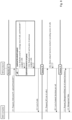
- Fig. 1 shows an example of a portion of a network comprising several network functions.
- RU, DU, CU, UPF and management services (MnS) are involved in providing the coverage of the cells in a specific area.
- MnS management services
- the response contains all network functions and management services that are involved in providing service for that cell.
- the method of matching the areas needs a criterion to decide between coverage areas "within” or "outside” the requested geographical area.
- the management system may evaluate the overlap of the coverage areas of cells with the requested geographical area.
- the management system may regard management data or a management service associated to the requested geographical area if the network function is involved in providing the coverage of the cell.
- management system may evaluate the overlap of the coverage area of associated cells with the requested geographical area.
- the association between MnS or management data with a requested geographical area may be indirect via the coverage area of cells and the connected network functions, that are associated with the MnS or management data.
- the method of matching the requested geographical area with the coverage area of cells may consider a threshold.
- the threshold may be given as parameter in the request, or it may be predefined. This threshold defines the share of the coverage area of a cell that must be within the requested geographical area in order to regard the cell as included in the geographical area.
- the cell is regarded as included in the requested area.
- a threshold e.g. 30%
- this cell is regarded as not included in the requested area.
- the management services associated to this cell and the data associated to this cell may not be associated with the cell.
- the request including the threshold is standardized. In some example embodiments, the request may or may not comprise the threshold. If the request comprises the threshold, the value in the request has prevalence over a predefined value of the threshold. If the request does not comprise the threshold, the predefined value of the threshold is applied.
- the threshold may be indicated as a relative value (e.g. percentage of the coverage area of a cell) or as an absolute value (e.g. in square meters).
- the antenna related to the cell i.e. a point
- the antenna related to the cell i.e. a point
- another criterion may be applied.
- a coverage area of a cell is considered to be included in the requested area if both criteria are fulfilled.
- the coverage area of a cell is considered to be included in the requested area if at least one of the criteria is fulfilled.
- the coverage area of a cell is considered to be included in the requested area if one of the criteria is fulfilled, and the other criterion is ignored.
- the margin may be predefined and/or included in the request. If there is a predefined margin and the request comprises a margin, the latter supersedes the former.
- the margin may be 0, i.e., the antenna has to be in the requested geographical area.
- the margin may have a positive value, i.e., the antenna may be in the requested geographical area or outside the requested geographical area, but within the margin around the requested geographical area.
- the margin may have a negative value, i.e., the antenna has to be within the requested geographical area and separated from the border of it by at least the margin.
- the meaning of negative and positive values of the margin may be inverse to the above explanation.
- the threshold may be used to define implicitly which one of the criteria is to be applied:
- This implicit signaling may be considered as a hint which criterion is to be applied.
- explicit hints i.e., a dedicated IE
- the cell coverage may change over time e.g. by reconfiguring the tilt of cells or selecting another pattern in beam forming (GoB, "grid of beams").
- GoB beam of beams
- the consumer of the management system might change the requested geographical area. In both cases the association between geographical area to cell coverage area might change.
- the association between geographical area to cell coverage area may be reused if another set of network functions and/or management data and/or management services is requested later in time, or if another job of data collection is to be created alter in time.
- certain use cases might benefit from a dynamic adaptation of the matching.
- the association between geographical area to cell coverage area may be determined for each request.
- the association may have a validity time during which the association is considered to be static, and thereafter, it is determined anew. By using a specific parameter in the request, the consumer might indicate whether a dynamic behaviour of the association is required, or if the association has a validity time. The value of the validity time may be predefined or indicated in the request.
- the resolution of management services or management data related to a given geographical area shall consider the overlap of the coverage area of the cells with the requested geographical area, taking into account a threshold, or taking into account the location of the antenna.
- the flow charts of Figs. 3 to 10 are shown for the example that the criterion is adopted that the requested geographical area covers a portion of the radio cell, wherein the minimum portion is indicated by a threshold.
- the threshold value is predefined or, optionally, comprised in the request.
- Fig. 3 Identify NFs providing service in a geographical area
- This functionality supports the operator or other management tools in selecting the proper NFs e.g. when creating a new slice, that shall cover a certain area.
- the request specifies the geographical area and, optionally, the threshold.
- the response contains a list of NFs that are involved in providing coverage for that area.
- Fig. 4 Select management data collected in a geographical area
- This functionality supports the operator to retrieve management data, that was (already) collected and stored, related to a certain geographical area. This may be required for example for assuring a service in a geographical area (such as a network slice) or for training a ML model for a geographical area.
- the request specifies the geographical area and optionally the threshold.
- the response contains the management data related to that area.
- This function may be required for providing a solution to requirements agreed in the 3GPP Rel-17 Wok Item "Management data collection and discovery (MADCOL) ".
- Fig. 5 Request management data collection in a geographical area
- This functionality supports the operator in requesting the collection of (new) management data in a certain geographical area. This may be required for example for assuring a service in a geographical area (such as a network slice) or for training a ML model for a geographical area. Also when analytics need to be produced for a certain geographical area, this functionality may be required.
- the request specifies the geographical area and, optionally, the threshold.
- the MnS producer determines the NFs where management data shall be collected and creates the required data collection jobs.
- the response may contain a list with NFs where data is collected. For example, the collected data may be reported conventionally. In some example embodiments, the response may not comprise the list of NFs but just a confirmation that the request was received and executed. Then, the collected data may be collected as described with respect to Fig. 4 .
- This function may be required for providing a solution to requirements agreed in the 3GPP Rel-17 Work Item "Management data collection and discovery (MADCOL) " and in the 3GPP Rel-17 Work Item “Enhanced closed loop automation (eCOSLA) ".
- MADCOL Management data collection and discovery
- eCOSLA Enhanced closed loop automation
- Fig. 6 Identify the Management Services managing a geographical area
- This functionality supports the operator in identifying the Management Services that are managing a geographical area. This may be required as a helper function for many operational tasks relating to geographical areas.
- the request specifies the geographical area and, optionally, the threshold.
- the response contains a list of Management Services.
- This function may be required for providing a solution to requirements agreed in the 3GPP Rel-17 Work Item "5G Management Service discovery (5GDMS)”.
- 5GDMS 5G Management Service discovery
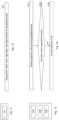
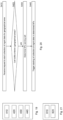
- the Management Services described above in Figs. 3 to 6 may be decomposed in a sequence of individual management services. These individual management services and their chaining are shown in Figs. 7 to 10 . Each subsequent management service uses the result of its precedent management service. Note that according to the decompositions of Figs. 7 to 10 , intermediate results, such as the list of cells and/or the list of network functions per cell, are provided to the MnS consumer. As shown in Figs. 3 to 6 , it is not mandatory that the MnS consumer receives such intermediate results. Instead, the MnS producer may autonomously use the intermediate results for the subsequent management service.
- Fig. 7 Identify NFs providing service in a geographical area
- Fig. 7 shows the decomposition of the management service of Fig. 3 .
- Fig. 8 Select management data collected in a geographical area
- Fig. 8 shows the decomposition of the management service of Fig. 4 .
- Fig. 9 Request management data collection in a geographical area
- Fig. 9 shows the decomposition of the management service of Fig. 5 .
- Fig. 10 Identify Management Services managing a geographical area
- Fig. 10 shows the decomposition of the management service of Fig. 6 .
- the coverage area of a given cell may be stored beforehand as configuration of MnS A and/or it might be provided to MnS A, e.g. by a radio planning tool.
- the coverage area might be derived from measurements of UE, e.g. drive tests or the MDT feature, or calculated by a radio planning tool. It may be defined e.g. by the area where a UE and the cell are able to maintain a communication link of a quality better than a given threshold. For example, this coverage area might be described by its surrounding polygon or an enclosing circle or ellipse.
- the requested geographical area might be defined by its surrounding polygon or an enclosing circle or ellipse.
- MnS A may detect all cells (or a subset of all cells) which fulfill the condition that the coverage area of the respective cell is covered by the requested geographical area by a portion higher than a threshold
- the service producer may evaluate the configuration data of the network to infer the set of one or more NFs that are involved in providing service for these cells.
- Each of the flow charts of Figs. 7 to 10 comprises, as a first service, MnS A: Maps geographical area into cells. This management service may be useful stand-alone, too, in order to inform an interested party in the cells the coverage area of which covers a certain area.
- each of the flow charts of Figs. 7 to 10 comprises, as a second service, MnS B: Maps cells into NFs that are involved in providing service for these cells.
- MnS A and MnS B may be considered as basic management services.
- This IOC represents a data collection request job.
- the requested data could be of kind Trace, MDT (Minimization of Drive Test), RLF (Radio Link Failure) report, RCEF (RRC Connection Establishment Failure) report, PM (performance metrics) or a combination of these.
- a MnS consumer To activate the production of the requested data, a MnS consumer has to create a ManagementDataCollectionJob object instance on the MnS producer.
- the MnS producer itself has to set up one or several specific data collectionjobs (Trace Job, PerfMetricJob) taking the attributes of ManagementDataCollectionJob into account.
- This intermediate step is necessary, as the MnS consumer setting up this ManagmentDataCollectionJob might not be aware of the necessary detailed knowledge about the network e.g. DNs.
- the MnS producer will derive multiple jobs from a single ManagementDataCollectionJob for collecting the required management data. Once it receives the measurements from multiple sources, it consolidates the data into a set of management data for reporting.
- the attribute metricList defines the list of metrics which should be reported.
- the attribute area Of Interest specifies the area for which data shall be collected.
- the area can be configured by a list of TAI, a list of cells identified by NG-RAN CGI or by a geographical area.
- the MnS producer maps the area Of Interest to corresponding values of the attributes (e.g. tjTrace Target, tj MDT Area Scope, object Instances) in the specific data collectionjobs. This could be done by an internal mapping performed by the management function exposing this MnS.
- the attribute collectionTimePeriod specifies the duration for which the management data should be reported.
- the attribute reportingCtrl specifies the method and associated control parameters for reporting the produced measurements to MnS consumers.
- the optional attribute anonymization Of Data defines the level of anonymization for management based MDT.
- the attribute operational State defines if the object instance is operable or inoperable. This state is set by the object instance or the MnS producer.
- This data type defines a geographical location on earth.
- This data type defines the area which shall be considered for the service.
- This data type defines a geographical area by specifying the corners of a convex polygon in the attribute geo Coord List. If three or four geographical coordinates are configured, the shape of the geographical area simplifies to a triangular or rectangular.
- the MnS producer shall map the geographical area to cells. There are two evaluation criteria whether a cell belongs to a geographical area or not. If attribute association Threshold is absent, the location of the base station antenna determines the belonging. If attribute associationThreshold is configured, the coverage area is considered. The attribute associationThreshold determines the lower boundary of the coverage ratio. For example, if the associationThreshold is configured to 60%, a cell shall be considered as included in the geographical area if at least 60% of the coverage are of that cell overlaps with the specified geographical area.
- the GeoArea is included in a ManagementDataCollectionJob and the requested trace reporting is targeting a core function, the geographical area shall be mapped to the UE identifiers currently located in this area.
- This data type defines a collection time duration for which the management data should be reported.
- metricList List of metrics which shall be reported This could include metrics defined in TS 28.552 [20], TS 28.554 [28], TS 37.320 [x] and TS 32.422 [30].
- the metrics are identified with their names. type: string multiplicity: 1..* isOrdered: N/A is Unique: N/A For measurements defined in TS 28.552 [20] the name is defined according to the KPI definitions template as the component designated with e) defaultValue: No isNullable: True For KPIs defined in TS 28.554 [28] the name is defined according to the KPI definitions template as the component designated with a).
- the name is MDT mode (either "LoggedMDT" or "Immediate MDT”). In case of Immediate MDT, the name consists of two items. The first item is the MDT mode, the second item identifies the name of the measurement itself i.e. M1, M2,..., M9, RLF, RCEF.
- the name is constructed as follows: - "NEtype.interface” for messages to/from a certain NE on a certain interface - "NEtype” for messages to/from a certain NE allowedValues: N/A areaOflnterest It specifies the area from where the management data shall be collected.
- N/A isNullable True latitude It specifies the latitude of a geographical coordinate based on World Geodetic System (1984 version) global reference frame (WGS 84). The unit is degree. Positive values correspond to the northern hemisphere. type: float multiplicity: 1 isOrdered: N/A Allowed values: -90.0000, ...,90.0000 is Unique: N/A defaultValue: N/A isNullable: True associationThreshold It specifies the threshold of coverage area in percentage whether a cell belongs to the geographical area or not. If this attribute is absent, the location of the base station antenna determines if a cell belong to the geographical area or not. type: Integer multiplicity: 1 isOrdered: N/A is Unique: N/A defaultValue: No Allowed values: 1,...,100 isNullable: True************ End: Example embodiment of the invention*************************
- Fig. 11 shows an apparatus according to an example embodiment of the invention.
- the apparatus may be a service consumer or an element thereof.
- Fig. 12 shows a method according to an example embodiment of the invention.
- the apparatus according to Fig. 11 may perform the method of Fig. 12 but is not limited to this method.
- the method of Fig. 12 may be performed by the apparatus of Fig. 11 but is not limited to being performed by this apparatus.
- the apparatus comprises means for requesting 10.
- the means for requesting 10 may be a requesting means.
- the means for requesting 10 may be a request.
- the means for requesting 10 may be a requesting processor.
- the means for requesting 10 requests (S10), from a producer, at least one of
- the at least one of the criteria is fulfilled only if the respective one of the network functions, the network management services, the radio cells, and the management data are related to a geographical area.
- the geographical area is indicated in the request.
- a criterion may be that the geographical area covers at least a portion of a radio cell.
- a criterion may be that an antenna of a radio cell is within the geographical area (potentially with some margin).
- the network functions and/or management services and/or management data are related to the respective radio cell.
- Fig. 13 shows an apparatus according to an example embodiment of the invention.
- the apparatus may be a service producer or an element thereof.
- Fig. 14 shows a method according to an example embodiment of the invention.
- the apparatus according to Fig. 13 may perform the method of Fig. 14 but is not limited to this method.
- the method of Fig. 14 may be performed by the apparatus of Fig. 13 but is not limited to being performed by this apparatus.
- the apparatus comprises means for receiving 110, means for checking 120, and means for providing 130.
- the means for receiving 110, means for checking 120, and means for providing 130 may be a receiving means, checking means, and providing means, respectively.
- the means for receiving 110, means for checking 120, and means for providing 130 may be a receiver, checker, and provider, respectively.
- the means for receiving 110, means for checking 120, and means for providing 130 may be a receiving processor, checking processor, and providing processor, respectively.
- the means for receiving 110 receives a request to provide an indication of one or more radio cells covered by a geographical area (S110).
- the means for checking 120 checks, for each of one or more radio cells (also named candidate cells), if the radio cell fulfills at least one of one or more criteria (S120).
- Each of the one or more criteria is only fulfilled if the respective radio cell is related to the geographical area.
- the one or more criteria may comprise at least one of:
- candidate cells are all cells that the apparatus is aware of, i.e. all cells that have been configured as preparation of the apparatus.
- the apparatus may designate the candidate cells by comparing coverage area coordinates (e.g. corners or centre of the coverage area) of the respective cell and range of coordinates (e.g. min/max of longitude and latitude) of the geographical area, and/or by comparing coordinates of antenna and range of coordinates of the geographical area.
- the means for providing 130 provides, in response to the request received in S110, the indication of the respective radio cell (S130).
- Fig. 15 shows an apparatus according to an example embodiment of the invention.
- the apparatus may be a service producer or an element thereof.
- Fig. 16 shows a method according to an example embodiment of the invention.
- the apparatus according to Fig. 15 may perform the method of Fig. 16 but is not limited to this method.
- the method of Fig. 16 may be performed by the apparatus of Fig. 15 but is not limited to being performed by this apparatus.
- the apparatus comprises means for receiving 210, means for checking 220, means for determining 230, and means for providing 240.
- the means for receiving 210, means for checking 220, means for determining 230, and means for providing 240 may be a receiving means, checking means, determining means, and providing means, respectively.
- the means for receiving 210, means for checking 220, means for determining 230, and means for providing 240 may be a receiver, checker, determiner, and provider, respectively.
- the means for receiving 210, means for checking 220, means for determining 230, and means for providing 240 may be a receiving processor, checking processor, determining processor, and providing processor, respectively.
- the means for receiving 210 receives a request to provide an indication of one or more network functions serving a geographical area (S210).
- the means for checking 220 checks, for each of one or more radio cells (candidate cells, as explained hereinabove), if the radio cell fulfills at least one of one or more criteria (S220).
- Each of the one or more criteria is only fulfilled if the respective radio cell is related to the geographical area.
- the one or more criteria may comprise at least one of:
- the means for determining 230 determines one or more network functions serving the respective radio cell (S230).
- the means for providing 240 provides, in response to the request received in S210, the indication of the determined network functions (S240).
- Fig. 17 shows an apparatus according to an example embodiment of the invention.
- the apparatus may be a service producer or an element thereof.
- Fig. 18 shows a method according to an example embodiment of the invention.
- the apparatus according to Fig. 17 may perform the method of Fig. 18 but is not limited to this method.
- the method of Fig. 18 may be performed by the apparatus of Fig. 17 but is not limited to being performed by this apparatus.
- the apparatus comprises means for receiving 310, means for checking 320, first means for determining 330, second means for determining 340, and means for providing 350.
- the means for receiving 310, means for checking 320, first means for determining 330, second means for determining 340, and means for providing 350 may be a receiving means, checking means, first determining means, second determining means, and providing means, respectively.
- the means for receiving 310, means for checking 320, first means for determining 330, second means for determining 340, and means for providing 350 may be a receiver, checker, first determiner, second determiner, and provider, respectively.
- the means for receiving 310, means for checking 320, first means for determining 330, second means for determining 340, and means for providing 350 may be a receiving processor, checking processor, first determining processor, second determining processor, and providing processor, respectively.
- the means for receiving 310 receives a request to provide management data related to the geographical area and/or an indication of one or more management services serving the geographical area (S310).
- the means for checking 320 checks, for each of one or more radio cells (candidate cells, as explained hereinabove), if the radio cell fulfills at least one of one or more criteria (S320).
- Each of the one or more criteria is only fulfilled if the respective radio cell is related to the geographical area.
- the one or more criteria may comprise at least one of:
- the first means for determining 330 determines one or more network functions serving the respective radio cell (S330).
- the second means for determining 340 determines management data and/or one or more management services, respectively, related to the one or more network functions determined in S330 (S340).
- the means for providing 350 provides, in response to the request received in S310, the management data and/or the indication of the determined one or more management services (S350).
- Fig. 19 shows an apparatus according to an example embodiment of the invention.
- the apparatus may be a service producer or an element thereof.
- Fig. 20 shows a method according to an example embodiment of the invention.
- the apparatus according to Fig. 19 may perform the method of Fig. 20 but is not limited to this method.
- the method of Fig. 20 may be performed by the apparatus of Fig. 19 but is not limited to being performed by this apparatus.
- the apparatus comprises means for receiving 410, means for checking 420, means for determining 430, and means for triggering 440.
- the means for receiving 410, means for checking 420, means for determining 430, and means for triggering 440 may be a receiving means, checking means, determining means, and triggering means, respectively.
- the means for receiving 410, means for checking 420, means for determining 430, and means for triggering 440 may be a receiver, checker, determiner, and trigger, respectively.
- the means for receiving 410, means for checking 420, means for determining 430, and means for triggering 440 may be a receiving processor, checking processor, determining processor, and triggering processor, respectively.
- the means for receiving 410 receives a request to start collection of management data for a geographical area (S410).
- the means for checking 420 checks, for each of one or more radio cells (candidate cells, as explained hereinabove), if the radio cell fulfills at least one of one or more criteria (S420).
- Each of the one or more criteria is only fulfilled if the respective radio cell is related to the geographical area.
- the one or more criteria may comprise at least one of:
- the means for determining 430 determines one or more network functions serving the respective radio cell (S430).
- the means for triggering 440 triggers the one or more network functions determined in S430 to start collection of the management data for the respective radio cell (S440).
- a means for providing may provide, in response to the request received in S410, provide an indication of the network functions for which the collection of management data is started.
- Fig. 21 shows an apparatus according to an embodiment of the invention.
- the apparatus comprises at least one processor 810, at least one memory 820 including computer program code, and the at least one processor 810, with the at least one memory 820 and the computer program code, being arranged to cause the apparatus to at least perform at least the method according to at least one of Figs. 12, 14 , 16 , 18 , and 20 and related description.
- 5G 5G
- the invention is not limited to 5G. It may be used in other networks, too, e.g. in previous or forthcoming generations of 3GPP networks such as 4G, 6G, or 7G, etc.
- the invention is not limited to 3GPP communication networks but may be applied to non-3GPP mobile communication networks, too.
- One piece of information may be transmitted in one or plural messages from one entity to another entity. Each of these messages may comprise further (different) pieces of information.
- Names of network elements, network functions, protocols, and methods are based on current standards. In other versions or other technologies, the names of these network elements and/or network functions and/or protocols and/or methods may be different, as long as they provide a corresponding functionality.
- each of the entities described in the present description may be based on a different hardware, or some or all of the entities may be based on the same hardware. It does not necessarily mean that they are based on different software. That is, each of the entities described in the present description may be based on different software, or some or all of the entities may be based on the same software.
- Each of the entities described in the present description may be deployed in the cloud.
- example embodiments of the present invention provide, for example, a service consumer or a component thereof, an apparatus embodying the same, a method for controlling and/or operating the same, and computer program(s) controlling and/or operating the same as well as mediums carrying such computer program(s) and forming computer program product(s).
- example embodiments of the present invention provide, for example, a service producer or a component thereof, an apparatus embodying the same, a method for controlling and/or operating the same, and computer program(s) controlling and/or operating the same as well as mediums carrying such computer program(s) and forming computer program product(s).
- Implementations of any of the above described blocks, apparatuses, systems, techniques or methods include, as non-limiting examples, implementations as hardware, software, firmware, special purpose circuits or logic, general purpose hardware or controller or other computing devices, or some combination thereof.
- Each of the entities described in the present description may be embodied in the cloud.
Landscapes
- Engineering & Computer Science (AREA)
- Computer Networks & Wireless Communication (AREA)
- Signal Processing (AREA)
- Databases & Information Systems (AREA)
- Mobile Radio Communication Systems (AREA)
Priority Applications (3)
| Application Number | Priority Date | Filing Date | Title |
|---|---|---|---|
| EP21200280.2A EP4161021A1 (de) | 2021-09-30 | 2021-09-30 | Zuordnung von verwaltungsbezogenen entitäten zu geographischen gebieten |
| US17/957,238 US20230102703A1 (en) | 2021-09-30 | 2022-09-30 | Assign management related entities to geographical areas |
| CN202211210687.2A CN115915008A (zh) | 2021-09-30 | 2022-09-30 | 将管理相关实体分配给地理区域 |
Applications Claiming Priority (1)
| Application Number | Priority Date | Filing Date | Title |
|---|---|---|---|
| EP21200280.2A EP4161021A1 (de) | 2021-09-30 | 2021-09-30 | Zuordnung von verwaltungsbezogenen entitäten zu geographischen gebieten |
Publications (1)
| Publication Number | Publication Date |
|---|---|
| EP4161021A1 true EP4161021A1 (de) | 2023-04-05 |
Family
ID=78402011
Family Applications (1)
| Application Number | Title | Priority Date | Filing Date |
|---|---|---|---|
| EP21200280.2A Pending EP4161021A1 (de) | 2021-09-30 | 2021-09-30 | Zuordnung von verwaltungsbezogenen entitäten zu geographischen gebieten |
Country Status (3)
| Country | Link |
|---|---|
| US (1) | US20230102703A1 (de) |
| EP (1) | EP4161021A1 (de) |
| CN (1) | CN115915008A (de) |
Families Citing this family (1)
| Publication number | Priority date | Publication date | Assignee | Title |
|---|---|---|---|---|
| US20240073790A1 (en) * | 2022-08-29 | 2024-02-29 | Charter Communications Operating, Llc | Selective searching for wireless networks |
Citations (3)
| Publication number | Priority date | Publication date | Assignee | Title |
|---|---|---|---|---|
| US20210021494A1 (en) * | 2019-10-03 | 2021-01-21 | Intel Corporation | Management data analytics |
| WO2021063083A1 (zh) * | 2019-09-30 | 2021-04-08 | 中兴通讯股份有限公司 | 网络数据采集方法、装置和系统 |
| WO2021110287A1 (en) * | 2019-12-03 | 2021-06-10 | Telefonaktiebolaget Lm Ericsson (Publ) | Discovery of a service-providing network function |
Family Cites Families (8)
| Publication number | Priority date | Publication date | Assignee | Title |
|---|---|---|---|---|
| US8891396B2 (en) * | 2012-10-24 | 2014-11-18 | Intel Mobile Communications GmbH | Communication device, mobile terminal, method for requesting information and method for providing information |
| US9706411B2 (en) * | 2015-11-19 | 2017-07-11 | T-Mobile Usa, Inc. | Small cell planning tool |
| US10098007B2 (en) * | 2016-08-15 | 2018-10-09 | T-Mobile Usa, Inc. | Coverage management for wireless communication network |
| US11140568B2 (en) * | 2018-08-17 | 2021-10-05 | Huawei Technologies Co., Ltd. | Systems and methods for managing capacity and coverage in communication networks |
| CN112913276A (zh) * | 2018-09-12 | 2021-06-04 | 诺基亚通信公司 | 用于无线电网络优化的动态小区选择 |
| US11271846B2 (en) * | 2018-10-22 | 2022-03-08 | Oracle International Corporation | Methods, systems, and computer readable media for locality-based selection and routing of traffic to producer network functions (NFs) |
| EP3644096B1 (de) * | 2018-10-23 | 2025-01-22 | HERE Global B.V. | Funkkarten für ortungs- und/oder positionierungsdienste |
| US11689941B2 (en) * | 2019-11-04 | 2023-06-27 | Intel Corporation | Coverage issue analysis and resource utilization analysis by MDA |
-
2021
- 2021-09-30 EP EP21200280.2A patent/EP4161021A1/de active Pending
-
2022
- 2022-09-30 US US17/957,238 patent/US20230102703A1/en active Pending
- 2022-09-30 CN CN202211210687.2A patent/CN115915008A/zh active Pending
Patent Citations (3)
| Publication number | Priority date | Publication date | Assignee | Title |
|---|---|---|---|---|
| WO2021063083A1 (zh) * | 2019-09-30 | 2021-04-08 | 中兴通讯股份有限公司 | 网络数据采集方法、装置和系统 |
| US20210021494A1 (en) * | 2019-10-03 | 2021-01-21 | Intel Corporation | Management data analytics |
| WO2021110287A1 (en) * | 2019-12-03 | 2021-06-10 | Telefonaktiebolaget Lm Ericsson (Publ) | Discovery of a service-providing network function |
Non-Patent Citations (6)
| Title |
|---|
| "RESTful Network API for Zonal Presence", OMA-TS-REST-NETAPI-ZONAIPRESENCE-V1-0-20160308-C |
| 3GPP TS 23.032 |
| 3GPP TS 28.552 |
| 3GPP TS 28.554 |
| 3GPP TS 28.622 |
| 3GPP TS 32.422 |
Also Published As
| Publication number | Publication date |
|---|---|
| US20230102703A1 (en) | 2023-03-30 |
| CN115915008A (zh) | 2023-04-04 |
Similar Documents
| Publication | Publication Date | Title |
|---|---|---|
| US10600001B2 (en) | Determining a target device profile including an expected behavior for a target device | |
| US9532180B2 (en) | Method of analysing data collected in a cellular network and system thereof | |
| JP6411435B2 (ja) | 携帯電話ネットワークを維持しまたは最適化する方法およびシステム | |
| JP5571783B2 (ja) | セルラネットワークにおける測位支援方法及び装置 | |
| US11843516B2 (en) | Federated learning in telecom communication system | |
| RU2450469C2 (ru) | Способ обнаружения и конфигурирования сетевого узла | |
| EP4398620A1 (de) | Kommunikationsverfahren und vorrichtung zur netzwerkenergieeinsparung | |
| US9020525B2 (en) | Method and system for mobile reference signature generation | |
| US20090298505A1 (en) | Profile Based Communications Service | |
| CN101536591B (zh) | 用于改善定位的扩展聚类 | |
| US20190268215A1 (en) | Clustering event records representing anomalous events | |
| CN114270907A (zh) | 自动接入点布置系统和方法 | |
| CN107947968B (zh) | 网络质量投诉信息的处理方法和装置 | |
| Kibiłda et al. | Modelling multi-operator base station deployment patterns in cellular networks | |
| US20150215791A1 (en) | Access point management and usage in a network environment | |
| US20180227176A1 (en) | Determining whether to include or exclude device data for determining a network communication configuration for a target device | |
| US20220416855A1 (en) | Method and apparatus for correcting multi-input multi-output beamforming pattern in wireless communication system | |
| US10945299B2 (en) | Overshoot analysis based on user equipment metrics | |
| EP4346177A1 (de) | Ai/ml-betrieb in einzel- und mehrfachverkäufer-szenarien | |
| CN104219720A (zh) | 将首选飞蜂窝的群与用户设备进行关联的方法 | |
| WO2016020917A1 (en) | Method of operating a self organizing network and system thereof | |
| US20230102703A1 (en) | Assign management related entities to geographical areas | |
| CN102932823A (zh) | 关联报告的方法及装置 | |
| CN103957514B (zh) | 提示用户的方法及装置 | |
| JP2018066638A (ja) | 位置情報特定装置 |
Legal Events
| Date | Code | Title | Description |
|---|---|---|---|
| PUAI | Public reference made under article 153(3) epc to a published international application that has entered the european phase |
Free format text: ORIGINAL CODE: 0009012 |
|
| STAA | Information on the status of an ep patent application or granted ep patent |
Free format text: STATUS: REQUEST FOR EXAMINATION WAS MADE |
|
| 17P | Request for examination filed |
Effective date: 20210930 |
|
| AK | Designated contracting states |
Kind code of ref document: A1 Designated state(s): AL AT BE BG CH CY CZ DE DK EE ES FI FR GB GR HR HU IE IS IT LI LT LU LV MC MK MT NL NO PL PT RO RS SE SI SK SM TR |
|
| STAA | Information on the status of an ep patent application or granted ep patent |
Free format text: STATUS: EXAMINATION IS IN PROGRESS |
|
| 17Q | First examination report despatched |
Effective date: 20250304 |