EP4161028B1 - Verfahren zum betrieb eines breitband-zugangsnetzes eines telekommunikationsnetzes, das mehrere zentrale zustellpunkte umfasst, breitband-zugangsnetz oder telekommunikationsnetz, zentrale zugangspunkte, system, programm und computerlesbares medium - Google Patents
Verfahren zum betrieb eines breitband-zugangsnetzes eines telekommunikationsnetzes, das mehrere zentrale zustellpunkte umfasst, breitband-zugangsnetz oder telekommunikationsnetz, zentrale zugangspunkte, system, programm und computerlesbares medium Download PDFInfo
- Publication number
- EP4161028B1 EP4161028B1 EP21200003.8A EP21200003A EP4161028B1 EP 4161028 B1 EP4161028 B1 EP 4161028B1 EP 21200003 A EP21200003 A EP 21200003A EP 4161028 B1 EP4161028 B1 EP 4161028B1
- Authority
- EP
- European Patent Office
- Prior art keywords
- delivery
- central office
- network
- wide area
- functionality
- Prior art date
- Legal status (The legal status is an assumption and is not a legal conclusion. Google has not performed a legal analysis and makes no representation as to the accuracy of the status listed.)
- Active
Links
Images

Classifications
-
- H—ELECTRICITY
- H04—ELECTRIC COMMUNICATION TECHNIQUE
- H04L—TRANSMISSION OF DIGITAL INFORMATION, e.g. TELEGRAPHIC COMMUNICATION
- H04L45/00—Routing or path finding of packets in data switching networks
- H04L45/50—Routing or path finding of packets in data switching networks using label swapping, e.g. multi-protocol label switch [MPLS]
-
- H—ELECTRICITY
- H04—ELECTRIC COMMUNICATION TECHNIQUE
- H04L—TRANSMISSION OF DIGITAL INFORMATION, e.g. TELEGRAPHIC COMMUNICATION
- H04L12/00—Data switching networks
- H04L12/28—Data switching networks characterised by path configuration, e.g. LAN [Local Area Networks] or WAN [Wide Area Networks]
- H04L12/2854—Wide area networks, e.g. public data networks
Definitions
- the present invention relates to a method for operating a broadband access network of a telecommunications network comprising a plurality of central office points of delivery, wherein each one of the plurality of central office points of delivery comprises a transport functionality or service and has or is connected to an access functionality being realized by means of a plurality of access nodes that terminate physical subscriber lines serving end users of the telecommunications network, wherein, regarding a specific central office point of delivery, the respective transport functionality or service acts as an ingress router and/or an egress router to a wide area network domain.
- the present invention relates to a broadband access network or telecommunications network for being operated comprising a plurality of central office points of delivery, wherein each one of the plurality of central office points of delivery comprises a transport functionality or service and has or is connected to an access functionality being realized by means of a plurality of access nodes that terminate physical subscriber lines serving end users of the telecommunications network, wherein, regarding a specific central office point of delivery, the respective transport functionality or service acts as an ingress router and/or an egress router to a wide area network domain.
- the present invention relates to a central office point of delivery for operating a broadband access network of a telecommunications network that comprises a plurality of central office points of delivery, wherein the central office point of delivery comprises a transport functionality or service and has or is connected to an access functionality being realized by means of a plurality of access nodes that terminate physical subscriber lines serving end users of the telecommunications network, wherein the transport functionality or service acts as an ingress router and/or an egress router to a wide area network domain.
- the present invention relates to a program and a computer-readable medium for an operation of a broadband access network of a telecommunications network comprising a plurality of central office points of delivery.
- a plurality of central office points of delivery are typically designed such as to almost exclusively rely on backbone infrastructure nodes (or core infrastructure) for handling wide area network traffic, especially internet access traffic, i.e. regarding such wide area network traffic, a specific (considered) central office point of delivery typically acts as an ingress router and/or as an egress router, typically a label edge router, especially in case of an multiprotocol label switching network architecture of the wide area network domain.
- document US 2016/0315808 A1 addresses the problem that "long haul" bonding or aggregation of communication links leads to slow transmission through the backbone network, and proposes termination of the bonded/aggregated connection by servers/concentrators before passing the traffic to the backbone.
- Document US 2003/112756 A1 describes a system for providing conditional bandwidth subscriptions to MPLS label switched paths (LSPs) and document WO 2018/149702 A1 describes MPLS segment routing within a leaf/spine fabric.
- LSPs MPLS label switched paths
- Document US 2008/172497 A1 describes a network including an Ethernet network and a plurality of MPLS networks interconnected by the Ethernet network, in which ethernet encapsulated LSP frames received from one of the MPLS networks at an ingress to the Ethernet network are mapped onto the paths at the ingress to the Ethernet network according to classification identifiers associated with the Ethernet encapsulated LSP frames.
- An object of the present invention is to provide a technically simple, effective and cost effective solution for operating a broadband access network of a telecommunications network comprising a plurality of central office points of delivery, wherein each one of the plurality of central office points of delivery comprises a transport functionality or service and has or is connected to an access functionality being realized by means of a plurality of access nodes that terminate physical subscriber lines serving end users of the telecommunications network, wherein the transport functionality or service of a specific central office point of delivery handles and/or transports marked data packets - in a connection oriented manner in a wide area network domain - both as ingress router and/or as egress router, and as an identifier-based switch router functionality of or towards the wide area network domain.
- a further object of the present invention is to provide a corresponding broadband access network or telecommunications network, a corresponding central office point of delivery and a corresponding system according to the present invention.
- the object of the present invention is achieved by a method according to claim 1.
- the specific central office point of delivery receives marked data packets from the first central office point of delivery and transmits (or forwards) the marked data packets to the second central office point of delivery.
- the telecommunications network In conventionally known telecommunications networks, typically a certain number of central office points of delivery are provided in order to realize one of the main components of a broadband access network (of the telecommunications network).
- the telecommunications network also comprises or is at least able to access or to be connected to backbone infrastructure nodes (or core infrastructure nodes) for handling wide area network traffic, especially internet access traffic, i.e. non-local traffic.
- backbone infrastructure nodes often provide a multiprotocol label switching functionality (especially in the form of label switch routers, LSRs) especially with regard to such non-local traffic, and the central office points of delivery act as ingress or egress routers, typically label edge routers.
- LSRs label switch routers
- the central office points of delivery act as ingress or egress routers, typically label edge routers.
- such an architecture also requires to involve the backbone infrastructure nodes (or core infrastructure nodes) in the handling of traffic that cannot be dealt with internally to a central office point of delivery.
- the present invention it is advantageously possible to route traffic among a plurality of different central office points of delivery - especially in case of rather local traffic - without the strict necessity to involve backbone infrastructure nodes (or core infrastructure) for traffic that involves a plurality of central office points of delivery (e.g. either between two adjacent central office points of delivery, or between two (first and second) central office points of delivery that are linked via another (specific) central office point of delivery).
- backbone infrastructure nodes or core infrastructure
- the broadband access network comprises a plurality of central office points of delivery, and each one of the plurality of central office points of delivery comprises a transport functionality or service and has or is connected to an access functionality being realized by means of a plurality of access nodes that terminate physical subscriber lines serving end users of the telecommunications network.
- the respective transport functionality or service acts not only as an ingress router and/or an egress router to a wide area network domain that handles and/or transports marked data packets in a connection-oriented manner, but also provides an identifier-based switch router functionality - especially realized by means of an additional function, especially realized by means of a microservice - of or towards the wide area network domain.
- marked data packets are able to be forwarded directly between, or among, central office points of delivery (or their respective transport functionalities or services), i.e.
- the wide area network domain especially comprises backbone infrastructure nodes (or core infrastructure nodes); however alternatively, the wide area network domain might also essentially consist of the plurality of central office points of delivery and their respective transport functionalities or services.
- marked data packets are used or handled, within (or among the nodes of) the wide area network domain, in order to provide for a connection-oriented handling and/or transport of data packets within the wide area network domain, even though the wide area network domain corresponds to a connectionless network.
- the marked data packets are marked using an identifier that typically defines the path (through the wide area network domain) that the corresponding data packet is required to use or is transported along. According to the present invention, different implementations of such a marking or the use of such identifiers are able to be realized:
- the telecommunications network according to the present invention might be a fixed-line telecommunications network or a mobile communication network but could also have both aspects, i.e. parts of a fixed-line telecommunications network (or being a fixed-line telecommunications network in such parts) and parts of a mobile communication network (or being a mobile communication network in such parts); such networks are also known under the term fixed-mobile-convergence networks (FMC networks).
- FMC networks fixed-mobile-convergence networks
- the wide area network domain is or corresponds to a multiprotocol label switching, MPLS, domain
- the transport functionality or service provides a label edge router functionality such that, regarding the specific central office point of delivery, the transport functionality or service acts as ingress router and/or as egress router of or towards the multiprotocol label switching, MPLS, domain, wherein furthermore the identifier-based switch router functionality acts as label switch router of or towards the multiprotocol label switching, MPLS, domain, wherein the marked data packets are or correspond to MPLS-labelled data packets, handled and/or transported by the multiprotocol label switching domain.
- the transport functionality or service corresponds to or comprises a switching fabric, wherein the switching fabric comprises at least one spine network node, wherein the at least one spine network node is part of the wide area network domain and acts as identifier-based switch router within the wide area network domain, wherein especially corresponding spine network nodes of the first and second central office points of delivery likewise act as identifier-based switch router within the wide area network domain.
- the telecommunications network and/or the broadband access network, and especially the plurality of central office points of delivery are able to be used more efficiently and more flexibly for transporting marked data packets.
- the spine network nodes (of the corresponding central office points of delivery) are especially fully redundant.
- Such spine network nodes are typically used for aggregation and connectivity for inner traffic within the respective central office point of delivery (so-called southbound traffic). But they are also able to act as label edge routers (LER) in or towards the wide area network domain, i.e. regarding northbound traffic.
- LER label edge routers
- This means such spine network nodes (or, the transport functionality or service) host the full Internet routing table and put (or push) / remove (or pop) a respective identifier in the form of an MPLS-label, to/from the corresponding IP packets.
- the at least one spine network node is additionally part of a further network domain - especially a multiprotocol label switching, MPLS, domain - of or among components of the specific central office point of delivery, wherein the at least one spine network node acts as identifier-based switch router within the further network domain (especially multiprotocol label switching, MPLS, domain).
- the switching fabric of the specific central office point of delivery comprises, besides the at least one spine network node, a plurality of leaf network nodes, wherein the leaf network nodes especially provide an edge functionality or service and/or wherein the access nodes of the access functionality are especially connected, respectively, to at least two leaf network nodes of the plurality of leaf network nodes.
- central office points of delivery are especially built on or using a leaf/spine architecture.
- the corresponding transport functionality or service of each of the plurality of central office points of delivery are part of the wide area network domain, wherein especially a certain number of central office points of delivery are connected such as to be meshed, especially forming 3X3, or 4X4, or nXm meshes of central office points of delivery.
- nXm meshes correspond to n central office points of delivery (n and m being an integer, e.g. 2, 3, 4, 5, 6, 7, 8, 9, or 10), and each one of these n central office points of delivery is linked to each one of the other central office points of delivery.
- the central office points of delivery act a traffic forwarder, besides being an aggregation and service creation point.
- the telecommunications network and/or the broadband access network additionally comprise one or a plurality of backbone identifier-based switch routers, wherein the backbone identifier-based switch routers are part of the wide area network domain, wherein at least one of the backbone identifier-based switch routers additionally comprise or is connected to at least one content delivery network and/or at least one local data center, wherein the at least one content delivery network especially provide for caching internet traffic and/or wherein the at least one local data center provide for storing data, especially sensitive data that should be refrained from being sent to the internet.
- the present invention relates to a broadband access network or telecommunications network according to claim 8.
- the present invention relates to a central office point of delivery according to claim 9.
- the present invention relates to a program comprising a computer readable program code which, when executed on a computer and/or on a network node of a telecommunications network or on a network node of a broadband access network and/or on a transport functionality or service of a central office point of delivery, or in part on the network node of the telecommunications network or in part on the network node of a broadband access network, or in part on the transport functionality or service of the central office point of delivery, causes the computer and/or the network node of the telecommunications network and/or the network node of the broadband access network and/or the transport functionality or service of the central office point of delivery to perform the inventive method.
- the present invention relates to a computer-readable medium comprising instructions which when executed on a computer and/or on a network node of a telecommunications network or on a network node of a broadband access network and/or on a transport functionality or service of a central office point of delivery, or in part on the network node of the telecommunications network or in part on the network node of a broadband access network, or in part on the transport functionality or service of the central office point of delivery, causes the computer and/or the network node of the telecommunications network and/or the network node of the broadband access network and/or the transport functionality or service of the central office point of delivery to perform the inventive method.
- first, second, third and the like in the description and in the claims are used for distinguishing between similar elements and not necessarily for describing a sequential or chronological order; this is especially the case for the terms “first step”, “second step”, etc. It is to be understood that the terms so used are interchangeable under appropriate circumstances and that the embodiments of the invention described herein are capable of operation in other sequences than described or illustrated herein.
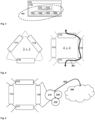
- a telecommunications network 100 is schematically shown, having - preferably - at least a fixed line part.
- a mobile (or cellular) part might be present as well, as part of the telecommunications network 100, but is not specifically illustrated in Figure 1 .
- User equipment or client devices 51, 52 are connected to the telecommunications network 100 by means of a (broadband) access network 120.
- the telecommunications network 100 comprises, especially as part of the broadband access network 120, at least one logical or physical central office point of delivery 110 that is preferably realized within a (mini) data center and that is especially handling different access requirements, especially different access possibilities, of the client devices 51, 52 to network functionalities provided by the telecommunications network 100 or via the telecommunications network 100.
- the telecommunications network 100 typically also comprises - besides the broadband access network 120 - a core network 101.
- the client devices 51, 52 are typically connected to the logical or physical central office point of delivery 110 by means of a customer premises equipment device 50, 50' or by means of a customer premises equipment functionality that might be built into or realized by the client devices 51, 52.
- the central office point of delivery 110 comprises a switching fabric 115 comprising a plurality of spine network nodes and a plurality of leaf network nodes which are not explicitly represented in Figure 1 .
- Figure 2 schematically illustrates in greater detail three central office points of delivery comprising a certain number of components, entities and/or network nodes.
- the central office points of delivery are part of and/or connected to a wide area network domain 101 (that might be part of the core network and/or at least partly overlapping or be separated thereof).
- the wide area network domain 101 handles and/or transports marked data packets 201 in a connection-oriented manner.
- Figure 2 represents the case that marked data packets 201 are to be forwarded, by a specific central office point of delivery 110, from a first central office point of delivery 111 and towards a second central office point of delivery 112.
- the specific central office point of delivery 110 receives marked data packets 201 from the first central office point of delivery 111, and, in a second step, the specific central office point of delivery 110 transmits the marked data packets 201 to the second central office point of delivery 112.
- the forwarding of the marked data packets 201 is performed - for each of the central office points of delivery 110, 111, 112 - by a transport functionality or service 115.
- This transport functionality or service 115 is designated and represented, in Figure 2 , by means of the same reference sign 115; however, it is to be understood that the transport functionality or service 115 is especially specific to the respective central office point of delivery 110, 111, 112.
- a first spine network node 171, and a second spine network node 172 is schematically shown.
- leaf network nodes 161, 162, 163, 164 are schematically shown as part of the respective transport functionality or service 115 of the different central office points of delivery.
- the marked data packets 201 are transmitted by the second spine network node 172 of the first central office point of delivery 111 to the first spine network node 171 of the specific central office point of delivery 110, and from there forwarded to the first spine network node 171 of the second central office point of delivery 112.
- the transport functionality or service 115 of the specific central office point of delivery 110 does not only act as ingress router and/or as egress router with respect to the wide area network domain 101 but also provides an identifier-based switch router functionality of or towards the wide area network domain 101.
- the marked data packets are handled and/or transported in a connection-oriented manner.
- the wide area network domain 101 comprises nodes of the transport functionality or service 115 (the spine network nodes 171, 172) of the respective central office points of delivery 110, 111, 112.
- the wide area network domain 101 is implemented using or according to multiprotocol label switching technology.
- Multiprotocol label switching solves inefficiencies in a connectionless IP network, where traditionally paths have to be decided for each and every data packet.
- Multiprotocol label switching instead uses pre-determined paths (Label Switch Paths) within an IP network across several hops. This better reflects real traffic patterns, which know a specific source (e.g. Netflix peering point at DE-CIX), a destination (e.g. and end user in Kunststoff) as well as sensible network connectivity in-between.
- Multiprotocol label switching is a highway-like connection-oriented functionality in a connectionless IP network.
- MPLS is often considered as OSI 2.5 layer (between network and data link layers).
- the transport functionality or service 115 - i.e. the spine network nodes 171, 172 of the respective central office points of delivery - not only act as ingress and/or egress router of the wide area network domain 101 but also as identifier-based switch router functionality (label switch router (LSR) according to multiprotocol label switching parlance).
- label switch routers are the heart of an MPLS network or multiprotocol label switching network domain as such routers are able to quickly route (marked) data packets 201 without having to check tables or do routing calculations, which would add to the send/receive time of data.
- the gatekeepers for the MPLS network (domain) (or wide area network domain 101) are the label edge router (or ingress label switch routers).
- label edge routers On ingress (of a data packet), such label edge routers add a label (or an identifier information) to each and every IP packet-independent of the actual protocol used (TCP, UDP, ...); on egress, such label edge router remove the respective label (or identifier information) from the data packet.
- This label is the information used by the label switch routers (identifier-based switch router functionality) to do their fast forwarding along the established paths (especially label switch paths.
- a central office point of delivery - or, rather, the specific central office point of delivery 110 - is schematically shown.
- the (specific) central office point of delivery 110 comprises, as part of its transport functionality or service 115 (or realized by its transport functionality or service 115) a further network domain 102, which is a further multiprotocol label switching, MPLS, domain.
- the further network domain 102 is a network domain of or among components of the specific central office point of delivery 110.
- the at least one spine network node 171, 172 acts as identifier-based switch router within the further network domain 102 (multiprotocol label switching, MPLS, domain 102).
- Figure 4 schematically illustrates two embodiments showing, respectively, a plurality of central office points of delivery being connected or meshed.
- three central office points of delivery 110, 111, 112 form a mesh of central office points of delivery (3x3 mesh)
- four central office points of delivery 110, 111, 112, 113 form a mesh of central office points of delivery (4x4 mesh).
- a forwarding path of marked data packets 201 is schematically shown between the specific central office point of delivery 110 as well as the first central office point of delivery 111 and the second central office point of delivery 112.
- the broadband access network 120 without necessarily relying on backbone infrastructure nodes (or core infrastructure) - only the transport functionalities or services of the respective central office points of delivery are meshed or connected with each other (by means of connecting adjacent central office points of delivery), and wide area traffic is nevertheless able to be routed or forwarded.
- the transport functionality or service 115 or the spine network nodes 171, 172 also receives the label switch router functionality (or identifier-based switch router functionality) - especially by means of an additional function, especially realized by means of a microservice -, the backbone infrastructure nodes (or core infrastructure) are able to be taken out.
- the spine network nodes 171, 172 are provided with the label switch router functionality (or identifier-based switch router functionality); Typically, spine network nodes 171, 172 (not shown in Figure 4 ) have a switching capacity of 4-5 times as they need to serve their own central office point of delivery 110, 111, 112, 113. The limiting factor are typically the large buffers (to host the Internet routing tables). However, these buffers are not needed for the label switch router functionality (or identifier-based switch router functionality); hence, a typical spine network node 171, 172 normally has sufficient capacity to also provide the label switch router functionality (or identifier-based switch router functionality). The spine network nodes 171, 172 are, hence, enabled to forward traffic (i.e.
- marked data packets also from outside of the (specific) central office point of delivery 110 which is facilitated by means of meshing (or linking, especially directly linking or connecting) different central office points of delivery 110, 111, 112, 113 together, especially with respect to adjacent central office points of delivery.
- nxm meshes (wherein n and m are integers) are possible and preferred according to the present invention.
- a central office point of delivery 110 is also a traffic forwarder.
- the central office point of delivery 110 (or a plurality of central office points of delivery 110, 111, 112, 113 are able to be connected to other network nodes such as content cashes and/or highways to the internet.
- the telecommunications network 100 and/or the broadband access network 120 additionally especially comprise one or a plurality of backbone identifier-based switch routers 210.
- Such backbone identifier-based switch routers 210 are typically part of the wide area network domain 101.
- at least one of the backbone identifier-based switch routers 210 additionally comprise or is connected to at least one content delivery network 220 and/or at least one local data center 230.
- the at least one content delivery network 220 especially provides for caching internet traffic; the at least one local data center 230 provides for storing data, especially sensitive data 202 that should be refrained from being sent to the internet 240.
- special backbone identifier-based switch routers 210 i.e. special LSRs
- LSRs peering points
- CDNs content delivery networks 220
Landscapes
- Engineering & Computer Science (AREA)
- Computer Networks & Wireless Communication (AREA)
- Signal Processing (AREA)
- Data Exchanges In Wide-Area Networks (AREA)
Claims (11)
- Verfahren zum Betreiben eines Breitbandzugangsnetzes (120) eines Telekommunikationsnetzes (100), umfassend mehrere Vermittlungsstellen-Übergabepunkte (110, 111, 112, 113),wobei jeder der mehreren Vermittlungsstellen-Übergabepunkte (110, 111, 112, 113) eine Transportfunktionalität oder einen Transportdienst (115) umfasst und eine Zugangsfunktionalität aufweist oder mit einer solchen verbunden ist, die mittels mehrerer Zugangsknoten realisiert wird, die physische Teilnehmerleitungen abschließen, die Endbenutzer des Telekommunikationsnetzes (100) bedienen,wobei, in Bezug auf einen spezifischen Vermittlungsstellen-Übergabepunkt (110), die jeweilige Transportfunktionalität oder der jeweilige Transportdienst (115) als ein Eintrittsrouter und/oder ein Austrittsrouter zu einer Wide Area Network-Domäne (101) dient, wobei die Wide Area Network-Domäne (101) eine Multiprotocol Label Switching (MPLS)-Domäne (101) ist oder einer solchen entspricht, wobei die Wide Area Network-Domäne (101) markierte Datenpakete (201) in einer verbindungsorientierten Weise handhabt und/oder transportiert, wobei die markierten Datenpakete (201) MPLS-etikettierte Datenpakete (201) sind oder solchen entsprechen,dadurch gekennzeichnet, dass die Transportfunktionalität oder der Transportdienst (115) einem Switching-Fabric (115) mit einer Leaf-/Spine-Architektur entspricht oder ein solches Switching-Fabric umfasst, wobei das Switching-Fabric (115) mindestens einen Spine-Netzknoten (171, 172) umfasst, wobei der mindestens eine Spine-Netzknoten (171, 172) Teil der Wide Area Network-Domäne (101) ist und als kennungsbasierter Vermittlungsrouter innerhalb der Wide Area Network-Domäne (101) dient, und wobei, um das Breitbandzugangsnetz (120) zum Bereitstellen der mit den mehreren Vermittlungsstellen-Übergabepunkten (110, 111, 112, 113) verknüpften Zugangsfunktionalität zu betreiben, der mindestens eine Spine-Netzknoten (171, 172) des spezifischen Vermittlungsstellen-Übergabepunktes (110), zusätzlich zum Dienen als Eintrittsrouter und/oder als Austrittsrouter, als Etiketten-Vermittlungsrouter dient, der eine kennungsbasierte Vermittlungsrouterfunktionalität der, oder in Richtung der, Wide Area Network-Domäne (101) bereitstellt, dergestalt, dass:- in einem ersten Schritt, der spezifische Vermittlungsstellen-Übergabepunkt (110) markierte Datenpakete (201) von einem ersten Vermittlungsstellen-Übergabepunkt (111) empfängt, und- in einem zweiten Schritt, die markierten Datenpakete (201) an einen zweiten Vermittlungsstellen-Übergabepunkt (112) sendet.
- Verfahren nach Anspruch 1, wobei entsprechende Spine-Netzknoten des ersten und des zweiten Vermittlungsstellen-Übergabepunktes (111, 112) gleichermaßen als kennungsbasierter Vermittlungsrouter innerhalb der Wide-Area-Network-Domäne (101) dienen.
- Verfahren nach einem der vorangehenden Ansprüche, wobei der mindestens eine Spine-Netzknoten (171, 172) zusätzlich Teil einer weiteren Multiprotocol Label Switching (MPLS)-Domäne (102) von oder unter Komponenten des spezifischen Vermittlungsstellen-Übergabepunktes (110) ist,
wobei der mindestens eine Spine-Netzknoten (171, 172) als kennungsbasierter Vermittlungsrouter innerhalb der weiteren Multiprotocol Label Switching (MPLS)-Domäne (102) dient. - Verfahren nach einem der vorangehenden Ansprüche, wobei das Switching-Fabric (115) des spezifischen Vermittlungsstellen-Übergabepunktes (110), neben dem mindestens einen Spine-Netzknoten (171, 172), mehrere Leaf-Netzknoten (161, 162) umfasst, wobei die Leaf-Netzknoten (161, 162) insbesondere eine Randfunktionalität oder einen Randdienst (160) bereitstellen und/oder wobei die Zugangsknoten der Zugangsfunktionalität insbesondere jeweils mit mindestens zwei Leaf-Netzknoten der mehreren Leaf-Netzknoten (161, 162) verbunden sind.
- Verfahren nach einem der vorangehenden Ansprüche, wobei die entsprechende Transportfunktionalität oder der entsprechende Transportdienst (115) jedes der mehreren Vermittlungsstellen-Übergabepunkte (110, 111, 112, 113) Teil der Wide Area Network-Domäne (101) ist, wobei insbesondere eine gewisse Anzahl von Vermittlungsstellen-Übergabepunkten (110, 111, 112, 113) so verbunden werden, dass sie vermascht sind und insbesondere 3×3- oder 4×4-Maschen von Vermittlungsstellen-Übergabepunkten (110, 111, 112, 113) bilden.
- Verfahren nach einem der vorangehenden Ansprüche, wobei mittels der entsprechenden Transportfunktionalität oder des entsprechenden Transportdienstes (115) jedes der mehreren Vermittlungsstellen-Übergabepunkte (110, 111, 112, 113) die Vermittlungsstellen-Übergabepunkte (110, 111, 112, 113) nicht nur ein Aggregations- und Diensterzeugungspunkt sind, sondern auch als ein Verkehrsweiterleiter dienen.
- Verfahren nach einem der vorangehenden Ansprüche, wobei das Telekommunikationsnetz (100) und/oder das Breitbandzugangsnetz (120) zusätzlich einen oder mehrere kennungsbasierte Backbone-Vermittlungsrouter (210) umfassen, wobei die kennungsbasierten Backbone-Vermittlungsrouter (210) Teil der Wide-Area-Network-Domäne (101) sind, wobei mindestens einer der kennungsbasierten Backbone-Vermittlungsrouter (210) zusätzlich mindestens ein Inhaltsbereitstellungsnetz (220) und/oder mindestens ein lokales Datenzentrum (230) umfasst oder damit verbunden ist, wobei das mindestens eine Inhaltsbereitstellungsnetz (220) insbesondere das Caching von Internet-Verkehr ausführt und/oder wobei das mindestens eine lokale Datenzentrum (230) das Speichern von Daten ausführt, insbesondere von sensiblen Daten (202), die nicht an das Internet (240) gesendet werden dürfen.
- Breitbandzugangsnetz (120) oder Telekommunikationsnetz (100) zum Betreiben, umfassend mehrere Vermittlungsstellen-Übergabepunkte (110, 111, 112, 113),wobei jeder der mehreren Vermittlungsstellen-Übergabepunkte (110, 111, 112, 113) eine Transportfunktionalität oder einen Transportdienst (115) umfasst und eine Zugangsfunktionalität aufweist oder mit einer solchen verbunden ist, die mittels mehrerer Zugangsknoten realisiert wird, die physische Teilnehmerleitungen abschließen, die Endbenutzer des Telekommunikationsnetzes (100) bedienen,wobei, in Bezug auf einen spezifischen Vermittlungsstellen-Übergabepunkt (110), die jeweilige Transportfunktionalität oder der jeweilige Transportdienst (115) als ein Eintrittsrouter und/oder ein Austrittsrouter zu einer Wide Area Network-Domäne (101) dient, wobei die Wide Area Network-Domäne (101) eine Multiprotocol Label Switching (MPLS)-Domäne (101) ist oder einer solchen entspricht, wobei die Wide Area Network-Domäne (101) markierte Datenpakete (201) in einer verbindungsorientierten Weise handhabt und/oder transportiert, wobei die markierten Datenpakete (201) MPLS-etikettierte Datenpakete (201) sind oder solchen entsprechen,dadurch gekennzeichnet, dass die Transportfunktionalität oder der Transportdienst (115) einem Switching-Fabric (115) mit einer Leaf-/Spine-Architektur entspricht oder ein solches Switching-Fabric umfasst, wobei das Switching-Fabric (115) mindestens einen Spine-Netzknoten (171, 172) umfasst, wobei der mindestens eine Spine-Netzknoten (171, 172) Teil der Wide Area Network-Domäne (101) ist und dafür eingerichtet ist, als kennungsbasierter Vermittlungsrouter innerhalb der Wide Area Network-Domäne (101) zu dienen, und wobei, um das Breitbandzugangsnetz (120) und/oder das Telekommunikationsnetz (100) zum Bereitstellen der mit den mehreren Vermittlungsstellen-Übergabepunkten (110, 111, 112, 113) verknüpften Zugangsfunktionalität zu betreiben, der mindestens eine Spine-Netzknoten (171, 172) des spezifischen Vermittlungsstellen-Übergabepunktes (110) so eingerichtet ist, dass er, zusätzlich zum Dienen als Eintrittsrouter und/oder als Austrittsrouter, als ein Etiketten-Vermittlungsrouter dient, der eine kennungsbasierte Vermittlungsrouterfunktionalität der, oder in Richtung der, Wide-Area-Network-Domäne (101) bereitstellt, indem er markierte Datenpakete (201) von einem ersten Vermittlungsstellen-Übergabepunkt (111) empfängt und die markierten Datenpakete (201) zu einem zweiten Vermittlungsstellen-Übergabepunkt (112) sendet.
- Vermittlungsstellen-Übergabepunkt (110) zum Betreiben eines Breitbandzugangsnetzes (120) eines Telekommunikationsnetzes (100), umfassend mehrere Vermittlungsstellen-Übergabepunkte (110, 111, 112, 113),wobei der Vermittlungsstellen-Übergabepunkt (110) eine Transportfunktionalität oder einen Transportdienst (115) umfasst und eine Zugangsfunktionalität aufweist oder mit einer solchen verbunden ist, die mittels mehrerer Zugangsknoten realisiert wird, die physische Teilnehmerleitungen abschließen, die Endbenutzer des Telekommunikationsnetzes (100) bedienen,wobei die Transportfunktionalität oder der Transportdienst (115) als ein Eintrittsrouter und/oder ein Austrittsrouter zu einer Wide Area Network-Domäne (101) dient, wobei die Wide Area Network-Domäne (101) eine Multiprotocol Label Switching (MPLS)-Domäne (101) ist oder einer solchen entspricht,wobei die Wide Area Network-Domäne (101) markierte Datenpakete (201) in einer verbindungsorientierten Weise handhabt und/oder transportiert, wobei die markierten Datenpakete (201) MPLS-etikettierte Datenpakete (201) sind oder solchen entsprechen,dadurch gekennzeichnet, dass die Transportfunktionalität oder der Transportdienst (115) einem Switching-Fabric (115) mit einer Leaf-/Spine-Architektur entspricht oder ein solches Switching-Fabric umfasst, wobei das Switching-Fabric (115) mindestens einen Spine-Netzknoten (171, 172) umfasst, wobei der mindestens eine Spine-Netzknoten (171, 172) Teil der Wide Area Network-Domäne (101) ist und dafür eingerichtet ist, als kennungsbasierter Vermittlungsrouter innerhalb der Wide Area Network-Domäne (101) zu dienen, und wobei, zum Bereitstellen der mit dem Vermittlungsstellen-Übergabepunkt (110) verknüpften Zugangsfunktionalität, der mindestens eine Spine-Netzknoten (171, 172) des Vermittlungsstellen-Übergabepunktes (110) so eingerichtet ist, dass er, zusätzlich zum Dienen als Eintrittsrouter und/oder als Austrittsrouter, als Etiketten-Vermittlungsrouter dient, der eine kennungsbasierte Vermittlungsrouterfunktionalität der, oder in Richtung der, Wide-Area-Network-Domäne (101) bereitstellt, indem er markierte Datenpakete (201) von einem ersten Vermittlungsstellen-Übergabepunkt (111) der mehreren Vermittlungsstellen-Übergabepunkte (110, 111, 112, 113) empfängt und die markierten Datenpakete (201) zu einem zweiten Vermittlungsstellen-Übergabepunkt (112) der mehreren Vermittlungsstellen-Übergabepunkte (110, 111, 112, 113) sendet.
- Programm, umfassend einen computerlesbaren Programmcode, der, wenn er auf einem Computer und/oder in einem Netzknoten eines Telekommunikationsnetzes (100) oder in einem Netzknoten eines Breitbandzugangsnetzes (120) und/oder in einer Transportfunktionalität oder einem Transportdienst (115) eines Vermittlungsstellen-Übergabepunktes (110, 111, 112, 113) oder teilweise in dem Netzknoten des Telekommunikationsnetzes (100) oder teilweise in dem Netzknoten eines Breitbandzugangsnetzes (120) oder teilweise in der Transportfunktionalität oder dem Transportdienst (115) des Vermittlungsstellen-Übergabepunktes (110, 111, 112, 113) ausgeführt wird, den Computer und/oder den Netzknoten des Telekommunikationsnetzes (100) und/oder den Netzknoten des Breitbandzugangsnetzes (120) und/oder die Transportfunktionalität oder den Transportdienst (115) des Vermittlungsstellen-Übergabepunktes (110, 111, 112, 113) veranlasst, ein Verfahren nach einem der Ansprüche 1 bis 7 durchzuführen.
- Computerlesbares Medium, umfassend Instruktionen, die, wenn sie auf einem Computer und/oder in einem Netzknoten eines Telekommunikationsnetzes (100) oder in einem Netzknoten eines Breitbandzugangsnetzes (120) und/oder in einer Transportfunktionalität oder einem Transportdienst (115) eines Vermittlungsstellen-Übergabepunktes (110, 111, 112, 113) oder teilweise in dem Netzknoten des Telekommunikationsnetzes (100) oder teilweise in dem Netzknoten eines Breitbandzugangsnetzes (120) oder teilweise in der Transportfunktionalität oder dem Transportdienst (115) des Vermittlungsstellen-Übergabepunktes (110, 111, 112, 113) ausgeführt werden, den Computer und/oder den Netzknoten des Telekommunikationsnetzes (100) und/oder den Netzknoten des Breitbandzugangsnetzes (120) und/oder die Transportfunktionalität oder den Transportdienst (115) des Vermittlungsstellen-Übergabepunktes (110, 111, 112, 113) veranlassen, ein Verfahren nach einem der Ansprüche 1 bis 7 durchzuführen.
Priority Applications (1)
| Application Number | Priority Date | Filing Date | Title |
|---|---|---|---|
| EP21200003.8A EP4161028B1 (de) | 2021-09-29 | 2021-09-29 | Verfahren zum betrieb eines breitband-zugangsnetzes eines telekommunikationsnetzes, das mehrere zentrale zustellpunkte umfasst, breitband-zugangsnetz oder telekommunikationsnetz, zentrale zugangspunkte, system, programm und computerlesbares medium |
Applications Claiming Priority (1)
| Application Number | Priority Date | Filing Date | Title |
|---|---|---|---|
| EP21200003.8A EP4161028B1 (de) | 2021-09-29 | 2021-09-29 | Verfahren zum betrieb eines breitband-zugangsnetzes eines telekommunikationsnetzes, das mehrere zentrale zustellpunkte umfasst, breitband-zugangsnetz oder telekommunikationsnetz, zentrale zugangspunkte, system, programm und computerlesbares medium |
Publications (2)
| Publication Number | Publication Date |
|---|---|
| EP4161028A1 EP4161028A1 (de) | 2023-04-05 |
| EP4161028B1 true EP4161028B1 (de) | 2024-09-25 |
Family
ID=78211842
Family Applications (1)
| Application Number | Title | Priority Date | Filing Date |
|---|---|---|---|
| EP21200003.8A Active EP4161028B1 (de) | 2021-09-29 | 2021-09-29 | Verfahren zum betrieb eines breitband-zugangsnetzes eines telekommunikationsnetzes, das mehrere zentrale zustellpunkte umfasst, breitband-zugangsnetz oder telekommunikationsnetz, zentrale zugangspunkte, system, programm und computerlesbares medium |
Country Status (1)
| Country | Link |
|---|---|
| EP (1) | EP4161028B1 (de) |
Family Cites Families (4)
| Publication number | Priority date | Publication date | Assignee | Title |
|---|---|---|---|---|
| US7133360B2 (en) * | 2001-12-17 | 2006-11-07 | Alcatel | Conditional bandwidth subscriptions for multiprotocol label switching (MPLS) label switched paths (LSPs) |
| CA2670766A1 (en) * | 2007-01-17 | 2008-07-24 | Nortel Networks Limited | Method and apparatus for interworking ethernet and mpls networks |
| US10122829B2 (en) * | 2008-11-12 | 2018-11-06 | Teloip Inc. | System and method for providing a control plane for quality of service |
| EP3583752B1 (de) * | 2017-02-15 | 2024-11-27 | Deutsche Telekom AG | Verfahren zur verbesserten verwendung eines switching-fabric an einem zentralen übergabepunkt eines breitbandzugangsnetzwerks eines telekommunikationsnetzwerks |
-
2021
- 2021-09-29 EP EP21200003.8A patent/EP4161028B1/de active Active
Also Published As
| Publication number | Publication date |
|---|---|
| EP4161028A1 (de) | 2023-04-05 |
Similar Documents
| Publication | Publication Date | Title |
|---|---|---|
| US8467411B1 (en) | Service-specific forwarding in an LDP-RSVP hybrid network | |
| US10469370B2 (en) | Segment routing techniques | |
| US10063468B2 (en) | Leaking routes in a service chain | |
| JP3654168B2 (ja) | インタフェース識別装置、インタフェース識別方法および、mpls−vpnサービスネットワーク | |
| US11070463B2 (en) | Guaranteed bandwidth for segment routed (SR) paths | |
| CN102308519B (zh) | 适用于点至多点域间多协议标签交换流量工程路径计算的系统和方法 | |
| CN101636973B (zh) | 对业务单元的报头堆栈进行划分的方法、设备 | |
| EP3979598B1 (de) | Bandbreitenbeschränkung für mehrpfadsegmentrouting | |
| US8040792B2 (en) | Techniques for determining local repair connections | |
| US9571381B2 (en) | System and method for inter-domain RSVP-TE LSP load balancing | |
| CN113347091A (zh) | 灵活算法感知边界网关协议前缀分段路由标识符 | |
| EP3754914B1 (de) | Klassenbasierte verkehrstechnik in einem ip-netzwerk | |
| CN105210336A (zh) | 用于ldp/sr互操作性的分段路由映射服务器 | |
| WO2014144344A1 (en) | Seamless segment routing | |
| US10382323B1 (en) | Flooding-based routing protocol having label switched path session information | |
| US11824763B2 (en) | Filtering topologies for path computation in massively scaled networks | |
| US7990965B1 (en) | Transmission of layer two (L2) multicast traffic over multi-protocol label switching networks | |
| Goulamghoss et al. | Analysis of traffic engineering and fast reroute on multiprotocol label switching | |
| US12081435B2 (en) | Distribution of SRv6 modes of operation via routing protocols | |
| JP5669955B2 (ja) | ネットワーク構成方法、リング型ネットワークシステム及びノード | |
| US11362930B2 (en) | System and method for carrying and optimizing internet traffic over a source-selected path routing network | |
| EP4161028B1 (de) | Verfahren zum betrieb eines breitband-zugangsnetzes eines telekommunikationsnetzes, das mehrere zentrale zustellpunkte umfasst, breitband-zugangsnetz oder telekommunikationsnetz, zentrale zugangspunkte, system, programm und computerlesbares medium | |
| EP2995045B1 (de) | Verfahren und telekomnetzwerkvorrichtung zur pseudowire-aggregation | |
| US8824277B2 (en) | Method of routing a data packet via a router in a packet communications network supported by a transport network | |
| CN119922132A (zh) | 基于下下一跳指示的网络业务传输 |
Legal Events
| Date | Code | Title | Description |
|---|---|---|---|
| PUAI | Public reference made under article 153(3) epc to a published international application that has entered the european phase |
Free format text: ORIGINAL CODE: 0009012 |
|
| STAA | Information on the status of an ep patent application or granted ep patent |
Free format text: STATUS: REQUEST FOR EXAMINATION WAS MADE |
|
| STAA | Information on the status of an ep patent application or granted ep patent |
Free format text: STATUS: EXAMINATION IS IN PROGRESS |
|
| 17P | Request for examination filed |
Effective date: 20220615 |
|
| AK | Designated contracting states |
Kind code of ref document: A1 Designated state(s): AL AT BE BG CH CY CZ DE DK EE ES FI FR GB GR HR HU IE IS IT LI LT LU LV MC MK MT NL NO PL PT RO RS SE SI SK SM TR |
|
| 17Q | First examination report despatched |
Effective date: 20230314 |
|
| GRAP | Despatch of communication of intention to grant a patent |
Free format text: ORIGINAL CODE: EPIDOSNIGR1 |
|
| STAA | Information on the status of an ep patent application or granted ep patent |
Free format text: STATUS: GRANT OF PATENT IS INTENDED |
|
| INTG | Intention to grant announced |
Effective date: 20240624 |
|
| GRAS | Grant fee paid |
Free format text: ORIGINAL CODE: EPIDOSNIGR3 |
|
| GRAA | (expected) grant |
Free format text: ORIGINAL CODE: 0009210 |
|
| STAA | Information on the status of an ep patent application or granted ep patent |
Free format text: STATUS: THE PATENT HAS BEEN GRANTED |
|
| AK | Designated contracting states |
Kind code of ref document: B1 Designated state(s): AL AT BE BG CH CY CZ DE DK EE ES FI FR GB GR HR HU IE IS IT LI LT LU LV MC MK MT NL NO PL PT RO RS SE SI SK SM TR |
|
| REG | Reference to a national code |
Ref country code: GB Ref legal event code: FG4D |
|
| REG | Reference to a national code |
Ref country code: CH Ref legal event code: EP |
|
| REG | Reference to a national code |
Ref country code: DE Ref legal event code: R096 Ref document number: 602021019226 Country of ref document: DE |
|
| REG | Reference to a national code |
Ref country code: IE Ref legal event code: FG4D |
|
| REG | Reference to a national code |
Ref country code: LT Ref legal event code: MG9D |
|
| PG25 | Lapsed in a contracting state [announced via postgrant information from national office to epo] |
Ref country code: NO Free format text: LAPSE BECAUSE OF FAILURE TO SUBMIT A TRANSLATION OF THE DESCRIPTION OR TO PAY THE FEE WITHIN THE PRESCRIBED TIME-LIMIT Effective date: 20241225 |
|
| PG25 | Lapsed in a contracting state [announced via postgrant information from national office to epo] |
Ref country code: GR Free format text: LAPSE BECAUSE OF FAILURE TO SUBMIT A TRANSLATION OF THE DESCRIPTION OR TO PAY THE FEE WITHIN THE PRESCRIBED TIME-LIMIT Effective date: 20241226 Ref country code: FI Free format text: LAPSE BECAUSE OF FAILURE TO SUBMIT A TRANSLATION OF THE DESCRIPTION OR TO PAY THE FEE WITHIN THE PRESCRIBED TIME-LIMIT Effective date: 20240925 |
|
| PG25 | Lapsed in a contracting state [announced via postgrant information from national office to epo] |
Ref country code: BG Free format text: LAPSE BECAUSE OF FAILURE TO SUBMIT A TRANSLATION OF THE DESCRIPTION OR TO PAY THE FEE WITHIN THE PRESCRIBED TIME-LIMIT Effective date: 20240925 |
|
| PG25 | Lapsed in a contracting state [announced via postgrant information from national office to epo] |
Ref country code: LV Free format text: LAPSE BECAUSE OF FAILURE TO SUBMIT A TRANSLATION OF THE DESCRIPTION OR TO PAY THE FEE WITHIN THE PRESCRIBED TIME-LIMIT Effective date: 20240925 |
|
| PG25 | Lapsed in a contracting state [announced via postgrant information from national office to epo] |
Ref country code: RS Free format text: LAPSE BECAUSE OF FAILURE TO SUBMIT A TRANSLATION OF THE DESCRIPTION OR TO PAY THE FEE WITHIN THE PRESCRIBED TIME-LIMIT Effective date: 20241225 |
|
| REG | Reference to a national code |
Ref country code: NL Ref legal event code: MP Effective date: 20240925 |
|
| PG25 | Lapsed in a contracting state [announced via postgrant information from national office to epo] |
Ref country code: RS Free format text: LAPSE BECAUSE OF FAILURE TO SUBMIT A TRANSLATION OF THE DESCRIPTION OR TO PAY THE FEE WITHIN THE PRESCRIBED TIME-LIMIT Effective date: 20241225 Ref country code: NO Free format text: LAPSE BECAUSE OF FAILURE TO SUBMIT A TRANSLATION OF THE DESCRIPTION OR TO PAY THE FEE WITHIN THE PRESCRIBED TIME-LIMIT Effective date: 20241225 Ref country code: LV Free format text: LAPSE BECAUSE OF FAILURE TO SUBMIT A TRANSLATION OF THE DESCRIPTION OR TO PAY THE FEE WITHIN THE PRESCRIBED TIME-LIMIT Effective date: 20240925 Ref country code: GR Free format text: LAPSE BECAUSE OF FAILURE TO SUBMIT A TRANSLATION OF THE DESCRIPTION OR TO PAY THE FEE WITHIN THE PRESCRIBED TIME-LIMIT Effective date: 20241226 Ref country code: FI Free format text: LAPSE BECAUSE OF FAILURE TO SUBMIT A TRANSLATION OF THE DESCRIPTION OR TO PAY THE FEE WITHIN THE PRESCRIBED TIME-LIMIT Effective date: 20240925 Ref country code: BG Free format text: LAPSE BECAUSE OF FAILURE TO SUBMIT A TRANSLATION OF THE DESCRIPTION OR TO PAY THE FEE WITHIN THE PRESCRIBED TIME-LIMIT Effective date: 20240925 |
|
| REG | Reference to a national code |
Ref country code: AT Ref legal event code: MK05 Ref document number: 1727593 Country of ref document: AT Kind code of ref document: T Effective date: 20240925 |
|
| PG25 | Lapsed in a contracting state [announced via postgrant information from national office to epo] |
Ref country code: NL Free format text: LAPSE BECAUSE OF FAILURE TO SUBMIT A TRANSLATION OF THE DESCRIPTION OR TO PAY THE FEE WITHIN THE PRESCRIBED TIME-LIMIT Effective date: 20240925 |
|
| PG25 | Lapsed in a contracting state [announced via postgrant information from national office to epo] |
Ref country code: IS Free format text: LAPSE BECAUSE OF FAILURE TO SUBMIT A TRANSLATION OF THE DESCRIPTION OR TO PAY THE FEE WITHIN THE PRESCRIBED TIME-LIMIT Effective date: 20250125 Ref country code: PT Free format text: LAPSE BECAUSE OF FAILURE TO SUBMIT A TRANSLATION OF THE DESCRIPTION OR TO PAY THE FEE WITHIN THE PRESCRIBED TIME-LIMIT Effective date: 20250127 |
|
| PG25 | Lapsed in a contracting state [announced via postgrant information from national office to epo] |
Ref country code: RO Free format text: LAPSE BECAUSE OF FAILURE TO SUBMIT A TRANSLATION OF THE DESCRIPTION OR TO PAY THE FEE WITHIN THE PRESCRIBED TIME-LIMIT Effective date: 20240925 Ref country code: SM Free format text: LAPSE BECAUSE OF FAILURE TO SUBMIT A TRANSLATION OF THE DESCRIPTION OR TO PAY THE FEE WITHIN THE PRESCRIBED TIME-LIMIT Effective date: 20240925 |
|
| PG25 | Lapsed in a contracting state [announced via postgrant information from national office to epo] |
Ref country code: ES Free format text: LAPSE BECAUSE OF FAILURE TO SUBMIT A TRANSLATION OF THE DESCRIPTION OR TO PAY THE FEE WITHIN THE PRESCRIBED TIME-LIMIT Effective date: 20240925 |
|
| PG25 | Lapsed in a contracting state [announced via postgrant information from national office to epo] |
Ref country code: EE Free format text: LAPSE BECAUSE OF FAILURE TO SUBMIT A TRANSLATION OF THE DESCRIPTION OR TO PAY THE FEE WITHIN THE PRESCRIBED TIME-LIMIT Effective date: 20240925 Ref country code: AT Free format text: LAPSE BECAUSE OF FAILURE TO SUBMIT A TRANSLATION OF THE DESCRIPTION OR TO PAY THE FEE WITHIN THE PRESCRIBED TIME-LIMIT Effective date: 20240925 |
|
| PG25 | Lapsed in a contracting state [announced via postgrant information from national office to epo] |
Ref country code: CZ Free format text: LAPSE BECAUSE OF FAILURE TO SUBMIT A TRANSLATION OF THE DESCRIPTION OR TO PAY THE FEE WITHIN THE PRESCRIBED TIME-LIMIT Effective date: 20240925 Ref country code: PL Free format text: LAPSE BECAUSE OF FAILURE TO SUBMIT A TRANSLATION OF THE DESCRIPTION OR TO PAY THE FEE WITHIN THE PRESCRIBED TIME-LIMIT Effective date: 20240925 |
|
| PG25 | Lapsed in a contracting state [announced via postgrant information from national office to epo] |
Ref country code: IT Free format text: LAPSE BECAUSE OF FAILURE TO SUBMIT A TRANSLATION OF THE DESCRIPTION OR TO PAY THE FEE WITHIN THE PRESCRIBED TIME-LIMIT Effective date: 20240925 Ref country code: SK Free format text: LAPSE BECAUSE OF FAILURE TO SUBMIT A TRANSLATION OF THE DESCRIPTION OR TO PAY THE FEE WITHIN THE PRESCRIBED TIME-LIMIT Effective date: 20240925 |
|
| REG | Reference to a national code |
Ref country code: CH Ref legal event code: PL |
|
| PG25 | Lapsed in a contracting state [announced via postgrant information from national office to epo] |
Ref country code: LU Free format text: LAPSE BECAUSE OF NON-PAYMENT OF DUE FEES Effective date: 20240929 |
|
| REG | Reference to a national code |
Ref country code: DE Ref legal event code: R097 Ref document number: 602021019226 Country of ref document: DE |
|
| PG25 | Lapsed in a contracting state [announced via postgrant information from national office to epo] |
Ref country code: MC Free format text: LAPSE BECAUSE OF FAILURE TO SUBMIT A TRANSLATION OF THE DESCRIPTION OR TO PAY THE FEE WITHIN THE PRESCRIBED TIME-LIMIT Effective date: 20240925 |
|
| PG25 | Lapsed in a contracting state [announced via postgrant information from national office to epo] |
Ref country code: DK Free format text: LAPSE BECAUSE OF FAILURE TO SUBMIT A TRANSLATION OF THE DESCRIPTION OR TO PAY THE FEE WITHIN THE PRESCRIBED TIME-LIMIT Effective date: 20240925 |
|
| REG | Reference to a national code |
Ref country code: BE Ref legal event code: MM Effective date: 20240930 |
|
| PG25 | Lapsed in a contracting state [announced via postgrant information from national office to epo] |
Ref country code: BE Free format text: LAPSE BECAUSE OF NON-PAYMENT OF DUE FEES Effective date: 20240930 |
|
| PG25 | Lapsed in a contracting state [announced via postgrant information from national office to epo] |
Ref country code: CH Free format text: LAPSE BECAUSE OF NON-PAYMENT OF DUE FEES Effective date: 20240930 |
|
| PG25 | Lapsed in a contracting state [announced via postgrant information from national office to epo] |
Ref country code: IE Free format text: LAPSE BECAUSE OF NON-PAYMENT OF DUE FEES Effective date: 20240929 |
|
| PLBE | No opposition filed within time limit |
Free format text: ORIGINAL CODE: 0009261 |
|
| STAA | Information on the status of an ep patent application or granted ep patent |
Free format text: STATUS: NO OPPOSITION FILED WITHIN TIME LIMIT |
|
| 26N | No opposition filed |
Effective date: 20250626 |
|
| PG25 | Lapsed in a contracting state [announced via postgrant information from national office to epo] |
Ref country code: SE Free format text: LAPSE BECAUSE OF FAILURE TO SUBMIT A TRANSLATION OF THE DESCRIPTION OR TO PAY THE FEE WITHIN THE PRESCRIBED TIME-LIMIT Effective date: 20240925 |
|
| PGFP | Annual fee paid to national office [announced via postgrant information from national office to epo] |
Ref country code: DE Payment date: 20250919 Year of fee payment: 5 |
|
| PGFP | Annual fee paid to national office [announced via postgrant information from national office to epo] |
Ref country code: GB Payment date: 20250923 Year of fee payment: 5 |
|
| PGFP | Annual fee paid to national office [announced via postgrant information from national office to epo] |
Ref country code: FR Payment date: 20250922 Year of fee payment: 5 |
|
| PG25 | Lapsed in a contracting state [announced via postgrant information from national office to epo] |
Ref country code: HR Free format text: LAPSE BECAUSE OF FAILURE TO SUBMIT A TRANSLATION OF THE DESCRIPTION OR TO PAY THE FEE WITHIN THE PRESCRIBED TIME-LIMIT Effective date: 20240925 |
|
| PG25 | Lapsed in a contracting state [announced via postgrant information from national office to epo] |
Ref country code: CY Free format text: LAPSE BECAUSE OF FAILURE TO SUBMIT A TRANSLATION OF THE DESCRIPTION OR TO PAY THE FEE WITHIN THE PRESCRIBED TIME-LIMIT; INVALID AB INITIO Effective date: 20210929 |
|
| PG25 | Lapsed in a contracting state [announced via postgrant information from national office to epo] |
Ref country code: HU Free format text: LAPSE BECAUSE OF FAILURE TO SUBMIT A TRANSLATION OF THE DESCRIPTION OR TO PAY THE FEE WITHIN THE PRESCRIBED TIME-LIMIT; INVALID AB INITIO Effective date: 20210929 |