EP4162337B1 - Procédé et système de prise de décision sensible au contexte d'un agent autonome - Google Patents
Procédé et système de prise de décision sensible au contexte d'un agent autonome Download PDFInfo
- Publication number
- EP4162337B1 EP4162337B1 EP20938767.9A EP20938767A EP4162337B1 EP 4162337 B1 EP4162337 B1 EP 4162337B1 EP 20938767 A EP20938767 A EP 20938767A EP 4162337 B1 EP4162337 B1 EP 4162337B1
- Authority
- EP
- European Patent Office
- Prior art keywords
- context
- agent
- map
- information
- contexts
- Prior art date
- Legal status (The legal status is an assumption and is not a legal conclusion. Google has not performed a legal analysis and makes no representation as to the accuracy of the status listed.)
- Active
Links
Images







Classifications
-
- B—PERFORMING OPERATIONS; TRANSPORTING
- B60—VEHICLES IN GENERAL
- B60W—CONJOINT CONTROL OF VEHICLE SUB-UNITS OF DIFFERENT TYPE OR DIFFERENT FUNCTION; CONTROL SYSTEMS SPECIALLY ADAPTED FOR HYBRID VEHICLES; ROAD VEHICLE DRIVE CONTROL SYSTEMS FOR PURPOSES NOT RELATED TO THE CONTROL OF A PARTICULAR SUB-UNIT
- B60W60/00—Drive control systems specially adapted for autonomous road vehicles
- B60W60/001—Planning or execution of driving tasks
-
- G—PHYSICS
- G01—MEASURING; TESTING
- G01C—MEASURING DISTANCES, LEVELS OR BEARINGS; SURVEYING; NAVIGATION; GYROSCOPIC INSTRUMENTS; PHOTOGRAMMETRY OR VIDEOGRAMMETRY
- G01C21/00—Navigation; Navigational instruments not provided for in groups G01C1/00 - G01C19/00
- G01C21/26—Navigation; Navigational instruments not provided for in groups G01C1/00 - G01C19/00 specially adapted for navigation in a road network
- G01C21/28—Navigation; Navigational instruments not provided for in groups G01C1/00 - G01C19/00 specially adapted for navigation in a road network with correlation of data from several navigational instruments
- G01C21/30—Map- or contour-matching
-
- G—PHYSICS
- G01—MEASURING; TESTING
- G01C—MEASURING DISTANCES, LEVELS OR BEARINGS; SURVEYING; NAVIGATION; GYROSCOPIC INSTRUMENTS; PHOTOGRAMMETRY OR VIDEOGRAMMETRY
- G01C21/00—Navigation; Navigational instruments not provided for in groups G01C1/00 - G01C19/00
- G01C21/26—Navigation; Navigational instruments not provided for in groups G01C1/00 - G01C19/00 specially adapted for navigation in a road network
- G01C21/34—Route searching; Route guidance
- G01C21/3407—Route searching; Route guidance specially adapted for specific applications
-
- G—PHYSICS
- G01—MEASURING; TESTING
- G01C—MEASURING DISTANCES, LEVELS OR BEARINGS; SURVEYING; NAVIGATION; GYROSCOPIC INSTRUMENTS; PHOTOGRAMMETRY OR VIDEOGRAMMETRY
- G01C21/00—Navigation; Navigational instruments not provided for in groups G01C1/00 - G01C19/00
- G01C21/26—Navigation; Navigational instruments not provided for in groups G01C1/00 - G01C19/00 specially adapted for navigation in a road network
- G01C21/34—Route searching; Route guidance
- G01C21/3453—Special cost functions, i.e. other than distance or default speed limit of road segments
- G01C21/3461—Preferred or disfavoured areas, e.g. dangerous zones, toll or emission zones, intersections, manoeuvre types or segments such as motorways, toll roads or ferries
-
- G—PHYSICS
- G01—MEASURING; TESTING
- G01C—MEASURING DISTANCES, LEVELS OR BEARINGS; SURVEYING; NAVIGATION; GYROSCOPIC INSTRUMENTS; PHOTOGRAMMETRY OR VIDEOGRAMMETRY
- G01C21/00—Navigation; Navigational instruments not provided for in groups G01C1/00 - G01C19/00
- G01C21/26—Navigation; Navigational instruments not provided for in groups G01C1/00 - G01C19/00 specially adapted for navigation in a road network
- G01C21/34—Route searching; Route guidance
- G01C21/36—Input/output arrangements for on-board computers
- G01C21/3667—Display of a road map
- G01C21/3673—Labelling using text of road map data items, e.g. road names, POI names
-
- G—PHYSICS
- G06—COMPUTING OR CALCULATING; COUNTING
- G06F—ELECTRIC DIGITAL DATA PROCESSING
- G06F18/00—Pattern recognition
- G06F18/20—Analysing
- G06F18/21—Design or setup of recognition systems or techniques; Extraction of features in feature space; Blind source separation
- G06F18/214—Generating training patterns; Bootstrap methods, e.g. bagging or boosting
- G06F18/2155—Generating training patterns; Bootstrap methods, e.g. bagging or boosting characterised by the incorporation of unlabelled data, e.g. multiple instance learning [MIL], semi-supervised techniques using expectation-maximisation [EM] or naïve labelling
-
- G—PHYSICS
- G06—COMPUTING OR CALCULATING; COUNTING
- G06F—ELECTRIC DIGITAL DATA PROCESSING
- G06F18/00—Pattern recognition
- G06F18/20—Analysing
- G06F18/285—Selection of pattern recognition techniques, e.g. of classifiers in a multi-classifier system
-
- G—PHYSICS
- G06—COMPUTING OR CALCULATING; COUNTING
- G06N—COMPUTING ARRANGEMENTS BASED ON SPECIFIC COMPUTATIONAL MODELS
- G06N20/00—Machine learning
-
- G—PHYSICS
- G06—COMPUTING OR CALCULATING; COUNTING
- G06N—COMPUTING ARRANGEMENTS BASED ON SPECIFIC COMPUTATIONAL MODELS
- G06N3/00—Computing arrangements based on biological models
- G06N3/004—Artificial life, i.e. computing arrangements simulating life
- G06N3/006—Artificial life, i.e. computing arrangements simulating life based on simulated virtual individual or collective life forms, e.g. social simulations or particle swarm optimisation [PSO]
-
- G—PHYSICS
- G06—COMPUTING OR CALCULATING; COUNTING
- G06N—COMPUTING ARRANGEMENTS BASED ON SPECIFIC COMPUTATIONAL MODELS
- G06N3/00—Computing arrangements based on biological models
- G06N3/02—Neural networks
- G06N3/04—Architecture, e.g. interconnection topology
- G06N3/045—Combinations of networks
- G06N3/0455—Auto-encoder networks; Encoder-decoder networks
-
- G—PHYSICS
- G06—COMPUTING OR CALCULATING; COUNTING
- G06N—COMPUTING ARRANGEMENTS BASED ON SPECIFIC COMPUTATIONAL MODELS
- G06N3/00—Computing arrangements based on biological models
- G06N3/02—Neural networks
- G06N3/04—Architecture, e.g. interconnection topology
- G06N3/0464—Convolutional networks [CNN, ConvNet]
-
- G—PHYSICS
- G06—COMPUTING OR CALCULATING; COUNTING
- G06N—COMPUTING ARRANGEMENTS BASED ON SPECIFIC COMPUTATIONAL MODELS
- G06N3/00—Computing arrangements based on biological models
- G06N3/02—Neural networks
- G06N3/08—Learning methods
-
- G—PHYSICS
- G06—COMPUTING OR CALCULATING; COUNTING
- G06N—COMPUTING ARRANGEMENTS BASED ON SPECIFIC COMPUTATIONAL MODELS
- G06N3/00—Computing arrangements based on biological models
- G06N3/02—Neural networks
- G06N3/08—Learning methods
- G06N3/092—Reinforcement learning
-
- G—PHYSICS
- G06—COMPUTING OR CALCULATING; COUNTING
- G06N—COMPUTING ARRANGEMENTS BASED ON SPECIFIC COMPUTATIONAL MODELS
- G06N7/00—Computing arrangements based on specific mathematical models
- G06N7/01—Probabilistic graphical models, e.g. probabilistic networks
-
- G—PHYSICS
- G06—COMPUTING OR CALCULATING; COUNTING
- G06V—IMAGE OR VIDEO RECOGNITION OR UNDERSTANDING
- G06V10/00—Arrangements for image or video recognition or understanding
- G06V10/70—Arrangements for image or video recognition or understanding using pattern recognition or machine learning
- G06V10/764—Arrangements for image or video recognition or understanding using pattern recognition or machine learning using classification, e.g. of video objects
-
- G—PHYSICS
- G06—COMPUTING OR CALCULATING; COUNTING
- G06V—IMAGE OR VIDEO RECOGNITION OR UNDERSTANDING
- G06V10/00—Arrangements for image or video recognition or understanding
- G06V10/70—Arrangements for image or video recognition or understanding using pattern recognition or machine learning
- G06V10/82—Arrangements for image or video recognition or understanding using pattern recognition or machine learning using neural networks
-
- G—PHYSICS
- G06—COMPUTING OR CALCULATING; COUNTING
- G06V—IMAGE OR VIDEO RECOGNITION OR UNDERSTANDING
- G06V10/00—Arrangements for image or video recognition or understanding
- G06V10/70—Arrangements for image or video recognition or understanding using pattern recognition or machine learning
- G06V10/87—Arrangements for image or video recognition or understanding using pattern recognition or machine learning using selection of the recognition techniques, e.g. of a classifier in a multiple classifier system
-
- G—PHYSICS
- G06—COMPUTING OR CALCULATING; COUNTING
- G06V—IMAGE OR VIDEO RECOGNITION OR UNDERSTANDING
- G06V20/00—Scenes; Scene-specific elements
- G06V20/50—Context or environment of the image
- G06V20/56—Context or environment of the image exterior to a vehicle by using sensors mounted on the vehicle
-
- G—PHYSICS
- G08—SIGNALLING
- G08G—TRAFFIC CONTROL SYSTEMS
- G08G1/00—Traffic control systems for road vehicles
- G08G1/01—Detecting movement of traffic to be counted or controlled
- G08G1/0104—Measuring and analyzing of parameters relative to traffic conditions
- G08G1/0108—Measuring and analyzing of parameters relative to traffic conditions based on the source of data
- G08G1/0112—Measuring and analyzing of parameters relative to traffic conditions based on the source of data from the vehicle, e.g. floating car data [FCD]
-
- G—PHYSICS
- G08—SIGNALLING
- G08G—TRAFFIC CONTROL SYSTEMS
- G08G1/00—Traffic control systems for road vehicles
- G08G1/01—Detecting movement of traffic to be counted or controlled
- G08G1/0104—Measuring and analyzing of parameters relative to traffic conditions
- G08G1/0125—Traffic data processing
- G08G1/0129—Traffic data processing for creating historical data or processing based on historical data
-
- G—PHYSICS
- G08—SIGNALLING
- G08G—TRAFFIC CONTROL SYSTEMS
- G08G1/00—Traffic control systems for road vehicles
- G08G1/01—Detecting movement of traffic to be counted or controlled
- G08G1/0104—Measuring and analyzing of parameters relative to traffic conditions
- G08G1/0125—Traffic data processing
- G08G1/0133—Traffic data processing for classifying traffic situation
-
- G—PHYSICS
- G08—SIGNALLING
- G08G—TRAFFIC CONTROL SYSTEMS
- G08G1/00—Traffic control systems for road vehicles
- G08G1/01—Detecting movement of traffic to be counted or controlled
- G08G1/0104—Measuring and analyzing of parameters relative to traffic conditions
- G08G1/0137—Measuring and analyzing of parameters relative to traffic conditions for specific applications
- G08G1/0145—Measuring and analyzing of parameters relative to traffic conditions for specific applications for active traffic flow control
-
- G—PHYSICS
- G08—SIGNALLING
- G08G—TRAFFIC CONTROL SYSTEMS
- G08G1/00—Traffic control systems for road vehicles
- G08G1/09—Arrangements for giving variable traffic instructions
- G08G1/0962—Arrangements for giving variable traffic instructions having an indicator mounted inside the vehicle, e.g. giving voice messages
- G08G1/09623—Systems involving the acquisition of information from passive traffic signs by means mounted on the vehicle
-
- G—PHYSICS
- G08—SIGNALLING
- G08G—TRAFFIC CONTROL SYSTEMS
- G08G1/00—Traffic control systems for road vehicles
- G08G1/09—Arrangements for giving variable traffic instructions
- G08G1/0962—Arrangements for giving variable traffic instructions having an indicator mounted inside the vehicle, e.g. giving voice messages
- G08G1/09626—Arrangements for giving variable traffic instructions having an indicator mounted inside the vehicle, e.g. giving voice messages where the origin of the information is within the own vehicle, e.g. a local storage device, digital map
-
- H—ELECTRICITY
- H04—ELECTRIC COMMUNICATION TECHNIQUE
- H04W—WIRELESS COMMUNICATION NETWORKS
- H04W4/00—Services specially adapted for wireless communication networks; Facilities therefor
- H04W4/02—Services making use of location information
- H04W4/021—Services related to particular areas, e.g. point of interest [POI] services, venue services or geofences
-
- B—PERFORMING OPERATIONS; TRANSPORTING
- B60—VEHICLES IN GENERAL
- B60W—CONJOINT CONTROL OF VEHICLE SUB-UNITS OF DIFFERENT TYPE OR DIFFERENT FUNCTION; CONTROL SYSTEMS SPECIALLY ADAPTED FOR HYBRID VEHICLES; ROAD VEHICLE DRIVE CONTROL SYSTEMS FOR PURPOSES NOT RELATED TO THE CONTROL OF A PARTICULAR SUB-UNIT
- B60W2552/00—Input parameters relating to infrastructure
- B60W2552/05—Type of road, e.g. motorways, local streets, paved or unpaved roads
-
- B—PERFORMING OPERATIONS; TRANSPORTING
- B60—VEHICLES IN GENERAL
- B60W—CONJOINT CONTROL OF VEHICLE SUB-UNITS OF DIFFERENT TYPE OR DIFFERENT FUNCTION; CONTROL SYSTEMS SPECIALLY ADAPTED FOR HYBRID VEHICLES; ROAD VEHICLE DRIVE CONTROL SYSTEMS FOR PURPOSES NOT RELATED TO THE CONTROL OF A PARTICULAR SUB-UNIT
- B60W2552/00—Input parameters relating to infrastructure
- B60W2552/50—Barriers
-
- B—PERFORMING OPERATIONS; TRANSPORTING
- B60—VEHICLES IN GENERAL
- B60W—CONJOINT CONTROL OF VEHICLE SUB-UNITS OF DIFFERENT TYPE OR DIFFERENT FUNCTION; CONTROL SYSTEMS SPECIALLY ADAPTED FOR HYBRID VEHICLES; ROAD VEHICLE DRIVE CONTROL SYSTEMS FOR PURPOSES NOT RELATED TO THE CONTROL OF A PARTICULAR SUB-UNIT
- B60W2554/00—Input parameters relating to objects
- B60W2554/20—Static objects
-
- B—PERFORMING OPERATIONS; TRANSPORTING
- B60—VEHICLES IN GENERAL
- B60W—CONJOINT CONTROL OF VEHICLE SUB-UNITS OF DIFFERENT TYPE OR DIFFERENT FUNCTION; CONTROL SYSTEMS SPECIALLY ADAPTED FOR HYBRID VEHICLES; ROAD VEHICLE DRIVE CONTROL SYSTEMS FOR PURPOSES NOT RELATED TO THE CONTROL OF A PARTICULAR SUB-UNIT
- B60W2554/00—Input parameters relating to objects
- B60W2554/40—Dynamic objects, e.g. animals, windblown objects
-
- B—PERFORMING OPERATIONS; TRANSPORTING
- B60—VEHICLES IN GENERAL
- B60W—CONJOINT CONTROL OF VEHICLE SUB-UNITS OF DIFFERENT TYPE OR DIFFERENT FUNCTION; CONTROL SYSTEMS SPECIALLY ADAPTED FOR HYBRID VEHICLES; ROAD VEHICLE DRIVE CONTROL SYSTEMS FOR PURPOSES NOT RELATED TO THE CONTROL OF A PARTICULAR SUB-UNIT
- B60W2556/00—Input parameters relating to data
- B60W2556/40—High definition maps
-
- B—PERFORMING OPERATIONS; TRANSPORTING
- B60—VEHICLES IN GENERAL
- B60W—CONJOINT CONTROL OF VEHICLE SUB-UNITS OF DIFFERENT TYPE OR DIFFERENT FUNCTION; CONTROL SYSTEMS SPECIALLY ADAPTED FOR HYBRID VEHICLES; ROAD VEHICLE DRIVE CONTROL SYSTEMS FOR PURPOSES NOT RELATED TO THE CONTROL OF A PARTICULAR SUB-UNIT
- B60W2556/00—Input parameters relating to data
- B60W2556/45—External transmission of data to or from the vehicle
- B60W2556/50—External transmission of data to or from the vehicle of positioning data, e.g. GPS [Global Positioning System] data
-
- G—PHYSICS
- G06—COMPUTING OR CALCULATING; COUNTING
- G06N—COMPUTING ARRANGEMENTS BASED ON SPECIFIC COMPUTATIONAL MODELS
- G06N3/00—Computing arrangements based on biological models
- G06N3/02—Neural networks
- G06N3/04—Architecture, e.g. interconnection topology
- G06N3/044—Recurrent networks, e.g. Hopfield networks
-
- G—PHYSICS
- G06—COMPUTING OR CALCULATING; COUNTING
- G06N—COMPUTING ARRANGEMENTS BASED ON SPECIFIC COMPUTATIONAL MODELS
- G06N3/00—Computing arrangements based on biological models
- G06N3/02—Neural networks
- G06N3/04—Architecture, e.g. interconnection topology
- G06N3/045—Combinations of networks
Definitions
- the system 100 is implemented in autonomous short-haul (e.g., between 5 and 400 miles) B2B fixed-route applications.
- the autonomous agents preferably receive inventory from sorting centers, but can additionally or alternatively receive inventory for parcel hubs and/or warehouses.
- the agent then preferably delivers the inventory to and/or between any or all of: sorting centers, micro-fulfillment centers, distribution centers, retail stores, and local delivery centers. Additionally or alternatively, the agents can interface with residences (e.g., customer homes), and/or any other suitable locations/facilities.
- the computing system includes an onboard computing system onboard (e.g., integrated within) the autonomous agent.
- the autonomous vehicle can include any or all of: a watercraft (e.g., boat, water taxi, etc.), aerial vehicle (e.g., plane, helicopter, drone, etc.), terrestrial vehicle (e.g., 2-wheeled vehicle, bike, motorcycle, scooter, etc.), and/or any other suitable vehicle and/or transportation device, autonomous machine, autonomous device, autonomous robot, and/or any other suitable device.
- a watercraft e.g., boat, water taxi, etc.
- aerial vehicle e.g., plane, helicopter, drone, etc.
- terrestrial vehicle e.g., 2-wheeled vehicle, bike, motorcycle, scooter, etc.
- the computing system preferably includes active and redundant subsystems, but can additionally or alternatively include any other suitable subsystems.
- the computing system preferably includes a context selector, which functions to select a context associated with the vehicle.
- the context selector is further preferably part of a planning module of the computing system, which can additionally include any or all of: a set of learning modules (e.g., deep learning models); a trajectory generator; a trajectory validator; and/or any other suitable components.
- a set of learning modules e.g., deep learning models
- a trajectory generator e.g., a trajectory validator
- the context selector can be independent from a planning module, a planning module can include any other suitable components, and/or the computing system can be otherwise configured.
- the computing system further preferably includes a processing system, which functions to process the inputs received at the computing system.
- the processing system preferably includes a set of central processing units (CPUs) and a set of graphical processing units (GPUs), but can additionally or alternatively include any other components or combination of components (e.g., processors, microprocessors, system-on-a-chip (SoC) components, etc.).
- the computing system can include and/or interface with any or all of: a localization module, prediction module, perception module, and/or any other suitable modules for operation of the autonomous agent.
- the computing system (e.g., onboard computing system) is preferably in communication with (e.g., in wireless communication with, in wired communication with, coupled to, physically coupled to, electrically coupled to, etc.) a vehicle control system, which functions to execute commands determined by the computing system.
- a vehicle control system which functions to execute commands determined by the computing system.
- the computing system includes and/or interfaces with a map, which functions to at least partially enable the determination of a context associated with the autonomous agent.
- the map is preferably a high definition, hand-labeled map as described below, which prescribes the context of the autonomous agent based on its location and/or position within the map, but can additionally or alternatively include any other map (e.g., map labeled in an automated fashion, map labeled through both manual and automated processes, etc.) and/or combination of maps.
- the system 100 preferably includes and/or interfaces with a sensor system (equivalently referred to herein as a sensor subsystem), which functions to enable any or all of: a localization of the autonomous agent (e.g., within a map), a detection of surrounding objects (e.g., dynamic objects, static objects, etc.) of the autonomous agent, and/or any other suitable function.
- a sensor system equivalently referred to herein as a sensor subsystem
- the sensor system can include any or all of: cameras (e.g., 360-degree coverage cameras, ultra-high resolution cameras, etc.), light detection and ranging (LiDAR) sensors, radio detection and ranging (RADAR) sensors, motion sensors (e.g., accelerometers, gyroscopes, inertial measurement units [IMUs], speedometers, etc.), location sensors (e.g., Global Navigation Satellite System [GNSS] sensors, Inertial Navigation System [INS] sensors, Global Positioning System [GPS] sensors, any combination, etc.), ultrasonic sensors, and/or any suitable sensors.
- cameras e.g., 360-degree coverage cameras, ultra-high resolution cameras, etc.
- LiDAR light detection and ranging
- RADAR radio detection and ranging
- motion sensors e.g., accelerometers, gyroscopes, inertial measurement units [IMUs], speedometers, etc.
- location sensors e.g., Global Navigation Satellite System [GNSS] sensors, Inertial Navigation
- the sensor system includes: 16-beam LIDARs (e.g., for high fidelity obstacle detection, etc.); short range RADARs (e.g., for blind spot detection, cross traffic alert, emergency braking, etc.); ultrasonic sensors (e.g., for park assist, collision avoidance, etc.); 360-degree coverage cameras (e.g., for surround view for pedestrian / cyclist / urban obstacle detection and avoidance, etc.); 128-beam LIDAR (e.g., for localization of vehicle with high precision); long range ultra-high resolution cameras (e.g., for traffic sign and traffic light detection); long range RADARs (e.g., for long range obstacle tracking and avoidance); GNSS/INS (e.g., for ultra-high precision localization); and/or any other suitable sensors.
- 16-beam LIDARs e.g., for high fidelity obstacle detection, etc.
- short range RADARs e.g., for blind spot detection, cross traffic alert, emergency braking, etc
- the sensor system is configured to enable a determination of a pose (and/or any other location and/or orientation parameter(s)) of the agent, which is used to select a context associated with that pose (e.g., in a 1:1 fashion, with multiple options for context, etc.) based on a labeled map.
- the sensor system includes a localization subsystem which determines the pose, wherein the localization subsystem includes any combination of GPS, IMU, LIDAR, camera, and/or other sensors mounted on the vehicle to estimate its current position at any given time.
- the sensor system further preferably enables the determination of information (e.g., location, motion, etc.) of objects and/or features in the environment of the agent, such as, but not limited to: dynamic objects, static objects, road infrastructure, environmental conditions (e.g., rain, snow, lighting conditions, etc.), and/or any other suitable information.
- information e.g., location, motion, etc.
- the sensor system can include any other suitable sensors configured to collect any suitable sensor information.
- system 100 can include any other suitable components or combination of components.
- the method 200 includes receiving a set of inputs S210 and determining a context associated with an autonomous agent based on the set of inputs S220. Additionally or alternatively, the method 200 can include any or all of: labeling a map S205; selecting a learning module (context-specific learning module) based on the context S230; defining an action space based on the learning module S240; selecting an action from the action space S250; planning a trajectory based on the action S260; and/or any other suitable processes.
- a learning module context-specific learning module
- the method preferably implements and/or interfaces with a system implementing hybrid decision making as described above, but can additionally or alternatively implement and/or interface with methods implementing any other suitable decision making.
- the method 200 functions to determining a context associated with an autonomous agent and thereby enable context-aware decision making of the autonomous agent. Additionally or alternatively, the method 200 can function to enable selection of an action to be performed by the autonomous agent, the generation of a trajectory to be traveled by the autonomous agent, and/or perform any other suitable function(s).
- the method 200 is preferably performed with a system 100 as described above, but can additionally or alternatively be performed with any suitable system.
- the method 200 is preferably performed throughout the duration of the route being traveled by the autonomous agent and based on a map (e.g., continuously checking for a context change), but can additionally or alternatively be performed at any or all of: a predetermined frequency (e.g., constant frequency), in response to a trigger, at a set of intervals (e.g., random intervals), once, and/or at any other suitable times.
- a predetermined frequency e.g., constant frequency
- intervals e.g., random intervals
- the map is preferably a high definition map but can additionally or alternatively be or include any other suitable maps.
- the map is further preferably hand labeled with any or all of the information described above, which can be enabled, for instance, by the small ODD and fixed route approach to preferred variations of the system and method. This functions to produce a highly accurate, safe, and dependable map with which to transition between vehicle contexts.
- the contexts are preferably assigned to one or more particular regions in the map (e.g., hard-coded into the map, soft-coded into the map, etc.), such that a particular context relevant to the agent (e.g., context in which agent is located, context in which the agent is about to be located, context that agent has departed, etc.) can be determined (e.g., with one or more inputs received in S210 such as pose information of the autonomous agent) in S220.
- a particular context relevant to the agent e.g., context in which agent is located, context in which the agent is about to be located, context that agent has departed, etc.
- the contexts are preferably assigned to locations and/or regions within the map.
- Each location and/or region in the map can be assigned any or all of: a single context; multiple contexts (e.g., indicating an intersection of multiple routes, wherein a single context is selected based on additional information such as any or all of the inputs received in S210, etc.); no context (e.g., indicating a location and/or region not on a fixed route option for the autonomous agent); and/or any combination of contexts.
- the particular context(s) assigned to the location and/or region are preferably determined based on the static environment at that location and/or within that region, such as any or all of: features of the roadway within that region (e.g., number of lanes, highway vs.
- residential road one-way vs. two-way, dirt and/or gravel vs. asphalt, curvature, shoulder vs. no shoulder, etc.
- landmarks and/or features within that region e.g., parking lot, roundabout, etc.
- a type of zone associated with that location and/or region e.g., school zone, construction zone, hospital zone, residential zone, etc.
- a type of dynamic objects encountered at the location and/or region e.g., pedestrians, bicycles, vehicles, animals, etc.
- traffic parameters associated with that location and/or region e.g., speed limit, traffic sign types, height limits for semi trucks, etc.
- any other environmental information e.g., speed limit, traffic sign types, height limits for semi trucks, etc.
- the map is a high-definition map with hardcoded contexts.
- the map is a geo-location file with semantic annotations of context for variations points and/or areas.
- the time of day at which a route is being taken and/or one or more dynamic (e.g., temporal) features can be taken into account, such as any or all of: traffic patterns (e.g., at the time that a fixed route is scheduled to and/or most likely to take place); weather conditions; lighting conditions; time-specific zone information (e.g., times at which school zone restrictions are enforced); and/or any other suitable information.
- traffic patterns e.g., at the time that a fixed route is scheduled to and/or most likely to take place
- weather conditions e.g., at the time that a fixed route is scheduled to and/or most likely to take place
- lighting conditions e.g., time-specific zone information
- time-specific zone information e.g., times at which school zone restrictions are enforced
- dynamic objects e.g., surrounding vehicles, pedestrians, animals, moving objects, etc.
- non-permanent objects or environments e.g., construction sites
- a fallback motion planner can be triggered.
- maps can be dynamically and/or iteratively produced to account for any or all of the features and/or objects.
- the context assignments can be determined based on route information (e.g., fixed route information), such as a set of fixed routes prescribed for the autonomous agent to take.
- the route information can include any or all of: a starting location of the route, a destination of the route, a directionality of the autonomous agent along the route, and/or any other information.
- the contexts assigned to the map are preferably selected based on the vehicle's progression along the route and the contexts that the vehicle would sequentially encounter in doing so. In specific examples, for instance, an intersection at which the agent is planned to pass straight through in a first fixed route may be assigned a different context than the same intersection at which the agent is planned to turn right at in a second fixed route.
- any or all of the contexts can be determined independently of a route and/or a fixed route.
- one or more contexts identified in S220 can be determined based on a map without assigned and/or prescribed contexts, such as in variations in which the context is identified with one or more programmed processes and/or machine learning processes (e.g., as described in S220) based on a set of inputs (e.g., those described in S210).
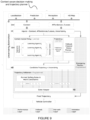
- a context is identified with a context identifier module (e.g., as part of the agent's planning module, as part of the computing system, etc.), such as that shown in FIGURE 13 , wherein the context identifier module can receive inputs from the map such as road infrastructure information (e.g., location of, size of, parameters associated with, etc.) and/or static environment features, which can individually and/or collectively include, but is not limited to, any or all of: road signs, lane lines, buildings, railroad tracks, bus routes, and/or other infrastructure information.
- road infrastructure information e.g., location of, size of, parameters associated with, etc.
- static environment features which can individually and/or collectively include, but is not limited to, any or all of: road signs, lane lines, buildings, railroad tracks, bus routes, and/or other infrastructure information.
- the map can optionally include (e.g., assign, prescribe, etc.) one or more transition zones which are arranged between different contexts, and can indicate, for instance, a change in context (e.g., along a fixed route, along a dynamically determined route, etc.), thereby enabling a switching of contexts to occur smoothly (e.g., by defining an action space).
- Assigning transition zones can function, for instance, to define an action space subsequently in the method which smoothly transitions the vehicle from one context to the next (e.g., preventing the availability of certain actions, prescribing that the agent maintain his or her lane, preventing a turn, etc.).
- the transition zones can be any or all of: overlapping with (e.g., partially overlapping with, fully overlapping with, etc.) one or more contexts; non-overlapping with one or more contexts; and/or any combination of overlapping and non-overlapping. Additionally or alternatively, the transition zones can be contexts themselves; the method can be performed in absence of labeled transition zones (e.g., by anticipating the subsequent context); and/or be otherwise performed.
- S205 includes hand labeling a high definition map to prescribe a set of contexts, further preferably a series of contexts, for at least a set of fixed routes available to an autonomous agent.
- S205 further preferably includes hand labeling a set of static objects and/or road features associated with the routes.
- each region in the map is assigned a single context (e.g., for all routes, for a specific route, etc.). Additionally or alternatively, each region in the map can be assigned multiple contexts (e.g., for overlapping routes, to be selected from, etc.).
- S205 can be performed in another suitable way or the method 200 can be performed in absence of S205.
- the set of inputs received in S210 preferably includes sensor information collected at a sensor subsystem of the autonomous agent, such as any or all of: a sensor system onboard the autonomous agent, a sensor system remote from the autonomous agent, and/or a sensor system in communication with the autonomous agent and/or a computing system (e.g., onboard computing system, remote computing system, etc.) of the autonomous agent.
- the sensor information can be collected from any other suitable sensor(s) and/or combination of sensors, S210 can be performed in absence of collecting sensor inputs, and/or S210 can be performed in any other suitable way(s).
- the sensor information can additionally or alternatively include motion information and/or other dynamic information associated with the autonomous agent, such as, but not limited to, any or all of: velocity/speed, acceleration, and/or any other suitable information.
- the set of inputs received in S210 further preferably includes the map and/or any information determined from (e.g., determined based on, derived from, included in, etc.) the map, such as any or all of the information described above in S205. In some variations, this includes one or more contexts (and/or transition zones) selected based on (e.g., predetermined / assigned to) a region/location of the autonomous agent (e.g., as determined based on sensor information as described above). In additional or alternative variations, the map information includes any or all of: road infrastructure information and/or other static environment information, route information, and/or any other suitable information.
- Information associated with the map can optionally be determined based on other information received in S210, such as any or all of the sensor information received at one or more sensor systems.
- location information e.g., current pose, current position, current geographical location, etc.
- this information is a particular context selected (e.g., assigned to) based on the location of (e.g., a region including the location, a stretch of road on which the agent is located, a particular intersection in which the agent is located, etc.) the autonomous agent.
- the location of the autonomous agent in comparison with the map includes information associated with the road infrastructure (e.g., road signs, lane lines, buildings, etc.), which is used, preferably along with other inputs (e.g., static environment features, static object information, autonomous agent vehicle state, dynamic environment features, etc.) to determine a context (e.g., using one or more learning-based models, using a pattern recognition and/or classification model, etc.) for the autonomous agent.
- the road infrastructure e.g., road signs, lane lines, buildings, etc.
- other inputs e.g., static environment features, static object information, autonomous agent vehicle state, dynamic environment features, etc.
- a context e.g., using one or more learning-based models, using a pattern recognition and/or classification model, etc.
- the set of inputs can optionally include a route and/or associated route information (e.g., route identifier of a fixed route, agent's progression through route, etc.) assigned to and/or being traversed by the agent (e.g., fixed route selected for the agent, dynamic route being traveled by the agent, predicted route for the agent, etc.), which can function for instance, to select information from one or more maps and/or to select a particular map (e.g., a route-specific map).
- the map information selected based on route can include, but is not limited to, any or all of: a current context, a future context (e.g., next context in a fixed route), a transition zone, and/or any other suitable information from a map.
- route information can be used to select the appropriate context for the particular route in regions in which multiple routes are overlapping (e.g., at an intersection which multiple routes pass through).
- the route information e.g., previous contexts of route, historical information, fixed route identifier, destination, starting point, directionality of route, etc.
- the route information can be used, for instance, to select the proper context from multiple context options.
- the route information can be used in other processes of the method 200 (e.g., in defining an action space based on the context, in selecting a behavior from the action space, in determining the agent's trajectory, etc.), any other suitable information can be determined based on route information, the set of inputs can be collected independently of and/or in absence of route information, and/or S210 can be performed in any other suitable ways.
- the set of inputs S210 can additionally or alternatively include any other suitable information, such as, but not limited to, any or all of: a state (e.g., operational state, driving state, etc.) of the autonomous agent, a trajectory of the agent, a set of control commands for the agent, historical information associated with the agent and/or an environment of the agent, predicted information associated with the agent and/or the environment (e.g., predicted trajectories of dynamic objects), and/or any other suitable information and/or inputs.
- a state e.g., operational state, driving state, etc.
- a trajectory of the agent e.g., a trajectory of the agent
- a set of control commands for the agent e.g., historical information associated with the agent and/or an environment of the agent
- predicted information associated with the agent and/or the environment e.g., predicted trajectories of dynamic objects
- S210 includes receiving a map specifying a set of assigned contexts for an agent; optionally a route (e.g., fixed route) of the agent; and sensor information from a set of sensors onboard the autonomous agent, wherein the sensor information includes at least a pose of the autonomous agent, wherein the pose and optionally the route are used to select a context for the agent based on the map. Additionally or alternatively, S210 can include receiving any other suitable inputs.
- S210 includes receiving a selected route for the vehicle, a high definition hand-labeled map specifying a context for each portion of the route (and optionally other routes), and sensor information including at least location information associated with the vehicle and optionally any or all of: motion information, object information (e.g., dynamic object information, static object information, etc.), and/or any other suitable information.
- a selected route for the vehicle e.g., a selected route for the vehicle
- a high definition hand-labeled map specifying a context for each portion of the route (and optionally other routes)
- sensor information including at least location information associated with the vehicle and optionally any or all of: motion information, object information (e.g., dynamic object information, static object information, etc.), and/or any other suitable information.
- S210 includes receiving a map including information associated with road infrastructure, such as the road infrastructure along one or more routes of the agent (e.g., a fixed route of the agent) and optionally any or all of: other map information (e.g., speed limit information, traffic laws, etc.); a state of the agent, equivalently referred to herein as an ego state (e.g., as determined by a sensor subsystem; pose, velocity, and acceleration; etc.); static environment features and/or information; dynamic environment features and/or information; sensor information; and/or any other suitable information, wherein the context is determined with one or more models and/or algorithms (e.g., convolutional neural networks [CNNs], recurrent neural networks [RNNs], support-vector machines [SVMs], etc.).
- CNNs convolutional neural networks
- RNNs recurrent neural networks
- SVMs support-vector machines
- a context identifier module which includes one or more deep learning models, receives as input a map and optionally route information for the agent, a state of the agent, static environment features, and dynamic environment features, with which the context identifier module determines a context for the agent.
- S210 includes receiving a set of multiple possible contexts for the agent based on a map, wherein a context of the set of multiple contexts is determined based on other inputs received in S210.
- S210 can include any other suitable processes.
- the method 200 includes determining a context associated with the autonomous agent S220, which functions to specify the context in which the autonomous agent is operating, and can further function to: select a learning module based on the context (e.g., according to a 1:1 mapping), define and/or a limit a set of behaviors or actions available to the agent, specify particular parameters (e.g., creep distance) associated with the behaviors and/or actions, reduce and/or minimize the amount of data required to training the learning modules, and/or perform any other suitable function(s).
- select a learning module based on the context (e.g., according to a 1:1 mapping), define and/or a limit a set of behaviors or actions available to the agent, specify particular parameters (e.g., creep distance) associated with the behaviors and/or actions, reduce and/or minimize the amount of data required to training the learning modules, and/or perform any other suitable function(s).
- S220 is preferably performed in response to (e.g., after, based on, etc.) S210, but can additionally or alternatively be performed as part of S210 and/or concurrently with S210, in place of S210, in absence of S210, multiple times throughout the method, and/or at any other time(s) during the method 200. Further additionally or alternatively, the method 200 can be performed in absence of S220.
- a context refers to a high level driving environment of the agent, which can inform and restrict the vehicle's decision at any given time and/or range of times.
- the context can include and/or define and/or be determined based on any or all of: a region type of the vehicle (e.g., residential, non-residential, highway, school, commercial, parking lot, etc.); a lane feature and/or other infrastructure feature of the road the vehicle is traversing (e.g., number of lanes, one-way road, two-way road, intersection, two-way stop and/or intersection, three-way stop and/or intersection, four-way stop and/or intersection, lanes in a roundabout, etc.); a proximity to one or more static objects and/or environmental features (e.g., particular building, body of water, railroad track, parking lot, shoulder, region in which the agent can pull over / pull off to the side of a road, etc.); a proximity a parameter associated with the location (e.g., speed limit, speed limit above a
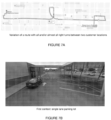
- contexts can include, but are not limited to, any or all of: a two-way, two-lane residential road (e.g., in which the agent cannot change contexts due to road geometry as shown in FIGURE 4 ); a two-way, two-lane non-residential road; a multi-lane highway (e.g., in which the agent can learn it is less likely to see pedestrians); a one-way, single-lane road; a one-way, two-lane road; a one-way road with "n" number (e.g., 1, 2, 3, 4, 5, 6, greater than 6, etc.) of lanes; a two-way road with "n” number (e.g., 1, 2, 3, 4, 5, 6, greater than 6, etc.) of lanes; a single lane road in a parking lot; a single lane road with a yellow boundary on the side; a multi-lane fast moving road (e.g., having a speed above a predetermined threshold); an on ramp of a highway; an off-ramp of a highway
- S220 is preferably performed based on a set of inputs received in S210, but can additionally or alternatively be performed based on any other suitable information.
- S220 is preferably performed by reading a map (e.g., as described above) to determine the context assigned to a point and/or area corresponding to the location of the agent (e.g., pose) and/or a route of the agent.
- each point and/or region can be any or all of: associated with at most 1 context (in a 1:1 mapping), associated with at most 1 context per route (e.g., wherein a fixed route assignment of the agent is used to select the proper context), associated with multiple contexts (e.g., which are ranked, prioritized, selected from based on other inputs received in S210), and/or otherwise associated.
- the context assignments are hard-coded into the map.
- the context assignments can be soft-coded and/or otherwise assigned.
- S220 can be performed with any number of algorithms, models (e.g., machine learning models, deep learning models, supervised learning models, unsupervised learning models, semi-supervised learning models, statistical models, pattern recognition models, etc.), finite state machines (FSMs), processes (e.g., traditionally programmed process), decision trees, and/or equations.
- models e.g., machine learning models, deep learning models, supervised learning models, unsupervised learning models, semi-supervised learning models, statistical models, pattern recognition models, etc.
- FSMs finite state machines
- processes e.g., traditionally programmed process
- decision trees e.g., decision trees, and/or equations.
- Determining a context can optionally include switching between contexts, which preferably includes determining a transition between a current context and a future context.
- the transition can be in the form of any or all of: a transition zone (e.g., as described above) prescribed in the map; a change in contexts; a transition action/behavior (e.g., lane changing, merging, exiting a highway, etc.); a transition trajectory (e.g., trajectory taken by the vehicle to change from a 1 st lane into a 2 nd lane, etc.); and/or any can prescribe any other motion for the vehicle.
- a transition zone e.g., as described above
- a transition action/behavior e.g., lane changing, merging, exiting a highway, etc.
- a transition trajectory e.g., trajectory taken by the vehicle to change from a 1 st lane into a 2 nd lane, etc.
- any can prescribe any other motion for the
- the transition is preferably determined (e.g., prescribed) based on the map (e.g., as indicated as a transition zone, as indicated through distinct adjacent contexts in the map, as indicated through distinct sequential contexts in a fixed route, etc.), but can additionally or alternatively be dynamically determined, determined with a trajectory planner, determined based on sensor information, and/or otherwise determined.
- S220 can optionally include selecting a scenario based on the context, which functions to further specify the context, such as based on any or all of the information described above (e.g., speed limit, sensor information of objects surrounding vehicle, etc.).
- scenarios for a first context include, but are not limited to, any or all of: a right turn opportunity; an addition of a right turn lane; a stop sign; a traffic light; a yield sign; a crosswalk; a speed bump; and/or any other scenarios.
- S220 includes selecting a context based on a location and/or orientation of the vehicle (e.g., pose), a labeled map, and optionally any or all of the other information received in S210, wherein the context informs how the remaining processes of the method are performed.
- the context then triggers the selection of a particular scenario (e.g., based on a context-specific IRL algorithm).
- a labeled map assigns a context to each of a set of regions of a labeled map, wherein a location of the agent within the region (and optionally a route assignment and/or directionality of the agent) determines the context for the agent.
- the map can optionally further include transition zones (e.g., having a non-zero size, having a size of zero and indicating an immediate transition, etc.) between adjacent regions of different context(s) and/or any other information.
- S220 includes identifying a context associated with the agent with a context identifier module, the context identifier module including one or more trained models (e.g., machine learning model(s), deep learning model(s), etc.), which receives as input any or all of the information received in S210.
- trained models e.g., machine learning model(s), deep learning model(s), etc.
- S220 can include any other suitable processes and/or be performed in any other suitable ways.
- the method 200 can include selecting a learning module based on the context and/or scenario S230, which functions to enable an action (equivalently referred to as a behavior) to be determined for the agent which takes into account the particular context (and optionally scenario) of the vehicle.
- S230 can additionally or alternatively function to define an action space available to the agent, inform a trajectory of the agent as determined by a trajectory planner, eliminate one or more actions from consideration by the agent (e.g., minimize a number of available actions to an agent), and/or can perform any other suitable functions.
- S230 preferably includes selecting a learning module (equivalently referred to herein as a context-aware learning agent or a deep decision network) which includes a set of machine learning (e.g., deep learning) models and/or algorithms, wherein the learning module is trained based on data associated with that particular context.
- a learning module (equivalently referred to herein as a context-aware learning agent or a deep decision network) which includes a set of machine learning (e.g., deep learning) models and/or algorithms, wherein the learning module is trained based on data associated with that particular context. This functions to divide a large amount of data from all possible contexts into a set of manageable amounts, which cover all or nearly all of the situations the agent would encounter in that context.
- Each context is preferably mapped in a 1:1 fashion to a learning module.
- a context can be associated with multiple learning modules (e.g., where results from multiple modules are aggregated, where a single learning module is then selected, etc.); a learning module can be associated with multiple contexts; and/or the contexts and learning modules can be otherwise mapped.
- S230 can optionally include receiving a set of inputs, which can include any or all of the set of inputs described above, a different and/or additional set of inputs, and/or any other suitable inputs.
- S230 includes receiving any or all of: the inputs described above; the context and/or scenario of the agent; the set of vehicles and/or other dynamic objects surrounding the vehicle, the predicted paths (e.g., where will it be in lane and in which lane, etc.) of the dynamic objects, static objects surrounding the agent; uncertainty values (e.g., of the predicted paths); routing information associated with the agent; and/or any other suitable inputs.
- an environmental representation of the agent is received with the context at a deep decision network selected based on the context.
- the environmental representation (referred to as a full environmental representation) includes a latent space representation of a set of inputs (e.g., as described in S210, additional or alternative to those described in S210, etc.), the set of inputs including any or all of: a state of the agent (equivalently referred to herein as an ego vehicle state), one or more maps, routing information (e.g., a selected fixed route, parameters associated with a selected fixed route, etc.), dynamic object information/features, static object information/features, and/or any other suitable information.
- routing information e.g., a selected fixed route, parameters associated with a selected fixed route, etc.
- dynamic object information/features e.g., static object information/features, and/or any other suitable information.
- This representation can optionally be combined with (e.g., appended with in a vector and/or matrix) other environmental information/inputs (e.g., route information, map, agent/ego pose, etc.) and/or outputs from other models, such as a second neural network (e.g., an RNN, a CNN, Ego RNN in FIGURE 16 , etc.) which processes the ego vehicle state. Any or all of this information can then be fed into a latent space network (e.g., RNN, CNN, etc.), which is used to determine the environmental representation based on the outputs of these other networks and optionally map information, routing information, and/or any other suitable inputs.
- a latent space network e.g., RNN, CNN, etc.
- the latent space network is preferably in the form of and/or includes one or more autoencoders (with one or more encoders, code, and decoders), but can additionally or alternatively include any or all of: other unsupervised learning models, supervised learning models, semi-supervised learning models, and/or any other suitable neural networks and/or models.
- the latent space network is a fully-connected feedforward neural network.
- the output of the latent space representation which is preferably a low-dimensional features vector (but can additionally or alternatively be any other output) is preferably then used as an input to the learning module.
- any other suitable models and/or algorithms can be implemented, the input and/or outputs can be different for these models and/or algorithms, and/or any suitable model architecture can be implemented.
- the learning module is preferably in the form of a machine learning model, further preferably in the form of one or more neural networks and/or models (e.g., convolutional neural network [CNN], inverse reinforcement learning [IRL] model, reinforcement learning [RL] model, imitation learning [IL] model, etc.) trained for a particular context and/or contexts, but can additionally or alternatively include any other suitable models, algorithms, decision trees, lookup tables, and/or other tools.
- CNN convolutional neural network
- RNL reinforcement learning
- RL reinforcement learning
- IL imitation learning
- each of the learning modules is a neural network, further preferably a deep Q-learning network (e.g., IRL algorithm/network), wherein the number of layers (e.g., hidden layers) of the neural network can vary for different contexts and/or actions (e.g., between 3-8 layers, 3 or less layers, 8 or more layers, between 2 and 10 layers, between 1 and 15 layers, etc.).
- a deep Q-learning network e.g., IRL algorithm/network
- any other suitable networks, algorithms, and/or models can be used in the learning module(s), such as, but not limited to, any or all of: policy gradient methods, finite state machines [FSMs], probabilistic methods (e.g., Partially Observable Markov Decision Process [POMDP]), imitation learning [IL], RL or variations of IRL, and/or any other suitable models and/or networks and/or algorithms.
- FSMs finite state machines
- POMDP Partially Observable Markov Decision Process
- IL imitation learning
- RL RL or variations of IRL
- Each of the learning modules is preferably the same type of neural network (e.g., with different numbers of layers) and/or algorithm and/or model, but can alternatively be different.
- Each of the learning modules is preferably trained based on data occurring within the particular context type or context types associated with the learning module and optionally further trained based on data occurring within one or more fixed routes which pass through the context.
- a single learning module applies to a particular context type, wherein the single learning module is trained based on different versions of that context.
- a single learning module applies to a particular context within a particular route, wherein the single learning module is trained based on data associated with that particular context in the particular fixed route.
- the learning module(s) can be trained on any suitable data.
- Each of the learning modules is further preferably trained with inverse reinforcement learning, which functions to determine a reward function and/or an optimal driving policy for each of the context-aware learning agents.
- the output of this training is further preferably a compact fully-connected network model that represents the reward function and an optimal policy for each learning module. Additionally or alternatively, the learning modules can be otherwise suitably trained and/or implemented.
- S230 includes selecting a context-aware learning agent (equivalently referred to herein as a context-aware learning module) based on a determined context of the agent, wherein a single context-aware learning agent is assigned to each context.
- the context-aware learning agent is preferably trained with an inverse reinforcement learning technique, but can additionally or alternatively be otherwise trained.
- S230 includes selecting from multiple context-aware learning agents assigned to and/or available to a particular context, wherein the particular context-aware learning agent is selected based on any or all of: machine learning, a decision tree, statistical methods, an algorithm, and/or with any other suitable tool(s).
- any other suitable learning modules can be selected, used, and/or trained.
- the method 200 can include defining an action space based on the learning module S240, which functions to define a set of actions (equivalently referred to herein as behaviors) available to the agent in light of the vehicle's context and/or environment. Additionally or alternatively, S240 can function to minimize a number of available actions to the agent as informed by the context, which functions to simplify the process (e.g., reduce the time, prevent selection of an incompatible action, etc.) required to select an action for the vehicle.
- the method 200 can optionally additionally or alternatively include selecting an action from the action space S250, which functions to determine a next behavior (e.g., switching and/or transitioning to a different behavior than current behavior, maintaining a current behavior, etc.) of the vehicle.
- S240 and/or S250 are preferably performed in response to (e.g., after, based on, etc.) S230, but can additionally or alternatively be performed as part of S230 and/or concurrently with S230, in place of S230, in absence of S230, in response to S220 and/or S210, multiple times throughout the method, and/or at any other time(s) during the method 200. Further additionally or alternatively, the method 200 can be performed in absence of S240 and/or S250.
- the action space and/or action is preferably produced as an output (e.g., intermediate output, final output, etc.) of the learning module; additionally or alternatively, the learning module can produce any other suitable outputs.
- the learning module can produce any other suitable outputs.
- a determination of the context and processing based on this context e.g., the specific learning module
- the actions can include, but are not limited to, any or all of: maintaining a lane, changing lanes, turning (e.g., turning right, turning left, performing a U-turn, etc.), merging, creeping, following a vehicle in front of the agent, parking in a lot, pulling over, nudging, passing a vehicle, and/or any other suitable actions such as usual driving actions for human-operated and/or autonomous vehicles.
- Each action is preferably associated with a set of parameters, which are determined based on the particular context of the agent and optionally any other suitable inputs (e.g., sensor information).
- any other suitable inputs e.g., sensor information.
- the extra information and restriction from the context type can reduce the amount of data that is needed to train the different learning approaches and better tune the agent to a specific context to increase accuracy and confidence.
- an output layer of each deep decision network is a softmax layer where the number of output nodes is the number of available actions. Additionally or alternatively, an action space and/or available actions can be determined in any other suitable way(s).
- a multi-lane highway context produces a corresponding action space including: maintaining speed, lane change left, and lane change right.
- a different context such as a residential road produces actions such as those in the highway context and additional actions such as stop, yield, creep, left turn, and right turn.
- the action is produced as an output (e.g., single output, multiple outputs, etc.) of the context-aware learning agent.
Landscapes
- Engineering & Computer Science (AREA)
- Physics & Mathematics (AREA)
- Theoretical Computer Science (AREA)
- General Physics & Mathematics (AREA)
- Evolutionary Computation (AREA)
- Remote Sensing (AREA)
- Radar, Positioning & Navigation (AREA)
- Artificial Intelligence (AREA)
- Software Systems (AREA)
- Computing Systems (AREA)
- Data Mining & Analysis (AREA)
- General Health & Medical Sciences (AREA)
- Health & Medical Sciences (AREA)
- Computer Vision & Pattern Recognition (AREA)
- General Engineering & Computer Science (AREA)
- Multimedia (AREA)
- Medical Informatics (AREA)
- Automation & Control Theory (AREA)
- Mathematical Physics (AREA)
- Life Sciences & Earth Sciences (AREA)
- Databases & Information Systems (AREA)
- Molecular Biology (AREA)
- Computational Linguistics (AREA)
- Biophysics (AREA)
- Biomedical Technology (AREA)
- Chemical & Material Sciences (AREA)
- Analytical Chemistry (AREA)
- Mechanical Engineering (AREA)
- Transportation (AREA)
- Human Computer Interaction (AREA)
- Bioinformatics & Computational Biology (AREA)
- Bioinformatics & Cheminformatics (AREA)
- Evolutionary Biology (AREA)
- Signal Processing (AREA)
- Computer Networks & Wireless Communication (AREA)
- Mathematical Optimization (AREA)
- Pure & Applied Mathematics (AREA)
- Probability & Statistics with Applications (AREA)
- Algebra (AREA)
- Mathematical Analysis (AREA)
Claims (13)
- Un procédé pour une prise de décision sensible au contexte d'un agent autonome, le procédé comprenant :• la réception d'un ensemble d'entrées en provenance d'un sous-système de capteurs de l'agent autonome, où l'ensemble d'entrées inclut au moins une pose de l'agent autonome ;• la détermination d'un contexte de l'agent autonome sur la base de l'ensemble d'entrées et d'une carte (S220), où la carte prescrit une série prédéterminée de contextes pour un itinéraire fixe de l'agent autonome ;• sur la base du contexte, la sélection d'un modèle d'apprentissage sensible au contexte parmi un ensemble de modèles d'apprentissage sensibles au contexte (S230), où chacun des modèles d'apprentissage sensibles au contexte est entraîné sur des données qui incluent : des données recueillies dans un contexte respectif, et des données recueillies au cours de la traversée de l'itinéraire fixe ;• avec le modèle d'apprentissage sensible au contexte, la définition d'un espace d'actions pour l'agent autonome (S240) ;• la sélection d'une action parmi l'espace d'actions (S250) ;• la transmission de l'action à un planificateur de mouvements de l'agent autonome, où le planificateur de mouvements détermine une trajectoire pour l'agent autonome sur la base de l'action (S260) ;• l'exploitation de l'agent autonome selon la trajectoire ;• la réception d'un deuxième ensemble d'entrées en provenance du sous-système de capteurs ; et• la détection du fait que l'agent autonome effectue une transition vers un deuxième contexte de la série prédéterminée de contextes sur la base du deuxième ensemble d'entrées et de la carte.
- Le procédé de la revendication 1, où la série de contextes comprend une série ordonnée de contextes associés à l'itinéraire fixe.
- Le procédé de la revendication 1, comprenant en outre la détermination d'un scénario sur la base du contexte, où le modèle d'apprentissage sensible au contexte est déterminé en outre sur la base du scénario.
- Le procédé de la revendication 1, où la trajectoire se trouve le long de l'itinéraire fixe.
- Le procédé de la revendication 1, où chacun des modèles d'apprentissage sensibles au contexte est entraîné avec un algorithme d'apprentissage par renforcement inverse.
- Le procédé de la revendication 1, où le contexte et le modèle d'apprentissage sensible au contexte sélectionné sont associés selon un mappage 1/1.
- Le procédé de l'une quelconque des revendications 1 à 4, où l'espace d'actions est associé à un ensemble de paramètres, où un ensemble de valeurs de l'ensemble de paramètres est déterminé sur la base du contexte.
- Le procédé de la revendication 7, où l'ensemble de valeurs inclut une distance d'avancement au ralenti.
- Le procédé de l'une quelconque des revendications 1 à 4, où la carte comprend une carte haute définition, marquée à la main.
- Le procédé de l'une quelconque des revendications 1 à 4, où le contexte est déterminé en outre sur la base de l'itinéraire fixe, où l'itinéraire fixe coupe un deuxième itinéraire fixe dans une région associée au contexte.
- Le procédé de l'une quelconque des revendications 1 à 4, où le modèle d'apprentissage sensible au contexte reçoit en outre comme entrée :• des informations associées à un ensemble d'objets dynamiques détectés ; et• des informations associées à un ensemble d'objets statiques.
- Le procédé de l'une quelconque des revendications 1 à 4, où l'ensemble de modèles d'apprentissage sensibles au contexte comprend un modèle d'apprentissage sensible au contexte pour chaque contexte de la série prédéterminée de contextes.
- Le procédé de la revendication 12, où chacun des modèles d'apprentissage sensibles au contexte est mappé sur un contexte de la série prédéterminée de contextes selon une façon 1/1.
Applications Claiming Priority (3)
| Application Number | Priority Date | Filing Date | Title |
|---|---|---|---|
| US202063035401P | 2020-06-05 | 2020-06-05 | |
| US202063055756P | 2020-07-23 | 2020-07-23 | |
| PCT/US2020/064058 WO2021247075A1 (fr) | 2020-06-05 | 2020-12-09 | Procédé et système de prise de décision sensible au contexte d'un agent autonome |
Publications (4)
| Publication Number | Publication Date |
|---|---|
| EP4162337A1 EP4162337A1 (fr) | 2023-04-12 |
| EP4162337A4 EP4162337A4 (fr) | 2024-07-03 |
| EP4162337B1 true EP4162337B1 (fr) | 2025-07-09 |
| EP4162337C0 EP4162337C0 (fr) | 2025-07-09 |
Family
ID=76320930
Family Applications (1)
| Application Number | Title | Priority Date | Filing Date |
|---|---|---|---|
| EP20938767.9A Active EP4162337B1 (fr) | 2020-06-05 | 2020-12-09 | Procédé et système de prise de décision sensible au contexte d'un agent autonome |
Country Status (5)
| Country | Link |
|---|---|
| US (10) | US11034364B1 (fr) |
| EP (1) | EP4162337B1 (fr) |
| JP (1) | JP7538892B2 (fr) |
| CA (1) | CA3181067A1 (fr) |
| WO (1) | WO2021247075A1 (fr) |
Families Citing this family (38)
| Publication number | Priority date | Publication date | Assignee | Title |
|---|---|---|---|---|
| US10384855B2 (en) | 2014-02-07 | 2019-08-20 | Yeti Coolers, Llc | Insulating device and method for forming insulating device |
| EP3667638B1 (fr) * | 2017-08-10 | 2023-10-04 | Nissan Motor Co., Ltd. | Procédé de gestion d'informations de voie de circulation, procédé de commande de déplacement et dispositif de gestion d'informations de voie de circulation |
| US10564641B2 (en) | 2018-07-20 | 2020-02-18 | May Mobility, Inc. | Multi-perspective system and method for behavioral policy selection by an autonomous agent |
| US11511576B2 (en) * | 2020-01-24 | 2022-11-29 | Ford Global Technologies, Llc | Remote trailer maneuver assist system |
| KR20210124603A (ko) * | 2020-04-06 | 2021-10-15 | 현대자동차주식회사 | 차량의 자율 주행 제어 장치, 그를 포함한 시스템 및 그 방법 |
| EP4162337B1 (fr) | 2020-06-05 | 2025-07-09 | Gatik AI Inc. | Procédé et système de prise de décision sensible au contexte d'un agent autonome |
| EP4162339B1 (fr) | 2020-06-05 | 2025-07-02 | Gatik AI Inc. | Procédé et système pour la prise de décision guidée par les données et modulaire et la génération de trajectoire d'un agent autonome |
| US11157010B1 (en) | 2020-06-05 | 2021-10-26 | Gatik Ai Inc. | Method and system for deterministic trajectory selection based on uncertainty estimation for an autonomous agent |
| CN111694365B (zh) * | 2020-07-01 | 2021-04-20 | 武汉理工大学 | 一种基于深度强化学习的无人船艇编队路径跟踪方法 |
| WO2022006418A1 (fr) | 2020-07-01 | 2022-01-06 | May Mobility, Inc. | Procédé et système de gestion dynamique d'interventions de véhicule autonome |
| KR102895461B1 (ko) * | 2020-11-04 | 2025-12-05 | 현대자동차주식회사 | 자율 주행 시스템의 동적 검증을 위한 테스트 케이스 생성 방법 및 장치 |
| EP4264181A4 (fr) | 2020-12-17 | 2024-10-30 | May Mobility, Inc. | Procédé et système de mise à jour dynamique d'une représentation environnementale d'un agent autonome |
| EP4314708A4 (fr) | 2021-04-02 | 2024-12-25 | May Mobility, Inc. | Procédé et système pour faire fonctionner un agent autonome avec des informations environnementales incomplètes |
| US20220374764A1 (en) * | 2021-05-19 | 2022-11-24 | Volvo Car Corporation | Real-time in-vehicle modeling and simulation updates |
| US12594959B1 (en) * | 2021-06-16 | 2026-04-07 | Waymo Llc | Scene generation using probabilistic programming languages |
| US20230020503A1 (en) * | 2021-07-08 | 2023-01-19 | Ford Global Technologies, Llc | Machine control |
| AU2022380638B2 (en) * | 2021-08-19 | 2024-11-28 | Merlin Labs, Inc. | Advanced flight processing system and/or method |
| WO2023102098A1 (fr) | 2021-12-01 | 2023-06-08 | May Mobility, Inc. | Procédé et système pour le fonctionnement basé sur l'impact d'un agent autonome |
| CN114407915B (zh) * | 2021-12-14 | 2024-08-06 | 高德软件有限公司 | 运行设计域odd的处理方法、装置及存储介质 |
| CA3240409A1 (fr) | 2021-12-16 | 2023-06-22 | Apeksha Kumavat | Procede et systeme de traitement de defaillance dans agent autonome |
| CA3240477A1 (fr) | 2021-12-16 | 2023-06-22 | Apeksha Kumavat | Procede et systeme pour etendre le domaine de conception operationnelle d'un agent autonome |
| US11541910B1 (en) * | 2022-01-07 | 2023-01-03 | Plusai, Inc. | Methods and apparatus for navigation of an autonomous vehicle based on a location of the autonomous vehicle relative to shouldered objects |
| JP7851524B2 (ja) | 2022-02-14 | 2026-04-27 | メイ モビリティー,インコーポレイテッド | 自律エージェントの条件付き動作のための方法及びシステム |
| US12600384B2 (en) * | 2022-03-22 | 2026-04-14 | Qualcomm Incorporated | Model hyperparameter adjustment using vehicle driving context classification |
| JP7441258B2 (ja) * | 2022-03-25 | 2024-02-29 | 本田技研工業株式会社 | 制御装置 |
| US11840257B2 (en) * | 2022-03-25 | 2023-12-12 | Embark Trucks Inc. | Lane change determination for vehicle on shoulder |
| DE102022205168A1 (de) * | 2022-05-24 | 2023-11-30 | Robert Bosch Gesellschaft mit beschränkter Haftung | Verfahren und Vorrichtung zum Betreiben eines automatisierten Fahrzeugs |
| US20230391365A1 (en) * | 2022-06-06 | 2023-12-07 | Nvidia Corporation | Techniques for generating simulations for autonomous machines and applications |
| US11644842B1 (en) * | 2022-06-23 | 2023-05-09 | Motional Ad Llc | Semi-closed loop rollouts for data augmentation |
| US20240036567A1 (en) * | 2022-07-26 | 2024-02-01 | Kodiak Robotics, Inc. | Systems and methods for controlling a vehicle by teleoperation based on map creation |
| CN115432008B (zh) * | 2022-09-30 | 2025-01-28 | 重庆长安汽车股份有限公司 | 一种基于优化多任务的自动驾驶决策规划方法、电子设备及计算机存储介质 |
| JP2026500243A (ja) | 2022-12-13 | 2026-01-06 | メイ モビリティー,インコーポレイテッド | 自律車両が遭遇し得るリスクを評価し軽減するための方法およびシステム |
| DE102023108635A1 (de) | 2023-04-04 | 2024-10-10 | Dr. Ing. H.C. F. Porsche Aktiengesellschaft | Verfahren und System zum Erstellen einer kontextbasierten Empfehlung für zumindest eine Route für eine sich bewegende Entität |
| KR102675973B1 (ko) * | 2023-12-15 | 2024-06-19 | 연세대학교 산학협력단 | 컨텍스트 인지 플래닝 모듈 및 환경 인지 메모리 모듈을 포함하는 capeam 모델에 따른 태스크 수행 방법 및 이를 사용한 ai 에이전트 |
| US20250376187A1 (en) * | 2024-06-10 | 2025-12-11 | Autobrains Technologies Ltd | Contextual attribute-based perception |
| WO2026002928A1 (fr) * | 2024-06-28 | 2026-01-02 | Aumovio Germany Gmbh | Procédé, appareil et support lisible par ordinateur pour système de classification sensible à une scène critique adaptative pour navigation autonome |
| US12555386B1 (en) | 2024-11-05 | 2026-02-17 | Qpiai India Private Limited | Systems and methods for multi-modal visual reasoning using multiple scene graphs |
| US12409824B1 (en) | 2024-12-20 | 2025-09-09 | Gatik Ai Inc. | Drive-by-wire vehicle architecture |
Family Cites Families (94)
| Publication number | Priority date | Publication date | Assignee | Title |
|---|---|---|---|---|
| US6292830B1 (en) * | 1997-08-08 | 2001-09-18 | Iterations Llc | System for optimizing interaction among agents acting on multiple levels |
| US6278965B1 (en) * | 1998-06-04 | 2001-08-21 | The United States Of America As Represented By The Administrator Of The National Aeronautics And Space Administration | Real-time surface traffic adviser |
| US7230545B2 (en) | 2003-11-07 | 2007-06-12 | Nattel Group, Inc. | Automobile communication and registry system |
| US8024112B2 (en) * | 2005-09-29 | 2011-09-20 | Microsoft Corporation | Methods for predicting destinations from partial trajectories employing open-and closed-world modeling methods |
| US7831391B2 (en) | 2007-06-12 | 2010-11-09 | Palo Alto Research Center Incorporated | Using segmented cones for fast, conservative assessment of collision risk |
| US8612107B2 (en) | 2008-06-10 | 2013-12-17 | The Regents Of The University Of Michigan | Method, control apparatus and powertrain system controller for real-time, self-learning control based on individual operating style |
| US8126642B2 (en) | 2008-10-24 | 2012-02-28 | Gray & Company, Inc. | Control and systems for autonomously driven vehicles |
| US20100131148A1 (en) | 2008-11-26 | 2010-05-27 | Jaime Camhi | System and method for estimated driver intention for driver assistance system control |
| FR2947231B1 (fr) | 2009-06-30 | 2013-03-29 | Valeo Vision | Procede pour determiner de maniere predictive des situations routieres d'un vehicule |
| US8175617B2 (en) | 2009-10-28 | 2012-05-08 | Digimarc Corporation | Sensor-based mobile search, related methods and systems |
| US9679258B2 (en) | 2013-10-08 | 2017-06-13 | Google Inc. | Methods and apparatus for reinforcement learning |
| JP2015089801A (ja) | 2013-11-07 | 2015-05-11 | 株式会社デンソー | 運転制御装置 |
| JP6537780B2 (ja) | 2014-04-09 | 2019-07-03 | 日立オートモティブシステムズ株式会社 | 走行制御装置、車載用表示装置、及び走行制御システム |
| US9429440B2 (en) | 2014-12-07 | 2016-08-30 | Toyota Motor Engineering & Manufacturing North America, Inc. | Driving action determination for travel route exit event |
| US9555807B2 (en) | 2015-05-01 | 2017-01-31 | Delphi Technologies, Inc. | Automated vehicle parameter modification based on operator override |
| US9507346B1 (en) | 2015-11-04 | 2016-11-29 | Zoox, Inc. | Teleoperation system and method for trajectory modification of autonomous vehicles |
| US9910441B2 (en) | 2015-11-04 | 2018-03-06 | Zoox, Inc. | Adaptive autonomous vehicle planner logic |
| KR102137213B1 (ko) | 2015-11-16 | 2020-08-13 | 삼성전자 주식회사 | 자율 주행을 위한 모델 학습 장치 및 방법과 자율 주행 장치 |
| US11267489B2 (en) | 2016-03-17 | 2022-03-08 | Hitachi, Ltd. | Automatic operation assistance system and automatic operation assistance method |
| US11645444B2 (en) * | 2016-05-10 | 2023-05-09 | Trustees Of Tufts College | Systems and methods enabling online one-shot learning and generalization by intelligent systems of task-relevant features and transfer to a cohort of intelligent systems |
| CN105872477B (zh) | 2016-05-27 | 2018-11-23 | 北京旷视科技有限公司 | 视频监控方法和视频监控系统 |
| US10495753B2 (en) * | 2016-09-19 | 2019-12-03 | Nec Corporation | Video to radar |
| JP6731619B2 (ja) | 2016-10-26 | 2020-07-29 | パナソニックIpマネジメント株式会社 | 情報処理システム、情報処理方法、およびプログラム |
| EP3533040B8 (fr) | 2016-10-31 | 2025-01-22 | Toyota Motor Europe | Procédé et système d'aide à la conduite |
| EP3549044A4 (fr) | 2016-12-02 | 2020-07-22 | Starsky Robotics, Inc. | Système de commande de véhicule et procédé d'utilisation |
| WO2018125928A1 (fr) | 2016-12-29 | 2018-07-05 | DeepScale, Inc. | Simulation de capteur multicanal pour systèmes de commande autonomes |
| KR102742851B1 (ko) | 2017-02-16 | 2024-12-13 | 삼성전자주식회사 | 자율 주행을 위한 차량 제어 방법, 차량 제어 장치 및 자율 주행을 위한 학습 방법 |
| US10220857B2 (en) | 2017-02-23 | 2019-03-05 | Uber Technologies, Inc. | Vehicle control system |
| US10095234B2 (en) * | 2017-03-07 | 2018-10-09 | nuTonomy Inc. | Planning for unknown objects by an autonomous vehicle |
| JP6756661B2 (ja) | 2017-04-28 | 2020-09-16 | 日立オートモティブシステムズ株式会社 | 車両電子制御装置 |
| JP6838241B2 (ja) | 2017-06-01 | 2021-03-03 | 日立Astemo株式会社 | 移動体挙動予測装置 |
| US10559140B2 (en) | 2017-06-16 | 2020-02-11 | Uatc, Llc | Systems and methods to obtain feedback in response to autonomous vehicle failure events |
| US10752246B2 (en) * | 2017-07-01 | 2020-08-25 | Tusimple, Inc. | System and method for adaptive cruise control with proximate vehicle detection |
| US10883844B2 (en) | 2017-07-27 | 2021-01-05 | Waymo Llc | Neural networks for vehicle trajectory planning |
| US10235881B2 (en) | 2017-07-28 | 2019-03-19 | Toyota Motor Engineering & Manufacturing North America, Inc. | Autonomous operation capability configuration for a vehicle |
| US10520940B2 (en) * | 2017-08-14 | 2019-12-31 | GM Global Technology Operations LLC | Autonomous operation using deep spatio-temporal learning |
| US11210744B2 (en) * | 2017-08-16 | 2021-12-28 | Mobileye Vision Technologies Ltd. | Navigation based on liability constraints |
| WO2019051834A1 (fr) | 2017-09-18 | 2019-03-21 | Baidu.Com Times Technology (Beijing) Co., Ltd. | Lignes directrices de voie fondées sur des scénarios de conduite pour planifier des trajets de véhicules à conduite autonome |
| EP3467717A1 (fr) * | 2017-10-04 | 2019-04-10 | Prowler.io Limited | Système d'apprentissage par machine |
| US10866588B2 (en) | 2017-10-16 | 2020-12-15 | Toyota Research Institute, Inc. | System and method for leveraging end-to-end driving models for improving driving task modules |
| US11027751B2 (en) | 2017-10-31 | 2021-06-08 | Nissan North America, Inc. | Reinforcement and model learning for vehicle operation |
| US10345811B2 (en) | 2017-11-14 | 2019-07-09 | GM Global Technology Operations LLC | Method and apparatus for scenario generation and parametric sweeps for the development and evaluation of autonomous driving systems |
| US20190146508A1 (en) | 2017-11-14 | 2019-05-16 | Uber Technologies, Inc. | Dynamic vehicle routing using annotated maps and profiles |
| US10859384B2 (en) | 2017-11-15 | 2020-12-08 | Uatc, Llc | Lightweight vehicle localization systems and methods |
| US20190147255A1 (en) | 2017-11-15 | 2019-05-16 | Uber Technologies, Inc. | Systems and Methods for Generating Sparse Geographic Data for Autonomous Vehicles |
| CN111433101A (zh) * | 2017-12-18 | 2020-07-17 | 智加科技公司 | 用于自动驾驶车辆中的个性化运动规划的方法和系统 |
| US11639183B2 (en) | 2018-01-17 | 2023-05-02 | Mitsubishi Electric Corporation | Driving control device, driving control method, and computer readable medium |
| JP6979648B2 (ja) | 2018-02-02 | 2021-12-15 | Kddi株式会社 | 車載制御装置 |
| US10836379B2 (en) | 2018-03-23 | 2020-11-17 | Sf Motors, Inc. | Multi-network-based path generation for vehicle parking |
| WO2019191313A1 (fr) * | 2018-03-27 | 2019-10-03 | Nvidia Corporation | Fonctionnement à distance de véhicules utilisant des environnements de réalité virtuelle immersive |
| US11373115B2 (en) | 2018-04-09 | 2022-06-28 | Here Global B.V. | Asynchronous parameter aggregation for machine learning |
| US10860022B2 (en) * | 2018-04-11 | 2020-12-08 | GM Global Technology Operations LLC | Method and apparatus for automatical rule learning for autonomous driving |
| US10676085B2 (en) | 2018-04-11 | 2020-06-09 | Aurora Innovation, Inc. | Training machine learning model based on training instances with: training instance input based on autonomous vehicle sensor data, and training instance output based on additional vehicle sensor data |
| US11454970B2 (en) | 2018-05-21 | 2022-09-27 | Cummins Inc. | Adjustment of autonomous vehicle control authority |
| US20190361454A1 (en) | 2018-05-24 | 2019-11-28 | GM Global Technology Operations LLC | Control systems, control methods and controllers for an autonomous vehicle |
| EP3579174A1 (fr) * | 2018-06-08 | 2019-12-11 | Hexagon Technology Center GmbH | Véhicules mobiles dans la fabrication |
| US11454975B2 (en) | 2018-06-28 | 2022-09-27 | Uatc, Llc | Providing actionable uncertainties in autonomous vehicles |
| US10538226B1 (en) | 2018-07-06 | 2020-01-21 | Starsky Robotics, Inc. | Vehicle braking system and method |
| US11054829B2 (en) * | 2018-07-17 | 2021-07-06 | Baidu Usa Llc | Multimodal motion planning framework for autonomous driving vehicles |
| US10678245B2 (en) | 2018-07-27 | 2020-06-09 | GM Global Technology Operations LLC | Systems and methods for predicting entity behavior |
| US10845815B2 (en) | 2018-07-27 | 2020-11-24 | GM Global Technology Operations LLC | Systems, methods and controllers for an autonomous vehicle that implement autonomous driver agents and driving policy learners for generating and improving policies based on collective driving experiences of the autonomous driver agents |
| US10981564B2 (en) | 2018-08-17 | 2021-04-20 | Ford Global Technologies, Llc | Vehicle path planning |
| US10882522B2 (en) * | 2018-09-13 | 2021-01-05 | Toyota Research Institute, Inc. | Systems and methods for agent tracking |
| US11479243B2 (en) | 2018-09-14 | 2022-10-25 | Honda Motor Co., Ltd. | Uncertainty prediction based deep learning |
| CN112334370B (zh) | 2018-10-26 | 2024-04-30 | 深圳市大疆创新科技有限公司 | 车道偏离警报的自动化载运工具动作及关联的系统和方法 |
| WO2020090251A1 (fr) | 2018-10-30 | 2020-05-07 | 日本電気株式会社 | Dispositif, procédé et programme de reconnaissance d'objets |
| US11480972B2 (en) | 2018-11-13 | 2022-10-25 | Qualcomm Incorporated | Hybrid reinforcement learning for autonomous driving |
| JP7176573B2 (ja) | 2018-11-13 | 2022-11-22 | 日本電気株式会社 | 危険シーン予測装置、危険シーン予測方法および危険シーン予測プログラム |
| US11137762B2 (en) | 2018-11-30 | 2021-10-05 | Baidu Usa Llc | Real time decision making for autonomous driving vehicles |
| US10814871B2 (en) | 2018-12-26 | 2020-10-27 | Gm Cruise Holdings Llc | Computing system for assigning maneuver labels to autonomous vehicle sensor data |
| US10311336B1 (en) * | 2019-01-22 | 2019-06-04 | StradVision, Inc. | Method and device of neural network operations using a grid generator for converting modes according to classes of areas to satisfy level 4 of autonomous vehicles |
| US11521396B1 (en) * | 2019-02-02 | 2022-12-06 | Uatc, Llc | Probabilistic prediction of dynamic object behavior for autonomous vehicles |
| US11157784B2 (en) | 2019-05-08 | 2021-10-26 | GM Global Technology Operations LLC | Explainable learning system and methods for autonomous driving |
| US20200363800A1 (en) * | 2019-05-13 | 2020-11-19 | Great Wall Motor Company Limited | Decision Making Methods and Systems for Automated Vehicle |
| US11294387B2 (en) | 2019-06-17 | 2022-04-05 | Toyota Research Institute, Inc. | Systems and methods for training a vehicle to autonomously drive a route |
| US20210107498A1 (en) | 2019-10-09 | 2021-04-15 | Baidu Usa Llc | Safe transition from autonomous-to-manual driving mode with assistance of autonomous driving system |
| US11314258B2 (en) | 2019-12-27 | 2022-04-26 | Intel Corporation | Safety system for a vehicle |
| US11562203B2 (en) | 2019-12-30 | 2023-01-24 | Servicenow Canada Inc. | Method of and server for training a machine learning algorithm for estimating uncertainty of a sequence of models |
| CN111061277B (zh) * | 2019-12-31 | 2022-04-05 | 歌尔股份有限公司 | 一种无人车全局路径规划方法和装置 |
| US11531339B2 (en) | 2020-02-14 | 2022-12-20 | Micron Technology, Inc. | Monitoring of drive by wire sensors in vehicles |
| US11468395B2 (en) | 2020-02-14 | 2022-10-11 | Zoox, Inc. | Modular delivery vehicle with access lockers |
| US11460857B1 (en) * | 2020-02-21 | 2022-10-04 | Zoox, Inc. | Object or person attribute characterization |
| US11443277B2 (en) | 2020-03-26 | 2022-09-13 | Fractal Analytics Private Limited | System and method for identifying object information in image or video data |
| US11697433B2 (en) | 2020-03-31 | 2023-07-11 | Uatc, Llc | Autonomous vehicle computing system compute architecture for assured processing |
| US12572778B2 (en) | 2020-06-01 | 2026-03-10 | Nvidia Corporation | Technique to perform neural network architecture search with federated learning |
| US20210117760A1 (en) | 2020-06-02 | 2021-04-22 | Intel Corporation | Methods and apparatus to obtain well-calibrated uncertainty in deep neural networks |
| EP4162337B1 (fr) | 2020-06-05 | 2025-07-09 | Gatik AI Inc. | Procédé et système de prise de décision sensible au contexte d'un agent autonome |
| EP4162339B1 (fr) | 2020-06-05 | 2025-07-02 | Gatik AI Inc. | Procédé et système pour la prise de décision guidée par les données et modulaire et la génération de trajectoire d'un agent autonome |
| US11157010B1 (en) | 2020-06-05 | 2021-10-26 | Gatik Ai Inc. | Method and system for deterministic trajectory selection based on uncertainty estimation for an autonomous agent |
| US11983625B2 (en) | 2020-06-24 | 2024-05-14 | Intel Corporation | Robust multimodal sensor fusion for autonomous driving vehicles |
| EP4260009A4 (fr) | 2020-12-14 | 2024-11-20 | May Mobility, Inc. | Système et procédé de plateforme de sécurité de véhicule autonome |
| CN116227620A (zh) | 2021-12-06 | 2023-06-06 | 德斯拜思有限公司 | 用于确定相似场景的方法、训练方法和训练控制器 |
| CA3240409A1 (fr) | 2021-12-16 | 2023-06-22 | Apeksha Kumavat | Procede et systeme de traitement de defaillance dans agent autonome |
| CA3240477A1 (fr) | 2021-12-16 | 2023-06-22 | Apeksha Kumavat | Procede et systeme pour etendre le domaine de conception operationnelle d'un agent autonome |
-
2020
- 2020-12-09 EP EP20938767.9A patent/EP4162337B1/fr active Active
- 2020-12-09 US US17/116,810 patent/US11034364B1/en active Active
- 2020-12-09 CA CA3181067A patent/CA3181067A1/fr active Pending
- 2020-12-09 JP JP2022574685A patent/JP7538892B2/ja active Active
- 2020-12-09 WO PCT/US2020/064058 patent/WO2021247075A1/fr not_active Ceased
-
2021
- 2021-05-03 US US17/306,014 patent/US11267485B2/en active Active
- 2021-05-27 US US17/332,748 patent/US11254332B2/en active Active
- 2021-05-27 US US17/332,839 patent/US11260882B2/en active Active
-
2022
- 2022-01-25 US US17/584,062 patent/US11396307B2/en active Active
- 2022-02-25 US US17/681,543 patent/US11505207B2/en active Active
- 2022-06-22 US US17/846,870 patent/US11745758B2/en active Active
- 2022-06-28 US US17/851,321 patent/US11661078B2/en active Active
- 2022-07-05 US US17/858,024 patent/US11505208B1/en active Active
-
2023
- 2023-07-24 US US18/225,319 patent/US12252153B2/en active Active
Also Published As
| Publication number | Publication date |
|---|---|
| CA3181067A1 (fr) | 2021-12-09 |
| US11505207B2 (en) | 2022-11-22 |
| US11260882B2 (en) | 2022-03-01 |
| US20230365153A1 (en) | 2023-11-16 |
| US11396307B2 (en) | 2022-07-26 |
| US20210380128A1 (en) | 2021-12-09 |
| US20210380130A1 (en) | 2021-12-09 |
| US11267485B2 (en) | 2022-03-08 |
| US20220234610A1 (en) | 2022-07-28 |
| EP4162337A4 (fr) | 2024-07-03 |
| EP4162337A1 (fr) | 2023-04-12 |
| US20220348220A1 (en) | 2022-11-03 |
| EP4162337C0 (fr) | 2025-07-09 |
| WO2021247075A1 (fr) | 2021-12-09 |
| JP2023528077A (ja) | 2023-07-03 |
| US20220144306A1 (en) | 2022-05-12 |
| US11034364B1 (en) | 2021-06-15 |
| US12252153B2 (en) | 2025-03-18 |
| US11254332B2 (en) | 2022-02-22 |
| JP7538892B2 (ja) | 2024-08-22 |
| US11745758B2 (en) | 2023-09-05 |
| US11505208B1 (en) | 2022-11-22 |
| US11661078B2 (en) | 2023-05-30 |
| US20210380129A1 (en) | 2021-12-09 |
| US20220315042A1 (en) | 2022-10-06 |
| US20220332346A1 (en) | 2022-10-20 |
Similar Documents
| Publication | Publication Date | Title |
|---|---|---|
| US12252153B2 (en) | Method and system for context-aware decision making of an autonomous agent | |
| US11440564B2 (en) | Method and system for data-driven and modular decision making and trajectory generation of an autonomous agent | |
| US12228936B2 (en) | Method and system for deterministic trajectory selection based on uncertainty estimation for an autonomous agent | |
| CA3180999C (fr) | Procede et systeme de selection de trajectoire deterministe sur la base d'une estimation d'incertitude pour un agent autonome |
Legal Events
| Date | Code | Title | Description |
|---|---|---|---|
| STAA | Information on the status of an ep patent application or granted ep patent |
Free format text: STATUS: THE INTERNATIONAL PUBLICATION HAS BEEN MADE |
|
| PUAI | Public reference made under article 153(3) epc to a published international application that has entered the european phase |
Free format text: ORIGINAL CODE: 0009012 |
|
| STAA | Information on the status of an ep patent application or granted ep patent |
Free format text: STATUS: REQUEST FOR EXAMINATION WAS MADE |
|
| 17P | Request for examination filed |
Effective date: 20221122 |
|
| AK | Designated contracting states |
Kind code of ref document: A1 Designated state(s): AL AT BE BG CH CY CZ DE DK EE ES FI FR GB GR HR HU IE IS IT LI LT LU LV MC MK MT NL NO PL PT RO RS SE SI SK SM TR |
|
| DAV | Request for validation of the european patent (deleted) | ||
| DAX | Request for extension of the european patent (deleted) | ||
| RAP3 | Party data changed (applicant data changed or rights of an application transferred) |
Owner name: GATIK AI INC. |
|
| RIN1 | Information on inventor provided before grant (corrected) |
Inventor name: ILIEVSKI, MARKO Inventor name: SMART, MICHAEL Inventor name: TIEU, KINH Inventor name: NARANG, ARJUN Inventor name: KUMAVAT, APEKSHA Inventor name: NARANG, GAUTAM |
|
| A4 | Supplementary search report drawn up and despatched |
Effective date: 20240529 |
|
| RIC1 | Information provided on ipc code assigned before grant |
Ipc: G05D 1/00 20060101AFI20240524BHEP |
|
| GRAP | Despatch of communication of intention to grant a patent |
Free format text: ORIGINAL CODE: EPIDOSNIGR1 |
|
| STAA | Information on the status of an ep patent application or granted ep patent |
Free format text: STATUS: GRANT OF PATENT IS INTENDED |
|
| INTG | Intention to grant announced |
Effective date: 20250204 |
|
| GRAS | Grant fee paid |
Free format text: ORIGINAL CODE: EPIDOSNIGR3 |
|
| GRAA | (expected) grant |
Free format text: ORIGINAL CODE: 0009210 |
|
| STAA | Information on the status of an ep patent application or granted ep patent |
Free format text: STATUS: THE PATENT HAS BEEN GRANTED |
|
| AK | Designated contracting states |
Kind code of ref document: B1 Designated state(s): AL AT BE BG CH CY CZ DE DK EE ES FI FR GB GR HR HU IE IS IT LI LT LU LV MC MK MT NL NO PL PT RO RS SE SI SK SM TR |
|
| REG | Reference to a national code |
Ref country code: GB Ref legal event code: FG4D |
|
| REG | Reference to a national code |
Ref country code: CH Ref legal event code: EP |
|
| REG | Reference to a national code |
Ref country code: IE Ref legal event code: FG4D |
|
| REG | Reference to a national code |
Ref country code: DE Ref legal event code: R096 Ref document number: 602020054419 Country of ref document: DE |
|
| U01 | Request for unitary effect filed |
Effective date: 20250730 |
|
| U07 | Unitary effect registered |
Designated state(s): AT BE BG DE DK EE FI FR IT LT LU LV MT NL PT RO SE SI Effective date: 20250814 |
|
| U20 | Renewal fee for the european patent with unitary effect paid |
Year of fee payment: 6 Effective date: 20251110 |
|
| PG25 | Lapsed in a contracting state [announced via postgrant information from national office to epo] |
Ref country code: IS Free format text: LAPSE BECAUSE OF FAILURE TO SUBMIT A TRANSLATION OF THE DESCRIPTION OR TO PAY THE FEE WITHIN THE PRESCRIBED TIME-LIMIT Effective date: 20251109 |
|
| PGFP | Annual fee paid to national office [announced via postgrant information from national office to epo] |
Ref country code: GB Payment date: 20251001 Year of fee payment: 6 |
|
| PG25 | Lapsed in a contracting state [announced via postgrant information from national office to epo] |
Ref country code: NO Free format text: LAPSE BECAUSE OF FAILURE TO SUBMIT A TRANSLATION OF THE DESCRIPTION OR TO PAY THE FEE WITHIN THE PRESCRIBED TIME-LIMIT Effective date: 20251009 |
|
| PG25 | Lapsed in a contracting state [announced via postgrant information from national office to epo] |
Ref country code: HR Free format text: LAPSE BECAUSE OF FAILURE TO SUBMIT A TRANSLATION OF THE DESCRIPTION OR TO PAY THE FEE WITHIN THE PRESCRIBED TIME-LIMIT Effective date: 20250709 |
|
| PG25 | Lapsed in a contracting state [announced via postgrant information from national office to epo] |
Ref country code: GR Free format text: LAPSE BECAUSE OF FAILURE TO SUBMIT A TRANSLATION OF THE DESCRIPTION OR TO PAY THE FEE WITHIN THE PRESCRIBED TIME-LIMIT Effective date: 20251010 |
|
| PG25 | Lapsed in a contracting state [announced via postgrant information from national office to epo] |
Ref country code: PL Free format text: LAPSE BECAUSE OF FAILURE TO SUBMIT A TRANSLATION OF THE DESCRIPTION OR TO PAY THE FEE WITHIN THE PRESCRIBED TIME-LIMIT Effective date: 20250709 |
|
| PG25 | Lapsed in a contracting state [announced via postgrant information from national office to epo] |
Ref country code: RS Free format text: LAPSE BECAUSE OF FAILURE TO SUBMIT A TRANSLATION OF THE DESCRIPTION OR TO PAY THE FEE WITHIN THE PRESCRIBED TIME-LIMIT Effective date: 20251009 |
|
| PG25 | Lapsed in a contracting state [announced via postgrant information from national office to epo] |
Ref country code: ES Free format text: LAPSE BECAUSE OF FAILURE TO SUBMIT A TRANSLATION OF THE DESCRIPTION OR TO PAY THE FEE WITHIN THE PRESCRIBED TIME-LIMIT Effective date: 20250709 |
|
| PG25 | Lapsed in a contracting state [announced via postgrant information from national office to epo] |
Ref country code: SM Free format text: LAPSE BECAUSE OF FAILURE TO SUBMIT A TRANSLATION OF THE DESCRIPTION OR TO PAY THE FEE WITHIN THE PRESCRIBED TIME-LIMIT Effective date: 20250709 |
|
| PG25 | Lapsed in a contracting state [announced via postgrant information from national office to epo] |
Ref country code: CZ Free format text: LAPSE BECAUSE OF FAILURE TO SUBMIT A TRANSLATION OF THE DESCRIPTION OR TO PAY THE FEE WITHIN THE PRESCRIBED TIME-LIMIT Effective date: 20250709 |
|
| PG25 | Lapsed in a contracting state [announced via postgrant information from national office to epo] |
Ref country code: SK Free format text: LAPSE BECAUSE OF FAILURE TO SUBMIT A TRANSLATION OF THE DESCRIPTION OR TO PAY THE FEE WITHIN THE PRESCRIBED TIME-LIMIT Effective date: 20250709 |