EP4163401A1 - Lederfaser für lederspinngarn mit verbesserten physikalischen eigenschaften - Google Patents
Lederfaser für lederspinngarn mit verbesserten physikalischen eigenschaften Download PDFInfo
- Publication number
- EP4163401A1 EP4163401A1 EP21820077.2A EP21820077A EP4163401A1 EP 4163401 A1 EP4163401 A1 EP 4163401A1 EP 21820077 A EP21820077 A EP 21820077A EP 4163401 A1 EP4163401 A1 EP 4163401A1
- Authority
- EP
- European Patent Office
- Prior art keywords
- leather
- fibers
- spun yarn
- fiber
- length
- Prior art date
- Legal status (The legal status is an assumption and is not a legal conclusion. Google has not performed a legal analysis and makes no representation as to the accuracy of the status listed.)
- Pending
Links
- 239000010985 leather Substances 0.000 title claims abstract description 254
- 239000000835 fiber Substances 0.000 title claims abstract description 178
- 230000000704 physical effect Effects 0.000 title claims abstract description 24
- 238000000926 separation method Methods 0.000 description 15
- 230000000052 comparative effect Effects 0.000 description 14
- 238000004519 manufacturing process Methods 0.000 description 12
- 239000002699 waste material Substances 0.000 description 11
- 238000000034 method Methods 0.000 description 10
- 238000009826 distribution Methods 0.000 description 6
- 239000000047 product Substances 0.000 description 5
- 238000005520 cutting process Methods 0.000 description 4
- 238000010586 diagram Methods 0.000 description 3
- 230000000694 effects Effects 0.000 description 3
- 241001465754 Metazoa Species 0.000 description 2
- 241001494479 Pecora Species 0.000 description 2
- 238000009960 carding Methods 0.000 description 2
- 238000007796 conventional method Methods 0.000 description 2
- 239000000463 material Substances 0.000 description 2
- 102000008186 Collagen Human genes 0.000 description 1
- 108010035532 Collagen Proteins 0.000 description 1
- 230000009286 beneficial effect Effects 0.000 description 1
- 239000006227 byproduct Substances 0.000 description 1
- 229920001436 collagen Polymers 0.000 description 1
- 239000000470 constituent Substances 0.000 description 1
- 230000003247 decreasing effect Effects 0.000 description 1
- 238000013461 design Methods 0.000 description 1
- 230000007613 environmental effect Effects 0.000 description 1
- 238000000605 extraction Methods 0.000 description 1
- 239000004744 fabric Substances 0.000 description 1
- 230000001788 irregular Effects 0.000 description 1
- 238000005259 measurement Methods 0.000 description 1
- 238000002156 mixing Methods 0.000 description 1
- 229920000728 polyester Polymers 0.000 description 1
- 229920005594 polymer fiber Polymers 0.000 description 1
- 238000012545 processing Methods 0.000 description 1
- 238000004064 recycling Methods 0.000 description 1
- 238000012827 research and development Methods 0.000 description 1
- 238000009987 spinning Methods 0.000 description 1
- 239000000126 substance Substances 0.000 description 1
- 229920002994 synthetic fiber Polymers 0.000 description 1
- 239000012209 synthetic fiber Substances 0.000 description 1
- 238000012360 testing method Methods 0.000 description 1
Images


Classifications
-
- D—TEXTILES; PAPER
- D02—YARNS; MECHANICAL FINISHING OF YARNS OR ROPES; WARPING OR BEAMING
- D02G—CRIMPING OR CURLING FIBRES, FILAMENTS, THREADS, OR YARNS; YARNS OR THREADS
- D02G3/00—Yarns or threads, e.g. fancy yarns; Processes or apparatus for the production thereof, not otherwise provided for
- D02G3/02—Yarns or threads characterised by the material or by the materials from which they are made
- D02G3/10—Yarns or threads formed from collagenous materials, e.g. catgut
-
- D—TEXTILES; PAPER
- D10—INDEXING SCHEME ASSOCIATED WITH SUBLASSES OF SECTION D, RELATING TO TEXTILES
- D10B—INDEXING SCHEME ASSOCIATED WITH SUBLASSES OF SECTION D, RELATING TO TEXTILES
- D10B2211/00—Protein-based fibres, e.g. animal fibres
- D10B2211/01—Natural animal fibres, e.g. keratin fibres
-
- Y—GENERAL TAGGING OF NEW TECHNOLOGICAL DEVELOPMENTS; GENERAL TAGGING OF CROSS-SECTIONAL TECHNOLOGIES SPANNING OVER SEVERAL SECTIONS OF THE IPC; TECHNICAL SUBJECTS COVERED BY FORMER USPC CROSS-REFERENCE ART COLLECTIONS [XRACs] AND DIGESTS
- Y02—TECHNOLOGIES OR APPLICATIONS FOR MITIGATION OR ADAPTATION AGAINST CLIMATE CHANGE
- Y02W—CLIMATE CHANGE MITIGATION TECHNOLOGIES RELATED TO WASTEWATER TREATMENT OR WASTE MANAGEMENT
- Y02W30/00—Technologies for solid waste management
- Y02W30/50—Reuse, recycling or recovery technologies
- Y02W30/66—Disintegrating fibre-containing textile articles to obtain fibres for re-use
Definitions
- the present invention relates to a leather fiber for manufacturing leather spun yarn with improved physical properties, and more particularly, to a leather fiber for leather spun yarn with improved physical properties by containing leather fibers with more improved length, thickness, strength, fineness, and the like than the conventional leather fibers as the leather fibers contained in the leather spun yarn.
- Natural leather as a tough shell wrapping the animal's body is widely used in various fields such as bags, shoes and furniture with excellent physical properties.
- the natural leather is made into products through chemical and physical processing processes after being separated from the animal's body, and a cutting process according to a design of a desired product among several processes is required.
- a large amount of leather waste is generated through the cutting process, and most of the leather waste is incinerated and buried, and as a result, environmental problems are seriously emerging. Therefore, various research and development related to a recycling method of the leather waste is required.
- the conventional technique is to use a shaving scrap generated in the leather manufacturing process and is a technique using process byproducts that are generated in an early step of forming raw hide and skin to leather, not a method of using flat/flaked leather waste discharged as cutting waste that is substantially generated by the use of waste leather, that is, a cutting process.
- spun leather yarn including leather fibers manufactured by carding blended fiber made by blending leather fiber, general fiber and polymer fiber to produce a sliver and twisting and drafting the sliver.
- the conventional leather fiber has a problem that it is difficult to be manufactured to leather spun yarn due to an average of about 10 mm in length, and the physical properties such as tensile strength are not high due to the short length of the leather fiber.
- the present inventors developed a leather fiber capable of being manufactured from leather waste by improving the physical properties of leather spun yarn to manufacture fabrics, knits, and laces including the property of leather, found that the leather fibers were produced without being affectd by the season by replacing a leather material used for existing bags, running shoes, and the like to manufacture high-quality leather spun yarn including warmth and general flame resistance of natural leather, and then completed the present invention.
- the present invention is invented to solve the problems in the related art and an object of the present invention is to provide a leather fiber capable of manufacturing leather spun yarn with improved physical properties by containing leather fibers longer than conventional leather fibers by improving the length, thickness, strength, fineness, and the like of the leather fibers contained in the leather spun yarn.
- an object of the present invention is to provide a leather fiber capable of manufacturing leather spun yarn with improved physical properties capable of adjusting the thickness due to an excellent length/thickness ratio of the leather fibers contained in the leather spun yarn.
- the present invention provides a leather fiber for leather spun yarn with improved physical properties, in which the leather fiber has an average length of 15 mm or more and 40% or more of the content of fibers of more than 15 mm, in the leather fibers for the leather spun yarn contained in the leather spun yarn.
- the leather fiber may have an average thickness of 0.05 to 0.15 mm.
- the leather fiber may have a length/thickness ratio of average 130 or more.
- the leather fiber may have 15% or more of the content of fibers having the length/thickness ratio of more than 200.
- the leather spun yarn may contain 10 wt% or more of the leather fibers.
- the present invention provides a leather product including the leather fibers for the leather spun yarn.
- the leather fiber for leather spun yarn with improved physical properties has an effect of improving physical properties such as tensile strength and the like by improving the length of the leather fibers contained the leather spun yarn to contain leather fibers longer than conventional leather fibers.
- wasted leather may be used as leather fiber after the leather fiber used in the present invention is cut, there is a beneficial effect on an environment.
- the ⁇ leather fiber' in the leather fiber for leather spun yarn of the present invention means a set of leather fibers contained in the leather spun yarn.
- the content of fibers when the content of fibers is shown as '%', unless the limited words such as 'weight', 'volume', and the like are disclosed, it means a content ratio according to the total number of fibers.
- the present invention relates to a leather fiber for leather spun yarn, in which the leather fiber contained in the leather spun yarn has an average length of 15 mm or more and 40% or more of the content of fibers of more than 15 mm.
- the spun yarn it is prevented threads from being released with frictional force between the fibers to maintain a state of the threads, and as the length of the fibers contained is increased, the frictional force is increased, and the strength is improved.
- the average length of the leather fibers contained in the leather spun yarn of the present invention is 15 mm or more to improve the frictional force between the leather fibers contained in the leather spun yarn.
- the leather fiber contained in the leather spun yarn of the present invention has 40% or more of the content of leather fibers of more than 15 mm, a large amount of longer leather fibers is contained to further improve the frictional force between the fibers.
- the leather fiber contained in the leather spun yarn of the present invention has an average thickness of 0.05 to 0.15 mm and a length/thickness ratio is average 130 or more.
- the leather fiber contained in the leather spun yarn has the average thickness of 0.05 to 0.15 mm.
- the fiber refers to a long and thin leather fiber, the processibility is improved, and it is easy to adjust the thickness of the leather spun yarn. Accordingly, it is preferred that the length/thickness ratio of the leather fiber is average 130 or more.
- the content of fibers having the length/thickness ratio of more than 200 is 15% or more.
- the leather fibers used in the present invention are obtained from the leather, and the leather has a constant length as a flaked/flat scrap to enable the extraction of fiber form.
- the leather is crushed by a leather waste treating apparatus of Korean Patent Registration No. 1804099 to break the binding force between the fibers and then the crushed leather may be separated and obtained into leather fibers through a separation process.
- leather fibers of the present invention in order to obtain the long leather fibers, it is preferred to obtain leather fibers using a scrap having a length of one surface of about 100 mm or more and an area of 50 to 250 cm 2 .
- the separation process separates the leather fibers and separates uniform leather fibers to improve the physical properties of the leather spun yarn and the uniformity ratio in a leather product including the leather spun yarn.
- the separation process is a process of separating leather fibers through air pressure to apply the air pressure to the leather fibers and separate the leather fibers through a moving distance of the leather fiber due to the air pressure.
- the separation process may be performed by separating the leather fibers by moving the leather fibers vertically or horizontally to the ground through the air pressure and obtaining the leather fibers lifted at a constant height by moving the leather fibers vertically.
- the air pressure of the separation process is preferably 4 to 10 bar, more preferably 5 to 8 bar.
- the separation process is performed preferably 2 to 8 times, more preferably 3 to 5 times for process efficiency.
- the separation process may be performed by lifting leather fibers at air pressure of 4 to 10 bar on a pipe formed vertically to the ground and then obtaining the leather fibers lifted to 1 to 4 m.
- the leather fibers may be obtained by a method of suctioning the lifted and separated leather fibers by a suction device of 2 to 8 bar to obtain thin and long leather fibers.
- the leather that may be used in the present invention may use various leather such as cow leather, sheep leather, pig leather, and the like, but the sheep leather or the pig leather is thinner than the cow leather and has low strength to form too short leather fibers, and thus, it is difficult to be manufactured as spun yarn. Accordingly, it is preferred to extract the leather fibers from the cow leather.
- the leather fiber for the leather spun yarn of the present invention contains long leather fibers to form leather spun yarn of 100% of the leather fiber content, but may be used with natural fiber, regenerated fiber, and synthetic fiber according to the use and purpose of the leather spun yarn to be manufactured to the leather spun yarn.
- the leather fibers contained in the leather spun yarn are preferably contained in 10 wt% or more, and when the leather fibers are contained in less than 10 wt%, sensibility such as leather-specific texture may deteriorate.
- the leather spun yarn of the present invention may be manufactured by using a carding machine, a drawing frame, a fly frame, and a spinning machine, and may be manufactured by a general spun yarn manufacturing process.
- the leather spun yarn with improved physical properties of the present invention containing the long leather fibers may be used for various leather products due to the improved physical properties.
- a cow leather scrap was micronized using a leather waste treating apparatus and then each leather fiber was obtained by a separation process.
- the cow leather scrap used a scrap having one surface of 100 mm or more and an area of about 50 to 200 cm 2 .
- the separation process was performed total twice by lifting the leather fibers at air pressure of about 6 bar in a pipe formed vertically to the ground and then suctioning the leather fibers lifted to about 1.8 m or more by a suction device of about 4 bar to obtain the leather fibers to obtain the leather fibers.
- the obtained leather fibers and polyester short fibers having the fineness of 1.5 deniers and the fiber length of 51 mm were blended at a weight ratio of 35 : 65 to manufacture the leather spun yarn of 600 deniers (Nm 15).
- Exemplary Embodiment 2 was manufactured in the same manner as Exemplary Embodiment 1, but in the separation process, the leather fibers were lifted at air pressure of about 7 bar and then the leather fibers lifted to about 2 m or more were suctioned by a suction device of about 4.5 bar to obtain the leather spun yarn.
- Exemplary Embodiment 3 was manufactured in the same manner as Exemplary Embodiment 1, but in the separation process, the leather fibers were lifted at air pressure of about 8 bar and then the leather fibers lifted to about 2.2 m or more were suctioned by a suction device of about 4.5 bar to obtain the leather spun yarn.
- Comparative Embodiment was manufactured in the same manner as Exemplary Embodiment 1, but in the separation process, the leather fibers were lifted at air pressure of about 5 bar and then the leather fibers lifted to about 2 m or more were obtained to manufacture the leather spun yarn.
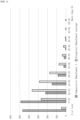
- FIG. 1 is a graph showing a length distribution of leather fibers according to the present invention.
- Table 1 and FIG. 1 it can be seen that in the leather fibers according to the present invention, the most leather fibers having the length of 10 to 15 mm are contained and the leather fibers of more than 15 mm are contained in 40% or more.
- the leather fibers of Comparative Embodiment it can be seen that the most leather fibers of 5 to 10 mm are contained, many leather fibers of 5 mm or less are also contained, and the leather fibers of more than 15 mm are contained in 20.07%, and thus, there is a large difference from the leather fibers of Exemplary Embodiments.
- the leather fibers of the present invention of an average of 15.41 mm are much longer than the leather fibers of Comparative Embodiment of 9.52 mm.
- Exemplary Embodiment 3 Exemplary Embodiment average 0.05 or less 13 2 9 1 4 0.05 ⁇ 0.1 309 273 323 285 293.67 0.10 ⁇ 0.15 902 785 696 889 790 0.15 ⁇ 0.2 222 165 182 221 189.33 0.20.25 28 32 34 9 25 0.25 ⁇ 0.3 1 7 6 2 5 More than 0.3 0 0 2 1 1 Total number of fibers 1475 1264 1252 1408 1308 Average 0.122 0.1154 0.1205 0.124 0.12
- FIG. 2 is a graph showing a thickness distribution of leather fibers according to the present invention. As illustrated in Table 2 and FIG. 2 , it can be seen that in both the leather fibers according to the present invention and the leather fibers of Comparative Embodiment, the most leather fibers having the thickness of 0.1 to 0.15 mm are contained and in both Exemplary Embodiments and Comparative Embodiment, the leather fibers have an average thickness of about 0.115 to 0.125 mm and have similar thicknesses thereto.
- FIG. 3 is a graph showing a length/thickness ratio distribution of leather fibers according to the present invention. As illustrated in Table 3 and FIG. 3 , it can be seen that in both the leather fibers according to the present invention and the leather fibers of Comparative Embodiment, the most leather fibers having the length/thickness ratio of 150 to 200 are contained. In the leather fibers of Exemplary Embodiments, it can be seen that the number of leather fibers having the length/thickness ratio of 50 or less is small, the number of leather fibers having the large length/thickness ratio is large, and the content of fibers having the average length/thickness ratio of 130 or more and the length/thickness ratio of more than 200 is 15% or more.
- the tensile strength was measured as the spun yarn strength using a universal testing machine (UTM) of Instron under a measurement temperature of 20°C and the humidity of 65% according to ASTM D2256 standard.
- UPM universal testing machine
- Table 4 Classification Comparative Embodiment Exemplary Embodiment 1 Exemplary Embodiment 2 Exemplary Embodiment 3
- the tensile strength with improved physical properties according to the present invention is 2.5 to 3.0 g/d, which is very greater than 0.8 g/d of Comparative Embodiment. It can be seen that in the leather fibers contained in the leather spun yarn of the present invention, many leather fibers having the long length and the large length/thickness ratio exist to increase the frictional force between the fibers forming the leather spun yarn, thereby greatly improving the tensile strength of the leather spun yarn.
Landscapes
- Engineering & Computer Science (AREA)
- Mechanical Engineering (AREA)
- Textile Engineering (AREA)
- Chemical & Material Sciences (AREA)
- Manufacturing & Machinery (AREA)
- Organic Chemistry (AREA)
- Yarns And Mechanical Finishing Of Yarns Or Ropes (AREA)
- Composite Materials (AREA)
- Treatment And Processing Of Natural Fur Or Leather (AREA)
Applications Claiming Priority (2)
| Application Number | Priority Date | Filing Date | Title |
|---|---|---|---|
| KR20210113045 | 2021-08-26 | ||
| PCT/KR2021/018022 WO2023027257A1 (ko) | 2021-08-26 | 2021-12-01 | 물성이 향상된 가죽 방적사용 가죽섬유 |
Publications (2)
| Publication Number | Publication Date |
|---|---|
| EP4163401A1 true EP4163401A1 (de) | 2023-04-12 |
| EP4163401A4 EP4163401A4 (de) | 2023-11-22 |
Family
ID=84785264
Family Applications (1)
| Application Number | Title | Priority Date | Filing Date |
|---|---|---|---|
| EP21820077.2A Pending EP4163401A4 (de) | 2021-08-26 | 2021-12-01 | Lederfaser für lederspinngarn mit verbesserten physikalischen eigenschaften |
Country Status (4)
| Country | Link |
|---|---|
| US (1) | US20240183085A1 (de) |
| EP (1) | EP4163401A4 (de) |
| KR (1) | KR102545235B1 (de) |
| WO (1) | WO2023027257A1 (de) |
Families Citing this family (2)
| Publication number | Priority date | Publication date | Assignee | Title |
|---|---|---|---|---|
| WO2023027259A1 (ko) * | 2021-08-26 | 2023-03-02 | 주식회사 아코플레닝 | 물성이 향상된 가죽 방적사용 가죽섬유 |
| US20250084563A1 (en) * | 2022-10-12 | 2025-03-13 | Atko Planning Inc. | Leather fibers for product materials physically extracted from cowhide |
Family Cites Families (13)
| Publication number | Priority date | Publication date | Assignee | Title |
|---|---|---|---|---|
| US20080072628A1 (en) * | 2004-09-09 | 2008-03-27 | Tianwei Textile Technology (Shenzhen) Co., Ltd. | Kind of Yarn of Leather and Its Production Process |
| CN100352987C (zh) * | 2005-01-20 | 2007-12-05 | 天维纺织科技(深圳)有限公司 | 一种皮革纤维纱线织物 |
| KR100765549B1 (ko) | 2006-05-19 | 2007-10-11 | 이형경 | 천연 젤라틴 섬유의 제조 방법 |
| CN104652012A (zh) * | 2013-11-21 | 2015-05-27 | 谈丽娜 | 一种皮革纤维纱线织物 |
| WO2017155756A1 (en) * | 2016-03-08 | 2017-09-14 | Psil Holdings Llc | Process for preparing fibers for use in rejuvenated leather substrates |
| KR101752176B1 (ko) * | 2016-03-10 | 2017-07-04 | (주)아코플레닝 | 가죽섬유를 이용한 재생 가죽시트의 제조 방법 |
| KR20180118386A (ko) | 2017-04-21 | 2018-10-31 | 한국신발피혁연구원 | 내가수분해성이 우수한 콜라겐 섬유를 이용한 피혁 제조방법 및 그에 의해 제조된 피혁 |
| KR101804099B1 (ko) | 2017-06-21 | 2017-12-01 | (주)아코플레닝 | 가죽 폐기물 처리 장치 |
| CN108360102B (zh) * | 2018-02-13 | 2021-08-17 | 韩宏宇 | 胶原纤维复合纱、其制备方法和应用以及纺织制品 |
| KR102034218B1 (ko) | 2019-05-09 | 2019-10-18 | (주)아코플레닝 | 가죽섬유를 이용한 방적가죽원사의 제조방법 및 상기 제조방법에 따라 제조된 방적가죽원사 |
| US11993869B2 (en) * | 2020-01-13 | 2024-05-28 | Atko Planning Inc. | Leather fiber for spun yarn |
| KR102403743B1 (ko) * | 2020-01-13 | 2022-05-30 | (주)아코플레닝 | 가죽 방적사용 가죽 섬유 |
| KR102282044B1 (ko) * | 2020-04-23 | 2021-07-27 | 한국섬유소재연구원 | 폐가죽섬유함유 혼합방적사의 제조방법 |
-
2021
- 2021-12-01 WO PCT/KR2021/018022 patent/WO2023027257A1/ko not_active Ceased
- 2021-12-01 EP EP21820077.2A patent/EP4163401A4/de active Pending
- 2021-12-01 US US17/619,224 patent/US20240183085A1/en not_active Abandoned
-
2022
- 2022-08-25 KR KR1020220106953A patent/KR102545235B1/ko active Active
Also Published As
| Publication number | Publication date |
|---|---|
| EP4163401A4 (de) | 2023-11-22 |
| US20240183085A1 (en) | 2024-06-06 |
| WO2023027257A1 (ko) | 2023-03-02 |
| KR102545235B1 (ko) | 2023-06-20 |
| KR20230031164A (ko) | 2023-03-07 |
Similar Documents
| Publication | Publication Date | Title |
|---|---|---|
| EP4163401A1 (de) | Lederfaser für lederspinngarn mit verbesserten physikalischen eigenschaften | |
| US11993869B2 (en) | Leather fiber for spun yarn | |
| KR102403743B1 (ko) | 가죽 방적사용 가죽 섬유 | |
| DE69737075T2 (de) | Spontan abbaubare Fasern | |
| DE60222326T2 (de) | Verfahren zur Herstellung von bioabbaubaren Fasern | |
| EP3241452B1 (de) | Lyocell-material für zigarettenfilter und herstellungsverfahren dafür | |
| CN104805557B (zh) | 新型超舒适吸湿强韧高分子量聚乙烯纤维/粘胶混纺纱的生产方法 | |
| DE1660354A1 (de) | Polypropylenverbundfaeden und Verfahren zu ihrer Herstellung | |
| EP2652180A1 (de) | Verfahren zur herstellung von milchproteinfasern und daraus gewonnene milchproteinfaserprodukte | |
| EP4163399A1 (de) | Lederfaser für lederspinngarn mit verbesserten physikalischen eigenschaften | |
| EP4335308A1 (de) | Lyocellmaterial für zigarettenfilter und verfahren zur herstellung davon | |
| AU2014345970A1 (en) | Method of manufacturing a plant receptacle as well as a plant receptacle | |
| KR20150077272A (ko) | 담배필터용 라이오셀 소재 및 그 제조방법 | |
| CN109594196A (zh) | 抗菌型墙布用无纺布的制备方法 | |
| EP4163400A1 (de) | Lederfaser für gesponnenes ledergarn mit verbesserten physikalischen eigenschaften | |
| CN112195561B (zh) | 一种可降解无纺布及其制备方法 | |
| CN109537166A (zh) | 抗菌型医用无纺布的制备方法 | |
| CN101671917B (zh) | 用于合成革和人造革的无纺布及其生产方法 | |
| CN110373772A (zh) | 一种生物基合成纤维与棉混纺的抗菌纱线制备方法 | |
| KR102158145B1 (ko) | 항균 섬유의 제조 방법 | |
| EP2990513B1 (de) | Vliesstoffe aus den äusseren Faserhüllen von Bananenpflanzen | |
| EP0029666A1 (de) | Verfahren zur Mischung von Homofilament- und Heterofilament-Stapelfasern, ein dabei hergestelltes Gemisch und ein aus einem solchen Gemisch erzeugtes Verbundvlies | |
| CN109537162A (zh) | 包装用强韧无纺布的制备方法 | |
| EP4379066A1 (de) | Physikalisch aus kuhliden extrahierte lederwaren aus produktmaterial | |
| CN106894159A (zh) | 一种耐超高温高压高透气性透气毡及其制备方法 |
Legal Events
| Date | Code | Title | Description |
|---|---|---|---|
| STAA | Information on the status of an ep patent application or granted ep patent |
Free format text: STATUS: UNKNOWN |
|
| STAA | Information on the status of an ep patent application or granted ep patent |
Free format text: STATUS: THE INTERNATIONAL PUBLICATION HAS BEEN MADE |
|
| PUAI | Public reference made under article 153(3) epc to a published international application that has entered the european phase |
Free format text: ORIGINAL CODE: 0009012 |
|
| STAA | Information on the status of an ep patent application or granted ep patent |
Free format text: STATUS: REQUEST FOR EXAMINATION WAS MADE |
|
| 17P | Request for examination filed |
Effective date: 20211216 |
|
| AK | Designated contracting states |
Kind code of ref document: A1 Designated state(s): AL AT BE BG CH CY CZ DE DK EE ES FI FR GB GR HR HU IE IS IT LI LT LU LV MC MK MT NL NO PL PT RO RS SE SI SK SM TR |
|
| REG | Reference to a national code |
Ref country code: DE Ref legal event code: R079 Free format text: PREVIOUS MAIN CLASS: C14B0007040000 Ipc: D02G0003100000 |
|
| A4 | Supplementary search report drawn up and despatched |
Effective date: 20231025 |
|
| RIC1 | Information provided on ipc code assigned before grant |
Ipc: D02G 3/10 20060101AFI20231019BHEP |
|
| DAV | Request for validation of the european patent (deleted) | ||
| DAX | Request for extension of the european patent (deleted) | ||
| STAA | Information on the status of an ep patent application or granted ep patent |
Free format text: STATUS: EXAMINATION IS IN PROGRESS |
|
| 17Q | First examination report despatched |
Effective date: 20250206 |