EP4163436A1 - Composition comprenant un système polyélectrolyte et procédé de préparation - Google Patents
Composition comprenant un système polyélectrolyte et procédé de préparation Download PDFInfo
- Publication number
- EP4163436A1 EP4163436A1 EP22200002.8A EP22200002A EP4163436A1 EP 4163436 A1 EP4163436 A1 EP 4163436A1 EP 22200002 A EP22200002 A EP 22200002A EP 4163436 A1 EP4163436 A1 EP 4163436A1
- Authority
- EP
- European Patent Office
- Prior art keywords
- cationic
- weight
- suspension
- composition
- anionic
- Prior art date
- Legal status (The legal status is an assumption and is not a legal conclusion. Google has not performed a legal analysis and makes no representation as to the accuracy of the status listed.)
- Pending
Links
Images



Classifications
-
- D—TEXTILES; PAPER
- D21—PAPER-MAKING; PRODUCTION OF CELLULOSE
- D21H—PULP COMPOSITIONS; PREPARATION THEREOF NOT COVERED BY SUBCLASSES D21C OR D21D; IMPREGNATING OR COATING OF PAPER; TREATMENT OF FINISHED PAPER NOT COVERED BY CLASS B31 OR SUBCLASS D21G; PAPER NOT OTHERWISE PROVIDED FOR
- D21H21/00—Non-fibrous material added to the pulp, characterised by its function, form or properties; Paper-impregnating or coating material, characterised by its function, form or properties
- D21H21/14—Non-fibrous material added to the pulp, characterised by its function, form or properties; Paper-impregnating or coating material, characterised by its function, form or properties characterised by function or properties in or on the paper
- D21H21/18—Reinforcing agents
-
- D—TEXTILES; PAPER
- D21—PAPER-MAKING; PRODUCTION OF CELLULOSE
- D21H—PULP COMPOSITIONS; PREPARATION THEREOF NOT COVERED BY SUBCLASSES D21C OR D21D; IMPREGNATING OR COATING OF PAPER; TREATMENT OF FINISHED PAPER NOT COVERED BY CLASS B31 OR SUBCLASS D21G; PAPER NOT OTHERWISE PROVIDED FOR
- D21H11/00—Pulp or paper, comprising cellulose or lignocellulose fibres of natural origin only
- D21H11/16—Pulp or paper, comprising cellulose or lignocellulose fibres of natural origin only modified by a particular after-treatment
- D21H11/18—Highly hydrated, swollen or fibrillatable fibres
-
- D—TEXTILES; PAPER
- D21—PAPER-MAKING; PRODUCTION OF CELLULOSE
- D21H—PULP COMPOSITIONS; PREPARATION THEREOF NOT COVERED BY SUBCLASSES D21C OR D21D; IMPREGNATING OR COATING OF PAPER; TREATMENT OF FINISHED PAPER NOT COVERED BY CLASS B31 OR SUBCLASS D21G; PAPER NOT OTHERWISE PROVIDED FOR
- D21H11/00—Pulp or paper, comprising cellulose or lignocellulose fibres of natural origin only
- D21H11/16—Pulp or paper, comprising cellulose or lignocellulose fibres of natural origin only modified by a particular after-treatment
- D21H11/20—Chemically or biochemically modified fibres
-
- D—TEXTILES; PAPER
- D21—PAPER-MAKING; PRODUCTION OF CELLULOSE
- D21H—PULP COMPOSITIONS; PREPARATION THEREOF NOT COVERED BY SUBCLASSES D21C OR D21D; IMPREGNATING OR COATING OF PAPER; TREATMENT OF FINISHED PAPER NOT COVERED BY CLASS B31 OR SUBCLASS D21G; PAPER NOT OTHERWISE PROVIDED FOR
- D21H17/00—Non-fibrous material added to the pulp, characterised by its constitution; Paper-impregnating material characterised by its constitution
- D21H17/20—Macromolecular organic compounds
- D21H17/21—Macromolecular organic compounds of natural origin; Derivatives thereof
- D21H17/24—Polysaccharides
- D21H17/28—Starch
-
- D—TEXTILES; PAPER
- D21—PAPER-MAKING; PRODUCTION OF CELLULOSE
- D21H—PULP COMPOSITIONS; PREPARATION THEREOF NOT COVERED BY SUBCLASSES D21C OR D21D; IMPREGNATING OR COATING OF PAPER; TREATMENT OF FINISHED PAPER NOT COVERED BY CLASS B31 OR SUBCLASS D21G; PAPER NOT OTHERWISE PROVIDED FOR
- D21H17/00—Non-fibrous material added to the pulp, characterised by its constitution; Paper-impregnating material characterised by its constitution
- D21H17/20—Macromolecular organic compounds
- D21H17/21—Macromolecular organic compounds of natural origin; Derivatives thereof
- D21H17/24—Polysaccharides
- D21H17/28—Starch
- D21H17/29—Starch cationic
-
- D—TEXTILES; PAPER
- D21—PAPER-MAKING; PRODUCTION OF CELLULOSE
- D21H—PULP COMPOSITIONS; PREPARATION THEREOF NOT COVERED BY SUBCLASSES D21C OR D21D; IMPREGNATING OR COATING OF PAPER; TREATMENT OF FINISHED PAPER NOT COVERED BY CLASS B31 OR SUBCLASS D21G; PAPER NOT OTHERWISE PROVIDED FOR
- D21H17/00—Non-fibrous material added to the pulp, characterised by its constitution; Paper-impregnating material characterised by its constitution
- D21H17/20—Macromolecular organic compounds
- D21H17/21—Macromolecular organic compounds of natural origin; Derivatives thereof
- D21H17/24—Polysaccharides
- D21H17/31—Gums
- D21H17/32—Guar or other polygalactomannan gum
-
- D—TEXTILES; PAPER
- D21—PAPER-MAKING; PRODUCTION OF CELLULOSE
- D21H—PULP COMPOSITIONS; PREPARATION THEREOF NOT COVERED BY SUBCLASSES D21C OR D21D; IMPREGNATING OR COATING OF PAPER; TREATMENT OF FINISHED PAPER NOT COVERED BY CLASS B31 OR SUBCLASS D21G; PAPER NOT OTHERWISE PROVIDED FOR
- D21H17/00—Non-fibrous material added to the pulp, characterised by its constitution; Paper-impregnating material characterised by its constitution
- D21H17/20—Macromolecular organic compounds
- D21H17/33—Synthetic macromolecular compounds
- D21H17/34—Synthetic macromolecular compounds obtained by reactions only involving carbon-to-carbon unsaturated bonds
- D21H17/37—Polymers of unsaturated acids or derivatives thereof, e.g. polyacrylates
- D21H17/375—Poly(meth)acrylamide
-
- D—TEXTILES; PAPER
- D21—PAPER-MAKING; PRODUCTION OF CELLULOSE
- D21H—PULP COMPOSITIONS; PREPARATION THEREOF NOT COVERED BY SUBCLASSES D21C OR D21D; IMPREGNATING OR COATING OF PAPER; TREATMENT OF FINISHED PAPER NOT COVERED BY CLASS B31 OR SUBCLASS D21G; PAPER NOT OTHERWISE PROVIDED FOR
- D21H17/00—Non-fibrous material added to the pulp, characterised by its constitution; Paper-impregnating material characterised by its constitution
- D21H17/63—Inorganic compounds
- D21H17/67—Water-insoluble compounds, e.g. fillers, pigments
- D21H17/675—Oxides, hydroxides or carbonates
-
- D—TEXTILES; PAPER
- D21—PAPER-MAKING; PRODUCTION OF CELLULOSE
- D21H—PULP COMPOSITIONS; PREPARATION THEREOF NOT COVERED BY SUBCLASSES D21C OR D21D; IMPREGNATING OR COATING OF PAPER; TREATMENT OF FINISHED PAPER NOT COVERED BY CLASS B31 OR SUBCLASS D21G; PAPER NOT OTHERWISE PROVIDED FOR
- D21H21/00—Non-fibrous material added to the pulp, characterised by its function, form or properties; Paper-impregnating or coating material, characterised by its function, form or properties
- D21H21/14—Non-fibrous material added to the pulp, characterised by its function, form or properties; Paper-impregnating or coating material, characterised by its function, form or properties characterised by function or properties in or on the paper
- D21H21/18—Reinforcing agents
- D21H21/20—Wet strength agents
Definitions
- the invention relates to a composition with a polyelectrolyte system, the production of such a composition, and paper produced from such a composition.
- Wet paper runnability can be increased by increasing the strength of the wet web.
- a number of solutions are known for increasing the strength of the wet paper web, such as increasing the degree of beating of the pulp, varying the overall stock composition or web tension in the process.
- wet strength additives used to increase the wet strength of the final dried paper web do not increase the strength of the wet paper web, ie the strength of never dried wet webs. This is because wet strength additives typically must be heated and cured before they exhibit strength enhancing properties.
- a size press step has to be added due to the nature of the paper, which has a significant impact on production efficiency.
- the size press process requires rewetting and drying of the material.
- polyelectrolyte complexes can increase the bursting strength of paper.
- WO 2018/229333 A1 a process for increasing the strength properties of paper using polyelectrolyte complexes.
- the use of complexes leads to a locally concentrated charge density, which can lead to different strengths within the paper.
- a first aspect of the invention relates to a polyelectrolyte system comprising cellulose fibers.
- the pulp fibers are preferably suspended in water.
- the pulp fibers can be beaten and/or unbeaten.
- At least some of the individual cellulose fibers are at least partially encased alternately with at least one first cationic electrolyte layer and at least one first anionic electrolyte layer.
- Pulp fibers usually have an anionic surface, therefore the first layer of electrolyte directly attached to this surface of the pulp fibers is always cationic. This cationic electrolyte layer is then followed by an anionic electrolyte layer.
- the cellulose fibers can be covered only partially or completely by the layers. Complete encapsulation is preferred.
- the pulp fibers can be eucalyptus, hardwood, softwood, cotton, bamboo, virgin pulp or recycled pulp.
- the cellulose fibers can be secondary fibers from waste paper or waste cardboard. The production of pulp is known to the person skilled in the art from the prior art.
- the polyelectrolyte system is characterized by the fact that the individual electrolyte layers are evenly distributed over the fibers and an even distribution of the charge density is ensured.
- the cellulose fibers are coated with at least one second cationic electrolyte layer.
- the fibers have an evenly distributed charge density and, on the other hand, the negatively charged surface of the pulp fibers can be changed into a positively charged surface, which expands the possibilities for further surface modification.
- the outer layer can be cationic or anionic. The selection of the charge of the outer layer is geared in particular to the desired application.
- the first and/or second cationic electrolyte layer comprises cationic starch.
- the starch can be potato starch with DS 0.065 and a charge density of 0.38 meq/g or DS 0.065 and a charge density of 0.525 meq/g.
- cationic electrolytes can include cationized microfibrillated cellulose, polyallylamine hydrochloride (PAH), polyethyleneimine (PEI), polyvinylamine (PVAm), polyamidamine-epichlorohydrin resin (PAAE), chitosan, hydroxyethylcellulose ethoxylate (HECE), cationic polyacrylamides, polyacrylamide-co-diallyldimethylammonium chloride (PAM -DADMAC), polyacrylamide-co-[3-(2-methylpropionamido)propyl]-trimethylammonium chloride (PAM-MAPTAC), or combinations thereof.
- PAH polyallylamine hydrochloride
- PEI polyethyleneimine
- PVAm polyvinylamine
- PAAE polyamidamine-epichlorohydrin resin
- HECE hydroxyethylcellulose ethoxylate
- cationic polyacrylamides polyacrylamide-co-diallyldimethylammonium
- cationic electrolyte layers if several cationic electrolyte layers are present, it is conceivable that all of these layers comprise cationic starch. However, it is also possible for the layers to be different cationic electrolyte layers.
- the first anionic electrolyte layer preferably comprises anionic starch, preferably aldehyde potato starch.
- anionic starch preferably aldehyde potato starch.
- anionic synthetic polymers such as polyacrylic acid (PAA).
- PAA polyacrylic acid
- CMC carboxymethyl cellulose
- PAAE polyacrylic acid
- heparin or other anionic polysaccharides or combinations thereof, for example TEMPO-oxidized microfibrillated cellulose is possible.
- TEMPO tetramethylpiperidinyloxyl
- these anionic electrolyte layers these can each comprise the same anionic electrolyte or have different anionic electrolytes.
- anionic starch is that it is a product based on a natural raw material and is therefore more environmentally friendly than fully synthetic electrolytes on the one hand and easily accessible on the other.
- the use of synthetic anionic electrolytes is nevertheless possible.
- a further aspect of the invention relates to a composition for the production of paper comprising a polyelectrolyte system as described above and subsequent addition of microfibrillated cellulose.
- Microfibrillated cellulose has a large surface area, so a higher saturation of the polyelectrolyte system is required. Subsequent addition of the microfibrillated cellulose enables faster saturation of the polyelectrolyte system with less addition of cationic and anionic substances to form the electrolyte layers, and the later addition of the microfibrillated cellulose does not affect the saturation of the polyelectrolyte system.
- microfibrillated cellulose relates here to the essential proportion of 1 to 10% by weight, based on the total dry mass of the suspension. At least some of the individual cellulose fibers of the polyelectrolyte system are at least partially encased alternately with at least one first cationic electrolyte layer and at least one first anionic electrolyte layer. Complete encapsulation is preferred, as explained above.
- the cellulose fibers of the polyelectrolyte system of the composition can be alternately surrounded by further electrolyte layers, as previously described.
- the concentration of the microfibrillated cellulose in the composition is preferably in the range from 1 to 10% by weight, more preferably 2 to 7% by weight and particularly preferably 5% by weight, based on the dry mass of the pulp.
- Microfibrillated cellulose in this concentration range gives particularly good results in terms of paper structure strength (Scott Bond).
- the composition preferably comprises other mineral fillers and/or pigments.
- the fillers and/or pigments are preferably selected from the group: aluminum, aluminum oxide, aluminum silicate, calcium, calcium carbonate, chromium, clay, iron, iron oxides, kaolin, corundum, magnesium, magnesium carbonate, magnesium silicate, silicon, silicon dioxide, talc, titanium dioxide, zinc , zinc sulfide, tin oxide or mixtures thereof.
- inorganic substances such as diatomite. Titanium dioxide is particularly preferred.
- the addition of titanium dioxide is particularly advantageous in the production of decorative paper for the production of pressed material panels from fiber materials for the flooring and furniture industry. It has come as a surprise demonstrated that retention can be improved up to 90% with titanium dioxide. This is a significant increase over the 30 to 40% known in the prior art. It is also possible to use modified titanium dioxide pigment, for example titanium dioxide pigment doped with aluminum, antimony, niobium, zinc or silicon.
- the composition may include other additives.
- the additives are preferably selected from the group consisting of: microfibrillated cellulose, wet strength agents, guar, starch, alginate, polyacrylamide, organic substances such as melamine-formaldehyde resin, urea-formaldehyde resin, acrylates, polyvinyl alcohols, modified polyvinyl alcohol, polyvinyl acrylates, polyacrylates, synthetic binders, natural binders Origin such as starch, modified starch, carboxymethyl cellulose or mixtures thereof.
- suitable wet strength agents are polyamide/polyamine-epichlorohydrin resins, other polyamine derivatives or polyamide derivatives, cationic polyacrylate, modified melamine-formaldehyde resin, or cationic starch.
- the paper properties or the properties of the paper can be adjusted for different applications.
- the air permeability is reduced in the order MFC > guar > starch > alginate > PAM, which means that the air permeability can be adjusted, especially with paper.
- the process can be carried out as a continuous process or as a batch process, step d) taking place only after the suspension of the polyelectrolyte system has been prepared.
- this method enables the polyelectrolyte system to be formed layer by layer and thus counteracts the disadvantageous formation of a polyelectrolyte complex. This enables an even distribution of the charges over the pulp fibers.
- the addition of the microfibrillated cellulose makes it possible to provide a composition for making paper stock having a high internal papermaking strength.
- a rinsing step can be inserted between step b) and c). Excess material can be removed by the rinsing step and additional formation of polyelectrolyte complexes is avoided. It is conceivable that the surplus material will be processed in order to be used again.
- the processing steps are known to those skilled in the art from the prior art.
- the polyelectrolyte system from step c) is mixed with at least one second cationic electrolyte solution to form a third suspension.
- At least some of the cellulose fibers in the third suspension can thus be at least partially, preferably completely, encased by a second cationic electrolyte layer.
- the suspension is alternately brought into contact with at least two cationic and at least two anionic electrolyte solutions. More than two electrolyte solutions are also conceivable.
- the suspension is preferably rinsed with the electrolyte solutions between the respective contacts.
- the cationic or anionic electrolyte solutions can be the same electrolyte solution or different electrolyte solutions.
- the final electrolyte solution can be cationic or anionic depending on the intended application.
- the mixing time is preferably up to 30 minutes, particularly preferably between 1 and 30 minutes, very particularly preferably between 5 and 20 minutes and even more preferably 10 minutes take place at room temperature.
- the temperature should not exceed 60 °C.
- the first and/or the second cationic electrolyte solution may comprise a cationic starch. It is possible that both electrolyte solutions comprise cationic starch.
- the first and/or second cationic electrolyte solution consists of a suspension of cationic starch and water.
- the cationic electrolyte solutions include different electrolytes.
- the first cationic electrolyte solution comprises cationic starch and the second cationic electrolyte solution comprises cationic microfibrillated cellulose.
- the first cationic electrolyte of the electrolyte solution from step b) has a concentration of 1-6% by weight, preferably 1-3% by weight
- the first anionic electrolyte of the electrolyte solution from step c) has a concentration of 0.1-3% by weight. ., preferably from 0.3 to 1.5% by weight.
- the concentration always refers to the dry amount of pulp in the suspension.
- the second cationic electrolyte preferably has a concentration of 0.1-3% by weight, preferably 0.1-1% by weight, based on the dry amount of pulp in the suspension.
- the concentrations of successively decreasing electrolytes relative to the dry amount of pulp in the suspension.
- the concentration of the first cationic electrolyte can be 1.25% by weight, the first anionic electrolyte 0.4% by weight and the second cationic electrolyte 0.2% by weight.
- Another conceivable concentration series would be 2.5% by weight: 1.0% by weight: 0.75% by weight.
- the anionic electrolyte solution may include an anionic starch.
- Other, for example fully synthetic, electrolyte solutions are also conceivable. If multiple anionic electrolyte solutions are used, they can all include anionic starch, or optionally only one or two. If there are several electrolyte solutions, this can have a different composition.
- cationic or anionic starch has the advantage that it is based on a natural raw material and is easily accessible are.
- a method using such electrolytes is also environmentally friendly and resource-friendly.
- the pulp is suspended in water and the starch is dissolved in water.
- the concentration of the microfibrillated cellulose added later can be in the range of 1 to 10% by weight, based on the total dry mass of the suspension, preferably 2 to 7% by weight, particularly preferably 3 to 6% by weight and in particular 5% by weight.
- additives can be added to the composition.
- the additives are preferably selected from the group consisting of: mineral fillers and/or pigments as previously described, wet strength agents as previously described; guar; Strength; alginate; polyacrylamide or mixtures thereof.
- the addition of additives has the advantage that the properties of the paper can be adjusted according to the application.
- the invention further relates to paper made from a composition as previously described.
- the paper can, for example, be a decorative paper, in particular foil base paper; Paper for packaging of all kinds, such as food; printing paper; be insulating paper or sanitary paper.
- the insulating paper can be, for example, paper with acoustic insulating properties and/or heat insulating properties.
- the paper can consist of a composition of 5% by weight of microfibrillated cellulose, based on the total dry matter in the suspension, and 30% by weight of TiO 2 and 65 % by weight of pulp.
- a paper is particularly suitable as decorative paper.
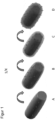
- figure 1 shows schematically the gradual coating of a cellulose fiber with polyelectrolyte.
- the surface of the pulp fiber carries negative charges (A).
- A After applying a first cationic electrolyte layer to the negatively charged surface of the cellulose fiber, the cellulose fiber is coated with a cationic electrolyte layer (B).
- An anionic electrolyte layer is then applied to the fiber (C), followed by another cationic electrolyte layer.
- FIG 2 shows schematically a method 1 for producing a polyelectrolyte system according to the invention on a laboratory scale.
- Pulp fibers 2 and a cationic electrolyte solution 3 are mixed together to form a suspension 4 .
- the fibers 5 covered by a cationic electrolyte layer are separated from the electrolyte solution 3 .
- the fibers 5 are mixed with an anionic electrolyte solution 6 to form a second suspension 7 mixed together.
- the fibers 8 which are now surrounded by an anionic electrolyte layer, are then separated from the electrolyte solution 6 .
- a further cationic electrolyte solution 12 can now be added to the fibers 8 .
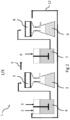
- FIG 3 shows schematically the industrial production of a polyelectrolyte system.
- a cationic electrolyte is added to a pulp suspension in a first device 21 .
- the suspension is stirred for 10 minutes and then pumped into a second device 23 via a first line 22 .
- An anionic electrolyte is added to this suspension and the mixture is again stirred for 10 minutes.
- the suspension formed in this way is pumped again via a second line 24 into a third device 25 .
- the second cationic electrolyte is added.
- the suspension is stirred again for 10 min and pumped into a device that allows the addition of MFC (not shown).
- a eucalyptus pulp was used. Sheets were made from unrefined pulp and pulp with a drainage resistance of 25 and 35 SR°, respectively. Solbond PC60 (cationic starch from potatoes) and Soljet P500 as anionic starch (derivative of potato starch) from Solam GmbH were used as the cationic starch.
- Pulp with SR° 35 was diluted to a consistency of 0.3% by weight. Then, in a first step, 1.25% by weight of cationic starch was added. The suspension was stirred for 10 minutes. Then 0.4 Wt% anionic starch added. The resulting suspension was again stirred for 10 min. Then another 0.2% by weight of cationic starch was added. The starch solutions used all had a concentration of 1% by weight of cationic or anionic starch. 5% by weight of microfibrillated cellulose, based on the dry mass of cellulose in the suspension, was then added to the suspension. The final concentration of pulp in the suspension was 0.24% by weight. Sheets with a weight of approx.
- Example Pulp - PES MFC TiO 2 /Kaolin wet strength agent additive 1 65% 5% + 2 70% 30% + 3 65% 5% 30% + 4 65% 5% 30% + 5% MFC 5 65% 5% 30% + 1% guar 6 65% 5% 30% + 5% strength 7 65% 5% 30% + 1% alginates 8th 65% 5% 30% + 0.15% PAM
- the characterization was carried out according to ISO 1924-22:1994.
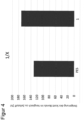
- figure 4 shows the increase in Scott Bond compared to paper made from pure pulp.
- the Scott Bond of paper made from a polyelectrolyte system shows an increase of approximately 130%, while the Scott Bond for paper made from a composition (1) of polyelectrolyte system and microfibrillated cellulose according to the invention increases by a further 40% and thus a 170% improved Scott Bond over paper made from pure pulp.
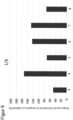
- figure 5 shows, however, that a polyelectrolyte system with TiO 2 (2) shows a significant drop in Scott Bond, which is generally due to the TiO 2 .
- TiO 2 is necessary for the production of decorative paper.
- the Scott Bond is significantly improved again (3).
- the retention of TiO 2 increases up to 90% when MFC is present. This makes it possible to reduce the excess TiO 2 that is normally required in the production of decorative paper.
Landscapes
- Chemical & Material Sciences (AREA)
- Inorganic Chemistry (AREA)
- Chemical Kinetics & Catalysis (AREA)
- Life Sciences & Earth Sciences (AREA)
- Biochemistry (AREA)
- Paper (AREA)
Applications Claiming Priority (1)
| Application Number | Priority Date | Filing Date | Title |
|---|---|---|---|
| DE102021005047.9A DE102021005047A1 (de) | 2021-10-08 | 2021-10-08 | Polyelektrolytsystem, Zusammensetzung mit einem Polyelektrolytsystem und Verfahren zur Herstellung |
Publications (1)
| Publication Number | Publication Date |
|---|---|
| EP4163436A1 true EP4163436A1 (fr) | 2023-04-12 |
Family
ID=83689056
Family Applications (1)
| Application Number | Title | Priority Date | Filing Date |
|---|---|---|---|
| EP22200002.8A Pending EP4163436A1 (fr) | 2021-10-08 | 2022-10-06 | Composition comprenant un système polyélectrolyte et procédé de préparation |
Country Status (2)
| Country | Link |
|---|---|
| EP (1) | EP4163436A1 (fr) |
| DE (1) | DE102021005047A1 (fr) |
Citations (4)
| Publication number | Priority date | Publication date | Assignee | Title |
|---|---|---|---|---|
| US20080023164A1 (en) * | 2004-10-15 | 2008-01-31 | Mats Fredlund | Process for Producing a Paper or Board and a Paper or Board Produced According to the Process |
| US20130180680A1 (en) * | 2010-09-22 | 2013-07-18 | Stora Enso Oyj | Paper or paperboard product and a process for production of a paper or paperboard product |
| WO2018229333A1 (fr) | 2017-06-14 | 2018-12-20 | Kemira Oyj | Procédé d'augmentation des propriétés de résistance d'un produit de papier ou de carton |
| EP3080354B1 (fr) * | 2013-12-13 | 2019-08-07 | Stora Enso Oyj | Carton multicouche |
Family Cites Families (3)
| Publication number | Priority date | Publication date | Assignee | Title |
|---|---|---|---|---|
| SE521591C2 (sv) | 1998-11-30 | 2003-11-18 | Sca Res Ab | Metod att framställa en partikel uppvisande beläggning av med varandra växelverkande polymerer och pappers -eller nonwovenprodukt innehållande partiklarna |
| DK1885954T3 (da) | 2005-05-11 | 2011-03-21 | Stora Enso Ab | Fremgangsmåde til fremstilling af et papir samt et papir fremstillet i henhold til fremgangsmåden |
| US20160273165A1 (en) | 2011-01-20 | 2016-09-22 | Upm-Kymmene Corporation | Method for improving strength and retention, and paper product |
-
2021
- 2021-10-08 DE DE102021005047.9A patent/DE102021005047A1/de active Pending
-
2022
- 2022-10-06 EP EP22200002.8A patent/EP4163436A1/fr active Pending
Patent Citations (4)
| Publication number | Priority date | Publication date | Assignee | Title |
|---|---|---|---|---|
| US20080023164A1 (en) * | 2004-10-15 | 2008-01-31 | Mats Fredlund | Process for Producing a Paper or Board and a Paper or Board Produced According to the Process |
| US20130180680A1 (en) * | 2010-09-22 | 2013-07-18 | Stora Enso Oyj | Paper or paperboard product and a process for production of a paper or paperboard product |
| EP3080354B1 (fr) * | 2013-12-13 | 2019-08-07 | Stora Enso Oyj | Carton multicouche |
| WO2018229333A1 (fr) | 2017-06-14 | 2018-12-20 | Kemira Oyj | Procédé d'augmentation des propriétés de résistance d'un produit de papier ou de carton |
Non-Patent Citations (2)
| Title |
|---|
| ANKERFORS MIKAEL ET AL: "Multilayer assembly onto pulp fibres using oppositely charged microfibrillated celluloses, starches, and wet strength resins ; Effect on mechanical properties of CTMP-sheets", vol. 31, no. 1, 1 January 2016 (2016-01-01), SE, pages 135 - 141, XP055774638, ISSN: 0283-2631, Retrieved from the Internet <URL:http://dx.doi.org/10.3183/npprj-2016-31-01-p135-141> DOI: 10.3183/npprj-2016-31-01-p135-141 * |
| KLAUS ERHARD ET AL: "Einsparung von Prozessenergie und Steuerung von Papiereigenschaften durch gezielte chemische Fasermodifizierung", HOLZ ALS ROHUND WERKSTOFF ; EUROPEAN JOURNAL OF WOOD AND WOOD PRODUCTS, SPRINGER, BERLIN, DE, vol. 68, no. 3, 11 July 2010 (2010-07-11), pages 271 - 280, XP019818424, ISSN: 1436-736X * |
Also Published As
| Publication number | Publication date |
|---|---|
| DE102021005047A1 (de) | 2023-04-13 |
Similar Documents
| Publication | Publication Date | Title |
|---|---|---|
| DE845311C (de) | Verfahren zum Auf- oder Einbringen von wasserunloeslichen UEberzugs- oder Impraegniermitteln auf oder in Cellulosefasermaterialien | |
| DE68917069T2 (de) | Trockenfestigkeitszusatz für Papier. | |
| DE2516097C3 (de) | Verfahren zur Herstellung eines HilfsStoffes für die Papierherstellung und seine Verwendung | |
| DE102007030102B4 (de) | Vorimprägnat | |
| EP0416427A1 (fr) | Produit d'encollage neutre pour masses de papier brut utilisant des dispersions polymères cationiques | |
| DE2230985B2 (de) | Verfahren zur Herstellung kunststoffgefüllter Papiere | |
| DE2348571A1 (de) | Laminate und verfahren zu ihrer herstellung | |
| DE2741627A1 (de) | Halbsynthetisches papier und verfahren zu dessen herstellung | |
| DE2820171A1 (de) | Verfahren zur herstellung von gewelltem karton | |
| EP1036881A1 (fr) | Papier de base pour décoration ayant une résistance à sec améliorée | |
| EP4163436A1 (fr) | Composition comprenant un système polyélectrolyte et procédé de préparation | |
| DE2540069C2 (de) | Transparentes Papier und Verfahren zu seiner Herstellung | |
| DE10307966A1 (de) | Vorimprägnat | |
| EP3121332B1 (fr) | Carton multicouche et procede de fabrication de carton multicouche | |
| DE2759986C1 (de) | Verfahren zum Einbetten von wasserunloeslichen Zusatzstoffen in Pulpe | |
| WO2024207037A1 (fr) | Procédé de production d'un papier de base | |
| EP1360209B1 (fr) | Amidon fragmente, son procede de production et son utilisation | |
| DE3786335T2 (de) | Pressspan mit niedriger dielektrischer Konstante für ölimpregnierte Isolierung. | |
| DE68909810T2 (de) | Hauptsächlich anorganische Faserstoffe und Verfahren zu ihrer Herstellung. | |
| DE2810299A1 (de) | Papiererzeugnisse | |
| DE615400C (de) | Verfahren zur Herstellung von haertbaren Kondensationsprodukten aus Thioharnstoff oder Gemischen von Thioharnstoff und Harnstoff mit Formaldehyd | |
| DE102008025269A1 (de) | Verfahren zum Herstellen von harzhaltigen Papieren | |
| DE1796240A1 (de) | Aus Zellstoffasern,insbesondere Papier und Polyvinylchlorid bestehendes Material und Verfahren zur Herstellung desselben | |
| EP4509656A1 (fr) | Papier pour matériaux de revêtement décoratifs comprenant des fibres synthétiques contenant un pigment | |
| DE19946151B4 (de) | Verfahren zur Herstellung eines Vorimprägnats, das danach hergestellte Vorimprägnat sowie dessen Verwendung |
Legal Events
| Date | Code | Title | Description |
|---|---|---|---|
| PUAI | Public reference made under article 153(3) epc to a published international application that has entered the european phase |
Free format text: ORIGINAL CODE: 0009012 |
|
| STAA | Information on the status of an ep patent application or granted ep patent |
Free format text: STATUS: THE APPLICATION HAS BEEN PUBLISHED |
|
| AK | Designated contracting states |
Kind code of ref document: A1 Designated state(s): AL AT BE BG CH CY CZ DE DK EE ES FI FR GB GR HR HU IE IS IT LI LT LU LV MC ME MK MT NL NO PL PT RO RS SE SI SK SM TR |
|
| STAA | Information on the status of an ep patent application or granted ep patent |
Free format text: STATUS: REQUEST FOR EXAMINATION WAS MADE |
|
| 17P | Request for examination filed |
Effective date: 20230830 |
|
| RBV | Designated contracting states (corrected) |
Designated state(s): AL AT BE BG CH CY CZ DE DK EE ES FI FR GB GR HR HU IE IS IT LI LT LU LV MC ME MK MT NL NO PL PT RO RS SE SI SK SM TR |
|
| STAA | Information on the status of an ep patent application or granted ep patent |
Free format text: STATUS: EXAMINATION IS IN PROGRESS |
|
| 17Q | First examination report despatched |
Effective date: 20250901 |