EP4163802A1 - Verfahren, vorrichtung und system zur konstruktion eines wissensgraphen und computerspeichermedium - Google Patents
Verfahren, vorrichtung und system zur konstruktion eines wissensgraphen und computerspeichermedium Download PDFInfo
- Publication number
- EP4163802A1 EP4163802A1 EP21834027.1A EP21834027A EP4163802A1 EP 4163802 A1 EP4163802 A1 EP 4163802A1 EP 21834027 A EP21834027 A EP 21834027A EP 4163802 A1 EP4163802 A1 EP 4163802A1
- Authority
- EP
- European Patent Office
- Prior art keywords
- command line
- template
- target
- network entity
- attribute
- Prior art date
- Legal status (The legal status is an assumption and is not a legal conclusion. Google has not performed a legal analysis and makes no representation as to the accuracy of the status listed.)
- Pending
Links
Images


Classifications
-
- G—PHYSICS
- G06—COMPUTING OR CALCULATING; COUNTING
- G06F—ELECTRIC DIGITAL DATA PROCESSING
- G06F16/00—Information retrieval; Database structures therefor; File system structures therefor
- G06F16/30—Information retrieval; Database structures therefor; File system structures therefor of unstructured textual data
- G06F16/33—Querying
- G06F16/3331—Query processing
- G06F16/334—Query execution
- G06F16/3344—Query execution using natural language analysis
-
- H—ELECTRICITY
- H04—ELECTRIC COMMUNICATION TECHNIQUE
- H04L—TRANSMISSION OF DIGITAL INFORMATION, e.g. TELEGRAPHIC COMMUNICATION
- H04L41/00—Arrangements for maintenance, administration or management of data switching networks, e.g. of packet switching networks
- H04L41/08—Configuration management of networks or network elements
- H04L41/085—Retrieval of network configuration; Tracking network configuration history
-
- G—PHYSICS
- G06—COMPUTING OR CALCULATING; COUNTING
- G06N—COMPUTING ARRANGEMENTS BASED ON SPECIFIC COMPUTATIONAL MODELS
- G06N5/00—Computing arrangements using knowledge-based models
- G06N5/02—Knowledge representation; Symbolic representation
-
- G—PHYSICS
- G06—COMPUTING OR CALCULATING; COUNTING
- G06F—ELECTRIC DIGITAL DATA PROCESSING
- G06F16/00—Information retrieval; Database structures therefor; File system structures therefor
- G06F16/30—Information retrieval; Database structures therefor; File system structures therefor of unstructured textual data
- G06F16/36—Creation of semantic tools, e.g. ontology or thesauri
- G06F16/367—Ontology
-
- G—PHYSICS
- G06—COMPUTING OR CALCULATING; COUNTING
- G06F—ELECTRIC DIGITAL DATA PROCESSING
- G06F40/00—Handling natural language data
- G06F40/20—Natural language analysis
- G06F40/279—Recognition of textual entities
- G06F40/289—Phrasal analysis, e.g. finite state techniques or chunking
- G06F40/295—Named entity recognition
-
- G—PHYSICS
- G06—COMPUTING OR CALCULATING; COUNTING
- G06N—COMPUTING ARRANGEMENTS BASED ON SPECIFIC COMPUTATIONAL MODELS
- G06N20/00—Machine learning
-
- G—PHYSICS
- G06—COMPUTING OR CALCULATING; COUNTING
- G06N—COMPUTING ARRANGEMENTS BASED ON SPECIFIC COMPUTATIONAL MODELS
- G06N5/00—Computing arrangements using knowledge-based models
- G06N5/02—Knowledge representation; Symbolic representation
- G06N5/022—Knowledge engineering; Knowledge acquisition
-
- H—ELECTRICITY
- H04—ELECTRIC COMMUNICATION TECHNIQUE
- H04L—TRANSMISSION OF DIGITAL INFORMATION, e.g. TELEGRAPHIC COMMUNICATION
- H04L41/00—Arrangements for maintenance, administration or management of data switching networks, e.g. of packet switching networks
- H04L41/02—Standardisation; Integration
- H04L41/0246—Exchanging or transporting network management information using the Internet; Embedding network management web servers in network elements; Web-services-based protocols
- H04L41/0266—Exchanging or transporting network management information using the Internet; Embedding network management web servers in network elements; Web-services-based protocols using meta-data, objects or commands for formatting management information, e.g. using eXtensible markup language [XML]
-
- H—ELECTRICITY
- H04—ELECTRIC COMMUNICATION TECHNIQUE
- H04L—TRANSMISSION OF DIGITAL INFORMATION, e.g. TELEGRAPHIC COMMUNICATION
- H04L41/00—Arrangements for maintenance, administration or management of data switching networks, e.g. of packet switching networks
- H04L41/08—Configuration management of networks or network elements
- H04L41/0803—Configuration setting
- H04L41/084—Configuration by using pre-existing information, e.g. using templates or copying from other elements
- H04L41/0843—Configuration by using pre-existing information, e.g. using templates or copying from other elements based on generic templates
-
- H—ELECTRICITY
- H04—ELECTRIC COMMUNICATION TECHNIQUE
- H04L—TRANSMISSION OF DIGITAL INFORMATION, e.g. TELEGRAPHIC COMMUNICATION
- H04L41/00—Arrangements for maintenance, administration or management of data switching networks, e.g. of packet switching networks
- H04L41/22—Arrangements for maintenance, administration or management of data switching networks, e.g. of packet switching networks comprising specially adapted graphical user interfaces [GUI]
-
- H—ELECTRICITY
- H04—ELECTRIC COMMUNICATION TECHNIQUE
- H04L—TRANSMISSION OF DIGITAL INFORMATION, e.g. TELEGRAPHIC COMMUNICATION
- H04L41/00—Arrangements for maintenance, administration or management of data switching networks, e.g. of packet switching networks
- H04L41/06—Management of faults, events, alarms or notifications
- H04L41/0631—Management of faults, events, alarms or notifications using root cause analysis; using analysis of correlation between notifications, alarms or events based on decision criteria, e.g. hierarchy, tree or time analysis
- H04L41/065—Management of faults, events, alarms or notifications using root cause analysis; using analysis of correlation between notifications, alarms or events based on decision criteria, e.g. hierarchy, tree or time analysis involving logical or physical relationship, e.g. grouping and hierarchies
-
- H—ELECTRICITY
- H04—ELECTRIC COMMUNICATION TECHNIQUE
- H04L—TRANSMISSION OF DIGITAL INFORMATION, e.g. TELEGRAPHIC COMMUNICATION
- H04L41/00—Arrangements for maintenance, administration or management of data switching networks, e.g. of packet switching networks
- H04L41/06—Management of faults, events, alarms or notifications
- H04L41/0677—Localisation of faults
-
- H—ELECTRICITY
- H04—ELECTRIC COMMUNICATION TECHNIQUE
- H04L—TRANSMISSION OF DIGITAL INFORMATION, e.g. TELEGRAPHIC COMMUNICATION
- H04L41/00—Arrangements for maintenance, administration or management of data switching networks, e.g. of packet switching networks
- H04L41/12—Discovery or management of network topologies
-
- H—ELECTRICITY
- H04—ELECTRIC COMMUNICATION TECHNIQUE
- H04L—TRANSMISSION OF DIGITAL INFORMATION, e.g. TELEGRAPHIC COMMUNICATION
- H04L41/00—Arrangements for maintenance, administration or management of data switching networks, e.g. of packet switching networks
- H04L41/16—Arrangements for maintenance, administration or management of data switching networks, e.g. of packet switching networks using machine learning or artificial intelligence
Definitions
- This application relates to the field of network technologies, and in particular, to a method, an apparatus, and a system for constructing a knowledge graph, and a computer storage medium.
- a current network usually includes a plurality of devices. Causes of network faults are complex, and efficiency of manually summarizing fault determining rules is low.
- By constructing a knowledge graph on a network configuration association between devices is reflected on the knowledge graph, and fault alarms are mounted on the knowledge graph, to perform root cause tracing and analysis. This improves fault locating efficiency and accuracy.
- an entity in the unstructured text is usually extracted based on a domain specific vocabulary, and a word other than a domain word and a non-domain common word in the unstructured text is identified as an entity.
- This application provides a method, an apparatus, and a system for constructing a knowledge graph, and a computer storage medium.
- a method for constructing a knowledge graph includes: A first device obtains first configuration information of a target network device. The first device obtains a template matching file corresponding to the target network device, where the template matching file is used to describe one or more formats of one or more command lines in configuration information of a type of network device to which the target network device belongs. The first device creates, based on the template matching file and a first command line in the first configuration information, a target network entity corresponding to the first command line.
- a type of the target network entity is a device, an interface, a protocol, or a service.
- the target network entity is configured to construct a knowledge graph of a network in which the target network device is located.
- the template matching file can describe the format of the command line in the configuration information
- a network entity corresponding to the command line in the configuration information can be accurately created based on the template matching file.
- the network entity corresponding to the command line is associated with a command line template
- a specific meaning of the created network entity may be determined based on the command line template, to construct, based on configuration information of a network device, a knowledge graph of a network in which the network device is located.
- the template matching file includes a plurality of command line templates, and each command line template is used to describe a format of a command line in the configuration information of the type of network device.
- An implementation process in which the first device creates, based on the template matching file and the first command line in the first configuration information, the target network entity corresponding to the first command line includes: The first device determines, in the template matching file, a target command line template that matches the first command line. Then, the first device creates the target network entity based on the target command line template and the first command line.
- the command line template is obtained based on a command line expression.
- the command line template includes all content in the command line expression, and the command line template can indicate a sequence of content included in a corresponding command line in the command line.
- the command line expression includes a description of the corresponding command line in the configuration information of the type of network device.
- the first command line matches the target command line template includes:
- the first command line includes all mandatory content in the target command line template, and a sequence of the content included in the first command line is consistent with a sequence indicated by the target command line template.
- a command line expression corresponding to the first command line includes one or more parameters.
- An implementation process in which the first device creates the target network entity based on the target command line template and the first command line includes: The first device generates one or more parameter key-value pairs based on the target command line template and the first command line, where the parameter key-value pair includes a parameter name of a parameter in the target command line template and a corresponding parameter value in the first command line. Then, the first device creates the target network entity based on the one or more parameter key-value pairs.
- an arrangement sequence of the one or more parameter key-value pairs is consistent with a sequence indicated by the target command line template, and a name of the target network entity includes information about the first parameter key-value pair in the one or more parameter key-value pairs.
- the command line template is obtained based on the command line expression, and the command line template includes a regular expression of the command line expression.
- An implementation process in which the first device determines, in the template matching file, the target command line template that matches the first command line includes: The first device uses a first command line template in the template matching file as a to-be-matched command line template, where the first command line template is any command line template in the template matching file. The first device executes a template matching procedure on the to-be-matched command line template.
- the template matching procedure includes: performing regular expression matching with the first command line by using a regular expression in the to-be-matched command line template; and when the regular expression successfully matches the first command line, using the to-be-matched command line template as the target command line template; or when the regular expression fails to match the first command line, using a second command line template in the template matching file as a new to-be-matched command line template, and executing the template matching procedure again, where the second command line template is any command line template on which no template matching procedure has been performed in the template matching file.
- the command line template is obtained based on the command line expression, and the command line template includes a regular expression of the command line expression.
- An implementation process in which the first device determines, in the template matching file, the target command line template that matches the first command line includes:
- the first device uses a third command line template in a target command line template set as a to-be-matched command line template, where the target command line template set includes a command line template that is in the template matching file and that successfully matches a command line in historical configuration information of the type of network device, and the third command line template is any command line template in the target command line template set.
- the first device executes a template matching procedure on the to-be-matched command line template.
- the template matching procedure includes: performing regular expression matching with the first command line by using a regular expression in the to-be-matched command line template; and when the regular expression successfully matches the first command line, using the to-be-matched command line template as the target command line template; or when the regular expression fails to match the first command line, if the target command line template set includes a fourth command line template, using the fourth command line template as a new to-be-matched command line template, and executing the template matching procedure again; or if the target command line template set does not include the fourth command line template, using a fifth command line template as a new to-be-matched command line template, and executing the template matching procedure again, where the fourth command line template is any command line template on which no template matching procedure has been performed in the target command line template set, and the fifth command line template is any command line template on which no template matching procedure has been performed in the template matching file.
- the first device may further obtain, from the template matching file, a plurality of command line templates that successfully match command lines in the historical configuration information of the type of network device, and use, as a command line template in the target command line template set, a command line template that is in the plurality of command line templates and whose accumulated quantity of times of successfully matching the command line in the historical configuration information of the type of network device reaches a target threshold of matching.
- a possibility that the first command line matches the command line template in the target command line template set is usually greater than a possibility that the first command line matches another command line template in the template matching file other than the target command line template set.
- the first device determines, in the template matching file, the target command line template that matches the first command line, the first device first executes the template matching procedure on the command line template in the target command line template set, so that template matching efficiency can be improved.
- the command line template further includes a target content list, and the target content list includes one or more pieces of mandatory fixed content in a corresponding command line.
- An implementation process in which the first device performs regular expression matching with the first command line by using the regular expression in the to-be-matched command line template includes: When the first command line includes all content in a target content list in the to-be-matched command line template, the first device performs regular expression matching with the first command line by using the regular expression in the to-be-matched command line template.
- the first device determines that the to-be-matched command line template fails to match the first command line.
- the first device before performing regular expression matching with the first command line by using the regular expression, the first device first performs fuzzy matching with the first command line by using the mandatory fixed content in the target content list, so that to-be-matched command line templates can be preliminarily filtered, a quantity of command line templates used for regular expression matching is reduced, template matching efficiency can be improved, and computing resources can be saved.
- the command line template is obtained based on the command line expression.
- the first device may obtain a target command line expression corresponding to the target command line template, and then determine, based on the target command line expression, whether a network entity needs to be created for the first command line.
- the first device creates the target network entity based on the target command line template and the first command line.
- an implementation process in which the first device determines, based on the target command line expression, whether a network entity needs to be created for the first command line includes: When a collection of entity-like ontologies includes the target command line expression, the first device determines that a network entity needs to be created for the first command line.
- the collection of entity-like ontologies includes a plurality of command line expressions of corresponding command lines that correspond to network entities.
- the first device first determines, by determining whether the collection of entity-like ontologies has the target command line expression corresponding to the target command line template, whether a network entity needs to be created for the first command line. When determining that no network entity needs to be created for the first command line, the first device stops executing a procedure of creating the target network entity corresponding to the first command line. When determining that a network entity needs to be created for the first command line, the first device creates, based on the target command line template and the first command line, the target network entity corresponding to the first command line. Efficiency and accuracy of creating a network entity corresponding to a command line can be improved.
- the first device may further obtain, in the historical configuration information of the type of network device, all historical command lines that correspond to network entities, and generate the collection of entity-like ontologies based on command line expressions corresponding to all the historical command lines.
- an implementation process in which the first device determines, based on the target command line expression, whether a network entity needs to be created for the first command line includes: The first device inputs the target command line expression to an entity discrimination model to obtain a result output by the entity discrimination model based on the target command line expression, where the result includes a first indication that a network entity needs to be created for the first command line or a second indication that no network entity needs to be created for the first command line, and the entity discrimination model is obtained based on a plurality of sample command line expressions whose corresponding command lines are known to correspond to network entities or not.
- the result includes the first indication
- the first device determines that a network entity needs to be created for the first command line.
- the result includes the second indication, the first device determines that no network entity needs to be created for the first command line.
- the first device first determines, by using the entity discrimination model, whether a network entity needs to be created for the first command line. When determining that no network entity needs to be created for the first command line, the first device stops executing a procedure of creating the target network entity corresponding to the first command line. When determining that a network entity needs to be created for the first command line, the first device creates, based on the target command line template and the first command line, the target network entity corresponding to the first command line. Efficiency and accuracy of creating a network entity corresponding to a command line can be improved.
- the first device may further obtain the plurality of sample command line expressions whose corresponding command lines are known to correspond to network entities or not, and train, by using the plurality of sample command line expressions, to obtain the entity discrimination model.
- the first device may further determine, based on one or more attributes of the target network entity, an associated network entity that has an association relationship with the target network entity; generate a knowledge graph triplet based on the target network entity, the associated network entity, and the association relationship, and then construct, based on the knowledge graph triplet, the knowledge graph of the network in which the target network device is located.
- an implementation process in which the first device determines, based on the one or more attributes of the target network entity, the associated network entity that has the association relationship with the target network entity includes: A first device obtains a to-be-determined network entity from a network entity set, where the to-be-determined network entity meets: the to-be-determined network entity has a first attribute, the first attribute is any attribute of the target network entity, and an attribute meaning and an attribute value of the first attribute of the to-be-determined network entity are respectively the same as an attribute meaning and an attribute value of a first attribute of the target network entity; and the network entity set includes a network entity created based on one or more other command lines in the first configuration information.
- the first device determines, according to an association relationship validity discrimination rule, whether an association relationship that is between the to-be-determined network entity and the target network entity and that is based on the first attribute is valid.
- an association relationship that is between the to-be-determined network entity and the target network entity and that is based on the first attribute is valid, the to-be-determined network entity is determined as the associated network entity.
- an implementation process in which the first device obtains the to-be-determined network entity from the network entity set includes: The first device obtains one or more initial network entities from the network entity set, where the initial network entity has a to-be-determined attribute, and an attribute value of the to-be-determined attribute is the same as the attribute value of the first attribute of the target network entity.
- the first device determines that an attribute meaning of the to-be-determined attribute is the same as the attribute meaning of the first attribute of the target network entity. Then, the first device determines the initial network entity as the to-be-determined network entity.
- the first device may further obtain a sample network entity pair set, where the sample network entity pair set includes a plurality of sample network entity pairs that are known to have an association relationship or not and attributes of sample network entities in each sample network entity pair; and then the first device determines the association relationship validity discrimination rule based on the sample network entity pair set.
- an implementation process in which the first device determines, based on the one or more attributes of the target network entity, the associated network entity that has the association relationship with the target network entity includes: The first device obtains, from a valid relationship type set, a target valid relationship type group including the type of the target network entity, where the valid relationship type set includes a plurality of valid relationship type groups, each valid relationship type group includes two entity types and one attribute pair, the two entity types are types of two network entities having an association relationship, the attribute pair includes two attributes enabling the two network entities to have an association relationship, and the two attributes have a same attribute meaning.
- the first device obtains a to-be-determined network entity based on the target valid relationship type group, where two entity types in the target valid relationship type group are the type of the target network entity and a type of the to-be-determined network entity.
- the first device determines the to-be-determined network entity as the associated network entity.
- the second attribute is an attribute corresponding to the type of the to-be-determined network entity in an attribute pair of the target valid relationship type group
- the third attribute is an attribute corresponding to the type of the target network entity in the attribute pair of the target valid relationship type group.
- the valid relationship type group includes two entity types and one attribute pair that enables network entities of the two entity types to have an association relationship
- an associated network entity of a network entity may be searched in a directional manner based on the valid relationship type group, so that efficiency of determining the associated network entity of the network entity is high and a few computing resources are consumed.
- the first device may further obtain a historical valid relationship set, where the historical valid relationship set includes a plurality of historical valid relationship groups, each historical valid relationship group includes two historical network entities having an association relationship and one or more historical attribute pairs enabling the two historical network entities to have an association relationship, and each historical attribute pair separately includes one attribute of the two historical network entities. Then, the first device generates the valid relationship type group in the valid relationship type set based on types of the two historical network entities having an association relationship and the historical attribute pair enabling the two historical network entities to have an association relationship that are in the historical valid relationship group.
- an implementation process in which the first device obtains the template matching file corresponding to the target network device includes: The first device generates the template matching file.
- an implementation process in which the first device generates the template matching file includes: The first device obtains a product manual of the type of network device, where the product manual includes a plurality of command line expressions, and each command line expression includes a description of a command line in the configuration information of the type of network device.
- the first device generates, for each command line expression in the product manual, a command line template based on the command line expression, to obtain the template matching file, where the command line template includes one or more of the command line expression, a regular expression of the command line expression, and the target content list, and the target content list includes the one or more pieces of mandatory fixed content in the corresponding command line.
- the first device may further receive one or more of the template matching file, the association relationship validity discrimination rule, the valid relationship type set, the target command line template set, the collection of entity-like ontologies, or the entity discrimination model that is sent by a second device.
- the type of network device has a same model.
- the type of network device has a same product version.
- an implementation process in which the first device obtains the first configuration information of the target network device includes: The first device receives the first configuration information sent by the target network device.
- a method for constructing a knowledge graph includes: A second device generates a template matching file corresponding to a type of network device, where the template matching file is used to describe one or more formats of one or more command lines in configuration information of the type of network device; and the second device sends the template matching file to a first device, to enable the first device to create a network entity corresponding to a command line in configuration information of any network device with the type of network device.
- a type of the network entity is a device, an interface, a protocol, or a service.
- an implementation process in which the second device generates the template matching file corresponding to the type of network device includes: The second device obtains a product manual of the type of network device, where the product manual includes a plurality of command line expressions, and each command line expression includes a description of a command line in the configuration information of the type of network device. The second device generates, for each command line expression in the product manual, a command line template based on the command line expression, to obtain the template matching file.
- the command line template includes one or more of the command line expression, a regular expression of the command line expression, and a target content list.
- the target content list includes one or more pieces of mandatory fixed content in a corresponding command line.
- the second device may further obtain a sample network entity pair set, where the sample network entity pair set includes a plurality of sample network entity pairs that are known to have an association relationship or not and attributes of sample network entities in each sample network entity pair.
- the second device determines an association relationship validity discrimination rule based on the sample network entity pair set, and then sends the association relationship validity discrimination rule to the first device.
- the second device may further obtain a historical valid relationship set, where the historical valid relationship set includes a plurality of historical valid relationship groups, each historical valid relationship group includes two historical network entities having an association relationship and one or more historical attribute pairs enabling the two historical network entities to have an association relationship, and each historical attribute pair separately includes one attribute of the two historical network entities.
- the second device generates a valid relationship type group based on types of the two historical network entities having an association relationship and the historical attribute pair enabling the two historical network entities to have an association relationship that are in the historical valid relationship group.
- the second device sends a valid relationship type set to the first device, where the valid relationship type set includes a plurality of valid relationship type groups.
- the template matching file includes a plurality of command line templates, and each command line template is used to describe a format of a command line in the configuration information of the type of network device.
- the second device may further obtain, from the template matching file, a plurality of command line templates that successfully match command lines in historical configuration information of the type of network device, and use, as a command line template in a target command line template set, a command line template that is in the plurality of command line templates and whose accumulated quantity of times of successfully matching the command line in the historical configuration information of the type of network device reaches a target threshold of matching. Then, the second device sends the target command line template set to the first device.
- the second device may further obtain, in the historical configuration information of the type of network device, all historical command lines that correspond to network entities; generate a collection of entity-like ontologies based on command line expressions corresponding to all the historical command lines; and send the collection of entity-like ontologies to the first device.
- the second device may further obtain a plurality of sample command line expressions whose corresponding command lines are known to correspond to network entities or not, and train, by using the plurality of sample command line expressions, to obtain an entity discrimination model. Then, the second device sends the entity discrimination model to the first device.
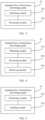
- an apparatus for constructing a knowledge graph includes a plurality of functional modules.
- the plurality of functional modules interact with each other to implement the method according to the first aspect and the implementations of the first aspect.
- the plurality of functional modules may be implemented based on software, hardware, or a combination of software and hardware, and the plurality of functional modules may be randomly combined or divided based on specific implementation.
- the apparatus includes a plurality of function modules, and the plurality of function modules interact with each other to implement the method in the second aspect and the implementations of the second aspect.
- the plurality of functional modules may be implemented based on software, hardware, or a combination of software and hardware, and the plurality of functional modules may be randomly combined or divided based on specific implementation.
- a computer device including a processor and a memory, where
- another computer device including a processor and a memory, where
- a system for constructing a knowledge graph including a first device and a second device, where the first device includes the apparatus according to the third aspect or the computer device according to the fifth aspect, and the second device includes the apparatus according to the fourth aspect or the computer device according to the sixth aspect.
- a computer storage medium stores instructions, and when the instructions are executed by a processor, the method for constructing a knowledge graph in the first aspect or the second aspect is implemented.
- a chip includes a programmable logic circuit and/or program instructions. When the chip runs, the method in the first aspect and the implementations of the first aspect or the method in the second aspect and the implementations of the second aspect is implemented.
- a first device creates, based on a template matching file corresponding to a network device, a network entity corresponding to a command line in configuration information of the network device. Because the template matching file can describe a format of the command line in the configuration information, the network entity corresponding to the command line in the configuration information can be accurately created based on the template matching file. In addition, because the network entity corresponding to the command line is associated with a command line template, a specific meaning of the created network entity may be determined based on the command line template, and then an association relationship between network entities may be determined, to construct, based on the configuration information of the network device, a knowledge graph of a network in which the network device is located.
- FIG. 1 is a schematic diagram of a structure of a system for constructing a knowledge graph according to an embodiment of this application.
- the system includes a first device 101 and a second device 102.
- the first device 101 is connected to the second device 102 over a wired network or a wireless network.
- the first device 101 is a network device, and the second device 102 is a management device; the first device 101 is a network device, and the second device 102 is a cloud device; or the first device 101 is a management device, and the second device 102 is a cloud device.
- the cloud device may be one server, a server cluster including several servers, or a cloud computing service center.
- the cloud device may be a network artificial intelligence engine (network artificial intelligence engine, NAIE).
- NAIE network artificial intelligence engine
- the management device may be one server, a server cluster including several servers, or a cloud computing service center.
- the cloud device usually refers to an upper-level device of the management device, configured to provide a data processing model and the like for the management device.
- the cloud device and the management device may alternatively be integrated into one device. This is not limited in embodiments of this application.
- the management device may also be used as an analysis device and/or a control device, configured to manage and control a network device in a communication network.
- the management device may be one or more devices.
- FIG. 1 An example in which the first device 101 is a management device and the second device 102 is a cloud device is used for description.
- a management device 101 is connected to network devices 103a and 103b (collectively referred to as network devices 103) in a communication network over a wired network or a wireless network.
- network devices 103 A quantity of network devices in FIG. 1 is merely used as an example, and is not intended to limit the communication network provided in embodiments of this application.
- the communication network may be a data center network (data center network, DCN), a metropolitan area network, a wide area network, a campus network, a virtual local area network (virtual local area network, VLAN), a virtual extensible local area network (virtual extensible local area network, VXLAN), or the like.
- DCN data center network
- VLAN virtual local area network
- VXLAN virtual extensible local area network
- a type of the communication network is not limited in embodiments of this application.
- the network device 103 may be a switch, a router, or the like.
- the management device 101 is configured to: collect device information of the network device 103 in the communication network, and provide the device information of the network device 103 for a cloud device 102.
- Device information of a network device includes first configuration information, a routing entry, and/or the like of the network device.
- the first configuration information of the network device usually includes first configuration information of an interface, first configuration information of a protocol, first configuration information of a service, and the like.
- the management device 101 may further collect an abnormal event generated in the communication network, and the like.
- the management device 101 may further store a networking topology of the communication network managed by the management device 101.
- the management device 101 periodically collects the device information of the network device 103.
- the network device 103 actively reports changed device information to the management device 101.
- a management device may alternatively be indirectly connected to a network device in a communication network by using a collection device.
- the application scenario may further include the collection device. This is not limited in this embodiment of this application.
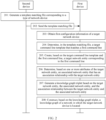
- FIG. 2 is a schematic flowchart of a method for constructing a knowledge graph according to an embodiment of this application. The method may be applied to the system for constructing a knowledge graph shown in FIG. 1 . As shown in FIG. 2 , the method includes the following steps.
- Step 201 A second device generates a template matching file corresponding to a type of network device.
- the template matching file is used to describe one or more formats of one or more command lines in configuration information of the type of network device.
- the template matching file may be a file in a JSON format.
- the template matching file includes a plurality of command line templates, and each command line template is used to describe a format of a command line in the configuration information of the type of network device.
- the command line template is obtained based on a command line expression.
- the command line template includes all content in the command line expression, and the command line template can indicate a sequence of content included in a corresponding command line in the command line.
- the command line expression includes a description of the corresponding command line in the configuration information of the type of network device.
- an implementation process in which the second device generates the template matching file corresponding to the type of network device includes the following step 2011 and step 2012.
- step 2011 the second device obtains a product manual of the type of network device.
- the product manual includes a plurality of command line expressions.
- Each command line expression includes a description of one command line in the configuration information of the type of network device.
- the command line expression includes all mandatory content and all optional content in a corresponding command line.
- the mandatory content refers to content that is bound to appear in the command line corresponding to the command line expression
- the optional content refers to content that may appear in the command line corresponding to the command line expression.
- Content in the command line may also be classified into fixed content and variable content.
- the variable content in the command line is usually referred to as a parameter.
- command line expression For example, it is assumed that content of a command line expression is "vni ⁇ vni-id> mcast-group ⁇ ip-address>".
- the command line expression indicates that "vni”, “vni-id”, “mcast-group”, and “ip-address” are mandatory content in a corresponding command line, where “vni” and “mcast-group” are fixed content, and "vni-id” and "ip-address” are parameters.
- command line expression For another example, it is assumed that content of a command line expression is "vni ⁇ vni-id> [mcast-group ⁇ ip-address>]".
- the command line expression indicates that "vni” and “vni-id” are mandatory content in a corresponding command line, and "mcast-group” and “ip-address” are optional content in the corresponding command line, where "vni” is mandatory content, “vni-id” is a mandatory parameter, “mcast-group” is optional content, and “ip-address” is an optional parameter.
- step 2012 the second device generates, for each command line expression in the product manual, a command line template based on the command line expression, to obtain the template matching file.
- the command line template includes one or more of the command line expression, a regular expression of the command line expression, and a target content list.
- the target content list includes one or more pieces of mandatory fixed content in the corresponding command line.
- the target content list may include all mandatory fixed content in the corresponding command line.
- a target content list may include “vni” and/or “mcast-group”.
- a target content list may include "vni”.
- the command line template includes the command line expression, the regular expression of the command line expression, and the target content list.
- the target content list includes two parts. One part includes the first piece of mandatory fixed content in the command line expression, and the other part includes all mandatory fixed content in the command line expression. Refer to the first example in step 2011.
- a command line template generated based on the command line expression "vni ⁇ vni-id> mcast-group ⁇ ip-address>" may be shown in Table 1.
- Table 1 Content meaning Content of a command line template Command line expression vni ⁇ vni-id> mcast-group ⁇ ip-address> Regular expression of the command line expression ⁇ vni (?P ⁇ vni_id>[ ⁇ ] ⁇ ) mcast-group (?P ⁇ ip_address>[ ⁇ ] ⁇ )$ Target content list vni vni; mcast-group
- Both the command line expression and the regular expression of the command line expression include all content in a corresponding command line, and can indicate a sequence of content included in the corresponding command line in the command line.
- the sequence is a sequence of the content included in the corresponding command line in the command line expression or the regular expression of the command line expression.
- the template matching file corresponding to the type of network device may alternatively be obtained based on expert experience.
- the type of network device has a same model.
- the type of network device further has a same product version.
- network devices of a same model correspond to one template matching file
- network devices of different models correspond to different template matching files.
- a plurality of network devices of a same model are used as one type of network device.
- the second device may generate, based on a product manual of a network device of a model, a template matching file corresponding to the model.
- network devices of a same model and a same product version correspond to one template matching file
- network devices of a same model but different product versions correspond to different template matching files.
- a plurality of network devices of a same model and a same product version are used as one type of network device.
- the second device may generate, based on a product manual of a network device of a version and a model, a template matching file corresponding to the version and the model.
- Step 202 The second device sends the template matching file to a first device.
- the template matching file is used by the first device to create a network entity corresponding to a command line in configuration information of any network device with the type of network device.
- a type of the network entity is a device, an interface, a protocol, or a service.
- the device type specifically includes a board, a primary card, or the like.
- the protocol type includes the open shortest path first (open shortest path first, OSPF), the border gateway protocol (Border Gateway Protocol, BGP), or the like.
- the service type specifically includes a virtual private network (virtual private network, VPN) service, a dynamic host configuration protocol (Dynamic Host Configuration Protocol, DHCP) service, a VLAN service, a bridge-domain (bridge-domain, BD) service, or the like.
- VPN virtual private network
- DHCP Dynamic Host Configuration Protocol
- the template matching file may alternatively be generated by the first device.
- step 201 and step 202 may be replaced with:
- the first device generates a template matching file corresponding to a type of network device.
- the first device generates the template matching file
- the second device generates the template matching file. Details are not described herein in this embodiment of this application.
- Step 203 The first device obtains first configuration information of a target network device.
- the target network device is any network device with the type of network device.
- the first configuration information may be current configuration information of the target network device.
- an implementation process in which the first device obtains the first configuration information of the target network device includes: The first device receives the first configuration information sent by the target network device.
- the first device after obtaining the first configuration information of the target network device, the first device creates, based on the template matching file and a first command line in the first configuration information, a target network entity corresponding to the first command line.
- the first command line may be any command line in the first configuration information.
- the target network entity corresponding to the first command line refer to the following step 204 and step 205.
- Step 204 The first device determines, in the template matching file, a target command line template that matches the first command line.
- a type of the target network entity is a network device, an interface, a protocol, or a service.
- the target network entity is configured to construct a knowledge graph of a network in which the target network device is located.
- the first command line matches the target command line template includes:
- the first command line includes all mandatory content in the target command line template, and a sequence of the content included in the first command line is consistent with a sequence indicated by the target command line template.
- a first command line is represented as "vni 5009 mcast-group 225.0.0.1", and the first command line matches the command line template shown in Table 1.
- "5009” in the first command line is a parameter value corresponding to the parameter "vni-id” in the command line template
- "225.0.0.1” in the first command line is a parameter value corresponding to the parameter "ip-address" in the command line template.
- the command line template includes the regular expression of the command line expression.
- This embodiment of this application provides the following two optional embodiments for implementing step 204.
- an implementation process of step 204 includes the following step 2041a and step 2042a.
- step 2041a the first device uses a first command line template in the template matching file as a to-be-matched command line template, where the first command line template is any command line template in the template matching file.
- step 2042a the first device executes a template matching procedure on the to-be-matched command line template.
- the template matching procedure includes the following step a11 to step a13.
- step a11 the first device performs regular expression matching with the first command line by using a regular expression in the to-be-matched command line template.
- step a12 when the regular expression successfully matches the first command line, the first device uses the to-be-matched command line template as the target command line template.
- the first device After obtaining the target command line template, the first device stops executing the template matching procedure.
- step a13 when the regular expression fails to match the first command line, the first device uses a second command line template in the template matching file as a new to-be-matched command line template, and executes the template matching procedure again, where the second command line template is any command line template on which no template matching procedure has been executed in the template matching file.
- an implementation process of step 204 includes the following step 2041b and step 2042b.
- step 2041b the first device uses a third command line template in a target command line template set as a to-be-matched command line template, where the third command line template is any command line template in the target command line template set.
- the target command line template set includes a command line template that is in the template matching file and that successfully matches a command line in historical configuration information of the type of network device to which the target network device belongs.
- the target command line template set may be generated by the first device, or the target command line template set may be generated by the second device and then sent to the first device.
- an implementation process in which the first device or the second device generates the target command line template set includes: obtaining, from the template matching file, a plurality of command line templates that successfully match command lines in the historical configuration information of the type of network device to which the target network device belongs; and using, as a command line template in the target command line template set, a command line template that is in the plurality of command line templates and whose accumulated quantity of times of successfully matching the command line in the historical configuration information of the type of network device reaches a target threshold of matching.
- the target command line template set includes each command line template that successfully matches the command line in the historical configuration information of the type of network device.
- the target command line template set further includes an attribute name and/or an entity type corresponding to each command line template in the target command line template set.
- the command line template in the target command line template set may further include a command line expression.
- the target command line template set provided in this embodiment of this application may be shown in Table 2.
- step 2042b the first device executes a template matching procedure on the to-be-matched command line template.
- the template matching procedure includes the following step b11 to step b14.
- step b11 the first device performs regular expression matching with the first command line by using a regular expression in the to-be-matched command line template.
- step b12 when the regular expression successfully matches the first command line, the first device uses the to-be-matched command line template as the target command line template.
- step b13 when the regular expression fails to match the first command line, if the target command line template set includes a fourth command line template, the first device uses the fourth command line template as a new to-be-matched command line template, and executes the template matching procedure again, where the fourth command line template is any command line template on which no template matching procedure has been performed in the target command line template set.
- step b14 when the regular expression fails to match the first command line, if the target command line template set does not include the fourth command line template, the first device uses a fifth command line template as a new to-be-matched command line template, and executes the template matching procedure again, where the fifth command line template is any command line template on which no template matching procedure has been performed in the template matching file.
- a possibility that the first command line matches the command line template in the target command line template set is usually greater than a possibility that the first command line matches another command line template in the template matching file other than the target command line template set.
- the first device determines, in the template matching file, the target command line template that matches the first command line, the first device first executes the template matching procedure on the command line template in the target command line template set, so that template matching efficiency can be improved.
- the command line template further includes a target content list, and the target content list includes one or more pieces of mandatory fixed content in a corresponding command line.
- the first device before performing regular expression matching with the first command line by using the regular expression in the to-be-matched command line template, the first device first determines whether the first command line includes all content in a target content list in the to-be-matched command line template. When the first command line includes all the content in the target content list in the to-be-matched command line template, the first device performs regular expression matching with the first command line by using the regular expression in the to-be-matched command line template. When the first command line does not include any content in the target content list in the to-be-matched command line template, the first device determines that the to-be-matched command line template fails to match the first command line.
- a first command line is represented as "vni 5009 mcast-group 225.0.0.1". It is assumed that a tobe-matched command line template is shown in Table 1, and a target content list in the to-be-matched command line template includes "vni” and/or "mcast-group”. The first device first determines whether the first command line includes "vni" and/or "mcast-group" in the target content list.
- the first device then performs regular expression matching with the first command line by using a regular expression " ⁇ vni (?P ⁇ vni_id>[ ⁇ ] ⁇ ) mcast-group (?P[ ⁇ ip_address> ] ⁇ )$".
- the first device before performing regular expression matching with the first command line by using the regular expression, the first device first performs fuzzy matching with the first command line by using the mandatory fixed content in the target content list, so that to-be-matched command line templates can be preliminarily filtered, a quantity of command line templates used for regular expression matching is reduced, template matching efficiency can be improved, and computing resources can be saved.
- Step 205 The first device creates, based on the target command line template and the first command line, the target network entity corresponding to the first command line.
- a network entity usually has one or more attributes, and an attribute of the network entity is used to identify or represent the network entity.
- a command line expression corresponding to the first command line includes one or more parameters.
- the target command line template includes one or more parameters.
- An implementation process of step 205 includes the following step 2051 and step 2052.
- the first device In step 2051, the first device generates one or more parameter key-value pairs based on the target command line template and the first command line, where the parameter key-value pair includes a parameter name of a parameter in the target command line template and a corresponding parameter value in the first command line.
- an arrangement sequence of the one or more parameter key-value pairs is consistent with a sequence indicated by the target command line template.
- a first command line is represented as "vni 5009 mcast-group 225.0.0.1", and a target command line template is shown in Table 1.
- the first device may generate two parameter key-value pairs, including ⁇ 'vni-id': '5009', 'ip-address': '225.0.0. 1' ⁇ , where "vni-id" and "ip-address" are parameter names in the target command line template.
- "5009" in the first command line is a parameter value corresponding to "vni-id”
- "225.0.0.1" in the first command line is a parameter value corresponding to "ip-address”.
- the first device creates the target network entity based on the one or more parameter key-value pairs.
- a name of the target network entity includes information about the first parameter key-value pair in the one or more parameter key-value pairs.
- the name of the target network entity includes a parameter name and a parameter value in the first parameter key-value pair.
- the name of the target network entity may further include a name of the target network device. The name of the target network entity is not limited in this embodiment of this application.
- the first parameter key-value pair in the two parameter key-value pairs generated by the first device is ⁇ 'vni-id':'5009' ⁇ .
- the first device may create a target network entity of an entity type of vni based on the parameter key-value pair ⁇ 'vni-id':'5009' ⁇ .
- the first device may obtain a target command line expression corresponding to the target command line template. Then, the first device determines, based on the target command line expression, whether a network entity needs to be created for the first command line. After determining that a network entity needs to be created for the first command line, the first device performs step 205.
- an implementation process in which the first device determines, based on the target command line expression, whether a network entity needs to be created for the first command line includes: When a collection of entity-like ontologies includes the target command line expression, the first device determines that a network entity needs to be created for the first command line.
- the collection of entity-like ontologies may be generated by the first device, or the collection of entity-like ontologies may be generated by the second device and then sent to the first device.
- An implementation process in which the first device or the second device generates the collection of entity-like ontologies includes: obtaining, in the historical configuration information of the type of network device to which the target network device belongs, all historical command lines that correspond to network entities; and generating the collection of entity-like ontologies based on command line expressions corresponding to all the historical command lines.
- the collection of entity-like ontologies may include a command line expression corresponding to each historical command line that is in the historical configuration information of the type of network device to which the target network device belongs and that corresponds to a network entity.
- the collection of entity-like ontologies may be obtained based on expert experience.
- the collection of entity-like ontologies includes a plurality of command line expressions.
- the collection of entity-like ontologies may further include a label of each command line expression.
- the label of the command line expression can be the first piece of fixed content in a corresponding command line.
- the collection of entity-like ontologies provided in this embodiment of this application may be shown in Table 3.
- the collection of entity-like ontologies includes a plurality of corresponding command line expressions of corresponding command lines that correspond to network entities.
- the first device first determines, by determining whether the collection of entity-like ontologies has the target command line expression corresponding to the target command line template, whether a network entity needs to be created for the first command line. When determining that no network entity needs to be created for the first command line, the first device stops executing a procedure of creating the target network entity corresponding to the first command line. When determining that a network entity needs to be created for the first command line, the first device creates, based on the target command line template and the first command line, the target network entity corresponding to the first command line. Efficiency and accuracy of creating a network entity corresponding to a command line can be improved.
- an implementation process in which the first device determines, based on the target command line expression, whether a network entity needs to be created for the first command line includes: The first device inputs the target command line expression to an entity discrimination model, to obtain a result output by the entity discrimination model based on the target command line expression.
- the result includes a first indication that a network entity needs to be created for the first command line or a second indication that no network entity needs to be created for the first command line.
- the entity discrimination model is obtained based on a plurality of sample command line expressions whose corresponding command lines are known to correspond to network entities or not.
- a result output by the entity discrimination model may be Y or N, where Y indicates that a network entity needs to be created for the first command line, and N indicates that no network entity needs to be created for the first command line.
- a result output by the entity discrimination model may be 0 or 1.
- An expression manner of the result output by the entity discrimination model is not limited in this embodiment of this application.
- the result output by the entity discrimination model based on the target command line expression further includes a third indication, where the third indication indicates that it is not determined whether a network entity needs to be created for the first command line.
- the first device determines, according to a preset determining rule, whether a network entity needs to be created for the first command line.
- the preset determining rule is related to a location relationship of a command line.
- the preset determining rule may be: When a quantity of indented spaces of a next command line of the first command line is greater than a quantity of indented spaces of the first command line, it is determined that a network entity needs to be created for the first command line.
- a result output by the entity discrimination model may be Y, N, or W, where Y indicates that a network entity needs to be created for the first command line, N indicates that no network entity needs to be created for the first command line, and W indicates that it is not determined whether a network entity needs to be created for the first command line.
- the entity discrimination model may be generated by the first device, or the entity discrimination model may be generated by the second device and then sent to the first device.
- An implementation process in which the first device or the second device generates the entity discrimination model includes: obtaining a plurality of sample command line expressions whose corresponding command lines are known to correspond to network entities or not; and training, by using the plurality of sample command line expressions, to obtain the entity discrimination model.
- the entity discrimination model is a machine learning model obtained through training in a supervised learning manner.
- the first device first determines, by using the entity discrimination model, whether a network entity needs to be created for the first command line. When determining that no network entity needs to be created for the first command line, the first device stops executing a procedure of creating the target network entity corresponding to the first command line. When determining that a network entity needs to be created for the first command line, the first device creates, based on the target command line template and the first command line, the target network entity corresponding to the first command line. Efficiency and accuracy of creating a network entity corresponding to a command line can be improved.
- the first device may continue to perform the following step 206 to step 208.
- Step 206 The first device determines, based on one or more attributes of the target network entity, an associated network entity that has an association relationship with the target network entity.
- the one or more attributes of the target network entity and one or more parameter key-value pairs generated by the first device based on the target command line template and the first command line are in a one-to-one correspondence.
- an implementation process of step 206 includes the following step 2061a to step 2063a.
- step 2061a the first device obtains a to-be-determined network entity from a network entity set.
- the to-be-determined network entity meets:
- the to-be-determined network entity has a first attribute, the first attribute is any attribute of the target network entity, and an attribute meaning and an attribute value of the first attribute of the to-be-determined network entity are respectively the same as an attribute meaning and an attribute value of a first attribute of the target network entity.
- the network entity set includes a network entity created based on one or more other command lines in the first configuration information. In this embodiment of this application, a network entity may be created based on a command line in configuration information.
- an implementation process in which the first device obtains the to-be-determined network entity from the network entity set includes the following step a21 to step a23.
- step a21 the first device obtains one or more initial network entities from the network entity set.
- the initial network entity has a to-be-determined attribute, and an attribute value of the to-be-determined attribute is the same as the attribute value of the first attribute of the target network entity.
- the first device compares each attribute value of the target network entity with an attribute value of each network entity in the network entity set, to obtain the one or more initial network entities.
- the attribute value of the target network entity is a parameter value in the parameter key-value pair corresponding to the target network entity.
- the first device uses a network entity that is in the network entity set and that has an attribute with an attribute value of 225.0.0.1 and/or an attribute with an attribute value of 5009 as the initial network entity.
- the first device may further add the target network entity to the network entity set.
- step a22 when a text similarity between an attribute name of the to-be-determined attribute of the initial network entity and an attribute name of the first attribute of the target network entity is greater than a first threshold, and/or a text similarity between text content of the to-be-determined attribute in a command line expression corresponding to the initial network entity and text content of the first attribute in a command line expression corresponding to the target network entity is greater than a second threshold, the first device determines that an attribute meaning of the to-be-determined attribute is the same as the attribute meaning of the first attribute of the target network entity.
- the attribute value of the to-be-determined attribute of the initial network entity is the same as the attribute value of the first attribute of the target network entity, and the attribute meaning of the to-be-determined attribute is the same as the attribute meaning of the first attribute of the target network entity, the to-be-determined attribute of the initial network entity and the first attribute of the target network entity are a same attribute.
- step a23 the first device determines the initial network entity as the to-be-determined network entity.
- the first device uses a network entity that is in the network entity set and that has a parameter key-value pair corresponding to one or more target network entities as the to-be-determined network entity.
- the first device determines, according to an association relationship validity discrimination rule, whether an association relationship that is between the to-be-determined network entity and the target network entity and that is based on the first attribute is valid.
- the association relationship validity discrimination rule may be generated by the first device, or the association relationship validity discrimination rule may be generated by the second device and then sent to the first device.
- An implementation process in which the first device or the second device generates the association relationship validity discrimination rule includes: obtaining a sample network entity pair set, where the sample network entity pair set includes a plurality of sample network entity pairs that are known to have an association relationship or not and attributes of sample network entities in each sample network entity pair; and determining the association relationship validity discrimination rule based on the sample network entity pair set.
- the association relationship validity discrimination rule may be a machine learning model obtained through training in a supervised learning manner.
- An input of the machine learning model is a command line template corresponding to the to-be-determined network entity, and the target command line template and the first attribute that correspond to the target network entity, and an output result indicates whether the association relationship that is between the to-be-determined network entity and the target network entity and that is based on the first attribute is valid.
- a result output by the machine learning model may be Y or N, where Y indicates that the association relationship that is between the to-be-determined network entity and the target network entity and that is based on the first attribute is valid, and N indicates that the association relationship that is between the to-be-determined network entity and the target network entity and that is based on the first attribute is invalid.
- a result output by the machine learning model may be 0 or 1. An expression manner of the result output by the machine learning model is not limited in this embodiment of this application.
- a to-be-determined network entity is "sysname_serviceleaf0-1-2-48.81_interface_Eth-Trunk1"
- a target network entity is "sysname_serviceleaf0-1-2-48.81_interface_Eth-Tnznk2”.
- a to-be-determined network entity is "sysname_serviceleaf0-1-2-48.81_bridge-domain_5006" and a target network entity is "sysname_serviceleaf0-1-2-48.81_interface_Nve1_vni_5005_head-end_peer-list_protocol_ bgp".
- step 2063a when the association relationship that is between the to-be-determined network entity and the target network entity and that is based on the first attribute is valid, the first device determines the to-be-determined network entity as the associated network entity.
- an implementation process of step 206 includes the following step 2061b to step 2063b.
- step 2061b the first device obtains, from a valid relationship type set, a target valid relationship type group including the type of the target network entity.
- the valid relationship type set includes a plurality of valid relationship type groups, and each valid relationship type group includes two entity types and one attribute pair.
- the two entity types are types of two network entities having an association relationship.
- the attribute pair includes two attributes enabling the two network entities to have an association relationship, attribute meanings of the two attributes are the same, and attribute names of the two attributes may be the same or different.
- Table 4 Entity type 1 Entity type 2 Attribute pair bgp (protocol) interface (interface) ipv4-address ⁇ --> ipv-address-mask ... ... ...
- Two entity types in a valid relationship type group are "bgp” and "interface", and an attribute pair is "ipv4-address ⁇ --> ipv-address-mask", where "ipv4-address” is an attribute of "bgp", and "ipv-address-mask” is an attribute of "interface”.
- the valid relationship type group represents that a network entity whose entity type is "bgp” based on the attribute "ipv4-address” may be associated with a network entity whose entity type is "interface” based on the attribute "ipv-address-mask".
- the valid relationship type set may be generated by the first device, or the valid relationship type set may be generated by the second device and then sent to the first device.
- An implementation process in which the first device or the second device generates the valid relationship type set includes: obtaining a historical valid relationship set, where the historical valid relationship set includes a plurality of historical valid relationship groups, each historical valid relationship group includes two historical network entities having an association relationship and one or more historical attribute pairs enabling the two historical network entities to have an association relationship, and each historical attribute pair separately includes one attribute of the two historical network entities; and generating the valid relationship type group in the valid relationship type set based on types of the two historical network entities having an association relationship and the historical attribute pair enabling the two historical network entities to have an association relationship that are in the historical valid relationship group.
- step 2062b the first device obtains a to-be-determined network entity based on a target valid relationship type group.
- Two entity types in the target valid relationship type group are the type of the target network entity and a type of the to-be-determined network entity.
- an entity type of a target network entity is interface.
- the first device determines a network entity whose entity type is bgp as the to-be-determined network entity.
- step 2063b when an attribute value of a second attribute of the to-be-determined network entity is the same as an attribute value of a third attribute of the target network entity, the first device determines the to-be-determined network entity as the associated network entity.
- the second attribute is an attribute corresponding to the type of the to-be-determined network entity in an attribute pair of the target valid relationship type group
- the third attribute is an attribute corresponding to the type of the target network entity in the attribute pair of the target valid relationship type group.
- a second attribute of the to-be-determined network entity is "ipv4-address", and a third attribute of the target network entity is "ipv-address-mask”.
- An implementation process of step 2063b includes: The first device determines whether the network entity whose entity type is bgp has the attribute "ipv4-address". When the network entity whose entity type is bgp has the attribute "ipv4-address" and an attribute value of the attribute "ipv4-address" is the same as an attribute value of the attribute "ipv-address-mask" of the target network entity, the first device determines the network entity as the associated network entity.
- the valid relationship type group includes two entity types and one attribute pair that enables network entities of the two entity types to have an association relationship
- an associated network entity of a network entity may be searched in a directional manner based on the valid relationship type group, so that efficiency of determining the associated network entity of the network entity is high and a few computing resources are consumed.
- Step 207 The first device generates a knowledge graph triplet based on the target network entity, the associated network entity, and the association relationship between the target network entity and the associated network entity.
- the knowledge graph triplet is represented in a graph form.
- the knowledge graph triplet includes two basic elements, namely, a point and an edge, where the point represents a network entity, and the edge represents an association relationship between two network entities.
- the edge on the knowledge graph triplet may be directional or directionless.
- the edge on the knowledge graph triplet may further indicate a specific relationship, for example, a dependency relationship or an equivalence relationship, between two network entities. For example, when two network entities are in an equivalence relationship, a directionless edge may be used to connect the two network entities.
- a directional edge (for example, an arrow) may be used to connect the two network entities, where a direction of the edge points from a dependent network entity to a depended network entity.
- the association relationship between the network entities in step 206 is usually an equivalence relationship.
- the dependency relationship between the network entities may be determined based on a location relationship between corresponding command lines in the configuration information.
- Step 208 The first device constructs, based on the knowledge graph triplet, the knowledge graph of the network in which the target network device is located.
- step 203 may alternatively be performed before step 201 or step 202.
- a step may be correspondingly added or deleted based on a case. Any variation method readily figured out by a person skilled in the art within the technical scope disclosed in this application shall fall within the protection scope of this application. Therefore, details are not described herein.
- a first device creates, based on a template matching file corresponding to a network device, a network entity corresponding to a command line in configuration information of the network device. Because the template matching file can describe a format of the command line in the configuration information, the network entity corresponding to the command line in the configuration information can be accurately created based on the template matching file. In addition, because the network entity corresponding to the command line is associated with a command line template, a specific meaning of the created network entity may be determined based on the command line template, and then an association relationship between network entities may be determined, to construct, based on the configuration information of the network device, a knowledge graph of a network in which the network device is located.
- FIG. 3 is a schematic diagram of a structure of an apparatus for constructing a knowledge graph according to an embodiment of this application.
- the apparatus may be applied to the first device 101 in the system shown in FIG. 1 .
- the apparatus 30 includes:
- the template matching file includes a plurality of command line templates, and each command line template is used to describe a format of a command line in the configuration information of the type of network device, and the processing module 302 is configured to: determine, in the template matching file, a target command line template that matches the first command line; and create the target network entity based on the target command line template and the first command line.
- the command line template is obtained based on a command line expression.
- the command line template includes all content in the command line expression, and the command line template can indicate a sequence of content included in a corresponding command line in the command line.
- the command line expression includes a description of the corresponding command line in the configuration information of the type of network device.
- the first command line matches the target command line template includes:
- the first command line includes all mandatory content in the target command line template, and a sequence of the content included in the first command line is consistent with a sequence indicated by the target command line template.
- a command line expression corresponding to the first command line includes one or more parameters
- the processing module 302 is configured to: generate one or more parameter key-value pairs based on the target command line template and the first command line, where the parameter key-value pair includes a parameter name of a parameter in the target command line template and a corresponding parameter value in the first command line; and create the target network entity based on the one or more parameter key-value pairs.
- an arrangement sequence of the one or more parameter key-value pairs is consistent with a sequence indicated by the target command line template, and a name of the target network entity includes information about the first parameter key-value pair in the one or more parameter key-value pairs.
- the command line template is obtained based on the command line expression
- the command line template includes a regular expression of the command line expression
- the processing module 302 is configured to: use a first command line template in the template matching file as a tobe-matched command line template, where the first command line template is any command line template in the template matching file; and execute a template matching procedure on the to-be-matched command line template, where the template matching procedure includes: performing regular expression matching with the first command line by using a regular expression in the to-be-matched command line template; and when the regular expression successfully matches the first command line, using the to-be-matched command line template as the target command line template; or when the regular expression fails to match the first command line, using a second command line template in the template matching file as a new to-be-matched command line template, and executing the template matching procedure again, where the second command line template is any command line template on which no template matching procedure has been performed in the template matching file.
- the command line template is obtained based on the command line expression
- the command line template includes a regular expression of the command line expression
- the processing module 302 is configured to: use a third command line template in a target command line template set as a to-be-matched command line template, where the target command line template set includes a command line template that is in the template matching file and that successfully matches a command line in historical configuration information of the type of network device, and the third command line template is any command line template in the target command line template set; and execute a template matching procedure on the to-be-matched command line template, where the template matching procedure includes: performing regular expression matching with the first command line by using a regular expression in the to-be-matched command line template; and when the regular expression successfully matches the first command line, using the to-be-matched command line template as the target command line template; or when the regular expression fails to match the first command line, if the target command line template set includes a fourth command line template, using the fourth command line template as a new to-be-matched command line template,
- the obtaining module 301 is further configured to obtain, from the template matching file, a plurality of command line templates that successfully match command lines in the historical configuration information of the type of network device.
- the processing module 302 is further configured to use, as a command line template in the target command line template set, a command line template that is in the plurality of command line templates and whose accumulated quantity of times of successfully matching the command line in the historical configuration information of the type of network device reaches a target threshold of matching.
- the command line template further includes a target content list
- the target content list includes one or more pieces of mandatory fixed content in a corresponding command line
- the processing module 302 is configured to: when the first command line includes all content in a target content list in the to-be-matched command line template, perform regular expression matching with the first command line by using the regular expression in the to-be-matched command line template.
- processing module 302 is further configured to: when the first command line does not include any content in the target content list in the to-be-matched command line template, determine that the to-be-matched command line template fails to match the first command line.
- the command line template is obtained based on the command line expression.
- the obtaining module 301 is further configured to obtain a target command line expression corresponding to the target command line template.
- the processing module 302 is further configured to: determine, based on the target command line expression, whether a network entity needs to be created for the first command line, and after it is determined that a network entity needs to be created for the first command line, create the target network entity based on the target command line template and the first command line.
- the processing module 302 is configured to: when a collection of entity-like ontologies includes the target command line expression, determine that a network entity needs to be created for the first command line.
- the obtaining module 301 is further configured to obtain, in the historical configuration information of the type of network device, all historical command lines that correspond to network entities; and the processing module 302 is further configured to generate a collection of entity-like ontologies based on command line expressions corresponding to all the historical command lines.
- the processing module 302 is configured to: input the target command line expression to an entity discrimination model, to obtain a result output by the entity discrimination model based on the target command line expression, where the result includes a first indication that a network entity needs to be created for the first command line or a second indication that no network entity needs to be created for the first command line, and the entity discrimination model is obtained based on a plurality of sample command line expressions whose corresponding command lines are known to correspond to network entities or not; and when the result includes the first indication, determine that a network entity needs to be created for the first command line, or when the result includes the second indication, determine that no network entity needs to be created for the first command line.
- the obtaining module 301 is further configured to obtain the plurality of sample command line expressions whose corresponding command lines are known to correspond to network entities or not.
- the processing module 302 is further configured to train, by using the plurality of sample command line expressions, to obtain the entity discrimination model.
- the processing module 302 is further configured to: determine, based on one or more attributes of the target network entity, an associated network entity that has an association relationship with the target network entity; generate a knowledge graph triplet based on the target network entity, the associated network entity, and the association relationship; and construct, based on the knowledge graph triplet, the knowledge graph of the network in which the target network device is located.
- the processing module 302 is configured to: obtain a to-be-determined network entity from a network entity set, where the to-be-determined network entity meets: the to-be-determined network entity has a first attribute, the first attribute is any attribute of the target network entity, and an attribute meaning and an attribute value of the first attribute of the to-be-determined network entity are respectively the same as an attribute meaning and an attribute value of a first attribute of the target network entity; and the network entity set includes a network entity created based on one or more other command lines in the first configuration information; determine, according to an association relationship validity discrimination rule, whether an association relationship that is between the to-be-determined network entity and the target network entity and that is based on the first attribute is valid; and when the association relationship that is between the to-be-determined network entity and the target network entity and that is based on the first attribute is valid, determine the to-be-determined network entity as the associated network entity.
- the processing module 302 is configured to: obtain one or more initial network entities from the network entity set, where the initial network entity has a to-be-determined attribute, and an attribute value of the to-be-determined attribute is the same as the attribute value of the first attribute of the target network entity; when a text similarity between an attribute name of the to-be-determined attribute of the initial network entity and an attribute name of the first attribute of the target network entity is greater than a first threshold, and/or a text similarity between text content of the to-be-determined attribute in a command line expression corresponding to the initial network entity and text content of the first attribute in a command line expression corresponding to the target network entity is greater than a second threshold, determine that an attribute meaning of the to-be-determined attribute is the same as the attribute meaning of the first attribute of the target network entity; and determine the initial network entity as the to-be-determined network entity.
- the obtaining module 301 is further configured to obtain a sample network entity pair set, where the sample network entity pair set includes a plurality of sample network entity pairs that are known to have an association relationship or not and attributes of sample network entities in each sample network entity pair; and the processing module 302 is further configured to determine the association relationship validity discrimination rule based on the sample network entity pair set.
- the processing module 302 is configured to: obtain, from a valid relationship type set, a target valid relationship type group including the type of the target network entity, where the valid relationship type set includes a plurality of valid relationship type groups, each valid relationship type group includes two entity types and one attribute pair, the two entity types are types of two network entities having an association relationship, the attribute pair includes two attributes enabling the two network entities to have an association relationship, and the two attributes have a same attribute meaning; obtain a to-be-determined network entity based on the target valid relationship type group, where two entity types in the target valid relationship type group are the type of the target network entity and a type of the to-be-determined network entity; and when an attribute value of a second attribute of the to-be-determined network entity is the same as an attribute value of a third attribute of the target network entity, determine the to-be-determined network entity as the associated network entity, where the second attribute is an attribute corresponding to the type of the to-be-determined network entity in an attribute pair of the target valid relationship type group, and the third attribute
- the obtaining module 301 is further configured to obtain a historical valid relationship set, where the historical valid relationship set includes a plurality of historical valid relationship groups, each historical valid relationship group includes two historical network entities having an association relationship and one or more historical attribute pairs enabling the two historical network entities to have an association relationship, and each historical attribute pair separately includes one attribute of the two historical network entities; and the processing module 302 is further configured to generate the valid relationship type group in the valid relationship type set based on types of the two historical network entities having an association relationship and the historical attribute pair enabling the two historical network entities to have an association relationship that are in the historical valid relationship group.
- the obtaining module 301 is configured to generate the template matching file.
- the obtaining module 301 is configured to: obtain a product manual of the type of network device, where the product manual includes a plurality of command line expressions, and each command line expression includes a description of a command line in the configuration information of the type of network device; and generate, for each command line expression in the product manual, a command line template based on the command line expression, to obtain the template matching file, where the command line template includes one or more of the command line expression, a regular expression of the command line expression, and the target content list, and the target content list includes the one or more pieces of mandatory fixed content in a corresponding command line.
- an apparatus 40 further includes: a receiving module 303, configured to receive one or more of the template matching file, the association relationship validity discrimination rule, the valid relationship type set, the target command line template set, the collection of entity-like ontologies, or the entity discrimination model that is sent by a second device.
- a receiving module 303 configured to receive one or more of the template matching file, the association relationship validity discrimination rule, the valid relationship type set, the target command line template set, the collection of entity-like ontologies, or the entity discrimination model that is sent by a second device.
- the type of network device has a same model.
- the type of network device has a same product version.
- the first device is a management device
- the obtaining module 301 is configured to receive the first configuration information sent by the target network device.
- a first device creates, by using a processing module based on a template matching file corresponding to a network device, a network entity corresponding to a command line in configuration information of the network device. Because the template matching file can describe a format of the command line in the configuration information, the network entity corresponding to the command line in the configuration information can be accurately created based on the template matching file.
- the network entity corresponding to the command line is associated with a command line template
- a specific meaning of the created network entity may be determined based on the command line template, and then an association relationship between network entities may be determined, to construct, based on the configuration information of the network device, a knowledge graph of a network in which the network device is located.
- FIG. 5 is a schematic diagram of a structure of still another apparatus for constructing a knowledge graph according to an embodiment of this application.
- the apparatus may be applied to the second device 102 in the system shown in FIG. 1 .
- the apparatus 50 includes:
- the processing module 501 is configured to: obtain a product manual of the type of network device, where the product manual includes a plurality of command line expressions, and each command line expression includes a description of a command line in the configuration information of the type of network device; and generate, for each command line expression in the product manual, a command line template based on the command line expression, to obtain the template matching file, where the command line template includes one or more of the command line expression, a regular expression of the command line expression, and a target content list, and the target content list includes one or more pieces of mandatory fixed content in a corresponding command line.
- the processing module 501 is further configured to: obtain a sample network entity pair set, and determine an association relationship validity discrimination rule based on the sample network entity pair set, where the sample network entity pair set includes a plurality of sample network entity pairs that are known to have an association relationship or not and attributes of sample network entities in each sample network entity pair; and the sending module 502 is further configured to send the association relationship validity discrimination rule to the first device.
- the processing module 501 is further configured to obtain a historical valid relationship set, where the historical valid relationship set includes a plurality of historical valid relationship groups, each historical valid relationship group includes two historical network entities having an association relationship and one or more historical attribute pairs enabling the two historical network entities to have an association relationship, and each historical attribute pair separately includes one attribute of the two historical network entities; the processing module 501 is further configured to generate the valid relationship type group based on types of the two historical network entities having an association relationship and the historical attribute pair enabling the two historical network entities to have an association relationship that are in the historical valid relationship group; and the sending module 502 is further configured to send a valid relationship type set to the first device, where the valid relationship type set includes a plurality of valid relationship type groups.
- the template matching file includes a plurality of command line templates, and each command line template is used to describe a format of a command line in the configuration information of the type of network device.
- the processing module 501 is further configured to: obtain, from the template matching file, a plurality of command line templates that successfully match command lines in historical configuration information of the type of network device, and use, as a command line template in a target command line template set, a command line template that is in the plurality of command line templates and whose accumulated quantity of times of successfully matching the command line in the historical configuration information of the type of network device reaches a target threshold of matching.
- the sending module 502 is further configured to send the target command line template set to the first device.
- the processing module 501 is further configured to: obtain, in the historical configuration information of the type of network device, all historical command lines that correspond to network entities; and generate a collection of entity-like ontologies based on command line expressions corresponding to all the historical command lines.
- the sending module 502 is further configured to send the collection of entity-like ontologies to the first device.
- the processing module 501 is further configured to: obtain a plurality of sample command line expressions whose corresponding command lines are known to correspond to network entities or not, and train, by using the plurality of sample command line expressions, to obtain an entity discrimination model; and the sending module 502 is further configured to send the entity discrimination model to the first device.
- a first device creates, based on a template matching file corresponding to a network device, a network entity corresponding to a command line in configuration information of the network device. Because the template matching file can describe a format of the command line in the configuration information, the network entity corresponding to the command line in the configuration information can be accurately created based on the template matching file. In addition, because the network entity corresponding to the command line is associated with a command line template, a specific meaning of the created network entity may be determined based on the command line template, and then an association relationship between network entities may be determined, to construct, based on the configuration information of the network device, a knowledge graph of a network in which the network device is located.
- An embodiment of this application provides a computer device, including a processor and a memory, where
- An embodiment of this application further provides another computer device, including a processor and a memory, where
- FIG. 6 is a block diagram of a computer device according to an embodiment of this application.
- the computer device may be the first device or the second device in embodiments of this application, and may be specifically a network device, a management device, or a cloud device.
- a computer device 60 includes a processor 601 and a memory 602.
- the memory 602 is configured to store a computer program, where the computer program includes program instructions.
- the processor 601 is configured to invoke the computer program to implement the actions performed by the first device or the actions performed by the second device in the foregoing method embodiments.
- the computer device 60 further includes a communication bus 603 and a communication interface 604.
- the processor 601 includes one or more processing cores, and the processor 601 executes various functional applications and performs data processing by running the computer program.
- the memory 602 may be configured to store the computer program.
- the memory may store an operating system and an application program unit that is required for at least one function.
- the operating system may be an operating system such as a real time operating system (Real Time executive, RTX), LINUX, UNIX, WINDOWS, or OS X.
- the communication interface 604 is configured to communicate with another device.
- the communication interface 604 of the second device may be configured to send one or more of a template matching file, an association relationship validity discrimination rule, a valid relationship type set, a target command line template set, a collection of entity-like ontologies, or an entity discrimination model to the first device.
- the memory 602 and the communication interface 604 are connected to the processor 601 by using the communication bus 603.
- An embodiment of this application further provides a system for constructing a knowledge graph.
- the system includes a first device and a second device.
- the first device includes the apparatus shown in FIG. 3 or FIG. 4 or the computer device shown in FIG. 6 .
- the second device includes the apparatus shown in FIG. 5 or the computer device shown in FIG. 6 .
- An embodiment of this application further provides a computer storage medium.
- the computer storage medium stores instructions. When the instructions are executed by a processor, the actions performed by the first device or the actions performed by the second device in the foregoing method embodiments are implemented.
- the program may be stored in a computer-readable storage medium.
- the storage medium may be a read-only memory, a magnetic disk, an optical disc, or the like.
- a and/or B may represent the following three cases: Only A exists, both A and B exist, and only B exists.
- the character "/" in this specification generally indicates an "or" relationship between the associated objects.
Landscapes
- Engineering & Computer Science (AREA)
- Theoretical Computer Science (AREA)
- General Engineering & Computer Science (AREA)
- Physics & Mathematics (AREA)
- General Physics & Mathematics (AREA)
- Artificial Intelligence (AREA)
- Computational Linguistics (AREA)
- Data Mining & Analysis (AREA)
- Software Systems (AREA)
- Computer Networks & Wireless Communication (AREA)
- Signal Processing (AREA)
- Computing Systems (AREA)
- Evolutionary Computation (AREA)
- Mathematical Physics (AREA)
- Databases & Information Systems (AREA)
- Audiology, Speech & Language Pathology (AREA)
- General Health & Medical Sciences (AREA)
- Human Computer Interaction (AREA)
- Health & Medical Sciences (AREA)
- Animal Behavior & Ethology (AREA)
- Life Sciences & Earth Sciences (AREA)
- Computer Vision & Pattern Recognition (AREA)
- Medical Informatics (AREA)
- Data Exchanges In Wide-Area Networks (AREA)
Applications Claiming Priority (2)
| Application Number | Priority Date | Filing Date | Title |
|---|---|---|---|
| CN202010613853.8A CN113868367A (zh) | 2020-06-30 | 2020-06-30 | 构建知识图谱的方法、装置及系统、计算机存储介质 |
| PCT/CN2021/102651 WO2022001924A1 (zh) | 2020-06-30 | 2021-06-28 | 构建知识图谱的方法、装置及系统、计算机存储介质 |
Publications (2)
| Publication Number | Publication Date |
|---|---|
| EP4163802A1 true EP4163802A1 (de) | 2023-04-12 |
| EP4163802A4 EP4163802A4 (de) | 2023-12-06 |
Family
ID=78981343
Family Applications (1)
| Application Number | Title | Priority Date | Filing Date |
|---|---|---|---|
| EP21834027.1A Pending EP4163802A4 (de) | 2020-06-30 | 2021-06-28 | Verfahren, vorrichtung und system zur konstruktion eines wissensgraphen und computerspeichermedium |
Country Status (4)
| Country | Link |
|---|---|
| US (1) | US20230142573A1 (de) |
| EP (1) | EP4163802A4 (de) |
| CN (1) | CN113868367A (de) |
| WO (1) | WO2022001924A1 (de) |
Families Citing this family (7)
| Publication number | Priority date | Publication date | Assignee | Title |
|---|---|---|---|---|
| US11552848B2 (en) * | 2020-04-13 | 2023-01-10 | Arista Networks, Inc. | System and method for managing a network device |
| CN112714032B (zh) * | 2021-03-29 | 2021-07-02 | 网络通信与安全紫金山实验室 | 无线网络协议知识图谱构建分析方法、系统、设备及介质 |
| CN116938669A (zh) * | 2022-03-31 | 2023-10-24 | 华为技术有限公司 | 网络设备的管理方法及装置 |
| WO2024000582A1 (zh) * | 2022-07-01 | 2024-01-04 | 西门子股份公司 | 知识图谱的本体模型的构建方法、装置及存储介质 |
| CN115665020B (zh) * | 2022-11-10 | 2023-04-28 | 广州市易鸿智能装备有限公司 | 通信解析方法、装置、设备和存储介质 |
| CN117952423A (zh) * | 2024-02-02 | 2024-04-30 | 富邦华一银行有限公司 | 一种基于数智化的产业链风险管理系统及方法 |
| CN119293255B (zh) * | 2024-08-12 | 2025-07-11 | 国家电网有限公司华东分部 | 设备启动方案生成系统及方法、存储介质、计算机设备 |
Family Cites Families (9)
| Publication number | Priority date | Publication date | Assignee | Title |
|---|---|---|---|---|
| US20150095303A1 (en) * | 2013-09-27 | 2015-04-02 | Futurewei Technologies, Inc. | Knowledge Graph Generator Enabled by Diagonal Search |
| US10700931B2 (en) * | 2014-08-17 | 2020-06-30 | Microsoft Technology Licensing, Llc | Network device configuration framework |
| US10608879B2 (en) * | 2015-10-16 | 2020-03-31 | Dell Products L.P. | Validation using natural language processing |
| CN108595449A (zh) * | 2017-11-23 | 2018-09-28 | 北京科东电力控制系统有限责任公司 | 调度自动化系统知识图谱的构建与应用方法 |
| CN109885610A (zh) * | 2019-02-13 | 2019-06-14 | 北京百度网讯科技有限公司 | 一种结构化数据的抽取方法、装置、电子设备及存储介质 |
| CN109829096B (zh) * | 2019-03-15 | 2021-11-26 | 北京金山数字娱乐科技有限公司 | 一种数据采集方法、装置、电子设备及存储介质 |
| US10679133B1 (en) * | 2019-06-07 | 2020-06-09 | Peritus.AI, Inc. | Constructing and utilizing a knowledge graph for information technology infrastructure |
| CN110569369A (zh) * | 2019-09-16 | 2019-12-13 | 神州数码融信软件有限公司 | 银行金融系统知识图谱的生成方法及装置、应用方法及装置 |
| CN110825882B (zh) * | 2019-10-09 | 2022-03-01 | 西安交通大学 | 一种基于知识图谱的信息系统管理方法 |
-
2020
- 2020-06-30 CN CN202010613853.8A patent/CN113868367A/zh active Pending
-
2021
- 2021-06-28 EP EP21834027.1A patent/EP4163802A4/de active Pending
- 2021-06-28 WO PCT/CN2021/102651 patent/WO2022001924A1/zh not_active Ceased
-
2022
- 2022-12-29 US US18/147,817 patent/US20230142573A1/en active Pending
Also Published As
| Publication number | Publication date |
|---|---|
| CN113868367A (zh) | 2021-12-31 |
| EP4163802A4 (de) | 2023-12-06 |
| WO2022001924A1 (zh) | 2022-01-06 |
| US20230142573A1 (en) | 2023-05-11 |
Similar Documents
| Publication | Publication Date | Title |
|---|---|---|
| EP4163802A1 (de) | Verfahren, vorrichtung und system zur konstruktion eines wissensgraphen und computerspeichermedium | |
| US11362884B2 (en) | Fault root cause determining method and apparatus, and computer storage medium | |
| US20220200844A1 (en) | Data processing method and apparatus, and computer storage medium | |
| US20230318906A1 (en) | Fault recovery plan determining method, apparatus, and system, and computer storage medium | |
| US12137028B2 (en) | Edge compute environment configuration tool for a communications network | |
| CN110650037B (zh) | 异构网络设备配置方法及装置 | |
| US9537749B2 (en) | Method of network connectivity analyses and system thereof | |
| CN109189758B (zh) | 运维流程设计方法、装置和设备、运行方法、装置和主机 | |
| US12149441B2 (en) | Determining flow paths of packets through nodes of a network | |
| JP2017169044A (ja) | 設定装置、通信システム、通信装置の設定更新方法及びプログラム | |
| CN113852476A (zh) | 确定异常事件关联对象的方法、装置及系统 | |
| EP3823214B1 (de) | Verfahren zur netzwerkkonfiguration, vorrichtung und computerprogramm | |
| CN110798341A (zh) | 业务开通方法、装置及系统 | |
| CN112448915B (zh) | 配置报文的验证方法及装置、计算机存储介质 | |
| CN104917623A (zh) | 一种实现sdn网络通信管理的方法及装置 | |
| CN114519095A (zh) | 数据处理方法、装置及系统、计算机存储介质 | |
| CN114124688A (zh) | 配置方法及系统、计算机可存储介质 | |
| EP4290819A1 (de) | Dienstbereitstellungsverfahren, -vorrichtung und -system | |
| US11411819B2 (en) | Automatic network configuration in data protection operations | |
| JP4808595B2 (ja) | ネットワーク情報収集システム及びネットワーク情報収集方法 | |
| CN120110910A (zh) | 配置类任务的处理方法、系统、计算设备集群及存储介质 | |
| CN113193980A (zh) | 一种基于新型城域网拓扑快速生成功能配置的方法及装置 | |
| CN119892673A (zh) | 网络验证方法及相关设备 | |
| CN120880878A (zh) | 云平台网络故障根因定位方法、装置、计算机设备及存储介质 | |
| CN121664610A (zh) | 确定故障根因的方法及装置 |
Legal Events
| Date | Code | Title | Description |
|---|---|---|---|
| STAA | Information on the status of an ep patent application or granted ep patent |
Free format text: STATUS: THE INTERNATIONAL PUBLICATION HAS BEEN MADE |
|
| PUAI | Public reference made under article 153(3) epc to a published international application that has entered the european phase |
Free format text: ORIGINAL CODE: 0009012 |
|
| STAA | Information on the status of an ep patent application or granted ep patent |
Free format text: STATUS: REQUEST FOR EXAMINATION WAS MADE |
|
| 17P | Request for examination filed |
Effective date: 20230105 |
|
| AK | Designated contracting states |
Kind code of ref document: A1 Designated state(s): AL AT BE BG CH CY CZ DE DK EE ES FI FR GB GR HR HU IE IS IT LI LT LU LV MC MK MT NL NO PL PT RO RS SE SI SK SM TR |
|
| DAV | Request for validation of the european patent (deleted) | ||
| DAX | Request for extension of the european patent (deleted) | ||
| REG | Reference to a national code |
Ref country code: DE Ref legal event code: R079 Free format text: PREVIOUS MAIN CLASS: G06F0016360000 Ipc: H04L0041084000 |
|
| A4 | Supplementary search report drawn up and despatched |
Effective date: 20231106 |
|
| RIC1 | Information provided on ipc code assigned before grant |
Ipc: H04L 41/16 20220101ALN20231030BHEP Ipc: H04L 41/12 20220101ALN20231030BHEP Ipc: H04L 41/0631 20220101ALN20231030BHEP Ipc: H04L 41/0677 20220101ALN20231030BHEP Ipc: G06N 5/02 20230101ALI20231030BHEP Ipc: G06F 16/36 20190101ALI20231030BHEP Ipc: H04L 41/22 20220101ALI20231030BHEP Ipc: H04L 41/085 20220101ALI20231030BHEP Ipc: H04L 41/0266 20220101ALI20231030BHEP Ipc: H04L 41/084 20220101AFI20231030BHEP |
|
| STAA | Information on the status of an ep patent application or granted ep patent |
Free format text: STATUS: EXAMINATION IS IN PROGRESS |
|
| 17Q | First examination report despatched |
Effective date: 20250610 |