EP4164253B1 - Flexible wiedergabe von audiodaten - Google Patents
Flexible wiedergabe von audiodaten Download PDFInfo
- Publication number
- EP4164253B1 EP4164253B1 EP22198798.5A EP22198798A EP4164253B1 EP 4164253 B1 EP4164253 B1 EP 4164253B1 EP 22198798 A EP22198798 A EP 22198798A EP 4164253 B1 EP4164253 B1 EP 4164253B1
- Authority
- EP
- European Patent Office
- Prior art keywords
- renderer
- audio
- processors
- encoded audio
- rendererflag
- Prior art date
- Legal status (The legal status is an assumption and is not a legal conclusion. Google has not performed a legal analysis and makes no representation as to the accuracy of the status listed.)
- Active
Links
Images




Classifications
-
- H—ELECTRICITY
- H04—ELECTRIC COMMUNICATION TECHNIQUE
- H04S—STEREOPHONIC SYSTEMS
- H04S3/00—Systems employing more than two channels, e.g. quadraphonic
- H04S3/008—Systems employing more than two channels, e.g. quadraphonic in which the audio signals are in digital form, i.e. employing more than two discrete digital channels
-
- G—PHYSICS
- G10—MUSICAL INSTRUMENTS; ACOUSTICS
- G10L—SPEECH ANALYSIS TECHNIQUES OR SPEECH SYNTHESIS; SPEECH RECOGNITION; SPEECH OR VOICE PROCESSING TECHNIQUES; SPEECH OR AUDIO CODING OR DECODING
- G10L19/00—Speech or audio signals analysis-synthesis techniques for redundancy reduction, e.g. in vocoders; Coding or decoding of speech or audio signals, using source filter models or psychoacoustic analysis
- G10L19/02—Speech or audio signals analysis-synthesis techniques for redundancy reduction, e.g. in vocoders; Coding or decoding of speech or audio signals, using source filter models or psychoacoustic analysis using spectral analysis, e.g. transform vocoders or subband vocoders
- G10L19/0204—Speech or audio signals analysis-synthesis techniques for redundancy reduction, e.g. in vocoders; Coding or decoding of speech or audio signals, using source filter models or psychoacoustic analysis using spectral analysis, e.g. transform vocoders or subband vocoders using subband decomposition
- G10L19/0208—Subband vocoders
-
- G—PHYSICS
- G10—MUSICAL INSTRUMENTS; ACOUSTICS
- G10L—SPEECH ANALYSIS TECHNIQUES OR SPEECH SYNTHESIS; SPEECH RECOGNITION; SPEECH OR VOICE PROCESSING TECHNIQUES; SPEECH OR AUDIO CODING OR DECODING
- G10L19/00—Speech or audio signals analysis-synthesis techniques for redundancy reduction, e.g. in vocoders; Coding or decoding of speech or audio signals, using source filter models or psychoacoustic analysis
- G10L19/008—Multichannel audio signal coding or decoding using interchannel correlation to reduce redundancy, e.g. joint-stereo, intensity-coding or matrixing
-
- H—ELECTRICITY
- H04—ELECTRIC COMMUNICATION TECHNIQUE
- H04R—LOUDSPEAKERS, MICROPHONES, GRAMOPHONE PICK-UPS OR LIKE ACOUSTIC ELECTROMECHANICAL TRANSDUCERS; ELECTRIC HEARING AIDS; PUBLIC ADDRESS SYSTEMS
- H04R5/00—Stereophonic arrangements
- H04R5/04—Circuit arrangements, e.g. for selective connection of amplifier inputs/outputs to loudspeakers, for loudspeaker detection, or for adaptation of settings to personal preferences or hearing impairments
-
- G—PHYSICS
- G10—MUSICAL INSTRUMENTS; ACOUSTICS
- G10L—SPEECH ANALYSIS TECHNIQUES OR SPEECH SYNTHESIS; SPEECH RECOGNITION; SPEECH OR VOICE PROCESSING TECHNIQUES; SPEECH OR AUDIO CODING OR DECODING
- G10L19/00—Speech or audio signals analysis-synthesis techniques for redundancy reduction, e.g. in vocoders; Coding or decoding of speech or audio signals, using source filter models or psychoacoustic analysis
- G10L2019/0001—Codebooks
-
- H—ELECTRICITY
- H04—ELECTRIC COMMUNICATION TECHNIQUE
- H04S—STEREOPHONIC SYSTEMS
- H04S2400/00—Details of stereophonic systems covered by H04S but not provided for in its groups
- H04S2400/11—Positioning of individual sound objects, e.g. moving airplane, within a sound field
Definitions
- This disclosure relates to rendering information and, more specifically, rendering information for audio data.
- US patent application US 2015/0264483 A1 discloses techniques for rendering low frequency speaker feeds from higher-order ambisonic coefficients.
- the techniques of this disclosure provide for ways by which to signal audio renderer-selection information used during audio content production to a playback device.
- the playback device may, in turn use the signaled audio renderer-selection information to select one or more renderers, and use the selected renderer(s) to render the audio content.
- Providing the rendering information in this manner enables the playback device to render the audio content in a manner intended by the sound engineer, and thereby potentially ensure appropriate playback of the audio content such that the artistic intent is preserved and understood by a listener.
- the rendering information used during rendering by the sound engineer is provided in accordance with the techniques described in this disclosure so that the audio playback device may utilize the rendering information to render the audio content in a manner intended by the sound engineer, thereby ensuring a more consistent experience during both production and playback of the audio content in comparison to systems that do not provide this audio rendering information.
- the techniques of this disclosure enable the playback to leverage both object-based and ambisonic representations of a soundfield, in preserving the artistic intent of the soundfield. That is, a content creator device or content producer device may implement the techniques of this disclosure to signal renderer-identifying information to the playback device, thereby enabling the playback to device to select the appropriate renderer for a pertinent portion of the soundfield-representative audio data.
- Object-based audio formats may refer to formats in which audio objects, often encoded using pulse-code modulation (PCM) and referred to as PCM audio objects, are specified in order to represent the soundfield.
- Such audio objects may include metadata identifying a location of the audio object relative to a listener or other point of reference in the soundfield, such that the audio object may be rendered to one or more speaker channels for playback in an effort to recreate the soundfield.
- PCM pulse-code modulation
- the techniques described in this disclosure may apply to any of the foregoing formats, including scene-based audio formats, channel-based audio formats, object-based audio formats, or any combination thereof.
- Scene-based audio formats may include a hierarchical set of elements that define the soundfield in three dimensions.
- a hierarchical set of elements is a set of spherical harmonic coefficients (SHC).
- SHC spherical harmonic coefficients
- the SHC A n m k can either be physically acquired (e.g., recorded) by various microphone array configurations or, alternatively, they can be derived from channel-based or object-based descriptions of the soundfield.
- the SHC (which also may be referred to as ambisonic coefficients) represent scene-based audio, where the SHC may be input to an audio encoder to obtain encoded SHC that may promote more efficient transmission or storage. For example, a fourth-order representation involving (1+4) 2 (25, and hence fourth order) coefficients may be used.
- the SHC may be derived from a microphone recording using a microphone array.
- Various examples of how SHC may be physically acquired from microphone arrays are described in Poletti, M., "Three-Dimensional Surround Sound Systems Based on Spherical Harmonics," J. Audio Eng. Soc., Vol. 53, No. 11, 2005 November, pp. 1004-1025 .
- a n m k g ⁇ ⁇ 4 ⁇ ik h n 2 kr s Y n m * ⁇ s ⁇ s , where i is ⁇ 1 , h n 2 ⁇ is the spherical Hankel function (of the second kind) of order n, and ⁇ r s , ⁇ s , ⁇ s ⁇ is the location of the object.
- Knowing the object source energy g ( ⁇ ) as a function of frequency may enable conversion of each PCM object and the corresponding location into the SHC A n m k . Further, it can be shown (since the above is a linear and orthogonal decomposition) that the A n m k coefficients for each object are additive. In this manner, a number of PCM objects can be represented by the A n m k coefficients (e.g., as a sum of the coefficient vectors for the individual objects).
- the coefficients may contain information about the soundfield (the pressure as a function of 3D coordinates), and the above represents the transformation from individual objects to a representation of the overall soundfield, in the vicinity of the observation point ⁇ r r , ⁇ r , ⁇ r ⁇ .
- FIG. 1 is a diagram illustrating a system 10 that may perform various aspects of the techniques described in this disclosure.
- the system 10 includes a content creator device 12 and a content consumer device 14. While described in the context of the content creator device 12 and the content consumer device 14, the techniques may be implemented in any context in which SHCs (which may also be referred to as ambisonic coefficients) or any other hierarchical representation of a soundfield are encoded to form a bitstream representative of the audio data.
- the content creator device 12 may represent any form of computing device capable of implementing the techniques described in this disclosure, including a handset (or cellular phone), a tablet computer, a smart phone, or a desktop computer to provide a few examples.
- the content consumer device 14 may represent any form of computing device capable of implementing the techniques described in this disclosure, including a handset (or cellular phone), a tablet computer, a smart phone, a set-top box, or a desktop computer to provide a few examples.
- the content creator device 12 may be operated by a movie studio or other entity that may generate multi-channel audio content for consumption by operators of content consumer devices, such as the content consumer device 14. In some examples, the content creator device 12 may be operated by an individual user who would like to compress ambisonic coefficients 11B ("AMB COEFFS 11B").
- the ambisonic coefficients 11B may take a number of different forms.
- the microphone 5B may use a coding scheme for ambisonic representations of a soundfield, referred to as Mixed Order Ambisonics (MOA) as discussed in more detail in U.S. Application Serial No. 15/672,058, entitled “MIXED-ORDER AMBISONICS (MOA) AUDIO DATA FO COMPUTER-MEDIATED REALITY SYSTEMS,” filed August 8, 2017 , and published as U.S. patent publication no. 20190007781 on January 3, 2019 .
- MOA Mixed Order Ambisonics
- the microphone 5B may generate a partial subset of the full set of ambisonic coefficients. For instance, each MOA representation generated by the microphone 5B may provide precision with respect to some areas of the soundfield, but less precision in other areas.
- an MOA representation of the soundfield may include eight (8) uncompressed ambisonic coefficients, while the third order ambisonic representation of the same soundfield may include sixteen (16) uncompressed ambisonic coefficients.
- each MOA representation of the soundfield that is generated as a partial subset of the ambisonic coefficients may be less storage-intensive and less bandwidth intensive (if and when transmitted as part of the bitstream 21 over the illustrated transmission channel) than the corresponding third order ambisonic representation of the same soundfield generated from the ambisonic coefficients.
- ambisonic coefficients includes a first-order ambisonic (FOA) representations in which all of the ambisonic coefficients associated with a first order spherical basis function and a zero order spherical basis function are used to represent the soundfield.
- FOA first-order ambisonic
- the microphone 5B may represent the soundfield using all of the ambisonic coefficients for a given order N, resulting in a total of ambisonic coefficients equaling (N+1) 2 .
- the ambisonic audio data may include ambisonic coefficients associated with spherical basis functions having an order of one or less (which may be referred to as "1 st order ambisonic audio data"), ambisonic coefficients associated with spherical basis functions having a mixed order and suborder (which may be referred to as the "MOA representation” discussed above), or ambisonic coefficients associated with spherical basis functions having an order greater than one (which is referred to above as the "full order representation").
- the content creator may generate audio content (including the ambisonic coefficients in one or more of the above noted forms) in conjunction with video content.
- the content consumer device 14 may be operated by an individual.
- the content consumer device 14 may include an audio playback system 16, which may refer to any form of audio playback system capable of rendering SHC (such as the ambisonic coefficients 11B) for play back as multi-channel audio content.
- the content creator may, during the editing process, render ambisonic coefficients 11B from audio objects 9, listening to the rendered speaker feeds in an attempt to identify various aspects of the soundfield that require further editing.
- the content creator device 12 may then edit the ambisonic coefficients 11B (potentially indirectly through manipulation of different ones of the audio objects 9 from which the source ambisonic coefficients may be derived in the manner described above).
- the content creator device 12 may employ the audio editing system 18 to generate the ambisonic coefficients 11B.
- the audio editing system 18 represents any system capable of editing audio data and outputting the audio data as one or more source spherical harmonic coefficients.
- the content creator device 12 may generate a bitstream 21 based on the ambisonic coefficients 11B. That is, the content creator device 12 includes an audio encoding device 20 that represents a device configured to encode or otherwise compress the ambisonic coefficients 11B in accordance with various aspects of the techniques described in this disclosure to generate the bitstream 21.
- the audio encoding device 20 may generate the bitstream 21 for transmission, as one example, across a transmission channel, which may be a wired or wireless channel, a data storage device, or the like.
- a portion of the bitstream 21 may represent an encoded version of the ambisonic coefficients 11B.
- the bitstream 21 may include an encoded version of the object-based audio data 11A.
- the audio encoding device 20 may generate the bitstream 21 to include a primary bitstream and other side information, such as metadata, which may also be referred to herein as side channel information.
- the audio encoding device 20 may generate the side channel information of the bitstream 21 to include renderer-selection information pertaining to the audio renderers 1 illustrated in FIG. 1 .
- the audio encoding device 20 may generate the side channel information of the bitstream 21 to indicate whether an object-based renderer of the audio renderers 1 was used for content creator-side rendering of the audio data of the bitstream 21, or an ambisonic renderer of the audio renderers 1 was used for the content creator-side rendering of the audio data of the bitstream 21.
- the audio encoding device 20 may include additional renderer-selection information in the side channel of the bitstream 21. For instance, if the audio renderers 1 include multiple renderers that are applicable to the same type (object or ambisonic) of audio data, the audio encoding device 20 may include a renderer identifier (or "renderer ID") in the side channel information, in addition to the renderer type.
- the audio encoding device 20 may signal information signifying one or more of the audio renderers 1 in the bitstream 21. For instance, if the audio encoding device 20 determines that a particular one or more of the audio renderers 1 were used for content creator-side rendering of the audio data of the bitstream 21, then the audio encoding device 20 may signal one or more matrices signifying the identified audio renderer(s) 1 in the bitstream 21. In this way, according to these example implementations of this disclosure, the audio encoding device 20 may provide the data necessary to apply one or more of the audio renderers 1 directly, via the side channel information of the bitstream 21, for a decoding device to render the audio data signaled via the bitstream 21. Throughout this disclosure, implementations in which the audio encoding device 20 transmits matrix information representing any of the audio renderers 1 are referred to as "renderer transmission" implementations.
- the content creator device 12 may output the bitstream 21 to an intermediate device positioned between the content creator device 12 and the content consumer device 14.
- the intermediate device may store the bitstream 21 for later delivery to the content consumer device 14, which may request the bitstream.
- the intermediate device may comprise a file server, a web server, a desktop computer, a laptop computer, a tablet computer, a mobile phone, a smart phone, or any other device capable of storing the bitstream 21 for later retrieval by an audio decoder.
- the intermediate device may reside in a content delivery network capable of streaming the bitstream 21 (and possibly in conjunction with transmitting a corresponding video data bitstream) to subscribers, such as the content consumer device 14, requesting the bitstream 21.
- the content creator device 12 may store the bitstream 21 to a storage medium, such as a compact disc, a digital video disc, a high definition video disc or other storage media, most of which are capable of being read by a computer and therefore may be referred to as computer-readable storage media or non-transitory computer-readable storage media.
- a storage medium such as a compact disc, a digital video disc, a high definition video disc or other storage media, most of which are capable of being read by a computer and therefore may be referred to as computer-readable storage media or non-transitory computer-readable storage media.
- the transmission channel may refer to the channels by which content stored to the mediums are transmitted (and may include retail stores and other store-based delivery mechanism). In any event, the techniques of this disclosure should not therefore be limited in this respect to the example of FIG. 1 .
- the content consumer device 14 includes the audio playback system 16.
- the audio playback system 16 may represent any audio playback system capable of playing back multi-channel audio data.
- the audio playback system 16 may include a number of different renderers 22.
- the renderers 22 may each provide for a different form of rendering, where the different forms of rendering may include one or more of the various ways of performing vector-base amplitude panning (VBAP), and/or one or more of the various ways of performing soundfield synthesis.
- VBAP vector-base amplitude panning
- a and/or B means "A or B", or both "A and B".
- the audio playback system 16 may further include an audio decoding device 24.
- the audio decoding device 24 may represent a device configured to decode ambisonic coefficients 11B' from the bitstream 21, where the ambisonic coefficients 11B' may be similar to the ambisonic coefficients 11B but differ due to lossy operations (e.g., quantization) and/or transmission via the transmission channel.
- the audio playback system 16 may, after decoding the bitstream 21 to obtain the ambisonic coefficients 11B' and render the ambisonic coefficients 11B' to output loudspeaker feeds 25.
- the loudspeaker feeds 25 may drive one or more speakers 3.
- the audio playback system 16 may obtain loudspeaker information 13 indicative of a number of loudspeakers and/or a spatial geometry of the loudspeakers. In some instances, the audio playback system 16 may obtain the loudspeaker information 13 using a reference microphone and driving the loudspeakers in such a manner as to dynamically determine the loudspeaker information 13. In other instances or in conjunction with the dynamic determination of the loudspeaker information 13, the audio playback system 16 may prompt a user to interface with the audio playback system 16 and input the loudspeaker information 13.
- the audio playback system 16 may then select one of the audio renderers 22 based on the loudspeaker information 13. In some instances, the audio playback system 16 may, when none of the audio renderers 22 are within some threshold similarity measure (in terms of the loudspeaker geometry) to the loudspeaker geometry specified in the loudspeaker information 13, generate the one of audio renderers 22 based on the loudspeaker information 13. The audio playback system 16 may, in some instances, generate one of the audio renderers 22 based on the loudspeaker information 13 without first attempting to select an existing one of the audio renderers 22. One or more speakers 3 may then playback the rendered loudspeaker feeds 25.
- some threshold similarity measure in terms of the loudspeaker geometry
- the audio playback system 16 may utilize one of the renderers 22 that provides for binaural rendering using head-related transfer functions (HRTF) or other functions capable of rendering to left and right speaker feeds 25 for headphone speaker playback.
- HRTF head-related transfer functions
- the terms “speakers” or “transducer” may generally refer to any speaker, including loudspeakers, headphone speakers, etc.
- One or more speakers 3 may then playback the rendered speaker feeds 25.
- the audio playback system 16 may select any one the of audio renderers 22 and may be configured to select the one or more of audio renderers 22 depending on the source from which the bitstream 21 is received (such as a DVD player, a Blu-ray player, a smartphone, a tablet computer, a gaming system, and a television to provide a few examples). While any one of the audio renderers 22 may be selected, often the audio renderer used when creating the content provides for a better (and possibly the best) form of rendering due to the fact that the content was created by the content creator 12 using this one of audio renderers, i.e., the audio renderer 5 in the example of FIG. 1 . Selecting the one of the audio renderers 22 that is the same or at least close (in terms of rendering form) may provide for a better representation of the sound field and may result in a better surround sound experience for the content consumer 14.
- the source from which the bitstream 21 is received such as a DVD player, a Blu-ray player, a smartphone, a tablet computer, a gaming system, and
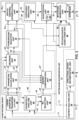
- FIG. 2 is a block diagram illustrating, in more detail, one example of the audio encoding device 20 shown in the example of FIG. 1 that may perform various aspects of the techniques described in this disclosure.
- the audio encoding device 20 includes a content analysis unit 26, a vector-based decomposition unit 27 and a directional-based decomposition unit 28.
- WO 2014/194099 entitled "INTERPOLATION FOR DECOMPOSED REPRESENTATIONS OF A SOUND FIELD," filed 29 May, 2014 .
- the vector-based decomposition unit 27 may include a linear invertible transform (LIT) unit 30, a parameter calculation unit 32, a reorder unit 34, a foreground selection unit 36, an energy compensation unit 38, a psychoacoustic audio coder unit 40, a bitstream generation unit 42, a soundfield analysis unit 44, a coefficient reduction unit 46, a background (BG) selection unit 48, a spatio-temporal interpolation unit 50, and a quantization unit 52.
- LIT linear invertible transform
- the V* matrix in the SVD mathematical expression referenced above is denoted as the conjugate transpose of the V matrix to reflect that SVD may be applied to matrices comprising complex numbers.
- the complex conjugate of the V matrix (or, in other words, the V* matrix) may be considered to be the transpose of the V matrix.
- the ambisonic coefficients 11B comprise real-numbers with the result that the V matrix is output through SVD rather than the V* matrix.
- reference to the V matrix should be understood to refer to the transpose of the V matrix where appropriate.
- the LIT unit 30 may perform SVD with respect to the ambisonic coefficients 11B to output US[ k ] vectors 33 (which may represent a combined version of the S vectors and the U vectors) having dimensions D: M x ( N +1) 2 , and V[ k ] vectors 35 having dimensions D: ( N +1) 2 x ( N +1) 2 .
- US[ k ] vectors 33 which may represent a combined version of the S vectors and the U vectors
- V[ k ] vectors 35 having dimensions D: ( N +1) 2 x ( N +1) 2 .
- Individual vector elements in the US[k] matrix may also be termed X PS ( k ) while individual vectors of the V[k] matrix may also be termed v (k).
- the LIT unit 30 may apply the linear invertible transform to derivatives of the ambisonic coefficients 11B.
- the LIT unit 30 may apply SVD with respect to a power spectral density matrix derived from the ambisonic coefficients 11B.
- the LIT unit 30 may potentially reduce the computational complexity of performing the SVD in terms of one or more of processor cycles and storage space, while achieving the same source audio encoding efficiency as if the SVD were applied directly to the ambisonic coefficients.
- the parameter calculation unit 32 may also determine the parameters for the previous frame, where the previous frame parameters may be denoted R [ k -1], ⁇ [ k -1], ⁇ [ k -1], r [ k -1] and e [ k -1], based on the previous frame of US[ k -1] vector and V[ k -1] vectors.
- the parameter calculation unit 32 may output the current parameters 37 and the previous parameters 39 to reorder unit 34.
- the reorder unit 34 may reorder (using, as one example, a Hungarian algorithm) the various vectors within the US[ k ] matrix 33 and the V[ k ] matrix 35 based on the current parameters 37 and the previous parameters 39 to output a reordered US[ k ] matrix 33' (which may be denoted mathematically as US [ k ]) and a reordered V[ k ] matrix 35' (which may be denoted mathematically as V [ k ]) to a foreground sound (or predominant sound - PS) selection unit 36 ("foreground selection unit 36") and an energy compensation unit 38.
- the soundfield analysis unit 44 may represent a unit configured to perform a soundfield analysis with respect to the ambisonic coefficients 11B so as to potentially achieve a target bitrate 41.
- the soundfield analysis unit 44 may, based on the analysis and/or on a received target bitrate 41, determine the total number of psychoacoustic coder instantiations (which may be a function of the total number of ambient or background channels (BG TOT ) and the number of foreground channels or, in other words, predominant channels.
- the total number of psychoacoustic coder instantiations can be denoted as numHOATransportChannels.
- the soundfield analysis unit 44 may select the number of background (or, in other words, ambient) channels and the number of foreground (or, in other words, predominant) channels based on the target bitrate 41, selecting more background and/or foreground channels when the target bitrate 41 is relatively higher (e.g., when the target bitrate 41 equals or is greater than 512 Kbps).
- the numHOATransportChannels may be set to 8 while the MinAmbHOAorder may be set to 1 in the header section of the bitstream.
- the foreground/predominant signals can be one of either vector-based or directional based signals, as described above.
- the information could thus be sent using a 5 bits syntax element (for 4 th order content), which may be denoted as "CodedAmbCoeffIdx.”
- the soundfield analysis unit 44 outputs the background channel information 43 and the ambisonic coefficients 11B to the background (BG) selection unit 36, the background channel information 43 to coefficient reduction unit 46 and the bitstream generation unit 42, and the nFG 45 to a foreground selection unit 36.
- the background selection unit 48 may represent a unit configured to determine background or ambient ambisonic coefficients 47 based on the background channel information (e.g., the background soundfield (N BG ) and the number (nBGa) and the indices (i) of additional BG ambisonic channels to send). For example, when N BG equals one, the background selection unit 48 may select the ambisonic coefficients 11B for each sample of the audio frame having an order equal to or less than one.
- the background channel information e.g., the background soundfield (N BG ) and the number (nBGa) and the indices (i) of additional BG ambisonic channels to send. For example, when N BG equals one, the background selection unit 48 may select the ambisonic coefficients 11B for each sample of the audio frame having an order equal to or less than one.
- the background selection unit 48 may, in this example, then select the ambisonic coefficients 11B having an index identified by one of the indices (i) as additional BG ambisonic coefficients, where the nBGa is provided to the bitstream generation unit 42 to be specified in the bitstream 21 so as to enable the audio decoding device, such as the audio decoding device 24 shown in the example of FIGS. 2 and 4 , to parse the background ambisonic coefficients 47 from the bitstream 21.
- the background selection unit 48 may then output the ambient ambisonic coefficients 47 to the energy compensation unit 38.
- the ambient ambisonic coefficients 47 may have dimensions D: M x [( N BG +1) 2 + nBGa ].
- the foreground selection unit 36 may represent a unit configured to select the reordered US[ k ] matrix 33' and the reordered V[ k ] matrix 35' that represent foreground or distinct components of the soundfield based on nFG 45 (which may represent a one or more indices identifying the foreground vectors).
- the foreground selection unit 36 may output nFG signals 49 (which may be denoted as a reordered US[ k ] 1, ..., nFG 49, FG 1 , ..., nfG [ k ] 49, or X PS 1 ..
- the foreground selection unit 36 may also output the reordered V[ k ] matrix 35' (or v (1 ..nFG ) ( k ) 35') corresponding to foreground components of the soundfield to the spatio-temporal interpolation unit 50, where a subset of the reordered V[ k ] matrix 35' corresponding to the foreground components may be denoted as foreground V[ k ] matrix 51 k (which may be mathematically denoted as V 1,...,n FG [ k ]) having dimensions D: ( N +1) 2 x nFG.
- the energy compensation unit 38 may represent a unit configured to perform energy compensation with respect to the ambient ambisonic coefficients 47 to compensate for energy loss due to removal of various ones of the ambisonic channels by the background selection unit 48.
- the energy compensation unit 38 may perform an energy analysis with respect to one or more of the reordered US[ k ] matrix 33', the reordered V[ k ] matrix 35', the nFG signals 49, the foreground V[ k ] vectors 51 k and the ambient ambisonic coefficients 47 and then perform energy compensation based on the energy analysis to generate energy compensated ambient ambisonic coefficients 47'.
- the energy compensation unit 38 may output the energy compensated ambient coefficients 47' to the psychoacoustic audio coder unit 40.
- the spatio-temporal interpolation unit 50 may represent a unit configured to receive the foreground V[ k ] vectors 51 k for the k th frame and the foreground V[ k -1] vectors 51 k -1 for the previous frame (hence the k-1 notation) and perform spatio-temporal interpolation to generate interpolated foreground V[ k ] vectors.
- the spatio-temporal interpolation unit 50 may recombine the nFG signals 49 with the foreground V[ k ] vectors 51 k to recover reordered foreground ambisonic coefficients.
- the spatio-temporal interpolation unit 50 may then divide the reordered foreground ambisonic coefficients by the interpolated V[ k ] vectors to generate interpolated nFG signals 49'.
- the spatio-temporal interpolation unit 50 may also output the foreground V[k] vectors 51 k that were used to generate the interpolated foreground V[ k ] vectors so that an audio decoding device, such as the audio decoding device 24, may generate the interpolated foreground V[ k ] vectors and thereby recover the foreground V[ k ] vectors 51 k .
- the foreground V[ k ] vectors 51 k used to generate the interpolated foreground V[ k ] vectors are denoted as the remaining foreground V[ k ] vectors 53.
- the spatio-temporal interpolation unit 50 may output the interpolated nFG signals 49' to the psychoacoustic audio coder unit 46 and the interpolated foreground V[ k ] vectors 51 k to the coefficient reduction unit 46.
- the coefficient reduction unit 46 may represent a unit configured to perform coefficient reduction with respect to the remaining foreground V[ k ] vectors 53 based on the background channel information 43 to output reduced foreground V[ k ] vectors 55 to the quantization unit 52.
- the reduced foreground V[ k ] vectors 55 may have dimensions D: [( N+ 1) 2 - ( N BG +1) 2 -BG TOT ] x nFG.
- the coefficient reduction unit 46 may, in this respect, represent a unit configured to reduce the number of coefficients in the remaining foreground V[ k ] vectors 53.
- coefficient reduction unit 46 may represent a unit configured to eliminate the coefficients in the foreground V[ k ] vectors (that form the remaining foreground V[ k ] vectors 53) having little to no directional information.
- the coefficients of the distinct or, in other words, foreground V[ k ] vectors corresponding to a first and zero order basis functions (which may be denoted as N BG ) provide little directional information and therefore can be removed from the foreground V-vectors (through a process that may be referred to as "coefficient reduction").
- coefficient reduction greater flexibility may be provided to not only identify the coefficients that correspond N BG but to identify additional ambisonic channels (which may be denoted by the variable TotalOfAddAmbHOAChan) from the set of [(N BG +1) 2 +1, (N+1) 2 ].
- the quantization unit 52 may represent a unit configured to perform any form of quantization to compress the reduced foreground V[ k ] vectors 55 to generate coded foreground V[ k ] vectors 57, outputting the coded foreground V[ k ] vectors 57 to the bitstream generation unit 42.
- the quantization unit 52 may represent a unit configured to compress a spatial component of the soundfield, i.e., one or more of the reduced foreground V[ k ] vectors 55 in this example.
- the quantization unit 52 may perform any one of the following 12 quantization modes, as indicated by a quantization mode syntax element denoted "NbitsQ":
- the quantization unit 52 may also perform predicted versions of any of the foregoing types of quantization modes, where a difference is determined between an element of (or a weight when vector quantization is performed) of the V-vector of a previous frame and the element (or weight when vector quantization is performed) of the V-vector of a current frame is determined.
- the quantization unit 52 may then quantize the difference between the elements or weights of the current frame and previous frame rather than the value of the element of the V-vector of the current frame itself.
- the psychoacoustic audio coder unit 40 included within the audio encoding device 20 may represent multiple instances of a psychoacoustic audio coder, each of which is used to encode a different audio object or ambisonic channel of each of the energy compensated ambient ambisonic coefficients 47' and the interpolated nFG signals 49' to generate encoded ambient ambisonic coefficients 59 and encoded nFG signals 61.
- the psychoacoustic audio coder unit 40 may output the encoded ambient ambisonic coefficients 59 and the encoded nFG signals 61 to the bitstream generation unit 42.
- ASICs application specific integrated circuits
- DSPs digital signal processors
- FPGAs field programmable logic arrays
- processor(s) of the audio encoding device 20 may be configured to execute, using the processing hardware thereof, software to perform the functionalities described above.
- Table 1 below is a syntax table providing details of example data that the audio encoding device 20 may signal to the audio decoding device 24 to provide the renderer information 2. Comment statements, which are bookended by "/*" and "*/" tags in Table 1, provide descriptive information of the corresponding syntax positioned adjacently thereto.
- Table 2 below is a syntax table providing details of another example of data that the audio encoding device 20 may signal to the audio decoding device 24 to provide the renderer information 2, in accordance with "soft" rendering aspects of this disclosure.
- comment statements which are bookended by "/*" and "*/" tags in Table 2 provide descriptive information of the corresponding syntax positioned adjacently thereto.
- the bitstream generation unit 42 of the audio encoding device 20 may provide the data represented in the bitstream 21 to an interface 73, which in turn may signal the data in the form of the bitstream 21 to an external device.
- the interface 73 may include, be, or be part of various types of communication hardware, such as a network interface card (e.g., an Ethernet card), an optical transceiver, a radio frequency transceiver, or any other type of device that can receive (and potentially send) information.
- a network interface card e.g., an Ethernet card
- an optical transceiver e.g., a radio frequency transceiver
- radio frequency transceiver e.g., Bluetooth ® , 3G, 4G, 5G, and WiFi ® radios.
- the interface 73 may also be implemented according to any version of the Universal Serial Bus (USB) standards.
- USB Universal Serial Bus
- the interface 73 enables the audio encoding device 20 to communicate wirelessly, or using wired connection, or a combination thereof, with external devices, such as network devices.
- the audio encoding device 20 may implement various techniques of this disclosure to provide renderer-related information to the audio decoding device 24 in or along with the bitstream 21. Further details on how the audio decoding device 24 may use the render-related information received in or along with the bitstream 21 are described below with respect to FIG. 3 .
- FIG. 3 is a block diagram illustrating the audio decoding device 24 of FIG. 1 in more detail.
- the audio decoding device 24 may include an extraction unit 72, a renderer reconstruction unit 81, a directionality-based reconstruction unit 90 and a vector-based reconstruction unit 92.
- the audio decoding device 24 includes an interface 91, which is configured to receive the bitstream 21 and relay the data thereof to the extraction unit 72.
- the interface 91 may include, be, or be part of various types of communication hardware, such as a network interface card (e.g., an Ethernet card), an optical transceiver, a radio frequency transceiver, or any other type of device that can receive (and potentially send) information.
- a network interface card e.g., an Ethernet card
- an optical transceiver e.g., an optical transceiver
- a radio frequency transceiver e.g., wireless local area network
- Other examples of such network interfaces that may be represented by the interface 91 include Bluetooth ® , 3G, 4G, 5G, and WiFi ® radios.
- the interface 91 may also be implemented according to any version of the Universal Serial Bus (USB) standards. As such, the interface 91 enables the audio decoding device 24 to communicate wirelessly, or using wired connection, or a combination thereof
- the extraction unit 72 may represent a unit configured to receive the bitstream 21 and extract the audio rendering information 2 and the various encoded versions (e.g., a directional-based encoded version or a vector-based encoded version) of the object-based audio data 11A and/or ambisonic coefficients 11B.
- various encoded versions e.g., a directional-based encoded version or a vector-based encoded version
- ambisonic rendering matrices transmission may be facilitated by means of the mpegh3daConfigExtension of Type ID_CONFIG_EXT_HOA_MATRIX shown above.
- the mpegh3daConfigExtension may contain several ambisonic rendering matrices for different loudspeaker reproduction configurations.
- the audio encoding device 20 signals, for each ambisonic rendering matrix signal, the associated target loudspeaker layout that determines together with the HoaOrder the dimensions of the rendering matrix.
- object-based rendering matrices are transmitted, the audio encoding device 20 signals, for each object-based rendering matrix signal, the associated target loudspeaker layout that determines the dimensions of the rendering matrix.
- Every ambisonic rendering matrix is assumed to be normalized in N3D and follows the ordering of the ambisonic coefficients as defined in the bitstream 21.
- the audio decoding device 24 may compare the received renderer ID to entries of a codebook. Upon detecting a match in the codebook, the audio decoding device 24 may select the matched audio renderer 22 for rendering the audio data 11 (whether in the object domain or in the ambisonic domain, as the case may be).
- renderer selection information e.g., ambisonic versus object-based renderer selection
- renderer identification information e.g., an entry in a codebook accessible to both the audio encoding device 20 and the audio decoding device 24
- the rendering matrices themselves from the bitstream 21 itself or from side channel / metadata thereof.
- the audio decoding device 24 may receive one or more of the following syntax elements in the bitstream 21: a RendererFlag_OBJ_HOA flag, a RendererFlag_Transmitted_Reference flag, or RendererFlag_ENTIRE_SEPARATE flag, a RendererFlag_External_Internal, or a rendererID syntax element.
- the audio decoding device 24 may leverage the value of the RendererFlag_OBJ_HOA flag to preserve the artistic intent of the content producer.
- the audio decoding device 24 may select an object-based renderer (OBJ renderer) from the audio renderers 22 for rendering the corresponding portion of the audio data 11' obtained from the bitstream 21. Conversely, if the audio decoding device 24 determines that that the value of the RendererFlag_OBJ_HOA flag is 0, then the audio decoding device 24 may select an ambisonic renderer) from the audio renderers 22 for rendering the corresponding portion of the audio data 11' obtained from the bitstream 21.
- OBJ renderer object-based renderer
- the audio decoding device 24 may use the value of the RendererFlag_ENTIRE_SEPARATE flag to determine the level at which the value of the RendererFlag_OBJ_HOA is applicable. For instance, if the audio decoding device 24 determines that the value of the RendererFlag_ENTIRE_SEPARATE flag is 1, then the audio decoding device 24 may render all of the audio objects of the bitstream 21 based on the value of a single instance of the RendererFlag_OBJ_HOA flag.
- the audio decoding device 24 may use the value of the RendererFlag_External_Internal flag to determine whether an external renderer or an internal renderer of the audio renderers 22 is to be used for rendering the corresponding portions of the bitstream 21. If the RendererFlag_External_Internal flag is set to a value of 1, the audio decoding device 24 may use an external renderer for rendering the corresponding audio data of the bitstream 21, provided that the external renderer is available.
- the audio decoding device 24 may use a reference renderer with ID 0 (as a default option) to render the corresponding audio data of the bitstream 21. If the RendererFlag_External_Internal flag is set to a value of 0, then the audio decoding device 24 may use an internal renderer of the audio renderers 22 to render the corresponding audio data of the bitstream 21.
- the audio decoding device 24 may determine that one of the reference renderer(s) of the audio renderers 22 is to be used for rendering the corresponding audio data of the bitstream 21.
- the audio encoding device 20 may signal a rendererID syntax element in the bitstream 21.
- the audio decoding device 24 may compare the value of the received rendererID syntax element to entries in a codebook. Upon detecting a match between the value of the received rendererID syntax element to a particular entry in the codebook, the audio decoding device 24: It indicates the renderer ID.
- the audio decoding device may parse a SoftRendererParameter_OBJ_HOA bit-field from the bitstream 21.
- the audio decoding device 24 may preserve the artistic intent of content producer based on the value(s) parsed from the bitstream 21 for the SoftRendererParameter_OBJ_HOA bit-field. For instance, according to the soft rendering techniques of this disclosure, the audio decoding device 24 may output a weighted combination of rendered object-domain audio data and rendered ambisonic-domain audio data.
- the audio decoding device 24 may use the RendererFlag_ENTIRE_SEPARATE flag, the RendererFlag_OBJ_HOA flag, the RendererFlag_External_Internal flag, the RendererFlag_Transmitted_Reference flag, and the rendererID syntax element in a manner similar to that described above with respect to other implementations of the renderer-selection techniques of this disclosure.
- the audio decoding device 24 may additionally parse an alpha syntax element to obtain a soft rendering parameter value.
- the value of the alpha syntax element may be set between a lower bound (floor) of 0.0 and an upper bound (ceiling) of 1.0.
- the audio decoding device may perform the following operation to obtain the rendering output: alpha * object renderer output + 1 ⁇ alpha * ambisonic renderer output
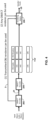
- FIG. 4 is a diagram illustrating an example of a workflow with respect to object-domain audio data. Additional details on conventional object-based audio data processing can be found in ISO/IEC FDIS 23008-3:2018(E), Information technology - High efficiency coding and media delivery in heterogeneous environments - Part 3: 3D audio.
- an object encoder 202 may perform object encoding (e.g., according to the MPEG-H 3D Audio encoding standard referenced directly above) with respect to input object audio and object metadata (which is another way to refer to object-domain audio data) to obtain the bitstream 21.
- the object encoder 202 may also output the renderer information 2 for an object renderer.
- An object decoder 204 (which may represent another example of the audio decoding device 24) may then perform audio decoding (e.g., according to the MPEG-H 3D Audio encoding standard referenced above) with respect to the bitstream 21 to obtain object-based audio data 11A'.
- the object decoder 204 may output the object-based audio data 11A' to a rendering matrix 206, which may represent an example of the audio renderers 22 shown in the example of FIG. 1 .
- the audio playback system 16 may apply select the rendering matrix 206 based on the rendering information 2 or from among any object renderer. In any event, the rendering matrix 206 may output, based on the object-based audio data 11A', the speaker feeds 25.
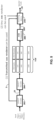
- FIG. 5 is a diagram illustrating an example of a workflow in which object-domain audio data is converted to the ambisonic domain and rendered using ambisonic renderer(s). That is, the audio playback system 16 invokes an ambisonic conversion unit 208 to convert the object-based audio data 11A' from the spatial domain to the spherical harmonic domain and thereby obtain ambisonic coefficients 209 (and possibly HOA coefficient 209). The audio playback system 16 may then select rendering matrix 210, which is configured to render ambisonic audio data, including the ambisonic coefficients 209, to obtain speaker feeds 25.
- an audio rendering device may apply the following steps:
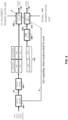
- FIG. 6 is a diagram illustrating a workflow of this disclosure, according to which a renderer type is signaled from the audio encoding device 202 to the audio decoding device 204.
- the audio encoding device 202 may transmit, to the audio decoding device 204, information regarding which type of renderer shall be used for rendering the audio data of the bitstream 21.
- the audio decoding device 24 may use the signaled information (stored as the audio rendering information 2) to select any object renderer or any ambisonic renderer available at the decoder end, e.g., a first order ambisonic renderer or a higher order ambisonic renderer.
- the workflow illustrated in FIG. 6 may use the RendererFlag_OBJ_HOA flag described above with respect to Tables 1 and 2.
- the workflow illustrated in FIG. 6 may use the RendererFlag_OBJ_HOA flag and the rendererID syntax element described above with respect to Tables 1 and 2.
- the workflow illustrated in FIG. 7 may be particularly useful in scenarios in which the audio renderers 22 include multiple ambisonic renderers and/or multiple object-based renderers to select from.
- the audio decoding device 204 may match the value of the rendererID syntax element to an entry in a codebook to determine which particular audio renderer 22 to use for rendering the audio data 11'.
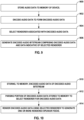
- FIG. 9 is a flowchart illustrating example operation of the audio encoding device of FIG. 1 in performing example operation of the rendering techniques described in this disclosure.
- the audio encoding device 20 may store audio data 11 to a memory of a device (900). Next, the audio encoding device 20 may encode the audio data 11 to form encoded audio data (which is shown as the bitstream 21 in the example of FIG. 1 ) (902).
- the audio encoding device 20 may select a renderer 1 associated with the encoded audio data 21 (904), where the selected renderer may include one of an object-based renderer or an ambisonic renderer.
- the audio encoding device 20 may then generate an encoded audio bitstream 21 comprising the encoded audio data and data indicative of the selected renderer (e.g., the rendering information 2) (906).
- FIG. 10 is a flowchart illustrating example operation of the audio decoding device of FIG. 1 in performing example operation of the rendering techniques described in this disclosure.
- the audio decoding device 24 may first store, to a memory of encoded audio data 11' of an encoded audio bitstream 21 (910).
- the audio decoding device 24 may then parse a portion of the encoded audio data stored to the memory to select a renderer for the encoded audio data 11' (912), where the selected renderer may include one of an object-based renderer or a ambisonic renderer.
- the renderers 22 are incorporated within the audio decoding device 24.
- the audio encoding device 24 may apply one or more renderers to the encoded audio data 11' to render the encoded audio data 11' using the selected renderer 22 to generate one or more rendered speaker feeds 25 (914).
- the acquisition elements may include wired and/or wireless acquisition devices (e.g., Eigen microphones or EigenMike ® microphones), on-device surround sound capture, and mobile devices (e.g., smartphones and tablets).
- wired and/or wireless acquisition devices may be coupled to mobile device via wired and/or wireless communication channel(s).
- this disclosure is directed to a device for rendering audio data.
- the device includes a memory and one or more processors in communication with the memory.
- the memory is configured to store encoded audio data of an encoded audio bitstream.
- the one or more processors are configured to parse a portion of the encoded audio data stored to the memory to select a renderer for the encoded audio data, the selected renderer comprising one of an object-based renderer or a ambisonic renderer, and to render the encoded audio data using the selected renderer to generate one or more rendered speaker feeds.
- the device includes an interface in communication with the memory. In these implementations, the interface is configured to receive the encoded audio bitstream.
- the device includes one or more loudspeakers in communication with the one or more processors. In these implementations, the one or more loudspeakers are configured to output the one or more rendered speaker feeds.
- the one or more processors are configured to parse a RendererFlag_ENTIRE_SEPARATE flag, to determine, based on a value of the RendererFlag_ENTIRE_SEPARATE flag being equal to 1, that the value of the RendererFlag_OBJ_HOA applies to all objects of the encoded audio data rendered by the one or more processors, and to determine, based on a value of the RendererFlag_ENTIRE_SEPARATE flag being equal to 0, that the value of the RendererFlag_OBJ_HOA applies to only a single object of the encoded audio data rendered by the one or more processors.
- the one or more processors are further configured to obtain a rendering matrix from the parsed portion of the encoded audio data, the obtained rendering matrix representing the selected renderer. In some examples, the one or more processors are further configured to obtain a rendererID syntax element from the parsed portion of the encoded audio data. In some examples, the one or more processors are further configured to select the renderer by matching a value of the rendererID syntax element to an entry of multiple entries of a codebook.
- the one or more processors are further configured to obtain a SoftRendererParameter_OBJ_HOA flag from the parsed portion of the encoded audio data, to determine, based on a value of the SoftRendererParameter_OBJ_HOA flag, that portions of the encoded audio data are to be rendered using the object-based renderer and the ambisonic renderer, and to generate the one or more rendered speaker feeds using a weighted combination of rendered object-domain audio data and rendered ambisonic-domain audio data obtained from the portions of the encoded audio data.
- the one or more processors are further configured to determine a weighting associated with the weighted combination based on a value of an alpha syntax element obtained from the parsed portion of the encoded video data.
- the selected renderer is the ambisonic renderer
- the one or more processors are further configured to decode a portion of the encoded audio data stored to the memory to reconstruct decoded object-based audio data and object metadata associated with the decoded object-based audio data, to convert the decoded object-based audio and the object metadata into an ambisonic domain to form ambisonic-domain audio data, and to render the ambisonic-domain audio data using the ambisonic renderer to generate the one or more rendered speaker feeds.
- the one or more processors are configured to obtain a rendering matrix from the parsed portion of the encoded audio data, the obtained rendering matrix representing the selected renderer, to parse a RendererFlag_Transmitted_Reference flag, to use, based on a value of the RendererFlag_Transmitted_Reference flag being equal to 1, the obtained rendering matrix to render the encoded audio data, and to use, based on a value of the RendererFlag_Transmitted_Reference flag being equal to 0, a reference renderer to render the encoded audio data.
- the one or more processors are configured to obtain a rendering matrix from the parsed portion of the encoded audio data, the obtained rendering matrix representing the selected renderer, to parse a RendererFlag_External_Internal flag, to determine, based on a value of the RendererFlag_External_Internal flag being equal to 1, that the selected renderer is an external renderer, and to determine, based on the value of the RendererFlag_External_Internal flag being equal to 0, that the selected renderer is an external renderer.
- the value of the RendererFlag_External_Internal flag is equal to 1, and the one or more processors are configured to determine that the external renderer is unavailable for rendering the encoded audio data, and to determine, based on the external renderer being unavailable for rendering the encoded audio data, that the selected renderer is a reference renderer.
- this disclosure is directed to a device for encoding audio data.
- the device includes a memory, and one or more processors in communication with the memory.
- the memory is configured to store audio data.
- the one or more processors are configured to encode the audio data to form encoded audio data, to select a renderer associated with the encoded audio data, the selected renderer comprising one of an object-based renderer or a ambisonic renderer, and to generate an encoded audio bitstream comprising the encoded audio data and data indicative of the selected renderer.
- the device includes one or more microphones in communication with the memory. In these implementations, the one or more microphones are configured to receive the audio data.
- the device includes and interface in communication with the one or more processors. In these implementations, the interface is configured to signal the encoded audio bitstream.
- the one or more processors are further configured to include a rendererID syntax element in the encoded audio bitstream. In some examples, a value of the rendererID syntax element matches an entry of multiple entries of a codebook accessible to the one or more processors. In some examples, the one or more processors are further configured to determine that portions of the encoded audio data are to be rendered using the object-based renderer and the ambisonic renderer, and to include a SoftRendererParameter_OBJ_HOA flag in the encoded audio bitstream based on the determination that the portions of the encoded audio data are to be rendered using the object-based renderer and the ambisonic renderer.
- the one or more processors are further configured to determine a weighting associated with the SoftRendererParameter_OBJ_HOA flag; and include an alpha syntax element indicative of the weighting in the encoded audio bitstream.
- the one or more processors are configured to include a RendererFlag_Transmitted_Reference flag in the encoded audio bitstream, and to include, based on a value of the RendererFlag_Transmitted_Reference flag being equal to 1, a rendering matrix in the encoded audio bitstream, the rendering matrix representing the selected renderer.
- the mobile device may be used to acquire a soundfield.
- the mobile device may acquire a soundfield via the wired and/or wireless acquisition devices and/or the on-device surround sound capture (e.g., a plurality of microphones integrated into the mobile device).
- the mobile device may then code the acquired soundfield into the ambisonic coefficients for playback by one or more of the playback elements.
- a user of the mobile device may record (acquire a soundfield of) a live event (e.g., a meeting, a conference, a play, a concert, etc.), and code the recording into ambisonic coefficients.
- a live event e.g., a meeting, a conference, a play, a concert, etc.
- the mobile device may also utilize one or more of the playback elements to playback the ambisonic coded soundfield. For instance, the mobile device may decode the ambisonic coded soundfield and output a signal to one or more of the playback elements that causes the one or more of the playback elements to recreate the soundfield.
- the mobile device may utilize the wireless and/or wireless communication channels to output the signal to one or more speakers (e.g., speaker arrays, sound bars, etc.).
- the mobile device may utilize docking solutions to output the signal to one or more docking stations and/or one or more docked speakers (e.g., sound systems in smart cars and/or homes).
- the mobile device may utilize headphone rendering to output the signal to a set of headphones, e.g., to create realistic binaural sound.
- a particular mobile device may both acquire a 3D soundfield and playback the same 3D soundfield at a later time.
- the mobile device may acquire a 3D soundfield, encode the 3D soundfield into ambisonic coefficients, and transmit the encoded 3D soundfield to one or more other devices (e.g., other mobile devices and/or other non-mobile devices) for playback.
- an audio ecosystem may include audio content, game studios, coded audio content, rendering engines, and delivery systems.
- the game studios may include one or more DAWs which may support editing of ambisonic signals.
- the one or more DAWs may include ambisonic plugins and/or tools which may be configured to operate with (e.g., work with) one or more game audio systems.
- the game studios may output new stem formats that support ambisonic.
- the game studios may output coded audio content to the rendering engines which may render a soundfield for playback by the delivery systems.
- the techniques may also be performed with respect to exemplary audio acquisition devices.
- the techniques may be performed with respect to an EigenMike ® microphone which may include a plurality of microphones that are collectively configured to record a 3D soundfield.
- the plurality of microphones of EigenMike ® microphone may be located on the surface of a substantially spherical ball with a radius of approximately 4cm.
- the audio encoding device 20 may be integrated into the Eigen microphone so as to output a bitstream 21 directly from the microphone.
- Another exemplary audio acquisition context may include a production truck which may be configured to receive a signal from one or more microphones, such as one or more EigenMike ® microphones.
- the production truck may also include an audio encoder, such as the audio encoding device 20 of FIGS. 2 and 3 .
- the mobile device may also, in some instances, include a plurality of microphones that are collectively configured to record a 3D soundfield.
- the plurality of microphone may have X, Y, Z diversity.
- the mobile device may include a microphone which may be rotated to provide X, Y, Z diversity with respect to one or more other microphones of the mobile device.
- the mobile device may also include an audio encoder, such as the audio encoding device 20 of FIGS. 2 and 3 .
- a ruggedized video capture device may further be configured to record a 3D soundfield.
- the ruggedized video capture device may be attached to a helmet of a user engaged in an activity.
- the ruggedized video capture device may be attached to a helmet of a user whitewater rafting.
- the ruggedized video capture device may capture a 3D soundfield that represents the action all around the user (e.g., water crashing behind the user, another rafter speaking in front of the user, etc).
- the techniques may also be performed with respect to an accessory enhanced mobile device, which may be configured to record a 3D soundfield.
- the mobile device may be similar to the mobile devices discussed above, with the addition of one or more accessories.
- an Eigen microphone may be attached to the above noted mobile device to form an accessory enhanced mobile device.
- the accessory enhanced mobile device may capture a higher quality version of the 3D soundfield than just using sound capture components integral to the accessory enhanced mobile device.
- Example audio playback devices that may perform various aspects of the techniques described in this disclosure are further discussed below.
- speakers and/or sound bars may be arranged in any arbitrary configuration while still playing back a 3D soundfield.
- headphone playback devices may be coupled to a decoder 24 via either a wired or a wireless connection.
- a single generic representation of a soundfield may be utilized to render the soundfield on any combination of the speakers, the sound bars, and the headphone playback devices.
- a number of different example audio playback environments may also be suitable for performing various aspects of the techniques described in this disclosure.
- a 5.1 speaker playback environment a 2.0 (e.g., stereo) speaker playback environment, a 9.1 speaker playback environment with full height front loudspeakers, a 22.2 speaker playback environment, a 16.0 speaker playback environment, an automotive speaker playback environment, and a mobile device with ear bud playback environment may be suitable environments for performing various aspects of the techniques described in this disclosure.
- a single generic representation of a soundfield may be utilized to render the soundfield on any of the foregoing playback environments.
- the techniques of this disclosure enable a rendered to render a soundfield from a generic representation for playback on the playback environments other than that described above. For instance, if design considerations prohibit proper placement of speakers according to a 7.1 speaker playback environment (e.g., if it is not possible to place a right surround speaker), the techniques of this disclosure enable a render to compensate with the other 6 speakers such that playback may be achieved on a 6.1 speaker playback environment.
- the audio encoding device 20 may perform a method or otherwise comprise means to perform each step of the method for which the audio encoding device 20 is configured to perform.
- the means may comprise processing circuitry (e.g., fixed function circuitry and/or programmable processing circuitry) and/or one or more processors.
- the one or more processors may represent a special purpose processor configured by way of instructions stored to a non-transitory computer-readable storage medium.
Landscapes
- Engineering & Computer Science (AREA)
- Physics & Mathematics (AREA)
- Acoustics & Sound (AREA)
- Signal Processing (AREA)
- Multimedia (AREA)
- Computational Linguistics (AREA)
- Audiology, Speech & Language Pathology (AREA)
- Human Computer Interaction (AREA)
- Health & Medical Sciences (AREA)
- Spectroscopy & Molecular Physics (AREA)
- Mathematical Physics (AREA)
- Stereophonic System (AREA)
- Circuit For Audible Band Transducer (AREA)
Claims (15)
- Gerät (12, 18; 202) zum Encodieren von Audiodaten, wobei das Gerät Folgendes umfasst:einen Speicher, der zum Speichern der Audiodaten konfiguriert ist; undeinen oder mehrere Prozessoren in Kommunikation mit dem Speicher, wobei die ein oder mehreren Prozessoren konfiguriert sind zum:Encodieren der Audiodaten zum Bilden von encodierten Audiodaten;Auswählen eines mit den encodierten Audiodaten assoziierten Renderers (1); undErzeugen eines encodierten Audiobitstroms (21), der die encodierten Audiodaten und den ausgewählten Renderer angebende Daten umfasst;dadurch gekennzeichnet, dassder ausgewählte Renderer einen objektbasierten Renderer oder einen Ambisonic-Renderer umfasst; undwobei die ein oder mehreren Prozessoren ferner so konfiguriert sind, dass sie die den ausgewählten Renderer angebenden Daten in Metadaten der encodierten Audiodaten aufnehmen.
- Gerät nach Anspruch 1, wobei die ein oder mehreren Prozessoren Verarbeitungsschaltung und/oder eine anwendungsspezifische integrierte Schaltung, ASIC, umfassen.
- Gerät nach Anspruch 1 oder 2, wobei die ein oder mehreren Prozessoren ferner zum Aufnehmen eines RendererFlag_OBJ_HOA-Flags in den encodierten Audiobitstrom (21) konfiguriert sind, wobei ein Wert eines RendererFlag_OBJ_HOA-Flags den ausgewählten Renderer (1) angibt; und
wobei die ein oder mehreren Prozessoren insbesondere ferner konfiguriert sind zum:Setzen eines Wertes eines RendererFlag_ENTIRE_SEPARATE-Flags auf 1 auf der Basis einer Feststellung, dass der Wert des RendererFlag_OBJ_HOA für alle Objekte des encodierten Audiobitstroms gilt;Setzen des Wertes des RendererFlag_ENTIRE_SEPARATE-Flags auf 0 auf der Basis einer Feststellung, dass der Wert des RendererFlag_OBJ_HOA nur für ein einzelnes Objekt des encodierten Audiobitstroms gilt; undAufnehmen des RendererFlag_OBJ_HOA-Flags in den encodierten Audiobitstrom (21). - Gerät nach einem der Ansprüche 1 bis 3, wobei die ein oder mehreren Prozessoren ferner konfiguriert sind zum:Aufnehmen einer Rendering-Matrix (206, 210) in den encodierten Audiobitstrom (21), wobei die Rendering-Matrix den ausgewählten Renderer (1) darstellt; oderAufnehmen eines RendererID-Syntaxelements in den encodierten Audiobitstrom (21), wobei ein Wert des RendererID-Syntaxelements insbesondere mit einem von mehreren Einträgen eines Codebuchs übereinstimmt, auf das die ein oder mehreren Prozessoren zugreifen können.
- Gerät nach einem der Ansprüche 1 bis 4, wobei die ein oder mehreren Prozessoren ferner konfiguriert sind zum:Feststellen, dass Teile der encodierten Audiodaten mit Hilfe des objektbasierten Renderers und des Ambisonic-Renderers gerendert werden sollen; undAufnehmen eines SoftRendererParameter_OBJ_HOA-Flags in den encodierten Audiobitstrom (21) auf der Basis der Feststellung, dass die Teile der encodierten Audiodaten mit Hilfe des objektbasierten Renderers und des Ambisonic-Renderers gerendert werden sollen;wobei die ein oder mehreren Prozessoren insbesondere ferner konfiguriert sind zum:Bestimmen einer mit dem SoftRendererParameter_OBJ_HOA-Flag assoziierten Gewichtung; undAufnehmen eines die Gewichtung angebenden Alpha-Syntaxelements in den encodierten Audiobitstrom (21).
- Gerät nach einem der Ansprüche 1 bis 5, wobei die ein oder mehreren Prozessoren konfiguriert sind zum:Aufnehmen eines RendererFlag_Transmitted_Reference-Flags in den encodierten Audiobitstrom (21); undAufnehmen, auf der Basis davon, dass ein Wert des RendererFlag_Transmitted_Reference-Flags gleich 1 ist, einer Rendering-Matrix (206, 210) in den encodierten Audiobitstrom (21), wobei die Rendering-Matrix den ausgewählten Renderer (1) darstellt.
- Gerät nach einem der Ansprüche 1 bis 6, wobei die ein oder mehreren Prozessoren konfiguriert sind zum:Setzen eines Wertes eines RendererFlag_External_Internal-Flags auf 1 auf der Basis einer Feststellung, dass der ausgewählte Renderer ein externer Renderer ist;Setzen des Wertes des RendererFlag_External_Internal-Flags auf 0 auf der Basis einer Feststellung, dass der ausgewählte Renderer ein interner Renderer ist; undAufnehmen des RendererFlag_External_Internal-Flags in den encodierten Audiobitstrom (21).
- Gerät nach einem der Ansprüche 1 bis 7, das ferner Folgendes umfasst:ein oder mehrere Mikrofone (5) in Kommunikation mit dem Speicher, wobei die ein oder mehreren Mikrofone zum Empfangen der Audiodaten (7) konfiguriert sind; und/odereine Schnittstelle (73) in Kommunikation mit den ein oder mehreren Prozessoren, wobei die Schnittstelle Kommunikationshardware umfasst, die zum Signalisieren des encodierten Audiobitstroms (21) an ein externes Gerät konfiguriert ist.
- Verfahren zum Encodieren von Audiodaten, wobei das Verfahren Folgendes beinhaltet:Speichern (900) von Audiodaten in einem Speicher eines Geräts (12, 18, 20; 202);Encodieren (902), durch einen oder mehrere Prozessoren des Geräts, der Audiodaten zum Bilden encodierter Audiodaten;Auswählen (904), durch die ein oder mehreren Prozessoren des Geräts, eines mit den encodierten Audiodaten assoziierten Renderers (1); undErzeugen (906), durch die ein oder mehreren Prozessoren des Geräts, eines encodierten Audiobitstroms (21), der die encodierten Audiodaten und die den ausgewählten Renderer angebenden Daten umfasst;gekennzeichnet durchAufnehmen, durch die ein oder mehreren Prozessoren des Geräts, der den ausgewählten Renderer angebenden Daten in Metadaten der encodierten Audiodaten;wobei der ausgewählte Renderer einen objektbasierten Renderer oder einen Ambisonic-Renderer umfasst.
- Verfahren nach Anspruch 9, das ferner Folgendes beinhaltet:Signalisieren des encodierten Audiobitstroms (21) durch eine Schnittstelle (73) des Geräts; und/oderEmpfangen der Audiodaten (7) durch ein oder mehrere Mikrofone (5) des Geräts.
- Verfahren nach Anspruch 9 oder 10, das ferner Folgendes beinhaltet:Aufnehmen, durch die ein oder mehreren Prozessoren des Geräts, eines RendererFlag_OBJ_HOA-Flags in den encodierten Audiobitstrom (21), wobei ein Wert eines RendererFlag_OBJ_HOA-Flags den ausgewählten Renderer (1) angibt; unddas optional ferner Folgendes beinhaltet:Setzen, durch die ein oder mehreren Prozessoren des Geräts, eines Wertes eines RendererFlag_ENTIRE_SEPARATE-Flags auf 1 auf der Basis einer Feststellung, dass der Wert des RendererFlag_OBJ_HOA für alle Objekte des encodierten Audiobitstroms gilt;Setzen, durch die ein oder mehreren Prozessoren des Geräts, des Wertes des RendererFlag_ENTIRE_SEPARATE-Flags auf 0 auf der Basis einer Feststellung, dass der Wert des RendererFlag_OBJ_HOA nur für ein einzelnes Objekt des encodierten Audiobitstroms gilt; undAufnehmen, durch die ein oder mehreren Prozessoren des Geräts, des RendererFlag_OBJ_HOA-Flags in den encodierten Audiobitstrom (21).
- Verfahren nach einem der Ansprüche 9 bis 11, das ferner Folgendes beinhaltet:Aufnehmen, durch die ein oder mehreren Prozessoren des Geräts, einer Rendering-Matrix (206, 210) in den encodierten Audiobitstrom (21), wobei die Rendering-Matrix den ausgewählten Renderer (1) darstellt; oderAufnehmen, durch die ein oder mehreren Prozessoren des Geräts, eines RendererID-Syntaxelements in den encodierten Audiobitstrom (21), wobei ein Wert des RendererID-Syntaxelements insbesondere mit einem von mehreren Einträgen eines Codebuchs übereinstimmt, auf das die ein oder mehreren Prozessoren zugreifen können.
- Verfahren nach einem der Ansprüche 9 bis 12, das ferner Folgendes beinhaltet:Feststellen, durch die ein oder mehreren Prozessoren des Geräts, dass Teile der encodierten Audiodaten mit Hilfe des objektbasierten Renderers und des Ambisonic-Renderers gerendert werden sollen; undAufnehmen, durch die ein oder mehreren Prozessoren des Geräts, eines SoftRendererParameter_OBJ_HOA-Flags in den encodierten Audiobitstrom (21) auf der Basis der Feststellung, dass die Teile der encodierten Audiodaten mit Hilfe des objektbasierten Renderers und des Ambisonic-Renderers gerendert werden sollen;das ferner optional Folgendes beinhaltet:Bestimmen, durch die ein oder mehreren Prozessoren des Geräts, einer mit dem SoftRendererParameter_OBJ_HOA-Flag assoziierten Gewichtung; undAufnehmen, durch die ein oder mehreren Prozessoren des Geräts, eines die Gewichtung angebenden Alpha-Syntaxelements in den encodierten Audiobitstrom (21).
- Verfahren nach einem der Ansprüche 9 bis 13, das ferner Folgendes beinhaltet:Aufnehmen, durch die ein oder mehreren Prozessoren des Geräts, eines RendererFlag_Transmitted_Reference-Flags in den encodierten Audiobitstrom (21); undAufnehmen, durch die ein oder mehreren Prozessoren des Geräts, auf der Basis davon, dass ein Wert des RendererFlag_Transmitted_Reference-Flags gleich 1 ist, einer Rendering-Matrix (206, 210) in den encodierten Audiobitstrom (21), wobei die Rendering-Matrix den ausgewählten Renderer (1) darstellt.
- Verfahren nach einem der Ansprüche 9 bis 14, das ferner Folgendes beinhaltet:Setzen, durch die ein oder mehreren Prozessoren des Geräts, eines Wertes eines RendererFlag_External_Internal-Flags auf 1 auf der Basis einer Feststellung, dass der ausgewählte Renderer ein externer Renderer ist;Setzen, durch die ein oder mehreren Prozessoren des Geräts, des Wertes des RendererFlag_External_Internal-Flags auf 0 auf der Basis einer Feststellung, dass der ausgewählte Renderer ein interner Renderer ist; undAufnehmen, durch die ein oder mehreren Prozessoren des Geräts, des RendererFlag_External_Internal-Flags in den encodierten Audiobitstrom (21).
Applications Claiming Priority (4)
| Application Number | Priority Date | Filing Date | Title |
|---|---|---|---|
| US201862740260P | 2018-10-02 | 2018-10-02 | |
| US16/582,910 US11798569B2 (en) | 2018-10-02 | 2019-09-25 | Flexible rendering of audio data |
| PCT/US2019/053237 WO2020072275A1 (en) | 2018-10-02 | 2019-09-26 | Flexible rendering of audio data |
| EP19789810.9A EP3861766B1 (de) | 2018-10-02 | 2019-09-26 | Flexible wiedergabe von audiodaten |
Related Parent Applications (1)
| Application Number | Title | Priority Date | Filing Date |
|---|---|---|---|
| EP19789810.9A Division EP3861766B1 (de) | 2018-10-02 | 2019-09-26 | Flexible wiedergabe von audiodaten |
Publications (3)
| Publication Number | Publication Date |
|---|---|
| EP4164253A1 EP4164253A1 (de) | 2023-04-12 |
| EP4164253B1 true EP4164253B1 (de) | 2025-07-02 |
| EP4164253C0 EP4164253C0 (de) | 2025-07-02 |
Family
ID=69946424
Family Applications (2)
| Application Number | Title | Priority Date | Filing Date |
|---|---|---|---|
| EP19789810.9A Active EP3861766B1 (de) | 2018-10-02 | 2019-09-26 | Flexible wiedergabe von audiodaten |
| EP22198798.5A Active EP4164253B1 (de) | 2018-10-02 | 2019-09-26 | Flexible wiedergabe von audiodaten |
Family Applications Before (1)
| Application Number | Title | Priority Date | Filing Date |
|---|---|---|---|
| EP19789810.9A Active EP3861766B1 (de) | 2018-10-02 | 2019-09-26 | Flexible wiedergabe von audiodaten |
Country Status (5)
| Country | Link |
|---|---|
| US (1) | US11798569B2 (de) |
| EP (2) | EP3861766B1 (de) |
| CN (1) | CN112771892B (de) |
| TW (2) | TWI893553B (de) |
| WO (1) | WO2020072275A1 (de) |
Families Citing this family (5)
| Publication number | Priority date | Publication date | Assignee | Title |
|---|---|---|---|---|
| US11430451B2 (en) * | 2019-09-26 | 2022-08-30 | Apple Inc. | Layered coding of audio with discrete objects |
| US20240096335A1 (en) * | 2022-09-21 | 2024-03-21 | Apple Inc. | Object Audio Coding |
| CN115691571B (zh) * | 2022-11-01 | 2025-02-11 | 抖音视界有限公司 | 音视频编辑方法、装置、电子设备及存储介质 |
| US12495272B2 (en) * | 2022-12-23 | 2025-12-09 | Fraunhofer-Gesellschaft Zur Foerderung Der Angewandten Forschung E.V. | Apparatus and method for converting geometry data for AR/VR systems |
| WO2025232857A1 (en) * | 2024-05-10 | 2025-11-13 | Douyin Vision Co., Ltd. | Audio processing method and apparatus |
Family Cites Families (15)
| Publication number | Priority date | Publication date | Assignee | Title |
|---|---|---|---|---|
| ES2733878T3 (es) | 2008-12-15 | 2019-12-03 | Orange | Codificación mejorada de señales de audio digitales multicanales |
| CN107071687B (zh) | 2012-07-16 | 2020-02-14 | 杜比国际公司 | 用于渲染音频声场表示以供音频回放的方法和设备 |
| US9761229B2 (en) | 2012-07-20 | 2017-09-12 | Qualcomm Incorporated | Systems, methods, apparatus, and computer-readable media for audio object clustering |
| US9913064B2 (en) | 2013-02-07 | 2018-03-06 | Qualcomm Incorporated | Mapping virtual speakers to physical speakers |
| US9609452B2 (en) | 2013-02-08 | 2017-03-28 | Qualcomm Incorporated | Obtaining sparseness information for higher order ambisonic audio renderers |
| US9883310B2 (en) | 2013-02-08 | 2018-01-30 | Qualcomm Incorporated | Obtaining symmetry information for higher order ambisonic audio renderers |
| RU2667630C2 (ru) | 2013-05-16 | 2018-09-21 | Конинклейке Филипс Н.В. | Устройство аудиообработки и способ для этого |
| US20140355769A1 (en) | 2013-05-29 | 2014-12-04 | Qualcomm Incorporated | Energy preservation for decomposed representations of a sound field |
| US20150243292A1 (en) | 2014-02-25 | 2015-08-27 | Qualcomm Incorporated | Order format signaling for higher-order ambisonic audio data |
| US20150264483A1 (en) | 2014-03-14 | 2015-09-17 | Qualcomm Incorporated | Low frequency rendering of higher-order ambisonic audio data |
| JP6297721B2 (ja) | 2014-05-30 | 2018-03-20 | クゥアルコム・インコーポレイテッドQualcomm Incorporated | 高次アンビソニックオーディオレンダラのための希薄情報を取得すること |
| US20170347219A1 (en) * | 2016-05-27 | 2017-11-30 | VideoStitch Inc. | Selective audio reproduction |
| CN109891502B (zh) | 2016-06-17 | 2023-07-25 | Dts公司 | 一种近场双耳渲染方法、系统及可读存储介质 |
| US10356545B2 (en) * | 2016-09-23 | 2019-07-16 | Gaudio Lab, Inc. | Method and device for processing audio signal by using metadata |
| US10405126B2 (en) | 2017-06-30 | 2019-09-03 | Qualcomm Incorporated | Mixed-order ambisonics (MOA) audio data for computer-mediated reality systems |
-
2019
- 2019-09-25 US US16/582,910 patent/US11798569B2/en active Active
- 2019-09-26 EP EP19789810.9A patent/EP3861766B1/de active Active
- 2019-09-26 TW TW112147169A patent/TWI893553B/zh active
- 2019-09-26 WO PCT/US2019/053237 patent/WO2020072275A1/en not_active Ceased
- 2019-09-26 TW TW108134887A patent/TWI827687B/zh active
- 2019-09-26 CN CN201980063638.0A patent/CN112771892B/zh active Active
- 2019-09-26 EP EP22198798.5A patent/EP4164253B1/de active Active
Also Published As
| Publication number | Publication date |
|---|---|
| EP4164253A1 (de) | 2023-04-12 |
| TWI827687B (zh) | 2024-01-01 |
| TWI893553B (zh) | 2025-08-11 |
| EP4164253C0 (de) | 2025-07-02 |
| US11798569B2 (en) | 2023-10-24 |
| EP3861766B1 (de) | 2022-10-19 |
| EP3861766A1 (de) | 2021-08-11 |
| TW202029185A (zh) | 2020-08-01 |
| WO2020072275A1 (en) | 2020-04-09 |
| CN112771892B (zh) | 2022-08-23 |
| US20200105282A1 (en) | 2020-04-02 |
| CN112771892A (zh) | 2021-05-07 |
| TW202429445A (zh) | 2024-07-16 |
Similar Documents
| Publication | Publication Date | Title |
|---|---|---|
| US9870778B2 (en) | Obtaining sparseness information for higher order ambisonic audio renderers | |
| US9747911B2 (en) | Reuse of syntax element indicating vector quantization codebook used in compressing vectors | |
| US9883310B2 (en) | Obtaining symmetry information for higher order ambisonic audio renderers | |
| EP3165001B1 (de) | Reduzierung der korrelation zwischen high-order-ambisonics (hoa)-hintergrundkanälen | |
| CN106104680B (zh) | 将音频信道插入到声场的描述中 | |
| US9847088B2 (en) | Intermediate compression for higher order ambisonic audio data | |
| EP4164253B1 (de) | Flexible wiedergabe von audiodaten | |
| EP3143616B1 (de) | Auswahl von codebüchern zur decodierung von zerlegten vektoren aus ambisonic-tonsignalen höherer ordnung | |
| EP3143615B1 (de) | Entscheiden zwischen skalar- und vektorquantisierung in ambisonic-koeffizienten höherer ordnung | |
| US20150332682A1 (en) | Spatial relation coding for higher order ambisonic coefficients | |
| EP3143618B1 (de) | Closed-loop-quantifizierung von ambisonic-koeffizienten höherer ordnung | |
| US20150243292A1 (en) | Order format signaling for higher-order ambisonic audio data | |
| EP3363213B1 (de) | Codierung higher-order-ambisoncis-koeffizienten während mehrerer übergänge | |
| EP3149971B1 (de) | Gewinnung von spärlichkeitsinformationen für ambisonic-audiorenderer höherer ordnung | |
| EP3149972B1 (de) | Gewinnung von symmetrieinformationen für ambisonic-audiorenderer höherer ordnung |
Legal Events
| Date | Code | Title | Description |
|---|---|---|---|
| PUAI | Public reference made under article 153(3) epc to a published international application that has entered the european phase |
Free format text: ORIGINAL CODE: 0009012 |
|
| STAA | Information on the status of an ep patent application or granted ep patent |
Free format text: STATUS: THE APPLICATION HAS BEEN PUBLISHED |
|
| AC | Divisional application: reference to earlier application |
Ref document number: 3861766 Country of ref document: EP Kind code of ref document: P |
|
| AK | Designated contracting states |
Kind code of ref document: A1 Designated state(s): AL AT BE BG CH CY CZ DE DK EE ES FI FR GB GR HR HU IE IS IT LI LT LU LV MC MK MT NL NO PL PT RO RS SE SI SK SM TR |
|
| STAA | Information on the status of an ep patent application or granted ep patent |
Free format text: STATUS: REQUEST FOR EXAMINATION WAS MADE |
|
| 17P | Request for examination filed |
Effective date: 20230926 |
|
| RBV | Designated contracting states (corrected) |
Designated state(s): AL AT BE BG CH CY CZ DE DK EE ES FI FR GB GR HR HU IE IS IT LI LT LU LV MC MK MT NL NO PL PT RO RS SE SI SK SM TR |
|
| GRAP | Despatch of communication of intention to grant a patent |
Free format text: ORIGINAL CODE: EPIDOSNIGR1 |
|
| STAA | Information on the status of an ep patent application or granted ep patent |
Free format text: STATUS: GRANT OF PATENT IS INTENDED |
|
| INTG | Intention to grant announced |
Effective date: 20250123 |
|
| GRAS | Grant fee paid |
Free format text: ORIGINAL CODE: EPIDOSNIGR3 |
|
| GRAA | (expected) grant |
Free format text: ORIGINAL CODE: 0009210 |
|
| STAA | Information on the status of an ep patent application or granted ep patent |
Free format text: STATUS: THE PATENT HAS BEEN GRANTED |
|
| AC | Divisional application: reference to earlier application |
Ref document number: 3861766 Country of ref document: EP Kind code of ref document: P |
|
| AK | Designated contracting states |
Kind code of ref document: B1 Designated state(s): AL AT BE BG CH CY CZ DE DK EE ES FI FR GB GR HR HU IE IS IT LI LT LU LV MC MK MT NL NO PL PT RO RS SE SI SK SM TR |
|
| REG | Reference to a national code |
Ref country code: GB Ref legal event code: FG4D |
|
| REG | Reference to a national code |
Ref country code: CH Ref legal event code: EP |
|
| REG | Reference to a national code |
Ref country code: DE Ref legal event code: R096 Ref document number: 602019072173 Country of ref document: DE |
|
| REG | Reference to a national code |
Ref country code: IE Ref legal event code: FG4D |
|
| U01 | Request for unitary effect filed |
Effective date: 20250724 |
|
| U07 | Unitary effect registered |
Designated state(s): AT BE BG DE DK EE FI FR IT LT LU LV MT NL PT RO SE SI Effective date: 20250731 |
|
| U20 | Renewal fee for the european patent with unitary effect paid |
Year of fee payment: 7 Effective date: 20250729 |
|
| PGFP | Annual fee paid to national office [announced via postgrant information from national office to epo] |
Ref country code: GB Payment date: 20250814 Year of fee payment: 7 |
|
| PGFP | Annual fee paid to national office [announced via postgrant information from national office to epo] |
Ref country code: IE Payment date: 20250808 Year of fee payment: 7 |
|
| PG25 | Lapsed in a contracting state [announced via postgrant information from national office to epo] |
Ref country code: IS Free format text: LAPSE BECAUSE OF FAILURE TO SUBMIT A TRANSLATION OF THE DESCRIPTION OR TO PAY THE FEE WITHIN THE PRESCRIBED TIME-LIMIT Effective date: 20251102 |
|
| PG25 | Lapsed in a contracting state [announced via postgrant information from national office to epo] |
Ref country code: NO Free format text: LAPSE BECAUSE OF FAILURE TO SUBMIT A TRANSLATION OF THE DESCRIPTION OR TO PAY THE FEE WITHIN THE PRESCRIBED TIME-LIMIT Effective date: 20251002 |
|
| PG25 | Lapsed in a contracting state [announced via postgrant information from national office to epo] |
Ref country code: HR Free format text: LAPSE BECAUSE OF FAILURE TO SUBMIT A TRANSLATION OF THE DESCRIPTION OR TO PAY THE FEE WITHIN THE PRESCRIBED TIME-LIMIT Effective date: 20250702 |
|
| PG25 | Lapsed in a contracting state [announced via postgrant information from national office to epo] |
Ref country code: GR Free format text: LAPSE BECAUSE OF FAILURE TO SUBMIT A TRANSLATION OF THE DESCRIPTION OR TO PAY THE FEE WITHIN THE PRESCRIBED TIME-LIMIT Effective date: 20251003 |
|
| PG25 | Lapsed in a contracting state [announced via postgrant information from national office to epo] |
Ref country code: CZ Free format text: LAPSE BECAUSE OF FAILURE TO SUBMIT A TRANSLATION OF THE DESCRIPTION OR TO PAY THE FEE WITHIN THE PRESCRIBED TIME-LIMIT Effective date: 20250702 |
|
| PG25 | Lapsed in a contracting state [announced via postgrant information from national office to epo] |
Ref country code: PL Free format text: LAPSE BECAUSE OF FAILURE TO SUBMIT A TRANSLATION OF THE DESCRIPTION OR TO PAY THE FEE WITHIN THE PRESCRIBED TIME-LIMIT Effective date: 20250702 |
|
| PG25 | Lapsed in a contracting state [announced via postgrant information from national office to epo] |
Ref country code: RS Free format text: LAPSE BECAUSE OF FAILURE TO SUBMIT A TRANSLATION OF THE DESCRIPTION OR TO PAY THE FEE WITHIN THE PRESCRIBED TIME-LIMIT Effective date: 20251002 |
|
| PG25 | Lapsed in a contracting state [announced via postgrant information from national office to epo] |
Ref country code: ES Free format text: LAPSE BECAUSE OF FAILURE TO SUBMIT A TRANSLATION OF THE DESCRIPTION OR TO PAY THE FEE WITHIN THE PRESCRIBED TIME-LIMIT Effective date: 20250702 |
|
| PG25 | Lapsed in a contracting state [announced via postgrant information from national office to epo] |
Ref country code: SM Free format text: LAPSE BECAUSE OF FAILURE TO SUBMIT A TRANSLATION OF THE DESCRIPTION OR TO PAY THE FEE WITHIN THE PRESCRIBED TIME-LIMIT Effective date: 20250702 |
|
| PG25 | Lapsed in a contracting state [announced via postgrant information from national office to epo] |
Ref country code: SK Free format text: LAPSE BECAUSE OF FAILURE TO SUBMIT A TRANSLATION OF THE DESCRIPTION OR TO PAY THE FEE WITHIN THE PRESCRIBED TIME-LIMIT Effective date: 20250702 |