EP4166479A1 - Warenextraktionsvorrichtung, tiefenmessverfahren, lagerroboter und lagersystem - Google Patents
Warenextraktionsvorrichtung, tiefenmessverfahren, lagerroboter und lagersystem Download PDFInfo
- Publication number
- EP4166479A1 EP4166479A1 EP21838789.2A EP21838789A EP4166479A1 EP 4166479 A1 EP4166479 A1 EP 4166479A1 EP 21838789 A EP21838789 A EP 21838789A EP 4166479 A1 EP4166479 A1 EP 4166479A1
- Authority
- EP
- European Patent Office
- Prior art keywords
- goods
- sensor
- depth
- goods picking
- signal
- Prior art date
- Legal status (The legal status is an assumption and is not a legal conclusion. Google has not performed a legal analysis and makes no representation as to the accuracy of the status listed.)
- Pending
Links
Images



Classifications
-
- B—PERFORMING OPERATIONS; TRANSPORTING
- B65—CONVEYING; PACKING; STORING; HANDLING THIN OR FILAMENTARY MATERIAL
- B65G—TRANSPORT OR STORAGE DEVICES, e.g. CONVEYORS FOR LOADING OR TIPPING, SHOP CONVEYOR SYSTEMS OR PNEUMATIC TUBE CONVEYORS
- B65G1/00—Storing articles, individually or in orderly arrangement, in warehouses or magazines
- B65G1/02—Storage devices
- B65G1/04—Storage devices mechanical
- B65G1/0492—Storage devices mechanical with cars adapted to travel in storage aisles
-
- B—PERFORMING OPERATIONS; TRANSPORTING
- B65—CONVEYING; PACKING; STORING; HANDLING THIN OR FILAMENTARY MATERIAL
- B65G—TRANSPORT OR STORAGE DEVICES, e.g. CONVEYORS FOR LOADING OR TIPPING, SHOP CONVEYOR SYSTEMS OR PNEUMATIC TUBE CONVEYORS
- B65G1/00—Storing articles, individually or in orderly arrangement, in warehouses or magazines
- B65G1/02—Storage devices
- B65G1/04—Storage devices mechanical
- B65G1/137—Storage devices mechanical with arrangements or automatic control means for selecting which articles are to be removed
-
- B—PERFORMING OPERATIONS; TRANSPORTING
- B65—CONVEYING; PACKING; STORING; HANDLING THIN OR FILAMENTARY MATERIAL
- B65G—TRANSPORT OR STORAGE DEVICES, e.g. CONVEYORS FOR LOADING OR TIPPING, SHOP CONVEYOR SYSTEMS OR PNEUMATIC TUBE CONVEYORS
- B65G47/00—Article or material-handling devices associated with conveyors; Methods employing such devices
- B65G47/74—Feeding, transfer, or discharging devices of particular kinds or types
- B65G47/90—Devices for picking-up and depositing articles or materials
-
- B—PERFORMING OPERATIONS; TRANSPORTING
- B65—CONVEYING; PACKING; STORING; HANDLING THIN OR FILAMENTARY MATERIAL
- B65G—TRANSPORT OR STORAGE DEVICES, e.g. CONVEYORS FOR LOADING OR TIPPING, SHOP CONVEYOR SYSTEMS OR PNEUMATIC TUBE CONVEYORS
- B65G2203/00—Indexing code relating to control or detection of the articles or the load carriers during conveying
- B65G2203/02—Control or detection
- B65G2203/0208—Control or detection relating to the transported articles
- B65G2203/0233—Position of the article
Definitions
- the present disclosure relates to the technical field of intelligent warehousing, and in particular to a goods picking apparatus, a depth measurement method, a warehousing robot, and a warehousing system.
- a warehousing robot uses an intelligent operating system, and implements automated retrieval and storage of goods through system instructions; in addition, the system can operate 24 hours a day without interruption to replace manual management and operation, and thus improves the efficiency of warehousing and has been widely applied and favored.
- the warehousing robot always performs retrieval and placement according to an experience value or a default value in the process of picking a goods container, so that the damage or falling of the goods container is easily caused in the process of placing the goods container.
- Embodiments of the present disclosure provide a goods picking apparatus, a depth measurement method, a warehousing robot, and a warehousing system, achieves the measurement of a depth of a goods container to be picked, and places the goods container according to the depth of the goods container, so that the safety of placing the goods container is improved.
- inventions of this disclosure provide a goods picking apparatus.
- the goods picking apparatus includes: a goods picking assembly, a sensor, and a depth determining module.
- the sensor is provided on the goods picking assembly and configured to collect a measurement signal when the goods picking assembly extends.
- the depth determining module is configured to determine a depth of a goods container according to the measurement signal to pick and/or place the goods container according to the depth of the goods container.
- the depth is a length of the goods container in an extension direction in a case that the goods picking assembly performs goods picking.
- the goods picking assembly includes a left arm and a right arm.
- the left arm and the right arm are symmetrically arranged; and correspondingly, the sensor is provided on the left arm and/or the right arm of the goods picking assembly.
- the depth determining module is further configured to obtain, in a case that the measurement signal is changed from a default signal to a preset obstruction signal, a first state of the goods picking assembly; obtain, in a case that the measurement signal is changed from the preset obstruction signal to the default signal, a second state of the goods picking assembly; and determine the depth of the goods container according to the first state and the second state.
- the senor is a pair of through-beam sensors.
- the pair of through-beam sensors include an emitting sensor and a receiving sensor.
- the emitting sensor and the receiving sensor are symmetrically arranged on the left arm and the right arm.
- the preset obstruction signal corresponds to an output signal of the receiving sensor in a case that the receiving sensor does not receive a signal from the emitting sensor; and the default signal corresponds to an output signal of the receiving sensor in a case that the receiving sensor receives the signal from the emitting sensor.
- the senor includes at least two pairs of through-beam sensors.
- Each pair of through-beam sensors are symmetrically arranged on the left arm and the right arm.
- the depth determining module is further configured to determine the depth of the goods container according to the set interval and measurement signals.
- the senor is a visual sensor.
- the visual sensor is arranged on an upper surface of the goods picking assembly.
- the measurement signal is a measurement image of the goods picking assembly photographed by the visual sensor.
- the senor is a distance measurement sensor.
- the distance measurement sensor is arranged at an inner side of the left arm or the right arm.
- the measurement signal is a measurement distance outputted by the distance measurement sensor.
- the goods picking assembly further includes a pushing rod assembly.
- the pushing rod assembly is movably mounted at one end of the goods picking assembly close to the goods container; and after the goods picking assembly picks the goods container, the pushing rod assembly inwards rotates to a state of being perpendicular to an inner side surface of the goods picking assembly.
- the depth determining module is further configured to: obtain a preset arm extension distance; obtain, in a case that an arm extension distance of the goods picking assembly reaches the preset arm extension distance, a measurement signal outputted by the sensor; control, in a case that the measurement signal is the default signal, the goods picking assembly to pick the goods container; and generate, in a case that the measurement signal is the preset obstruction signal, preset arm extension distance error information.
- the present disclosure further provides a depth measurement method.
- the method is applied to a goods picking apparatus of a warehousing robot.
- the method includes: collecting, by a sensor of the goods picking apparatus, a measurement signal during a goods picking assembly of the goods picking apparatus extends; and determining, by a depth determining module of the goods picking apparatus, a depth of a goods container according to the measurement signal to pick and/or place the goods container according to the depth of the goods container, where the depth is a length of the goods container in an extension directionwhen the goods picking assembly performs goods picking.
- the goods picking assembly includes a left arm and a right arm
- the determining a depth of a goods container according to the measurement signal includes:
- the sensor comprises a pair of through-beam sensors.
- the pair of through-beam sensors include an emitting sensor and a receiving sensor.
- the emitting sensor and the receiving sensor are symmetrically arranged on the left arm and the right arm.
- the preset obstruction signal corresponds to an output signal of the receiving sensor in a case that the receiving sensor does not receive a signal from the emitting sensor; and the default signal corresponds to an output signal of the receiving sensor in a case that the receiving sensor receives the signal from the emitting sensor.
- the senor includes at least two pairs of through-beam sensors.
- Each pair of through-beam sensors are symmetrically arranged on the left arm and the right arm, and there is a set interval between two adjacent groups of through-beam sensors.
- the determining a depth of a goods container according to the measurement signal includes: determining the depth of the goods container according to the set interval and measurement signals.
- the senor is a visual sensor.
- the visual sensor is arranged on an upper surface of the goods picking assembly.
- the collecting, by a sensor of the goods picking apparatus, a measurement signal during a goods picking assembly of the goods picking apparatus extends includes:
- the sensor is a distance measurement sensor.
- the distance measurement sensor is arranged at an inner side of the left arm or the right arm.
- the collecting, by a sensor of the goods picking apparatus, a measurement signal during a goods picking assembly of the goods picking apparatus extends includes:
- the goods picking assembly further includes a pushing rod assembly.
- the pushing rod assembly is movably mounted at one end of the goods picking assembly close to the goods container; and after determining the depth of the goods container according to the measurement signal, the depth measurement method further includes:
- the method further includes: placing, according to the depth of the goods container, the goods container on a buffer mechanism of the warehousing robot.
- the depth measurement method further includes:
- the method further includes:
- the present disclosure further provides a warehousing robot, including a moving chassis and the goods picking apparatus provided by any embodiment of the present disclosure, where the goods picking apparatus is connected to the moving chassis and configured to pick and/or place the goods container according to a depth of the goods container.
- the warehousing robot further includes:
- the present disclosure further provides a warehousing system, including the warehousing robot provided by an embodiment corresponding to the third aspect of the present disclosure, a goods shelf, and a warehouse management module.
- the warehousing robot is connected to the warehouse management module and configured to move, according to an instruction of the warehouse management module, to a position where the goods container is located, and pick and/or place the goods container, where the goods container is placed on the goods shelf.
- the present disclosure further provides a computer readable storage medium.
- the computer readable storage medium stores computer executable instructions.
- the computer executable instructions when executed by a processor, are configured to implement the depth measurement method provided by any embodiment of the present disclosure.
- the senor is provided on the goods picking assembly of the goods picking apparatus, and through the depth determining module, the depth of the goods container is determined according to the measurement signal collected by the sensor, so that the goods container is picked and placed according to the depth of the goods container, and thus, the efficiency and safety of picking and placing the goods container are improved, the probability of the damaging and falling of the goods container during placement is effectively reduced, and the degree of intelligence and working efficiency of the warehousing robot are improved.
- FIG. 1 is a diagram of an application scenario provided by an embodiment of the present disclosure.
- an intelligent warehousing system 100 uses a warehousing robot 110 to pick and store a target goods container on a goods shelf 120, and uses a warehouse management module 130 to control the warehousing robot 110 to move to a set position to pick and store the target goods container.
- the warehouse management module 130 further stores the storage information of each storage position of the goods shelf 120 and the basic information of the target goods container, thereby facilitating warehouse management.
- the target goods container is picked up through the warehousing robot
- the warehousing robot in the intelligent warehousing system provided by the related art picks or places goods containers
- picking and placing are performed only according to a preset fixed mode.
- the damage of the goods container is easily caused due to the use of a default pushing and placing distance.
- the goods container cannot be placed at a deepest position due to the use of the default pushing and placing distance, so that the goods container easily slides out or falls during movement.
- the goods picking apparatus includes a depth determining module and a sensor provided on a goods picking assembly, and the depth determining module can determine a depth of the goods container according to a measurement signal collected by the sensor, so that the adaptive picking and placing of the goods container can be performed according to the depth of the goods container, the safety of picking and placing the goods container is improved, and the probability of the damaging and falling of the goods container during placement is effectively reduced.
- FIG. 2 is a schematic structural diagram of a goods picking apparatus provided by an embodiment of the present disclosure.
- the goods picking apparatus is applied to a warehousing robot.
- the goods picking apparatus 200 provided by this embodiment includes a goods picking assembly 210, a sensor 220, and a depth determining module 230.
- the sensor 220 is provided on the goods picking assembly 210 and configured to collect a measurement signal when the goods picking assembly 210 extends.
- the depth determining module 230 is configured to determine a depth of a goods container according to the measurement signal to pick and/or place the goods container according to the depth of the goods container.
- the depth is a length of the goods container in an extension direction in a case that the goods picking assembly 210 performs goods picking.
- the depth determining module 230 can be integrated or provided on an integrated circuit, a chip or other electronic device, such as a processor, of the goods picking apparatus 200.
- the goods picking apparatus 200 has a central axis S 1 that is horizontally arranged, and a depth direction of the goods container is a direction where the central axis S 1 is located.
- the sensor 220 can be provided at a set position of a tail end a of an upper surface of the goods picking assembly 210, and can also be provided at a set position of a tail end a of an inner surface of the goods picking assembly 210.
- the set position specifically needs to be determined according to the type of the senso.
- the tail end a refers to one end of the goods picking assembly 210 close to the goods container before goods picking.
- the depth determining module 230 can be provided at one end of the goods picking assembly 210 distant from the goods container, i.e., one end where the root portion b of the goods picking assembly is located, be electrically connected to the sensor 220, receive a measurement signal from the sensor 220, and determine the depth of the goods container according to the measurement signal.
- the goods picking assembly 210 can be in the form of a mechanical arm, also can be a fork, or other mechanical structural form used for picking the goods container.
- the goods picking apparatus 200 can move along a vertical direction, such as moving to a set height according to a moving instruction.
- the set height generally is a height of a storage position where the goods container is located, such as the height of a goods plate of the storage position.
- the movement of the goods picking apparatus 200 in the vertical direction can be achieved through a lifting or lowering platform or a lifting or lowering assembly.
- the goods picking apparatus makes the goods picking assembly 210 horizontally extend forwards, and starts the sensor 220 to collect the measurement signal and send the measurement signal to the depth determining module 230.
- the depth determining module 230 determines the depth of the goods container according to the measurement signal.
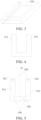
- FIG. 3 is a schematic structural diagram of a goods picking assembly according to an embodiment shown in FIG. 2 .
- the goods picking assembly 210 is an integrated structure, specifically is a rectangular structure with an opening defined in one end, and of course, can also be other shape. This is not limited in the embodiments of the present disclosure.
- the goods container is placed on the goods picking assembly 210.
- FIG. 4 is a schematic structural diagram of a goods picking assembly according to an embodiment shown in FIG. 2 .
- the goods picking assembly 210 can include a left arm 211 and a right arm 212, and in the process of picking the goods container, the goods container is placed between the left arm 211 and the right arm 212.
- the left arm 211 and the right arm 212 are symmetrically arranged, may be made of the same material, and may have the same size.
- Each of the goods picking assembly 210, the left arm 211, and the right arm 212 could be a telescopic goods picking assembly, and may include an inner section arm and an outer section arms.
- the inner section arm may be mounted to the outer section arm, and the inner section arm could move along the length directions of the outer section arm, i.e., moving along a direction where the aforementioned central axis S1 is located, so that the stretching and retracting of the goods picking assembly are achieved.
- the number of the sensor 220 can be 1, 2, 4, or other numerical values.
- the sensor can be a distance measurement sensor, such as a laser distance measurement sensor or an ultrasonic distance measurement sensor, and can be arranged at an inner side of the left arm 211 or the right arm 212 of the goods picking assembly 210, so as to measure a distance between the left arm 211 and the right arm 212 of the goods picking assembly 210.
- a distance between the goods picking assembly where the distance measurement sensor is located (the left arm 211 or the right arm 212) and the goods container is measured.
- the sensor can further be a through-beam sensor, such as a through-beam photoelectric sensor or a through-beam infrared sensor.
- a group of or a pair of through-beam sensors include an emitting sensor and a receiving sensor that can be respectively arranged on the left arm 211 and the right arm 212 of the goods picking assembly 210.
- the sensor can further be a visual sensor, such as a 2D camera, a depth camera, or a radar, and is provided on an upper surface of the goods picking assembly 210.
- the depth determining module 230 is further configured to: obtain, in a case that the measurement signal is changed from a default signal to a preset obstruction signal, a first state of the goods picking assembly; obtain, in a case that the measurement signal is changed from the preset obstruction signal to the default signal, a second state of the goods picking assembly; and determine the depth of the goods container according to the first state and the second state.
- the default signal can be a corresponding signal in a case that the sensor 220 is not obstructed by the goods container.
- the default signal can be a signal collected by the sensor 220 in a case that the goods container is not in contact with the goods picking assembly 210, or the goods container is not located in a working region of the goods picking assembly 210, where the working region of the goods picking assembly 210 refers to a region between the left arm and the right arm of the goods picking assembly 210, or a region of the goods picking assembly 210 configured to pick the goods container.
- the preset obstruction signal then corresponds to a corresponding signal in a case that the sensor 220 is obstructed by the goods container.
- the preset obstruction signal can be a signal collected by the sensor 220 in a case that the goods container is in contact with the goods picking assembly 210, or the goods container is located in the working region of the goods picking assembly 210.
- the first state can include a first extension length of the goods picking assembly
- the second state can include a second extension length of the goods picking assembly.
- the determining the depth of the goods container according to the first state and the second state includes: determining the depth of the goods container according to a difference value between the first extension length and the second extension length.
- the goods picking assembly can stop an extension action, or continues to forwards extend by a preset length so as to facilitate stopping extension; and pick the goods container in a case that a goods container picking instruction is received.
- the degree of adaptation and efficiency of goods container picking are improved by using a manner of picking the goods container on the basis of the depth of the goods container.
- the sensor is provided on the goods picking assembly of the goods picking apparatus, and through the depth determining module, the depth of the goods container is determined according to the measurement signal collected by the sensor, so that the goods container is picked and placed according to the depth of the goods container, and thus, the efficiency and safety of picking and placing the goods container are improved, the probability of the damaging and falling of the goods container during placement is effectively reduced, and the degree of intelligence and working efficiency of the warehousing robot are improved.
- FIG. 5 is a schematic structural diagram of a goods picking apparatus provided by another embodiment of the present disclosure. This embodiment further describes the sensors on the basis of the embodiment shown in FIG. 2 .
- the goods picking apparatus includes a goods picking assembly 510, sensors 520, and a depth determining module 530.
- the goods picking assembly 510 includes a left arm 511 and a right arm 512 that are symmetrically arranged.
- the sensors 520 are a pair of through-beam sensors and include an emitting sensor 521 and a receiving sensor 522.
- the emitting sensor 521 and the receiving sensor 522 are symmetrically arranged on the left arm 511 and the right arm 512 of the goods picking assembly.
- the preset obstruction signal corresponds to an output signal of the receiving sensor 522 in a case that the receiving sensor 522 does not receive a signal from the emitting sensor 521.
- the default signal corresponds to an output signal of the receiving sensor 522 in a case that the receiving sensor 522 receives the signal from the emitting sensors 521.
- the pair of through-beam sensors can be through-beam photoelectric sensors, such as the through-beam infrared sensors.
- the emitting sensor 521 emits a sensor signal, such as a light signal or an infrared signal, to the receiving sensor 522, and the receiving sensor 522 receives the sensor signal and outputs a measurement signal.
- the measurement signal outputted by the receiving sensor is the default signal, such as high level.
- the measurement signal outputted by the receiving sensor is the preset obstruction signal, such as low level.
- the depth determining module 530 can determine the depth of the goods container according to a change of the measurement signal outputted by the receiving sensor 522.
- the depth determining module can further emit a movement stopping instruction to the goods picking assembly 510.
- the goods picking assembly 510 can stop the extension action according to the movement stopping instruction.
- the depth determining module 530 can further emit a closing signal to the sensors 520 to close the sensors 520.
- the depth determining module 530 is further configured to: obtain a preset arm extension distance; obtain, in a case that an arm extension distance of the goods picking assembly reaches the preset arm extension distance, the measurement signal outputted by the sensor; control, in a case that the measurement signal is the default signal, the goods picking assembly to pick the goods container; and generate, in a case that the measurement signal is the preset obstruction signal, preset arm extension distance error information.
- the measurement signal is the preset obstruction signal
- the preset arm extension distance error information it can further be continued to control the goods picking assembly to extend until the measurement signal is changed to be the default signal, and the goods picking assembly is controlled to pick the goods container.
- the depth determining module 530 is further configured to: receive the preset arm extension distance from the warehousing robot or a warehousing system; obtain, in a case that the arm extension distance of the goods picking assembly 510 reaches the preset arm extension distance, the measurement signals outputted by the receiving sensors 522; pick, in a case that the measurement signals outputted by the receiving sensors 522 are the default signals, the goods container; and determine, in a case that the measurement signals are the preset obstruction signals, that the preset arm extension distance is not correct, so that the goods container does not need to be picked according to the preset arm extension distance.
- the goods picking assembly 510 can further extend and obtain the measurement signals outputted by the receiving sensors 522 until the measurement signals outputted by the receiving sensors 522 are the default signal, and pick the goods container.
- the depth of the goods container is determined by providing a pair of through-beam sensors and the depth determining module, and subsequent picking and placing of the goods container are instructed according to the depth of the goods container, and thus, the depth determining efficiency is high, the sensitivity is high, the cost is low, this embodiment is easy to implement, and the safety of picking and placing the goods container is improved.
- FIG. 6 is a schematic structural diagram of a goods picking apparatus provided by another embodiment of the present disclosure. This embodiment further describes the sensors on the basis of the embodiment shown in FIG. 2 .
- the goods picking apparatus includes a goods picking assembly 610, first through-beam sensors 621, second through-beam sensors 622, and a depth determining module 630.
- the goods picking assembly 610 includes a left arm 611 and a right arm 612 that are symmetrically arranged.
- the sensors are two pairs of through-beam sensors, and according to an ascending order of distance from the goods container, sequentially are the first through-beam sensors 621 and the second through-beam sensors 622.
- the first through-beam sensors 621 include a first emitting sensor 6211 and a first receiving sensor 6212.
- the second through-beam sensors 622 include a second emitting sensor 6221 and a second receiving sensor 6222.
- the first emitting sensor 6211 and the second emitting sensor 6221 are arranged on the left arm 611.
- the first receiving sensor 6212 and the second receiving sensor 6222 are arranged at the positions of the right arm 612 corresponding to corresponding emitting sensors.
- the first through-beam sensors 621 and the second through-beam sensors 622 maintain a set interval.
- the depth determining module 630 is configured to determine the depth of the goods container according to the set interval and measurement
- the set interval can be any one fixed interval, and can be a default value, a user-defined value, or a value determined according to the size of the goods picking assembly 610, such as 10 cm, 15 cm, or other values.
- the pair of through-beam sensors can include at least two pairs of through-beam sensors, such as 3 pairs, 4 pairs, or even more pairs.
- Each pair of through-beam sensors include an emitting sensor and a receiving sensor. The emitting sensor and the receiving sensor are symmetrically arranged on the left arm 611 and the right arm 612 of the goods picking assembly 610, and there is a set interval between two adjacent groups of through-beam sensors.
- the first through-beam sensors 621 are sensors located at a tail end a of the goods picking assembly 610.
- the tail end a of the goods picking assembly 610 is an end of the goods picking assembly 610 close to the goods container.
- all the through-beam sensors can be started while the left arm 611 and the right arm 612 extend, i.e., the first through-beam sensors 621 and the second through-beam sensors 622 are started. While in other embodiments, when the left arm 611 and the right arm 612 extend, only the first through-beam sensor 621 is started, and the other through-beam sensors maintain closed.
- the depth determining module 630 determines that the set interval is the depth of the goods container.
- the through-beam sensors include more pairs, such as N+1, where N is greater than or equal to 1, when it is determined that the picking condition is satisfied and the output signals of the receiving sensors of at least two pairs of through-beam sensors are the default signal, an M th receiving sensor is closest to the first receiving sensor 6212, M is a positive integer less than or equal to N, and the depth determining module 630 determines (M-1)*L to be the depth of the goods container, where L is the set interval.
- the depth of the goods container is determined by providing a plurality of pairs of through-beam sensors and the depth determining module, and subsequent picking and placing of the goods container are instructed according to the depth of the goods container, and thus, the depth determining efficiency is high, this embodiment is easy to implement, and the safety of picking and placing the goods container is improved.
- FIG. 7 is a schematic structural diagram of a goods picking apparatus provided by another embodiment of the present disclosure. This embodiment further describes the sensor on the basis of the embodiment shown in FIG. 2 .
- the goods picking apparatus includes a goods picking assembly 710, a sensor 720, and a depth determining module 730.
- the sensor 720 is a visual sensor, such as a 2D camera, a depth camera, or a photographing apparatus, and is provided on an upper surface of the goods picking assembly 710 and configured to photograph a measurement image of the goods picking assembly 710.
- the depth determining module 730 is configured to determine the depth of the goods container according to the gray scale of the measurement image.
- the senor 720 can be a micro camera or a micro camera lens.
- the visual sensor is configured to photograph a measurement image of a working region of the goods picking assembly 710, i.e., the measurement image of a region where the goods picking assembly picks the goods container.
- the field of view of the visual sensor may be obstructed, so that the picture of the photographed measurement image is dark, i.e., the gray scale of the measurement image is small.
- a gray scale threshold can be preset. In a case that the average gray scale of the measurement image is less than the preset gray scale threshold, it indicates that there is the goods container in the working region of the goods picking assembly 710.
- the default signal corresponds to the average gray scale of the measurement image that is greater than the preset gray scale threshold
- the preset obstruction signal corresponds to the average gray scale of the measurement image that is less than the preset gray scale threshold. Therefore, the visual sensor can determine the depth of the goods container according to the change of the average gray scale of the measurement image.
- the depth camera can be used to collect the point cloud data of the working region of the goods picking assembly 710, and further the depth of the goods container is determined according to the point cloud data.
- a specific determination algorithm is similar to the measurement image, and can be performed according to the average value of the point cloud data.
- the average value is less than a preset threshold, it indicates that the field of view is obstructed and corresponds to the preset obstruction signal; and in a case that the average value is greater than the preset threshold, it indicates that the field of view is not obstructed and corresponds to the default signal.
- the depth of the goods container is determined by providing the visual sensor and the depth determining module, and subsequent picking and placing of the goods container are instructed according to the depth of the goods container, and thus, the depth determining efficiency is high, the accuracy high, this embodiment is easy to implement, and the safety of picking and placing the goods container is improved.
- FIG. 8 is a schematic structural diagram of a goods picking apparatus provided by another embodiment of the present disclosure. This embodiment further describes the sensor on the basis of the embodiment shown in FIG. 2 .
- the goods picking apparatus includes a goods picking assembly 810, a sensor 820, and a depth determining module 830.
- the goods picking assembly 810 includes a left arm 811 and a right arm 812 that are symmetrically arranged.
- the sensor 820 is a distance measurement sensor that is arranged at an inner side of the left arm 811 or the right arm 812.
- FIG. 8 illustrates an example in which the distance measurement sensor is arranged on the left arm 811.
- the measurement signal is a measurement distance outputted by the distance measurement sensor.
- the distance measurement sensors can be ultrasonic sensors, radars, etc.
- the measurement distance is a distance between the left arm 811 and the right arm 812
- the measurement distance corresponds to the aforementioned default signa.
- the measurement distance indicates the distance between the goods picking assembly where the distance measurement sensor is located and the goods container, and corresponds to the aforementioned preset obstruction signal. Therefore, the depth determining module 830 can determine the depth of the goods container according to a change of the measurement distance.
- the depth of the goods container is determined by providing the distance measurement sensor and the depth determining module, and subsequent picking and placing of the goods container are instructed according to the depth of the goods container, and thus, the depth determining efficiency is high, the cost is low, this embodiment is easy to implement, and the safety of picking and placing the goods container is improved.
- FIG. 9 is a schematic structural diagram of a goods picking apparatus provided by another embodiment of the present disclosure. This embodiment further refines the structure of the goods picking assembly on the basis of the embodiment shown in FIG. 2 , and increases a pushing rod assembly at the tail end of the goods picking assembly and increases a temporary storage plate.
- the goods picking apparatus provided by this embodiment includes a goods picking assembly 910, a sensor 920, a depth determining module 930, a temporary storage plate 940, and a pushing rod assembly 950.
- the goods picking assembly 910 includes a left arm 911 and a right arm 912.
- the sensor 920 is provided on the goods picking assembly 910 and configured to collect a measurement signal in when the goods picking assembly 910 extends.
- the depth determining module 930 is configured to determine a depth of a goods container according to the measurement signal to pick and/or place the goods container according to the depth of the goods container.
- the depth is a length of the goods container in an extension direction in a case that the goods picking assembly performs goods picking.
- the temporary storage plate 940 is arranged between the left arm 911 and the right arm 912, and configured to temporarily store the goods container.
- the pushing rod assembly 950 is movably mounted at one end of the goods picking assembly 910 close to the goods container, and after the goods picking assembly 910 picks the goods container, the pushing rod assembly 950 can inwards rotate to a state of being perpendicular to an inner side surface of the goods picking assembly 910.
- the temporary storage plate 940 is a rectangular plate structure that is horizontally arranged, and is arranged parallel to a central axis S 1.
- the goods picking assembly can place the goods container on the temporary storage plate 940, and when reaching a target position, then places the goods container on the temporary storage plate 940 onto a warehousing goods shelf corresponding to the target position for storage.
- the target position can be a position corresponding to a buffer mechanism of a warehousing robot, and can also be a position corresponding to a fixed goods shelf or a storage position of a warehousing system.
- the number of the pushing rod assembly 950 can be 2, 4, or other numerical values.
- FIG. 9 illustrates an example in which there are 2 pushing rod assemblies.
- the pushing rod assemblies 950 are respectively symmetrically arranged at the tail ends a of the left arm 911 and the right arm 912. In a non-working state, the pushing rod assemblies are vertically downward or vertically upward, or are placed parallel to the height direction of the left arm 911 or the right arm 912 of the goods picking assembly 910.
- the non-working state corresponds to a state in which the goods picking assembly 910 does not pick the goods container.
- the pushing rod assemblies 950 can rotate relative to the goods picking assembly 910, and can specifically rotate along the central axis S1 of the goods picking assembly 910.
- FIG. 10 is a schematic structural diagram of a goods picking apparatus with pushing rod assemblies being in a working state in an embodiment shown in FIG. 9 .
- the pushing rod assemblies 950 When being in the working state, the pushing rod assemblies 950 inwards rotate until being in the state of being perpendicular to the inner side surface of the left arm 911 or the right arm 912.
- the goods picking apparatus is initialized or starts moving, it can be determined, according to the measurement signal of the sensor 920, whether there is the goods container on the goods picking assembly 910. If so, the states of the pushing rod assemblies 950 are controlled to be the state of being perpendicular to the inner side surface of the goods picking assembly 910, so as to prevent the goods container from falling during the movement of the goods picking apparatus.
- the initialization of the goods picking apparatus means that the goods picking apparatus is started, or the goods picking apparatus moves or displaces.
- the temporary storage plate is provided for temporarily storing the goods container, and the pushing rod assemblies are increased, and thus, the safety during the movement of the goods container is further improved.
- FIG. 11 is a flowchart of a depth measurement method provided by one embodiment of the present disclosure.
- the depth measurement method is applied to a goods picking apparatus of a warehousing robot and can be executed by the goods picking apparatus.
- the depth measurement method includes the following operations: In the operation S 1001, a measurement signal is collected by a sensor of the goods picking apparatus when a goods picking assembly of the goods picking apparatus extends.
- a depth of a goods container is determined by a depth determining module of the goods picking apparatus according to the measurement signal to pick and/or place the goods container according to the depth of the goods container, where the depth is a length of the goods container in an extension direction of the goods picking assembly.
- the goods container is placed according to the depth of the goods container, specifically including: placing, according to the depth of the goods container, the goods container on a buffer mechanism of the warehousing robot or at a central position of a temporary storage plate, or at a deep position, thereby preventing the goods container from falling during the movement of the warehousing robot due to the fact that a placement position is not good, or preventing goods in the goods container from being damaged due to the fact that the goods container is squeezed during placement.
- the goods container needs to be placed at a deep position of the buffer mechanism as much as possible according to the depth of the goods container, so that the goods container is prevented from sliding out during the movement of the warehousing robot.
- a goods container having a large depth in a case that the goods container is placed on the buffer mechanism, it is to prevent the goods container and even the goods in the goods container from being damaged due to the fact that the goods container is squeezed due to an overlarge pushing and placing distance. That is, for the goods container having the large depth, it is to determine a corresponding pushing and placing distance according to the depth of the goods container, thereby preventing the goods container from being placed at the center of the buffer mechanism while squeezing the goods container.
- the goods picking assembly includes a left arm and a right arm
- the determining a depth of a goods container according to the measurement signal includes: obtaining, in a case that the measurement signal is changed from a default signal to a preset obstruction signal, a first state of the goods picking assembly; obtaining, in a case that the measurement signal is changed from the preset obstruction signal to the default signal, a second state of the goods picking assembly; and determining the depth of the goods container according to the first state and the second state.
- the senor comprises a pair of through-beam sensors.
- the pair of through-beam sensors include an emitting sensor and a receiving sensor.
- the emitting sensor and the receiving sensor are symmetrically arranged on the left arm and the right arm.
- the preset obstruction signal corresponds to an output signal of the receiving sensor in a case that the receiving sensor does not receive a signal from the emitting sensor.
- the default signal corresponds to an output signal of the receiving sensor in a case that the receiving sensor receives the signal from the emitting sensor.
- the senor includes at least two pairs of through-beam sensors.
- a visual sensor is arranged on an upper surface of the goods picking assembly.
- the determining a depth of a goods container according to the measurement signal includes: determining the depth of the goods container according to the set interval and measurement signals.
- the senor is the visual sensor.
- the collecting, by a sensor of the goods picking apparatus, a measurement signal when a goods picking assembly of the goods picking apparatus extends includes: photographing, by the visual sensor, a measurement image of the goods picking assembly when the goods picking assembly of the goods picking apparatus extends.
- the determining a depth of a goods container according to the measurement signal includes: determining the depth of the goods container according to the measurement image.
- the senor is a distance measurement sensor.
- the distance measurement sensor is arranged at an inner side of the left arm or the right arm.
- the collecting, by a sensor of the goods picking apparatus, a measurement signal when a goods picking assembly of the goods picking apparatus extends includes: collecting, by the distance measurement sensor, a measurement distance when the goods picking assembly of the goods picking apparatus extends.
- the determining a depth of a goods container according to the measurement signal includes: determining the depth of the goods container according to the measurement distance.
- the goods picking assembly further includes a pushing rod assembly.
- the pushing rod assembly is movably mounted at one end of the goods picking assembly close to the goods container.
- the depth measurement method further includes: controlling the pushing rod assembly to inwards rotate to a state of being perpendicular to an inner side surface of the goods picking assembly; and picking the goods container according to the depth of the goods container.
- the method further includes: placing, according to the depth of the goods container, the goods container on the buffer mechanism of the warehousing robot.
- the depth measurement method further includes: determining, according to the measurement signal in a case that the goods picking apparatus is initialized, whether there is the goods container on the goods picking assembly of the goods picking apparatus; and if so, controlling the pushing rod assembly to inwards rotate to the state of being perpendicular to the inner side surface of the goods picking assembly.
- the initialization of the goods picking apparatus can be that the goods picking apparatus is started, or the goods picking apparatus moves.
- the method further includes: obtaining, by the depth determining module, a preset arm extension distance; obtaining, in a case that an arm extension distance of the goods picking assembly reaches the preset arm extension distance, the measurement signal outputted by the sensor; controlling, in a case that the measurement signal is the default signal, the goods picking assembly to pick the goods container according to the depth of the goods container; and generating, in a case that the measurement signal is the preset obstruction signal, preset arm extension distance error information.
- FIG. 12 is a schematic structural diagram of a warehousing robot provided by one embodiment of the present disclosure. As shown in FIG. 12 , the warehousing robot includes a moving chassis 1110 and a goods picking apparatus 1120.
- the goods picking apparatus 1120 is the goods picking apparatus provided by any one of the embodiments corresponding to FIGS. 2-10 of the present disclosure, and is connected to the moving chassis 1110 and configured to pick and/or place the goods container according to the depth of the goods container.
- the warehousing robot further includes: a buffer mechanism 1130, mounted on the moving chassis 1110 and configured to place the goods container; and correspondingly, the goods picking apparatus 1120, further configured to place the goods container on the buffer mechanism 1130 according to a depth of the goods container.
- the buffer mechanism 1130 can specifically be in the form of a back basket.
- FIG. 13 is a schematic structural diagram of a warehousing robot provided by one embodiment of the present disclosure. As shown in FIG. 13 , the warehousing robot includes a memory 1210, a processor 1220, and a computer program.
- the computer program is stored in the memory 1210 and configured to be executed by the processor 1220 so as to implement the depth measurement method of the embodiment corresponding to FIG. 11 of the present disclosure.
- the memory 1210 and the processor 1220 are connected through a bus 1230.
- FIG. 14 is a schematic structural diagram of a warehousing system provided by one embodiment of the present disclosure. As shown in FIG. 14 , the warehousing system includes a warehousing robot 1310, a goods shelf 1320, and a warehouse management module 1330.
- a goods container 1321 is placed on the goods shelf 1320 or needs to be placed on the goods shelf 1320.
- the warehousing robot 1310 is a warehousing robot provided by any one of the embodiments corresponding to FIG. 12 and FIG. 13 of the present disclosure.
- the warehousing robot 1310 is connected to the warehouse management module 1330 and configured to receive an instruction of the warehouse management module, where the instruction includes the information of the goods container that needs to be picked or stored, and the warehousing robot moves to a set position according to the instruction of the warehouse management module 1330, and picks and/or places the goods container.
- One embodiment of the present disclosure provides a computer readable storage medium having a computer program stored thereon.
- the computer program is executed by a processor, the depth measurement method provided by the embodiment corresponding to FIG. 11 of the present disclosure is implemented.
- the computer readable storage medium can be a ROM, a random access memory (RAM), a CD-ROM, a magnetic tape, a floppy disk, an optical data storage device, or the like.
- module division is merely logical function division and may be other division in actual implementation.
- a plurality of modules or components may be combined or integrated into another system, or some features may be ignored or not performed.
- the displayed or discussed mutual couplings or direct couplings or communication connections may be implemented by some interfaces.
- the indirect couplings or communication connections between the apparatuses or modules may be electrical, mechanical, or in other forms.
Landscapes
- Engineering & Computer Science (AREA)
- Mechanical Engineering (AREA)
- Robotics (AREA)
- Transportation (AREA)
- Structural Engineering (AREA)
- Civil Engineering (AREA)
- Life Sciences & Earth Sciences (AREA)
- Geology (AREA)
- Human Computer Interaction (AREA)
- Manipulator (AREA)
- Warehouses Or Storage Devices (AREA)
Applications Claiming Priority (2)
| Application Number | Priority Date | Filing Date | Title |
|---|---|---|---|
| CN202010662411.2A CN113335826B (zh) | 2020-07-10 | 2020-07-10 | 取货装置、深度测量方法、仓储机器人以及仓储系统 |
| PCT/CN2021/102157 WO2022007641A1 (zh) | 2020-07-10 | 2021-06-24 | 取货装置、深度测量方法、仓储机器人以及仓储系统 |
Publications (2)
| Publication Number | Publication Date |
|---|---|
| EP4166479A1 true EP4166479A1 (de) | 2023-04-19 |
| EP4166479A4 EP4166479A4 (de) | 2023-11-29 |
Family
ID=77467465
Family Applications (1)
| Application Number | Title | Priority Date | Filing Date |
|---|---|---|---|
| EP21838789.2A Pending EP4166479A4 (de) | 2020-07-10 | 2021-06-24 | Warenextraktionsvorrichtung, tiefenmessverfahren, lagerroboter und lagersystem |
Country Status (6)
| Country | Link |
|---|---|
| EP (1) | EP4166479A4 (de) |
| JP (1) | JP7576688B2 (de) |
| KR (1) | KR102917189B1 (de) |
| CN (1) | CN113335826B (de) |
| AU (1) | AU2021304124C1 (de) |
| WO (1) | WO2022007641A1 (de) |
Cited By (1)
| Publication number | Priority date | Publication date | Assignee | Title |
|---|---|---|---|---|
| WO2025131640A1 (fr) * | 2023-12-21 | 2025-06-26 | Exotec Product France | Procédé de saisie d'un conteneur, et dispositif de saisie d'un conteneur |
Families Citing this family (3)
| Publication number | Priority date | Publication date | Assignee | Title |
|---|---|---|---|---|
| CN114212433B (zh) * | 2022-01-12 | 2024-01-12 | 北京京东乾石科技有限公司 | 穿梭车控制方法、装置、穿梭车以及存储介质 |
| CN116000931B (zh) * | 2022-03-24 | 2025-09-02 | 深圳市海柔创新科技有限公司 | 机器人的控制方法、装置和设备 |
| CN116374474B (zh) * | 2023-03-30 | 2023-11-10 | 无锡雪浪数制科技有限公司 | 一种基于机器视觉的拣选智能决策系统 |
Family Cites Families (14)
| Publication number | Priority date | Publication date | Assignee | Title |
|---|---|---|---|---|
| JP3447449B2 (ja) * | 1995-11-17 | 2003-09-16 | 株式会社イトーキクレビオ | 自動倉庫 |
| DE10152358A1 (de) * | 2001-10-24 | 2003-05-08 | Still Wagner Gmbh & Co Kg | Messvorrichtung an Gabelzinken |
| JP2012093278A (ja) * | 2010-10-28 | 2012-05-17 | Toyota Industries Corp | 寸法測定装置および寸法測定装置を備えた荷搬送ロボット |
| JP6056707B2 (ja) * | 2013-08-23 | 2017-01-11 | 株式会社ダイフク | 物品移載装置及び搬送設備 |
| JP6446899B2 (ja) * | 2014-08-06 | 2019-01-09 | 村田機械株式会社 | 移載装置 |
| JP6428367B2 (ja) | 2015-02-24 | 2018-11-28 | 村田機械株式会社 | 移載装置 |
| CN208500277U (zh) * | 2018-06-28 | 2019-02-15 | 广西派莱特科技有限公司 | 一种具有伸缩叉架的叉车 |
| CN109186461A (zh) * | 2018-07-27 | 2019-01-11 | 南京阿凡达机器人科技有限公司 | 一种箱体大小的测量方法及测量设备 |
| CN111620024B (zh) * | 2019-01-29 | 2023-08-25 | 北京极智嘉科技股份有限公司 | 一种搬运机器人、取货箱方法及放货箱方法 |
| CN111348361A (zh) * | 2020-01-21 | 2020-06-30 | 深圳市海柔创新科技有限公司 | 取、放货控制方法、装置、搬运装置及搬运机器人 |
| CN212197049U (zh) * | 2019-09-30 | 2020-12-22 | 深圳市海柔创新科技有限公司 | 搬运装置及搬运机器人 |
| CN110834897B (zh) * | 2019-11-19 | 2021-05-28 | 兰剑智能科技股份有限公司 | 一种箱体的存放装置 |
| CN111017460B (zh) * | 2019-12-31 | 2021-10-08 | 北京极智嘉科技股份有限公司 | 一种货物入库方法、系统、自动送货车和服务器 |
| CN213084340U (zh) | 2020-07-10 | 2021-04-30 | 深圳市海柔创新科技有限公司 | 取货装置、仓储机器人以及仓储系统 |
-
2020
- 2020-07-10 CN CN202010662411.2A patent/CN113335826B/zh active Active
-
2021
- 2021-06-24 AU AU2021304124A patent/AU2021304124C1/en active Active
- 2021-06-24 WO PCT/CN2021/102157 patent/WO2022007641A1/zh not_active Ceased
- 2021-06-24 JP JP2023501446A patent/JP7576688B2/ja active Active
- 2021-06-24 EP EP21838789.2A patent/EP4166479A4/de active Pending
- 2021-06-24 KR KR1020237004418A patent/KR102917189B1/ko active Active
Cited By (2)
| Publication number | Priority date | Publication date | Assignee | Title |
|---|---|---|---|---|
| WO2025131640A1 (fr) * | 2023-12-21 | 2025-06-26 | Exotec Product France | Procédé de saisie d'un conteneur, et dispositif de saisie d'un conteneur |
| FR3157365A1 (fr) * | 2023-12-21 | 2025-06-27 | Exotec Product France | Procédé de saisie d’un conteneur, et dispositif de saisie d’un conteneur. |
Also Published As
| Publication number | Publication date |
|---|---|
| KR102917189B1 (ko) | 2026-01-23 |
| AU2021304124B2 (en) | 2024-06-06 |
| AU2021304124A1 (en) | 2023-02-09 |
| AU2021304124C1 (en) | 2024-09-05 |
| CN113335826B (zh) | 2023-03-28 |
| EP4166479A4 (de) | 2023-11-29 |
| WO2022007641A1 (zh) | 2022-01-13 |
| CN113335826A (zh) | 2021-09-03 |
| JP2023533339A (ja) | 2023-08-02 |
| JP7576688B2 (ja) | 2024-10-31 |
| KR20230035628A (ko) | 2023-03-14 |
Similar Documents
| Publication | Publication Date | Title |
|---|---|---|
| AU2021304124B2 (en) | Goods extraction device, depth measurement method, warehouse robot, and warehouse system | |
| CN115123839B (zh) | 一种基于agv的料箱堆叠方法、装置、设备及存储介质 | |
| JP2023531391A (ja) | 倉庫ロボットの制御方法、装置、機器、および読み取り可能記憶媒体 | |
| EP3512785B1 (de) | Sensorsystem für integrierte hinderniserkennung und nutzlastzentrierung | |
| EP4159643A1 (de) | Frachtboxextraktion und -vorrichtung, system, roboter und speichermedium | |
| EP3000773A1 (de) | Verfahren in Gabelstapler zur Bestimmung einer Ladeposition in einem Ladegestell | |
| US12605843B2 (en) | Photographing method for picking or placing, photographing system, and transport robot | |
| CN111930106A (zh) | 移动机器人及其控制方法 | |
| US11958202B2 (en) | Method and computing system for performing container detection and object detection | |
| CN113561179B (zh) | 机器人控制方法、装置、机器人、存储介质及程序产品 | |
| CN116000931B (zh) | 机器人的控制方法、装置和设备 | |
| US20230145619A1 (en) | Goods picking apparatus, depth measurement method, warehousing robot, and warehousing system | |
| CN112605993B (zh) | 基于双目视觉引导的自动抓取档案机器人控制系统及方法 | |
| US20240253237A1 (en) | Method and computing system for performing container detection and object detection | |
| CN112233163B (zh) | 一种激光雷达立体相机融合的深度估计方法、装置及其介质 | |
| EP4207068A1 (de) | Zielobjektdetektionsverfahren und -vorrichtung sowie elektronische vorrichtung, speichermedium und programm | |
| US20250187885A1 (en) | Handling device | |
| CN213084340U (zh) | 取货装置、仓储机器人以及仓储系统 | |
| CN114255400A (zh) | 障碍物检测系统、避障方法、电子设备及存储介质 | |
| CN115892801A (zh) | 取放货方法、装置、货叉组件、机器人及存储介质 | |
| CN114842223A (zh) | 进出库识别方法、设备及计算机可读存储介质 | |
| RU2813398C1 (ru) | Устройство для захвата товаров, способ измерения глубины, складской робот и складская система | |
| CN110328666B (zh) | 识别系统及物料拾取机构 | |
| CN117068620B (zh) | 料仓取料方法、装置、取料设备和存储介质 | |
| CN120436524A (zh) | 移动机器人状态检测方法、装置、移动机器人及设备 |
Legal Events
| Date | Code | Title | Description |
|---|---|---|---|
| STAA | Information on the status of an ep patent application or granted ep patent |
Free format text: STATUS: THE INTERNATIONAL PUBLICATION HAS BEEN MADE |
|
| PUAI | Public reference made under article 153(3) epc to a published international application that has entered the european phase |
Free format text: ORIGINAL CODE: 0009012 |
|
| STAA | Information on the status of an ep patent application or granted ep patent |
Free format text: STATUS: REQUEST FOR EXAMINATION WAS MADE |
|
| 17P | Request for examination filed |
Effective date: 20230113 |
|
| AK | Designated contracting states |
Kind code of ref document: A1 Designated state(s): AL AT BE BG CH CY CZ DE DK EE ES FI FR GB GR HR HU IE IS IT LI LT LU LV MC MK MT NL NO PL PT RO RS SE SI SK SM TR |
|
| DAV | Request for validation of the european patent (deleted) | ||
| DAX | Request for extension of the european patent (deleted) | ||
| A4 | Supplementary search report drawn up and despatched |
Effective date: 20231027 |
|
| RIC1 | Information provided on ipc code assigned before grant |
Ipc: B65G 47/90 20060101ALI20231023BHEP Ipc: B65G 1/04 20060101ALI20231023BHEP Ipc: B65G 1/137 20060101AFI20231023BHEP |
|
| STAA | Information on the status of an ep patent application or granted ep patent |
Free format text: STATUS: EXAMINATION IS IN PROGRESS |
|
| 17Q | First examination report despatched |
Effective date: 20250226 |